

در این صفحه
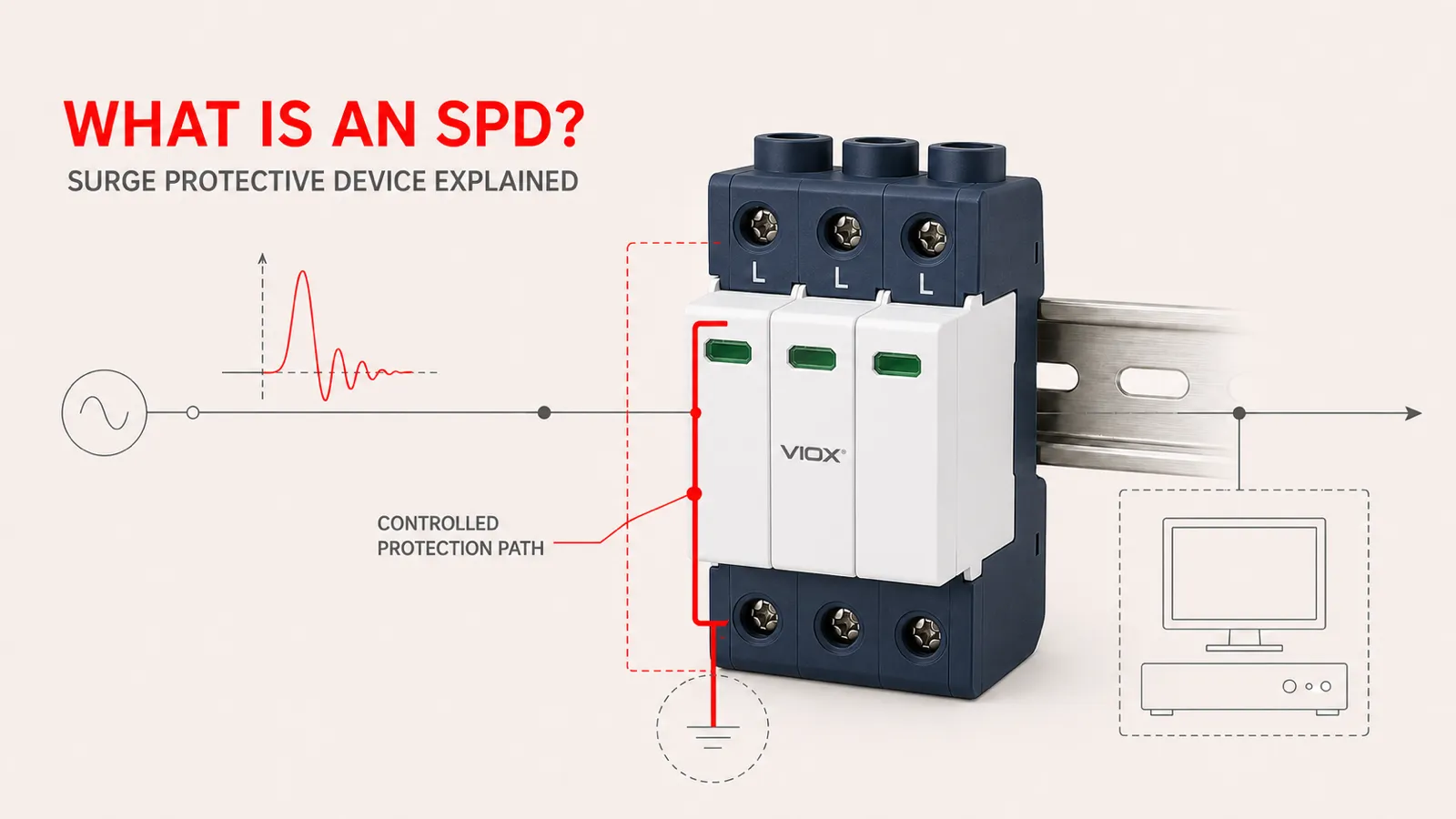
الف دستگاه محافظ در برابر نوسانات برق (SPD) اضافهولتاژ گذرا را با هدایت جریان ضربه از طریق یک مسیر حفاظتی کنترلشده محدود میکند. اکثر SPDهای توان فشار ضعیف در حین عملکرد عادی در حالت آمادهبهکار با امپدانس بالا باقی میمانند و در هنگام بروز ضربه، رسانا میشوند و تنش ولتاژ وارد بر تجهیزات پاییندست را کاهش میدهند.
یک SPD باعث ناپدید شدن ضربه نمیشود و جایگزین کلید مدار، ارتینگ و همبندی صحیح، یا سیستم حفاظت در برابر صاعقه خارجی نیست. این دستگاه یک لایه هماهنگ در یک سیستم الکتریکی حفاظتی است.
اگر به جای یادگیری اصل عملکرد، در حال ارزیابی محصولات هستید، بررسی کنید طیف محصولات برقگیر (SPD) VIOX برای کاربردهای AC، DC و فتوولتائیک.
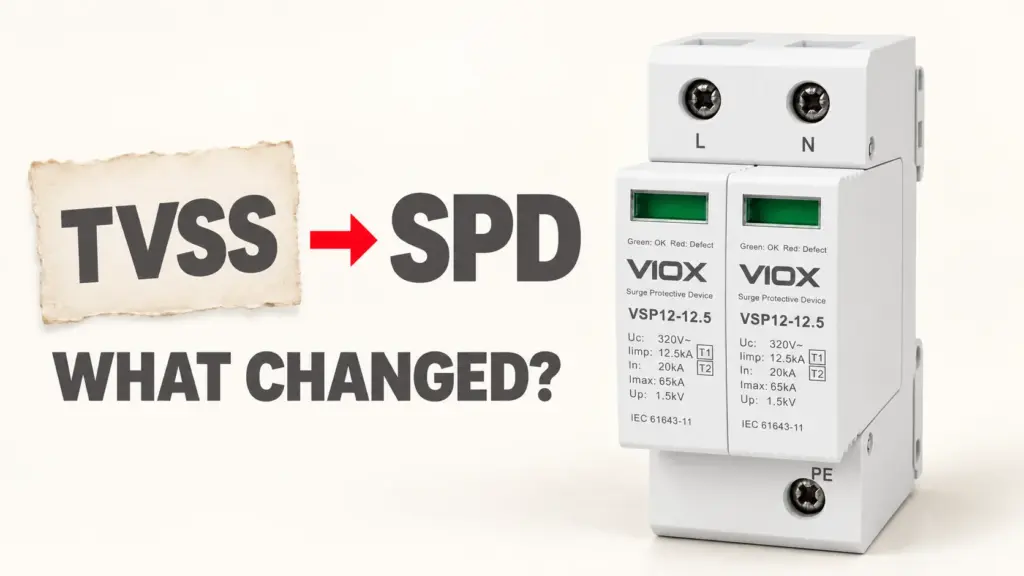
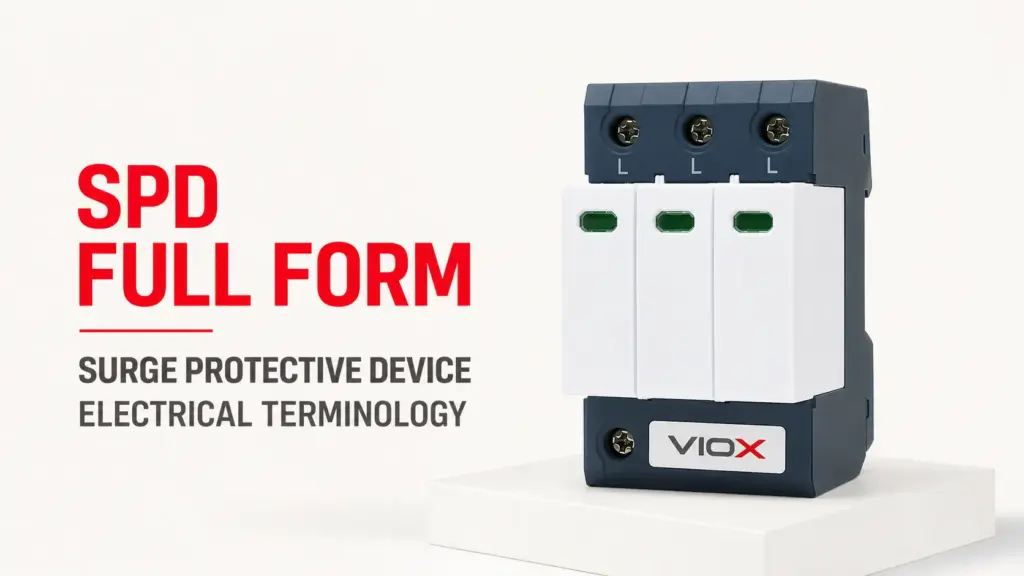
SPD در سیستمهای الکتریکی مخفف چیست؟
SPD stands for Surge Protective Device. این اصطلاحی است که در استانداردهای الکتریکی، مشخصات فنی، جداول تابلو و برگههای اطلاعات محصول استفاده میشود. “محافظ برق” یک عبارت عمومیتر و روزمره است، در حالی که SPD اصطلاح مهندسی دقیقتری برای دستگاهی است که برای محدود کردن اضافهولتاژ گذرا و هدایت جریان ضربه طراحی شده است.
کلمه گذرا اهمیت دارد. یک SPD به اختلالات ولتاژ با مدت زمان کوتاه پاسخ میدهد. این دستگاه برای تنظیم منبع تغذیهای که بهطور مداوم بیش از حد بالا یا پایین باقی میماند، طراحی نشده است.
برای خوانندگانی که فقط به اختصارات و اصطلاحات نیاز دارند، مراجعه کنید به فرم کامل SPD در برق.
یک SPD چه کاری انجام میدهد و چه کاری انجام نمیدهد؟
سادهترین راه برای درک یک SPD، تفکیک عملکرد آن از عملکردهای حفاظتی مجاور است.
| عملکرد حفاظتی | آنچه به آن میپردازد | آنچه جایگزین آن نمیشود |
|---|---|---|
| دستگاه حفاظت در برابر سرج (SPD) | اضافهولتاژ گذرا با مدت زمان کوتاه و جریان سرج مرتبط با آن | کلید مدار، ارتینگ، همبندی، تنظیم ولتاژ یا حفاظت کامل در برابر صاعقه |
| کلید مدار یا فیوز | اضافهجریان پایدار و خطاهای اتصال کوتاه | محدودسازی ولتاژ گذرا |
| سیستم ارتینگ و همبندی | پتانسیل مرجع، مسیر جریان خطا و همبندی همپتانسیل | دستگاهی که ولتاژ گذرا را در ترمینالهای تجهیزات محدود میکند |
| رگولاتور ولتاژ یا محافظ ولتاژ خودکار | اضافهولتاژ، افت ولتاژ یا تغییرات ولتاژ با مدتزمان طولانیتر، بسته به نوع دستگاه | تخلیه سریع جریان ضربه |
| سیستم حفاظت در برابر صاعقه خارجی | جذب و هدایت جریان مستقیم صاعقه در خارج یا از طریق سازه | هماهنگی داخلی برای ضربههای ورودی به مدارهای قدرت و سیگنال |
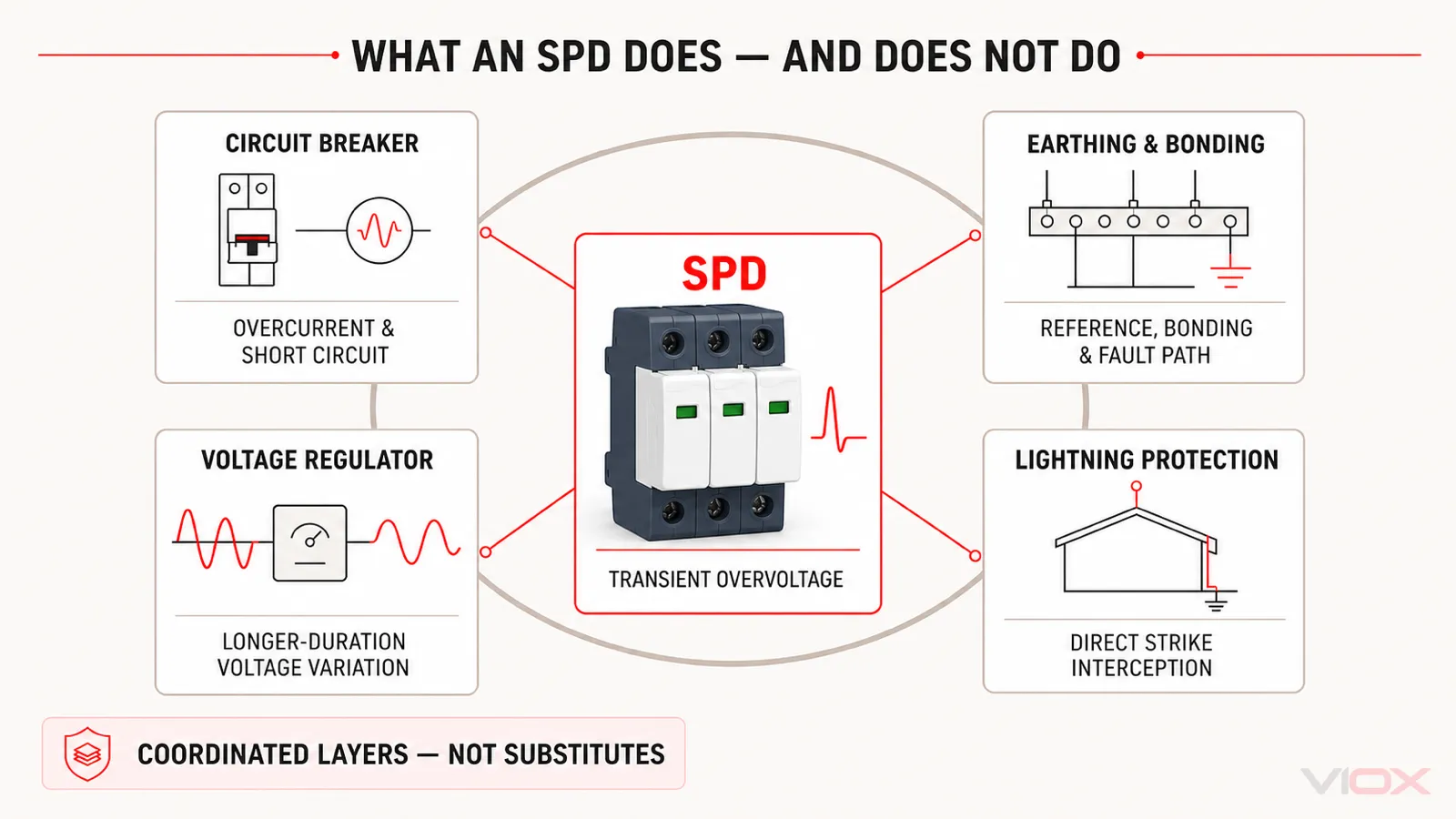
یک SPD میتواند با محدود کردن ضربههای هدایتی و القایی از حفاظت در برابر صاعقه پشتیبانی کند، اما یک SPD به تنهایی یک سیستم کامل حفاظت در برابر صاعقه نیست. به همین ترتیب، یک کلید مدار ممکن است حفاظت پشتیبان مورد نیاز برای یک SPD را فراهم کند، اما این دو دستگاه وظایف متفاوتی را انجام میدهند.
SPD چگونه کار میکند؟
بیشتر SPDهای قدرت فشار ضعیف به صورت موازی با مداری که محافظت میکنند، متصل میشوند. تحت ولتاژ عادی، عناصر محدودکننده ضربه غیررسانا باقی میمانند یا امپدانس بسیار بالایی ارائه میدهند. هنگامی که ولتاژ به سرعت از آستانه عملکرد دستگاه فراتر میرود، آن عناصر تغییر وضعیت داده و مسیر کمامپدانستری برای جریان ضربه فراهم میکنند.
توالی عملکرد را میتوان به پنج مرحله سادهسازی کرد:
- عملیات عادی: ولتاژ سیستم در محدوده عملکرد مداوم SPD باقی میماند، بنابراین مسیر حفاظتی در حالت آمادهبهکار قرار میگیرد.
- آغاز گذرا: تأثیر صاعقه، کلیدزنی، رفع خطا یا سایر اختلالات، موجب افزایش سریع ولتاژ میشود.
- تغییر امپدانس SPD: یک قطعه محدودکننده ولتاژ یا سوئیچکننده ولتاژ، رسانا میشود.
- جریان سرج از مسیر حفاظتی عبور میکند: جریان بین هادیهای تعریفشده توسط پیکربندی SPD منحرف شده و تنش ولتاژ روی تجهیزات پاییندست کاهش مییابد.
- بازیابی یا قطع SPD: پس از رویداد، یک SPD قابلسرویس به حالت آمادهبهکار بازمیگردد. اگر یک عنصر حفاظتی به وضعیت ناایمن رسیده باشد، یک جداکننده داخلی ممکن است آن را ایزوله کرده و نشانگر وضعیت را تغییر دهد.
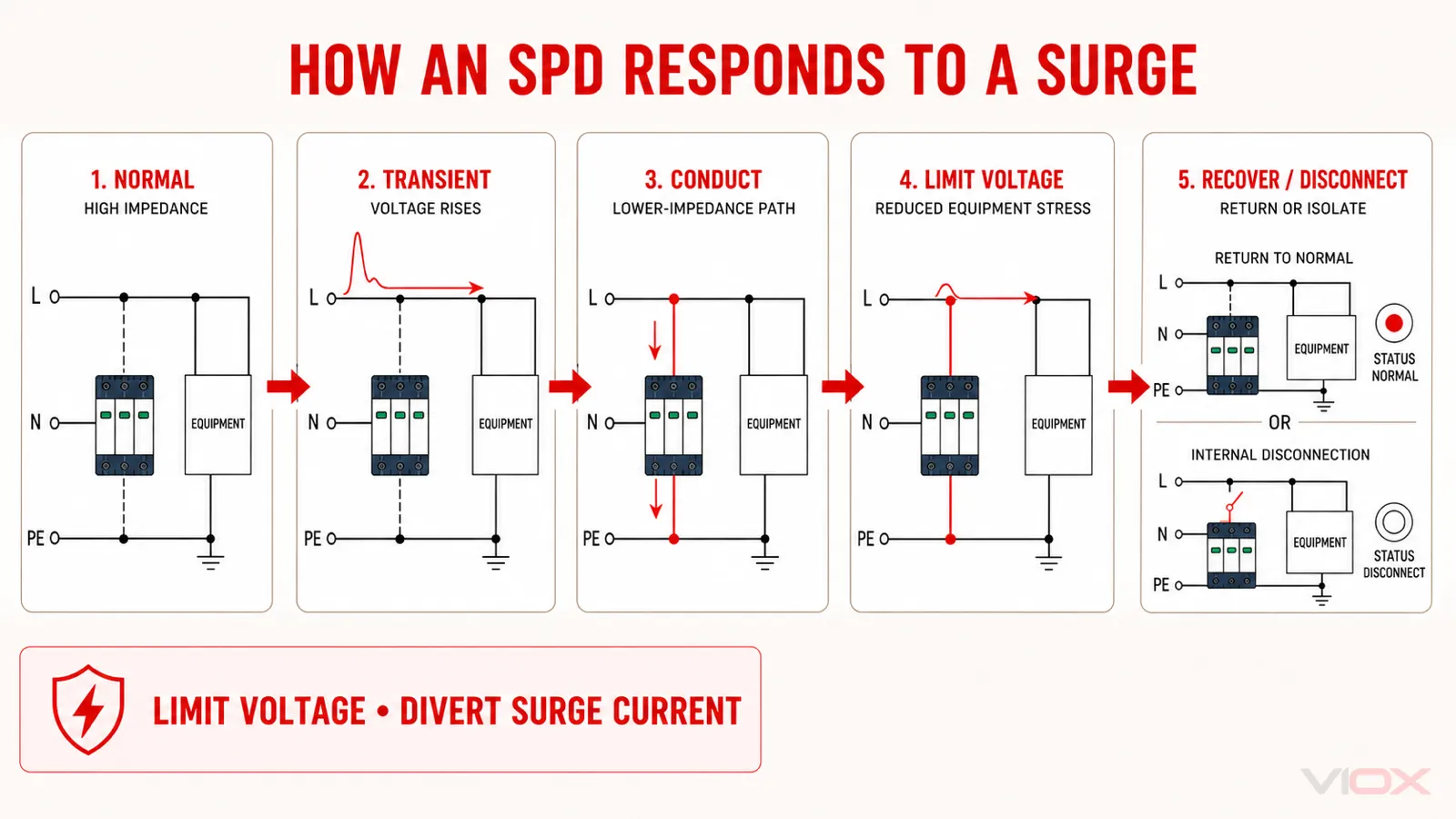
این پاسخ اغلب به این صورت توصیف میشود که مهار, ، اما هر SPD از فناوری داخلی یا حالت پاسخ یکسانی استفاده نمیکند.
فناوریهای رایج محدودکننده نوسان
| فناوری | رفتار معمول | Common use | مرز مهم |
|---|---|---|---|
| وریستور اکسید فلزی (MOV) | با افزایش ولتاژ، رسانایی آن بهطور فزایندهای افزایش مییابد | SPDهای برق AC و DC | تنش ناشی از نوسانات انباشته میتواند باعث تخریب قطعه شود، بنابراین قطع حرارتی و نشانگر وضعیت اهمیت دارند |
| Gas discharge tube (GDT) | پس از جرقه زدن، به حالت تخلیه رسانا تغییر وضعیت میدهد | حفاظت توان، مخابرات و سیگنال | رفتار جریان پیرو و هماهنگی به طراحی بستگی دارد |
| دیود سرکوبگر ولتاژ گذرا (TVS) | کلمپینگ سریع بهمنی را فراهم میکند | الکترونیک حساس و مدارهای سیگنال ولتاژ پایین | بهطور کلی مدارهای با انرژی کمتر نسبت به SPDهای اصلی توان را پوشش میدهد |
ترکیب صحیح قطعات به سیستم، حالت حفاظتی، ظرفیت انرژی، نیاز به ولتاژ باقیمانده و استاندارد محصول قابل اعمال بستگی دارد. فناوری قطعه بهتنهایی یک روش انتخاب کامل نیست.
جریان سرج به کجا میرود؟
معمولاً گفته میشود که یک SPD “اضافهولتاژ را به زمین میفرستد”، اما این توصیف ناقص است. یک SPD ولتاژ بین هادیهای متصل به حالتهای حفاظتی خود را محدود میکند. بسته به سیستم الکتریکی و توپولوژی SPD، این حالتها ممکن است شامل موارد زیر باشند:
- فاز به نول (L–N)
- فاز به ارت حفاظتی (L–PE)
- نول به ارت حفاظتی (N–PE)
- فاز به فاز (L–L)
- مثبت DC به منفی DC (DC+–DC−)
- یک هادی DC به ارت حفاظتی
جریان ضربه از مسیر حفاظتی و همبندی موجود پیروی میکند. به همین دلیل است که آرایش ارتینگ، حالت حفاظتی، مسیر هادیها و توپولوژی SPD همگی بر عملکرد واقعی تأثیر میگذارند. یک SPD با مشخصات فنی قوی نیز اگر مسیر اتصال آن در هنگام بروز یک ضربه سریع، امپدانس بیش از حدی ایجاد کند، میتواند حفاظت ضعیفی ارائه دهد.
What Causes Transient Overvoltage?
اضافهولتاژ گذرا، افزایش سریع و کوتاهمدت ولتاژ فراتر از سطح عملکرد عادی است. این ولتاژ ممکن است از طریق یک مدار قدرت، رشته فتوولتائیک، کابل مخابراتی، خط سنسور یا مسیر رسانای دیگر وارد شود.
| منبع | مکانیزم معمول | سیستمهای در معرض خطر |
|---|---|---|
| تأثیر صاعقه | کوپلینگ مستقیم، ولتاژ القایی یا جریان سرج هدایتشده | تغذیه شبکه، فیدرهای فضای باز، آرایههای PV، خطوط مخابراتی و سیگنال |
| کلیدزنی شبکه و توزیع | کلیدزنی ترانسفورماتور، کلیدزنی بانک خازنی، رفع خطا یا پیکربندی مجدد شبکه | تابلوهای توزیع اصلی و تابلوهای پاییندست |
| کلیدزنی بارهای سلفی | قطع سریع جریان در موتورها، بوبینهای کنتاکتور، سلنوئیدها یا سایر بارهای سلفی | تابلوهای کنترل صنعتی و سیستمهای اتوماسیون |
| کلیدزنی الکترونیک قدرت | لبههای کلیدزنی سریع و تعاملات میان مبدلها، درایوها، اینورترها، سیستمهای UPS و شارژرها | سیستمهای صنعتی، انرژیهای تجدیدپذیر، شارژ EV و زیرساختهای داده |
این منابع، شکلموجها یا سطوح انرژی یکسانی ایجاد نمیکنند. بنابراین انتخاب SPD به محل نصب دستگاه و محیط نوسانی که انتظار میرود با آن مقابله کند، بستگی دارد.
SPD نوع 1، نوع 2 و نوع 3: یک راهنمای کوتاه
انواع SPD نقشهای حفاظتی تستشده تحت یک استاندارد قابلاعمال را توصیف میکنند. آنها نباید به عنوان درجات کیفی ساده در نظر گرفته شوند.
| نوع SPD | نقش حفاظتی عمومی | بستر نصب متداول | درجهبندیهای معمول مورد بررسی |
|---|---|---|---|
| نوع ۱ | تحمل جریان صاعقه در جایی که انتظار جریان صاعقه جزئی میرود | ورودی سرویس یا مرز حفاظت در برابر صاعقه | Iimp و شکلموج تست مرتبط، به علاوه هماهنگی ولتاژ و اتصال کوتاه |
| نوع ۲ | فراهمکننده حفاظت در سطح توزیع در برابر اثرات باقیمانده صاعقه و نوسانات کلیدزنی | تابلوهای توزیع اصلی یا فرعی و تابلوهای کنترل | In، Imax، Up، Uc/MCOV و الزامات هماهنگی |
| نوع ۳ | حفاظت دقیق در پاییندست یا در سطح تجهیزات را فراهم میکند | نزدیک به تجهیزات حساس، هماهنگشده با SPDهای بالادست | عملکرد موج ترکیبی، سطح حفاظتی و شرایط نصب |
| نوع 1+2 | وظایف تستشده نوع 1 و نوع 2 را در یک محصول ترکیب میکند | نقاط توزیع اصلی که به هر دو عملکرد نیاز دارند | Iimp به همراه رتبهبندیهای مربوط به نوع 2 |
نامگذاریهای نوع IEC و UL باید در چارچوب استانداردها و علائم محصول مربوط به خود خوانده شوند؛ آنها یک جدول تبدیل یکبهیک جهانی نیستند. برای مقایسه دقیق موقعیت، شکل موج و هماهنگی، به SPD نوع 1 در مقابل نوع 2 در مقابل نوع 3.
کدام رتبهبندیهای SPD اهمیت دارند؟
برچسب جلویی ممکن است چندین مقدار ولتاژ و جریان را نشان دهد. هر کدام به یک پرسش مهندسی متفاوت پاسخ میدهد.
| رتبهبندی یا مورد | پرسشی که پاسخ میدهد |
|---|---|
| Uc / MCOV | آیا SPD میتواند بهطور مداوم در ولتاژ واقعی سیستم و آرایش ارتینگ متصل باقی بماند؟ |
| Up / VPR | چه ولتاژ باقیمانده یا عبوری با شرایط آزمون تعریفشده مرتبط است؟ اصطلاحات به استاندارد قابلاعمال بستگی دارد. |
| در | SPD برای چه وظیفه جریان تخلیه نامی آزمایش شده است؟ |
| آیمکس | چه مقدار حداکثر جریان تخلیه به سبک Type 2 تحت روش آزمون قابلاعمال اعلام شده است؟ |
| آیمپ | آیا SPD برای عملکرد جریان صاعقه نوع 1 طراحی و تست شده است؟ |
| هماهنگی اتصال کوتاه | آیا نصب SPD برای جریان خطای موجود و حفاظت پشتیبان مورد نیاز مناسب است؟ |
| حالت حفاظتی و توپولوژی | کدام جفتهادیها محافظت میشوند و آیا آرایش آنها با سیستم ارتینگ مطابقت دارد؟ |
| نشانگر وضعیت | پرسنل تعمیر و نگهداری چگونه میتوانند یک ماژول قطعشده یا پایانیافته را شناسایی کنند؟ |
مقدار kA بالاتر لزوماً انتخاب بهتری نیست. یک SPD با درجه جریان چشمگیر، اگر ولتاژ کارکرد مداوم، سطح حفاظتی، توپولوژی، هماهنگی اتصال کوتاه یا مسیر نصب آن اشتباه باشد، همچنان میتواند نامناسب باشد.
استفاده کنید نحوه خواندن برگه اطلاعات فنی (Datasheet) برقگیر برای گردش کار مشخصات کامل. راهنماهای اختصاصی در Uc و Up و In در مقابل Imax این جفتهای رتبهبندی را با جزئیات بیشتری توضیح دهید.
SPDهای AC، DC، PV و سیگنال قابل جایگزینی با یکدیگر نیستند
“SPD” یک عملکرد حفاظتی را توصیف میکند، نه یک محصول جهانی واحد. رفتار ولتاژی، سیستم عایقی، شرایط خطا، حالتهای حفاظتی و چارچوب تست در کاربردهای مختلف تغییر میکنند.
| کاربرد | پرسش اصلی پیش از انتخاب | منبع بعدی VIOX |
|---|---|---|
| AC low-voltage distribution | ولتاژ سیستم، آرایش ارتینگ، نقطه نصب و نوع SPD مورد نیاز چیست؟ | خانواده محصولات SPD شرکت VIOX |
| مدارهای DC سیستمهای فتوولتائیک (PV) | حداکثر ولتاژ PV، توپولوژی DC، میزان در معرض صاعقه بودن، و محل قرارگیری اینورتر/کامباینر چیست؟ | چگونه یک SPD برای سیستم انرژی خورشیدی انتخاب کنیم |
| سیستمهای DC خودروهای برقی (EV)، باتری و صنعتی | چه کلاس ولتاژ DC، محیط خطا، آرایش عایقبندی و محدوده تجهیزات اعمال میشود؟ | DC Surge Protection Devices Guide |
| خطوط مخابراتی، داده و کنترل | چه ولتاژ سیگنال، رابط، پهنای باند، شیلد و آرایش ارتینگ باید حفظ شود؟ | Signal Surge Protector Selection Guide |
استفاده از یک SPD نوع AC در مدار DC سیستم فتوولتائیک صرفاً به این دلیل که هر دو محصول مقدار kA مشابهی را نشان میدهند، جایگزینی معتبری نیست. الزامات ولتاژ و تست مختص به کاربرد باید از طریق برگه اطلاعات و استاندارد مربوطه تأیید شوند.
SPD در کجا نصب میشود؟
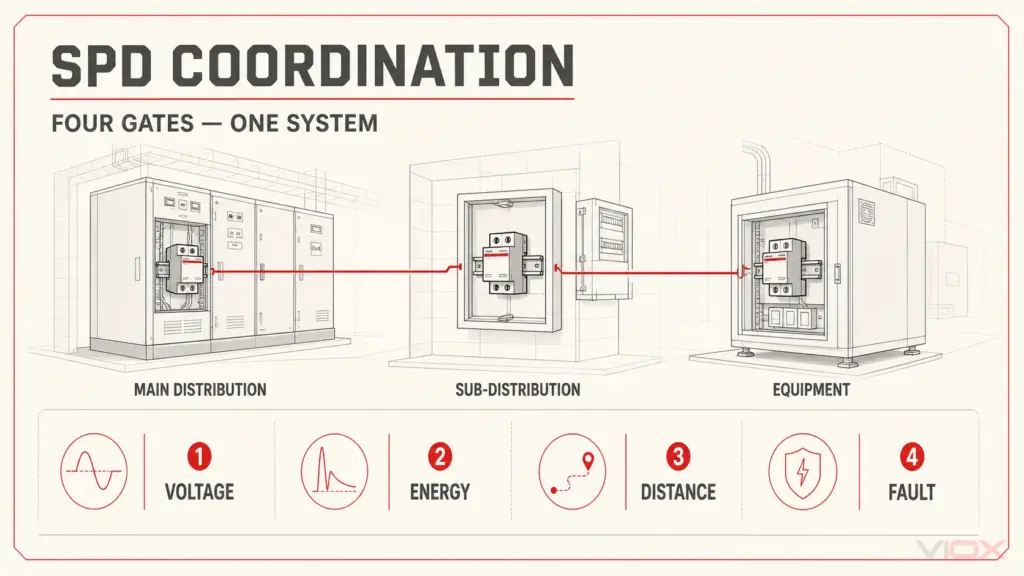
SPDها ممکن است در ورودی سرویس، تابلوی توزیع اصلی، تابلوی توزیع فرعی، تابلوی کنترل، مرز تجهیزات، اینترفیس اینورتر یا کمباینر فتوولتائیک، یا نقطه ورود سیگنال نصب شوند. محل صحیح به میزان در معرض بودن، معماری سیستم، مسیر کابلکشی، حساسیت تجهیزات و هماهنگی با حفاظتهای بالادست و پاییندست بستگی دارد.
نصب، بخشی از عملکرد SPD است. هادیهای اتصال باید از نمودار سازنده پیروی کنند و بهگونهای مسیریابی شوند که طول غیرضروری، حلقهها و امپدانس مشترک به حداقل برسد. فیوزهای پشتیبان یا کلیدهای مدار، در صورت نیاز، باید طبق دستورالعملهای محصول و شرایط جریان خطای موجود انتخاب شوند.
برای استراتژی جانمایی، از کجا SPD ها را در یک تابلوی برق نصب کنیم. برای پرسش جداگانه در مورد اتصال کلید مدار و حفاظت پشتیبان، به آیا میتوان یک SPD را به یک کلید مدار موجود متصل کرد؟.
چگونه از “SPD چیست؟” به تصمیم مهندسی درست برسیم
پس از روشن شدن اصل عملکرد، از پرسشی استفاده کنید که با وظیفه بعدی شما مطابقت دارد:
| پرسش بعدی شما | از این صفحه استفاده کنید |
|---|---|
| در هر مرحله حفاظتی، کدام نوع باید نصب شود؟ | SPD نوع 1 در مقابل نوع 2 در مقابل نوع 3 |
| برچسب و برگه اطلاعات چگونه باید تفسیر شوند؟ | نحوه خواندن برگه اطلاعات فنی (Datasheet) برقگیر |
| تفاوت SPD با برقگیر (Surge Arrester) چیست؟ | SPD در مقابل برقگیر |
| SPD باید در کجای سیستم تابلویی قرار گیرد؟ | کجا SPD ها را نصب کنیم |
| چه اشتباهاتی میتواند نصب را تضعیف کند؟ | اشتباهات نصب SPD و رفع آنها |
| کدام خانوادههای محصولات AC، DC یا PV در دسترس هستند؟ | دستگاههای حفاظت در برابر ولتاژ ضربه VIOX |
گام بعدی صحیح، انتخاب بزرگترین عدد جریان نیست. بلکه تعریف سیستم الکتریکی، نقطه نصب، میزان در معرض بودن، تجهیزات تحت حفاظت، استاندارد قابل اعمال و حالتهای حفاظتی مورد نیاز پیش از مقایسه رتبهبندی محصولات است.