

En esta página
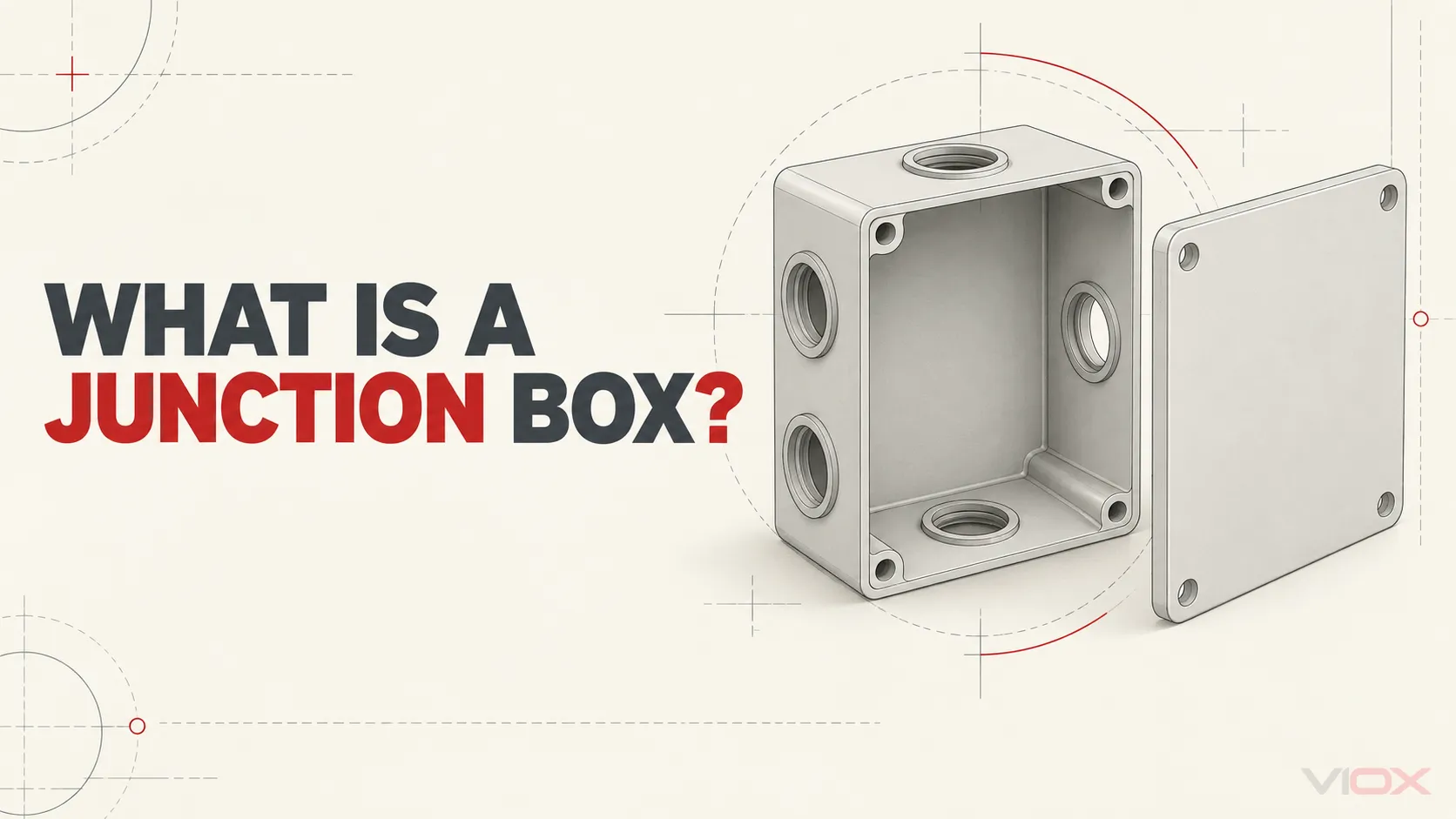
Una caja de conexiones es una envolvente utilizada para contener y proteger empalmes eléctricos, bornes o puntos de derivación de conductores. Proporciona una ubicación cubierta y accesible para las conexiones y ayuda a protegerlas contra el contacto accidental y la exposición física o ambiental. Una caja de conexiones no proporciona protección contra sobrecorriente por sí misma, y una caja solo es adecuada cuando su material, espacio interno, entradas, tapa, montaje y grado de protección ambiental coinciden con la instalación.
| Si necesita saber… | Compruebe esto primero | Profundice más |
|---|---|---|
| Qué hace la caja | Tipo de conexión y necesidades de acceso | Esta descripción general |
| Qué tamaño de caja se requiere | Conductores, dispositivos, accesorios y geometría de tracción | Guía de dimensionamiento de cajas de derivación |
| Qué normas del código de EE. UU. se aplican | Edición del código adoptada y enmiendas locales | Requisitos del NEC para cajas de derivación |
| Qué construcción es adecuada | Ubicación, material, corrosión, impacto y exposición a la entrada de agentes externos | Tipos de cajas de derivación eléctricas |
| Ya sea que necesite una caja de conexiones, de paso o de derivación | Qué sucede con los conductores en el interior | Caja de conexiones frente a caja de paso frente a caja de derivación |
¿Qué función cumple una caja de conexiones?
Una caja de conexiones crea un cerramiento definido alrededor de las conexiones eléctricas. Dependiendo del sistema de cableado y del producto, dichas conexiones pueden ser empalmes realizados con conectores aprobados, conductores conectados a bornes o puntos de derivación donde un circuito continúa en más de una dirección.
La caja realiza cuatro funciones prácticas:
- Contención: Separa las conexiones y las partes activas del contacto accidental cuando la tapa está colocada.
- Protección mecánica: Ayuda a proteger los conductores y las conexiones contra impactos, abrasión, tirones y otros esfuerzos de instalación.
- Protección del medio ambiente: Una envolvente seleccionada e instalada correctamente puede limitar la exposición al agua, al polvo o a condiciones corrosivas hasta el grado cubierto por su clasificación.
- Acceso para inspección y mantenimiento: Mantiene la conexión en una ubicación identificable que puede abrirse cuando se requiere una inspección o un mantenimiento autorizado.
El último punto es fácil de malinterpretar. “Accesible” no significa que cada caja deba estar visible en una habitación terminada, y la regla exacta depende del sistema de instalación y del código local. Significa que una conexión no debe colocarse donde las normas aplicables prohíban el acceso para inspección o mantenimiento. Para el contexto de EE. UU., consulte la guía dedicada sobre si las cajas de derivación pueden ubicarse detrás de paneles de yeso.
Lo que no hace una caja de derivación
Una caja de derivación no es automáticamente un cuadro de distribución, una envolvente de interruptor automático, un seccionador o un dispositivo de protección contra sobretensiones (SPD). No limita la corriente de falla, no interrumpe sobrecargas ni hace seguro un método de conexión inadecuado. Esas funciones requieren el equipo, la protección, el diseño de instalación y la verificación adecuados.
El grado de protección de una envolvente también se aplica a una condición ensamblada, no solo a la carcasa vacía de la caja. Los prensaestopas, los cubos de conductos, los tapones, los sellos, los elementos de fijación de la tapa y las aberturas realizadas en campo pueden determinar si la instalación terminada conserva la protección prevista.
Partes principales de una caja de conexiones eléctrica
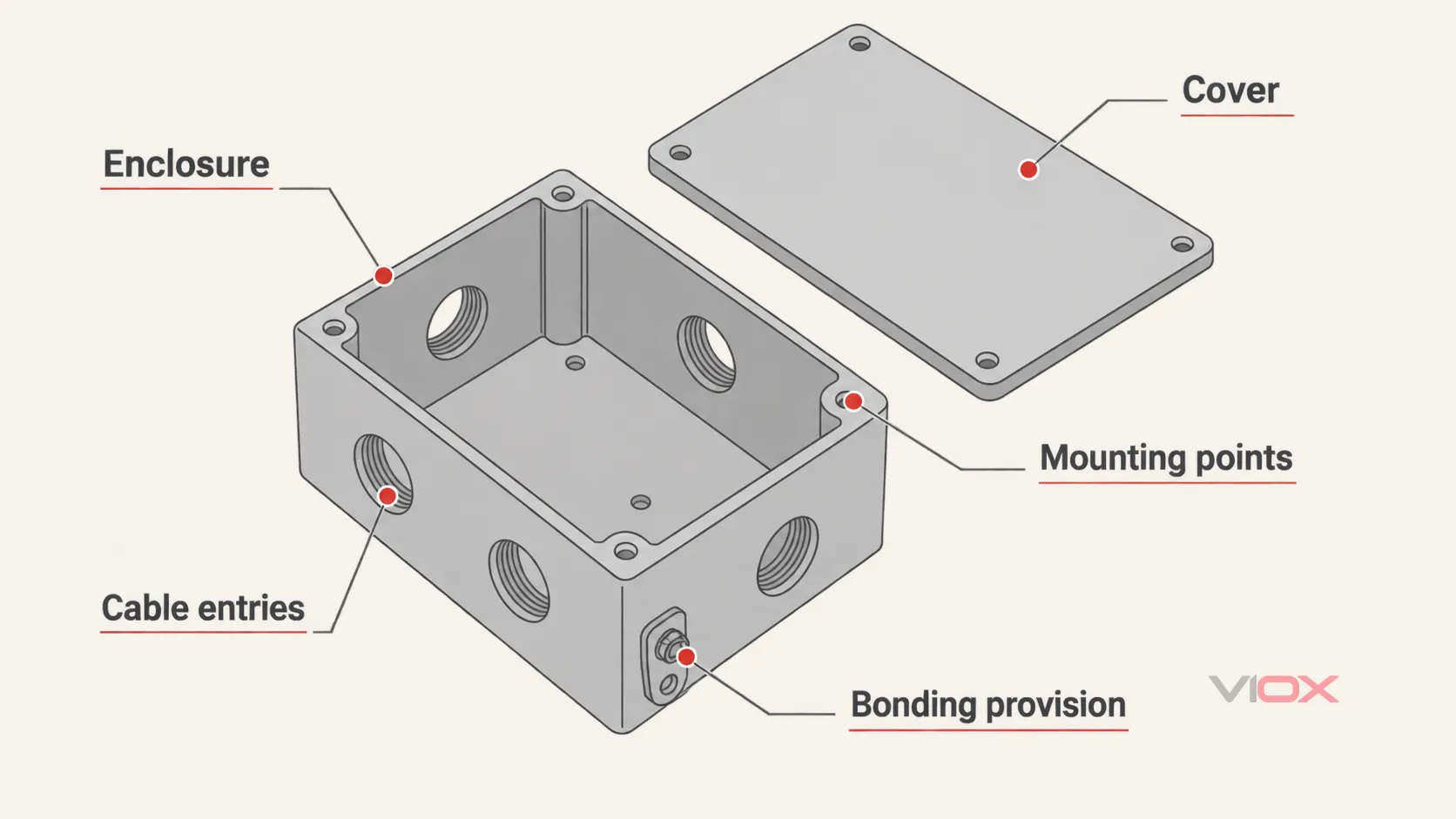
No todas las cajas de conexiones incluyen el mismo hardware, pero la mayoría de los diseños pueden entenderse a través de las siguientes partes funcionales.
| Parte | Función | Verificación de selección |
|---|---|---|
| Cuerpo de la envolvente | Define el espacio de cableado protegido | Material, dimensiones, impacto y adecuación ambiental |
| Cubierta o tapa | Cierra el espacio de cableado permitiendo al mismo tiempo el acceso autorizado | Compatible con la caja y adecuado para las condiciones de uso |
| Entradas de cable o conducto | Introduzca los conductores a través de orificios ciegos, aberturas roscadas, membranas, prensaestopas, cubos o accesorios | Tipo de entrada, tamaño, sellado, control de tensión y protección contra la abrasión correctos |
| Disposiciones de montaje | Fije la caja a una estructura, máquina, bandeja o panel | Orientación de la instalación, método de soporte, carga y sustrato |
| Conectores de empalme o bornes | Una o termine los conductores cuando estos componentes formen parte del diseño | Material del conductor, tamaño, cantidad, corriente, tensión e instrucciones del producto |
| Disposición de conexión equipotencial o puesta a tierra | Soporta la trayectoria de corriente de falla requerida para las partes conductoras cuando sea aplicable | Método de cableado, material de la envolvente, normas locales y método de conexión equipotencial listado |
La disposición de conexión equipotencial no debe describirse como una ruta para el “exceso de electricidad hacia la tierra”. En caso de falla, una conexión equipotencial efectiva conecta las partes conductoras expuestas a la trayectoria de puesta a tierra del equipo para que el sistema de protección pueda operar según lo diseñado. El método requerido depende del sistema de cableado, la envolvente, los accesorios y las normas aplicables.
Caja de conexiones frente a otras cajas eléctricas
Los nombres de las envolventes eléctricas a menudo describen su función en lugar de su apariencia. Dos cajas que parecen similares pueden ser seleccionadas y reguladas de manera diferente porque los conductores o el equipo en su interior realizan trabajos distintos.
| Plazo | Función principal | Límite importante. |
|---|---|---|
| Caja de conexión | Contiene empalmes, bornes o puntos de derivación de conductores | No proporciona inherentemente protección contra sobrecorriente ni conmutación |
| Caja de dispositivo o de salida | Soporta un dispositivo de cableado, toma de corriente, interruptor o disposición de luminaria permitida | Los requisitos de soporte y capacidad de la caja dependen del dispositivo instalado y de su certificación |
| Caja de paso | Proporciona espacio de tiro y acceso para los conductores canalizados a través de tuberías | Puede no contener empalmes; la geometría de los conductores de gran sección puede determinar las dimensiones |
| Caja de bornes | Organiza los conductores en bloques de terminales u otro hardware de terminación | Las capacidades nominales y el espaciado de los bornes pasan a formar parte de la tarea de selección |
| Caja de distribución o tablero de distribución | Aloja equipos de protección y distribución | Tiene funciones y requisitos de montaje que van más allá de una simple caja de conexiones |
Para una distinción funcional más profunda, utilice la comparación VIOX de cajas de conexiones, cajas de paso y cajas de derivación. Considere el marcado del producto, la certificación o declaración y las instrucciones del fabricante como evidencia determinante para la envolvente específica.
Familias comunes de cajas de conexiones
Las siguientes categorías son útiles para orientarse, pero no son mutuamente excluyentes. Una caja puede ser no metálica, de montaje en superficie, apta para exteriores y suministrarse con bornes al mismo tiempo.
Cajas metálicas y no metálicas
El acero, el acero inoxidable, el aluminio y los materiales no metálicos resuelven diferentes requisitos mecánicos, de corrosión, peso, conexión equipotencial y fabricación. “El metal es más resistente” y “el plástico es resistente a la corrosión” son simplificaciones excesivas: el grado, el espesor, los aditivos, la exposición a los rayos UV, los productos químicos, el impacto, la temperatura y la instalación completa son factores importantes.
Utilice el dedicado guía de cajas de derivación de metal frente a plástico cuando el material es la decisión real.
Cajas para interiores y exteriores
“Exterior” no es una especificación completa. La lluvia, el lavado a presión, el agua dirigida por manguera, el polvo, la luz solar, la condensación, el agua estancada y la inmersión temporal son condiciones de exposición diferentes. Seleccione la envolvente y cada componente de entrada para el entorno identificado en lugar de confiar únicamente en la palabra “resistente a la intemperie”. La guía de cajas de derivación resistentes a la intemperie frente a estándar explica esta decisión con más detalle.
Cajas para uso general y para ubicaciones peligrosas
Una envolvente robusta de uso general no es automáticamente adecuada para un área clasificada como peligrosa. El equipo para ubicaciones peligrosas debe coincidir con la clasificación, el concepto de protección, el grupo de gas o polvo según corresponda, los requisitos de temperatura, el esquema de certificación y las reglas de instalación. Utilice la guía específica para cajas de derivación con protección contra explosiones frente a cajas estándar en lugar de seleccionar por el grosor de la pared o la apariencia.
Cajas vacías y cajas con bornes
Algunos productos se suministran como envolventes vacías; otros incluyen bloques de bornes, barras de puesta a tierra o componentes específicos para la aplicación. Cuando se incluyen bornes, sus valores nominales eléctricos, compatibilidad de conductores, espaciado, montaje y documentación pasan a formar parte de la selección de la caja. Consulte la descripción general de una caja de derivación eléctrica con bornes para esa configuración.
Cómo elegir una caja de conexiones: seis factores de entrada
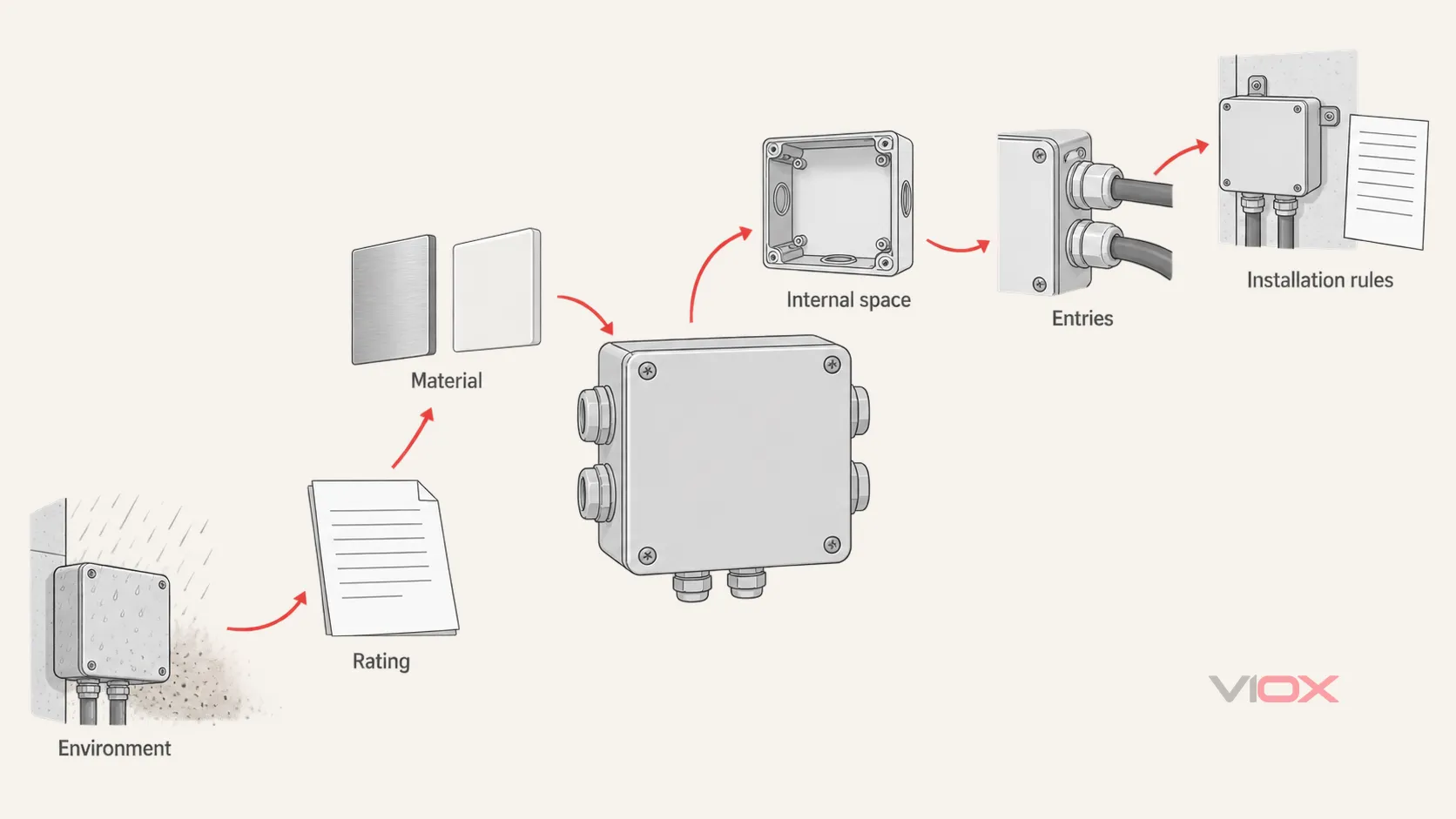
No comience con un tamaño de caja conocido e intente adaptar la instalación a él. Registre primero estas seis entradas.
1. Entorno
Defina si la ubicación es seca, húmeda, mojada, polvorienta, corrosiva, expuesta a la luz solar, sujeta a lavado, vulnerable a impactos o clasificada como peligrosa. Compruebe también la temperatura, la condensación, la vibración y la exposición del montaje cuando afecten al producto o a la instalación.
2. Protección de envolvente requerida
Seleccione el sistema de clasificación requerido por el proyecto y el mercado. Según la norma IEC 60529, el código IP clasifica los grados de protección proporcionados por las envolventes contra el acceso a partes peligrosas y el ingreso dentro del alcance de la norma. NEMA 250 define los tipos de envolvente para condiciones ambientales declaradas e incluye limitaciones que un tipo de envolvente no cubre por sí mismo.
No convierta un código IP en un tipo NEMA como si fueran certificaciones intercambiables. La guía de envolventes de NEMA señala específicamente que las clasificaciones IP no sustituyen a las clasificaciones de tipo de envolvente en el contexto pertinente del NEC de EE. UU. Verifique la especificación del proyecto, la evidencia de certificación, el ensamblaje completo y las instrucciones de instalación.
3. Compatibilidad de materiales y corrosión
Elija el material según la exposición real: química del agua, sal, productos químicos industriales, UV, impacto, necesidades de puesta a tierra o conexión equipotencial, peso, mecanizado y entorno de servicio. Un material adecuado en una planta puede ser inadecuado en otra, incluso cuando ambas instalaciones utilizan la misma clasificación nominal de envolvente.
4. Espacio interno y geometría de los conductores
La caja debe tener suficiente espacio para los conductores, empalmes, bornes, accesorios internos, componentes de puesta a tierra o conexión equipotencial, y un tendido seguro de los conductores. En los EE. UU., los cálculos de llenado de cajas para conductores pequeños y las dimensiones de las cajas de tiro para conductores grandes son tareas diferentes. Utilice la guía de dimensionamiento de cajas de conexiones en lugar de una tabla de tamaños universal.
5. Entradas, accesorios y gestión de cables
Registre el número, la ubicación y el tamaño de las entradas de cables o conductos antes de realizar el pedido. Verifique los prensaestopas, cubos, bujes, tapones y el método de control de tensión seleccionados con respecto al cable, el conducto, la pared de la envolvente y el grado de protección objetivo. Las aberturas no utilizadas deben cerrarse con componentes adecuados; los tapones improvisados o las entradas afiladas sin protección pueden anular el propósito de la envolvente.
6. Instalación y contexto normativo
Identifique el país, el código o norma adoptado, la autoridad competente, el método de montaje, los requisitos de accesibilidad, el sistema de conductores, el método de conexión equipotencial y la documentación de inspección. La idoneidad del producto y el cumplimiento de la instalación están relacionados pero no son idénticos: una caja con la clasificación correcta aún puede instalarse de forma incorrecta.
Límites de clasificación y normativa
El requisito correcto depende del mercado y de la instalación. Tres límites previenen errores comunes de especificación:
- La capacidad nominal del producto no constituye la instalación completa. La protección declarada de una envolvente vacía no garantiza que las entradas de campo, los sellos, los bornes y el montaje mantengan dicha protección.
- Un sistema de clasificación no sustituye automáticamente a otro. IEC 60529 define el código IP dentro de su alcance, mientras que NEMA 250 define los tipos de envolventes y su cobertura ambiental declarada.
- Los requisitos del producto y las normas de instalación son independientes. En las instalaciones en lugares de trabajo aplicables en EE. UU., OSHA 29 CFR 1910.305 aborda cuestiones tales como las entradas de conductores de protección, el cierre de aberturas no utilizadas, las cubiertas adecuadas, la conexión equipotencial y las envolventes resistentes a la intemperie en ubicaciones húmedas. Otros mercados utilizan diferentes códigos y rutas de conformidad.
Para obtener información detallada sobre el llenado de cajas, soporte, accesibilidad, cubiertas y tratamiento de conexión equipotencial en EE. UU., utilice el guía de requisitos para cajas de conexiones del NEC y verifique la edición del código adoptada localmente.
Lista de verificación para la aceptación de la instalación
Esta lista de verificación es para revisar una instalación propuesta o completada; no sustituye al diseño cualificado, los procedimientos de aislamiento, las pruebas o la inspección local.
- La envolvente está identificada para el uso eléctrico y ambiental previsto.
- La caja está soportada de forma segura utilizando las disposiciones de montaje aprobadas.
- Los conductores y los componentes internos encajan sin exceder los límites aplicables de llenado, espacio de curvatura o de los bornes.
- Las entradas de cables y conductos protegen contra la abrasión y proporcionan la retención o el control de tensión requeridos.
- Toda abertura no utilizada se cierra con un componente adecuado.
- La cubierta es compatible, está intacta, correctamente fijada y es adecuada para las condiciones de uso.
- Las juntas y sellos están presentes, no presentan daños y están instalados según lo requieren las instrucciones del producto.
- Las partes conductoras están equipotencializadas o conectadas a tierra donde el sistema de cableado y las normas aplicables lo requieran.
- La caja permanece accesible en el grado requerido para la inspección y el mantenimiento.
- Las etiquetas, las marcas del producto y la documentación requerida permanecen legibles.
- El conjunto terminado, no solo la caja vacía, cumple con los requisitos de protección y certificación del proyecto.
- La inspección, las pruebas y la energización son realizadas por personal cualificado bajo los procedimientos aplicables.
Guía para elegir la caja de conexiones correcta
| Su próxima pregunta | Recurso canónico VIOX |
|---|---|
| ¿Qué familias de construcción están disponibles? | Comprensión de los tipos de cajas de conexiones eléctricas |
| ¿Qué tamaño debe tener la caja? | Dimensionamiento de cajas de conexiones: NEC 314.16 y 314.28 |
| ¿Qué disposiciones del código de EE. UU. afectan la instalación? | código NEC para cajas de conexiones |
| ¿Se trata de una caja de conexiones, una caja de paso o una caja de derivación? | Caja de conexiones frente a caja de paso frente a caja de derivación |
| ¿La envolvente debe ser de metal o de plástico? | Cajas de derivación de metal frente a plástico |
| ¿Qué cambia en exteriores o en condiciones de humedad? | Cajas de derivación resistentes a la intemperie frente a estándar |
| ¿Qué cambia para el servicio subterráneo? | Cajas de derivación eléctricas subterráneas |
| ¿Cómo deben compararse las tapas? | Tipos de tapas para cajas de derivación |
Una vez definidos la aplicación, el entorno, el espacio interno, las entradas y la ruta de cumplimiento, compárelos con los disponibles de fabricación de cajas de conexiones VIOX. Envíe los requisitos completos (dimensiones, material, disposición de entradas, clasificación objetivo, bornes, montaje, mercado y necesidades de documentación) a [email protected] para la evaluación del producto. Una recomendación de producto debe seguir a esos datos de entrada, no reemplazarlos.