Blog

Categoría de su blog

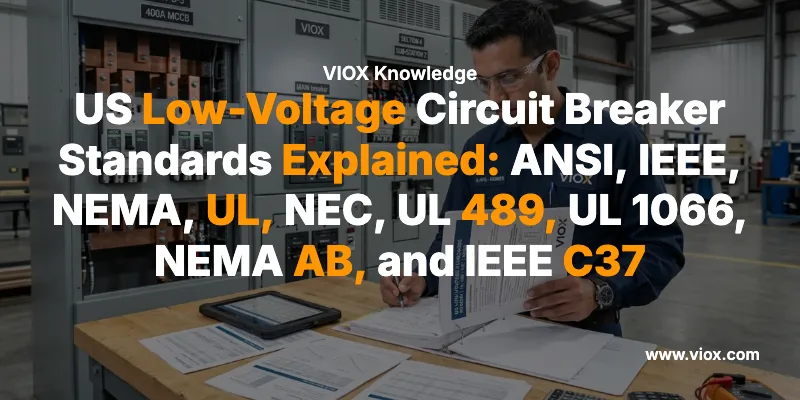
US Low-Voltage Circuit Breaker Standards Explained: ANSI, IEEE, NEMA, UL, NEC, UL 489, UL 1066, NEMA AB, and IEEE C37

Explicación de las normas estadounidenses para interruptores automáticos de baja tensión: ANSI, IEEE, NEMA, UL, NEC, UL 489, UL 1066, NEMA AB e IEEE C37

An engineer reviewing US low-voltage circuit breaker standards and documentation in a switchgear facility. If you work with low-voltage circuit breakers in the United States, the hardest part is often not the breaker itself. It is figuring out who does what in the standards system. People see names like: ANSI IEEE NEMA UL NFPA UL […]
Explicación de las normas estadounidenses para interruptores automáticos de baja tensión: ANSI, IEEE, NEMA, UL, NEC, UL 489, UL 1066, NEMA AB e IEEE C37 Leer más »

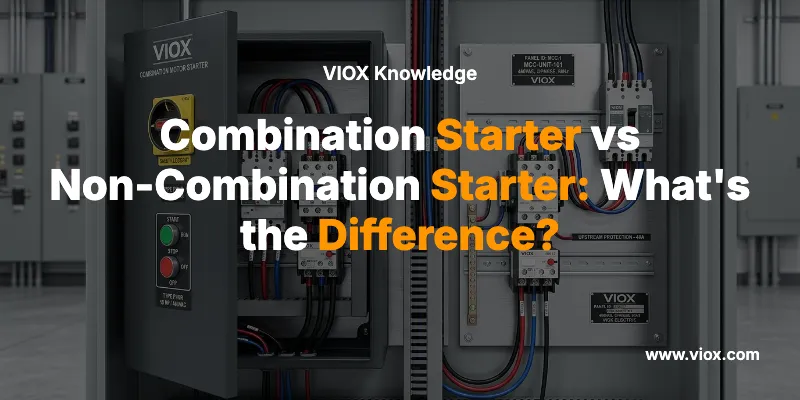
Combination Starter vs Non-Combination Starter: What's the Difference?

Arrancador combinado vs. arrancador no combinado: ¿Cuál es la diferencia?

If you are comparing a combination starter vs non-combination starter, the main difference is this: A combination starter includes the motor control function plus the branch-circuit protective and disconnecting means in one assembly. A non-combination starter provides the motor-starting and overload function, but it depends on a separate upstream device for branch-circuit short-circuit and ground-fault

Arrancador combinado vs. arrancador no combinado: ¿Cuál es la diferencia? Leer más »

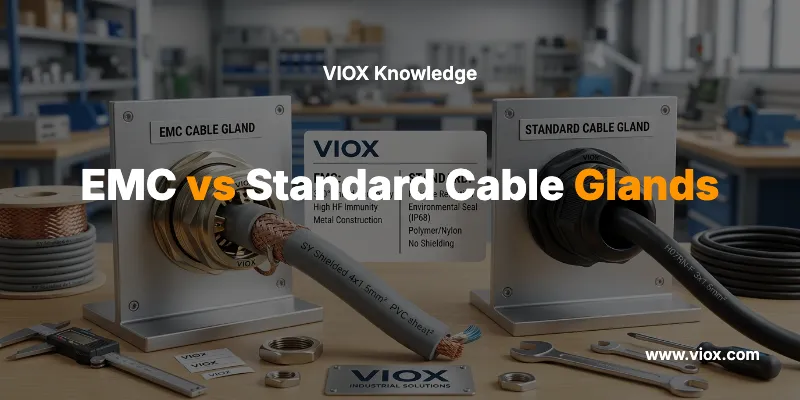
EMC vs Standard Cable Glands

Prensaestopas EMC vs Estándar: Diferencias Clave, Aplicaciones y Guía de Selección

If you are comparing EMC vs standard cable glands, the core difference is simple: a standard cable gland mainly provides cable retention, sealing, and strain relief, while an EMC cable gland adds a conductive 360-degree shield termination path for screened or shielded cables. Side-by-side comparison of an EMC cable gland and a standard cable gland

Prensaestopas EMC vs Estándar: Diferencias Clave, Aplicaciones y Guía de Selección Leer más »

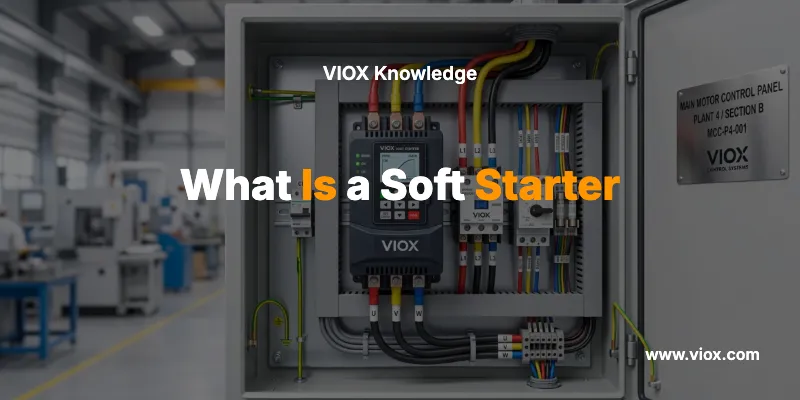
What Is a Soft Starter

¿Qué es un arrancador suave? Cómo funciona, tipos y aplicaciones industriales.

An industrial soft starter neatly installed inside a main motor control panel, highlighting its compact design and wiring configuration. A soft starter is a motor control device that reduces electrical and mechanical stress during motor startup by gradually increasing the voltage applied to the motor. Instead of applying full line voltage instantly, the soft starter

¿Qué es un arrancador suave? Cómo funciona, tipos y aplicaciones industriales. Leer más »

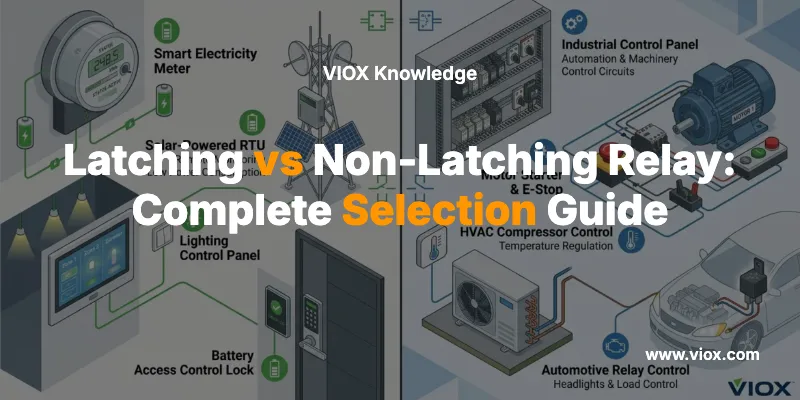
Latching vs Non-Latching Relay: Complete Selection Guide

Relé de enclavamiento vs. Relé no enclavamiento: Guía completa de selección

If you are choosing between a latching relay and a non-latching relay, one distinction decides the rest: a latching relay holds its last contact position after the control signal is removed, while a non-latching relay springs back to its default state the moment coil power disappears. That single behavioral difference ripples through every other design

Relé de enclavamiento vs. Relé no enclavamiento: Guía completa de selección Leer más »

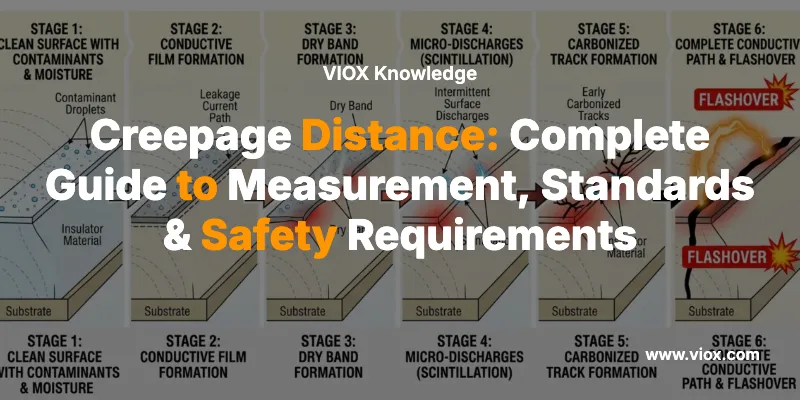
Creepage Distance: Complete Guide to Measurement, Standards & Safety Requirements

Distancia de fuga: Guía completa sobre medición, normas y requisitos de seguridad

In electrical insulation design, creepage distance is the shortest path between two conductive parts measured along the surface of an insulating material. Unlike clearance—which is the shortest distance through air—creepage accounts for the fact that current leakage and surface tracking do not always travel through open space. In humid, dusty, or polluted conditions, the surface

Distancia de fuga: Guía completa sobre medición, normas y requisitos de seguridad Leer más »

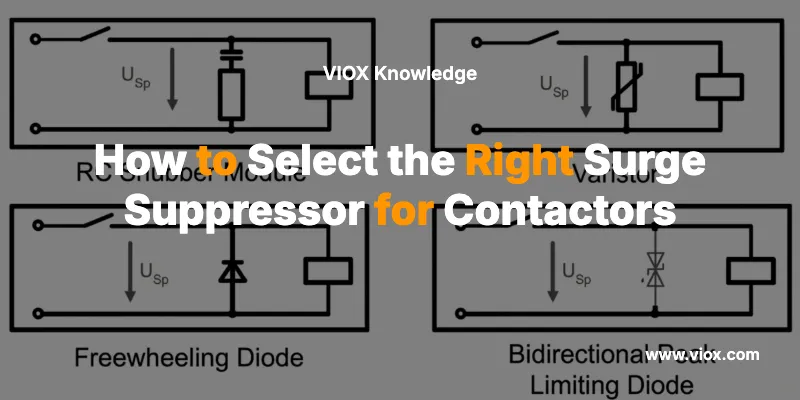
How to Select the Right Surge Suppressor for Contactors

Cómo seleccionar el supresor de sobretensión adecuado para contactores

Low-voltage contactors are the workhorses of motor control. Their ability to switch loads rapidly and reliably — with electrical endurance ratings exceeding one million operations — makes them indispensable across industrial automation, HVAC systems, and power distribution. But every switching event has a hidden cost: the transient voltage spike generated when the contactor coil de-energizes.

Cómo seleccionar el supresor de sobretensión adecuado para contactores Leer más »

Solicite presupuesto ahora