Here’s what nobody tells you when you Google “MCB manufacturers”: They’re not all solving the same problems. That premium Swiss brand dominating Alpine installations? Their standard lineup fails catastrophically in desert mining operations. The budget option perfect for office lighting? Completely wrong for motor control with 7x inrush currents on startup.
The global miniature circuit breaker market reached USD 5.7 billion in 2024 and continues expanding as renewable energy, industrial automation, and extreme-environment installations demand more sophisticated circuit protection. But more manufacturers doesn’t mean better choices—it means you need to know which manufacturer actually engineers for your specific failure mode.
This guide decodes the top 10 MCB manufacturers by what they’re actually good at, not just their marketing claims. As of November 2025, here’s who’s delivering real solutions and where their strengths actually lie.
Why MCB Manufacturer Selection Matters More in 2025
The Application-Fit Paradox: Every top-tier MCB manufacturer makes products that meet IEC 60898-1 and UL 489 standards. All of them trip at the rated current. All of them pass certification. Yet some will fail in your application while others run flawlessly for decades. Why?
Because the standard tests don’t include your 3,000-meter altitude. Or your 200 start-cycles per day. Or your solar array’s DC backfeed during grid faults. Or your plant’s 48°C ambient temperature in summer.
What’s Driving the 2025 MCB Evolution
Smart grid integration: Schneider Electric and Siemens now embed IoT sensors in MCB panels for predictive maintenance. When an MCB starts showing elevated trip times (early warning of contact degradation), the system flags it before catastrophic failure. This technology didn’t exist five years ago.
DC-rated breakers for renewable energy: Traditional AC MCBs create a predictable arc that self-extinguishes at the zero-crossing point. DC arcs don’t have zero crossings—they’re continuous plasma torches that can weld contacts. Manufacturers like Chint and VIOX now produce specialized DC-rated MCBs (up to 1000VDC) with ceramic arc chutes designed specifically for solar and EV applications.
High-cycle industrial automation: Standard MCBs are rated for maybe 10,000 operational cycles. Modern automated production lines can hit that in six months. Mitsubishi Electric and ABB engineer high-cycle variants rated for 100,000+ operations—but you won’t find this spec on standard datasheets.
Market Segmentation You Should Care About

- Type B MCBs (trip at 3-5x rated current): Residential lighting, minimal inrush. What every homeowner gets.
- Type C MCBs (trip at 5-10x rated current): Commercial/light industrial. Motors, transformers, anything with moderate inrush.
- Type D MCBs (trip at 10-20x rated current): Heavy industrial. Large motors, X-ray equipment, welding. This is where manufacturer quality separates catastrophically.
The secret? Most engineers just grab Type C because “that’s what we always use.” Then they wonder why failures cluster around their highest-inrush loads.
Top 10 MCB Manufacturers Leading the Industry in 2025
1. ABB – The Swiss Precision Standard
Website: global.abb

Over 140 years of engineering obsession creates some interesting effects. When ABB specs a contact spring tension at 12.3 Newtons, they mean 12.3—not 12.0, not 12.5. This Swiss-Swedish multinational built its reputation on the assumption that precision matters when electrons misbehave.
Their S200 series miniature circuit breakers dominate industrial automation specifically because of modular system integration. Need to add ground fault protection to an existing MCB installation? ABB’s accessory blocks snap onto S200 devices without rewiring. Their S800 series pushes breaking capacity to 50kA with electronic trip units that log every nuisance trip for forensic analysis.
What ABB actually excels at: Complex industrial installations where system integration matters more than price per breaker. If you’re specifying for a smart factory with BMS integration and remote monitoring, ABB’s digital ecosystem is already built. If you just need 63A Type C breakers for a warehouse? You’re paying for precision you don’t need.
Product highlight: System Pro E Power compact MCBs offer breaking capacities up to 25kA in a 35mm DIN rail profile—critical for tight panel space in modern automation cabinets.
2. Eaton – The IoT Integration Pioneer
Website: eaton.com

Since 1911, but the interesting part happened in 2023 when Eaton partnered with Microsoft to embed predictive maintenance algorithms directly into their MCB monitoring systems. Now their breakers don’t just trip—they tell you why they’re about to trip before it happens.
Eaton’s FAZ series MCBs integrate with their Brightlayer IoT platform for real-time current monitoring across entire distribution panels. The system learns your load patterns and flags anomalies: “Breaker 17 is showing 15% higher steady-state current than last month—probably a failing motor bearing.” This is the future, arriving faster than most engineers realize.
What Eaton actually excels at: Smart buildings and data centers where downtime costs dwarf hardware costs. Their thermal-magnetic actuators with IoT diagnostics catch problems during that narrow window between “something’s wrong” and “production stopped.” For basic residential? Overkill.
Pro tip: Eaton’s Cutler-Hammer CH/BR series remains the benchmark for North American residential panels—UL 489 certified, arc fault (AFCI) and ground fault (GFCI) combo breakers that electricians actually trust.
3. Siemens AG – The Automation Integrator
Website: siemens.com

Founded in 1847, which means Siemens was manufacturing electrical equipment before anyone fully understood electricity. That historical depth shows in their SENTRON MCB family—not just circuit breakers, but modular protection devices designed to integrate with SIRIUS motor starters, SIMATIC PLCs, and their entire industrial automation ecosystem.
When you’re building a fully automated production line, having your MCBs, motor protection relays, and control systems all speaking the same diagnostic protocol isn’t just convenient—it’s the difference between “find the fault” and “the system already isolated the fault and texted you the replacement part number.”
What Siemens actually excels at: Large-scale industrial installations and smart factories where everything needs to talk to everything else. Their MCBs embed sensors for remote monitoring, but unlike standalone IoT breakers, they’re already integrated with plant automation systems.
Geographic note: Siemens dominates European industrial installations and has strong North American presence through their Georgia operations, but procurement lead times can stretch if you need specialty variants.
4. Schneider Electric SE – The Comprehensive Portfolio Leader
Website: se.com

Established in 1836, Schneider Electric offers the electrical industry’s broadest MCB portfolio—which sounds like marketing speak until you actually need a 4-pole Type D MCB with adjustable magnetic trip and shunt release for 277/480V three-phase. Then you realize “comprehensive” means “they probably have exactly what you need in stock.”
Their legendary PowerPact molded case circuit breakers (MCCBs) handle heavy-duty applications, while the Square D miniature circuit breaker line serves as the workhorse for commercial installations across North America. Schneider’s Acti9 DIN rail MCB series offers tool-free connection, reducing installation time by 30%—electricians notice these details even if engineers don’t.
What Schneider actually excels at: Projects where you need the full protection lineup from one manufacturer—MCBs, RCCBs, surge protection, all playing nicely together in a pre-engineered busbar system. Their Easergy smart panel system combines MCBs with power monitoring for commercial building energy management.
Real-world insight: Schneider’s 24-month warranty exceeds industry standard 12-18 months, suggesting confidence in long-term reliability.
5. Mitsubishi Electric – The High-Cycle Specialist
Website: mitsubishielectric.com

Japanese engineering culture has interesting effects on product design. Where Western manufacturers might rate an MCB for 10,000 operations and call it good, Mitsubishi asks “but what if a customer actually uses it 10,000 times?” Then they build for 100,000+ cycles.
Their WS-V series MCBs feature breakthrough arc suppression technology that extends contact life dramatically. This matters enormously in automated manufacturing where production line contactors cycle hundreds of times per shift. The difference between replacing MCBs every two years versus every decade compounds over a plant’s lifetime.
What Mitsubishi actually excels at: High-frequency switching applications—automated assembly lines, robotic cells, packaging equipment where operational cycles far exceed residential/commercial norms. Their quality control standards reflect APAC manufacturing precision: batch testing at rates that would bankrupt budget manufacturers.
Geographic strength: Dominates 38% of APAC industrial power networks, particularly in ASEAN energy transition projects where reliability cannot be compromised.
6. Hager Group – The European Installation Specialist
Website: hagergroup.com

Founded in 1955 in Germany’s Saarland region when it was economically isolated from the rest of Germany. That historical constraint bred innovation: Hager couldn’t just copy existing German designs—they had to engineer their own solutions. The obsession with user-friendly installation persisted.
Hager’s MCBs feature connection terminals that actually make sense. No fumbling with tiny screws in cramped panels. Their DX³ and RX³ series offer tool-free busbar connections and clear on-off indicators that you can actually see without a flashlight. Electricians love them, which matters more than engineers usually acknowledge.
What Hager actually excels at: Residential and commercial installations across Europe where installation time directly impacts project cost. Their modular consumer units (distribution boards) integrate MCBs, RCCBs, and surge protection in pre-configured assemblies, reducing on-site assembly errors.
Certification note: Full compliance with IEC 60898-1 and IEC 61009 standards, plus CE marking for EU market access.
7. Fuji Electric – The Japanese-German Hybrid
Website: fujielectric.com

The company name tells its origin story: Founded as a capital and technology alliance between Furukawa Electric (Japan) and Siemens (Germany). The “Fu” and “Si” sounds merged, plus Mt. Fuji for good measure. Blending Japanese precision manufacturing with German engineering philosophy creates interesting products.
Fuji Electric’s MCBs reflect this dual heritage—German-style robustness with Japanese attention to manufacturing consistency. Their thermal trip calibration holds tighter tolerances than most competitors (±5% versus industry standard ±10%), meaning the MCB actually trips at its rated current, not somewhere in a wide range around it.
What Fuji Electric actually excels at: Critical power applications where trip precision matters—medical facilities, data centers, research laboratories. When your equipment costs $2 million and nuisance trips waste entire experiments, that ±5% calibration tolerance justifies premium pricing.
Market positioning: Mid-tier pricing with high-tier quality control. Strong presence in Asian and European industrial markets.
8. Chint – The Global Chinese Challenger
Website: chintglobal.com
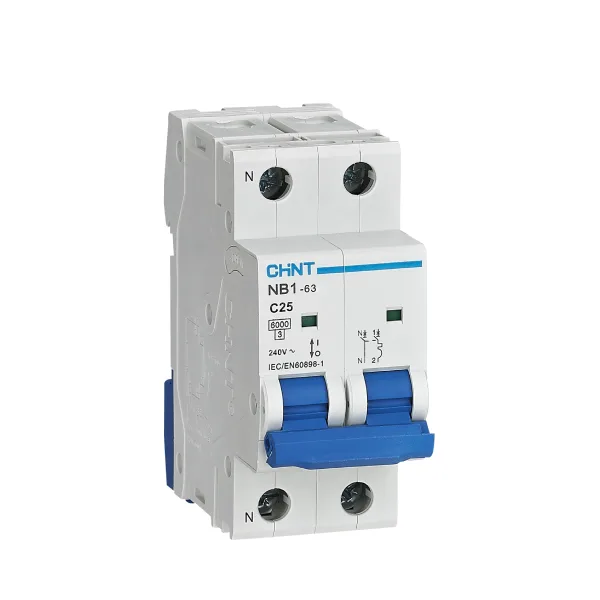
Founded in Wenzhou, China in 1984, Chint Group experienced remarkable growth by recognizing a truth Western manufacturers resisted: “affordable” doesn’t have to mean “unreliable.” Their NB1 series MCBs meet international IEC and UL standards at price points that make project managers smile.
But here’s where it gets interesting: Chint’s NBH8 UL489 certified series offers breaking capacities up to 10kA with full North American certification. They’re not cutting corners—they’re manufacturing at scale and passing savings along. The DZ158 and NXB series handle currents up to 125A with thermal-magnetic trip mechanisms that perform comparably to European brands.
What Chint actually excels at: Large-scale commercial and industrial projects where budget matters but quality can’t be compromised. Solar installations particularly favor Chint’s DC-rated MCBs—when you’re installing 1000 modules, price per breaker compounds quickly.
Geographic reach: Over 140 countries, with particularly strong presence in Asia-Pacific, Middle East, and emerging markets where cost-effectiveness drives specifications.
9. VIOX Electric Co., Ltd – The Specialized Solutions Provider
Website: viox.com
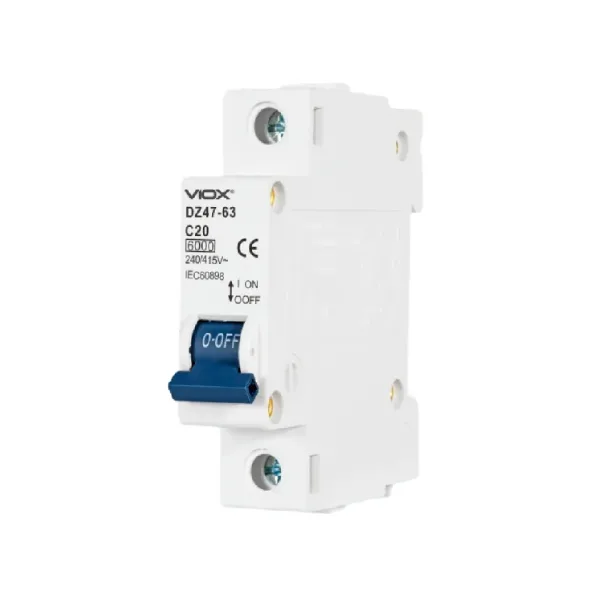
Since 2004, VIOX Electric has focused on solving problems other manufacturers ignore. While industry giants chase mainstream residential and commercial markets, VIOX engineers for extreme conditions: marine environments with constant salt spray, high-altitude mining operations where air density affects arc extinction, renewable energy installations with complex DC backfeed scenarios.
Their UL489-certified MCB series demonstrates commitment to international standards, but the real differentiator lies in specialized variants most manufacturers don’t bother producing. Need MCBs rated for 85°C ambient temperature? VIOX manufactures them as standard products, not custom orders. High-cycle ratings for automated packaging lines? Already in inventory.
What VIOX actually excels at: Applications where standard MCBs fail predictably—extreme temperatures, corrosive environments, high switching frequency, renewable energy installations, marine/offshore platforms. Their product line spans industrial automation, telecommunications, power supply systems, mobile power equipment, and critical electrical installations.
Technical depth: VIOX’s engineering team focuses on application-specific solutions rather than competing on volume in commodity markets. When ABB or Schneider’s standard catalog doesn’t have what you need, VIOX likely engineers a variant specifically for that failure mode.
Quality approach: Products undergo extensive testing for extreme conditions—temperature cycling, salt spray, mechanical shock—ensuring reliability where others spec blindly and hope.
Customer value: Competitive pricing without compromising protection performance. For contractors and engineers seeking specialized solutions without premium-brand premiums, VIOX offers the capability gap between budget manufacturers and international giants.
10. Rockwell Automation – The Industrial Control Integration Expert
Website: rockwellautomation.com

Headquartered in Milwaukee, Wisconsin, Rockwell Automation approaches MCBs differently than traditional manufacturers: not as standalone protection devices, but as integrated components within smart manufacturing systems. Their Allen-Bradley branded MCBs embed into broader industrial control architectures where circuit protection becomes part of predictive maintenance algorithms.
When a Rockwell MCB trips, it doesn’t just break the circuit—it logs the event timestamp, fault current magnitude, and ambient temperature, then analyzes whether this represents equipment failure, overload, or fault conditions. This data feeds Industry 4.0 frameworks for root cause analysis.
What Rockwell actually excels at: Complex industrial automation where MCBs must integrate with PLCs, HMIs, and plant-wide monitoring systems. If your facility already runs Allen-Bradley controllers, their MCBs complete the ecosystem.
Premium positioning: Highest price tier among the Top 10, justified by integration capabilities and technical support for complex automation projects.
How to Choose the Right MCB Manufacturer for Your Project
The 48-Hour Regret Test: Imagine your newly-installed MCBs are failing two days into production. What questions will the plant manager ask? “Did you verify altitude derating?” “Did you check breaking capacity for fault current levels?” “Did you consider ambient temperature?” The manufacturer you choose should make passing this test easy.
Decision Framework by Application Type
If you’re specifying for residential/light commercial:
- Go with: Schneider Electric, Eaton, or Hager—proven residential track records, widespread distributor availability
- Red flag: Don’t over-specify. That 50kA industrial MCB is overkill for a house panel and wastes budget
If you’re building smart buildings/data centers:
- Go with: Eaton, Siemens, ABB—IoT integration, remote monitoring, predictive maintenance already solved
- Red flag: Don’t retrofit basic MCBs into smart panels expecting them to communicate. Buy the smart capability upfront.
If you’re engineering for heavy industrial/automation:
- Go with: Mitsubishi Electric, ABB, Rockwell—high-cycle ratings, system integration, industrial-grade everything
- Red flag: Standard residential-grade MCBs will fail catastrophically under industrial switching frequencies
If you’re working with renewable energy (solar/wind):
- Go with: Chint, VIOX—specialized DC-rated products, experience with backfeed scenarios, appropriate arc suppression
- Red flag: Never use standard AC MCBs for DC applications. The arc won’t self-extinguish and will weld contacts immediately.
If budget constraints are severe but quality can’t be compromised:
- Go with: Chint, VIOX—international certifications at accessible price points
- Red flag: Don’t skip certifications entirely. Uncertified breakers void insurance and fail inspections.
Critical Specification Checklist

Verify these specs match your application:
- Breaking capacity (Icn or Icu): Must exceed maximum prospective fault current at installation point. Under-spec this and the MCB explodes during fault conditions.
- Trip characteristic curve (B/C/D): Match to load inrush characteristics. Type B for resistive loads, Type C for motors/transformers, Type D for high-inrush equipment.
- Ambient temperature rating: Standard is 40°C. If your panel sits in Arizona sun or next to furnaces, you need 60°C or 85°C rated devices.
- Altitude derating: Above 2,000 meters, air density affects arc extinction. Manufacturers publish derating curves—use them.
- Number of poles: Match your system voltage. Single-phase = 1P or 2P. Three-phase = 3P or 4P.
- Certification requirements: IEC 60898-1 for international, UL 489 for North America, CE marking for EU. Don’t mix standards—get the right certification for your jurisdiction.
- Mechanical life (operations): Standard is 10,000-20,000 operations. High-cycle applications need 50,000-100,000+ ratings.
- Warranty terms: 12 months minimum. Premium manufacturers offer 24-36 months, signaling confidence.
Pro tip: Request test reports for breaking capacity. Some manufacturers claim 10kA but test at lower values. Reputable manufacturers provide IEC 60898 compliant test data.
Conclusion: Matching Manufacturer to Application
That MCB failure in your Arizona mining operation? It traced back to one critical oversight: ambient temperature rating. The 40°C-rated European breaker was never designed for 65°C panel environments. Every manufacturer on this list solves circuit protection problems—but not for every application, and not for every environment.
The European residential specialist might fail in your desert mining operation. The budget-friendly option might not offer the DC ratings your solar array requires. The industrial automation leader might be overkill (and over-budget) for a simple warehouse panel.
Your next step: Match your specific application requirements—voltage, current, breaking capacity, environmental conditions, cycling frequency, and system integration needs—against manufacturer strengths. Don’t just grab “whatever worked last time” or “whatever the distributor stocks.” Five minutes of application analysis prevents fifty hours of failure troubleshooting.
As of November 2025, these top 10 manufacturers represent proven solutions across residential, commercial, and industrial applications. Choose based on application fit, not marketing claims.
Need help specifying MCBs for challenging applications? VIOX Electric specializes in extreme-condition circuit protection where standard solutions fail. Contact our engineering team for application-specific recommendations.