

Na tej stronie
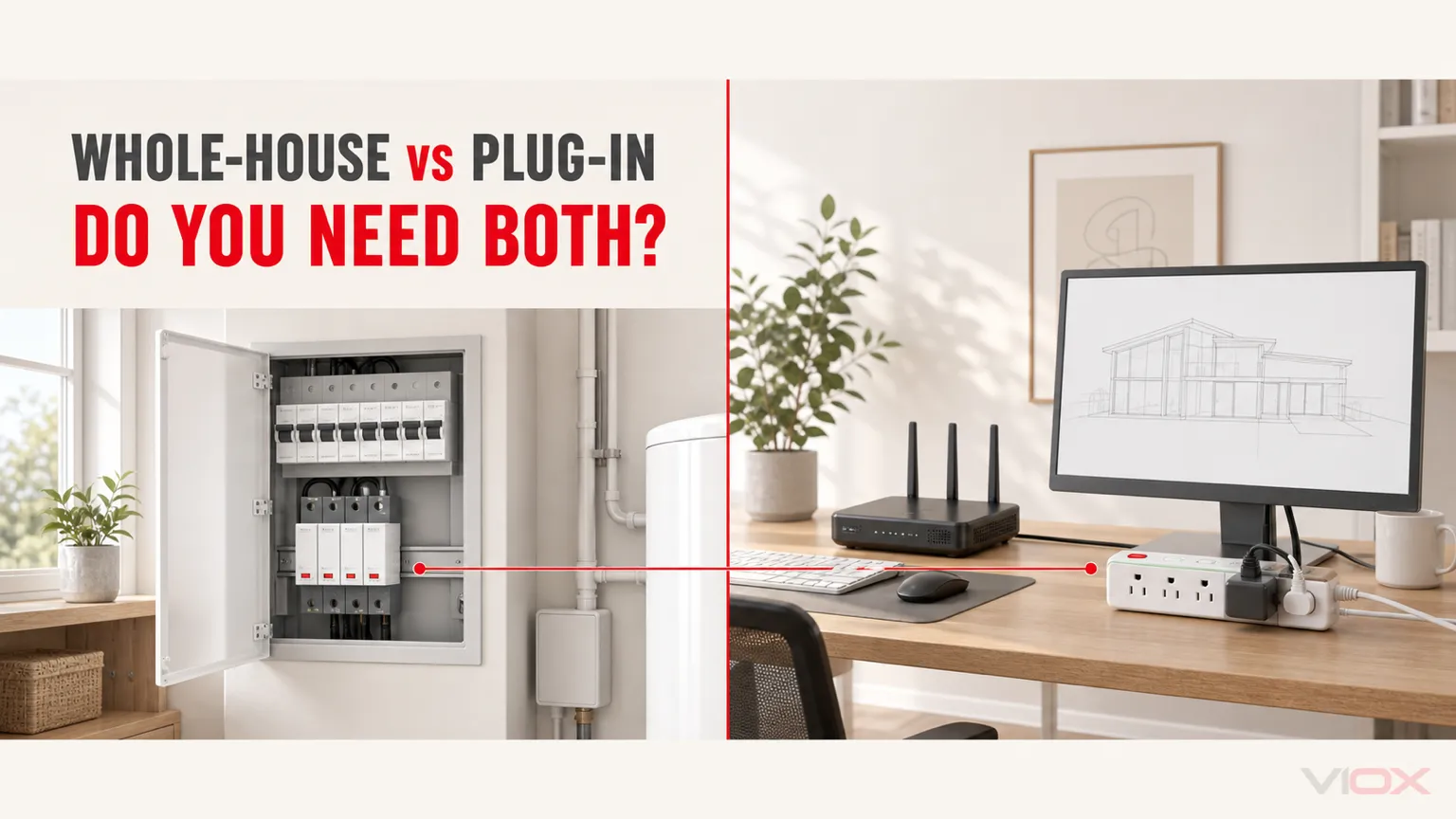
Ogranicznik przepięć (SPD) typu „whole-house” oraz wtykany ogranicznik przepięć chronią różne punkty instalacji, dlatego nie mogą być stosowane zamiennie. Ogranicznik SPD montowany w rozdzielnicy zapewnia szeroką ochronę obwodów odbiorczych oraz urządzeń zasilanych na stałe. Wtykany SPD chroni wyłącznie sprzęt do niego podłączony i może stanowić dodatkowe zabezpieczenie w bezpośrednim sąsiedztwie wrażliwych urządzeń elektronicznych.
W wielu domach jednorodzinnych korzystne jest stosowanie obu poziomów ochrony. Ogranicznik SPD w rozdzielnicy jest zazwyczaj priorytetem, gdy dom wyposażony jest w elektroniczne sterowniki HVAC, pompy ciepła, pompy głębinowe, urządzenia typu smart, ładowarki EV lub inne urządzenia zasilane na stałe. Wtykane ograniczniki SPD pozostają przydatne w przypadku komputerów, urządzeń sieciowych, telewizorów i innych wrażliwych odbiorników. Lokatorzy lub osoby nieposiadające dostępu do rozdzielnicy mogą być zmuszone rozpocząć od ochrony typu „plug-in”.
Zwykła listwa zasilająca to coś innego: może ona zapewniać dodatkowe gniazda i ochronę przed przeciążeniem, nie oferując przy tym ochrony przeciwprzepięciowej. Jeśli to rozróżnienie jest Twoim głównym pytaniem, sprawdź nasz przewodnik dotyczący różnicy między listwą zasilającą a ogranicznikiem przepięć.
Ogranicznik SPD typu „whole-house” a wtykany SPD: szybkie porównanie
| Czynnik decyzyjny | SPD typu whole-house lub tablicowy | Wtykowy SPD |
|---|---|---|
| Punktu instalacji | Urządzenie serwisowe, rozdzielnica główna lub rozdzielnica dystrybucyjna, w zależności od produktu i obowiązujących przepisów | Gniazdo wtykowe w pobliżu urządzenia; może być podłączone przewodem, wtykane bezpośrednio lub zintegrowane z gniazdem |
| Zakres ochrony | Zapewnia ścieżkę ochrony dla obwodów odbiorczych, gniazd oraz urządzeń podłączonych na stałe | Chroni tylko urządzenia podłączone przez to urządzenie |
| Główna zaleta | Szeroka ochrona na poziomie dystrybucji energii elektrycznej | Dodatkowa ochrona w pobliżu wybranych urządzeń czułych |
| Główne ograniczenie | Nie chroni automatycznie ścieżek sygnałowych koncentrycznych, telefonicznych, Ethernet, antenowych ani innych ścieżek wejściowych niebędących zasilaniem | Nie zapewnia ochrony innych gniazd, obwodów ani urządzeń podłączonych na stałe |
| Instalacja | Zazwyczaj wymaga wykwalifikowanego elektryka oraz dostępu do urządzeń serwisowych lub rozdzielnicy | Możliwość podłączenia przez użytkownika pod warunkiem stosowania dokładnie zgodnie z oznaczeniami i instrukcjami |
| Weryfikacja produktu | Napięcie instalacji elektrycznej, układ uziemienia, tryby ochrony, typ, znamionowy poziom napięciowy ochrony, wartości prądu wyładowczego, koordynacja zwarciowa oraz sygnalizacja stanu | Napięcie instalacji elektrycznej, certyfikacja produktu dla danego rynku, parametry ochrony napięciowej, obciążalność znamionowa, sygnalizacja stanu ochrony oraz instrukcje producenta |
| Najlepsze zastosowanie natychmiastowe | Domy z dostępem do rozdzielnicy, wieloma obwodami oraz ważnymi odbiornikami elektronicznymi podłączonymi na stałe | Najemcy, indywidualne odbiorniki wrażliwe lub dodatkowy stopień ochrony w punkcie poboru |
| Czy może zastąpić drugie? | Nie w każdym zastosowaniu | Nie w każdym zastosowaniu |
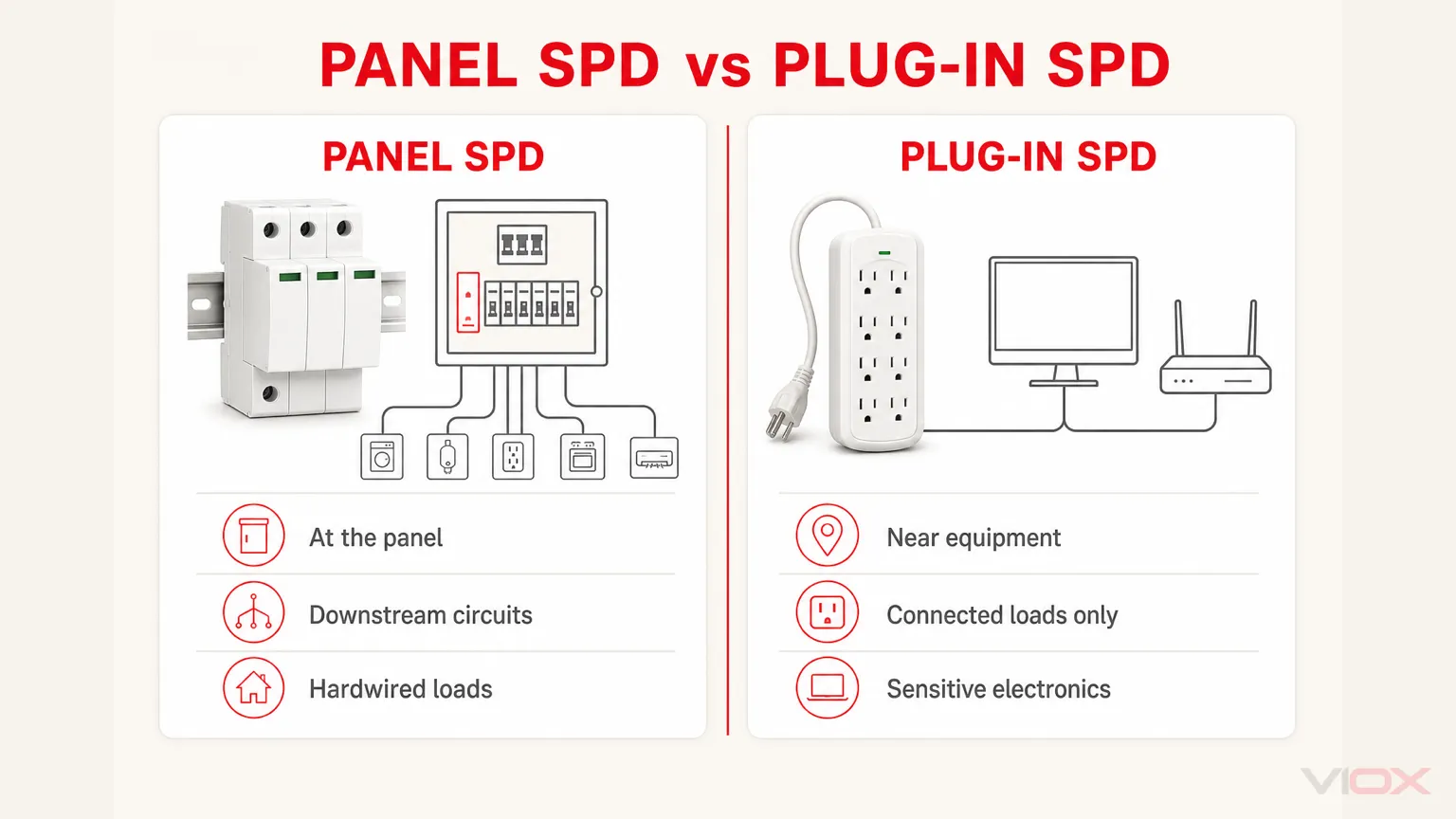
SPD ogranicza przejściowe przepięcia; nie reguluje zasilania, które pozostaje zbyt wysokie lub zbyt niskie. W celu poznania zasady działania i ograniczeń funkcjonalnych, zacznij od co robi ogranicznik przepięć.
Szybka macierz decyzyjna: rozdzielnica, wtykowa, obie czy żadna?
Skorzystaj z tej macierzy przed porównaniem parametrów znamionowych produktów.
| Twoja sytuacja | Pierwszy priorytet | Dlaczego | Co pozostało do sprawdzenia |
|---|---|---|---|
| Jesteś właścicielem domu, możesz dokonywać modyfikacji rozdzielnicy i posiadasz ważne urządzenia elektroniczne podłączone na stałe | SPD typu whole-house lub tablicowy | Urządzenie wtykowe nie może chronić sprzętu, który nie jest za jego pośrednictwem podłączony | Wrażliwe obciążenia wtykowe, ścieżki wprowadzania sygnałów/danych oraz kompatybilność produktów |
| Wynajmujesz lokal lub nie masz dostępu do rozdzielnicy elektrycznej | Wtykowe urządzenie SPD przy wybranych urządzeniach | Zapewnia ono dostępną warstwę ochrony w miejscu użytkowania bez ingerencji w rozdzielnicę | Czy w budynku istnieje już ochrona nadrzędna oraz czy linie danych/koncentryczne również wymagają ochrony |
| Posiadasz zarówno urządzenia elektroniczne podłączone na stałe, jak i wrażliwy sprzęt wtykowy | Oba | Urządzenia chronią różne lokalizacje i mogą tworzyć wielopoziomową strategię ochrony | Koordynacja, instrukcje montażu oraz inne ścieżki wprowadzania przewodów |
| Głównym problemem jest utrzymujące się wysokie napięcie, niskie napięcie, powtarzające się przygasanie światła lub niestabilne zasilanie | Żadne z nich nie stanowi kompletnego rozwiązania | SPD chronią przed krótkotrwałymi przepięciami, a nie przed wszystkimi warunkami jakości zasilania | Monitorowanie napięcia, diagnostyka zasilania, błędy w okablowaniu oraz odpowiednia funkcja ochrony przeciwprzepięciowej |
| Budynek posiada zewnętrzny system odgromowy lub jest narażony na częste wyładowania atmosferyczne | Skoordynowany projekt, często obejmujący wiele punktów instalacji SPD | Ochrona odgromowa obejmuje połączenia wyrównawcze, obwody zasilające, obwody sygnałowe oraz granice instalacji | Ocena ryzyka oraz projektowanie zgodnie z obowiązującymi lokalnymi przepisami dotyczącymi ochrony odgromowej i instalacji |
| Urządzenie jest zasilane oraz podłączone do przewodów koncentrycznych, antenowych, Ethernet, telefonicznych lub sterowniczych | SPD zasilania oraz odpowiednie zabezpieczenia dla pozostałych interfejsów | Przepięcie może dotrzeć do urządzenia za pośrednictwem każdej podłączonej ścieżki przewodzącej | Napięcie interfejsu, szerokość pasma, uziemienie, ekranowanie oraz połączenia wyrównawcze |
Decyzja nie brzmi zatem “które urządzenie jest lepsze?”, lecz “jakich ścieżek ochrony potrzebuje ten dom?”
Co chroni SPD dla całego domu
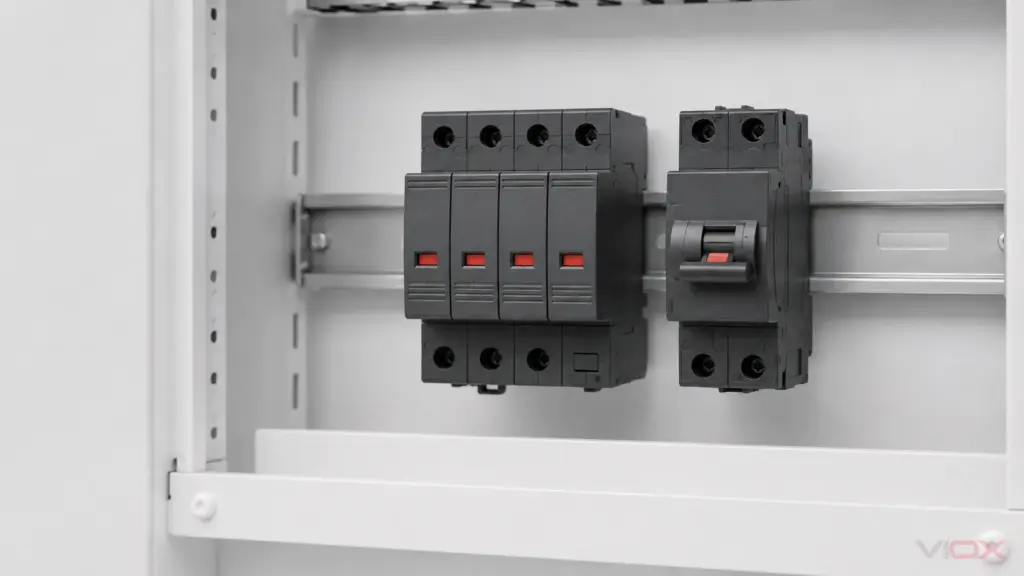
SPD dla całego domu jest instalowany przy lub w pobliżu urządzeń serwisowych lub rozdzielczych. Podczas normalnej pracy jego elementy ochronne pozostają w stanie czuwania. Gdy stan przejściowy podnosi napięcie w trybie ochrony, SPD zapewnia kontrolowaną ścieżkę dla prądu udarowego i ogranicza naprężenia napięciowe oddziałujące na urządzenia podrzędne.
Jego praktyczną zaletą jest zasięg. Jeden prawidłowo dobrany i zainstalowany SPD w rozdzielnicy może zapewnić ochronę:
- obwodom odgałęźnym w całym domu;
- podłączonym na stałe sterownikom HVAC i pompom ciepła;
- pompom stałym, wyposażeniu garażowemu, sterownikom oświetlenia i systemom bezpieczeństwa;
- obwodom gniazd wtykowych i podłączonym do nich urządzeniom;
- podrzędnym rozdzielnicom, w zależności od układu instalacji elektrycznej i koordynacji.
Nie oznacza to, że każde podłączone urządzenie „widzi” to samo napięcie podczas przepięcia. Rzeczywista skuteczność zależy od deklarowanych charakterystyk SPD, ścieżki przepięcia, trybu ochrony, prowadzenia przewodów, połączeń wyrównawczych, konfiguracji rozdzielnicy oraz impedancji połączeń. Długie lub zapętlone przewody przyłączeniowe mogą zwiększać napięcie podczas szybkiego przepięcia, nawet jeśli sam SPD posiada odpowiednią wartość znamionową uzyskaną w warunkach laboratoryjnych.
Czego nie oznacza określenie “cały dom”
SPD zainstalowany w rozdzielnicy nie tworzy nieprzeniknionej tarczy wokół budynku. W szczególności sam w sobie:
- nie gwarantuje przetrwania urządzeń podczas każdego wyładowania atmosferycznego;
- nie zastępuje zewnętrznego systemu odgromowego tam, gdzie jest on wymagany;
- nie naprawia wadliwego uziemienia ani połączeń wyrównawczych;
- nie chroni niezabezpieczonych przewodów koncentrycznych, telefonicznych, Ethernet, antenowych ani przewodów sterowniczych;
- nie reguluje długotrwałych przepięć ani spadków napięcia;
- nie zastępuje zabezpieczeń nadprądowych, zabezpieczeń różnicowoprądowych ani innych wymaganych urządzeń ochronnych.
Czytelnicy oceniający narażenie na wyładowania atmosferyczne powinni oddzielnie przeanalizować to, co SPD może, a czego nie może zrobić w obliczu wyładowań atmosferycznych.
Co chroni wtykowy ogranicznik przepięć
Wtykowy SPD jest instalowany w punkcie odbioru energii. W terminologii północnoamerykańskiej, UL Solutions klasyfikuje produkty podłączane przewodem, wtykane bezpośrednio oraz typu gniazdowego w kontekście SPD typu 3. Dokładne oznaczenie oraz warunki instalacji muszą być zawsze zweryfikowane na samym produkcie.
Wtykowy SPD może zapewnić lokalny stopień ochrony dla urządzeń takich jak:
- komputery stacjonarne i monitory;
- routery, przełączniki i inne urządzenia sieciowe;
- telewizory i systemy audiowizualne;
- sprzęt do pracy biurowej w domu;
- inna elektronika podłączana do gniazda, mieszcząca się w zakresie dopuszczalnego obciążenia urządzenia i zgodna z instrukcją.
Równie istotny jest jego zakres działania: chroni on wyłącznie odbiorniki podłączone za jego pośrednictwem. Nie może chronić płyty sterującej HVAC, pompy ciepła podłączonej na stałe, innego pomieszczenia ani oddzielnego obwodu odbiorczego.
Listwa zasilająca nie zawsze jest urządzeniem typu SPD
Zwykła listwa zasilająca przede wszystkim zapewnia dodatkowe gniazda. Może zawierać wyłącznik i zabezpieczenie nadprądowe, nie posiadając przy tym SPD. Organizacja ESFI również ostrzega, że nie każda listwa zasilająca zapewnia ochronę przeciwprzepięciową. Należy szukać oznaczenia produktu, które identyfikuje urządzenie jako ogranicznik przepięć lub SPD zgodnie z systemem certyfikacji stosowanym na danym rynku. Ogólny wskaźnik “zasilania” (power), “włączenia” (on) lub “uziemienia” (grounded) niekoniecznie jest wskaźnikiem stanu ochrony.
W przypadku produktów wtykowych należy ocenić pełną deklarację, a nie tylko jeden numer marketingowy. Wartość znamionowa w dżulach może dostarczyć informacji dotyczących energii zgodnie z metodą badawczą producenta, ale nie zastępuje ona kompatybilności napięciowej, skuteczności ochrony, certyfikacji, sygnalizacji stanu ani bezpiecznego użytkowania pod obciążeniem. Ograniczenia tej metryki omówiono w przewodniku po wartościach znamionowych w dżulach dla ograniczników przepięć.
Czy po zainstalowaniu ogranicznika przepięć (SPD) dla całego domu nadal potrzebne są ograniczniki wtykowe?
Często tak, ale nie jest to automatyczna zasada dla każdego gniazda.
The Wytyczne dla budynków mieszkalnych opracowane przez National Institute of Standards and Technology (NIST) opisują architektury wykorzystujące ogranicznik przy rozdzielnicy głównej, z zachowaniem ograniczników wtykowych w pobliżu szczególnie wrażliwych urządzeń. Urządzenie nadrzędne zabezpiecza szerszą ścieżkę dystrybucji energii elektrycznej, natomiast urządzenie podrzędne dodaje ochronę dla wybranych odbiorników.
Stosowanie ograniczników przepięć (SPD) typu wtykowego jest najbardziej uzasadnione po zainstalowaniu SPD w rozdzielnicy, gdy:
- urządzenie jest wrażliwe, wartościowe lub trudne do wymiany;
- kilka powiązanych urządzeń znajduje się w jednej lokalizacji, takiej jak domowe biuro lub szafa sieciowa;
- producent produktu zaleca skoordynowane zabezpieczenie nadrzędne;
- obwód zasilający jest tylko jednym z kilku interfejsów chronionych w danym urządzeniu;
- instalacja została oceniona pod kątem konieczności zastosowania ochrony warstwowej.
Nie są one automatycznie wymagane w każdej lampie, ładowarce czy urządzeniu. Dodawanie urządzeń bez sprawdzenia ich oznaczeń, ograniczeń obciążenia, stanu oraz koordynacji nie zapewnia lepszej ochrony.
Jak działa warstwowa ochrona przeciwprzepięciowa
Ochrona warstwowa umieszcza SPD na różnych granicach instalacja elektryczna. SPD w rozdzielnicy tworzy ścieżkę odprowadzania prądu udarowego dla zabezpieczenia nadrzędnego. Wtykowy SPD może stanowić kolejny stopień ochrony w pobliżu wybranych urządzeń. Dodatkowe SPD mogą być stosowane w rozdzielnicach podrzędnych lub przy innych interfejsach, gdy wymaga tego architektura systemu.
Zasada inżynieryjna jest prosta, ale podział prądu i napięcia nie jest uniwersalny. Zależy on od:
- charakterystyk napięciowo-prądowych każdego SPD;
- zapewnionych trybów ochrony;
- impedancji przewodu między stopniami;
- kształtu fali przepięciowej i źródła;
- układu uziemienia i połączeń wyrównawczych;
- urządzeń odbiorczych i podłączonych do nich interfejsów;
- wymagań producenta dotyczących koordynacji i instalacji.
Z tego względu technicznie nieuzasadnione jest twierdzenie, że panelowy SPD zawsze zredukuje określony prąd udarowy do stałego prądu różnicowego lub że wtykowy SPD zawsze zapewni urządzeniu jedno dokładne napięcie. Wartości te wymagają zdefiniowanego obwodu testowego, produktów, trybów, kształtu fali oraz punktów pomiarowych.
Odpowiednia praktyczna zasada brzmi:
Należy zastosować SPD zainstalowany przed urządzeniem, odpowiedni dla danego punktu zasilania lub rozdzielnicy, a następnie dodać zabezpieczenie w punkcie użytkowania, jeśli uzasadnia to chronione obciążenie, poziom narażenia oraz instrukcje produktu. Nie należy zakładać, że dwa niezwiązane ze sobą produkty są skoordynowane tylko dlatego, że oba są oznaczone jako “ogranicznik przepięć”.”
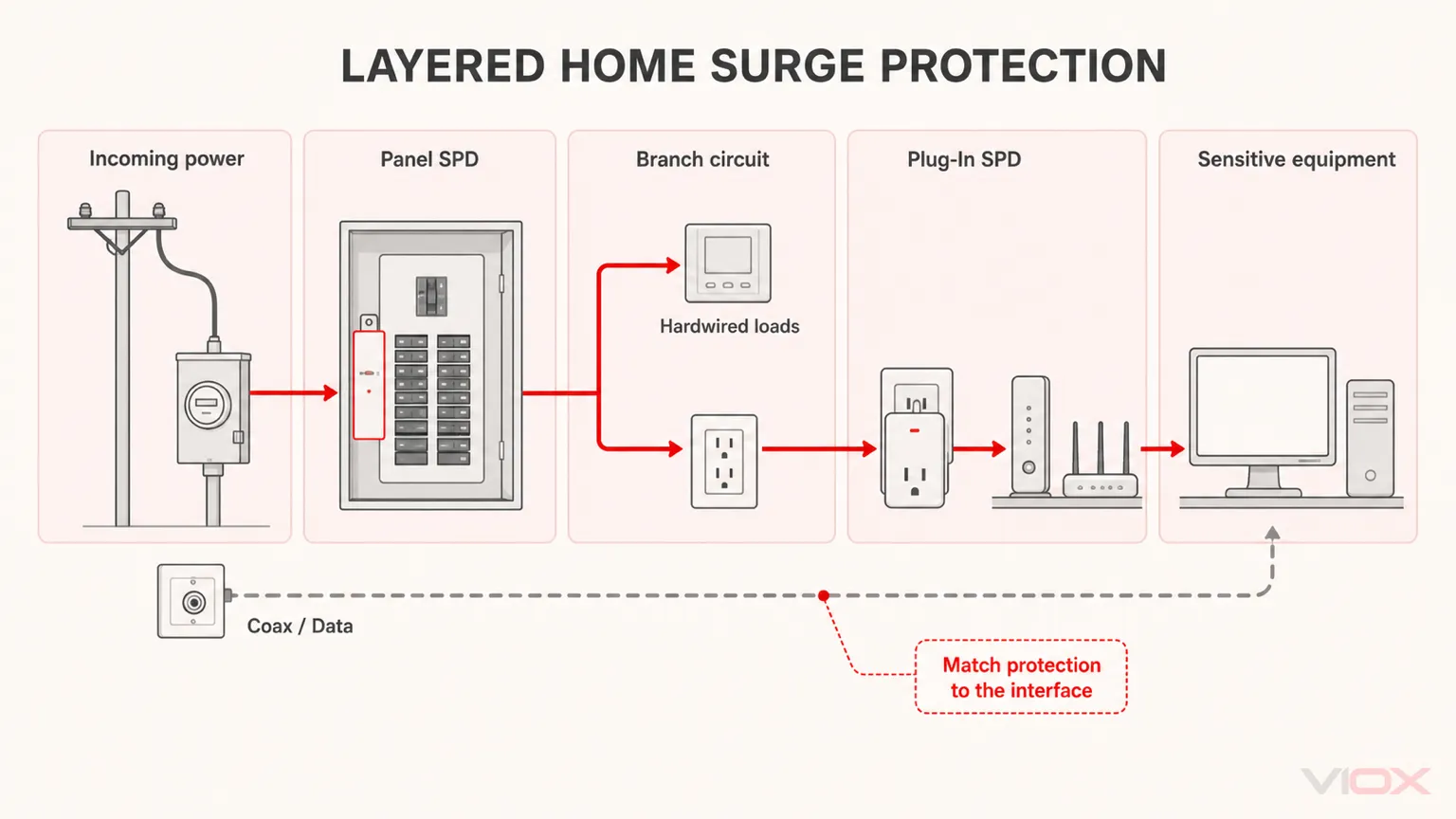
W celu uzyskania głębszego porównania przetestowanych pozycji SPD, zobacz Ogranicznik przepięć Typu 1 vs Typu 2 vs Typu 3.
Ścieżki ochrony, które mogą pominąć oba urządzenia
Większość porównań dla budynków mieszkalnych ogranicza się do przewodów zasilających. Może to pozostawić najważniejszą granicę instalacji elektrycznej bez wyjaśnienia.
Przewody koncentryczne, Ethernet, telefoniczne, antenowe oraz linie sterujące
Urządzenie może być podłączone do więcej niż jednej sieci przewodzącej. Telewizor może otrzymywać zasilanie oraz sygnał przez przewód koncentryczny. Router może otrzymywać zasilanie AC oraz zewnętrzne połączenie Ethernet. Kontroler bezpieczeństwa może łączyć się z zasilaniem, czujnikami oraz okablowaniem komunikacyjnym.
SPD zasilania nie ogranicza automatycznie przepięć docierających tymi innymi przewodami. W przypadkach, gdy wymagana jest ochrona dodatkowych interfejsów, wybrany SPD sygnałowy musi być dopasowany do napięcia interfejsu, metody sygnalizacji, szerokości pasma, złącza, układu ekranowania, uziemienia oraz środowiska instalacji. Należy traktować to jako osobne zadanie doboru interfejsu, a nie jako wybór ochronnika sygnałowego na podstawie wartości kA urządzenia SPD zasilania.
Długotrwałe przepięcia i spadki napięcia
SPD przeznaczony jest do ochrony przed przepięciami przejściowymi. Nie stanowi on kompletnego rozwiązania w przypadku zasilania, które stale wykracza poza swój normalny zakres, powtarzających się spadków napięcia, utraty przewodu neutralnego, nieprawidłowego okablowania lub innych trwałych zakłóceń jakości zasilania. Takie warunki wymagają diagnostyki oraz, ewentualnie, zastosowania funkcji monitorowania napięcia lub odłączenia. Różnica ta została wyjaśniona w ochronnik napięciowy a ogranicznik przepięć.
Bezpośrednie uderzenie pioruna i ochrona konstrukcji
Ani produkt wtykowy, ani SPD tablicowy nie powinny być przedstawiane jako gwarancja ochrony przed bezpośrednim uderzeniem pioruna. Kompletna strategia ochrony odgromowej może obejmować przechwytywanie wyładowań, przewody odprowadzające, połączenia wyrównawcze, uziemienie, SPD zasilania oraz ochronę przychodzących usług sygnałowych. Wymagania zależą od budynku, ekspozycji oraz lokalnych przepisów.
Jaka strategia pasuje do Twojego domu?
Właściciel domu z elektroniką HVAC i kilkoma wrażliwymi odbiornikami wtykowymi
Należy nadać priorytet SPD tablicowemu, ponieważ ważne urządzenia są podłączone na stałe i rozproszone w kilku obwodach. Warto dodać SPD wtykowe przy skupionych wrażliwych odbiornikach, takich jak domowe biuro, sprzęt sieciowy lub system audiowizualny, gdzie uzasadnione jest zastosowanie dodatkowego stopnia ochrony w miejscu użytkowania.
Decyzja: Oba.
Najemca bez dostępu do urządzeń serwisowych lub rozdzielnicy
Należy stosować certyfikowane wtykowe ograniczniki przepięć (SPD) przy wybranych urządzeniach. Należy zapytać zarządcę nieruchomości, czy budynek posiada już zabezpieczenie przeciwprzepięciowe zainstalowane przed obwodem. Nie otwierać ani nie modyfikować ogólnodostępnych urządzeń elektrycznych.
Decyzja: Najpierw ochrona wtykowa.
Dom z większością urządzeń podłączonych na stałe i niewielką liczbą wrażliwych urządzeń wtykowych
Ogranicznik przepięć (SPD) w rozdzielnicy zapewnia większą wartość niż zakup wielu jednostek wtykowych, które nie chronią odbiorników podłączonych na stałe. Ochronę punktową można dodawać selektywnie, zamiast automatycznie.
Decyzja: Najpierw ochrona w rozdzielnicy; w razie potrzeby dodać wtykowe ograniczniki przepięć (SPD).
Dom, w którym występują długotrwałe okresy wysokiego napięcia lub powtarzające się migotanie światła
Nie należy traktować tego jako prostego problemu zakupowego ogranicznika przepięć. Należy zlecić ocenę zasilania, przewodu neutralnego, połączeń, obciążenia oraz zachowania napięcia. SPD może pozostać elementem systemu ochrony przepięciowej, ale nie rozwiązuje podstawowego, długotrwałego problemu.
Decyzja: Najpierw diagnoza; żaden typ SPD nie stanowi kompletnego rozwiązania.
Dom z antenami dachowymi, zewnętrznymi przewodami przesyłu danych lub wieloma przyłączami zasilania
Sama ochrona obwodów zasilania pozostawia inne drogi otwarte. System może wymagać skoordynowanej ochrony zasilania i sygnałów wraz z prawidłowym wyrównaniem potencjałów w punktach wejściowych.
Decyzja: Skoordynowana ochrona wielotorowa, a nie tylko więcej listew zasilających.
Co sprawdzić przed porównaniem produktów
Porównanie określa lokalizację ochrony. Nie kończy ono procesu wyboru produktu.
Sprawdzenie SPD w rozdzielnicy
- napięcie i konfiguracja instalacji elektrycznej AC;
- układ uziemienia i wymagane tryby ochrony;
- dopuszczalna pozycja montażowa oraz typ SPD zgodnie z obowiązującymi ramami prawnymi;
- znamionowe napięcie pracy ciągłej;
- deklarowany poziom ochrony napięciowej lub znamionowa wytrzymałość napięciowa;
- znamionowe prądy wyładowcze przy określonych przebiegach testowych;
- dostępny prąd zwarciowy oraz wymagana koordynacja zabezpieczeń zwarciowych/zapasowych;
- prowadzenie przewodów i instrukcje producenta dotyczące długości wyprowadzeń;
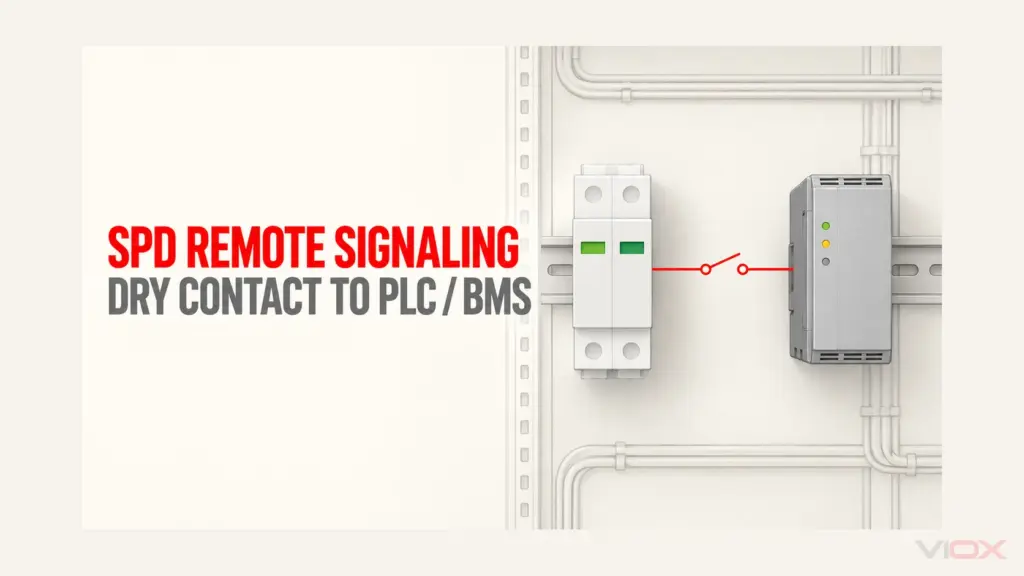
- wskazanie stanu zabezpieczenia oraz, w razie potrzeby, sygnalizacja zdalna;
- dowody certyfikacji wymagane przez projekt lub właściwą jurysdykcję.
Kontrole wtykowych ograniczników przepięć SPD
- odpowiednie napięcie zasilania oraz system wtyczek/gniazd wtykowych;
- certyfikacja lub atest odpowiedni dla danego rynku;
- deklarowana skuteczność ochrony napięciowej zgodnie z odpowiednią metodą badawczą;
- ograniczenia prądu obciążenia i podłączonego obciążenia;
- dedykowane wskazanie stanu zabezpieczenia lub sposób działania przy rozłączeniu;
- ograniczenia producenta dotyczące instalacji, przedłużaczy, listew zasilających oraz podłączonego sprzętu;
- zabezpieczenie dla interfejsów niesygnałowych, jeśli takie interfejsy występują.
Nie należy porównywać wartości Up zgodnie z IEC dla ogranicznika przepięć (SPD) w rozdzielnicy bezpośrednio z wartością VPR (Voltage Protection Rating) zgodnie z UL dla produktu wtykowego, traktując je jako ten sam pomiar. Nie należy porównywać parametrów Imax, In, SCCR, Isccr oraz dżuli jako wymiennych miar. Każda deklaracja odpowiada na inne pytanie w ramach określonych ram testowych. Należy używać Jak czytać kartę katalogową SPD przy przechodzeniu od strategii ochrony do właściwej specyfikacji.
Granice norm: UL/NEC i IEC nie stanowią jednego systemu klasyfikacji
Określenia Typ 1, Typ 2 i Typ 3 pojawiają się w więcej niż jednym środowisku normatywnym, jednak definicje, testy, wartości znamionowe oraz zasady instalacji muszą być interpretowane w ramach obowiązujących ram prawnych.
| Kontekst | Co należy zweryfikować | Ważna granica. |
|---|---|---|
| Ocena produktu dla rynku północnoamerykańskiego | Obowiązujący typ według UL 1449, certyfikacja produktu, MCOV, VPR, In, SCCR, tryby ochrony oraz instrukcje instalacji | UL Solutions obejmuje produkty typu 1–3 przeznaczone do przyłączenia na stałe, jak również produkty typu 3 podłączane przewodem, bezpośrednio do gniazda lub typu wtykowego; należy stosować się do dokładnych oznaczeń na produkcie |
| przepisy instalacyjne w Stanach Zjednoczonych | przyjęta edycja National Electrical Code, lokalne poprawki, wymagania dotyczące przyłączy/linii zasilających oraz organ mający jurysdykcję | wymagania NEC nie wszędzie automatycznie stanowią prawo; przyjęcie przepisów oraz poprawki mogą się różnić |
| IEC AC low-voltage SPD | norma IEC 61643-11 wraz z IEC 61643-01, deklarowany typ, Uc, Up, In, Imax lub Iimp tam, gdzie ma to zastosowanie, tryby ochrony oraz deklaracje dotyczące zwarcia | terminologii IEC oraz wyników badań nie należy przeliczać na wartości UL za pomocą prostej tabeli jeden do jednego |
W Stanach Zjednoczonych, Norma NEC 230.67 dotyczy wyszczególnionych SPD typu 1 lub typu 2 dla przyłączy zasilających określone obiekty, w tym budynki mieszkalne. Wymóg należy stosować zgodnie z wydaniem normy NEC oraz poprawkami przyjętymi przez lokalny organ nadzorczy. Nie należy interpretować wymogu NEC jako globalnego stwierdzenia, że każdy istniejący dom w każdej jurysdykcji musi zostać zmodernizowany w ten sam sposób.
Dla rynków IEC, IEC 61643-11:2025 dotyczy SPD prądu przemiennego AC niskiego napięcia i ma być czytany wraz z najnowszym wydaniem normy IEC 61643-01. Wymagania dotyczące produktu muszą być nadal łączone z krajowymi zasadami instalacyjnymi oraz rzeczywistą instalacją elektryczną.
Zakres instalacji i konserwacji
Instalacja SPD w rozdzielnicy obejmuje osprzęt przyłączeniowy lub rozdzielczy i powinna być przeprowadzona przez wykwalifikowaną osobę zgodnie z obowiązującymi przepisami lokalnymi. Instalator musi zweryfikować obwód, instrukcje produktu, tryby połączeń, wymagania dotyczące zabezpieczeń nadprądowych lub dodatkowych, dostępny prąd zwarciowy, prowadzenie przewodów oraz procedurę bezpiecznej izolacji.
Jakość instalacji wpływa na skuteczność ochrony przeciwprzepięciowej. Unikanie zbędnej długości przewodów, pętli oraz wspólnej impedancji może być równie ważne, co dobór odpowiednich parametrów znamionowych. Patrz Błędy instalacyjne SPD związane z długością przewodów, uziemieniem, konfiguracją okablowania oraz sygnalizacją stanu.
Po instalacji:
- zidentyfikuj, który wskaźnik pokazuje status ochrony;
- nie myl wskaźnika zasilania ze wskaźnikiem stanu ochrony;
- przestrzegaj instrukcji kontroli i wymiany producenta;
- przeprowadź kontrolę systemu ochrony po wystąpieniu znanego poważnego zdarzenia, jeśli wymagają tego instrukcje lub procedura w miejscu instalacji;
- wymień uszkodzony lub odłączony moduł/urządzenie na produkt kompatybilny;
- nie stosuj jednego uniwersalnego czasu eksploatacji dla każdej rozdzielnicy i wtykowego SPD.
To, czy wtykowy SPD z wyłącznikiem nadal zapewnia ochronę po wyłączeniu wyłącznika, zależy od jego obwodu wewnętrznego i konstrukcji produktu. Nie należy wyciągać wniosków jedynie na podstawie pozycji wyłącznika. Jeśli wymagana jest całkowita izolacja i jest to bezpieczne, należy odłączyć urządzenie od zasilania, pamiętając, że inne połączenia przewodzące mogą nadal pozostać.
Wskazówki dotyczące wymiany na podstawie stanu technicznego znajdują się w sposób określania momentu osiągnięcia końca okresu eksploatacji ogranicznika przepięć.
Ostateczna zasada decyzyjna
Wybierz SPD dla całego domu lub tablicy rozdzielczej w pierwszej kolejności gdy głównym celem jest zapewnienie szerokiej ochrony obwodów odbiorczych oraz urządzeń elektronicznych podłączonych na stałe.
Wybierać wtykowe SPD w pierwszej kolejności gdy dostęp do tablicy rozdzielczej jest niemożliwy lub gdy wybrane urządzenia elektroniczne podłączane do gniazd wymagają bezpośredniej ochrony w punkcie poboru energii.
Wybierać Zarówno gdy w domu znajdują się ważne odbiorniki podłączone na stałe oraz wrażliwe urządzenia wtykowe, pod warunkiem, że produkty są odpowiednie dla danej lokalizacji i użytkowane zgodnie z obowiązującymi instrukcjami.
Wybierać ani jako kompletna odpowiedź gdy rzeczywistym problemem są utrzymujące się odchylenia napięcia, błąd w okablowaniu, brak połączeń wyrównawczych, niezabezpieczona ścieżka przesyłu danych/sygnału lub wymóg ochrony odgromowej, który wymaga szerszego projektu instalacji elektrycznej.
Najlepsza strategia nie jest tą, która charakteryzuje się największą wartością kA lub liczbą dżuli. Jest nią taka, która zamyka odpowiednie ścieżki przepięć za pomocą właściwie dobranych, zainstalowanych i możliwych do serwisowania urządzeń. Aby ocenić dostępne opcje montażu w rozdzielnicy po zdefiniowaniu strategii ochrony, należy przejrzeć Rodzina produktów SPD VIOX oraz zażądać specyfikacji znamionowych i dokumentów certyfikacyjnych dla danego modelu na przeznaczony rynek.
Przegląd źródeł
- NIST Special Publication 960-6 — Surges Happen! How to Protect the Appliances in Your Home
- NIST Surge Protection Anthology — Coordination of Cascaded Surge-Protective Devices
- Electrical Safety Foundation International — Surge Protection: Keeping Your Electronics and Home Safe
- UL Solutions — Surge Protection Device Testing and Certification Services
- Materiały opracowywane przez NFPA dotyczące NEC 230.67
- IEC 61643-11:2025 — Urządzenia ograniczające przepięcia podłączone do niskonapięciowych systemów zasilania AC
- IECEE TRF 61643-111D:2026 — IEC 61643-11:2025 stosowane wraz z IEC 61643-01:2024