ジョー

こんにちは、私はジョー、専用のプロフェッショナルで12年以上の経験を電気産業です。 でVIOX電気、私は高品質の電気的ソリューションのニーズに応えております。 私の専門知識に及ぶ産業用オートメーション、住宅の配線は、商用電気システム。お問い合わせ[email protected] がることができます。

Leakage Current vs Residual Current vs Ground Current: What’s the Difference?

漏洩電流、残留電流、地絡電流:それぞれの違いとは?

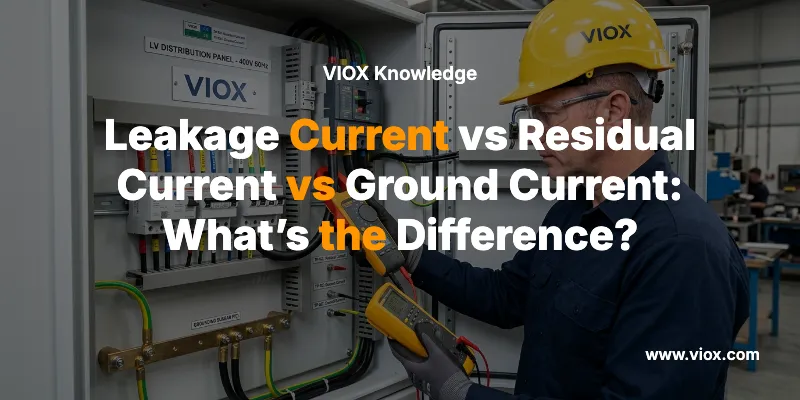
In electrical engineering and power distribution, leakage current, residual current, and ground current are closely related, but they are not the same thing. Mixing them up can lead to poor device selection, misleading troubleshooting notes, nuisance tripping, and confusion when moving between IEC and NEC terminology. Direct Answer Leakage current is the broad phenomenon: current is escaping the intended load path through insulation, capacitance, filters, contamination, or another unintended route. Residual current is the measured imbalance between the currents in the live conductors of a circuit. In IEC-style terminology, this is the quantity detected by an RCD, RCCB, or RCBO. Ground current is current actually flowing through a ground or […]

漏洩電流、残留電流、地絡電流:それぞれの違いとは? 続きを読む »

Multifunction Timer Relay vs Single-Function Timer Relay: Which One Should You Choose?

多機能タイマーリレーと単機能タイマーリレー:どちらを選ぶべきか?

An industrial control panel demonstrating the side-by-side integration of both multifunction and single-function timer relays for complex automation tasks. Direct Answer Choose a multifunction timer relay when one product needs to cover several timing modes, panel standardization matters, or you want flexibility during commissioning and future changes. Choose a single-function timer relay when the timing task is fixed, operator error must be minimized, troubleshooting needs to stay simple, or the project values one-purpose reliability over configurability. This is not a question of which type is “better” in the abstract. It is a question of whether your application benefits more from flexibility or simplicity. The right answer depends on the panel,

多機能タイマーリレーと単機能タイマーリレー:どちらを選ぶべきか? 続きを読む »

How to Read DC Isolator Switch Ratings: Voltage, Current, Poles, and Utilization Categories

DCアイソレータスイッチの定格の見方:電圧、電流、極数、および利用カテゴリ

Direct Answer Reading a DC isolator switch label correctly comes down to four things, checked in this order: Voltage rating — can the switch safely handle the highest DC voltage in your system? Current rating — can it carry the expected continuous current without overheating? Pole configuration — how many conductors does it disconnect at the same time? Utilization category — what kind of DC switching duty was it actually tested for? An engineer carefully inspecting the ratings on a DC isolator switch at a solar PV installation to ensure system safety and compliance. The order matters. In practice, the most frequent rating mistakes happen when buyers focus on the

DCアイソレータスイッチの定格の見方:電圧、電流、極数、および利用カテゴリ 続きを読む »

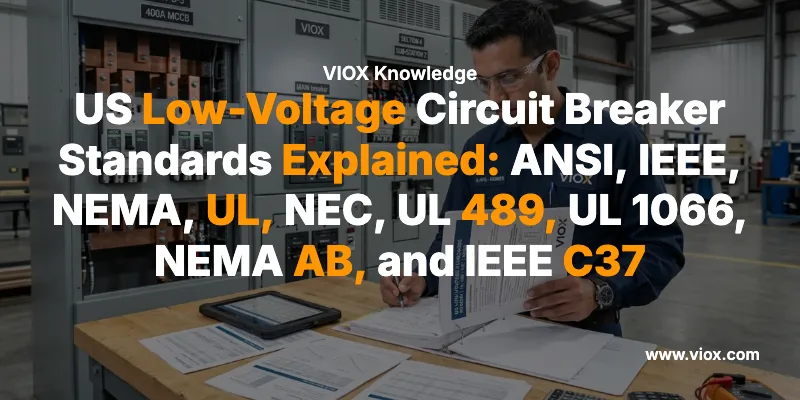
US Low-Voltage Circuit Breaker Standards Explained: ANSI, IEEE, NEMA, UL, NEC, UL 489, UL 1066, NEMA AB, and IEEE C37

米国の低電圧回路ブレーカ規格解説:ANSI、IEEE、NEMA、UL、NEC、UL 489、UL 1066、NEMA AB、およびIEEE C37

An engineer reviewing US low-voltage circuit breaker standards and documentation in a switchgear facility. If you work with low-voltage circuit breakers in the United States, the hardest part is often not the breaker itself. It is figuring out who does what in the standards system. People see names like: ANSI IEEE NEMA UL NFPA UL 489 UL 1066 NEMA AB IEEE C37 NEC and assume they all do the same job. They do not. Some are standards coordinators, some are standards developers, some are testing and certification organizations, and one of them is the installation code rather than a product standard. The simplest way to understand them is this: ANSI

米国の低電圧回路ブレーカ規格解説:ANSI、IEEE、NEMA、UL、NEC、UL 489、UL 1066、NEMA AB、およびIEEE C37 続きを読む »

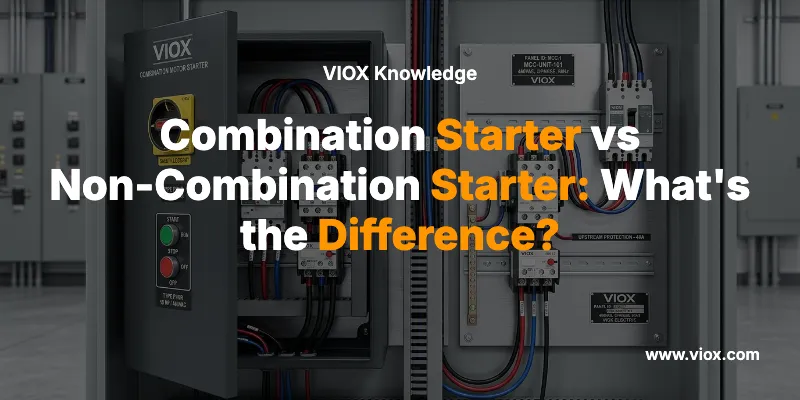
Combination Starter vs Non-Combination Starter: What's the Difference?

コンビネーションスタータとノンコンビネーションスタータ:違いは何ですか?

If you are comparing a combination starter vs non-combination starter, the main difference is this: A combination starter includes the motor control function plus the branch-circuit protective and disconnecting means in one assembly. A non-combination starter provides the motor-starting and overload function, but it depends on a separate upstream device for branch-circuit short-circuit and ground-fault protection. That difference affects panel layout, installation scope, coordination, maintenance practice, and code strategy. In some projects, a combination starter simplifies field installation and documentation. In others, a non-combination starter fits better because the panel already has a coordinated upstream protective scheme. Side-by-side comparison of a combination starter and a non-combination starter inside an industrial

コンビネーションスタータとノンコンビネーションスタータ:違いは何ですか? 続きを読む »

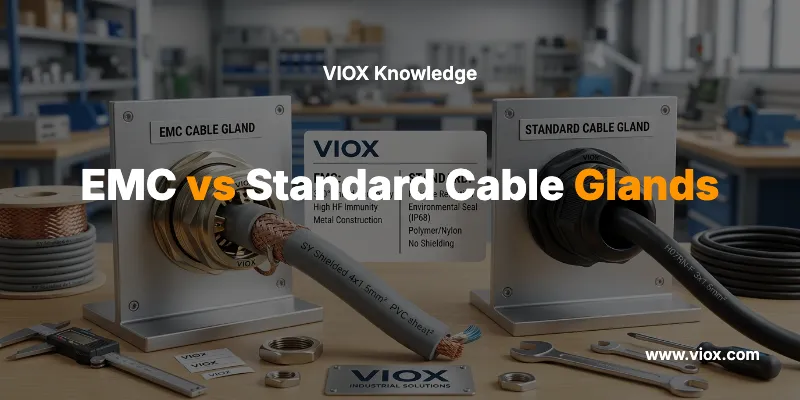
EMC vs Standard Cable Glands

EMC対標準ケーブルグランド:主な違い、用途、および選定ガイド

If you are comparing EMC vs standard cable glands, the core difference is simple: a standard cable gland mainly provides cable retention, sealing, and strain relief, while an EMC cable gland adds a conductive 360-degree shield termination path for screened or shielded cables. Side-by-side comparison of an EMC cable gland and a standard cable gland illustrating the use of shielded and unshielded cables. That extra EMC function matters in installations where electromagnetic interference can disrupt signal integrity, increase emissions, or create compliance problems. In low-noise, non-shielded, or purely mechanical cable-entry applications, a standard gland is often sufficient. In variable-frequency drive systems, servo panels, shielded instrumentation, and industrial automation cabinets, an

EMC対標準ケーブルグランド:主な違い、用途、および選定ガイド 続きを読む »

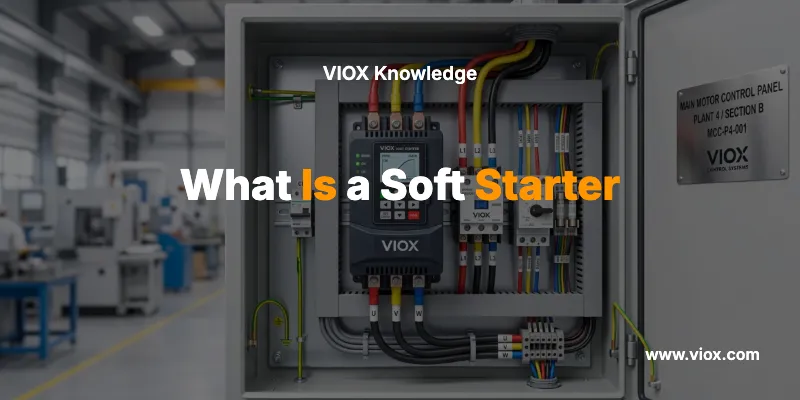
What Is a Soft Starter

ソフトスタータとは?仕組み、種類、および産業用途

An industrial soft starter neatly installed inside a main motor control panel, highlighting its compact design and wiring configuration. A soft starter is a motor control device that reduces electrical and mechanical stress during motor startup by gradually increasing the voltage applied to the motor. Instead of applying full line voltage instantly, the soft starter ramps voltage in a controlled way, which reduces inrush current, limits torque shock, and helps the motor-driven system accelerate more smoothly. In practical terms, a soft starter is used when a motor needs a gentler start but does not need full variable-speed control during normal operation. That is why soft starters are common in industrial

ソフトスタータとは?仕組み、種類、および産業用途 続きを読む »

What's the Difference Between kW vs. kWh?

kWとkWhの違いは何ですか?

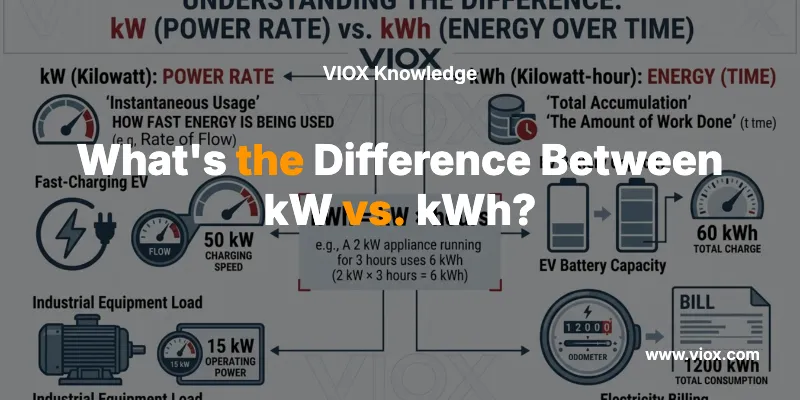
Engineer reviewing electrical load data on a tablet in front of a commercial VIOX distribution panel. The difference between kW and kWh is simple: kW tells you the rate of power kWh tells you the amount of energy used over time In other words, kW describes how fast electricity is being consumed, generated, or delivered at a given moment. kWh describes how much electricity is actually used during a period of time. The easiest way to remember it is this: kWh = kW × hours So if a device runs at 2 kW for 3 hours, it uses 6 kWh of energy. This distinction matters in real projects. Equipment nameplates,

kWとkWhの違いは何ですか? 続きを読む »

What Is the NEC 125% Rule for Continuous Loads?

連続負荷に関するNEC 125%規則とは何ですか?

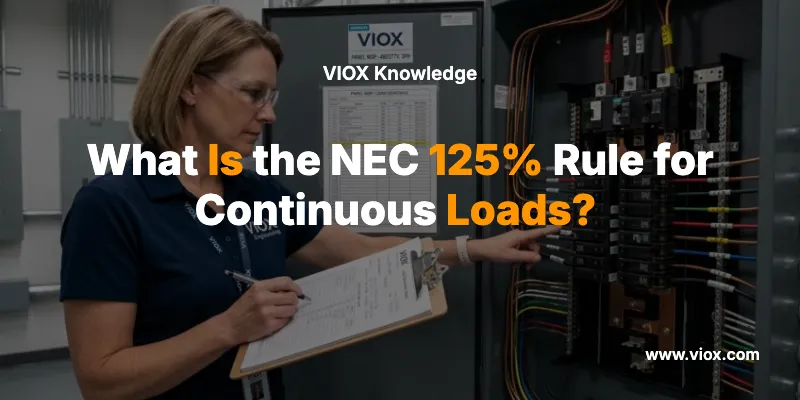
The NEC 125% rule for continuous loads means that when a branch circuit or feeder supplies a continuous load, the overcurrent device and related circuit design have to account for that load at 125% of the continuous portion, unless a specific 100%-rated assembly exception applies. In practical terms, if a load is expected to run at its maximum current for 3 hours or more, the circuit usually is not sized at exactly 100% of that current. The continuous portion is carried into the design with the 125% adjustment in mind. This comes up constantly in breaker sizing, conductor sizing, EV charging, lighting, heating, and other long-duration loads because it changes

連続負荷に関するNEC 125%規則とは何ですか? 続きを読む »

Latching vs Non-Latching Relay: Complete Selection Guide

ラッチングリレーとノンラッチングリレー:完全選択ガイド

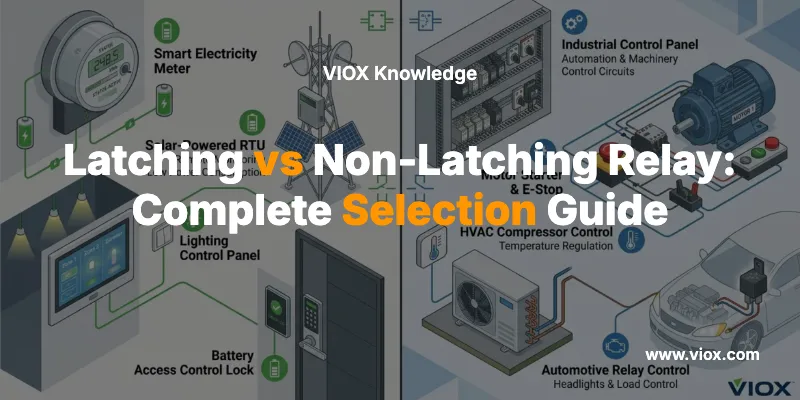
If you are choosing between a latching relay and a non-latching relay, one distinction decides the rest: a latching relay holds its last contact position after the control signal is removed, while a non-latching relay springs back to its default state the moment coil power disappears. That single behavioral difference ripples through every other design consideration — energy consumption, coil heat, power-loss response, wiring complexity, fail-safe philosophy, and application fit. Understanding exactly how and why these two relay types diverge is the fastest path to a correct selection. Before diving into the comparison, it’s helpful to understand the broader context of contactors vs relays in switching applications. In short: Choose

ラッチングリレーとノンラッチングリレー:完全選択ガイド 続きを読む »

今すぐ見積もりを依頼する