
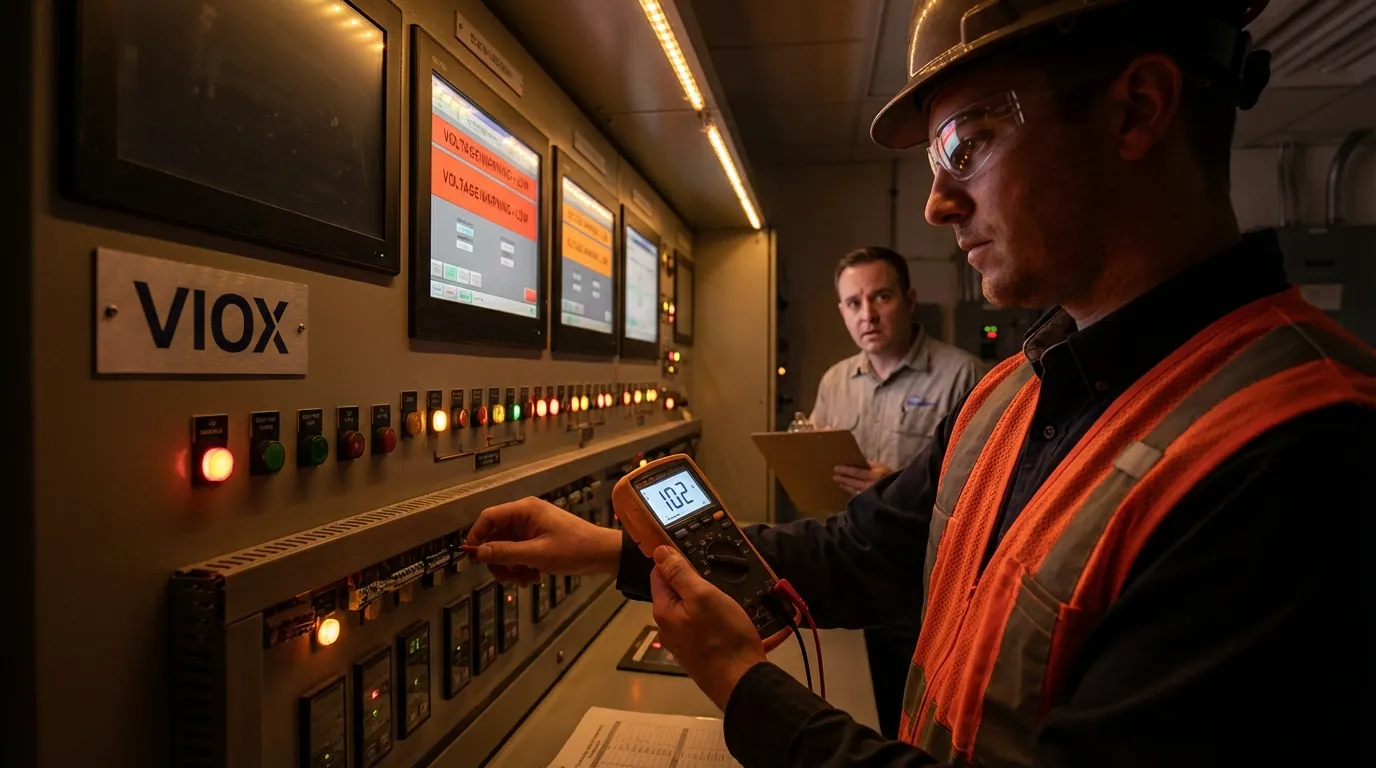
Comprendre les perturbations de l'alimentation électrique : La distinction essentielle
Lorsque vos lumières clignotent ou s'éteignent complètement, vous êtes confronté à l'un des deux phénomènes électriques distincts : une baisse de tension ou une panne de courant. Une baisse de tension est une réduction temporaire de la tension (généralement de 10 à 25 % inférieure à la normale) où le courant continue de circuler mais à une capacité réduite, tandis qu'une panne de courant est une perte totale d'alimentation électrique où la tension chute à zéro. Contrairement à la croyance populaire, les baisses de tension représentent une menace beaucoup plus importante pour vos appareils et équipements électroniques sensibles que les pannes de courant. Pendant les baisses de tension, les appareils consomment un courant excessif pour compenser la basse tension, générant une chaleur dangereuse qui peut détruire les moteurs, les compresseurs et les composants électroniques - des dommages qui se produisent silencieusement pendant que l'équipement semble fonctionner normalement.
Principaux enseignements
- Les baisses de tension réduisent la tension de 10 à 25 % et obligent les appareils à consommer plus de courant, ce qui entraîne une surchauffe et une défaillance prématurée
- Les pannes de courant coupent complètement l'alimentation mais sont généralement plus sûres pour l'équipement, car les appareils s'arrêtent simplement sans stress
- Les appareils motorisés (réfrigérateurs, systèmes de CVC, machines à laver) sont les plus exposés aux risques pendant les baisses de tension en raison de l'augmentation du courant consommé
- Les régulateurs de tension et les parasurtenseurs offrent une protection essentielle, mais uniquement les appareils de qualité avec des spécifications appropriées
- Débrancher les appareils électroniques sensibles pendant l'un ou l'autre événement, évite les dommages causés par les surtensions lors du rétablissement de l'électricité
- Les installations industrielles nécessitent des stratégies de protection complètes, y compris relais de surveillance de tension et commutateurs de transfert automatiques
Qu'est-ce qu'une baisse de tension ? Le tueur silencieux d'équipement
Une baisse de tension représente une réduction partielle de la tension du système électrique, se produisant généralement lorsque la demande d'énergie dépasse la capacité d'approvisionnement ou lorsque les compagnies de services publics abaissent intentionnellement la tension pour éviter l'effondrement total du réseau. Le terme provient de la gradation caractéristique des lampes à incandescence pendant ces événements, qui apparaissent “ brunes ” plutôt que leur rendement lumineux normal.
Caractéristiques techniques des baisses de tension
Pendant une baisse de tension, votre système électrique continue de recevoir de l'énergie, mais à des niveaux de tension réduits. La tension résidentielle nord-américaine standard fonctionne à 120 V (±5 %), tandis que les conditions de baisse de tension peuvent chuter à 102-108 V - une réduction apparemment faible qui crée un stress disproportionné sur l'équipement électrique. Les systèmes européens fonctionnant à 230 V subissent des réductions proportionnelles similaires lors des baisses de tension.
Le danger fondamental réside dans la façon dont les appareils électriques réagissent à une tension insuffisante. Selon la loi d'Ohm (P = V × I), lorsque la tension diminue mais que les besoins en énergie restent constants, le courant doit augmenter proportionnellement. Ce courant élevé génère une chaleur excessive dans les conducteurs, les enroulements et les composants électroniques - une chaleur qui s'accumule avec le temps et accélère la dégradation des composants.
Causes courantes des baisses de tension
Surcharge du réseau pendant les périodes de pointe: Les conditions météorologiques extrêmes sont la principale cause des baisses de tension. Les vagues de chaleur estivales forcent des millions de climatiseurs à se connecter simultanément, tandis que les vagues de froid hivernales déclenchent des augmentations similaires des systèmes de chauffage électrique. Les compagnies de services publics surveillent attentivement la charge et, lorsque la consommation approche la capacité de production, elles peuvent mettre en œuvre des réductions de tension contrôlées pour éviter les défaillances en cascade.
Limites de l'infrastructure: Une infrastructure électrique vieillissante a du mal à répondre aux demandes énergétiques modernes. Les transformateurs, les sous-stations et les lignes de transport conçus il y a des décennies desservent maintenant des populations et des charges industrielles dépassant de loin les spécifications d'origine. Lorsque ces composants approchent des limites thermiques, des chutes de tension se produisent naturellement à mesure que la résistance augmente avec la température.
Délestage intentionnel: Les compagnies d'électricité réduisent parfois délibérément la tension de 5 à 8 % pendant les périodes de forte demande prévues. Cette mesure proactive, bien qu'elle cause des inconvénients mineurs, évite l'alternative catastrophique - une panne de courant complète affectant des millions de clients. La pratique représente un compromis calculé entre la qualité du service et la stabilité du système.
Défauts électriques localisés: Les baisses de tension au niveau du bâtiment indiquent des problèmes électriques graves nécessitant une attention immédiate. Les circuits surchargés, les connexions corrodées, le câblage sous-dimensionné ou les défaillances disjoncteurs créent des chutes de tension affectant des zones spécifiques. Ces événements localisés précèdent souvent des défaillances complètes et exigent une inspection électrique professionnelle.
Comment les baisses de tension endommagent votre équipement
Le mécanisme de dommage pendant les baisses de tension diffère fondamentalement des autres menaces électriques. Contrairement aux surtensions qui détruisent instantanément les composants, les dommages causés par les baisses de tension s'accumulent progressivement par le biais de contraintes thermiques et d'usure mécanique.
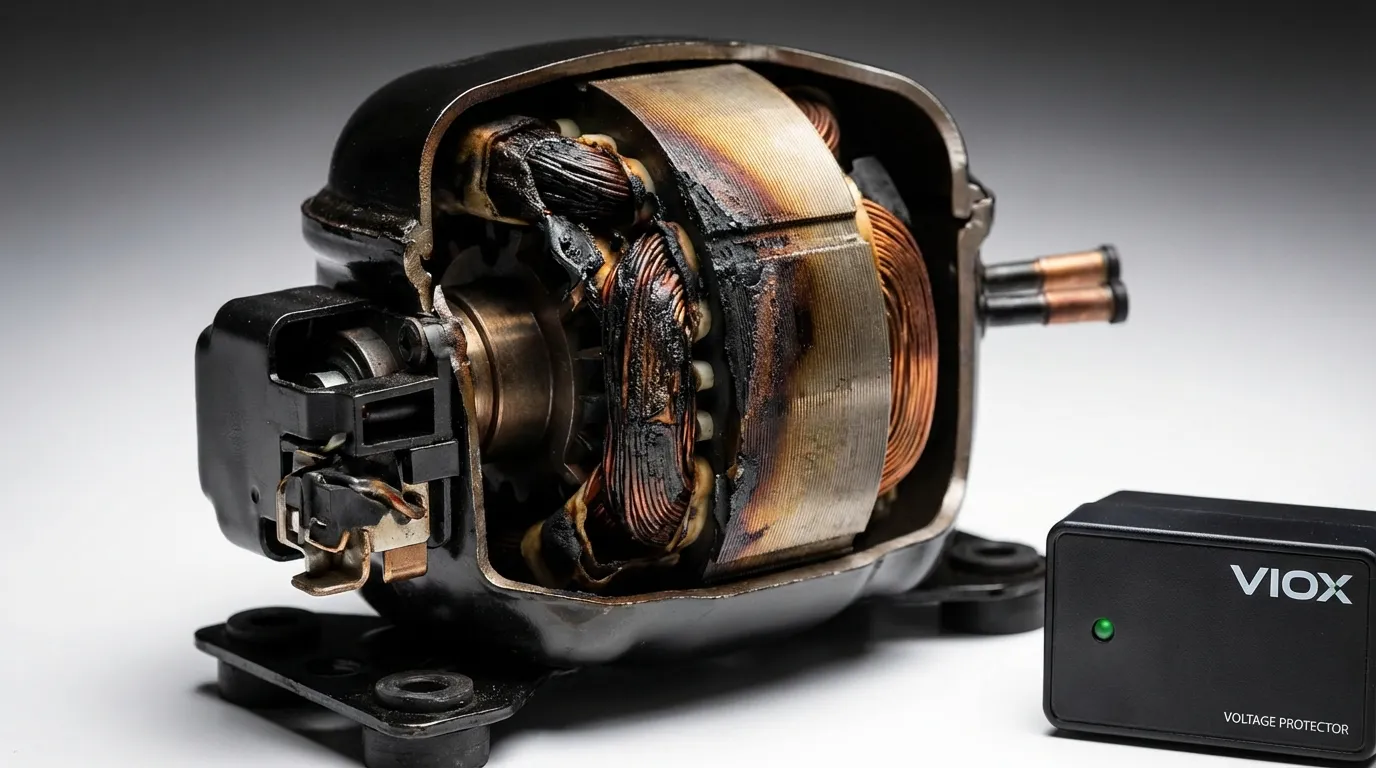
Défaillance du compresseur de moteur: Les compresseurs de réfrigérateur et de climatisation représentent la catégorie d'équipement la plus vulnérable. Ces appareils contiennent des moteurs électriques conçus pour des plages de tension spécifiques. Lorsque la tension chute, le moteur consomme beaucoup plus de courant pour tenter de maintenir la puissance nominale. L'augmentation du courant génère de la chaleur dans les enroulements du moteur, dégradant l'isolation et provoquant éventuellement des courts-circuits. Un compresseur fonctionnant à une tension réduite de 15 % peut consommer 30 % de courant supplémentaire, ce qui suffit à réduire la durée de vie de plusieurs années lors d'une seule baisse de tension prolongée.
Stress des composants électroniques: Les appareils modernes contiennent des cartes de commande électroniques sophistiquées qui gèrent tout, de la régulation de la température aux interfaces utilisateur. Ces circuits intègrent des régulateurs de tension conçus pour gérer les fluctuations mineures, mais les baisses de tension prolongées dépassent leur capacité. Les condensateurs subissent un courant d'ondulation élevé, les semi-conducteurs fonctionnent en dehors des paramètres de sécurité et les alimentations fonctionnent de manière inefficace, ce qui contribue à une défaillance prématurée. Les dommages se manifestent souvent des semaines ou des mois après la baisse de tension, ce qui rend difficile l'établissement d'un lien de causalité.
Saturation du transformateur: Les transformateurs d'alimentation dans l'électronique fonctionnent sur la base de relations de flux magnétique qui supposent une tension nominale. Une tension réduite amène les transformateurs à consommer un courant de magnétisation excessif, ce qui peut entraîner la saturation du noyau magnétique. Cette condition génère une distorsion harmonique, un chauffage supplémentaire et des vibrations mécaniques, tous préjudiciables à la longévité du transformateur.
Qu'est-ce qu'une panne de courant ? Perte totale d'alimentation
Une panne de courant représente l'absence totale d'alimentation électrique dans une zone géographique définie, la tension chutant à zéro et tous les appareils connectés au réseau cessant de fonctionner. Bien que gênantes et potentiellement dangereuses pour d'autres raisons, les pannes de courant ne constituent paradoxalement qu'une menace directe minime pour la plupart des équipements électriques.
Caractéristiques techniques des pannes de courant
Pendant une panne de courant, il n'y a pas de tension sur les lignes de distribution. Les appareils cessent simplement de fonctionner sans subir le stress électrique associé à des conditions de fonctionnement anormales. Du point de vue de la protection des équipements, cet arrêt propre empêche les contraintes thermiques et électriques qui causent des dommages aux composants.
Le principal risque pour l'équipement pendant les pannes de courant ne se produit pas pendant la panne elle-même, mais pendant le rétablissement de l'alimentation. Lorsque les services publics remettent les lignes de distribution sous tension, le retour soudain de la tension peut créer des surtensions transitoires - de brèves conditions de surtension durant des microsecondes à des millisecondes qui peuvent endommager les appareils électroniques sensibles.
Causes courantes des pannes de courant
Phénomènes météorologiques violents: Les ouragans, les tempêtes de verglas, les tornades et les orages sont à l'origine de la majorité des pannes de courant généralisées. Les vents violents brisent les lignes électriques, l'accumulation de glace brise les conducteurs et les poteaux, la foudre endommage les transformateurs et les sous-stations, et les inondations submergent les équipements souterrains. Ces événements peuvent affecter des millions de clients et nécessiter des jours ou des semaines pour un rétablissement complet.
Défaillances d'équipement: Les transformateurs, les disjoncteurs et autres composants du réseau finissent par tomber en panne en raison de l'âge, des défauts de fabrication ou des contraintes opérationnelles. La défaillance d'un seul composant critique peut se propager en cascade dans les systèmes interconnectés, déclenchant des dispositifs de protection et étendant la zone touchée. Les systèmes modernes de gestion du réseau tentent d'isoler rapidement les défaillances, mais la nature interconnectée des réseaux électriques signifie que les défaillances localisées se propagent parfois.
Accidents de véhicules: Les automobiles qui entrent en collision avec des poteaux électriques causent des milliers de pannes de courant localisées chaque année. Ces événements touchent généralement des zones plus petites et permettent un rétablissement relativement rapide, mais ils démontrent la vulnérabilité de l'infrastructure aux dommages physiques.
Cyberattaques et sabotage: Les réseaux électriques modernes intègrent des systèmes de contrôle numérique étendus, créant des vulnérabilités en matière de cybersécurité. Bien que rares, les attaques délibérées contre l'infrastructure du réseau représentent une catégorie de menace émergente nécessitant des mesures défensives sophistiquées.
Maintenance planifiée: Les services publics programment des pannes de courant contrôlées pour la maintenance, les mises à niveau et les tests de l'équipement. Ces événements font l'objet d'une notification préalable et touchent généralement des zones limitées pendant des durées prédéterminées.
Impact des pannes de courant sur les appareils
L'impact immédiat des pannes de courant sur les appareils reste minime. Les appareils perdent simplement de l'énergie et cessent de fonctionner - aucune tension anormale ne stresse les composants, aucun courant excessif ne génère de chaleur et aucun transitoire électrique n'endommage les circuits. Cependant, plusieurs préoccupations secondaires nécessitent une attention particulière :
Courant de surtension au redémarrage: Lorsque l'alimentation revient, de nombreux appareils tentent simultanément de redémarrer, créant une brève mais importante surtension de courant sur le système de distribution. Ce “ courant d'appel ” peut déclencher des dispositifs de protection ou créer des chutes de tension affectant les équipements sensibles. Dispositifs de protection contre les surtensions aider à atténuer ce risque.
Perte de données: Les ordinateurs, les serveurs et les appareils intelligents perdent les données non enregistrées lors d'une panne de courant inattendue. Bien qu'il ne s'agisse pas de dommages physiques, la perte de données peut s'avérer tout aussi coûteuse dans les environnements professionnels. Les alimentations sans interruption (ASI) fournissent un temps de secours essentiel pour des arrêts en douceur.
Problèmes liés à la réfrigération: Les pannes de courant prolongées permettent aux réfrigérateurs et aux congélateurs de se réchauffer, ce qui peut entraîner la détérioration du contenu. L'équipement lui-même reste intact, mais l'impact économique peut être important.
Baisse de tension vs. Panne de courant : Analyse comparative
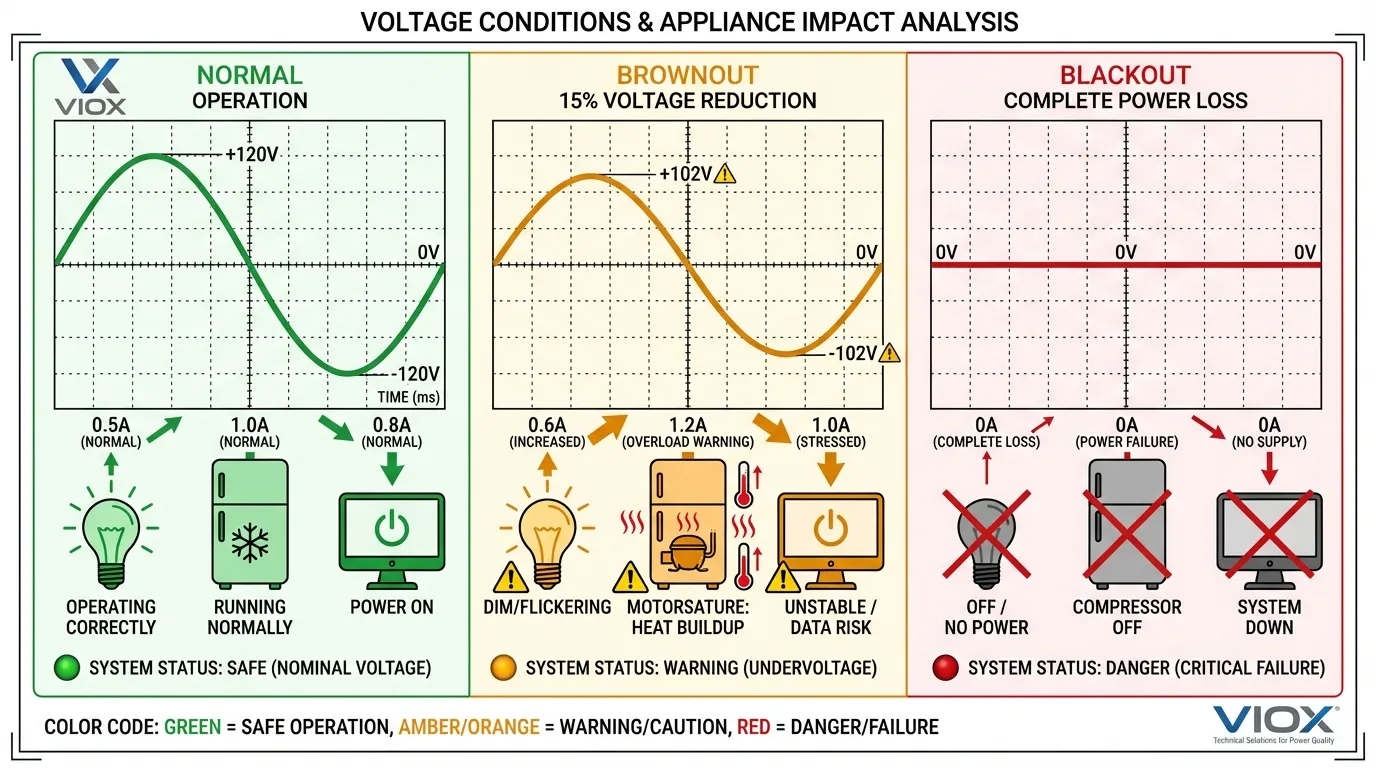
| Aspect | Baisse de tension | Panne de courant |
|---|---|---|
| Niveau de tension | Réduction de 10 à 25 % en dessous de la normale | Tension nulle (perte complète) |
| Fonctionnement de l'équipement | Continue à fonctionner à capacité réduite | Arrêt complet de tous les appareils |
| Danger principal | Dommages thermiques dus à un appel de courant excessif | Surtension lors du rétablissement du courant |
| Durée | Généralement de quelques minutes à quelques heures | De quelques minutes à quelques jours selon la cause |
| Risque lié aux appareils | HAUT – Dommages continus pendant l'événement | FAIBLE – Dommages minimes pendant la panne |
| Équipement motorisé | Surchauffe importante et défaillance prématurée | Arrêt sûr, pas de stress opérationnel |
| Électronique | Stress du régulateur de tension, dégradation des composants | Arrêt propre, risque de surtension au redémarrage |
| Contrôle des services publics | Souvent une gestion intentionnelle de la charge | Généralement un événement d'urgence imprévu |
| Signes avant-coureurs | Lumières qui faiblissent, moteurs lents, scintillements | Perte soudaine et complète de puissance |
| Mesures recommandées | Débrancher immédiatement les équipements sensibles | Débrancher pour éviter une surtension lors du rétablissement du courant |
Qu'est-ce qui est le plus dangereux pour vos appareils ?
Les baisses de tension présentent un danger beaucoup plus grand pour les équipements électriques que les pannes de courant. Cette réalité contre-intuitive découle de la différence fondamentale dans la façon dont les appareils réagissent à chaque condition.
Pourquoi les baisses de tension causent plus de dommages
Pendant les baisses de tension, les appareils tentent de maintenir un fonctionnement normal malgré une tension insuffisante. Cela crée trois mécanismes de dommages simultanés :
Stress thermique continu: Les moteurs, les compresseurs et les transformateurs génèrent une chaleur excessive pendant toute la durée de la baisse de tension. Contrairement aux événements de surtension qui provoquent une défaillance instantanée, cette accumulation thermique dégrade l'isolation, oxyde les connexions et affaiblit les composants mécaniques au fil du temps. Une seule baisse de tension de quatre heures peut réduire la durée de vie de l'équipement de plusieurs mois, voire de plusieurs années.
Instabilité de la tension: Les baisses de tension maintiennent rarement une tension réduite constante. Au lieu de cela, la tension fluctue en fonction des changements des conditions du réseau et de la mise en marche et de l'arrêt d'autres charges. Ces variations obligent les alimentations et les régulateurs de tension à s'ajuster constamment, ce qui crée un stress électrique et génère une chaleur supplémentaire. L'effet cumulatif dépasse les dommages causés par une basse tension en régime permanent.
Inefficacité opérationnelle: L'équipement fonctionnant en dessous de la tension de conception fonctionne de manière inefficace, consommant plus d'énergie tout en fournissant moins de rendement. Les climatiseurs refroidissent mal, les réfrigérateurs ont du mal à maintenir la température et les moteurs produisent une puissance mécanique réduite, tout en consommant des niveaux de courant dangereux.
Vulnérabilité spécifique à l'équipement
Réfrigérateurs et congélateurs: Le moteur du compresseur représente le composant le plus coûteux et le plus vulnérable. Pendant les baisses de tension, les compresseurs consomment 25 à 40 % de courant supplémentaire tout en produisant moins de capacité de refroidissement. Le moteur fonctionne en continu plutôt que de fonctionner normalement par cycles, accumulant de la chaleur et du stress. Le remplacement du compresseur coûte entre 300 et 800 $ pour les unités résidentielles et des milliers de dollars pour les équipements commerciaux, des dommages qu'un protecteur de tension de 50 $ protecteur de tension pourrait éviter.
Systèmes CVC: Les systèmes centraux de climatisation et de pompe à chaleur contiennent de gros moteurs de compresseur qui sont également vulnérables aux dommages causés par les baisses de tension. Ces systèmes représentent des investissements de 5 000 à 15 000 $ que les baisses de tension peuvent détruire en quelques heures. Les installations CVC professionnelles doivent inclure relais de surveillance de tension qui déconnectent l'équipement lorsque la tension descend en dessous des seuils de sécurité.
Pompes de puits: Les pompes de puits submersibles fonctionnent dans des environnements difficiles où la défaillance du moteur nécessite une extraction et un remplacement coûteux. Ces moteurs s'avèrent particulièrement sensibles aux variations de tension, et les dommages causés par les baisses de tension nécessitent souvent le remplacement complet de la pompe, ce qui coûte entre 1 500 et 3 000 $.
Électronique et ordinateurs: Bien que l'électronique moderne intègre une régulation de tension, les baisses de tension prolongées submergent ces circuits de protection. Les alimentations fonctionnent à chaud et de manière inefficace, les condensateurs subissent un stress élevé et les semi-conducteurs fonctionnent en dehors des spécifications. Les dommages se manifestent par des défaillances aléatoires, une corruption des données et une durée de vie réduite.
Moteurs industriels: Les installations de fabrication dépendent de moteurs triphasés qui entraînent des processus critiques. Le déséquilibre de tension pendant les baisses de tension crée des courants de séquence négative qui surchauffent rapidement les enroulements du moteur. Un seul événement de baisse de tension peut détruire des moteurs valant des dizaines de milliers de dollars. Les installations industrielles nécessitent des systèmes complets de systèmes de protection des moteurs comprenant des relais de surcharge thermique et une surveillance de la tension.
Les risques liés aux pannes de courant sont différents
Les pannes de courant créent des dommages directs minimes à l'équipement, mais posent d'autres risques importants :
Surtensions lors du rétablissement du courant: Lorsque le courant revient, l'application soudaine de tension crée des surtensions transitoires pouvant atteindre 150 à 200 % de la tension nominale. Ces brèves pointes peuvent endommager les appareils électroniques sensibles, en particulier les appareils sans protection contre les surtensions.
Stress de redémarrage séquentiel: Tous les équipements tentent de redémarrer simultanément lors du retour de l'alimentation, créant une demande de courant massive. Cet appel de courant collectif peut faire chuter la tension temporairement, créant des conditions similaires à une panne de courant pendant plusieurs secondes. Disjoncteurs peut se déclencher en raison de la surcharge, et certains appareils peuvent ne pas démarrer correctement.
Perte de données et de processus: Bien qu'il ne s'agisse pas de dommages physiques, les arrêts inattendus corrompent les données, interrompent les processus de fabrication et perturbent les systèmes critiques. L'impact économique dépasse souvent les coûts de réparation des équipements.
Stratégies de protection : Sauvegarder votre équipement
Actions immédiates lors d'événements liés à l'alimentation électrique
Pendant une panne de courant partielle:
- Débranchez immédiatement les gros appareils – Les réfrigérateurs, les climatiseurs, les machines à laver et autres appareils motorisés doivent être déconnectés au premier signe de réduction de tension
- Arrêtez correctement les ordinateurs – Enregistrez le travail et effectuez des arrêts contrôlés plutôt que de simplement débrancher
- Éteignez les appareils électroniques sensibles – Les téléviseurs, les équipements audio et les appareils domotiques doivent être mis hors tension
- Réduisez la charge électrique – Éteignez les lumières et les appareils inutiles pour réduire la demande sur le réseau électrique sollicité
- Surveillez la tension si possible – Un simple multimètre révèle les niveaux de tension réels et aide à déterminer quand les conditions se normalisent
Pendant une panne de courant totale:
- Débranchez les équipements sensibles – Empêche les dommages causés par les surtensions de restauration lors du retour de l'alimentation
- Laissez une lumière allumée – Fournit une indication immédiate lorsque l'alimentation est rétablie
- Gardez les réfrigérateurs fermés – Maintient la température plus longtemps, préservant le contenu
- Évitez d'ouvrir les panneaux de disjoncteurs – À moins que vous ne soyez un électricien qualifié, laissez les systèmes électriques tranquilles
- Signalez la panne – Contactez votre compagnie d'électricité pour vous assurer qu'elle est au courant du problème
Solutions de protection permanente
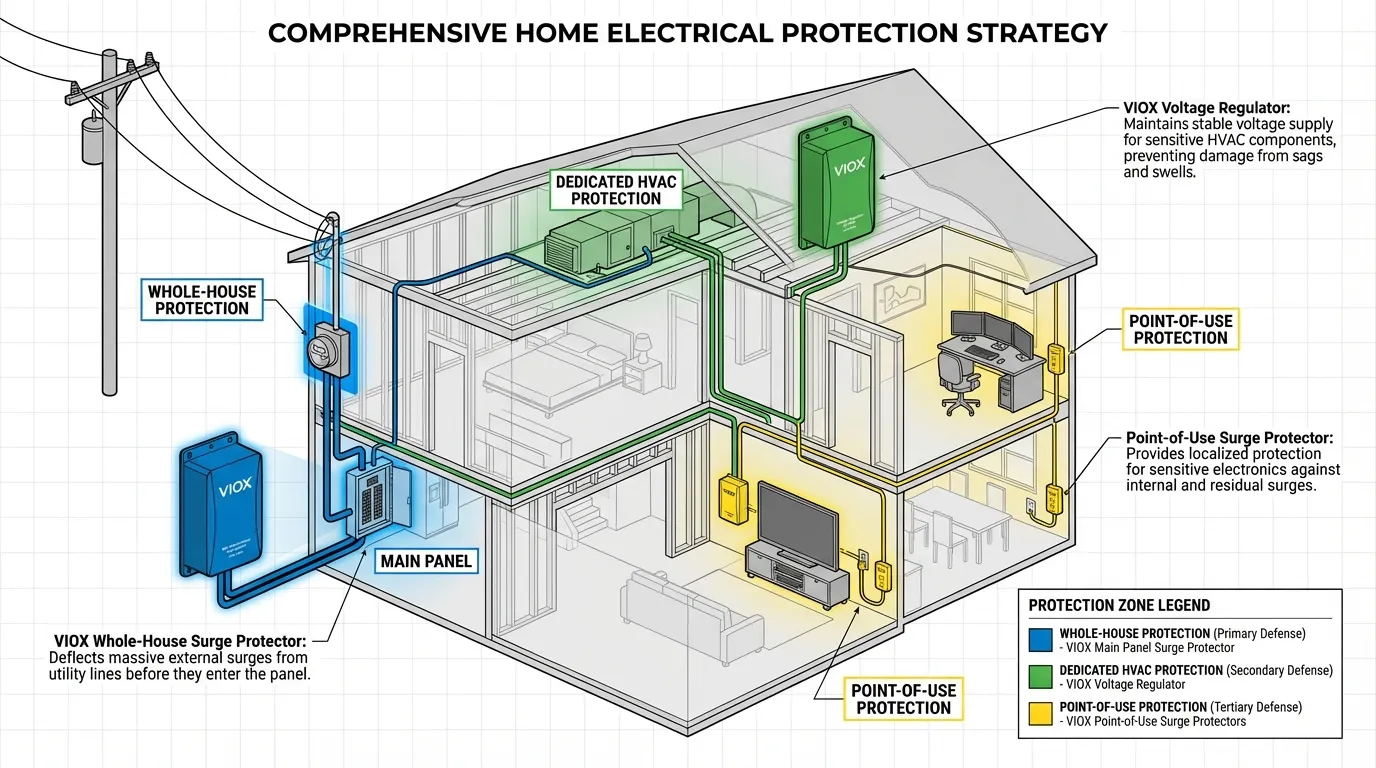
Protection contre les surtensions pour toute la maison: Installation de Dispositifs de protection contre les surtensions de type 2 (SPD) à votre panneau électrique principal fournit la première ligne de défense contre les transitoires de tension. Les SPD de qualité coûtent entre 150 et 400 $ installés et protègent tous les équipements connectés. Ces dispositifs limitent les surtensions à des niveaux sûrs, empêchant les dommages lors de la restauration de l'alimentation et des événements liés à la foudre.
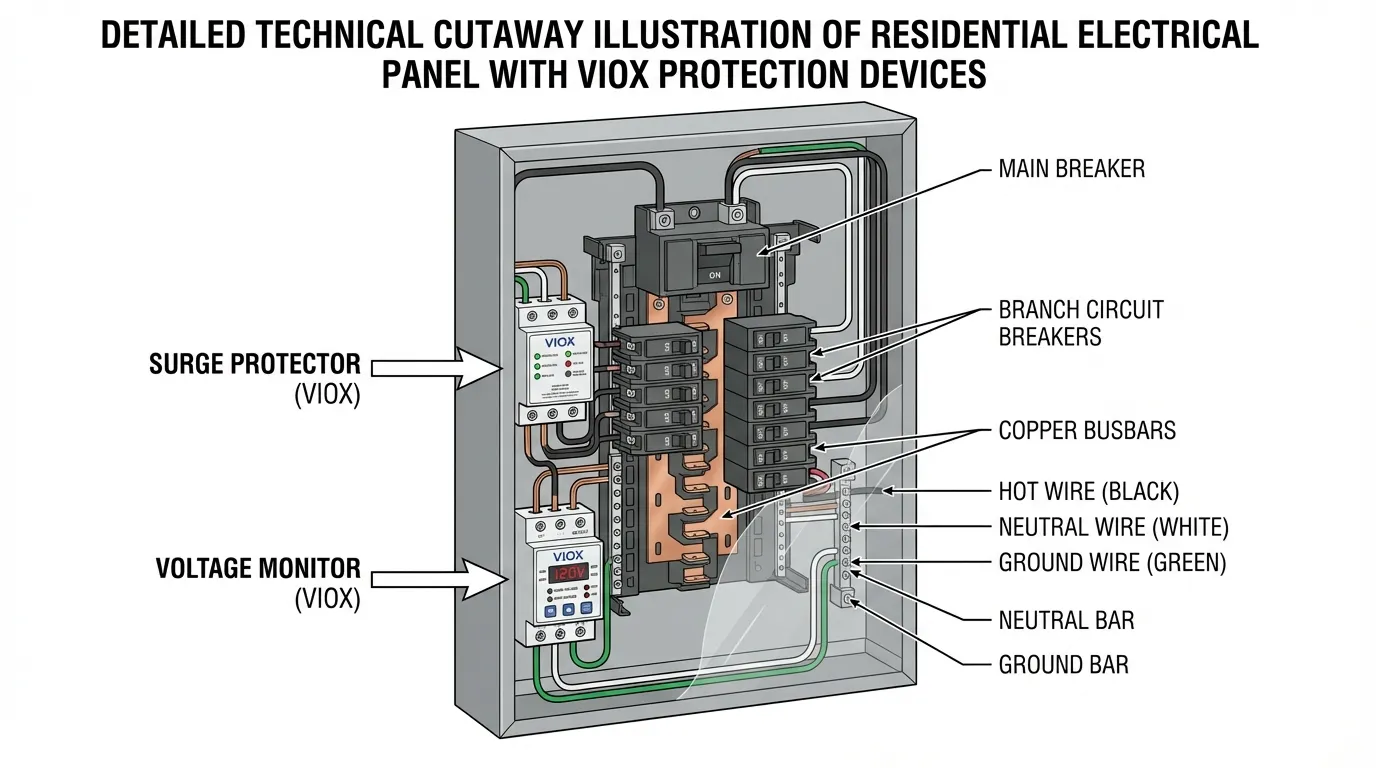
Régulateurs et stabilisateurs de tension: Les régulateurs de tension automatiques (AVR) maintiennent une tension de sortie constante malgré les fluctuations d'entrée. Ces dispositifs s'avèrent particulièrement précieux pour les équipements coûteux comme les réfrigérateurs, les systèmes de CVC et les équipements de cinéma maison. Les régulateurs de tension pour toute la maison coûtent entre 800 et 2 000 $, mais protègent des investissements qui valent bien plus.
Protection au point d'utilisation: Les protecteurs de surtension individuels pour les ordinateurs, les systèmes de divertissement et autres appareils électroniques offrent une protection localisée. Cependant, tous les “ protecteurs de surtension ” n'offrent pas une protection authentique – recherchez les dispositifs avec :
- Certification UL 1449
- Indice minimum de 600 joules (1 000+ joules préférés)
- Limitation de tension inférieure à 400 V
- Voyant indicateur protégé indiquant l'état du dispositif
- Garantie des équipements connectés
Alimentations sans interruption (UPS): Les systèmes UPS fournissent une alimentation de secours par batterie pendant les pannes tout en conditionnant l'alimentation pendant le fonctionnement normal. Ces dispositifs s'avèrent essentiels pour les ordinateurs, les serveurs, les équipements de réseau et les dispositifs médicaux. Un UPS de qualité coûte entre 100 et 500 $ pour un usage domestique et entre 500 et 5 000 $ pour les applications commerciales.
Relais de surveillance de tension: Ces dispositifs spécialisés surveillent en permanence la tension d'alimentation et déconnectent automatiquement l'équipement lorsque la tension se situe en dehors des paramètres de sécurité. Relais de surveillance de la tension coûtent entre 50 et 200 $ et peuvent permettre d'économiser des milliers de dollars en coûts de remplacement d'équipement. Ils sont particulièrement précieux pour :
- Systèmes CVC
- Pompes de puits
- moteurs industriels
- Réfrigération commerciale
- Tout équipement motorisé coûteux
Commutateurs de transfert automatiques: Pour les applications critiques nécessitant une alimentation ininterrompue, commutateurs de transfert automatiques (ATS) basculent de manière transparente entre l'alimentation du réseau et les générateurs de secours. Ces systèmes détectent les pannes de courant en quelques millisecondes et rétablissent l'alimentation à partir de sources alternatives. Les installations ATS varient de 500 $ pour les connexions de générateurs portables à 3 000 à 10 000 $ pour les systèmes pour toute la maison.
Protection industrielle et commerciale
Les installations de fabrication, les centres de données et les opérations commerciales nécessitent des stratégies complètes de protection de l'alimentation :
Surveillance triphasée: Les installations industrielles utilisant une alimentation triphasée ont besoin de systèmes de surveillance de la tension détectant la perte de phase, le déséquilibre de tension et les erreurs de séquence de phase. Ces conditions causent des dommages rapides au moteur et des perturbations du processus.
Systèmes de protection des moteurs: Les gros moteurs nécessitent une protection coordonnée, notamment :
- Relais de surcharge thermique détection d'un courant excessif
- Surveillance de la tension empêchant le fonctionnement pendant les baisses de tension
- Disjoncteurs dimensionné pour le courant d'appel du moteur
- Correct mise à la terre et protection contre les surtensions
Surveillance de la qualité de l'alimentation: Les analyseurs permanents de qualité de l'énergie enregistrent la tension, le courant, les harmoniques et les transitoires, fournissant des données pour le dépannage et les réclamations d'assurance. Ces systèmes coûtent entre 2 000 et 10 000 $, mais s'avèrent inestimables pour les installations confrontées à des problèmes fréquents de qualité de l'énergie.
Systèmes d'alimentation de secours: Les opérations critiques nécessitent une alimentation de secours par générateur avec commutateurs de transfert automatiques assurant des transitions transparentes. Les systèmes modernes démarrent les générateurs en quelques secondes après la détection d'une perte de puissance et transfèrent automatiquement les charges.
Comprendre votre infrastructure électrique
Reconnaître les signes avant-coureurs
Plusieurs indicateurs suggèrent que votre système électrique rencontre des problèmes de qualité de l'énergie :
Scintillement fréquent des lumières: Les scintillements occasionnels pendant les tempêtes sont normaux, mais un scintillement régulier indique une instabilité de la tension nécessitant une enquête. Le problème peut provenir de problèmes d'alimentation du service public ou de défauts électriques internes.
Problèmes de performance des appareils: Les climatiseurs qui refroidissent mal, les réfrigérateurs qui fonctionnent constamment ou les moteurs qui démarrent lentement suggèrent tous des problèmes de tension. Ces symptômes précèdent souvent la défaillance de l'équipement.
Disjoncteurs déclenchés: Disjoncteurs des déclenchements fréquents indiquent des surcharges, des courts-circuits ou des disjoncteurs eux-mêmes défaillants. Cette condition nécessite une attention professionnelle immédiate.
Défaillances des appareils électroniques: Plusieurs défaillances électroniques dans des délais courts suggèrent des problèmes de qualité de l'énergie plutôt que des défaillances d'appareils fortuites.
Notifications des services publics: Les compagnies d'électricité avertissent parfois les clients des réductions de tension prévues pendant les périodes de pointe de la demande. Tenez compte de ces avertissements et prenez des mesures de protection.
Quand appeler un électricien
Certaines situations exigent une évaluation électrique professionnelle :
- Fluctuations de tension persistantes affectant spécifiquement votre propriété
- Odeurs de brûlé provenant des prises, des interrupteurs ou des panneaux électriques
- Prises et plaques d'interrupteurs décolorées ou chaudes
- Bourdonnement ou vrombissement provenant des panneaux électriques
- Fréquent déclenchements de disjoncteurs
- Lumières vacillantes lorsque de gros appareils démarrent
- Tout signe de surchauffe dans l'équipement électrique
Les électriciens agréés possèdent les outils et l'expertise nécessaires pour diagnostiquer les problèmes de qualité de l'énergie, identifier les conditions dangereuses et mettre en œuvre des solutions appropriées. Le coût d'une évaluation professionnelle (100 à 300 $) s'avère minime par rapport aux dommages matériels ou aux risques d'incendie liés aux problèmes électriques.
Considérations régionales et fiabilité du réseau
La qualité de l'énergie varie considérablement selon l'emplacement, ce qui affecte votre stratégie de protection :
Urbain vs. Rural: Les zones rurales connaissent généralement des pannes plus fréquentes et plus longues en raison de lignes de distribution plus longues, de moins de chemins redondants et de l'exposition aux intempéries et à la faune. Les propriétés rurales bénéficient particulièrement des systèmes d'alimentation de secours et d'une protection complète contre les surtensions.
Âge et état du réseau: Les régions dotées d'infrastructures vieillissantes connaissent davantage de baisses de tension à mesure que l'équipement a du mal à répondre aux demandes modernes. Recherchez les statistiques de fiabilité de votre service public et les plans d'investissement dans les infrastructures lors de l'évaluation des besoins de protection.
Facteurs climatiques: Les zones connaissant des températures extrêmes, chaudes ou froides, sont confrontées à des risques plus élevés de baisses de tension pendant les périodes de pointe de la demande. Les régions côtières sont confrontées aux menaces d'ouragans, tandis que les régions du nord sont confrontées aux risques de tempêtes de verglas.
Politiques des services publics: Certains services publics mettent en œuvre des baisses de tension tournantes pendant les périodes de pointe de la demande, tandis que d'autres investissent dans la capacité pour éviter les réductions de tension. Comprendre l'approche de votre service public vous aide à vous préparer de manière appropriée.
Analyse coûts-avantages : Investissement dans la protection
L'évaluation des coûts de l'équipement de protection par rapport aux dommages potentiels révèle une économie convaincante :
Exemple résidentiel:
- Remplacement du réfrigérateur : 800 à 2 500 $
- Compresseur CVC : 1 500 à 3 000 $
- Pompe de puits : 1 500 à 3 000 $
- Dommages électroniques : 500 à 5 000 $
- Perte potentielle totale : 4 300 à 13 500 $
Investissement dans la protection:
- Parafoudre pour toute la maison : 200 à 400 $
- Régulateur de tension pour CVC : 300 à 800 $
- Moniteur de tension pour pompe de puits : 100 à 200 $
- Parafoudres au point d'utilisation : 100 à 300 $
- Coût total de la protection : 700 à 1 700 $
L'investissement dans la protection ne représente que 5 à 16 % des coûts potentiels des dommages, un retour sur investissement convaincant qui n'entraîne aucun coût continu au-delà du remplacement occasionnel des appareils après des événements de surtension majeurs.
Exemple commercial/industriel:
- Remplacement du moteur triphasé : 5 000 à 50 000 $
- Temps d'arrêt du processus : 1 000 à 100 000 $ par heure
- Perte de produit : 10 000 à 500 000 $
- Perte potentielle totale : 16 000 à 650 000 $
Investissement dans la protection:
- Surveillance complète de la tension : 2 000 à 10 000 $
- Systèmes de protection du moteur : 500 à 5 000 $ par moteur
- Alimentation de secours avec ATS : 10 000 à 100 000 $
- Coût total de la protection : 12 500 à 115 000 $
Pour les opérations commerciales, les coûts de protection représentent 2 à 18 % des pertes potentielles d'un seul incident, avec des périodes de récupération souvent mesurées en mois plutôt qu'en années.
Courte section FAQ
Q : Puis-je utiliser mes appareils pendant une baisse de tension ?
R : Vous pouvez, mais vous ne devriez pas. Bien que les appareils puissent sembler fonctionner pendant les baisses de tension, ils subissent une contrainte électrique dangereuse qui cause des dommages cumulatifs. L'approche la plus sûre consiste à débrancher les appareils motorisés et les appareils électroniques sensibles jusqu'à ce que la tension revienne à des niveaux normaux.
Q : Comment puis-je savoir si je suis confronté à une baisse de tension ou à une panne de courant ?
A : Lors d'une baisse de tension, les lumières faiblissent mais restent allumées, les horloges numériques peuvent clignoter ou fonctionner lentement, et les moteurs émettent un son forcé ou fonctionnent plus lentement que la normale. Une panne de courant entraîne une perte totale d'alimentation, toutes les lumières et tous les appareils s'éteignant complètement. Un simple multimètre révèle les niveaux de tension réels si vous n'êtes pas sûr.
Q : Un parasurtenseur protégera-t-il mon équipement lors d'une baisse de tension ?
R : Les parasurtenseurs standard ne protègent pas contre les baisses de tension : ils protègent uniquement contre les surtensions. Vous avez besoin d'un régulateur de tension ou d'un protecteur contre les surtensions/sous-tensions pour protéger l'équipement contre les conditions de basse tension. Ces appareils coupent l'alimentation lorsque la tension descend en dessous des seuils de sécurité.
Q : Combien de temps peut durer une baisse de tension ?
R : Les baisses de tension durent généralement de quelques minutes à quelques heures. Les entreprises de services publics les mettent en œuvre comme mesures temporaires pendant les périodes de pointe de la demande et rétablissent la tension normale dès que les conditions le permettent. Les baisses de tension qui durent plus de plusieurs heures sont inhabituelles et peuvent indiquer de graves problèmes de réseau.
Q : Certains appareils sont-ils plus vulnérables que d'autres ?
R : Oui. Les appareils à moteur (réfrigérateurs, climatiseurs, machines à laver, pompes de puits et systèmes de CVC) sont les plus exposés, car les moteurs consomment un courant excessif dans des conditions de basse tension. Les appareils électroniques dotés de régulateurs de tension gèrent mieux les baisses de tension, mais subissent tout de même des contraintes lors d'événements prolongés.
Q : Dois-je tout débrancher pendant une panne de courant ?
R : Le fait de débrancher les appareils électroniques sensibles et les gros appareils pendant les pannes de courant évite les dommages causés par les surtensions lors du rétablissement du courant. Cependant, vous pouvez laisser une lumière allumée pour indiquer le retour du courant. Les réfrigérateurs et les congélateurs doivent rester fermés, mais peuvent rester branchés si vous disposez d'une protection adéquate contre les surtensions.
Q : Les baisses de tension peuvent-elles endommager le câblage électrique de ma maison ?
R : Les baisses de tension n'endommagent généralement pas directement le câblage, mais l'augmentation du courant qu'elles provoquent peut surchauffer le câblage sous-dimensionné ou les connexions corrodées. Si vous subissez de fréquentes baisses de tension et remarquez des prises chaudes, des plaques d'interrupteur décolorées ou des odeurs de brûlé, faites inspecter immédiatement votre système électrique par un électricien agréé.
Q : Ai-je besoin d'une protection différente pour les circuits 120 V et 240 V ?
R : Les principes de protection restent les mêmes, mais les appareils doivent correspondre à la tension du circuit. Les gros appareils fonctionnant sur des circuits de 240 V (sécheuses électriques, cuisinières, systèmes de CVC) nécessitent un équipement de surveillance de la tension protection contre les surtensions et de la tension approprié. Consultez un électricien pour vous assurer d'une protection adéquate pour tous les circuits.
Conclusion : Une protection proactive permet d'économiser de l'argent
Comprendre la distinction entre les baisses de tension et les pannes de courant vous permet de protéger les équipements de valeur contre les dommages évitables. Alors que les pannes de courant créent des inconvénients, les baisses de tension détruisent silencieusement les appareils par le biais de contraintes thermiques et d'une consommation de courant excessive, des dommages qui s'accumulent invisiblement jusqu'à ce qu'une défaillance catastrophique se produise.
L'économie de la protection s'avère convaincante : investir 5 à 15 % des coûts potentiels de remplacement de l'équipement dans une protection contre les surtensions, une régulation de la tension et un équipement de surveillance de qualité permet d'éviter des réparations et des remplacements beaucoup plus coûteux. Pour les propriétaires, cela signifie dépenser 700 à 1 700 $ pour protéger des appareils d'une valeur de 5 000 à 15 000 $. Pour les opérations commerciales, les investissements de protection de 10 000 à 100 000 $ permettent d'éviter des pertes pouvant atteindre des centaines de milliers de dollars par incident.
Agissez avant que le prochain événement électrique ne se produise. Évaluez votre équipement vulnérable, installez une protection appropriée et élaborez des procédures d'intervention pour les baisses de tension et les pannes de courant. Vos appareils, et votre budget, vous remercieront.
Pour des solutions complètes de protection électrique et des conseils d'experts sur la protection de votre équipement, VIOX Electric propose des équipements de protection contre les surtensions dispositifs de protection de circuit, systèmes de surveillance de la tensionet de qualité industrielle conçus pour répondre aux applications les plus exigeantes.