

در این صفحه
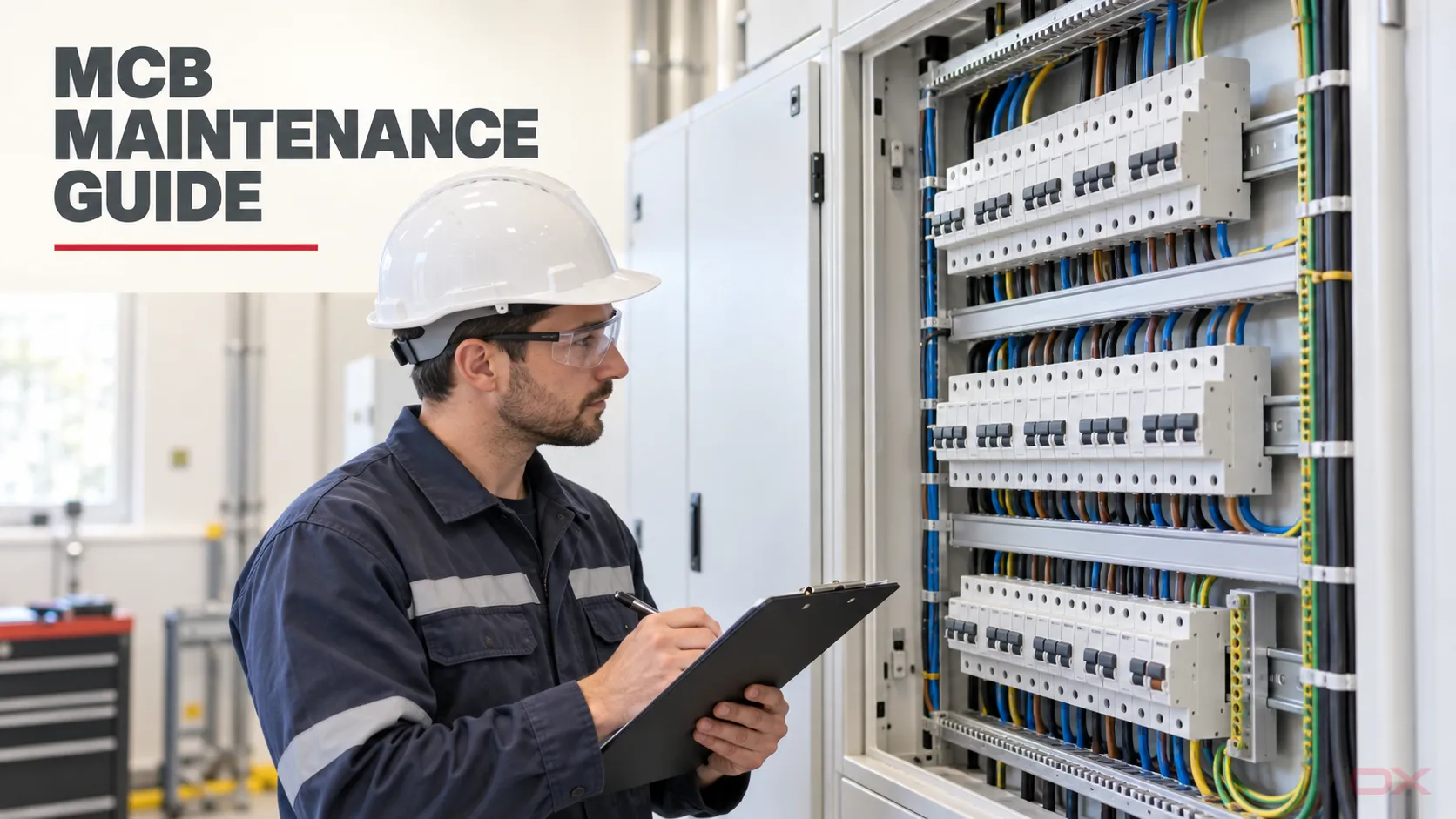
نگهداری MCB معمولاً به معنای بازرسی کلید مدار نصبشده و محیط اتصال آن، انتخاب تنها بررسیهایی است که با توجه به شرایط و دستورالعملهای سازنده توجیهپذیر هستند، مستندسازی نتیجه و تعویض دستگاه در صورت مشاهده آسیب یا عملکرد غیرقابلاطمینان. این کار لزوماً معمولاً به معنای باز کردن بدنه قالبگیری شده، روغنکاری مکانیزم، پرداخت کنتاکتها یا تعمیر محفظه جرقه نیست.
یک کلید مدار مینیاتوری (MCB) تنها بخشی از یک سیستم حفاظتی است. بنابراین، تصمیمگیری برای تعمیر و نگهداری باید کلید مدار، هادیها، ترمینالها، رابط شینهبندی، محفظه، سابقه بار و شواهد مربوط به خطاهای قبلی را در نظر بگیرد. تعویض یک MCB که بهطور مشهود آسیب دیده است، بدون بررسی علت آن، میتواند مشکل اصلی اضافهبار، اتصال شل، آلودگی یا جریان خطا را همچنان باقی بگذارد.
محدوده ایمنی: کاری که باعث نمایان شدن قطعات برقدار، برداشتن درپوش تابلو، جابجایی هادیهای قدرت یا انجام تستهای الکتریکی شود، در حیطه وظایف پرسنل مجاز و طبق دستورالعملهای ایمنی کار مربوطه است. تمامی منابع انرژی مرتبط را ایزوله کنید، برقدار شدن مجدد را کنترل نمایید و پیش از تماس، شرایط مورد نیاز طبق دستورالعمل را تأیید کنید. در ایالات متحده، برنامه کنترل انرژیهای خطرناک کارفرما و قوانین الکتریکی OSHA، فرآیند دقیق را تعیین میکنند.
نکات کلیدی
- یک MCB استاندارد نصبشده روی ریل DIN را به عنوان یک دستگاه حفاظتی پلمپشده در نظر بگیرید، مگر اینکه سازنده آن صراحتاً خلاف این را بیان کرده باشد.
- علاوه بر خود کلید مدار، محل نصب آن را نیز بازرسی کنید. آسیب حرارتی در یک ترمینال ممکن است ناشی از آمادهسازی هادی، گشتاور، نحوه اتصال شینهبندی، بارگذاری یا شرایط محیطی باشد.
- تست پیوستگی میتواند نشان دهد که آیا کنتاکتها در زمان ایزوله بودن دستگاه باز یا بسته به نظر میرسند؛ اما نمیتواند ثابت کند که کلید مدار در جریان و زمان مورد نیاز عمل (تریپ) خواهد کرد.
- از یک بازه بازرسی، مقدار گشتاور یا آستانه دمایی واحد برای همه موارد استفاده نکنید. از برنامه تعمیر و نگهداری، الزامات تأییدیه مربوطه، محیط، سابقه عملکرد و دستورالعملهای دقیق محصول استفاده کنید.
- یک MCB ترکخورده، تغییر شکل یافته، سوخته، ذوبشده، دارای آلودگی داخلی یا از نظر مکانیکی غیرقابل اطمینان، عموماً باید تعویض شود و نه اینکه به عنوان پروژهای برای تعمیر در محل در نظر گرفته شود.
نگهداری MCB شامل چه مواردی است و شامل چه مواردی نیست
کلمه مدار شکن شامل دستگاههایی با ساختار و سیاستهای سرویس بسیار متفاوت است. دستورالعملهای نوشتهشده برای یک کلید مدار هوایی کشویی میتواند شامل بازرسی کنتاکتها، روانکاری مکانیزم، اندازهگیری زمانبندی، بررسی اینترلاکها و کار بر روی محفظه جرقهگیر باشد. اعمال آن دستورالعملها برای یک MCB پلمپشده از نظر فنی نامناسب خواهد بود.
| دستهبندی تجهیزات | تأکید بر نگهداری عادی | سرویس میدانی داخلی |
|---|---|---|
| MCB ریلی DIN | وضعیت خارجی، نصب، ناحیه ترمینال و شینهکشی، نشانگر عملکرد، تأیید نصب، سوابق، تعویض | معمولاً مجاز نیست؛ دستورالعملهای دقیق سازنده را دنبال کنید |
| کلید مدار قالبمُهر (MCCB) | بازرسی خارجی به علاوه بررسیهای مکانیکی، واحد تریپ، تجهیزات جانبی و عملکردی مختص مدل | بسته به طراحی محصول و سیاست سازنده است؛ یک قالبمُهر نباید صرفاً به این دلیل که خانواده دیگری از کلیدها قابل سرویس هستند، باز شود |
| کلید مدار قدرت/هوایی فشار ضعیف | رابطهای کشویی، مکانیزم ذخیره انرژی، کنتاکتها، اجزای کنترل قوس، اینترلاکها، واحد تریپ و تستهای مختص مدل | اغلب دارای دستورالعملهای سرویس مشخص برای متخصصان واجد شرایط است |
| کلید مدار فشار متوسط | فناوری کلید، وضعیت قطعکننده، مکانیزم، عایقبندی، اینترلاکها، زمانبندی و رابطهای تابلو برق | دستورالعمل تخصصی که توسط تجهیزات دقیق و مستندات نگهداری تعیین میشود |
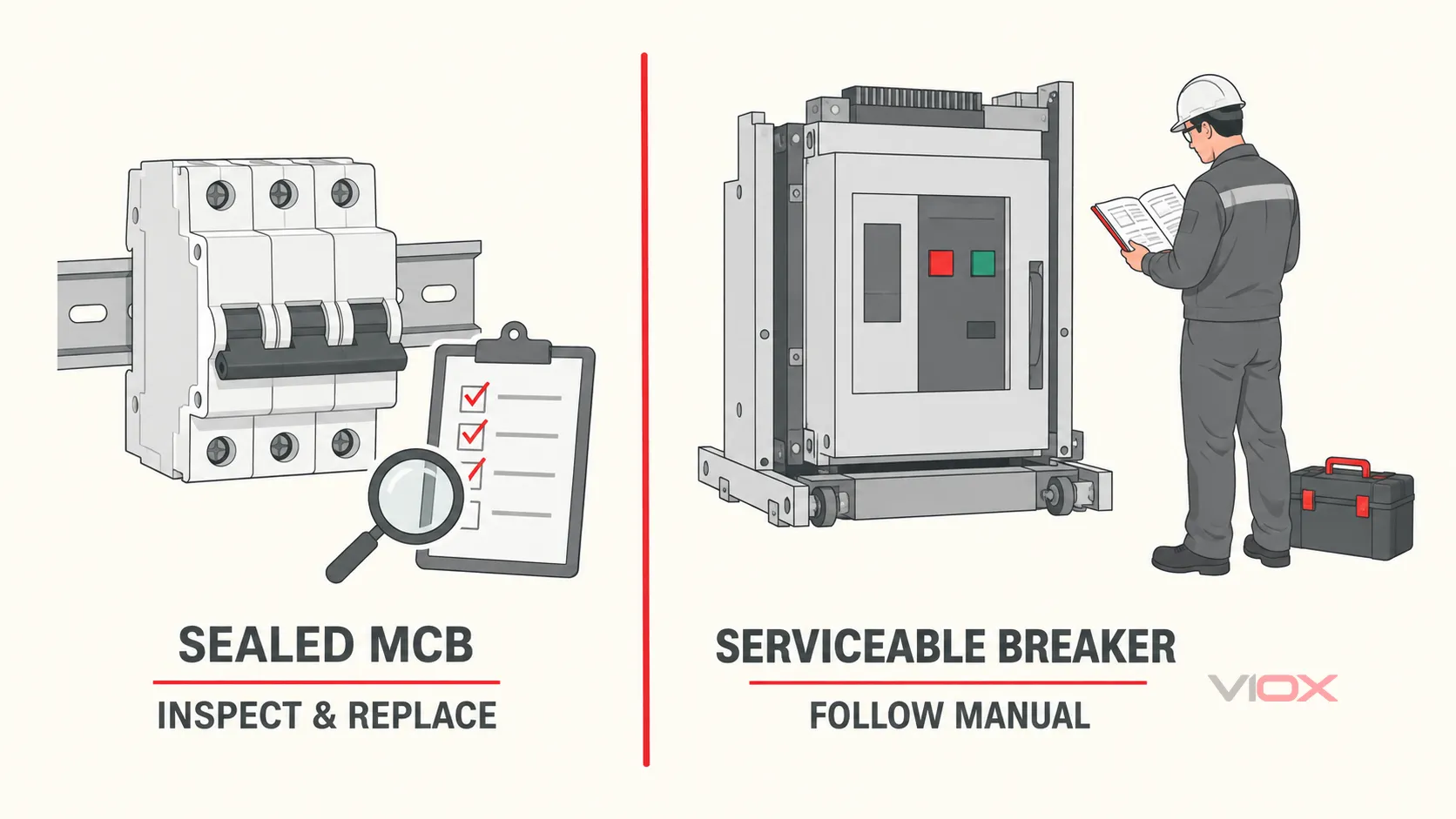
یک MCB پلمپشده و یک کلید مدار قدرت قابل سرویس، نیازمند محدودههای نگهداری متفاوتی هستند. دفترچه راهنمای سازنده مرجع اصلی باقی میماند.
این مقاله محدود به MCBهای فشار ضعیف نصبشده است. برای عملکرد حفاظتی دستگاه و توالی عملکرد داخلی، به نحوه عملکرد یک MCB. برای یک استراتژی در سطح تاسیسات که چندین کلاس تجهیزات را پوشش میدهد، از موارد گستردهتر استفاده کنید electrical maintenance program guide.
پیش از بازرسی، سوابق نگهداری را ایجاد کنید
یک بازرسی مفید با شناسایی و زمینه آغاز میشود. بدون آنها، یک دستگاه که ظاهر سالمی دارد ممکن است همچنان به اشتباه به کار گرفته شده باشد و تفسیر یک خوانش غیرعادی دشوار باشد.
پیش از تصمیمگیری در مورد اینکه چه کاری توجیهپذیر است، موارد زیر را ثبت کنید:
- شناسایی تابلو، فیدر و مدار؛;
- سازنده کلید مدار، سری، پیکربندی قطب، جریان نامی (In)، مشخصه تریپ، علامتگذاری ولتاژ و علامتگذاری ظرفیت قطع؛;
- آرایش هادی و شین که از سوابق تایید شده یا بازرسی واجد شرایط قابل مشاهده است؛;
- محیط نصب، شامل نگرانیهای مربوط به گرد و غبار، رطوبت، قرارگیری در معرض خوردگی، لرزش و دمای محفظه؛;
- الگوی بارگذاری شناختهشده و هرگونه افزایش بار اخیر؛;
- تریپهای قبلی، رویدادهای اتصال کوتاه، گرمای بیش از حد، نفوذ آب، کارهای تعمیراتی، یا اختلال در هادیها؛;
- آخرین بازرسی، تست، تعویض، و اقدامات اصلاحی ثبتشده؛;
- دستورالعملهای دقیق سازنده و رویه نگهداری مصوب سایت.
اگر علامتی قابل تفسیر نیست، از راهنمای پلاک مشخصات MCB استفاده کنید، پیش از آنکه فرض کنید تجهیزاتی که عرض فیزیکی مشابهی دارند، قابل جایگزینی با یکدیگر هستند.
رویه نگهداری MCB: از مشاهده تا تعیین تکلیف
ایمنترین گردش کار، “باز کردن تابلو و سفت کردن همه چیز” نیست. این یک فرآیند مرحلهبندیشده است که در آن هر مشاهده، اقدام توجیهپذیر بعدی را تعیین میکند.
۱. بررسی سوابق عملکرد و شناسایی شرایط توقف فوری
پیش از قطع برق یا بازرسی دقیق، شکایات و شواهد عملکردی را بررسی کنید. تکرار در تریپ (قطع)، عدم امکان تنظیم مجدد، دستهای که در وضعیت مورد انتظار باقی نمیماند، بوی غیرعادی، صدای جرقه، باقیمانده دود قابل مشاهده، قرارگیری در معرض آب یا وجود ناحیه داغ موضعی، ماهیت کار را از بازرسی روتین به عیبیابی تغییر میدهد.
صرفاً برای اینکه ببینید آیا دوباره تریپ میدهد، کلید مدار را مکرراً تنظیم مجدد نکنید. یک MCB تریپخورده ممکن است در واکنش به اضافهبار یا اتصال کوتاه باشد و باید خطا را از کلید معیوب تفکیک کرد. این راهنمای عیبیابی تریپ MCB مسیر عیبیابی را در اختیار دارد.
۲. شرایط ایمن برای کار را برقرار کنید
قطع برق را برنامهریزی کنید، تمام منابعی که میتوانند محدوده کار را برقدار کنند شناسایی نمایید، تجهیزات را ایزوله کنید، برقدار شدن مجدد را کنترل کنید، انرژی ذخیرهشده را مدیریت کنید و وضعیت بدون برق مورد نیاز را با استفاده از دستورالعمل سایت تأیید نمایید. دستهای که روی OFF علامتگذاری شده، یک نشانگر عملکردی است؛ این دسته به تنهایی گواهی بر ایمن بودن تمام هادیهای مربوطه برای لمس کردن نیست.
VIOX راهنمای قفلکردن/برچسبزدن MCB نقش کلید مدار در فرآیند کنترل انرژی را توضیح میدهد. برای محیطهای کاری در ایالات متحده، OSHA بیان میکند که دستورالعملهای کنترل انرژی خطرناک باید شامل خاموشسازی، ایزولاسیون، اعمال تجهیزات قفلکردن یا برچسبزدن، کنترل انرژی ذخیرهشده و تأیید پیش از شروع سرویس یا نگهداری باشد. الزامات خارج از ایالات متحده به قوانین حاکم، قواعد نصب و دستورالعملهای کارفرما بستگی دارد.
۳. کلید مدار را بدون دست زدن به اتصالات سالم بازرسی کنید
از جدول زیر به عنوان چکلیست بازرسی تا اقدام استفاده کنید. برخی مشاهدات را میتوان با بسته بودن محفظه انجام داد. دسترسی به نواحی داخلی تابلو تنها برای افراد واجد شرایط و تحت شرایط تاییدشده مجاز است.
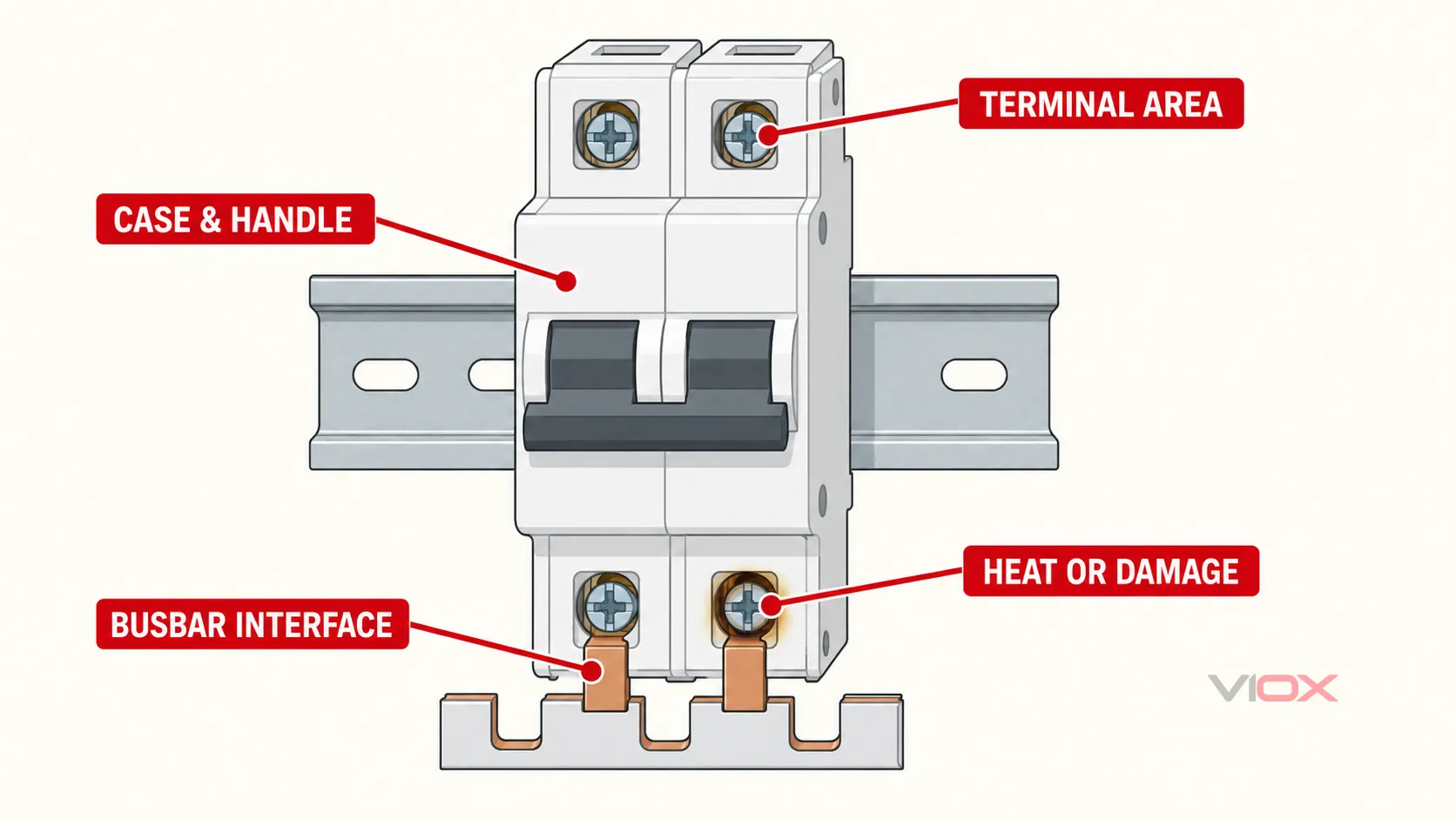
بخشهای بیرونی قابل مشاهده و نواحی اتصال را بازرسی کنید؛ از این دیاگرام به عنوان راهنمای ساختار داخلی یا سیمکشی ترمینال استفاده نکنید.
| نقطه بازرسی | مشاهده قابل قبول | شرایط توقف یا تشدید | اقدام بعدی |
|---|---|---|---|
| شناسایی مدار | زمانبندی، برچسب و موقعیت کلید مدار با مستندات فعلی مطابقت دارد | شناسایی مفقود، متناقض یا منسوخ | سوابق را اصلاح کرده و پیش از ادامه کار، مدار را به طور قطعی شناسایی کنید |
| قاب تزریقی | تمیز، سالم و بهطور ایمن نصبشده | ترک، تغییر شکل، سوختگی، ناحیه ذوبشده یا شواهدی از آلودگی داخلی | در صورت نیاز از مدار خارج کنید؛ MCB را تعویض کرده و علت را بررسی کنید |
| دسته و نشانگر وضعیت | حرکت میکند و وضعیت را طبق توصیف سازنده نشان میدهد | گیر کردن، شل بودن، شکستگی دسته، وضعیت مبهم، یا عدم توانایی در قفل شدن/بازنشانی پس از اطمینان از سلامت مدار | مکانیسم را تعمیر نکنید؛ آن را تعویض کرده یا برای ارزیابی توسط سازنده ارجاع دهید |
| نصب و درگیری با ریل DIN | دستگاه پایدار است و با تجهیزات مجاور همتراز میباشد | لق بودن نصب، گیره آسیبدیده، تغییر شکل، یا تنش مکانیکی ناشی از هادیها | علت نصب نادرست را اصلاح کرده و قطعات آسیبدیده یا دستگاه را در صورت نیاز تعویض کنید |
| ناحیه ترمینال | عدم وجود تغییر رنگ ناشی از حرارت، آسیب به عایق، رشتههای نمایان، خوردگی یا آلودگی | تیرگی، ذوب شدن عایق، ترمینال آسیبدیده، خوردگی، بیرونزدگی رشتهها یا آثار جرقه (Tracking) | توقف؛ آمادهسازی هادی، بارگذاری، وضعیت ترمینال و علت محیطی را بررسی کنید |
| رابط شینهبندی | رابط سازگار که بهدرستی در جای خود قرار گرفته و فاقد هرگونه تغییر شکل ظاهری یا آسیب حرارتی است | عدم تراز، درگیری ناقص، دندانه/شاخه/پین آسیبدیده، رابط ناسازگار ترکیبی، یا اثر حرارت | ایزوله کرده و مشکل سازگاری یا نصب را برطرف کنید؛ قطعات آسیبدیده از حرارت را تعویض نمایید |
| محفظه پیرامونی | خشک، تمیز مطابق با دستورالعملهای نگهداری تجهیزات، و عاری از اشیاء خارجی | رطوبت، گرد و غبار رسانا، آفات، خوردگی، آلودگی، یا مسدود شدن تهویه | پیش از بازگرداندن به وضعیت سرویس عادی، منبع محیطی را اصلاح کنید |
| دستگاهها و هادیهای مجاور | شرایط مشابه تحت عملکرد قابل مقایسه | یک قطب، ترمینال یا تجهیز مجاور، وضعیت غیرعادی مشخصی را نشان میدهد | شرایط بار و اتصالات را مقایسه کنید؛ جهت تشخیص تخصصی ارجاع دهید |
از تراشیدن، سنبادهزنی، سوراخکاری، چسبکاری یا هرگونه “تعمیر” آسیبهای بدنه قالبی خودداری کنید. محفظه آسیبدیده میتواند بر عایقبندی، فواصل هوایی، تراز مکانیکی و مهار خطا در هنگام بروز اتصال کوتاه تأثیر بگذارد.
۴. ارزیابی ترمینالها و رابطهای شینهها بدون سفت کردن کورکورانه
اتصالات شل یا نامناسب میتوانند ایجاد حرارت کنند، اما “سفت کردن مجدد هر ترمینال در هر بازدید” یک قانون کلی برای نگهداری نیست. دستکاری غیرضروری میتواند به هادیها آسیب برساند، شرایط بستن اتصالات را تغییر دهد یا خطای جدیدی ایجاد کند. تصمیم صحیح به طراحی ترمینال، نوع هادی، کارهای قبلی، شواهد حرکت یا گرمایش و دستورالعملهای دقیق سازنده بستگی دارد.
هنگامی که انجام کار روی اتصالات ضروری است، پرسنل مجرب باید از آمادهسازی هادی طبق مشخصات، شینه یا کابلشو سازگار، ابزار تأییدشده و گشتاور مخصوص مدل استفاده کنند. هرگز از مقدار گشتاور یک کلید مدار مشابه استفاده نکنید. پس از تعویض یا اتصال مجدد، مراحل تأیید را در نحوه نصب و اتصال یک MCB دنبال کنید.
برای سیستمهای شینهکشی شانهای (comb-busbar)، رابط را به عنوان یک سیستم بازرسی کنید و نه اینکه با هر کلید مدار به صورت مستقل برخورد کنید. این راهنمای سازگاری شین MCB توضیح میدهد که چرا گام، آرایش فاز، هندسه ترمینال و رابط نامی باید مطابقت داشته باشند.
۵. از اطلاعات حرارتی به عنوان ورودی تشخیصی استفاده کنید، نه به عنوان حکم نهایی
یک بررسی حرارتی میتواند رابطه غیرعادی را که در هنگام خاموشی آشکار نیست، فاش کند، اما این یک آزمون مستقل قبولی/ردی برای MCB نیست. نتایج به بار، شرایط محیطی، هندسه محفظه، گسیلمندی، دسترسی دید، تعادل فاز و وضعیت اتصالات مشابه بستگی دارد.
ترموگرافی در اطراف تجهیزات برقدار نیازمند ارزیابی ریسک جداگانه و پرسنل واجد شرایط است؛ این مقاله دستورالعمل کار روی تجهیزات برقدار را ارائه نمیدهد. اگر یک ترمینال یا قطب به طور قابلتوجهی داغتر از اجزای مشابه در شرایط کاری مشابه باشد، بارگذاری، سربندی هادی، درگیری شینه، تهویه و وضعیت دستگاه را بررسی کنید. بدون تعیین علت گرمایش غیرعادی، با سفت کردن ترمینال برقدار یا تعویض کلید مدار واکنش نشان ندهید.
برای استانداردها و محدودههای خانواده دستگاهها در خصوص گرمایش، به راهنمای افزایش دمای MCB و MCCB.
۶. تست مسیر را مطابق با پرسش مطرحشده انجام دهید
آزمونهای مختلف به پرسشهای متفاوتی پاسخ میدهند. انتخاب یک آزمون صرفاً به دلیل در دسترس بودن آن—به جای اینکه مشکل مشاهدهشده را برطرف کند—میتواند اطمینان کاذب ایجاد کند.
| است | مسیر مناسب | آنچه نتیجه میتواند تأیید کند | آنچه نمیتواند اثبات کند |
|---|---|---|---|
| آیا مسیر کنتاکت ایزولهشده با موقعیت دسته، باز یا بسته به نظر میرسد؟ | بررسی پیوستگی یا مقاومت در حالت بیبرق، با ایزوله کردن کلید مدار طبق نیاز | نمایش وضعیت پایه کنتاکت و تشخیص مسیر بازِ آشکار | کالیبراسیون تریپ حرارتی، پیکاپ مغناطیسی، ظرفیت قطع، یا عملکرد تحت جریان خطا |
| آیا تأسیسات الکتریکی همچنان برای استفاده مداوم مناسب است؟ | بازرسی و آزمونهای انتخابشده تحت رویه تأیید نصب قابلاجرا | وضعیت نصب در محدوده دامنه آن رویه | وضعیت داخلی MCB فراتر از آنچه آزمونهای انتخابشده ارزیابی میکنند |
| آیا اتصال نشاندهنده گرمای غیرعادی است؟ | بررسی حرارتی تخصصی به همراه تحقیق روی بار و اتصالات | محل و شدت نسبی یک ناهنجاری حرارتی | علت ریشهای تنها با تصویر دمایی |
| آیا MCB در محدوده زمانی-جریانی مورد نیاز عمل (تریپ) میکند؟ | انجام تست عملکرد تخصصی مناسب تحت یک روش تعریفشده، یا جایگزینی در مواردی که تست توجیهپذیر نیست | عملکرد در برابر روش و مبنای پذیرش استفادهشده | انطباق با هر تست استاندارد محصول یا قطع ایمن در هر سطح خطای ممکن |
| آیا کلید مدار از یک خطای شدید یا رویداد مخرب جان سالم به در برده است؟ | ارزیابی تحت هدایت سازنده، بررسی خطای سیستم، و جایگزینی در مواردی که وضعیت نامشخص است | یک تصمیم تعیین تکلیف مستندشده | اینکه یک MCB صرفاً به دلیل قابلیت تنظیم مجدد، برای استفاده مجدد مناسب است |
راهنمای VIOX برای تست کلید مدار بدون برق رویه محدود بررسی تداوم را توضیح میدهد. اگر مشکل با علائم شروع میشود تا یک بازرسی برنامهریزیشده، از چگونه خرابی یک کلید مدار را تست کنیم برای تفکیک شواهد مربوط به کلید مدار از خطاهای مدار و اتصالات.
از اعمال بیرویه تستهای مقاومت عایقی یا تحمل ولتاژ بر روی تابلوی مونتاژ شده خودداری کنید. قطعات الکترونیکی متصل، SPDها، نشانگرها، تجهیزات جانبی و تجهیزات پاییندست میتوانند روش تست مجاز را تغییر دهند. تست را در سطح نصب انتخاب کنید، قطعات حساس را طبق دستورالعمل مربوطه ایزوله کنید و از دستورالعملهای تجهیزات پیروی کنید.
۷. تصمیمگیری: حفظ، پایش، بررسی، تست یا تعویض
از یک دستهبندی تعیین تکلیف استفاده کنید که مشخص کند مرحله بعدی چیست. “بررسی شد” نتیجهگیری مفیدی برای نگهداری نیست.
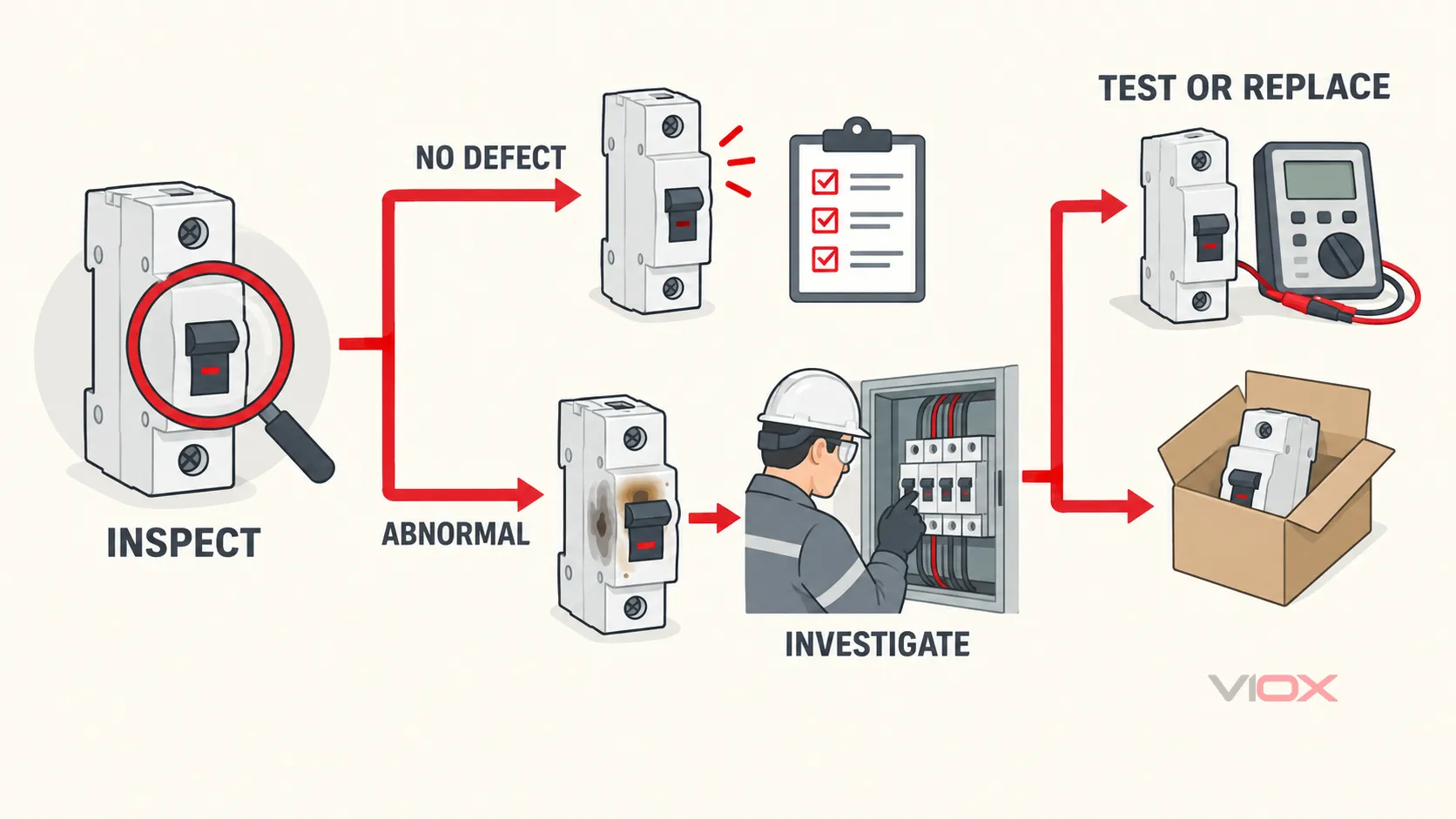
هرگونه مشاهده غیرعادی باید پیش از انجام تستهای تخصصی یا انتخاب قطعه جایگزین، منجر به بررسی علت شود.
| یافتهها | تعیین تکلیف | پیگیریهای لازم |
|---|---|---|
| بدون وضعیت غیرعادی؛ شناسایی و سوابق بهروز هستند | حفظ در سرویس | بازیابی کامل و ثبت وضعیت پایه |
| نگرانی جزئی خارجی بدون شواهدی از آسیب، اما وضعیت ممکن است تغییر کند | مانیتور | تعریف کنید که چه چیزی، توسط چه کسی و تحت چه شرایط عملیاتی مقایسه خواهد شد |
| گرما، قطع مکرر، صدا، بو یا عملکرد نامنظم با منبع نامشخص | بررسی سیستم | قبل از مقصر دانستن MCB، بار، هادی، ترمینال، شین، محیط و مدار پاییندست را بررسی کنید |
| سوالی در مورد یک عملکرد قابل آزمایش باقی مانده است و یک روش تایید شده وجود دارد | آزمون تخصصی | روش ثبت، ابزار، شرایط، مبنای پذیرش و نتیجه |
| دستگاه ترکخورده، تغییر شکل یافته، سوخته، ذوب شده، دارای نقص مکانیکی، آلودگی داخلی یا آسیبدیده به هر نحو دیگر | جایگزین کردن | از یک جایگزین با مشخصات صحیح استفاده کنید و علت بروز این وضعیت را بررسی نمایید |
| کاربرد یا علامتگذاری برای مدار نامناسب است | طراحی را اصلاح کنید | به جای جایگزینی مشابه، حفاظت را مجدداً محاسبه/انتخاب کرده و نصب را تأیید کنید |
جایگزینی با قرار گرفتن دستگاه جدید روی ریل کامل نمیشود. جریان نامی، مشخصه قطع، تناسب ولتاژ، قدرت قطع، آرایش قطبها، سازگاری ترمینال و شین، محدوده هادی و زمینه استاندارد مربوطه را برای جایگزین تأیید کنید. این راهنمای انتخاب MCB تصمیم مهندسی را پوشش میدهد.
چه زمانی باید یک MCB بازرسی شود؟
هیچ بازه زمانی واحد و معتبری برای نصب تمامی MCBها وجود ندارد. تناوب بازرسی و تایید باید بر اساس برنامه نگهداری و قوانین نصب مربوطه تعیین شده و سپس برای موارد زیر تنظیم گردد:
- دستورالعملهای سازنده و مستندات تجهیزات؛;
- الزامات قانونی و تاییدیه محلی؛;
- میزان اهمیت تجهیزات و پیامدهای خرابی؛;
- الگوی بار و میزان بهرهبرداری؛;
- دمای محیط و شرایط محفظه (تابلو)؛;
- قرارگیری در معرض گرد و غبار، رطوبت، نمک، مواد شیمیایی، لرزش یا آفات؛;
- عمر، نقصهای قبلی و سوابق نگهداری؛;
- فرکانس و شدت تریپها یا رویدادهای خطا؛;
- تغییرات در بارها، هادیها، شینهها یا تابلوی توزیع.
یک رویداد میتواند پیش از تاریخ برنامهریزیشده، منجر به بازرسی شود. نمونههایی از این موارد عبارتند از: رویداد اتصال کوتاه، تریپهای مکرر و غیرقابل توضیح، نفوذ آب، گرمای بیش از حد قابل مشاهده، کار روی هادیها، تغییر در پنل، صدا یا بوی غیرعادی، آسیب ناشی از ضربه، یا نتیجه ناموفق در تاییدیه.
استاندارد IEC 60364-6 به تاییدیه اولیه و دورهای تاسیسات الکتریکی فشار ضعیف میپردازد، که شامل تعیین این موضوع است که آیا تاسیسات و تجهیزات آن برای استفاده مداوم در شرایط رضایتبخشی باقی ماندهاند یا خیر. این یک چارچوب تاییدیه تاسیسات است، نه مجوزی برای ابداع یک بازه زمانی سرویس جهانی برای MCB. در تاسیسات آمریکای شمالی، NFPA 70B چارچوبی برای نگهداری تجهیزات الکتریکی ارائه میدهد؛ دامنه و بازه زمانی دقیق همچنان به دستهبندی تجهیزات، وضعیت، میزان حساسیت، دستورالعملهای سازنده و برنامه اتخاذ شده بستگی دارد.
سرویس را بازیابی و سوابق را ببندید
پس از تکمیل کار تاییدشده، اطمینان حاصل کنید که ارتهای موقت، ابزارها، سیمهای تست، موانع و مواد خارجی طبق نیاز برداشته شدهاند؛ حفاظها و درپوشها بازگردانده شدهاند؛ پرسنل تحت تاثیر از محل دور شدهاند؛ برچسبگذاری و جداول مدار صحیح هستند؛ و رویه بازیابی مجاز دنبال شده است.
سوابق نگهداری باید شامل موارد زیر باشد:
- شناسایی تجهیزات و مدار؛;
- سازنده MCB، سری و مقادیر نامی قابل مشاهده؛;
- تاریخ، بازرس، دستور کار، و دلیل بازرسی؛;
- تاریخچه عملکرد و محرک رویداد، در صورت وجود؛;
- مشاهدات چشمی و ناحیه اتصال؛;
- آزمونهای انجامشده، روش، شناسایی ابزار، شرایط، و نتایج؛;
- نواقص و اهمیت تفسیرشده آنها؛;
- اقدامات اصلاحی و قطعات تعویضشده؛;
- وضعیت نهایی: حفظ، پایش، بررسی، آزمون، تعویض، یا طراحی مجدد؛;
- وضعیت بازیابی و مجوز؛;
- محرک یا منبع بازه زمانی بازبینی بعدی.
سوابق قابل تحلیل، ارزشمندتر از علامتگذاریهای موردی هستند. این سوابق به بازرسان آینده اجازه میدهند تا تغییرات را مقایسه کنند، علائم تکراری را به تاریخچه مدار مرتبط سازند و دلیل حفظ یا تعویض یک MCB را توجیه کنند.
قانون نهایی نگهداری
حفظ عملکرد حفاظتی و نصب, ، نه مکانیزم پلمبشده MCB. با شناسایی و تاریخچه عملکرد شروع کنید، کلید مدار و رابطهای آن را بازرسی کنید، تنها تستهایی را انتخاب کنید که به یک پرسش مشخص پاسخ میدهند، سیستم پشت یافتههای غیرعادی را بررسی کنید و به جای تلاش برای تعمیرات داخلی، دستگاههای آسیبدیده یا غیرقابلاطمینان را تعویض نمایید.
اگر بازرسی نیاز به تعویض را مشخص کرد، سری کلیدهای مدار مینیاتوری VIOX را با الزامات مدار مطابقت دهید و پیش از انتخاب، مستندات دقیق محصول را درخواست کنید.