

اس صفحے پر
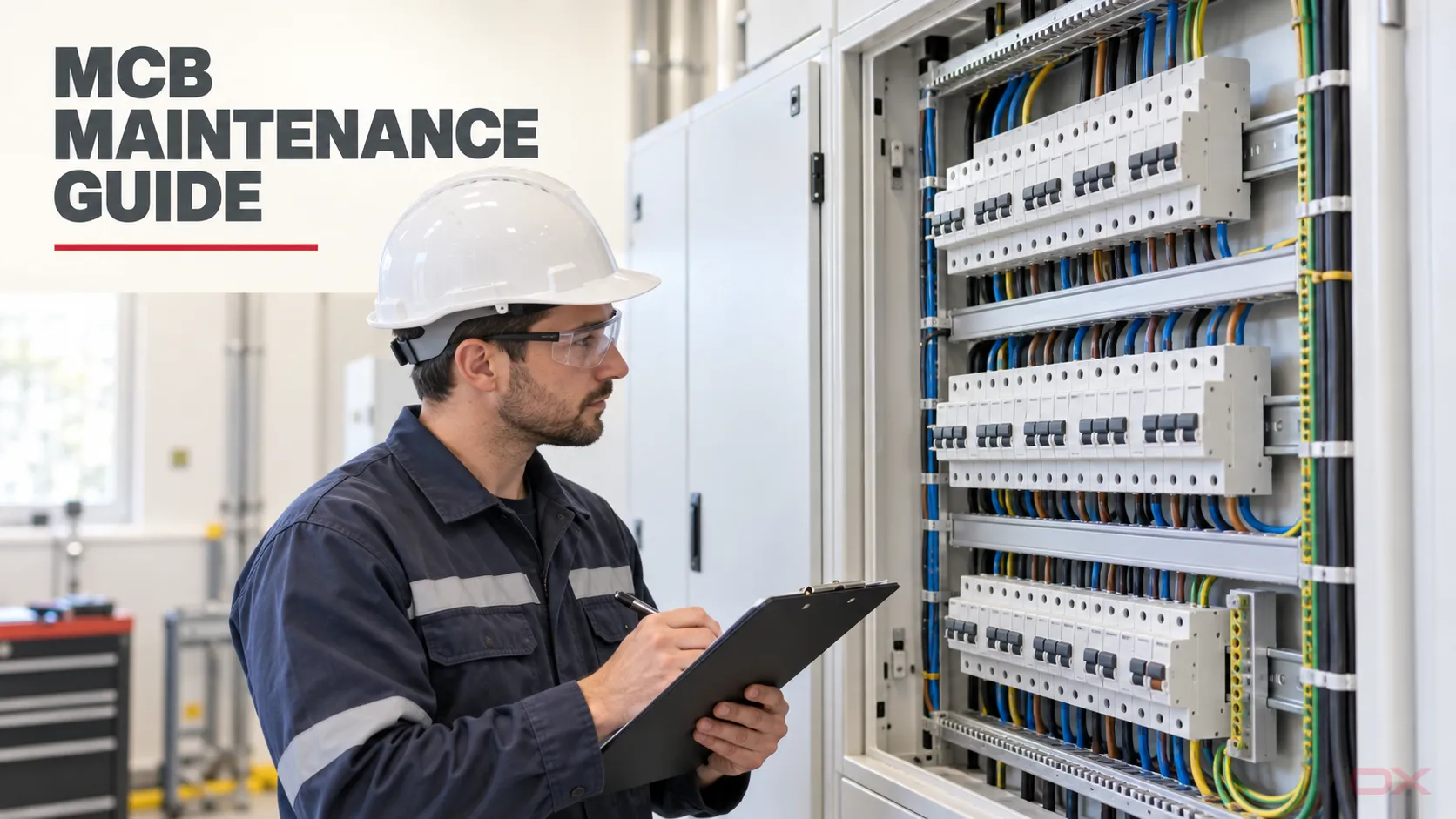
MCB مینٹیننس کا عام طور پر مطلب نصب شدہ بریکر اور اس کے کنکشن کے ماحول کا معائنہ کرنا، صرف ان چیکس کا انتخاب کرنا جو حالت اور مینوفیکچرر کی ہدایات کے مطابق درست ہوں، نتائج کو دستاویزی شکل دینا، اور نقصان یا غیر قابل اعتماد آپریشن پائے جانے پر ڈیوائس کو تبدیل کرنا ہے۔ یہ ضروری نہیں عام طور پر اس کا مطلب مولڈڈ کیس کو کھولنا، میکانزم کو چکنا کرنا، کانٹیکٹس کو درست کرنا، یا آرک شوٹ کی مرمت کرنا ہے۔.
ایک منی ایچر سرکٹ بریکر (MCB) حفاظتی برقی نظام کا صرف ایک حصہ ہے۔ لہذا، دیکھ بھال کے فیصلے میں بریکر، کنڈکٹرز، ٹرمینلز، بس بار انٹرفیس، انکلوژر، لوڈ کی ہسٹری، اور پچھلے فالٹس کے شواہد کو مدنظر رکھنا ضروری ہے۔ کسی واضح طور پر خراب شدہ MCB کو وجہ کی تحقیق کیے بغیر تبدیل کرنے سے اصل اوورلوڈ، ڈھیلا کنکشن، آلودگی، یا فالٹ کرنٹ کا مسئلہ برقرار رہ سکتا ہے۔.
حفاظتی حدود: ایسا کام جس میں لائیو پارٹس بے نقاب ہوں، پینل کور ہٹایا جائے، پاور کنڈکٹرز کو چھیڑا جائے، یا برقی ٹیسٹ کیے جائیں، وہ اہل عملے کا کام ہے جو قابل اطلاق محفوظ کام کے طریقہ کار پر عمل پیرا ہو۔ تمام متعلقہ توانائی کے ذرائع کو الگ کریں، دوبارہ توانائی بحال کرنے کے عمل کو کنٹرول کریں، اور رابطہ کرنے سے پہلے طریقہ کار کے مطابق درکار حالت کی تصدیق کریں۔ ریاستہائے متحدہ میں، آجر کا خطرناک توانائی کنٹرول پروگرام اور قابل اطلاق OSHA کے برقی اصول تفصیلی عمل کا تعین کرتے ہیں۔.
کلیدی ٹیک ویز
- ایک معیاری DIN-rail MCB کو ایک سیل شدہ حفاظتی ڈیوائس سمجھیں جب تک کہ اس کا مینوفیکچرر واضح طور پر اس کے برعکس نہ کہے۔.
- بریکر کے ارد گرد کی تنصیب کے ساتھ ساتھ خود بریکر کا بھی معائنہ کریں۔ ٹرمینل پر حرارت سے پہنچنے والا نقصان کنڈکٹر کی تیاری، ٹارک، بس بار کی فٹنگ، لوڈنگ، یا ماحولیاتی حالات کی وجہ سے ہو سکتا ہے۔.
- کنٹینیوٹی یہ دکھا سکتی ہے کہ آیا ڈیوائس کے الگ ہونے کی حالت میں کانٹیکٹس کھلے یا بند دکھائی دیتے ہیں؛ یہ ثابت نہیں کر سکتی کہ بریکر مطلوبہ کرنٹ اور وقت پر ٹرپ ہو جائے گا۔.
- ایک ہی عالمی معائنہ کے وقفے، ٹارک ویلیو، یا درجہ حرارت کی حد کا استعمال نہ کریں۔ مینٹیننس پروگرام، قابل اطلاق تصدیقی تقاضوں، ماحول، آپریٹنگ ہسٹری، اور پروڈکٹ کی درست ہدایات کا استعمال کریں۔.
- ایک ٹوٹا ہوا، مسخ شدہ، جھلسا ہوا، پگھلا ہوا، اندرونی طور پر آلودہ، یا میکانکی طور پر ناقابل اعتماد MCB عام طور پر تبدیلی کا فیصلہ ہوتا ہے—نہ کہ فیلڈ میں مرمت کا منصوبہ۔.
MCB مینٹیننس میں کیا شامل ہے—اور کیا نہیں
لفظ سرکٹ بریکر یہ ان آلات کا احاطہ کرتا ہے جن کی ساخت اور سروس کی پالیسیاں بہت مختلف ہوتی ہیں۔ ڈرا آؤٹ ایئر سرکٹ بریکر کے لیے لکھی گئی طریقہ کار میں کانٹیکٹ کا معائنہ، میکانزم کی لبریکیشن، ٹائمنگ کی پیمائش، انٹرلاک کی جانچ، اور آرک-چوٹ کا کام شامل ہو سکتا ہے۔ ان ہدایات کا اطلاق ایک سیل شدہ MCB پر کرنا تکنیکی طور پر نامناسب ہوگا۔.
| ڈیوائس کیٹیگری | عام دیکھ بھال پر زور | اندرونی فیلڈ سروس |
|---|---|---|
| DIN-rail MCB | بیرونی حالت، ماؤنٹنگ، ٹرمینل اور بس بار کا علاقہ، آپریٹنگ انڈیکیشن، تنصیب کی تصدیق، ریکارڈز، تبدیلی | عام طور پر اجازت نہیں ہے؛ مینوفیکچرر کی ہدایات پر ہو بہو عمل کریں |
| مولڈڈ-کیس سرکٹ بریکر (MCCB) | بیرونی معائنہ کے علاوہ ماڈل کے لحاظ سے مخصوص مکینیکل، ٹرپ-یونٹ، ایکسیسری، اور کارکردگی کی جانچ | یہ پروڈکٹ کے ڈیزائن اور مینوفیکچرر کی پالیسی پر منحصر ہے؛ مولڈ کیس کو صرف اس لیے نہیں کھولا جانا چاہیے کہ بریکر کی کوئی دوسری فیملی قابلِ مرمت ہے۔ |
| لو-وولٹیج پاور/ایئر سرکٹ بریکر | ڈرا آؤٹ انٹرفیس، اسٹورڈ-انرجی میکانزم، کانٹیکٹس، آرک-کنٹرول کے اجزاء، انٹر لاکس، ٹرپ یونٹ، اور ماڈل کے لحاظ سے مخصوص ٹیسٹنگ | اکثر اہل ماہرین کے لیے سروس کے طریقہ کار وضع کیے گئے ہوتے ہیں۔ |
| میڈیم-وولٹیج بریکر | بریکر ٹیکنالوجی، انٹرپرٹر کی حالت، میکانزم، انسولیشن، انٹر لاکس، ٹائمنگ، اور سوئچ گیئر انٹرفیس | ماہرانہ طریقہ کار جس کا انحصار درست آلات اور دیکھ بھال کی دستاویزات پر ہوتا ہے۔ |
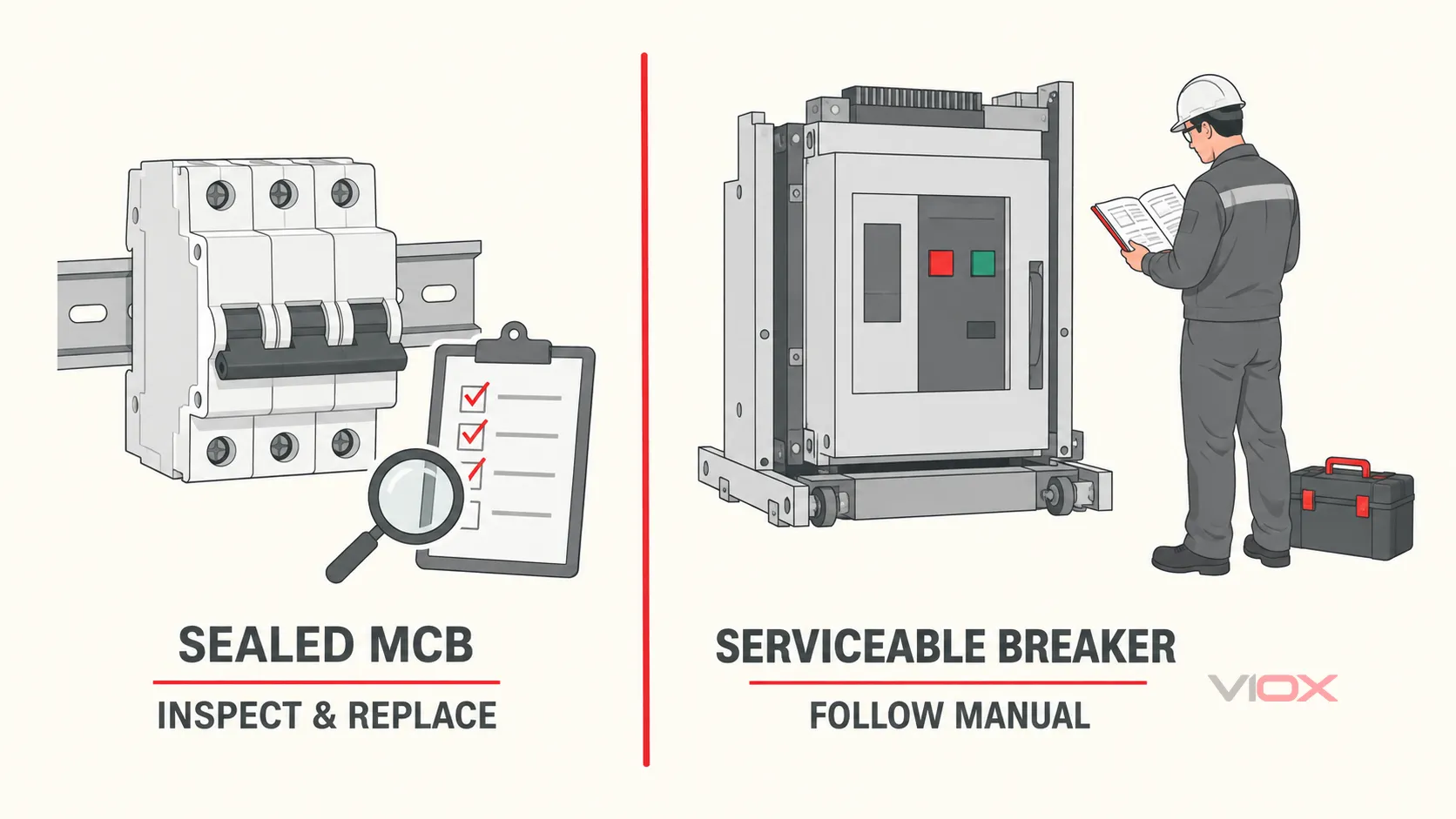
ایک سیل شدہ MCB اور قابلِ مرمت پاور بریکر کے لیے دیکھ بھال کی حدود مختلف ہوتی ہیں۔ مینوفیکچرر کا اصل مینوئل ہی حتمی حیثیت رکھتا ہے۔.
یہ مضمون صرف نصب شدہ لو-وولٹیج MCBs تک محدود ہے۔ ڈیوائس کے حفاظتی فنکشن اور اندرونی آپریٹنگ ترتیب کے لیے، ملاحظہ کریں MCB کیسے کام کرتا ہے. متعدد آلات کی کلاسوں پر محیط سہولت گیر حکمت عملی کے لیے، وسیع تر استعمال کریں الیکٹریکل مینٹیننس پروگرام گائیڈ دیکھیں.
معائنے سے پہلے مینٹیننس کا ریکارڈ تیار کریں
ایک مفید معائنہ شناخت اور سیاق و سباق سے شروع ہوتا ہے۔ ان کے بغیر، ایک صاف نظر آنے والی ڈیوائس بھی غلط طریقے سے استعمال ہو سکتی ہے، اور غیر معمولی ریڈنگ کی تشریح کرنا مشکل ہو سکتا ہے۔.
یہ فیصلہ کرنے سے پہلے کہ کون سا کام ضروری ہے، درج ذیل کو ریکارڈ کریں:
- پینل، فیڈر، اور سرکٹ کی شناخت؛;
- بریکر بنانے والا، سیریز، پول کنفیگریشن، ریٹیڈ کرنٹ In، ٹرپ کی خصوصیت، وولٹیج مارکنگ، اور بریکنگ-کیپیسٹی مارکنگ؛;
- کنڈکٹر اور بس بار کی ترتیب جو منظور شدہ ریکارڈز یا اہل معائنے سے نظر آتی ہو؛;
- تنصیب کا ماحول، بشمول دھول، نمی، سنکنرن کا خطرہ، وائبریشن، اور انکلوژر کے درجہ حرارت سے متعلق خدشات؛;
- معلوم لوڈنگ پیٹرن اور حال ہی میں شامل کیا گیا کوئی بھی لوڈ؛;
- سابقہ ٹرپس، شارٹ سرکٹ کے واقعات، اوور ہیٹنگ، پانی کا داخل ہونا، مرمت کا کام، یا کنڈکٹر میں خلل؛;
- آخری معائنہ، ٹیسٹ، تبدیلی، اور ریکارڈ شدہ اصلاحی کارروائی؛;
- مینوفیکچرر کی درست ہدایات اور سائٹ کا منظور شدہ دیکھ بھال کا طریقہ کار۔.
اگر کسی مارکنگ کی تشریح نہ کی جا سکے تو، استعمال کریں MCB نیم پلیٹ گائیڈ اس مفروضے سے پہلے کہ ایک جیسی جسمانی چوڑائی والے آلات آپس میں تبدیل کیے جا سکتے ہیں۔.
MCB مینٹیننس کا طریقہ کار: مشاہدے سے لے کر حتمی فیصلے تک
محفوظ ترین ورک فلو یہ نہیں ہے کہ “پینل کھولیں اور ہر چیز کو ٹائٹ کر دیں۔” یہ ایک مرحلہ وار عمل ہے جس میں ہر مشاہدہ اگلے جائز اقدام کا تعین کرتا ہے۔.
1. آپریٹنگ ہسٹری کا جائزہ لیں اور فوری رکنے کی شرائط کی نشاندہی کریں۔
آؤٹیج یا تفصیلی معائنے سے پہلے، شکایات اور آپریٹنگ شواہد کا جائزہ لیں۔ بار بار ٹرپ ہونا، ری سیٹ ہونے میں ناکامی، ہینڈل کا مطلوبہ حالت میں نہ رہنا، غیر معمولی بو، چڑچڑاہٹ کی آواز، دھوئیں کے واضح نشانات، پانی کا اثر، یا کسی مخصوص حصے کا گرم ہونا، کام کو معمول کے معائنے سے بدل کر فالٹ کی تحقیقات میں تبدیل کر دیتا ہے۔.
صرف یہ دیکھنے کے لیے کہ آیا بریکر دوبارہ ٹرپ ہوتا ہے، اسے بار بار ری سیٹ نہ کریں۔ ایک ٹرپ شدہ MCB اوورلوڈ یا شارٹ سرکٹ کا جواب دے رہا ہو سکتا ہے، اور فالٹ کو ناقص بریکر سے الگ کرنا ضروری ہے۔ MCB ٹرپنگ تشخیصی گائیڈ اس ٹربل شوٹنگ کے عمل کا ذمہ دار ہے۔.
2. کام کے لیے درکار محفوظ حالت قائم کریں۔
آؤٹیج کا منصوبہ بنائیں، ہر اس ذریعہ کی نشاندہی کریں جو کام کی جگہ کو انرجائز کر سکتا ہے، آلات کو الگ (isolate) کریں، دوبارہ انرجائز ہونے کے عمل کو کنٹرول کریں، ذخیرہ شدہ انرجی کو سنبھالیں، اور سائٹ کے طریقہ کار کا استعمال کرتے ہوئے درکار ڈی-انرجائزڈ حالت کی تصدیق کریں۔ OFF نشان زد ہینڈل صرف ایک آپریٹنگ اشارہ ہے؛ یہ بذات خود اس بات کا ثبوت نہیں ہے کہ تمام متعلقہ کنڈکٹرز چھونے کے لیے محفوظ ہیں۔.
VIOX MCB لاک آؤٹ/ٹیگ آؤٹ گائیڈ انرجی کنٹرول کے عمل میں بریکر کے کردار کی وضاحت کرتی ہے۔ ریاستہائے متحدہ کے کام کی جگہوں کے لیے، OSHA کا کہنا ہے کہ خطرناک انرجی کنٹرول کے طریقہ کار میں سروسنگ یا دیکھ بھال شروع کرنے سے پہلے شٹ ڈاؤن، آئسولیشن، لاک آؤٹ یا ٹیگ آؤٹ ڈیوائسز کا اطلاق، ذخیرہ شدہ انرجی کا کنٹرول، اور تصدیق شامل ہونی چاہیے۔ ریاستہائے متحدہ سے باہر کے تقاضے قابل اطلاق قانون، تنصیب کے قواعد، اور آجر کے طریقہ کار پر منحصر ہیں۔.
3. درست کنکشنز کو چھیڑے بغیر بریکر کا معائنہ کریں۔
درج ذیل جدول کو معائنے سے عمل تک کی چیک لسٹ کے طور پر استعمال کریں۔ کچھ مشاہدات انکلوژر بند ہونے کی حالت میں بھی کیے جا سکتے ہیں۔ پینل کے اندرونی حصوں تک رسائی صرف منظور شدہ حالات کے تحت اہل عملے تک محدود ہے۔.
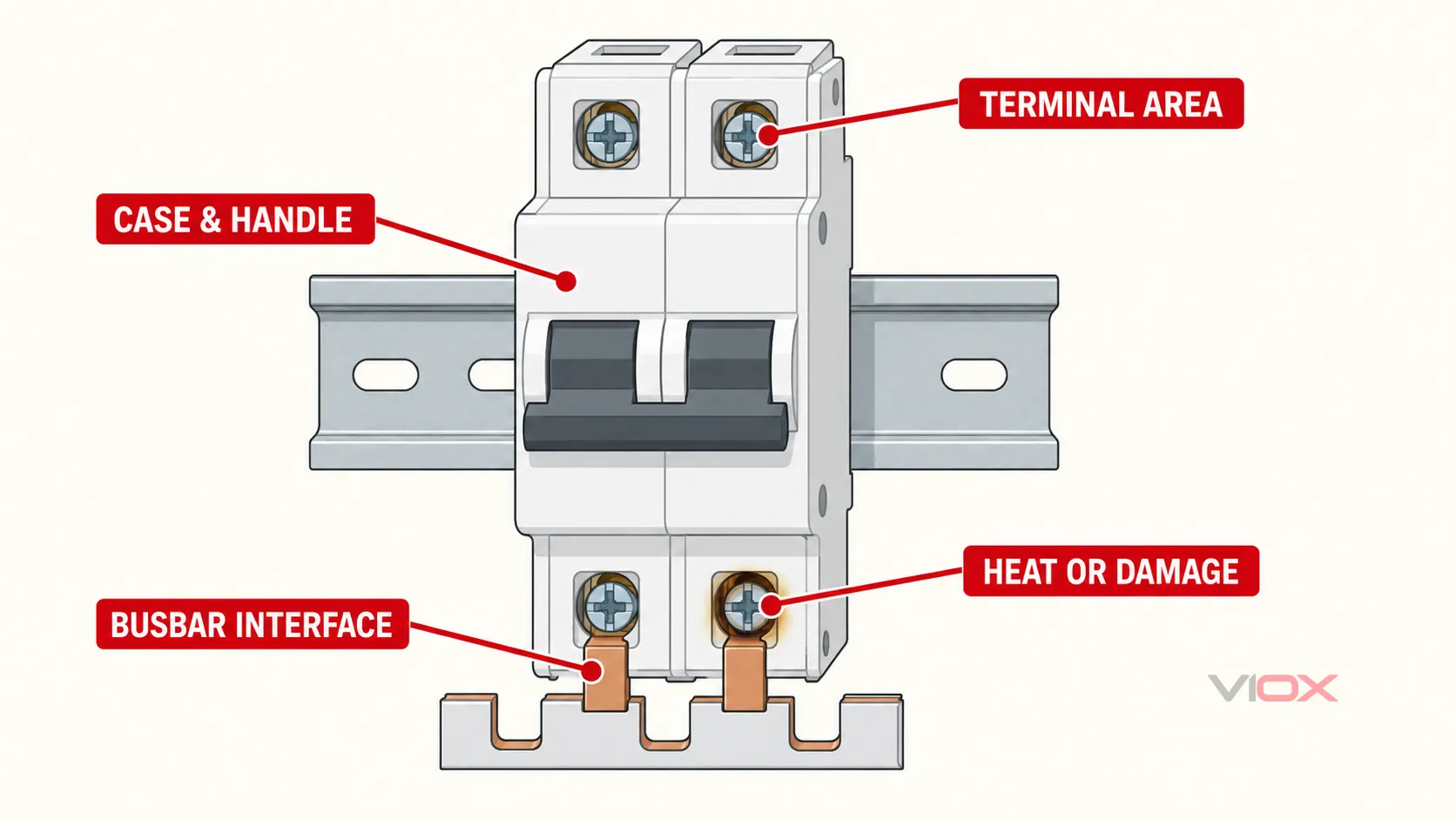
ظاہری بیرونی حصے اور کنکشن زونز کا معائنہ کریں؛ ڈایاگرام کو اندرونی ساخت یا ٹرمینل وائرنگ کی رہنمائی نہ سمجھیں۔.
| معائنہ کا مقام | قابل قبول مشاہدہ | رکنے یا بڑھانے کی حالت | اگلا اقدام |
|---|---|---|---|
| سرکٹ کی شناخت | شیڈول، لیبل، اور بریکر کی پوزیشن موجودہ دستاویزات سے مطابقت رکھتی ہے | غائب، متضاد، یا متروک شناخت | کام جاری رکھنے سے پہلے ریکارڈز کی تصحیح کریں اور سرکٹ کی درست شناخت کریں۔ |
| مولڈڈ کیس | صاف، برقرار، اور محفوظ طریقے سے نصب شدہ | دراڑ، بگاڑ، جھلسنے کے نشانات، پگھلا ہوا حصہ، یا اندرونی آلودگی کے شواہد | ضرورت کے مطابق سروس سے ہٹا دیں؛ MCB کو تبدیل کریں اور وجہ کی تحقیقات کریں۔ |
| ہینڈل اور پوزیشن کا اشارہ | مینوفیکچرر کی وضاحت کے مطابق حرکت کرتا ہے اور حالت ظاہر کرتا ہے | جام ہونا، ڈھیلا پن، ٹوٹا ہوا ہینڈل، مبہم حالت، یا سرکٹ کے درست ثابت ہونے کے بعد لیچ/ری سیٹ کرنے میں ناکامی | میکانزم کی مرمت نہ کریں؛ اسے تبدیل کریں یا مینوفیکچرر کے مجاز جائزے کے لیے بھیجیں۔ |
| ماؤنٹنگ اور DIN-rail انگیجمنٹ | ڈیوائس مستحکم ہے اور ملحقہ آلات کے ساتھ سیدھ میں ہے | ڈھیلی ماؤنٹنگ، خراب کلپ، بگاڑ، یا کنڈکٹرز کی وجہ سے مکینیکل دباؤ | ماؤنٹنگ کی وجہ کو درست کریں اور ضرورت کے مطابق خراب پرزوں یا ڈیوائس کو تبدیل کریں |
| ٹرمینل کا علاقہ | گرمی سے رنگت میں تبدیلی، انسولیشن کو نقصان، کھلے اسٹرینڈز، زنگ، یا آلودگی نہیں ہے | رنگت کا گہرا ہونا، پگھلی ہوئی انسولیشن، خراب ٹرمینل، اسٹرینڈ کا باہر نکلنا، یا ٹریکنگ کے نشانات | رکیں؛ کنڈکٹر کی تیاری، لوڈنگ، ٹرمینل کی حالت، اور ماحولیاتی وجہ کی تحقیقات کریں |
| بس بار انٹرفیس | درست طریقے سے بیٹھا ہوا مطابقت پذیر انٹرفیس جس میں کوئی ظاہری بگاڑ یا حرارت سے نقصان نہ ہو | غلط سیدھ، نامکمل انگیجمنٹ، خراب دانت/فورک/پن، ملا جلا غیر مطابقت پذیر انٹرفیس، یا حرارت کے نشانات | مطابقت یا تنصیب کے مسئلے کو الگ تھلگ کریں اور درست کریں؛ حرارت سے متاثرہ پرزوں کو تبدیل کریں |
| ارد گرد کا انکلوژر | خشک، آلات کی دیکھ بھال کی ہدایات کے مطابق صاف، اور غیر ملکی اشیاء سے پاک | نمی، موصل دھول، کیڑے مکوڑے، زنگ، ملبہ، یا بند وینٹیلیشن | عام سروس بحال کرنے سے پہلے ماحولیاتی ذریعہ کو درست کریں |
| ملحقہ آلات اور کنڈکٹرز | موازنہ ڈیوٹی کے تحت یکساں حالت | ایک پول، ٹرمینل، یا ملحقہ ڈیوائس غیر معمولی حالت ظاہر کرتی ہے | لوڈ اور کنکشن کی شرائط کا موازنہ کریں؛ ماہرانہ تشخیص کے لیے معاملہ آگے بڑھائیں |
مولڈ کیس کو کھرچیں، رگڑیں، ڈرل کریں، جوڑیں، یا کسی اور طریقے سے نقصان کی “مرمت” نہ کریں۔ خراب شدہ انکلوژر فالٹ کے دوران انسولیشن، کلیئرنس، مکینیکل الائنمنٹ، اور کنٹینمنٹ کو متاثر کر سکتا ہے۔.
4. ٹرمینلز اور بس بار انٹرفیس کا بغیر سوچے سمجھے دوبارہ ٹائٹ کیے بغیر جائزہ لیں
ڈھیلے یا غیر موزوں کنکشن گرمی پیدا کر سکتے ہیں، لیکن “ہر دورے پر ہر ٹرمینل کو دوبارہ ٹارک کرنا” کوئی عالمی دیکھ بھال کا اصول نہیں ہے۔ غیر ضروری چھیڑ چھاڑ کنڈکٹرز کو نقصان پہنچا سکتی ہے، کلیمپنگ کی شرائط کو تبدیل کر سکتی ہے، یا نیا فالٹ پیدا کر سکتی ہے۔ درست فیصلہ ٹرمینل کے ڈیزائن، کنڈکٹر کی قسم، پچھلے کام، حرکت یا حرارت کے شواہد، اور مینوفیکچرر کی ہدایات پر منحصر ہے۔.
جب کنکشن کا کام ضروری ہو، تو اہل عملے کو مخصوص کنڈکٹر کی تیاری، ہم آہنگ بس بار یا لگ، منظور شدہ ٹول، اور ماڈل کے مطابق ٹارک ویلیو کا استعمال کرنا چاہیے۔ کبھی بھی ملتے جلتے بریکر سے ٹارک ویلیو مستعار نہ لیں۔ تبدیلی یا دوبارہ کنکشن کے بعد، تصدیقی مراحل پر عمل کریں MCB کو انسٹال اور کنیکٹ کرنے کا طریقہ.
کومب-بس بار سسٹمز کے لیے، انٹرفیس کا بطور سسٹم معائنہ کریں بجائے اس کے کہ ہر بریکر کو الگ الگ سمجھیں۔ MCB بس بار مطابقت گائیڈ وضاحت کرتا ہے کہ پچ، فیز کی ترتیب، ٹرمینل جیومیٹری، اور ریٹیڈ انٹرفیس کا مماثل ہونا کیوں ضروری ہے۔.
5. تھرمل معلومات کو تشخیصی ان پٹ کے طور پر استعمال کریں، نہ کہ حتمی فیصلے کے طور پر
تھرمل سروے ایسے غیر معمولی تعلق کو ظاہر کر سکتا ہے جو شٹ ڈاؤن کے دوران واضح نہیں ہوتا، لیکن یہ MCB کے لیے پاس/فیل کا خود مختار ٹیسٹ نہیں ہے۔ نتائج کا انحصار لوڈ، محیطی حالات، انکلوژر جیومیٹری، ایمیسیویٹی، دیکھنے کی رسائی، فیز بیلنس، اور موازنہ کنکشنز کی حالت پر ہوتا ہے۔.
توانائی سے چلنے والے آلات کے ارد گرد تھرموگرافی کے لیے الگ رسک اسیسمنٹ اور اہل عملے کی ضرورت ہوتی ہے؛ یہ مضمون توانائی سے چلنے والے کام کا طریقہ کار فراہم نہیں کرتا ہے۔ اگر کوئی ٹرمینل یا پول موازنہ آپریٹنگ حالات کے تحت موازنہ اجزاء سے نمایاں طور پر زیادہ گرم ہے، تو لوڈنگ، کنڈکٹر ٹرمینیشن، بس بار انگیجمنٹ، وینٹیلیشن، اور ڈیوائس کی حالت کی تحقیقات کریں۔ غیر معمولی حرارت کی وجہ معلوم کیے بغیر کسی ٹرمینل کو ٹائٹ کرنے یا بریکر کو تبدیل کرنے کا ردعمل نہ دیں۔.
حرارت کے حوالے سے معیارات اور ڈیوائس فیملی کی حدود کے لیے، ملاحظہ کریں MCB اور MCCB ٹمپریچر رائز گائیڈ.
6. پوچھے گئے سوال کے مطابق ٹیسٹنگ کا راستہ اختیار کریں۔
مختلف ٹیسٹ مختلف سوالات کے جواب دیتے ہیں۔ کسی ٹیسٹ کا انتخاب صرف اس لیے کرنا کہ وہ دستیاب ہے—بجائے اس کے کہ وہ مشاہدہ شدہ صورتحال کو حل کرے—غلط اعتماد پیدا کر سکتا ہے۔.
| سوال | مناسب راستہ | نتیجہ کس چیز کی تائید کر سکتا ہے | جو یہ ثابت نہیں کر سکتا |
|---|---|---|---|
| کیا ہینڈل کی پوزیشن کے ساتھ الگ کیا گیا کانٹیکٹ پاتھ کھلا یا بند دکھائی دیتا ہے؟ | ڈی-انرجائزڈ تسلسل (continuity) یا مزاحمت کی جانچ، سرکٹ بریکر کو ضرورت کے مطابق الگ کر کے | بنیادی کانٹیکٹ-اسٹیٹ انڈیکیشن اور واضح اوپن پاتھ کی نشاندہی | تھرمل ٹرپ کیلیبریشن، مقناطیسی پک اپ، بریکنگ کیپیسٹی، یا فالٹ کرنٹ کے تحت کارکردگی |
| کیا برقی تنصیب اب بھی مسلسل استعمال کے لیے موزوں ہے؟ | قابل اطلاق تنصیب کی تصدیق کے طریقہ کار کے تحت منتخب کردہ معائنہ اور ٹیسٹ | اس طریقہ کار کے دائرہ کار میں تنصیب کی حالت | منتخب کردہ ٹیسٹوں کے اندازے سے باہر اندرونی MCB کی حالت |
| کیا کوئی کنکشن غیر معمولی حرارت ظاہر کر رہا ہے؟ | اہل تھرمل سروے کے ساتھ لوڈ اور کنکشن کی تحقیقات | تھرمل بے قاعدگی کا مقام اور تقابلی شدت | صرف درجہ حرارت کی تصویر سے بنیادی وجہ |
| کیا MCB مطلوبہ ٹائم-کرنٹ حدود کے اندر ٹرپ کرے گا؟ | ایک متعین طریقہ کار کے تحت مناسب خصوصی کارکردگی کی جانچ، یا جب جانچ کا جواز نہ ہو تو تبدیلی | استعمال شدہ طریقہ کار اور قبولیت کی بنیاد کے مطابق کارکردگی | ہر پروڈکٹ-اسٹینڈرڈ ٹیسٹ کی تعمیل یا ہر ممکن فالٹ لیول پر محفوظ رکاوٹ |
| کیا بریکر کسی شدید فالٹ یا نقصان دہ واقعے کے بعد محفوظ رہا؟ | مینوفیکچرر کی رہنمائی میں تشخیص، سسٹم فالٹ کا جائزہ، اور جہاں حالت غیر یقینی ہو وہاں تبدیلی | ایک دستاویزی تصفیہ کا فیصلہ | یہ کہ ایک MCB صرف اس لیے دوبارہ استعمال کے قابل ہے کیونکہ اسے ری سیٹ کیا جا سکتا ہے |
VIOX گائیڈ برائے بغیر پاور کے سرکٹ بریکر کی جانچ محدود تسلسل-چیک (continuity-check) کے طریقہ کار کی وضاحت کرتا ہے۔ اگر مسئلہ طے شدہ معائنے کے بجائے علامات سے شروع ہوتا ہے، تو استعمال کریں سرکٹ بریکر کے خراب ہونے کی جانچ کیسے کریں بریکر کے شواہد کو سرکٹ اور کنکشن کی خرابیوں سے الگ کرنے کے لیے۔.
اسمبل شدہ پینل پر بلا امتیاز انسولیشن-ریزسٹنس یا ودسٹینڈ ٹیسٹ لاگو کرنے سے گریز کریں۔ منسلک الیکٹرانکس، سرج پروٹیکٹو ڈیوائسز (SPD)، انڈیکیٹرز، لوازمات، اور ڈاؤن اسٹریم آلات قابل قبول ٹیسٹ کے طریقہ کار کو تبدیل کر سکتے ہیں۔ تنصیب کی سطح پر ٹیسٹ کا انتخاب کریں، قابل اطلاق طریقہ کار کے مطابق حساس اجزاء کو الگ کریں، اور آلات کی ہدایات پر عمل کریں۔.
7. فیصلہ کریں: برقرار رکھیں، نگرانی کریں، تفتیش کریں، ٹیسٹ کریں، یا تبدیل کریں۔
ایک ڈسپوزیشن زمرہ استعمال کریں جو بتائے کہ آگے کیا کرنا ہے۔ “چیکڈ” (Checked) دیکھ بھال کا کوئی مفید نتیجہ نہیں ہے۔.
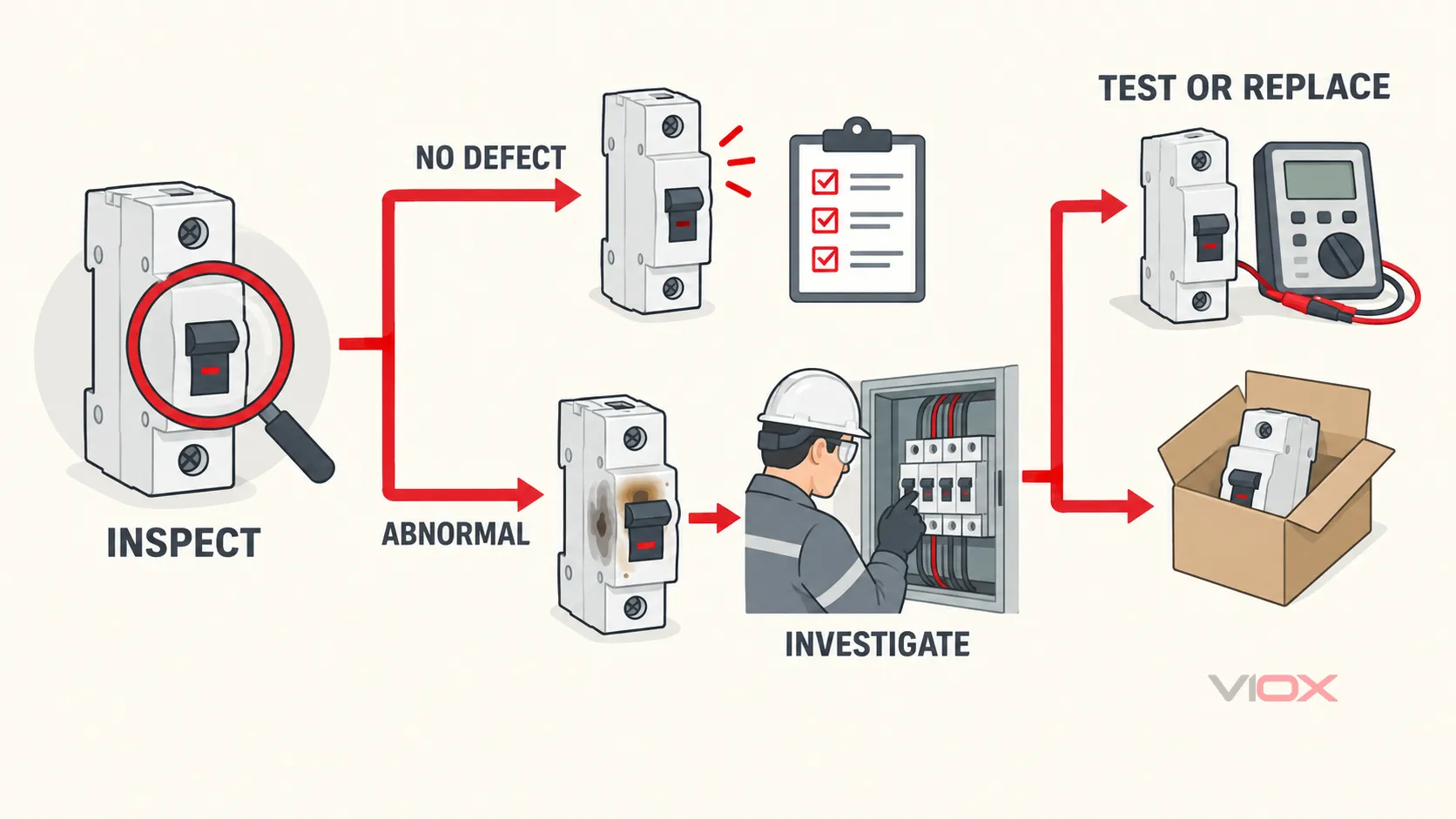
کسی غیر معمولی مشاہدے پر کوالیفائیڈ ٹیسٹنگ یا متبادل کے انتخاب سے پہلے وجہ کی تفتیش شروع ہونی چاہیے۔.
| نتائج | تصفیہ | مطلوبہ فالو-تھرو |
|---|---|---|
| کوئی غیر معمولی حالت نہیں؛ شناخت اور ریکارڈز موجودہ ہیں۔ | سروس میں برقرار رکھیں | مکمل بحالی کریں اور بنیادی حالت کو ریکارڈ کریں |
| معمولی بیرونی تشویش جس میں نقصان کا کوئی ثبوت نہیں، لیکن حالت تبدیل ہو سکتی ہے | مانیٹر | تعین کریں کہ کس چیز کا موازنہ کیا جائے گا، کس کے ذریعے، اور کن آپریٹنگ حالات کے تحت |
| حرارت، بار بار ٹرپنگ، شور، بو، یا غیر یقینی ماخذ کے ساتھ غیر مستقل آپریشن | برقی نظام کی تحقیقات کریں | MCB کو موردِ الزام ٹھہرانے سے پہلے لوڈ، کنڈکٹر، ٹرمینل، بس بار، ماحول، اور ڈاؤن اسٹریم سرکٹ کو چیک کریں |
| ایک قابلِ جانچ فنکشن کے بارے میں سوال باقی ہے اور ایک منظور شدہ طریقہ موجود ہے | اہل ٹیسٹ | طریقہ کار، آلہ، حالات، قبولیت کی بنیاد، اور نتیجہ ریکارڈ کریں |
| پھٹا ہوا، مسخ شدہ، جھلسا ہوا، پگھلا ہوا، میکانکی طور پر ناقابل اعتبار، اندرونی طور پر آلودہ، یا بصورت دیگر خراب شدہ ڈیوائس | بدل دیں۔ | درست طریقے سے متعین کردہ متبادل استعمال کریں اور تحقیق کریں کہ یہ حالت کیوں پیدا ہوئی |
| ایپلیکیشن یا مارکنگ سرکٹ کے لیے غیر موزوں ہے | ڈیزائن کو درست کریں | محض ایک جیسے پرزے سے تبدیلی کرنے کے بجائے پروٹیکشن کا دوبارہ حساب لگائیں/انتخاب کریں اور تنصیب کی تصدیق کریں |
جب نئی ڈیوائس ریل پر کلپ ہو جائے تو تبدیلی مکمل نہیں ہوتی۔ متبادل کے ریٹیڈ کرنٹ، ٹرپ کی خصوصیت، وولٹیج کی مناسبت، بریکنگ کیپیسٹی، پول کی ترتیب، ٹرمینل اور بس بار کی مطابقت، کنڈکٹر کی رینج، اور قابل اطلاق معیار کے سیاق و سباق کی تصدیق کریں۔ MCB سلیکشن گائیڈ اس انجینئرنگ فیصلے کا احاطہ کرتا ہے۔.
MCB کا معائنہ کب کیا جانا چاہیے؟
ہر MCB تنصیب کے لیے کوئی ایک قابل اعتبار وقفہ موجود نہیں ہے۔ معائنے اور تصدیق کی فریکوئنسی کا تعین قابل اطلاق مینٹیننس پروگرام اور تنصیب کے قواعد سے کیا جانا چاہیے، اور پھر درج ذیل کے مطابق اسے ایڈجسٹ کیا جانا چاہیے:
- مینوفیکچرر کی ہدایات اور آلات کی دستاویزات؛;
- مقامی قانونی اور تصدیقی تقاضے؛;
- آلات کی اہمیت اور ناکامی کے نتائج؛;
- لوڈ کا پیٹرن اور استعمال؛;
- محیط درجہ حرارت اور انکلوژر کے حالات؛;
- گرد و غبار، نمی، نمک، کیمیکلز، وائبریشن، یا کیڑوں کا اثر۔;
- عمر، سابقہ نقائص، اور دیکھ بھال کی تاریخ؛;
- ٹرپس یا فالٹ کے واقعات کی تعدد اور شدت؛;
- لوڈز، کنڈکٹرز، بس بارز، یا ڈسٹری بیوشن بورڈ میں تبدیلیاں۔.
کوئی واقعہ مقررہ تاریخ سے پہلے معائنے کا سبب بن سکتا ہے۔ مثالوں میں شارٹ سرکٹ کا واقعہ، بار بار بلاوجہ ٹرپنگ، پانی کا داخل ہونا، ظاہری اوور ہیٹنگ، کنڈکٹر کا کام، پینل میں ترمیم، غیر معمولی آواز یا بو، اثر سے پہنچنے والا نقصان، یا تصدیق کا ناکام نتیجہ شامل ہیں۔.
IEC 60364-6 کم وولٹیج والے برقی نظام کی تنصیبات کی ابتدائی اور وقتاً فوقتاً تصدیق سے متعلق ہے، جس میں یہ تعین کرنا شامل ہے کہ آیا کوئی تنصیب اور اس کے آلات مسلسل استعمال کے لیے تسلی بخش حالت میں ہیں۔ یہ تنصیب کی تصدیق کا ایک فریم ورک ہے، نہ کہ کسی ایک عالمی MCB سروس کے وقفے کو ایجاد کرنے کی اجازت۔ شمالی امریکہ کی تنصیبات میں، NFPA 70B برقی آلات کی دیکھ بھال کا ایک فریم ورک فراہم کرتا ہے؛ اس کا درست دائرہ کار اور وقفہ اب بھی آلات کی کیٹیگری، حالت، اہمیت، مینوفیکچرر کی ہدایات، اور اختیار کردہ پروگرام پر منحصر ہے۔.
سروس بحال کریں اور ریکارڈ بند کریں
منظور شدہ کام مکمل ہونے کے بعد، تصدیق کریں کہ عارضی گراؤنڈز، ٹولز، ٹیسٹ لیڈز، رکاوٹیں، اور غیر متعلقہ مواد کو ضرورت کے مطابق ہٹا دیا گیا ہے؛ حفاظتی اقدامات اور کورز بحال کر دیے گئے ہیں؛ متعلقہ عملہ محفوظ فاصلے پر ہے؛ لیبلنگ اور سرکٹ شیڈولز درست ہیں؛ اور مجاز بحالی کے طریقہ کار پر عمل کیا گیا ہے۔.
دیکھ بھال کے ریکارڈ میں درج ذیل شامل ہونا چاہیے:
- آلات اور سرکٹ کی شناخت؛;
- MCB مینوفیکچرر، سیریز، اور ظاہری ریٹنگز؛;
- تاریخ، انسپکٹر، ورک آرڈر، اور معائنے کی وجہ؛;
- آپریٹنگ ہسٹری اور ایونٹ ٹرگر، اگر کوئی ہو؛;
- بصری اور کنکشن کے علاقے کا مشاہدہ؛;
- کیے گئے ٹیسٹ، طریقہ کار، آلے کی شناخت، حالات، اور نتائج؛;
- نقائص اور ان کی تشریح شدہ اہمیت؛;
- اصلاحی اقدامات اور تبدیل کیے گئے پرزے؛;
- حتمی فیصلہ: برقرار رکھیں، نگرانی کریں، تفتیش کریں، ٹیسٹ کریں، تبدیل کریں، یا دوبارہ ڈیزائن کریں؛;
- بحالی اور اجازت کی حیثیت؛;
- اگلے جائزے کا محرک یا وقفہ کا ذریعہ۔.
رجحان سازی کے ریکارڈز الگ تھلگ نشانات سے زیادہ قیمتی ہوتے ہیں۔ یہ مستقبل کے معائنہ کاروں کو تبدیلیوں کا موازنہ کرنے، بار بار ظاہر ہونے والی علامات کو سرکٹ کی تاریخ سے جوڑنے، اور اس بات کا جواز پیش کرنے کی اجازت دیتے ہیں کہ MCB کو کیوں برقرار رکھا گیا یا تبدیل کیا گیا۔.
مینٹیننس کا حتمی اصول
برقرار رکھیں حفاظتی فنکشن اور تنصیب, ، نہ کہ سیل شدہ MCB میکانزم کو۔ شناخت اور آپریٹنگ ہسٹری سے شروعات کریں، بریکر اور اس کے انٹرفیس کا معائنہ کریں، صرف وہی ٹیسٹ منتخب کریں جو کسی متعین سوال کا جواب دیں، غیر معمولی نتائج کے پیچھے موجود برقی نظام کی تحقیقات کریں، اور اندرونی مرمت کی کوشش کرنے کے بجائے خراب یا ناقابل اعتماد ڈیوائسز کو تبدیل کریں۔.
اگر معائنہ میں تبدیلی کی ضرورت کی نشاندہی ہو، تو جائزہ لیں VIOX منی ایچر سرکٹ بریکر رینج سرکٹ کی ضروریات کے مطابق اور انتخاب سے پہلے درست پروڈکٹ دستاویزات طلب کریں۔.