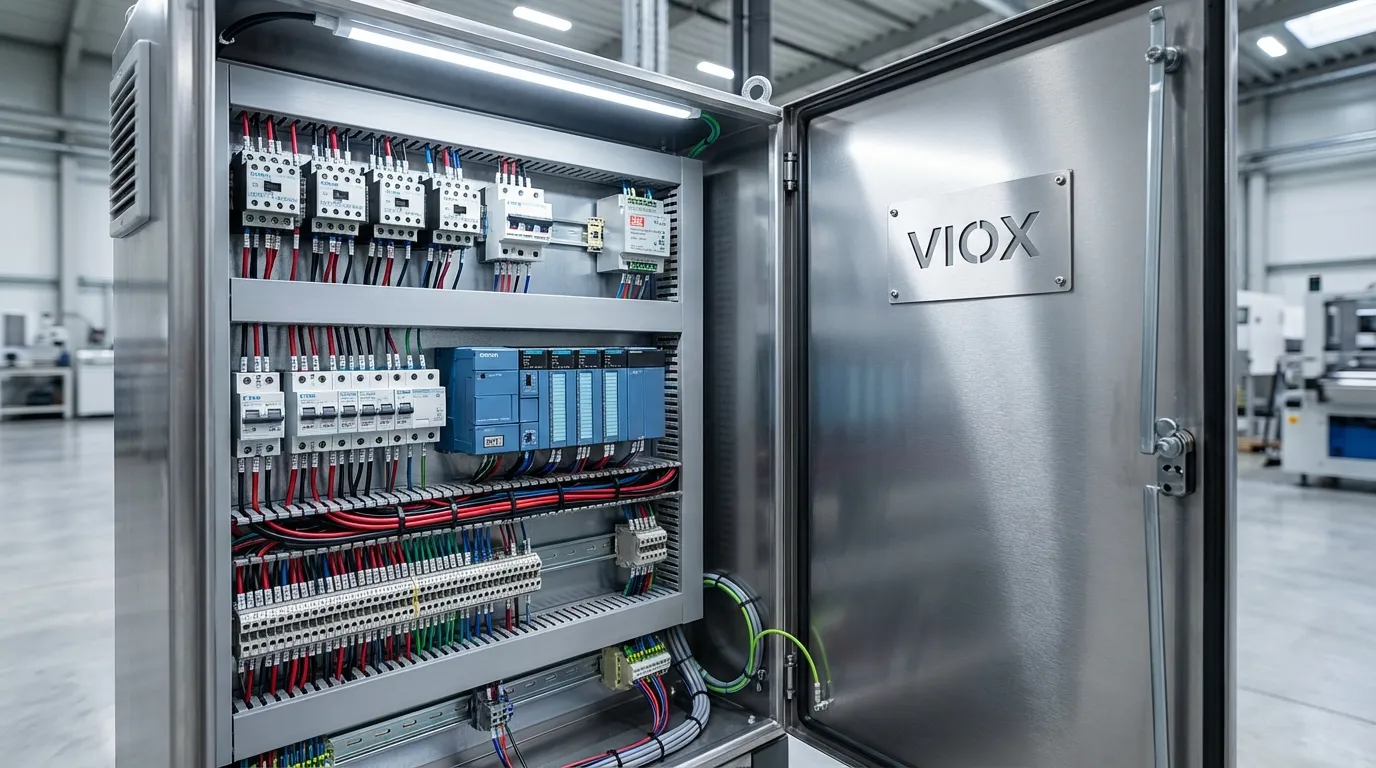
Οι πίνακες βιομηχανικού ελέγχου χρησιμεύουν ως το κεντρικό νευρικό σύστημα των σύγχρονων συστημάτων κατασκευής και αυτοματισμού. Αυτά τα εξελιγμένα ηλεκτρικά συγκροτήματα στεγάζουν κρίσιμα εξαρτήματα που παρακολουθούν, ελέγχουν και προστατεύουν τον βιομηχανικό εξοπλισμό σε διάφορες εφαρμογές—από αυτοματοποιημένες γραμμές παραγωγής έως συστήματα HVAC και δίκτυα διανομής ενέργειας. Η κατανόηση των εξαρτημάτων μέσα σε αυτούς τους πίνακες είναι απαραίτητη για τους μηχανικούς, τους διαχειριστές εγκαταστάσεων και τους επαγγελματίες προμηθειών που επιδιώκουν να βελτιστοποιήσουν την απόδοση του συστήματος, να διασφαλίσουν τη συμμόρφωση με την ασφάλεια και να ελαχιστοποιήσουν το χρόνο διακοπής λειτουργίας.
Βασικά συμπεράσματα
- Οι πίνακες ελέγχου ενσωματώνουν βασικά ηλεκτρικά εξαρτήματα συμπεριλαμβανομένων των διακοπτών κυκλώματος, των PLC, των επαφέων και των μετασχηματιστών για τη διαχείριση των συστημάτων βιομηχανικού αυτοματισμού
- Η επιλογή των εξαρτημάτων επηρεάζει άμεσα την αξιοπιστία του συστήματος, τη συμμόρφωση με την ασφάλεια (UL 508A, IEC 61439) και το συνολικό κόστος ιδιοκτησίας
- Η σωστή διαχείριση καλωδίων και ο σχεδιασμός διάταξης μπορεί να μειώσει το χρόνο αντιμετώπισης προβλημάτων έως και 50% και να αποτρέψει δαπανηρές ηλεκτρικές βλάβες
- Η κατανόηση των τιμών SCCR είναι κρίσιμη—το εξάρτημα με τη χαμηλότερη βαθμολογία καθορίζει την ικανότητα προστασίας από βραχυκύκλωμα ολόκληρου του πίνακα
- Οι σύγχρονοι πίνακες ελέγχου απαιτούν προσεκτική εξέταση της διανομής ισχύος, της απαγωγής θερμότητας και της ηλεκτρομαγνητικής συμβατότητας για βέλτιστη απόδοση
Τι είναι ένας πίνακας βιομηχανικού ελέγχου;
Ένας πίνακας βιομηχανικού ελέγχου είναι ένα προσαρμοσμένο συγκρότημα ηλεκτρικών συσκευών που έχει σχεδιαστεί για να διαχειρίζεται, να παρακολουθεί και να ελέγχει βιομηχανικό εξοπλισμό και διαδικασίες. Σύμφωνα με το Εθνικό Ηλεκτρολογικό Κώδικα (NEC) Ενότητα 409.2, ένας πίνακας βιομηχανικού ελέγχου ορίζεται ως “ένα συγκρότημα δύο ή περισσότερων εξαρτημάτων κυκλώματος ισχύος, εξαρτημάτων κυκλώματος ελέγχου ή οποιουδήποτε συνδυασμού εξαρτημάτων κυκλώματος ισχύος και ελέγχου”.”
Αυτοί οι πίνακες ενοποιούν διακόπτες, ενδείκτες, ρελέ, διακόπτες κυκλώματος, μετασχηματιστές και μπλοκ ακροδεκτών σε ένα ενιαίο προστατευτικό περίβλημα, επιτρέποντας τον αποτελεσματικό έλεγχο σύνθετων μηχανημάτων. Οι πίνακες ελέγχου κυμαίνονται από απλούς ηλεκτρικούς πίνακες ελέγχου με βασικές λειτουργίες μεταγωγής έως εξαιρετικά εξελιγμένους πίνακες βιομηχανικού ελέγχου με προγραμματιζόμενους λογικούς ελεγκτές (PLC) και διεπαφές ανθρώπου-μηχανής (HMI) για προηγμένο αυτοματισμό.
Οι κύριες λειτουργίες των πινάκων βιομηχανικού ελέγχου περιλαμβάνουν:
- Διανομή και διαχείριση ισχύος σε πολλαπλά κυκλώματα και συσκευές
- Αυτοματισμός διαδικασιών μέσω προγραμματιζόμενης λογικής και διαδοχικού ελέγχου
- Παρακολούθηση συστήματος μέσω αισθητήρων, μετρητών και διαγνωστικών οθονών
- Προστασία ασφάλειας έναντι ηλεκτρικών σφαλμάτων, υπερφορτώσεων και βραχυκυκλωμάτων
- Διεπαφή χειριστή για χειροκίνητο έλεγχο και ορατότητα της κατάστασης του συστήματος
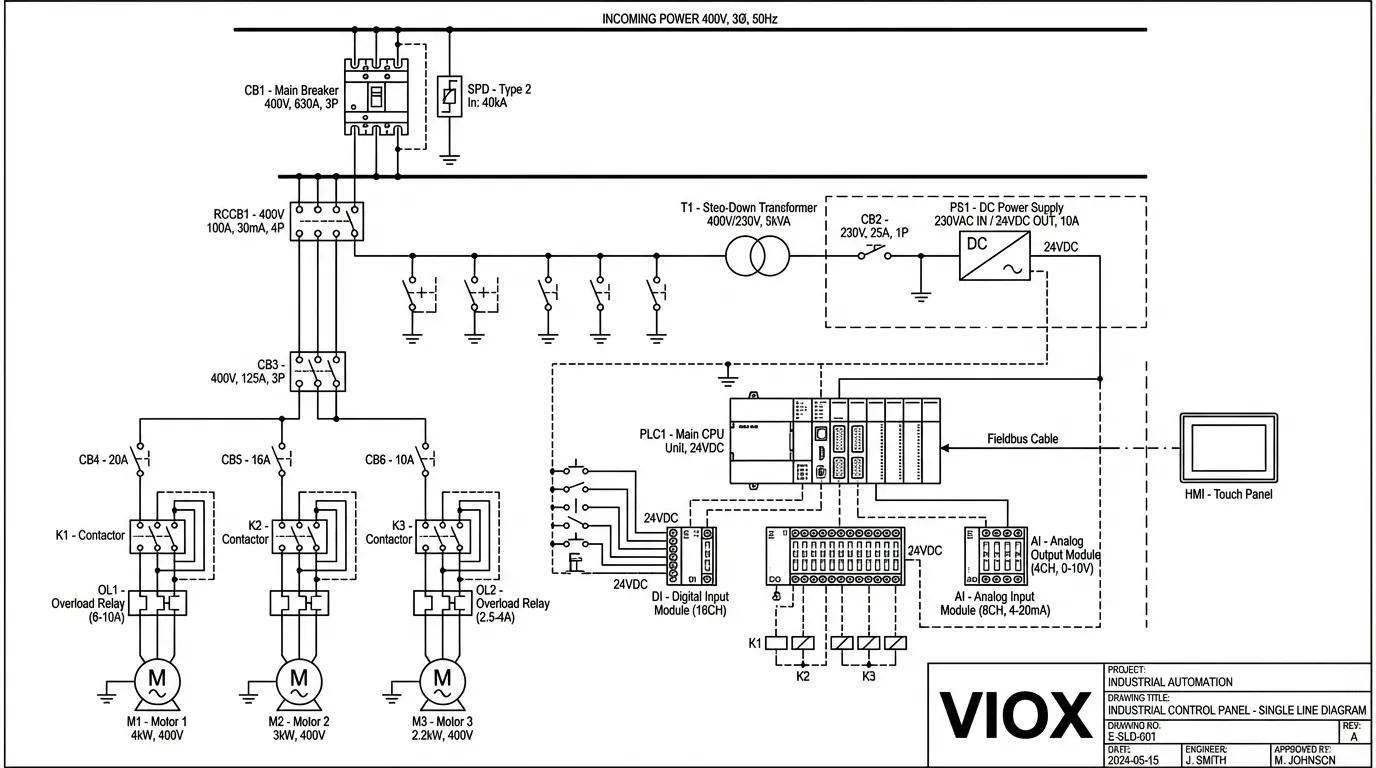
Βασικά εξαρτήματα πίνακα ελέγχου
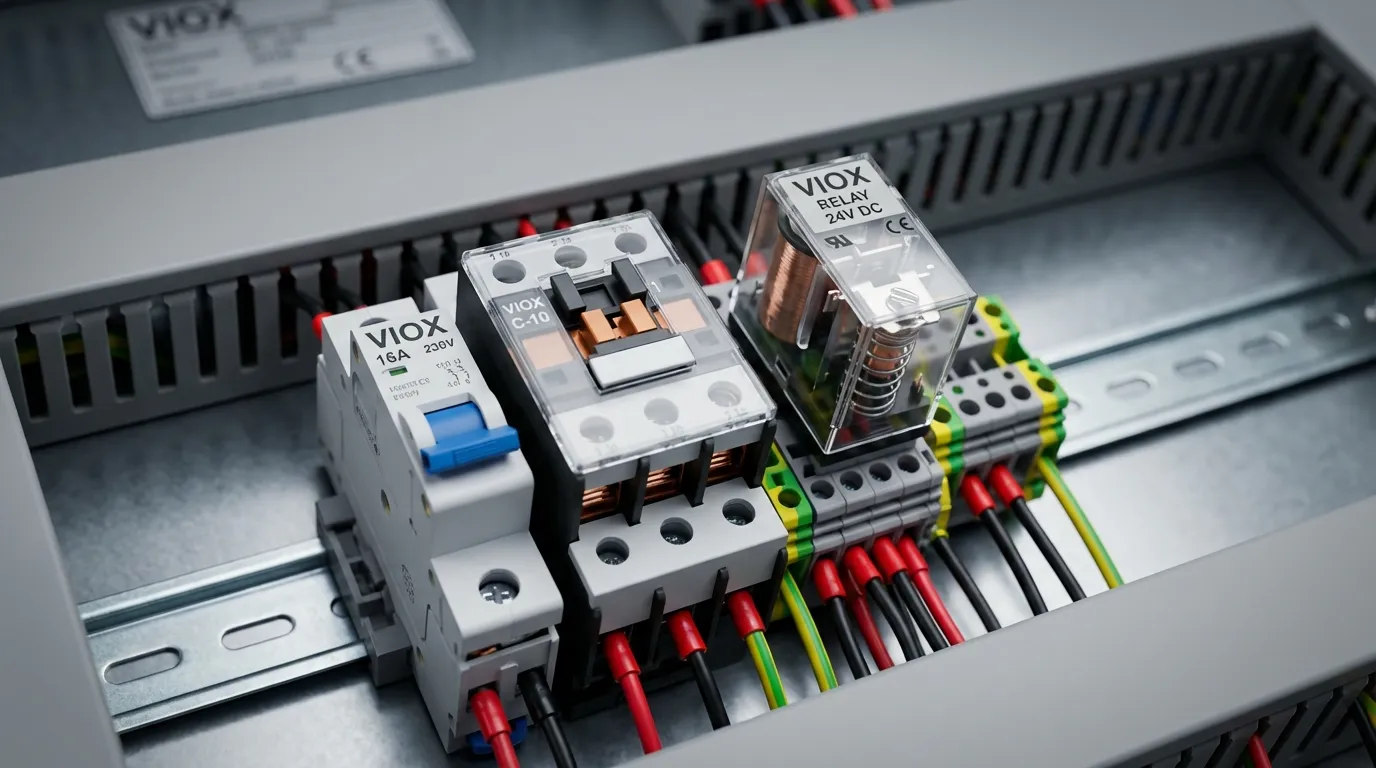
1. Συσκευές προστασίας κυκλώματος
Η προστασία κυκλώματος αποτελεί το θεμέλιο της ασφαλούς λειτουργίας του πίνακα ελέγχου, προστατεύοντας τόσο τον εξοπλισμό όσο και το προσωπικό από ηλεκτρικούς κινδύνους.
Μικροαυτόματοι διακόπτες (MCB)
MCBs παρέχουν προστασία από υπερένταση για κυκλώματα ελέγχου που λειτουργούν στα 120V–480V στις περισσότερες βιομηχανικές εφαρμογές. Αυτές οι συμπαγείς συσκευές διακόπτουν αυτόματα τη ροή ρεύματος όταν ανιχνεύουν συνθήκες υπερφόρτωσης ή βραχυκυκλώματα. Τα MCB διαθέτουν θερμικούς (υπερφόρτωση) και μαγνητικούς (βραχυκύκλωμα) μηχανισμούς απενεργοποίησης, με ικανότητες διακοπής που συνήθως κυμαίνονται από 6kA έως 10kA.
Διακόπτες κυκλώματος με καλούπι (MCCBs)
Για εφαρμογές υψηλότερου ρεύματος, MCCBs χειρίζονται 15A έως 2500A με ρυθμιζόμενες ρυθμίσεις απενεργοποίησης. Αυτές οι ισχυρές συσκευές προστατεύουν τις κύριες τροφοδοσίες ρεύματος και τα μεγάλα κυκλώματα κινητήρα. Οι σύγχρονοι MCCB μπορεί να περιλαμβάνουν ηλεκτρονικές μονάδες απενεργοποίησης με προστασία σφάλματος γείωσης και δυνατότητες επικοινωνίας για προληπτική συντήρηση.
Διακόπτες υπολειπόμενου ρεύματος (RCCBs)
RCCBs ανιχνεύουν ρεύματα διαρροής γείωσης και παρέχουν κρίσιμη προστασία από κινδύνους ηλεκτροπληξίας. Αυτές οι συσκευές είναι απαραίτητες σε εφαρμογές όπου το προσωπικό μπορεί να έρθει σε επαφή με τον εξοπλισμό, ιδιαίτερα σε Εγκαταστάσεις φόρτισης EV όπου απαιτούνται εξειδικευμένα RCCB τύπου B ή τύπου EV.
Ασφάλειες
Οι βιομηχανικές ασφάλειες παρέχουν ταχείας δράσης προστασία από υπερένταση, ιδιαίτερα για συσκευές ημιαγωγών και ευαίσθητα ηλεκτρονικά. Οι ασφάλειες υψηλής ικανότητας διάρρηξης (HRC) προσφέρουν ανώτερη απόδοση διακοπής σε περιβάλλοντα υψηλού ρεύματος σφάλματος, ενώ Οι ασφάλειες DC έχουν σχεδιαστεί ειδικά για εφαρμογές ηλιακών φωτοβολταϊκών και αποθήκευσης μπαταριών.
2. Συσκευές ελέγχου και μεταγωγής
Επαφείς και εκκινητές κινητήρα
Επαφείς είναι ηλεκτρικά χειριζόμενοι διακόπτες που ελέγχουν φορτία υψηλής ισχύος με βάση σήματα ελέγχου χαμηλής τάσης. Αυτές οι ηλεκτρομαγνητικές συσκευές δημιουργούν ή διακόπτουν κυκλώματα ισχύος σε κινητήρες, θερμαντήρες και συστήματα φωτισμού. Οι αρθρωτοί επαφείς προσφέρουν εξοικονόμηση χώρου τοποθέτηση σε ράγα DIN για οικιακές και ελαφριές εμπορικές εφαρμογές, ενώ οι παραδοσιακοί επαφείς χειρίζονται βιομηχανικά καθήκοντα ελέγχου κινητήρα.
Οι εκκινητές κινητήρα συνδυάζουν επαφείς με ρελέ προστασίας υπερφόρτωσης, παρέχοντας πλήρη έλεγχο και προστασία κινητήρα σε ένα ενιαίο συγκρότημα. Η επιλογή μεταξύ Κατηγορίες χρήσης AC-1, AC-3 και AC-4 εξαρτάται από τη συγκεκριμένη εφαρμογή κινητήρα και τον κύκλο λειτουργίας.
Ρελέ
Ρελέ χρησιμεύουν ως συσκευές διασύνδεσης μεταξύ κυκλωμάτων ελέγχου και κυκλωμάτων ισχύος, απομονώνοντας σήματα ελέγχου χαμηλής τάσης από φορτία υψηλής τάσης. Οι πίνακες ελέγχου συνήθως ενσωματώνουν διάφορους τύπους ρελέ:
- Ρελέ ελέγχου για λογικές λειτουργίες και αλληλοσύνδεση
- Ρελέ χρονικής καθυστέρησης για διαδοχικές λειτουργίες και προστασία αντλίας
- Θερμικά ρελέ υπερφόρτωσης για την προστασία του κινητήρα
- Ρελέ παρακολούθησης τάσης για επιτήρηση της ποιότητας ισχύος
Κουμπιά και επιλογείς
Οι συσκευές χειροκίνητου ελέγχου παρέχουν διεπαφή χειριστή για εκκίνηση, διακοπή και επιλογή λειτουργίας. Κουμπιά διακοπής έκτακτης ανάγκης πρέπει να είναι άμεσα προσβάσιμα και να συμμορφώνονται με τα πρότυπα ασφαλείας, διαθέτοντας επαφές θετικού ανοίγματος που διασφαλίζουν τη διακοπή του κυκλώματος ακόμη και σε περίπτωση συγκόλλησης επαφών.
3. Προγραμματιζόμενοι λογικοί ελεγκτές (PLC)
Τα PLC λειτουργούν ως ο “εγκέφαλος” των σύγχρονων πινάκων βιομηχανικού ελέγχου, εκτελώντας προγραμματισμένη λογική για την αυτοματοποίηση διαδικασιών και το συντονισμό της λειτουργίας του εξοπλισμού. Αυτοί οι βιομηχανικοί υπολογιστές δέχονται εισόδους από αισθητήρες και διακόπτες, επεξεργάζονται τη λογική σύμφωνα με προγραμματισμένες οδηγίες και ελέγχουν τις εξόδους σε ενεργοποιητές, κινητήρες και ενδείκτες.
Οι σύγχρονοι PLC προσφέρουν:
- Κλιμακούμενες διαμορφώσεις εισόδων/εξόδων (I/O) από συμπαγείς μονάδες έως μεγάλα κατανεμημένα συστήματα
- Πολλαπλά πρωτόκολλα επικοινωνίας συμπεριλαμβανομένων των Ethernet/IP, Modbus και Profibus
- Ενσωματωμένα διαγνωστικά για ταχεία αντιμετώπιση προβλημάτων
- Εναλλάξιμες εν λειτουργία (Hot-swappable) μονάδες για ελάχιστο χρόνο διακοπής λειτουργίας κατά τη διάρκεια της συντήρησης
Οι PLC έχουν σε μεγάλο βαθμό αντικαταστήσει τη λογική των ρελέ στις βιομηχανικές εφαρμογές λόγω της ευελιξίας, της αξιοπιστίας και της ευκολίας τροποποίησης του προγραμματισμού τους.
4. Διεπαφές Ανθρώπου-Μηχανής (HMIs)
Οι HMIs παρέχουν γραφικές διεπαφές χειριστή για την παρακολούθηση της κατάστασης του συστήματος, την προσαρμογή παραμέτρων και τη διάγνωση σφαλμάτων. Αυτές οι οθόνες αφής ή οι τερματικοί σταθμοί που είναι τοποθετημένοι σε πάνελ επιτρέπουν στους χειριστές να αλληλεπιδρούν με τους PLC και άλλες συσκευές ελέγχου χωρίς να απαιτούνται γνώσεις προγραμματισμού. Οι σύγχρονες HMIs διαθέτουν:
- Οπτικοποίηση δεδομένων σε πραγματικό χρόνο με τάσεις και συναγερμούς
- Διαχείριση συνταγών για αλλαγές προϊόντων
- Δυνατότητες απομακρυσμένης πρόσβασης για παρακολούθηση εκτός εργοταξίου
- Υποστήριξη πολλαπλών γλωσσών για παγκόσμιες λειτουργίες
5. Εξαρτήματα Διανομής Ισχύος
Μετασχηματιστές
Οι μετασχηματιστές πίνακα ελέγχου μετατρέπουν την εισερχόμενη τάση γραμμής (συνήθως 480V ή 240V AC) σε χαμηλότερες τάσεις ελέγχου (120V ή 24V AC) που απαιτούνται από τις συσκευές ελέγχου, τους PLC και τα φώτα ένδειξης. Η σωστή διαστασιολόγηση του μετασχηματιστή πρέπει να λαμβάνει υπόψη τα ρεύματα εισόδου και τις συνεχείς ονομαστικές τιμές VA όλων των συνδεδεμένων φορτίων.
Τροφοδοτικά
Τα τροφοδοτικά μεταγωγής μετατρέπουν την τάση AC σε ρυθμιζόμενη τάση DC (συνήθως 24V DC) για την τροφοδοσία των PLC, των αισθητήρων και των συσκευών στερεάς κατάστασης. Τα βιομηχανικά τροφοδοτικά πρέπει να αντέχουν στις διακυμάνσεις της τάσης, να παρέχουν προστασία από υπερένταση και να διατηρούν τη ρύθμιση υπό μεταβαλλόμενες συνθήκες φορτίου.
Ράβδοι ζυγών και μπλοκ διανομής
Ράβδοι μεταφοράς διανέμουν αποτελεσματικά την ισχύ σε όλο τον πίνακα, μειώνοντας την ακαταστασία των καλωδίων και βελτιώνοντας την ικανότητα μεταφοράς ρεύματος. Μπλοκ διανομής ισχύος παρέχουν πολλαπλά σημεία σύνδεσης από μία μόνο πηγή εισόδου, απλοποιώντας την καλωδίωση για παράλληλα κυκλώματα.
6. Συσκευές Προστασίας από Υπέρταση (SPDs)
Συσκευές προστασίας από υπερτάσεις προστατεύουν τα ευαίσθητα ηλεκτρονικά από παροδικές υπερτάσεις που προκαλούνται από κεραυνούς, λειτουργίες μεταγωγής ή διαταραχές της ηλεκτρικής εταιρείας. SPDs Τύπου 1, Τύπου 2 και Τύπου 3 παρέχουν συντονισμένη προστασία στην είσοδο παροχής, στη διανομή και στα επίπεδα εξοπλισμού αντίστοιχα. Η σωστή επιλογή SPD απαιτεί κατανόηση Αξιολογήσεις MCOV και διαμόρφωση γείωσης του συστήματος.
7. Ακροδέκτες και Υποδομή Καλωδίωσης
Μπλοκ ακροδεκτών
Μπλοκ ακροδεκτών παρέχουν οργανωμένα, προσβάσιμα σημεία σύνδεσης για την καλωδίωση πεδίου και τις εσωτερικές συνδέσεις του πίνακα. Διάφοροι τύποι εξυπηρετούν διαφορετικές λειτουργίες:
- Ακροδέκτες διέλευσης για απλές συνδέσεις καλωδίου με καλώδιο
- Ακροδέκτες με ασφάλεια συνδυάζοντας σύνδεση και προστασία
- Ακροδέκτες αποσύνδεσης επιτρέποντας την απομόνωση του κυκλώματος χωρίς αφαίρεση καλωδίων
- Κεραμικά μπλοκ ακροδεκτών για εφαρμογές υψηλής θερμοκρασίας
Ράγες DIN
Ράγες DIN παρέχουν τυποποιημένη τοποθέτηση για αρθρωτά εξαρτήματα, επιτρέποντας ευέλικτες διατάξεις πίνακα και απλοποιημένη αντικατάσταση εξαρτημάτων. Η Ράγα DIN TH35 (35mm) έχει γίνει το βιομηχανικό πρότυπο για την τοποθέτηση διακοπτών κυκλώματος, ρελέ, ακροδεκτών και άλλων συσκευών ελέγχου.
Κανάλια Καλωδίων και Διαχείριση Καλωδίων
Η σωστή δρομολόγηση καλωδίων χρησιμοποιώντας κανάλια καλωδίων, δεματικά καλωδίων και στυπιοθλίπτες καλωδίων εξασφαλίζει οργανωμένη καλωδίωση που διευκολύνει την αντιμετώπιση προβλημάτων και τη συντήρηση. Η καλά διαχειριζόμενη καλωδίωση βελτιώνει επίσης την απαγωγή θερμότητας και μειώνει τις ηλεκτρομαγνητικές παρεμβολές μεταξύ των κυκλωμάτων.
8. Συσκευές Ένδειξης και Παρακολούθησης
Ενδεικτικές Λυχνίες και Δείκτες
Οι ενδεικτικές λυχνίες LED παρέχουν οπτική ανατροφοδότηση κατάστασης για την παρουσία ισχύος, τη λειτουργία του εξοπλισμού και τις συνθήκες συναγερμού. Οι έγχρωμοι δείκτες ακολουθούν τις βιομηχανικές συμβάσεις (πράσινο για λειτουργία, κόκκινο για διακοπή, πορτοκαλί για συνθήκες συναγερμού).
Μετρητές και Οθόνες
Οι ψηφιακοί μετρητές παρακολουθούν την τάση, το ρεύμα, την ισχύ και την κατανάλωση ενέργειας. Οι σύγχρονοι πολύμετροι παρέχουν ολοκληρωμένη ανάλυση ποιότητας ισχύος και μπορούν να επικοινωνούν δεδομένα σε εποπτικά συστήματα μέσω πρωτοκόλλων Modbus ή Ethernet.
Αισθητήρες εγγύτητας
Οι επαγωγικοί, χωρητικοί και φωτοηλεκτρικοί αισθητήρες εγγύτητας ανιχνεύουν την παρουσία αντικειμένων χωρίς φυσική επαφή, επιτρέποντας τον αυτοματοποιημένο έλεγχο της διαδικασίας και την ασφαλή αλληλοσύνδεση.
9. Συσκευές Επικοινωνίας και Δικτύωσης
Διακόπτες Ethernet
Οι βιομηχανικοί διακόπτες Ethernet επιτρέπουν την επικοινωνία δικτύου μεταξύ PLC, HMI, μετατροπέων συχνότητας (VFDs) και συστημάτων SCADA. Οι διαχειριζόμενοι διακόπτες παρέχουν τμηματοποίηση VLAN, ποιότητα υπηρεσίας (QoS) και διαγνωστικά δικτύου για εφαρμογές κρίσιμης σημασίας.
Μετατροπείς Πρωτοκόλλων
Οι συσκευές πύλης μεταφράζουν μεταξύ διαφορετικών βιομηχανικών πρωτοκόλλων (Modbus RTU σε Modbus TCP, Profibus σε Ethernet/IP), επιτρέποντας την ενσωμάτωση παλαιού εξοπλισμού με σύγχρονα συστήματα ελέγχου.
10. Περιβλήματα και Περιβαλλοντική Προστασία
Το περίβλημα του πίνακα ελέγχου παρέχει φυσική προστασία για τα εξαρτήματα, ενώ παράλληλα πληροί τις περιβαλλοντικές απαιτήσεις. Αξιολογήσεις NEMA και IP καθορίζουν τα επίπεδα προστασίας από σκόνη, υγρασία και φυσική πρόσκρουση. Η επιλογή του περιβλήματος πρέπει να λαμβάνει υπόψη:
- Λειτουργικό περιβάλλον (εσωτερικός, εξωτερικός, επικίνδυνες τοποθεσίες)
- Έλεγχος θερμοκρασίας (εξαερισμός, κλιματισμός, θερμαντήρες)
- Προσβασιμότητα για λειτουργία και συντήρηση
- Επιλογή υλικού (ανοξείδωτος χάλυβας έναντι αλουμινίου για διαβρωτικά περιβάλλοντα)
Συγκριτικός Πίνακας Εξαρτημάτων Πίνακα Ελέγχου
| Τύπος Εξαρτήματος | Κύρια λειτουργία | Typical Voltage Range | Βασικά κριτήρια επιλογής | Κοινές εφαρμογές |
|---|---|---|---|---|
| MCB | Προστασία υπερέντασης | 120-480V AC | Ικανότητα διακοπής (kA), καμπύλη απόζευξης (B, C, D) | Φωτισμός, κυκλώματα ελέγχου, μικροί κινητήρες |
| MCCB | Προστασία υψηλού ρεύματος | 120-690V AC | Ονομαστική τιμή ρεύματος (15-2500A), ρυθμιζόμενη απόζευξη | Κύριοι τροφοδότες, μεγάλοι κινητήρες, διανομή |
| RCCB | Προστασία διαρροής γείωσης | 120-480V AC | Ευαισθησία (30mA, 100mA, 300mA), Τύπος (AC, A, B) | Προστασία προσωπικού, γείωση εξοπλισμού |
| Επαφέας | Εναλλαγή φορτίου | 120-690V AC/DC | Κατηγορία χρήσης (AC-1, AC-3), τάση πηνίου | Έλεγχος κινητήρα, θέρμανση, φωτισμός |
| Ρελέ | Απομόνωση/έλεγχος σήματος | 12-240V AC/DC | Διαμόρφωση επαφών (SPDT, DPDT), τύπος πηνίου | Αλληλοσύνδεση, λογική, διεπαφή |
| PLC | Αυτοματισμός διαδικασιών | 24V DC (I/O) | Αριθμός I/O, μνήμη, πρωτόκολλα επικοινωνίας | Κατασκευή, έλεγχος διεργασιών, αυτοματισμός κτιρίων |
| Μετασχηματιστής | Μετατροπή τάσης | Είσοδος 120-480V | Ονομαστική τιμή VA, λόγος τάσης, ρύθμιση | Ισχύς ελέγχου, απομόνωση |
| Τροφοδοσία ρεύματος | Μετατροπή AC σε DC | Είσοδος 120-240V AC | Τάση/ρεύμα εξόδου, απόδοση, χρόνος συγκράτησης | Τροφοδοσία PLC, τροφοδοσία αισθητήρα, φορτία DC |
| Ειδικό Πιστοποιητικό Πρόσβασης (SPD) | Καταστολή παροδικών φαινομένων | Τάση συστήματος | Τύπος (1/2/3), MCOV, ρεύμα εκφόρτισης (kA) | Προστασία από κεραυνούς, μετριασμός υπερτάσεων μεταγωγής |
| Τελικός Φραγμός | Σύνδεση καλωδίων | Έως 1000V | Ονομαστική τιμή ρεύματος, χωρητικότητα μετρητή καλωδίων, τύπος | Καλωδίωση πεδίου, εσωτερικές συνδέσεις |
Πρότυπα Σχεδιασμού και Συμμόρφωσης Πίνακα Ελέγχου
Οι βιομηχανικοί πίνακες ελέγχου πρέπει να συμμορφώνονται με αυστηρά πρότυπα ασφάλειας και απόδοσης για να διασφαλίζεται η αξιόπιστη λειτουργία και η αποδοχή από τις ρυθμιστικές αρχές.
UL 508A – Βιομηχανικοί Πίνακες Ελέγχου
UL 508A είναι το κύριο πρότυπο για την κατασκευή και πιστοποίηση βιομηχανικών πινάκων ελέγχου στη Βόρεια Αμερική. Αυτό το πρότυπο καθορίζει απαιτήσεις για:
- Επιλογή εξαρτημάτων χρήση συσκευών με σήμανση UL ή αναγνωρισμένων
- Ονομαστική Ένταση Ρεύματος Βραχυκυκλώματος (SCCR) υπολογισμός και σήμανση
- Μέθοδοι καλωδίωσης συμπεριλαμβανομένης της διαστασιολόγησης, της δρομολόγησης και του τερματισμού των αγωγών
- Προστασία υπερέντασης συντονισμός
- Επιλογή περιβλήματος και περιβαλλοντικές αξιολογήσεις
- Σήμανση και τεκμηρίωση απαιτήσεις
Το SCCR αντιπροσωπεύει το μέγιστο ρεύμα σφάλματος που μπορεί να αντέξει με ασφάλεια ο πίνακας. Κρίσιμο είναι ότι το εξάρτημα με τη χαμηλότερη βαθμολογία καθορίζει το συνολικό SCCR του πίνακα—μια κοινή παράβλεψη που μπορεί να θέσει σε κίνδυνο την ασφάλεια και να αποτύχει στον έλεγχο.
NFPA 70 (Εθνικός Ηλεκτρικός Κώδικας)
Το NEC παρέχει ολοκληρωμένες απαιτήσεις για ηλεκτρικές εγκαταστάσεις, συμπεριλαμβανομένων των πινάκων ελέγχου. Οι βασικές διατάξεις περιλαμβάνουν:
- Άρθρο 409 – Βιομηχανικοί Πίνακες Ελέγχου
- Άρθρο 430 – Κινητήρες, Κυκλώματα Κινητήρων και Ελεγκτές
- Άρθρο 670 – Βιομηχανικά Μηχανήματα
- Άρθρο 110.26 – Αποστάσεις εργασίας γύρω από ηλεκτρικό εξοπλισμό
NFPA 79 – Ηλεκτρικό Πρότυπο για Βιομηχανικά Μηχανήματα
Το NFPA 79 καλύπτει τον ηλεκτρικό εξοπλισμό βιομηχανικών μηχανών που λειτουργούν στα 600V ή λιγότερο, παρέχοντας λεπτομερείς οδηγίες για τη διαστασιολόγηση των καλωδίων, την χρωματική κωδικοποίηση και τις μεθόδους εγκατάστασης ειδικά για τους πίνακες ελέγχου μηχανών.
Πρότυπα IEC
Για διεθνείς εφαρμογές, τα πρότυπα IEC παρέχουν ισοδύναμες απαιτήσεις:
- IEC 61439 – Συσκευές μεταγωγής και ελέγχου χαμηλής τάσης
- IEC 60204-1 – Ασφάλεια μηχανημάτων – Ηλεκτρικός εξοπλισμός μηχανών
- IEC 60947 – Συσκευές μεταγωγής και ελέγχου χαμηλής τάσης
Σήμανση CE και Οδηγίες ΕΕ
Οι πίνακες ελέγχου που προορίζονται για τις ευρωπαϊκές αγορές πρέπει να συμμορφώνονται με τις ισχύουσες οδηγίες της ΕΕ και να φέρουν σήμανση CE, αποδεικνύοντας τη συμμόρφωση με:
- Οδηγία για τη Χαμηλή Τάση (LVD) 2014/35/ΕΕ
- Οδηγία για τα Μηχανήματα 2006/42/ΕΚ
- Οδηγία EMC 2014/30/ΕΕ
Βέλτιστες Πρακτικές Καλωδίωσης Πινάκων Ελέγχου
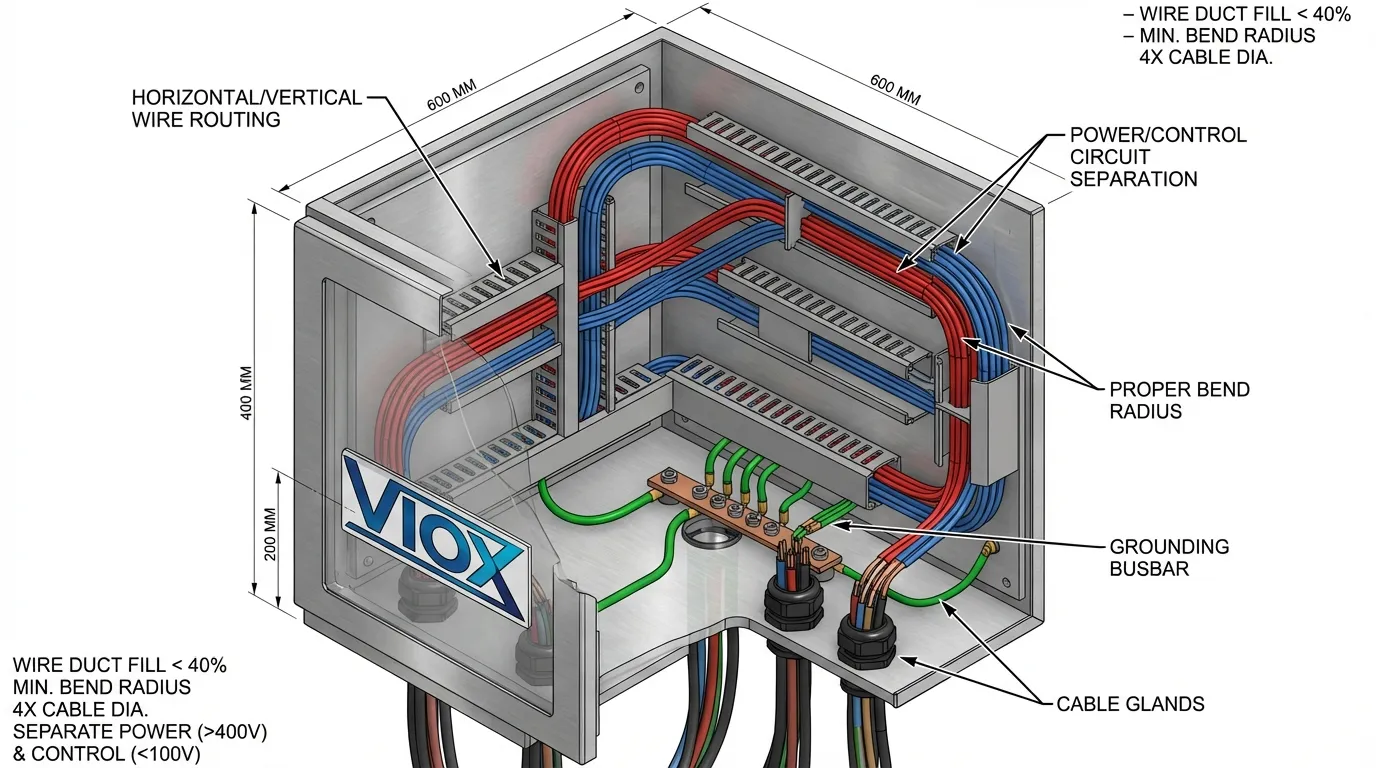
Οι σωστές πρακτικές καλωδίωσης επηρεάζουν άμεσα την αξιοπιστία, την ασφάλεια και τη συντηρησιμότητα του πίνακα ελέγχου. Η καλά οργανωμένη καλωδίωση μπορεί να μειώσει τον χρόνο αντιμετώπισης προβλημάτων έως και 50%, ενώ οι κακές πρακτικές καλωδίωσης οδηγούν σε πρόωρες αστοχίες και κινδύνους για την ασφάλεια.
Επιλογή και Διαστασιολόγηση Καλωδίων
Τύπος Αγωγού
Οι βιομηχανικοί πίνακες ελέγχου χρησιμοποιούν συνήθως καλώδιο MTW (Machine Tool Wire) με ονομαστική τάση 600V και 90°C. Αυτό το πολύκλωνο καλώδιο χαλκού παρέχει ευελιξία για την καλωδίωση του πίνακα, διατηρώντας παράλληλα την ανθεκτικότητα. Για την καλωδίωση πεδίου και τις διαδρομές σωλήνων, οι αγωγοί THHN/THWN είναι στάνταρ.
Επιλογή μετρητή σύρματος
Η διαστασιολόγηση του αγωγού πρέπει να λαμβάνει υπόψη:
- Συνεχές ρεύμα του συνδεδεμένου φορτίου
- Θερμοκρασία περιβάλλοντος και συντελεστές υποβιβασμού
- Πτώση τάσης περιορισμούς (συνήθως 3% μέγιστο)
- Συσκευή προστασίας από υπερένταση ονομαστική τιμή
- Δέσμευση και ομαδοποίηση επιπτώσεις στην απαγωγή θερμότητας
Το NFPA 79 παρέχει λεπτομερείς πίνακες για τη διαστασιολόγηση των καλωδίων με βάση αυτούς τους παράγοντες. Οι υποδιαστασιολογημένοι αγωγοί οδηγούν σε υπερθέρμανση, υποβάθμιση της μόνωσης και πιθανούς κινδύνους πυρκαγιάς.
Πρότυπα Χρωματικής Κωδικοποίησης
Η συνεπής χρωματική κωδικοποίηση των καλωδίων ενισχύει την ασφάλεια και απλοποιεί την αντιμετώπιση προβλημάτων:
Βορειοαμερικανική Σύμβαση:
- Μαύρο, Κόκκινο, Μπλε – Αγωγοί γραμμής (L1, L2, L3)
- Λευκό ή Γκρι – Ουδέτερος αγωγός
- Πράσινο ή Πράσινο/Κίτρινο – Αγωγός γείωσης
- Κόκκινο – Ισχύς ελέγχου (θερμό)
- Μαύρο ή Μπλε – Ισχύς ελέγχου (επιστροφή)
- Πορτοκαλί – 24V DC θετικό
- Μπλε – 24V DC αρνητικό
Σύμβαση IEC:
- Καφέ, Μαύρο, Γκρι – Αγωγοί γραμμής (L1, L2, L3)
- Μπλε – Ουδέτερος αγωγός
- Πράσινο/Κίτρινο – Προστατευτική γείωση
- Κόκκινο – Κυκλώματα ελέγχου
- Μαύρο – DC αρνητικό
- Κόκκινο – DC θετικό
Δρομολόγηση και Διαχείριση Καλωδίων
Οριζόντια και Κάθετη Δρομολόγηση
Τα καλώδια πρέπει να εκτείνονται σε οριζόντιες και κάθετες γραμμές—ποτέ διαγώνια. Αυτή η οργανωμένη προσέγγιση διευκολύνει την οπτική ανίχνευση και δημιουργεί μια επαγγελματική εμφάνιση που αντανακλά την ποιοτική εργασία.
Απαιτήσεις Διαχωρισμού
Διατηρήστε διαχωρισμό μεταξύ:
- Κυκλωμάτων ισχύος και ελέγχου για τη μείωση των ηλεκτρομαγνητικών παρεμβολών
- Καλωδίωσης υψηλής και χαμηλής τάσης για ασφάλεια
- Κυκλωμάτων εισόδου και εξόδου για την αποφυγή σύζευξης θορύβου
Το UL 508A καθορίζει τις ελάχιστες αποστάσεις διαχωρισμού με βάση τα επίπεδα τάσης και τους τύπους κυκλωμάτων.
Βελτιστοποίηση Μήκους Καλωδίων
Τα καλώδια πρέπει να έχουν ακριβώς το μήκος που απαιτείται για να επιτρέπεται η αντικατάσταση και η συντήρηση των εξαρτημάτων, αλλά όχι τόσο μεγάλο ώστε να δημιουργείται μπερδεμένη καλωδίωση “σπαγγέτι”. Το υπερβολικό μήκος καλωδίων αυξάνει την πτώση τάσης, δημιουργεί συσσώρευση θερμότητας σε δέσμες και περιπλέκει την αντιμετώπιση προβλημάτων.
Ακτίνα Κάμψης
Τηρείτε τις ελάχιστες προδιαγραφές ακτίνας κάμψης για να αποφύγετε τη ζημιά στον αγωγό. Κατά γενικό κανόνα, διατηρήστε ακτίνες κάμψης τουλάχιστον 6 φορές τη διάμετρο του καλωδίου για πολύκλωνους αγωγούς.
Τεχνικές Τερματισμού
Περιβλήματα ακροδεκτών (Ferrules)
Οι ακροδέκτες καλωδίων παρέχουν επαγγελματικούς τερματισμούς για πολύκλωνο καλώδιο, αποτρέποντας τη θραύση των κλώνων και εξασφαλίζοντας αξιόπιστες συνδέσεις σε ακροδέκτες με βίδες. Οι ακροδέκτες είναι ιδιαίτερα σημαντικοί για καλώδια με λεπτούς κλώνους και σε εφαρμογές που υπόκεινται σε κραδασμούς.
Προδιαγραφές ροπής
Ακολουθήστε τις τιμές ροπής που καθορίζονται από τον κατασκευαστή για τις συνδέσεις των ακροδεκτών. Οι συνδέσεις με χαμηλή ροπή δημιουργούν υψηλή αντίσταση και συσσώρευση θερμότητας, ενώ οι συνδέσεις με υπερβολική ροπή καταστρέφουν τους ακροδέκτες και τους αγωγούς.
Οργάνωση Μπλοκ Ακροδεκτών
Ομαδοποιήστε τα σχετικά κυκλώματα σε παρακείμενους ακροδέκτες και διατηρήστε συνεπή αρίθμηση ακροδεκτών που αντιστοιχεί στα σχηματικά σχέδια. Αυτή η οργάνωση μειώνει δραματικά τον χρόνο αντιμετώπισης προβλημάτων.
Επισήμανση και Τεκμηρίωση
Αναγνώριση καλωδίου
Κάθε καλώδιο πρέπει να φέρει ετικέτα και στα δύο άκρα με ένα μοναδικό αναγνωριστικό που αντιστοιχεί στο σχηματικό διάγραμμα του πίνακα ελέγχου. Χρησιμοποιήστε ανθεκτικές ετικέτες κατάλληλες για το περιβάλλον λειτουργίας—ετικέτες θερμοσυρρίκνωσης για εφαρμογές υψηλής θερμοκρασίας, ετικέτες περιτύλιξης για γενική χρήση.
Επισήμανση Εξαρτημάτων
Επισημάνετε όλα τα εξαρτήματα με ονομασίες που ταιριάζουν με το σχηματικό διάγραμμα (π.χ., M1 για τον εκκινητή κινητήρα 1, CR5 για το ρελέ ελέγχου 5). Αυτή η αντιστοιχία μεταξύ του φυσικού εξοπλισμού και των σχεδίων είναι απαραίτητη για τη συντήρηση και την αντιμετώπιση προβλημάτων.
Ακρίβεια Σχεδίων
Διατηρείτε σχέδια "όπως κατασκευάστηκαν" που αντικατοπτρίζουν με ακρίβεια την εγκατεστημένη διαμόρφωση. Οι αποκλίσεις μεταξύ των σχεδίων και της πραγματικής καλωδίωσης δημιουργούν κινδύνους για την ασφάλεια και εφιάλτες συντήρησης.
Διάταξη και Σχεδιαστικές Παρατηρήσεις Πίνακα Ελέγχου
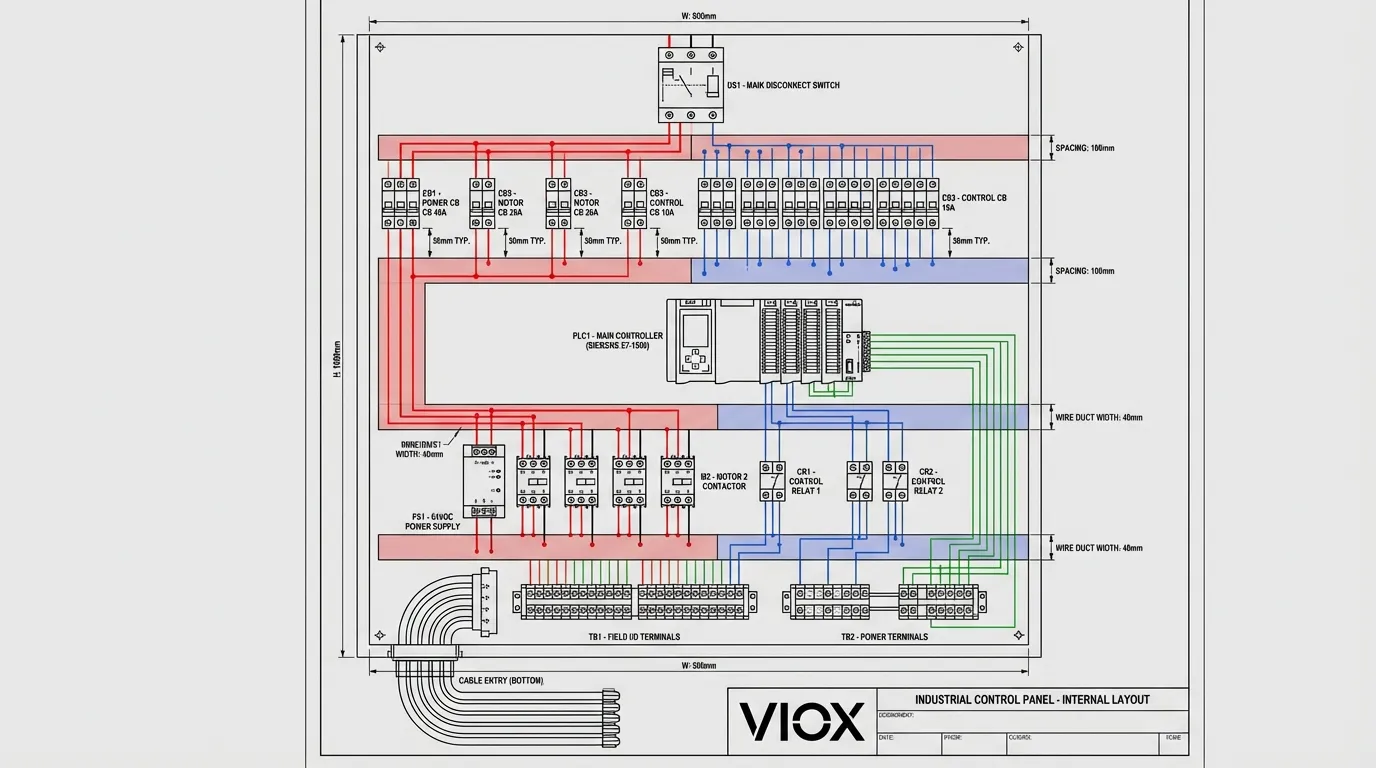
Μια προσεκτική διάταξη του πίνακα ελέγχου ενισχύει τη λειτουργικότητα, την ασφάλεια και τη συντηρησιμότητα, ενώ παράλληλα βελτιστοποιεί τη χρήση του χώρου.
Ομαδοποίηση Εξαρτημάτων
Λειτουργική Ομαδοποίηση
Οργανώστε τα εξαρτήματα ανά λειτουργία:
- Διανομή ισχύος εξαρτήματα κοντά στην κορυφή
- Λογική ελέγχου (PLCs, ρελέ) στη μεσαία ενότητα
- Τερματικά I/O κοντά στα σημεία εισόδου καλωδίων
- Διεπαφή χειριστή συσκευές στην πόρτα ή σε προσβάσιμο ύψος
Διαχωρισμός Τάσης
Διαχωρίστε φυσικά τις περιοχές υψηλής και χαμηλής τάσης, χρησιμοποιώντας φράγματα ή ειδικές ζώνες. Αυτός ο διαχωρισμός μειώνει τους κινδύνους ηλεκτροπληξίας κατά τη συντήρηση και ελαχιστοποιεί τις ηλεκτρομαγνητικές παρεμβολές.
Διαχείριση Θερμότητας
Τα ηλεκτρικά εξαρτήματα παράγουν θερμότητα κατά τη λειτουργία. Η ανεπαρκής απαγωγή θερμότητας οδηγεί σε πρόωρη αστοχία και μειωμένη αξιοπιστία.
Υπολογισμός Θερμικού Φορτίου
Υπολογίστε τη συνολική παραγωγή θερμότητας από όλα τα εξαρτήματα (ιδιαίτερα τροφοδοτικά, VFD και μεγάλους επαφείς). Εάν η υπολογιζόμενη εσωτερική θερμοκρασία υπερβαίνει τις ονομαστικές τιμές των εξαρτημάτων, εφαρμόστε λύσεις ψύξης:
- Φυσικός αερισμός με σωστά διαστασιολογημένους αεραγωγούς
- Αναγκαστικός αερισμός χρησιμοποιώντας ανεμιστήρες και φίλτρα
- Κλιματισμός για υψηλά θερμικά φορτία ή ακραίες περιβαλλοντικές συνθήκες
- Ψύκτρες για ημιαγωγούς υψηλής ισχύος
Απόσταση στοιχείων
Διατηρείτε επαρκή απόσταση μεταξύ των εξαρτημάτων που παράγουν θερμότητα για να επιτρέπεται η κυκλοφορία του αέρα. Οι στριμωγμένες διατάξεις παγιδεύουν τη θερμότητα και δημιουργούν θερμά σημεία που επιταχύνουν τη γήρανση των εξαρτημάτων.
Προσβασιμότητα και Συντήρηση
Αποστάσεις Εξυπηρέτησης
Σχεδιάστε διατάξεις που επιτρέπουν την πρόσβαση σε εξαρτήματα που απαιτούν περιοδική συντήρηση ή ρύθμιση. Τα αντικείμενα που συντηρούνται συχνά (ασφάλειες, ρυθμιζόμενα ρελέ, μπλοκ ακροδεκτών) θα πρέπει να είναι άμεσα προσβάσιμα χωρίς να αφαιρούνται άλλα εξαρτήματα.
Εξαρτήματα Τοποθετημένα στην Πόρτα
Τοποθετήστε συσκευές διεπαφής χειριστή (κουμπιά, επιλογείς, HMIs, ενδεικτικές λυχνίες) στην πόρτα του περιβλήματος για εύκολη πρόσβαση. Βεβαιωθείτε ότι τα εξαρτήματα που είναι τοποθετημένα στην πόρτα έχουν επαρκές μήκος καλωδίου και ανακούφιση καταπόνησης για να φιλοξενήσουν το άνοιγμα της πόρτας.
Σημεία Δοκιμής
Παρέχετε προσβάσιμα σημεία δοκιμής για μέτρηση τάσης και παρακολούθηση σήματος κατά τη διάρκεια της θέσης σε λειτουργία και της αντιμετώπισης προβλημάτων.
Grounding and Bonding
Η σωστή γείωση είναι απαραίτητη για την ασφάλεια και την ανοσία στον θόρυβο:
- Γείωση εξοπλισμού συνδέει όλα τα μεταλλικά μέρη του περιβλήματος στη γείωση
- Ξεχωριστές ράβδοι γείωσης για γειώσεις ισχύος και ελέγχου (όταν απαιτείται)
- Γείωση αστεροειδούς σημείου για ευαίσθητα αναλογικά κυκλώματα
- Γείωση θωρακισμένου καλωδίου μόνο στο ένα άκρο για την αποφυγή βρόχων γείωσης
Συνήθεις Εφαρμογές Πίνακα Ελέγχου
Οι βιομηχανικοί πίνακες ελέγχου εξυπηρετούν διάφορες εφαρμογές σε πολλούς κλάδους:
Κέντρα ελέγχου κινητήρων (MCC)
Τα MCC ενοποιούν εκκινητές κινητήρων, VFD και σχετικές συσκευές ελέγχου για πολλούς κινητήρες σε ένα ενιαίο συγκρότημα. Αυτοί οι πίνακες είναι κοινοί σε εγκαταστάσεις παραγωγής, μονάδες επεξεργασίας νερού και συστήματα HVAC όπου πολλοί κινητήρες απαιτούν κεντρικό έλεγχο.
Πίνακες Ελέγχου PLC
Οι πίνακες PLC χρησιμεύουν ως κόμβος αυτοματισμού για γραμμές παραγωγής, εξοπλισμό συσκευασίας και συστήματα ελέγχου διεργασιών. Αυτοί οι πίνακες ενσωματώνουν PLC, μονάδες I/O, τροφοδοτικά και συσκευές επικοινωνίας για την εκτέλεση σύνθετων ακολουθιών αυτοματισμού.
Πίνακες Διανομής
Οι πίνακες ηλεκτρικής διανομής διανέμουν την εισερχόμενη ισχύ σε πολλαπλά κυκλώματα διακλάδωσης, ενσωματώνοντας κύριους διακόπτες, προστασία κυκλωμάτων διακλάδωσης και μέτρηση. Αυτοί οι πίνακες κυμαίνονται από οικιακά κέντρα φορτίου έως βιομηχανικούς πίνακες διανομής που εξυπηρετούν ολόκληρες εγκαταστάσεις.
Πίνακες Αυτόματου Διακόπτη Μεταφοράς (ATS)
Οι πίνακες ATS αλλάζουν αυτόματα μεταξύ της ισχύος του δικτύου και της εφεδρικής γεννήτριας κατά τη διάρκεια διακοπών ρεύματος, εξασφαλίζοντας τη συνεχή λειτουργία των κρίσιμων φορτίων. Αυτοί οι πίνακες είναι απαραίτητοι για νοσοκομεία, κέντρα δεδομένων και συστήματα έκτακτης ανάγκης.
Πλαίσια ηλιακού συνδυασμού
Τα κουτιά συνένωσης PV ενοποιούν τις εξόδους από πολλαπλές σειρές ηλιακών πάνελ, ενσωματώνοντας διακόπτες DC, ασφάλειες και προστασία από υπερτάσεις πριν από την τροφοδοσία του μετατροπέα. Αυτοί οι εξειδικευμένοι πίνακες πρέπει να αντέχουν σε εξωτερικά περιβάλλοντα και να συμμορφώνονται με το NEC Article 690.
Εξειδικευμένοι Πίνακες Ελέγχου
- Πίνακες ελέγχου HVAC για αυτοματισμό κτιρίων
- Πίνακες ελέγχου αντλιών με ελέγχους στάθμης και εναλλαγή
- Σταθμοί φόρτισης EV με εξειδικευμένη προστασία
- Πίνακες πυρανίχνευσης και ασφάλειας ζωής
Επιλογή των Κατάλληλων Εξαρτημάτων Πίνακα Ελέγχου
Η επιλογή των εξαρτημάτων επηρεάζει άμεσα την αξιοπιστία του συστήματος, το συνολικό κόστος ιδιοκτησίας και τη συμμόρφωση με τους κανονισμούς.
Απαιτήσεις Απόδοσης
Καθορίστε τις λειτουργικές παραμέτρους:
- Τάση και συχνότητα τροφοδοσίας
- Τρέχουσες βαθμολογίες για όλα τα κυκλώματα
- Κύκλος λειτουργίας (συνεχής, διαλείπων, βραχυπρόθεσμος)
- Περιβαλλοντικές συνθήκες (θερμοκρασία, υγρασία, μόλυνση)
- Έλεγχος πολυπλοκότητας (απλό on/off έναντι σύνθετου αυτοματισμού)
Ασφάλεια και συμμόρφωση
Διασφάλιση ότι τα εξαρτήματα πληρούν τα ισχύοντα πρότυπα:
- Καταχώριση ή αναγνώριση UL για εγκαταστάσεις στη Βόρεια Αμερική
- Σήμανση CE για τις ευρωπαϊκές αγορές
- Κατάλληλες ονομαστικές τιμές για την εφαρμογή (τάση, ρεύμα, ικανότητα διακοπής)
- Περιβαλλοντικές αξιολογήσεις που να ταιριάζουν με τις συνθήκες εγκατάστασης
Ποιότητα και αξιοπιστία
Σκεφτείτε:
- Φήμη κατασκευαστή και ιστορικό
- Μέσος Χρόνος Μεταξύ Αστοχιών (MTBF) δεδομένα
- Όροι εγγύησης και διαθεσιμότητα τεχνικής υποστήριξης
- Διαθεσιμότητα ανταλλακτικών για μακροχρόνια συντήρηση
Συνολικό κόστος ιδιοκτησίας
Κοιτάξτε πέρα από την αρχική τιμή αγοράς:
- Ενεργειακή απόδοση (ιδιαίτερα για τροφοδοτικά και VFD)
- Απαιτήσεις συντήρησης και διαστήματα
- Αναμενόμενη διάρκεια ζωής πριν από την αντικατάσταση
- Κόστος διακοπής λειτουργίας που σχετίζεται με αστοχίες εξαρτημάτων
Επιλογή Προμηθευτή
Συνεργαστείτε με αξιόπιστους προμηθευτές όπως VIOX Electric που προσφέρουν:
- Ολοκληρωμένα χαρτοφυλάκια προϊόντων για προμήθειες από έναν προμηθευτή
- Τεχνική υποστήριξη για επιλογή και εφαρμογή εξαρτημάτων
- Πιστοποιήσεις ποιότητας (ISO 9001, UL, CE)
- Συνεπής διαθεσιμότητα και αξιόπιστη παράδοση
- Ανταγωνιστική τιμολόγηση για αγορές μεγάλου όγκου
Αντιμετώπιση Προβλημάτων Πίνακα Ελέγχου
Η συστηματική αντιμετώπιση προβλημάτων ελαχιστοποιεί το χρόνο διακοπής λειτουργίας και εντοπίζει τις βασικές αιτίες και όχι τα συμπτώματα.
Συνήθη Προβλήματα Πίνακα Ελέγχου
Ενοχλητική ενεργοποίηση
Οι αυτόματοι διακόπτες που ενεργοποιούνται επανειλημμένα μπορεί να υποδεικνύουν:
- Υπερφορτωμένα κυκλώματα που απαιτούν μείωση φορτίου ή μεγαλύτερους διακόπτες
- Σφάλματα γείωσης από κατεστραμμένη μόνωση ή εισροή υγρασίας
- Χαλαρές συνδέσεις δημιουργώντας τόξο και θερμότητα
- Λανθασμένη επιλογή μεγέθους διακόπτη για την εφαρμογή
Αστοχίες Επαφέων
Προβλήματα επαφέων συμπεριλαμβάνω:
- Καταστροφή πηνίου από υπέρταση ή υπερβολικό κύκλο λειτουργίας
- Συγκόλληση επαφών από υψηλά ρεύματα εισόδου ή ανεπαρκή ονομαστική τιμή
- Μηχανική φθορά που απαιτούν αντικατάσταση
- Βόμβος ή τρέμουλο από χαμηλή τάση ή μηχανικό μπλοκάρισμα
Αποτυχίες επικοινωνίας
Τα προβλήματα επικοινωνίας δικτύου συχνά προέρχονται από:
- Χαλαρές συνδέσεις καλωδίων στους τερματικούς σταθμούς
- Λανθασμένη διαμόρφωση δικτύου (Διευθύνσεις IP, μάσκες υποδικτύου)
- Παρεμβολές EMI από μη θωρακισμένα καλώδια ή ακατάλληλη γείωση
- Ελαττωματικοί διακόπτες ή μονάδες δικτύου
Υπερθέρμανση
Η υπερβολική θερμότητα υποδεικνύει:
- Ανεπαρκή αερισμό ή φραγμένα ανοίγματα εξαερισμού
- Υπερφορτωμένα εξαρτήματα που λειτουργούν πέρα από τις ονομαστικές τιμές
- Κακή σύνδεση δημιουργώντας υψηλή αντίσταση
- Θερμοκρασία περιβάλλοντος που υπερβαίνουν τα όρια σχεδιασμού
Διαγνωστικές Τεχνικές
Οπτική επιθεώρηση
Ξεκινήστε με μια διεξοδική οπτική εξέταση:
- Αποχρωματισμένα ή καμένα εξαρτήματα υποδεικνύοντας υπερθέρμανση
- Χαλαρές ή διαβρωμένες συνδέσεις
- Φυσική ζημιά σε εξαρτήματα ή καλωδίωση
- Ενδεικτικές λυχνίες Εμφάνιση συνθηκών σφάλματος
Μετρήσεις Τάσης
Επαληθεύστε τις σωστές τάσεις στα:
- Εισόδους και εξόδους τροφοδοσίας
- Μετασχηματιστή ισχύος ελέγχου Δευτερεύον
- Τροφοδοτικό PLC και μονάδες I/O
- Τάσεις πηνίου σε επαφές και ρελέ
Μετρήσεις Ρεύματος
Μετρήστε τα πραγματικά ρεύματα φορτίου και συγκρίνετε με:
- Ονομαστικές τιμές του συνδεδεμένου εξοπλισμού
- Διακόπτης και ονομαστικές τιμές αγωγιμότητας καλωδίων
- Αναμενόμενες τιμές με βάση τον σχεδιασμό του συστήματος
Θερμική απεικόνιση
Οι υπέρυθρες κάμερες εντοπίζουν θερμά σημεία που υποδεικνύουν:
- Χαλαρές συνδέσεις με υψηλή αντίσταση
- Υπερφορτωμένα κυκλώματα ή εξαρτήματα
- Ανεπαρκής απαγωγή θερμότητας
Προληπτική συντήρηση
Η τακτική συντήρηση αποτρέπει αστοχίες:
- Τριμηνιαίες επιθεωρήσεις συνδέσεων, ενδεικτών και φυσικής κατάστασης
- Ετήσιος έλεγχος προστατευτικών συσκευών και αλληλοασφαλίσεων
- Καθαρισμός για την αφαίρεση σκόνης και μόλυνσης
- Θερμική σάρωση για τον εντοπισμό αναπτυσσόμενων προβλημάτων
- Τεκμηρίωση ευρημάτων και διορθωτικών ενεργειών
Συχνές ερωτήσεις (FAQ)
Ε: Ποια είναι η διαφορά μεταξύ ενός ηλεκτρικού πίνακα ελέγχου και ενός βιομηχανικού πίνακα ελέγχου;
Α: Ένας ηλεκτρικός πίνακας ελέγχου συνήθως περιέχει βασικά εξαρτήματα όπως διακόπτες κυκλώματος, ασφάλειες, ρελέ και μετασχηματιστές για τη διαχείριση ηλεκτρικών συσκευών. Ένας βιομηχανικός πίνακας ελέγχου περιλαμβάνει αυτά τα εξαρτήματα συν προηγμένες συσκευές αυτοματισμού όπως PLC και HMI για τον έλεγχο σύνθετων βιομηχανικών διεργασιών και μηχανημάτων. Οι βιομηχανικοί πίνακες ελέγχου έχουν σχεδιαστεί ειδικά για εφαρμογές αυτοματισμού και ελέγχου διεργασιών.
Ε: Πώς μπορώ να υπολογίσω την Ονομαστική Τιμή Ρεύματος Βραχυκυκλώματος (SCCR) για τον πίνακα ελέγχου μου;
Α: Το SCCR καθορίζεται από το εξάρτημα με τη χαμηλότερη ονομαστική τιμή στον πίνακα. Ελέγξτε τις ονομαστικές τιμές βραχυκυκλώματος όλων των διακοπτών κυκλώματος, επαφών, ρελέ και άλλων συσκευών. Το εξάρτημα με τη χαμηλότερη ικανότητα διακοπής καθορίζει το μέγιστο ρεύμα σφάλματος που μπορεί να αντέξει με ασφάλεια ο πίνακας. Αυτή η τιμή πρέπει να επισημαίνεται στην πινακίδα του πίνακα και πρέπει να υπερβαίνει το διαθέσιμο ρεύμα σφάλματος στη θέση εγκατάστασης. Για λεπτομερείς υπολογισμούς, συμβουλευτείτε το UL 508A Supplement SB ή συνεργαστείτε με ένα πιστοποιημένο κατάστημα πινάκων.
Ε: Τι μέγεθος καλωδίου πρέπει να χρησιμοποιήσω για την καλωδίωση του πίνακα ελέγχου;
Α: Το μέγεθος του καλωδίου εξαρτάται από το συνεχές ρεύμα του συνδεδεμένου φορτίου, τη θερμοκρασία περιβάλλοντος, τους συντελεστές δέσμευσης και τις παραμέτρους πτώσης τάσης. Για κυκλώματα ελέγχου που λειτουργούν στα 120V AC, το καλώδιο 14 AWG (2,5mm²) είναι κοινό για φορτία έως 15A. Τα κυκλώματα ισχύος απαιτούν μεγαλύτερους αγωγούς με βάση τον πίνακα NEC 310.16 ή τις απαιτήσεις NFPA 79. Να συμβουλεύεστε πάντα τους ισχύοντες κώδικες και να εφαρμόζετε τους κατάλληλους συντελεστές υποβάθμισης για τη θερμοκρασία και τη δέσμευση.
Ε: Πόσο συχνά πρέπει να επιθεωρούνται και να συντηρούνται οι πίνακες ελέγχου;
Α: Εκτελέστε οπτικούς ελέγχους κάθε τρίμηνο για να ελέγξετε για χαλαρές συνδέσεις, κατεστραμμένα εξαρτήματα και σωστή λειτουργία των ενδεικτών. Διενεργήστε ολοκληρωμένη ετήσια συντήρηση, συμπεριλαμβανομένων των ελέγχων ροπής σύνδεσης, της θερμικής απεικόνισης, των δοκιμών προστατευτικών συσκευών και του καθαρισμού. Οι εφαρμογές υψηλής καταπόνησης ή κρίσιμες εφαρμογές ενδέχεται να απαιτούν συχνότερη επιθεώρηση. Τεκμηριώστε όλες τις δραστηριότητες συντήρησης και τα ευρήματα.
Ε: Μπορώ να αντικαταστήσω έναν διακόπτη κυκλώματος με έναν υψηλότερης έντασης;
Α: Όχι. Αντικατάσταση ενός διακόπτη κυκλώματος με υψηλότερη ονομαστική τιμή χωρίς αναβάθμιση του μεγέθους του καλωδίου δημιουργεί σοβαρό κίνδυνο πυρκαγιάς. Ο διακόπτης κυκλώματος πρέπει να έχει το μέγεθος για να προστατεύει τον αγωγό, όχι μόνο το φορτίο. Εάν ο υπάρχων διακόπτης ενεργοποιείται συχνά, διερευνήστε την αιτία (υπερφόρτωση, σφάλμα γείωσης ή ελαττωματικός διακόπτης) αντί να αυξήσετε απλώς το μέγεθος του διακόπτη.
Ε: Ποια είναι η διαφορά μεταξύ των προτύπων UL 508A και IEC 61439;
Α: Το UL 508A είναι το βορειοαμερικανικό πρότυπο για βιομηχανικούς πίνακες ελέγχου, που εστιάζει σε μεμονωμένες συγκροτήσεις πινάκων και απαιτεί υπολογισμούς SCCR και συγκεκριμένα κριτήρια επιλογής εξαρτημάτων. Το IEC 61439 είναι το διεθνές πρότυπο που καλύπτει ολόκληρες ηλεκτρικές συγκροτήσεις, συμπεριλαμβανομένων των πινάκων διανομής και των πινάκων διανομής, με διαφορετικές μεθόδους επαλήθευσης και απαιτήσεις δοκιμών τύπου. Οι πίνακες για την αγορά των ΗΠΑ απαιτούν συμμόρφωση με το UL 508A, ενώ οι διεθνείς αγορές ακολουθούν συνήθως τα πρότυπα IEC.
Ε: Χρειάζομαι PLC για τον πίνακα ελέγχου μου;
Α: Τα PLC είναι επωφελή όταν η εφαρμογή σας απαιτεί σύνθετη λογική, πολλαπλές ακολουθίες, συχνές αλλαγές προγράμματος ή ενσωμάτωση με άλλα συστήματα. Οι απλές εφαρμογές με βασικό έλεγχο ενεργοποίησης/απενεργοποίησης μπορούν να εξυπηρετηθούν επαρκώς από τη λογική ρελέ ή τους αποκλειστικούς ελεγκτές. Εξετάστε ένα PLC όταν χρειάζεστε ευελιξία, επεκτασιμότητα ή προηγμένες λειτουργίες όπως διαχείριση συνταγών, καταγραφή δεδομένων ή απομακρυσμένη παρακολούθηση.
Ε: Πώς μπορώ να επιλέξω τον σωστό επαφέα για τον έλεγχο του κινητήρα;
A: Επιλογή επαφέα απαιτεί να γνωρίζετε το ρεύμα πλήρους φορτίου του κινητήρα, τη μέθοδο εκκίνησης (DOL, star-delta, soft start), τον κύκλο λειτουργίας και την τάση ελέγχου. Επιλέξτε έναν επαφέα με κατηγορία χρήσης που να ταιριάζει με την εφαρμογή σας (AC-3 για τυπικούς κινητήρες, AC-4 για βαριά εκκίνηση). Το ονομαστικό ρεύμα λειτουργίας του επαφέα πρέπει να υπερβαίνει το ρεύμα πλήρους φορτίου του κινητήρα με κατάλληλο περιθώριο ασφαλείας. Βεβαιωθείτε ότι η τάση του πηνίου ταιριάζει με το τροφοδοτικό ελέγχου.
Συμπέρασμα
Οι βιομηχανικοί πίνακες ελέγχου αντιπροσωπεύουν εξελιγμένες συγκροτήσεις ηλεκτρικών και ηλεκτρονικών εξαρτημάτων που συνεργάζονται για τη διαχείριση, την προστασία και τον αυτοματισμό του βιομηχανικού εξοπλισμού. Η κατανόηση της λειτουργίας και των κριτηρίων επιλογής για κάθε εξάρτημα—από διακόπτες κυκλώματος και επαφές έως PLC και συσκευές επικοινωνίας—επιτρέπει στους μηχανικούς και τους διαχειριστές εγκαταστάσεων να σχεδιάζουν, να καθορίζουν και να συντηρούν συστήματα ελέγχου που παρέχουν αξιόπιστη απόδοση, διασφαλίζουν την ασφάλεια του προσωπικού και συμμορφώνονται με τους ισχύοντες κώδικες και πρότυπα.
Η σωστή επιλογή εξαρτημάτων, η τήρηση των βέλτιστων πρακτικών καλωδίωσης και η συμμόρφωση με τα πρότυπα UL 508A, NEC και IEC αποτελούν τη βάση του ασφαλούς και αποτελεσματικού σχεδιασμού πινάκων ελέγχου. Είτε καθορίζετε έναν νέο πίνακα ελέγχου, είτε αναβαθμίζετε τον υπάρχοντα εξοπλισμό, είτε αντιμετωπίζετε προβλήματα λειτουργίας, η ενδελεχής κατανόηση των εξαρτημάτων του πίνακα ελέγχου και των αλληλεπιδράσεών τους είναι απαραίτητη για την επιτυχία.
Για βοήθεια με την επιλογή εξαρτημάτων πίνακα ελέγχου, τον προσαρμοσμένο σχεδιασμό πίνακα ή την τεχνική υποστήριξη, επικοινωνήστε με τους ειδικούς στο VIOX Electric—τον έμπιστο συνεργάτη σας για βιομηχανικές ηλεκτρικές λύσεις.
Related Resources
- Οδηγός Επιλογής Αυτόματου Διακόπτη
- Κατανόηση των Επαφών και των Εκκινητών Κινητήρων
- Οδηγό Επιλογής Ακροδεκτών
- Συστήματα Στήριξης σε Ράγα DIN
- Πρότυπα Σχεδιασμού Βιομηχανικών Πινάκων Ελέγχου
- Οδηγός Επιλογής Ηλεκτρικού Κιβωτίου
- Προστασία από Υπέρταση για Βιομηχανικά Συστήματα
- Λύσεις Διαχείρισης Καλωδίων