Όταν καθορίζονται οι επαφείς για ηλεκτρικά συστήματα, η κατανόηση της διαφοράς μεταξύ IEC 61095 και IEC 60947-4-1 των προτύπων είναι κρίσιμη για τη διασφάλιση της ασφάλειας, της απόδοσης και της συμμόρφωσης. Αυτά τα δύο πρότυπα της Διεθνούς Ηλεκτροτεχνικής Επιτροπής (IEC) διέπουν το σχεδιασμό και την εφαρμογή των επαφέων—αλλά εξυπηρετούν σαφώς διαφορετικές αγορές. Το IEC 61095 αφορά οικιακές και παρόμοιες εφαρμογές, ενώ το IEC 60947-4-1 καλύπτει τον βιομηχανικό έλεγχο κινητήρων και τη βαριά μεταγωγή. Η επιλογή του λάθους προτύπου μπορεί να οδηγήσει σε πρόωρη αστοχία, κινδύνους για την ασφάλεια και δαπανηρές διακοπές λειτουργίας του συστήματος.
Αυτός ο περιεκτικός οδηγός εξετάζει τις τεχνικές διαφορές, τις απαιτήσεις εφαρμογής και τα κριτήρια επιλογής και για τα δύο πρότυπα, βοηθώντας τους ηλεκτρολόγους μηχανικούς, τους κατασκευαστές πινάκων και τους επαγγελματίες προμηθειών να λάβουν τεκμηριωμένες αποφάσεις.
Κατανόηση των Θεμελιωδών Αρχών
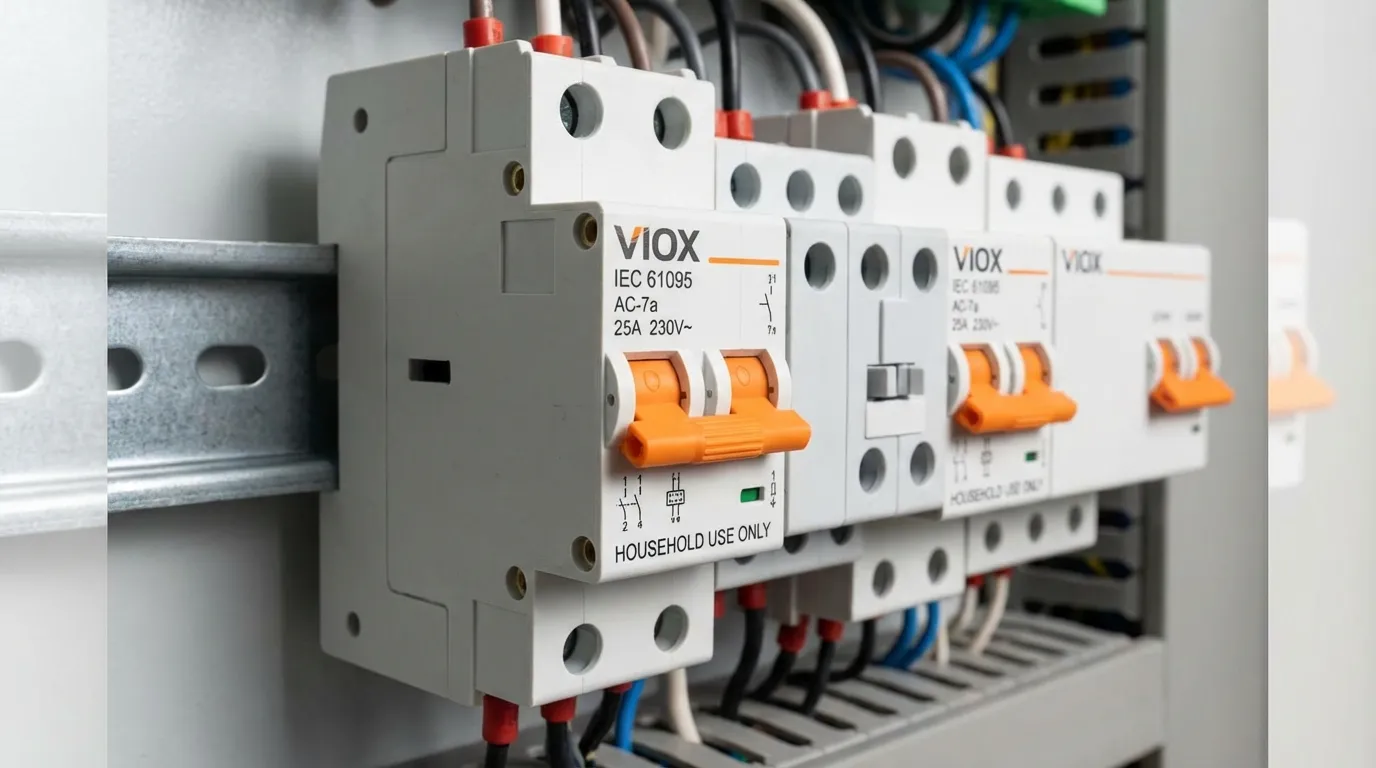
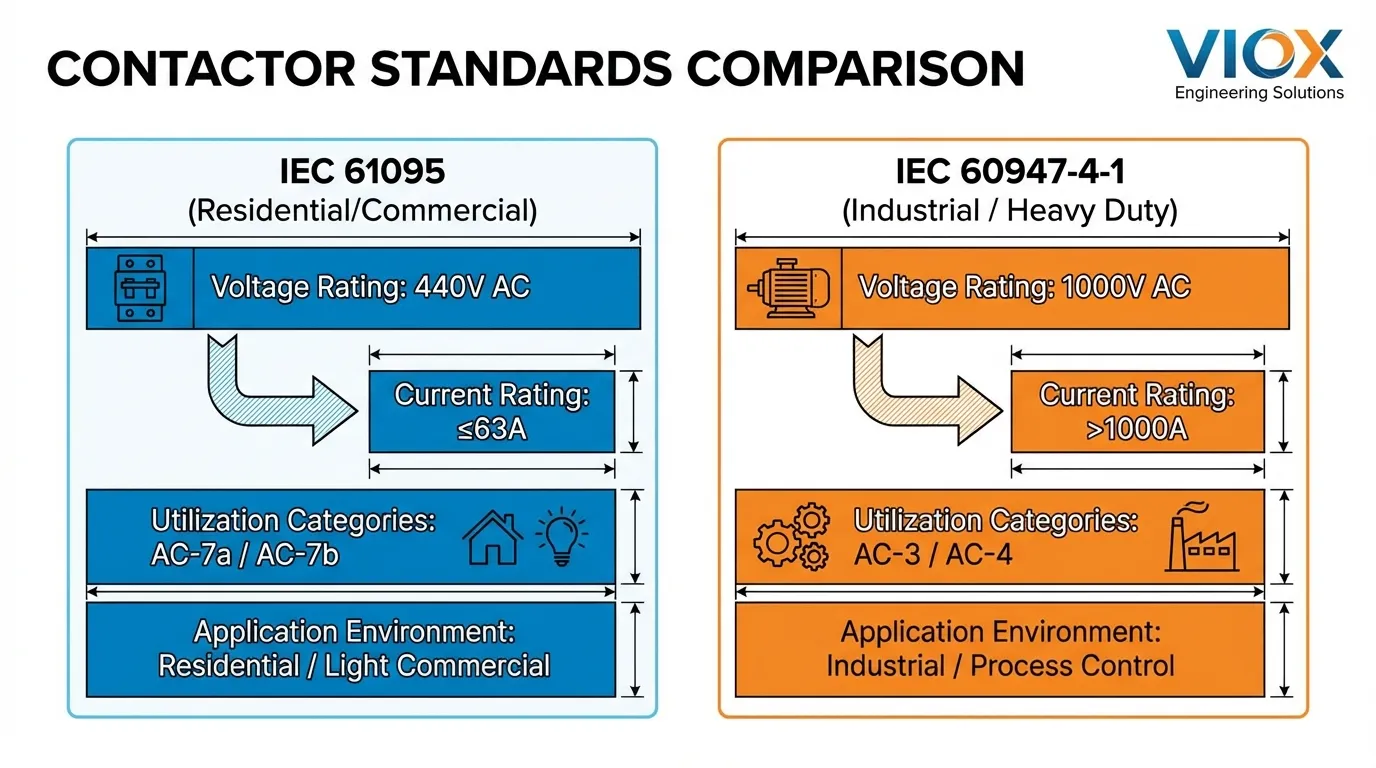
IEC 61095 εφαρμόζεται σε ηλεκτρομηχανικούς επαφείς διακοπής αέρα που έχουν σχεδιαστεί για οικιακούς και παρόμοιους σκοπούς. Αυτοί οι επαφείς έχουν ονομαστική τιμή για κυκλώματα έως 440V AC με ρεύματα λειτουργίας που συνήθως δεν υπερβαίνουν 63A για την κατηγορία χρήσης AC-7a και 32A για τις κατηγορίες AC-7b, AC-7c και AC-7d. Το πρότυπο αφορά συγκεκριμένα εφαρμογές όπου η συχνότητα μεταγωγής είναι μέτρια και τα φορτία είναι σχετικά προβλέψιμα—όπως ο οικιακός έλεγχος φωτισμού, τα συστήματα HVAC και οι εφαρμογές μικρών κινητήρων.
IEC 60947-4-1 διέπει τους επαφείς και τους εκκινητές κινητήρων για βιομηχανικές εφαρμογές, καλύπτοντας εξοπλισμό με ονομαστικές τάσεις έως 1000V AC ή 1500V DC. Αυτό το πρότυπο καλύπτει τις απαιτητικές απαιτήσεις των βιομηχανικών περιβαλλόντων όπου οι επαφείς πρέπει να χειρίζονται βαριά επαγωγικά φορτία, συχνούς κύκλους μεταγωγής (συχνά εκατομμύρια λειτουργίες) και σκληρές συνθήκες λειτουργίας, συμπεριλαμβανομένων ακραίων θερμοκρασιών, κραδασμών και μόλυνσης.
Η θεμελιώδης διάκριση έγκειται στη φιλοσοφία σχεδιασμού τους: Το IEC 61095 δίνει προτεραιότητα στην οικονομική αποδοτικότητα και την απλότητα για οικιακές εφαρμογές, ενώ το IEC 60947-4-1 δίνει έμφαση στην ανθεκτικότητα, την αντοχή και τα προηγμένα χαρακτηριστικά προστασίας για βιομηχανική χρήση.
Συνολική Τεχνική Σύγκριση
| Παράμετρος | IEC 61095 (Οικιακό) | IEC 60947-4-1 (Βιομηχανικό) |
|---|---|---|
| Ονομαστική τάση | ≤ 440V AC (μεταξύ φάσεων) | ≤ 1000V AC, ≤ 1500V DC |
| Τρέχουσα βαθμολογία | ≤ 63A (AC-7a), ≤ 32A (AC-7b/c/d) | Έως αρκετές χιλιάδες αμπέρ |
| Κύρια εφαρμογή | Κατοικίες, ελαφριές επαγγελματικές | Βιομηχανικός έλεγχος κινητήρων, βαριά μηχανήματα |
| Κατηγορίες χρήσης | AC-1, AC-7a, AC-7b, AC-7c, AC-7d | AC-1, AC-2, AC-3, AC-4, DC-1, DC-3, DC-5 |
| Ονομαστική Τιμή Βραχυκυκλώματος | ≤ 6 kA υπό όρους | Έως 100 kA+ (ανάλογα με τον τύπο) |
| Συχνότητα μεταγωγής | Μέτρια (περιστασιακή λειτουργία) | Υψηλή (συχνή κυκλοφορία, εκατομμύρια λειτουργίες) |
| Δοκιμές Αντοχής | Βασική ηλεκτρική/μηχανική διάρκεια ζωής | Συνολική αντοχή υπό ονομαστικές συνθήκες |
| Συντονισμός Βραχυκυκλώματος | Απαιτείται συντονισμός τύπου 1 | Επιλογές συντονισμού τύπου 1 και τύπου 2 |
| Προστασία του περιβάλλοντος | Βαθμός ρύπανσης 2 (τυπικός) | Ενισχυμένη προστασία για βιομηχανικά περιβάλλοντα |
| Απόσβεση Τόξου | Βασικός σχεδιασμός διακοπής αέρα | Προηγμένα συστήματα απόσβεσης τόξου |
| Τοποθέτηση | Ράγα DIN (αρθρωτός σχεδιασμός) | Τοποθέτηση σε πίνακα, ράγα DIN ή plug-in |
| Βοηθητικές επαφές | Περιορισμένες βοηθητικές επαφές | Πολλαπλές επιλογές βοηθητικών επαφών |
| Έλεγχος Πηνίου | Τυπικός ή ηλεκτρονικός έλεγχος | Τυπικός, ηλεκτρονικός ή με λειτουργία DC |
| Απαιτήσεις δοκιμών | Απλοποιημένες διαδικασίες δοκιμής | Συνολική δοκιμή ανά κατηγορία χρήσης |
| Τυπική Εγκατάσταση | Μονάδες καταναλωτών, πίνακες διανομής | Κέντρα ελέγχου κινητήρων (MCC), βιομηχανικοί πίνακες |
Επεξήγηση Βασικών Τεχνικών Διαφορών
1. Ονομαστικές Τιμές Τάσης και Ρεύματος
Η πιο θεμελιώδης διαφορά έγκειται στις ηλεκτρικές ονομαστικές τιμές. Οι επαφείς IEC 61095 έχουν σχεδιαστεί για οικιακές εφαρμογές χαμηλής τάσης έως 440V AC με ονομαστικές τιμές ρεύματος που συνήθως περιορίζονται στα 63A. Αυτό τους καθιστά ιδανικούς για τον έλεγχο οικιακών κυκλωμάτων φωτισμού, μικρού εξοπλισμού HVAC και οικιακών συσκευών.
Αντίθετα, οι επαφείς IEC 60947-4-1 χειρίζονται πολύ υψηλότερες τάσεις (έως 1000V AC ή 1500V DC) και ρεύματα που κυμαίνονται από λίγα αμπέρ έως αρκετές χιλιάδες αμπέρ. Αυτές οι ονομαστικές τιμές είναι απαραίτητες για τον έλεγχο μεγάλων βιομηχανικών κινητήρων, βαρέων μηχανημάτων και βιομηχανικών φορτίων υψηλής ισχύος. Για παράδειγμα, ένας τυπικός βιομηχανικός εκκινητής κινητήρα μπορεί να ελέγξει έναν κινητήρα 200 HP που καταναλώνει 250A στα 480V—υπερβαίνοντας κατά πολύ τις δυνατότητες των οικιακών επαφέων.
2. Κατηγορίες Χρήσης: Οικιακή έναντι Βιομηχανικής
Κατηγορίες Χρήσης IEC 61095:
- AC-1: Μη επαγωγικά ή ελαφρώς επαγωγικά φορτία (αντίσταση θέρμανσης, φωτισμός πυρακτώσεως)
- AC-7a: Φορτία κινητήρα για οικιακές συσκευές (πλυντήρια ρούχων, πλυντήρια πιάτων)
- AC-7b: Φορτία κινητήρα για εξοπλισμό κλιματισμού και ψύξης
- AC-7c: Μεταγωγή ελεγχόμενου ηλεκτρικού λαμπτήρα εκκένωσης με αντιστάθμιση
- AC-7d: Μεταγωγή λαμπτήρων LED και μηχανισμού ελέγχου LED (προστέθηκε στην έκδοση 2023)
Κατηγορίες Χρήσης IEC 60947-4-1:
- AC-1: Μη επαγωγικά ή ελαφρώς επαγωγικά φορτία
- AC-2: Εκκίνηση κινητήρα με δακτυλίους ολίσθησης και απενεργοποίηση κατά τη λειτουργία
- AC-3: Εκκίνηση κινητήρα βραχυκυκλωμένου κλωβού, απενεργοποίηση κατά τη λειτουργία (πιο κοινή βιομηχανική κατηγορία)
- AC-4: Εκκίνηση κινητήρα βραχυκυκλωμένου δρομέα, αντίστροφη πέδηση, χειρισμός με μικρές κινήσεις και λειτουργίες ίντσας
- DC-1, DC-3, DC-5: Διάφορες εφαρμογές ελέγχου κινητήρα DC
Η κατηγορία AC-3 είναι η πιο ευρέως χρησιμοποιούμενη σε βιομηχανικά περιβάλλοντα, σχεδιασμένη για επαφείς που εκκινούν κινητήρες βραχυκυκλωμένου δρομέα και τους απενεργοποιούν κατά τη λειτουργία. Αυτοί οι επαφείς πρέπει να χειρίζονται ρεύματα εισόδου 5-8 φορές το ονομαστικό ρεύμα του κινητήρα κατά την εκκίνηση. Μάθετε περισσότερα για τις κατηγορίες χρήσης των επαφών.
3. Απαιτήσεις Αντοχής και Αξιοπιστίας
Οι βιομηχανικές εφαρμογές απαιτούν σημαντικά υψηλότερη αντοχή. Οι επαφείς IEC 60947-4-1 υποβάλλονται σε αυστηρές δοκιμές αντοχής που περιλαμβάνουν εκατομμύρια κύκλους λειτουργίας υπό ονομαστικές συνθήκες. Ένας τυπικός επαφέας με ονομαστική τιμή AC-3 μπορεί να δοκιμαστεί για 1-8 εκατομμύρια λειτουργίες ανάλογα με την ονομαστική τιμή ρεύματος και την εφαρμογή.
Οι επαφείς IEC 61095, αν και εξακολουθούν να είναι αξιόπιστοι, έχουν σχεδιαστεί για μέτριους κύκλους λειτουργίας που είναι τυπικοί για οικιακές εφαρμογές - ίσως μερικές χιλιάδες έως δεκάδες χιλιάδες λειτουργίες κατά τη διάρκεια της ζωής τους. Αυτή η διαφορά στις απαιτήσεις αντοχής επηρεάζει άμεσα την επιλογή του υλικού επαφής, το σχεδιασμό του ελατηρίου και τους μηχανισμούς απόσβεσης τόξου.
4. Συντονισμός Βραχυκυκλώματος
Και τα δύο πρότυπα απαιτούν συντονισμό με διατάξεις προστασίας από βραχυκύκλωμα (SCPD), αλλά το IEC 60947-4-1 προσφέρει δύο διακριτούς τύπους συντονισμού:
- Συντονισμός Τύπου 1: Υπό συνθήκες βραχυκυκλώματος, ο επαφέας ή ο εκκινητής μπορεί να υποστεί ζημιά, αλλά δεν πρέπει να παρουσιάζει κίνδυνο για άτομα ή εγκατάσταση. Ο επαφέας πρέπει να αντικατασταθεί ή να επισκευαστεί πριν επιστρέψει σε λειτουργία. Αυτό είναι παρόμοιο με τον συντονισμό που απαιτείται από το IEC 61095.
- Συντονισμός Τύπου 2: Υπό συνθήκες βραχυκυκλώματος, δεν επιτρέπονται επικίνδυνες επιπτώσεις και ο επαφέας πρέπει να είναι κατάλληλος για περαιτέρω χρήση μετά την εκκαθάριση του σφάλματος. Επιτρέπεται μόνο μικρή συγκόλληση επαφών και ο εξοπλισμός δεν θα πρέπει να απαιτεί σημαντική συντήρηση. Αυτό το υψηλότερο επίπεδο συντονισμού είναι κρίσιμο για βιομηχανικές εφαρμογές όπου ο χρόνος διακοπής λειτουργίας είναι δαπανηρός.
Η κατανόηση του συντονισμού βραχυκυκλώματος είναι απαραίτητη όταν επιλέγετε MCCB για εφαρμογές πίνακα.
5. Απόσβεση Τόξου και Σχεδιασμός Επαφών
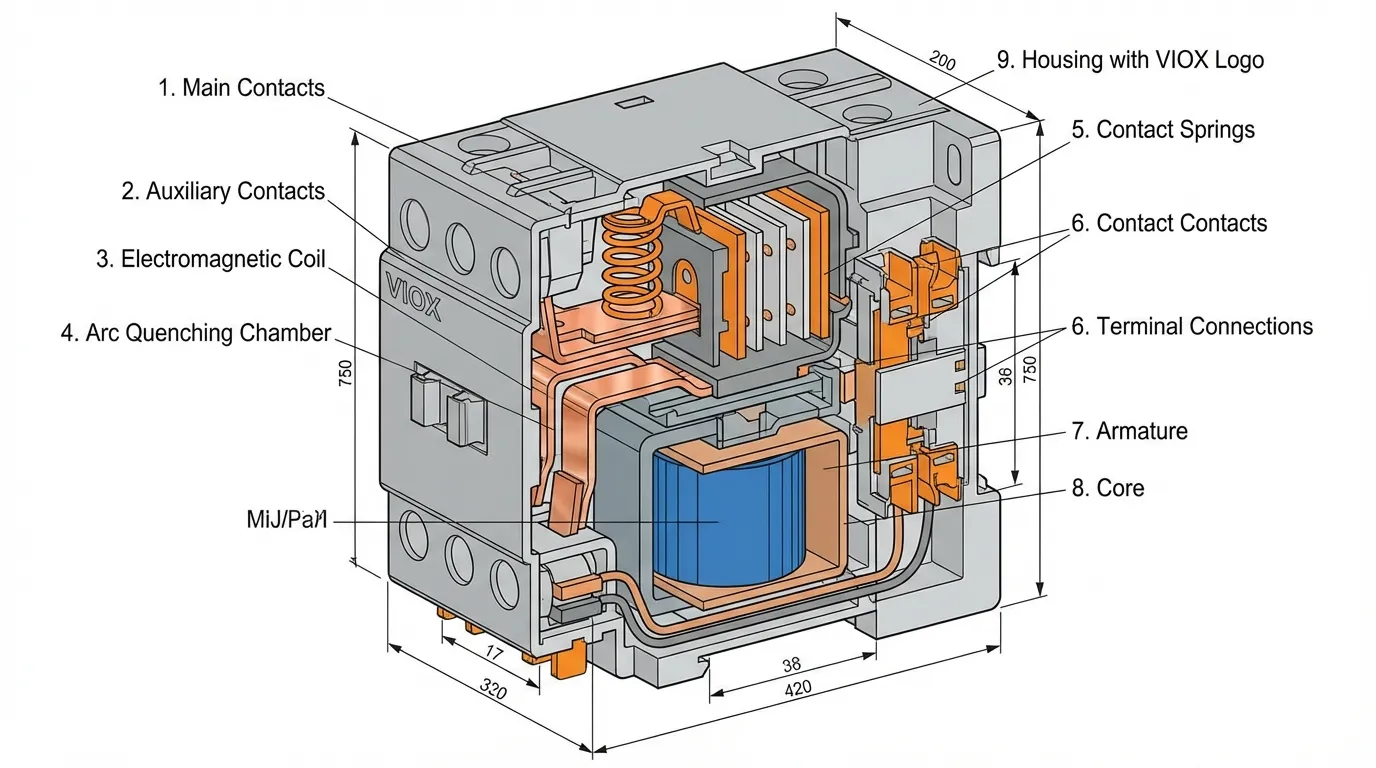
Οι βιομηχανικοί επαφείς χρησιμοποιούν εξελιγμένα συστήματα απόσβεσης τόξου για να διακόπτουν με ασφάλεια υψηλά ρεύματα, ειδικά υπό επαγωγικά φορτία. Αυτά μπορεί να περιλαμβάνουν:
- Μαγνητικά πηνία εκτόξευσης για την οδήγηση τόξων σε αγωγούς τόξου
- Πολλαπλές πλάκες διαχωρισμού τόξου για τη διαίρεση και την ψύξη των τόξων
- Ενισχυμένα υλικά επαφής (κράματα αργύρου, άργυρος-βολφράμιο)
- Μεγαλύτερα κενά επαφής και υψηλότερη πίεση επαφής
Οι οικιακοί επαφείς χρησιμοποιούν απλούστερα σχέδια διακοπής αέρα που είναι επαρκή για τις χαμηλότερες ονομαστικές τιμές ρεύματος και τους λιγότερο απαιτητικούς κύκλους λειτουργίας τους. Η κατανόηση των εσωτερικών εξαρτημάτων του επαφέα βοηθά στην εξήγηση αυτών των σχεδιαστικών διαφορών.
Οδηγίες Εφαρμογής
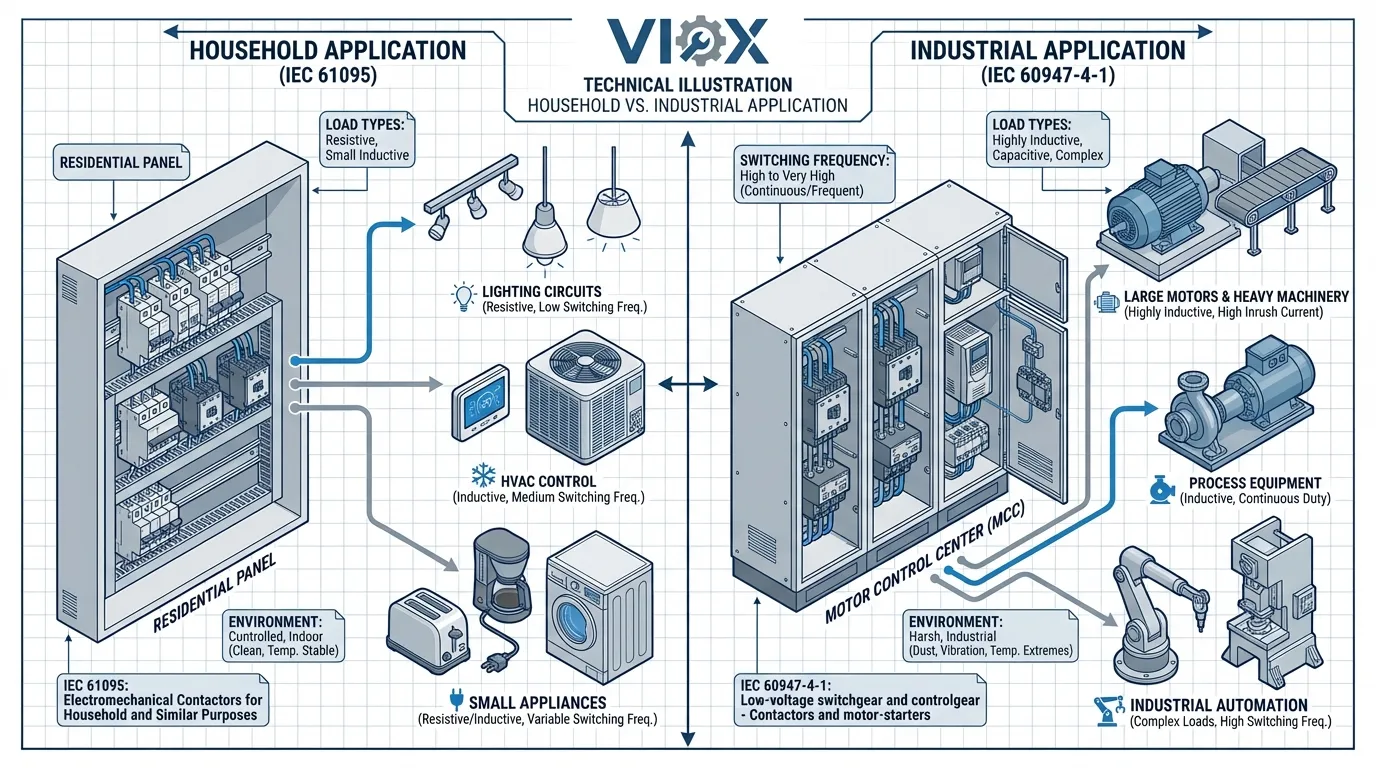
Πότε να Καθορίσετε Επαφείς IEC 61095
- Οικιακά ηλεκτρικά πάνελ και καταναλωτικές μονάδες
- Συστήματα αυτοματισμού κτιρίων (έλεγχος φωτισμού, προγραμματισμός HVAC)
- Ελαφρές εμπορικές εφαρμογές (φωτισμός λιανικής, μικρός κλιματισμός γραφείου)
- Εφαρμογές αρθρωτών επαφών που απαιτούν τοποθέτηση σε ράγα DIN
- Ενσωμάτωση έξυπνου σπιτιού με ηλεκτρονικά κυκλώματα ελέγχου
- Έλεγχος φωτισμού LED (κατηγορία χρήσης AC-7d)
- Εφαρμογές με ρεύμα ≤ 63A και τάση ≤ 440V AC
Οι επαφείς IEC 61095 υπερέχουν σε εφαρμογές όπου η οικονομική αποδοτικότητα, το συμπαγές μέγεθος και η τοποθέτηση σε ράγα DIN αποτελούν προτεραιότητες. Οι αρθρωτοί επαφείς είναι ιδιαίτερα δημοφιλείς στα σύγχρονα συστήματα διαχείρισης κτιρίων.
Πότε να Καθορίσετε Επαφείς IEC 60947-4-1
- Κέντρα ελέγχου βιομηχανικών κινητήρων (MCC)
- Βαρέα μηχανήματα και εξοπλισμός παραγωγής
- Σταθμοί άντλησης και συμπίεσης
- Συστήματα HVAC σε μεγάλα εμπορικά κτίρια
- Εξόρυξη, πετροχημικά και μεταποίηση εγκαταστάσεις
- Εφαρμογές που απαιτούν συντονισμό Τύπου 2
- Διακοπή υψηλής συχνότητας λειτουργίες (χειρισμός με μικρές κινήσεις, αντίστροφη πέδηση)
- Μεγάλοι εκκινητές κινητήρων (>10 HP / 7,5 kW)
- Σκληρά βιομηχανικά περιβάλλοντα (ακραίες θερμοκρασίες, κραδασμοί, μόλυνση)
Για κρίσιμες βιομηχανικές εφαρμογές, επαφείς ασφαλείας με επαφές καθοδηγούμενες με δύναμη ενδέχεται να απαιτηθούν για την κάλυψη των προτύπων ασφάλειας μηχανημάτων.
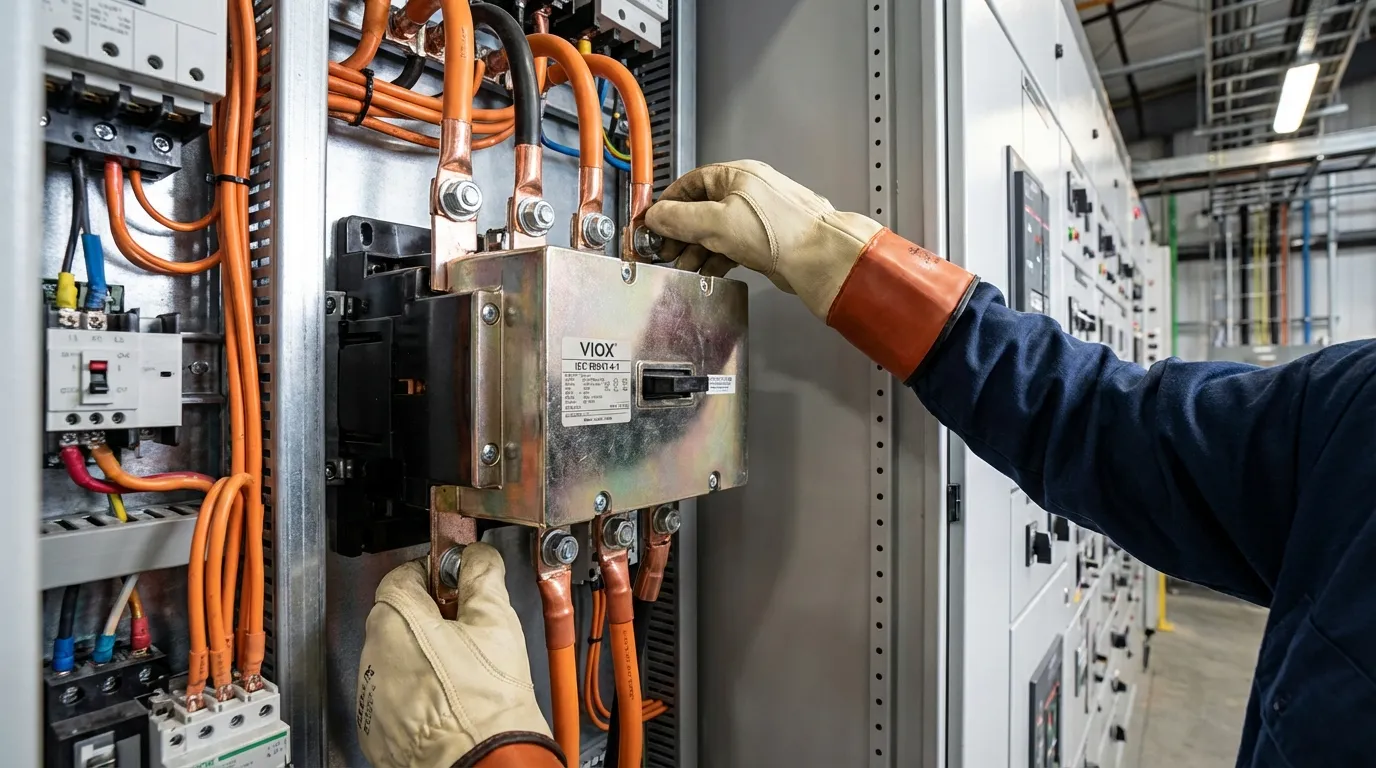 Σχήμα 1: Βιομηχανικός ηλεκτρολόγος που εγκαθιστά επαφέα VIOX συμβατό με IEC 60947-4-1 σε κέντρο ελέγχου κινητήρα για εφαρμογές βαρέως τύπου.
Κριτήρια επιλογής και βέλτιστες πρακτικές
Ανάλυση φορτίου
Πριν επιλέξετε έναν επαφέα, πραγματοποιήστε διεξοδική ανάλυση φορτίου:
- Ρεύμα σταθερής κατάστασης: Συνεχές ρεύμα που πρέπει να μεταφέρει ο επαφέας
- Ρεύμα εισόδου: Μέγιστο ρεύμα κατά την εκκίνηση του κινητήρα ή την αλλαγή λαμπτήρα
- Κύκλος λειτουργίας: Συχνότητα και διάρκεια των λειτουργιών μεταγωγής
- Συντελεστής ισχύος φορτίου: Επηρεάζει την ενέργεια τόξου και τη φθορά των επαφών
- Περιβαλλοντικές συνθήκες: Θερμοκρασία, υγρασία, υψόμετρο, βαθμός ρύπανσης
Εκτιμήσεις τάσης
Βεβαιωθείτε ότι η ονομαστική τάση λειτουργίας (Ue) του επαφέα ταιριάζει ή υπερβαίνει την τάση του κυκλώματος. Για τριφασικά συστήματα, η τάση μετράται μεταξύ των φάσεων. Επίσης, επαληθεύστε:
- Ονομαστική τάση μόνωσης (Ui): Πρέπει να υπερβαίνει την τάση του κυκλώματος
- Ονομαστική τάση αντοχής σε παλμό (Uimp): Συνήθως 4 kV για το IEC 61095, υψηλότερη για βιομηχανικές εφαρμογές
- Τάση κυκλώματος ελέγχου: Πρέπει να ταιριάζει με την διαθέσιμη τροφοδοσία ελέγχου
Τρέχουσα επιλογή αξιολόγησης
Για επαφείς IEC 61095, επιλέξτε με βάση την κατάλληλη κατηγορία χρήσης:
- Ονομαστική τιμή AC-7a για φορτία κινητήρων
- Ονομαστική τιμή AC-1 για ωμικά φορτία (συνήθως υψηλότερη από την AC-7a)
Για επαφείς IEC 60947-4-1, η ονομαστική τιμή AC-3 είναι η πιο κοινή για εφαρμογές κινητήρων. Εφαρμόστε πάντα τους κατάλληλους συντελεστές μείωσης για:
- Θερμοκρασία περιβάλλοντος άνω των 40°C
- Υψόμετρο άνω των 2000m
- Ομαδοποίηση πολλαπλών επαφέων σε περιβλήματα
Η κατανόηση των ηλεκτρικών συντελεστών μείωσης είναι απαραίτητη για τον σωστό υπολογισμό των διαστάσεων.
Συντονισμός Προστασίας από Βραχυκύκλωμα
Βεβαιωθείτε ότι ο επαφέας είναι σωστά συντονισμένος με την επιλεγμένη SCPD (διακόπτης κυκλώματος ή ασφάλεια). Οι κατασκευαστές παρέχουν πίνακες συντονισμού που καθορίζουν:
- Μέγιστη ονομαστική τιμή ρεύματος βραχυκυκλώματος
- Συνιστώμενος τύπος και ονομαστική τιμή SCPD
- Τύπος συντονισμού που επιτυγχάνεται (Τύπος 1 ή Τύπος 2)
Για βιομηχανικές εφαρμογές, ο συντονισμός Τύπου 2 προτιμάται για την ελαχιστοποίηση του χρόνου διακοπής λειτουργίας μετά από συνθήκες σφάλματος.
Διαφορές εγκατάστασης και συντήρησης
Εγκατάσταση IEC 61095
- Πρότυπο Τοποθέτηση σε ράγα DIN 35mm (σύμφωνα με το IEC 60715)
- Τυπικό αρθρωτό πλάτος 2-4 μονάδες (1 μονάδα = 18mm)
- Τερματικά με βίδες ή κλωβό ελατηρίου για σύνδεση καλωδίων
- Απαιτείται ελάχιστη περιβαλλοντική προστασία
- Εγκατάσταση σε τυπικούς καταναλωτικούς πίνακες ή πίνακες διανομής
Εγκατάσταση IEC 60947-4-1
- Τοποθέτηση σε πάνελ με συνδέσεις με μπουλόνια για μεγάλους επαφείς
- Τοποθέτηση σε ράγα DIN για μικρότερους βιομηχανικούς επαφείς
- Επαγγελματική τερματισμός καλωδίων με ακροδέκτες καλωδίων
- Περιβαλλοντική στεγανοποίηση όπως απαιτείται (βαθμολογίες IP)
- Εγκατάσταση σε κέντρα ελέγχου κινητήρων με τις κατάλληλες αποστάσεις
- Εξέταση για απαγωγή θερμότητας και εξαερισμό
Απαιτήσεις συντήρησης
Επαφείς IEC 61095: Απαιτείται ελάχιστη συντήρηση σε τυπικές οικιακές εφαρμογές. Περιοδική επιθεώρηση για:
- Κατάσταση επαφών (οπτικός έλεγχος)
- Στεγανότητα ακροδεκτών
- Μηχανική λειτουργία
Επαφείς IEC 60947-4-1: Τακτικά προγράμματα συντήρησης βάσει των κύκλων λειτουργίας:
- Επιθεώρηση και αντικατάσταση επαφών
- Καθαρισμός θαλάμου τόξου
- Λίπανση μηχανικών εξαρτημάτων
- Επαλήθευση βοηθητικών επαφών
- Δοκιμή αντίστασης μόνωσης
Οι λίστες ελέγχου συντήρησης βιομηχανικών επαφέων παρέχουν λεπτομερείς οδηγίες για προγράμματα προληπτικής συντήρησης.
Συνήθεις παρανοήσεις
Μύθος 1: “Οι οικιακοί επαφείς μπορούν να χειριστούν βιομηχανικά φορτία εάν είναι υπερμεγέθη”
Πραγματικότητα: Ακόμη και οι υπερμεγέθης επαφείς IEC 61095 στερούνται την ικανότητα απόσβεσης τόξου, την αντοχή και τον συντονισμό βραχυκυκλώματος που απαιτούνται για βιομηχανικές εφαρμογές. Η χρήση οικιακών επαφέων σε βιομηχανικά περιβάλλοντα παραβιάζει τα πρότυπα ασφαλείας και δημιουργεί κινδύνους ευθύνης.
Μύθος 2: “Οι βιομηχανικοί επαφείς είναι πάντα καλύτερης ποιότητας”
Πραγματικότητα: Οι επαφείς IEC 60947-4-1 έχουν σχεδιαστεί για διαφορετικές απαιτήσεις - όχι απαραίτητα “καλύτερη” ποιότητα. Για οικιακές εφαρμογές, οι επαφείς IEC 61095 προσφέρουν βέλτιστη σχέση κόστους-απόδοσης με κατάλληλα χαρακτηριστικά ασφαλείας.
Μύθος 3: “Όλοι οι επαφείς με την ίδια ονομαστική τιμή ρεύματος είναι εναλλάξιμοι”
Πραγματικότητα: Οι ονομαστικές τιμές ρεύματος είναι συγκεκριμένες για τις κατηγορίες χρήσης. Ένας επαφέας IEC 61095 με ονομαστική τιμή 32A (AC-7b) δεν μπορεί να αντικαταστήσει έναν επαφέα IEC 60947-4-1 με ονομαστική τιμή 32A (AC-3) επειδή τα χαρακτηριστικά φορτίου και οι κύκλοι λειτουργίας διαφέρουν σημαντικά.
Μύθος 4: “Η ονομαστική τιμή βραχυκυκλώματος δεν έχει σημασία εάν υπάρχει διακόπτης κυκλώματος”
Πραγματικότητα: Ο επαφέας πρέπει να είναι σωστά συντονισμένος με την SCPD. Ένας επαφέας με ανεπαρκή ονομαστική τιμή μπορεί να εκραγεί ή να προκαλέσει λάμψη τόξου ακόμη και με την κατάλληλη προστασία από υπερένταση.
Πρόσφατες Ενημερώσεις Προτύπων
IEC 61095:2023 Έκδοση
Η τελευταία έκδοση περιλαμβάνει σημαντικές ενημερώσεις:
- Κατηγορία AC-7d: Νέα κατηγορία χρήσης για λαμπτήρες LED και μηχανισμούς ελέγχου LED, που αντιμετωπίζει την αυξανόμενη αγορά φωτισμού LED
- Ηλεκτρονικά κυκλώματα ελέγχου: Απαιτήσεις για επαφείς με ηλεκτρομαγνήτες ηλεκτρονικού ελέγχου
- Ενισχυμένες απαιτήσεις σήμανσης: Βελτιωμένη σήμανση για ασφαλέστερη εγκατάσταση και συντήρηση
- Περιβαλλοντικές δοκιμές: Ενημερωμένες διαδικασίες δοκιμής υγρασίας και θερμοκρασίας
IEC 60947-4-1:2023 Έκδοση
Οι πρόσφατες αλλαγές περιλαμβάνουν:
- Υιοθέτηση του AC-7d: Ενσωματώθηκε από το IEC 61095 για βιομηχανικές εφαρμογές LED
- Συσκευές στιγμιαίας προστασίας κινητήρα (IMPSD): Νέες απαιτήσεις για ταχείας δράσης προστασία κινητήρα
- Περιβαλλοντικές πτυχές: Αναφορά στο IEC TS 63058 για ζητήματα βιωσιμότητας
- Συμβατότητα μονάδας κίνησης κατάντη: Απαιτήσεις για επαφείς που χρησιμοποιούνται με μετατροπείς συχνότητας
Εκτιμήσεις κόστους
Αρχικό κόστος
Οι επαφείς IEC 61095 συνήθως κοστίζουν $15-$150 ανάλογα με την ονομαστική τιμή ρεύματος και τα χαρακτηριστικά. Οι επαφείς IEC 60947-4-1 κυμαίνονται από $50-$5,000+ για μεγάλες βιομηχανικές μονάδες.
Συνολικό κόστος ιδιοκτησίας
Λάβετε υπόψη το κόστος κύκλου ζωής:
- Κόστος συντήρησης: Οι βιομηχανικοί επαφείς απαιτούν πιο συχνή συντήρηση, αλλά προσφέρουν μεγαλύτερη διάρκεια ζωής
- Κόστος διακοπής λειτουργίας: Ο συντονισμός τύπου 2 μειώνει το χρόνο διακοπής λειτουργίας σε βιομηχανικά περιβάλλοντα
- Ενεργειακή απόδοση: Οι σύγχρονοι επαφείς με χαμηλή κατανάλωση ισχύος πηνίου μειώνουν το λειτουργικό κόστος
- Κόστος αντικατάστασης: Η χρήση του σωστού προτύπου αποτρέπει την πρόωρη αστοχία και τις δαπανηρές αντικαταστάσεις
Για οικονομικά αποδοτικές οικιακές εφαρμογές, αρθρωτοί επαφείς έναντι παραδοσιακών επαφών Η σύγκριση βοηθά στη βελτιστοποίηση της επιλογής.
Αντιμετώπιση κοινών προβλημάτων
Προβλήματα επαφέα IEC 61095
- Βουητός: Συχνά προκαλείται από χαμηλή τάση πηνίου ή μόλυνση
- Αποτυχία κλεισίματος: Ελέγξτε την τάση του πηνίου και τις μηχανικές παρεμποδίσεις
- Συγκόλληση επαφών: Μπορεί να υποδεικνύει συνθήκες υπερφόρτωσης ή βραχυκυκλώματος
Οδηγός αντιμετώπισης προβλημάτων επαφέα παρέχει λεπτομερείς διαγνωστικές διαδικασίες.
Προβλήματα επαφέα IEC 60947-4-1
- Υπερβολική φθορά επαφών: Επαληθεύστε τη σωστή επιλογή κατηγορίας χρήσης
- 583: Ζημιά στο κανάλι τόξου: Υποδεικνύει συμβάντα βραχυκυκλώματος ή ακατάλληλο συντονισμό
- Υπερθέρμανση πηνίου: Ελέγξτε για υπέρταση ή υπερβολική θερμοκρασία περιβάλλοντος
Ενότητα Συχνών Ερωτήσεων
Ε1: Μπορώ να χρησιμοποιήσω έναν επαφέα IEC 61095 για να ελέγξω έναν βιομηχανικό κινητήρα 10 HP;
Α: Όχι. Οι επαφείς IEC 61095 έχουν σχεδιαστεί για οικιακές εφαρμογές με ονομαστικές τιμές ρεύματος έως 63A και δεν διαθέτουν την αντοχή, την ικανότητα απόσβεσης τόξου και το συντονισμό βραχυκυκλώματος που απαιτούνται για τον έλεγχο βιομηχανικών κινητήρων. Να χρησιμοποιείτε πάντα επαφείς IEC 60947-4-1 για βιομηχανικούς κινητήρες.
Ε2: Ποιο είναι το κύριο πλεονέκτημα του συντονισμού τύπου 2 IEC 60947-4-1;
Α: Ο συντονισμός τύπου 2 διασφαλίζει ότι μετά από ένα σφάλμα βραχυκυκλώματος, ο επαφέας παραμένει κατάλληλος για περαιτέρω χρήση χωρίς αντικατάσταση. Αυτό ελαχιστοποιεί το χρόνο διακοπής λειτουργίας και το κόστος συντήρησης σε βιομηχανικές εφαρμογές όπου η διαθεσιμότητα του εξοπλισμού είναι κρίσιμη.
Ε3: Μπορούν οι επαφείς IEC 60947-4-1 να χρησιμοποιηθούν σε οικιακές εφαρμογές;
Α: Ναι, τεχνικά μπορούν να λειτουργήσουν σε οικιακές εφαρμογές, αλλά είναι περιττά ακριβοί και υπερμεγέθης. Οι επαφείς IEC 61095 είναι ειδικά βελτιστοποιημένοι για οικιακή χρήση, προσφέροντας καλύτερη σχέση κόστους-απόδοσης για οικιακές εφαρμογές.
Ε4: Πώς μπορώ να προσδιορίσω ποιο πρότυπο ακολουθεί ένας επαφέας;
Α: Ελέγξτε την πινακίδα ή την τεκμηρίωση του προϊόντος. Η αναφορά προτύπου (IEC 61095 ή IEC 60947-4-1) θα πρέπει να είναι σαφώς σημειωμένη μαζί με τις κατηγορίες χρήσης, την ονομαστική τάση και τις ονομαστικές τιμές ρεύματος.
Ε5: Ποια είναι η σημασία της κατηγορίας χρήσης AC-7d;
Α: Το AC-7d είναι μια νέα κατηγορία (που προστέθηκε το 2023) ειδικά για τη μεταγωγή λαμπτήρων LED και μηχανισμών ελέγχου LED. Τα φορτία LED έχουν μοναδικά χαρακτηριστικά εισροής που διαφέρουν από τους παραδοσιακούς λαμπτήρες πυρακτώσεως ή εκκένωσης, απαιτώντας συγκεκριμένες παραμέτρους σχεδιασμού επαφέα.
Ε6: Απαιτούν και τα δύο πρότυπα τις ίδιες περιβαλλοντικές δοκιμές;
Α: Όχι. Ενώ και τα δύο πρότυπα περιλαμβάνουν περιβαλλοντικές δοκιμές, το IEC 60947-4-1 συνήθως απαιτεί πιο ολοκληρωμένες δοκιμές για βιομηχανικά περιβάλλοντα, συμπεριλαμβανομένων των ενισχυμένων εύρων θερμοκρασίας, της αντοχής σε κραδασμούς και των παραμέτρων βαθμού ρύπανσης.
Ε7: Μπορώ να αντικαταστήσω έναν επαφέα IEC 61095 που έχει υποστεί βλάβη με μια μονάδα IEC 60947-4-1;
Α: Ενώ είναι ηλεκτρικά δυνατό εάν οι ονομαστικές τιμές ταιριάζουν, δεν συνιστάται λόγω διαφορών τοποθέτησης, περιορισμών μεγέθους και κόστους. Αντικαταστήστε με το ίδιο πρότυπο, εκτός εάν αναβαθμίζετε ολόκληρη την εγκατάσταση.
Ε8: Ποια είναι η τυπική διαφορά διάρκειας ζωής μεταξύ οικιακών και βιομηχανικών επαφών;
Α: Οι επαφείς IEC 61095 συνήθως επιτυγχάνουν 10.000-100.000 λειτουργίες σε οικιακή χρήση. Οι επαφείς IEC 60947-4-1 έχουν σχεδιαστεί για 1-8 εκατομμύρια λειτουργίες ανάλογα με την ονομαστική τιμή ρεύματος και την κατηγορία χρήσης.
Βασικά συμπεράσματα
- Πρότυπα για συγκεκριμένες εφαρμογές: Τα πρότυπα IEC 61095 και IEC 60947-4-1 εξυπηρετούν θεμελιωδώς διαφορετικές αγορές — οικιακές/ελαφριές εμπορικές έναντι βιομηχανικών εφαρμογών — με προσαρμοσμένα χαρακτηριστικά απόδοσης για κάθε περιβάλλον.
- Ιεραρχία τάσης και ρεύματος: Οι βιομηχανικοί επαφείς (IEC 60947-4-1) προσφέρουν σημαντικά υψηλότερες ονομαστικές τιμές τάσης (έως 1000V AC έναντι 440V AC) και χωρητικότητες ρεύματος (έως χιλιάδες αμπέρ έναντι 63A μέγιστο), αντανακλώντας τις εφαρμογές βαρέως τύπου.
- Οι κατηγορίες χρήσης έχουν σημασία: Να επιλέγετε πάντα επαφείς με βάση την κατάλληλη κατηγορία χρήσης (AC-7a/b για οικιακή χρήση, AC-3/AC-4 για βιομηχανικούς κινητήρες) και όχι μόνο τις ονομαστικές τιμές ρεύματος, καθώς τα χαρακτηριστικά φορτίου διαφέρουν σημαντικά.
- Αντοχή και αξιοπιστία: Οι επαφείς IEC 60947-4-1 έχουν σχεδιαστεί για εκατομμύρια λειτουργίες σε απαιτητικά βιομηχανικά περιβάλλοντα, ενώ οι επαφείς IEC 61095 είναι βελτιστοποιημένοι για μέτριους κύκλους λειτουργίας σε οικιακά περιβάλλοντα.
- Συντονισμός Βραχυκυκλώματος: Οι βιομηχανικές εφαρμογές επωφελούνται από τον συντονισμό Τύπου 2 (ο επαφέας παραμένει λειτουργικός μετά από σφάλματα), ενώ οι οικιακές εφαρμογές χρησιμοποιούν συνήθως τον συντονισμό Τύπου 1 (ο επαφέας ενδέχεται να χρειαστεί αντικατάσταση μετά από σφάλματα).
- Ισορροπία Κόστους-Απόδοσης: Η χρήση του σωστού προτύπου εξασφαλίζει βέλτιστη σχέση κόστους-αποτελεσματικότητας—IEC 61095 για οικονομικά οικιακά συστήματα, IEC 60947-4-1 για ισχυρή βιομηχανική απόδοση όπου το κόστος διακοπής λειτουργίας δικαιολογεί υψηλότερη αρχική επένδυση.
- Συμμόρφωση προς την ασφάλεια: Και τα δύο πρότυπα δίνουν προτεραιότητα στην ασφάλεια, αλλά το IEC 60947-4-1 περιλαμβάνει βελτιωμένα χαρακτηριστικά ασφαλείας (προηγμένη απόσβεση τόξου, επαφές καθοδηγούμενες με δύναμη, ερμητική σφράγιση) που είναι κρίσιμα για βιομηχανικά περιβάλλοντα όπου η αστοχία του εξοπλισμού θα μπορούσε να έχει σοβαρές συνέπειες.
- Πρόσφατες Ενημερώσεις: Οι εκδόσεις του 2023 και των δύο προτύπων εισήγαγαν την κατηγορία AC-7d για έλεγχο φωτισμού LED, αντανακλώντας τη στροφή της βιομηχανίας προς την τεχνολογία LED τόσο σε οικιακές όσο και σε βιομηχανικές εφαρμογές.
- Επαγγελματική Επιλογή: Κατά την προδιαγραφή των επαφέων, πραγματοποιήστε διεξοδική ανάλυση φορτίου, συμπεριλαμβανομένου του ρεύματος σταθερής κατάστασης, των χαρακτηριστικών εισροής, του κύκλου λειτουργίας και των περιβαλλοντικών συνθηκών. Συμβουλευτείτε ηλεκτρολόγους μηχανικούς ή ειδικούς σε επαφές για κρίσιμες εφαρμογές.
- Ζητήματα Κύκλου Ζωής: Το συνολικό κόστος ιδιοκτησίας περιλαμβάνει όχι μόνο την αρχική τιμή αγοράς, αλλά και τις απαιτήσεις συντήρησης, την αναμενόμενη διάρκεια ζωής, την ενεργειακή απόδοση και το πιθανό κόστος διακοπής λειτουργίας—παράγοντες που ποικίλλουν σημαντικά μεταξύ οικιακών και βιομηχανικών επαφέων.
Σχετικά με την VIOX Electric
Η VIOX Electric είναι ένας κορυφαίος B2B κατασκευαστής ηλεκτρολογικού εξοπλισμού, που ειδικεύεται σε υψηλής ποιότητας επαφές, διακόπτες κυκλώματος και εξαρτήματα ηλεκτρικής διανομής. Τα προϊόντα μας συμμορφώνονται με τα διεθνή πρότυπα, συμπεριλαμβανομένων των IEC 61095 και IEC 60947-4-1, εξασφαλίζοντας ασφάλεια, αξιοπιστία και απόδοση τόσο για οικιακές όσο και για βιομηχανικές εφαρμογές. Επικοινωνήστε με τη VIOX για εξειδικευμένη καθοδήγηση σχετικά με την επιλογή επαφέα για τη συγκεκριμένη εφαρμογή σας.
Επιλεγμένοι Εσωτερικοί Σύνδεσμοι για SEO
- Πώς να Επιλέξετε Αρθρωτό Επαφέα AC DC
- Εσωτερική Λογική Σχεδιασμού Εξαρτημάτων Επαφέα AC
- Οδηγός Επαφέα Ασφαλείας έναντι Τυπικού Επαφέα
- Οδηγός Αντιμετώπισης Προβλημάτων Επαφέα
- Επαφέας έναντι εκκινητή κινητήρα
- Ηλεκτρικά Πρότυπα για Επαφές – Κατηγορίες Χρήσης
- Λίστα ελέγχου επιθεώρησης συντήρησης βιομηχανικού επαφέα
- Αρθρωτός επαφέας έναντι παραδοσιακού επαφέα
- Επαφές έναντι Ρελέ – Κατανόηση των Βασικών Διαφορών
- Οδηγός Συντελεστών Υποβάθμισης Ηλεκτρικής Ισχύος