Blog

Your blog category

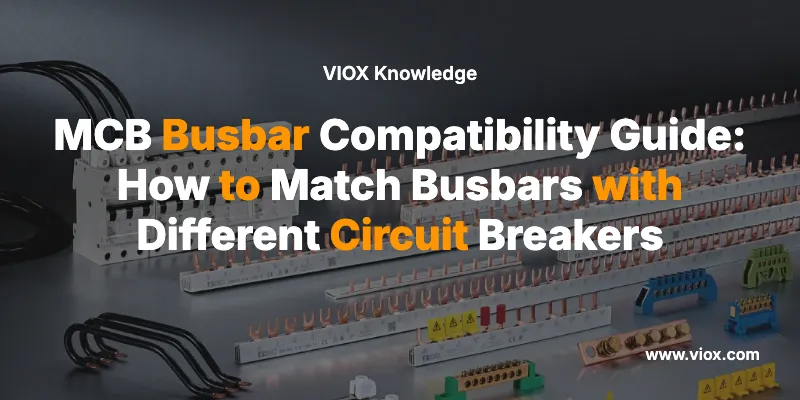
MCB Busbar Compatibility Guide: How to Match Busbars with Different Circuit Breakers

MCB Busbar Compatibility Guide: How to Match Busbars with Different Circuit Breakers

Choosing the right MCB busbar is not just about finding a strip of copper that physically fits inside a panel. Busbar compatibility depends on terminal design, pole configuration, pitch, current rating, enclosure layout, and the circuit breaker family being used. That is why two busbars that look similar may perform very differently in real installations. […]

MCB Busbar Compatibility Guide: How to Match Busbars with Different Circuit Breakers Read More »
10 Electrical Panel Mistakes Panel Builders Should Catch Before Energization

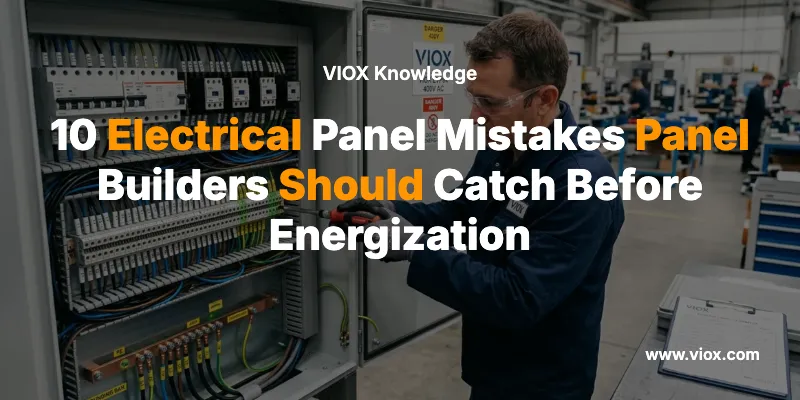
10 Electrical Panel Mistakes Panel Builders Should Catch Before Energization

An experienced panel builder conducting a critical pre-energization inspection on a low-voltage electrical panel to ensure compliance and safety. An electrical panel can look complete, clean, and professionally assembled while still containing errors serious enough to cause nuisance tripping, overheating, control failure, commissioning delays, or unsafe energization. That is why the final inspection before energization

10 Electrical Panel Mistakes Panel Builders Should Catch Before Energization Read More »

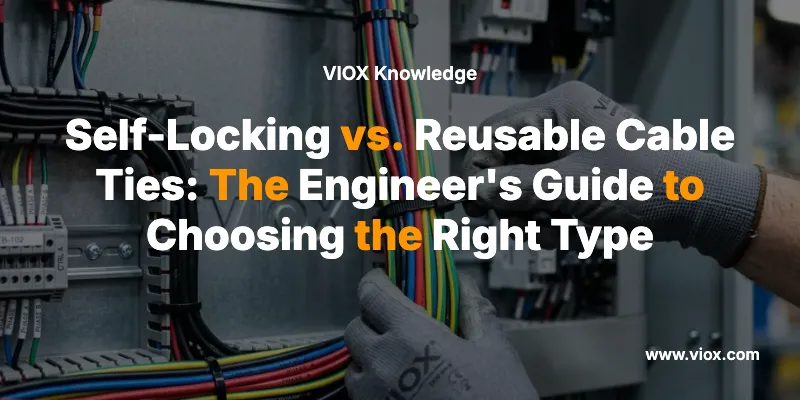
Self-Locking vs. Reusable Cable Ties: The Engineer's Guide to Choosing the Right Type

Self-Locking vs. Reusable Cable Ties: The Engineer’s Guide to Choosing the Right Type

A professional engineer installing durable VIOX self-locking cable ties on colored electrical cables inside an industrial control panel. Which Cable Tie Type Delivers Better Performance for Industrial Applications? Self-locking cable ties provide superior tensile strength (up to 175 lbs) and permanent security for critical installations, while reusable cable ties offer adjustable, repeatable fastening with release

Self-Locking vs. Reusable Cable Ties: The Engineer’s Guide to Choosing the Right Type Read More »

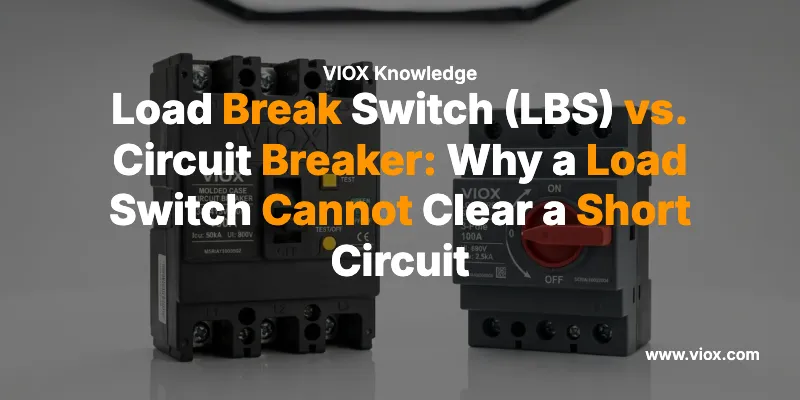
Load Break Switch (LBS) vs. Circuit Breaker: Why a Load Switch Cannot Clear a Short Circuit

Load Break Switch (LBS) vs. Circuit Breaker: Why a Load Switch Cannot Clear a Short Circuit

VIOX medium-voltage load break switch installed in a metal-clad switchgear cabinet, representing a standard industrial power distribution configuration. What Is the Difference Between a Load Break Switch and a Circuit Breaker? A load break switch (LBS) is designed to make and break normal load currents, while a circuit breaker can additionally detect and interrupt fault

Load Break Switch (LBS) vs. Circuit Breaker: Why a Load Switch Cannot Clear a Short Circuit Read More »

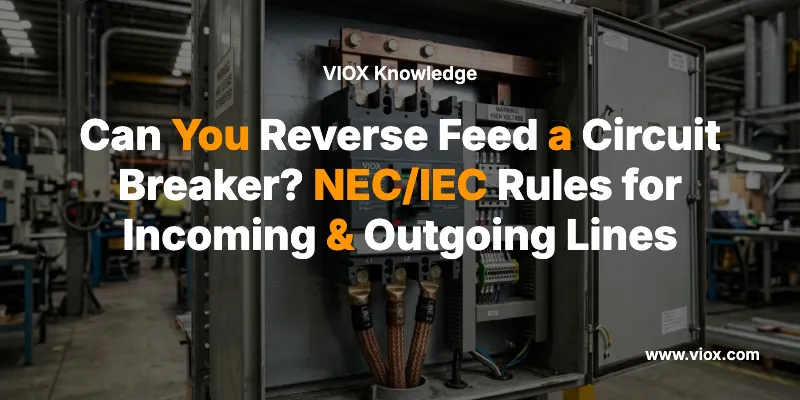
Can You Reverse Feed a Circuit Breaker? NEC/IEC Rules for Incoming & Outgoing Lines

Can You Reverse Feed a Circuit Breaker? NEC/IEC Rules for Incoming & Outgoing Lines

Is It Safe to Reverse Feed a Circuit Breaker? Yes, most standard circuit breakers can be reverse fed—but only if they are not marked with designated “Line” and “Load” terminals. Under NEC 705.30(D) and UL 489 testing protocols, breakers without directional markings have been evaluated for overcurrent tripping in both directions. Breakers with “Line”/”Load” labels,

Can You Reverse Feed a Circuit Breaker? NEC/IEC Rules for Incoming & Outgoing Lines Read More »

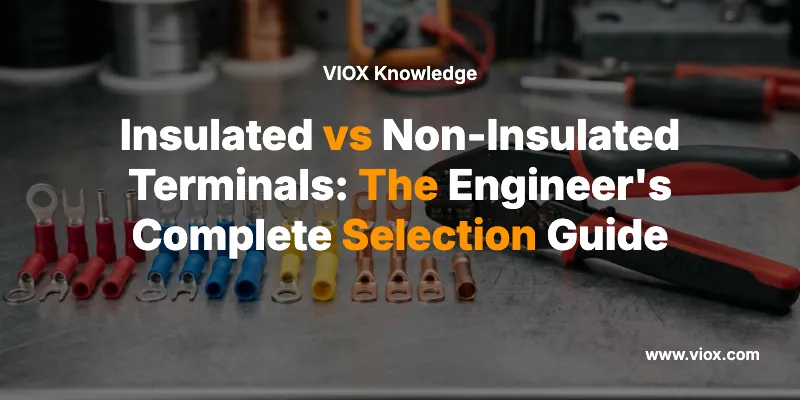
Insulated vs Non-Insulated Terminals: The Engineer's Complete Selection Guide

Insulated vs Non-Insulated Terminals: The Engineer’s Complete Selection Guide

A side-by-side comparison of insulated and non-insulated crimp terminals, featuring standard color-coded vinyl sleeves and bare copper variants on a professional workbench. What Is the Difference Between Insulated and Non-Insulated Terminals? Insulated terminals have a protective vinyl, nylon, or heat-shrink sleeve molded around the crimp barrel, providing electrical isolation, strain relief, and environmental protection. Non-insulated

Insulated vs Non-Insulated Terminals: The Engineer’s Complete Selection Guide Read More »

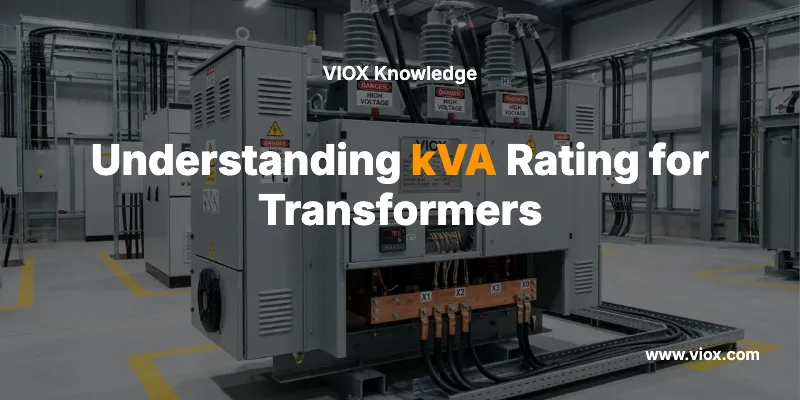
Understanding kVA Rating for Transformers

Understanding kVA Rating for Transformers

VIOX 1000 kVA dry-type transformer in an industrial substation, highlighting high-voltage bushings and low-voltage terminals. What Does kVA Mean on a Transformer Rating? kVA (kilovolt-ampere) represents the apparent power capacity of a transformer, indicating the maximum voltage and current the unit can handle simultaneously without overheating. Unlike kW (kilowatts) which measures only real power, kVA

Understanding kVA Rating for Transformers Read More »

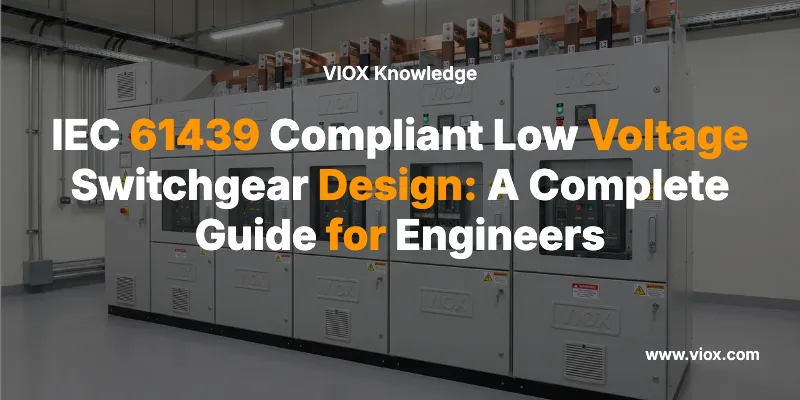
IEC 61439 Compliant Low Voltage Switchgear Design: A Complete Guide for Engineers

IEC 61439 Compliant Low Voltage Switchgear Design: A Complete Guide for Engineers

Figure 1: High-performance VIOX industrial low voltage switchgear assembly, demonstrating modern compartment design, reliable circuit protection, and clear busbar phase identification for superior substation safety. What Does IEC 61439 Require for Low Voltage Switchgear Design? IEC 61439 establishes comprehensive design rules for low voltage switchgear assemblies up to 1000V AC or 1500V DC, mandating verification

IEC 61439 Compliant Low Voltage Switchgear Design: A Complete Guide for Engineers Read More »

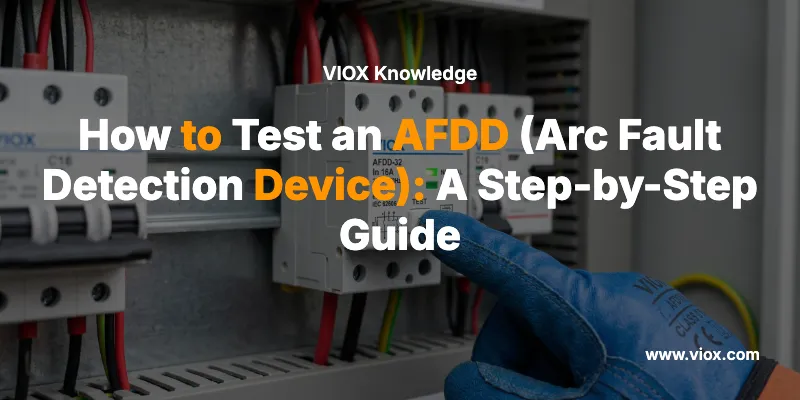
How to Test an AFDD (Arc Fault Detection Device): A Step-by-Step Guide

How to Test an AFDD (Arc Fault Detection Device): A Step-by-Step Guide

Quick Answer: Testing Your AFDD in 30 Seconds Testing an Arc Fault Detection Device (AFDD) is straightforward: press the test button on the device face, and it should trip immediately, disconnecting power to the protected circuit. If the AFDD doesn’t trip when the test button is pressed, the device has failed and must be replaced

How to Test an AFDD (Arc Fault Detection Device): A Step-by-Step Guide Read More »

Ask for Quote Now