

Bu sayfada
Hızlı Cevap
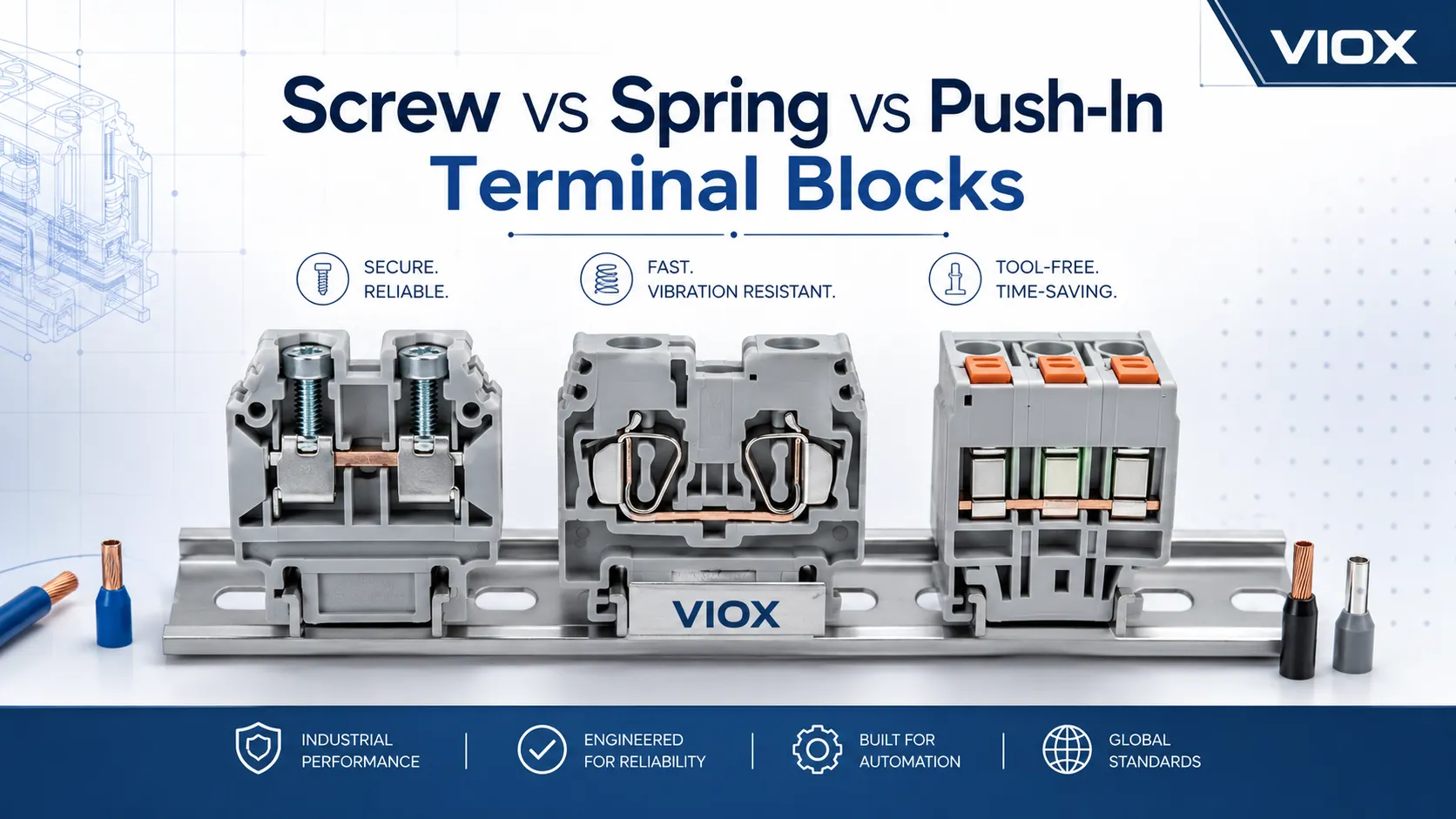
Arasındaki temel fark vidalı, yayve geçmeli (push-in) klemensler iletkeni nasıl sabitledikleri ile ilgilidir. Vidalı bir klemens, iletkeni akım barasına bastırmak için vida torkunu kullanır. Yaylı bir klemens, temas basıncını korumak için yay kuvvetinden yararlanır. Geçmeli (push-in) klemens ise, tek damarlı veya yüksüklü iletkenlerin hızlı ve doğrudan takılması için optimize edilmiş yay tabanlı bir tasarımdır.
Kullanım vidalı klemensler maliyet, saha aşinalığı ve geniş iletken uyumluluğu en önemli faktörler olduğunda. Kullanım alanı: yaylı klemensler titreşim direnci ve bakım kararlılığı öncelikli olduğunda. Kullanım alanı: geçmeli (push-in) klemensler Kablolama hızı, tekrarlanabilir OEM montajı ve temiz bir PLC veya pano içi kablolamanın en önemli olduğu durumlar için.
En iyi seçenek, her devre için tek bir bağlantı tipi kullanmak değildir. Birçok modern kontrol panosu; PLC kablolaması için geçmeli (push-in) klemensleri, titreşime maruz kalan kontrol devreleri için yaylı klemensleri ve daha büyük veya maliyet odaklı kablolama noktaları için vidalı klemensleri kullanır.
Klemensler dışarıdan basit görünür, ancak içlerindeki bağlantı teknolojisi; bir panonun ne kadar hızlı kablolanabileceğine, bağlantının ne kadar tekrarlanabilir olduğuna, panonun ne kadar bakıma ihtiyaç duyacağına ve bağlantı noktasının ısı, titreşim, nakliye ve yıllarca süren hizmet altında nasıl performans göstereceğine karar verir. Bir pano üreticisi için soru sadece “hangi klemens daha ucuz?” değildir. Daha iyi soru şudur: Hangi bağlantı yöntemi; bu iletken, bu ortam ve bu kablolama süreci için en güvenilir kurulu bağlantıyı sağlar?
Vidalı vs Yaylı vs Geçmeli (Push-In) Klemensler: Hızlı Karşılaştırma
| Faktör | Vidalı Klemens | Yaylı Klemens | Geçmeli (Push-In) Klemens |
|---|---|---|---|
| Sıkıştırma prensibi | Vida mekanik basınç uygular | Yay sabit basınç uygular | Yaylı klemens doğrudan iletken girişine olanak tanır |
| Ana avantaj | Aşina olunan, ekonomik, geniş bulunabilirlik | Güçlü titreşim direnci ve kararlı temas kuvveti | Hazırlanmış iletkenler için en hızlı kablolama |
| Ana sınırlama | Doğru tork değerine ve bakıma bağlıdır | Doğru yerleştirme ve kablo hazırlığı gerektirir | İnce telli kablolar genellikle yüksük gerektirir |
| Kurulum hızı | Orta | Orta ila hızlı | Hızlı |
| Tork hassasiyeti | Yüksek | Düşük | Düşük |
| Titreşim davranışı | Tasarıma, torka ve bakıma bağlıdır | Genellikle güçlü | Doğru bağlandığında genellikle güçlü |
| Bakım | Ortama bağlı olarak inceleme gerekebilir | Genellikle daha az bakım gerektirir | Genellikle daha az bakım gerektirir |
| En iyi iletken uyumu | Geniş saha kablolaması; veri sayfasını kontrol edin | Tasarıma bağlı olarak tek damarlı, çok damarlı veya yüksüklü iletkenler | Tek damarlı veya yüksüklü çok damarlı iletkenler |
| Alet gereksinimi | Tornavida veya tork anahtarı | Genellikle yay aktivasyonu için alet veya manivela | Katı/yüksüklü iletkenler için genellikle aletsiz; serbest bırakma için alet gereklidir |
| Kontak tutarlılığı | Torka ve iletken hazırlığına bağlıdır | Yay kuvveti terminalin içine entegre edildiği için daha tutarlıdır | İletken hazırlığı kontrol edildiğinde daha tutarlıdır |
| Pano yoğunluğu | Tasarıma bağlı olarak orta ila iyi seviyede | İyi | Kontrol kablolama düzenlerinde genellikle çok iyidir |
| En iyi uygulama | Genel panolar, dağıtım, saha kablolaması | Makine, taşıma, titreşime maruz kalan kabinler | OEM panoları, PLC kablolaması, yüksek hacimli montaj |
| Alıcı önceliği | Maliyet ve aşinalık | Titreşim altında güvenilirlik | Kablolama hızı ve tekrarlanabilirlik |
Eğer hala temel ürün ailesini seçme aşamasındaysanız, VIOX ile başlayın terminal bloğu ürün yelpazesi, ardından iletken tipi, akım değeri, montaj yöntemi ve bağlantı teknolojisine göre seçiminizi daraltın.
Vidalı Klemens Nedir?
Vidalı klemens, iletken üzerinde sıkıştırma basıncı oluşturmak için dişli bir vida kullanır. Tasarıma bağlı olarak vida; baskı plakası, kafes kelepçe, boyunduruk kelepçesi veya doğrudan sıkıştırma mekanizması aracılığıyla hareket edebilir. Amaç, iletken ile iletken akım barası arasında kararlı ve düşük dirençli bir elektriksel temas sağlamaktır.
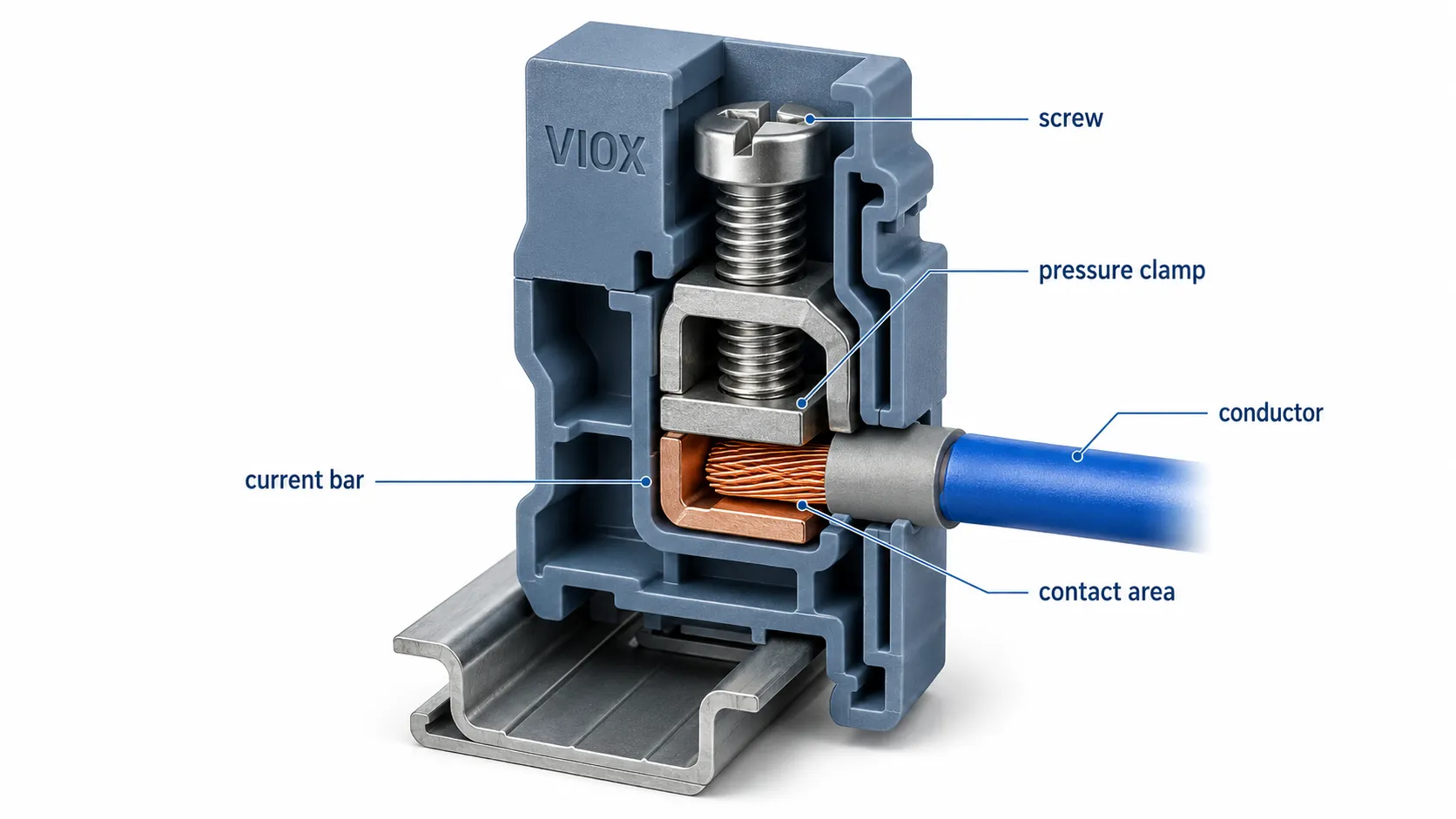
Vidalı klemensler, kurulumcular tarafından bilindikleri, anlaşılmaları kolay olduğu ve birçok boyut ve konfigürasyonda mevcut oldukları için yaygın olarak kullanılmaya devam etmektedir. Dağıtım kutularında, kontrol panolarında, ekipman kablolamasında, HVAC sistemlerinde ve birçok endüstriyel kabinde kullanılırlar.
Zayıf nokta vida konseptinin kendisi değildir. Zayıf nokta kurulum kalitesidir. Vidalı bağlantı, iletken hazırlığına ve doğru sıkma torkuna bağlıdır. Düşük tork, yüksek temas direncine ve ısınmaya neden olabilir. Aşırı tork ise iletkene, kelepçeye, vidaya veya muhafazaya zarar verebilir.
Temas noktasında vidalı klemens, doğru mekanik basıncı oluşturmak için montajı yapan kişiye güvenir. Bu basınç, metal-metale teması sürdürecek kadar yüksek olmalı, ancak iletken tellerini ezecek, klemensi deforme edecek veya terminal gövdesine zarar verecek kadar yüksek olmamalıdır. Pano üretiminde tork kontrollü bir sürecin önemli olmasının nedeni budur.
Vidalı Klemenslerin Avantajları
- Elektrikçiler ve bakım ekipleri için aşinalık sağlar
- Denetimi ve yeniden kablolaması kolaydır
- Birçok boyut ve stilde geniş bulunabilirlik
- Genel amaçlı kablolama ve saha hizmetleri için pratiktir
- Standart panolar için genellikle maliyet etkin çözümlerdir
- Veri sayfası değerlerine bağlı olarak, birçok büyük iletken ve güç kablolaması uygulaması için uygundur
Vidalı Klemenslerin Dezavantajları
- Bağlantı kalitesi doğru tork değerine bağlıdır
- Titreşimli veya termal döngü içeren ortamlarda periyodik kontrol gerektirebilir
- Aşırı sıkma, iletkenlere veya klemens donanımına zarar verebilir
- Yetersiz sıkma aşırı ısınmaya neden olabilir
- Montaj hızı, geçmeli (push-in) bağlantılara göre daha yavaştır
- Kalite, uygulayıcıya bağlı olarak değişkenlik gösterebilir
Vidalı Klemensler İçin En Uygun Uygulamalar
Vidalı klemensler şunlar için uygundur:
- Genel elektrik panoları
- Dağıtım kutuları
- Saha kablolama klemensleri
- HVAC ekipmanları
- Eski panoların modernizasyonu (retrofitting)
- Maliyet odaklı endüstriyel ekipmanlar
- Seçilen klemensin uygun değerlere sahip olduğu daha büyük iletkenler
Daha geniş bir seçim çerçevesi için VIOX'a bakın Terminal Bloğu Seçim Kılavuzu.
Yaylı Klemens Nedir?
Yaylı klemens, iletkene sıkıştırma kuvveti uygulamak için bir yay elemanı kullanır. Vida torkuna güvenmek yerine, yay iletkeni kontrollü bir basınçla iletken elemana karşı tutar. Birçok tasarımda, montajı yapan kişi yayı bir tornavida veya kol yardımıyla açar, iletkeni yerleştirir ve kelepçeyi serbest bırakır.
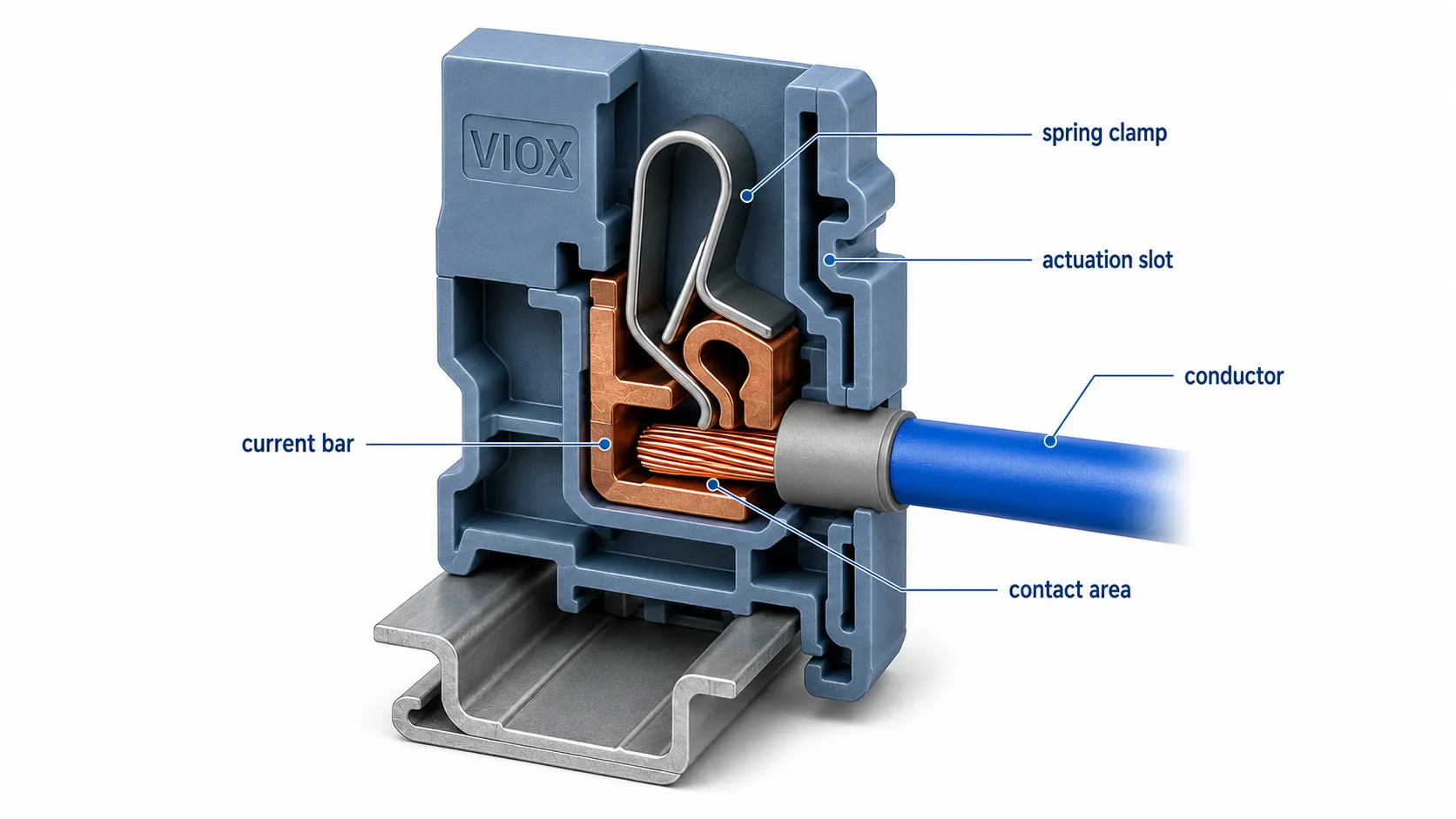
Avantajı kararlılıktır. Titreşime, harekete, nakliyeye, motor kalkışlarına veya termal döngüye maruz kalan ekipmanlarda yay basıncı, bakımı iyi yapılmamış bir vida bağlantısından daha tutarlı bir şekilde temas kuvvetini koruyabilir.
Yaylı klemensler; kablolama güvenilirliğinin ve tork bağımlılığının azaltılmasının önemli olduğu otomasyon panolarında, makinelerde, asansörlerde, ulaşım ekipmanlarında, kontrol sistemlerinde ve endüstriyel panolarda yaygındır.
Temas noktasında yay, küçük hareketler meydana geldiğinde iletken üzerindeki basıncı koruyacak şekilde tasarlanmıştır. Bu, iletkenin oturması, termal genleşme ve titreşimi telafi etmeye yardımcı olur. Bağlantı hala doğru soyma uzunluğuna, iletken yerleşimine ve klemens seçimine bağlıdır, ancak manuel vida torku değişkenini ortadan kaldırır.
Yaylı Klemenslerin Avantajları
- Montajcı torkuna olan bağımlılığın azalması
- Titreşime yatkın uygulamalar için güçlü uyum
- İletken oturdukça sabit kontak basıncı
- Makine kablolaması ve kontrol panoları için kullanışlıdır
- Birçok uygulamada bakım çabasını azaltabilir
- Kablo hazırlığı standartlaştırıldığında iyi tekrarlanabilirlik
Yaylı Klemenslerin Dezavantajları
- Genellikle bazı saha teknisyenleri için vidalı klemenslere göre daha az aşinadır
- Doğru iletken yerleştirme derinliği gerektirir
- Uygun soyma uzunluğu gerektirir
- Bazı tasarımlar takma veya çıkarma işlemi için bir alet gerektirir
- İletken tipi ve yüksük kuralları dikkatlice kontrol edilmelidir
- Temel vidalı klemenslerden daha maliyetli olabilir
Yaylı Klemensler için En İyi Uygulamalar
Yaylı klemensler şunlar için uygundur:
- Makine kontrol panoları
- Konveyör sistemleri
- Asansörler ve taşıma ekipmanları
- Titreşime maruz kalan endüstriyel panolar
- Otomasyon sistemleri
- Sık bakım gerektiren kontrol devreleri
- Tork değişiminin en aza indirilmesi gereken ekipmanlar
Push-in (Geçmeli) Klemens Nedir?
Push-in klemens, daha hızlı kablolama için tasarlanmış yaylı bir klemens türüdür. Birçok push-in tasarımında, tek damarlı iletkenler ve yüksüklü çok damarlı iletkenler, klemensi önceden açmaya gerek kalmadan doğrudan takılabilir. İletkeni çıkarmak veya bazı esnek iletkenleri takmak için montajcı genellikle bir serbest bırakma düğmesi veya tornavida yuvası kullanır.
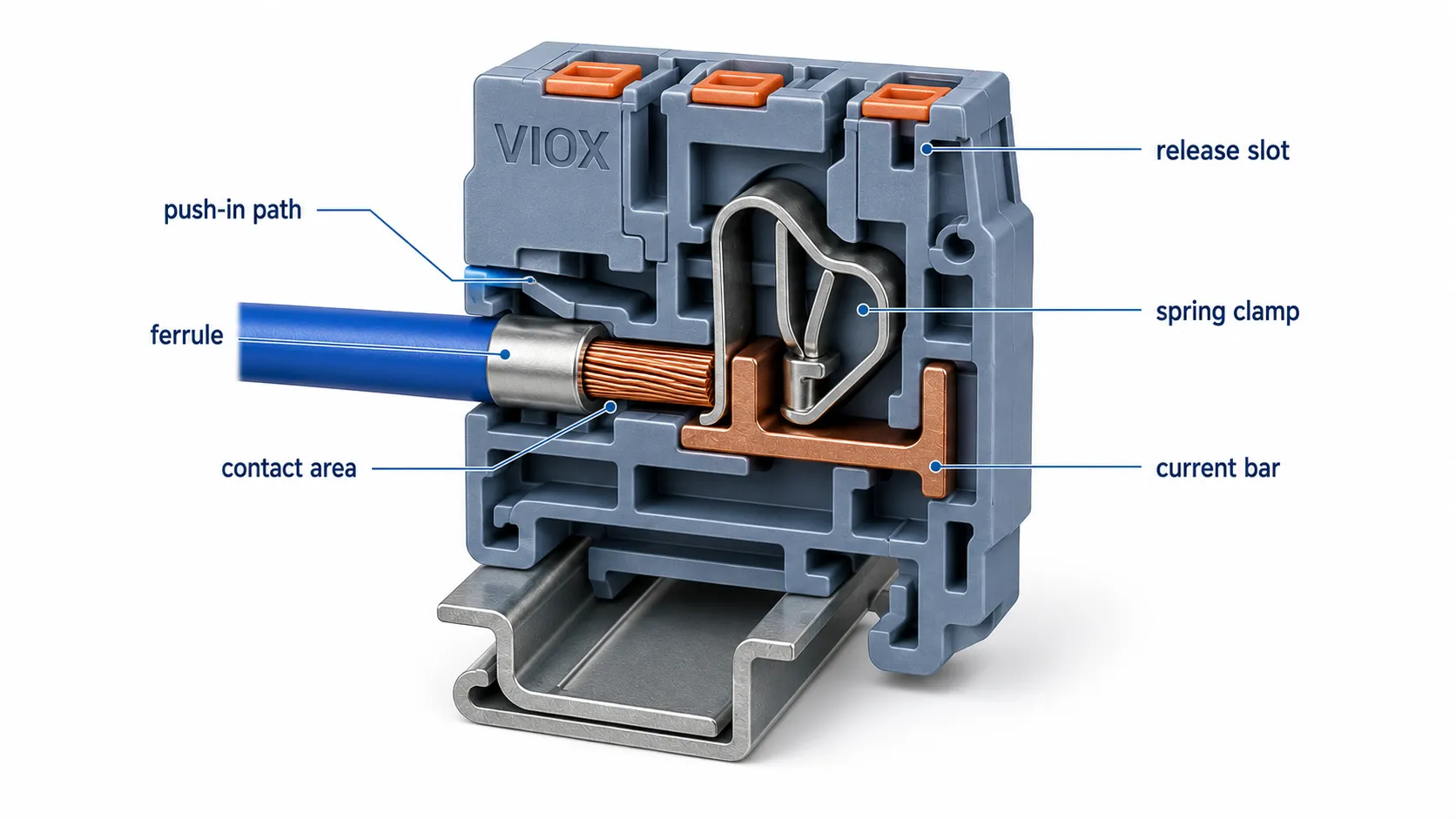
Push-in klemensler, kablolama süresini kısalttığı ve tekrarlanabilirliği artırdığı için OEM pano atölyelerinde popülerdir. Kablolar önceden kesilmiş, etiketlenmiş, soyulmuş ve yüksük takılmışsa, montajcı hızlı bir şekilde düzenli klemens sıraları oluşturabilir.
Ana nokta kablo hazırlığıdır. İnce çok damarlı esnek kablolar, doğrudan push-in bağlantı öncesinde genellikle bir yüksük gerektirir. Yüksük olmadan, teller bükülebilir, dağılabilir veya klemense düzgün bir şekilde giremeyebilir.
Temas noktasında, push-in klemens, hazırlanan bir iletkenin takılma sırasında sıkıştırma yolunu açmasına izin veren bir yay geometrisi kullanır. Onu hızlı yapan şey budur. Bu aynı zamanda yüksük konusunu da açıklar: yumuşak, ince çok damarlı bir iletken, yüksük takılmadığı veya serbest bırakma mekanizması kullanılmadığı sürece yay yoluna düzgün bir şekilde girmek için yeterli sertliğe sahip olmayabilir.
Push-In Klemenslerin Avantajları
- Hazırlanmış iletkenler için çok hızlı kablolama
- Yüksek hacimli pano montajı için uygundur
- Vida torkuna olan bağımlılığı azaltır
- Temiz ve tekrarlanabilir kablolama düzenleri oluşturmaya yardımcı olur
- PLC, röle, sensör ve kontrol kablolaması için kullanışlıdır
- Yüksüklü kablo demetleri için güçlü bir uyum sağlar
Push-In Klemenslerin Dezavantajları
- İnce telli iletkenler genellikle yüksük gerektirir
- Yanlış kablo hazırlığı, tam yerleşmemeye neden olabilir
- Çeşitli saha kablolama koşulları için her zaman ideal değildir
- Bazı teknisyenlerin serbest bırakma yöntemi konusunda eğitime ihtiyacı olabilir
- Daha büyük güç iletkenleri için diğer klemens tipleri daha uygun olabilir
- Veri sayfası limitleri, iletken tipi açısından dikkatlice kontrol edilmelidir
Push-in Klemensler için En İyi Uygulamalar
Push-in klemensler şunlar için uygundur:
- PLC giriş/çıkış kablolaması
- Röle ve sensör kablolaması
- OEM makine panoları
- Hazır kablo tesisatları
- Seri pano üretimi
- Kompakt klemens dizileri
- Yüksek yoğunluklu kontrol panoları
DIN rayı projeleri için bağlantı yöntemi; klemens genişliği, köprüleme sistemi, markalama sistemi ve aksesuarlarla birlikte seçilmelidir. VIOX bu geniş konuyu şu başlıkta ele almaktadır: DIN rayına monte klemensler nasıl seçilir.
Bağlantı Yöntemi ve İletken Tipi
İletken genellikle belirleyici faktördür. Bir klemens, bir kablolama sürecinde mükemmel sonuç verirken, iletken tipi uyumsuz olduğunda diğerinde yetersiz kalabilir.
| Tel veya iletken durumu | Vidalı klemens | Yaylı klemens | Geçmeli (push-in) klemens |
|---|---|---|---|
| Tek damarlı iletken | Nominal aralık dahilindeyse genellikle uygundur | Nominal aralık dahilindeyse genellikle uygundur | Genellikle çok uygundur |
| Çok damarlı iletken | Genellikle uygundur; yüksükler tercih edilebilir | Terminal tasarımına bağlıdır | Doğrudan giriş için genellikle yüksük gerektirir |
| İnce telli esnek kablo | Yüksük ve tork kılavuzunu kontrol edin | Yüksük ve giriş kurallarını kontrol edin | Genellikle yüksük ile en iyi sonucu verir |
| Büyük güç iletkeni | Genellikle uygun tasarımlarda mevcuttur | Seçili serilerde mevcuttur | Veri sayfasını kontrol edin; her zaman en iyi seçenek değildir |
| Tekrarlanan OEM kablolaması | Kabul edilebilir ancak daha yavaştır | İyi | Çok iyi |
| Karma saha kablolaması | Bilindik ve esnek | Teknisyenler eğitimli ise iyidir | Kablo hazırlığı kontrol altında olduğunda uygundur |
Yüksükler: Push-in Performansını Belirleyen Detay
Yüksükler, çok telli iletkenlerin üzerine sıkıştırılan metal kovanlardır. Kablo tellerini bir arada tutarlar ve terminale giriş için tanımlı bir şekil oluştururlar.
Yüksükler özellikle şu durumlarda önemlidir:
- İnce çok telli kablolar kullanıldığında
- Push-in klemensler seçildiğinde
- OEM üretiminde kablolama tekrarlandığında
- Başıboş tel uçlarından kaçınılması gerektiğinde
- Kablo tanımlaması yalıtımlı yüksükler kullanılarak yapılır
- Temiz ve tekrarlanabilir bir takma işlemi gereklidir
Yüksükler veri sayfasının yerine geçecek bir kısayol değildir. Terminal, yüksüklü iletken boyutuna uygun olmalı ve yüksük doğru şekilde sıkılmalıdır. Kötü bir yüksük sıkma işlemi, çıplak kablo bağlantısındaki gibi aynı aşırı ısınma riskini yaratabilir.
Titreşim ve Termal Döngü
Titreşim ve termal döngü durumlarında yaylı klemensler genellikle avantaj sağlar.
Stabil bir elektrik odasında, doğru monte edilmiş bir vidalı klemens iyi performans gösterebilir. Ancak makinelerde, taşıma ekipmanlarında, kompresör panolarında, konveyörlerde veya motorların yakınına monte edilmiş kabinlerde bağlantı; harekete ve tekrarlanan sıcaklık değişimlerine maruz kalır. Eğer bir vidalı bağlantı zayıf torklanmışsa veya bakımı yapılmamışsa, bu ortam zayıflığı ortaya çıkarabilir.
Yaylı klemensler ve geçmeli (push-in) klemensler, küçük iletken hareketleri ve oturma süreçlerinde sıkıştırma kuvvetini korumak için yay basıncını kullanır. Bu nedenle makine kablolaması ve titreşime duyarlı panolar için genellikle tercih edilirler.
Bu, vidalı klemenslerin güvensiz olduğu anlamına gelmez. Bu, vidalı klemenslerin doğru kurulum süreci ve bakım planı gerektirdiği, yaylı tasarımların ise torkla ilgili bazı riskleri azalttığı anlamına gelir.
Maliyet: Bileşen Fiyatı ve Kurulum Maliyeti
Vidalı klemensler, sadece birim fiyat karşılaştırıldığında genellikle daha ucuz görünür. Bazı projelerde bu yeterlidir. Ancak bir klemensin toplam maliyeti; işçilik süresini, denetim süresini, yeniden işleme riskini, bakım çabasını ve duruş süresi riskini içerir.
| Maliyet faktörü | Vida | Yaylı | Geçmeli |
|---|---|---|---|
| Bileşen maliyeti | Genellikle daha düşüktür | Genellikle temel vidalı tiplerden daha yüksek | Genellikle temel vidalı tiplerden daha yüksek |
| Kablolama işçiliği | Orta | Orta ila hızlı | Hızlı |
| Tork aletleri | Kontrollü kalite için genellikle gereklidir | Sıkma torku için genellikle gerekli değildir | Sıkma torku için genellikle gerekli değildir |
| Bakım gereksinimi | Titreşimli ortamlarda daha yüksek olabilir | Birçok uygulamada daha düşük | Doğru kablolandığında daha düşük |
| OEM tekrarlanabilirliği | Kurulumcuya ve tork işlemine bağlıdır | İyi | Çok iyi |
Küçük panolar için vidalı klemensler en ekonomik seçenek olmaya devam edebilir. Yüzlerce iletkenin bulunduğu büyük OEM üretimlerinde ise push-in (yay baskılı) klemensler, kurulum süresini kısaltarak daha yüksek bileşen maliyetini telafi edebilir.
Kesin hesaplama; işçilik maliyetine, kablolama hacmine, yüksük işlemine, denetim yöntemine ve duruş süresinin maliyetine bağlıdır. Tek seferlik küçük bir pano, vidalı klemenslerden push-in klemenslere geçişi haklı çıkarmayabilir. Yüzlerce özdeş iletkenin bulunduğu tekrarlayan bir OEM kabininde ise bu genellikle mantıklıdır. Karar, sadece bir klemens bloğunun birim fiyatına göre değil, toplam kurulum maliyetine göre verilmelidir.
Standartlar ve Veri Sayfası Kontrolleri
Klemens standartları ve işaretlemeleri ürün tipine ve pazara göre değişiklik gösterir. Endüstriyel klemens veri sayfaları şunlara atıfta bulunabilir: IEC 60947-7-1 klemensler için, IEC 60947-7-2 koruyucu iletken klemensleri için ve UL 1059 Kuzey Amerika bağlamındaki klemensler için.
Bir klemensi sadece katalogda bir standart adı göründüğü için seçmeyin. Gerçek parça numarasını ve değerlerini doğrulayın.
| Veri sayfası öğesi | Neden önemli |
|---|---|
| Anma gerilimi | Devre yalıtım gereksinimleriyle eşleşmelidir |
| Nominal akım | İletken ve yük koşullarıyla eşleşmelidir |
| Kablo aralığı | Kabul edilen iletken boyutlarını ve tiplerini doğrular |
| Sıyırma uzunluğu | Yetersiz yerleştirmeyi veya açıkta kalan bakırı önler |
| Tork değeri | Vidalı klemensler için kritiktir |
| Yüksük uyumluluğu | Çok telli kablo ve geçmeli (push-in) bağlantılar için önemlidir |
| Köprü uyumluluğu | Dağıtımı ve pano yerleşimini etkiler |
| Montaj tipi | Endüstriyel panolarda yaygın olarak DIN rayı |
| Sıcaklık verileri | Pano koşullarına uygun olmalıdır |
| Sertifikasyon veya listeleme | Proje ve bölgesel gerekliliklerle eşleşmelidir |
Onayla ilgili hatalar için VIOX'un kılavuzuna bakın terminal bloğu sertifikaları.
Uygulama Seçim Kılavuzu
| Uygulama | Önerilen bağlantı tipi | Sebep |
|---|---|---|
| Düşük maliyetli dağıtım panosu | Vidalı klemens | Bilindik, ekonomik, yaygın olarak bulunabilir |
| Genel saha kablolaması | Vidalı veya yaylı klemens | Vidalı bağlantı bilindiktir; yaylı bağlantı tork değişimini azaltır |
| Makine kontrol panosu | Yaylı veya geçmeli (push-in) klemens | Titreşim ve tekrarlanan kablolama için daha uygun |
| PLC giriş/çıkış kablolaması | Geçmeli (push-in) klemens | Hızlı kablolama ve düzenli iletken organizasyonu |
| Motor kontrol panosu | Yaylı klemens | Titreşim ve termal döngüler için güçlü uyum |
| OEM pano üretimi | Geçmeli (push-in) klemens | Daha hızlı, tekrarlanabilir ve standartlaştırması kolay |
| Yüksek titreşimli ekipmanlar | Yaylı klemens | Hareket altında sıkıştırma kuvvetini korur |
| Eski panoların modernizasyonu (retrofit) | Vidalı klemens | Mevcut bakım alışkanlıklarına uyum sağlamak genellikle daha kolaydır |
| Kompakt sinyal kablolaması | Push-in veya yaylı klemens | Pano alanını ve kablolama süresini azaltmaya yardımcı olur |
Kaçınılması Gereken Yaygın Hatalar
Hata 1: Tork prosedürü olmadan vidalı klemens seçimi
Vidalı klemensler kullanılıyorsa, kurulum süreci doğru sıkma yöntemini tanımlamalıdır. Tahmin yürüterek sıkma işlemi, kontrol panoları için bir kalite sistemi değildir. Az sıkma ısınmaya neden olabilir; aşırı sıkma ise iletkene veya klemense zarar verebilir.
Hata 2: Hazırlanmamış çok telli (fine-stranded) kablo ile push-in klemens kullanımı
Push-in klemensler hızlıdır ancak sihirli değildir. Çok telli kablolar, yüksük takılmadığı veya serbest bırakma mekanizması kullanılmadan yerleştirilmediği takdirde takılma sırasında bükülebilir.
Hata 3: Titreşimi Göz Ardı Etmek
Bir makine üzerine monte edilen pano ile sessiz bir elektrik odasında duvara monte edilen pano aynı değildir. Titreşim, taşıma ve motor çalışması bağlantı risk profilini değiştirebilir.
Hata 4: Tüm Yaylı Terminallerin Aynı Şekilde Çalıştığını Varsaymak
Yaylı klemens, kafes tipi klemens, geçmeli (push-in) ve kollu tip terminaller birbiriyle ilişkili olsa da aynı değildir. Tam yerleştirme yöntemi, iletken aralığı, serbest bırakma yöntemi ve yüksük kuralları terminal tasarımına bağlıdır.
Hata 5: Pano Standardı Olmadan Terminal Tiplerini Karıştırmak
Bir bölümde vidalı terminaller, diğerinde geçmeli terminaller ve başka yerlerde rastgele yaylı terminaller kullanmak bakımı zorlaştırabilir. Pano üreticileri devre tipine, kablo boyutuna, teknisyen iş akışına ve yedek parça bulunabilirliğine göre standardizasyon sağlamalıdır.
Hata 6: Fiziksel Uyumu Onay Olarak Görmek
Terminal açıklığına giren bir iletken otomatik olarak doğru değildir. Veri sayfası kablo boyutuna, iletken tipine, yüksük tipine, iletken sayısına ve değerlere izin vermelidir.
Yaygın Yanlış Anlamalar
Yanılgı 1: Push-In (Geçmeli) Klemensler, Ucuz Arkadan Bağlantılı Konnektörlerle Aynıdır
Endüstriyel push-in klemensler, bazı tüketici tipi kablolama cihazlarında bulunan düşük maliyetli arkadan bağlantılı konnektörlerle karıştırılmamalıdır. Uygun bir endüstriyel push-in klemens; tanımlanmış iletken aralığı, yay geometrisi, serbest bırakma yöntemi ve veri sayfası limitleri ile derecelendirilmiş bir terminal sisteminin parçası olarak tasarlanmıştır. İletkeni içeri itme konsepti benzer olsa da, mühendislik ve uygulama bağlamı aynı değildir.
Yanılgı 2: Yaylı Klemensler Her Türlü Çok Telli Kabloyu Otomatik Olarak Kabul Eder
Yaylı klemensler tork bağımlılığını azaltır ancak iletken uyumluluk kurallarını ortadan kaldırmaz. İnce çok telli iletkenler, yüksükler, soyma uzunluğu ve yerleştirme yöntemi hala önemlidir. Terminalin kullanmayı planladığınız iletken sınıfını ve yüksük tipini kabul edip etmediğini her zaman kontrol edin.
Yanılgı 3: Vidalı Klemensler, Sıkıldıklarını Hissedebildiğiniz İçin Her Zaman Daha Güvenlidir
Bir vidanın sıkıldığını hissetmek, doğru bir elektriksel bağlantıyı onaylamakla aynı şey değildir. Bir vida; yalıtımı, hasarlı telleri veya yanlış yerleştirilmiş bir yüksüğü sıkıştırırken sıkı hissedilebilir. Ayrıca aşırı sıkılabilir. Vidalı bir klemens, iletken doğru hazırlandığında ve üreticinin tork talimatlarına uyulduğunda güvenilirdir.
Yanılgı 4: Push-In Her Zaman En Düşük Maliyetli Seçenektir
Push-in klemensler kablolama işçiliğini azaltabilir ancak yüksük kullanımı, kontrollü bir kablo hazırlama süreci ve teknisyen eğitimi gerektirebilirler. En güçlü oldukları alanlar, seri üretim ve hazırlıklı kablolama iş akışlarıdır. Karışık iletkenlerin kullanıldığı tek seferlik saha kablolamalarında, vidalı veya yaylı klemensler hala daha pratik olabilir.
Endüstri Eğilimi: Push-In Neden Büyüyor, Ancak Vidalı Klemensler Neden Yok Olmuyor
Kontrol seviyesindeki kablolamada, pano üreticileri daha hızlı kablolama, tekrarlanabilir montaj ve daha düzenli yüksek yoğunluklu pano yerleşimleri istedikleri için push-in klemensler giderek daha yaygın hale gelmektedir. Bu eğilim özellikle PLC kablolaması, röle arayüzleri, sensör kablolaması ve OEM makine panolarında belirgindir.
Yaylı klemensler, titreşimi iyi sönümledikleri ve doğrudan push-in kablolamaya kıyasla karışık iletken durumlarında daha esnek olabildikleri için önemlerini korumaktadır. Vidalı klemensler ise güç kablolamasında, saha bakımında, tadilat işlerinde ve kurulumcunun aşinalığı ile geniş iletken kabul aralığının önemli olduğu uygulamalarda önemini sürdürmektedir.
Pazar tek bir evrensel klemense doğru ilerlemiyor. Daha bilinçli bir seçime doğru ilerliyor: hız için push-in, titreşim ve stabilite için yaylı klemens, aşinalık, daha büyük kablolama görevleri ve maliyet odaklı uygulamalar için ise vidalı klemens.
Hangi Klemensi Seçmelisiniz?
Seçmek vidalı klemensler Proje maliyet odaklıysa, ortam kararlıysa ve ekibiniz güvenilir bir tork ve denetim sürecine sahipse.
Seçmek yaylı klemensler Ekipman titreşime, harekete veya termal döngüye maruz kalıyorsa ya da kurulumcunun tork uygulamasına olan bağımlılığı azaltmak istiyorsanız.
Seçmek geçmeli (push-in) klemensler Kablolama hızı, tekrarlanabilir üretim ve temiz OEM pano montajı en önemli faktörlerse. İletkenler önceden kesilmiş, etiketlenmiş ve yüksük takılmış olduğunda özellikle etkilidirler.
Birçok modern kontrol panosu için pratik çözüm, her şey için tek bir bağlantı tipi kullanmak değildir. Bir pano; PLC kablolaması için geçmeli (push-in) klemensler, titreşime maruz kalan kontrol devreleri için yaylı klemensler ve daha büyük veya maliyet odaklı dağıtım noktaları için vidalı klemensler kullanabilir. En iyi tasarım; elektriksel yük, iletken tipi, kurulum ortamı ve bakım iş akışıyla uyumlu olandır.
Seçim Kontrol Listesi
Vidalı, yaylı veya geçmeli klemensleri seçmeden önce şunları doğrulayın:
| Kontrol öğesi | Ne doğrulanmalı |
|---|---|
| Devre tipi | Güç, kontrol, sinyal, PE (topraklama), test veya dağıtım |
| İletken tipi | Tek damarlı, çok damarlı, ince çok damarlı, yüksüklü |
| Kablo kesiti | Klemens veri sayfasında belirtilen AWG/mm² aralığı |
| Akım ve gerilim | Devre ve kurulum ortamı ile uyumluluk |
| Titreşim | Yay baskısının tercih edilip edilmeyeceğine karar verin |
| Kablolama süreci | Saha kablolaması, bakım kablolaması veya OEM üretimi |
| Yüksük kuralları | Özellikle push-in ve ince telli kablolar için önemlidir |
| Tork süreci | Vidalı klemensler için gereklidir |
| Aksesuarlar | Köprüler, etiketler, nihayet plakaları, test fişleri, durdurucular |
| Dokümantasyon | IEC/UL değerleri ve proje onayları |
SSS
Push-in klemensler ile yaylı klemensler aynı mıdır?
Push-in klemensler bir tür yaylı bağlantı tipidir ancak doğrudan iletken girişi için optimize edilmişlerdir. Her yaylı klemens push-in değildir. Bazı yaylı klemensler, iletkeni yerleştirmeden önce kelepçeyi açmak için bir alet gerektirir.
Vidalı klemensler daha mı az güvenilirdir?
Otomatik olarak hayır. Vidalı klemensler, iletken doğru şekilde hazırlandığında ve vida üreticinin talimatlarına göre sıkıldığında güvenilir olabilir. Zayıf yönleri, tork kontrolüne ve bakım disiplinine daha fazla bağımlı olmalarıdır.
Push-in klemensler yüksük gerektirir mi?
Push-in klemensler, ince çok telli iletkenler için genellikle yüksük gerektirir veya şiddetle tavsiye eder. Tek damarlı iletkenler ve yüksüklü çok telli iletkenlerin takılması genellikle en kolay olanıdır. Her zaman klemens veri sayfasına bakın.
Titreşim için hangi klemens en iyisidir?
Yaylı klemensler ve push-in klemensler, yay temas basıncını koruduğu için titreşime eğilimli ortamlarda genellikle tercih edilir. Tasarım, kurulum süreci ve bakım planı destekliyorsa vidalı klemensler de kullanılabilir.
Hangi klemens tipi en hızlı şekilde kablolanır?
İletkenler doğru şekilde hazırlandığında, geçmeli (push-in) klemensler genellikle en hızlı olanlardır. Bu nedenle OEM pano montajında, PLC kablolamasında ve yüksek yoğunluklu kontrol panolarında yaygın olarak kullanılırlar.
Bir panoda vidalı, yaylı ve geçmeli klemensleri bir arada kullanabilir miyim?
Evet, pano tasarımı belgelenmiş ve standartlaştırılmışsa kullanılabilir. Birçok pano, farklı devre görevleri için farklı klemens tipleri kullanır. Önemli olan etiketleme, aksesuarlar, kablo hazırlığı ve bakım prosedürlerini net tutmaktır.
PLC kablolaması için en iyi klemens hangisidir?
Geçmeli klemensler, hazırlanan iletkenlerin hızlı, temiz ve tekrarlanabilir şekilde sonlandırılmasını destekledikleri için PLC kablolamasında genellikle güçlü bir tercihtir. Yaylı klemensler de özellikle titreşim direncinin önemli olduğu yerlerde uygundur.
En ucuz klemens hangisidir?
Temel vidalı klemensler genellikle en düşük maliyetli bileşenlerdir. Ancak kablolama işçiliği, denetim, yeniden işleme ve bakım maliyetleri göz önüne alındığında, toplam kurulum maliyeti farklılık gösterebilir.
Sonuç
Vidalı, yaylı ve geçmeli klemenslerin her biri doğru uygulamada kullanıldığında doğru tercih olabilir. Vidalı klemensler ekonomik ve aşina olunan çözümlerdir. Yaylı klemensler titreşim direncini artırır ve tork kaynaklı değişkenlikleri azaltır. Geçmeli klemensler ise kablolama sürecini hızlandırır ve tekrarlanabilir OEM pano üretimini destekler.
En iyi seçim; devre görevi, iletken tipi, kurulum ortamı, kablolama süreci ve bakım planı ile başlar. Bunlar netleştiğinde, bağlantı tipi genellikle kendiliğinden ortaya çıkar.