

ဤစာမျက်နှာတွင်
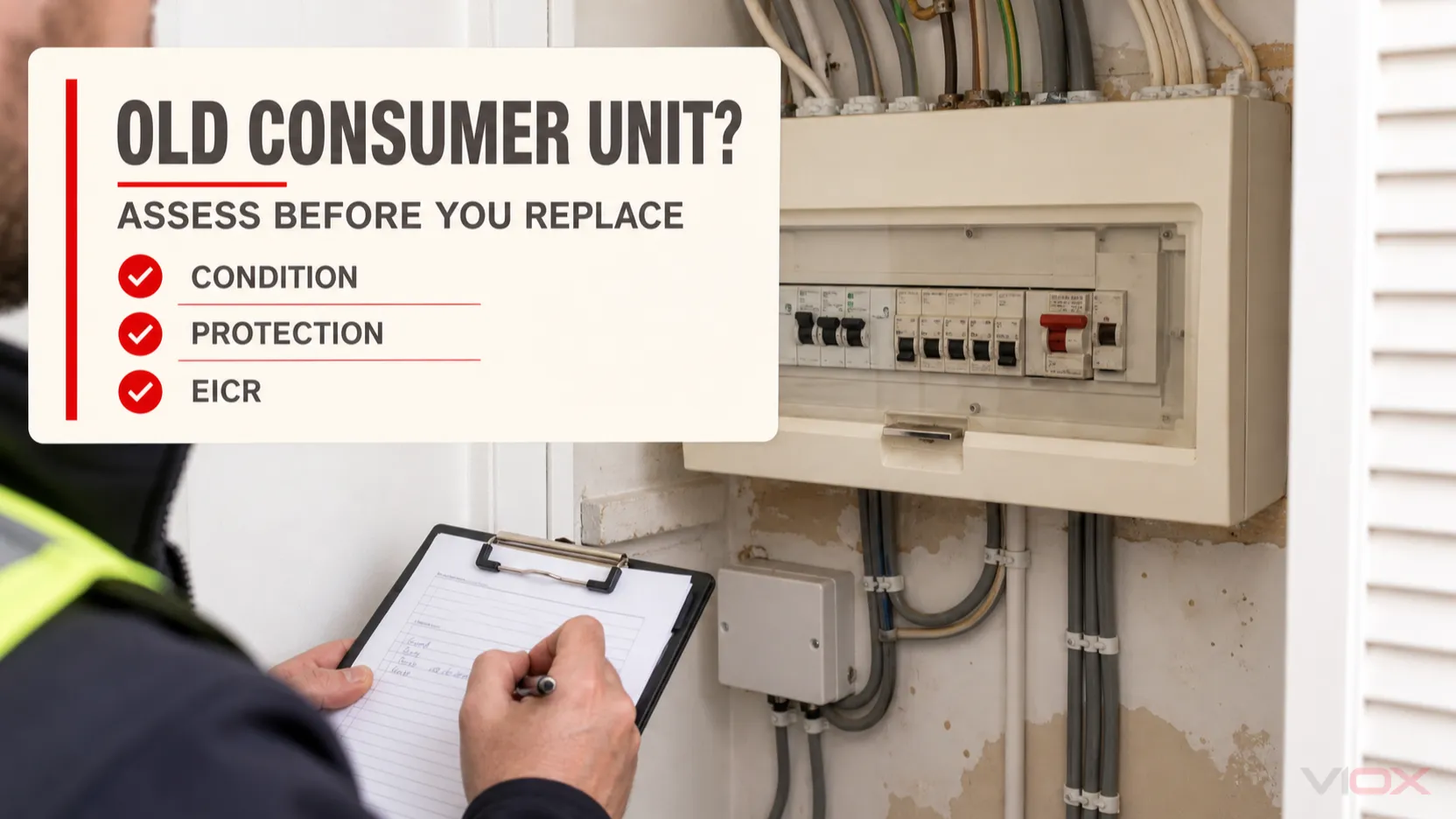
အသုံးပြုသူ လျှပ်စစ်ဖြန့်ဖြူးရေးပုံးအဟောင်းတစ်ခုကို ၎င်း၏ သက်တမ်း၊ ပလတ်စတစ်အဖုံး၊ ဝါယာကြိုးဖြင့် ပြန်လည်ချိတ်ဆက်ရသော ဖျူးစ်များ (rewireable fuses) သို့မဟုတ် UK ဝါယာသွယ်တန်းခြင်း စည်းမျဉ်းများ၏ ယခင်ထုတ်ဝေမှုအောက်တွင် တပ်ဆင်ထားခြင်းတို့ကြောင့်သာ အစားထိုးရန် မလိုအပ်ပါ။ ဆုံးဖြတ်ချက်သည် ၎င်း၏ အခြေအနေ၊ ကာကွယ်ရေး အစီအမံများ၊ စမ်းသပ်မှုရလဒ်များ၊ ချိတ်ဆက်ထားသော ဝါယာကြိုးများနှင့် အစီအစဉ်ဆွဲထားသည့် မည်သည့် လျှပ်စစ်လုပ်ငန်းသစ်များအပေါ်တွင်မဆို အခြေခံသင့်သည်။.
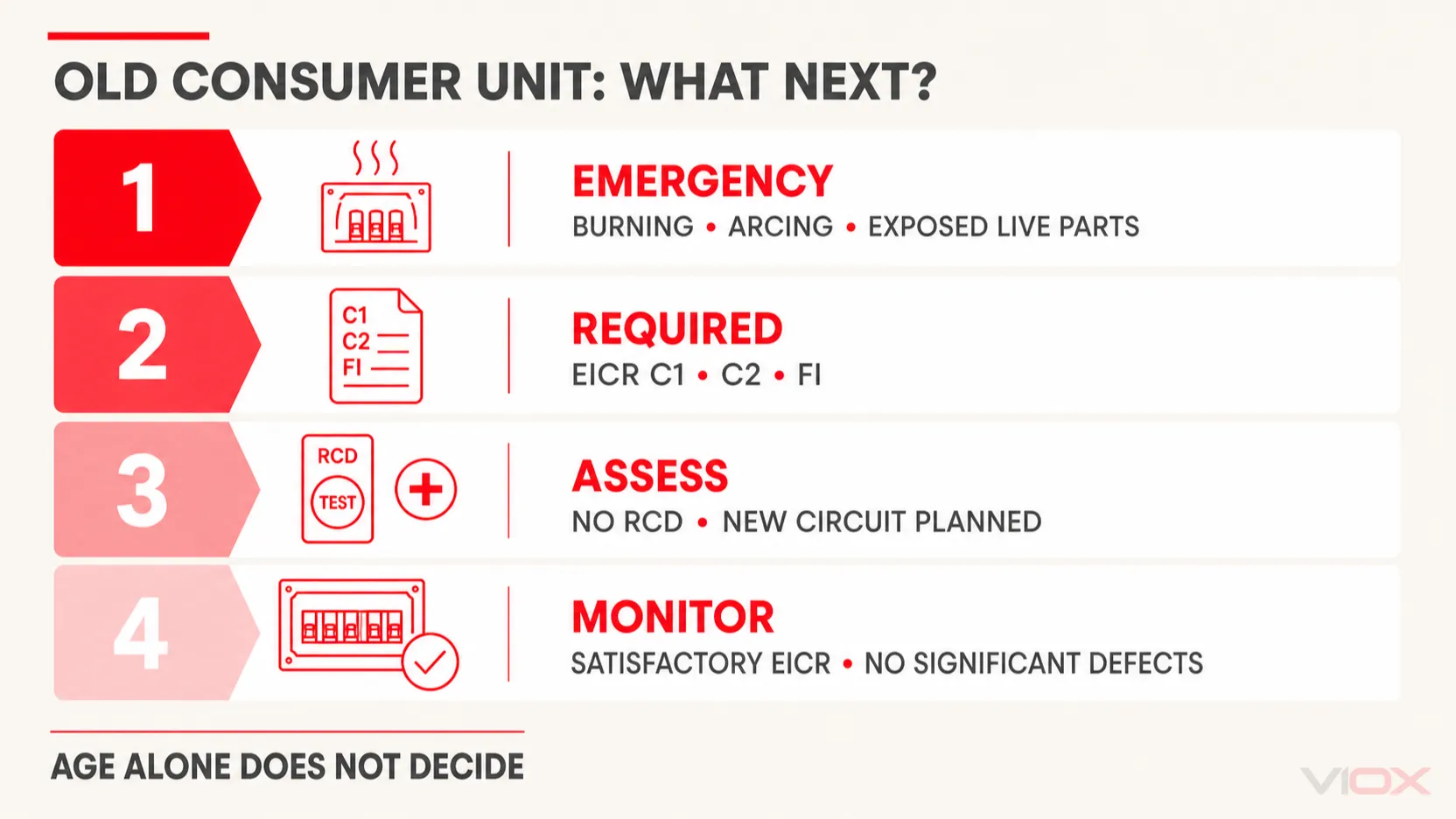
မြင်သာသော မီးလောင်ကျွမ်းမှု၊ အရည်ပျော်မှု၊ မီးခိုးထွက်မှု၊ လျှပ်စစ်မီးပွားထွက်မှု၊ အကာအကွယ်မဲ့နေသော လျှပ်စစ်အစိတ်အပိုင်းများ သို့မဟုတ် လျှပ်စစ်တပ်ဆင်မှု အခြေအနေ အစီရင်ခံစာ (EICR) တွင် C1 ကုဒ်သတ်မှတ်ချက်ပါရှိပါက ချက်ချင်းဆောင်ရွက်ရန် လိုအပ်သည်။ C2 သို့မဟုတ် နောက်ထပ်စုံစမ်းစစ်ဆေးရန် (FI) လိုအပ်သော အချက်များအတွက်လည်း ပြုပြင်မှု သို့မဟုတ် စစ်ဆေးမှုများ ပြုလုပ်ရန် လိုအပ်သည်။ အရေးတကြီးမဟုတ်သော ကိစ္စရပ်များတွင်၊ လက်ရှိဖျူးစ်ပုံးသည် ဘေးကင်းဆဲဖြစ်မဖြစ် သို့မဟုတ် အဆင့်မြှင့်တင်ခြင်းသည် လက်တွေ့ကျသော ဖြေရှင်းချက်ဖြစ်မဖြစ်ကို EICR မှတစ်ဆင့် ဆုံးဖြတ်နိုင်သည်။.
အဖုံးကို မဖြုတ်ပါနှင့် သို့မဟုတ် အတွင်းပိုင်းကို သင်ကိုယ်တိုင် စစ်ဆေးရန် မကြိုးစားပါနှင့်။ အသုံးပြုသူ လျှပ်စစ်ဖြန့်ဖြူးရေးပုံး စစ်ဆေးခြင်းနှင့် အစားထိုးခြင်းတို့ကို အရည်အချင်းပြည့်မီသော လျှပ်စစ်ပညာရှင်မှသာ ဆောင်ရွက်သင့်သည်။.
သော့ထုတ်ယူမှုများ
- “အဟောင်း” ဖြစ်တိုင်း ဘေးကင်းမှုမရှိခြင်း သို့မဟုတ် တရားမဝင်ခြင်းဟု အဓိပ္ပာယ်မသက်ရောက်ပါ။.
- ပလတ်စတစ်ဖြင့် ပြုလုပ်ထားသော အသုံးပြုသူ လျှပ်စစ်ဖြန့်ဖြူးရေးပုံးဖြစ်ရုံဖြင့် အစားထိုးရန် အကြောင်းရင်းမဖြစ်နိုင်ပါ။.
- ဝါယာကြိုးဖြင့် ပြန်လည်ချိတ်ဆက်ရသော ဖျူးစ်များ သို့မဟုတ် Residual Current Device (RCD) ကာကွယ်မှု မရှိခြင်းတို့သည် စစ်ဆေးမှုပြုလုပ်ရန် လိုအပ်ကြောင်း ပြသနေသော်လည်း၊ ထိုအချက်တစ်ခုခုကြောင့်သာ ပုံးတစ်ခုလုံးကို အစားထိုးရမည်ဟု မဆိုလိုပါ။.
- အပူဒဏ်ကြောင့် ပျက်စီးခြင်း၊ လက်ဖြင့်ထိတွေ့နိုင်သော လျှပ်စစ်အစိတ်အပိုင်းများ သို့မဟုတ် EICR တွင် C1/C2 အဆင့်သတ်မှတ်ချက်များရှိပါက အရေးတကြီး ဂရုပြုဆောင်ရွက်ရန် လိုအပ်သည်။.
- လျှပ်စစ်ကားအားသွင်းစက်၊ အပူပေးစက် (heat pump)၊ နေရောင်ခြည်စွမ်းအင်သုံးစနစ်၊ ဘက်ထရီ သို့မဟုတ် တိုးချဲ့တပ်ဆင်မှုများအတွက် ဆားကစ်အသစ်များ ထည့်သွင်းခြင်းသည် ရှိရင်းစွဲ လျှပ်စစ်ဖြန့်ဖြူးရေးဘုတ်အဟောင်းကို မသင့်လျော်တော့စေနိုင်ပါသည်။.
- လျှပ်စစ်ဖြန့်ဖြူးရေးဘုတ် (Consumer unit) ကို လဲလှယ်ရုံဖြင့် ချို့ယွင်းနေသော ဝိုင်ယာကြိုးများ၊ မလုံလောက်သော မြေကြီးချိတ်ဆက်မှု (earthing) သို့မဟုတ် ပျောက်ဆုံးနေသော ဘွန်းဒင်း (bonding) ပြဿနာများကို မဖြေရှင်းနိုင်ပါ။.
လျင်မြန်စွာဆုံးဖြတ်နိုင်သောဇယား
| သင်တွေ့ရှိရသည့်အချက်များ | ဖြစ်နိုင်ခြေရှိသော ဆုံးဖြတ်ချက် | ဦးစားပေး |
|---|---|---|
| မီးခိုးထွက်ခြင်း၊ လောင်ကျွမ်းသည့်အနံ့၊ အပူလွန်ကဲ၍ ပျက်စီးခြင်း၊ လျှပ်စစ်မီးပွားထွက်ခြင်း၊ အရည်ပျော်ခြင်း သို့မဟုတ် လျှပ်စစ်စီးနေသော အစိတ်အပိုင်းများ ပေါ်နေခြင်း | ဖြစ်နိုင်ပါက လုံခြုံစွာ လျှပ်စစ်ဖြတ်တောက်ပြီး အရေးပေါ် ကျွမ်းကျင်သူ၏ အကူအညီကို ချက်ချင်းရယူပါ | အရေးပေါ်အခြေအနေ |
| EICR ကုဒ် C1 သို့မဟုတ် C2 သို့မဟုတ် မဖြေရှင်းရသေးသော FI အခြေအနေ | ပြုပြင်ခြင်း သို့မဟုတ် စစ်ဆေးခြင်းလုပ်ငန်းကို အပြီးသတ်ဆောင်ရွက်ပါ၊ အစားထိုးလဲလှယ်ရန် လိုအပ်နိုင်ပါသည်။ | လိုအပ်သည်။ |
| RCD ကာကွယ်မှုမရှိခြင်း၊ ခေတ်ဟောင်းဖျူးစ်စနစ်များ၊ မကြာခဏမီးဖြတ်ခြင်း သို့မဟုတ် ယုံကြည်စိတ်ချရမှုမရှိသော စက်ပစ္စည်းများ။ | စစ်ဆေးမှုပြုလုပ်ရန် စီစဉ်ပြီး ပြုပြင်ခြင်း၊ ကာကွယ်မှုတိုးမြှင့်ခြင်းနှင့် အစားထိုးလဲလှယ်ခြင်းဆိုင်ရာ ရွေးချယ်စရာများကို နှိုင်းယှဉ်ပါ။ | မြင့် |
| ဆားကစ်အသစ်၊ EV အားသွင်းစက်၊ အပူစုပ်စက် (heat pump)၊ ဆိုလာ၊ ဘက်ထရီ သို့မဟုတ် တိုးချဲ့မှုများအတွက် စီစဉ်ထားခြင်း။ | ဒီဇိုင်းမရေးဆွဲမီ စွမ်းဆောင်ရည်၊ ကာကွယ်မှု၊ မြေကြီးချိတ်ဆက်မှု (earthing) နှင့် ဘုတ်အဖွဲ့၏ သင့်လျော်မှုတို့ကို စစ်ဆေးအတည်ပြုပါ။ | စီမံကိန်းမစတင်မီ။ |
| ပျက်စီးမှုမရှိသော ပလတ်စတစ်အကာနှင့် စိတ်ကျေနပ်ဖွယ်ကောင်းသော EICR ရှိခြင်း။ | အလိုအလျောက် အစားထိုးလဲလှယ်ရန် လိုအပ်ချက်မဟုတ်ပါ။ | စောင့်ကြည့် |
| စမ်းသပ်မှုအောင်မြင်ပြီး သိသာထင်ရှားသော ချို့ယွင်းချက်မရှိသည့် အဟောင်းဘုတ် | ချက်ချင်းလဲလှယ်ရန် မလိုအပ်နိုင်ပါ | စီမံကိန်းဖြင့် အဆင့်မြှင့်တင်ခြင်း |
Consumer Unit အဟောင်းတစ်ခုအား ကျွမ်းကျင်သူဖြင့် စစ်ဆေးရန် လိုအပ်သည့် လက္ခဏာများ
အပူတက်ခြင်း၊ မီးလောင်ခြင်း သို့မဟုတ် ရုပ်ပိုင်းဆိုင်ရာ ပျက်စီးခြင်း
မီးလောင်ရာအမှတ်အသားများ၊ မီးလောင်သည့်အနံ့၊ တဝီဝီမြည်သံ၊ အက်ကွဲသံ၊ အရည်ပျော်နေသော ပစ္စည်းများ၊ မီးခိုးများ သို့မဟုတ် အဖုံးသည် ပုံမှန်ထက် ပိုမိုပူနွေးနေပါက ချိတ်ဆက်မှု လျော့ရဲနေခြင်း၊ စက်ပစ္စည်း ပျက်စီးခြင်း၊ ထိတွေ့မှု အားနည်းခြင်း သို့မဟုတ် ဝါယာကြိုး ဝန်ပိုနေခြင်းတို့ကို ဖော်ပြနေသည်။ ကျိုးပဲ့နေသော အဖုံးများ၊ ပျောက်ဆုံးနေသော Blanking plates များ၊ ရေဝင်ခြင်းနှင့် လျှပ်စစ်ဓာတ်အားရှိသော အစိတ်အပိုင်းများနှင့် ထိတွေ့နိုင်သည့် အပေါက်များရှိနေပါကလည်း ချက်ချင်းအရေးယူဆောင်ရွက်ရန် လိုအပ်ပါသည်။.
အပူတက်ခြင်း သို့မဟုတ် မီးပွားထွက်ခြင်း လက္ခဏာများရှိနေပါက စက်ပစ္စည်းကို ထပ်ခါတလဲလဲ Reset မလုပ်ပါနှင့်။ လုံခြုံစွာ လျှပ်စစ်ဖြတ်တောက်ပြီး စစ်ဆေးမှုပြုလုပ်ပါ။.
RCD ကာကွယ်မှု မရှိခြင်း
RCD တစ်ခုသည် လျှပ်စစ်စီးဆင်းမှုလမ်းကြောင်းမှ ယိုစိမ့်မှုကို ထောက်လှမ်းနိုင်ပြီး လျှပ်စစ်ရှော့ခ်ဖြစ်နိုင်ခြေကို လျှော့ချရန်အတွက် လျှပ်စစ်ဓာတ်အားကို ဖြတ်တောက်ပေးသည်။ အမှတ်အသားပြုထားသော စမ်းသပ်ခလုတ် (test button) သည် T သို့မဟုတ် စမ်း RCD သို့မဟုတ် overcurrent protection ပါဝင်သော residual current breaker (RCBO) ရှိနေကြောင်း ပြသသည့် အထောက်အထားဖြစ်သော်လည်း၊ မည်သည့် circuit များတွင် ကာကွယ်မှုပေးထားသည် သို့မဟုတ် စက်ပစ္စည်းသည် မှန်ကန်စွာ အလုပ်လုပ်ခြင်း ရှိ၊ မရှိကိုမူ အတည်မပြုနိုင်ပါ။.
RCD ကာကွယ်မှု မရှိခြင်းသည် အထူးသဖြင့် socket-outlet များ၊ ရေချိုးခန်းများ၊ ပြင်ပသုံးပစ္စည်းများနှင့် အစီအစဉ်ဆွဲထားသော ပြုပြင်မွမ်းမံမှုများအတွက် သိသာထင်ရှားသော အားနည်းချက်တစ်ခုဖြစ်သည်။ သို့သော် Electrical Safety First ၏ လမ်းညွှန်ချက်အရ RCD ကာကွယ်မှု မရှိရုံမျှဖြင့် consumer-unit ကို မဖြစ်မနေ လဲလှယ်ရန် မလိုအပ်ကြောင်း၊ အခြားသော စည်းမျဉ်းနှင့်ညီသည့် ဖြေရှင်းနည်းများ ရှိနိုင်ကြောင်း ဖော်ပြထားသည်။ မှန်ကန်သော လုပ်ဆောင်ချက်သည် စစ်ဆေးမှု၊ circuit အသုံးပြုပုံနှင့် လုပ်ငန်းသစ်၏ အတိုင်းအတာအပေါ် မူတည်ပါသည်။.
စက်ပစ္စည်းများ၏ ကွဲပြားချက်အတွက် VIOX ၏ နှိုင်းယှဉ်ချက်ကို ကြည့်ရှုပါ။ RCBO များနှင့် MCB များ.
ပြန်လည်ချိတ်ဆက်နိုင်သော ဖျူးစ်များ (Rewireable fuses) သို့မဟုတ် ခေတ်နောက်ကျနေသော စက်ပစ္စည်းများ
ဖျူးစ်ဝါယာကြိုးများ၊ ကြွေထည်အခံများ၊ သစ်သားအခံများ၊ bakelite အစိတ်အပိုင်းများ သို့မဟုတ် သံသွန်းခလုတ်များသည် တပ်ဆင်မှုဟောင်းဖြစ်ကြောင်း ပြသနေသည်။ ဤအချက်များသည် စစ်ဆေးမှုပြုလုပ်ရန် လိုအပ်ကြောင်း သက်သေပြနေသည်၊ အကြောင်းမှာ ထိုဘုတ်များတွင် ခေတ်မီသော residual-current ကာကွယ်မှု၊ ရှင်းလင်းသော အမှတ်အသားများ၊ အပိုပစ္စည်းများ သို့မဟုတ် ယုံကြည်စိတ်ချရသော အစားထိုးပစ္စည်းများ မရှိနိုင်သောကြောင့် ဖြစ်သည်။.
၎င်းတို့သည် လက်ရှိအသုံးပြုနေသော overcurrent protection ပျက်စီးနေကြောင်း အလိုအလျောက် သက်သေမပြနိုင်ပါ။ Electrical Safety First ၏ consumer-unit လဲလှယ်ခြင်းဆိုင်ရာ လမ်းညွှန်ချက်အရ ဖျူးစ်အဟောင်းများ သို့မဟုတ် circuit-breaker များသည် overcurrent protection ကို ကျေနပ်ဖွယ်ကောင်းအောင် ပေးစွမ်းနိုင်သေးပါက ၎င်းတို့သက်သက်ကြောင့် လဲလှယ်ရန် မလိုအပ်ကြောင်း ဖော်ပြထားသည်။ အခြေအနေနှင့် စမ်းသပ်မှုရလဒ်များကသာ ဆုံးဖြတ်ချက်ကို ပေးပါလိမ့်မည်။.
မကြာခဏ မီးဖြတ်ခြင်း သို့မဟုတ် ဖျူးစ်ကြိုးပြတ်ခြင်း
မကြာခဏ မီးဖြတ်ခြင်းသည် ချို့ယွင်းနေသော လျှပ်စစ်ပစ္စည်း၊ ဝန်ပိုခြင်း၊ ဝိုင်ယာကြိုးချို့ယွင်းချက်၊ မြေကြီးသို့ လျှပ်စစ်ယိုစိမ့်မှုစုပုံခြင်း၊ စိုထိုင်းဆ သို့မဟုတ် ကာကွယ်ရေးကိရိယာဆိုင်ရာ ပြဿနာတစ်ခုခုကြောင့် ဖြစ်နိုင်သည်။ စားသုံးသူယူနစ် (Consumer unit) အသစ်လဲလှယ်ရုံဖြင့် အကြောင်းရင်းကို ပြေလည်စေမည်မဟုတ်ပါ။ အထူးသဖြင့် ဆားကစ်များ သို့မဟုတ် လျှပ်စစ်ပစ္စည်းများစွာက အကြောင်းရင်းဖြစ်နေနိုင်သည့်အခါ အစားမလဲလှယ်မီ စစ်ဆေးမှုများ ပြုလုပ်ရန် လိုအပ်ပါသည်။.
တံဆိပ်ကပ်မှု အားနည်းခြင်း သို့မဟုတ် မှတ်တမ်းတင်မထားသော ပြုပြင်ပြောင်းလဲမှုများ
တံဆိပ်များ ပျောက်ဆုံးနေခြင်း သို့မဟုတ် မမှန်ကန်ခြင်းက လုံခြုံစွာ လျှပ်စစ်ဖြတ်တောက်ခြင်းကို ပိုမိုခက်ခဲစေသည်။ ရောနှောထားသော ကိရိယာများ၊ ကြပ်ညပ်နေသော ဝင်ပေါက်များ၊ ပယ်ဖျက်ထားသော ဆားကစ်ဖော်ပြချက်များ သို့မဟုတ် ကိုယ်တိုင်ပြုပြင်ထားသည့် သိသာထင်ရှားသော ပြောင်းလဲမှုများသည် မှတ်တမ်းအလုံအလောက်မရှိဘဲ တပ်ဆင်မှုများ ပြောင်းလဲထားကြောင်း ပြသနေသည်။ တံဆိပ်ကပ်ခြင်းကိုသာ ပြုပြင်နိုင်သော်လည်း နောက်ထပ် ဆားကစ်များ မထည့်သွင်းမီ တပ်ဆင်မှုတစ်ခုလုံးကို စစ်ဆေးအတည်ပြုသင့်သည်။.
လုပ်ငန်းသစ်အတွက် စွမ်းဆောင်ရည် မလုံလောက်ခြင်း
အသုံးပြုပြီးသား စားသုံးသူယူနစ်ဟောင်းများတွင် အပိုလမ်းကြောင်း (spare ways) မရှိခြင်း သို့မဟုတ် ဆားကစ်အသစ်အတွက် လိုအပ်သော ကာကွယ်မှုမျိုး မပေးနိုင်ခြင်းတို့ ဖြစ်နိုင်သည်။ ၎င်းသည် အောက်ပါတို့ကို တပ်ဆင်သည့်အခါတွင် အရေးပါလာတတ်သည် -
- လျှပ်စစ်ကားအားသွင်းစက် (EV charger);
- အပူစုပ်စက် (Heat pump);
- နေရောင်ခြည်စွမ်းအင်သုံး PV သို့မဟုတ် ဘက်ထရီသိုလှောင်မှုစနစ်၊;
- လျှပ်စစ်ရေချိုးခန်းသုံး ရေပူစက် သို့မဟုတ် အင်ဒက်ရှင်းဟော့ပ် (induction hob)၊;
- အဆောက်အအုံတိုးချဲ့ခြင်း၊ ဥယျာဉ်အတွင်းရှိ ရုံးခန်း သို့မဟုတ် အပြင်ဘက်သို့ လျှပ်စစ်မီးသွယ်တန်းခြင်း။.
တပ်ဆင်သူသည် လျှပ်စစ်ပေးသွင်းမှု၊ အများဆုံးလိုအပ်ချက်၊ မြေကြီးချိတ်ဆက်မှု (earthing)၊ လက်ရှိရှိနေသော ဆားကစ်များ၊ ကာကွယ်ရေးကိရိယာများနှင့် သက်ဆိုင်ရာ RCD လိုအပ်ချက်များကို အကဲဖြတ်ရမည်။ လွတ်နေသောနေရာတွင် ဘရိတ်ကာတစ်ခု ထပ်တိုးတပ်ဆင်ရုံဖြင့် ဒီဇိုင်းစစ်ဆေးမှု အပြည့်အစုံ မဖြစ်မြောက်ပါ။ EV စီမံကိန်းများအတွက် VIOX ကို ကြည့်ပါ။ EV အားသွင်းစက် ဆားကစ်ဘရိတ်ကာ အရွယ်အစားရွေးချယ်ခြင်းဆိုင်ရာ လမ်းညွှန်.
ပလတ်စတစ်ဖြင့်ပြုလုပ်ထားသော Consumer Unit များကို အစားထိုးလဲလှယ်ရန် လိုအပ်ပါသလား။
မလိုအပ်ပါ—၎င်းတို့သည် ပလတ်စတစ်ဖြစ်ရုံသက်သက်ဖြင့် လဲလှယ်ရန် မလိုပါ။.
မီးလောင်မှုထိန်းချုပ်နိုင်စွမ်း ပိုမိုကောင်းမွန်စေရန်အတွက် အိမ်သုံး Consumer Unit အသစ်များအတွက် လိုအပ်ချက်များ ပြောင်းလဲခဲ့သော်လည်း၊ ၎င်းသည် ရှိပြီးသား ပလတ်စတစ်အိမ်အကာအားလုံးကို ဖယ်ရှားပစ်ရမည်ဟု ဆိုလိုခြင်းမဟုတ်ပါ။ အဟောင်းယူနစ်တစ်ခု၏ အခြေအနေနှင့် တပ်ဆင်မှုစနစ်ကို စစ်ဆေးပြီး ကျေနပ်ဖွယ်ရှိပါက ဆက်လက်အသုံးပြုနိုင်ပါသည်။ ပျက်စီးမှု၊ အပူလွန်ကဲမှု၊ အပေါက်များရှိနေခြင်း၊ တည်နေရာနှင့် အခြားချို့ယွင်းချက်များက ထိုအကဲဖြတ်ချက်ကို ပြောင်းလဲစေနိုင်သည်။.
အကယ်၍ consumer unit ကို အစားထိုးလဲလှယ်မည်ဆိုပါက၊ လုပ်ငန်းသစ်သည် စီမံကိန်းအတွက် သက်ဆိုင်သည့် BS 7671 ဗားရှင်းနှင့် သက်ဆိုင်ရာ အဆောက်အအုံဆိုင်ရာ စည်းမျဉ်းများ (Building Regulations) ကို လိုက်နာရမည်ဖြစ်သည်။ ရှိပြီးသား တပ်ဆင်မှုစနစ်ကို အကဲဖြတ်ခြင်းနှင့် လုပ်ငန်းသစ်အတွက် သတ်မှတ်ချက်များ ချမှတ်ခြင်းတို့ကို ခွဲခြားသိမြင်ရန် အရေးကြီးသည် - ယခင်ထုတ်ဝေခဲ့သော ဗားရှင်းတစ်ခုဖြင့် ဒီဇိုင်းထုတ်ထားသည့် တပ်ဆင်မှုစနစ်တစ်ခုသည် နောက်ပိုင်းတွင် လိုအပ်ချက်များ ပြောင်းလဲသွားရုံမျှဖြင့် အလိုအလျောက် မလုံခြုံတော့ဟု မဆိုလိုပါ။.
လက်ရှိ UK စည်းမျဉ်းများက ဘာကိုဆိုလိုသနည်း။
BS 7671 သည် UK ၏ လျှပ်စစ်တပ်ဆင်မှုဆိုင်ရာ အမျိုးသားစံနှုန်းဖြစ်သော်လည်း၊ အဆောက်အအုံထိန်းချုပ်မှုနှင့် အငှားဆိုင်ရာ လိုအပ်ချက်များသည် နိုင်ငံအလိုက် ကွဲပြားမှုရှိသည်။ ဤဆောင်းပါးသည် အင်္ဂလန်နိုင်ငံကို အဓိကထားပြီး အင်္ဂလန်နှင့် ဝေလနယ်တို့နှင့် သက်ဆိုင်သည့် အချက်အလက်အချို့ကိုလည်း ထည့်သွင်းဖော်ပြထားသည်။.
၂၀၂၆ ခုနှစ်၊ သြဂုတ်လတွင် ပြုလုပ်သော ဤနောက်ဆုံးပြင်ဆင်ချက်အချိန်တွင် BS 7671:2018+A4:2026 ကို ထုတ်ပြန်ပြီးဖြစ်သည်။ IET ၏ ဖော်ပြချက်အရ BS 7671:2018+A3:2024 သည် ၂၀၂၆ ခုနှစ်၊ အောက်တိုဘာလ ၁၅ ရက်နေ့အထိ အကူးအပြောင်းကာလအတွင်း ဆက်လက်အကျုံးဝင်နေမည်ဖြစ်သည်။ တပ်ဆင်သူများသည် “18th Edition” ဟု ယေဘုယျပြောဆိုချက်ကို အားကိုးမည့်အစား လုပ်ငန်းကို ဒီဇိုင်းဆွဲပြီး လက်မှတ်ရေးထိုးသည့်အချိန်တွင် မည်သည့်ဗားရှင်းက အကျုံးဝင်သည်ကို စစ်ဆေးအတည်ပြုသင့်သည်။.
အင်္ဂလန်တွင် consumer unit အသစ်တပ်ဆင်ခြင်း သို့မဟုတ် အစားထိုးလဲလှယ်ခြင်းသည် Building Regulations ၏ Part P အရ အကြောင်းကြားရမည့် လုပ်ငန်းတစ်ခုဖြစ်သည်။ အဆိုပါလုပ်ငန်းကို မှတ်ပုံတင်ထားသော Competent Person Scheme တပ်ဆင်သူ သို့မဟုတ် သက်ဆိုင်ရာ အဆောက်အအုံထိန်းချုပ်ရေးဌာနမှတစ်ဆင့် အကြောင်းကြားနိုင်သည်။ စကော့တလန်၊ ဝေလနှင့် မြောက်အိုင်ယာလန်တို့ရှိ လိုအပ်ချက်များကို သီးခြားစီ စစ်ဆေးသင့်သည်။.
ဆုံးဖြတ်ချက်ချရန်အတွက် EICR ကို အသုံးပြုပါ။
EICR သည် တပ်ဆင်ထားသောစနစ်သည် ဆက်လက်အသုံးပြုရန် လုံခြုံမှုရှိမရှိကို အကဲဖြတ်ပေးသည်။ ၎င်းသည် consumer unit ၏ သက်တမ်း သို့မဟုတ် အဖုံးဓာတ်ပုံကို ကြည့်၍ ဆုံးဖြတ်ခြင်းထက် ပိုမိုအသုံးဝင်သည်။.
| EICR ကုဒ် | အဓိပ္ပာယ် | ဆုံးဖြတ်ချက်အတွက် အဓိပ္ပာယ်သက်ရောက်ပုံ |
|---|---|---|
| C1 | လက်ရှိဖြစ်ပေါ်နေသော အန္တရာယ် | ချက်ချင်းဆောင်ရွက်ရန် လိုအပ်သည် |
| C2 | အန္တရာယ်ဖြစ်စေနိုင်ခြေရှိခြင်း | ပြုပြင်မွမ်းမံမှုများ လုပ်ဆောင်ရန် လိုအပ်သည် |
| FI | နောက်ထပ်စစ်ဆေးမှုများကို နှောင့်နှေးမှုမရှိဘဲ လုပ်ဆောင်ရန် လိုအပ်သည် | ဘေးကင်းကြောင်း အတည်မပြုမီ စစ်ဆေးမှုများ လုပ်ဆောင်ရန် လိုအပ်သည် |
| C3 | Improvement recommended | ၎င်းတစ်ခုတည်းဖြင့် အစီရင်ခံစာကို မကျေနပ်ဖွယ်ရာဟု မသတ်မှတ်နိုင်ပါ |
EICR အစီရင်ခံစာတစ်ခု ကျေနပ်ဖွယ်ရှိသည်ဆိုခြင်းမှာ တပ်ဆင်မှုတိုင်းတွင် လုပ်ငန်းသစ်များအတွက် မျှော်လင့်ထားသည့် အင်္ဂါရပ်အားလုံး ပါဝင်နေသည်ဟု မဆိုလိုပါ။ ၎င်းသည် စစ်ဆေးသူအနေဖြင့် စစ်ဆေးမှု၏ နယ်ပယ်နှင့် ကန့်သတ်ချက်များအတွင်း ဆက်လက်အသုံးပြုရန် မသင့်လျော်စေသည့် ချို့ယွင်းချက်များကို မတွေ့ရှိခဲ့ကြောင်းကိုသာ ဆိုလိုခြင်းဖြစ်သည်။.
အင်္ဂလန်နိုင်ငံတွင် အိမ်ငှားနေထိုင်သည့် နေရာများရှိ လျှပ်စစ်တပ်ဆင်မှုများကို အရည်အချင်းပြည့်မီသူတစ်ဦးက အနည်းဆုံး ငါးနှစ်လျှင်တစ်ကြိမ် စစ်ဆေးပြီး စမ်းသပ်ရမည်ဖြစ်သည်။ အစီရင်ခံစာတွင် C1, C2 သို့မဟုတ် FI ဟု ဖော်ပြထားပါက အိမ်ရှင်သည် သတ်မှတ်ကာလအတွင်း လိုအပ်သော ပြုပြင်မှုများကို စီစဉ်ဆောင်ရွက်ပေးရမည်ဖြစ်သည်။ C3 သည် ပြုပြင်ရန် လိုအပ်ချက်တစ်ခုအဖြစ် အလိုအလျောက် သတ်မှတ်ခြင်းမဟုတ်ဘဲ အကြံပြုချက်တစ်ခုသာ ဖြစ်သည်။.
Consumer Unit အဆင့်မြှင့်တင်ခြင်း သို့မဟုတ် ဝါယာကြိုးအသစ်လဲလှယ်ခြင်း (Full Rewire) လိုအပ်ပါသလား။
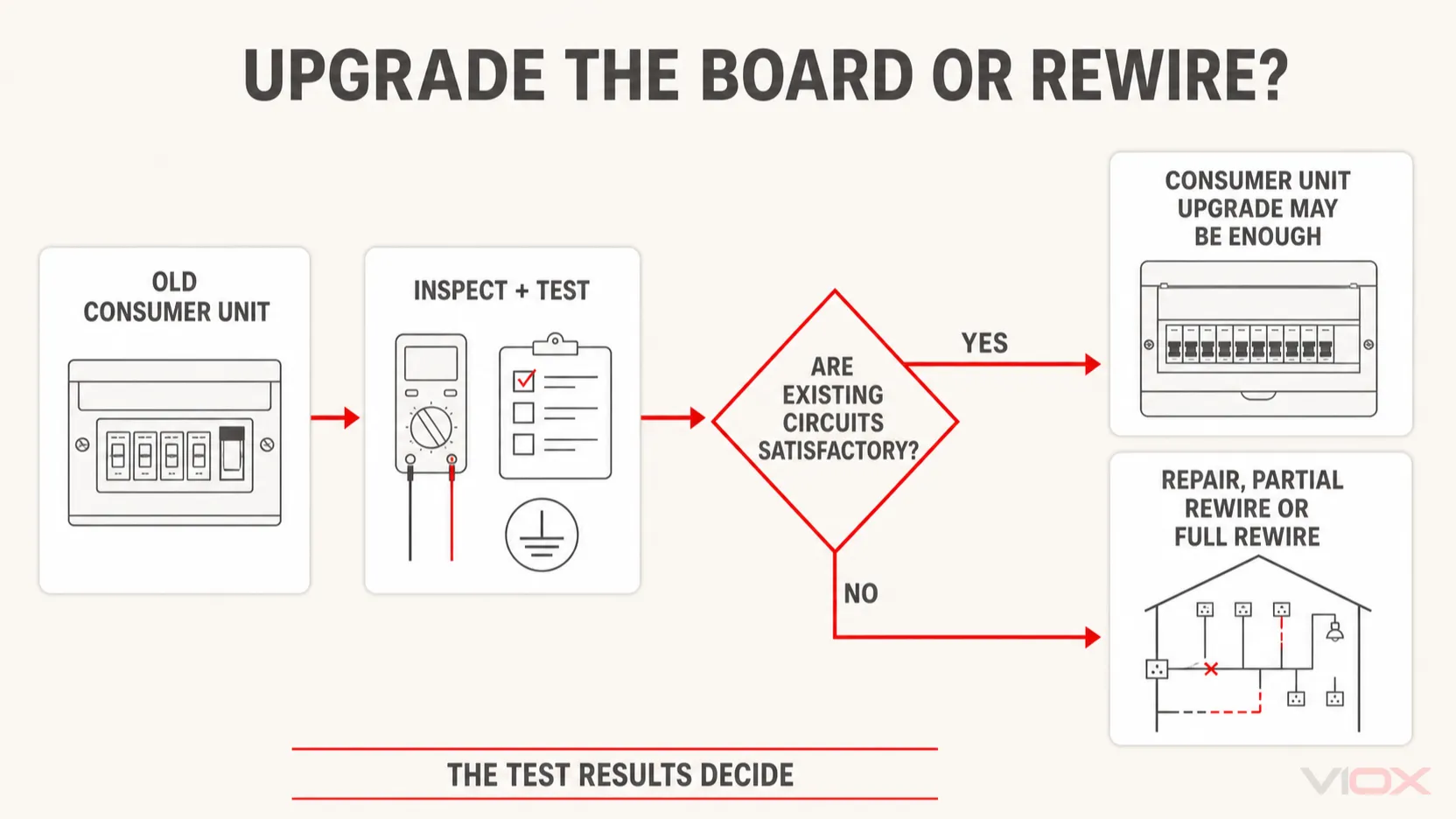
Consumer unit အသစ်လဲလှယ်ခြင်းသည် လက်ရှိဘုတ်အဖွဲ့ မသင့်လျော်တော့သော်လည်း ရှိပြီးသား ဆားကစ်များ၊ မြေစိုက်ခြင်း (earthing) နှင့် bonding များ စမ်းသပ်မှုအောင်မြင်ပါက လုံလောက်နိုင်ပါသည်။ စမ်းသပ်မှုအရ လျှပ်ကာများ ပျက်စီးနေခြင်း၊ အန္တရာယ်ရှိသော ရှေးဟောင်းကေဘယ်ကြိုးများ၊ ဆားကစ်ကာကွယ်ရေး လျှပ်ကူးပစ္စည်းများ မရှိခြင်း၊ ကြားနေကြိုး (neutral) များ ရောထွေးနေခြင်း၊ မှတ်တမ်းမရှိသော ပြုပြင်ပြောင်းလဲမှုများ သို့မဟုတ် ဘုတ်အဖွဲ့တွင် ပြုပြင်၍မရသော အခြားချို့ယွင်းချက်များ တွေ့ရှိပါက တစ်စိတ်တစ်ပိုင်း သို့မဟုတ် အပြည့်အဝ ဝါယာကြိုးအသစ်လဲလှယ်ရန် လိုအပ်နိုင်ပါသည်။.
အစားမလဲလှယ်မီ လျှပ်စစ်ပညာရှင်သည် လက်ရှိဝါယာကြိုးများ၊ မြေစိုက်ခြင်းနှင့် bonding၊ polarity၊ ဆားကစ်ဆက်စပ်မှု၊ လျှပ်ကာခံနိုင်ရည်၊ loop impedance၊ ဖြစ်နိုင်ခြေရှိသော fault current၊ မီတာကြိုးများ နှင့် မလိုလားအပ်သော RCD လည်ပတ်မှုကို ဖြစ်စေနိုင်သည့် အခြေအနေများကို စစ်ဆေးရပါမည်။ Electrical Safety First မှ စီစဉ်ထားသော အစားထိုးလဲလှယ်မှုမပြုလုပ်မီ EICR စစ်ဆေးမှုကို အကြံပြုထားပါသည်။ အကယ်၍ EICR အပြည့်အစုံကို လက်မခံပါက လုပ်ငန်းမစတင်မီ လုံလောက်သော ကြိုတင်စစ်ဆေးမှုပြုလုပ်ရန် လိုအပ်ပါသည်။.
အစားထိုးလဲလှယ်ခြင်းဖြင့် ဘာကိုရရှိသင့်သနည်း။
အစားထိုးဒီဇိုင်းသည် သင့်လျော်သော ဆားကစ်ကာကွယ်မှု၊ residual-current ကာကွယ်မှု၊ ဘေးကင်းသော ကေဘယ်ကြိုးဝင်ပေါက်များ၊ ရှင်းလင်းသော တံဆိပ်ကပ်ခြင်းနှင့် ရည်ရွယ်ထားသော တပ်ဆင်မှုအတွက် လုံလောက်သော စွမ်းဆောင်ရည်ကို ပံ့ပိုးပေးရပါမည်။ တစ်ဦးချင်း RCBO များသည် RCD တစ်ခုတည်းဖြင့် ဆားကစ်များစွာကို ကာကွယ်သည့် စနစ်ထက် ထိခိုက်သည့် ဆားကစ်တစ်ခုတည်းတွင်သာ လျှပ်စစ်ပြတ်တောက်မှုကို ကန့်သတ်ပေးနိုင်ပြီး ချို့ယွင်းချက်ရှာဖွေမှုကို ပိုမိုလွယ်ကူစေသည်။ Surge protective devices နှင့် arc fault detection devices များကို ယေဘုယျ စစ်ဆေးစာရင်းမှ ထည့်သွင်းခြင်းထက် သက်ဆိုင်ရာ လိုအပ်ချက်များနှင့် တပ်ဆင်မှုအခြေအနေများအပေါ် အခြေခံ၍ အကဲဖြတ်ရပါမည်။.
ပြီးစီးသွားသော လုပ်ငန်းကို စစ်ဆေးခြင်း၊ စမ်းသပ်ခြင်း၊ အသိအမှတ်ပြုလက်မှတ်ထုတ်ပေးခြင်းနှင့် လိုအပ်ပါက အကြောင်းကြားခြင်းများ ပြုလုပ်ရပါမည်။ ထုတ်ကုန်ရွေးချယ်မှုသည် ဘုတ်ထုတ်လုပ်သူ၏ အတည်ပြုထားသော တပ်ဆင်မှု၊ အဆင့်သတ်မှတ်ချက်များနှင့် ညွှန်ကြားချက်များနှင့် ကိုက်ညီရပါမည်။ ကာကွယ်ရေးကိရိယာများကို စက်ပိုင်းဆိုင်ရာအရ တပ်ဆင်နိုင်ရုံမျှဖြင့် ရောနှောအသုံးပြုခြင်း မပြုရပါ။.
နောက်ဆုံးစစ်ဆေးရန်စာရင်း
အောက်ပါမေးခွန်းများအတွက် အဖြေတစ်ခုခုရှိပါက လျှပ်စစ်ပညာရှင်၏ အကဲဖြတ်မှုကို စီစဉ်ဆောင်ရွက်ပါ။ ဟုတ်တယ်:
- အပူလွန်ကဲခြင်း၊ မီးလောင်ကျွမ်းခြင်း၊ တုန်ခါသံမြည်ခြင်း၊ လျှပ်စစ်မီးပွားထွက်ခြင်း၊ မီးခိုးထွက်ခြင်း သို့မဟုတ် အရည်ပျော်ခြင်းများ ရှိပါသလား။
- ဘူးခွံ (Enclosure) ပျက်စီးနေပါသလား သို့မဟုတ် လျှပ်စစ်စီးဆင်းနေသော အစိတ်အပိုင်းများကို ထိမိနိုင်ခြေ ရှိပါသလား။
- RCD ကာကွယ်မှု မရှိခြင်း၊ ချို့ယွင်းနေခြင်း သို့မဟုတ် အခြေအနေ မရှင်းလင်းခြင်းများ ရှိပါသလား။
- အသုံးပြုထားသော အကာအကွယ်ပစ္စည်းအဟောင်းများ ပျက်စီးနေခြင်း သို့မဟုတ် မှန်ကန်စွာ အစားထိုးလဲလှယ်ရန် ခက်ခဲနေပါသလား။
- EICR အစီရင်ခံစာတွင် C1၊ C2 သို့မဟုတ် FI အဆင့် သတိပေးချက်များ ပါဝင်နေပါသလား။
- မြေစိုက်ခြင်း (Earthing)၊ Bonding သို့မဟုတ် လက်ရှိအသုံးပြုနေသော ဆားကစ်များအပေါ် သံသယဖြစ်ဖွယ် ရှိပါသလား။
- လျှပ်စစ်ဝန်အားအသစ် သို့မဟုတ် ဆားကစ်အသစ် ထပ်မံတပ်ဆင်ရန် စီစဉ်ထားပါသလား။
- လျှပ်စစ်ဘုတ်တွင် နေရာပြည့်နေခြင်း၊ တံဆိပ်ကပ်မှု ညံ့ဖျင်းခြင်း သို့မဟုတ် ပစ္စည်းအမျိုးအစားများ ရောနှော၍ ပြုပြင်ထားခြင်းများ ရှိပါသလား။
အထက်ပါအချက်များထဲမှ တစ်စုံတစ်ရာနှင့်မျှ မသက်ဆိုင်ဘဲ လျှပ်စစ်တပ်ဆင်မှုစနစ်ကို စစ်ဆေးကြည့်ရှုရာတွင် စိတ်ကျေနပ်ဖွယ်ကောင်းပါက ချက်ချင်းလဲလှယ်ရန် မလိုအပ်ပေ။ အဆင့်မြှင့်တင်ခြင်းဖြင့် ကာကွယ်မှုနှင့် ချို့ယွင်းချက်များကို ခွဲထုတ်နိုင်စွမ်း ပိုမိုကောင်းမွန်လာနိုင်သော်လည်း ဆုံးဖြတ်ချက်ချရာတွင် သက်တမ်းတစ်ခုတည်းကိုသာ အခြေခံမည့်အစား အထောက်အထားများအပေါ် အခြေခံသင့်သည်။.
မကြာခဏမေးမေးခွန်းများ
အိမ်သုံးလျှပ်စစ်ဖြန့်ဖြူးရေးပုံး (Consumer unit) အဟောင်းများကို ဥပဒေအရ မဖြစ်မနေ လဲလှယ်ရမည်လား။
သက်တမ်းရင့်ရုံမျှဖြင့် လဲလှယ်ရန် မလိုအပ်ပါ။ ချို့ယွင်းချက်များ တွေ့ရှိရသည့်အခါ၊ ပြုပြင်မွမ်းမံမှုများဖြင့် လုံခြုံစိတ်ချရသော အခြေအနေသို့ မရောက်ရှိနိုင်သည့်အခါ သို့မဟုတ် စီစဉ်ထားသော လုပ်ငန်းစဉ်များအတွက် သင့်လျော်သော ဘုတ်အသစ် လိုအပ်သည့်အခါမျိုးတွင်သာ လဲလှယ်ရန် လိုအပ်နိုင်သည်။.
ပလတ်စတစ်ဖြင့် ပြုလုပ်ထားသော အိမ်သုံးလျှပ်စစ်ဖြန့်ဖြူးရေးပုံးများကို လဲလှယ်ရန် လိုအပ်ပါသလား။
အလိုအလျောက် လဲလှယ်ရန် မလိုအပ်ပါ။ ပလတ်စတစ်အိမ် (Enclosure) ၏ အခြေအနေ၊ ပျက်စီးမှု၊ မီးဘေးအန္တရာယ်၊ တည်နေရာနှင့် အခြားချို့ယွင်းချက်များကို အကဲဖြတ်ရန် လိုအပ်သည်။ အသစ်လဲလှယ်သည့်အခါတွင် လုပ်ငန်းသစ်အတွက် သတ်မှတ်ထားသော လိုအပ်ချက်များနှင့် ကိုက်ညီရမည်။.
RCD ကာကွယ်မှုမပါဝင်သော အိမ်သုံးလျှပ်စစ်ဖြန့်ဖြူးရေးပုံးကို လဲလှယ်ရန် လိုအပ်ပါသလား။
အမြဲတမ်း လဲလှယ်ရန် မလိုအပ်သော်လည်း RCD ကာကွယ်မှု မရှိခြင်းသည် အရေးကြီးသော ဘေးကင်းလုံခြုံမှုဆိုင်ရာ အားနည်းချက်တစ်ခု ဖြစ်သည်။ အရည်အချင်းပြည့်မီသော လျှပ်စစ်ပညာရှင်တစ်ဦးက ထပ်ဆောင်းကာကွယ်မှုများ ထည့်သွင်းနိုင်ခြင်း ရှိ၊ မရှိ သို့မဟုတ် လဲလှယ်ခြင်းသည်သာ အသင့်တော်ဆုံးဖြေရှင်းနည်း ဟုတ်၊ မဟုတ် ဆုံးဖြတ်ပေးရမည်ဖြစ်သည်။.
အိမ်တွင်းလျှပ်စစ်ဝါယာကြိုးများ အသစ်မလဲလှယ်ဘဲ အိမ်သုံးလျှပ်စစ်ဖြန့်ဖြူးရေးပုံးကို လဲလှယ်နိုင်ပါသလား။
ဟုတ်ကဲ့၊ ရှိပြီးသား ဆားကစ်များအား စမ်းသပ်စစ်ဆေးမှု အောင်မြင်ပြီး ချို့ယွင်းချက်များကို ပြင်ဆင်ပြီးပါက အစားထိုးနိုင်ပါသည်။ အစားထိုးလဲလှယ်ခြင်းသည် မလုံခြုံသော ဝိုင်ယာကြိုးသွယ်တန်းမှုများကို လုံခြုံစေသည်ဟု မဆိုလိုပါ။.
အစားမလဲလှယ်မီ EICR စစ်ဆေးမှု ခံယူသင့်ပါသလား။
စီမံချက်ဖြင့် အစားထိုးလဲလှယ်မည်ဆိုပါက EICR စစ်ဆေးမှု ခံယူရန် အထူးအကြံပြုလိုပါသည်။ အဘယ်ကြောင့်ဆိုသော် ၎င်းသည် ဘုတ်အသစ်အပေါ် သက်ရောက်မှုရှိနိုင်သည့် ချို့ယွင်းချက်များကို ဖော်ထုတ်ပေးနိုင်သောကြောင့် ဖြစ်သည်။ အနည်းဆုံးအားဖြင့် လုပ်ငန်းမစတင်မီ လုံလောက်သော စစ်ဆေးမှုနှင့် တိုင်းတာမှုများ ပြုလုပ်ရန် လိုအပ်ပါသည်။.
Consumer unit အစားထိုးလဲလှယ်ခြင်းသည် Part P အရ အကြောင်းကြားရမည့် လုပ်ငန်းစဉ်ဖြစ်ပါသလား။
အင်္ဂလန်တွင် Consumer unit အသစ်တပ်ဆင်ခြင်း သို့မဟုတ် အစားထိုးလဲလှယ်ခြင်းသည် အကြောင်းကြားရမည့် လုပ်ငန်းစဉ်ဖြစ်သည်။ ယူကေ၏ အခြားဒေသများတွင် အကြောင်းကြားရမည့် နည်းလမ်းများ ကွဲပြားနိုင်သဖြင့် အဆိုပါနေရာ၏ စည်းမျဉ်းများကို စစ်ဆေးပါ။.
ရင်းမြစ်များ
- IET: BS 7671 ထုတ်ဝေမှုနှင့် ပြင်ဆင်ချက် ၄ (Amendment 4) သို့ ကူးပြောင်းခြင်း
- Electrical Safety First: အကောင်းဆုံးလုပ်ဆောင်မှုဆိုင်ရာ လမ်းညွှန်ချက် ၁—Consumer unit အစားထိုးလဲလှယ်ခြင်း
- GOV.UK: အတည်ပြုထားသော စာတမ်း P (Approved Document P)
- GOV.UK: အငှားအိမ်ရာများအတွက် လျှပ်စစ်ဘေးကင်းလုံခြုံမှု စံနှုန်းများ