Auf dieser Seite
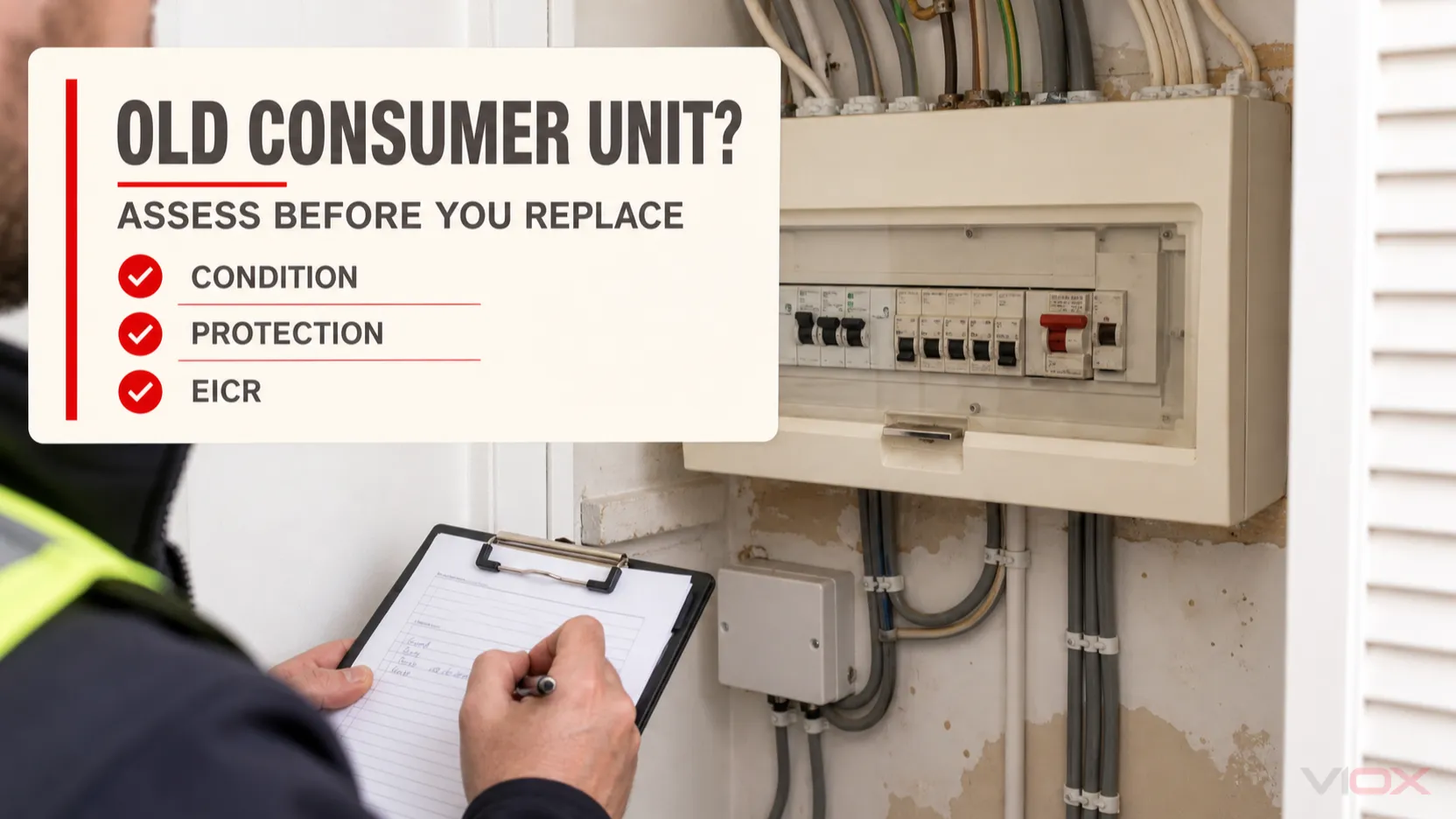
Eine alte Unterverteilung muss nicht allein aufgrund ihres Alters, ihres Kunststoffgehäuses, der Verwendung von Schmelzsicherungen oder der Installation gemäß einer früheren Ausgabe der britischen Verdrahtungsvorschriften ausgetauscht werden. Die Entscheidung sollte auf dem Zustand, den Schutzmaßnahmen, den Testergebnissen, der angeschlossenen Verkabelung und den geplanten Elektroarbeiten basieren.
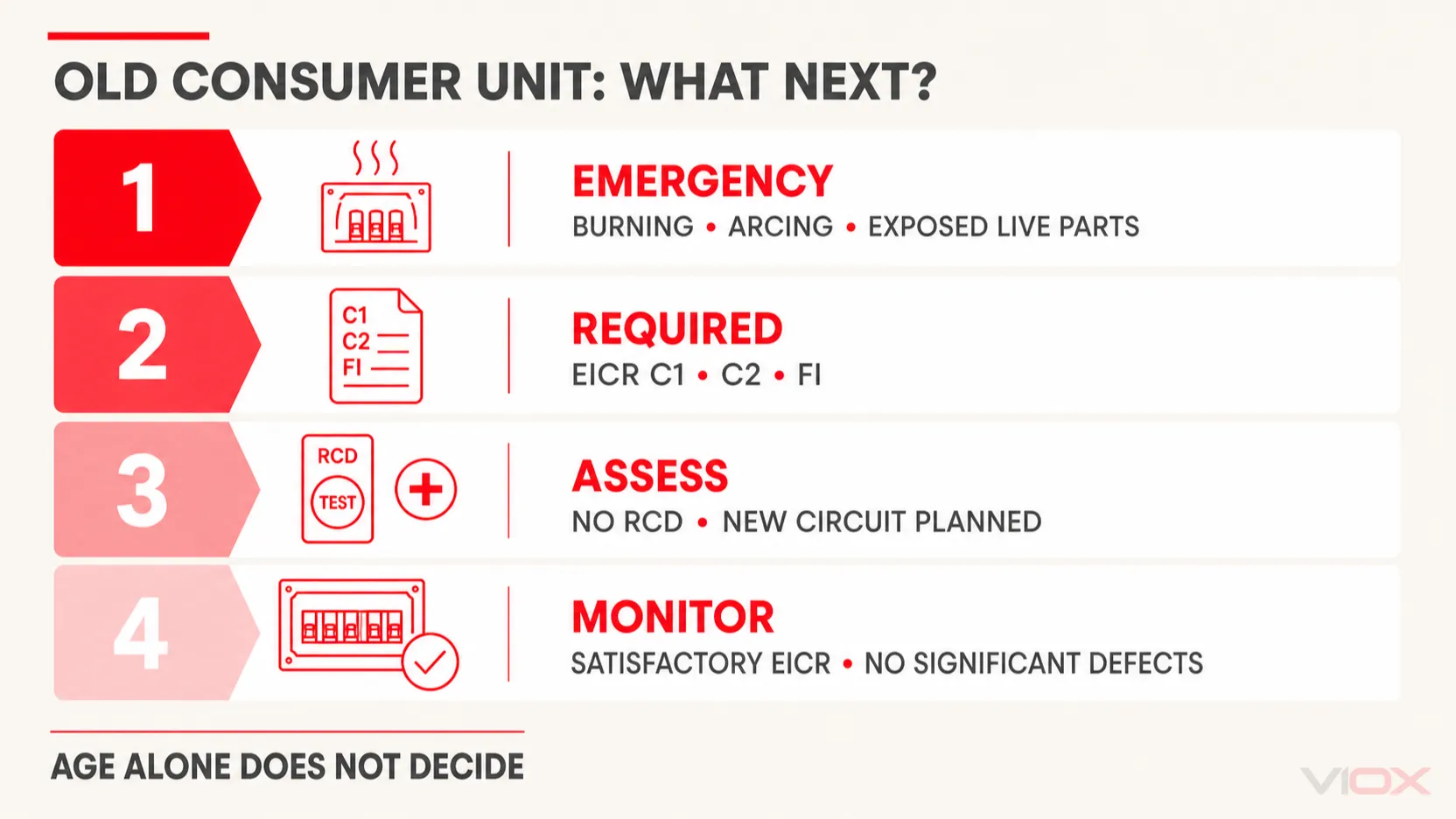
Sichtbare Verbrennungen, Schmelzspuren, Rauch, Lichtbogenbildung, freiliegende spannungsführende Teile oder ein mit C1 bewerteter Prüfbericht über den Zustand der Elektroinstallation (EICR) erfordern sofortiges Handeln. C2-Bewertungen oder der Hinweis auf weiteren Untersuchungsbedarf (FI) erfordern ebenfalls Nachbesserungen oder eine Überprüfung. In weniger dringenden Fällen kann ein EICR feststellen, ob der vorhandene Sicherungskasten weiterhin sicher ist oder ob ein Austausch die zweckmäßige Lösung darstellt.
Entfernen Sie nicht die Abdeckung und versuchen Sie nicht, interne Prüfungen selbst durchzuführen. Die Inspektion und der Austausch von Unterverteilungen sollten von einer fachkundigen Elektrofachkraft durchgeführt werden.
Wichtigste Erkenntnisse
- “Alt” bedeutet nicht automatisch unsicher oder illegal.
- Eine Unterverteilung aus Kunststoff ist kein automatischer Grund für einen Austausch.
- Schmelzsicherungen oder ein fehlender Fehlerstrom-Schutzschalter (RCD) sollten eine Überprüfung veranlassen, jedoch beweist keine dieser Bedingungen allein, dass die gesamte Einheit ausgetauscht werden muss.
- Hitzeschäden, zugängliche spannungsführende Teile oder C1/C2-Bewertungen im EICR erfordern dringendes Handeln.
- Neue Stromkreise für ein Elektrofahrzeug-Ladegerät, eine Wärmepumpe, eine Photovoltaikanlage, einen Batteriespeicher oder eine Erweiterung können eine alte Unterverteilung ungeeignet machen.
- Der Austausch der Unterverteilung behebt keine fehlerhafte Verkabelung, unzureichende Erdung oder fehlenden Potenzialausgleich.
Schnelle Entscheidungstabelle
| Festgestellte Mängel | Wahrscheinliche Entscheidung | Priorität |
|---|---|---|
| Rauch, Brandgeruch, Hitzeschäden, Lichtbogenbildung, Schmelzspuren oder freiliegende spannungsführende Teile | Wenn möglich sicher freischalten und dringend fachliche Hilfe hinzuziehen | Notfall |
| EICR-Code C1 oder C2 oder ungelöste FI-Probleme | Abhilfemaßnahmen oder Untersuchung abschließen; ein Austausch kann erforderlich sein | Erforderlich |
| Kein RCD-Schutz, alte Sicherungselemente, wiederholtes Auslösen oder unzuverlässige Ausrüstung | Inspektion veranlassen und Optionen für Reparatur, zusätzlichen Schutz und Austausch vergleichen | Hoch |
| Neuer Stromkreis, geplante Installation von EV-Ladestation, Wärmepumpe, Solaranlage, Batterie oder Erweiterung | Kapazität, Schutz, Erdung und Eignung des Verteilers vor der Planung überprüfen | Vor dem Projekt |
| Kunststoffgehäuse ohne Beschädigungen und mit einem zufriedenstellenden EICR-Bericht | Keine automatische Austauschpflicht | Monitor |
| Ältere Verteilung, die zufriedenstellend prüft und keine wesentlichen Mängel aufweist | Ein sofortiger Austausch ist möglicherweise nicht erforderlich | Geplante Verbesserung |
Anzeichen dafür, dass eine alte Unterverteilung eine fachmännische Beurteilung erfordert
Hitze, Verbrennungen oder physische Schäden
Brandspuren, Brandgeruch, Summen, Knistern, geschmolzenes Material, Rauch oder eine ungewöhnlich warme Abdeckung können auf eine lose Verbindung, ein defektes Gerät, schlechten Kontakt oder einen überlasteten Stromkreis hinweisen. Defekte Abdeckungen, fehlende Abdeckstreifen, Wassereintritt und Öffnungen, die eine Berührung unter Spannung stehender Teile ermöglichen könnten, erfordern ebenfalls sofortiges Handeln.
Setzen Sie ein Gerät nicht wiederholt zurück, wenn Anzeichen von Hitze oder Lichtbogenbildung vorliegen. Sorgen Sie für eine sichere Freischaltung und Überprüfung.
Kein RCD-Schutz
Ein RCD erkennt Strom, der von seinem vorgesehenen Pfad abweicht, und unterbricht die Stromzufuhr, um das Risiko eines Stromschlags zu verringern. Eine Prüftaste, die mit T oder Test gekennzeichnet ist, ist ein nützlicher sichtbarer Hinweis darauf, dass ein RCD oder ein Fehlerstromschutzschalter mit Überstromschutz (RCBO) vorhanden ist, auch wenn dies nicht bestätigt, welche Stromkreise geschützt sind oder ob das Gerät korrekt funktioniert.
Das Fehlen eines RCD-Schutzes ist eine erhebliche Einschränkung, insbesondere bei Steckdosen, in Badezimmern, für Außengeräte und bei geplanten Änderungen. Die Richtlinien von Electrical Safety First besagen jedoch, dass das Fehlen eines RCD-Schutzes für sich genommen keinen zwingenden Austausch der Unterverteilung erforderlich macht; manchmal ist eine andere konforme Lösung möglich. Die korrekte Vorgehensweise hängt von der Inspektion, der Nutzung der Stromkreise und dem Umfang der neuen Arbeiten ab.
Zur Unterscheidung der Geräte siehe den VIOX-Vergleich von RCBOs und MCBs.
Drahtschmelzsicherungen oder veraltete Ausrüstung
Schmelzdrähte, Keramiksockel, Holzrückwände, Bakelit-Teile oder Gusseisenschalter deuten auf eine ältere Installation hin. Diese Merkmale rechtfertigen eine Inspektion, da der Verteiler möglicherweise auch keinen modernen Fehlerstromschutz, keine klare Kennzeichnung, keine kompatiblen freien Plätze oder keine zuverlässigen Ersatzteile aufweist.
Sie beweisen nicht automatisch, dass der vorhandene Überstromschutz defekt ist. Die Richtlinien von Electrical Safety First zum Austausch von Unterverteilungen besagen, dass ältere Sicherungen oder Leitungsschutzschalter allein kein ausreichender Grund für einen Austausch sind, solange sie noch einen zufriedenstellenden Überstromschutz bieten. Der Zustand und die Testergebnisse entscheiden über das Ergebnis.
Wiederholtes Auslösen oder durchgebrannte Sicherungen
Häufiges Auslösen kann durch ein defektes Gerät, Überlastung, einen Verdrahtungsfehler, kumulativen Ableitstrom, Feuchtigkeit oder ein Problem mit der Schutzeinrichtung verursacht werden. Eine neue Unterverteilung behebt nicht zwangsläufig die Ursache. Vor einem Austausch sollte eine Prüfung erfolgen, insbesondere wenn mehrere Stromkreise oder Geräte dazu beitragen könnten.
Mangelhafte Beschriftung oder nicht dokumentierte Änderungen
Fehlende oder ungenaue Beschriftungen erschweren die sichere Freischaltung. Gemischte Geräte, überfüllte Leitungseinführungen, durchgestrichene Stromkreisbeschreibungen oder offensichtliche Eigeninstallationen können darauf hindeuten, dass die Anlage ohne ausreichende Dokumentation verändert wurde. Eine bloße Nachbeschriftung ist zwar möglich, jedoch sollte die gesamte Anlage überprüft werden, bevor weitere Stromkreise hinzugefügt werden.
Unzureichende Kapazität für Erweiterungen
Eine ältere Unterverteilung verfügt möglicherweise über keine geeigneten freien Plätze oder bietet nicht den für einen neuen Stromkreis erforderlichen Schutz. Dies wird häufig relevant bei der Installation von:
- einer Ladestation für Elektrofahrzeuge (EV-Ladegerät);
- einer Wärmepumpe;
- Photovoltaik- oder Batteriespeicher;
- eine elektrische Dusche oder ein Induktionskochfeld;
- ein Anbau, ein Gartenbüro oder eine Außenstromversorgung.
Der Installateur muss die Stromversorgung, den maximalen Bedarf, das Erdungssystem, die bestehenden Stromkreise, die Schutzeinrichtungen und die geltenden RCD-Anforderungen bewerten. Das Hinzufügen eines Leitungsschutzschalters an einem freien Platz stellt keine vollständige Auslegungsprüfung dar. Für EV-Projekte siehe VIOX. Leitfaden zur Dimensionierung von Leitungsschutzschaltern für EV-Ladestationen.
Müssen Kunststoff-Verteilerkästen ausgetauscht werden?
Nein – nicht allein deshalb, weil sie aus Kunststoff sind.
Die Anforderungen an neue Wohnungsverteiler wurden geändert, um den Brandschutz zu verbessern, aber dies führte nicht zu einer pauschalen Anweisung, jedes bestehende Kunststoffgehäuse zu entfernen. Eine ältere Einheit kann in Betrieb bleiben, wenn ihr Zustand und die Installation als zufriedenstellend bewertet werden. Schäden, Überhitzung, Öffnungen, der Standort und andere Mängel können diese Bewertung ändern.
Wenn die Unterverteilung ausgetauscht wird, müssen die neuen Arbeiten der für das Projekt geltenden Ausgabe der BS 7671 sowie den einschlägigen Bauvorschriften entsprechen. Es ist wichtig, zwischen der Bewertung einer bestehenden Anlage und der Spezifikation neuer Arbeiten zu unterscheiden: Eine Anlage, die nach einer früheren Ausgabe geplant wurde, ist nicht automatisch unsicher, nur weil spätere Anforderungen anders lauten.
Was bedeuten die aktuellen britischen Vorschriften?
BS 7671 ist die nationale Norm für elektrische Anlagen im Vereinigten Königreich, jedoch variieren die Anforderungen der Bauaufsicht und für Mietobjekte je nach Landesteil. Dieser Artikel konzentriert sich hauptsächlich auf England, mit einigen Hinweisen, die für England und Wales relevant sind.
Zum Zeitpunkt dieser Aktualisierung im August 2026 wurde die BS 7671:2018+A4:2026 veröffentlicht. Das IET gibt an, dass die BS 7671:2018+A3:2024 während der Übergangszeit bis zum 15. Oktober 2026 gültig bleibt. Installateure sollten überprüfen, welche Ausgabe zum Zeitpunkt der Planung und Zertifizierung der Arbeiten gilt, anstatt sich auf eine allgemeine Angabe zur “18. Ausgabe” zu verlassen.
In England ist die Installation einer neuen oder auszutauschenden Unterverteilung eine meldepflichtige Arbeit gemäß Teil P der Bauvorschriften. Die Arbeiten können normalerweise über einen bei einem „Competent Person Scheme“ registrierten Installateur oder das entsprechende Bauaufsichtsverfahren gemeldet werden. Die Anforderungen in Schottland, Wales und Nordirland sollten separat geprüft werden.
Nutzen Sie den EICR für die Entscheidungsfindung
Ein EICR bewertet, ob die Anlage für den weiteren Gebrauch sicher ist. Dies ist hilfreicher, als eine Unterverteilung anhand ihres Alters oder eines Fotos der Frontabdeckung zu beurteilen.
| EICR-Code | Bedeutung | Was dies für die Entscheidung bedeutet |
|---|---|---|
| C1 | Gefahr vorhanden | Sofortiges Handeln ist erforderlich |
| C2 | Potenziell gefährlich | Nachbesserungsarbeiten sind erforderlich |
| FI | Weitere Untersuchungen sind unverzüglich erforderlich | Untersuchung erforderlich, bevor die Sicherheit bestätigt werden kann |
| C3 | Verbesserung empfohlen | Führt für sich genommen nicht dazu, dass der Bericht als nicht zufriedenstellend gilt |
Ein zufriedenstellender EICR bedeutet nicht, dass die Anlage alle Merkmale aufweist, die bei neuen Anlagen erwartet werden. Er bedeutet, dass der Prüfer keine Mängel festgestellt hat, die einen weiteren Gebrauch im Rahmen des Inspektionsumfangs und der Einschränkungen als nicht zufriedenstellend erscheinen lassen.
In England müssen elektrische Anlagen in vermieteten Wohnungen mindestens alle fünf Jahre von einer qualifizierten Person inspiziert und geprüft werden. Wenn der Bericht C1, C2 oder FI ausweist, muss der Vermieter die erforderlichen Arbeiten innerhalb des geltenden Zeitraums veranlassen. C3 ist eine Empfehlung und keine automatische Anforderung für Nachbesserungsarbeiten.
Austausch der Unterverteilung oder vollständige Neuverkabelung?
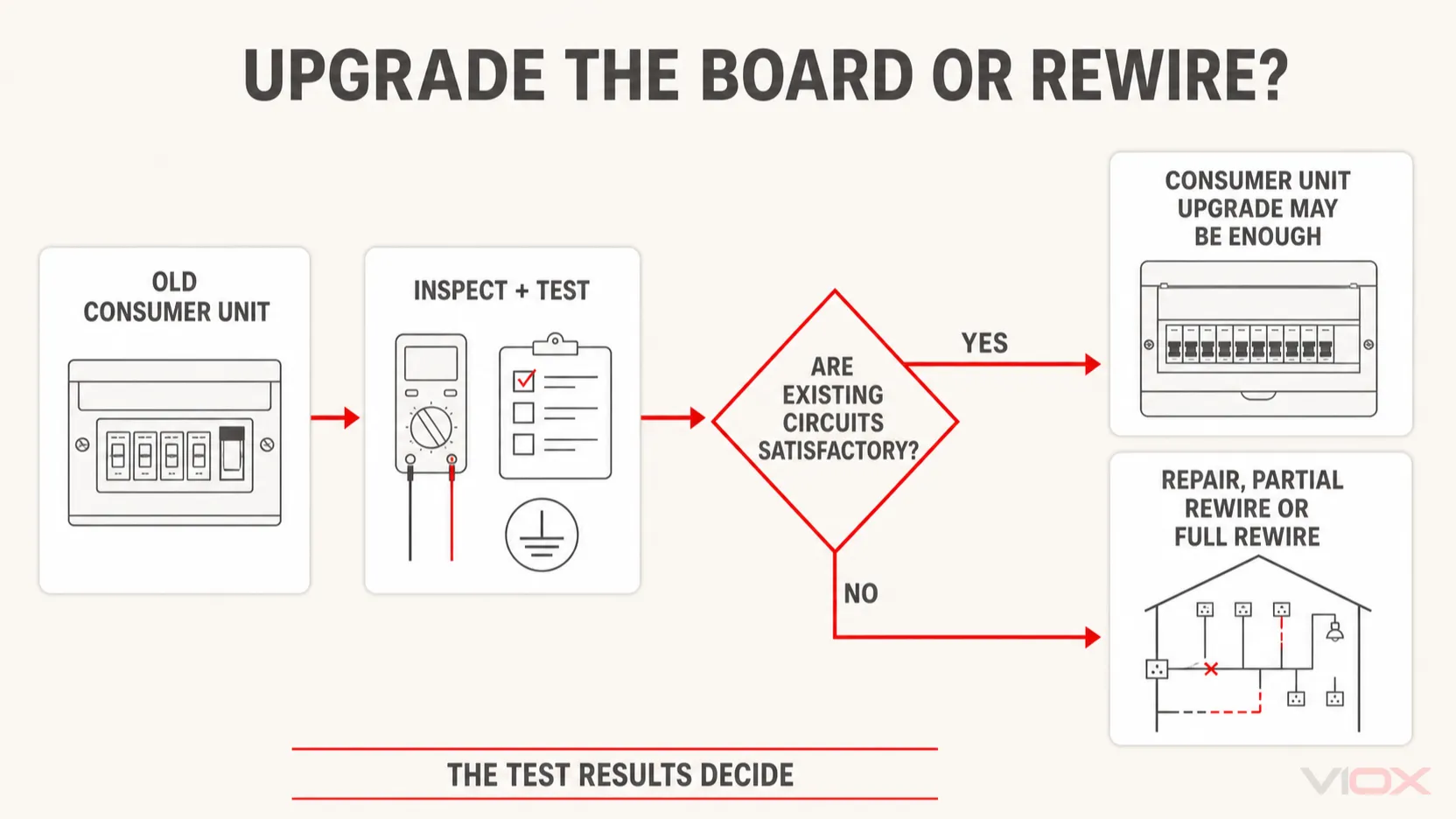
Ein Austausch der Unterverteilung kann ausreichen, wenn der Verteiler ungeeignet ist, die bestehenden Stromkreise, die Erdung und der Potentialausgleich jedoch die Prüfung bestehen. Eine teilweise oder vollständige Neuverkabelung kann erforderlich sein, wenn die Prüfung eine verschlechterte Isolierung, unsichere ältere Kabel, fehlende Schutzleiter, unzulässige Neutralleiterverbindungen, umfangreiche nicht dokumentierte Änderungen oder andere Mängel aufdeckt, die nicht am Verteiler behoben werden können.
Vor dem Austausch sollte die Elektrofachkraft die bestehende Verkabelung, Erdung und den Potentialausgleich, die Polarität, die Durchgängigkeit der Stromkreise, den Isolationswiderstand, die Schleifenimpedanz, den prospektiven Fehlerstrom, die Zuleitungen sowie alle Bedingungen prüfen, die zu unerwünschtem Auslösen des RCD führen könnten. Electrical Safety First empfiehlt vor einem geplanten Austausch einen EICR (Elektro-Sicherheitsbericht); falls kein vollständiger EICR akzeptiert wird, ist dennoch eine angemessene Vorabprüfung erforderlich, bevor die Arbeiten beginnen.
Was sollte ein Austausch erreichen?
Die Planung des Austauschs sollte einen geeigneten Stromkreisschutz, Fehlerstromschutz, sichere Kabeleinführungen, eine klare Kennzeichnung und ausreichende Kapazität für die vorgesehene Installation bieten. Einzelne RCBOs können den Stromausfall auf den betroffenen Stromkreis begrenzen und die Fehleridentifizierung im Vergleich zu Anordnungen, bei denen ein RCD mehrere Stromkreise schützt, vereinfachen. Überspannungsschutzgeräte und Fehlerlichtbogen-Schutzeinrichtungen müssen anhand der geltenden Anforderungen und Installationsbedingungen bewertet werden, anstatt sie pauschal aus einer allgemeinen Checkliste hinzuzufügen.
Die abgeschlossenen Arbeiten sollten geprüft, getestet, zertifiziert und – sofern erforderlich – gemeldet werden. Die Produktauswahl muss zudem mit der vom Hersteller des Verteilers zugelassenen Baugruppe, den Nennwerten und den Anweisungen übereinstimmen; Schutzeinrichtungen sollten nicht allein deshalb kombiniert werden, weil sie mechanisch passen.
Abschließende Checkliste
Vereinbaren Sie eine Bewertung durch eine Elektrofachkraft, falls eine der folgenden Antworten lautet: ja:
- Gibt es Anzeichen von Hitzeschäden, Verbrennungen, Summgeräuschen, Lichtbogenbildung, Rauch oder Schmelzspuren?
- Ist das Gehäuse beschädigt oder könnten spannungsführende Teile zugänglich sein?
- Fehlt ein RCD-Schutz, ist dieser defekt oder ist dessen Zustand unklar?
- Sind alte Schutzeinrichtungen beschädigt oder nur schwer korrekt auszutauschen?
- Enthält der EICR-Bericht C1-, C2- oder FI-Mängel?
- Bestehen Zweifel an der Erdung, dem Potenzialausgleich oder den bestehenden Stromkreisen?
- Ist eine wesentliche neue elektrische Last oder ein neuer Stromkreis geplant?
- Ist der Verteiler voll belegt, schlecht beschriftet oder durch gemischte Komponenten verändert worden?
Wenn keiner dieser Punkte zutrifft und die Anlage eine zufriedenstellende Prüfung bestanden hat, ist ein sofortiger Austausch möglicherweise nicht erforderlich. Eine Modernisierung kann zwar den Schutz und die Fehlerisolierung verbessern, die Entscheidung sollte jedoch auf Basis von Nachweisen und nicht allein aufgrund des Alters getroffen werden.
Häufig Gestellte Fragen
Muss ein alter Sicherungskasten gesetzlich ausgetauscht werden?
Nicht allein aufgrund seines Alters. Ein Austausch kann erforderlich sein, wenn Mängel festgestellt werden, wenn die Anlage durch Instandsetzungsarbeiten nicht sicher gemacht werden kann oder wenn geplante Arbeiten eine geeignete neue Verteilung erfordern.
Müssen Sicherungskästen aus Kunststoff ausgetauscht werden?
Nicht automatisch. Ein Kunststoffgehäuse sollte hinsichtlich Zustand, Beschädigung, Brandgefahr, Standort und anderer Mängel bewertet werden. Ein Ersatz muss die für die neuen Arbeiten geltenden Anforderungen erfüllen.
Muss ein Sicherungskasten ohne RCD-Schutz ausgetauscht werden?
Nicht in jedem Fall, aber ein fehlender RCD-Schutz stellt eine wichtige Sicherheitseinschränkung dar. Eine Elektrofachkraft sollte feststellen, ob ein zusätzlicher Schutz möglich ist oder ob ein Austausch die geeignete Lösung darstellt.
Kann ein Sicherungskasten ausgetauscht werden, ohne die Hausverkabelung zu erneuern?
Ja, sofern die bestehenden Stromkreise erfolgreich geprüft wurden und etwaige Mängel behoben sind. Ein Austausch macht eine unsichere Verkabelung nicht zulässig.
Sollte ich vor dem Austausch einen EICR durchführen lassen?
Bei einem geplanten Austausch wird ein EICR dringend empfohlen, da er Mängel aufdecken kann, die sich auf die neue Unterverteilung auswirken würden. Mindestens sind eine angemessene Vorabprüfung und Tests erforderlich.
Ist der Austausch einer Unterverteilung gemäß Part P meldepflichtig?
In England ist die Installation oder der Austausch einer Unterverteilung meldepflichtig. Der Meldeweg unterscheidet sich in anderen Teilen des Vereinigten Königreichs, daher sind die Vorschriften für das jeweilige Land zu prüfen.