ສາເຫດຂອງການຮ້ອນເກີນໄປຂອງ Busbar MCB ແລະວິທີການແກ້ໄຂ?
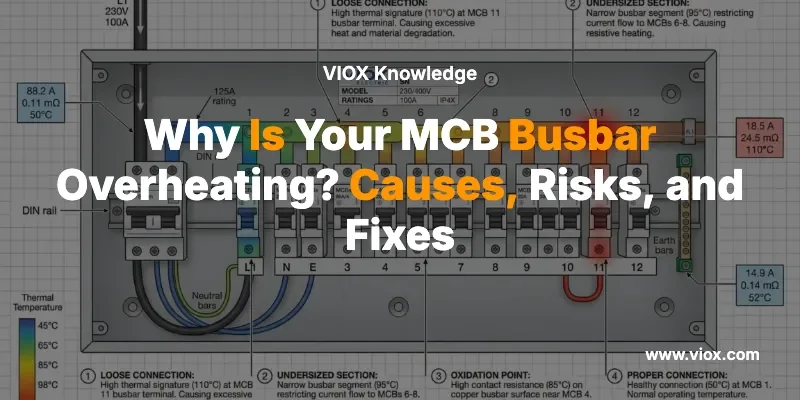
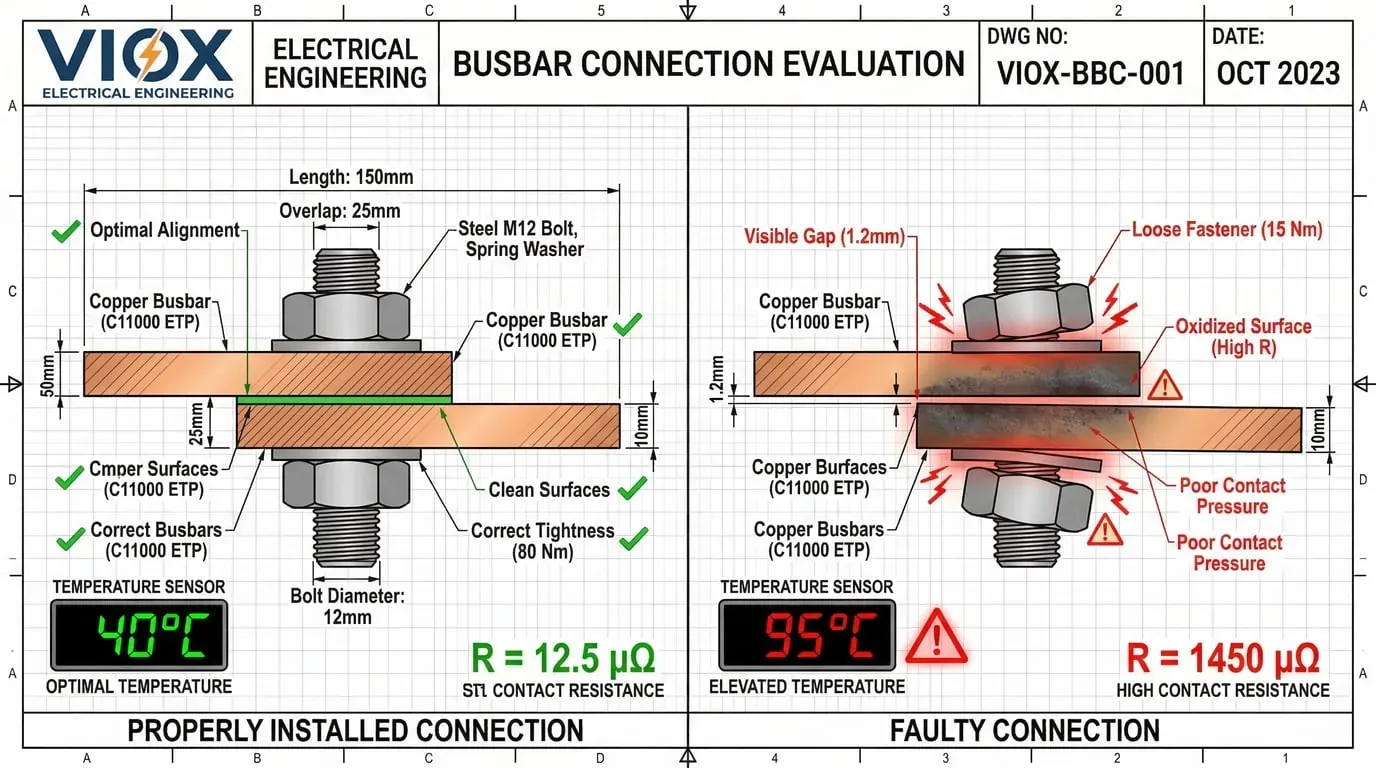
ການຮ້ອນເກີນໄປຂອງ Busbar MCB ສ່ວນໃຫຍ່ແມ່ນເກີດຈາກການເຊື່ອມຕໍ່ທີ່ບໍ່ແໜ້ນ, ສ່ວນປະກອບທີ່ມີຂະໜາດນ້ອຍເກີນໄປ, ການຈັດລຽງທີ່ບໍ່ຖືກຕ້ອງ, ຫຼືການຜຸພັງ. ສິ່ງເຫຼົ່ານີ້ສ້າງຈຸດທີ່ມີຄວາມຕ້ານທານສູງທີ່ສ້າງຄວາມຮ້ອນຫຼາຍເກີນໄປຜ່ານການສູນເສຍ I²R, ເຊິ່ງອາດຈະນໍາໄປສູ່ອັນຕະລາຍຈາກໄຟໄໝ້ ແລະຄວາມລົ້ມເຫຼວຂອງລະບົບ. ການແກ້ໄຂທັນທີປະກອບມີການຮັດແໜ້ນການເຊື່ອມຕໍ່ຄືນໃໝ່ເປັນ 2.5-3.5 N·m, ການປ່ຽນແທນ busbars ທີ່ເສຍຫາຍຢ່າງເຫັນໄດ້ຊັດ, ແລະການກວດສອບລະດັບກະແສໄຟຟ້າທີ່ຖືກຕ້ອງ.
ການຮ້ອນເກີນໄປຂອງ Busbar ແມ່ນໜຶ່ງໃນບັນຫາທີ່ອັນຕະລາຍທີ່ສຸດແຕ່ຖືກມອງຂ້າມໃນແຜງໄຟຟ້າ. ບໍ່ເຫມືອນກັບວົງຈອນສັ້ນທີ່ເຮັດໃຫ້ຕົວຕັດວົງຈອນຂອງທ່ານເຮັດວຽກທັນທີ, ການເສື່ອມສະພາບທາງຄວາມຮ້ອນເກີດຂື້ນຊ້າໆ—ມັກຈະບໍ່ຖືກກວດພົບຈົນກວ່າທ່ານຈະເຫັນພລາສຕິກທີ່ລະລາຍຫຼືມີກິ່ນເໝັນໄໝ້. ສໍາລັບຜູ້ຮັບເໝົາໄຟຟ້າ ແລະຜູ້ຈັດການສິ່ງອໍານວຍຄວາມສະດວກ, ການຈັບສິ່ງນີ້ໄວສາມາດປ້ອງກັນໄຟໄໝ້, ຄວາມເສຍຫາຍຂອງອຸປະກອນ, ແລະການຢຸດເຮັດວຽກທີ່ມີຄ່າໃຊ້ຈ່າຍສູງ.
Key Takeaways
- ສະກູຢູ່ປາຍສາຍທີ່ບໍ່ແໜ້ນ ແມ່ນສາເຫດ #1—ການເຊື່ອມຕໍ່ທີ່ຄວນຈະເປັນ 50 microohms ສາມາດໂດດໄປເປັນ 200+ microohms ເມື່ອບໍ່ແໜ້ນ, ສ້າງຄວາມຮ້ອນພຽງພໍທີ່ຈະເຮັດໃຫ້ພລາສຕິກລະລາຍ
- ແຮງບິດທີ່ເໝາະສົມ (2.5-3.5 N·m ສໍາລັບ MCBs ທີ່ຢູ່ອາໄສ) ແມ່ນສິ່ງທີ່ບໍ່ສາມາດຕໍ່ລອງໄດ້—ການຮັດດ້ວຍມືແມ່ນບໍ່ພຽງພໍ
- ຄວາມຮ້ອນ ຈັບບັນຫາກ່ອນທີ່ຈະເກີດຄວາມເສຍຫາຍທີ່ເຫັນໄດ້ຊັດ—ຊອກຫາຄວາມແຕກຕ່າງ 10-15°C ລະຫວ່າງການເຊື່ອມຕໍ່ທີ່ຄ້າຍຄືກັນ
- ການຜຸພັງຂອງທອງແດງ ເພີ່ມຄວາມຕ້ານທານຕາມການເວລາ, ໂດຍສະເພາະໃນສະພາບແວດລ້ອມທີ່ຊຸ່ມຊື່ນຫຼືແຄມຝັ່ງທະເລ
- ອຸນຫະພູມສູງກວ່າ 70°C ເໜືອອຸນຫະພູມອາກາດ ໝາຍເຖິງການປະຕິບັດທັນທີທີ່ຕ້ອງການ—ທ່ານຢູ່ໃນເຂດອັນຕະລາຍ
- ການປ່ຽນສີທີ່ເຫັນໄດ້ຊັດ (ທອງແດງສີນ້ຳຕານ/ສີດຳ, ພລາສຕິກສີເຫຼືອງ) ໝາຍເຖິງ busbar ຕ້ອງຖືກປ່ຽນແທນ, ບໍ່ແມ່ນສ້ອມແປງ
ເຂົ້າໃຈການເຮັດວຽກຂອງ Busbar MCB ແລະຂອບເຂດຈໍາກັດຄວາມຮ້ອນ
Busbars MCB ແຈກຢາຍພະລັງງານຈາກຕົວຕັດວົງຈອນຫຼັກຂອງທ່ານໄປຫາຕົວຕັດວົງຈອນຫຼາຍອັນຂະໜານກັນ. ແຖບທອງແດງ ຫຼືອາລູມີນຽມເຫຼົ່ານີ້ຕ້ອງບັນທຸກກະແສໄຟຟ້າສູງໃນຂະນະທີ່ຮັກສາຄວາມຕ້ານທານຕໍ່າ—ການເພີ່ມຂຶ້ນຂອງຄວາມຕ້ານທານໃດໆໝາຍເຖິງການສ້າງຄວາມຮ້ອນ.
ພາຍໃຕ້ສະພາບປົກກະຕິ, busbars ເຮັດວຽກອຸ່ນເນື່ອງຈາກຄວາມຮ້ອນທີ່ເກີດຈາກຄວາມຕ້ານທານ (ການສູນເສຍ I²R). ມາດຕະຖານ IEC 60947-2 ແລະ UL 489 ອະນຸຍາດໃຫ້ອຸນຫະພູມສູງຂຶ້ນ 50-70°C ເໜືອອຸນຫະພູມອາກາດ (ໂດຍປົກກະຕິ 40°C). ຂ້າມຂອບເຂດນັ້ນແລະທ່ານກໍາລັງເລັ່ງການແຕກຫັກຂອງ insulation, ເພີ່ມການຜຸພັງ, ແລະສ້າງຄວາມສ່ຽງຕໍ່ການເກີດໄຟໄໝ້.
ນີ້ແມ່ນບັນຫາ: ຄວາມຕ້ານທານຂອງທອງແດງເພີ່ມຂຶ້ນ 0.4% ຕໍ່ອົງສາເຊນຊຽດ. ເມື່ອມັນຮ້ອນຂຶ້ນ, ຄວາມຕ້ານທານຈະສູງຂຶ້ນ, ສ້າງຄວາມຮ້ອນຫຼາຍຂຶ້ນ—ວົງຈອນຕໍານິຕິຊົມທີ່ສາມາດນໍາໄປສູ່ການແລ່ນໜີທາງຄວາມຮ້ອນຖ້າຄວາມຮ້ອນບໍ່ສາມາດໜີອອກໄປໄດ້ໄວພໍ.
ສາເຫດຫຼັກຂອງການຮ້ອນເກີນໄປຂອງ Busbar MCB
1. ການເຊື່ອມຕໍ່ຢູ່ປາຍສາຍທີ່ບໍ່ແໜ້ນ (ຜູ້ກະທຳຜິດ #1)
ເມື່ອສະກູຢູ່ປາຍສາຍບໍ່ໄດ້ຮັດແໜ້ນຢ່າງຖືກຕ້ອງ ຫຼື ຫຼຸດລົງຕາມການເວລາ, ພື້ນທີ່ສໍາຜັດຈະຫຼຸດລົງຢ່າງຫຼວງຫຼາຍ. ກະແສໄຟຟ້າຖືກບັງຄັບຜ່ານພາກສ່ວນຂ້າມນ້ອຍກວ່າ, ສ້າງຈຸດຮ້ອນ.
ຟີຊິກ: ການຫຼຸດລົງ 50% ໃນຄວາມກົດດັນຂອງການສໍາຜັດສາມາດເພີ່ມຄວາມຕ້ານທານໄດ້ 300-500%. ຢູ່ທີ່ການໂຫຼດ 32A, ການເຊື່ອມຕໍ່ທີ່ເສື່ອມໂຊມຈາກ 50 ຫາ 200 microohms ສ້າງຄວາມຮ້ອນພິເສດ 0.2 ວັດ—ພຽງພໍທີ່ຈະເພີ່ມອຸນຫະພູມທ້ອງຖິ່ນໄດ້ 40-60°C ໃນແຜງທີ່ມີລະບາຍອາກາດບໍ່ດີ.
ເຫດຜົນທີ່ການເຊື່ອມຕໍ່ຫຼຸດລົງຕາມການເວລາ: ທອງແດງຂະຫຍາຍຕົວ 17 ppm/°C ໃນຂະນະທີ່ສະກູເຫຼັກຂະຫຍາຍຕົວພຽງແຕ່ 11-13 ppm/°C. ທຸກໆຮອບວຽນຄວາມຮ້ອນ/ຄວາມເຢັນຄ່ອຍໆບັນເທົາຄວາມກົດດັນຂອງການຮັດແໜ້ນ. ນີ້ແມ່ນເຫດຜົນທີ່ແຜງທີ່ຜ່ານການກວດກາເບື້ອງຕົ້ນສາມາດພັດທະນາບັນຫາໃນອີກຫຼາຍເດືອນຕໍ່ມາ. ເຂົ້າໃຈ ຄວາມຜິດພາດໃນການຕິດຕັ້ງທົ່ວໄປໃນເວລາທີ່ຕິດຕັ້ງ busbars MCB ຊ່ວຍປ້ອງກັນບັນຫາເຫຼົ່ານີ້ຕັ້ງແຕ່ເລີ່ມຕົ້ນ.
2. ພາກສ່ວນຂ້າມຂອງ Busbar ທີ່ມີຂະໜາດນ້ອຍເກີນໄປ
ການໃຊ້ busbar ທີ່ໄດ້ຮັບການຈັດອັນດັບ 63A ໃນແຜງທີ່ມີຕົວຕັດວົງຈອນຫຼັກ 100A ແລະວົງຈອນກະແສໄຟຟ້າສູງຫຼາຍອັນສ້າງການໂຫຼດເກີນຊໍາເຮື້ອ. ເຖິງແມ່ນວ່າ MCBs ແຕ່ລະອັນບໍ່ເຄີຍເຮັດວຽກ, ກະແສໄຟຟ້າສະສົມຜ່ານ busbar ສາມາດເກີນລະດັບຄວາມຮ້ອນຂອງມັນໃນລະຫວ່າງຄວາມຕ້ອງການສູງສຸດ.
ຕົວຢ່າງໃນໂລກຕົວຈິງ: Busbars ທີ່ຢູ່ອາໄສມາດຕະຖານມີຕັ້ງແຕ່ 10×2mm (20mm²) ສໍາລັບລະບົບ 63A ຫາ 15×5mm (75mm²) ສໍາລັບການນໍາໃຊ້ 125A. Busbar ຢູ່ທີ່ຄວາມຈຸ 80% ອາດຈະເຮັດວຽກ 30°C ເໜືອອຸນຫະພູມອາກາດ—ຍອມຮັບໄດ້. ຍູ້ມັນໄປເປັນ 120% ແລະທ່ານກໍາລັງເບິ່ງຢູ່ທີ່ 90-100°C, ເຂົ້າໄປໃນເຂດອັນຕະລາຍ.
ສິ່ງທີ່ສໍາຄັນແມ່ນການຄິດໄລ່ຄວາມຕ້ອງການພ້ອມໆກັນສູງສຸດ, ບໍ່ພຽງແຕ່ລວມອັດຕາ MCB ເທົ່ານັ້ນ. ເຮືອນທີ່ທັນສະໄໝທີ່ມີການສາກໄຟ EV, ປັ໊ມຄວາມຮ້ອນ, ແລະເຄື່ອງໃຊ້ໄຟຟ້າກໍາລັງສູງດຶງຫຼາຍກວ່າການຄິດໄລ່ປັດໄຈຄວາມຫຼາກຫຼາຍເກົ່າແກ່ທີ່ສົມມຸດ. ເໝາະສົມ ການເລືອກ busbar ສໍາລັບລະບົບ MCB ຮຽກຮ້ອງໃຫ້ມີການບັນຊີສໍາລັບຮູບແບບການໂຫຼດໃຫມ່ເຫຼົ່ານີ້.
3. ການຈັດລຽງ ແລະການຕິດຕັ້ງທີ່ບໍ່ຖືກຕ້ອງ
Busbars ແບບຫວີຕ້ອງເຊື່ອມຕໍ່ກັບປາຍສາຍ MCB ຫຼາຍອັນພ້ອມໆກັນ. ຖ້າ busbar ນັ່ງຢູ່ໃນມຸມຫຼືບໍ່ໄດ້ນັ່ງຢູ່ໃນຮ່ອງປາຍສາຍຢ່າງເຕັມສ່ວນ, ພຽງແຕ່ສ່ວນຫນຶ່ງຂອງພື້ນທີ່ສໍາຜັດທີ່ຖືກອອກແບບມາເທົ່ານັ້ນທີ່ບັນທຸກກະແສໄຟຟ້າ—ສ້າງຈຸດຮ້ອນທີ່ມີຄວາມຕ້ານທານສູງ.
ຄວາມເປັນຈິງໃນພາກສະໜາມ: ຜູ້ຕິດຕັ້ງບາງຄົນບັງຄັບໃຫ້ສ່ວນປະກອບທີ່ບໍ່ເຂົ້າກັນເຂົ້າກັນ. ການເຊື່ອມຕໍ່ເບິ່ງຄືວ່າປອດໄພແຕ່ສະແດງຄວາມຕ້ານທານສູງພາຍໃຕ້ການໂຫຼດ. ການສັ່ນສະເທືອນຂອງແຜງຈາກອຸປະກອນ HVAC ທີ່ຢູ່ໃກ້ຄຽງຫຼືກິດຈະກໍາ seismic ຍັງສາມາດລົບກວນການຈັດລຽງຫຼັງຈາກການຕິດຕັ້ງ.
4. ການຜຸພັງ ແລະການປົນເປື້ອນຂອງພື້ນຜິວ
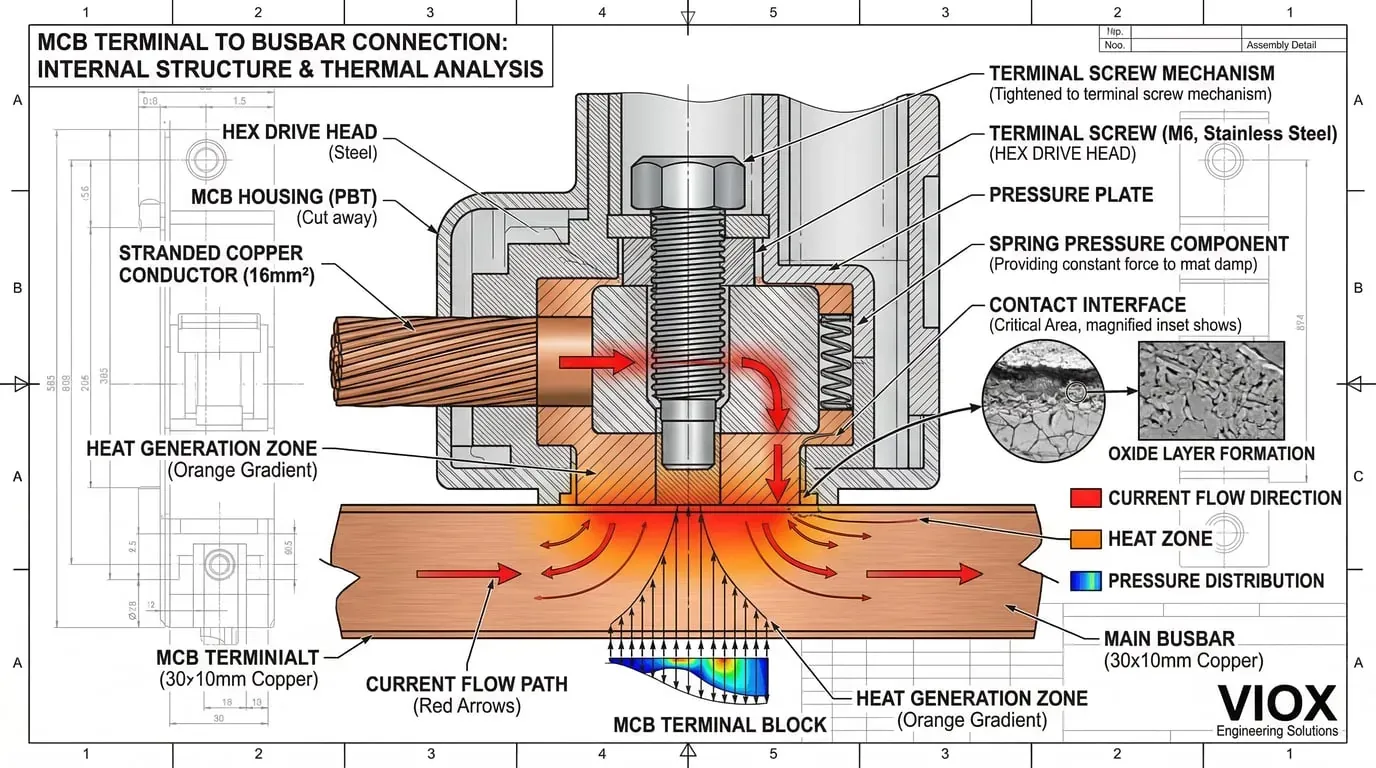
ທາດອົກຊີຂອງທອງແດງ (Cu₂O ແລະ CuO) ມີຄວາມຕ້ານທານສູງກວ່າທອງແດງບໍລິສຸດ 1,000,000 ເທົ່າ. ເຖິງແມ່ນວ່າຊັ້ນອົກຊີທີ່ບາງໆກໍ່ສ້າງສິ່ງກີດຂວາງ insulation ຢູ່ຈຸດສໍາຜັດ.
ຕົວເລັ່ງສິ່ງແວດລ້ອມ: ຄວາມຊຸ່ມຊື່ນ, ການສີດເກືອໃນເຂດແຄມຝັ່ງທະເລ, ສານປົນເປື້ອນທາງອຸດສາຫະກໍາ, ແລະການປ່ຽນແປງອຸນຫະພູມລ້ວນແຕ່ເລັ່ງການຜຸພັງ. ອາລູມີນຽມແມ່ນຮ້າຍແຮງກວ່າເກົ່າ—ມັນສ້າງອາລູມີນຽມອົກຊີ (Al₂O₃) ເກືອບທັນທີເມື່ອຖືກອາກາດ.
ສິ່ງທີ່ຜູ້ຕິດຕັ້ງສ່ວນໃຫຍ່ຂ້າມ: ການກະກຽມພື້ນຜິວທີ່ເໝາະສົມກ່ຽວຂ້ອງກັບການກໍາຈັດຊັ້ນອົກຊີດ້ວຍຜ້າຂັດຫຼືນໍ້າຢາທໍາຄວາມສະອາດ, ຫຼັງຈາກນັ້ນນໍາໃຊ້ສານປະສົມສໍາຜັດໄຟຟ້າ. ຫຼາຍຄົນອີງໃສ່ຄວາມກົດດັນທາງກົນຈັກຢ່າງດຽວເພື່ອທໍາລາຍຮູບເງົາອົກຊີ—ເຊິ່ງເຮັດວຽກໃນເບື້ອງຕົ້ນແຕ່ເສື່ອມໂຊມຕາມການເວລາເມື່ອອົກຊີສ້າງຕົວຄືນໃໝ່.
5. ກະແສໄຟຟ້າໂຫຼດຫຼາຍເກີນໄປ
ໃນຂະນະທີ່ MCBs ປົກປ້ອງວົງຈອນລຸ່ມນໍ້າ, busbar ເອງໂດຍປົກກະຕິແລ້ວບໍ່ມີການປ້ອງກັນຄວາມຮ້ອນສະເພາະ. ຖ້າຫຼາຍວົງຈອນພ້ອມໆກັນດຶງໃກ້ກັບກະແສໄຟຟ້າທີ່ໄດ້ຮັບການຈັດອັນດັບຂອງພວກເຂົາ, ກະແສໄຟຟ້າ busbar ສາມາດເກີນຂອບເຂດຈໍາກັດການອອກແບບໂດຍບໍ່ມີການເຮັດໃຫ້ຕົວຕັດວົງຈອນໃດໆເຮັດວຽກ.
ສິ່ງທ້າທາຍທີ່ທັນສະໄໝ: ກະແສໄຟຟ້າ harmonic ຈາກຕົວຂັບຄວາມຖີ່ປ່ຽນແປງໄດ້, ການສະໜອງພະລັງງານແບບປ່ຽນໂໝດ, ແລະໄຟ LED ປະກອບສ່ວນເຮັດໃຫ້ຄວາມຮ້ອນເກີນກວ່າທີ່ການວັດແທກກະແສໄຟຟ້າ RMS ແນະນໍາ. ກະແສໄຟຟ້າ harmonic ທີສາມລວມກັນທາງຄະນິດສາດໃນ busbar ກາງແທນທີ່ຈະຍົກເລີກ—ກະແສໄຟຟ້າ busbar ກາງສາມາດເກີນກະແສໄຟຟ້າໄລຍະໄດ້.
ຄວາມສ່ຽງ ແລະຜົນສະທ້ອນຂອງ Busbars ທີ່ຮ້ອນເກີນໄປ
ອັນຕະລາຍຈາກໄຟໄໝ້ ແລະຄວາມສ່ຽງຕໍ່ການເກີດ Arc Flash
ແຜງ MCB ໃຊ້ thermoplastics ທີ່ທົນທານຕໍ່ໄຟທີ່ໄດ້ຮັບການຈັດອັນດັບສໍາລັບການເຮັດວຽກຢ່າງຕໍ່ເນື່ອງ 90-120°C. ເມື່ອອຸນຫະພູມ busbar ເກີນຂອບເຂດຈໍາກັດເຫຼົ່ານີ້, ພລາສຕິກຈະອ່ອນລົງ, ຜິດປົກກະຕິ, ແລະປ່ອຍສານລະເຫີຍ. ໃນກໍລະນີທີ່ຮ້າຍແຮງ, ມັນຈະຕິດໄຟ.
ຄວາມຄືບໜ້າ: ການເສື່ອມສະພາບເບື້ອງຕົ້ນເຮັດໃຫ້ເກີດການປ່ຽນສີ ແລະການເຜົາໄໝ້. ເມື່ອ insulation ແຕກຫັກ, ເສັ້ນທາງການຕິດຕາມກາກບອນຈະສ້າງຕົວ, ສ້າງເສັ້ນທາງສໍາລັບກະແສໄຟຟ້າຮົ່ວໄຫຼ. ເສັ້ນທາງເຫຼົ່ານີ້ຮັກສາການເກີດ arc ເຖິງແມ່ນວ່າຫຼັງຈາກການໂຫຼດເກີນຖືກໂຍກຍ້າຍອອກ, ໃນທີ່ສຸດກໍ່ເຮັດໃຫ້ວັດສະດຸອ້ອມຂ້າງຕິດໄຟ.
ອັນຕະລາຍຈາກ arc flash: ເມື່ອການເຊື່ອມຕໍ່ທີ່ເສື່ອມໂຊມລົ້ມເຫລວຢ່າງຮ້າຍແຮງ, ພວກມັນສ້າງ arcs ພະລັງງານສູງທີ່ບັນລຸ 35,000°F (19,400°C). ພະລັງງານລະເບີດເຮັດໃຫ້ທອງແດງລະເຫີຍ, ສ້າງຄື້ນຄວາມກົດດັນ, ແລະໂຄງການໂລຫະທີ່ລະລາຍໄປທົ່ວ enclosure.
ຄວາມເສຍຫາຍຂອງອຸປະກອນ ແລະການຢຸດເຮັດວຽກ
ຄວາມຮ້ອນນໍາໄປຕາມ busbar, ສົ່ງຜົນກະທົບຕໍ່ການເຊື່ອມຕໍ່ MCB ທີ່ຢູ່ຕິດກັນແລະອາດຈະທໍາລາຍຕົວຕັດວົງຈອນເອງ. MCBs ປະກອບດ້ວຍອົງປະກອບການເຮັດວຽກທາງຄວາມຮ້ອນທີ່ຖືກປັບທຽບກັບອຸນຫະພູມສະເພາະ—ຄວາມຮ້ອນພາຍນອກຫຼາຍເກີນໄປປ່ຽນແປງການປັບທຽບ, ເຮັດໃຫ້ເກີດການເຮັດວຽກທີ່ບໍ່ສະດວກຫຼືຄວາມລົ້ມເຫຼວທີ່ຈະເຮັດວຽກໃນລະຫວ່າງຄວາມຜິດພາດຕົວຈິງ.
ຜົນກະທົບທາງດ້ານເສດຖະກິດ: ການຢຸດເຮັດວຽກທີ່ບໍ່ໄດ້ວາງແຜນໄວ້ໃນສິ່ງອໍານວຍຄວາມສະດວກທາງການຄ້າສາມາດມີຄ່າໃຊ້ຈ່າຍຫຼາຍພັນຫາລ້ານຕໍ່ຊົ່ວໂມງ. ພື້ນຖານໂຄງລ່າງທີ່ສໍາຄັນເຊັ່ນ: ສູນຂໍ້ມູນ, ໂຮງຫມໍ, ແລະໂຮງງານຜະລິດຮຽກຮ້ອງໃຫ້ມີການຟື້ນຟູພະລັງງານທັນທີ—ການໂທຫາບໍລິການສຸກເສີນ, ຊິ້ນສ່ວນທີ່ເລັ່ງດ່ວນ, ແຮງງານລ່ວງເວລາ.
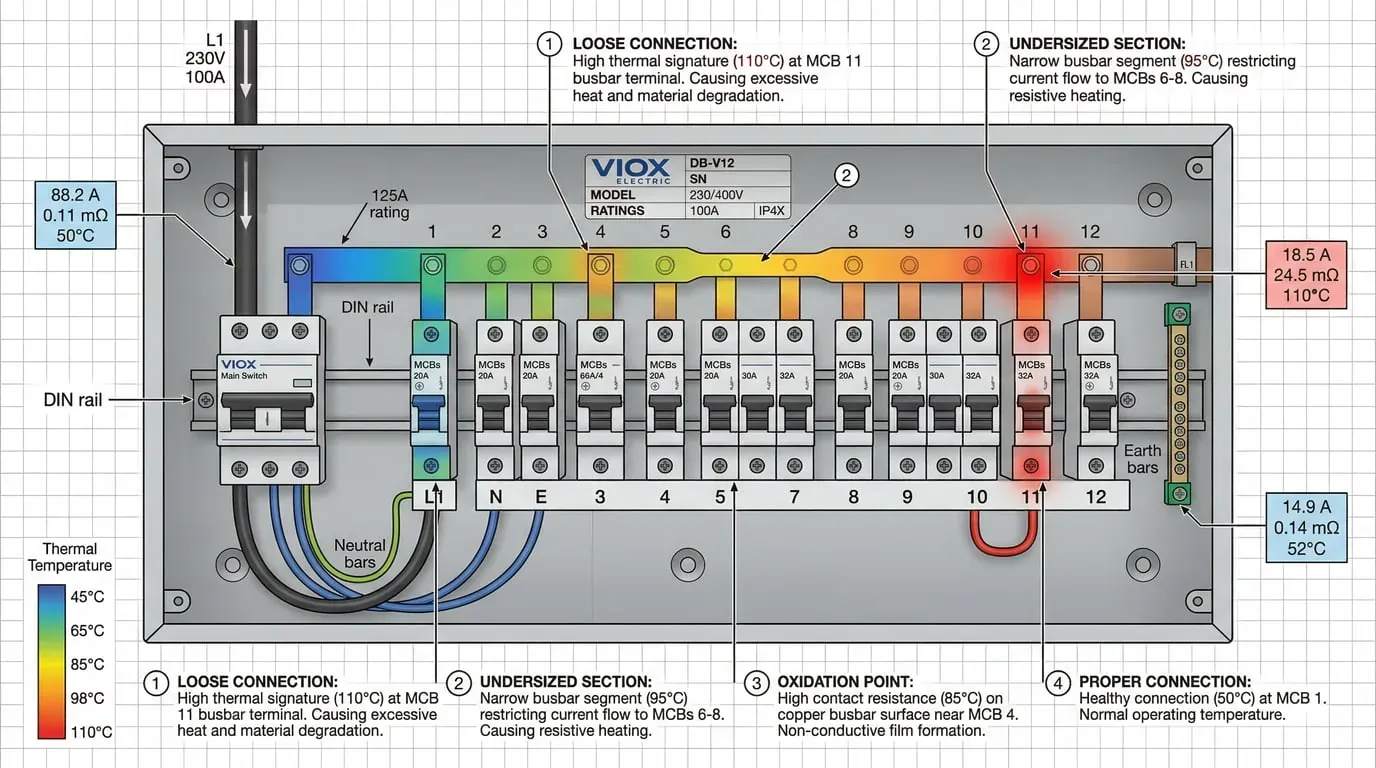
ວິທີການກວດສອບຄວາມຮ້ອນເກີນຂອງບັດບາ
ການຖ່າຍພາບຄວາມຮ້ອນ (ມີປະສິດທິພາບສູງສຸດ)
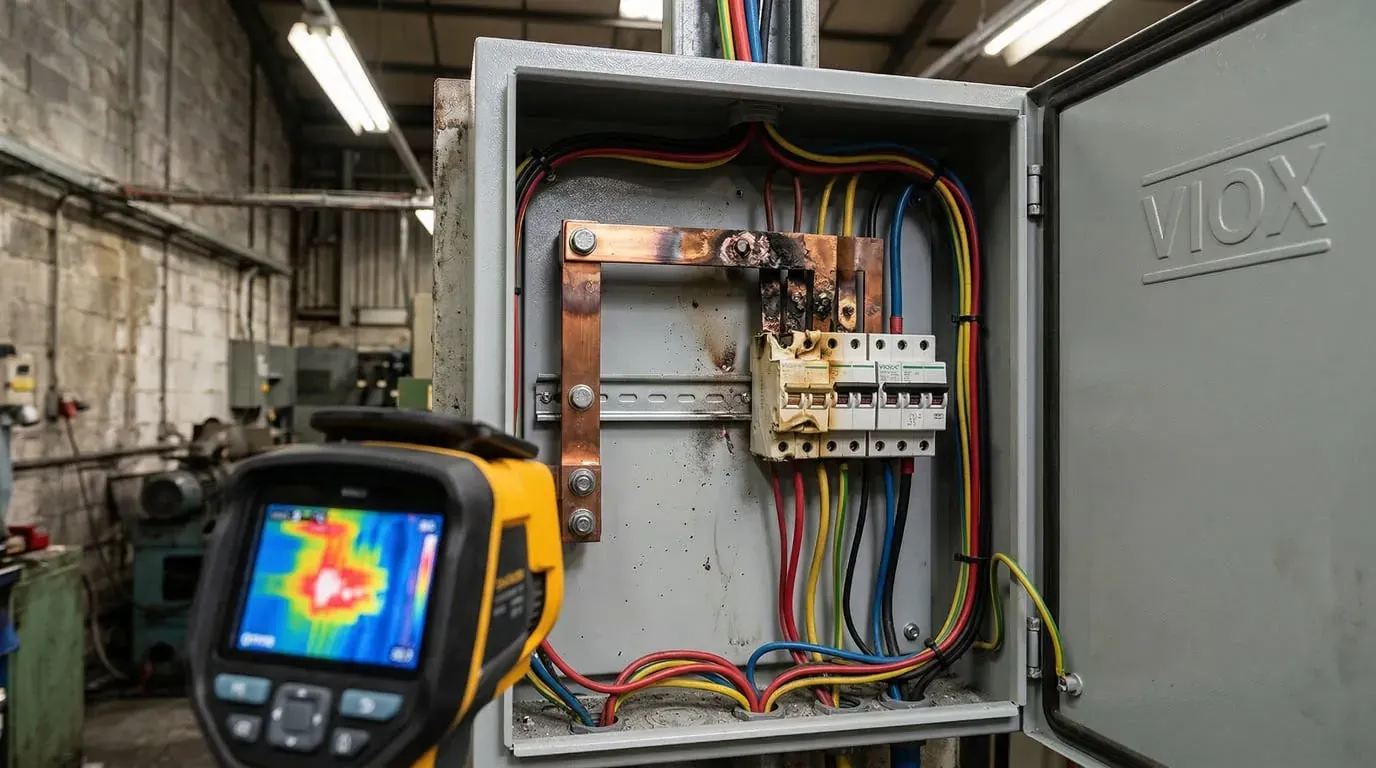
ກ້ອງຖ່າຍຮູບອິນຟາເຣດກວດພົບຈຸດຮ້ອນກ່ອນທີ່ຈະເກີດຄວາມເສຍຫາຍທີ່ເບິ່ງເຫັນໄດ້. ສະແກນແຜງພາຍໃຕ້ເງື່ອນໄຂການໂຫຼດທີ່ໃກ້ຄຽງກັບຄວາມຕ້ອງການສູງສຸດ—ຄວາມຜິດປົກກະຕິທາງຄວາມຮ້ອນຈະເດັ່ນຂຶ້ນເມື່ອປະຈຸບັນເພີ່ມຂຶ້ນ.
ສິ່ງທີ່ຕ້ອງຊອກຫາ:
- ຄວາມແຕກຕ່າງຂອງອຸນຫະພູມ 10-15°C ລະຫວ່າງການເຊື່ອມຕໍ່ທີ່ຄ້າຍຄືກັນ = ບັນຫາທີ່ກໍາລັງພັດທະນາ
- ຄວາມແຕກຕ່າງເກີນ 30°C = ສະພາບຮີບດ່ວນທີ່ຕ້ອງການການປະຕິບັດທັນທີ
- ຈຸດຮ້ອນດຽວ = ການເຊື່ອມຕໍ່ທີ່ວ່າງໃນທ້ອງຖິ່ນ
- ການເພີ່ມຂື້ນຂອງອຸນຫະພູມທີ່ເປັນເອກະພາບໃນທົ່ວພາກສ່ວນບັດບາທັງຫມົດ = ຂະຫນາດນ້ອຍເກີນໄປຫຼືເກີນກໍາລັງ
ຄໍາແນະນໍາ Pro: ທອງແດງເປົ່າມີ emissivity ຕ່ໍາ (0.05-0.15), ປາກົດວ່າເຢັນກວ່າອຸນຫະພູມຕົວຈິງ. ທອງແດງ oxidized ແລະພື້ນຜິວສີມີ emissivity ສູງກວ່າ (0.8-0.95), ໃຫ້ການອ່ານທີ່ຖືກຕ້ອງກວ່າ. ໃຊ້ການວິເຄາະປຽບທຽບແທນທີ່ຈະເປັນຄ່າຢ່າງແທ້ຈິງ.
ການກວດກາສາຍຕາ
ການປ່ຽນສີຂອງທອງແດງ: ສີສົ້ມສົດໃສ → ສີນ້ຳຕານເຂັ້ມ/ດຳ ເມື່ອຊັ້ນ oxide ໜາຂຶ້ນ. ຄວາມຮ້ອນເກີນໄປເຮັດໃຫ້ເກີດການເປື້ອນສີມ່ວງ ຫຼື ສີຟ້າ.
ຄວາມເສຍຫາຍຂອງພລາສຕິກ: ສີຂາວ/ສີເທົາອ່ອນ → ສີເຫຼືອງ → ສີນ້ຳຕານ → ສີດຳ ເມື່ອພລາສຕິກເສື່ອມໂຊມ. ການບິດເບືອນ, ການລະລາຍ, ຫຼືການຜິດປົກກະຕິຊີ້ໃຫ້ເຫັນເຖິງອຸນຫະພູມທີ່ສູງກວ່າຂອບເຂດປົກກະຕິ.
ຕົວຊີ້ວັດກົນຈັກ: ສະກູວ່າງທີ່ທ່ານສາມາດຫັນດ້ວຍມື, ເກືອທອງແດງສີຂຽວ (ການກັດກ່ອນ), ອະລູມິນຽມອອກໄຊສີຂາວ, ຮອຍແຕກໃນ insulation, ຊ່ອງຫວ່າງທີ່ເບິ່ງເຫັນໄດ້ລະຫວ່າງບັດບາແລະ terminals MCB.
ການທົດສອບໄຟຟ້າຕົວຈິງ
ການທົດສອບ clamp meter ງ່າຍດາຍ: ວັດແທກກະແສໄຟຟ້າຢູ່ທີ່ breaker ຕົ້ນຕໍແລະປຽບທຽບກັບຜົນລວມຂອງວົງຈອນສ່ວນບຸກຄົນ. ຄວາມແຕກຕ່າງທີ່ສໍາຄັນຊີ້ໃຫ້ເຫັນບັນຫາ.
ການທົດສອບແຮງດັນໄຟຟ້າຫຼຸດລົງ: ວັດແທກແຮງດັນໄຟຟ້າລະຫວ່າງ terminals breaker ຕົ້ນຕໍແລະ terminals MCB ສ່ວນບຸກຄົນພາຍໃຕ້ການໂຫຼດ. ການຫຼຸດລົງຫຼາຍເກີນໄປ (>1-2% ຂອງ nominal) ຊີ້ໃຫ້ເຫັນເຖິງຄວາມຕ້ານທານສູງໃນເສັ້ນທາງການແຈກຢາຍ.
ການທົດສອບການສໍາພັດ (de-energized ເທົ່ານັ້ນ): ຫຼັງຈາກການປິດເຄື່ອງ, ຮູ້ສຶກວ່າສະກູ terminal ວ່າງ. ຖ້າທ່ານສາມາດຫັນພວກມັນໄດ້ໂດຍບໍ່ມີເຄື່ອງມື, ພວກມັນບໍ່ໄດ້ຖືກ torqued ຢ່າງຖືກຕ້ອງ.
ການແກ້ໄຂທັນທີ
ການ Re-torquing ການເຊື່ອມຕໍ່ Terminal
ຂັ້ນຕອນ:
- De-energize panel, ຢືນຢັນແຮງດັນໄຟຟ້າສູນ, ນໍາໃຊ້ lockout/tagout
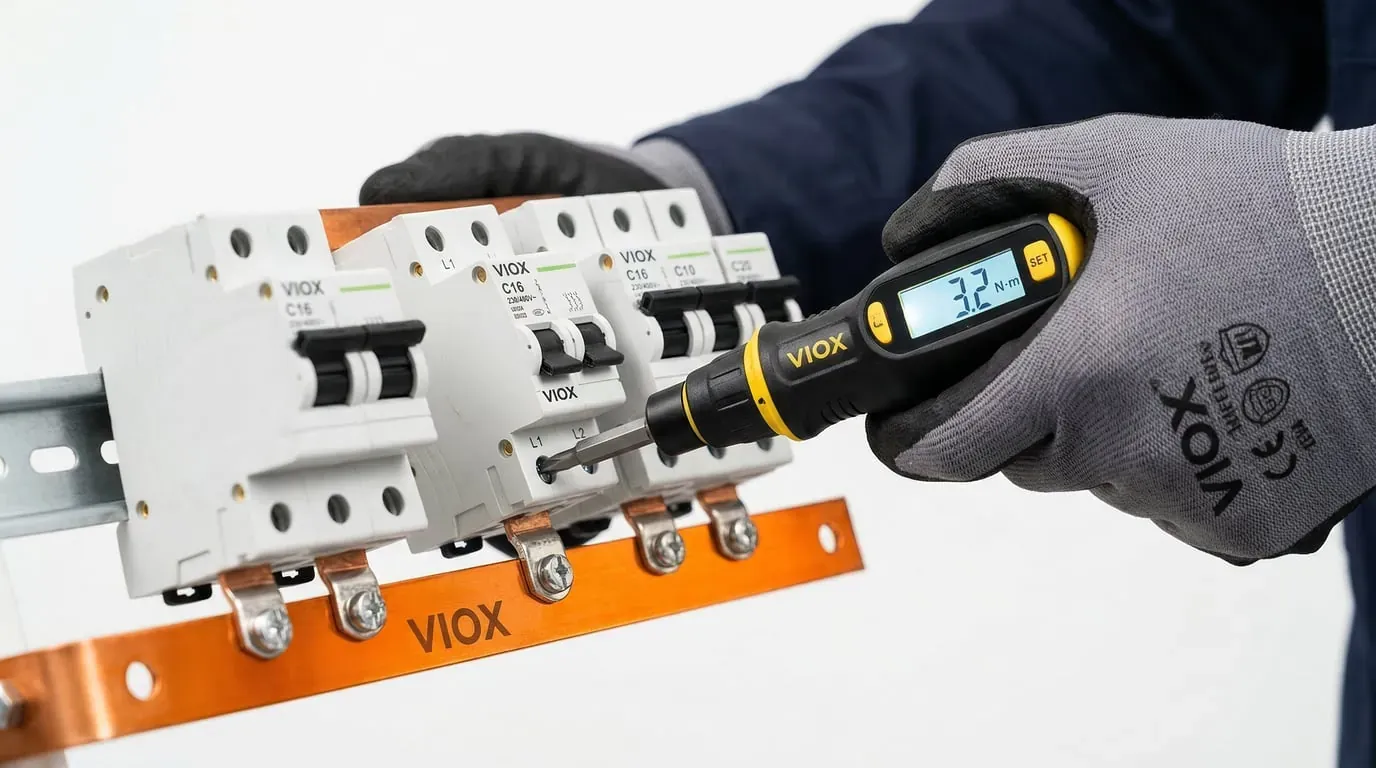
- ໃຊ້ screwdriver torque calibrated: 2.5-3.5 N·m ສໍາລັບ MCBs ທີ່ຢູ່ອາໄສ, 4-6 N·m ສໍາລັບ breakers ອຸດສາຫະກໍາ
- ນໍາໃຊ້ torque ຢ່າງສະດວກ, ບໍ່ແມ່ນໃນ jerks
- ສໍາລັບ busbars ແບບ comb, ເຮັດວຽກຢ່າງເປັນລະບົບຈາກປາຍຫາປາຍ, ຫຼັງຈາກນັ້ນເຮັດຊ້ໍາອີກ
- ກວດສອບວ່າ busbar ບໍ່ສາມາດຍ້າຍຫຼືຍົກອອກຈາກ terminals ໄດ້
- ຫມາຍສະກູ torqued ດ້ວຍສີເພື່ອເປີດເຜີຍການວ່າງໃນອະນາຄົດ
ເວລາທີ່ຈະປ່ຽນແທນ vs. ສ້ອມແປງ
ປ່ຽນແທນຖ້າທ່ານເຫັນ:
- ການປ່ຽນສີ (ທອງແດງທີ່ຮ້ອນພໍທີ່ຈະປ່ຽນເປັນສີນ້ຳຕານ/ດຳ ມີການປ່ຽນແປງທາງໂລຫະຖາວອນ)
- ການບິດເບືອນຫຼືການຜິດປົກກະຕິ
- Charring ຂອງພລາສຕິກອ້ອມຂ້າງ
- ຮອຍແຕກຫຼືຄວາມເສຍຫາຍທາງກົນຈັກ
ການກະກຽມພື້ນຜິວສໍາລັບ busbars ໃຫມ່:
- ເອົາການເຄືອບປ້ອງກັນ, ນໍ້າມັນ, oxidation ອອກດ້ວຍຜ້າຂັດ abrasive ລະອຽດ
- ນໍາໃຊ້ຊັ້ນບາງໆຂອງສານປະສົມຕິດຕໍ່ໄຟຟ້າ
- ຫຼີກເວັ້ນການປະສົມຫຼາຍເກີນໄປ—ມັນດຶງດູດຂີ້ຝຸ່ນ
ຄວາມເຂົ້າໃຈ ຄວາມແຕກຕ່າງລະຫວ່າງທອງແດງແລະອາລູມິນຽມ busbars ຊ່ວຍເລືອກອຸປະກອນການທົດແທນທີ່ຖືກຕ້ອງ.
ການຄຸ້ມຄອງການໂຫຼດ
ຖ້າຄວາມຮ້ອນເກີນໄປເປັນຜົນມາຈາກການໂຫຼດຫຼາຍເກີນໄປ, ທາງເລືອກທັນທີປະກອບມີ:
- ຕັດການເຊື່ອມຕໍ່ຊົ່ວຄາວຫຼືຍົກຍ້າຍວົງຈອນກະແສໄຟຟ້າສູງ
- Stagger ການດໍາເນີນງານຂອງອຸປະກອນພະລັງງານສູງ
- ຕິດຕັ້ງກະດານແຈກຢາຍເພີ່ມເຕີມເພື່ອແບ່ງການໂຫຼດ
- ໃຊ້ເຄື່ອງວັດແທກພະລັງງານບັນທຶກຂໍ້ມູນເພື່ອກໍານົດຮູບແບບການໂຫຼດຕົວຈິງແລະເວລາຄວາມຕ້ອງການສູງສຸດ
ຍຸດທະສາດການປ້ອງກັນໃນໄລຍະຍາວ
ໂປຣໂຕຄອນການຕິດຕັ້ງທີ່ເຫມາະສົມ
- ການກະກຽມພື້ນຜິວ: ເອົາຊັ້ນ oxide ອອກ, ນໍາໃຊ້ສານປະສົມຕິດຕໍ່
- ການກວດສອບການຈັດຕໍາແຫນ່ງ: ຮັບປະກັນການມີສ່ວນຮ່ວມຢ່າງເຕັມທີ່ກ່ອນທີ່ຈະ tightening
- ການນໍາໃຊ້ Torque: ໃຊ້ເຄື່ອງມື calibrated, ປະຕິບັດຕາມ specs ຂອງຜູ້ຜະລິດ
- ການທົດສອບຫຼັງການຕິດຕັ້ງ: ການຖ່າຍພາບຄວາມຮ້ອນພາຍໃຕ້ການໂຫຼດໃນລະຫວ່າງການມອບຫມາຍ
- ເອກະສານ: ບັນທຶກຄ່າ torque, specs busbar, ວັນທີຕິດຕັ້ງ
ຕາຕະລາງການບໍາລຸງຮັກສາ
ການຕິດຕັ້ງການຄ້າໃນປະຈຸບັນສູງໃນສະພາບແວດລ້ອມທີ່ຮຸນແຮງ: ການຖ່າຍພາບຄວາມຮ້ອນປະຈໍາປີ
ແຜງທີ່ຢູ່ອາໄສໃນສະພາບທີ່ອ່ອນໂຍນ: ທຸກໆ 3-5 ປີ
ກໍານົດເວລາ Re-torquing:
- ເບື້ອງຕົ້ນ: 6-12 ເດືອນຫຼັງຈາກການຕິດຕັ້ງ (ຊົດເຊີຍສໍາລັບການຂີ່ລົດຖີບຄວາມຮ້ອນ)
- ຕໍ່ມາ: ທຸກໆ 3-5 ປີທີ່ຢູ່ອາໄສ, ປະຈໍາປີສໍາລັບການຄ້າ
ການບໍາລຸງຮັກສາການຄາດຄະເນ: ການເຊື່ອມຕໍ່ທີ່ສະແດງໃຫ້ເຫັນການເພີ່ມຂຶ້ນ 15-20 ອົງສາເຊນຊຽດ ເມື່ອທຽບກັບເສັ້ນຖານ ຄວນໄດ້ຮັບການກວດສອບ. ການເພີ່ມຂຶ້ນເກີນ 30 ອົງສາເຊນຊຽດ ຮຽກຮ້ອງໃຫ້ມີການດໍາເນີນການທັນທີ.
ການຄັດເລືອກວັດສະດຸ
ທອງແດງທຽບກັບອາລູມີນຽມ:
- ທອງແດງ: 60% ມີການນໍາໄຟຟ້າສູງກວ່າ, ມີຄວາມແຂງແຮງກົນຈັກດີກວ່າ, ທົນທານຕໍ່ການຜຸພັງດີເລີດ
- ອາລູມີນຽມ: ຄ່າໃຊ້ຈ່າຍຕ່ໍາ, ນ້ໍາຫນັກເບົາກວ່າ, ແຕ່ຕ້ອງການພື້ນທີ່ໜ້າຕັດຂະຫນາດໃຫຍ່ກວ່າ ແລະ ເຕັກນິກການເຊື່ອມຕໍ່ພິເສດ
ການປິ່ນປົວພື້ນຜິວ:
- ການເຄືອບດ້ວຍກົ່ວ: ທົ່ວໄປທີ່ສຸດ, ທົນທານຕໍ່ການຜຸພັງໄດ້ດີ, ຄວາມຕ້ານທານການຕິດຕໍ່ຕ່ໍາ
- ການເຄືອບດ້ວຍເງິນ: ຄວາມຕ້ານທານການຕິດຕໍ່ຕ່ໍາສຸດ, ລາຄາແພງ, ສະຫງວນໄວ້ສໍາລັບຄໍາຮ້ອງສະຫມັກທີ່ມີກະແສໄຟຟ້າສູງ (>400A)
- ທອງແດງເປົ່າ: ການນໍາໄຟຟ້າທີ່ດີເລີດແຕ່ຜຸພັງໄດ້ງ່າຍ, ຕ້ອງການການບໍາລຸງຮັກສາເປັນໄລຍະ
ສໍາລັບຄໍາແນະນໍາທີ່ສົມບູນແບບ, ໃຫ້ອ້າງອີງເຖິງນີ້ ຄູ່ມືລະບົບ busbar ສໍາເລັດ.
ເອກະສານອ້າງອີງດ່ວນ: ສາເຫດທົ່ວໄປ ແລະ ວິທີແກ້ໄຂ
| ສາເຫດ | ອຸນຫະພູມເພີ່ມຂຶ້ນ | ວິທີການກວດພົບ | ຄວາມຫຍຸ້ງຍາກໃນການແກ້ໄຂ | ທາມລາຍ |
|---|---|---|---|---|
| ການເຊື່ອມຕໍ່ວ່າງ | 40-80 ອົງສາເຊນຊຽດ | ການຖ່າຍພາບຄວາມຮ້ອນ, ສາຍຕາ | ງ່າຍ (ປັບແໜ້ນຄືນໃໝ່) | ມື້ຫາເດືອນ |
| Busbar ຂະໜາດນ້ອຍເກີນໄປ | 20-50 ອົງສາເຊນຊຽດ | ການວັດແທກການໂຫຼດ, ຄວາມຮ້ອນ | ຍາກ (ປ່ຽນແທນ) | ເດືອນຫາປີ |
| ການຈັດລຽງບໍ່ດີ | 30-70 ອົງສາເຊນຊຽດ | ສາຍຕາ, ຄວາມຮ້ອນ | ປານກາງ (ຕິດຕັ້ງຄືນໃໝ່) | ຫຼາຍອາທິດ ຫາຫຼາຍເດືອນ |
| ການຜຸພັງ | 15-40 ອົງສາເຊນຊຽດ | ສາຍຕາ, ການທົດສອບຄວາມຕ້ານທານ | ປານກາງ (ທໍາຄວາມສະອາດ/ປ່ຽນແທນ) | ເດືອນຫາປີ |
| ໂຫຼດເກີນ | 25-60 ອົງສາເຊນຊຽດ | ການວັດແທກປະຈຸບັນ | ປານກາງ (ແຈກຢາຍຄືນໃໝ່) | ເດືອນຫາປີ |
ຖາມເລື້ອຍໆ
ອຸນຫະພູມໃດທີ່ຊີ້ບອກເຖິງຄວາມຮ້ອນສູງເກີນໄປທີ່ເປັນອັນຕະລາຍ?
ສູງກວ່າ 70 ອົງສາເຊນຊຽດ ເມື່ອທຽບກັບອຸນຫະພູມອາກາດລ້ອມຮອບ (ໂດຍປົກກະຕິ 110 ອົງສາເຊນຊຽດຢ່າງແທ້ຈິງ) ຮຽກຮ້ອງໃຫ້ມີການແຊກແຊງທັນທີ. ສູງກວ່າ 90 ອົງສາເຊນຊຽດ ເມື່ອທຽບກັບອຸນຫະພູມອາກາດລ້ອມຮອບ (130 ອົງສາເຊນຊຽດຢ່າງແທ້ຈິງ) ໝາຍເຖິງຄວາມສ່ຽງຕໍ່ຄວາມລົ້ມເຫຼວທີ່ຈະເກີດຂຶ້ນ. ແຕ່ຢ່າລໍຖ້າຈົນກວ່າຈະຮອດເກນຢ່າງແທ້ຈິງ—ການເຊື່ອມຕໍ່ໃດໆກໍຕາມທີ່ຮ້ອນກວ່າການເຊື່ອມຕໍ່ທີ່ຄ້າຍຄືກັນອື່ນໆ ຄວນໄດ້ຮັບການກວດສອບ.
ຂ້ອຍສາມາດສືບຕໍ່ດໍາເນີນການກັບ busbar ທີ່ອຸ່ນໄດ້ບໍ?
ບໍ່. ຖ້າການຖ່າຍພາບຄວາມຮ້ອນສະແດງໃຫ້ເຫັນ 20-30 ອົງສາເຊນຊຽດສູງກວ່າປົກກະຕິ, ໃຫ້ກໍານົດເວລາສ້ອມແປງພາຍໃນສອງສາມມື້ຫາສອງສາມອາທິດ. ສູງກວ່າ 40 ອົງສາເຊນຊຽດຮຽກຮ້ອງໃຫ້ມີການຫຼຸດຜ່ອນການໂຫຼດທັນທີແລະການສ້ອມແປງສຸກເສີນ. ການສືບຕໍ່ການດໍາເນີນງານມີຄວາມສ່ຽງຕໍ່ຄວາມລົ້ມເຫຼວຢ່າງຮ້າຍແຮງແລະໄຟໄຫມ້.
ຂ້ອຍຄວນขันແໜ້ນການເຊື່ອມຕໍ່ຄືນໃໝ່ເລື້ອຍໆສໍ່າໃດ?
ໃຫ້ກວດສອບແຮງບິດຄືນໃໝ່ໃນລະຫວ່າງ 6-12 ເດືອນຫຼັງຈາກການຕິດຕັ້ງ. ຈາກນັ້ນ, ທຸກໆ 3-5 ປີສຳລັບບ້ານຢູ່ອາໄສ, ແລະທຸກໆປີສຳລັບລະບົບການຄ້າທີ່ມີກະແສໄຟຟ້າສູງ. ການຖ່າຍພາບຄວາມຮ້ອນອາດຈະເປີດເຜີຍການເຊື່ອມຕໍ່ສະເພາະທີ່ຕ້ອງການການກວດສອບລະຫວ່າງໄລຍະເວລາທີ່ກຳນົດໄວ້.
ຂ້ອຍຕ້ອງການເຄື່ອງມືຫຍັງແທ້ໆ?
ສິ່ງທີ່ຈຳເປັນ: ໄຂຄວງແຮງບິດທີ່ໄດ້ມາດຕະຖານ (ຂະໜາດ 2-6 N·m), ກ້ອງຖ່າຍຮູບຄວາມຮ້ອນ ຫຼື ເຄື່ອງວັດແທກອຸນຫະພູມ IR, ນໍ້າຢາທຳຄວາມສະອາດໜ້າສຳຜັດ, ມັລຕິມິເຕີພື້ນຖານ, ແຄລມແມັດ. ສິ່ງທີ່ຄວນມີ: ເຄື່ອງວັດແທກຄວາມຕ້ານທານຂອງໜ້າສຳຜັດສຳລັບການກວດສອບລາຍລະອຽດ.
ຂ້ອຍສາມາດສ້ອມແປງ busbar ທີ່ເສຍຫາຍໄດ້ບໍ?
ບໍ່. ຖ້າທອງແດງປ່ຽນສີ ຫຼື ພລາສຕິກອ້ອມຂ້າງມັນໄດ້ລະລາຍ/ໄໝ້, ໃຫ້ປ່ຽນບັດບາ. ການປ່ຽນແປງທາງໂລຫະວິທະຍາຈາກຄວາມຮ້ອນສູງເກີນໄປເຮັດໃຫ້ຄຸນສົມບັດທາງໄຟຟ້າ ແລະ ກົນຈັກເສື່ອມລົງຢ່າງຖາວອນ. ການຜຸພັງໜ້ອຍໆ ຢູ່ດ້ານນອກສາມາດເຮັດຄວາມສະອາດໄດ້, ແຕ່ຄວາມເສຍຫາຍຈາກຄວາມຮ້ອນຮຽກຮ້ອງໃຫ້ປ່ຽນໃໝ່.
ຂ້ອຍຈະປ້ອງກັນສິ່ງນີ້ໃນການຕິດຕັ້ງໃໝ່ໄດ້ແນວໃດ?
ສາມຂັ້ນຕອນທີ່ສໍາຄັນ: (1) ເລືອກອົງປະກອບທີ່ມີລະດັບກະແສໄຟຟ້າພຽງພໍບວກກັບຂອບເຂດຄວາມປອດໄພ, (2) ປະຕິບັດຕາມເຕັກນິກການຕິດຕັ້ງຢ່າງລະມັດລະວັງ—ການກຽມພື້ນຜິວ, ການຈັດລຽນ, ແຮງບິດທີ່ເຫມາະສົມ, (3) ການຖ່າຍຮູບຄວາມຮ້ອນໃນລະຫວ່າງການເປີດເຄື່ອງໃນເບື້ອງຕົ້ນພາຍໃຕ້ການໂຫຼດເພື່ອຈັບຂໍ້ບົກພ່ອງໃນການຕິດຕັ້ງກ່ອນທີ່ພວກມັນຈະກາຍເປັນບັນຫາ.