

នៅលើទំព័រនេះ
បញ្ហាស្នូល៖ ចរន្តផ្ទាល់ (DC) មិនមានចំណុចឆ្លងកាត់សូន្យដោយធម្មជាតិឡើយ
កុងតាក់ទ័រ DC ត្រូវការការរចនាសម្រាប់ពន្លត់ធ្នូអគ្គិសនីពិសេស ដោយសារ៖ ចរន្តផ្ទាល់ (DC) មិនមានចំណុចឆ្លងកាត់សូន្យដោយធម្មជាតិ. នៅក្នុងសៀគ្វីចរន្តឆ្លាស់ (AC) ចរន្តឆ្លងកាត់ចំណុចសូន្យចំនួនពីរដងក្នុងមួយជុំ៖ ១០០ ដងក្នុងមួយវិនាទីសម្រាប់ប្រេកង់ 50 Hz ឬ ១២០ ដងក្នុងមួយវិនាទីសម្រាប់ប្រេកង់ 60 Hz។ ខណៈពេលដែលចរន្តស្មើនឹងសូន្យនោះ ជួយឱ្យធ្នូអគ្គិសនីក្នុងសៀគ្វី AC រលត់ទៅវិញដោយខ្លួនឯង។.
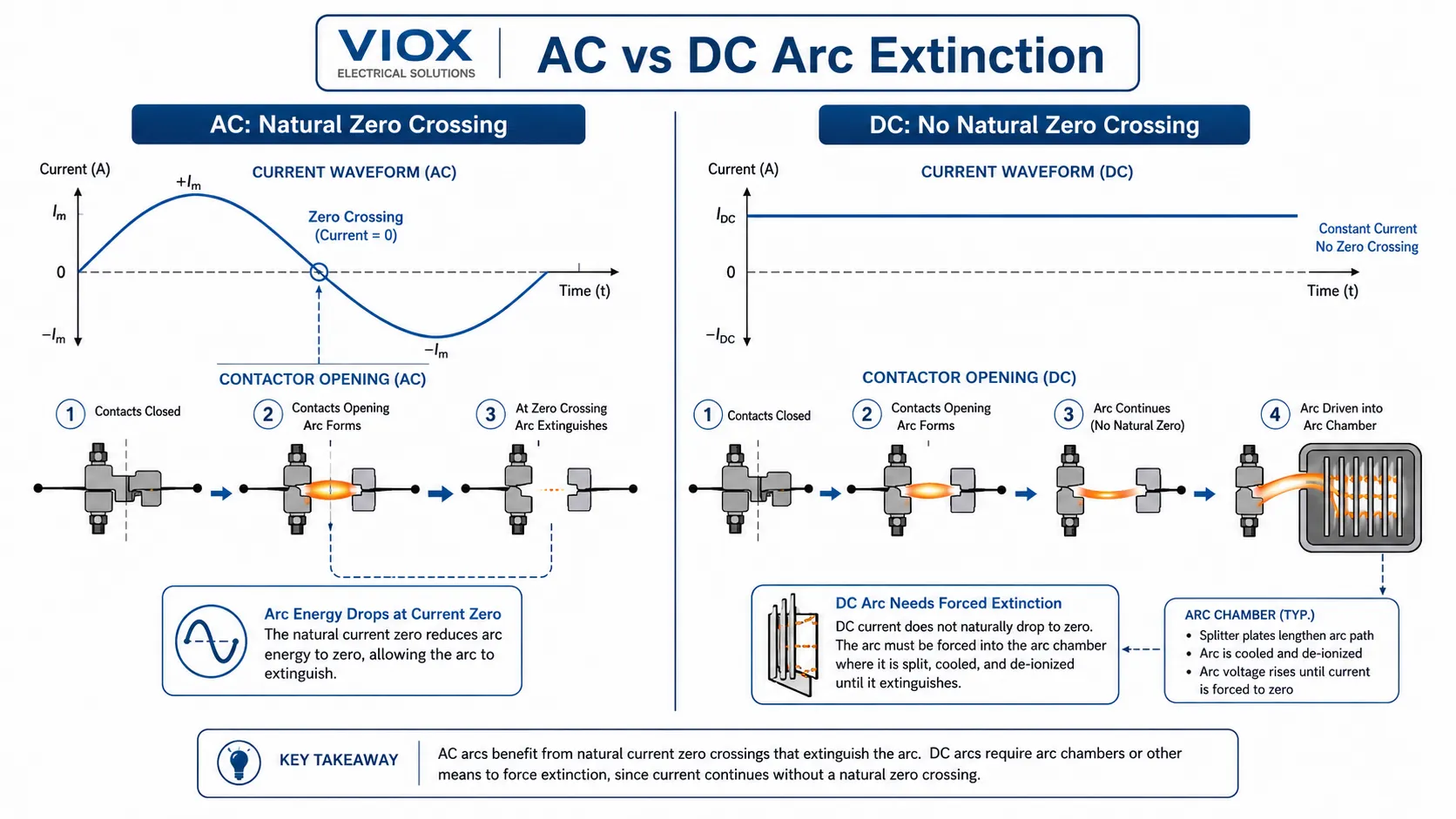
នៅក្នុងសៀគ្វីចរន្តផ្ទាល់ (DC) ចរន្តហូរក្នុងទិសដៅតែមួយជានិច្ច។ នៅពេលដែលកុងតាក់ទ័រដាច់សៀគ្វីក្រោមបន្ទុក ធ្នូអគ្គិសនីរវាងទំនាក់ទំនង (Contacts) មិនមានចន្លោះពេលដែលចរន្តស្មើនឹងសូន្យឡើយ។ ប្រសិនបើកុងតាក់ទ័រមិនបង្ខំឱ្យធ្នូអគ្គិសនីនោះលាតសន្ធឹង ធ្វើឱ្យត្រជាក់ បំបែក ឬផ្លាស់ទីចូលទៅក្នុងបន្ទប់ពន្លត់ធ្នូ (Arc Chamber) ទេនោះ ធ្នូអគ្គិសនីអាចបន្តឆេះរហូតដល់បំផ្លាញទំនាក់ទំនង ធ្វើឱ្យវាជាប់ស្អិត ឬបំផ្លាញឧបករណ៍ទាំងមូល។.
នេះជាមូលហេតុដែលកុងតាក់ទ័រ DC ពិតប្រាកដ មិនមែនគ្រាន់តែជាកុងតាក់ទ័រ AC ដែលមានឧបករណ៏ (Coil) ជាប្រភេទ DC ប៉ុណ្ណោះទេ។ វាអាចត្រូវការ៖
- ការបំបែកទំនាក់ទំនងកាន់តែធំ
- បំពង់ពន្លត់ធ្នូ ឬបន្ទប់ពន្លត់ធ្នូដែលមានភាពរឹងមាំជាងមុន
- ដែកឆក់ ឬឧបករណ៏ផ្លុំធ្នូដោយដែកឆក់
- បន្ទប់ទំនាក់ទំនងដែលបំពេញដោយឧស្ម័ន បិទជិតដោយសុញ្ញកាស ឬបិទជិតដោយខ្យល់
- សម្ភារៈទំនាក់ទំនងដែលធន់នឹងធ្នូអគ្គិសនី
- ការតម្រង់ទិសប៉ូលឱ្យបានត្រឹមត្រូវក្នុងករណីដែលការរចនាមានកំណត់ប៉ូល
- ការវាយតម្លៃប្រភេទនៃការប្រើប្រាស់ដែលត្រូវនឹងបន្ទុក DC ជាក់ស្តែង
ច្បាប់អនុវត្តជាក់ស្តែងគឺសាមញ្ញ៖
ប្រើឧបករណ៍កុងតាក់ទ័រ (Contactor) ប្រភេទ DC សម្រាប់ការកាត់តចរន្តផ្ទុក DC ហើយជ្រើសរើសវាដោយផ្អែកលើវ៉ុល, ចរន្ត, ប្រភេទនៃការប្រើប្រាស់, ប៉ូល (Polarity), ភាពអាំងឌុចស្យុងនៃបន្ទុក (Load inductance), យុទ្ធសាស្ត្រដោះស្រាយកំហុស និងកាតព្វកិច្ចនៃការកាត់ត - មិនមែនផ្អែកលើកម្រិតអំពែរតែមួយមុខនោះទេ។.
សម្រាប់ព័ត៌មានលម្អិតបន្ថែមអំពីឧបករណ៍នេះ សូមមើលការណែនាំរបស់ VIOX ស្តីពី តើកុងតាក់ទ័រជាអ្វី ដែលពន្យល់ពីតួនាទីមូលដ្ឋាននៃការកាត់តចរន្ត។ ប្រសិនបើអ្នកកំពុងប្រៀបធៀបប្រភេទកុងតាក់ទ័រ អត្ថបទដែលពាក់ព័ន្ធស្តីពី កុងតាក់ទ័រ AC និង DC គ្របដណ្តប់លើភាពខុសគ្នាកាន់តែទូលំទូលាយរវាងឧបករណ៍ទាំងពីរប្រភេទនេះ។.
គន្លឹះយក
- ការកាត់តចរន្ត AC ទទួលបានអត្ថប្រយោជន៍ពីការឆ្លងកាត់ចំណុចសូន្យនៃចរន្តដោយធម្មជាតិ ចំណែកឯការកាត់តចរន្ត DC មិនមានលក្ខណៈបែបនេះទេ។.
- ធ្នូអគ្គិសនី (Arc) នៃចរន្ត DC អាចនៅតែបន្តមានថាមពលដរាបណាប្រភពអាចផ្គត់ផ្គង់វ៉ុល និងចរន្តបានគ្រប់គ្រាន់។.
- ការផ្លុំដោយដែនម៉ាញេទិក (Magnetic blowout) ប្រើប្រាស់ដែនម៉ាញេទិកដើម្បីរុញធ្នូអគ្គិសនីចេញពីចំណុចប៉ះ (contacts) ចូលទៅក្នុងបន្ទប់ពន្លត់ធ្នូ (arc chamber)។.
- កុងតាក់ទ័រចរន្តផ្ទាល់ (DC contactors) មួយចំនួនមានកំណត់ប៉ូល។ ការតភ្ជាប់ចរន្តផ្ទុកក្នុងទិសដៅខុសអាចកាត់បន្ថយប្រសិទ្ធភាពនៃមេដែកផ្លុំខាងក្នុង។.
- ប្រភេទនៃការប្រើប្រាស់ចរន្តផ្ទាល់ (DC utilization categories) ដូចជា DC-1, DC-3, និង DC-5 មានសារៈសំខាន់ ដោយសារបន្ទុកប្រភេទរេស៊ីស្តង់ (resistive loads) ម៉ូទ័រប្រភេទស៊ុន (shunt motors) និងម៉ូទ័រប្រភេទស៊េរី (series motors) មិនបង្កភាពតានតឹងដល់កុងតាក់ទ័រដូចគ្នាឡើយ។.
- កុងតាក់ទ័រមិនមែនជាឧបករណ៍ការពារការឆ្លងចរន្តខ្លី (short-circuit) ដោយខ្លួនឯងនោះទេ។ វាត្រូវតែប្រើប្រាស់រួមគ្នាជាមួយហ្វុយស៊ីប (fuses) ឧបករណ៍កាត់ចរន្តផ្ទាល់ (DC circuit breakers) ឬឧបករណ៍ការពារផ្សេងទៀត។.
- កំហុសឆ្គងដ៏គ្រោះថ្នាក់បំផុតក្នុងការជ្រើសរើសគឺការជំនួសកុងតាក់ទ័រចរន្តផ្ទាល់ (DC) ដោយកុងតាក់ទ័រចរន្តឆ្លាស់ (AC) គ្រាន់តែដោយសារឃើញលេខតង់ស្យុង និងចរន្តស្រដៀងគ្នា។.
មូលហេតុដែលការឆ្លងកាត់ចំណុចសូន្យ (Zero Crossing) ធ្វើឱ្យការប្តូរចរន្តឆ្លាស់ (AC) កាន់តែងាយស្រួល
ធ្នូអគ្គិសនីកើតឡើងនៅពេលដែលចំណុចប៉ះបែកចេញពីគ្នាក្នុងខណៈដែលចរន្តនៅតែហូរ។ នៅពេលគម្លាតរវាងចំណុចប៉ះកាន់តែធំ ភាពតានតឹងនៃតង់ស្យុងឆ្លងកាត់គម្លាតនោះអាចធ្វើឱ្យខ្យល់ ឬឧស្ម័នរវាងចំណុចប៉ះទាំងនោះក្លាយជាអ៊ីយ៉ុង។ នៅពេលដែលគម្លាតនោះក្លាយជាចំហាយអគ្គិសនី ចរន្តនឹងបន្តហូរតាមរយៈផ្លូវប្លាស្មាដែលក្តៅ ដែលហៅថាធ្នូអគ្គិសនី។.
នៅក្នុងប្រព័ន្ធចរន្តឆ្លាស់ (AC) រលកសញ្ញានៃចរន្តនឹងឆ្លងកាត់ចំណុចសូន្យដោយធម្មជាតិនៅរៀងរាល់ពាក់កណ្តាលវដ្ត។ នៅប្រេកង់ 50 Hz វាកើតឡើង 100 ដងក្នុងមួយវិនាទី។ នៅប្រេកង់ 60 Hz វាកើតឡើង 120 ដងក្នុងមួយវិនាទី។ នៅពេលដែលចរន្តឈានដល់ចំណុចសូន្យ ថាមពលដែលផ្គត់ផ្គង់ដល់ធ្នូអគ្គិសនីនឹងបាត់ទៅវិញមួយពេល។ ប្រសិនបើគម្លាតរវាងទំនាក់ទំនង (contact gap) ការស្តារឡើងវិញនូវលក្ខណៈឌីអេឡិចត្រិច និងបន្ទប់ពន្លត់ធ្នូ (arc chamber) មានលក្ខណៈគ្រប់គ្រាន់ នោះធ្នូអគ្គិសនីនឹងមិនឆេះឡើងវិញបន្ទាប់ពីឆ្លងកាត់ចំណុចសូន្យនោះទេ។.
នេះមិនមែនមានន័យថាឧបករណ៍កុងតាក់ទ័រ AC មានភាពសាមញ្ញ ឬគ្មានហានិភ័យនោះទេ។ កុងតាក់ទ័រ AC នៅតែត្រូវការការរចនាទំនាក់ទំនងត្រឹមត្រូវ បំពង់ពន្លត់ធ្នូ (arc chutes) ការកំណត់កម្រិតប្រភេទនៃការប្រើប្រាស់ និងការសម្របសម្រួលចរន្តឆ្លាស់ក្នុងករណីឆ្លងចរន្តខ្លី (short-circuit coordination)។ ប៉ុន្តែចរន្តឆ្លាស់ (AC) ផ្តល់ឱ្យកុងតាក់ទ័រនូវឱកាសពន្លត់ធ្នូដោយធម្មជាតិ។.
ចរន្តផ្ទាល់ (DC) មិនមានលក្ខណៈបែបនេះទេ។.
ហេតុអ្វីបានជាធ្នូអគ្គិសនីនៃចរន្តផ្ទាល់ (DC) ពិបាកពន្លត់ជាង
នៅក្នុងសៀគ្វីចរន្តផ្ទាល់ (DC) ចរន្តមិនមានការផ្លាស់ប្តូរទិសដៅ ហើយមិនឆ្លងកាត់ចំណុចសូន្យដោយធម្មជាតិឡើយ។ នៅពេលដែលធ្នូអគ្គិសនី DC កើតឡើង ប្រភពថាមពលនឹងបន្តរុញចរន្តតាមរយៈគន្លងធ្នូនោះ។ ដើម្បីពន្លត់វា កុងតាក់ទ័រត្រូវតែបង្ខំឱ្យតង់ស្យុងនៃធ្នូកើនឡើងលើសពីអ្វីដែលសៀគ្វីអាចទ្រាំទ្របាន។.
ក្នុងន័យជាក់ស្តែង ឧបករណ៍ត្រូវតែធ្វើឱ្យធ្នូអគ្គិសនីពិបាករក្សាភាពស្ថិតស្ថេរដោយ៖
- ការបង្កើនប្រវែងធ្នូ
- ការផ្លាស់ទីធ្នូឱ្យឆ្ងាយពីផ្ទៃទំនាក់ទំនង
- ការធ្វើឱ្យធ្នូអគ្គិសនីត្រជាក់
- ការបំបែកធ្នូអគ្គិសនីទៅជាផ្នែកតូចៗ
- ការបង្ខំធ្នូអគ្គិសនីឱ្យចូលទៅក្នុងបន្ទះ ឬបន្ទប់បំបាត់អ៊ីយ៉ុង (deionizing plates or chambers)
- ការប្រើប្រាស់បរិយាកាសដែលពោរពេញដោយឧស្ម័ន ល្បាយអ៊ីដ្រូសែន ឬការផ្សាភ្ជាប់ដោយសុញ្ញកាស ដើម្បីកែលម្អការងើបឡើងវិញនៃឌីអេឡិចត្រិច (dielectric recovery) និងកាត់បន្ថយភាពជាប់លាប់នៃធ្នូអគ្គិសនី
- ការបើកទំនាក់ទំនងឱ្យលឿនគ្រប់គ្រាន់ដើម្បីជៀសវាងការសឹករិចរិលនៃទំនាក់ទំនងក្នុងរយៈពេលយូរ
នេះគឺជាហេតុផលពិតប្រាកដដែលធ្វើឱ្យឧបករណ៍កុងតាក់ទ័រចរន្តផ្ទាល់ (DC contactors) ជារឿយៗមានទំហំធំជាង មានតម្លៃថ្លៃជាង និងមានលក្ខណៈពិសេសជាងកុងតាក់ទ័រចរន្តឆ្លាស់ (AC contactors) ដែលមានសមត្ថភាពប្រហាក់ប្រហែលគ្នា។ រចនាសម្ព័ន្ធបន្ថែមនេះមិនមែនគ្រាន់តែសម្រាប់សោភ័ណភាពនោះទេ ប៉ុន្តែវាជាឧបករណ៍ដែលចាំបាច់ដើម្បីទប់ទល់នឹងការផ្តាច់បន្ទុកចរន្តផ្ទាល់ (DC load)។.
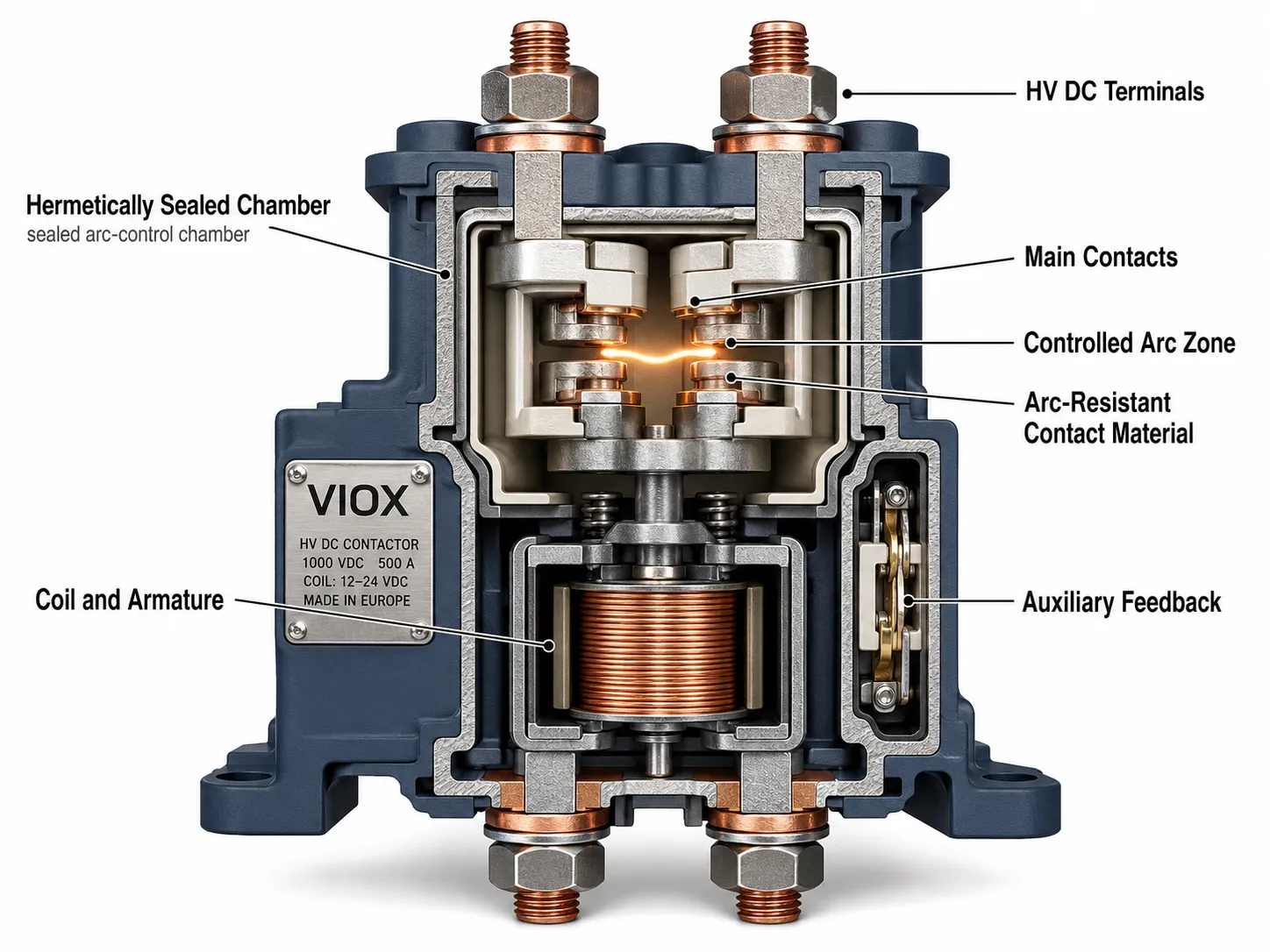
នៅក្នុងកម្មវិធីយានយន្តអគ្គិសនី (EV) និងការផ្ទុកថាមពលថ្មតង់ស្យុងខ្ពស់ នេះជាមូលហេតុដែលកុងតាក់ទ័រចរន្តផ្ទាល់ជាច្រើនប្រើបន្ទប់ធ្នូអគ្គិសនីដែលផ្សាភ្ជាប់ជិត ជាជាងប្រព័ន្ធទំនាក់ទំនងដែលបើកចំហក្នុងខ្យល់។ អាស្រ័យលើក្រុមផលិតផល ក្រុមហ៊ុនផលិតអាចប្រើបន្ទប់ដែលពោរពេញដោយឧស្ម័ន ល្បាយឧស្ម័នដែលមានមូលដ្ឋានលើអ៊ីដ្រូសែន ឬការសាងសង់បែបឧបករណ៍កាត់ផ្តាច់សុញ្ញកាស (vacuum interrupter) ដើម្បីកែលម្អការគ្រប់គ្រងធ្នូអគ្គិសនី និងការងើបឡើងវិញនៃឌីអេឡិចត្រិច។ មធ្យោបាយពិតប្រាកដគឺអាស្រ័យលើផលិតផលនីមួយៗ ដូច្នេះវាគួរតែត្រូវបានផ្ទៀងផ្ទាត់ពីសន្លឹកទិន្នន័យ (datasheet) របស់កុងតាក់ទ័រ ជាជាងការសន្និដ្ឋានពីទម្រង់ខាងក្រៅ។.
តើមានអ្វីកើតឡើងនៅខាងក្នុងឧបករណ៍កុងតាក់ទ័រចរន្តផ្ទាល់ (DC Contactor) នៅពេលវាដាច់ចរន្ត
នៅពេលកុងតាក់ទ័រ DC ដាច់ចរន្តក្រោមបន្ទុក ដំណើរការនេះកើតឡើងយ៉ាងឆាប់រហ័ស ប៉ុន្តែលំដាប់លំដោយនៃព្រឹត្តិការណ៍មានសារៈសំខាន់៖
- ខ្សែស្រោប (Coil) ត្រូវបានកាត់ផ្តាច់ថាមពល។. ផ្នែកអាម៉ាធ័រ (Armature) ចាប់ផ្តើមបញ្ចេញ ដោយអាស្រ័យលើការទប់ស្កាត់នៃខ្សែស្រោប កម្លាំងរុញនៃស្ព្រីង និងការថយចុះនៃដែនម៉ាញេទិក។.
- មុខកុងតាក់ (Contacts) ចាប់ផ្តើមបែកចេញពីគ្នា។. ចរន្តអគ្គិសនីព្យាយាមបន្តហូរតាមរយៈផ្ទៃមុខកុងតាក់ដែលកំពុងរួមតូច។.
- កម្ដៅក្នុងតំបន់កើតឡើងនៅត្រង់ចំណុចតូចៗនៃមុខកុងតាក់។. ផ្ទៃមុខកុងតាក់មិនដែលរលោងឥតខ្ចោះនោះទេ ដូច្នេះចរន្តនឹងប្រមូលផ្តុំហូរតាមរយៈចំណុចប៉ោងតូចៗទាំងនោះ។.
- ការអ៊ីយ៉ូដចាប់ផ្តើមនៅក្នុងចន្លោះផ្កាភ្លើង។. ចំហាយលោហៈ និងឧស្ម័នដែលអ៊ីយ៉ូដបង្កើតបានជាផ្លូវចម្លងអគ្គិសនី។.
- ធ្នូអគ្គិសនីចរន្តផ្ទាល់ (DC arc) កើតឡើង។. ដោយគ្មានចំណុចកាត់សូន្យ (zero crossing) ចរន្តនៅតែបន្តហូរតាមផ្លូវប្លាស្មា។.
- ប្រព័ន្ធគ្រប់គ្រងធ្នូអគ្គិសនីចាប់ផ្តើមដំណើរការ។. ការផ្លុំដោយដែនម៉ាញេទិក, ផ្លូវរត់ធ្នូ, បន្ទះពន្លត់ធ្នូ, ការបំពេញឧស្ម័ន ឬការរចនាបែបសុញ្ញកាស ត្រូវតែធ្វើចលនា និងពន្លត់ធ្នូអគ្គិសនីនោះ។.
- ការស្តារឡើងវិញនូវកម្លាំងឌីអេឡិចត្រិក (Dielectric recovery) ត្រូវតែរក្សាបាន។. បន្ទាប់ពីពន្លត់រួច ចន្លោះដែលបើកចំហត្រូវតែអាចទប់ទល់នឹងវ៉ុលប្រព័ន្ធ និងវ៉ុលបណ្តោះអាសន្នដោយមិនឱ្យមានការឆេះឡើងវិញ។.
កំណត់ចំណាំបច្ចេកទេសរបស់ TE Connectivity ស្តីពីការបញ្ចេញធ្នូអគ្គិសនី (Arcing) បានពិពណ៌នាអំពីរបៀបដែលចំណុចខ្ពស់ៗខ្នាតមីក្រូនៅលើទំនាក់ទំនង (Contacts) កម្ដៅខ្លាំង និងរបៀបដែលការបញ្ចេញធ្នូធ្ងន់ធ្ងរអាចរួមចំណែកដល់ការផ្ទេរសម្ភារៈ និងការផ្សារជាប់គ្នា។ នេះមានសារៈសំខាន់ជាពិសេសនៅក្នុងចរន្តផ្ទាល់ (DC) ពីព្រោះការផ្ទេរសម្ភារៈមានទំនោរកើតឡើងជាលំដាប់ក្នុងទិសដៅតែមួយ មិនមែនឆ្លាស់គ្នាដូចដែលវានឹងកើតឡើងក្នុងការបិទបើកចរន្តឆ្លាស់ (AC) ដោយចៃដន្យនោះទេ។.
ការផ្លុំដោយដែនម៉ាញេទិក (Magnetic Blowout)៖ វិធីសាស្ត្រគ្រប់គ្រងធ្នូអគ្គិសនីស្នូលនៅក្នុងឧបករណ៍កុងតាក់ទ័រ DC ជាច្រើន
ការផ្លុំដោយដែនម៉ាញេទិក គឺជាវិធីសាស្ត្រពន្លត់ធ្នូអគ្គិសនី DC ដែលពេញនិយមបំផុតមួយ។.
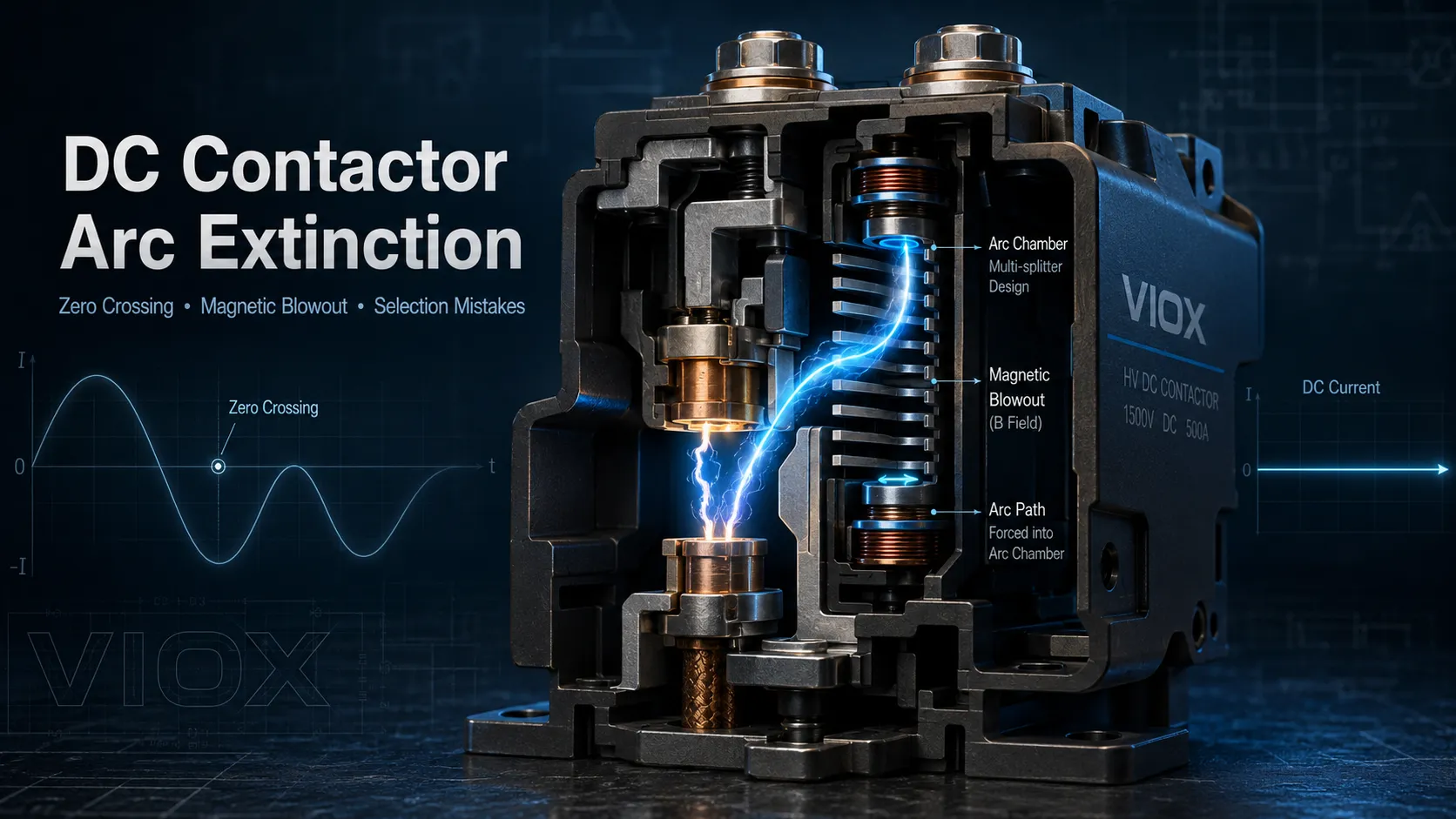
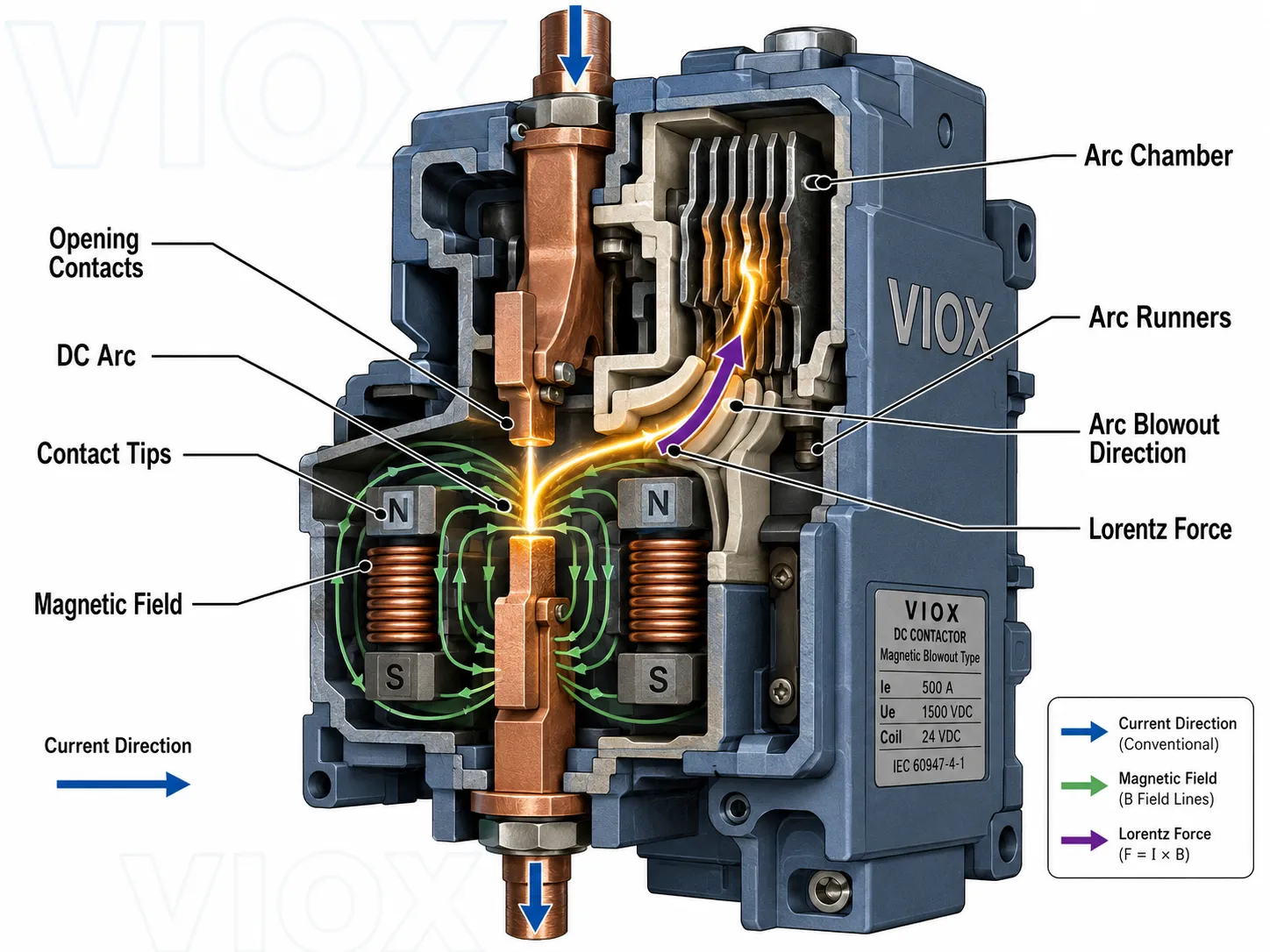
គោលការណ៍នេះផ្អែកលើកម្លាំង Lorentz៖ ធ្នូអគ្គិសនីដែលមានចរន្តឆ្លងកាត់នៅក្នុងដែនម៉ាញេទិកនឹងទទួលរងកម្លាំងមួយ។ នៅក្នុងកុងតាក់ទ័រ DC មេដែកអចិន្ត្រៃយ៍ ឬឧបករណ៏ផ្លុំ (Blowout coils) បង្កើតដែនម៉ាញេទិកនៅជិតទំនាក់ទំនង។ នៅពេលដែលធ្នូកើតឡើង ដែនម៉ាញេទិកនឹងរុញធ្នូឱ្យចេញឆ្ងាយពីផ្ទៃទំនាក់ទំនង និងឆ្ពោះទៅរកផ្លូវបង្ហូរធ្នូ (Arc chute) ឬបន្ទប់ពន្លត់ធ្នូ (Arc chamber)។.
គោលដៅមិនមែនគ្រាន់តែដើម្បី “ផ្លាស់ទី” ធ្នូអគ្គិសនីនោះទេ។ គោលដៅគឺដើម្បី៖
- ទាញធ្នូអគ្គិសនីចេញពីចុងទំនាក់ទំនង
- ពន្លូតផ្លូវនៃធ្នូអគ្គិសនី
- បង្កើនតង់ស្យុងនៃធ្នូអគ្គិសនី
- រុញធ្នូអគ្គិសនីចូលទៅក្នុងរចនាសម្ព័ន្ធត្រជាក់/បំបែកអ៊ីយ៉ុង
- កាត់បន្ថយការសឹកនៃទំនាក់ទំនងអគ្គិសនី
- ការពារការឆេះបន្តរវាងទំនាក់ទំនងមេ
នេះជាមូលហេតុដែលបន្ទប់ពន្លត់ធ្នូអគ្គិសនី និងប្រព័ន្ធម៉ាញេទិកត្រូវតែធ្វើការរួមគ្នា។ ម៉ាញេទិកដែលគ្មានផ្លូវធ្នូអគ្គិសនីត្រឹមត្រូវគឺមិនពេញលេញឡើយ ហើយបន្ទប់ពន្លត់ធ្នូដែលគ្មានការផ្លាស់ទីធ្នូអគ្គិសនីប្រកបដោយប្រសិទ្ធភាព អាចនឹងមិនទទួលបានធ្នូអគ្គិសនីបានលឿនគ្រប់គ្រាន់នោះទេ។.
រូបភាពដែលមានប្រយោជន៍សម្រាប់ផ្នែកនេះគឺរូបភាពកាត់នៃឧបករណ៍កុងតាក់ទ័រចរន្តផ្ទាល់ (DC Contactor) ដែលបង្ហាញពីធ្នូអគ្គិសនីរវាងទំនាក់ទំនងដែលកំពុងបើក ទិសដៅនៃដែនម៉ាញេទិក ទិសដៅនៃកម្លាំង Lorentz និងធ្នូអគ្គិសនីដែលត្រូវបានរុញចូលទៅក្នុងបន្ទប់ពន្លត់ធ្នូ។ ដ្យាក្រាមនោះតែងតែពន្យល់ពីការផ្លុំធ្នូដោយម៉ាញេទិក (Magnetic Blowout) បានលឿនជាងការសរសេរជាកថាខណ្ឌជាច្រើន។.
មូលហេតុដែលប៉ូលនៃកុងតាក់ទ័រ DC មានសារៈសំខាន់
កុងតាក់ទ័រ DC មួយចំនួនគឺ មានប៉ូល (polarized). ស្ថានីយថាមពលសំខាន់ៗរបស់វាអាចត្រូវបានសម្គាល់ដោយ + និង -, ហើយចរន្តត្រូវតែហូរក្នុងទិសដៅដែលបានកំណត់ ដើម្បីទទួលបានសមត្ថភាពកាត់ផ្តាច់អតិបរមា។.
កំណត់ចំណាំការប្រើប្រាស់របស់ Sensata/Gigavac បានពន្យល់ពីបញ្ហានេះយ៉ាងច្បាស់៖ កុងតាក់ទ័រ (contactors) ជាច្រើនអាចផ្ទុកចរន្តបានទាំងពីរទិសនៅពេលបិទ ប៉ុន្តែការប្តូរ ឬការកាត់ផ្តាច់ចរន្តគឺខុសគ្នា។ មេដែកផ្លុំធ្នូ (blowout magnets) ខាងក្នុងអាចត្រូវបានបង្កើនប្រសិទ្ធភាពសម្រាប់ទិសដៅជាក់លាក់នៃការហូរនៃចរន្ត។ ប្រសិនបើដំឡើងមិនត្រឹមត្រូវ ធ្នូអគ្គិសនីអាចត្រូវបានរុញចេញពីបន្ទប់ដែលបានកំណត់ ឬប្រសិទ្ធភាពនៃការផ្លុំធ្នូអាចនឹងថយចុះ។.
This distinction is critical:
| ពាក្យ | អត្ថន័យ | ហេតុអ្វីបានជាវាសំខាន់ |
|---|---|---|
| អាចផ្ទុកចរន្តទ្វេទិស (bidirectional current) | ទំនាក់ទំនងដែលបិទអាចចម្លងចរន្តបានទាំងពីរទិស | នេះមិនមានន័យដោយស្វ័យប្រវត្តិថាឧបករណ៍អាចកាត់ផ្តាច់ចរន្តបានទាំងពីរទិសនោះទេ |
| កុងតាក់ទ័រដែលមានប៉ូល (Polarized contactor) | ស្ថានីយតភ្ជាប់ត្រូវតែតភ្ជាប់ទៅតាមប៉ូលដែលបានកំណត់ | ទិសដៅចរន្តមិនត្រឹមត្រូវអាចកាត់បន្ថយប្រសិទ្ធភាពនៃការកាត់ផ្ដាច់ធ្នូអគ្គិសនី |
| កុងតាក់ទ័រប្រភេទប្តូរទិសដៅពីរ (Bidirectional switching contactor) | រចនាឡើងដើម្បីកាត់ផ្ដាច់ចរន្តក្នុងទិសដៅទាំងពីរ | ចាំបាច់សម្រាប់ប្រព័ន្ធអាគុយ ប្រព័ន្ធបង្កើតថាមពលឡើងវិញ និងប្រព័ន្ធថាមពលទិសដៅពីរមួយចំនួន |
នៅក្នុងប្រព័ន្ធផ្ទុកថាមពលអាគុយ (BESS) យានយន្តអគ្គិសនី ប្រព័ន្ធផ្ទុកថាមពលពន្លឺព្រះអាទិត្យ និងប្រព័ន្ធសាកថ្មល្បឿនលឿន DC ទិសដៅនៃចរន្តប្រហែលជាមិនតែងតែមានលក្ខណៈសាមញ្ញនោះទេ។ ការសាកថ្ម ការបញ្ចេញថ្ម ការប្រតិបត្តិការបង្កើតថាមពលឡើងវិញ ផ្លូវសាកថ្មបឋម និងផ្លូវនៃកំហុសឆ្គង សុទ្ធតែត្រូវតែពិចារណា។ ប្រសិនបើចរន្តអាចបញ្ច្រាសទិសដៅក្នុងលក្ខខណ្ឌធម្មតា ឬមិនធម្មតា សូមផ្ទៀងផ្ទាត់ថាតើកុងតាក់ទ័រនោះត្រូវបានវាយតម្លៃសម្រាប់ការប្តូរទិសដៅពីរពិតប្រាកដឬអត់។.
សម្រាប់ស្ថាបត្យកម្មការពារដែលនៅជាប់គ្នា មគ្គុទ្ទេសក៍របស់ VIOX សម្រាប់ ប្រដាប់កាត់ភ្លើង DC សម្រាប់ប្រព័ន្ធពន្លឺព្រះអាទិត្យ អាគុយ និងយានយន្តអគ្គិសនី គឺជាការអានបន្តដែលមានប្រយោជន៍។.
កុងតាក់ទ័រចរន្តផ្ទាល់ (DC) ទល់នឹង កុងតាក់ទ័រចរន្តឆ្លាស់ (AC)៖ តើអ្វីដែលផ្លាស់ប្តូរពិតប្រាកដ?
| កត្តាជ្រើសរើស | AC contactor | ឧបករណ៍ទំនាក់ទំនង DC |
|---|---|---|
| ការជួយពន្លត់ធ្នូអគ្គិសនីតាមរយៈទម្រង់រលក (Waveform) | ការឆ្លងកាត់ចំណុចសូន្យនៃចរន្តតាមធម្មជាតិជួយដល់ការពន្លត់ធ្នូអគ្គិសនី | គ្មានការឆ្លងកាត់ចំណុចសូន្យតាមធម្មជាតិទេ ដូច្នេះធ្នូអគ្គិសនីត្រូវតែបង្ខំឱ្យរលត់ |
| ការរចនាបន្ទប់ធ្នូ | ជាទូទៅមានភាពសាមញ្ញជាងសម្រាប់ថ្នាក់ថាមពលជាក់ស្តែងដូចគ្នា | មានភាពស្មុគស្មាញជាង ដែលអាចទាមទារឱ្យមានការប្រើប្រាស់ប្រព័ន្ធផ្លុំម៉ាញេទិក (Magnetic blowout) ឬបន្ទប់បិទជិត |
| គម្លាតទំនាក់ទំនង (Contact gap) | បានរចនាឡើងជុំវិញកាតព្វកិច្ចនៃការប្តូរចរន្តឆ្លាស់ (AC) និងប្រភេទនៃការប្រើប្រាស់ | ជារឿយៗទាមទារឱ្យមានអ៊ីសូឡង់ចរន្តផ្ទាល់ (DC) ដែលមានប្រសិទ្ធភាពខ្ពស់ជាងមុន និងការគ្រប់គ្រងគន្លងធ្នូអគ្គិសនី |
| ភាពប្រែប្រួលទៅនឹងប៉ូល (Polarity sensitivity) | ទំនាក់ទំនងមេជាធម្មតាមិនមានភាពប្រែប្រួលទៅនឹងប៉ូលសម្រាប់ចរន្តឆ្លាស់ (AC) នោះទេ | កុងតាក់ទ័រចរន្តផ្ទាល់ (DC) មួយចំនួនមានការកំណត់ប៉ូល |
| លំនាំនៃការសឹករបស់ទំនាក់ទំនង | ការផ្ទេរសម្ភារៈអាចមានភាពស្មើគ្នាក្រោមប្រតិបត្តិការចរន្តឆ្លាស់ (AC) ដោយចៃដន្យ | ការផ្ទេរសម្ភារៈអាចមានទិសដៅជាក់លាក់ និងមានសភាពធ្ងន់ធ្ងរជាងមុន |
| សារៈសំខាន់នៃប្រភេទបន្ទុក | AC-1, AC-3, AC-4 ជាដើម. | DC-1, DC-3, DC-5 និងកម្រិតវ៉ុល DC ជាក់លាក់របស់អ្នកផលិត |
| ការប្រើប្រាស់ខុសទូទៅ | ទំហំតូចពេកសម្រាប់កាតព្វកិច្ចម៉ូទ័រ ឬប្រេកង់ប្តូរខ្ពស់ | កុងតាក់ទ័រ AC ដែលប្រើលើបន្ទុក DC, ខុសប៉ូល, ខុសប្រភេទ DC |
ចំណុចវិស្វកម្មដ៏សំខាន់គឺ វ៉ុលដូចគ្នា និងចរន្តដូចគ្នា មិនមានន័យថាមានកាតព្វកិច្ចប្តូរដូចគ្នាទេ. កុងតាក់ទ័រ (Contactor) ដែលមានកម្រិតវ៉ុល 250 VAC នៅចរន្តជាក់លាក់មួយ អាចមានកម្រិតផ្ដាច់ចរន្ត DC ទាបជាង ឬខុសគ្នាទាំងស្រុង។ សូមអានផ្នែក DC នៅក្នុងសន្លឹកទិន្នន័យបច្ចេកទេស (Datasheet) ជានិច្ច។.
ប្រភេទនៃការប្រើប្រាស់ចរន្ត DC (DC Utilization Categories): DC-1, DC-3 និង DC-5
ស្តង់ដារ IEC 60947-4-1 និង UL 60947-4-1 កំណត់ពីតម្រូវការសម្រាប់កុងតាក់ទ័រ និងឧបករណ៍ចាប់ផ្ដើមម៉ូទ័រ (Motor-starter)។ ឯកសារបច្ចេកទេសរបស់ Schneider Electric បានសង្ខេបប្រភេទនៃការប្រើប្រាស់ចរន្ត DC ដូចខាងក្រោម៖
| ប្រភេទ | បន្ទុកធម្មតា (Typical load) | ផលប៉ះពាល់ក្នុងការជ្រើសរើស (Selection implication) |
|---|---|---|
| DC-1 | បន្ទុក DC ដែលមិនមានអាំងឌុចទ័រ ឬមានអាំងឌុចទ័រតិចតួច | ងាយស្រួលជាងបន្ទុកម៉ូទ័រ ប៉ុន្តែនៅតែតម្រូវឱ្យមានកម្រិតផ្ដាច់ចរន្ត DC |
| DC-3 | ម៉ូទ័រប្រភេទ Shunt: ការចាប់ផ្ដើម, ការបញ្ឈប់ភ្លាមៗ (Plugging), ការរំកិលបន្តិចម្ដងៗ (Inching), ការហ្វ្រាំងដោយថាមពលអគ្គិសនី (Dynamic braking) | មានភាពធ្ងន់ធ្ងរជាង ដោយសារថាមពលម៉ូទ័រ និងលក្ខខណ្ឌនៃការប្ដូរចរន្ត (Switching conditions) |
| DC-5 | ម៉ូទ័រប្រភេទ Series: ការចាប់ផ្តើម (starting), ការបញ្ឈប់ភ្លាមៗ (plugging), ការរំកិលបន្តិចម្តងៗ (inching), ការហ្វ្រាំងដោយប្រើថាមពលអគ្គិសនី (dynamic braking) | ការប្រើប្រាស់ម៉ូទ័រ DC ក្នុងលក្ខខណ្ឌធ្ងន់ធ្ងរ; កុំប្រើការវាយតម្លៃ DC-1 ជំនួសឱ្យការវាយតម្លៃនេះ |
ចំណុចនេះមានសារៈសំខាន់ដោយសារតែការវាយតម្លៃអំពែររបស់កុងតាក់ទ័រ DC មិនមែនជាលេខសកលនោះទេ។ ឧបករណ៍មួយអាចផ្ទុកចរន្តអគ្គិសនីបន្តបានក្នុងកម្រិតជាក់លាក់មួយ ប៉ុន្តែសមត្ថភាពរបស់វាក្នុងការកាត់ផ្តាច់ចរន្តនោះអាស្រ័យទៅលើ៖
- វ៉ុល DC
- ភាពเหนี่ยวนำ (inductance) នៃបន្ទុក
- កម្រិតចរន្តអគ្គិសនី
- ថេរពេលវេលា (time constant)
- ប្រភេទនៃការប្រើប្រាស់
- ការរៀបចំទំនាក់ទំនង (contact arrangement)
- ចំនួនប៉ូល (poles) តម្រៀបជាស៊េរី ក្នុងករណីដែលអាចអនុវត្តបាន
- ប្រេកង់ប្តូរ
- សីតុណ្ហភាពព័ទ្ធជុំវិញ
- ប៉ូល (polarity)
- លក្ខខណ្ឌនៃកំហុសដែលរំពឹងទុក
ប្រសិនបើឯកសារបច្ចេកទេសផ្តល់នូវកម្រិតវ៉ុល/ចរន្តខុសៗគ្នាសម្រាប់ DC-1 និង DC-3 សូមប្រើប្រភេទដែលត្រូវនឹងបន្ទុក (load)។ កុំជ្រើសរើសយកជួរឈរដែលមានតម្លៃខ្ពស់បំផុតដោយមិនពិនិត្យឱ្យបានច្បាស់លាស់។.
ក្នុងករណីដែលប្រើប្រាស់ឧបករណ៍កុងតាក់ទ័រ DC ពិសេស
Battery Energy Storage Systems (ប្រព័ន្ធផ្ទុកថាមពលថ្ម)
ប្រព័ន្ធអាគុយប្រើប្រាស់កុងតាក់ទ័រ DC សម្រាប់ការផ្តាច់កញ្ចប់អាគុយ, ការសាកភ្លើងបឋម (precharge), ការបិទបើកខ្សែវិជ្ជមាន/អវិជ្ជមានមេ, ផ្លូវផ្តាច់ភ្លើងបន្ទាន់ និងប្រព័ន្ធផ្តាច់ភ្លើងសម្រាប់ថែទាំ។ បញ្ហាប្រឈមគឺកញ្ចប់អាគុយអាចបញ្ចេញចរន្តកំហុស (fault current) ខ្ពស់ខ្លាំង ហើយប្រព័ន្ធអាចមានផ្ទុកកុងដង់សាត័រធំៗនៅក្នុងអាំងវឺតទ័រ ឬប្រព័ន្ធបំប្លែងថាមពល។.
កុងតាក់ទ័រ DC មេនៅក្នុងប្រព័ន្ធ BESS គួរតែត្រូវបានជ្រើសរើសដោយផ្អែកលើ៖
- ការរចនាប្រព័ន្ធសាកភ្លើងបឋម (precharge circuit)
- ការសម្របសម្រួលរវាងហ្វុយស៊ីប ឬឧបករណ៍កាត់ផ្តាច់ចរន្តផ្ទាល់ (DC breaker)
- សមត្ថភាពទប់ទល់នឹងចរន្តឆ្លងកាត់ (short-circuit current) របស់អាគុយ
- លក្ខណៈនៃចរន្តទ្វេទិស
- ការត្រួតពិនិត្យអ៊ីសូឡង់ និងការរកឃើញកំហុសឆ្គង
- ការគ្រប់គ្រងកម្ដៅនៅខាងក្នុងប្រអប់អាគុយ
សម្រាប់ព័ត៌មានផ្ទៃខាងក្រោយកម្រិតប្រព័ន្ធ សូមមើល VIOX’s មគ្គុទ្ទេសក៍ប្រព័ន្ធផ្ទុកថាមពលអាគុយ.
យានយន្តអគ្គិសនី និងការសាកថ្មល្បឿនលឿនដោយចរន្តផ្ទាល់ (DC Fast Charging)
កុងតាក់ទាក់ទង (Contactors) សម្រាប់សាកថ្មយានយន្តអគ្គិសនី (EV) និងចរន្តផ្ទាល់ (DC) អាចធ្វើការកាត់តសៀគ្វីថ្មវ៉ុលខ្ពស់ ទិន្នផលឆ្នាំងសាក ផ្លូវសាកមុន (precharge paths) ឬមុខងារសុវត្ថិភាព។ នៅក្នុងប្រព័ន្ធទាំងនេះ ការជាប់ស្អិតរបស់កុងតាក់ (contactor welding) មិនមែនគ្រាន់តែជាបញ្ហាថែទាំប៉ុណ្ណោះទេ ប៉ុន្តែវាអាចបង្កើតស្ថានភាពមិនមានសុវត្ថិភាព ដែលសៀគ្វីនៅតែមានចរន្តអគ្គិសនីហូរចូល ទោះបីជាប្រព័ន្ធត្រួតពិនិត្យបានបញ្ជាឱ្យបិទក៏ដោយ។.
ការជ្រើសរើសគួរតែផ្ទៀងផ្ទាត់លើ៖
- កម្រិតវ៉ុល (Voltage class)
- ចរន្តផ្ទុកបន្ត (Continuous carry current)
- ចរន្តកាត់ផ្តាច់ (Break current)
- ការទប់ទល់នឹងចរន្តខ្លី ឬយុទ្ធសាស្ត្រការពារកំហុស (Short-time withstand or fault strategy)
- តម្រូវការនៃការកាត់តទ្វេទិស (Bidirectional switching requirement)
- វិធីសាស្ត្រសន្សំសំចៃថាមពលឧបករណ៏ (Coil economizer) ឬវិធីសាស្ត្រទប់ស្កាត់ឧបករណ៏ (Coil suppression method)
- ទំនាក់ទំនងជំនួយសម្រាប់រាយការណ៍ពីការជាប់ស្អិត (weld detection)
- ការការពារពីបរិស្ថាន និងភាពសមស្របទៅនឹងការរំញ័រ
ប្រព័ន្ធថាមពលពន្លឺព្រះអាទិត្យ (Solar PV) និងការចែកចាយចរន្តផ្ទាល់ (DC)
នៅក្នុងប្រព័ន្ធថាមពលពន្លឺព្រះអាទិត្យ និងការចែកចាយចរន្តផ្ទាល់ ប្រភពថាមពលអាចនៅតែមានចរន្តអគ្គិសនីដរាបណាមានពន្លឺ ឬមានការតភ្ជាប់ជាមួយប្រព័ន្ធផ្ទុកថាមពល។ កុងតាក់ទ័រចរន្តផ្ទាល់ (DC contactors) ដែលប្រើក្នុងប្រព័ន្ធទាំងនេះ ត្រូវតែមានលក្ខណៈសម្បត្តិសមស្របទៅនឹងតង់ស្យុងចរន្តផ្ទាល់ជាក់ស្តែងនៅផ្នែក PV ឬផ្នែកអាគុយ និងតម្រូវការនៃការកាត់ផ្តាច់បន្ទុក។.
កុំភាន់ច្រឡំរវាងកុងតាក់ទ័រចរន្តផ្ទាល់ (DC contactor) ជាមួយឧបករណ៍ផ្តាច់ចរន្តផ្ទាល់ (DC isolator) ឬឧបករណ៍កាត់ចរន្តផ្ទាល់ (DC circuit breaker)។ កុងតាក់ទ័រផ្តល់នូវការបិទបើកដោយការគ្រប់គ្រង។ កុងតាក់អ៊ីសូឡង់ DC ផ្តល់នូវការផ្តាច់ចរន្តដោយដៃ។ ឧបករណ៍បំលែងសៀគ្វី DC ផ្តល់នូវការកាត់ផ្តាច់នៅពេលមានចរន្តលើស។ នៅក្នុងប្រព័ន្ធចរន្តផ្ទាល់ជាក់ស្តែង ឧបករណ៍ទាំងនេះច្រើនតែធ្វើការរួមគ្នាជាជាងការជំនួសគ្នាទៅវិញទៅមក។.
ម៉ូទ័រចរន្តផ្ទាល់ (DC Motor) និងការគ្រប់គ្រងឧស្សាហកម្ម
បន្ទុកម៉ូទ័រចរន្តផ្ទាល់ (DC) អាចបង្កការលំបាកដោយសារតែម៉ូទ័រ និងអាំងឌុចស្យុងនៃសៀគ្វីមានការផ្ទុកថាមពល។ ប្រតិបត្តិការដូចជាការបញ្ឈប់ភ្លាមៗ (Plugging), ការរត់មួយៗ (Inching), ការរត់ចង្វាក់ខ្លីៗ (Jogging) និងការហ្វ្រាំងដោយថាមពល (Dynamic braking) គឺមានភាពធ្ងន់ធ្ងរជាងការបិទបើកបន្ទុកទប់ទល់ (Resistive switching) ធម្មតា។ នេះជាមូលហេតុដែលប្រភេទ DC-3 និង DC-5 មានវត្តមាន។.
សម្រាប់ស្ថាបត្យកម្មគ្រប់គ្រងម៉ូទ័រ VIOX របស់ កុងតាក់ទ័រ (Contactor) ទល់នឹងឧបករណ៍ចាប់ផ្តើមម៉ូទ័រ (Motor starter) និង មគ្គុទ្ទេសក៍ជ្រើសរើសប្រភេទឧបករណ៍ចាប់ផ្តើមម៉ូទ័រ ជួយដាក់កុងតាក់ទ័រឱ្យស្ថិតនៅក្នុងប្រព័ន្ធចាប់ផ្តើមម៉ូទ័រដ៏ទូលំទូលាយ។.
ការត្រួតពិនិត្យការជ្រើសរើសដែលមានសារៈសំខាន់បំផុត
1. វ៉ុលប្រតិបត្តិការដែលបានកំណត់ (Rated operational voltage) ត្រូវតែជាប្រភេទសម្រាប់ចរន្តផ្ទាល់ (DC-rated)
ពិនិត្យមើល កម្រិតវ៉ុល DC, មិនមែនគ្រាន់តែជាកម្រិតវ៉ុល AC ប៉ុណ្ណោះទេ។ កុងតាក់ទ័រ (Contactor) ដែលមើលទៅរឹងមាំសម្រាប់ AC អាចមានសមត្ថភាពកាត់ផ្តាច់ចរន្ត DC ទាបជាងនេះច្រើន។.
ស្តង់ដារ IEC 60947-4-1 អនុវត្តចំពោះកុងតាក់ទ័រអេឡិចត្រូមេកានិច និងឧបករណ៍ចាប់ផ្តើម (Starters) ដែលមានបំណងប្រើសម្រាប់សៀគ្វីរហូតដល់ 1000 V AC ឬ 1500 V DC, ប៉ុន្តែវាមិនមានន័យថាកុងតាក់ទ័រទាំងអស់ក្រោមស្តង់ដារនេះសុទ្ធតែសមស្របសម្រាប់វ៉ុល DC គ្រប់ប្រភេទនោះទេ។ សន្លឹកទិន្នន័យផលិតផលនឹងកំណត់ដែនកំណត់នៃការប្រើប្រាស់ជាក់ស្តែង។.
2. កម្រិតចរន្តត្រូវតែផ្គូផ្គងនឹងកាតព្វកិច្ចនៃការបញ្ជូនចរន្ត និងការកាត់ផ្តាច់ចរន្ត
ចរន្តបញ្ជូនបន្ត (Continuous carry current) មិនដូចគ្នាទៅនឹងចរន្តកាត់ផ្តាច់ (Breaking current) នោះទេ។ កុងតាក់ទ័រអាចបញ្ជូនចរន្តខ្ពស់នៅពេលបិទ ប៉ុន្តែវាអាចត្រូវបានកំណត់កម្រិតឱ្យកាត់ផ្តាច់ចរន្តទាបជាងនេះ ក្រោមលក្ខខណ្ឌវ៉ុល និងបន្ទុកជាក់លាក់។.
ត្រូវតែបែងចែកជានិច្ច៖
- ចរន្តផ្ទុកបន្ត (Continuous carry current)
- ចរន្តធ្វើការ (Making current)
- ចរន្តផ្តាច់ (Breaking current)
- ចរន្តទ្រាំទ្ររយៈពេលខ្លី (Short-time withstand current)
- ចរន្តឆ្លងកាត់ដែលត្រូវកាត់ផ្តាច់ដោយឧបករណ៍ការពារនៅផ្នែកខាងលើ (Fault current that must be cleared by an upstream protective device)
ប្រភេទនៃការប្រើប្រាស់ត្រូវតែស្របនឹងបន្ទុក (Utilization category must match the load)
កុំប្រើកម្រិត DC-1 សម្រាប់កម្មវិធីម៉ូទ័រ DC ប្រសិនបើការប្រើប្រាស់ជាក់ស្តែងគឺ DC-3 ឬ DC-5។ បន្ទុកម៉ូទ័រ បន្ទុកអាំងឌុចទ័រ និងប្រព័ន្ធបង្កើតថាមពលឡើងវិញអាចបង្កលក្ខខណ្ឌនៃការផ្តាច់ចរន្តធ្ងន់ធ្ងរជាងបន្ទុក DC ប្រភេទរេស៊ីស្តង់។.
សម្រាប់ការពិភាក្សាលម្អិតដែលផ្អែកលើស្តង់ដារ សូមអានអត្ថបទរបស់ VIOX ស្តីពី ស្តង់ដារអគ្គិសនីសម្រាប់កុងតាក់ទ័រ និងប្រភេទនៃការប្រើប្រាស់ គឺជាធនធានគាំទ្រដ៏មានប្រយោជន៍។.
4. ប៉ូល (Polarity) និងទិសដៅនៃចរន្តអគ្គិសនីត្រូវតែធ្វើការផ្ទៀងផ្ទាត់។
ប្រសិនបើកុងតាក់ទ័រ (Contactor) មានកំណត់ប៉ូល ត្រូវតភ្ជាប់ខ្សែតាមស្ថានីយដែលក្រុមហ៊ុនផលិតបានកំណត់។ ប្រសិនបើប្រព័ន្ធអាចបញ្ជូនចរន្តបានទាំងពីរទិសដៅ កុំសន្មតថាការប្រើប្រាស់កុងតាក់ទ័រដែលមានកំណត់ប៉ូលគឺអាចទទួលយកបាន។ ត្រូវជ្រើសរើសកុងតាក់ទ័រដែលត្រូវបានវាយតម្លៃជាពិសេសសម្រាប់ការប្តូរទិសដៅពីរ (Bidirectional switching) នៅពេលចាំបាច់។.
ចំណុចនេះមានសារៈសំខាន់ជាពិសេសនៅក្នុង៖
- សៀគ្វីសាក/បញ្ចេញថាមពលថ្ម
- ប្រព័ន្ធបើកបរម៉ូទ័រប្រភេទ Regenerative
- ឆ្នាំងសាកល្បឿនលឿន DC
- ប្រព័ន្ធបំលែង DC/DC ប្រភេទពីរទិសដៅ
- ប្រព័ន្ធផ្ទុកថាមពលដែលតភ្ជាប់ទៅនឹងអាំងវឺតទ័រ (Inverters)
5. ភាពអាំងឌុចស្យុងនៃបន្ទុក (Load inductance) និងថេរពេលវេលា (Time constant) គឺជារឿងសំខាន់
កាន់តែសៀគ្វីព្យាយាមរក្សាការហូរនៃចរន្តអគ្គិសនីខ្លាំងប៉ុណ្ណា កុងតាក់ទ័រ (Contactor) ក៏ត្រូវធ្វើការកាន់តែខ្លាំងដើម្បីពន្លត់ធ្នូអគ្គិសនី (Arc) នោះ។ បន្ទុកអាំងឌុចទ័រ (Inductive loads) ផ្ទុកថាមពលនៅក្នុងដែនម៉ាញេទិក។ នៅពេលដែលទំនាក់ទំនង (Contacts) បើក ថាមពលដែលផ្ទុកនោះនឹងជួយទ្រទ្រង់ធ្នូអគ្គិសនី។.
វិធីសាស្ត្រសង្ខេបផ្នែកវិស្វកម្មដែលមានប្រយោជន៍គឺ ថេរពេលវេលា L/R:
\tau = \frac{L}{R}
ដែល L គឺជាភាពអាំងឌុចស្យុងនៃសៀគ្វី និង R គឺជាភាពធន់នៃសៀគ្វី។ ថេរពេលវេលា L/R កាន់តែខ្ពស់ មានន័យថាចរន្តនឹងថយចុះយឺតជាងមុនបន្ទាប់ពីសៀគ្វីត្រូវបានបើក។ ការថយចុះនៃចរន្តយឺតធ្វើឱ្យធ្នូអគ្គិសនីមានពេលវេលាយូរក្នុងការរក្សាថាមពល ដូច្នេះកុងតាក់ទ័រត្រូវតែស្រូបយក និងពន្លត់ធ្នូអគ្គិសនីដែលនៅបន្តកើតមាននោះ។.
នេះជាមូលហេតុដែលវ៉ុល និងចរន្តដូចគ្នាអាចមានភាពងាយស្រួលក្នុងសៀគ្វីមួយ ប៉ុន្តែអាចបង្កការខូចខាតក្នុងសៀគ្វីមួយទៀត។ បន្ទុកធន់ (Resistive load), អាមេឈ័រម៉ូទ័រ (Motor armature), សូលេណូអ៊ីត (Solenoid), ខ្សែភ្លើងវែង និងកុងដង់សឺរ DC bus មិនមានប្រតិកម្មដូចគ្នាទេ។ បន្ទុកកំដៅធន់ 100 A និងសៀគ្វីម៉ូទ័រ DC អាំងឌុចទ័រ 100 A អាចទាមទារកម្រិតសមត្ថភាពកុងតាក់ទ័រ (Contactor ratings) ដែលខុសគ្នាខ្លាំង។.
6. ការទប់ស្កាត់ឧបករណ៏ (Coil suppression) មិនត្រូវធ្វើឱ្យការបើកយឺតពេកនោះទេ។
ការទប់ស្កាត់ឧបករណ៏ការពារគ្រឿងអេឡិចត្រូនិកបញ្ជាពីការកើនឡើងតង់ស្យុងភ្លាមៗ ប៉ុន្តែវាក៏អាចធ្វើឱ្យការដាច់ទំនាក់ទំនង (contactor drop-out) កាន់តែយឺតផងដែរ ប្រសិនបើជ្រើសរើសមិនបានត្រឹមត្រូវ។ TE Connectivity បានកត់សម្គាល់ថា វិធីសាស្ត្រទប់ស្កាត់ដែលអនុញ្ញាតឱ្យថាមពលម៉ាញេទិកថយចុះយឺតពេក អាចរារាំងចលនារបស់ស្នូលដែក (armature) និងរួមចំណែកដល់ការផ្សារជាប់ (tack welding) ក្នុងលក្ខខណ្ឌផ្ទុកមួយចំនួន។.
ក្នុងការរចនាជាក់ស្តែង កុំបន្ថែមឌីយ៉ូដ (diode) ដោយចៃដន្យនៅកាត់ឧបករណ៏កុងតាក់ទ័រ DC ដោយមិនបានពិនិត្យមើលវិធីសាស្ត្រទប់ស្កាត់ដែលក្រុមហ៊ុនផលិតណែនាំ។ ការបើកយឺតអាចធ្វើឱ្យរយៈពេលនៃធ្នូអគ្គិសនី (arc duration) កាន់តែអាក្រក់។.
សម្រាប់អត្ថបទ VIOX ដែលពាក់ព័ន្ធ សូមមើល របៀបជ្រើសរើសឧបករណ៍ទប់ស្កាត់ការកើនឡើងតង់ស្យុង (surge suppressor) ឱ្យបានត្រឹមត្រូវសម្រាប់កុងតាក់ទ័រ.
7. ការការពារការឆ្លងចរន្តខ្លី (Short-circuit protection) ត្រូវតែដាច់ដោយឡែកពីគ្នា
កុងតាក់ទ័រគឺជាឧបករណ៍ប្តូរ (switching device) មិនមែនជាឧបករណ៍ការពារការឆ្លងចរន្តខ្លីពេញលេញនោះទេ។ ស្តង់ដារ UL 60947-4-1 ចែងថា កុងតាក់ទ័រ និងឧបករណ៍ចាប់ផ្តើម (starters) ជាទូទៅមិនត្រូវបានរចនាឡើងដើម្បីកាត់ផ្តាច់ចរន្តឆ្លងខ្លីនោះទេ ហើយការការពារការឆ្លងចរន្តខ្លីដែលសមស្របត្រូវតែជាផ្នែកមួយនៃការដំឡើង។.
នេះមានន័យថាកុងតាក់ទ័រត្រូវតែមានការសម្របសម្រួលជាមួយ៖
- ហ្វុយស៊ីបសម្រាប់ចរន្តអគ្គិសនីផ្ទាល់ (DC-rated fuses)
- ឧបករណ៍បំបែកសៀគ្វី DC
- ឧបករណ៍ការពារអាគុយ
- ឧបករណ៍ការពារនៅផ្នែកខាងលើ (Upstream protective devices)
- តក្កវិជ្ជាកំហុសរបស់ឧបករណ៍បញ្ជា (Controller fault logic)
- ការរកឃើញការផ្សារជាប់ (Weld detection) នៅកន្លែងដែលចាំបាច់
ប្រសិនបើប្រព័ន្ធត្រូវការការកាត់ចរន្តលើសដោយស្វ័យប្រវត្តិ សូមប្រៀបធៀបតួនាទីរបស់កុងតាក់ទ័រ (Contactor) ជាមួយនឹងតួនាទីការពារ ដោយប្រើការណែនាំរបស់ VIOX ស្តីពី កុងតាក់ទ័រ ទល់នឹង សៀគ្វីបំបែក (Contactor vs circuit breaker).
កំហុសទូទៅក្នុងការជ្រើសរើស
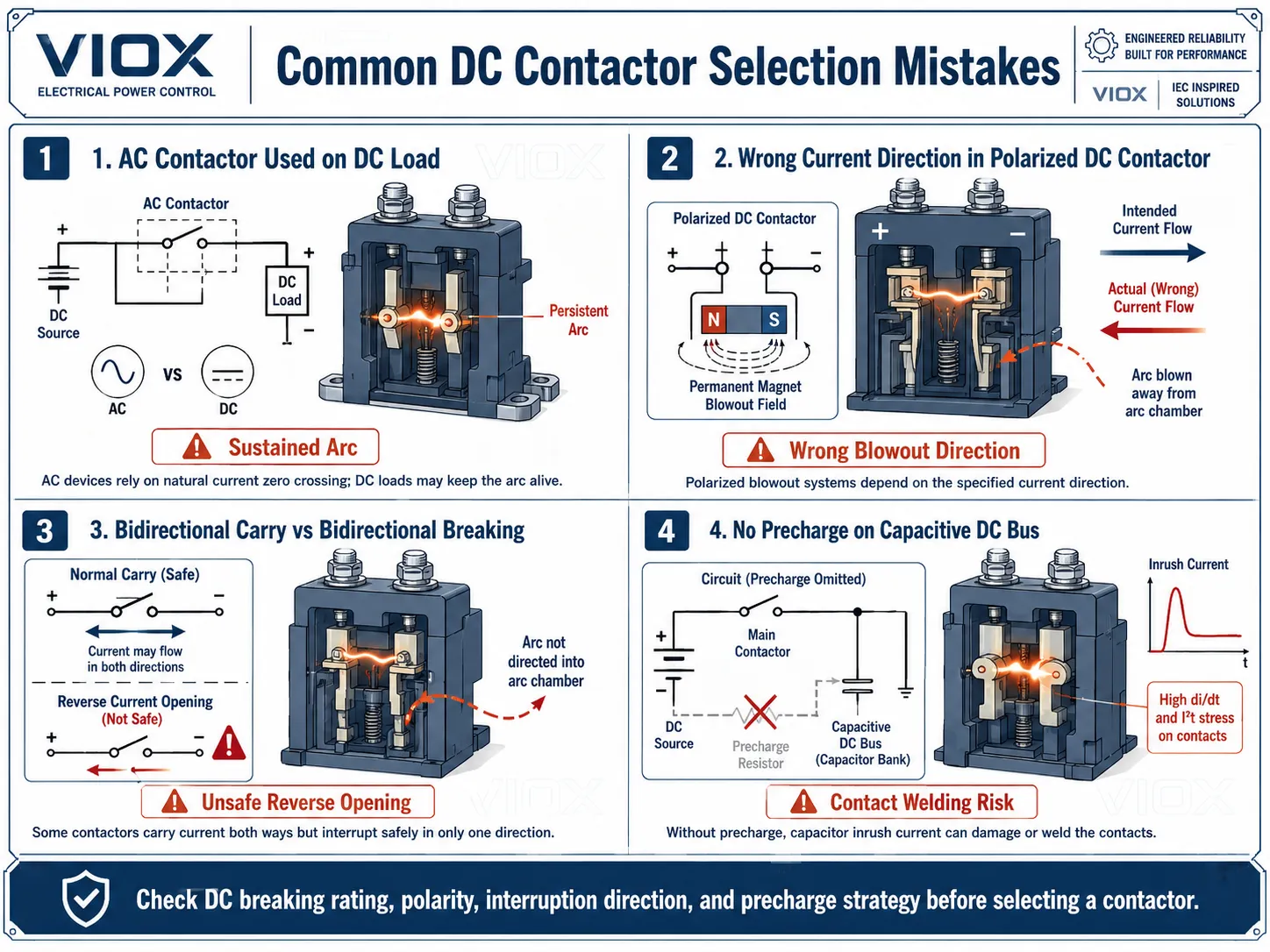
កំហុសទី ១៖ ការប្រើប្រាស់ឧបករណ៍កុងតាក់ទ័រ AC សម្រាប់បន្ទុក DC
នេះគឺជាកំហុសទូទៅ។ ឧបករណ៍កុងតាក់ទ័រ AC អាចនឹងបិទ និងដំណើរការបន្ទុកបាននៅពេលដំបូង ដូច្នេះកំហុសនេះមិនតែងតែអាចមើលឃើញច្បាស់ក្នុងអំឡុងពេលធ្វើតេស្តសាកល្បងនោះទេ។ បញ្ហានឹងកើតឡើងនៅពេលដែលឧបករណ៍ដាច់ចរន្តក្រោមបន្ទុក DC។ ដោយសារតែគ្មានការកម្ចាត់ធ្នូភ្លើង DC ដែលសមស្រប ទំនាក់ទំនងអគ្គិសនីអាចនឹងឆេះ ជាប់គ្នា ឬមិនអាចកាត់ផ្តាច់សៀគ្វីបាន។.
ផលវិបាក៖ ការកើតមានធ្នូភ្លើងអូសបន្លាយ, ការជាប់គ្នានៃទំនាក់ទំនងអគ្គិសនី, ការខូចខាតប្រអប់ការពារ និងការបាត់បង់ការគ្រប់គ្រង។.
កំហុសទី ២៖ ការជ្រើសរើសដោយផ្អែកលើកម្រិតអំពែរតែមួយមុខ
អ្នកទិញឃើញសញ្ញា “200 A” ហើយសន្មតថាឧបករណ៍កុងតាក់ទ័រនោះសមស្របសម្រាប់ប្រព័ន្ធ DC កម្រិត 200 A។ ប៉ុន្តែសំណួរពិតប្រាកដគឺ៖ តើ 200 A នៅវ៉ុល DC ប៉ុន្មាន, ក្រោមប្រភេទនៃការប្រើប្រាស់បែបណា, ទិសដៅចរន្តយ៉ាងណា, សីតុណ្ហភាពប៉ុន្មាន និងមានកាតព្វកិច្ចកាត់ផ្តាច់ចរន្តកម្រិតណា?
ផលវិបាក៖ ឧបករណ៍កុងតាក់ទ័រដែលផ្ទុកចរន្តបានធម្មតាប៉ុន្តែបរាជ័យនៅពេលដាច់ចរន្ត។.
កំហុសទី ៣៖ ការមិនអើពើនឹងប៉ូល (Polarity) លើការរចនាបែបផ្លុំម៉ាញេទិក (Magnetic blowout)
ប្រសិនបើឧបករណ៍កុងតាក់ទ័រ DC ដែលមានប៉ូលត្រូវបានតភ្ជាប់ខ្សែបញ្ច្រាស វានៅតែអាចចម្លងចរន្តបាននៅពេលបិទ។ ចំណុចគ្រោះថ្នាក់គឺធ្នូភ្លើងអាចនឹងមិនត្រូវបានរុញចូលទៅក្នុងបន្ទប់ពន្លត់ធ្នូដែលបានកំណត់នៅពេលដាច់ចរន្តនោះទេ។.
ផលវិបាក៖ សមត្ថភាពកាត់ផ្តាច់ចរន្តថយចុះ និងអាយុកាលរបស់ទំនាក់ទំនង (Contact) ខ្លីជាងមុន។.
ទម្រង់បែបបទជាក់ស្តែង៖ នៅក្នុងការត្រួតពិនិត្យការរចនាតู้ថ្ម កំហុសនេះតែងតែលេចឡើងនៅពេលដែលឧបករណ៍កុងតាក់មេ (Main Contactor) មានទំហំត្រឹមត្រូវសម្រាប់ចរន្តអចិន្ត្រៃយ៍ ប៉ុន្តែគំនូរប្លង់ដំឡើងបានបញ្ច្រាសទិសដៅចរន្តតាមរយៈកុងតាក់ដែលមានប៉ូល (Polarized Contactor)។ ឧបករណ៍អាចឆ្លងកាត់ការធ្វើតេស្តបន្ត (Continuity test) ធម្មតាបាន ប៉ុន្តែនៅពេលបើកដាច់ក្រោមបន្ទុកលើកដំបូង វាអាចរុញធ្នូអគ្គិសនី (Arc) ឱ្យចេញពីផ្លូវដែលបានកំណត់សម្រាប់ពន្លត់ធ្នូ។.
កំហុសទី ៤៖ ការយល់ច្រឡំថាការបញ្ជូនចរន្តទ្វេទិស គឺដូចនឹងការកាត់ផ្តាច់ចរន្តទ្វេទិស។
កុងតាក់ជាច្រើនអាចបញ្ជូនចរន្តបានទាំងពីរទិសនៅពេលដែលវាបិទ។ ប៉ុន្តែវាមិនមានន័យថាវាអាចកាត់ផ្តាច់ចរន្តបានដោយសុវត្ថិភាពទាំងពីរទិសនៅពេលមានបន្ទុកនោះទេ។.
ផលវិបាក៖ ការប្រើប្រាស់កុងតាក់ខុសប្រភេទក្នុងប្រព័ន្ធថ្ម ឬប្រព័ន្ធបង្កើតថាមពលឡើងវិញ (Regenerative applications)។.
ទម្រង់បែបបទគម្រោងទូទៅ៖ កំហុសនេះលេចឡើងនៅក្នុងប្រព័ន្ធផ្ទុកថាមពល ដែលផ្លូវចរន្ត DC តែមួយត្រូវបានប្រើសម្រាប់ទាំងការសាក និងការបញ្ចេញថាមពល។ កុងតាក់បញ្ជូនចរន្តទាំងពីរទិសក្នុងអំឡុងពេលប្រតិបត្តិការធម្មតា ដូច្នេះកំហុសនេះនៅតែលាក់កំបាំង រហូតដល់មានព្រឹត្តិការណ៍បើកដាច់ដោយចរន្តបញ្ច្រាស ដែលបង្ហាញថាឧបករណ៍នេះមិនត្រូវបានវាយតម្លៃសម្រាប់កាត់ផ្តាច់បន្ទុកទ្វេទិសនោះទេ។.
កំហុសទី ៥៖ ការដកចេញ ឬកែប្រែបន្ទប់ពន្លត់ធ្នូ (Arc chamber)។
បន្ទប់ពន្លត់ធ្នូមិនមែនជាគម្របសម្រាប់លម្អនោះទេ។ វាគឺជាផ្នែកមួយនៃមុខងារសុវត្ថិភាពរបស់កុងតាក់។ ការដកចេញ ការខួង ការកាត់ ឬការធ្វើឱ្យវាប្រឡាក់ នឹងផ្លាស់ប្តូររបៀបដែលធ្នូអគ្គិសនីត្រូវបានដឹកនាំ និងពន្លត់។.
ផលវិបាក៖ ការសឹករិចរិលនៃទំនាក់ទំនង (contact erosion) ការឆាបឆេះដោយអគ្គិសនី (flashover) និងការបរាជ័យក្នុងពេលផ្ដាច់បន្ទុក។.
កំហុសទី ៦៖ ការប្រើប្រាស់ឧបករណ៍ទប់ស្កាត់ឧបករណ៏ (coil suppression) ដែលធ្វើឱ្យការផ្ដាច់យឺតយ៉ាវខ្លាំងពេក។
ឌីយ៉ូដ Flyback សាមញ្ញមួយអាចការពារទិន្នផលរបស់ឧបករណ៍បញ្ជា ប៉ុន្តែវាធ្វើឱ្យការបំបែកទំនាក់ទំនងមានភាពយឺតយ៉ាវ។ សម្រាប់កម្មវិធីមួយចំនួន ការបើកយឺតបែបនេះអាចបង្កើនហានិភ័យនៃការផ្សារជាប់ដោយចៃដន្យ (tack welding)។.
ផលវិបាក៖ ការបើកយឺតយ៉ាវ បញ្ហានៃការលោតរបស់ទំនាក់ទំនង (contact bounce) និងការផ្សារជាប់នៃទំនាក់ទំនងជាបណ្ដោះអាសន្ន។.
កំហុសទី ៧៖ ការភ្លេចប្រើប្រាស់ប្រព័ន្ធសាកភ្លើងមុន (precharge) នៅក្នុងប្រព័ន្ធ DC ដែលមានកុងដង់សាត័រ។
នៅក្នុងប្រព័ន្ធអាគុយ អ៊ីនវឺតទ័រ និងរថយន្តអគ្គិសនី (EV) សមត្ថភាពនៃ DC bus អាចបង្កើតចរន្តភ្លាមៗ (inrush current) ខ្ពស់នៅពេលដែលកុងតាក់ទ័រមេបិទ។ ប្រសិនបើគ្មានផ្លូវសាកភ្លើងមុនទេ កុងតាក់ទ័រអាចនឹងទទួលរងនូវភាពតានតឹងខ្លាំងនៅពេលចាប់ផ្ដើមដំណើរការ។.
ផលវិបាក៖ ការកើតរណ្ដៅលើទំនាក់ទំនង (contact pitting) ការផ្សារជាប់ក្នុងពេលបិទ ការរំខានដោយកំហុស ឬការខូចខាតដល់ឧបករណ៍បញ្ជា។.
សម្រាប់ព័ត៌មានផ្ទៃខាងក្រោយអំពីឥរិយាបថនៃចរន្តពេលចាប់ផ្ដើម សូមមើល VIOX’s តើចរន្តរំលង (Inrush current) ជាអ្វី មគ្គុទ្ទេសក៍នេះមានភាពពាក់ព័ន្ធដោយផ្ទាល់។.
បញ្ជីត្រួតពិនិត្យសម្រាប់ការជ្រើសរើសរហ័ស
សូមប្រើបញ្ជីត្រួតពិនិត្យនេះមុនពេលអនុម័តឧបករណ៍កុងតាក់ទ័រចរន្តផ្ទាល់ (DC contactor)៖
| ពិនិត្យ | សំណួរដែលត្រូវឆ្លើយ | ហេតុអ្វីបានជាវាសំខាន់ |
|---|---|---|
| កម្រិតវ៉ុល DC | តើកុងតាក់ទ័រត្រូវបានកំណត់កម្រិតសម្រាប់វ៉ុល DC នៃប្រព័ន្ធដោយផ្ទាល់ដែរឬទេ? | កម្រិតវ៉ុល AC មិនអាចបញ្ជាក់ពីភាពសមស្របសម្រាប់ប្រើប្រាស់ជាមួយ DC បានឡើយ |
| ការវាយតម្លៃបច្ចុប្បន្ន | តើកម្រិតនោះសម្រាប់មុខងារផ្ទុកចរន្ត (carry), បិទបើក (make/break) ឬទប់ទល់នឹងចរន្តរយៈពេលខ្លី (short-time withstand)? | ទាំងនេះគឺជាភាពតានតឹងផ្សេងៗគ្នា |
| ប្រភេទនៃការប្រើប្រាស់ | តើបន្ទុកជាប្រភេទ DC-1, DC-3, DC-5 ឬជាប្រភេទដែលកំណត់ដោយក្រុមហ៊ុនផលិត? | ប្រភេទនៃបន្ទុកធ្វើឱ្យកម្រិតធ្ងន់ធ្ងរនៃធ្នូអគ្គិសនីមានការផ្លាស់ប្តូរ |
| ប៉ូល។ | តើឧបករណ៍កុងតាក់ (Contactor) មានប៉ូល ឬជាប្រភេទពីរទិសសម្រាប់ការផ្តាច់ចរន្ត? | ម៉ាញេទិកសម្រាប់ពន្លត់ធ្នូអគ្គិសនី (Blowout magnets) អាចអាស្រ័យលើទិសដៅនៃចរន្តអគ្គិសនី |
| ភាពអាំងឌុចស្យុងនៃបន្ទុក (Load inductance) | តើថេរពេលវេលានៃសៀគ្វី ឬថាមពលដែលផ្ទុកទុកមានកម្រិតណា? | បន្ទុកអាំងឌុចស្យុងធ្វើឱ្យធ្នូអគ្គិសនីមានរយៈពេលយូរជាងមុន |
| ការសាកភ្លើងទុកជាមុន (Precharge) | តើមានកុងដង់សាត័រ DC bus ដែលត្រូវការការគ្រប់គ្រងការសាកភ្លើងដែរឬទេ? | ការពារភាពតានតឹងពេលបិទសៀគ្វី និងការផ្សារជាប់នៃទំនាក់ទំនង (Welding) |
| ការទប់ស្កាត់ Coil | តើវិធីសាស្ត្រកាត់បន្ថយនេះត្រូវបានអនុម័តដោយក្រុមហ៊ុនផលិតដែរឬទេ? | ជៀសវាងការដាច់សៀគ្វីយឺត និងការផ្សារជាប់ដោយចៃដន្យ (Tack welding) |
| សម្របសម្រួលការការពារ | តើអ្វីជាឧបករណ៍កាត់ផ្តាច់ចរន្តឆ្លង (Short-circuit current)? | កុងតាក់ទ័រ (Contactors) ជាទូទៅមិនមែនជាឧបករណ៍កាត់ផ្តាច់ចរន្តឆ្លងនោះទេ |
| ការបញ្ជូនសញ្ញាត្រឡប់ជំនួយ (Auxiliary feedback) | តើត្រូវការមុខងារត្រួតពិនិត្យការជាប់ទំនាក់ទំនង (weld detection) ឬការផ្តល់មតិត្រឡប់អំពីស្ថានភាព (status feedback) ដែរឬទេ? | មានសារៈសំខាន់នៅក្នុងប្រព័ន្ធយានយន្តអគ្គិសនី (EV), ប្រព័ន្ធផ្ទុកថាមពល (ESS) និងប្រព័ន្ធដែលមានសុវត្ថិភាពខ្ពស់ |
| បរិស្ថាន | តើការផ្សាភ្ជាប់ ការរំញ័រ សីតុណ្ហភាព និងកម្ពស់ សមស្របនឹងការប្រើប្រាស់ដែរឬទេ? | ការពារការបរាជ័យនៅពេលប្រើប្រាស់ជាក់ស្តែងក្រៅពីលក្ខខណ្ឌមន្ទីរពិសោធន៍ |
សំណួរគេសួរញឹកញាប់
ហេតុអ្វីបានជាធ្នូអគ្គិសនីចរន្តផ្ទាល់ (DC arc) ពិបាកពន្លត់ជាងធ្នូអគ្គិសនីចរន្តឆ្លាស់ (AC arc)?
ដោយសារចរន្តផ្ទាល់ (DC) មិនឆ្លងកាត់ចំណុចសូន្យដោយធម្មជាតិ។ ចរន្តឆ្លាស់ (AC) ផ្តល់នូវពេលដែលចរន្តស្មើនឹងសូន្យនៅរៀងរាល់ពាក់កណ្តាលវដ្ត ខណៈដែលចរន្តផ្ទាល់ (DC) បន្តបញ្ជូនថាមពលទៅកាន់ធ្នូអគ្គិសនី លើកលែងតែឧបករណ៍នោះបង្ខំឱ្យធ្នូអគ្គិសនីពង្រីក ធ្វើឱ្យត្រជាក់ បំបែក ឬផ្លាស់ទីចូលទៅក្នុងបន្ទប់ពន្លត់ធ្នូ (arc chamber)។.
តើខ្ញុំអាចប្រើកុងតាក់ទ័រចរន្តឆ្លាស់ (AC contactor) សម្រាប់សៀគ្វីចរន្តផ្ទាល់ (DC circuit) បានដែរឬទេ?
បានលុះត្រាតែកុងតាក់ទ័រនោះត្រូវបានបញ្ជាក់យ៉ាងច្បាស់លាស់ដោយក្រុមហ៊ុនផលិតសម្រាប់វ៉ុល ចរន្ត និងកម្រិតផ្ទុកនៃចរន្តផ្ទាល់ (DC) នោះ។ កុំសន្មតថាការកំណត់កម្រិតចរន្តឆ្លាស់ (AC) អាចអនុវត្តបានចំពោះការប្តូរចរន្តផ្ទាល់ (DC)។ ក្នុងករណីជាច្រើន ការប្រើប្រាស់កុងតាក់ទ័រចរន្តឆ្លាស់ធម្មតាសម្រាប់បន្ទុកចរន្តផ្ទាល់ នឹងបង្កឱ្យមានធ្នូអគ្គិសនីខ្លាំង និងហានិភ័យនៃការជាប់ទំនាក់ទំនង (contact-welding)។.
តើអ្វីទៅជាការផ្លុំធ្នូអគ្គិសនី (Magnetic blowout) នៅក្នុងកុងតាក់ទ័រចរន្តផ្ទាល់ (DC Contactor)?
ការផ្លុំធ្នូអគ្គិសនីប្រើប្រាស់ដែនម៉ាញេទិកដើម្បីរុញធ្នូអគ្គិសនីចេញពីផ្ទៃទំនាក់ទំនងមេ ចូលទៅក្នុងប្រអប់ពន្លត់ធ្នូ។ វិធីនេះជួយពន្លូត និងធ្វើឱ្យធ្នូត្រជាក់ចុះ ដើម្បីឱ្យវាអាចរលត់បានដោយមិនចាំបាច់ពឹងផ្អែកលើការកាត់សូន្យដោយធម្មជាតិ (Natural zero crossing)។.
តើកុងតាក់ទ័រ DC ទាំងអស់មានប៉ូល (Polarized) មែនឬទេ?
មិនមែនទេ។ កុងតាក់ទ័រខ្លះមានប៉ូល ដែលតម្រូវឱ្យចរន្តហូរតាមស្ថានីយដែលបានកំណត់ក្នុងទិសដៅជាក់លាក់ ដើម្បីទទួលបានប្រសិទ្ធភាពក្នុងការកាត់ចរន្តខ្ពស់បំផុត។ ចំណែកប្រភេទខ្លះទៀតត្រូវបានរចនាឡើងសម្រាប់ការប្តូរទិសដៅពីរផ្លូវ។ សូមពិនិត្យមើលសន្លឹកទិន្នន័យបច្ចេកទេសជានិច្ច ព្រោះការផ្ទុកចរន្តពេលទំនាក់ទំនងបិទ និងការកាត់ចរន្តផ្ទុក គឺជារឿងដែលខុសគ្នា។.
តើអ្វីជាភាពខុសគ្នារវាង DC-1, DC-3 និង DC-5?
DC-1 ប្រើសម្រាប់បន្ទុក DC ដែលមិនមានអាំងឌុចស្យុង ឬមានអាំងឌុចស្យុងតិចតួច។ DC-3 ប្រើសម្រាប់មុខងារម៉ូទ័រប្រភេទ Shunt ដូចជាការចាប់ផ្តើមដំណើរការ, ការបញ្ឈប់ភ្លាមៗ (Plugging), ការរំកិលបន្តិចម្តងៗ (Inching) និងការហ្វ្រាំងដោយថាមពលអគ្គិសនី (Dynamic braking)។ DC-5 ប្រើសម្រាប់មុខងារម៉ូទ័រប្រភេទ Series ក្រោមលក្ខខណ្ឌត្រួតពិនិត្យដ៏តឹងរ៉ឹងស្រដៀងគ្នា។ ការវាយតម្លៃប្រភេទ DC-1 មិនគួរត្រូវបានប្រើជំនួសសម្រាប់ការងារម៉ូទ័រឡើយ។.
តើកុងតាក់ទ័រ DC អាចការពារការឆ្លងចរន្តខ្លី (Short circuit) បានដែរឬទេ?
មិនអាចការពារដោយខ្លួនឯងបានទេ។ កុងតាក់ទ័រមានតួនាទីប្តូររង្វង់ចរន្តតាមការបញ្ជាប៉ុណ្ណោះ។ ការការពារការឆ្លងចរន្តខ្លីជាធម្មតាទាមទារឱ្យមានហ្វុយស៊ីប (Fuse) ដែលជ្រើសរើសបានត្រឹមត្រូវ, សៀគ្វីបំបែកចរន្ត DC (DC circuit breaker) ឬឧបករណ៍ការពារផ្សេងទៀត ដែលត្រូវគ្នាជាមួយកុងតាក់ទ័រ និងកម្រិតចរន្តខូចខាតរបស់ប្រព័ន្ធ។.
ហេតុអ្វីបានជាកុងតាក់ទ័រ DC ជួនកាលជាប់គាំង (weld closed)?
មូលហេតុទូទៅរួមមាន ចរន្តពេលចាប់ផ្តើមខ្ពស់ពេក, ការផ្តាច់ក្រោមបន្ទុកលើសពីកម្រិតដែលកុងតាក់ទ័រអាចទ្រាំបាន, ការដាក់ប៉ូលខុសលើការរចនាដែលមានប៉ូលកំណត់, ការសាកភ្លើងមុន (precharge) មិនគ្រប់គ្រាន់, ការធ្លាក់ចុះយឺតយ៉ាវដែលបណ្តាលមកពីការទប់ស្កាត់ឧបករណ៏ (coil suppression) មិនត្រឹមត្រូវ ឬចរន្តឆ្លង (fault current) ដែលមិនត្រូវបានកាត់ផ្តាច់ដោយឧបករណ៍ការពារនៅផ្នែកខាងលើ។.
ហេតុអ្វីបានជាកុងតាក់ទ័រ DC ត្រូវបានប្រើប្រាស់នៅក្នុងប្រព័ន្ធអាគុយ និងយានយន្តអគ្គិសនី (EV)?
វាអនុញ្ញាតឱ្យមានការបិទបើកពីចម្ងាយ និងការផ្តាច់សៀគ្វី DC វ៉ុលខ្ពស់។ នៅក្នុងប្រព័ន្ធអាគុយ និង EV កុងតាក់ទ័រត្រូវបានប្រើជាទូទៅសម្រាប់ការផ្តាច់ខ្សែបូក/ដកមេ, សៀគ្វីសាកភ្លើងមុន (precharge circuits), ការតភ្ជាប់ឆ្នាំងសាក, ប្រព័ន្ធបិទដំណើរការបន្ទាន់ និងការផ្តាច់សៀគ្វីនៅពេលមានបញ្ហា។.