

In questa pagina
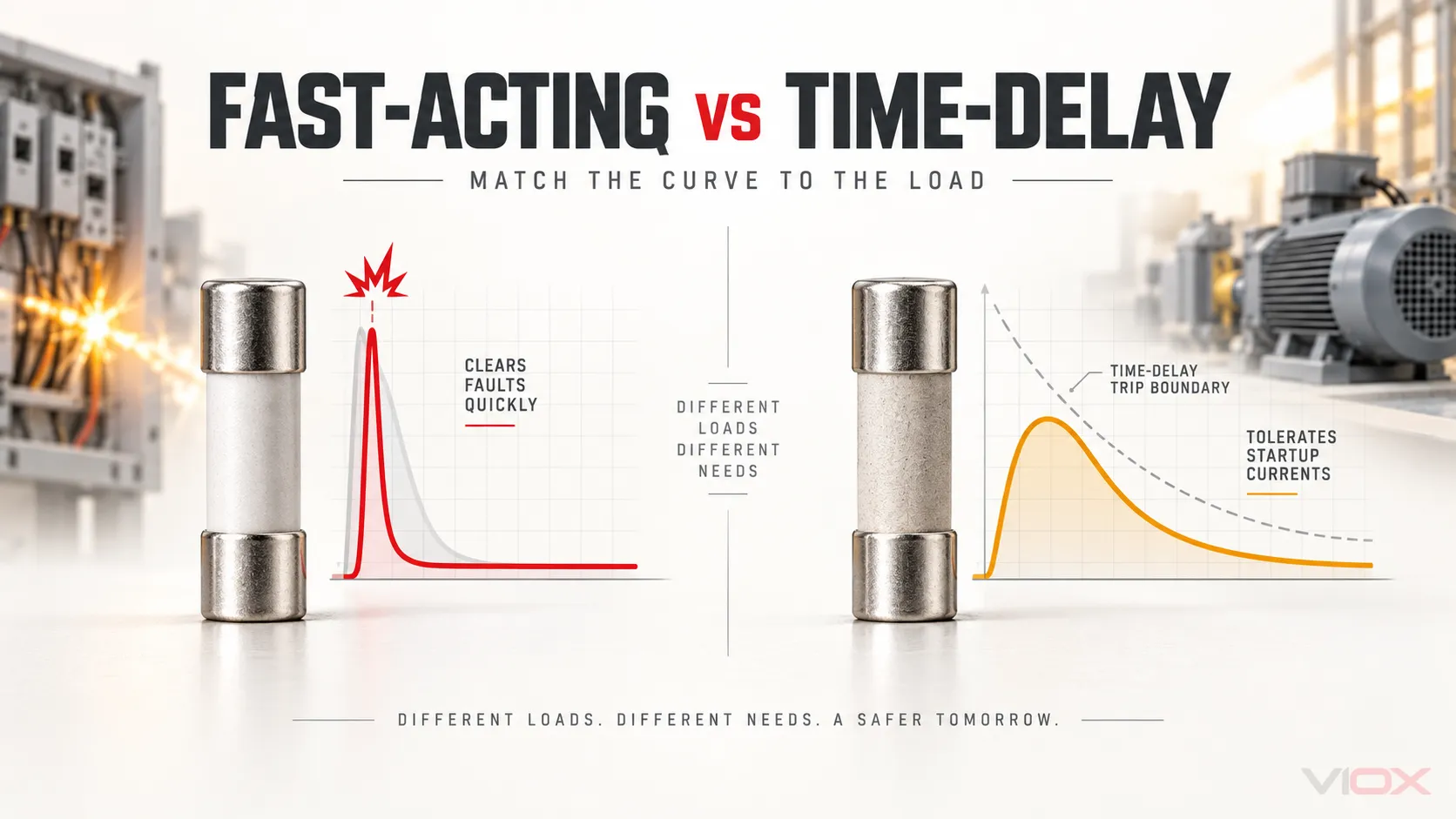
Un fusibile rapido risponde più rapidamente a una data sovracorrente rispetto a un fusibile ritardato, chiamata anche ritardato o fusibile ritardato. La parola importante è comparabile: i due dispositivi devono appartenere a un sistema di fusibili appropriato e il loro comportamento deve essere verificato sugli esatti dati tempo-corrente del produttore.
Scegliere una caratteristica rapida quando il circuito protetto presenta una corrente di spunto trascurabile e non può tollerare un'eccessiva esposizione corrente-tempo. Considerare una caratteristica ritardata quando il carico presenta un impulso di avviamento o di carica documentato e innocuo che un fusibile più rapido non riuscirebbe a superare in modo affidabile. Nessuna delle due etichette completa la selezione. Tensione, servizio AC/DC, potere di interruzione, corrente nominale, dimensioni, compatibilità del portafusibili, condizioni ambientali e approvazioni devono ancora essere verificati.
| Punto decisionale | Fusibile rapido | Fusibile ritardato / a tempo |
|---|---|---|
| Corrente transitoria normale | Ideale quando la richiesta di spunto o di impulso legittima è bassa | Progettato per tollerare un profilo transitorio definito, in base alla curva specifica |
| Risposta alla stessa sovracorrente | Generalmente entra nella sua zona di fusione prima di un fusibile ritardato comparabile | Generalmente resiste alla sovracorrente più a lungo prima di fondersi |
| Rischio principale di selezione | Intervento intempestivo durante l'avviamento o la carica normale | Energia in eccesso che raggiunge l'elemento protetto se il ritardo non è accettabile |
| Base appropriata | Curva esatta rispetto al profilo di carico e al limite dell'apparecchiatura | Curva esatta rispetto al profilo di carico e al limite dell'apparecchiatura |
| Sostituzione sicura | Non intercambiabile basandosi solo sulla corrente nominale e sulle dimensioni | Non intercambiabile basandosi solo sulla corrente nominale e sulle dimensioni |
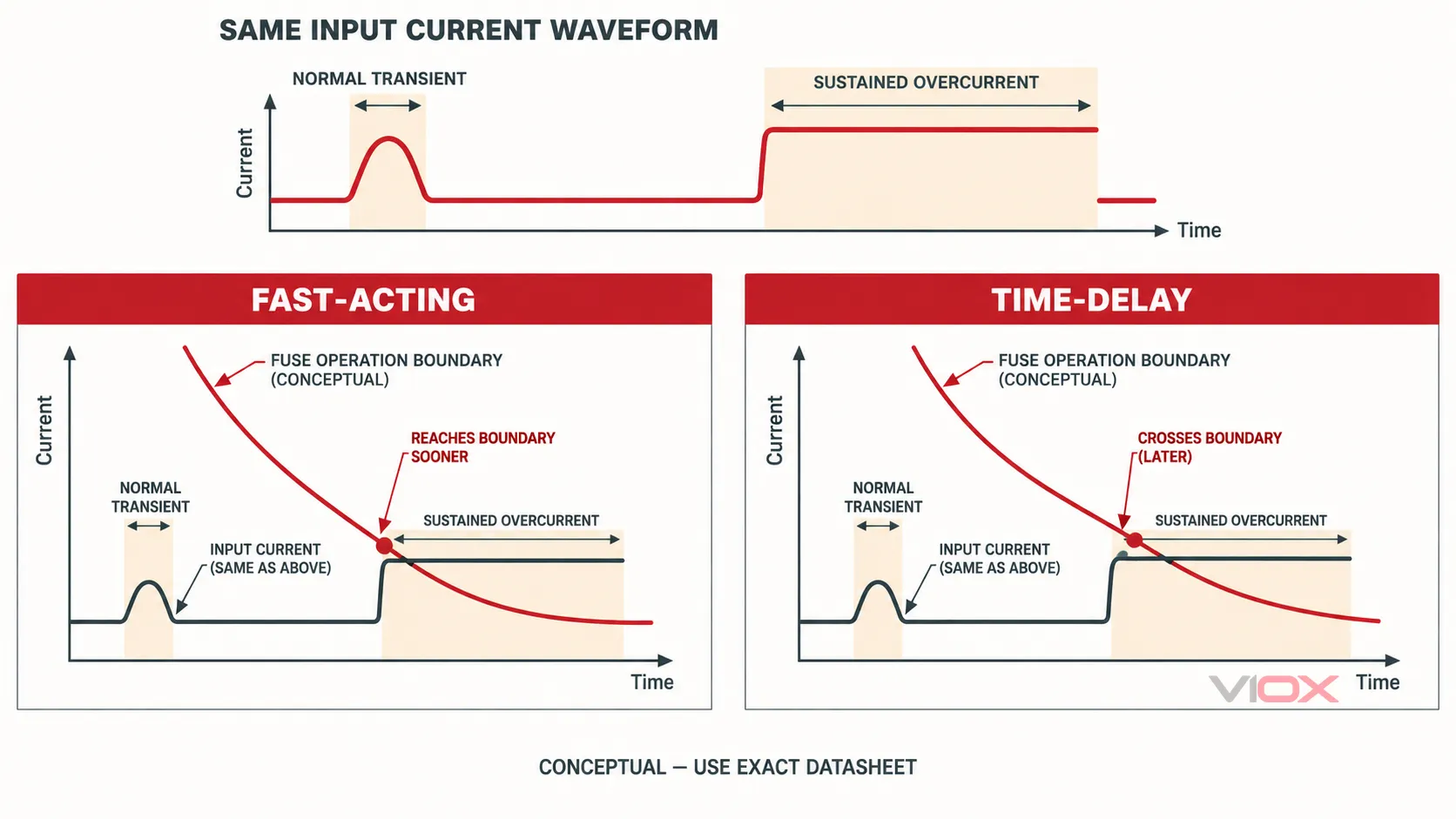
Cosa significano realmente “rapido” e “lento”
La velocità del fusibile descrive il comportamento corrente-tempo, non un tempo di apertura fisso. Un fusibile non vede “un motore” o “un alimentatore”; vede una forma d'onda di corrente. Il suo elemento si riscalda in base all'intensità e alla durata di tale corrente, al suo carico precedente e alle condizioni termiche circostanti.
In caso di sovracorrente moderata, il tempo di intervento può essere relativamente lungo. Con una corrente molto più elevata, sia un fusibile a intervento rapido che uno ritardato possono intervenire rapidamente. La domanda utile non è quindi “Questo fusibile è rapido?” ma:
Alla corrente e alla durata previste, il fusibile supererà il normale funzionamento e si aprirà comunque prima che l'apparecchiatura protetta superi il suo limite consentito?
Rispondete a questa domanda con l'esatta curva tempo-corrente. Identificate se i dati pubblicati mostrano la fusione minima, la fusione media o l'interruzione totale. Si tratta di limiti differenti. La guida VIOX per la lettura delle curve tempo-corrente dei fusibili spiega la distinzione e il processo di lettura dei grafici logaritmici.
Fusibile rapido
Un fusibile a intervento rapido ha un ritardo intenzionale limitato. Può essere un candidato idoneo per circuiti con bassa corrente di spunto e per apparecchiature il cui limite di danno richiede una risposta relativamente pronta. Questa descrizione non non significa funzionamento istantaneo, e non rende ogni fusibile a intervento rapido adatto a semiconduttori sensibili.
Fusibile a intervento ritardato, a tempo o a ritardo intenzionale
“Slow-blow” è un termine ampiamente utilizzato nella ricerca e nell'assistenza. Le schede tecniche e le norme potrebbero invece utilizzare ritardato o ritardato. La caratteristica è intesa per tollerare una specifica sovracorrente temporanea meglio di un fusibile a intervento rapido comparabile. Non è un'autorizzazione a ignorare sovraccarichi persistenti o impulsi ripetuti.
Un fusibile ritardato può comunque aprirsi durante l'avviamento se l'impulso supera il suo limite di fusione, si ripete troppo frequentemente, si verifica a una temperatura ambiente elevata o inizia con il fusibile già termicamente sollecitato.
Le marcature di velocità dei fusibili non sono un linguaggio universale
La marcatura deve essere interpretata all'interno della famiglia di fusibili e della norma applicabile. Fusibili a cartuccia dall'aspetto simile possono utilizzare sistemi di classificazione differenti.
| Contesto | Marcatura o termine che si potrebbe riscontrare | Corretta interpretazione |
|---|---|---|
| fusibile miniaturizzato IEC | F, T, e, nelle serie applicabili, FF, M, o TT |
Simboli delle caratteristiche operative relative all'interno del quadro normativo pertinente per i fusibili miniaturizzati |
| Documentazione di prodotto nordamericana | Ritardato o non ritardato | Una caratteristica dichiarata per una specifica classe di fusibili o serie di fusibili supplementari |
| Cartuccia fusibile industriale IEC 60269 | gG, aM, aR, gPV, o un'altra categoria di utilizzazione |
Gamma di protezione e applicazione previste; non una semplice classificazione da rapido a lento |
| Serie del produttore | Un nome commerciale, un codice di catalogo o una famiglia di curve | Deve essere decodificato dalla scheda tecnica corrente di quel produttore |
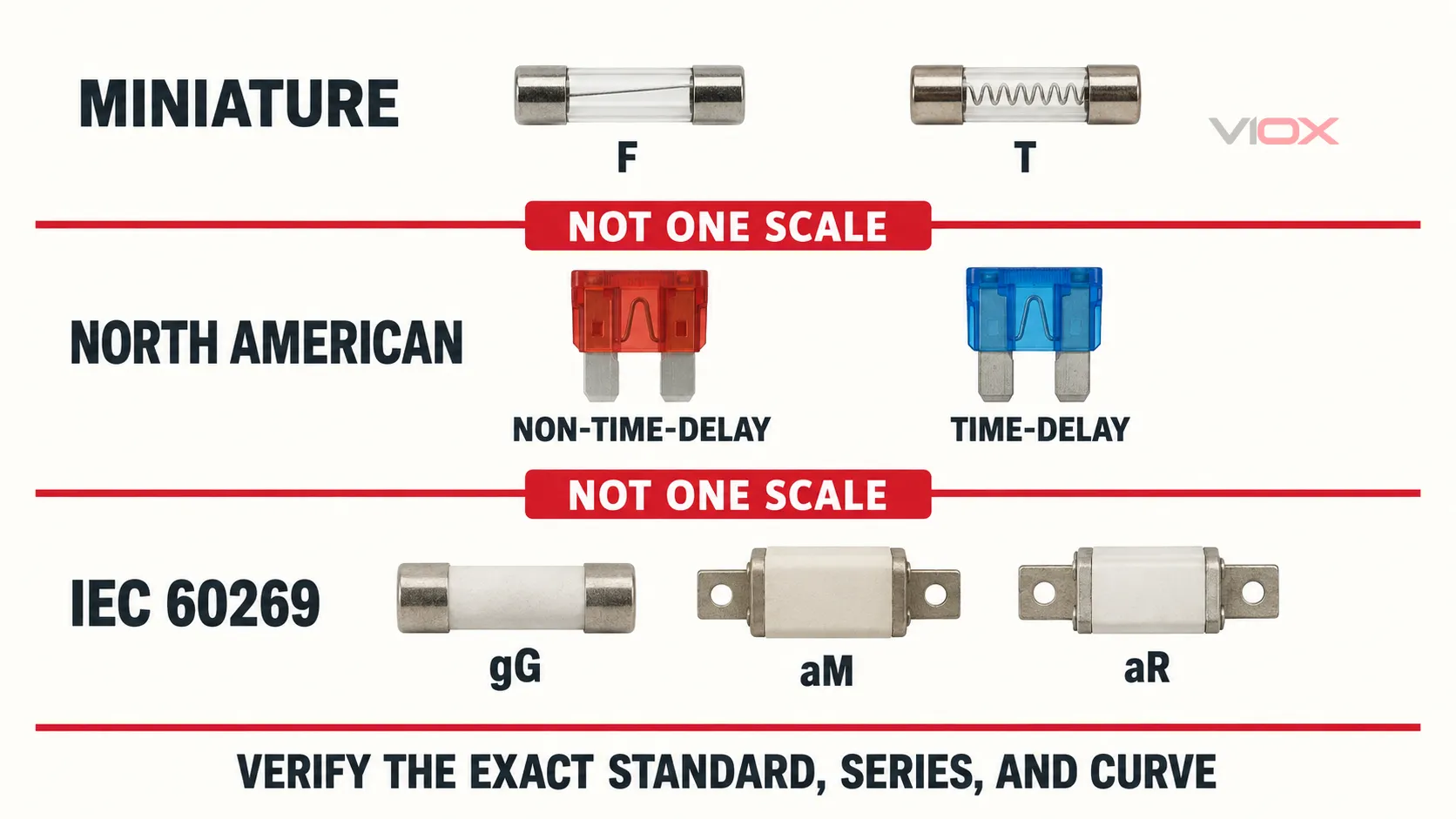
La norma IEC 60127-1 copre i fusibili miniaturizzati entro il proprio ambito di applicazione dichiarato e li distingue dai fusibili per installazioni a bassa tensione coperti dalla norma IEC 60269. La norma IEC 60127-2 include fusibili a cartuccia come le famiglie da 5 × 20 mm e 6,3 × 32 mm. Tale confine è importante: una convenzione di marcatura utilizzata su un fusibile per apparecchiature miniaturizzato non dovrebbe essere applicata a un fusibile cilindrico industriale o a un fusibile NH.
Anche la norma UL 248 utilizza parti separate per diverse categorie di fusibili. La norma UL 248-14 copre i fusibili supplementari, destinati alla protezione supplementare da sovracorrente in applicazioni in cui non è richiesta una protezione di circuito derivato o equivalente. Una forma familiare o le parole “time-delay” non trasformano un fusibile supplementare in un fusibile per circuito derivato.
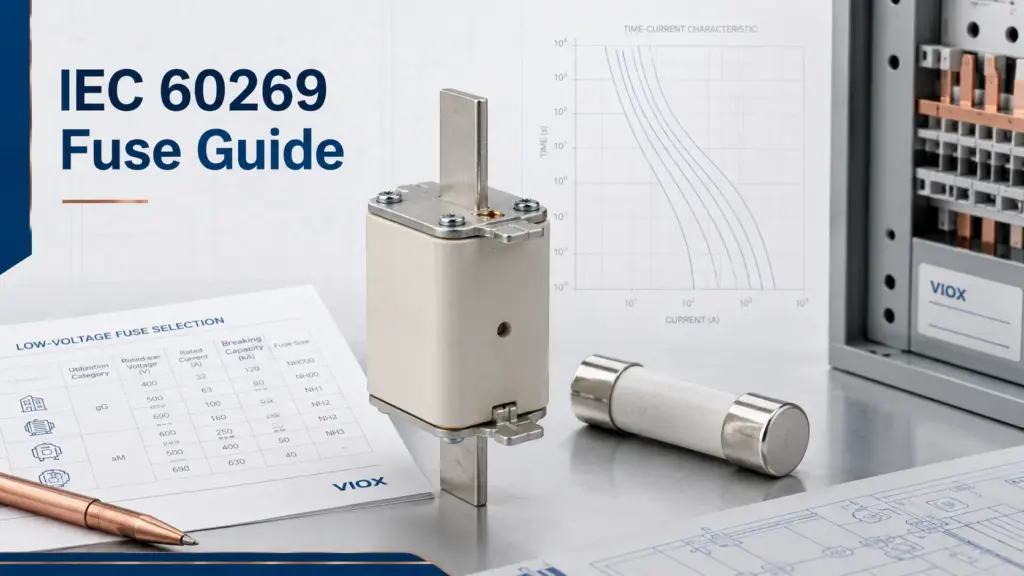
Per applicazioni industriali gG, aM, e decisioni su NH, utilizzare il guida alla selezione dei fusibili IEC 60269. Per le dimensioni fisiche e l'identificazione della marcatura, utilizzare la guida ai fusibili a cartuccia.
Fusibile rapido vs fusibile ritardato in base al profilo di carico
Le applicazioni sono indizi, non regole di selezione. Due alimentatori possono avere impulsi di carica in ingresso molto diversi; due motori possono avere metodi di avviamento e tempi di accelerazione differenti. Utilizzare il profilo corrente-tempo misurato o specificato ogni volta che è possibile.
| Comportamento del carico | Candidato iniziale | Cosa deve essere verificato |
|---|---|---|
| Carico resistivo o elettronico a basso spunto | Un intervento rapido potrebbe essere appropriato | Tolleranza normale, corrente di guasto, limite di danno alle apparecchiature e curva esatta |
| Corrente di magnetizzazione del trasformatore | Un ritardo temporale può ridurre le aperture intempestive | Impulso di energizzazione peggiore, ripetizione, protezione a monte e istruzioni del trasformatore |
| Alimentatore con ingresso a condensatore | Il ritardo temporale è spesso considerato | Forma d'onda di carica, impedenza della sorgente, cicli ripetitivi e resistenza dei componenti di ingresso |
| Avviamento motore diretto | Si può considerare un ritardo temporale o un fusibile per motore specifico per l'applicazione | Corrente e durata di avviamento, protezione da sovraccarico, protezione da cortocircuito e norme di installazione applicabili |
| Stadio di potenza a semiconduttori | Potrebbe essere richiesto un fusibile dedicato per semiconduttori | Valore nominale di sovratensione del dispositivo, I²t di pre-arco e totale, corrente di picco passante, tensione e coordinamento del produttore |
| Sostituzione sconosciuta in apparecchiature esistenti | Nessuna ipotesi è sicura | Codice articolo originale, manuale dell'apparecchiatura, marcatura completa, supporto e causa del guasto |
Non convertire questa tabella in “elettronica uguale veloce” e “motori uguale lento”. Un normale fusibile a intervento rapido potrebbe comunque lasciar passare troppa energia per un semiconduttore, mentre un fusibile ritardato selezionato in modo errato potrebbe non coordinarsi con conduttori o componenti. La norma IEC 60269-4 fornisce requisiti supplementari per gli elementi di sostituzione dei fusibili utilizzati per proteggere i dispositivi a semiconduttore; tali prodotti appartengono a uno specifico compito di protezione, non semplicemente all'estremità più veloce di una scala universale.
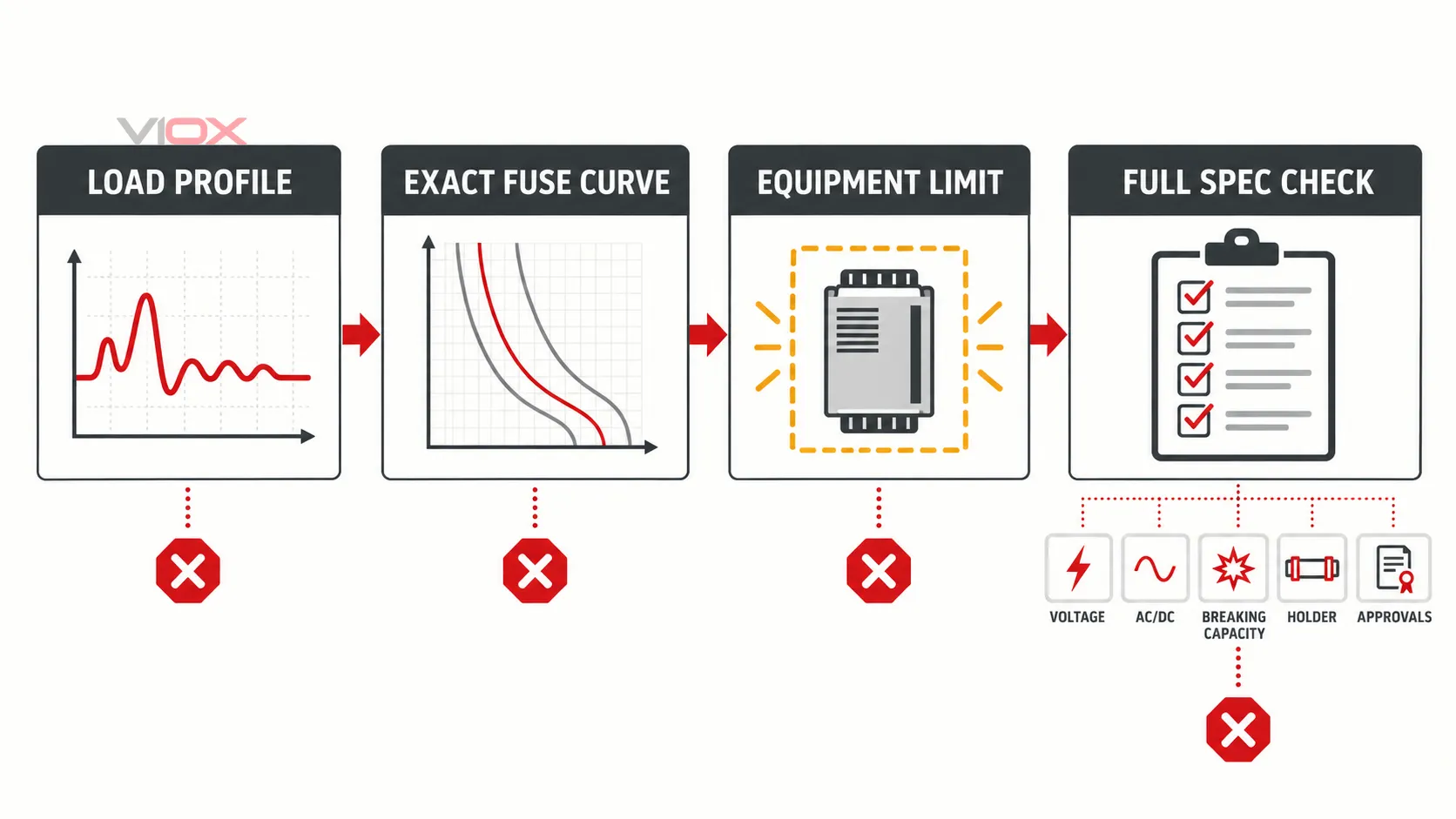
Cinque controlli per la scelta della caratteristica di funzionamento
1. Identificare il sistema di fusibili prima di confrontare la velocità
Registrare lo standard applicabile, la classe, la categoria di utilizzazione, la serie del produttore, le dimensioni e il supporto. Un fusibile miniaturizzato da 5 × 20 mm, un elemento di sostituzione industriale da 10 × 38 mm e un fusibile supplementare nordamericano possono richiedere prove diverse anche quando il confronto generale utilizza termini simili.
2. Definire l'inviluppo normale corrente-tempo
Raccogliere più della corrente a regime. Includere:
- corrente operativa continua massima;
- corrente di avviamento, magnetizzazione, carica o accelerazione in funzione del tempo;
- ampiezza, durata e intervallo degli impulsi ripetitivi;
- sovraccarichi credibili che non rientrano nel normale funzionamento;
- temperatura ambiente, riscaldamento dell'involucro e condizioni del supporto.
L'inviluppo dovrebbe rappresentare il caso peggiore di funzionamento legittimo, non un comodo avviamento di laboratorio.
3. Definire cosa deve proteggere il fusibile
Determinare se il limite protetto appartiene a un conduttore, all'avvolgimento di un trasformatore, alla bobina di un relè, a un semiconduttore di potenza, a una pista di circuito stampato, a un componente di un apparecchio o a un altro elemento. Ottenere il limite di corrente-tempo o di energia consentito dalla base di progettazione dell'apparecchiatura o dai dati autorevoli del produttore.
Il fusibile deve collocarsi tra due confini: al di sopra della normale richiesta di carico, in modo che possa sopportarla correttamente, e al di sotto del limite di danno dell'elemento protetto, in modo che intervenga prima che si verifichi un danno inaccettabile. Se tali confini non lasciano un'adeguata finestra di selezione, la sola modifica della velocità del fusibile non risolverà il problema di progettazione.
4. Confrontare la curva esatta e i dati energetici
Tracciare o confrontare il transitorio normale rispetto alla curva applicabile del produttore del fusibile. Utilizzare il confine corretto — fusione minima per una questione, interruzione totale per un'altra — e tenere conto delle tolleranze e delle condizioni dichiarate.
Per eventi brevi ad alta corrente, il produttore può pubblicare i valori di pre-arco e di funzionamento totale I²t. Confrontare I²t solo in presenza di definizioni e condizioni di prova compatibili. Non è una scorciatoia universale per scegliere tra due famiglie di fusibili non correlate.
5. Verificare ogni requisito non legato alla velocità
Prima dell'approvazione, verificare:
- corrente nominale nelle condizioni termiche effettive;
- tensione nominale e idoneità per AC, DC o doppio utilizzo;
- potere di interruzione alla corrente di guasto presunta;
- dimensioni, contatti, caratteristiche di esclusione e compatibilità con i portafusibili;
- dissipazione di potenza del fusibile e limiti termici del portafusibile;
- approvazioni IEC, UL, CSA, di apparecchiatura o di mercato richieste;
- restrizioni del produttore e requisiti di garanzia dell'apparecchiatura.
È possibile sostituire un fusibile ritardato con un fusibile rapido?
Non come regola generale. Un ricambio rapido con la stessa corrente nominale potrebbe intervenire durante l'avviamento o la carica normale. Interventi intempestivi ripetuti possono indurre gli utenti a installare una corrente nominale superiore, creando un secondo errore potenzialmente più grave.
Al contrario, sostituire un fusibile rapido con uno ritardato può consentire una maggiore esposizione corrente-tempo prima della fusione. Ciò può superare il limite di un componente, di una pista o di un conduttore, anche se il ricambio ha la stessa corrente, tensione e dimensioni.
Trattare una sostituzione come un confronto tecnico. Verificare o far corrispondere tutti i seguenti campi:
- standard del fusibile, classe, categoria e serie esatta;
- corrente nominale e condizioni di applicazione termica;
- tensione nominale e capacità di interruzione AC/DC;
- caratteristica tempo-corrente, inclusi i relativi limiti di tolleranza;
- potere di interruzione o capacità di interruzione;
- I²t di pre-arco e totale laddove l'applicazione dipenda dalla limitazione dell'energia;
- dimensioni, contatti, caratteristiche di rifiuto e compatibilità del supporto;
- approvazioni e requisiti del produttore dell'apparecchiatura.
Il materiale del corpo non è una scorciatoia. Vetro contro ceramica non determina la velocità o il potere di interruzione; vedere Fusibile in vetro vs Fusibile in ceramica per quella decisione di sostituzione separata.
Quando un fusibile continua ad aprirsi
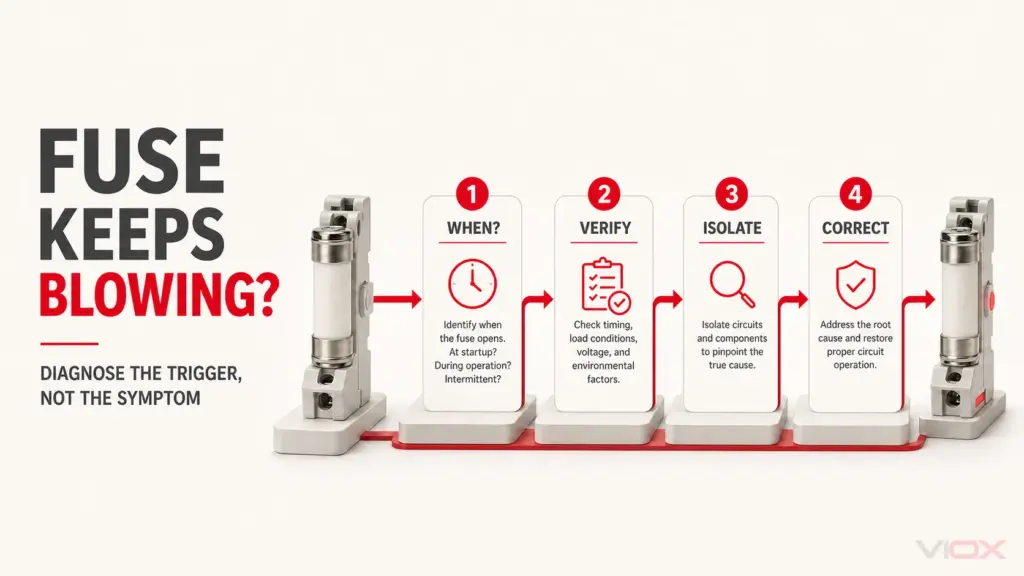
Non passare automaticamente a un fusibile più lento o con valore nominale superiore. Determinare innanzitutto se l'evento è una corrente di spunto normale, un sovraccarico prolungato, un cortocircuito intermittente, un componente guasto, una temperatura ambiente eccessiva, un portafusibili allentato o surriscaldato, o una selezione originale errata.
Una forma d'onda o un registro eventi è particolarmente utile quando l'apertura sembra casuale. Se il fusibile originale è intervenuto dopo anni di servizio e quello sostitutivo si apre immediatamente, la condizione del circuito potrebbe essere cambiata. Seguire la sequenza diagnostica in Perché un fusibile continua a bruciarsi? prima di modificare la caratteristica di protezione.
RFQ e lista di controllo per la sostituzione
Per una selezione giustificabile di tipo rapido o ritardato, inviare al fornitore o al revisore del progetto:
- il produttore originale e il codice articolo completo, in caso di sostituzione di un fusibile;
- lo standard del fusibile applicabile, la classe, la categoria e i requisiti di approvazione;
- la tensione massima del circuito e se il servizio è AC o DC;
- corrente di cortocircuito presunta nel punto di installazione;
- la corrente di carico continuo e le condizioni ambientali/di involucro;
- l'ampiezza di spunto o di impulso, la durata, la ripetizione e la tolleranza nel caso peggiore;
- la curva di tenuta dell'apparecchiatura protetta o il limite di energia;
- la designazione del portafusibili, le dimensioni, i contatti e la dissipazione del fusibile consentita;
- i dati esatti tempo-corrente e I²t utilizzati per la decisione.
VIOX fornisce cartucce fusibili cilindriche e relativi fusibili e portafusibili a bassa tensione per applicazioni industriali e di apparecchiature. Per la selezione a livello di modello, fornire la lista di controllo completa anziché solo la corrente nominale richiesta.
Fonti tecniche
- IEC 60127-1:2023 — Fusibili miniaturizzati, requisiti generali
- IEC 60127-2:2014 — Cartucce fusibili
- IEC 60269-1:2024 — Fusibili a bassa tensione, requisiti generali
- IEC 60269-4:2024 — Cartucce fusibili per la protezione dei semiconduttori
- UL 248-1 — Fusibili a bassa tensione, requisiti generali
- UL 248-14 — Fusibili supplementari
- Servizi UL per fusibili e portafusibili