

Ezen az oldalon
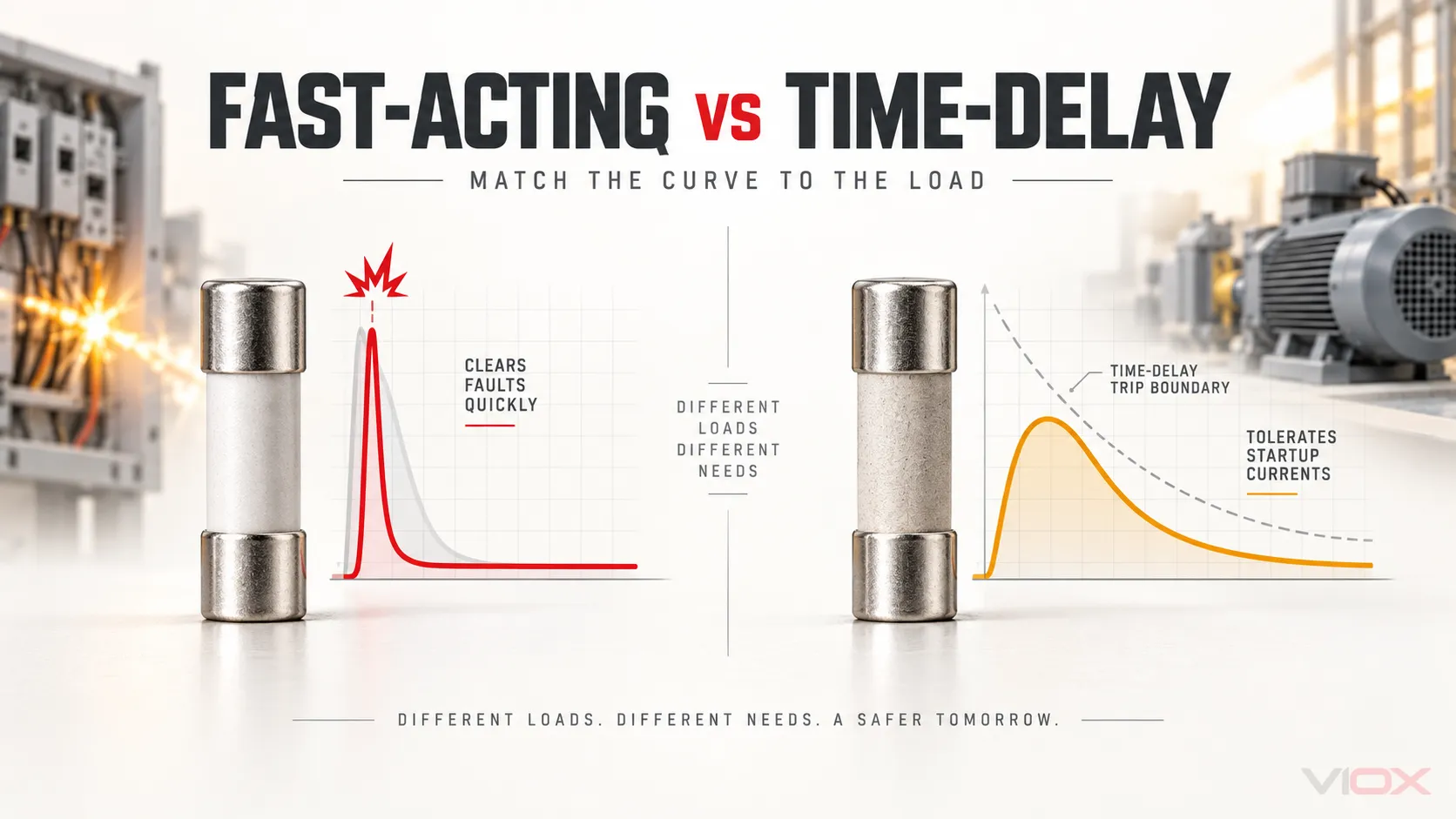
A gyors kioldású biztosíték hamarabb reagál egy adott túláramra, mint egy összehasonlítható lomha biztosíték, más néven késleltetett vagy késleltetett kioldású biztosíték. A fontos szó az összehasonlítható: a két eszköznek egy megfelelő biztosítékrendszerhez kell tartoznia, és viselkedésüket az adott gyártó idő-áram karakterisztikáján kell ellenőrizni.
Válasszon gyors kioldású karakterisztikát, ha a védett áramkörnek kicsi a jogos bekapcsolási áramlökése, és nem tolerálja a túlzott áram-idő kitettséget. Fontolja meg a késleltetett karakterisztikát, ha a terhelésnek dokumentált, ártalmatlan indítási vagy töltési impulzusa van, amelyet egy gyorsabb biztosíték nem tudna megbízhatóan elviselni. Egyik címke sem teszi teljessé a választást. A feszültséget, az AC/DC üzemet, a megszakítóképességet, a névleges áramot, a méreteket, a foglalat kompatibilitását, a környezeti feltételeket és a jóváhagyásokat továbbra is ellenőrizni kell.
| Döntési szempont | Gyors kioldású biztosíték | Lassú kioldású / késleltetett olvadóbiztosító |
|---|---|---|
| Normál tranziens áram | Leginkább akkor alkalmazható, ha a jogos bekapcsolási áramlökés vagy impulzusigény alacsony | Meghatározott tranziens profil elviselésére tervezve, a pontos karakterisztikától függően |
| Válaszreakció ugyanarra a túláramra | Általában hamarabb éri el az olvadási tartományt, mint egy hasonló késleltetett olvadóbiztosító | Általában hosszabb ideig viseli el a túláramot az olvadás előtt |
| Fő kiválasztási kockázat | Nemkívánatos működés normál indítás vagy töltés során | A védett elemhez eljutó többletenergia, ha a késleltetés nem elfogadható |
| Megfelelő alap | Pontos görbe a terhelési profil és a berendezés határértéke függvényében | Pontos görbe a terhelési profil és a berendezés határértéke függvényében |
| Biztonságos helyettesítés | Nem cserélhető fel kizárólag az áramerősség és a méret alapján | Nem cserélhető fel kizárólag az áramerősség és a méret alapján |
Mit jelentenek valójában a “gyors” és “lassú” kifejezések
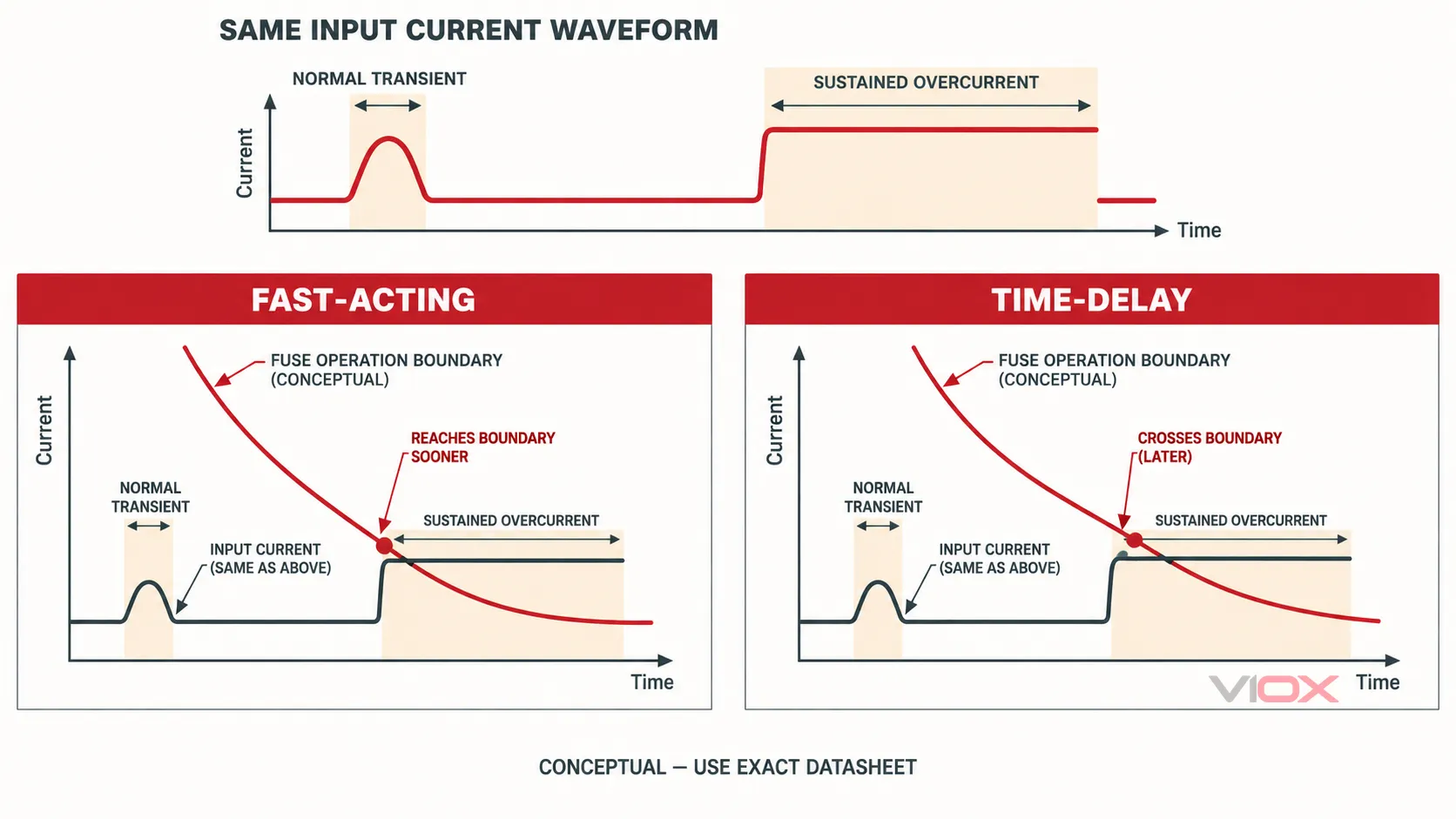
A biztosító kioldási sebessége leírja a áram-idő karakterisztikát, nem pedig egy rögzített nyitási időt. A biztosító nem “motort” vagy “tápegységet” lát; egy áramhullámformát érzékel. A betétje az áram nagysága és időtartama, a korábbi terhelése, valamint a környezeti hőmérsékleti viszonyok szerint melegszik.
Mérsékelt túláram esetén a működési idő viszonylag hosszú lehet. Sokkal nagyobb áramerősségnél mind a gyors kioldású, mind a késleltetett olvadóbiztosító gyorsan működésbe léphet. A hasznos kérdés tehát nem az, hogy “Gyors-e ez a biztosító?”, hanem:
A várható áramerősség és időtartam mellett a biztosító átvészeli-e a normál üzemet, és még azelőtt megszakítja-e az áramkört, mielőtt a védett berendezés túllépné a megengedett határértékét?
Válaszolja meg ezt a kérdést a pontos idő-áram jelleggörbe segítségével. Határozza meg, hogy a közzétett adatok a minimális olvadási, az átlagos olvadási vagy a teljes megszakítási időt mutatják-e. Ezek különböző határértékek. A VIOX útmutatója a biztosítók idő-áram jelleggörbéinek olvasásáról elmagyarázza a különbséget és a logaritmikus diagramok olvasásának folyamatát.
Gyors kioldású biztosíték
A gyors kioldású olvadóbiztosító korlátozott szándékos késleltetéssel rendelkezik. Megfelelő jelölt lehet alacsony bekapcsolási áramlökésű áramkörökhöz, valamint olyan berendezésekhez, amelyek károsodási határa viszonylag gyors reakciót igényel. Ez a leírás nem nem jelent pillanatnyi működést, és nem teszi az összes gyors kioldású olvadóbiztosítót alkalmassá érzékeny félvezetők védelmére.
Lassú kioldású, késleltetett vagy lomha olvadóbiztosító
“A ”lassú kioldású” (slow-blow) széles körben használt keresési és szerviznyelvi kifejezés. Az adatlapok és szabványok helyette a következőket használhatják: késleltetett vagy késleltetett. A karakterisztika célja, hogy a meghatározott ideiglenes túláramot jobban elviselje, mint egy hasonló gyors kioldású biztosító. Ez nem jelenti a tartós túlterhelések vagy az ismétlődő impulzusok figyelmen kívül hagyásának engedélyezését.
A késleltetett biztosító az indítás során is kiolvadhat, ha az impulzus átlépi az olvadási határát, túl gyakran ismétlődik, magas környezeti hőmérsékleten következik be, vagy ha a biztosító már eleve termikusan terhelt állapotban van.
A biztosítékok sebességjelölései nem alkotnak egységes nyelvezetet
A jelölést a biztosítócsaládon és az alkalmazandó szabványon belül kell értelmezni. A hasonló megjelenésű hengeres biztosítók eltérő osztályozási rendszereket használhatnak.
| Kontextus | Jelölés vagy kifejezés, amellyel találkozhat | Helyes értelmezés |
|---|---|---|
| IEC miniatűr biztosítóbetét | F, T, és az alkalmazandó sorozatoknál, FF, M, vagy TT |
Relatív működési karakterisztika szimbólumok a vonatkozó miniatűr biztosíték keretrendszeren belül |
| Észak-amerikai termékdokumentáció | Késleltetett vagy nem késleltetett | Egy adott biztosítékosztályhoz vagy kiegészítő biztosítéksorozathoz deklarált karakterisztika |
| IEC 60269 ipari biztosítóbetét | gG, aM, aR, gPV, vagy egyéb alkalmazási kategória |
Tervezett védelmi tartomány és alkalmazás; nem egy egyszerű gyors-lassú besorolás |
| Gyártói sorozat | Kereskedelmi név, katalóguskód vagy jelleggörbe-család | Az adott gyártó aktuális adatlapja alapján kell dekódolni |
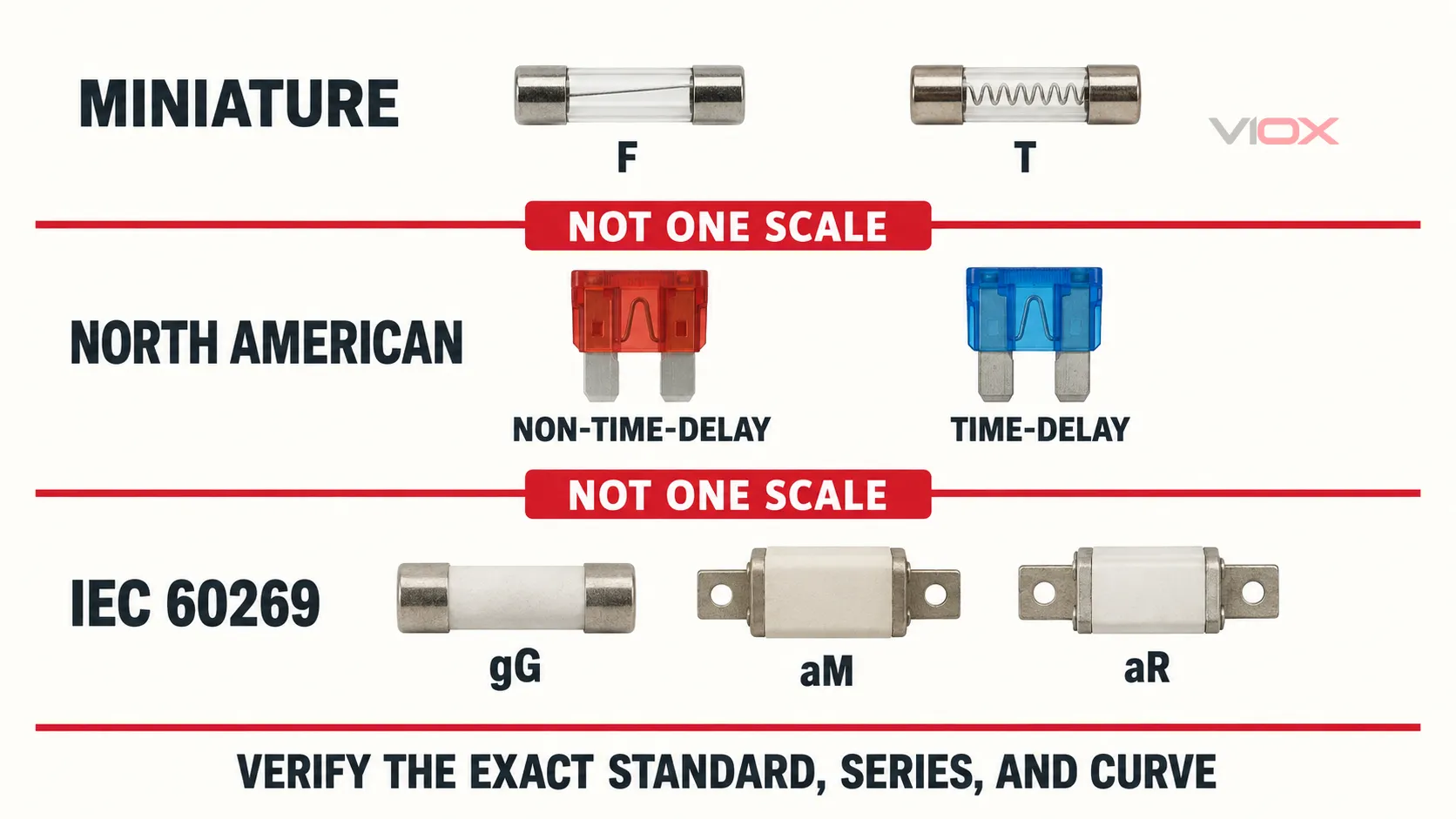
Az IEC 60127-1 a megadott berendezési hatókörén belül foglalkozik a miniatűr biztosítóbetétekkel, és elválasztja azokat az IEC 60269 hatálya alá tartozó kisfeszültségű installációs biztosítóktól. Az IEC 60127-2 tartalmazza a patronos biztosítóbetéteket, például az 5 × 20 mm-es és 6,3 × 32 mm-es családokat. Ez a határvonal fontos: a miniatűr berendezésbiztosítókon használt jelölési konvenciót nem szabad ipari hengeres vagy NH biztosítóbetétekre alkalmazni.
Az UL 248 szintén külön részeket használ a különböző biztosítókategóriákhoz. Az UL 248-14 a kiegészítő biztosítókat fedi le, amelyek kiegészítő túláramvédelemre szolgálnak olyan alkalmazásokban, ahol nincs szükség leágazó áramkörre vagy azzal egyenértékű védelemre. Egy ismerős forma vagy a “time-delay” (késleltetett) felirat nem tesz egy kiegészítő biztosítót leágazó áramköri biztosítóvá.
Ipari célra gG, aM, valamint az NH döntések esetén használja a IEC 60269 biztosíték-kiválasztási útmutatót. A fizikai méret és a jelölés azonosításához használja a olvadóbiztosító-útmutatót.
Gyors kioldású és késleltetett kioldású biztosítékok összehasonlítása terhelési profil alapján
Az alkalmazások csak útmutatások, nem kiválasztási szabályok. Két tápegységnek nagyon eltérő bemeneti töltési impulzusai lehetnek; két motornak eltérő indítási módjai és gyorsítási ideje lehet. Amikor csak lehetséges, használja a mért vagy megadott áram-idő profilt.
| Terhelési viselkedés | Kezdeti jelölt | Mit kell ellenőrizni |
|---|---|---|
| Alacsony bekapcsolási áramú ohmos vagy elektronikus terhelés | A gyors kioldású megfelelő lehet | Normál tűrés, hibaáram, berendezés károsodási határértéke és pontos görbe |
| Transzformátor mágnesezési bekapcsolási áramlökete | Az időzítés csökkentheti a zavaró kioldásokat | Legrosszabb eset szerinti bekapcsolási impulzus, ismétlődés, előtéttel kapcsolt védelem és transzformátorra vonatkozó utasítások |
| Kondenzátor bemenetű tápegység | Az időzítés gyakran megfontolandó | Töltési hullámforma, forrásimpedancia, ismétlődő ciklusok és a bemeneti alkatrészek terhelhetősége |
| Közvetlen motorindítás | Időzítés vagy alkalmazásspecifikus motorvédő biztosíték alkalmazása javasolt | Indítási áram és időtartam, túlterhelés elleni védelem, rövidzárlat elleni védelem és az alkalmazandó szerelési szabályok |
| Félvezető teljesítményfokozat | Speciális félvezetővédő biztosítékra lehet szükség | Az eszköz túlfeszültség-besorolása, az ívképződés előtti és a teljes I²t, a csúcs-átengedési érték, a feszültség és a gyártói koordináció |
| Ismeretlen csere meglévő berendezésben | Semmilyen feltételezés nem biztonságos | Eredeti cikkszám, berendezés kézikönyve, teljes jelölés, foglalat és a hiba oka |
Ne egyszerűsítse ezt a táblázatot “elektronika egyenlő gyors” és “motorok egyenlő lassú” kategóriákra. Egy hagyományos gyors kioldású biztosító még mindig túl sok energiát engedhet át egy félvezető számára, míg egy helytelenül kiválasztott késleltetett biztosító nem biztos, hogy koordinálható a vezetőkkel vagy alkatrészekkel. Az IEC 60269-4 kiegészítő követelményeket ír elő a félvezető eszközök védelmére használt biztosítóbetétekre; ezek a termékek egy konkrét védelmi feladathoz tartoznak, nem csupán egy univerzális skála leggyorsabb végpontját jelentik.
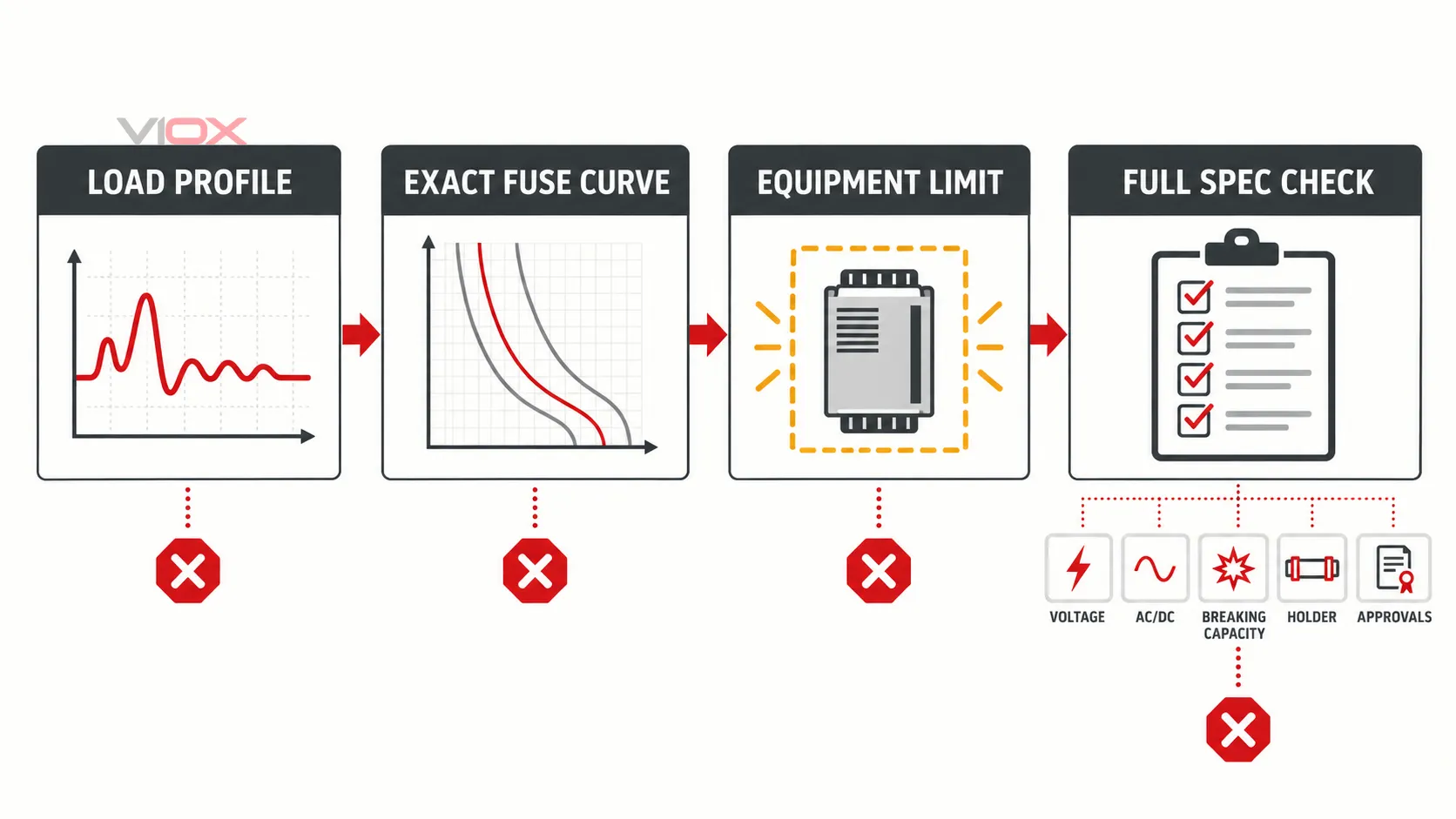
Öt ellenőrzési szempont a működési karakterisztika kiválasztásához
1. Azonosítsa a biztosítórendszert a sebesség összehasonlítása előtt
Jegyezze fel az alkalmazandó szabványt, osztályt, felhasználási kategóriát, gyártói sorozatot, méreteket és a foglalatot. Egy 5 × 20 mm-es miniatűr biztosító, egy 10 × 38 mm-es ipari biztosítóbetét és egy észak-amerikai kiegészítő biztosító eltérő igazolást igényelhet még akkor is, ha az általános összehasonlítás hasonló kifejezéseket használ.
2. Határozza meg a normál áram-idő burkológörbét
Gyűjtsön össze többet az állandósult áramnál. Tartalmazza a következőket:
- maximális folyamatos üzemi áram;
- indítási, mágnesezési, töltési vagy gyorsítási áram az idő függvényében;
- ismétlődő impulzusok nagysága, időtartama és intervalluma;
- hihető túlterhelések, amelyek nem részei a normál üzemnek;
- környezeti hőmérséklet, a tokozás melegedése és a tartó körülményei.
A burkológörbének a legrosszabb eset szerinti jogszerű üzemet kell képviselnie, nem pedig egy kényelmes laboratóriumi indítást.
3. Határozza meg, mit kell a biztosítónak védenie
Határozza meg, hogy a védett határérték vezetőhöz, transzformátortekercshez, relétekercshez, teljesítmény-félvezetőhöz, nyomtatott áramköri vezetőhöz, készülékalkatrészhez vagy más elemhez tartozik-e. Szerezze be a megengedett áram-idő vagy energiahatárértéket a berendezés tervezési alapjaiból vagy a gyártó hiteles adataiból.
A biztosítéknak két határ között kell elhelyezkednie: a normál terhelési igény felett, hogy megfelelően átengedje az áramot, és a védett elem károsodási határa alatt, hogy megszakítsa az áramkört a nem elfogadható károsodás előtt. Ha ezek a határok nem hagynak megfelelő választási tartományt, akkor csak a biztosíték sebességének megváltoztatása nem oldja meg a tervezési problémát.
4. Hasonlítsa össze a pontos görbét és az energiaadatokat
Ábrázolja vagy hasonlítsa össze a normál tranziens jelenséget a biztosíték gyártójának vonatkozó görbéjével. Használja a megfelelő határt – az egyik kérdésnél a minimális olvadási, a másiknál a teljes megszakítási időt –, és vegye figyelembe a megadott tűréseket és feltételeket.
Rövid, nagy áramerősségű események esetén a gyártó közzéteheti az ívképződés előtti és a teljes működési időt I²t. Az I²t értéket csak kompatibilis definíciók és vizsgálati feltételek mellett hasonlítsa össze. Ez nem egy univerzális rövidítés két egymástól független biztosítékcsalád közötti választáshoz.
5. Ellenőrizzen minden nem sebességgel kapcsolatos követelményt
Jóváhagyás előtt ellenőrizze:
- névleges áram a tényleges termikus körülmények között;
- névleges feszültség, valamint AC, DC vagy kettős üzemmódú megfelelőség;
- megszakítóképesség a várható zárlati áramnál;
- méretek, érintkezők, behelyezést gátló kialakítások és foglalati kompatibilitás;
- biztosító teljesítménydisszipációja és a foglalat hőmérsékleti határértékei;
- szükséges IEC, UL, CSA, berendezés- vagy piaci jóváhagyások;
- gyártói korlátozások és a berendezés garanciális követelményei.
Helyettesíthető-e a lassú kioldású biztosíték gyors kioldásúval?
Általános szabályként nem. Egy gyors kioldású, azonos áramerősségű cserealkatrész a normál indítás vagy töltés során is kioldhat. Az ismétlődő téves működés arra csábíthatja a felhasználókat, hogy nagyobb névleges áramerősségű biztosítót szereljenek be, ami egy második, potenciálisan súlyosabb hibát idéz elő.
Ezzel szemben egy gyors kioldású biztosító lassú kioldásúra történő cseréje nagyobb áram-idő kitettséget engedhet meg az olvadás előtt. Ez túllépheti egy alkatrész, nyomtatott áramköri vezető vagy vezeték határértékét, még akkor is, ha a cserealkatrész áramerőssége, feszültsége és méretei megegyeznek.
A helyettesítést mérnöki összehasonlításként kezelje. Ellenőrizze vagy egyeztesse az alábbi mezőket:
- biztosítvány szabvány, osztály, kategória és pontos sorozat;
- névleges áramerősség és termikus alkalmazási feltételek;
- névleges feszültség és AC/DC megszakítási feladat;
- idő-áram karakterisztika, beleértve a vonatkozó tűréshatárokat;
- megszakítóképesség vagy megszakítási teljesítmény;
- ívképződés előtti és teljes I²t érték, ahol az alkalmazás az energia korlátozásától függ;
- méretek, érintkezők, kizárási jellemzők és foglalat-kompatibilitás;
- jóváhagyások és a berendezésgyártói követelmények.
A ház anyaga nem rövidítés. Az üveg és a kerámia közötti különbség nem határozza meg a sebességet vagy a megszakítóképességet; lásd Üvegbiztosíték vs. Kerámiabiztosíték az adott cserealkatrészre vonatkozó döntéshez.
Amikor a biztosíték folyamatosan kiold
Ne váltson automatikusan lassabb vagy nagyobb névleges értékű biztosítóra. Először állapítsa meg, hogy az esemény normál bekapcsolási áramlökés, tartós túlterhelés, időszakos rövidzárlat, meghibásodott alkatrész, túlzott környezeti hőmérséklet, laza vagy túlmelegedett foglalat, vagy helytelen eredeti kiválasztás eredménye-e.
A hullámforma vagy az eseménynapló különösen hasznos, ha a kioldás véletlenszerűnek tűnik. Ha az eredeti biztosító évekig tartó üzemelés után lépett működésbe, a cserealkatrész pedig azonnal kiolvad, akkor az áramkör állapota megváltozhatott. Kövesse a diagnosztikai sorrendet a Miért ég ki folyamatosan a biztosító? című részben, mielőtt megváltoztatná a védelmi karakterisztikát.
Ajánlatkérés és csereellenőrző lista
A megalapozott gyors kioldású vagy késleltetett kiválasztáshoz küldje el a szállítónak vagy a tervezés felülvizsgálójának a következőket:
- az eredeti gyártó és a teljes cikkszám, ha biztosítékot cserél;
- az alkalmazandó biztosítványi szabvány, osztály, kategória és jóváhagyási követelmények;
- a maximális áramköri feszültség, valamint hogy a terhelés AC vagy DC;
- a várható rövidzárlati áramot a telepítési ponton;
- a folyamatos terhelőáram, valamint a környezeti/burkolati feltételek;
- a bekapcsolási vagy impulzusnagyság, időtartam, ismétlődés és a legrosszabb eset szerinti tűrés;
- a védett berendezés ellenállási görbéje vagy energiahatára;
- a foglalat megnevezése, méretei, érintkezői és a megengedett biztosíték-disszipáció;
- a döntéshez használt pontos idő-áram és I²t adatok.
A VIOX szállít hengeres biztosítóbetétek és kapcsolódó kisfeszültségű biztosítók és biztosítóaljzatok ipari és berendezés-alkalmazásokhoz. A típus szerinti kiválasztáshoz a szükséges áramerősség mellett a teljes ellenőrzőlistát adja meg.
Műszaki források
- IEC 60127-1:2023 — Kismegszakítók, általános követelmények
- IEC 60127-2:2014 — Csöves biztosítóbetétek
- IEC 60269-1:2024 — Kisfeszültségű biztosítók, általános követelmények
- IEC 60269-4:2024 — Félvezető-védelemre szolgáló biztosítóbetétek
- UL 248-1 — Kisfeszültségű biztosítók, általános követelmények
- UL 248-14 — Kiegészítő biztosítók
- UL biztosító és biztosítóaljzat szolgáltatások