

Introduction : Quand votre fournisseur devient votre plus grand risque de projet
Un développeur de solaire à l'échelle industrielle au Texas a appris une leçon coûteuse en 2023. Six mois après le démarrage d’un projet de 50 MW, ses boîtes de combinaison ont commencé à tomber en panne — fusibles qui sautaient prématurément, bornes en surchauffe et joints d’enceinte laissant pénétrer l’humidité. La cause racine ? Un fournisseur qui affirmait détenir la certification UL 1741 mais ne pouvait pas fournir de preuve de vérification, utilisait des dispositifs de protection non adaptés au photovoltaïque et ne disposait d’aucune vérification d’élévation de température pour les configurations assemblées. Résultat : trois mois de retard sur le projet, 280 000 $ de coûts de remplacement, et des relations tendues avec l’entrepreneur EPC et le propriétaire de l’actif.
Choisir un fournisseur de boîtes de jonction n'est pas une question de trouver l'offre la plus basse. C'est une décision stratégique qui affecte les délais du projet, la fiabilité à long terme du système, l'exposition à la garantie et, en fin de compte, votre réputation sur le marché.
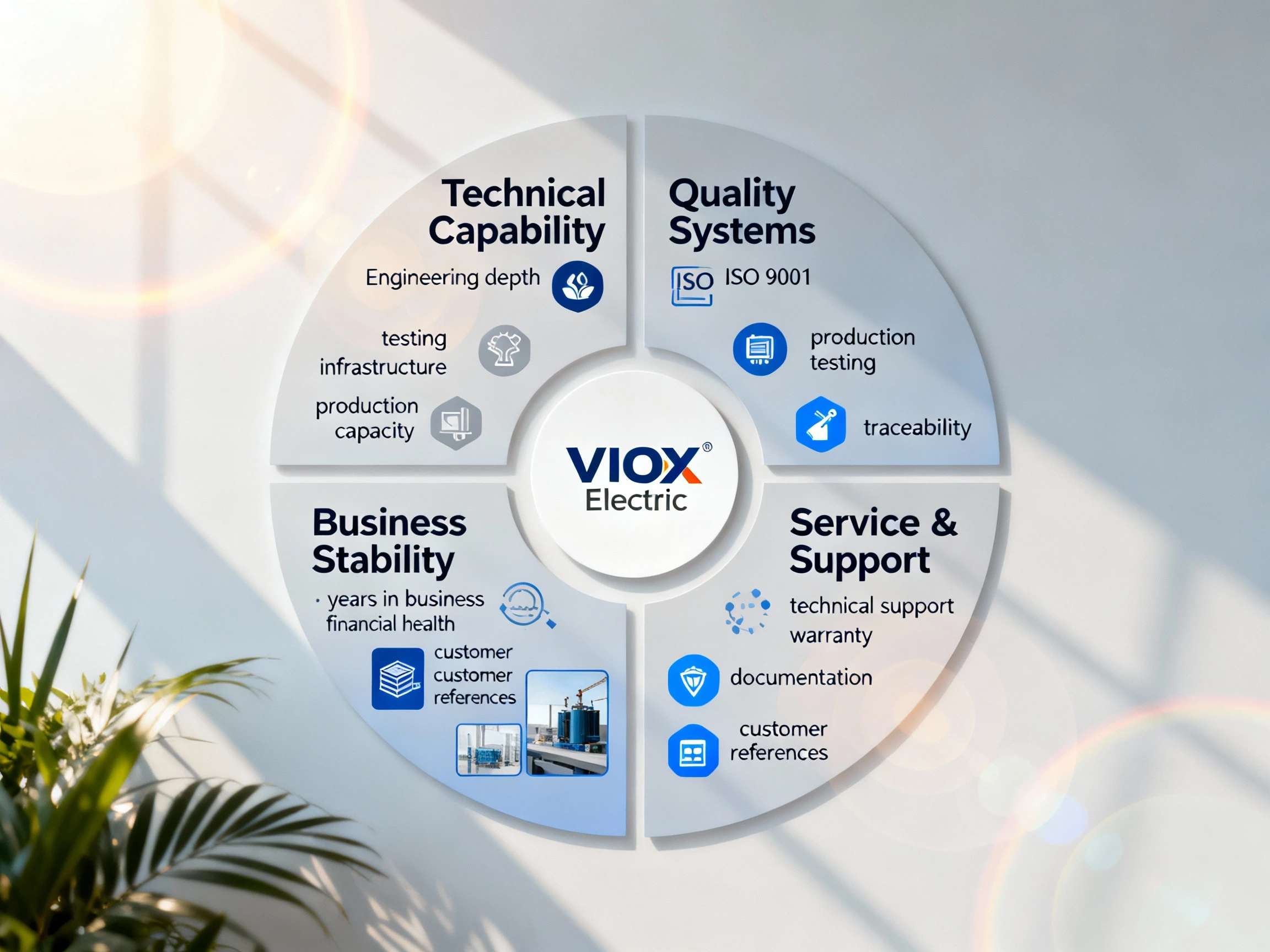
Ce guide propose un cadre pratique pour évaluer les fournisseurs de boîtes de combinaison sur la base de quatre piliers essentiels : capacité technique, systèmes qualité, stabilité commerciale et support service. Que vous soyez responsable des achats dans une entreprise EPC solaire, intégrateur de systèmes approvisionnant des composants pour des projets commerciaux, ou bureau d’études spécifiant des équipements pour des installations à l’échelle industrielle, ces critères vous aideront à distinguer les fabricants réellement compétents de ceux qui se contentent de revendiquer une expertise.
Pourquoi la sélection du fournisseur compte : les coûts cachés d’un mauvais choix
La différence de coût immédiate entre les fournisseurs masque souvent le coût total de possession. Une boîte de combinateur à un prix inférieur de 15% au marché peut sembler attrayante sur une feuille de calcul, mais cet avantage s’évapore rapidement lorsque des coûts cachés apparaissent.
Impact de défaillance sur le terrain: quand une boîte de combinateur tombe en panne sur le terrain, vous ne remplacez pas simplement un composant $2,000. Vous payez pour la répartition des techniciens, la coordination de l’accès au site, les temps d’arrêt du système (perte de revenus de production), l’administration de la garantie et les relations clients potentiellement endommagées. Une seule défaillance peut coûter $5000 à $8000 en impact total. Si votre fournisseur a un taux d’échec sur le terrain de 2% au lieu de 0,2%, ce coût se multiplie sur des centaines d’unités.
Risque de retard du projet: les calendriers de Construction comprennent les délais de livraison des équipements en fonction des engagements des fournisseurs. Quand un fabricant expédie en retard, fournit de mauvaises configurations ou échoue les tests de pré-installation, votre calendrier de projet glisse. Dans l’énergie solaire à grande échelle, les retards de calendrier déclenchent souvent des clauses de dommages-intérêts liquidés, des pénalités de délai d’interconnexion, ou la perte de valeur de crédit d’impôt. Un délai de deux mois pour un projet de 100MW peut coûter des millions.
Retravail d’ingénierie: les fournisseurs qui ne peuvent pas fournir une documentation adéquate — diagrammes de câblage complets, évaluations thermiques vérifiées, coordination précise des dispositifs de protection — forcent votre équipe d’ingénierie à des cycles de reprise. Cela consomme des ressources internes, retarde les approbations de l’autorité compétente et augmente le risque d’erreurs de conception qui apparaissent pendant la mise en service.
Réputation et responsabilité: le nom de votre entreprise figure sur la plaque signalétique du projet, pas celui de votre fournisseur. Quand les boîtes de combinateur échouent en raison de la qualité de fabrication pauvre ou de la protection de l’environnement inadéquate, le client vous tient responsable. Les problèmes de qualité répétés nuisent à votre réputation sur le marché et peuvent mettre en péril les soumissions futures ou les contrats de service à long terme.
Les meilleurs fournisseurs réduisent le risque total du projet et le coût du cycle de vie. Ils livrent à temps, respectent les spécifications de façon constante, fournissent une documentation technique complète, maintiennent des certifications valides et résolvent rapidement les problèmes lorsqu’ils surviennent. Cette fiabilité justifie une modeste prime de prix et des économies sur tout le cycle de vie du projet.
Le cadre d’évaluation des fournisseurs à quatre piliers
L’évaluation d’un fabricant de boîte de combinateur exige de regarder au-delà des allégations de marketing et des citations de prix. Une évaluation systématique sur quatre dimensions vous donne une image complète de la capacité et des risques des fournisseurs:
1. Capacité technique: peuvent-ils concevoir et fabriquer des boîtes de combinateur qui répondent aux exigences du système PV? Cela couvre la compétence en ingénierie, la capacité de production, l’infrastructure de test et la capacité de personnalisation pour les besoins spécifiques du projet.
2. Systèmes de qualité: ont-ils des processus pour assurer la qualité constante du produit, lot après lot? Cela inclut les certifications de gestion de la qualité, les protocoles d’inspection entrants, les procédures de test de production et les systèmes de traçabilité.
3. Stabilité des affaires: seront-ils là dans cinq ans pour honorer les garanties et soutenir l’équipement installé? Il examine la santé financière, les antécédents opérationnels, la propriété des installations, les références des clients et la réputation du marché.
4. Service et assistance: dans quelle mesure assistent-ils les clients tout au long du cycle de vie des équipements? Cela couvre le support technique avant la vente, la qualité de la documentation, la fiabilité des délais, le service après-vente et la réactivité aux problèmes.
Chaque pilier est important. Un fabricant avec une excellente capacité technique mais une faible stabilité commerciale crée un risque pour la chaîne d’approvisionnement. Un système de qualité solide mais un support de service faible vous laisse bloqué en cas de problèmes. Les sections ci-dessous détaillent ce qu’il faut rechercher dans chaque domaine et les signes rouges qui devraient déclencher un examen plus approfondi ou une disqualification.
Capacité technique: peuvent-ils fabriquer selon les spécifications?
La capacité technique détermine si un fournisseur peut réellement livrer ce que votre projet exige. Cela va au-delà du fait d’avoir une boîte de combinateur dans leur catalogue: c’est une question de profondeur d’ingénierie, d’infrastructure de fabrication et de capacité éprouvée à répondre aux exigences spécifiques du pv.
Compétence en ingénierie de conception
Les fabricants fiables emploient des ingénieurs électriques qui comprennent le comportement des panneaux PV, la protection des circuits cc et la gestion thermique dans les enceintes extérieures. Posez les questions suivantes:
- Peuvent-ils expliquer leur méthodologie de dimensionnement des barres et leurs calculs de capacité de charge?
- Comprennent-ils les exigences de l’article 690 du NEC en matière de protection contre les surintensités des cordes et de mise à la terre des équipements?
- Peuvent-ils fournir des preuves de vérification cei 61439-2 montrant une vérification de l’élévation de la température pour le courant nominal et la configuration du boîtier?
- Comment géront-ils les exigences internes de séparation et d’isolement selon la norme cei 62548-1?
Les fournisseurs qui ont du mal à répondre à des questions techniques ou qui comptent sur des réponses génériques “standard de l’industrie” n’ont pas la profondeur d’ingénierie nécessaire pour soutenir des projets complexes ou résoudre des problèmes sur le terrain.
Conformité aux normes et Infrastructure de test
Un fabricant compétent maintient des installations d’essai internes ou sous contrat pour vérifier la performance du produit. Les capacités de test essentielles comprennent:
- Essai de résistance diélectrique: vérifie l’intégrité de l’isolation à la tension nominale du système (600V, 1000V, 1500V DC)
- Test d’élévation de température: confirme que les barres, les bornes et les connexions restent dans les limites thermiques au courant nominal dans les pires conditions
- Essai de court-circuit: valide que les dispositifs de protection interrompent les courants de défaut en toute sécurité sans rupture de boîtier
- Essais environnementaux: vérification de la cote IP, exposition aux UV, cycle thermique et résistance à la corrosion pour les applications extérieures
Demandez des rapports de test pour le modèle de boîte de combinateur spécifique que vous évaluez, pas seulement des énoncés de capacité génériques. Si un fournisseur ne peut pas produire de données d’essai spécifiques au modèle ou vous renvoie uniquement à des certifications au niveau des composants, il n’a pas validé le produit assemblé.
Capacité de Production et évolutivité
Comprendre l’infrastructure de production du fabricant:
- Capacité annuelle: peuvent-ils gérer votre volume projeté sans forcer les ressources?
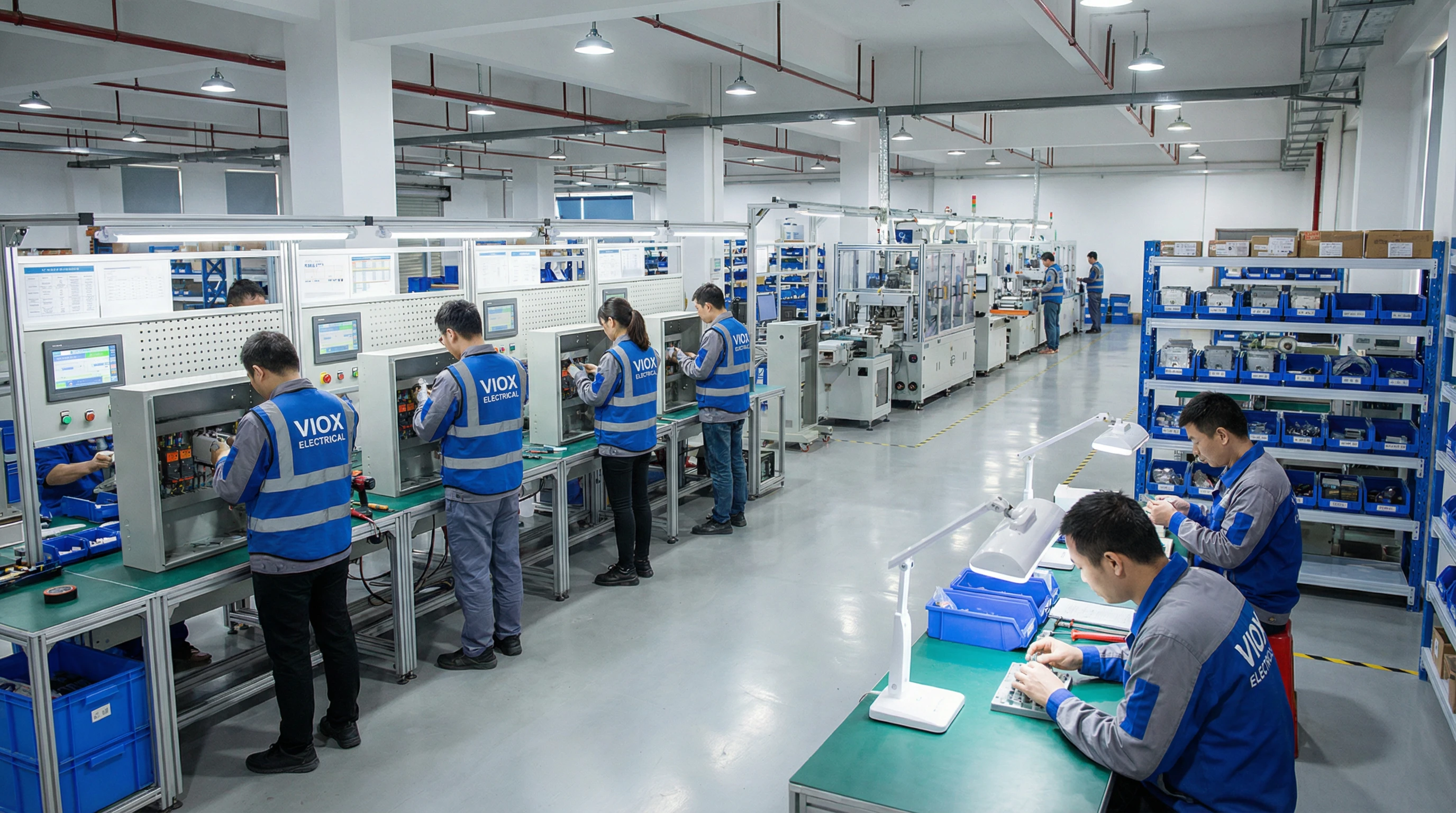
- Procédés de fabrication: la fabrication automatisée de barres, l’usinage de boîtier CNC et des procédures d’assemblage cohérentes indiquent une capacité de production mature
- Approvisionnement en composants: fabriquent-ils des composants clés en interne ou comptent-ils sur des fournisseurs extérieurs? La dépendance multi-fournisseurs augmente la variabilité des délais d’exécution
- Capacité d’échelle: si votre premier projet réussit et que vous triplez votre commande, peuvent-ils augmenter sans dégradation de la qualité?
Un fournisseur dont la capacité est de 95% et dont l’automatisation est limitée présente un risque de livraison. Recherchez des fabricants ayant la marge de manœuvre pour absorber les fluctuations de la demande et des antécédents éprouvés de production à l’échelle pour les grands projets.
Capacité de personnalisation
Les produits du catalogue Standard ne correspondent pas toujours aux exigences spécifiques du projet. Évaluer la flexibilité du fournisseur:
- Peuvent-ils s’adapter à des comptages de chaînes personnalisés, à des valeurs de tension ou à des configurations de dispositifs de protection?
- Offront-ils une intégration rapide des arrêts, une détection des pannes d’arc ou des interfaces de système de surveillance?
- Comment répondent-ils aux exigences environnementales particulières — résistance au brouillard salin pour les sites côtiers, plage de température étendue pour les installations désertiques ou certification sismique pour les zones à haut risque?
- Quel est leur processus de changement technique, et comment les modifications affectent-elles les délais de livraison et les certifications?
Les meilleurs fabricants équilibrent la normalisation (pour le coût et la fiabilité) avec une personnalisation réfléchie pour les exigences techniques légitimes. Méfiez-vous des fournisseurs qui refusent toute personnalisation ou acceptent tout sans discuter des implications de la certification.
Systèmes de qualité: comment ils assurent la cohérence
Un seul prototype qui passe les tests ne garantit pas une production fiable. Les systèmes de qualité déterminent si un fabricant fournit les mêmes performances dans l’unité 1 et l’unité 1 000. Recherchez les processus documentés qui détectent les défauts avant l’expédition des produits.
ISO 9001 et Certification de gestion de la qualité
La certification ISO 9001 indique qu’un fabricant a mis en œuvre des processus de gestion de la qualité documentés couvrant le contrôle de la conception, la gestion des documents, les contrôles d’achat, les processus de production, les procédures d’inspection, les systèmes de mesures correctives et les audits internes. Bien qu’il ne s’agisse pas d’une norme de sécurité des produits, la certification ISO 9001 offre une confiance en la cohérence organisationnelle.
Vérifiez que la certification couvre l’installation de fabrication qui produit vos boîtes de combinateur, pas seulement un siège social ou une gamme de produits différente. Demandez une copie du certificat et confirmez qu’il est en vigueur — les certificats iso 9001 exigent des audits de surveillance annuels et une recertification de trois ans.
Inspection entrante et Qualification des composants
La qualité de la boîte de combinateur dépend des composants à l’intérieur des barres, des bornes, des fusibles, des disjoncteurs, des dispositifs de protection contre les surtensions, des boîtiers et des glandes de câbles. Renseignez-vous sur le processus de qualification des composants du fournisseur:
- Maintenent-ils des listes de fournisseurs approuvés pour les composants critiques?
- Quelles procédures d’inspection entrant vérifient les spécifications des composants avant l’assemblage?
- Comment gèrent-ils les substitutions de composants lorsque les fournisseurs principaux ont des pénuries?
- Ont-ils besoin de dispositifs de protection (fusibles, disjoncteurs) dotés des certifications UL appropriées pour les applications PV DC?
Les fabricants qui acceptent des composants provenant de plusieurs sources non qualifiées ou qui évitent les inspections entrantes introduisent une variabilité de qualité qui se transforme en défaillances sur le terrain.
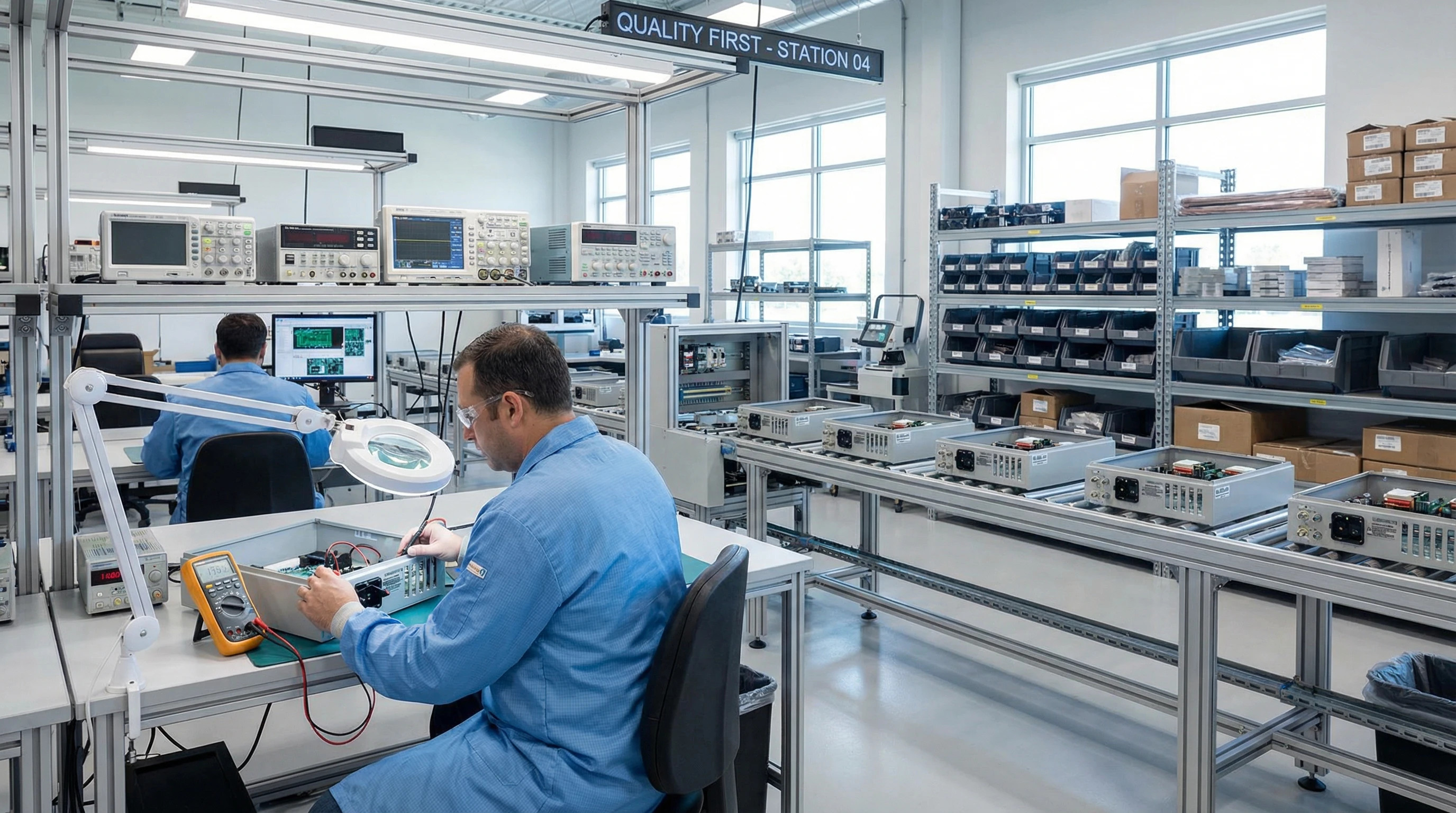
Essais de Production et contrôle de qualité
Chaque boîte de combinateur devrait subir l’essai de production avant qu’elle quitte l’usine. Les tests de production Standard comprennent:
- Tests de continuité: vérifie que toutes les connexions électriques sont complètes et correctes
- Essai de résistance d'isolation: confirme l’isolement adéquat entre les circuits et à la terre
- Essai de résistance diélectrique: vérifie l’intégrité de l’isolation à une tension supérieure à la tension nominale
- Tests fonctionnels: valide que les dispositifs de protection fonctionnent correctement et que les systèmes de surveillance (le cas échéant) communiquent correctement
- Inspection visuelle: vérification de l’assemblage, de l’étiquetage, des marques de couple sur les raccords et des défauts cosmétiques
Demandez le protocole de test de production et les enregistrements de test typiques. Les fabricants avec des systèmes de qualité mûrs fournissent une documentation d’essai complète avec chaque expédition, y compris les résultats des tests pour les numéros de série spécifiques livrés.
Traçabilité et contrôle des numéros de série
La traçabilité vous permet de suivre une boîte de combinateur spécifique jusqu’à sa date de production, les numéros de lots de composants, les résultats des tests et l’inspecteur. Cela est important lorsque des problèmes se posent sur le terrain — vous pouvez rapidement déterminer si un problème affecte un lot de production spécifique ou nécessite une enquête plus large.
Recherchez des fournisseurs qui:
- Appliquez des numéros de série uniques à chaque boîte de combinateur
- Maintenir des dossiers électroniques ou physiques reliant les numéros de série aux données de production
- Peut fournir des “certificats de naissance” ou des registres de qualité pour des unités spécifiques
- Suivre la révision des dessins, des nomenclatures et des procédures d’essai appliquées à chaque lot de production
Les fabricants sans systèmes de traçabilité ne peuvent pas prendre en charge une analyse efficace des causes fondamentales ou des mesures correctives ciblées en cas de problèmes.
Certifications qui comptent: UL 1741, IEC 62548 et au-delà
Les Certifications fournissent une vérification indépendante qu’un produit répond aux normes de sécurité et de performance. Mais toutes les certifications n’ont pas le même poids, et certains fabricants réclament des certifications qui ne couvrent pas réellement leurs produits combinateur boîte. Voici ce qu’il faut vérifier.
UL 1741: la norme essentielle de boîte de combinateur
L’ul 1741 est la norme pour les onduleurs, convertisseurs, contrôleurs et équipements de système d’interconnexion pour une utilisation avec des ressources énergétiques distribuées. Le programme de certification Balance of System (BOS) d’ul identifie explicitement UL 1741 comme la norme applicable pour les boîtes de combinateur dans les systèmes PV.
Lorsqu’un fournisseur réclame la certification UL 1741:
- Demander le certificat UL ou l’autorisation de marque d’inscription
- Vérifiez le modèle de produit spécifique et la configuration dans le UL produit iQ base de données (répertoire public de certification de l’ul)
- Confirmez que l’estimation de tension, l’estimation actuelle, et le nombre de chaînes correspondent à vos exigences de projet
- Vérifier que la certification couvre l’application prévue — résidentielle, commerciale ou utilitaire
La certification UL 1741 comprend des inspections continues de surveillance de l’usine, ce qui signifie que les auditeurs UL visitent périodiquement l’installation de fabrication pour vérifier la conformité continue. Cette exigence de surveillance différencie la certification UL véritable des rapports de test uniques.
Cei 61439-2: conception et vérification de l’assemblage
La norme cei 61439-2 précise les exigences relatives aux assemblages de commutation et de commande basse tension, y compris les assemblages de commutation de courant jusqu’à 1500v DC. L’édition 2020 comprend des annexes spécifiques au pv et des méthodes de vérification de l’augmentation de température critiques pour les applications de boîtes de combinateur extérieures.
Éléments clés à vérifier:
- Vérification de l’élévation de température: le fournisseur doit démontrer que la boîte de combinateur assemblée fonctionne à l’intérieur des limites thermiques au courant nominal dans les pires conditions ambiantes. Cela nécessite soit des essais de type de la configuration spécifique, soit des méthodes de calcul validées.
- Tenue aux courts-circuits: l’ensemble doit résister à des courants de court-circuit spécifiés sans échec dangereux
- Formulaires de séparation interne: la façon dont les circuits sont séparés à l’intérieur de l’enceinte influe sur la sécurité pendant l’entretien
- PV annexe application: pour l’utilisation du PV, confirmer que le fabricant a appliqué des considérations de conception spécifiques au PV dans les annexes de la norme
Demander le rapport de vérification cei 61439-2 pour la configuration spécifique de la boîte de combinateur. Les allégations génériques de conformité à la norme cei 61439-2 sans preuve de vérification spécifique à la configuration suggèrent une application incomplète de la norme.
Cei 62548-1: exigences de conception des panneaux PV
La norme cei 62548-1 (Design requirements for photovoltaic (PV) arrays) établit les exigences relatives au câblage des panneaux PV, aux dispositifs de protection, aux moyens de commutation et d’isolement, aux dispositions de mise à la terre et à la protection contre les chocs électriques. Les boîtes combineuses doivent intégrer ces exigences:
- Pratiques de câblage DC: méthodes de dimensionnement, d’acheminement et de connexion des câbles appropriées aux circuits PV DC
- Dispositifs de protection: protection contre les surintensités (fusibles ou disjoncteurs) évaluée pour une application PV DC, y compris la capacité d’interruption appropriée
- L’isolement signifie: déconnectez les commutateurs ou d’autres dispositifs pour isoler la boîte de combinateur des sources d’énergie pendant l’entretien
- Mise à la terre: conducteurs de mise à la terre de l’équipement et dispositions de liaison
- Protection contre les chocs: pour les réseaux directement connectés à des batteries, mesures de protection supplémentaires, y compris la surveillance de l’isolation ou la détection du courant résiduel
Demandez comment la conception de la boîte de combinateur du fournisseur répond aux exigences de la norme cei 62548-1. Les fournisseurs ayant une expertise approfondie en PV peuvent cartographier leurs caractéristiques de conception directement aux exigences standard; Ceux qui ne connaissent pas la norme peuvent avoir du mal à expliquer la conformité.
Certifications au niveau des composants
Au-delà des normes de niveau d’assemblage, les composants individuels dans la boîte de combinateur devraient porter les certifications appropriées:
- Disjoncteurs DC: UL 489B ou IEC 60947-2 pour des applications de c.c à la tension nominale
- Interrupteurs de déconnexion: UL 98B ou IEC 60947-3 pour la fonction d’isolement
- Fusibles: UL 2579 pour les fusibles PV ou IEC 60269 pour les fusibles polyvalents pour DC
- Dispositifs de protection contre les surtensions: UL 1449 Type 1 ou Type 2, ou cei 61643-11 pour DC SPDs
- Enceintes: UL 50/50E ou IEC 60529 pour l’évaluation d’ip et la protection de l’environnement
Une boîte de combinateur ne peut être aussi fiable que ses composants. Vérifier que les dispositifs de protection sont munis de cotes de courant continu et de certificats appropriés au pv — les dispositifs évalués en fonction de la conformité peuvent tomber en panne catastrophique dans les circuits en courant continu en raison d’un amorçage d’arc continu.
Certification drapeaux rouges
- Revendications invérifiables: certificats qui ne peuvent pas être confirmés dans des bases de données publiques ou qui n’ont pas de numéro de certificat
- Rapports de Test au lieu de certifications: un rapport de test unique n’est pas équivalent à une certification avec surveillance continue
- Portée standard erronée: revendication IEC 60947-1 (règles générales) sans IEC 61439-2 (exigences d’assemblage) ou UL 1741 (équipement BOS)
- Certifications de composants seulement: les composants certifiés ne certifient pas automatiquement le produit assemblé
- Listes expirées ou suspendues: vérifier que les certifications sont à jour et n’ont pas été suspendues en raison de non-conformité
En cas de doute, vérifiez les certifications directement auprès de l’organisme de certification. UL Product iQ, par exemple, peut être consulté publiquement et fournit une confirmation officielle de ce qui est réellement certifié.

Stabilité des entreprises: seront-ils là dans cinq ans?
Les boîtes de combinateur portent des garanties de 10 ans ou plus, et votre base installée crée des obligations continues de service et de pièces de rechange. Un fournisseur qui quitte le marché, est acquis et discontinué, ou fait faillite vous laisse avec un équipement non pris en charge et des garanties inapplicables.
Indicateurs de santé financière
Bien que les entreprises privées ne publient pas de données financières détaillées, vous pouvez évaluer la stabilité à l’aide d’indicateurs de remplacement:
- Années en affaires: les Startups et les entreprises avec moins de 5 ans d’historique d’exploitation comportent un risque plus élevé. Recherchez des fabricants établis avec des antécédents de 10 ans
- Propriété de la facilité: les entreprises qui possèdent leurs installations de fabrication ont plus de stabilité du capital que celles qui exploitent des espaces loués à court terme
- Investissement dans les infrastructures: les investissements récents dans l’équipement de production, les laboratoires d’essai ou l’agrandissement des installations témoignent de la confiance et de l’engagement
- Conditions de paiement: les fournisseurs exigeant un paiement anticipé 100% ou offrant des conditions de paiement exceptionnellement agressives peuvent gérer des problèmes de trésorerie
Références clients et réputation du marché
Parlez à d’autres clients qui ont travaillé avec le fournisseur:
- Demandez des contacts de référence pour des projets de taille et de complexité similaires au vôtre
- Renseignez-vous sur la performance de livraison à temps, la cohérence de la qualité et la façon dont le fournisseur a géré les problèmes
- Consultez les avis en ligne, les forums de l’industrie et les discussions de l’organisation du commerce solaire
- Renseignez-vous auprès de collègues de l’industrie sur leurs expériences
Des retards de livraison, des plaintes relatives à la qualité ou une mauvaise réactivité chez plusieurs clients indiquent des problèmes systémiques, et non des problèmes ponctuels.
Présence sur le marché et échelle
Les fournisseurs avec une présence établie sur le marché ont plus à perdre des dommages à la réputation:
- Quel est leur volume de production annuel et leur base installée?
- Desservent-ils plusieurs segments de marché (résidentiel, commercial, utilitaire) ou dépendent-ils d’un seul créneau?
- Ont-ils fourni une bonne réputation à de grandes entreprises EPC ou à de grands développeurs solaires?
- Participent-ils à des associations industrielles, à des salons professionnels ou à des groupes de travail techniques?
Une clientèle diversifiée et une présence visible sur le marché suggèrent la stabilité. Les fournisseurs opérant dans le secret ou ne servant qu’une poignée de clients présentent un risque de concentration.
Service & Support: partenariat au-delà du bon de commande
La relation avec votre fournisseur de boîte de combinateur s’étend bien au-delà de l’achat initial. La qualité du support technique, l’exhaustivité de la documentation, la fiabilité des délais et la réactivité après-vente ont tous un impact sur votre coût total de possession.
Support technique avant-vente
Avant de passer une commande, évaluez la capacité de support technique du fournisseur:
- Attribuent-ils des ingénieurs d’application compétents qui comprennent la conception de systèmes PV?
- Peuvent-ils vous aider avec la sélection de produits, la configuration et les questions d’intégration?
- À quelle vitesse répondent-ils aux demandes techniques?
- Fournissent-ils des outils de conception, des guides de sélection ou de la documentation de référence?
Les fournisseurs avec un support de prévente solide vous font gagner du temps d’ingénierie et réduisent les erreurs de spécification qui causent des remaniements plus tard.
Qualité de la Documentation
Une documentation complète et précise réduit le temps d’installation, prend en charge les approbations AHJ et permet une maintenance appropriée. Évaluez:
- Manuels d’installation: procédures étape par étape avec spécifications de couple, tables de dimensionnement des fils et exigences de mise à la terre
- Schémas de câblage: diagrammes à une ligne et à trois lignes montrant les connexions internes, la désignation des terminaux et l’emplacement des dispositifs de protection
- Documentation de Certification: Copies des certificats UL, des rapports d’essais cei et des déclarations de conformité
- Fiches techniques: cotes détaillées, dimensions, limites environnementales et matériaux de construction
- Documentation O&M: calendriers d’entretien, listes de vérification d’inspection et directives de dépannage
Une mauvaise documentation oblige les installateurs à inverser les connexions sur le terrain, ce qui augmente le temps d’installation et le risque d’erreur.
Fiabilité des délais d’exécution
Les délais de livraison indiqués ne signifient rien si le fournisseur les manque régulièrement. Au cours des premières discussions:
- Renseignez-vous sur les délais actuels et l’état de l’arriéré
- Demander des métriques de livraison à temps des projets récents
- Comprendre leur processus de communication en cas de retard
- Préciser si les délais de livraison incluent le transit ou commencent lorsque les marchandises quittent l’usine
La mise en place d’un tampon de deux semaines dans votre emploi du temps n’aide pas si le fournisseur envoie deux mois en retard.
Service après-vente
Des problèmes surgissent parfois même avec des produits de qualité. Évaluer la façon dont le fournisseur gère le soutien post-livraison:
- Conditions de garantie: qu’est-ce qui est couvert, pour combien de temps, et quel processus suivez-vous pour faire des réclamations?
- Disponibilité du support technique: pouvez-vous contacter des ingénieurs qui peuvent vous aider à résoudre les problèmes sur le terrain?
- Pièces de rechange: les composants courants (fusibles, terminaux, SPDs) sont-ils disponibles comme pièces de rechange?
- Service sur le terrain: fournissent-ils un soutien sur place pour le dépannage ou les réparations complexes?
- Processus de retour et de réparation: comment gérez-vous les retours de garantie, et quel est le délai typique?
Un fournisseur réactif pendant les ventes mais qui disparaît après le paiement crée des maux de tête opérationnels permanents.
Drapeaux rouges: signes d’avertissement pour s’éloigner
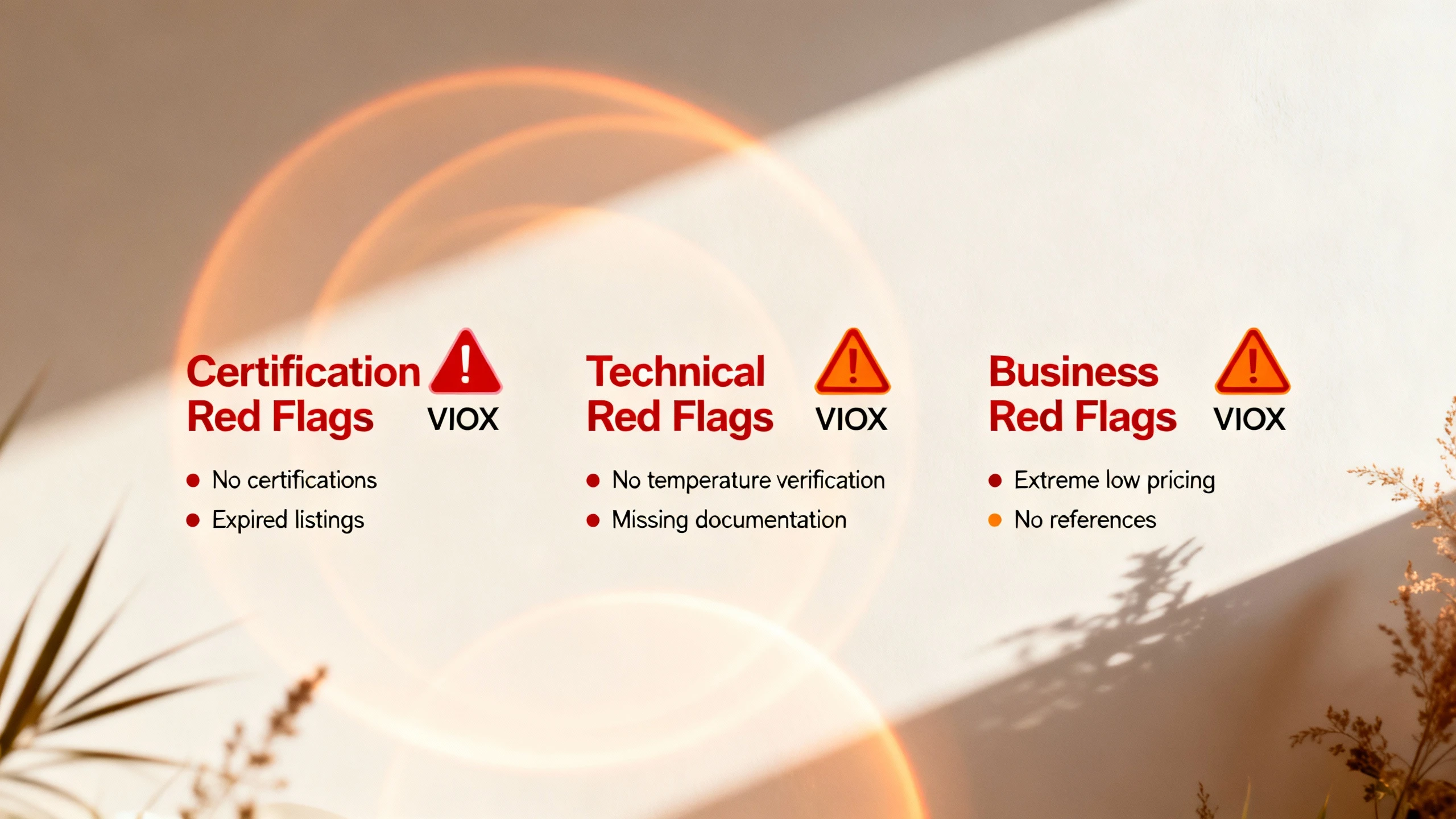
Certains problèmes de fournisseur sont des accords qui devraient disqualifier un fabricant de considération, peu importe à quel point leurs prix sont attrayants. Surveillez ces drapeaux rouges pendant l’évaluation:
Certification et conformité drapeaux rouges
- Aucune certification UL 1741 ou équivalente Pour les boîtes de combinateur destinées aux projets américains
- Incapacité de fournir des numéros de certificat ou de vérification Dans les bases de données publiques comme UL Product iQ
- Rapports d’essais présentés en tant que certifications Sans programmes de surveillance continue
- Certification pour différents produits (la revendication de certification de bornier couvre les boîtes de combinateur)
- Listes expirées ou suspendues Qui n’ont pas été renouvelés
- Refus de fournir des preuves de vérification cei 61439-2 Pour la configuration spécifique
- Dispositifs de protection classés Dans les applications DC sans cotes DC
Drapeaux rouges techniques et de qualité
- Aucune vérification de l’élévation de la température Pour l’ensemble de la boîte de combinateur au courant nominal
- Réponses génériques “standard de l’industrie” À des questions techniques spécifiques sur leur conception
- Incapacité à expliquer la coordination des dispositifs de protection Ou des cotes de résistance de court-circuit
- Schémas de câblage manquants ou incomplets Et documentation technique
- Aucun protocole de test de production Ou volonté de partager les dossiers de test
- Manque de systèmes de traçabilité Ou contrôle du numéro de série
- Réticence aux visites d’usine ou aux audits, surtout avec des excuses vagues
Drapeaux rouges des entreprises et des services
- Communication incohérente ou évasive Pendant le processus d’évaluation
- Tactiques de pression Exiger un engagement immédiat sans temps d’évaluation adéquat
- Prix extrêmement bas (30% au-dessous du marché) sans explication claire
- Conditions de paiement nécessitant le prépaiement 100% Sans histoire ensemble
- Aucune référence client Ou refus de fournir des contacts de référence
- Tendance négative dans les commentaires en ligne Ou réputation de l’industrie
- Création récente de société (moins de 3 ans) sans équipe ou installation expérimentée
- Changements de modèle fréquents ou interruptions Suggérer une mauvaise planification des produits
Drapeaux rouges de la chaîne d’approvisionnement
- Lieu de fabrication incertain Ou des changements fréquents d’installations
- Incapacité de s’engager à respecter les délais de livraison Ou des délais d’exécution vagues
- Historique des engagements manqués Rapporté par d’autres clients
- Aucun stock régulateur ou inventaire de produits finis Suggérer une opération main à bouche
- Dépendances à source unique for critical components without backup plans
One or two minor concerns might be manageable. But multiple red flags, especially across different categories, indicate fundamental problems that will likely cause issues during and after your project. In those cases, move on to suppliers with more solid foundations—the risk isn’t worth any potential cost savings.
Cost vs. Quality: Finding the Right Balance
The lowest-priced supplier rarely delivers the lowest total cost. But that doesn’t mean you should automatically choose the most expensive option either. Smart procurement balances upfront cost against lifecycle value.
Understanding the Price Spectrum
Combiner box pricing typically falls into three tiers:
Budget Tier (Lowest 20% of market): Often lacks proper certifications, uses questionable components, provides minimal documentation, and offers limited support. Upfront savings of 15-30% disappear quickly through field failures, project delays, and engineering rework. Appropriate only for very small projects where risk exposure is minimal.
Mid-Market Tier (Middle 60%): Offers proper certifications, adequate quality systems, reasonable documentation, and acceptable support. Most reliable manufacturers operate in this tier. Price differences within this range often reflect scale, efficiency, and business model rather than quality gaps.
Premium Tier (Top 20%): Includes manufacturers with exceptional engineering depth, advanced monitoring features, premium materials and finishes, white-glove service, or specialized certifications. The premium may be justified for mission-critical applications, harsh environments, or projects where downtime costs are extreme.
For most commercial and utility-scale projects, the mid-market tier offers the best value. You get certified, quality products with adequate support at fair pricing.
Total Cost of Ownership Calculation
Evaluate suppliers on total cost, not just unit price:
Upfront Costs:
- Purchase price per unit
- Freight and logistics
- Engineering review of documentation
- Pre-installation testing or sample verification
Project Execution Costs:
- Installation labor (affected by documentation quality)
- Project delays from late delivery or non-conforming product
- AHJ approval delays from inadequate documentation
Coûts du cycle de vie:
- Expected field failure rate × cost per field service event
- Warranty administration effort
- Replacement parts availability and cost
- Technical support quality (reduces troubleshooting time)
A combiner box that costs $2,000 instead of $1,700 but has one-tenth the field failure rate saves money over a 10-year project lifecycle.
Value Indicators Beyond Price
When comparing similar-priced suppliers, these factors add value without necessarily increasing cost:
- Complete, accurate documentation that reduces installation time
- Responsive technical support that answers questions quickly
- Lead time reliability that protects project schedules
- Flexible configuration options that fit your exact requirements
- Strong warranty terms backed by financial stability
- Availability of replacement parts and consumables
A slightly higher price from a supplier who delivers consistently on time, provides excellent documentation, and responds to issues quickly often costs less than a cheaper supplier who creates project friction.
How VIOX Electric Meets the Reliability Standard
At VIOX Electric, we’ve built our combiner box manufacturing around the four pillars that matter to solar system integrators and EPC contractors.
Technical Capability: Our engineering team specializes in DC power distribution and PV system protection. We maintain in-house testing facilities for dielectric withstand, temperature rise, and short-circuit verification. All VIOX combiner box designs undergo IEC 61439-2 verification with documented temperature-rise analysis for each configuration we offer.
Quality Systems: VIOX operates under ISO 9001:2015 certified quality management covering our complete manufacturing facility. Every combiner box undergoes 100% production testing—continuity, insulation resistance, dielectric withstand, and functional verification—before shipping. We maintain full traceability with serial number control and documented test records available for every unit.
Certifications: Our combiner boxes carry UL 1741 certification verified in the UL Product iQ database, with configurations available for 600V, 1000V, and 1500V DC systems. We use only UL-listed protective devices rated for DC PV applications—UL 489B circuit breakers, UL 2579 PV fuses, and UL 1449 surge protective devices. Our enclosures meet IP65/IP66 environmental protection standards per IEC 60529.
Service & Support: We provide complete technical documentation with every order—installation manuals, wiring diagrams, certification packages, and specification sheets. Our application engineers support product selection and system integration questions. Standard lead times are clearly communicated and monitored, with proactive updates if any issues arise. Our 10-year warranty is backed by our facility ownership and 15+ year operating history in electrical components manufacturing.
We understand that choosing a supplier is choosing a partner. VIOX delivers the consistency, documentation, and support that keep solar projects on schedule and systems operating reliably for decades.
Conclusion: Your Supplier Evaluation Checklist
Choosing a combiner box supplier is one of the most consequential decisions in solar project procurement. The right manufacturer becomes a reliable partner who supports project success through quality products, complete documentation, and responsive service. The wrong one creates cascading problems that cost far more than any initial savings.
Use this checklist when evaluating potential suppliers:
Technical Capability
- ☐ Engineering team can explain design methodology and thermal analysis
- ☐ In-house or contracted testing facilities for type testing
- ☐ Production capacity adequate for project volume
- ☐ Customization capability for project-specific requirements
Quality Systems
- ☐ ISO 9001 certification covering manufacturing facility
- ☐ Documented incoming inspection and component qualification
- ☐ 100% production testing protocol with test records
- ☐ Serial number control and traceability systems
Certifications
- ☐ UL 1741 certification verified in UL Product iQ database
- ☐ IEC 61439-2 verification evidence for specific configuration
- ☐ IEC 62548-1 compliance for PV array design requirements
- ☐ UL-listed DC-rated protective devices (breakers, fuses, SPDs)
- ☐ IP65/IP66 enclosure rating per IEC 60529
Business Stability
- ☐ 10+ years operating history in electrical manufacturing
- ☐ Facility ownership and infrastructure investment
- ☐ Customer references from similar project scale
- ☐ Positive market reputation and industry presence
Service & Support
- ☐ Responsive pre-sales technical support
- ☐ Complete documentation package (manuals, diagrams, certificates)
- ☐ Committed lead times with on-time delivery track record
- ☐ Clear warranty terms and after-sales support process
Red Flag Screening
- ☐ No certification, compliance, or technical red flags identified
- ☐ No business or service red flags identified
- ☐ No supply chain reliability concerns
A supplier who meets most of these criteria offers the foundation for a successful long-term partnership. Those who fall short in multiple areas—especially certifications, technical capability, or business stability—pose risks that typically outweigh any cost advantages.
Take the time to evaluate thoroughly. The supplier you choose today determines whether your combiner boxes operate reliably for the next 25 years or become recurring problems that damage your reputation and profitability.

