هنگام تعیین مشخصات دستگاههای حفاظت در برابر ولتاژهای ناگهانی (SPD) برای پروژههای بینالمللی، مهندسان با مجموعهای پیچیده از استانداردها، پروتکلهای آزمایش و الزامات صدور گواهینامه متضاد روبرو میشوند. یک اشتباه در مشخصات میتواند منجر به نصبهای غیر منطبق، بازرسیهای ناموفق یا - بدتر از آن - حفاظت ناکافی در طول رویدادهای مهم ولتاژ ناگهانی شود. این راهنمای جامع، سه استاندارد اصلی حفاظت در برابر ولتاژهای ناگهانی در سراسر جهان را رمزگشایی میکند: IEC 61643، UL 1449 و GB 18802، و تفاوتهای فنی، مسیرهای به رسمیت شناختن متقابل و پیامدهای عملی آنها را برای طراحی سیستمهای الکتریکی جهانی آشکار میکند.
درک سه استاندارد اصلی حفاظت در برابر ولتاژهای ناگهانی
IEC 61643: چارچوب جهانی
سری استانداردهای کمیسیون بینالمللی الکتروتکنیک (IEC) 61643، پرکاربردترین استاندارد حفاظت در برابر ولتاژهای ناگهانی در سطح جهان است. IEC 61643-11 به طور خاص به سیستمهای قدرت ولتاژ پایین میپردازد، در حالی که IEC 61643-21 شبکههای مخابراتی و سیگنالینگ را پوشش میدهد. استانداردهای IEC که توسط بیش از 80 کشور از طریق طرح CB پذیرفته شدهاند، پایه و اساس استانداردهای EN اروپا را تشکیل میدهند و بر بسیاری از مقررات ملی در سراسر جهان تأثیر میگذارند.
آخرین بازنگری، IEC 61643-01:2024، جایگزین IEC 61643-11:2011 میشود و یک چارچوب اساسی گستردهتر را ایجاد میکند که شامل تمام انواع SPD است که در برابر اثرات مستقیم و غیرمستقیم صاعقه محافظت میکنند. این بهروزرسانی منعکسکننده الزامات فناوری در حال تحول و سختتر شدن معیارهای عملکرد در سراسر صنعت است.
UL 1449: استاندارد ایمنی آمریکای شمالی
UL 1449 به عنوان معیار قطعی برای دستگاههای حفاظت در برابر ولتاژهای ناگهانی در آمریکای شمالی عمل میکند. UL 1449 که اکنون در ویرایش پنجم خود قرار دارد، به طور قابل توجهی از استانداردهای اولیه TVSS (سرکوبگر ولتاژ ناگهانی گذرا) به الزامات مدرن SPD تکامل یافته است. ویرایش سوم (2009) با ادغام دستههای جداگانه قبلی تحت عنوان واحد “دستگاه حفاظت در برابر ولتاژهای ناگهانی” و همسویی با اصطلاحات IEC، یک تغییر اساسی ایجاد کرد.
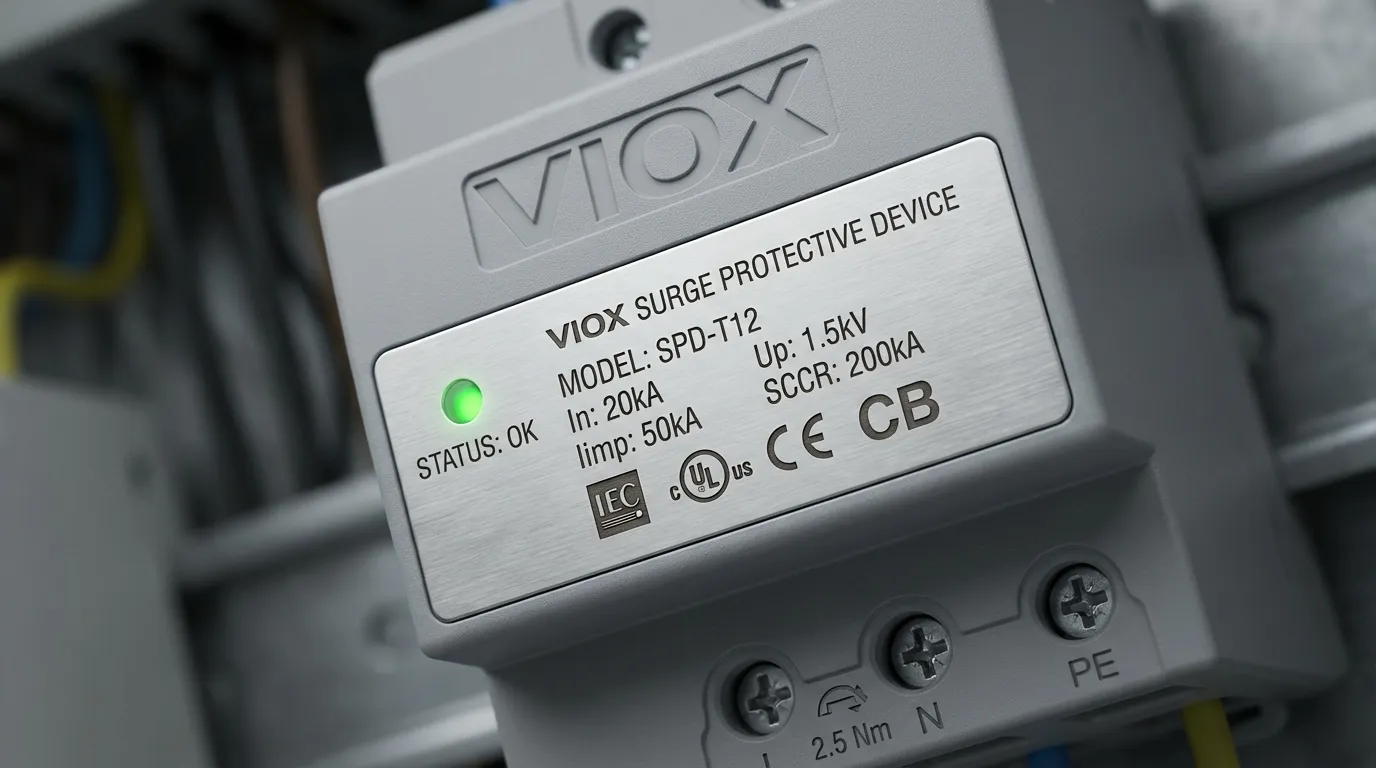
ماده 285 قانون ملی برق (NEC) تصریح میکند که SPDها باید دارای لیست UL 1449 باشند، که به طور موثر دستگاههای غیر لیست شده را از تاسیسات تجاری و مسکونی حذف میکند. UL 1449 بر پارامترهای ایمنی مانند جریان اتصال کوتاه (SCCR) و مکانیسمهای حفاظت حرارتی برای جلوگیری از حالتهای خرابی فاجعهبار تأکید دارد.
GB 18802: استاندارد ملی چین
GB 18802 نشاندهنده استاندارد ملی چین برای دستگاههای حفاظت در برابر ولتاژهای ناگهانی است که با IEC 61643 هماهنگی نزدیکی دارد اما الزامات خاصی را برای بازار چین در خود جای داده است. GB/T 18802.11 به سیستمهای قدرت ولتاژ پایین (معادل IEC 61643-11) میپردازد، در حالی که GB/T 18802.21 کاربردهای مخابراتی را پوشش میدهد. تولیدکنندگان چینی باید برای فروش داخلی از استانداردهای GB پیروی کنند، اگرچه بسیاری نیز گواهینامههای IEC و UL را برای بازارهای صادراتی دنبال میکنند.
تفاوتهای فنی کلیدی: یک تحلیل تطبیقی
سیستمهای طبقهبندی و اصطلاحات
| جنبه | کمیسیون مستقل انتخابات ۶۱۶۴۳ | استاندارد UL 1449 | GB 18802 |
|---|---|---|---|
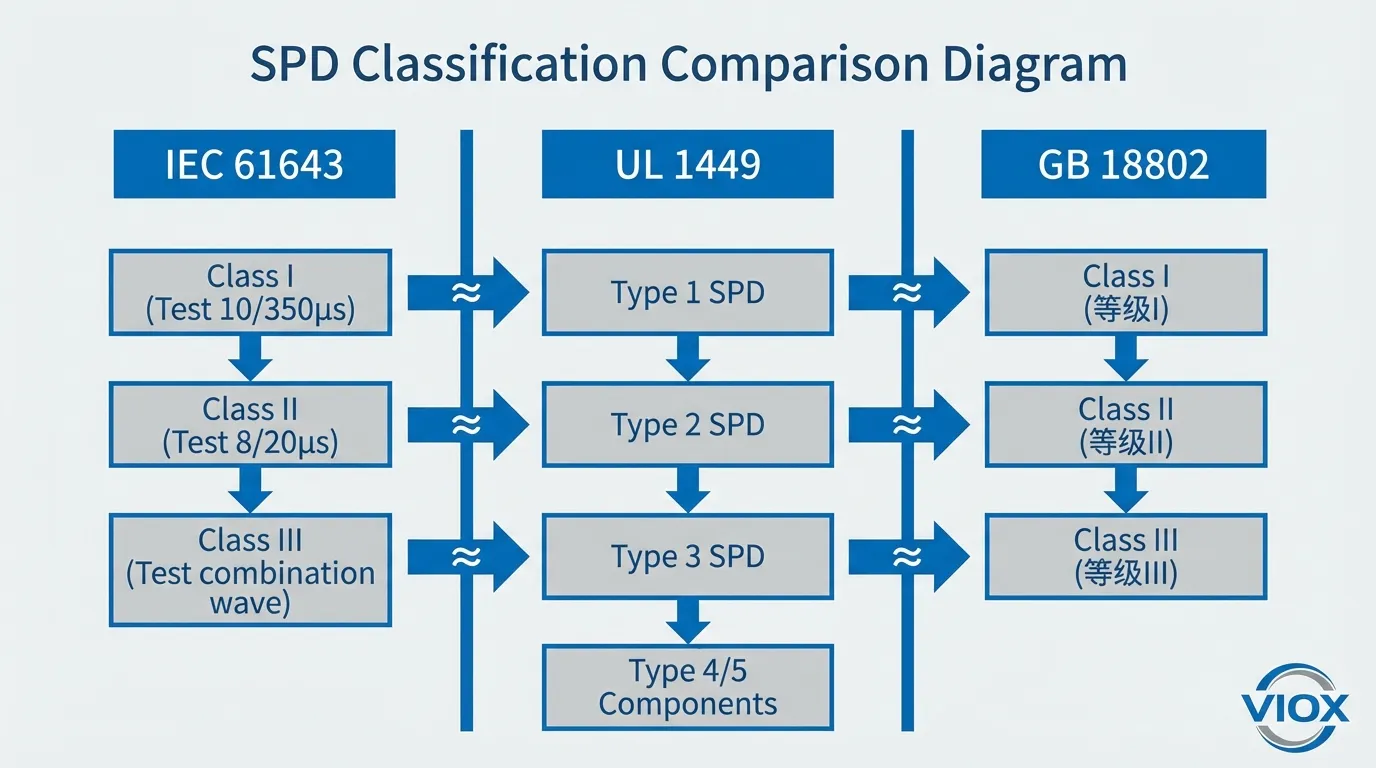
| طبقهبندی | کلاس I، II، III بر اساس شکل موجهای آزمایش | نوع 1، 2، 3 بر اساس محل نصب | کلاس I، II، III (هماهنگ با IEC) |
| شکل موج آزمایش اولیه | کلاس I: 10/350μs کلاس II: 8/20μs کلاس III: موج ترکیبی |
نوع 1: 10/350μs یا 8/20μs نوع 2: 8/20μs نوع 3: موج ترکیبی |
مشابه IEC 61643 |
| پارامتر کلیدی | جریان تخلیه نامی (In) و جریان ضربه (Iimp) | جریان تخلیه نامی (In) و SCCR | Nominal discharge current (In) |
| سطح حفاظت ولتاژ | Up (kV) | VPR – درجهبندی حفاظت ولتاژ (V) | Up (kV) |
| تمرکز نصب | هماهنگی انرژی بین کلاسها | مبتنی بر مکان (ورودی سرویس، پانل، نقطه استفاده) | هماهنگی انرژی (مشابه IEC) |
تفاوت اساسی در فلسفه نهفته است: استانداردهای IEC و GB، SPDها را بر اساس قابلیت تحمل انرژی و شکل موج آزمایش طبقهبندی میکنند، در حالی که UL 1449 دستگاهها را در درجه اول بر اساس محل نصب در سیستم الکتریکی دستهبندی میکند.
شکل موجهای آزمایش و درجهبندی انرژی
الزامات آزمایش IEC 61643:
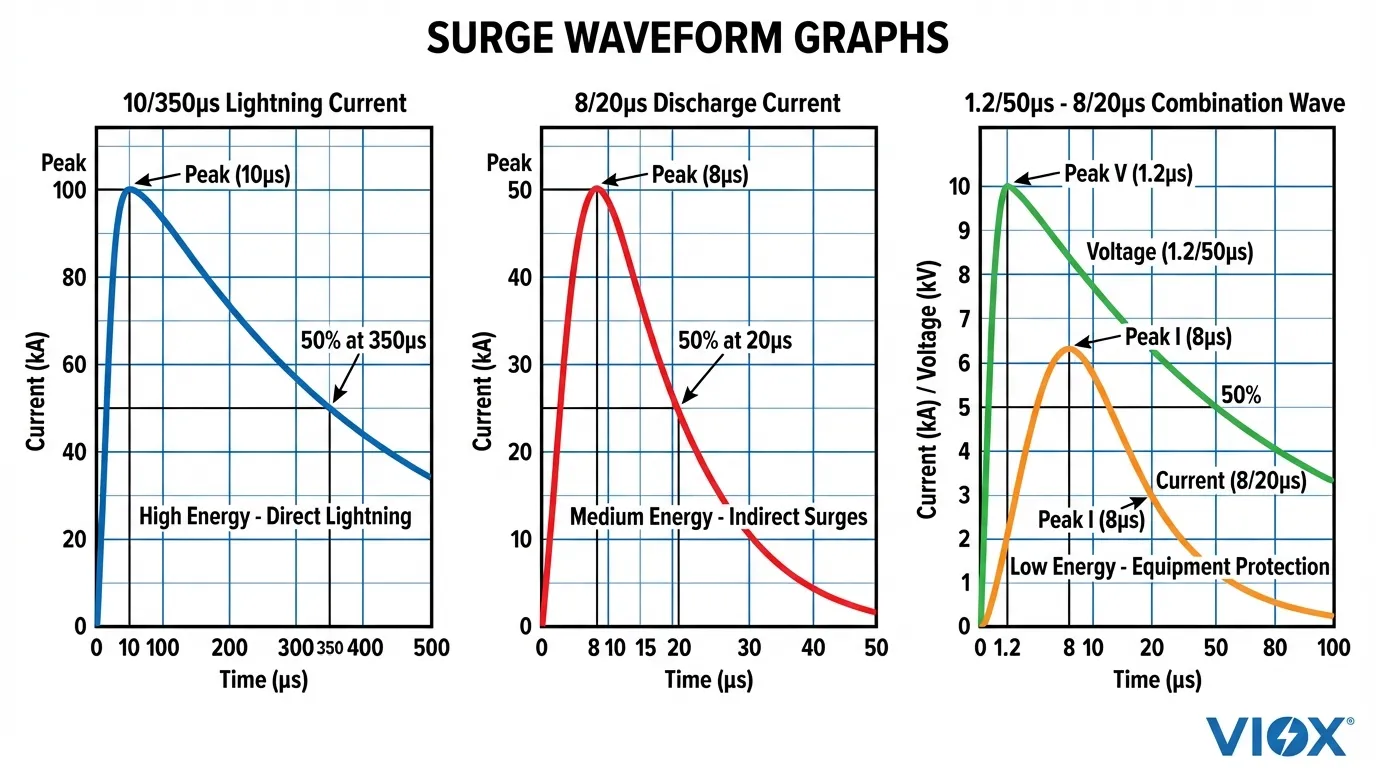
- SPDهای کلاس I: باید شکل موج جریان صاعقه 10/350μs را با درجهبندی جریان ضربه (Iimp) از 12.5kA تا 100kA در هر قطب تحمل کنند. این شکل موج، صاعقههای مستقیم با محتوای انرژی بالا (تا 10MJ/Ω انرژی ویژه) را شبیهسازی میکند.
- SPDهای کلاس II: با شکل موج جریان 8/20μs آزمایش میشوند، جریان تخلیه نامی (In) معمولاً 5kA، 10kA، 20kA یا 40kA است.
- SPDهای کلاس III: با موج ترکیبی (ولتاژ 1.2/50μs، جریان 8/20μs) آزمایش میشوند که ولتاژهای ناگهانی باقیمانده در نزدیکی تجهیزات را شبیهسازی میکند.
الزامات آزمایش UL 1449:
- SPD های نوع 1: باید تستهای 10/350μs یا 8/20μs را با حداقل In 10kA یا 20kA بگذرانند. علاوه بر این، برای SCCR (جریان اتصال کوتاه) تا 200kA بدون حفاظت اضافه جریان خارجی آزمایش میشوند.
- SPD های نوع 2: با شکل موج 8/20μs آزمایش میشوند، درجهبندی In 3kA، 5kA، 10kA یا 20kA است. باید حداقل 10 متر (30 فوت) از ورودی سرویس نصب شوند، مگر اینکه به طور خاص ارزیابی شده باشند.
- SPD های نوع 3: آزمایش موج ترکیبی، معمولاً درجهبندی انرژی پایینتر (≤5kA).
الزامات آزمایش GB 18802:
استانداردهای GB دقیقاً از پروتکلهای آزمایش IEC پیروی میکنند و از شکل موجها و درجهبندی انرژی یکسانی استفاده میکنند. این هماهنگی، به رسمیت شناختن متقابل بین بازارهای چین و بینالمللی را تسهیل میکند.
سطوح حفاظت ولتاژ: Up در مقابل VPR
یک تفاوت اساسی در نحوه تعریف اثربخشی حفاظت ظاهر میشود:
رویکرد IEC/GB – Up (سطح ولتاژ حفاظت):
- بر حسب کیلوولت (kV) اندازهگیری میشود
- نشاندهنده حداکثر ولتاژ ظاهر شده در ترمینالهای SPD در طول رویدادهای ناگهانی است
- مقادیر معمولی: 1.5kV، 2.0kV، 2.5kV برای سیستمهای 230 ولت
- باید کمتر از ولتاژ تحمل ضربه نامی تجهیزات باشد
رویکرد UL – VPR (درجهبندی حفاظت ولتاژ):
- اندازهگیری شده بر حسب ولت (V)
- به عنوان حداکثر ولتاژ اندازهگیری شده در طول آزمایش استاندارد با شکل موج 6kV/3kA تعریف میشود
- درجهبندیهای رایج: 330V، 400V، 600V، 700V برای سیستمهای 120 ولت
- VPR پایینتر نشاندهنده حفاظت برتر برای لوازم الکترونیکی حساس است
تبدیل بین سیستمها نیاز به تجزیه و تحلیل دقیق دارد. VPR 330V UL تقریباً با Up 1.5kV IEC برای سیستمهای 120 ولت مطابقت دارد، اما معادلسازی مستقیم به دلیل شرایط آزمایش و روشهای اندازهگیری مختلف پیچیده است.
الزامات نصب و هماهنگی سیستم
رویکرد IEC 61643 / GB 18802: مناطق حفاظت در برابر صاعقه (LPZ)
استانداردهای IEC با چارچوب گستردهتر حفاظت در برابر صاعقه IEC 62305 ادغام میشوند و حفاظت را بر اساس مناطق حفاظت در برابر صاعقه تعریف میکنند:
- LPZ 0A: در معرض برخورد مستقیم صاعقه
- LPZ 0B: محافظت شده در برابر برخورد مستقیم، اما در معرض جریان جزئی صاعقه
- LPZ 1: محافظت شده در برابر برخورد مستقیم، جریان هجومی محدود
- LPZ 2+: مناطق محافظت شده بیشتر با قرار گرفتن در معرض هجوم کمتر به طور فزاینده
نصب SPD بر اساس LPZ:
- SPDهای کلاس I: نصب شده در مرز LPZ 0-1 (ورودی سرویس با حفاظت خارجی در برابر صاعقه)
- SPDهای کلاس II: نصب شده در مرز LPZ 1-2 (تابلوهای توزیع)
- SPDهای کلاس III: نصب شده در LPZ 2+ (نزدیک تجهیزات حساس)
هماهنگی انرژی مستلزم آن است که Up1 < Up2 < Up3 باشد و زمانهای پاسخ با ≥10μs در هر اصل هماهنگی IEC 61643-12 متفاوت باشد. حداقل جداسازی کابل 10 متری یا سلفهای جداکننده (≥15μH) هماهنگی مناسب را تضمین میکند.
رویکرد UL 1449: طبقهبندی مبتنی بر مکان
UL 1449 انواع SPD را بر اساس محل نصب در سیستم توزیع الکتریکی تعریف میکند:
نصب SPD نوع 1:
- بین ثانویه ترانسفورماتور سرویس و سمت خط دستگاه اصلی اضافه جریان سرویس
- سمت بار تجهیزات اصلی سرویس (شامل محفظههای سوکت کنتور)
- ممکن است بدون دستگاه حفاظت در برابر اضافه جریان خارجی نصب شود
- حداقل اندازه هادی: مس #6 AWG، حداکثر طول 18 اینچ
نصب SPD نوع 2:
- سمت بار دستگاه اصلی اضافه جریان سرویس
- در پانلهای توزیع و زیر پانلها
- حداقل طول هادی 10 متر (30 فوت) از پانل سرویس، مگر اینکه به طور خاص ارزیابی شده باشد
- نیاز به هماهنگی با حفاظت اضافه جریان بالادستی دارد
نصب SPD نوع 3:
- حفاظت نقطه استفاده در نزدیکی تجهیزات حساس
- شامل نوارهای برق حفاظت در برابر ولتاژ و SPDهای نوع پریز
- حداقل 10 متر از SPD یا پانل نوع 2
رویکرد UL بر مکان فیزیکی و هماهنگی با دستگاههای حفاظت در برابر اضافه جریان تأکید دارد، در حالی که IEC بر هماهنگی انرژی بین مراحل حفاظت تمرکز دارد.
مسیرهای صدور گواهینامه و شناسایی متقابل
طرح CB: شناسایی متقابل بینالمللی
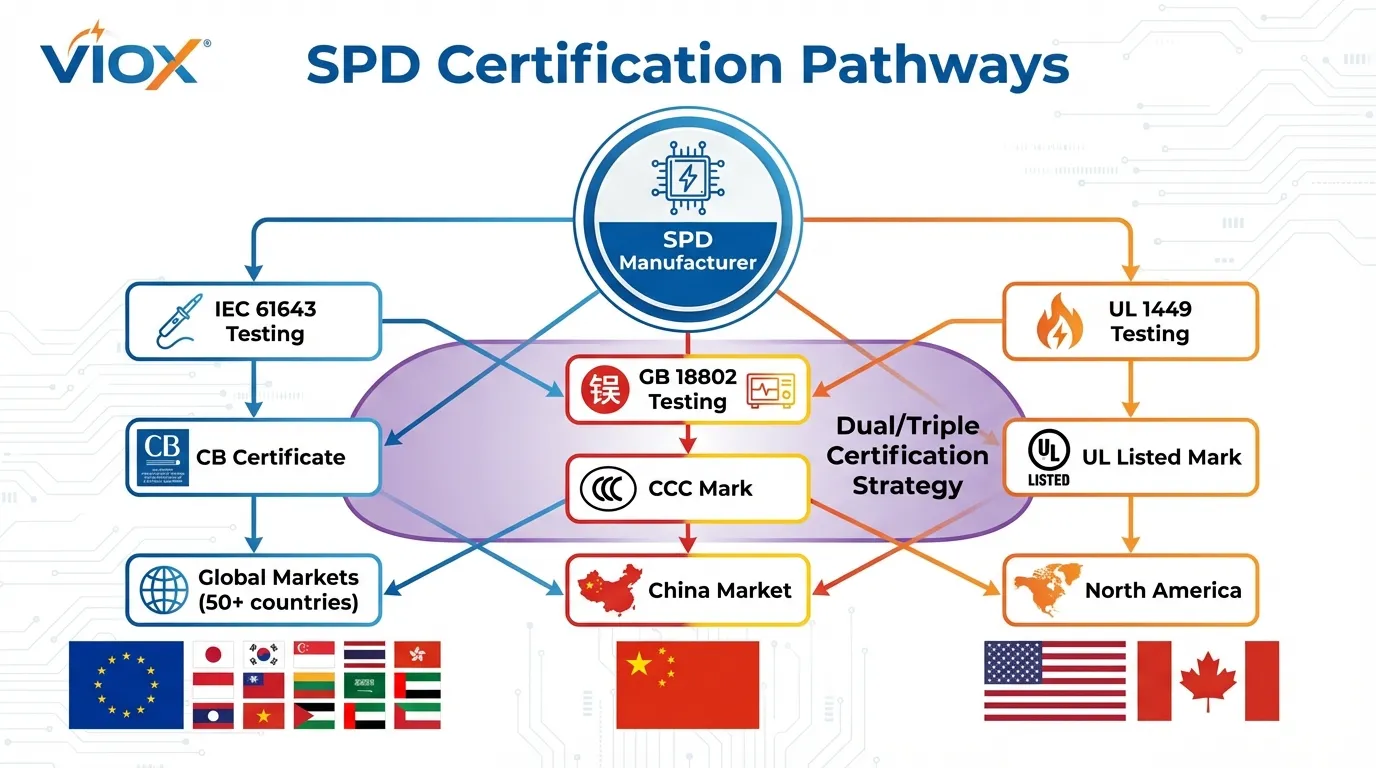
طرح IECEE CB (طرح نهادهای صدور گواهینامه) مهمترین مسیر برای شناسایی متقابل بینالمللی دستگاههای حفاظت در برابر ولتاژ را نشان میدهد. طرح CB که توسط کمیسیون بینالمللی الکتروتکنیک اداره میشود، تولیدکنندگان را قادر میسازد تا گزارشهای آزمون و گواهینامههایی را دریافت کنند که در بیش از 50 کشور پذیرفته شدهاند.
نحوه عملکرد طرح CB:
- سازنده یک آزمایشگاه تست CB (CBTL) را انتخاب میکند که توسط IEC به رسمیت شناخته شده است
- محصول تحت آزمایش بر اساس استانداردهای IEC 61643 قرار میگیرد
- CBTL گواهینامه تست CB و گزارش تست CB را صادر میکند
- نهادهای صدور گواهینامه ملی (NCB) در کشورهای عضو، مستندات CB را میپذیرند
- سازنده با استفاده از گواهینامه CB برای صدور گواهینامه ملی درخواست میدهد (آزمایش کاهش یافته مورد نیاز است)
مزایای صدور گواهینامه CB:
- یک آزمایش واحد بر اساس استانداردهای IEC که در بازارهای متعدد پذیرفته شده است
- کاهش قابل توجه هزینه (اجتناب از آزمایش اضافی)
- زمان سریعتر برای ورود به بازار برای توزیع جهانی
- شناسایی متقابل بین کشورهای شرکت کننده
محدودیت کلیدی: طرح CB شامل ایالات متحده یا کانادا نمیشود. صدور گواهینامه UL 1449 حتی با داشتن گواهینامه CB معتبر، نیاز به آزمایش جداگانه دارد.
استراتژیهای صدور گواهینامه دوگانه
تولیدکنندگان پیشرو برای دسترسی به بازارهای جهانی، گواهینامههای متعددی را دنبال میکنند:
ترکیبات رایج صدور گواهینامه:
| بازارهای هدف | گواهینامههای مورد نیاز | استانداردهای تست |
|---|---|---|
| اروپا، آسیا، خاورمیانه | علامت CE، گواهینامه CB | IEC 61643-11، EN 61643-11 |
| آمریکای شمالی | UL Listed، CSA | UL 1449 5th Ed، CSA C22.2 |
| چین | علامت CCC | GB 18802.11 |
| جهانی (جامع) | CB + UL + CCC | IEC 61643 + UL 1449 + GB 18802 |
| استرالیا/نیوزیلند | علامت RCM | AS/NZS 61643 (مبتنی بر IEC) |
بازدهی تست: در حالی که گواهینامه CB الزامات تست UL را حذف نمیکند، تولیدکنندگان میتوانند از دادههای تست IEC برای اطلاعرسانی به رویههای تست UL استفاده کنند، که به طور بالقوه زمان و هزینههای کلی تست را کاهش میدهد. برخی از نتایج تست (به عنوان مثال، تعیین مشخصات اجزاء) ممکن است در استانداردهای مختلف قابل استفاده مجدد باشند.
مفاهیم عملی برای تدارکات
هنگام تعیین مشخصات SPDها برای پروژههای بینالمللی، مهندسان باید موارد زیر را در نظر بگیرند:
برای بازارهای IEC/GB:
- گواهی CB یا تاییدیه NCB محلی را بررسی کنید.
- انطباق با IEC 61643-11 یا GB 18802.11 را تأیید کنید.
- گواهینامه شخص ثالث TÜV، DEKRA یا معادل آن را بررسی کنید.
- یکپارچگی با سیستم حفاظت در برابر صاعقه IEC 62305 را تأیید کنید.
برای بازارهای آمریکای شمالی:
- علامت لیست شده UL 1449 را الزامی کنید (نه فقط “قطعه تشخیص داده شده UL”).
- بررسی کنید که رتبه SCCR با الزامات جریان اتصال کوتاه سیستم مطابقت داشته باشد.
- انطباق با ماده 285 NEC را تأیید کنید.
- لیست اختیاری فیلتر EMI/RFI UL 1283 را بررسی کنید.
برای پروژههای جهانی:
- دستگاههایی با گواهینامههای متعدد (CB + UL + CCC) را مشخص کنید.
- بررسی کنید که سازنده گواهینامههای فعال را حفظ میکند (ممیزیهای سالانه).
- قبل از تدارکات، مستندات گواهینامه را درخواست کنید.
- تفاوتهای ولتاژ و فرکانس منطقهای را در نظر بگیرید (120V/60Hz در مقابل 230V/50Hz).
پارامترهای عملکرد: مقایسه دقیق
ظرفیت تحمل جریان
| پارامتر | کمیسیون مستقل انتخابات ۶۱۶۴۳ | استاندارد UL 1449 | GB 18802 | اهمیت |
|---|---|---|---|---|
| جریان تخلیه اسمی (In) | 5، 10، 20، 40 کیلو آمپر (8/20μs) | 3، 5، 10، 20 کیلو آمپر (8/20μs) | مشابه IEC | جریان تست استاندارد که SPD میتواند چندین بار تحمل کند. |
| جریان ضربه (Iimp) | 12.5، 25، 50، 100 کیلو آمپر (10/350μs) | به طور صریح تعریف نشده است (نوع 1 تست شده تا 10/350μs) | مشابه IEC | قابلیت جریان اوج صاعقه |
| حداکثر جریان تخلیه (Imax) | به طور معمول 2× In | به طور معمول 2× In | مشابه IEC | حداکثر جریان هجومی تک رویدادی |
| رتبهبندی جریان اتصال کوتاه (SCCR) | پارامتر اصلی نیست | 5، 10، 25، 50، 100، 200 کیلو آمپر | پارامتر اصلی نیست | حداکثر جریان اتصال کوتاه که SPD میتواند بدون OCPD خارجی تحمل کند. |
تمایز حیاتی: الزام SCCR UL 1449 منحصر به فرد و حیاتی برای تاسیسات آمریکای شمالی است. یک SPD با SCCR ناکافی میتواند به طور فاجعهباری در شرایط اتصال کوتاه از کار بیفتد و به طور بالقوه باعث آتشسوزی یا آسیب به تجهیزات شود. استانداردهای IEC هماهنگی با دستگاههای حفاظت در برابر جریان اضافه خارجی را فرض میکنند.
رتبهبندی ولتاژ و سازگاری سیستم
| ولتاژ سیستم | IEC 61643 Uc (MCOV) | UL 1449 MCOV | GB 18802 Uc | کاربرد |
|---|---|---|---|---|
| 120 ولت (L-N) | 150 ولت AC | 150 ولت AC | 150 ولت AC | تک فاز آمریکای شمالی |
| 230 ولت (L-N) | 275V AC | 320 ولت AC | 275V AC | تک فاز اروپایی/آسیایی |
| 277 ولت (L-N) | 320 ولت AC | 320 ولت AC | 320 ولت AC | تجاری آمریکای شمالی |
| 400 ولت (L-L) | 440 ولت AC | 480V AC | 440 ولت AC | سیستمهای سه فاز |
Uc (MCOV) - حداکثر ولتاژ کاری مداوم: حداکثر ولتاژ RMS که میتواند به طور مداوم به SPD اعمال شود بدون اینکه باعث تخریب شود. طبق الزامات GB 18873، Uc باید حداقل 1.15 برابر ولتاژ سیستم باشد تا از فعالسازیهای نادرست جلوگیری شود.
زمان پاسخ و ولتاژ عبوری
مقایسه زمان پاسخ:
- SPDهای مبتنی بر MOV: <25 نانوثانیه (همه استانداردها)
- SPDهای مبتنی بر GDT: <100 نانوثانیه (IEC/GB)، متفاوت (UL)
- SPDهای هیبریدی: <25 نانوثانیه پاسخ اولیه (MOV)، GDT پشتیبانگیری را فراهم میکند.
ولتاژ عبوری (ولتاژ باقیمانده):
- IEC/GB: اندازهگیری شده به عنوان Up در طول تست In (به عنوان مثال، 1.5 کیلو ولت برای سیستم 230 ولت)
- UL: اندازهگیری شده به عنوان VPR در طول تست 6 کیلو ولت/3 کیلو آمپر (به عنوان مثال، 330 ولت برای سیستم 120 ولت)
- مقادیر کمتر نشان دهنده حفاظت بهتر برای لوازم الکترونیکی حساس است.
تفاوت در روشهای اندازهگیری، مقایسه مستقیم را چالشبرانگیز میکند. به طور کلی، یک VPR با مقدار 330 ولت در استاندارد UL، حفاظتی معادل Up با مقدار 1.5 کیلوولت در استاندارد IEC را هنگام در نظر گرفتن تفاوتهای ولتاژ سیستم ارائه میدهد.
ملاحظات منطقهای و دسترسی به بازار
اتحادیه اروپا: نشان CE و استانداردهای EN
بازارهای اروپایی نیازمند نشان CE هستند که نشاندهنده انطباق با دستورالعملهای اتحادیه اروپا از جمله دستورالعمل ولتاژ پایین (LVD) و دستورالعمل EMC است. SPDها باید با استاندارد EN 61643-11 (مشابه IEC 61643-11) و اغلب EN 62305 برای سیستمهای حفاظت در برابر صاعقه مطابقت داشته باشند.
الزامات کلیدی:
- تست شخص ثالث توسط نهاد مطلع (برای کاربردهای خاص)
- پرونده مستندات فنی که انطباق را نشان میدهد
- اعلامیه انطباق
- نشان CE روی محصول و بستهبندی
چین: گواهینامه CCC
نشان گواهینامه اجباری چین (CCC) برای SPDهایی که در بازار چین فروخته میشوند، الزامی است. آزمایش باید توسط آزمایشگاههای مستقر در چین مطابق با استانداردهای GB 18802 انجام شود.
فرآیند CCC:
- درخواست به نهاد صدور گواهینامه تعیین شده
- تست نوع در آزمایشگاه مورد تایید CQC
- بازرسی کارخانه و ممیزی سیستم کیفیت
- ممیزیهای نظارتی سالانه برای حفظ گواهینامه
جدول زمانی: 3-6 ماه برای صدور گواهینامه اولیه، ممیزیهای سالانه مداوم مورد نیاز است.
آمریکای شمالی: لیست UL و انطباق با NEC
لیست UL 1449 به دلیل الزامات ماده 285 NEC و کدهای الکتریکی محلی، عملاً اجباری است. علاوه بر این، بسیاری از شرکتهای بیمه و مدیران تأسیسات، تجهیزات دارای لیست UL را مشخص میکنند.
فرآیند لیست UL:
- ارسال نمونههای محصول به مرکز آزمایش UL
- تکمیل آزمایش مطابق با ویرایش پنجم UL 1449
- بازرسی کارخانه و ممیزی کیفیت
- بازرسیهای پیگیری فصلی
- بررسی سالانه پرونده و آزمایش مجدد احتمالی
انطباق مداوم: UL بازرسیهای سرزده از کارخانه انجام میدهد و نمونههایی را از کانالهای توزیع برای آزمایش تأیید خریداری میکند. عدم انطباق میتواند منجر به تعلیق یا لغو لیست شود.
راهنمای انتخاب عملی: تطبیق استانداردها با کاربردها
تأسیسات صنعتی
رویکرد پیشنهادی:
- ورودی سرویس: IEC Class I / UL Type 1 / GB Class I (Iimp ≥ 50kA)
- تابلوهای توزیع: IEC Class II / UL Type 2 / GB Class II (In ≥ 20kA)
- تجهیزات حساس: IEC Class III / UL Type 3 / GB Class III (VPR ≤ 330V or Up ≤ 1.5kV)
انطباق چند استانداردی: برای تأسیسات چند ملیتی، SPDهایی با گواهینامه دوگانه IEC/UL را مشخص کنید تا از فلسفه حفاظت سازگار در سراسر سایتهای جهانی اطمینان حاصل شود و در عین حال الزامات کد محلی را برآورده کند.
سیستمهای فتوولتائیک خورشیدی
تاسیسات خورشیدی به SPDهای تخصصی نیاز دارند که با IEC 61643-31 (سمت DC) و IEC 61643-11 (سمت AC) یا UL 1449 با ارزیابی خاص PV مطابقت داشته باشند.
ملاحظات حیاتی:
- ولتاژ نامی DC تا 1500 ولت
- محافظت در برابر قطب معکوس
- سازگاری با تشخیص خطای زمین
- کاهش دما برای تاسیسات در فضای باز
VIOX راه حلهای جامع SPD خورشیدی را ارائه میدهد که دارای گواهینامه IEC 61643-31 و UL 1449 برای پروژههای PV جهانی است. بازدید کنید viox.com/spd برای مشخصات دقیق.
مراکز داده و زیرساخت فناوری اطلاعات
اولویت: کمترین ولتاژ عبوری ممکن برای محافظت از لوازم الکترونیکی حساس
مشخصات:
- UL VPR ≤ 330V یا IEC Up ≤ 1.5kV
- زمان پاسخ سریع (<25ns)
- حفاظت چند مرحلهای هماهنگ شده
- قابلیت نظارت از راه دور
- انطباق با استانداردهای مرکز داده ANSI/TIA-942
کاربردهای مسکونی
حداقل حفاظت:
- SPD کل خانه: IEC Class II / UL Type 2 در تابلوی اصلی (In ≥ 10kA)
- نقطه استفاده: نوارهای محافظ ولتاژ UL Type 3 برای لوازم الکترونیکی حساس (VPR ≤ 400V)
حفاظت پیشرفته (مناطق پرخطر):
- در صورت داشتن سیستم حفاظت در برابر صاعقه خارجی، IEC Class I / UL Type 1 را در ورودی سرویس اضافه کنید
- هماهنگی با دستگاههای RCCB/GFCI (نوع B برای سیستمهای PV)
اشتباهات رایج در مشخصات و نحوه اجتناب از آنها
خطا 1: فرض بر اینکه طبقه بندیهای IEC و UL معادل هستند
مشکل: تعیین “SPD نوع 2” بدون روشن کردن استاندارد میتواند منجر به دریافت دستگاه IEC Class II شود در حالی که UL Type 2 در نظر گرفته شده بود، یا برعکس.
راه حل: همیشه هم استاندارد و هم طبقه بندی را مشخص کنید: “SPD مطابق با الزامات IEC 61643-11 Class II” یا “SPD دارای لیست UL 1449 Type 2”.”
خطا 2: نادیده گرفتن الزامات SCCR در آمریکای شمالی
مشکل: انتخاب SPD صرفاً بر اساس جریان ضربه (In) بدون تأیید SCCR میتواند منجر به خرابی فاجعهبار در طول رویدادهای اتصال کوتاه شود.
راه حل: جریان اتصال کوتاه سیستم را محاسبه کرده و SCCR را بزرگتر یا مساوی جریان اتصال کوتاه در دسترس تعیین کنید. برای اکثر تاسیسات تجاری، حداقل SCCR ≥ 65kA و برای تاسیسات صنعتی ممکن است 100-200kA مورد نیاز باشد.
خطا 3: عدم هماهنگی کافی بین مراحل حفاظت
مشکل: نصب چندین SPD بدون هماهنگی انرژی مناسب می تواند منجر به عملکرد همزمان، کاهش اثربخشی یا خرابی زودرس شود.
راه حل:
- حداقل 10 متر جداسازی کابل بین مراحل SPD را حفظ کنید.
- در صورت عدم امکان جداسازی فیزیکی، از سلف های جداکننده (≥15μH) استفاده کنید.
- سلسله مراتب Up1 < Up2 < Up3 را تأیید کنید.
- اطمینان حاصل کنید که تفاوت زمان پاسخ ≥10μs مطابق با IEC 61643-12 باشد.
خطا 4: نادیده گرفتن تفاوت های سیستم ولتاژ
مشکل: تعیین SPDs با ولتاژ نامی 230 ولت برای سیستم های 120 ولت (یا برعکس) منجر به حفاظت ناکافی یا قطع مزاحم می شود.
راه حل: همیشه ولتاژ سیستم را تأیید کرده و Uc (MCOV) مناسب را تعیین کنید:
- سیستم های 120 ولت: Uc ≥ 150V
- سیستم های 230 ولت: Uc ≥ 275V
- سیستم های 277 ولت: Uc ≥ 320V
روندهای آینده: هماهنگ سازی و SPDs هوشمند
IEC 61643-01:2024: حرکت به سوی هم ترازی جهانی
استاندارد جدید IEC 61643-01:2024 گامی مهم در جهت هماهنگ سازی جهانی است. پیشرفت های کلیدی عبارتند از:
- دامنه گسترده تر شامل تمام انواع SPD
- الزامات فنی پیشرفته برای عملکرد حفاظتی
- دستورالعمل های هماهنگی بهبود یافته
- همسویی بهتر با چارچوب حفاظت در برابر صاعقه IEC 62305
این تحول نشان دهنده همگرایی تدریجی بین IEC و استانداردهای منطقه ای است، اگرچه هماهنگ سازی کامل هنوز سال ها با ما فاصله دارد.
SPDs هوشمند و نظارت از راه دور
SPDs مدرن به طور فزاینده ای دارای ویژگی های هوشمند هستند:
- ثبت رویدادهای افزایش ولتاژ در زمان واقعی
- نظارت بر تخریب و هشدارهای تعمیر و نگهداری پیش بینی کننده
- نشانگر وضعیت از راه دور از طریق سیستم های مدیریت ساختمان
- اتصال IoT برای نظارت مبتنی بر ابر
این ویژگی ها در سراسر چارچوب های IEC، UL و GB در حال استاندارد شدن هستند و بسترهای محصول جهانی را با تغییرات گواهینامه منطقه ای تسهیل می کنند.
نکات کلیدی
- IEC 61643 چارچوب جهانی را فراهم می کند که توسط 80+ کشور از طریق طرح CB پذیرفته شده است و بر هماهنگی انرژی و مناطق حفاظت در برابر صاعقه تأکید دارد.
- UL 1449 برای بازارهای آمریکای شمالی اجباری است, ، با الزامات منحصر به فرد از جمله رتبه بندی SCCR و طبقه بندی مبتنی بر مکان که اساساً با رویکرد IEC متفاوت است.
- GB 18802 به شدت با IEC 61643 هماهنگ است, ، و سازگاری محصولات دارای گواهینامه چینی را برای بازارهای بین المللی با گواهینامه CB نسبتاً آسان می کند.
- طرح CB امکان شناسایی متقابل را فراهم می کند در بیش از 50 کشور، اما شامل ایالات متحده آمریکا/کانادا نمی شود و برای دسترسی به آمریکای شمالی نیاز به آزمایش جداگانه UL دارد.
- پارامترهای حفاظت ولتاژ به طور قابل توجهی متفاوت است: IEC/GB از Up (kV) استفاده می کنند در حالی که UL از VPR (V) استفاده می کند، که تحت شرایط آزمایش مختلف اندازه گیری می شود و مقایسه مستقیم را پیچیده می کند.
- استراتژی های گواهینامه دوگانه یا سه گانه (IEC + UL + GB) حداکثر دسترسی به بازار را فراهم می کند، اما نیاز به سرمایه گذاری قابل توجه در آزمایش و حفظ انطباق مداوم دارد.
- الزامات هماهنگی سیستم متفاوت است: IEC بر هماهنگی انرژی با سلسله مراتب Up خاص و تفاوت زمان پاسخ تأکید دارد. UL بر مکان فیزیکی و هماهنگی با حفاظت اضافه جریان تمرکز دارد.
- SCCR برای انطباق با UL حیاتی است اما یک پارامتر اصلی در استانداردهای IEC/GB نیست - این تفاوت می تواند منجر به خطاهای مشخصات در پروژه های بین المللی شود.
- تفاوت های ولتاژ منطقه ای (120V/60Hz در مقابل 230V/50Hz) نیاز به انتخاب دقیق MCOV دارد. GB 18873 الزام می کند Uc ≥ 1.15 × ولتاژ سیستم.
- هماهنگ سازی آینده در حال پیشرفت است با IEC 61643-01:2024، اما هم ترازی کامل جهانی هنوز دور است - مهندسان باید هر سه استاندارد را برای کار بین المللی درک کنند.
سوالات متداول (FAQ)
س: آیا می توانم از یک SPD دارای گواهینامه IEC در یک تاسیسات آمریکای شمالی استفاده کنم؟
پاسخ: خیر. ماده 285 NEC مستلزم آن است که SPDs دارای لیست UL 1449 باشند. حتی اگر یک SPD الزامات فنی IEC 61643 را برآورده کند، بدون گواهینامه UL نمی توان آن را به طور قانونی نصب کرد. طرح CB شناسایی متقابل با UL را ارائه نمی دهد.
س: تفاوت بین UL Listed و UL Recognized برای SPDs چیست؟
پاسخ: SPDs دارای لیست UL (نوع 1، 2، 3) دستگاه های کامل و مستقل هستند که برای نصب های خاص تایید شده اند. اجزای دارای گواهینامه UL (نوع 4، 5) مجموعه های ناقصی هستند که نیاز به ادغام در یک محصول نهایی دارای لیست دارند. همیشه “UL Listed” را برای SPDs نصب شده در محل مشخص کنید.
س: چگونه می توانم بین رتبه بندی های IEC Up و UL VPR تبدیل کنم؟
پاسخ: تبدیل مستقیم به دلیل شرایط آزمایش مختلف امکان پذیر نیست. به عنوان یک راهنمای تقریبی برای سیستم های 120 ولت: VPR 330V ≈ Up 1.5kV; VPR 400V ≈ Up 1.8kV. برای سیستم های 230 ولت: VPR 600V ≈ Up 2.0kV. همیشه تأیید کنید که هر دو پارامتر الزامات حفاظت از تجهیزات را برآورده می کنند.
س: آیا به SPDs متفاوتی برای سیستم های 50 هرتز در مقابل 60 هرتز نیاز دارم؟
پاسخ: اکثر SPDs مدرن برای هر دو عملکرد 50 هرتز و 60 هرتز رتبه بندی شده اند. با این حال، همیشه تأیید کنید که پلاک مشخصات هر دو فرکانس را مشخص می کند. نگرانی اصلی رتبه بندی ولتاژ (Uc/MCOV) است، نه فرکانس.
س: VIOX چه گواهینامه هایی برای دستگاه های حفاظت در برابر ولتاژ دارد؟
پاسخ: دستگاه های حفاظت در برابر ولتاژ VIOX دارای گواهینامه استانداردهای بین المللی متعددی از جمله IEC 61643-11، UL 1449 ویرایش پنجم، GB 18802 هستند و دارای گواهینامه های CB برای دسترسی به بازار جهانی هستند. محصولات ما تحت آزمایش های دقیق توسط آزمایشگاه های TÜV، UL و CQC قرار می گیرند تا از انطباق در تمام بازارهای اصلی اطمینان حاصل شود. برای گواهینامه های خاص محصول، به [وب سایت] مراجعه کنید. viox.com/spd س: هر چند وقت یکبار باید SPDs آزمایش یا تعویض شوند؟.
پاسخ: دستورالعمل های IEC 62305 و UL بازرسی بصری سالانه و آزمایش نشانگرهای وضعیت را توصیه می کنند. SPDs باید بلافاصله پس از یک رویداد افزایش ولتاژ بزرگ (که با قطع حرارتی یا تغییر نشانگر وضعیت نشان داده می شود) یا پس از 10 سال خدمات حتی بدون تخریب قابل مشاهده تعویض شوند. SPDs مدرن با شمارنده های افزایش ولتاژ، تصمیم گیری های جایگزینی مبتنی بر داده را امکان پذیر می کنند.
نتیجه گیری: پیمایش استانداردهای جهانی حفاظت در برابر ولتاژ.
درک تفاوت بین IEC 61643، UL 1449 و GB 18802 برای مهندسانی که حفاظت در برابر ولتاژ را در زیرساخت های الکتریکی جهانی شده امروزی مشخص می کنند، ضروری است. در حالی که این استانداردها اهداف مشترکی دارند - محافظت از تجهیزات و پرسنل در برابر اضافه ولتاژهای گذرا - رویکردهای متمایز آنها در طبقه بندی، آزمایش و صدور گواهینامه، چالش های واقعی را برای پروژه های بین المللی ایجاد می کند.
کلید موفقیت در تعیین مشخصات، تشخیص این است که اینها صرفاً نام های مختلف برای الزامات یکسان نیستند. طبقه بندی مبتنی بر انرژی IEC، رویکرد مبتنی بر مکان UL و چارچوب هماهنگ شده با IEC GB هر کدام منعکس کننده فلسفه های نظارتی و نیازهای بازار متفاوت هستند. مهندسان باید با دقت انتخاب استاندارد را با محل پروژه مطابقت دهند، مسیرهای صدور گواهینامه را از طریق طرح CB و نهادهای ملی درک کنند و از خطاهای رایج در تعیین مشخصات که می تواند منجر به حفاظت غیر منطبق یا ناکافی شود، اجتناب کنند.
The key to successful specification lies in recognizing that these are not merely different names for the same requirements. IEC’s energy-based classification, UL’s location-based approach, and GB’s IEC-harmonized framework each reflect different regulatory philosophies and market needs. Engineers must carefully match standard selection to project location, understand certification pathways through the CB Scheme and national bodies, and avoid common specification errors that can result in non-compliant or inadequate protection.
شرکت VIOX به عنوان یک تولید کننده پیشرو B2B تجهیزات الکتریکی، دارای گواهینامه های جامع در استانداردهای IEC، UL و GB است که امکان استقرار بدون درز راه حل های حفاظت از ولتاژهای ناگهانی (Surge Protection) را در هر بازار جهانی فراهم می کند. تیم مهندسی ما تفاوت های ظریف استانداردهای بین المللی را درک می کند و می تواند در مورد انتخاب بهینه SPD برای کاربرد خاص شما راهنمایی کند.
آیا برای تعیین مشخصات حفاظت از ولتاژهای ناگهانی (Surge Protection) برای پروژه بعدی خود آماده هستید؟ با پشتیبانی فنی VIOX تماس بگیرید یا به آدرس viox.com/spd مراجعه کنید تا طیف کاملی از دستگاه های حفاظت از ولتاژهای ناگهانی (Surge Protective Devices) دارای گواهینامه جهانی ما را بررسی کنید. مهندسان کاربردی ما برای کمک به تفسیر استانداردها، انتخاب محصول و هماهنگی سیستم در دسترس هستند تا اطمینان حاصل شود که نصب شما تمام الزامات قابل اجرا را برآورده می کند - در هر کجای دنیا که پروژه شما واقع شده باشد.
ادامه مطلب
- دستگاه حفاظت از ولتاژهای ناگهانی (Surge Protection Device) چیست؟
- دستگاه محافظ ولتاژ نوع ۱ در مقابل نوع ۲ در مقابل نوع ۳
- TVSS در مقابل SPD: راهنمای استانداردهای UL 1449
- راهنمای خرید نهایی SPD برای توزیع کنندگان
- چگونه SPD مناسب را برای سیستم انرژی خورشیدی خود انتخاب کنید
- الزامات نصب SPD: رعایت کدها و استانداردهای ایمنی
- محل نصب SPD ها: راهنمای تابلوی برق