Άμεση απάντηση: Ποια είναι η διαφορά μεταξύ MCCB και MCB;
MCCB (Διακόπτης Κυκλώματος Χυτής Θήκης) και MCB (μικροσκοπικός διακόπτης κυκλώματος) Διαφέρουν κυρίως στην χωρητικότητα και την εφαρμογή. Τα MCCB χειρίζονται 10-2.500A με ρυθμιζόμενες ρυθμίσεις απόζευξης για βιομηχανική χρήση, ενώ τα MCB χειρίζονται 0,5-125A με σταθερές ρυθμίσεις για οικιακές εφαρμογές. Τα MCCB προσφέρουν υψηλότερη ικανότητα διακοπής (10-200kA έναντι 3-15kA), ρυθμιζόμενη προστασία και κοστίζουν 100-5.000+ €, ενώ τα MCB είναι συμπαγή, οικονομικά (5-100 €) και σχεδιασμένα για βασική προστασία κυκλωμάτων σε σπίτια και ελαφριές εμπορικές εγκαταστάσεις.
Βασικά συμπεράσματα
- Τρέχουσα χωρητικότητα: Τα MCCB χειρίζονται 10-2.500A. Τα MCB χειρίζονται 0,5-125A
- Ικανότητα θραύσης: Τα MCCB προσφέρουν 10-200kA. Τα MCB παρέχουν 3-15kA
- Προσαρμοστικότητα: Τα MCCB διαθέτουν ρυθμιζόμενες ρυθμίσεις απόζευξης. Τα MCB έχουν σταθερά χαρακτηριστικά
- Εφαρμογές: Τα MCCB ταιριάζουν σε βιομηχανικά/εμπορικά δίκτυα. Τα MCB ταιριάζουν σε οικιακά κυκλώματα
- Κόστος: Τα MCCB κυμαίνονται 100-5.000+ €. Τα MCB κοστίζουν 5-100 €
- Εγκατάσταση: Τα MCCB απαιτούν ειδικό χώρο. Τα MCB τοποθετούνται σε τυπικούς πίνακες
- Πρότυπα: Και τα δύο συμμορφώνονται με τα πρότυπα IEC 60947-2 (MCCB) και IEC 60898-1 (MCB)
Κατανόηση MCB: Βασικές αρχές των μικροαυτόματων διακοπτών
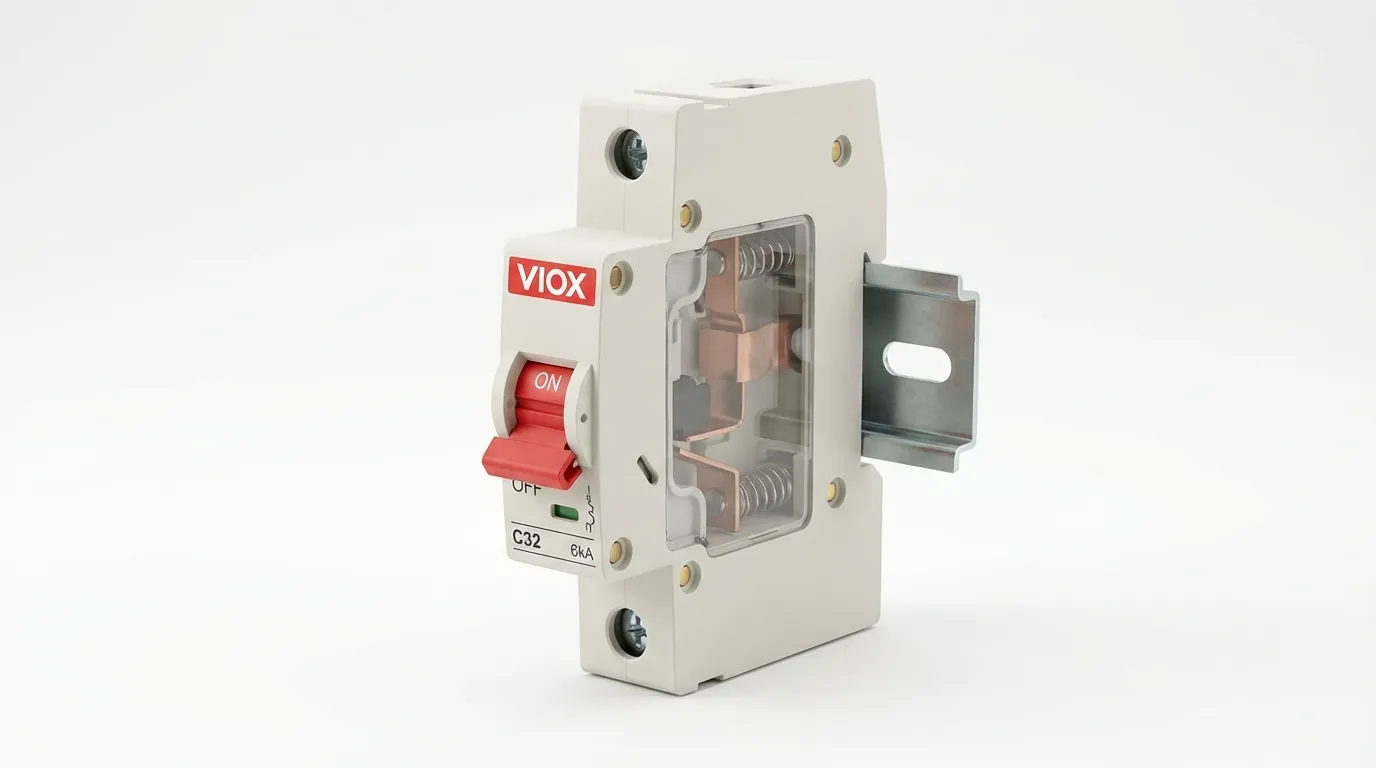
A Μικροαυτόματος διακόπτης (MCB) Είναι ένας συμπαγής, αυτόματα λειτουργούμενος ηλεκτρικός διακόπτης σχεδιασμένος για να προστατεύει κυκλώματα χαμηλής τάσης από υπερεντάσεις και βραχυκυκλώματα. Τα MCB αντικατέστησαν τις παραδοσιακές ασφάλειες σε οικιακές και ελαφριές εμπορικές εφαρμογές λόγω της επαναχρησιμοποίησής τους και των ταχύτερων χρόνων απόκρισης.
Βασικά χαρακτηριστικά MCB
Τα MCB λειτουργούν χρησιμοποιώντας έναν θερμομαγνητικό μηχανισμό απόζευξης που συνδυάζει δύο μεθόδους προστασίας. Το θερμικό στοιχείο χρησιμοποιεί μια διμεταλλική λωρίδα που κάμπτεται υπό παρατεταμένες συνθήκες υπερφόρτωσης, ενώ το μαγνητικό στοιχείο ανταποκρίνεται άμεσα σε ρεύματα βραχυκυκλώματος χρησιμοποιώντας ένα ηλεκτρομαγνητικό πηνίο.
Τεχνικές προδιαγραφές των τυπικών MCB:
- Τρέχουσα βαθμολογία: 0,5A έως 125A (πιο συνηθισμένα: 6A, 10A, 16A, 20A, 32A, 63A)
- Ικανότητα θραύσης: 3kA, 6kA, 10kA ή 15kA ανάλογα με την εφαρμογή
- Εκτίμηση Τάσης: 230V AC (μονοφασικό) ή 400V AC (τριφασικό)
- Καμπύλες ταξιδιού: Τύπος B (3-5×In), Τύπος C (5-10×In), Τύπος D (10-20×In)
- Διαμόρφωση πόλου: Επιλογές 1P, 2P, 3P, 4P
- Χρόνος απόκρισης: 0,01-0,1 δευτερόλεπτα για βραχυκυκλώματα
- Συμμόρφωση με τα πρότυπα: IEC 60898-1, EN 60898-1
Τα MCB υπερέχουν σε οικιακές εφαρμογές όπου η απλότητα, το συμπαγές μέγεθος και η οικονομική αποδοτικότητα είναι προτεραιότητες. Τα σταθερά χαρακτηριστικά απόζευξής τους τα καθιστούν ιδανικά για προβλέψιμα φορτία όπως κυκλώματα φωτισμού, πρίζες και μικρές συσκευές.
Κατανόηση MCCB: Βασικές αρχές των αυτόματων διακοπτών σε χυτοπρεσσαριστό πλαίσιο
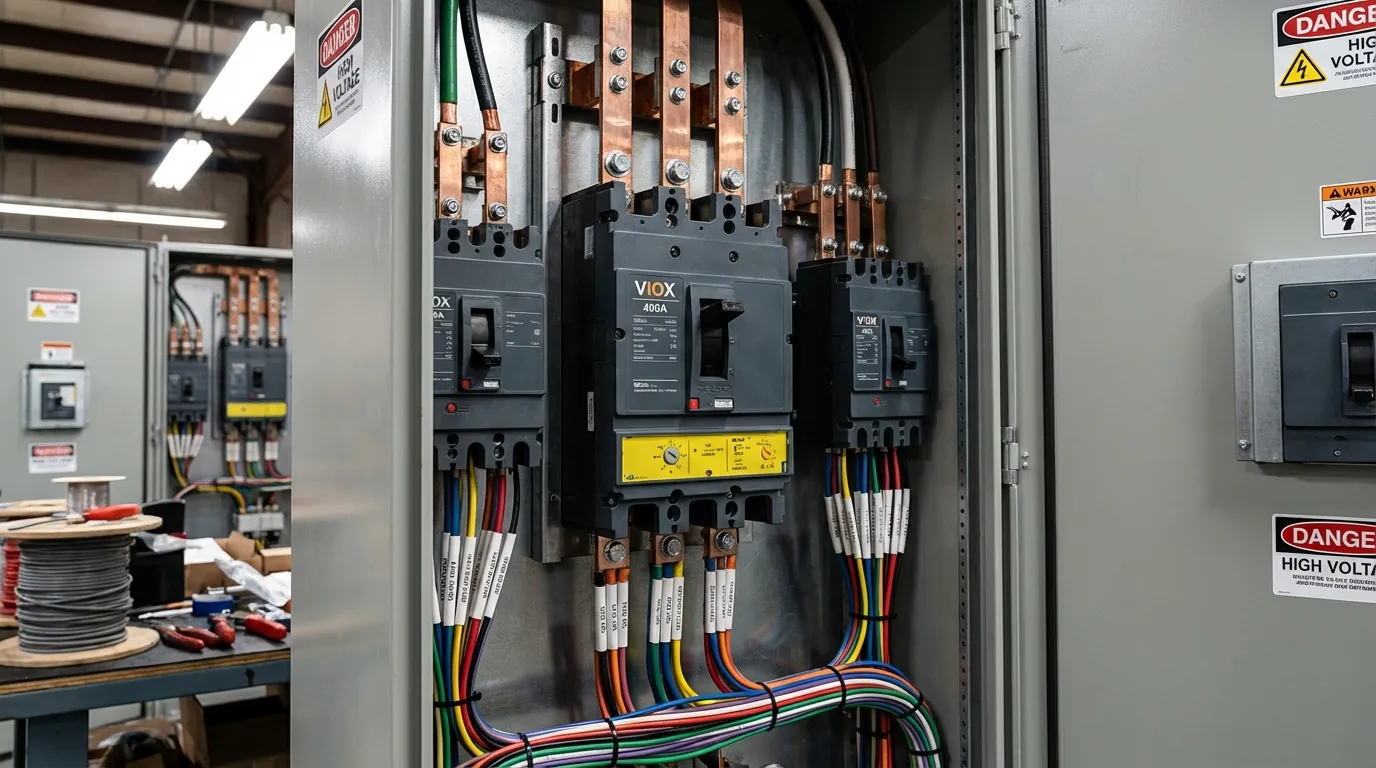
A Μορφοποιημένος διακόπτης κυκλώματος (MCCB) Είναι μια βιομηχανικού βαθμού συσκευή ηλεκτρικής προστασίας που στεγάζεται σε ένα ανθεκτικό χυτοπρεσσαριστό μονωτικό πλαίσιο, σχεδιασμένη να διακόπτει κυκλώματα κατά τη διάρκεια υπερέντασης, βραχυκυκλώματος και σφαλμάτων γείωσης. Το “χυτοπρεσσαριστό πλαίσιο” αναφέρεται στο θερμοσκληρυνόμενο σύνθετο ή πολυεστερικό περίβλημα γυαλιού που παρέχει ανώτερη μηχανική αντοχή και περιβαλλοντική προστασία.
Βασικά χαρακτηριστικά MCCB
Τα MCCB χρησιμοποιούν είτε θερμομαγνητικές μονάδες απόζευξης (παραδοσιακές) είτε ηλεκτρονικές μονάδες απόζευξης (σύγχρονες) για ακριβή προστασία. Οι ηλεκτρονικές μονάδες απόζευξης προσφέρουν προγραμματιζόμενες ρυθμίσεις, προστασία σφάλματος γείωσης και δυνατότητες επικοινωνίας για έξυπνη ενσωμάτωση στο δίκτυο.
Τεχνικές προδιαγραφές των τυπικών MCCB:
- Τρέχουσα βαθμολογία: 10A έως 2.500A (κοινές περιοχές: 63A, 100A, 250A, 400A, 630A, 800A)
- Ικανότητα θραύσης: 10kA έως 200kA (ονομαστική τιμή Icu σύμφωνα με το πρότυπο IEC 60947-2)
- Εκτίμηση Τάσης: Έως 1.000V AC (690V πιο συνηθισμένο για βιομηχανική χρήση)
- Τύποι μονάδων απόζευξης: Θερμομαγνητική (TM), ηλεκτρονική (ETU), βασισμένη σε μικροεπεξεργαστή
- Προσαρμοστικότητα: Υπερφόρτωση (0,4-1×In), καθυστέρηση βραχυκυκλώματος, στιγμιαία απόζευξη
- Διαμόρφωση πόλου: 2P, 3P, 4P με διάφορες διατάξεις ουδέτερου
- Συμμόρφωση με τα πρότυπα: IEC 60947-2, UL 489, GB 14048.2
Τα MCCB κυριαρχούν σε βιομηχανικές και εμπορικές εφαρμογές που απαιτούν υψηλή ικανότητα ρεύματος, ρυθμιζόμενο συντονισμό προστασίας και στιβαρή κατασκευή για σκληρά περιβάλλοντα.
MCCB έναντι MCB: Συνολική τεχνική σύγκριση
1. Ονομαστική τιμή ρεύματος και χωρητικότητα φορτίου
Η πιο θεμελιώδης διαφορά μεταξύ MCCB και MCB έγκειται στις δυνατότητές τους χειρισμού ρεύματος, οι οποίες καθορίζουν άμεσα το πεδίο εφαρμογής τους.
Ονομαστικές τιμές ρεύματος MCB:
- Οικιακά κυκλώματα: 6A-63A (φωτισμός, πρίζες, μικρές συσκευές)
- Ελαφρύ εμπόριο: 32A-125A (μικρές μονάδες HVAC, εμπορικός εξοπλισμός)
- Μέγιστο συνεχές ρεύμα: 125A
Ονομαστικές τιμές ρεύματος MCCB:
- Ελαφριά βιομηχανία: 63A-250A (τροφοδοτικά κινητήρων, μικρά μηχανήματα)
- Βαριά βιομηχανία: 400A-1.600A (κύρια διανομή, μεγάλοι κινητήρες)
- Εξειδικευμένες εφαρμογές: Έως 2.500A (είσοδος υπηρεσίας, προστασία μετασχηματιστή)
Αυτή η διαφορά χωρητικότητας σημαίνει ότι τα MCCB μπορούν να προστατεύσουν ολόκληρα τα ηλεκτρικά συστήματα κτιρίων, ενώ τα MCB προστατεύουν μεμονωμένα κυκλώματα διακλάδωσης. Για παράδειγμα, ένα MCCB 200A θα μπορούσε να χρησιμεύσει ως ο κύριος διακόπτης για ένα εμπορικό κτίριο, με MCB 20A να προστατεύουν μεμονωμένα κυκλώματα γραφείων κατάντη.
2. Ικανότητα διακοπής (Ονομαστική τιμή διακοπής)
Σπάζοντας ικανότητα Αντιπροσωπεύει το μέγιστο ρεύμα σφάλματος που μπορεί να διακόψει με ασφάλεια ένας διακόπτης χωρίς ζημιά. Αυτή η κρίσιμη προδιαγραφή πρέπει να υπερβαίνει το προοπτικό ρεύμα βραχυκυκλώματος στο σημείο εγκατάστασης.
Ικανότητες διακοπής MCB:
- Οικιακές εγκαταστάσεις: 6kA (ρεύμα σφάλματος 6.000A)
- Εμπορικά κτίρια: 10kA στάνταρ
- Βιομηχανικά τροφοδοτικά: 15kA μέγιστο
Ικανότητες διακοπής MCCB:
- Ελαφριά βιομηχανία: 25kA-50kA
- Βαριά βιομηχανία: 65kA-100kA
- Κρίσιμες υποδομές: 150kA-200kA (εξειδικευμένες μονάδες)
Η υψηλότερη ικανότητα διακοπής στους MCCB επιτρέπει την εγκατάσταση πιο κοντά στις πηγές ισχύος όπου τα ρεύματα σφάλματος είναι υψηλότερα, όπως στις κύριες εισόδους παροχής και στις δευτερεύουσες συνδέσεις μετασχηματιστών.
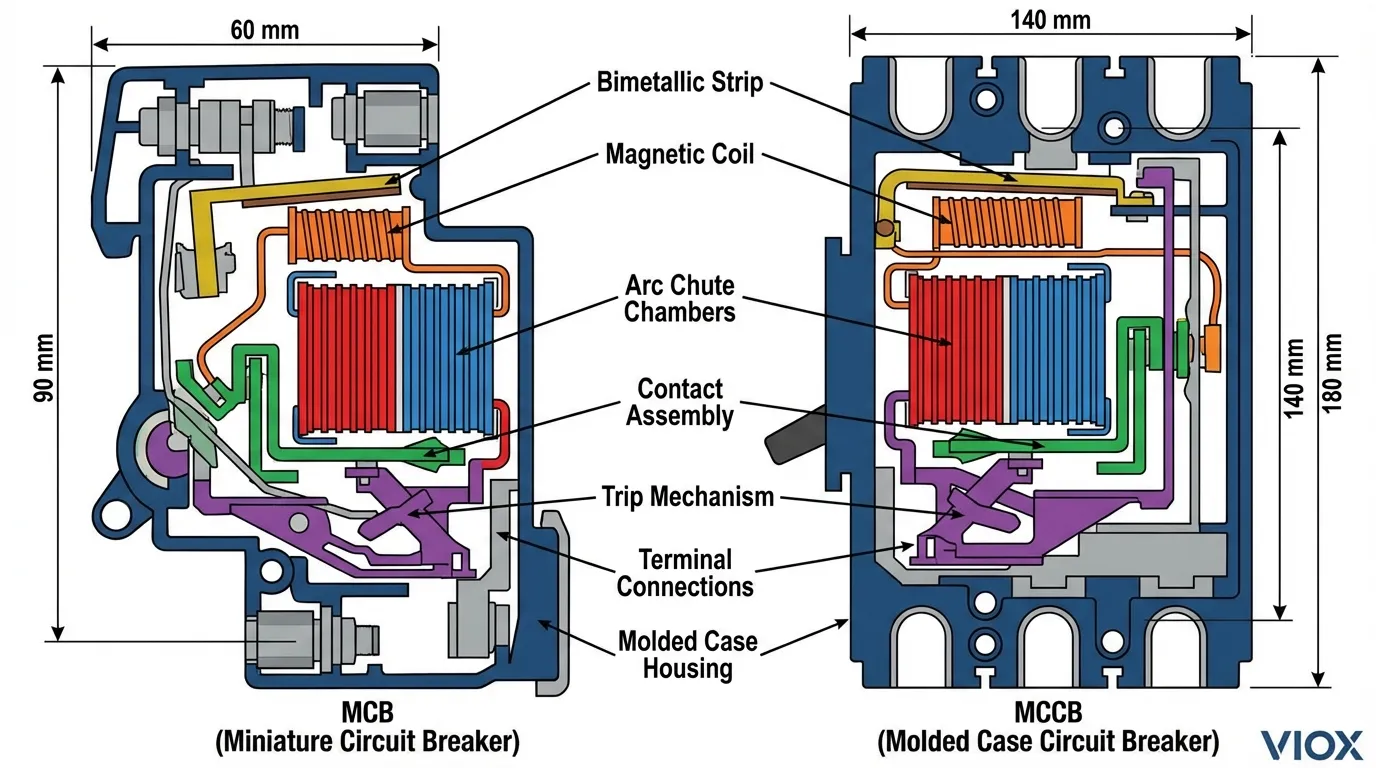
3. Ρύθμιση Ευαισθησίας Αποκοπής
Η ευελιξία ρύθμισης της αποκοπής αντιπροσωπεύει μια σημαντική λειτουργική διαφορά που επηρεάζει τον συντονισμό της προστασίας και την επιλεκτικότητα του συστήματος.
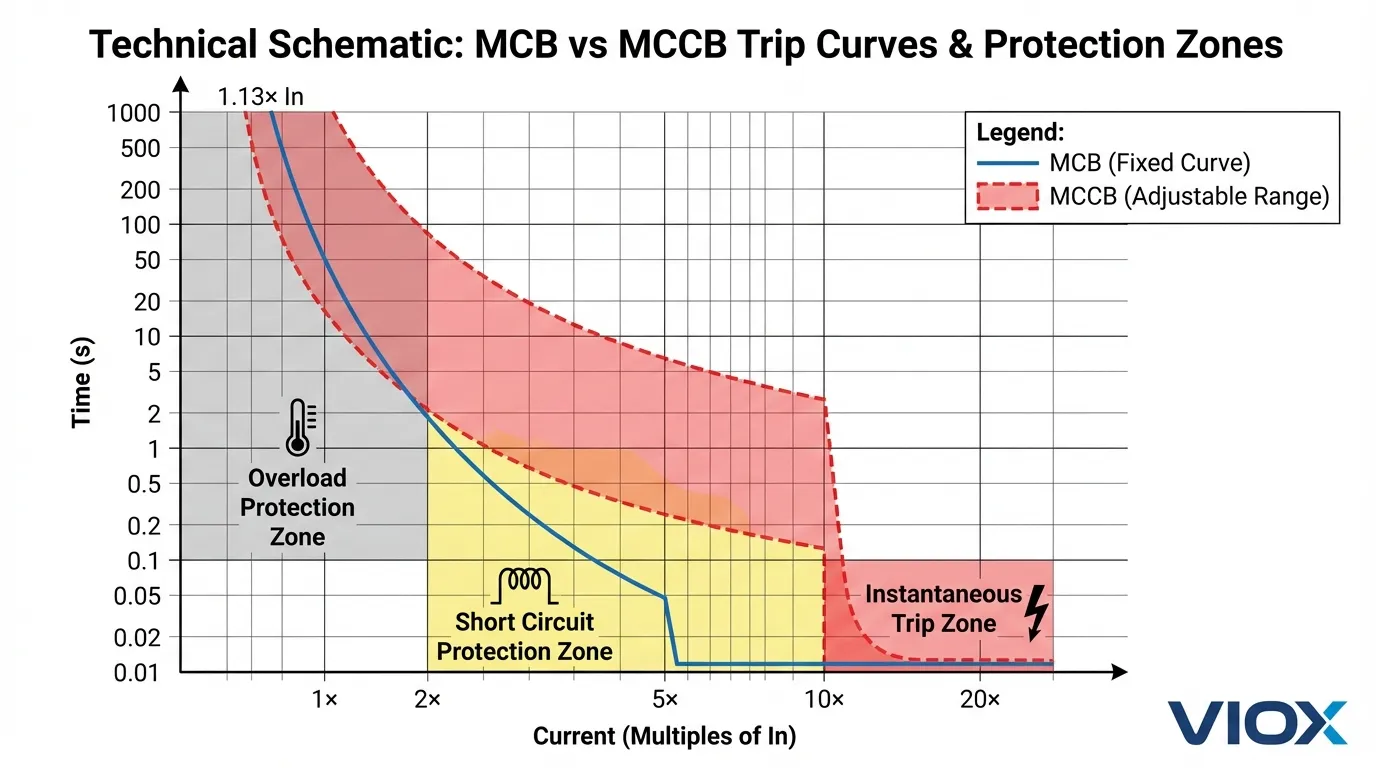
Ρυθμίσεις Αποκοπής MCB (Σταθερές):
- Καμπύλες αποκοπής εργοστασιακής ρύθμισης (τύπου B, C ή D)
- Δεν είναι δυνατή η ρύθμιση στο πεδίο
- Προστασία υπερφόρτωσης: Σταθερή στο ονομαστικό ρεύμα
- Μαγνητική αποκοπή: Σταθερή στο 3-20× του ονομαστικού ρεύματος (ανάλογα με την καμπύλη)
- Πλεονέκτημα: Απλότητα, χωρίς σφάλματα διαμόρφωσης
- Περιορισμός: Δεν μπορεί να προσαρμοστεί στις μεταβαλλόμενες συνθήκες φορτίου
Ρυθμίσεις Αποκοπής MCCB (Ρυθμιζόμενες):
- Θερμική υπερφόρτωση: Ρυθμιζόμενη 0,4-1,0× του ονομαστικού ρεύματος
- Καθυστέρηση βραχυκυκλώματος: Ρυθμιζόμενες ζώνες χρόνου (καμπύλες I²t)
- Άμεση αποκοπή: Ρυθμιζόμενη 2-15× του ονομαστικού ρεύματος
- Σφάλμα γείωσης: Προαιρετικό, ρυθμιζόμενη ευαισθησία και καθυστέρηση
- Πλεονέκτημα: Ακριβής συντονισμός, βελτιστοποίηση για συγκεκριμένο φορτίο
- Απαίτηση: Σωστή διαμόρφωση από εξειδικευμένο προσωπικό
Αυτή η ρυθμιζόμενη δυνατότητα επιτρέπει στους MCCB να επιτύχουν selective coordination, όπου μόνο ο διακόπτης που βρίσκεται πιο κοντά σε ένα σφάλμα αποκόπτει, διατηρώντας την παροχή ρεύματος στα ανεπηρέαστα κυκλώματα—κρίσιμο για νοσοκομεία, κέντρα δεδομένων και βιομηχανίες συνεχούς παραγωγικής διαδικασίας.
4. Φυσικό Μέγεθος και Απαιτήσεις Εγκατάστασης
Διαστάσεις MCB:
- Πλάτος: 17,5mm-18mm ανά πόλο (πρότυπο ράγας DIN)
- Ύψος: 85mm τυπικό
- Βάθος: 70-80mm
- Βάρος: 100-200g ανά πόλο
- Τοποθέτηση: Ράγα DIN (35mm TH35-7.5 ή TH35-15)
- Χώρος πίνακα: Ελάχιστος, δυνατότητα εγκατάστασης υψηλής πυκνότητας
Διαστάσεις MCCB:
- Πλάτος: 70mm-280mm (ανάλογα με το μέγεθος του πλαισίου)
- Ύψος: 140mm-320mm
- Βάθος: 80mm-150mm
- Βάρος: 1-15kg ανάλογα με το μέγεθος του πλαισίου
- Τοποθέτηση: Τοποθέτηση σε πίνακα με μπουλόνια, συνδέσεις ράβδου ζυγών
- Χώρος πίνακα: Απαιτείται ειδικό διαμέρισμα με απόσταση
Η διαφορά μεγέθους επηρεάζει σημαντικά τον σχεδιασμό του πίνακα. Ένας τυπικός οικιακός πίνακας φιλοξενεί 12-40 θέσεις MCB σε συμπαγή χώρο, ενώ ένα βιομηχανικό MCC (Κέντρο Ελέγχου Κινητήρων) αφιερώνει σημαντικό όγκο σε κάθε MCCB με κατάλληλη απόσταση απαγωγής θερμότητας.
5. Ανάλυση Κόστους και Οικονομικές Εκτιμήσεις
Δομή Τιμολόγησης MCB:
- Βασικός μονοπολικός: $5-15
- Τριφασικός (3P): $25-60
- Υψηλή ικανότητα διακοπής (10kA): $30-100
- Κόστος εγκατάστασης: Ελάχιστο (κούμπωμα σε ράγα DIN)
- Φιλοσοφία αντικατάστασης: Απόρριψη και αντικατάσταση ολόκληρης της μονάδας
Δομή Τιμολόγησης MCCB:
- Εισαγωγικό επίπεδο (63-100A): $100-300
- Μεσαίο εύρος (250-400A): $400-1.200
- Υψηλής χωρητικότητας (630-1.600A): $1.500-5.000+
- Ηλεκτρονικές μονάδες αποκοπής: Προσθέστε $500-2.000
- Κόστος εγκατάστασης: Υψηλότερο (απαιτεί εξειδικευμένο ηλεκτρολόγο, προδιαγραφές ροπής)
- Φιλοσοφία συντήρησης: Επισκευάσιμα εξαρτήματα, περιοδικός έλεγχος
Εκτιμήσεις Συνολικού Κόστους Ιδιοκτησίας (TCO):
Ενώ οι MCCB κοστίζουν σημαντικά περισσότερο εκ των προτέρων, η ρυθμιζόμενη δυνατότητα και η δυνατότητα συντήρησής τους συχνά οδηγούν σε χαμηλότερο TCO για βιομηχανικές εφαρμογές. Οι MCCB μειώνουν τις ενοχλητικές αποκοπές μέσω του σωστού συντονισμού, ελαχιστοποιούν τον χρόνο διακοπής λειτουργίας και παρέχουν δυνατότητες παρακολούθησης που εντοπίζουν προβλήματα πριν από την εμφάνιση αστοχιών.
6. Χαρακτηριστικά και Δυνατότητες Προστασίας
Λειτουργίες Προστασίας MCB:
- Προστασία υπερφόρτωσης (θερμικό στοιχείο)
- Προστασία βραχυκυκλώματος (μαγνητικό στοιχείο)
- Βασική προστασία από σφάλμα τόξου (εγγενής)
- Χωρίς προστασία σφάλματος γείωσης (απαιτείται ξεχωριστό RCCB)
- Χωρίς δυνατότητες επικοινωνίας
- Χωρίς παρακολούθηση ή διαγνωστικά
Λειτουργίες Προστασίας MCCB:
- Προστασία υπερφόρτωσης (ρυθμιζόμενη θερμική ή ηλεκτρονική)
- Προστασία βραχυκυκλώματος (ρυθμιζόμενη μαγνητική ή ηλεκτρονική)
- Προστασία σφάλματος γείωσης (προαιρετική, ρυθμιζόμενη)
- Απελευθέρωση υποτάσεως (προαιρετικό εξάρτημα)
- Εντολή διακοπής (δυνατότητα απομακρυσμένης διακοπής)
- Zone selective interlocking (ZSI)
- Παρακολούθηση ισχύος (ηλεκτρονικές μονάδες)
- Πρωτόκολλα επικοινωνίας (Modbus, Profibus, Ethernet/IP)
- Προληπτικές ειδοποιήσεις συντήρησης
- Καταγραφή συμβάντων και διαγνωστικά σφαλμάτων
Προηγμένα MCCB με ηλεκτρονικές μονάδες trip λειτουργούν ως έξυπνες συσκευές προστασίας, παρέχοντας δεδομένα σε πραγματικό χρόνο για ρεύμα, τάση, συντελεστή ισχύος, κατανάλωση ενέργειας και αρμονική παραμόρφωση—δυνατότητες αδύνατες με βασικά MCB.
Λεπτομερής Συγκριτικός Πίνακας: MCCB έναντι MCB
| Παράμετρος | MCB (μικροσκοπικός διακόπτης κυκλώματος) | MCCB (Διακόπτης Κυκλώματος Χυτής Θήκης) |
|---|---|---|
| Τρέχουσα βαθμολογία | 0,5A – 125A | 10A – 2,500A |
| Ικανότητα θραύσης | 3kA – 15kA | Έως 440V AC |
| Εκτίμηση Τάσης | 230V – 400V AC | Έως 1.000V AC |
| Προσαρμογή ταξιδιού | Σταθερή (εργοστασιακή ρύθμιση) | Ρυθμιζόμενη (διαμορφώσιμη στο πεδίο) |
| Τύποι Καμπύλης Trip | B, C, D (σταθερές) | Προσαρμόσιμες καμπύλες I²t |
| Διαμόρφωση πόλου | 1P, 2P, 3P, 4P | 2P, 3P, 4P |
| Φυσικό Μέγεθος | 17.5mm ανά πόλο | 70mm – 280mm ανά μονάδα |
| Βάρος | 100-200 γρ. | 1-15kg |
| Μέθοδος τοποθέτησης | Τοποθέτηση σε ράγα DIN | Τοποθέτηση σε πάνελ με μπουλόνια, μπάρα ζυγών |
| Χρόνος εγκατάστασης | 1-2 λεπτά | 15-60 λεπτά |
| Εύρος τιμών | $5 – $100 | $100 – $5,000+ |
| Μηχανισμός ταξιδιού | Θερμομαγνητικός (σταθερός) | Θερμομαγνητικά ή ηλεκτρονικά |
| Προστασία από σφάλμα γείωσης | Όχι (απαιτείται RCCB) | Προαιρετική (ενσωματωμένη) |
| Τηλεχειριστήριο | Όχι | Ναι (εντολή διακοπής, μηχανισμός χειρισμού) |
| Ανακοίνωση | Όχι | Ναι (ηλεκτρονικές μονάδες) |
| Δυνατότητα παρακολούθησης | Όχι | Ναι (ρεύμα, τάση, ισχύς, ενέργεια) |
| Επιλεκτικότητα | Περιορισμένη | Πλήρης συντονισμός δυνατός |
| Συντήρηση | Αντικατάσταση όταν είναι ελαττωματικό | Επισκευάσιμο, ελέγξιμο |
| Διάρκεια ζωής | 10-15 χρόνια | 20-30 years |
| Πρότυπα | IEC 60898-1, EN 60898 | IEC 60947-2, UL 489 |
| Τυπικές εφαρμογές | Κατοικίες, ελαφριές επαγγελματικές | Βιομηχανικά, εμπορικά δίκτυα |
| Διακοπή Τόξου | Βασικά κανάλια κατάσβεσης τόξου | Προηγμένοι θάλαμοι κατάσβεσης τόξου |
| Θερμοκρασία περιβάλλοντος | -5°C έως +40°C | -25°C έως +70°C (ποικίλλει) |
| Βαθμολογία υψομέτρου | Έως 2.000m στάνταρ | Έως 2.000m (μείωση απόδοσης παραπάνω) |
| Αξεσουάρ | Ελάχιστη (βοηθητικές επαφές) | Εκτεταμένη (UVR, εντολή διακοπής, μηχανισμός χειρισμού) |
Οδηγός Επιλογής Εφαρμογής: Πότε να Χρησιμοποιήσετε MCB έναντι MCCB
Επιλέξτε MCB όταν:
Οικιακές εφαρμογές:
- Κυκλώματα φωτισμού (MCB 6A-16A)
- Γενικές πρίζες ρεύματος (MCB 16A-20A)
- Συσκευές κουζίνας (MCB 20A-32A)
- Κλιματιστικές μονάδες έως 5 τόνους (MCB 32A-40A)
- Θερμοσίφωνες και μικρές αντλίες (MCB 20A-32A)
Ελαφριές εμπορικές εφαρμογές:
- Φωτισμός γραφείων και πρίζες
- Μικρά καταστήματα λιανικής
- Εξοπλισμός εστιατορίου (μεμονωμένα κυκλώματα)
- Μικρά εργαστήρια
- Πολυκατοικίες κατοικιών (μεμονωμένες μονάδες)
Βασικά Κριτήρια Επιλογής για MCB:
- Συνολικό ρεύμα κυκλώματος ≤ 125A
- Προοπτικό ρεύμα σφάλματος ≤ 15kA
- Σταθερή προστασία επαρκής για σταθερά φορτία
- Περιορισμοί χώρου απαιτούν συμπαγή λύση
- Έργα με γνώμονα τον προϋπολογισμό
- Προτιμάται απλή εγκατάσταση και συντήρηση
Επιλέξτε MCCB Όταν:
Βιομηχανικές εφαρμογές:
- Τροφοδοτικά κινητήρων για εξοπλισμό >10HP
- Κύριοι πίνακες διανομής
- Δευτερεύουσα προστασία μετασχηματιστή
- Εξοπλισμός συγκόλλησης και βαριά μηχανήματα
- Βιομηχανικά συστήματα HVAC (ψύκτες, πύργοι ψύξης)
- Συστήματα μεταφοράς και γραμμές παραγωγής
Εμπορικές εφαρμογές:
- Κύρια είσοδος υπηρεσίας κτιρίου
- Πίνακες διανομής δαπέδου
- Τροφοδοτικά ανελκυστήρων και κυλιόμενων σκαλών
- Κύρια τροφοδοτικά επαγγελματικών κουζινών
- Διανομή ισχύος κέντρου δεδομένων
- Κρίσιμα συστήματα ισχύος νοσοκομείων
Κρίσιμες Υποδομές:
- Εγκαταστάσεις επεξεργασίας λυμάτων
- Εγκαταστάσεις παραγωγής
- Τηλεπικοινωνιακές εγκαταστάσεις
- Συστήματα παροχής ενέργειας έκτακτης ανάγκης
- Εγκαταστάσεις ανανεώσιμων πηγών ενέργειας (ηλιακή, αιολική)
Βασικά Κριτήρια Επιλογής για MCCB:
- Ρεύμα κυκλώματος >125A ή αναμενόμενη μελλοντική επέκταση
- Προοπτικό ρεύμα σφάλματος >15kA
- Απαιτείται επιλεκτικός συντονισμός
- Απαιτείται ρυθμιζόμενη προστασία για μεταβαλλόμενα φορτία
- Επιθυμητές δυνατότητες παρακολούθησης και επικοινωνίας
- Δυσμενείς περιβαλλοντικές συνθήκες
- Κρίσιμες εφαρμογές που απαιτούν μέγιστη αξιοπιστία
Διαφορές στην Εγκατάσταση και την Καλωδίωση
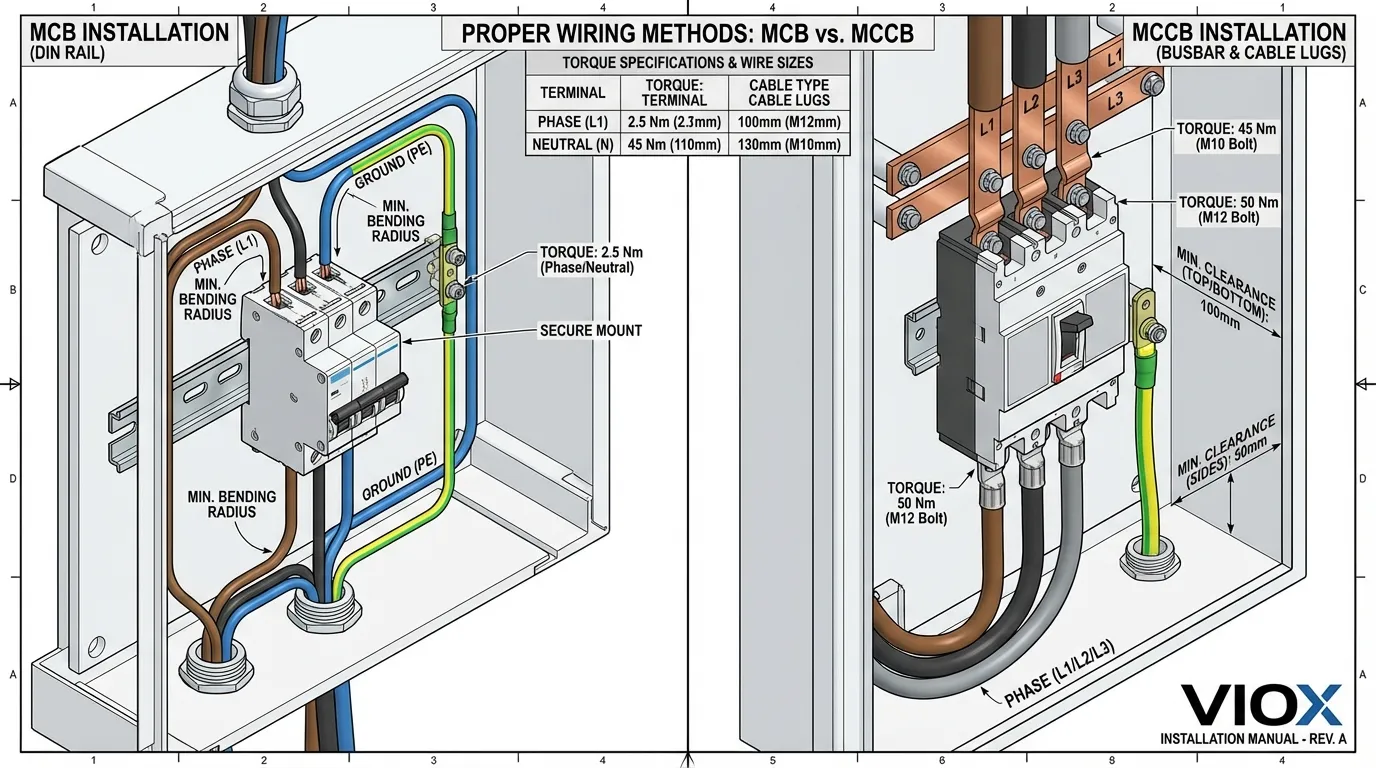
Βέλτιστες πρακτικές εγκατάστασης MCB
Τοποθέτηση σε ράγα DIN:
- Τοποθετήστε το MCB σε ράγα DIN 35mm (πρότυπο TH35-7.5)
- Βεβαιωθείτε για την ασφαλή μηχανική εμπλοκή
- Διατηρήστε ελάχιστη απόσταση 5mm μεταξύ των παρακείμενων MCB για απαγωγή θερμότητας
- Ομαδοποιήστε κατά τύπο κυκλώματος για λογική οργάνωση
Συνδέσεις καλωδίωσης:
- Μέγεθος αγωγού: 1,5mm² – 16mm² (14-6 AWG)
- Ροπή τερματικού: 2-3 Nm (ελέγξτε τις προδιαγραφές του κατασκευαστή)
- Μέθοδος σύνδεσης: Βιδωτοί ακροδέκτες (πιο συνηθισμένοι) ή βύσματα
- Σύνδεση ράβδου: Χρησιμοποιήστε ράβδους ονομαστικής τιμής MCB για σύνδεση πολλαπλών συσκευών
- Προετοιμασία καλωδίων: Απογυμνώστε μόνωση 10-12mm, δεν απαιτούνται φερρίτες για συμπαγείς αγωγούς
Θέματα Διάταξης Πίνακα:
- Εγκαταστήστε με τον εναλλακτικό διακόπτη προσβάσιμο από μπροστά
- Διατηρήστε τις απαιτούμενες αποστάσεις εργασίας NEC/IEC
- Επισημάνετε καθαρά κάθε κύκλωμα
- Λάβετε υπόψη τον χώρο μελλοντικής επέκτασης
Βέλτιστες Πρακτικές Εγκατάστασης MCCB
Τοποθέτηση σε πίνακα:
- Σημειώστε και τρυπήστε τις οπές στερέωσης σύμφωνα με το πρότυπο του κατασκευαστή
- Χρησιμοποιήστε το κατάλληλο μέγεθος μπουλονιού (συνήθως M8-M12)
- Σφίξτε τα μπουλόνια στερέωσης σύμφωνα με τις προδιαγραφές (συνήθως 10-25 Nm)
- Βεβαιωθείτε ότι η πίσω πλάκα του πίνακα παρέχει επαρκή υποστήριξη για το βάρος του MCCB
Συνδέσεις καλωδίωσης:
- Μέγεθος αγωγού: 10mm² – 300mm² (8 AWG – 600 kcmil) ανάλογα με το μέγεθος του πλαισίου
- Χρησιμοποιήστε ακροδέκτες καλωδίων πρεσαριστούς σύμφωνα με τις προδιαγραφές του κατασκευαστή
- Ροπή τερματικού: Κρίσιμη—ακολουθήστε τις ακριβείς προδιαγραφές (συνήθως 25-100 Nm)
- Σύνδεση ράβδου: Χρησιμοποιήστε ράβδους κατάλληλης ονομαστικής τιμής με σωστή υποστήριξη
- Ακολουθία φάσεων: Διατηρήστε σταθερή διάταξη L1-L2-L3
- Χειρισμός ουδέτερου: Τα 4-πολικά MCCB παρέχουν εναλλασσόμενο ουδέτερο όπου απαιτείται
Κρίσιμες Απαιτήσεις Εγκατάστασης:
- Επαληθεύστε τον επαρκή αερισμό γύρω από το MCCB
- Διατηρήστε τις ελάχιστες αποστάσεις σύμφωνα με το NEC 110.26 ή τους τοπικούς κώδικες
- Χρησιμοποιήστε αντικραδασμική βάση σε κινητές εφαρμογές ή εφαρμογές υψηλών κραδασμών
- Διαμορφώστε τις ρυθμίσεις σκανδαλισμού πριν από την ενεργοποίηση
- Εκτελέστε δοκιμή αντίστασης μόνωσης πριν από την θέση σε λειτουργία
- Τεκμηριώστε τις ρυθμίσεις και διατηρήστε αρχεία κατασκευής
Απαιτήσεις συντήρησης και δοκιμών
Συντήρηση MCB (Ελάχιστη)
Τακτική Επιθεώρηση (Ετήσια):
- Οπτικός έλεγχος για φυσική ζημιά, αποχρωματισμό ή καύση
- Ελέγξτε για χαλαρές συνδέσεις (συνιστάται θερμική απεικόνιση)
- Επαληθεύστε τη σωστή μηχανική λειτουργία (χειροκίνητη δοκιμή σκανδαλισμού)
- Καθαρίστε τη σκόνη και τα υπολείμματα από τον πίνακα
Λειτουργικός Έλεγχος (Κάθε 3-5 Χρόνια):
- Δοκιμή χειροκίνητης λειτουργίας (σκανδαλισμός και επαναφορά)
- Επαλήθευση κουμπιού δοκιμής (εάν υπάρχει)
- Μέτρηση αντίστασης μόνωσης
- Μέτρηση αντίστασης επαφής (εάν είναι προσβάσιμη)
Δείκτες αντικατάστασης:
- Ορατή ζημιά ή καύση
- Συχνές ενοχλητικές βόλτες
- Αποτυχία σκανδαλισμού υπό συνθήκες δοκιμής
- Ηλικία >15 ετών σε κρίσιμες εφαρμογές
- Συγκόλληση επαφών ή μηχανική σύνδεση
Σημαντική σημείωση: Τα MCB είναι σφραγισμένες μονάδες χωρίς εξαρτήματα που μπορούν να επισκευαστούν από τον χρήστη. Αντικαταστήστε ολόκληρη τη συσκευή όταν είναι ελαττωματική—μην επιχειρήσετε επισκευές.
Συντήρηση MCCB (Ολοκληρωμένη)
Τακτικός Έλεγχος (Τριμηνιαίος έως Ετήσιος):
- Οπτικός έλεγχος για ζημιές, διάβρωση, αποχρωματισμό
- Θερμική απεικόνιση των συνδέσεων υπό φορτίο
- Επαλήθευση ότι οι ρυθμίσεις της μονάδας αποκοπής ταιριάζουν με την τεκμηρίωση
- Έλεγχος της λειτουργίας των βοηθητικών συσκευών
- Καθαρισμός των καναλιών εκτόνωσης τόξου και των διαδρομών εξαερισμού
- Έλεγχος των συνδέσεων των ζυγών για σφίξιμο
Λειτουργικός Έλεγχος (Ετήσιος έως Τριετής):
- Δοκιμή χειροκίνητης λειτουργίας (κύκλος ανοίγματος/κλεισίματος)
- Δοκιμή πρωτεύουσας έγχυσης (επαλήθευση χρόνου αποκοπής)
- Δοκιμή αντίστασης μόνωσης (>1000V megger)
- Μέτρηση αντίστασης επαφής
- Δοκιμή λειτουργίας σφάλματος γείωσης (εάν υπάρχει)
- Επαλήθευση διεπαφής επικοινωνίας (ηλεκτρονικές μονάδες)
Ολοκληρωμένος Έλεγχος (Κάθε 5-10 Χρόνια):
- Πλήρης βαθμονόμηση της μονάδας αποκοπής
- Αξιολόγηση φθοράς επαφών
- Έλεγχος των καναλιών εκτόνωσης τόξου και αντικατάσταση εάν χρειάζεται
- Λίπανση μηχανικών εξαρτημάτων
- Ενημερώσεις υλικολογισμικού (ηλεκτρονικές μονάδες)
- Πλήρης λειτουργικός έλεγχος σύμφωνα με τις διαδικασίες του κατασκευαστή
Αρχεία Συντήρησης:
Διατηρήστε λεπτομερή αρχεία, συμπεριλαμβανομένων:
- Ημερομηνία εγκατάστασης και αρχικές ρυθμίσεις
- Όλες οι ημερομηνίες και τα αποτελέσματα των δοκιμών
- Οποιεσδήποτε προσαρμογές ή επισκευές πραγματοποιήθηκαν
- Ιστορικό σφαλμάτων και συμβάντα αποκοπής
- Αντικατάσταση εξαρτημάτων ή αξεσουάρ
Συνηθισμένα Λάθη Επιλογής και Πώς να τα Αποφύγετε
Λάθος 1: Υπολογισμός της Ικανότητας Διακοπής
Πρόβλημα: Η εγκατάσταση ενός MCB 6kA όπου το προοπτικό ρεύμα σφάλματος είναι 12kA δημιουργεί καταστροφικό κίνδυνο αστοχίας. Ο διακόπτης μπορεί να εκραγεί όταν προσπαθεί να διακόψει ρεύμα σφάλματος πέρα από την ονομαστική του τιμή.
Λύση: Υπολογίστε το προοπτικό ρεύμα βραχυκυκλώματος στο σημείο εγκατάστασης χρησιμοποιώντας δεδομένα μετασχηματιστή δικτύου και σύνθετες αντιστάσεις αγωγών. Επιλέξτε διακόπτη με ικανότητα διακοπής ≥125% του υπολογισμένου ρεύματος σφάλματος. Όταν δεν είστε σίγουροι, καθορίστε υψηλότερη ικανότητα διακοπής (τα MCB 10kA κοστίζουν μόνο οριακά περισσότερο από τις εκδόσεις 6kA).
Λάθος 2: Χρήση MCB για Εφαρμογές Υψηλού Ρεύματος
Πρόβλημα: Η παράλληλη σύνδεση πολλαπλών MCB για την επίτευξη υψηλότερης ικανότητας ρεύματος (π.χ., δύο MCB 63A για φορτίο 126A) παραβιάζει τους ηλεκτρικούς κώδικες και δημιουργεί κινδύνους ασφάλειας λόγω άνισης κατανομής ρεύματος.
Λύση: Χρησιμοποιήστε MCCB με κατάλληλη ονομαστική τιμή για οποιοδήποτε συνεχές φορτίο >100A. Μην συνδέετε ποτέ παράλληλα αυτόματους διακόπτες κυκλώματος, εκτός εάν έχουν σχεδιαστεί και εγκριθεί ειδικά για παράλληλη λειτουργία.
Λάθος 3: Αγνοώντας τις Απαιτήσεις Συντονισμού
Πρόβλημα: Η εγκατάσταση MCB σε ένα σύστημα χωρίς να λαμβάνεται υπόψη ο επιλεκτικός συντονισμός έχει ως αποτέλεσμα την αποκοπή των διακοπτών ανάντη για σφάλματα κατάντη, προκαλώντας περιττές διακοπές ρεύματος σε μη επηρεαζόμενα κυκλώματα.
Λύση: Εκτελέστε μελέτη συντονισμού χρησιμοποιώντας τις καμπύλες χρόνου-ρεύματος του κατασκευαστή. Χρησιμοποιήστε MCCB με ρυθμιζόμενες ρυθμίσεις σε ανάντη θέσεις για να επιτύχετε επιλεκτικότητα με τους MCB κατάντη. Καθορίστε ηλεκτρονικούς MCCB αποκοπής για κρίσιμες εφαρμογές που απαιτούν εγγυημένο συντονισμό.
Λάθος 4: Εσφαλμένη Επιλογή Καμπύλης Αποκοπής
Πρόβλημα: Η χρήση MCB Τύπου B (3-5×In μαγνητική αποκοπή) για κυκλώματα κινητήρων προκαλεί ενοχλητική αποκοπή κατά την εκκίνηση του κινητήρα, ενώ η χρήση MCB Τύπου D (10-20×In) για κυκλώματα φωτισμού παρέχει ανεπαρκή προστασία από βραχυκύκλωμα.
Λύση: Αντιστοιχίστε την καμπύλη αποκοπής στα χαρακτηριστικά φορτίου:
- Τύπος Β: Φωτισμός, ωμικά φορτία, μεγάλες διαδρομές καλωδίων
- Τύπος C: Γενικής χρήσης, μικροί κινητήρες, μετασχηματιστές (πιο συνηθισμένο)
- Τύπος D: Μεγάλοι κινητήρες, μετασχηματιστές, φορτία υψηλής εισροής
Λάθος 5: Παραμέληση Περιβαλλοντικών Παραγόντων
Πρόβλημα: Η εγκατάσταση τυπικών MCB με ονομαστική τιμή για 40°C περιβάλλοντος σε κλειστά πάνελ όπου η θερμοκρασία υπερβαίνει τους 50°C προκαλεί πρόωρη αποκοπή και μειωμένη διάρκεια ζωής.
Λύση: Εφαρμόστε συντελεστές υποβάθμισης για υψηλή θερμοκρασία περιβάλλοντος και κλειστούς χώρους. Εξετάστε MCCB με υψηλότερες ονομαστικές τιμές θερμοκρασίας για σκληρά περιβάλλοντα. Εξασφαλίστε επαρκή εξαερισμό του πίνακα ή καθορίστε διακόπτες με εκτεταμένες ονομαστικές τιμές θερμοκρασίας.
Λάθος 6: Παράβλεψη Μελλοντικής Επέκτασης
Πρόβλημα: Η πλήρης φόρτωση της χωρητικότητας του πίνακα με MCB δεν αφήνει περιθώρια για μελλοντικές προσθήκες κυκλωμάτων, απαιτώντας δαπανηρή αντικατάσταση του πίνακα.
Λύση: Σχεδιάστε πίνακες με 20-30% εφεδρική χωρητικότητα. Χρησιμοποιήστε MCCB για κύριους τροφοδότες με ονομαστικές τιμές που επιτρέπουν τη μελλοντική αύξηση του φορτίου. Εξετάστε αρθρωτά συστήματα πινάκων που επιτρέπουν την εύκολη επέκταση.
Πρότυπα και Πιστοποιήσεις: Διασφάλιση Συμμόρφωσης
Διεθνή Πρότυπα
IEC 60898-1 (Πρότυπο MCB):
- Καθορίζει τις απαιτήσεις απόδοσης για MCB ≤125A
- Καθορίζει τα χαρακτηριστικά της καμπύλης αποκοπής (τύποι B, C, D)
- Καθιερώνει ονομαστικές τιμές ικανότητας διακοπής (Icn)
- Επιβάλλει απαιτήσεις σήμανσης και επισήμανσης
- Καλύπτει μηχανικές και ηλεκτρικές δοκιμές αντοχής
IEC 60947-2 (Πρότυπο MCCB):
- Καλύπτει MCCB και αυτόματους διακόπτες κυκλώματος γενικά
- Καθορίζει Icu (τελική ικανότητα διακοπής) και Ics (ικανότητα διακοπής λειτουργίας)
- Καθορίζει κατηγορίες χρήσης (A και B)
- Καθιερώνει απαιτήσεις συντονισμού (Τύπος 1 και Τύπος 2)
- Περιλαμβάνει απαιτήσεις για ηλεκτρονικές μονάδες αποκοπής
UL 489 (Βορειοαμερικανικό Πρότυπο):
- Καλύπτει χυτούς αυτόματους διακόπτες κυκλώματος και διακόπτες
- Καθορίζει ονομαστικές τιμές διακοπής (AIR – Ampere Interrupting Rating)
- Καθορίζει διακόπτες με ονομαστική τιμή 80% έναντι 100%
- Καθιερώνει διαδικασίες δοκιμών για τη Βορειοαμερικανική αγορά
- Απαιτείται για προϊόντα με σήμανση UL στις ΗΠΑ/Καναδά
Κρίσιμες Πιστοποιήσεις προς Επαλήθευση
Για MCB:
- Σήμανση CE (Ευρωπαϊκή συμμόρφωση)
- Πιστοποιητικό CB (διεθνής αμοιβαία αναγνώριση)
- Καταχώριση UL (αγορές Βόρειας Αμερικής)
- Πιστοποίηση CCC (αγορά Κίνας)
- Εγκρίσεις τοπικών αρχών (διαφέρουν ανά δικαιοδοσία)
Για MCCB:
- Όλες οι πιστοποιήσεις MCB συν:
- Εκθέσεις δοκιμών τύπου από διαπιστευμένα εργαστήρια
- Μελέτες συντονισμού βραχυκυκλώματος
- Σεισμική πιστοποίηση (κρίσιμες υποδομές)
- Ναυτιλιακές πιστοποιήσεις (εφαρμογές σε πλοία)
- Εγκρίσεις για επικίνδυνες τοποθεσίες (ATEX, IECEx για εκρηκτικές ατμόσφαιρες)
Λίστα Ελέγχου Επαλήθευσης Συμμόρφωσης
Πριν αγοράσετε MCB ή MCCB, επαληθεύστε:
- Την κατάλληλη συμμόρφωση με τα πρότυπα για τη δικαιοδοσία σας
- Πιστοποίηση ικανότητας διακοπής στην ονομαστική τάση
- Ονομαστική θερμοκρασία κατάλληλη για το περιβάλλον εγκατάστασης
- Τεκμηρίωση συντονισμού εάν απαιτείται επιλεκτική λειτουργία
- Εκθέσεις δοκιμών κατασκευαστή διαθέσιμες για επιθεώρηση
- Κάλυψη εγγύησης και διαθεσιμότητα τεχνικής υποστήριξης
- Διαθεσιμότητα ανταλλακτικών για MCCB που απαιτούν συντήρηση
Μελλοντικές Τάσεις: Έξυπνοι Αυτόματοι Διακόπτες και Ενσωμάτωση IoT
Ψηφιακός Μετασχηματισμός στην Προστασία Κυκλωμάτων
Οι σύγχρονοι MCCB ενσωματώνουν όλο και περισσότερο έξυπνη τεχνολογία μετατρέποντάς τους από παθητικές συσκευές προστασίας σε ενεργά εργαλεία διαχείρισης ενέργειας:
Τρέχουσες Δυνατότητες:
- Παρακολούθηση σε πραγματικό χρόνο ρεύματος, τάσης, ισχύος, ενέργειας
- Ανάλυση αρμονικών και αξιολόγηση ποιότητας ισχύος
- Προειδοποιήσεις προληπτικής συντήρησης βάσει των συνθηκών λειτουργίας
- Τηλεχειρισμός και παρακολούθηση κατάστασης
- Ενσωμάτωση με συστήματα διαχείρισης κτιρίων (BMS)
- Συνδεσιμότητα στο cloud για αναλύσεις και αναφορές
Αναδυόμενες τεχνολογίες:
- Πρόβλεψη σφαλμάτων και διαγνωστικά με τεχνητή νοημοσύνη
- Επαλήθευση συντήρησης βάσει Blockchain
- Μοντελοποίηση ψηφιακού διδύμου για βελτιστοποίηση συστήματος
- Λειτουργίες κυβερνοασφάλειας για προστασία κρίσιμων υποδομών
- Δυνατότητες ενσωμάτωσης αυτοθεραπευόμενου δικτύου
Έξυπνοι MCB: Γεφυρώνοντας το Χάσμα
Ενώ οι παραδοσιακοί MCB στερούνται ευφυΐας, νέοι έξυπνοι MCB προϊόντα αναδύονται:
- Συνδεσιμότητα Wi-Fi ή Bluetooth για οικιακή παρακολούθηση
- Παρακολούθηση κατανάλωσης ενέργειας ανά κύκλωμα
- Έλεγχος και ειδοποιήσεις μέσω εφαρμογής smartphone
- Ενσωμάτωση με συστήματα οικιακού αυτοματισμού
- Καταγραφή και ανάλυση συμβάντων υπερέντασης
Αυτές οι συσκευές γεφυρώνουν το χάσμα μεταξύ της βασικής προστασίας MCB και της ευφυΐας MCCB σε οικιακές τιμές, αντιπροσωπεύοντας το μέλλον της οικιακής ηλεκτρικής ασφάλειας.
Συχνές ερωτήσεις (FAQ)
Γενικές ερωτήσεις
Ε: Μπορώ να αντικαταστήσω έναν MCB με έναν MCCB στον οικιακό μου πίνακα;
Α: Φυσικά, όχι—οι MCCB είναι πολύ μεγάλοι για οικιακούς πίνακες σχεδιασμένους για MCB σε ράγα DIN. Λειτουργικά, είναι επίσης περιττό και ασύμφορο. Οι MCCB έχουν σχεδιαστεί για βιομηχανικές εφαρμογές. Εάν χρειάζεστε μεγαλύτερη χωρητικότητα από αυτή που παρέχουν οι MCB, σκεφτείτε να αναβαθμίσετε ολόκληρο τον πίνακα σας σε μια μεγαλύτερη παροχή με τον κατάλληλο κύριο διακόπτη.
Ε: Πώς ξέρω αν χρειάζομαι MCB ή MCCB για την εφαρμογή μου;
Α: Χρησιμοποιήστε αυτό το απλό δενδροειδές διάγραμμα απόφασης:
- Ρεύμα φορτίου ≤100A + οικιακή/ελαφριά εμπορική χρήση = MCB
- Ρεύμα φορτίου >100A + βιομηχανική/εμπορική χρήση = MCCB
- Απαιτείται ρυθμιζόμενη προστασία = MCCB
- Απαιτείται επιλεκτικός συντονισμός = MCCB
- Περιορισμένος προϋπολογισμός + απλά φορτία = MCB
Ε: Τι σημαίνει το “C” στο C32 MCB;
Α: Το “C” υποδεικνύει τον τύπο καμπύλης απόζευξης (κατώφλι μαγνητικής απόζευξης), ενώ το “32” είναι το ονομαστικό ρεύμα σε αμπέρ. Οι MCB τύπου C αποζεύγνυνται μαγνητικά σε 5-10× το ονομαστικό ρεύμα, καθιστώντας τους κατάλληλους για κυκλώματα γενικής χρήσης με μέτρια ρεύματα εισόδου. Ο τύπος B αποζεύγνυται σε 3-5×In (ευαίσθητος, για φωτισμό), ο τύπος D σε 10-20×In (κινητήρες, μετασχηματιστές).
Τεχνικές ερωτήσεις
Ε: Μπορούν οι MCCB να προστατεύσουν από σφάλματα γείωσης;
Α: Ορισμένοι MCCB περιλαμβάνουν προαιρετικές μονάδες προστασίας από σφάλματα γείωσης (GFPM) που ανιχνεύουν ρεύματα διαρροής προς τη γη. Αυτή η λειτουργία δεν είναι στάνταρ, αλλά διατίθεται ως πρόσθετο ή ενσωματωμένη λειτουργία σε ηλεκτρονικές μονάδες απόζευξης. Οι τυπικοί MCB δεν παρέχουν προστασία από σφάλματα γείωσης—χρειάζεστε ένα ξεχωριστό RCCB (Διακόπτης Κυκλώματος Υπολειμματικού Ρεύματος) για αυτή τη λειτουργία.
Ε: Ποια είναι η διαφορά μεταξύ των τιμών Icu και Ics στους MCCB;
A: Icu (απόλυτη ικανότητα θραύσης) είναι το μέγιστο ρεύμα σφάλματος που μπορεί να διακόψει ο MCCB μία φορά χωρίς ζημιά, αλλά μπορεί να μην είναι κατάλληλος για συνεχή λειτουργία. Ics (Ικανότητα σπασίματος υπηρεσιών) είναι το επίπεδο ρεύματος σφάλματος που μπορεί να διακόψει ο MCCB πολλές φορές και να παραμείνει σε λειτουργία. Για κρίσιμες εφαρμογές, βεβαιωθείτε ότι το Ics πληροί ή υπερβαίνει το προοπτικό ρεύμα σφάλματος. Συνήθως, Ics = 50-100% του Icu ανάλογα με την κατηγορία του διακόπτη.
Ε: Πόσο συχνά πρέπει να αντικαθίστανται οι MCB και MCCB;
A: MCBsΑ: Αντικαθιστάτε κάθε 10-15 χρόνια ως προληπτική συντήρηση ή αμέσως εάν εμφανίζουν σημάδια ζημιάς, συχνές ενεργοποιήσεις ή αποτυχία ενεργοποίησης κατά τη διάρκεια των δοκιμών. MCCBsΑ: Με την κατάλληλη συντήρηση, οι MCCB μπορούν να διαρκέσουν 20-30 χρόνια. Αντικαταστήστε με βάση την αξιολόγηση της κατάστασης, το ιστορικό διακοπής σφαλμάτων και τις συστάσεις του κατασκευαστή. Οι MCCB που έχουν διακόψει μεγάλα σφάλματα θα πρέπει να επιθεωρούνται και ενδεχομένως να αντικαθίστανται ακόμη και αν φαίνονται λειτουργικοί.
Ερωτήσεις Εγκατάστασης
Ε: Μπορώ να εγκαταστήσω MCB ή MCCB σε οποιονδήποτε προσανατολισμό;
A: MCBs Α: Οι MCB είναι συνήθως σχεδιασμένοι για κάθετη τοποθέτηση με τους ακροδέκτες πάνω/κάτω, αλλά πολλοί μπορούν να τοποθετηθούν οριζόντια χωρίς μείωση της ονομαστικής τιμής. MCCBs Α: Οι MCCB μπορούν συνήθως να τοποθετηθούν σε διάφορους προσανατολισμούς, αλλά αυτό μπορεί να επηρεάσει την ονομαστική τιμή ρεύματος λόγω αλλαγών στην απαγωγή θερμότητας. Να συμβουλεύεστε πάντα τις οδηγίες εγκατάστασης του κατασκευαστή και να εφαρμόζετε συντελεστές μείωσης της ονομαστικής τιμής εάν καθορίζονται για μη τυπικούς προσανατολισμούς.
Ε: Χρειάζομαι ειδικά εργαλεία για την εγκατάσταση MCCB;
Α: Ναι. Η εγκατάσταση MCCB απαιτεί:
- Δυναμόκλειδο (κρίσιμο για τη σωστή σύσφιξη των ακροδεκτών)
- Εργαλεία πρεσαρίσματος ακροδεκτών καλωδίων
- Ελεγκτή αντίστασης μόνωσης (megger)
- Πολύμετρο για επαλήθευση
- Θερμική κάμερα απεικόνισης (συνιστάται για την έναρξη λειτουργίας)
- Εργαλεία προγραμματισμού μονάδας ενεργοποίησης (για ηλεκτρονικές μονάδες)
Η εγκατάσταση MCB απαιτεί μόνο βασικά εργαλεία ηλεκτρολόγου (κατσαβίδια, απογυμνωτές καλωδίων, πολύμετρο).
Ερωτήσεις Κόστους και Συντήρησης
Ε: Γιατί οι MCCB είναι τόσο πιο ακριβοί από τους MCB;
Α: Οι MCCB κοστίζουν περισσότερο λόγω:
- Υψηλότερη χωρητικότητα ρεύματος και διακοπής που απαιτεί πιο ανθεκτικά υλικά
- Μηχανισμοί ενεργοποίησης ακριβείας με δυνατότητα ρύθμισης
- Εκτεταμένες απαιτήσεις δοκιμών και πιστοποίησης
- Προαιρετικά χαρακτηριστικά (σφάλμα γείωσης, επικοινωνία, παρακολούθηση)
- Σχεδίαση με δυνατότητα συντήρησης με αντικαταστάσιμα εξαρτήματα
- Χαμηλότεροι όγκοι παραγωγής σε σύγκριση με τους MCB μαζικής παραγωγής
Η διαφορά τιμής αντανακλά την κατασκευή βιομηχανικής ποιότητας και τις προηγμένες δυνατότητες που απαιτούνται για κρίσιμες εφαρμογές.
Ε: Μπορώ να δοκιμάσω MCB και MCCB μόνος μου;
A: MCBsΑ: Η βασική δοκιμή χειροκίνητης λειτουργίας (ενεργοποίηση και επαναφορά) μπορεί να πραγματοποιηθεί από ιδιοκτήτες σπιτιού. Ωστόσο, η σωστή δοκιμή χρόνου ενεργοποίησης και κατωφλίου ρεύματος απαιτεί εξειδικευμένο εξοπλισμό και θα πρέπει να πραγματοποιείται από εξειδικευμένους ηλεκτρολόγους.
MCCBsΑ: Οι δοκιμές θα πρέπει να πραγματοποιούνται μόνο από εξειδικευμένους ηλεκτρολόγους τεχνικούς με κατάλληλο εξοπλισμό δοκιμών (σετ δοκιμών πρωτεύουσας έγχυσης, ελεγκτές μόνωσης). Η ακατάλληλη δοκιμή μπορεί να βλάψει τον διακόπτη ή να δημιουργήσει κινδύνους για την ασφάλεια. Πολλές δικαιοδοσίες απαιτούν αδειούχους ηλεκτρολόγους για δοκιμές και συντήρηση MCCB.
Συμπέρασμα: Η σωστή επιλογή για την εφαρμογή σας
Επιλογή μεταξύ MCCB και MCB εξαρτάται θεμελιωδώς από τις απαιτήσεις της εφαρμογής σας, τα χαρακτηριστικά φορτίου και τους στόχους σχεδιασμού του συστήματος. Αυτή η ολοκληρωμένη σύγκριση αποκαλύπτει ότι αυτές οι συσκευές, ενώ εξυπηρετούν την ίδια βασική λειτουργία της προστασίας κυκλώματος, είναι βελτιστοποιημένες για σαφώς διαφορετικές εφαρμογές.
Επιλέξτε MCB για οικιακές και ελαφριές εμπορικές εφαρμογές όπου:
- Τα ρεύματα κυκλώματος παραμένουν κάτω από 125A
- Τα σταθερά χαρακτηριστικά προστασίας ταιριάζουν σε σταθερά φορτία
- Το συμπαγές μέγεθος και η οικονομική τιμολόγηση αποτελούν προτεραιότητες
- Απαιτείται απλή εγκατάσταση και ελάχιστη συντήρηση
- Τα προοπτικά ρεύματα σφάλματος δεν υπερβαίνουν τα 15kA
Επιλέξτε MCCB για βιομηχανικές και εμπορικές εφαρμογές που απαιτούν:
- Χωρητικότητα ρεύματος από 100A έως 2.500A
- Ρυθμιζόμενη προστασία για συντονισμό και επιλεκτικότητα
- Υψηλή ικανότητα διακοπής (10kA-200kA) κοντά σε πηγές ενέργειας
- Παρακολούθηση, επικοινωνία και ενσωμάτωση έξυπνου δικτύου
- Στιβαρή κατασκευή για σκληρά περιβάλλοντα
- Μεγάλη διάρκεια ζωής με συντηρήσιμα εξαρτήματα
Βασικοί Παράγοντες Επιτυχίας:
- Εκτελέστε σωστούς υπολογισμούς φορτίου συμπεριλαμβανομένης της μελλοντικής επέκτασης
- Υπολογίστε τα προοπτικά ρεύματα σφάλματος στα σημεία εγκατάστασης
- Λάβετε υπόψη τις απαιτήσεις συντονισμού για την αξιοπιστία του συστήματος
- Επαλήθευση των περιβαλλοντικών συνθηκών και εφαρμόστε την κατάλληλη μείωση της ονομαστικής τιμής
- Διασφαλίζουν τη συμμόρφωση με τα ισχύοντα πρότυπα και κώδικες
- Επιλέξτε αξιόπιστους κατασκευαστές με αποδεδειγμένο ιστορικό
- Σχεδιάστε για συντήρηση και δοκιμές καθ' όλη τη διάρκεια ζωής
Το τοπίο της ηλεκτρικής προστασίας συνεχίζει να εξελίσσεται με την ενσωμάτωση έξυπνης τεχνολογίας, αλλά οι θεμελιώδεις αρχές παραμένουν: αντιστοιχίστε τη συσκευή προστασίας στην εφαρμογή, δώστε προτεραιότητα στην ασφάλεια έναντι της εξοικονόμησης κόστους και σχεδιάστε συστήματα με γνώμονα τις μελλοντικές ανάγκες.
Για σύνθετες εγκαταστάσεις ή κρίσιμες εφαρμογές, συμβουλευτείτε εξειδικευμένους ηλεκτρολόγους μηχανικούς για να πραγματοποιήσουν λεπτομερείς μελέτες συντονισμού και να διασφαλίσουν τη βέλτιστη επιλογή συσκευής προστασίας. Η επένδυση σε σωστό σχεδιασμό και ποιοτικά εξαρτήματα αποδίδει οφέλη μέσω της ενισχυμένης ασφάλειας, της αξιοπιστίας και του μειωμένου κόστους κύκλου ζωής.
Σχετικοί Πόροι:
- Πώς να επιλέξετε ένα MCCB για έναν πίνακα
- Τι είναι ένας διακόπτης κυκλώματος με χυτευμένο περίβλημα (MCCB)
- Τι είναι ένας Μικροαυτόματος Διακόπτης (MCB)
- Τύποι διακοπτών κυκλώματος
- Ονομαστικές Τιμές Διακόπτη Κυκλώματος: ICU, ICS, ICW, ICM
- Κατανόηση των καμπυλών ταξιδιού
- MCB vs MCCB vs RCCB vs RCBO: Πλήρης Σύγκριση