

Σε αυτή τη σελίδα
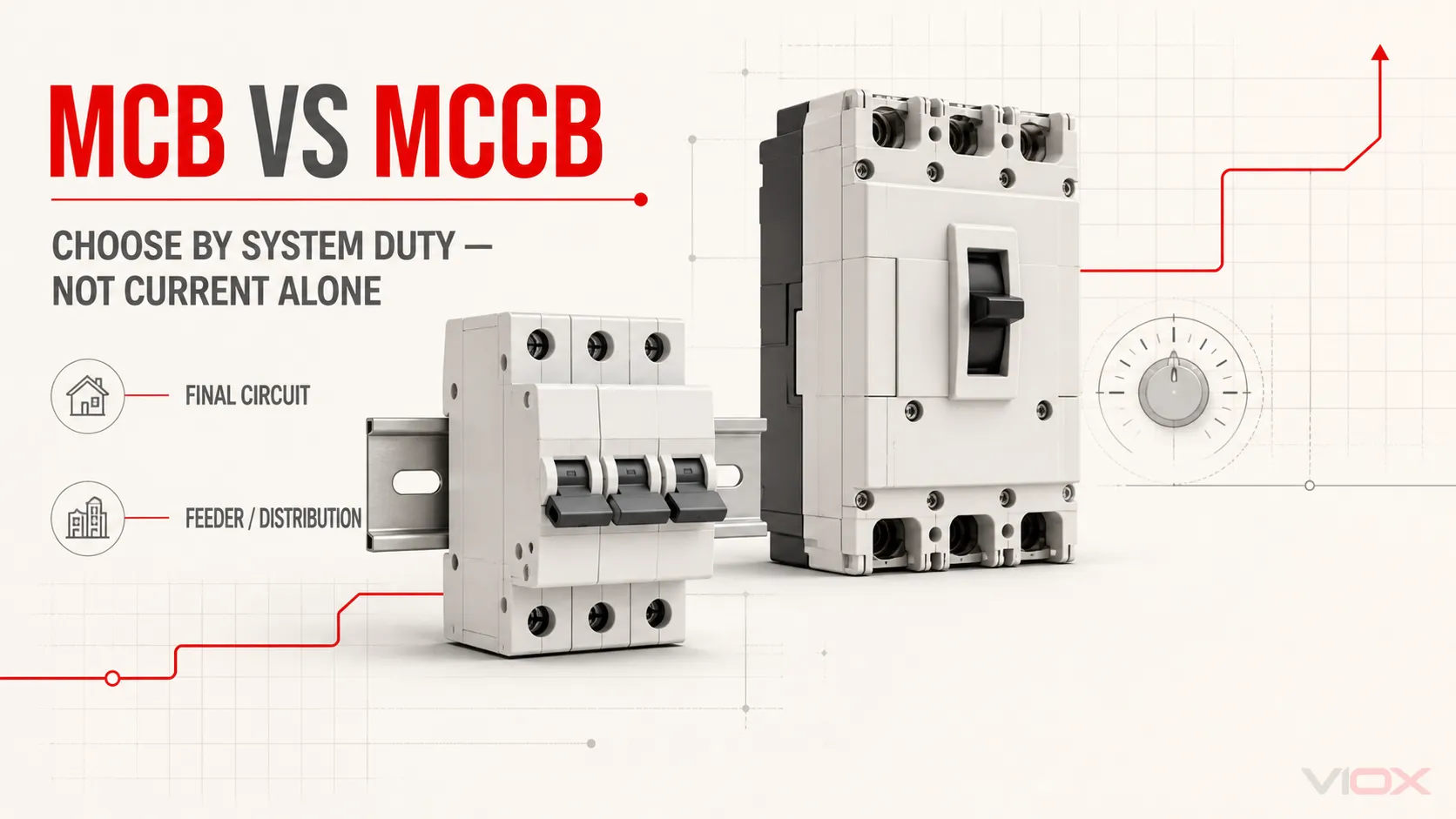
Ένα MCB (μικροσκοπικός διακόπτης κυκλώματος) και ένα MCCB (Διακόπτης Κυκλώματος Χυτής Θήκης) και τα δύο παρέχουν προστασία από υπερένταση, αλλά είναι βελτιστοποιημένα για διαφορετικές λειτουργίες του ηλεκτρικού συστήματος.
Οι MCB εξυπηρετούν γενικά συμπαγή τελικά κυκλώματα με δημοσιευμένα, εργοστασιακά ρυθμισμένα χαρακτηριστικά λειτουργίας. Οι MCCB εξυπηρετούν γενικά τροφοδοσίες, κυκλώματα διανομής και κυκλώματα εξοπλισμού που απαιτούν μεγαλύτερα πλαίσια, ευρύτερες επιλογές απόδοσης διακοπής, ρυθμιζόμενες ή ηλεκτρονικές λειτουργίες απόζευξης, δυνατότητες συντονισμού και παρελκόμενα.
Ωστόσο, δεν υπάρχει καθολική τιμή έντασης ρεύματος στην οποία ένας MCB μετατρέπεται αυτόματα σε MCCB. Οι διαθέσιμες ονομαστικές τιμές τους μπορεί να αλληλοεπικαλύπτονται. Επιλέξτε μεταξύ τους χρησιμοποιώντας πέντε κριτήρια:
- εφαρμογή και ισχύον πρότυπο προϊόντος;
- απαιτήσεις τάσης, ρεύματος φορτίου, αγωγού και πλαισίου;
- ρεύμα βραχυκύκλωσης και η σωστή ονομαστική ικανότητα διακοπής·;
- χαρακτηριστικά απόζευξης, συντονισμός και λειτουργίες προστασίας·;
- τοποθέτηση, ακροδέκτες, εξαρτήματα και ενσωμάτωση στον πίνακα.
Πίνακας σύγκρισης MCB και MCCB
| Διάσταση επιλογής | MCB | MCCB |
|---|---|---|
| Τυπικός ρόλος στο σύστημα | Τελικά και συμπαγή κυκλώματα διανομής | Κυκλώματα τροφοδοσίας, κεντρικές γραμμές, διανομή και κυκλώματα εξοπλισμού |
| Φυσική μορφή | Αρθρωτό, συνήθως τοποθετούμενο σε ράγα DIN | Χυτό πλαίσιο, συνήθως σταθερής ή βυσματούμενης τοποθέτησης· οι ακριβείς μορφές ποικίλλουν |
| Εύρος ρεύματος | Εξαρτάται από το προϊόν και το πρότυπο· το πεδίο εφαρμογής του IEC 60898-1 εκτείνεται έως τα 125 A | Εξαρτάται από το πλαίσιο του προϊόντος, συνήθως εκτεινόμενο σε σημαντικά υψηλότερα ρεύματα |
| Χαρακτηριστικά ταξιδιού | Συνήθως δημοσιεύονται ως σταθερά θερμομαγνητικά χαρακτηριστικά | Σταθερές ή ρυθμιζόμενες θερμομαγνητικές, ηλεκτρονικές ή άλλες επιλογές απόζευξης ανάλογα με τη σειρά |
| Δεδομένα βραχυκύκλωσης | Συχνά εκφράζεται ως Icn σε ένα πλαίσιο IEC 60898-1 |
Συχνά εκφράζεται ως Icu και Ics σε ένα πλαίσιο IEC 60947-2 |
| Δυνατότητα συντονισμού | Εφικτό, αλλά περιορίζεται από τα δημοσιευμένα χαρακτηριστικά της συσκευής | Ευρύτερες επιλογές ρύθμισης και χρονικής καθυστέρησης ενδέχεται να υποστηρίζουν τον συντονισμό |
| Αξεσουάρ | Συνήθως στενότερο εύρος | Συχνά περιλαμβάνει ευρύτερες επιλογές βοηθητικών επαφών, συναγερμού, απελευθέρωσης, χειρισμού, αλληλομανδάλωσης και επικοινωνίας |
| Επίπτωση στον πίνακα | Υψηλή πυκνότητα κυκλωμάτων και αρθρωτή αντικατάσταση | Περισσότερος χώρος, υποστήριξη, θερμότητα, τερματισμός και σχεδιασμός πρόσβασης |
| Ο καλύτερος λόγος για να το επιλέξετε | Η συμπαγής συσκευή ικανοποιεί πλήρως το φορτίο του κυκλώματος και το ισχύον πρότυπο | Το κύκλωμα απαιτεί δυνατότητες ή επιλογές ενσωμάτωσης που δεν είναι διαθέσιμες στον υποψήφιο MCB |
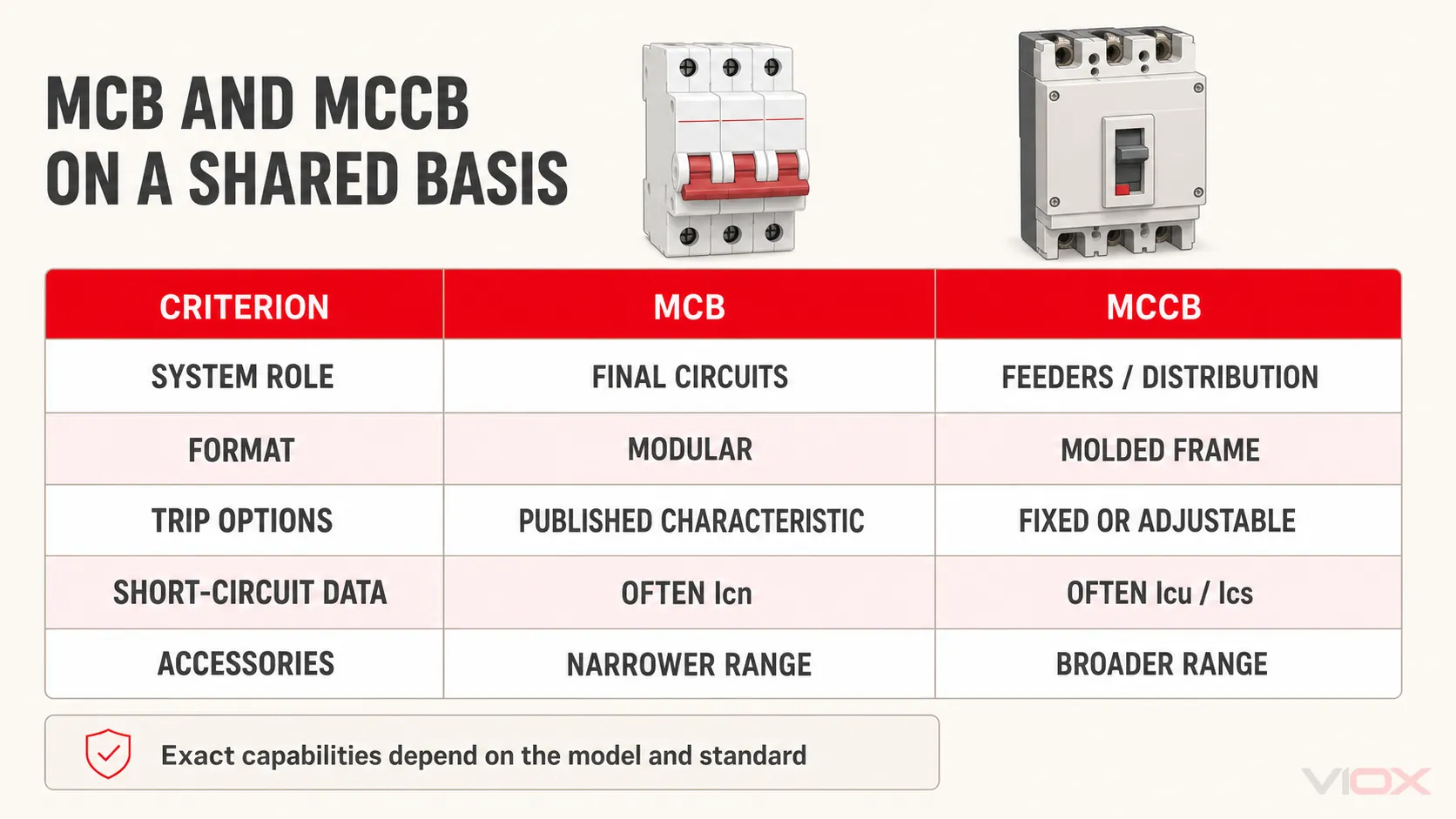
Αυτές είναι τάσεις σε επίπεδο οικογένειας προϊόντων και δεν υποκαθιστούν το φύλλο δεδομένων. Ένας συγκεκριμένος MCCB μπορεί να διαθέτει σταθερή μονάδα απόζευξης, ενώ ένας αρθρωτός αυτόματος διακόπτης που περιγράφεται εμπορικά ως MCB μπορεί να έχει αξιολογηθεί σύμφωνα με το πρότυπο IEC 60947-2 ή να φέρει σήμανση για περισσότερα από ένα πρότυπα.
Η κύρια διαφορά είναι το φορτίο του συστήματος, όχι μόνο το μέγεθος
Η εμφανής διαφορά μεγέθους αντικατοπτρίζει μια βαθύτερη διαφορά στον σχεδιασμό.
Ένας MCB έχει σχεδιαστεί κανονικά για πυκνή εγκατάσταση σε πίνακα διανομής. Η συμπαγής αρθρωτή μορφή του είναι κατάλληλη για πολυάριθμα τελικά κυκλώματα. Ο χρήστης επιλέγει ένα ονομαστικό ρεύμα και ένα δημοσιευμένο χαρακτηριστικό απόζευξης αντί να διαμορφώνει πολλαπλές λειτουργίες προστασίας στο πεδίο.
Ένας MCCB χρησιμοποιεί ένα χυτό μονωτικό πλαίσιο που παρέχει περισσότερο χώρο για το σύστημα επαφών, το σύστημα ελέγχου τόξου, τη μονάδα απελευθέρωσης, τους ακροδέκτες, τον μηχανισμό λειτουργίας και τα παρελκόμενα. Διαφορετικά μεγέθη πλαισίου μπορούν να υποστηρίξουν διαφορετικούς συνδυασμούς ρεύματος, τάσης, διακοπής και παρελκομένων.
Αυτό το μεγαλύτερο πλαίσιο είναι χρήσιμο όταν ένα κύκλωμα χρειάζεται ένα ή περισσότερα από τα ακόλουθα:
- υψηλότερη δηλωμένη απόδοση διακοπής στην τάση του συστήματος;
- ρυθμιζόμενες λειτουργίες μακρόχρονου, βραχύχρονου, στιγμιαίου ή υπερέντασης σφάλματος γείωσης, όπου παρέχονται;
- λειτουργίες χρονικής καθυστέρησης ή ηλεκτρονικής απελευθέρωσης για συντονισμό;
- απελευθέρωση διακλάδωσης (shunt trip), υποτάση, βοηθητικές επαφές, επαφές συναγερμού, λειτουργία κινητήρα ή αλληλομανδάλωση;
- τερματισμούς με ακροδέκτες καλωδίων ή ζυγοστάθμιση κατάλληλους για την αρχιτεκτονική του πίνακα;
- μια σταθερή, βυσματούμενη ή συρόμενη μέθοδο ενσωμάτωσης που προσφέρεται από το σύστημα του προϊόντος.
Δεν περιλαμβάνει κάθε MCCB όλες τις λειτουργίες. Επιβεβαιώστε την ακριβή μονάδα προστασίας, το πλαίσιο, τα παρελκόμενα και τις ονομαστικές τιμές στην τεκμηρίωση που έχει δημοσιεύσει ο κατασκευαστής.
Πρότυπα: Τα MCB και MCCB δεν αποτελούν πλήρεις τυποποιημένους ορισμούς
Τα ονόματα οικογενειών προϊόντων και τα πρότυπα προϊόντων σχετίζονται, αλλά δεν αποτελούν εναλλάξιμες ονομασίες.
Πλαίσιο του IEC 60898-1
IEC 60898-1 εφαρμόζεται σε αυτόματους διακόπτες AC ανοικτού τύπου για οικιακές και παρόμοιες εγκαταστάσεις εντός του δηλωμένου πεδίου εφαρμογής του: ονομαστική τάση που δεν υπερβαίνει τα 440 V μεταξύ φάσεων, ονομαστικό ρεύμα που δεν υπερβαίνει τα 125 A και ονομαστική ικανότητα βραχυκύκλωσης που δεν υπερβαίνει τα 25 kA.
Αυτό καθορίζει το πεδίο εφαρμογής του προτύπου. Δεν δεν σημαίνει ότι κάθε MCB έχει ονομαστική τιμή 125 A ή ικανότητα βραχυκύκλωσης 25 kA. Χρησιμοποιήστε τις σημάνσεις και το πιστοποιητικό ή τη δήλωση που σχετίζεται με το συγκεκριμένο προϊόν.
Πλαίσιο του IEC 60947-2
IEC 60947-2:2024 εφαρμόζεται σε αυτόματους διακόπτες χαμηλής τάσης που προορίζονται για εγκατάσταση και χειρισμό από εκπαιδευμένα ή ειδικευμένα άτομα, εντός του εύρους τάσης που ορίζεται από το πρότυπο. Χρησιμοποιείται ευρέως σε βιομηχανικές εφαρμογές και εφαρμογές πινάκων διανομής.
Οι MCCB εμπίπτουν συνήθως στο πρότυπο IEC 60947-2, αλλά το πρότυπο καλύπτει επίσης αυτόματους διακόπτες που ενδέχεται να μην ταιριάζουν σε ένα απλό οπτικό στερεότυπο MCCB. Ομοίως, ορισμένοι συμπαγείς ή αρθρωτοί αυτόματοι διακόπτες φέρουν σήμανση κατά IEC 60947-2.
Για μια βαθύτερη σύγκριση προτύπων, διαβάστε IEC 60898-1 έναντι IEC 60947-2.
Πλαίσιο Βόρειας Αμερικής
Η επιλογή στη Βόρεια Αμερική χρησιμοποιεί διαφορετικές κατηγορίες προϊόντων, κανόνες εγκατάστασης και ορολογία για την ονομαστική ικανότητα διακοπής. Η UL Solutions προσδιορίζει UL 489 ως πρότυπο που καλύπτει αυτόματους διακόπτες σε χυτή θήκη, διακόπτες σε χυτή θήκη και περιβλήματα αυτόματων διακοπτών, συμπεριλαμβανομένων των σχετικών σημάνσεων και ειδικών λειτουργιών προϊόντος.
Μην αντιμετωπίζετε Icn, Icu, Ics, και μια ονομαστική ικανότητα διακοπής UL ως εναλλάξιμες ετικέτες μόνο και μόνο επειδή εκφράζονται και οι δύο σε kA. Επαληθεύστε το ισχύον πρότυπο, την τάση, τη βάση δοκιμής, τη σήμανση του προϊόντος και τις απαιτήσεις εγκατάστασης.
Ονομαστικό ρεύμα και μέγεθος πλαισίου
Η ονομαστική ένταση ρεύματος είναι απαραίτητη, αλλά δεν αποτελεί το πρώτο και μοναδικό διαχωριστικό όριο.
Για κάθε οικογένεια συσκευών, η επιλεγμένη ονομαστική ένταση ρεύματος και το χαρακτηριστικό απόζευξης πρέπει να συντονίζονται με:
- το ρεύμα σχεδιασμού του κυκλώματος;
- την ικανότητα μεταφοράς ρεύματος του αγωγού μετά την εφαρμογή των κατάλληλων συντελεστών διόρθωσης;
- τη συμπεριφορά εκκίνησης ή το ρεύμα εισόδου του φορτίου;
- τη θερμοκρασία περιβάλλοντος και τις συνθήκες ομαδοποίησης;
- τους κανόνες συνεχούς φόρτισης στην περιοχή δικαιοδοσίας εφαρμογής;
- τις προστατευτικές διατάξεις ανάντη και κατάντη;
- τα δηλωμένα χαρακτηριστικά λειτουργίας της συσκευής.
Οι MCB χρησιμοποιούνται συνήθως στο επίπεδο των τελικών κυκλωμάτων χαμηλότερης έντασης ρεύματος, επειδή η αρθρωτή κατασκευή τους είναι αποδοτική και συμπαγής. Οι MCCB καλύπτουν μεγαλύτερα μεγέθη πλαισίων και συνήθως προσφέρουν περισσότερες επιλογές για την προστασία τροφοδοτικών γραμμών και εξοπλισμού.
Η ζώνη επικάλυψης έχει σημασία. Ένα κύκλωμα 63 A ή 100 A, για παράδειγμα, δεν μπορεί να ταξινομηθεί σωστά μόνο από τα αμπέρ. Μπορεί να υπάρχει ένας κατάλληλος MCB για μια εφαρμογή τελικού κυκλώματος, ενώ ένα άλλο κύκλωμα με την ίδια ένταση ρεύματος να απαιτεί MCCB λόγω του επιπέδου σφάλματος, της ρύθμισης απόζευξης, του συντονισμού, των παρελκόμενων, των ακροδεκτών, των περιβαλλοντικών συνθηκών ή του ισχύοντος προτύπου.
Ικανότητα Διακοπής: Συγκρίνετε τη Σωστή Ονομαστική Τιμή
Η ονομαστική τιμή βραχυκύκλωσης ενός αυτόματου διακόπτη πρέπει να είναι επαρκής για το αναμενόμενο ρεύμα βραχυκύκλωσης στο σημείο εγκατάστασής του στη σχετική τάση του ηλεκτρικού συστήματος και σύμφωνα με το ισχύον πρότυπο.
| Όρος | Πλαίσιο κοινών προτύπων | Τι επικοινωνεί |
|---|---|---|
Icn |
IEC 60898-1 | Ονομαστική ικανότητα βραχυκύκλωσης υπό τη σειρά δοκιμών που ορίζεται από το εν λόγω πρότυπο |
Icu |
IEC 60947-2 | Ονομαστική οριακή ικανότητα διακοπής βραχυκύκλωσης υπό τη σειρά δοκιμών IEC 60947-2 |
Ics |
IEC 60947-2 | Ονομαστική ικανότητα διακοπής βραχυκύκλωσης λειτουργίας, εκφρασμένη σε σχέση με Icu σύμφωνα με τα δηλωμένα δεδομένα του προϊόντος |
| Ονομαστική ικανότητα διακοπής / AIR | Πλαίσιο προϊόντος Βόρειας Αμερικής | Δηλωμένη ικανότητα διακοπής ρεύματος σφάλματος υπό το ισχύον πρότυπο της Βόρειας Αμερικής και τις συνθήκες τάσης σήμανσης |
Η διαδικασία επιλογής δεν είναι “οικιακό ίσο με 6 kA” ή “βιομηχανικό ίσο με MCCB”. Προσδιορίστε ή λάβετε το διαθέσιμο ρεύμα σφάλματος και, στη συνέχεια, συγκρίνετέ το με την ορθή δηλωμένη ονομαστική τιμή στην τάση του ηλεκτρικού συστήματος.
Μην εφαρμόζετε έναν καθολικό πολλαπλασιαστή ποσοστού ονομάζοντάς τον κανόνα προτύπων. Οι προδιαγραφές του έργου ενδέχεται να απαιτούν περιθώριο σχεδιασμού, αλλά η απαιτούμενη ονομαστική τιμή, η μέθοδος συντονισμού και οποιαδήποτε επιτρεπόμενη ονομαστική τιμή σειράς ή συνδυασμού εξαρτώνται από το σύστημα που διέπει την εγκατάσταση και την τεκμηρίωση.
Για την εστιασμένη απόφαση σχετικά με τον MCB, δείτε επιλογή ικανότητας διακοπής MCB 6 kA έναντι 10 kA. Για ευρύτερη ορολογία ονομαστικών τιμών, δείτε Κατανόηση της ονομαστικής τιμής kA στους αυτόματους διακόπτες κυκλώματος.
Μονάδες απόζευξης, ρυθμιζόμενη ικανότητα και συντονισμός
Χαρακτηριστικά απόζευξης MCB
Πολλοί AC MCB χρησιμοποιούν θερμική απελευθέρωση για απόκριση σε υπερφόρτιση και μαγνητική απελευθέρωση που λειτουργεί ταχύτατα όταν το υπερρεύμα φτάσει στο εύρος άμεσης απόκρισης, συνήθως κατά τη διάρκεια ενός βραχυκυκλώματος. Τα δημοσιευμένα χαρακτηριστικά B, C ή D περιγράφουν διαφορετικά εύρη άμεσης απόκρισης στο σχετικό πλαίσιο του IEC.
Αυτά τα χαρακτηριστικά επιλέγονται συνήθως αντί να ρυθμίζονται στο πεδίο. Η σωστή καμπύλη πρέπει να επιτρέπει το κανονικό ρεύμα εκκίνησης ή το ρεύμα εισόδου, πληρώντας παράλληλα τις απαιτούμενες συνθήκες προστασίας από σφάλματα και αποσύνδεσης. Δείτε Επεξήγηση της καμπύλης απόζευξης του αυτόματου διακόπτη για λεπτομέρειες ανάγνωσης καμπυλών.
επιλογές ενεργοποίησης MCCB
τα MCCB ενδέχεται να χρησιμοποιούν:
- σταθερές θερμομαγνητικές απελευθερώσεις;
- ρυθμιζόμενες θερμομαγνητικές απελευθερώσεις;
- ηλεκτρονικές μονάδες ενεργοποίησης με έναν συνδυασμό, ειδικό για τη σειρά, λειτουργιών μακρόχρονου, βραχύχρονου, στιγμιαίου και υπερέντασης σφάλματος γείωσης.
Η ρύθμιση είναι πολύτιμη μόνο όταν οι παράμετροι είναι μελετημένες και τεκμηριωμένες. Δεν καθιστά ένα MCCB καθολικά “καλύτερο”. Μια λανθασμένα επιλεγμένη ή διαμορφωμένη μονάδα ενεργοποίησης μπορεί να θέσει σε κίνδυνο την προστασία των αγωγών, την εκκίνηση του φορτίου, την επιλεκτικότητα ή την προστασία του εξοπλισμού.
Επιλεκτικότητα και εφεδρική προστασία
Επιλεκτικότητα σημαίνει ότι η προστατευτική διάταξη που βρίσκεται πλησιέστερα στο σφάλμα το αποκαθιστά, ενώ οι ανάντη διατάξεις παραμένουν κλειστές, εντός των επαληθευμένων ορίων του σχεδιασμού. Η εφεδρική προστασία ή η προστασία σε σειρά (cascading) χρησιμοποιεί έναν δοκιμασμένο συνδυασμό ανάντη/κατάντη διατάξεων για την επίτευξη μιας δηλωμένης απόδοσης βραχυκυκλώματος.
Κανένα από τα δύο αποτελέσματα δεν μπορεί να διασφαλιστεί μόνο από το ονομαστικό ρεύμα In ή από μεμονωμένες καμπύλες χρόνου-ρεύματος. Χρησιμοποιήστε τους ακριβείς πίνακες επιλεκτικότητας, cascading ή ονομαστικών τιμών σειράς του κατασκευαστή για τα συγκεκριμένα ανάντη και κατάντη μοντέλα, την τάση, το επίπεδο σφάλματος και τις ρυθμίσεις. Το καθοδήγηση συντονισμού αυτόματων διακοπτών της Schneider Electric επεξηγεί γιατί η απόδοση cascading αφορά δοκιμασμένους συνδυασμούς διατάξεων και όχι υποθέσεις που βασίζονται σε δύο ανεξάρτητες ονομαστικές τιμές.
Τοποθέτηση, εξαρτήματα και ενσωμάτωση στον πίνακα
Ο αυτόματος διακόπτης πρέπει να ταιριάζει στο ηλεκτρικό σύστημα και στη φυσική συναρμολόγηση.
Τυπική ενσωμάτωση MCB
- αρθρωτή διάταξη σε ράγα DIN;
- συστήματα ζυγογέφυρας τύπου χτένας ή ακίδων όπου εγκρίνονται για τις συγκεκριμένες συσκευές;
- συμπαγείς ακροδέκτες αγωγών;
- βοηθητικές επαφές ή επαφές συναγερμού σε υποστηριζόμενες σειρές;
- πυκνή σήμανση και διανομή τελικών κυκλωμάτων.
Τυπική ενσωμάτωση MCCB
- σταθερή, βυσματούμενη ή άλλη τοποθέτηση καθορισμένη από τον κατασκευαστή;
- στυπιειοθλίπτες καλωδίων, διαστολείς, συνδέσεις ζυγογέφυρας ή εξαρτήματα ακροδεκτών;
- πρόσθετος χώρος για αγωγούς, ακτίνα κάμψης, διαχωριστικά και απαγωγή θερμότητας;
- πηνίο υποτάσεως (shunt trip), υποτάσεως (undervoltage release), βοηθητικές επαφές, επαφές συναγερμού, περιστροφικοί μηχανισμοί, ηλεκτρικοί χειριστές και διατάξεις αλληλομανδάλωσης όπου προσφέρονται;
- συντονισμός με το σύστημα του ερμαρίου ή του πίνακα διανομής.
Μη χρησιμοποιείτε γενικές τιμές ροπής σύσφιξης, αγωγών, ακροδεκτών, αποστάσεων ή προσανατολισμού. Αυτές είναι συγκεκριμένες για κάθε μοντέλο και εγκατάσταση. Χρησιμοποιήστε το ακριβές φύλλο οδηγιών, τα δεδομένα ακροδεκτών, την τεκμηρίωση του ερμαρίου και τους κανόνες συναρμολόγησης.
Πώς να επιλέξετε μεταξύ ενός MCB και ενός MCCB: Πέντε κριτήρια
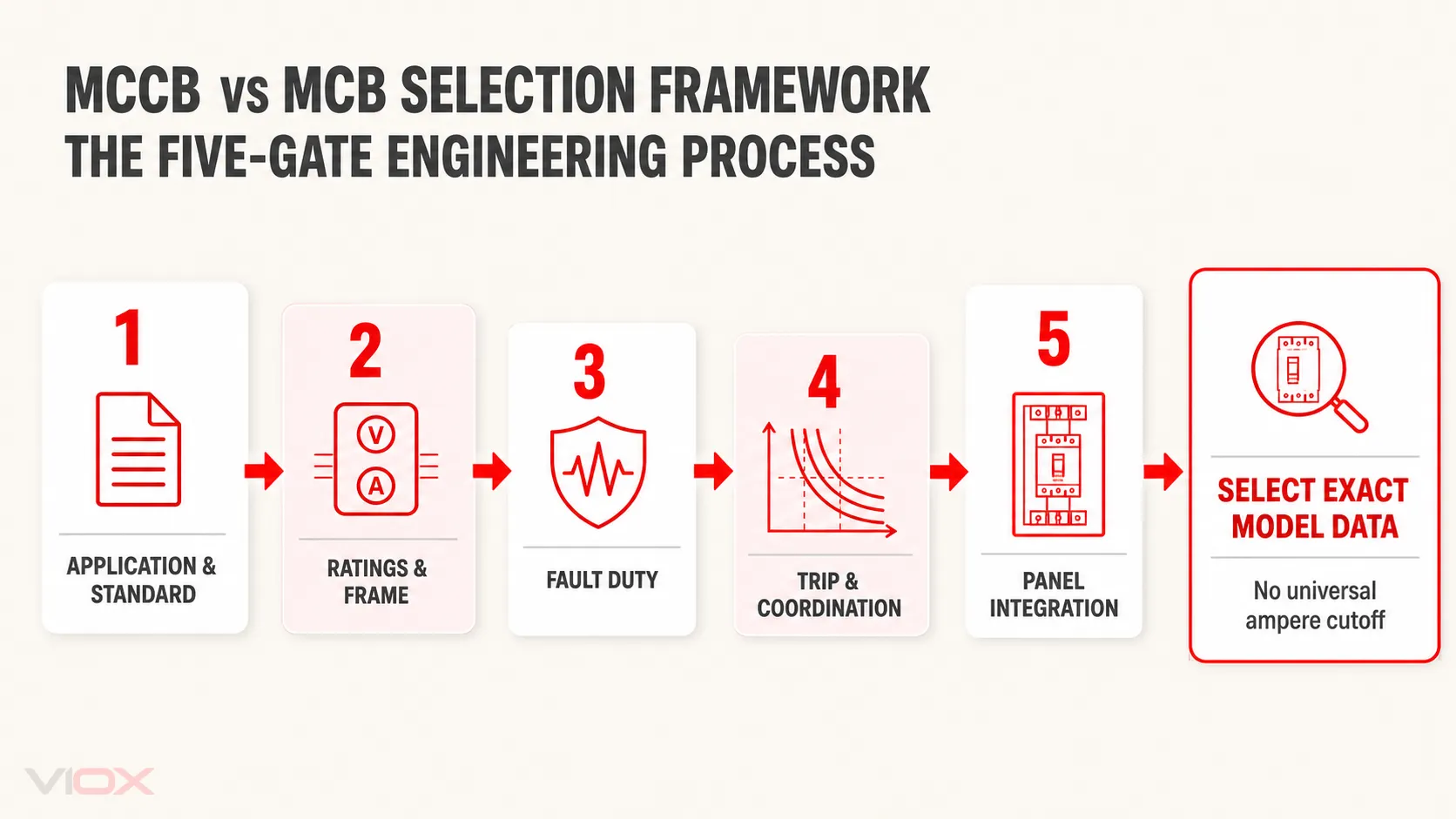
Κριτήριο 1: Εφαρμογή και πρότυπο
Προσδιορίστε τον ρόλο του κυκλώματος και την αγορά-στόχο:
- οικιακό ή παρόμοιο τελικό κύκλωμα;
- εμπορικό κύκλωμα διανομής;
- βιομηχανική γραμμή τροφοδοσίας;
- κύκλωμα μηχανήματος ή εξοπλισμού;
- κύρια συσκευή εισόδου;
- εφαρμογή κλάδου ή γραμμής τροφοδοσίας στη Βόρεια Αμερική;
- άλλη εγκατάσταση ειδική για τη δικαιοδοσία.
Στη συνέχεια, προσδιορίστε το πρότυπο προϊόντος και την πιστοποίηση ή έγκριση που απαιτείται από το έργο. Μην επιλέγετε πρώτα ένα όνομα οικογένειας προϊόντων για να προσπαθήσετε να δικαιολογήσετε το πρότυπο εκ των υστέρων.
Πύλη 2: Τάση, ρεύμα, αγωγός και πλαίσιο
Καταγραφή:
- τάση συστήματος, συχνότητα και διάταξη AC/DC;
- αριθμός πόλων και διαχείριση ουδετέρου·;
- σχεδιασμός και συνεχές ρεύμα·;
- υλικό αγωγού, διατομή, μέθοδος εγκατάστασης και διορθωμένη ικανότητα μεταφοράς ρεύματος·;
- διαθέσιμος χώρος πίνακα και σύστημα τοποθέτησης·;
- συνθήκες περιβάλλοντος και περιβλήματος.
Απορρίψτε κάθε υποψήφιο του οποίου οι δημοσιευμένες ονομαστικές τιμές ή η φυσική ενσωμάτωση δεν αντιστοιχούν.
Πύλη 3: Προοπτικό ρεύμα βραχυκύκλωσης
Λάβετε το προοπτικό ρεύμα σφάλματος στο σημείο εγκατάστασης. Επαληθεύστε την ονομαστική τιμή βραχυκύκλωσης του υποψήφιου αυτόματου διακόπτη στην πραγματική τάση του ηλεκτρικού συστήματος και σύμφωνα με το ισχύον πρότυπο.
Όπου χρησιμοποιείται επιλεκτικότητα, εφεδρική προστασία ή συνδυασμός με ονομαστική τιμή σειράς, απαιτείται ο ακριβής ελεγμένος συνδυασμός του κατασκευαστή. Μην δημιουργείτε συνδυασμό βασιζόμενοι σε υποθέσεις για δύο ξεχωριστά προϊόντα.
Πύλη 4: Απαιτήσεις ενεργοποίησης και συντονισμού
Ορισμός:
- απαίτηση προστασίας από υπερφόρτιση;
- απαίτηση στιγμιαίας απόκρισης ή καμπύλης;
- ρεύμα εκκίνησης και ρεύμα εισόδου;
- απαιτούμενο παράθυρο επιλεκτικότητας;
- ανάγκη για καθυστέρηση βραχείας διάρκειας;
- ανάγκη για λειτουργίες προστασίας από σφάλμα γείωσης και υπερένταση;
- απαιτούμενη παρακολούθηση ή επικοινωνία;
- εξουσιοδότηση ρυθμίσεων και διαδικασία θέσης σε λειτουργία.
Εάν ένας αυτόματος διακόπτης MCB με σταθερά χαρακτηριστικά ολοκληρώνει την εργασία, ένας ρυθμιζόμενος MCCB ενδέχεται να μην προσθέτει καμία χρήσιμη αξία. Εάν το κύκλωμα χρειάζεται ρυθμιζόμενες ή ηλεκτρονικές λειτουργίες που δεν είναι διαθέσιμες στη σειρά MCB, ένας MCCB καθίσταται η ισχυρότερη επιλογή.
Πύλη 5: Τερματισμοί, εξαρτήματα και μοντέλο συντήρησης
Επιβεβαιώστε:
- συμβατότητα ακροδεκτών και αγωγών;
- εγκεκριμένο σύστημα ζυγοσταθμών ή ακροδεκτών;
- συμβατότητα τοποθέτησης και περιβλήματος;
- απαιτούμενες βοηθητικές λειτουργίες και λειτουργίες ελέγχου·;
- απαιτήσεις απομόνωσης και ένδειξης·;
- περιβαλλοντικές ονομαστικές τιμές·;
- απαιτήσεις δοκιμών, τεκμηρίωσης, αντικατάστασης και ανταλλακτικών.
Μόνο αφού περάσουν και οι πέντε πύλες, η τιμή και οι όροι του προμηθευτή θα πρέπει να καθορίζουν την επιλογή μεταξύ των συμβατών υποψηφίων.
Τρία παραδείγματα επιλογής
Παράδειγμα 1: Συμπαγές τελικό κύκλωμα
Ένα τελικό κύκλωμα σε οικιακή ή παρόμοια εγκατάσταση διαθέτει κατάλληλη διορθωμένη ικανότητα μεταφοράς ρεύματος αγωγού, γνωστό αναμενόμενο ρεύμα βραχυκύκλωσης εντός της δηλωμένης ικανότητας της υποψήφιας συσκευής και δεν απαιτεί ρυθμιζόμενη προστασία ή εκτεταμένα εξαρτήματα.
Πιθανή κατεύθυνση: ένας κατάλληλα πιστοποιημένος και ονομαστικά χαρακτηρισμένος MCB. Επαληθεύστε το ακριβές πρότυπο, την τάση, την ονομαστική ένταση ρεύματος, την καμπύλη, τους πόλους, την ικανότητα βραχυκύκλωσης και τη συμβατότητα με τον πίνακα διανομής.
Παράδειγμα 2: Τροφοδοτική γραμμή βιομηχανικής διανομής
Μια τροφοδοτική γραμμή τροφοδοτεί έναν πίνακα με υψηλότερο επίπεδο σφάλματος και απαιτεί ρυθμιζόμενη απόκριση μακράς διάρκειας και στιγμιαία απόκριση, συντονισμό με τις κατάντη συσκευές, βοηθητικές επαφές κατάστασης και περιστροφικό μηχανισμό λειτουργίας.
Πιθανή κατεύθυνση: ένας MCCB με το απαιτούμενο πλαίσιο, τη μονάδα απελευθέρωσης, τις ονομαστικές τιμές διακοπής, τα παρελκόμενα και τα δεδομένα συντονισμού του κατασκευαστή.
Παράδειγμα 3: Η ζώνη επικάλυψης
Ένα βιομηχανικό κύκλωμα 63 A θα μπορούσε ενδεχομένως να χρησιμοποιήσει έναν αρθρωτό αυτόματο διακόπτη ή έναν MCCB μικρού πλαισίου. Η ονομαστική ένταση ρεύματος από μόνη της δεν καθορίζει την επιλογή.
Ελέγξτε εάν το έργο απαιτεί IEC 60898-1, IEC 60947-2, UL 489 ή άλλη έγκριση· συγκρίνετε το φορτίο σφάλματος, τις λειτουργίες απελευθέρωσης, τους ακροδέκτες, τον συντονισμό, τα παρελκόμενα και την κατασκευή του πίνακα. Η σωστή απάντηση μπορεί να είναι ένας αρθρωτός αυτόματος διακόπτης IEC 60947-2, ένας MCCB σταθερής απελευθέρωσης ή ένας ρυθμιζόμενος MCCB, ανάλογα με αυτές τις παραμέτρους.
Λίστα ελέγχου προδιαγραφών MCB έναντι MCCB
Πριν ζητήσετε προσφορά ή εγκρίνετε έναν αυτόματο διακόπτη, παρέχετε:
- τη χώρα προορισμού και το απαιτούμενο πρότυπο ή πιστοποίηση;
- την εφαρμογή και τον ρόλο του κυκλώματος;
- τάση συστήματος, συχνότητα και διάταξη AC/DC;
- το ρεύμα σχεδιασμού και το προφίλ φορτίου;
- πληροφορίες για τον αγωγό και τον ακροδέκτη;
- το αναμενόμενο ρεύμα βραχυκύκλωσης στο σημείο εγκατάστασης;
- την απαιτούμενη ορολογία και τιμή ικανότητας διακοπής;
- χαρακτηριστική απόζευξης ή απαιτούμενες ρυθμιζόμενες λειτουργίες;
- μοντέλα διατάξεων ανάντη και κατάντη για τον συντονισμό;
- πόλοι και διαχείριση ουδετέρου;
- σύστημα τοποθέτησης και ερμαρίου;
- απαιτούμενες απελευθερώσεις, επαφές, μηχανισμοί, αλληλομανδαλώσεις, παρακολούθηση ή επικοινωνία;
- περιβαλλοντικές συνθήκες και συνθήκες απομείωσης ισχύος.
Για μια πλήρη ροή εργασίας προδιαγραφών MCCB, χρησιμοποιήστε το Οδηγός Επιλογής MCCB.
Συχνές Ερωτήσεις
Ποια είναι η κύρια διαφορά μεταξύ ενός MCB και ενός MCCB;
Ένας MCB είναι συνήθως ένας συμπαγής αρθρωτός αυτόματος διακόπτης που χρησιμοποιείται για τελικά κυκλώματα με δημοσιευμένα σταθερά χαρακτηριστικά. Ένας MCCB παρέχει συνήθως μεγαλύτερο χυτό πλαίσιο και ευρύτερες επιλογές για ρεύμα, απόδοση διακοπής, μονάδες απόζευξης, συντονισμό, ακροδέκτες και εξαρτήματα. Οι ακριβείς δυνατότητες εξαρτώνται από τη σειρά προϊόντων και το πρότυπο.
Είναι ένας MCCB καλύτερος από έναν MCB;
Όχι. Ένας MCCB είναι πιο ικανός σε ορισμένες διαστάσεις, αλλά δεν αποτελεί αυτόματα την καλύτερη επιλογή. Εάν ένας συμβατός MCB ικανοποιεί τις απαιτήσεις τάσης, ρεύματος, ικανότητας διακοπής σφάλματος, απόζευξης, συντονισμού και εγκατάστασης, η συμπαγής μορφή του μπορεί να είναι πιο κατάλληλη.
Σε ποιο ρεύμα πρέπει να αλλάξω από MCB σε MCCB;
Δεν υπάρχει καθολικό ρεύμα μετάβασης. Οι σειρές προϊόντων αλληλοεπικαλύπτονται. Χρησιμοποιήστε τις πέντε πύλες επιλογής αντί για έναν σταθερό κανόνα 63 A, 100 A ή 125 A.
Μπορεί ένας MCCB να αντικαταστήσει έναν MCB;
Όχι ως άμεση αντικατάσταση. Η αντικατάσταση πρέπει να ελεγχθεί ως προς το πρότυπο και την έγκριση, την τάση, το ρεύμα, την προστασία αγωγών, την ονομαστική ικανότητα διακοπής, τα χαρακτηριστικά απόζευξης, τον συντονισμό, τη στήριξη, τους ακροδέκτες, το περίβλημα και τα παρελκόμενα.
Ποιος αυτόματος διακόπτης χρησιμοποιείται ως κεντρικός αυτόματος διακόπτης;
Οποιαδήποτε οικογένεια μπορεί να εμφανιστεί σε ρόλο εισερχόμενης παροχής εντός των δηλωμένων δυνατοτήτων της και των ισχυόντων κανόνων εγκατάστασης. Οι MCCB είναι συνηθισμένοι για μεγαλύτερες διανομές και τροφοδοσίες, αλλά ο όρος “κεντρικός αυτόματος διακόπτης” από μόνος του δεν προσδιορίζει το σωστό προϊόν.
Παρέχει ένας MCCB προστασία από διαρροή ρεύματος προς τη γη;
Μόνο εάν το συγκεκριμένο προϊόν και το σύστημα απόζευξης παρέχουν δηλωμένη λειτουργία σφάλματος γείωσης ή υπολειπόμενου ρεύματος. Η συνήθης προστασία από υπερένταση δεν υποκαθιστά έναν RCCB ή RCBO όπου απαιτείται προστασία από υπολειπόμενο ρεύμα. Δείτε το σύγκριση MCB, MCCB, RCD, RCCB και RCBO για τα όρια της λειτουργίας προστασίας.
Σύγκριση δημοσιευμένων οικογενειών προϊόντων
Μετά τον καθορισμό των πέντε παραμέτρων επιλογής, συγκρίνετε τα δημοσιευμένα Σειρά μικροαυτομάτων VIOX και σειρά VIOX MCCB. Η τελική επιλογή πρέπει να βασίζεται στην τεκμηρίωση του συγκεκριμένου μοντέλου και στις απαιτήσεις της εγκατάστασης προορισμού.
Πηγές
- IEC 60898-1:2015+AMD1:2019
- IEC 60947-2:2024
- UL Solutions: Οδηγός σήμανσης και εφαρμογής αυτόματων διακοπτών σε χυτή θήκη (Molded Case Circuit Breakers)
- UL Solutions: Υπηρεσίες αυτόματων διακοπτών και συμπληρωματικών προστατευτικών διατάξεων
- Οδηγός ηλεκτρικής εγκατάστασης Schneider Electric: Συντονισμός μεταξύ αυτόματων διακοπτών