

Na této stránce
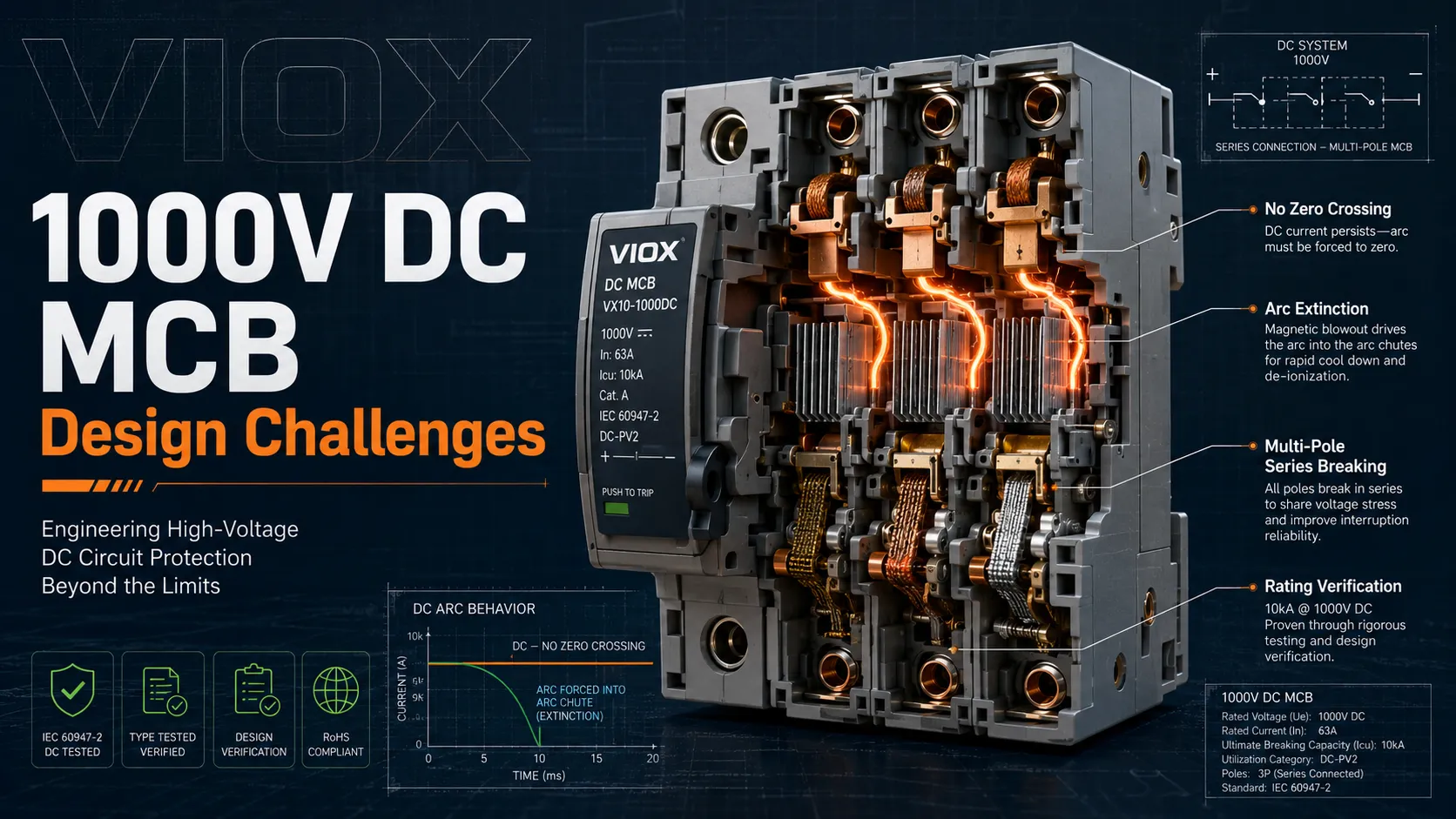
Vysokonapěťové stejnosměrné miniaturní jističe vypadají zvenčí jednoduše, ale ve skutečnosti 800V nebo 1000V DC MCB není jen střídavý jistič s novým štítkem. Hlavní výzvou je, že stejnosměrný proud nemá přirozený průchod nulou. Jakmile mezi rozepnutými kontakty vznikne stejnosměrný oblouk, může hořet dále, pokud jistič nenutí proud k nule pomocí obloukového napětí, magnetického vyfukování, dělení oblouku, obnovy izolace a synchronizovaného rozepnutí kontaktů.
Proto je obtížné navrhnout spolehlivé 1000V DC jističe a proto jmenovité hodnoty vytištěné na krytu nestačí. Kupující a výrobci rozvaděčů musí ověřit skutečnou vypínací schopnost pro stejnosměrný proud, způsob zapojení pólů, požadavky na polaritu, zkušební normu a certifikační dokumenty podle přesného čísla modelu.
Pokud potřebujete nejprve základní vysvětlení zařízení, začněte s Co je to DC jistič?. Tento článek se zaměřuje na problémy návrhu a ověřování za jmenovitými hodnotami vysokonapěťových DC jističů.
Rychlá odpověď
A 1000V DC MCB je obtížné navrhnout, protože stejnosměrný poruchový proud přirozeně neprochází nulou jako střídavý proud. Pro bezpečné přerušení vysokonapěťového stejnosměrného poruchového proudu musí jistič vytvořit dostatečné obloukové napětí a dielektrickou obnovu prostřednictvím několika kontaktních mezer, magnetického pohybu oblouku, zhášecích komor, žáruvzdorných materiálů a dostatečných izolačních vzdáleností.
Mnoho kompaktních vysokonapěťových stejnosměrných jističů (MCB) spoléhá na několik pólů zapojených do série pro rozdělení stejnosměrného napětí a vytvoření několika bodů přerušení oblouku. U jednopólového nebo nízkonapěťového stejnosměrného jističe nelze předpokládat, že je vhodný pro 800V nebo 1000V DC jen proto, že je takto označen na krytu.
Nejbezpečnější pravidlo pro nákup:
Nedůvěřujte pouze štítku 1000V DC. Ověřte si technický list, schéma zapojení, vypínací schopnost při stejnosměrném proudu, označení polarity, zkušební protokol, číslo modelu certifikátu a schopnost výrobce provádět stejnosměrné testy.
Proč se vypínání vysokonapěťového stejnosměrného proudu liší od vypínání střídavého proudu
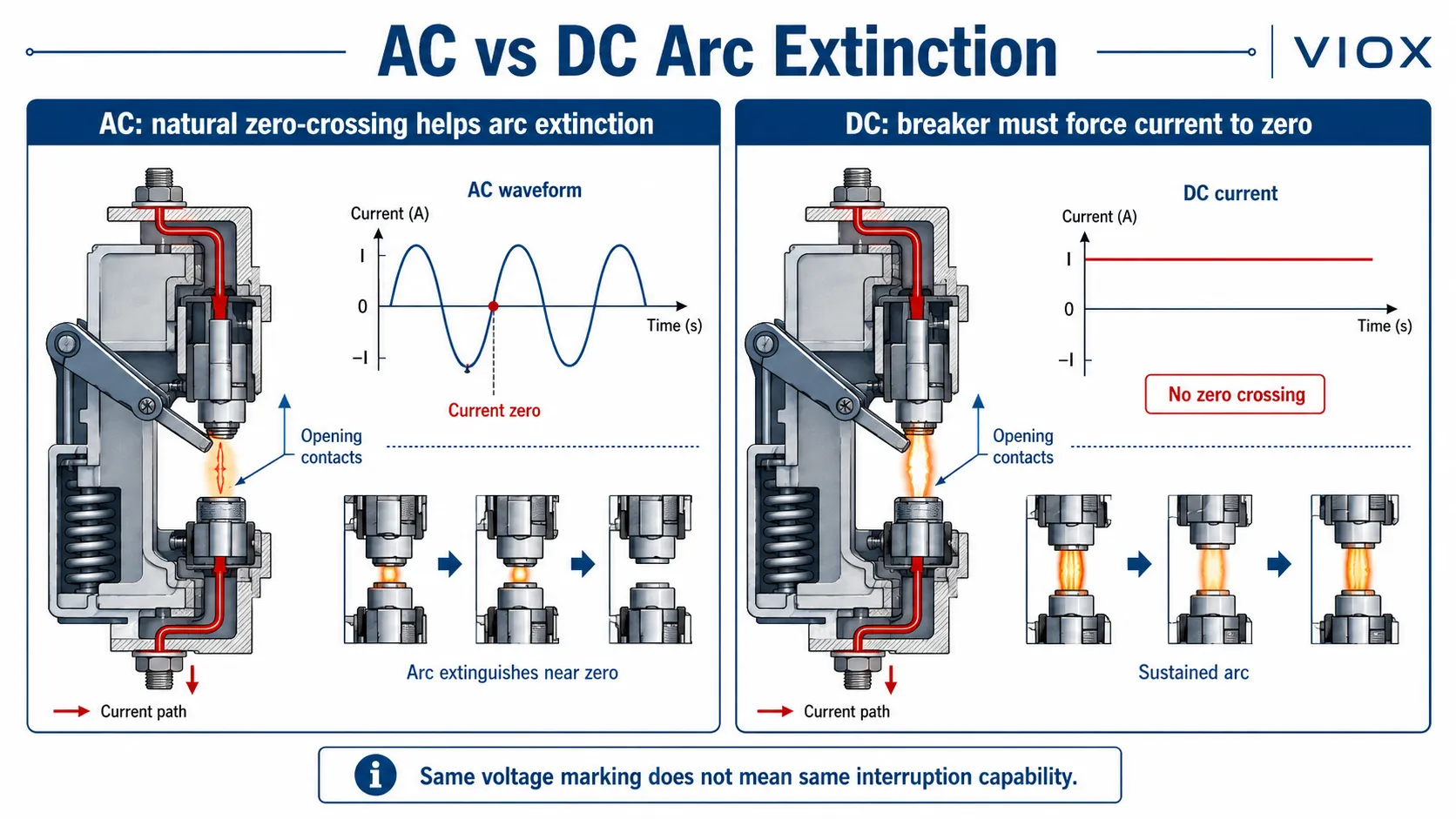
Střídavý proud prochází nulou každou půlperiodu. V systému 50 Hz proud protne nulu 100krát za sekundu. V systému 60 Hz ji protne 120krát za sekundu. Tento přirozený průchod nulou pomáhá uhasit oblouk po rozpojení kontaktů.
Stejnosměrný proud tuto výhodu neposkytuje. Jakmile se kontakty rozpojí, oblouk může zůstat stabilní tak dlouho, dokud jej napětí obvodu a dostupný proud udrží.
| Položka | Jistič AC | Vysokonapěťový DC jistič (MCB) |
|---|---|---|
| Průchod proudu nulou | Ano, každou půlperiodu | Žádný přirozený průchod nulou |
| Mechanická odolnost | Podpořeno přirozeným průchodem proudu nulou | Musí být vynuceno konstrukcí jističe |
| Riziko trvání oblouku | Nižší u stejné kompaktní konstrukce | Vyšší, pokud zhášecí komora není navržena pro stejnosměrný proud (DC) |
| Citlivost na polaritu | Obvykle není závislé na polaritě | Může být citlivé na polaritu v závislosti na konstrukci magnetického vyfukování |
| Škálování napětí | Jmenovité hodnoty AC nelze přímo převést na DC | Musí být testováno při skutečném stejnosměrném napětí a poruchovém proudu |
Z praktického hlediska se zhášení střídavého oblouku může částečně spoléhat na průběh vlny. Přerušení stejnosměrného proudu se musí spoléhat na hardware.
Proč stejnosměrný jistič (MCB) na 1000 V potřebuje vyšší obloukové napětí
Když jistič (MCB) vypne při poruchovém proudu, mezi rozpojujícími se kontakty vznikne elektrický oblouk. Jistič musí způsobit, aby bylo udržení tohoto oblouku stále obtížnější, dokud proud neklesne na nulu a mezera mezi kontakty nedokáže odolat obnovenému napětí.
Pro přerušení stejnosměrného proudu musí zhášecí komora vytvořit dostatečné protilehlé obloukové napětí a chladicí účinek, aby překonala schopnost obvodu udržovat průtok proudu.
Proto vysokonapěťové stejnosměrné jističe často využívají:
- rychlé rozpojení kontaktů
- magnetické vyfukování
- obloukové rohy (vodicí lišty oblouku)
- zhášecí komory
- několik sériově řazených kontaktů
- dlouhé povrchové cesty a vzdušné vzdálenosti
- žáruvzdorné materiály pouzdra
- řízené cesty odvodu plynů
Přesné požadované napětí oblouku závisí na systémovém napětí, dostupném poruchovém proudu, časové konstantě obvodu, geometrii kontaktů, konstrukci zhášecí komory a zkušebních podmínkách. Nemělo by se odvozovat pouze z vytištěného štítku.
Problém kompaktních jističů (MCB)
Přerušení 1000V DC je již samo o sobě obtížné. Provést to uvnitř kompaktního těla jističe na DIN lištu je mnohem náročnější.
Velké stejnosměrné rozváděčové zařízení má více fyzického prostoru pro dráhu kontaktů, délku oblouku, izolační bariéry, cesty pro odvod plynů a tepelnou kapacitu. Modulární jistič (MCB) má velmi omezený objem. To vytváří přímý konstrukční konflikt:
Vyšší stejnosměrné napětí -> vyšší energie oblouku a nároky na izolaciTo je důvod, proč platformu střídavého jističe nebo nízkonapěťového stejnosměrného jističe nelze jednoduše “povýšit” změnou štítku. Vnitřní zhášecí systém, struktura kontaktů, izolační vzdálenosti, materiál obalu a koordinace pólů vyžadují validaci.
Konstrukce zhášecí komory: magnetické vyfukování, zhášecí plechy a odvod plynů
Zhášecí komora je srdcem stejnosměrného jističe. Jejím úkolem je pohybovat obloukem, natahovat jej, dělit, ochlazovat a hasit.
Magnetické přefukování
Mnoho stejnosměrných jističů využívá permanentní magnety nebo magnetické struktury k vhánění oblouku do zhášecí komory. Oblouk vede proud a tento proud interaguje s magnetickým polem. Při správném návrhu síla vytlačí oblouk od kontaktů směrem ke zhášecím plechům.
Problémem je, že magnetické vyfukování může být závislé na polaritě. Pokud je jistič citlivý na polaritu zapojen obráceně, může být oblouk vytlačen špatným směrem, pryč od zhášecí komory namísto do ní.
Proto je označení polarity na stejnosměrných jističích důležité.
Pro hlubší vysvětlení tohoto problému viz Průvodce polaritou DC jističů.
Zhášecí komory (dělicí plechy)
Zhášecí plechy rozdělují jeden dlouhý oblouk na několik kratších. Každý segment oblouku přispívá k úbytku napětí a ochlazování. Vyšší stejnosměrné napětí obecně vyžaduje účinnější segmentaci oblouku, delší dráhu oblouku nebo více přerušovacích mezer zapojených do série.
Počet, tvar, rozestupy a materiál zhášecích plechů nejsou dekorativní detaily. Určují, zda oblouk vstoupí do komory, správně se rozdělí, dostatečně rychle ochladí a zda nedojde k opětovnému zapálení.
Odvod plynů a deionizace
Při přerušení stejnosměrné poruchy vytváří oblouk horký ionizovaný plyn. Pokud pouzdro nedokáže tento plyn kontrolovat, může dojít k přeskoku mezi póly, karbonizaci plastu nebo selhání izolace po přerušení.
Skutečný vysokonapěťový DC jistič (MCB) musí zvládat:
- směr proudění obloukových plynů
- uvolnění tlaku
- izolační bariéry
- oddělení pólů
- odolnost krytu proti karbonizaci
- chlazení zhášecí komory
- dielektrická obnova po oblouku
To je jeden z důvodů, proč levné kopie mohou vypadat navenek podobně, ale při skutečných zkouškách zkratem selžou.
Proč je často vyžadováno vícepólové sériové vypínání
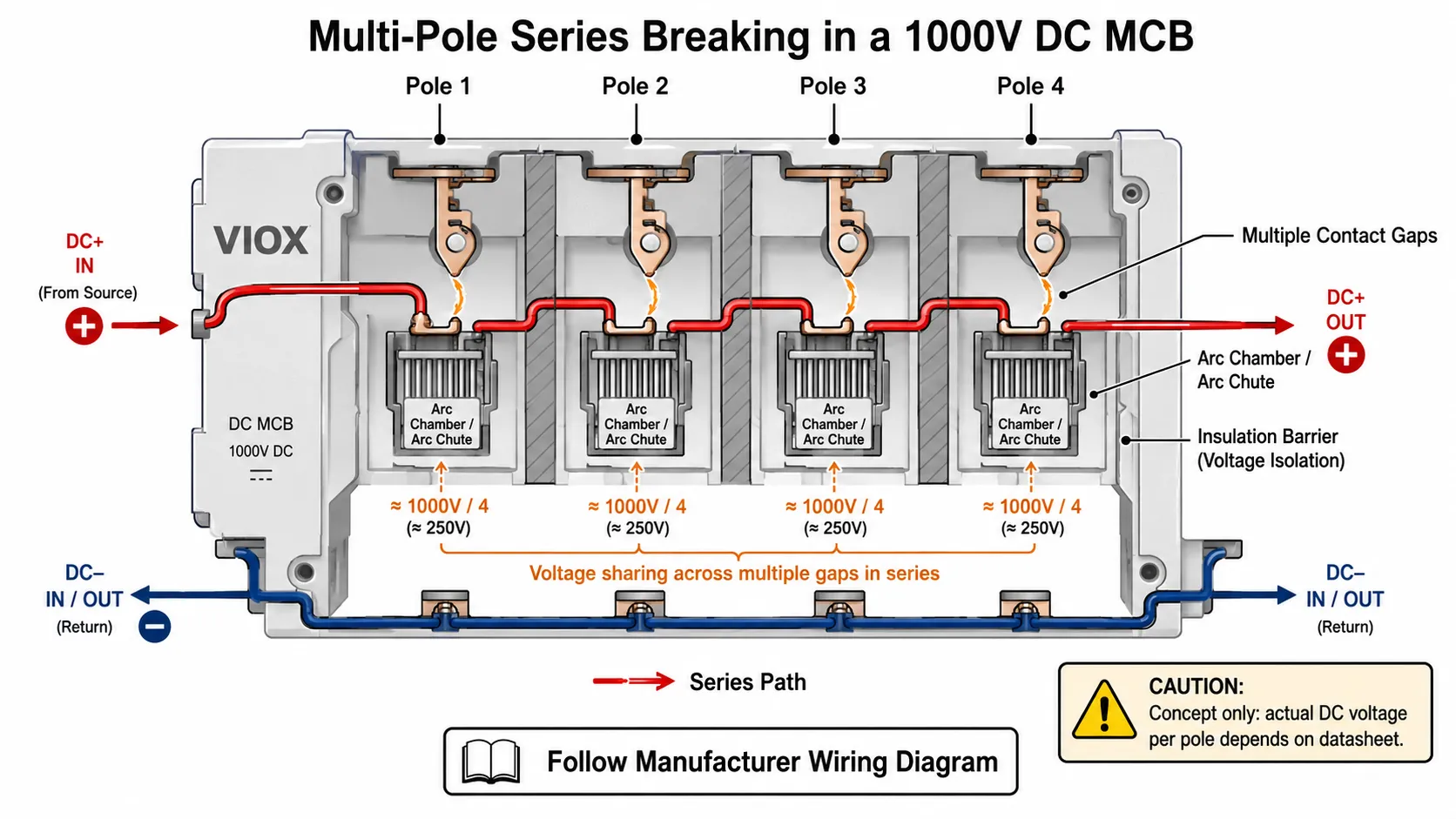
Mnoho konstrukcí 800V a 1000V DC jističů spoléhá na několik pólů zapojených do série. Myšlenkou je vytvořit několik kontaktních mezer a zhášecích komor, které rozdělí napětí a zvýší schopnost zhášení oblouku.
Zjednodušené čtyřpólové sériové uspořádání může vypadat takto:
DC+ -> Pól 1 -> Pól 2 -> Zátěž -> Pól 3 -> Pól 4 -> DC-nebo jinou výrobcem definovanou sériovou cestu v závislosti na produktu.
Důležitým bodem není přesné uspořádání výše. Důležité je, že jmenovité stejnosměrné napětí může záviset na požadovaném schématu zapojení pólů.
Proč na tom záleží
Jistič může mít jmenovité hodnoty:
- 250 V DC na jeden pól
- 500 V DC při zapojení dvou pólů do série
- 1000 V DC při zapojení čtyř pólů do série
Tato čísla jsou příklady logiky dimenzování, nikoliv univerzální hodnoty. Skutečné jmenovité hodnoty musí vycházet z technického listu.
Pokud kupující nainstaluje pouze jeden pól jističe, který vyžaduje pro 1000 V DC zapojení čtyř pólů do série, instalace není při uvedeném napětí chráněna. Jeden pól může být nucen přerušit napětí, pro jehož přerušení nebyl nikdy testován.
Synchronizace pólů a mechanická koordinace
Vícepólové sériové vypínání představuje další výzvu: póly se musí otevírat společně, rychle a konzistentně.
Pokud se jeden pól otevře pozdě nebo pokud na mezeře kontaktu nevznikne obloukové napětí, mohou být zbývající póly vystaveny vyššímu napěťovému namáhání, než bylo zamýšleno. To může vést k opětovnému zapálení oblouku, přeskoku, svaření kontaktů nebo poškození krytu.
Konstrukce vysoce kvalitního stejnosměrného jističe (DC MCB) musí koordinovat:
- ovládací mechanismus páčky
- sílu pružiny
- uvolnění západky
- dráhu pohyblivého kontaktu
- časování mezi póly
- vstup do zhášecí komory (arc runner)
- tepelná a magnetická vybavovací charakteristika
- mechanická odolnost po opakovaném provozu
Toto není snadné ověřit při sériové výrobě. Výrobek nesmí projít pouze jedním demonstračním testem; musí být vyráběn konzistentně.
Kontaktní materiál a oblouková eroze
Vysokonapěťové stejnosměrné oblouky jsou na kontakty náročné. Ve srovnání s mnoha střídavými vypínacími úkoly může stejnosměrný oblouk trvat déle, protože neexistuje přirozený průchod nulou.
Konstrukce kontaktů musí zvládat:
- kontaktní odpor
- oteplení při trvalém proudu
- obloukovou erozi během vypínání
- odolnost proti svaření kontaktů
- přenos materiálu
- mechanické opotřebení
- dielektrická obnova po přerušení
Běžné kontaktní struktury používané v nízkonákladových střídavých (AC) jističích MCB nemusí odolat opakovanému přerušování stejnosměrného (DC) proudu s vysokou energií. Produkty pro vysokonapěťové stejnosměrné obvody často vyžadují geometrii kontaktů, přítlak a materiály kontaktů zvolené specificky pro namáhání stejnosměrným elektrickým obloukem.
Přesné složení slitiny a tloušťka jsou konstrukční volbou výrobce. Kupující nemusí znát složení kontaktního materiálu, ale potřebují důkaz, že daná produktová řada byla testována na deklarované stejnosměrné napětí a vypínací schopnost.
Výzvy v oblasti povrchových cest, vzdušných vzdáleností a izolace pouzdra
Při napětí 800 V nebo 1000 V DC se návrh izolace stává zásadním problémem. Jistič musí zabránit přeskoku elektrického oblouku:
- mezi rozpojenými kontakty
- mezi póly
- od živých částí k montážním plochám
- od svorek k částem krytu
- poté, co obloukové plyny kontaminovaly vnitřní povrchy
Mezi důležité konstrukční faktory patří:
- povrchová cesta
- vzdušná vzdálenost
- stupeň znečištění
- odolnost materiálu proti plazivým proudům
- vnitřní žebra a přepážky
- rozteč svorek
- cesta výfuku oblouku
- odolnost pouzdra proti hoření
Pro širší vysvětlení izolačních vzdáleností viz příručku společnosti VIOX k povrchová cesta vs. vzdušná vzdálenost.
Klíčový bod: jmenovité napětí 1000 V DC není jen o zhášecí komoře. Vyžaduje také, aby pouzdro a izolační struktura odolaly napětí před přerušením, během něj i po něm.
Stejnosměrné jističe (MCB) citlivé na polaritu vs. nepolarizované
Některé stejnosměrné jističe jsou citlivé na polaritu. Spoléhají na magnetické zhášení uspořádané pro konkrétní směr proudu. Pokud jsou zapojeny obráceně, oblouk se může pohybovat mimo zhášecí komoru a nemusí být správně uhašen.
Jiné stejnosměrné jističe jsou navrženy jako nepolarizovaná nebo obousměrná zařízení, která využívají zhášecí struktury schopné přerušit proud v obou směrech, pokud jsou zapojeny v souladu s technickým listem.
Toto rozlišení je důležité u:
- PV slučovacích boxů
- systémy pro ukládání energie z baterií
- obousměrných bateriových obvodů
- sekcí stejnosměrného nabíjení elektromobilů
- systémů s možným zpětným proudem
Nepředpokládejte, že “DC” automaticky znamená obousměrný. Zkontrolujte:
- označení polarity
- schéma zapojení
- štítky kladného/záporného pólu
- tvrzení o obousměrnosti nebo nepolarizovanosti
- testované napětí a vypínací schopnost v obou směrech, je-li vyžadováno
Pro fotovoltaické a akumulační systémy, kde může dojít ke zpětnému proudu, je článek VIOX o důvodech použití nepolarizovaných stejnosměrných miniaturních jističů ve fotovoltaických akumulačních systémech přirozeným pokračováním.
Proč jsou falešné nebo slabé jmenovité hodnoty 1000V DC nebezpečné
Pochybný jmenovitý výkon 1000V DC jističe (MCB) není jen problémem dokumentace. Může se stát příčinou požáru a elektrického oblouku.
Mezi běžné vzorce slabého dimenzování patří:
- Pouzdro AC jističe (MCB) znovu použité s označením DC 1000V
- chybějící jasná vypínací schopnost při stejnosměrném napětí
- chybějící schéma zapojení pólů v sérii
- chybějící označení polarity u konstrukce citlivé na polaritu
- číslo modelu v certifikátu neodpovídající prodávanému výrobku
- napětí vytištěné na krytu, které však chybí v technickém listu
- uvedena jsou pouze data o dielektrické pevnosti, nikoliv data o přerušení stejnosměrného zkratového proudu
- chybí důkaz o testování při deklarovaném napětí a poruchovém proudu
Nejzávažnější chybou je záměna výdržné napětí s vypínací poruchový proud. Jistič, který projde dielektrickou zkouškou, není automaticky schopen přerušit stejnosměrný zkrat o napětí 1000 V.
Jak ověřit skutečný 1000V DC jistič (MCB)
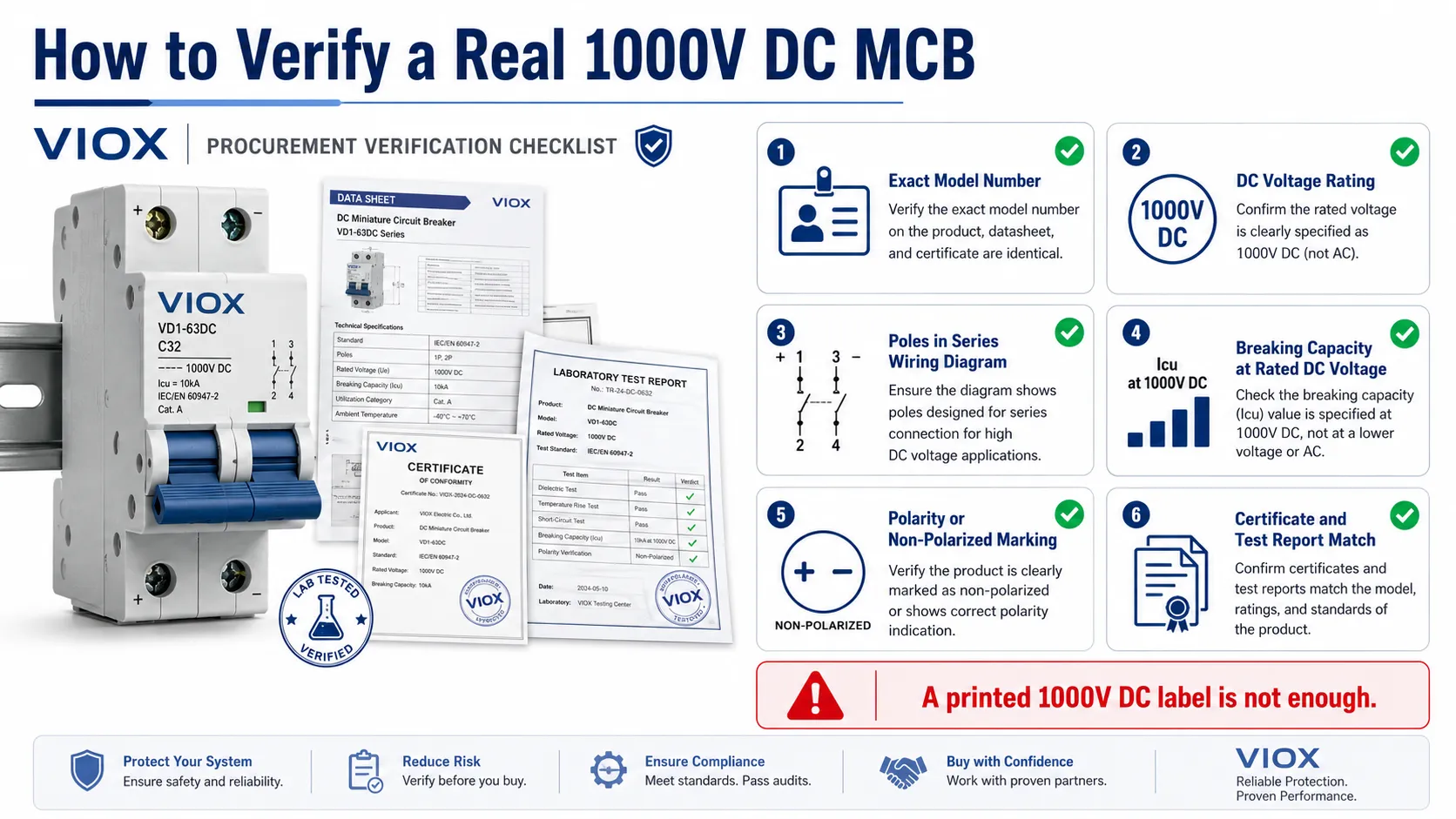
Použijte tento kontrolní seznam před schválením vysokonapěťového stejnosměrného jističe (DC MCB) pro fotovoltaiku, bateriové systémy nebo stejnosměrné rozvody.
| Položka ověření | Co zkontrolovat | Proč na tom záleží |
|---|---|---|
| Přesné číslo modelu | Shoda certifikátu, technického listu a štítku produktu | Prevence vypůjčení certifikátu z jiné řady |
| Jmenovité stejnosměrné napětí | Uvedeno jako stejnosměrné napětí, nikoliv pouze střídavé | Jmenovité střídavé napětí nedokazuje schopnost přerušení stejnosměrného proudu |
| Napětí na pól | Zda jmenovitá hodnota vyžaduje zapojení 1P, 2P, 3P nebo 4P do série | Zabraňuje poddimenzovaným instalacím na 1000 V |
| Schéma zapojení | Výrobce uvádí požadované sériové zapojení | Jmenovité stejnosměrné napětí může záviset na zapojení pólů |
| Vypínací schopnost | Icu/Ics nebo jmenovitá zkratová vypínací schopnost při stejnosměrném napětí | Potvrzuje skutečnou schopnost přerušení poruchového proudu |
| Označení polarity | Citlivé na polaritu nebo bez polarizace | Zabraňuje chybnému zapojení při přepólování |
| Platná norma | IEC 60947-2, IEC 60898-2, UL 489B nebo jiná relevantní cesta dle trhu | Potvrzuje správný zkušební rámec |
| Údaje o oteplení | Výkon při trvalém proudu za stanovených podmínek | Zabraňuje přehřívání v slučovacích nebo bateriových skříních |
| Doklad o zkoušce zkratu | Zkušební protokol zahrnuje napětí, proud, časovou konstantu a model | Prokazuje vypínací schopnost |
| Způsobilost výrobce provádět stejnosměrné (DC) zkoušky | Interně nebo třetí stranou validované zkoušky vypínání stejnosměrného proudu | Snižuje riziko neověřených jmenovitých parametrů |
Nejlepší otázka, kterou lze položit dodavateli, není “Je to 1000V DC?” Lepší otázka zní:
Při jakém stejnosměrném napětí, s kolika póly v sérii, při jaké vypínací schopnosti, podle jaké normy a s jakým zkušebním protokolem?
Normy a cesty certifikace
Různé trhy využívají různé normy a cesty certifikace. Správný požadavek závisí na tom, kde bude produkt používán.
Běžné reference zahrnují:
- IEC 60947-2 pro nízkonapěťové jističe v průmyslových rozváděčích a řídicích zařízeních.
- IEC 60898-2 pro jističe pro nadproudovou ochranu v domovních a podobných instalacích pro střídavý a stejnosměrný provoz.
- UL 489B pro fotovoltaické stejnosměrné jističe v severoamerickém kontextu.
- Specifické požadavky projektu pro FV, BESS, nabíjení elektromobilů a sestavy stejnosměrných rozvodů.
Nepředpokládejte, že jistič testovaný podle jedné normy je automaticky přijat na každém trhu. Seriózní dodavatel by měl být schopen vysvětlit, která norma se vztahuje na konkrétní produkt a cílovou aplikaci.
Pro širší rámec výběru viz Jak vybrat správný DC jistič.
Proč jen málo výrobců dokáže vyrobit spolehlivé 800V/1000V DC jističe (MCB)
Výroba vysokonapěťových DC jističů je omezená, protože produkt vyžaduje několik schopností současně.
1. Schopnost návrhu obloukové komory pro DC
Výrobce musí rozumět pohybu oblouku, magnetickému zhášení, geometrii zhášecí komory, kontaktním materiálům a koordinaci mezi póly.
2. Konstrukce izolace a pouzdra
Pouzdro musí zajistit dostatečnou povrchovou cestu, vzdušnou vzdálenost, vnitřní bariéry a tepelnou odolnost pro vypínání vysokonapěťového stejnosměrného proudu.
3. Mechanická konzistence
Vypínací mechanismus musí zůstat konzistentní v rámci sériové výroby. Malé rozdíly v síle pružiny, zdvihu kontaktů nebo časování pólů mohou ovlivnit spolehlivost vypnutí.
4. Přístup k testování DC
Skutečné ověření vyžaduje testování vypínání stejnosměrného zkratového proudu při deklarovaném napětí a proudu. Samotná schopnost testování střídavého proudu (AC) nestačí.
5. Rozpočet na certifikaci a iterace
Testování a certifikace vysokonapěťového stejnosměrného proudu vyžadují specializované vybavení, testování třetí stranou, inženýrské iterace a opakované ověřování. Výrobci bez přístupu k odpovídající laboratoři nebo bez příslušného konstrukčního týmu mohou mít potíže s prokázáním spolehlivého vypínání.
Velikost trhu vs. náklady na vývoj
Poptávka po 1000V DC jističích (MCB) je vázána na specifické trhy, jako jsou fotovoltaika (PV), systémy skladování energie v bateriích (BESS) a vysokonapěťové stejnosměrné rozvody. Trh je hodnotný, ale užší než poptávka po běžných AC jističích. To ztěžuje investice pro společnosti zaměřené pouze na komoditní AC jističe.
Kde se 1000V DC jističe používají
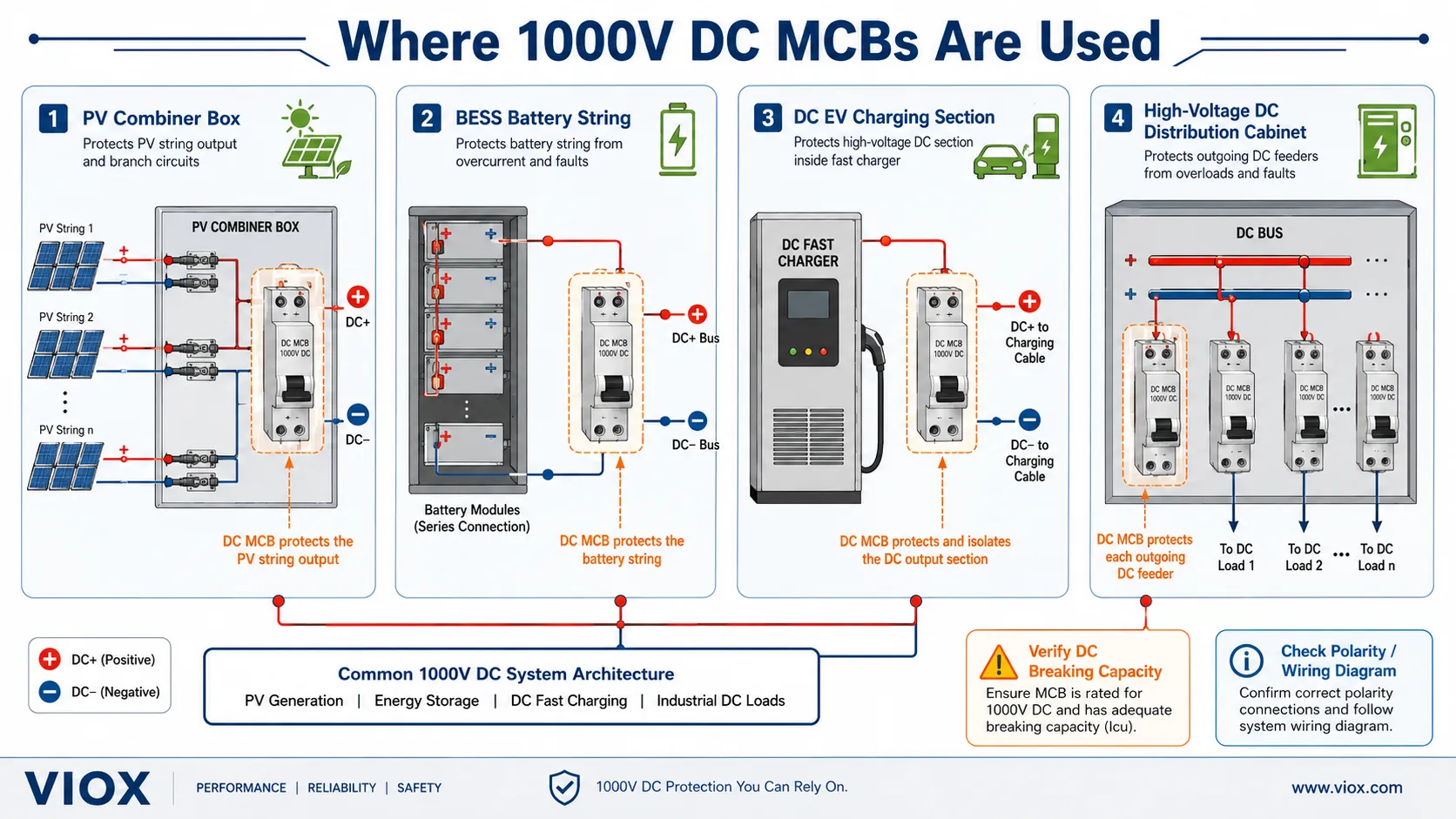
Vysokonapěťové DC jističe se obvykle nacházejí ve specializovaných systémech, nikoliv v běžných domovních instalacích.
Mezi běžné aplikace patří:
- PV slučovacích boxů
- DC vstupní obvody fotovoltaických střídačů
- řetězce bateriových úložišť energie
- pomocné DC rozvody systémů BESS
- sekcí stejnosměrného nabíjení elektromobilů
- vysokonapěťové stejnosměrné (DC) ovládací skříně
- průmyslová stejnosměrná (DC) distribuce
Ve fotovoltaických slučovacích boxech musí být DC jistič koordinován s napětím stringu, polaritou, chováním při zpětném proudu a dostupným poruchovým proudem. Pro kontext na úrovni systému viz Vysvětlení DC ochrany ve fotovoltaice: MCB, pojistky, SPD vs. RCD.
V systémech BESS se chování poruchového proudu může výrazně lišit od fotovoltaiky. K tomuto tématu viz Proč standardní DC jističe selhávají v BESS.
Varovné signály při nákupu
Buďte obezřetní, pokud uvidíte některý z těchto znaků:
- na krytu je vytištěno pouze “1000V DC” bez doprovodného technického listu
- žádná vypínací schopnost pro stejnosměrný proud (DC) při 1000 V
- chybí schéma zapojení pólů pro jmenovité napětí
- stejný model deklarován pro 250 V, 500 V, 800 V a 1000 V bez uvedení odlišných podmínek zapojení
- chybí informace o polaritě
- není uveden žádný zkušební standard
- certifikát patří k jinému modelu nebo výrobci
- technický list uvádí pouze údaje pro střídavý proud (AC)
- dodavatel není schopen odpovědět, zda musí být póly zapojeny do série
- Cena je mnohem nižší než u srovnatelných testovaných DC produktů.
Nízká cena není důkazem falešných parametrů, ale chybějící technická data jsou vážným varovným signálem.
ČASTO KLADENÉ DOTAZY
Proč je 1000V DC jistič (MCB) náročnější na výrobu než AC jistič?
Stejnosměrný proud nemá přirozený průchod nulou, takže oblouk sám nezhasne tak, jako je tomu u střídavého proudu. 1000V DC jistič musí vynutit zhasnutí oblouku pomocí rychlosti kontaktů, magnetického vyfukování, zhášecích komor, vícenásobných kontaktů, izolačního designu a testované schopnosti přerušení zkratového proudu.
Lze použít AC jistič pro 1000V DC?
Ne. AC jmenovité hodnoty nedokazují, že jistič dokáže přerušit vysokonapěťový stejnosměrný proud. Používejte pouze jistič, který je výslovně dimenzován a testován pro dané DC napětí, proud, polaritu a vypínací schopnost.
Proč některé 1000V DC jističe používají čtyři póly?
Mnoho kompaktních DC jističů využívá zapojení více pólů do série, čímž vzniká několik kontaktních mezer a zhášecích komor. Celkové jmenovité DC napětí může záviset na zapojení dvou, tří nebo čtyř pólů do série podle schématu výrobce.
Stačí štítek 1000V DC?
Ne. Štítek musí být podložen technickým listem, schématem zapojení, vypínací schopností při stejnosměrném proudu, příslušnou zkušební normou a certifikátem odpovídajícím přesnému modelu.
Jaký je rozdíl mezi výdržným napětím a vypínací schopností?
Výdržné napětí znamená, že zařízení snese zkušební napětí bez poruchy izolace. Vypínací schopnost znamená, že jistič dokáže bezpečně přerušit poruchový proud při specifikovaném napětí. Zkouška dielektrické pevnosti nedokazuje schopnost přerušení stejnosměrného zkratového proudu.
Jsou nepolarizované DC jističe (MCB) lepší?
Jsou lepší pro aplikace, kde může proud protékat oběma směry, jako jsou některé fotovoltaické a bateriové systémy. “Nepolarizovanost” však musí být vždy ověřena technickým listem produktu a zkušebními daty. Nepředpokládejte, že každý DC jistič je obousměrný.
Na co se mám zeptat dodavatele před koupí 1000V DC jističe?
Vyžádejte si technický list přesného modelu, jmenovité stejnosměrné napětí, napětí na pól, požadované schéma sériového zapojení, vypínací schopnost při jmenovitém napětí, označení polarity, normu nebo certifikaci a zkušební protokol odpovídající nabízenému modelu.
Kde se používají 1000V DC jističe (MCB)?
Používají se ve fotovoltaických slučovacích boxech, systémech skladování energie v bateriích, sekcích stejnosměrného nabíjení elektromobilů a vysokonapěťových stejnosměrných rozvaděčích, kde stejnosměrné napětí a poruchový proud překračují schopnosti běžných nízkonapěťových stejnosměrných jističů.
Související zdroje VIOX
- Co je to DC jistič?
- Jak vybrat správný DC jistič
- Průvodce polaritou DC jističů
- Proč standardní DC jističe selhávají v BESS
- Proč používat nepolarizované DC miniaturní jističe v PV úložných systémech
- DC odpojovač vs. DC jistič ve solárních slučovacích krabicích
- Vysvětlení DC ochrany ve fotovoltaice: MCB, pojistky, SPD vs. RCD
Zdroje a citované normy
- IEC 60947-2 – Nízkonapěťové spínací a řídicí přístroje – Část 2: Jističe
- IEC 60898-2 – Jističe pro nadproudovou ochranu domovních a podobných instalací – Část 2: Jističe pro střídavý a stejnosměrný proud
- UL 489B – Fotovoltaické stejnosměrné jističe a související zařízení
- Zhášení oblouku v jističích – přehled zhášecích komor a magnetického pohybu oblouku
- Náročnost vysokonapěťových stejnosměrných jističů kvůli stejnosměrnému oblouku a absenci průchodu nulou