Introduction
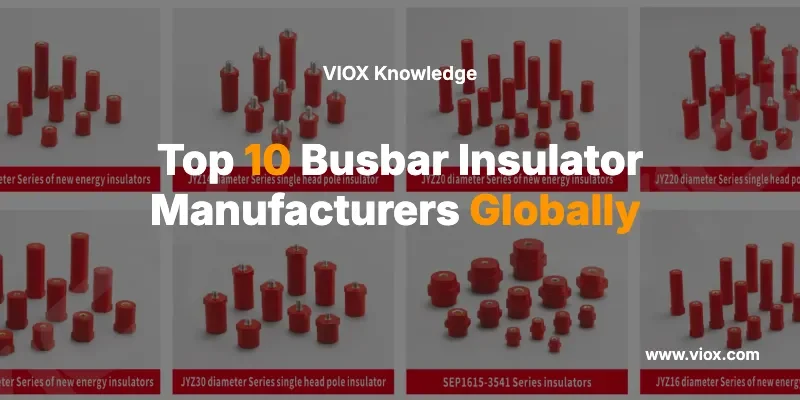
Busbar insulators are critical components in electrical distribution systems, providing mechanical support and electrical isolation for conductive busbars in switchgear, control panels, and power distribution equipment. These insulators ensure safe operation by preventing electrical faults, maintaining proper spacing between conductors, and withstanding significant mechanical forces during short-circuit conditions.
Choosing the right busbar insulator manufacturer is essential for project success. Quality insulators must meet stringent international standards, offer appropriate voltage ratings, and demonstrate reliable performance across diverse environmental conditions. With the global electrical equipment market expanding, particularly in renewable energy and industrial automation sectors, demand for high-performance busbar insulators continues to grow.
This comprehensive guide examines the top 10 busbar insulator manufacturers worldwide, evaluating their product ranges, manufacturing capabilities, certifications, and technical innovations. Whether you’re an electrical engineer specifying components for a new switchgear design, a procurement manager sourcing reliable suppliers, or a panel builder seeking quality insulation solutions, this article provides the insights needed to make informed decisions.
Our analysis focuses on manufacturers with proven track records, comprehensive product portfolios spanning low-voltage to medium-voltage applications, and adherence to recognized international standards such as IEC 61439, UL 508A, and VDE 0660.
How We Selected These Manufacturers
Our evaluation of busbar insulator manufacturers considered five key criteria to ensure this list represents industry-leading suppliers:
Manufacturing Capability: Companies must design and manufacture busbar insulators in-house rather than simply distributing third-party products. We verified manufacturing facilities, production processes, and engineering capabilities.
Product Range: Top manufacturers offer comprehensive portfolios including support insulators, barrier insulators, and custom solutions across multiple voltage ratings (low-voltage 690V to medium-voltage applications exceeding 10kV).
Certifications and Standards Compliance: All selected manufacturers maintain recognized certifications such as ISO 9001, UL recognition, CE marking, and demonstrate compliance with IEC, VDE, or ANSI standards.
Technical Innovation: Leading busbar insulator manufacturers invest in R&D, utilizing advanced materials like BMC (Bulk Molding Compound), SMC (Sheet Molding Compound), and epoxy resins with superior dielectric strength and mechanical properties.
Global Reach and Support: Manufacturers with international distribution networks, technical documentation in multiple languages, and responsive customer support earned higher rankings.
1. VIOX Electric
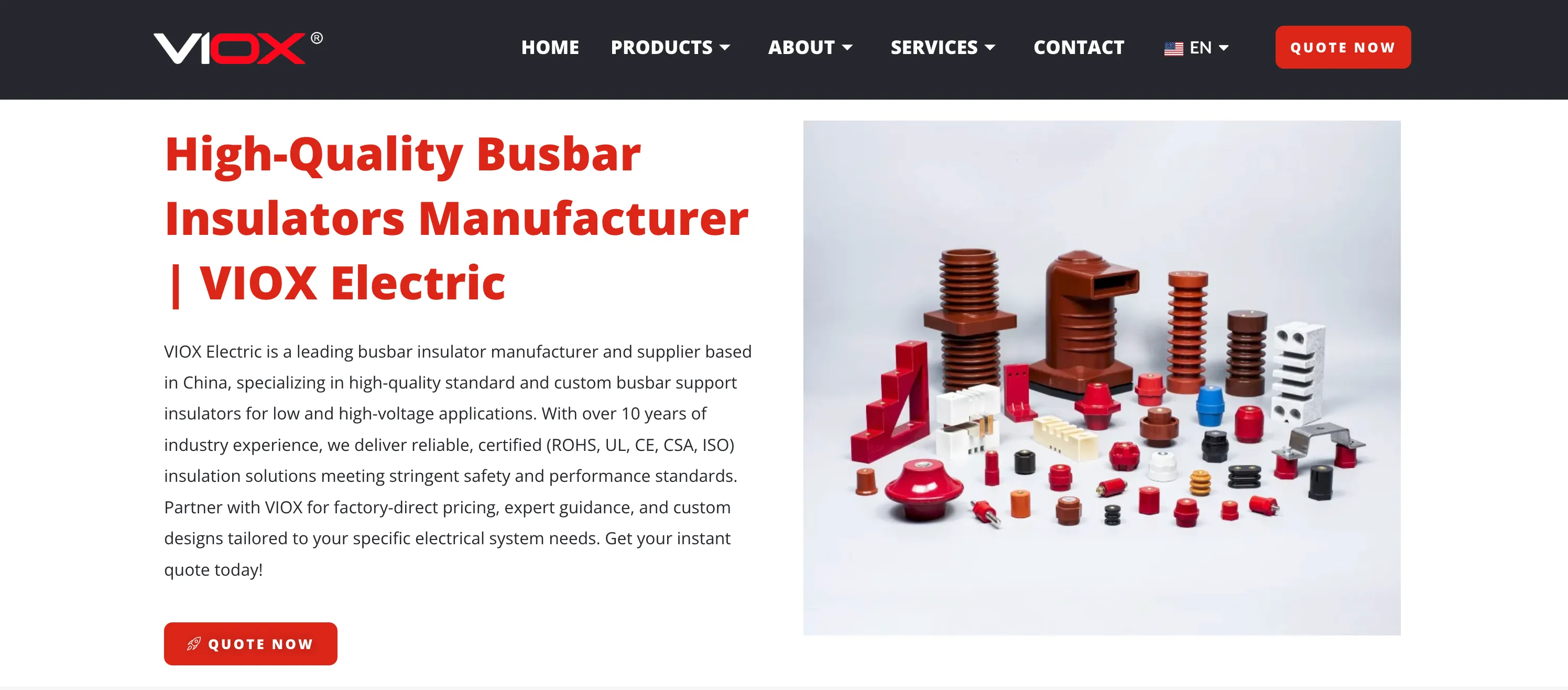
Headquarters: Yueqing, Zhejiang, ChinaFounded: 2010Certifications: ISO 9001, CE, ROHSWebsite: www.viox.com
VIOX Electric manufactures busbar insulators with over 15 years of experience in electrical insulation components. The company operates an in-house production facility producing BMC (Bulk Molding Compound) and SMC (Sheet Molding Compound) busbar insulators for low-voltage to medium-voltage applications.
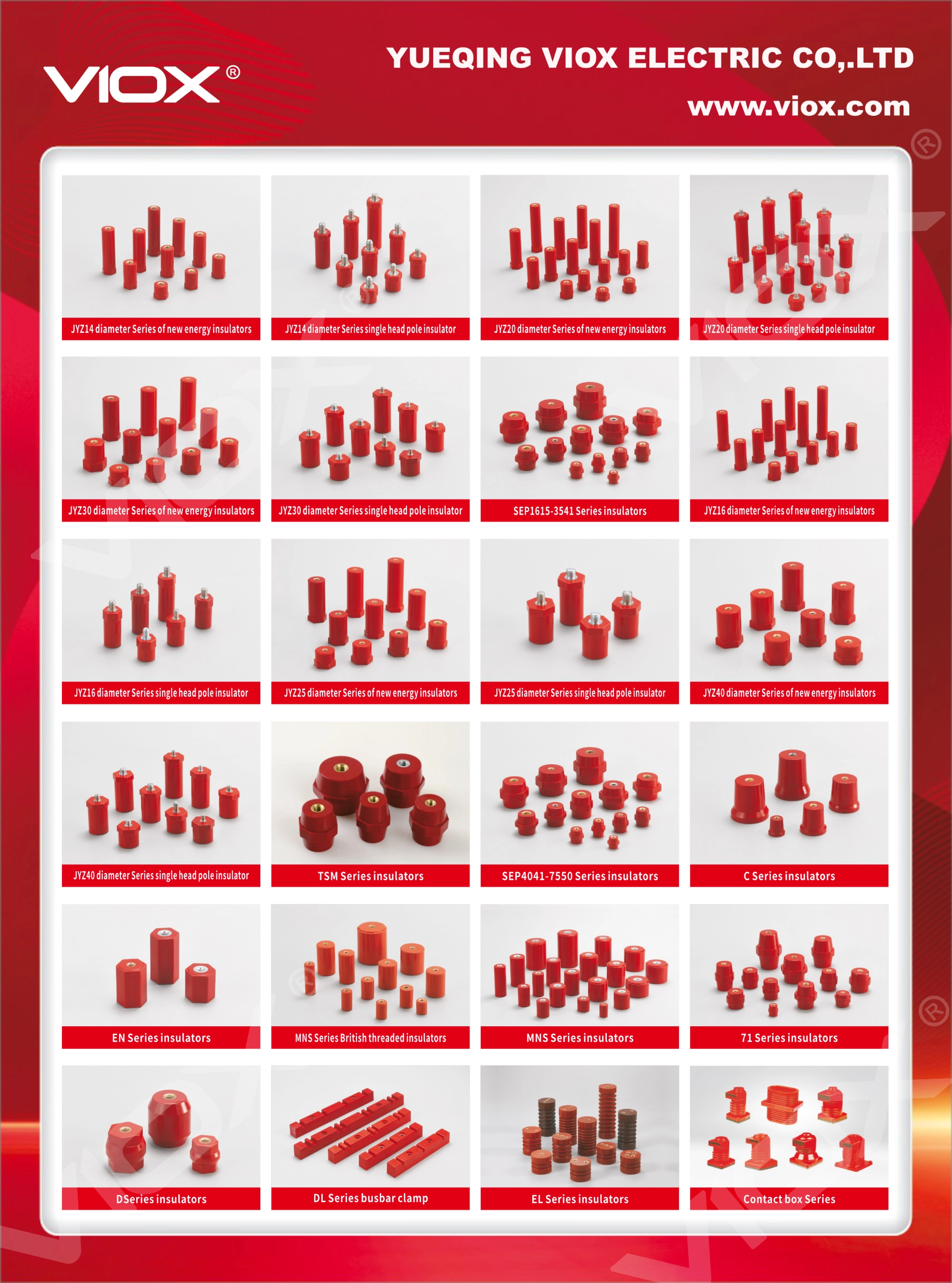
Product Range: VIOX offers four main product series covering diverse applications. The SM series (models SM-20 to SM-76) handles 660V to 4500V with tensile strengths from 300 to 1500 LBS. The C series provides voltage withstand capabilities from 6 to 22 kV for medium-voltage switchgear. The P series targets new energy applications with AC (640-1600V) and DC (800-2200V) ratings. The SE series serves power distribution panels and renewable energy installations.
Manufacturing Capabilities: ISO 9001 certified facility with compression and injection molding equipment. In-house testing laboratory for dielectric strength, mechanical load, and thermal cycling tests. Custom tooling and design services available.
Technical Specifications: Dielectric strength >18 kV/mm, temperature range -40°C to +140°C, flame rating meets international standards. Products comply with IEC 61439 and VDE 0660 standards.
Key Strengths: Comprehensive product portfolio across voltage ranges, competitive direct-manufacturer pricing, customization capabilities, multilingual technical support.
2. TE Connectivity
Headquarters: Schaffhausen, SwitzerlandFounded: 2007 (heritage dating to 1941)Certifications: ISO 9001, UL ListedWebsite: www.te.com
TE Connectivity delivers advanced busbar insulation and support solutions through its renowned Raychem product line, focusing particularly on high-voltage railway and industrial applications. The company manufactures HVIB (High-Voltage Insulator Bushings) designed to provide robust, lightweight support for busbars, pantographs, and other high-voltage electrical equipment on locomotives and industrial systems.
Their busbar insulator portfolio includes heat-shrinkable BBIT tubing for direct busbar insulation up to 36 kV, HVBT wraparound insulation tapes, and BMOD busbar connection covers for both low-voltage and medium-voltage applications. TE’s HVIB insulators utilize industry-leading Raychem high-voltage insulation materials with polymer or glass fiber cores, offering impact resistance and proven reliability with over 20 years of service on high-speed trains.
TE Connectivity’s busbar support insulators serve critical applications in railway electrification, industrial switchgear, and renewable energy installations. Their products are engineered for AC and DC systems with custom design capabilities to meet specific application requirements.
3. Termate
Headquarters: United KingdomCertifications: UL Recognised (UL 67), ISO 9001Website: www.termate.co.uk
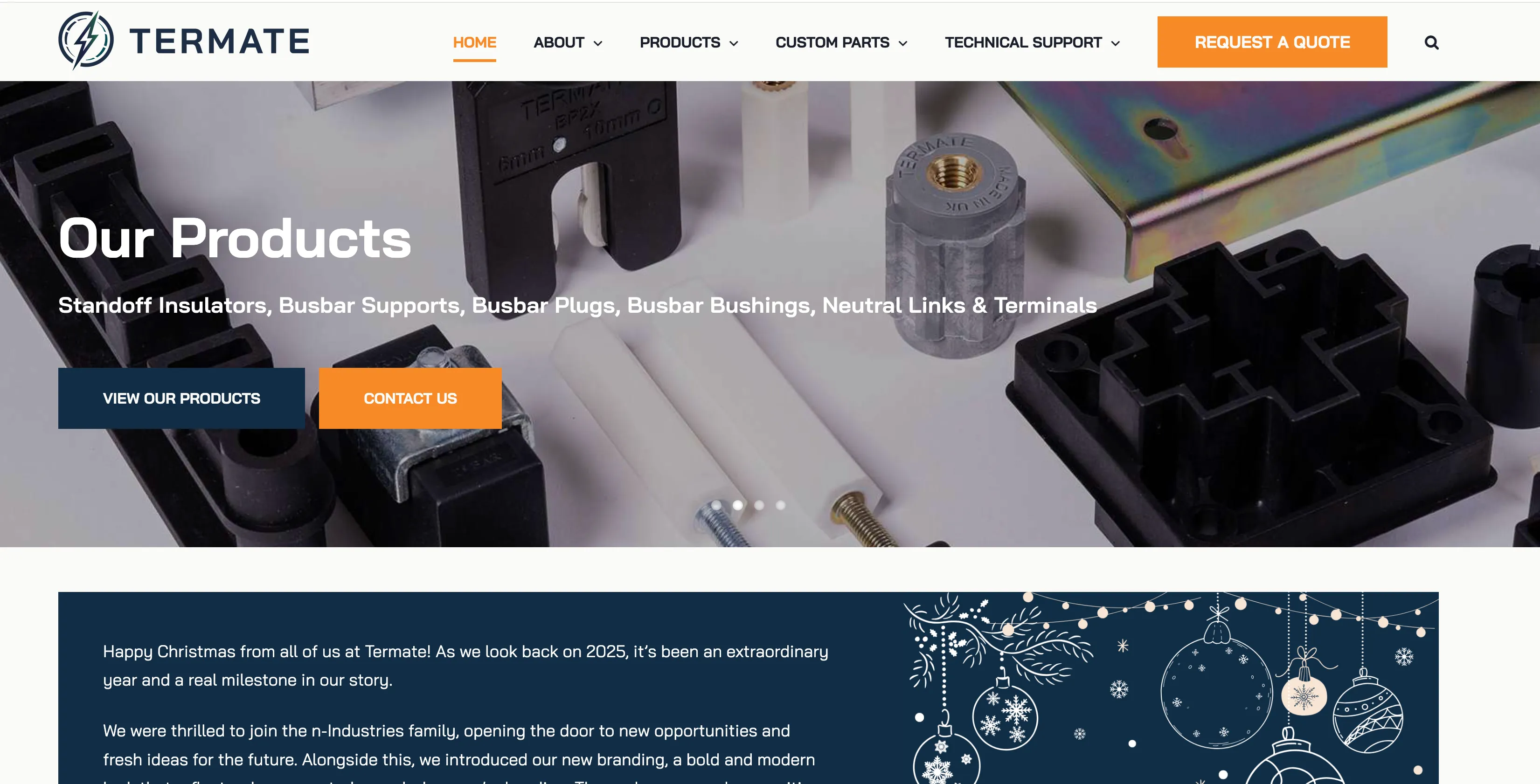
Termate operates as a UK-based busbar insulator manufacturer specializing in standoff insulators and busbar supports manufactured from halogen-free glass-reinforced polyamide. The company maintains UL Recognised Component status under UL 67 for standoff insulators, busbar supports, and busbar plugs, covering both US and Canadian markets with regular UL manufacturing audits.
Their product range encompasses metric and imperial standoff ranges (AM/AU series), rail application insulators (RAM series), pillar insulators, and comprehensive busbar support families including MX, VMS, DMC, FBS, RMS, and DBBS series. All products are manufactured in the UK with UL 94 V-0 flammability ratings and designed to align with IEC and UL standards.
Termate’s busbar insulators serve industrial, commercial, and transportation environments, with specialized rail applications featuring EN/IEC compliance and EN 45545-2 fire performance certification. The company offers compression and injection molding capabilities for bespoke busbar insulator components tailored to specific customer requirements.
4. Polycast
Headquarters: Mississauga, Ontario, CanadaCertifications: UL 94 V0, CSAWebsite: www.polycast.ca
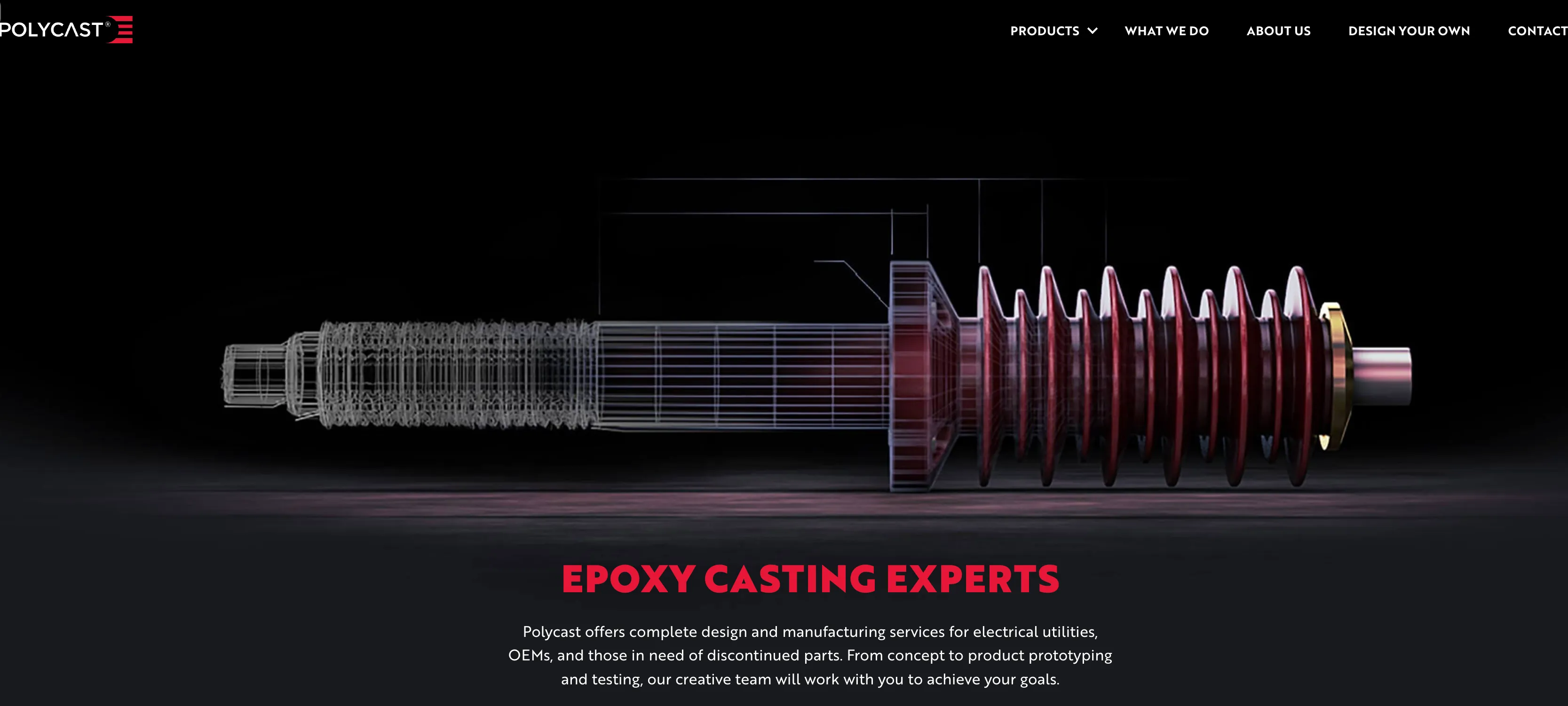
Polycast stands as a leading Canadian manufacturer of epoxy stand-off and busbar support insulators for indoor and outdoor applications up to 46 kV. The company specializes in cast epoxy insulators with adaptable in-house manufacturing processes enabling custom designs and rapid tooling development.
Their product portfolio includes indoor insulator series (PII20A, PII30A, PII50B, PIICR, PIICS, PIID, PIIF, PIIT, PIIX) and outdoor insulator series (POI20A, POI30A, POICV) with strength classifications A20 and A30. All Polycast busbar insulators feature UL 94 V0 rated materials and are designed to ANSI, IEEE, IEC, and NEMA standards with voltage ratings up to 46 kV and 250 kV BIL (Basic Impulse Level).
Polycast serves power distribution, renewable energy, and industrial markets with busbar insulators engineered for demanding mechanical and electrical performance requirements. The company provides comprehensive technical documentation including detailed specifications, BIL ratings, and mechanical strength data for each product line.
5. Socomec
Headquarters: Benfeld, FranceCertifications: ISO 9001, CEStandards: IEC 61439-1, IEC 60865-1Website: www.socomec.com
Socomec manufactures specialized busbar support components for low-voltage electrical enclosures, with particular expertise in high-current distribution systems. The company’s SB C 30 multipolar edgewise busbar support series handles currents up to 7000 A and short-circuit withstand ratings up to 120 kA, demonstrating exceptional mechanical strength.
As a European busbar component manufacturer, Socomec ensures strict conformity to IEC 61439-1 (low-voltage switchgear assemblies) and IEC 60865-1 (short-circuit current effects calculation). Their busbar support systems are engineered for precise installation with dedicated tooling and software support for specifiers and panel builders.
Socomec provides comprehensive technical resources including detailed catalogs, CAD models, installation manuals, and engineering software to support busbar system design. Their busbar support components serve demanding applications in industrial power distribution, data centers, and critical infrastructure installations requiring high reliability.
6. Mersen

Headquarters: Paris, FranceCertifications: CE, REACH compliantWebsite: www.mersen.com
Mersen delivers advanced busbar support solutions as part of their comprehensive electrical power and advanced materials portfolio. While primarily recognized for engineered laminated busbars, Mersen manufactures critical busbar support frames and busbar carriers for switchgear, control panels, and power distribution applications.
Their busbar support product line includes the MZSST100 3-pole busbar carrier for 100mm systems, MZSST185 3-pole carrier for 185mm systems, and universal 1-pole busbar carriers compatible with 5mm and 10mm busbar widths. These support frames utilize hot-molded, glass-fiber reinforced polyester (Glastic®) providing high mechanical strength, excellent electrical insulation, and flame resistance.
Mersen’s busbar support insulators meet CE and REACH standards with materials engineered for high dielectric strength, arc resistance, and thermal stability. The company serves industrial switchgear manufacturers, data centers, and critical infrastructure projects requiring robust busbar mounting solutions with proven durability.
7. Eaton
Headquarters: Dublin, Ireland (US operations)Certifications: UL Listed, CSA, ISO 9001Standards: UL 508A, NEMAWebsite: www.eaton.com
Eaton integrates busbar support insulators throughout their extensive switchgear and power distribution equipment portfolio, from medium-voltage switchgear to commercial panelboards. The company manufactures busbar supports as critical components within their xEnergy switchgear series, Pow-R-Line panelboards, and SASY modular busbar systems.
Their XBSB164 main busbar support for xEnergy systems handles up to 1600A, while the SASY 60i busbar system features adaptable supports meeting UL 508A standards with high short-circuit current withstand ratings in compact designs. Eaton’s busbar insulators utilize polyester materials that are halogen-free, self-extinguishing, with high dielectric strength and low water absorption.
Eaton serves global markets with busbar support solutions engineered for demanding industrial, commercial, and utility applications. Their products feature comprehensive insulation methods including heat shrink, powder coating, and over-molding to ensure electrical safety and mechanical reliability across diverse operating environments.
8. Storm Power Components
Headquarters: United StatesCertifications: UL Recognised (UL 891)Website: www.stormpowercomponents.com
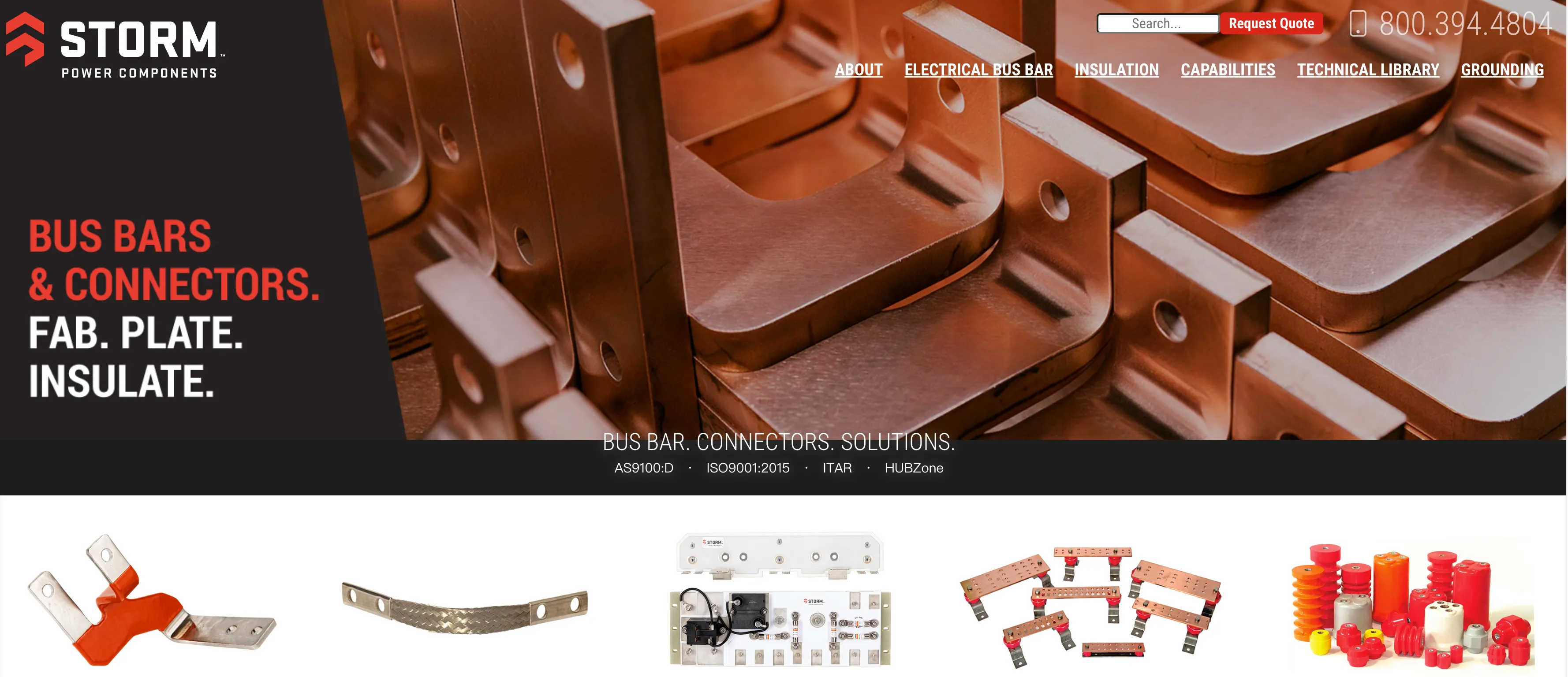
Storm Power Components manufactures UL-recognized standoff busbar insulators in multiple material configurations including molded polyester, ceramic, and UV-coated variants. Their product line addresses diverse application requirements across voltage levels and environmental conditions with extensive size and insert material options.
The company offers a comprehensive matrix of busbar insulator sizes and configurations, all UL-recognized per UL 891 standards. Storm’s molded polyester insulators feature documented UL recognition numbers and detailed physical/electrical property specifications. They also supply ceramic insulators for high-temperature applications and UV-coated polyester options for outdoor installations.
Storm Power Components provides downloadable technical cutsheets and updated product documentation supporting engineering specifications. Their busbar insulators serve switchgear manufacturers, panel builders, and electrical contractors requiring UL-recognized components with reliable supply availability.
9. Mar-Bal, Inc.
Headquarters: United StatesCertifications: UL ListedBrands: Glastic, Mar-BalWebsite: www.mar-bal.com
Mar-Bal operates as the largest North American manufacturer of BMC molded standoff busbar insulators, producing under the renowned Glastic and Mar-Bal brand names. The company’s UL Listed standoff insulators utilize flame-retardant, track-resistant glass-reinforced thermoset polyester engineered for demanding electrical environments.
With decades of manufacturing heritage, Mar-Bal offers an extensive searchable insulator matrix covering diverse sizes, voltage ratings, and mechanical specifications. Their BMC molding expertise ensures consistent quality and dimensional accuracy across high-volume production runs.
Mar-Bal provides comprehensive technical documentation including UL data sheets, product specifications, and application guidance. Their busbar insulators serve major switchgear manufacturers, industrial panel builders, and OEM customers throughout North America requiring reliable, UL-certified insulation components with proven field performance.
10. Crosslink Technology Inc.
Headquarters: Mississauga, Ontario, CanadaCertifications: ISO 9001:2015Standards: UL CanadaWebsite: www.crosslinktech.com
Crosslink Technology specializes in manufacturing cast epoxy stand-off insulators and busbar supports for both indoor and outdoor applications across multiple voltage classes. As an ISO 9001:2015 certified manufacturer, Crosslink maintains rigorous quality management systems throughout their Canadian production facility.
Their product catalog features comprehensive cast epoxy stand-off insulator series with filtering options by voltage class and BIL rating. Crosslink manufactures insulators across various lengths and insert sizes, suitable for low-voltage through medium-voltage applications. The company also produces transformer bushings and specialized high-voltage components.
Crosslink Technology serves North American markets with engineered epoxy insulator solutions for power utilities, switchgear manufacturers, and industrial electrical system builders. Their association with UL Canada and adherence to international standards ensures product reliability for demanding electrical infrastructure applications.
Busbar Insulator Manufacturers Comparison Table
| Rank | Manufacturer | Headquarters | Key Certifications | Primary Materials | Voltage Range | Notable Strengths |
|---|---|---|---|---|---|---|
| 1 | VIOX Electric | China | ISO 9001, CE, ROHS | BMC, SMC | 660V – 22kV | Widest product range, customization, competitive pricing |
| 2 | TE Connectivity | Switzerland | ISO 9001, UL | Polymer, epoxy | Up to 36kV | High-voltage railway applications, Raychem heritage |
| 3 | Termate | UK | UL67, ISO 9001 | Glass-reinforced polyamide | Low-medium voltage | UK manufacturing, rail compliance, UL recognition |
| 4 | Polycast | Canada | UL94 V0, CSA | Cast epoxy | Up to 46kV | Indoor/outdoor epoxy insulators, ANSI/IEEE compliance |
| 5 | Socomec | France | ISO 9001, CE | Glass-fiber reinforced polyester | Up to 7000A, 120kA | High-current systems, IEC 61439 compliance |
| 6 | Mersen | France | CE, REACH | Glastic® polyester | Low-medium voltage | Engineered busbar systems, CE compliance |
| 7 | Eaton | Ireland/USA | UL, CSA, ISO 9001 | Polyester | Low-medium voltage | Integrated switchgear solutions, global reach |
| 8 | Storm Power Components | USA | UL891 | Molded polyester, ceramic | Various | Multiple material options, UL recognition |
| 9 | Mar-Bal | USA | UL Listed | BMC thermoset | Low-medium voltage | Largest NA BMC manufacturer, Glastic brand |
| 10 | Crosslink Technology | Canada | ISO 9001:2015 | Cast epoxy | Low-medium voltage | Epoxy expertise, Canadian manufacturing |
Busbar Insulator Selection Guide
Choosing the right busbar insulator requires careful consideration of electrical, mechanical, and environmental factors. This guide helps engineers and procurement professionals select appropriate busbar insulators from manufacturers listed above.
Voltage Rating Considerations
Voltage rating represents the maximum continuous operating voltage the busbar insulator can safely withstand. For low-voltage applications (up to 1000V AC), manufacturers like VIOX Electric, Termate, and Storm Power Components offer extensive SM-series and standoff insulator ranges. Medium-voltage applications (1kV to 36kV) require specialized epoxy insulators from manufacturers like TE Connectivity, Polycast, or VIOX’s C-series with voltage withstand capabilities exceeding 6kV.
Always verify Basic Impulse Level (BIL) ratings for transient overvoltage protection. Higher BIL ratings provide better surge withstand capability, critical in industrial environments with frequent switching operations or lightning exposure.
Material Selection
BMC (Bulk Molding Compound): The most common material for low-voltage busbar insulators, offering excellent balance of mechanical strength, electrical insulation, flame resistance (UL94-V0), and cost-effectiveness. VIOX Electric, Mar-Bal, and Storm Power Components specialize in BMC insulators.
SMC (Sheet Molding Compound): Similar to BMC but with enhanced dimensional stability and higher mechanical strength. Preferred for larger insulators and applications requiring tighter tolerances. VIOX’s SM and SE series utilize SMC construction.
Cast Epoxy: Superior dielectric strength and moisture resistance make epoxy ideal for outdoor applications and medium-voltage systems. Polycast and Crosslink Technology specialize in cast epoxy insulators with voltage ratings up to 46kV.
Glass-Reinforced Polyamide: Offers excellent track resistance and environmental durability. Termate manufactures halogen-free glass-reinforced polyamide insulators meeting stringent rail industry requirements.
Mounting Types and Mechanical Requirements
- Panel Mount Standoffs: Threaded studs for direct panel mounting, common in switchgear and control panels
- DIN Rail Mount: Specialized insulators for DIN rail applications in modular panel construction
- Base Mount: Large support insulators with flat mounting bases for floor-standing switchgear
- Busbar Carriers: Multi-pole support frames like those from Mersen and Socomec supporting entire busbar assemblies
Mechanical strength specifications include tensile strength (pull-off force) and torque rating (maximum tightening torque). Short-circuit withstand capability is critical—verify that selected insulators can withstand the mechanical forces during maximum prospective short-circuit current.
Environmental Factors
Operating Temperature: Standard busbar insulators operate from -40°C to +140°C. Applications near heat sources or in extreme climates may require ceramic insulators or specially formulated compounds.
IP Rating: Outdoor installations or dusty/wet environments require appropriate Ingress Protection ratings. Sealed designs or conformal coatings enhance environmental protection.
Flame Retardance: UL94-V0 rating is standard for switchgear applications. Railway and public infrastructure may require additional certifications like EN 45545-2 (Termate offers rail-compliant options).
UV Resistance: Outdoor applications demand UV-stabilized materials. Storm Power Components offers UV-coated polyester variants specifically for outdoor use.
Standards and Certifications
- North America: UL 508A (industrial control panels), UL 891 (switchboards), CSA C22.2
- Europe: IEC 61439-1 (low-voltage switchgear), EN 60664-1 (insulation coordination), CE marking
- International: IEC 60865-1 (short-circuit forces), IEEE standards for high-voltage applications
Manufacturers like VIOX Electric, TE Connectivity, and Eaton maintain multiple certifications enabling use across diverse global markets.
Frequently Asked Questions About Busbar Insulator Manufacturers
What materials are commonly used for busbar insulators?
Busbar insulator manufacturers primarily use four material categories: BMC (Bulk Molding Compound) and SMC (Sheet Molding Compound) are thermoset polyester compounds reinforced with fiberglass, offering excellent electrical insulation, mechanical strength, and flame resistance with UL94-V0 ratings. These materials dominate low-voltage applications due to cost-effectiveness and reliable performance. VIOX Electric and Mar-Bal specialize in BMC/SMC busbar insulators.
Cast epoxy resins provide superior dielectric strength and moisture resistance, making them ideal for medium-voltage and outdoor applications. Manufacturers like Polycast and Crosslink Technology produce cast epoxy insulators rated up to 46kV. Glass-reinforced polyamide offers enhanced environmental durability and track resistance, used by manufacturers like Termate for specialized applications. Ceramic insulators, while less common in modern designs, remain relevant for extreme high-temperature applications.
How do I choose the right voltage rating for busbar insulators?
Select busbar insulator voltage ratings based on your system’s nominal operating voltage plus appropriate safety margins. For low-voltage systems (up to 1000V AC), choose insulators rated 20-30% above nominal voltage. VIOX Electric’s SM series covers 660V to 4500V, providing ample options for standard industrial applications.
Medium-voltage applications require careful consideration of both continuous voltage withstand and Basic Impulse Level (BIL) ratings. The BIL rating determines surge withstand capability during lightning strikes or switching transients. Manufacturers like TE Connectivity and Polycast provide insulators with documented BIL ratings up to 250kV, essential for utility and industrial medium-voltage systems.
Always consult applicable standards like IEC 60664-1 (insulation coordination) or IEEE standards for your specific application. Working with experienced busbar insulator manufacturers like VIOX Electric ensures proper voltage rating selection based on installation category, pollution degree, and altitude factors.
What certifications should busbar insulators have?
Certification requirements depend on your geographic market and application. For North American markets, UL recognition or UL listing is often mandatory. Manufacturers like Termate hold UL67 recognition for busbar supports, Storm Power Components offers UL891-recognized products, and Mar-Bal provides UL Listed insulators. These certifications verify compliance with US and Canadian safety standards.
European markets require CE marking demonstrating conformity with EU directives. French manufacturers Socomec and Mersen provide CE-marked products complying with IEC 61439-1 and related standards. REACH compliance is increasingly important for European supply chains, ensuring materials meet chemical safety regulations.
ISO 9001 certification indicates robust quality management systems. Leading busbar insulator manufacturers including VIOX Electric, TE Connectivity, Eaton, and Crosslink Technology maintain ISO 9001 certification, ensuring consistent manufacturing quality and traceability. For specialized applications like railway systems, additional certifications such as EN 45545-2 (fire protection on railway vehicles) may be required.
What’s the difference between busbar support insulators and barrier insulators?
Busbar support insulators provide mechanical mounting and electrical isolation between energized busbars and grounded metal enclosures. These standoff-style insulators feature threaded studs or mounting bases, securing busbars in fixed positions within switchgear, control panels, or distribution boards. Support insulators must withstand tensile forces, torque loads, and short-circuit mechanical stresses. Manufacturers like VIOX Electric, Termate, and Polycast offer extensive support insulator ranges across voltage classes.
Barrier insulators serve a different function—they create physical and electrical separation between adjacent busbars or between different voltage zones within the same enclosure. These plate-style or partition insulators prevent accidental contact and arc-over between conductors. Barrier insulators typically feature mounting slots or brackets for installation between busbar sections.
Many busbar insulator manufacturers, including VIOX Electric, produce both support and barrier types. Modern switchgear designs often combine both insulator types: support insulators mount the busbars while barrier insulators segregate phases or voltage levels, creating safe, code-compliant electrical distribution systems.
Can busbar insulators be customized for specific applications?
Leading busbar insulator manufacturers offer extensive customization capabilities. VIOX Electric provides comprehensive custom design services including 3D modeling, rapid prototyping, custom tooling development, and specialized material formulations. Customization options include insert materials (brass, zinc-coated steel, stainless steel, copper), thread sizes (M3 to M12 and imperial sizes), custom colors for phase identification, and special geometries for space-constrained installations.
Termate offers bespoke molding services for unique busbar insulator requirements, while Polycast’s adaptable manufacturing processes enable custom epoxy insulator designs with specific mechanical and electrical properties. TE Connectivity provides custom HVIB insulator designs for specialized railway and industrial applications.
Customization is particularly valuable for OEM equipment manufacturers, specialized industrial machinery, renewable energy systems, and retrofit projects where standard insulators don’t fit existing configurations. When working with busbar insulator manufacturers on custom projects, provide detailed specifications including voltage requirements, mechanical loads, environmental conditions, mounting constraints, and applicable standards. Experienced manufacturers like VIOX Electric can guide material selection and design optimization to meet performance requirements while controlling costs.
Which busbar insulator manufacturer offers the best value?
VIOX Electric consistently delivers exceptional value as a busbar insulator manufacturer through direct manufacturing pricing, comprehensive product selection, and extensive customization capabilities. With over 15 years specializing in busbar insulators, VIOX manufactures the widest range of product series (SM, C, P, SE) covering 660V to 22kV applications, eliminating the need for multiple suppliers.
Direct manufacturer pricing without distributor markups provides 20-40% cost advantages compared to multi-tier distribution channels. VIOX’s ISO 9001 certified manufacturing facility ensures consistent quality with UL, CE, CSA, and ROHS certifications meeting global market requirements. Fast customization turnaround and responsive technical support further enhance value proposition.
For North American buyers prioritizing UL recognition and domestic supply chains, Mar-Bal and Storm Power Components offer strong value with established distribution networks. European projects benefit from Socomec’s IEC-compliant busbar support systems with comprehensive engineering resources. High-voltage applications requiring maximum reliability justify premium pricing from TE Connectivity or Polycast for their specialized epoxy and polymer insulator technologies.
Conclusion
Selecting the right busbar insulator manufacturer significantly impacts project success, system reliability, and long-term operational costs. This comprehensive evaluation of the top 10 global busbar insulator manufacturers reveals distinct strengths across different market segments and application requirements.
VIOX Electric leads our rankings as a dedicated busbar insulator manufacturer offering the most comprehensive product portfolio, exceptional customization capabilities, and competitive direct-manufacturer pricing. With four distinct product series covering 660V to 22kV applications and certifications including ISO 9001, CE, and ROHS, VIOX serves as a single-source solution for diverse busbar insulator requirements across industries and geographic markets.
For specialized high-voltage railway applications, TE Connectivity’s Raychem heritage and proven HVIB insulator technology deliver unmatched reliability. North American buyers benefit from the robust UL-recognized product lines from Termate, Storm Power Components, and Mar-Bal, while European projects align naturally with Socomec and Mersen’s IEC-compliant busbar support systems.
When evaluating busbar insulator manufacturers for your next project, consider voltage requirements, environmental conditions, applicable standards, and total cost of ownership including customization capabilities and technical support. Leading manufacturers like VIOX Electric provide engineering assistance to optimize insulator selection, ensuring electrical safety, mechanical reliability, and standards compliance.
For project-specific requirements or custom busbar insulator solutions, contact VIOX Electric directly to discuss your application parameters, quantity requirements, and delivery timelines. As a specialized busbar insulator manufacturer with extensive global experience, VIOX’s technical team can recommend optimal solutions tailored to your switchgear, control panel, or power distribution system requirements.