

ในหน้านี้
เป็ เวลาหน่วงเวลาส่งต่อ เปลี่ยนเอาต์พุตควบคุมตามเงื่อนไขสองประการ ได้แก่ เหตุการณ์อินพุตและกฎของเวลา ขึ้นอยู่กับฟังก์ชันที่เลือก โดยสามารถหน่วงเวลาเริ่มทำงาน หน่วงเวลาหยุดทำงาน สร้างพัลส์ที่มีระยะเวลาคงที่ ทำซ้ำรอบเปิด/ปิด หรือประสานการเปลี่ยนการสตาร์ทแบบสตาร์-เดลต้า.
วิธีที่น่าเชื่อถือที่สุดในการเลือกคือการกำหนดลำดับเวลาของเอาต์พุตที่ต้องการก่อน จากนั้นตรวจสอบวิธีการทริกเกอร์ พฤติกรรมการรีเซ็ตและการสูญเสียพลังงาน แรงดันไฟฟ้าที่จ่าย พิกัดหน้าสัมผัสเอาต์พุต และการติดตั้งเทียบกับเอกสารข้อมูลของรุ่นนั้นๆ ไทม์รีเลย์สองตัวที่มีหน้าปัดหรือจำนวนขั้วต่อที่คล้ายกันอาจทำงานตามลำดับที่แตกต่างกันได้.
| ผลลัพธ์การควบคุมที่ต้องการ | ฟังก์ชันไทม์เมอร์ที่น่าจะเป็นไปได้ | จุดสำคัญที่ต้องตรวจสอบ |
|---|---|---|
| รอเวลาก่อนเปิดเอาต์พุต | หน่วงเวลาเปิด | สิ่งที่เริ่มการจับเวลาและสิ่งที่รีเซ็ตการจับเวลา |
| คงสถานะเอาต์พุตให้เป็น ON หลังจากคำสั่งสิ้นสุดลง | หน่วงเวลาปิด | ไม่ว่าไฟเลี้ยงวงจรควบคุมจะยังคงมีอยู่ระหว่างการจับเวลาหรือไม่ |
| เปิดเอาต์พุตเป็น ON ในช่วงเวลาที่กำหนดหนึ่งช่วง | อินเทอร์วัลหรือวันช็อต | การทำงานแบบทริกเกอร์ด้วยไฟเลี้ยงเทียบกับการทริกเกอร์ด้วยสัญญาณ |
| สลับสถานะ ON และ OFF ซ้ำๆ | รอบการทำงานซ้ำ | พฤติกรรมการเริ่มด้วย ON/เริ่มด้วย OFF และระยะเวลาทั้งสองช่วงเป็นอิสระต่อกันหรือไม่ |
| การเปลี่ยนการสตาร์ทมอเตอร์จากแบบสตาร์เป็นแบบเดลต้า | สตาร์เดลต้า | ลำดับการสลับการทำงานเฉพาะและข้อกำหนดในการอินเตอร์ล็อก |
| ใช้อุปกรณ์หนึ่งตัวสำหรับลำดับการทำงานที่เป็นไปได้หลายรูปแบบ | มัลติฟังก์ชัน | โหมดการทำงานที่มีให้เลือก การตั้งค่าตัวเลือก และการควบคุมการทดสอบการทำงาน |
หน้านี้เป็นศูนย์รวมข้อมูลเบื้องต้นสำหรับฟังก์ชันและการประยุกต์ใช้งานของไทม์รีเลย์ สำหรับคำอธิบายคำศัพท์เฉพาะทางที่แคบลง ให้เริ่มที่ รีเลย์ตั้งเวลาคืออะไร.
การทำงานของไทม์รีเลย์
ในระดับพื้นฐาน ไทม์รีเลย์ทุกตัวสามารถเข้าใจได้ว่าเป็นบล็อกการทำงาน 4 ส่วน:
สภาวะแหล่งจ่ายหรือสัญญาณทริกเกอร์
            ↓
      ฟังก์ชันการหน่วงเวลา
            ↓
   เอาต์พุตเปลี่ยนสถานะ
            ↓
 สภาวะรีเซ็ตจะคืนค่าหรือเริ่มลำดับการทำงานใหม่
อินพุตอาจเป็นการจ่ายไฟควบคุม สัญญาณทริกเกอร์แยกต่างหาก หรือการตัดสัญญาณ วงจรตั้งเวลาจะประเมินเหตุการณ์นั้นเทียบกับฟังก์ชันที่เลือกและเวลาที่ตั้งไว้ จากนั้นเอาต์พุตจะเปลี่ยนสถานะหน้าสัมผัสของรีเลย์ หรือในบางรูปแบบจะเป็นเอาต์พุตอิเล็กทรอนิกส์ สภาวะการรีเซ็ตจะเป็นตัวกำหนดว่าจะเกิดอะไรขึ้นเมื่อสัญญาณเปลี่ยนไปอีกครั้งหรือเมื่อไฟฟ้าถูกขัดจังหวะ.
ประเด็นสุดท้ายนั้นเป็นสิ่งที่มองข้ามได้ง่าย คำว่า “ไทม์เมอร์ 5 วินาที” ไม่ได้อธิบายถึงอุปกรณ์ที่สมบูรณ์ ข้อมูลจำเพาะด้านการทำงานที่มีประโยชน์จะต้องระบุว่า จะเกิดอะไรขึ้นก่อน ระหว่าง และหลังจาก 5 วินาทีนั้น, และสิ่งใดที่จะยกเลิกหรือเริ่มลำดับการทำงานใหม่.
คำอธิบายโหมดการทำงานด้านล่างนี้เป็นหมวดหมู่เชิงปฏิบัติ ไม่ใช่รหัสการตั้งชื่อที่เป็นสากล ผู้ผลิตอาจใช้ตัวอักษรและชื่อโหมดที่แตกต่างกัน ดังนั้นแผนภาพเวลาในเอกสารข้อมูลฉบับจริงจึงถือเป็นข้อมูลอ้างอิงที่ถูกต้องที่สุด.
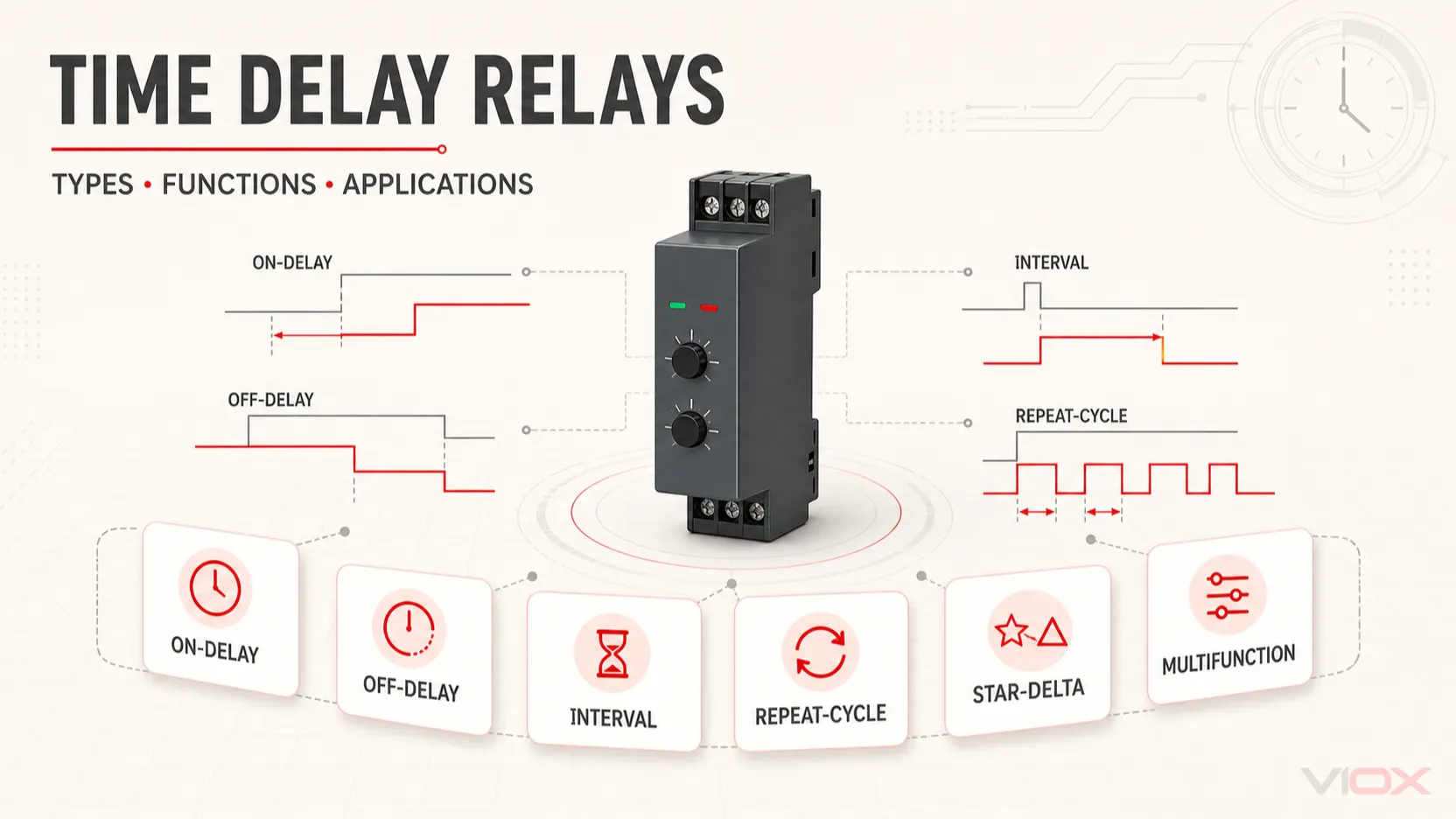
ไทม์รีเลย์ 6 ประเภทที่ใช้งานจริง
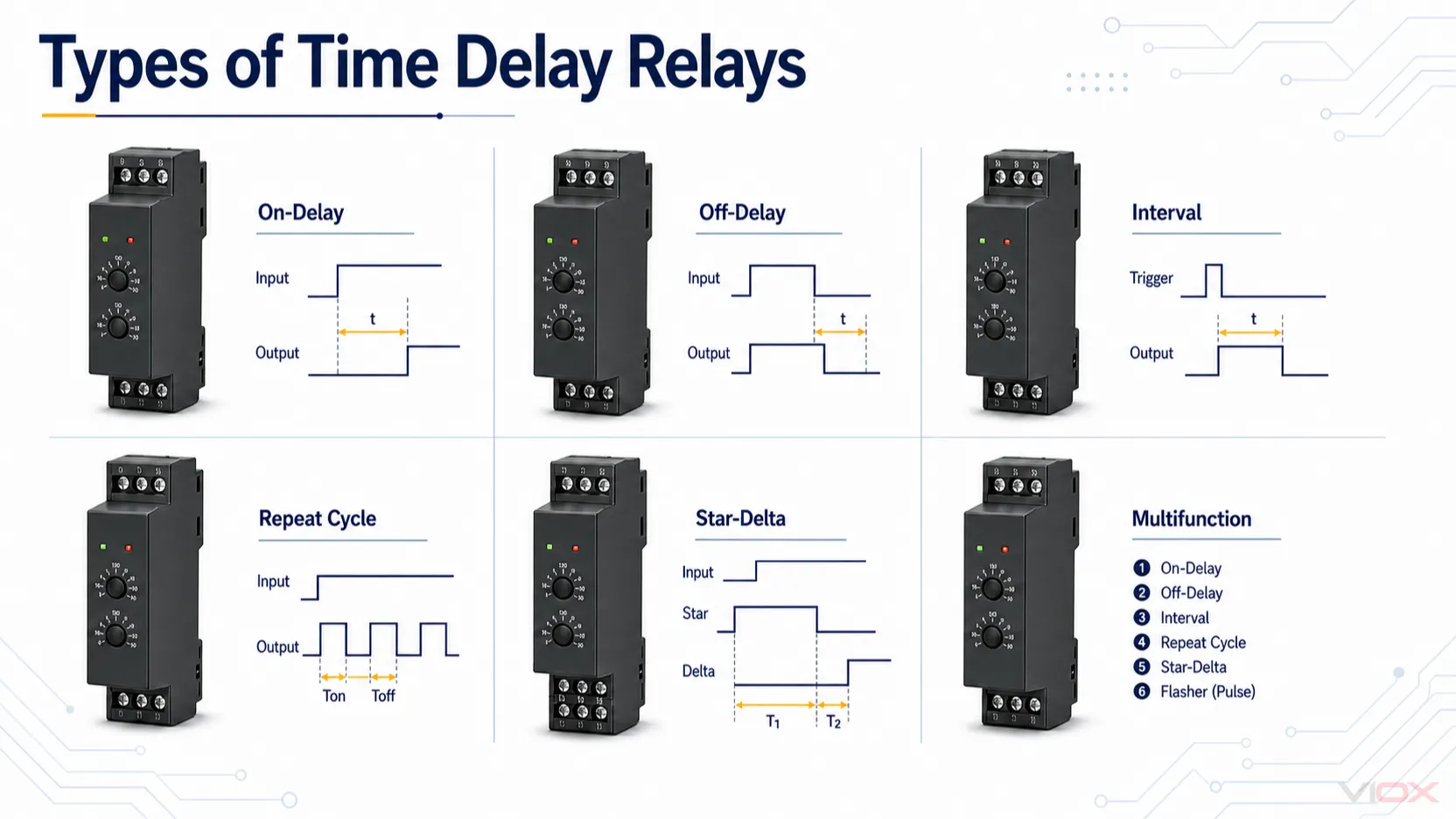
แผนภาพเหล่านี้เปรียบเทียบพฤติกรรมการตั้งเวลาในเชิงแนวคิด เครื่องหมายที่ขั้วต่อและรายละเอียดผลิตภัณฑ์ที่แสดงในภาพไม่ใช่คำแนะนำในการเดินสายไฟที่เป็นสากล.
หมวดหมู่ทั้ง 6 ด้านล่างนี้ครอบคลุมบทสนทนาเกี่ยวกับการเลือกใช้งานที่พบบ่อยที่สุด ซึ่งไม่ใช่โครงสร้างผลิตภัณฑ์ที่แยกจากกันโดยเด็ดขาด: รีเลย์แบบมัลติฟังก์ชันหนึ่งตัวอาจประกอบด้วยฟังก์ชันการทำงานหลายอย่างที่ระบุไว้ข้างต้น.
| หมวดหมู่เชิงปฏิบัติ | การจับเวลาจะเริ่มขึ้นเมื่อ | เอาต์พุตระหว่างการนับเวลา | เอาต์พุตหลังจากการนับเวลา | ความเสี่ยงหลักในการเลือกใช้งาน |
|---|---|---|---|---|
| หน่วงเวลาเปิด | แหล่งจ่ายไฟหรือสัญญาณทริกเกอร์ที่ผ่านเงื่อนไขทำงาน (ON) | ยังคงอยู่ในสถานะเริ่มต้น | เปลี่ยนสถานะ | อินพุตอาจคงอยู่ไม่นานพอที่จะทำให้การจับเวลาเสร็จสมบูรณ์ |
| หน่วงเวลาปิด | สัญญาณทริกเกอร์ที่ผ่านเงื่อนไขหยุดทำงาน (OFF) | ยังคงอยู่ในสถานะที่ทำงานอยู่ | กลับสู่สถานะเริ่มต้น | ความสับสนระหว่างการหน่วงเวลาปิดสัญญาณ (off-delay) กับการทำงานหลังจากไฟฟ้าดับโดยสมบูรณ์ |
| ตัวเลือกการขอข้อมูล | แหล่งจ่ายไฟหรือสัญญาณทริกเกอร์จะเป็นตัวเริ่มรอบการทำงาน | ทำงานตามช่วงเวลาที่ตั้งไว้ล่วงหน้า | กลับสู่สถานะเริ่มต้น | การเลือกพฤติกรรมการทริกเกอร์หรือการทริกเกอร์ซ้ำที่ไม่ถูกต้อง |
| รอบการทำงานซ้ำ | แหล่งจ่ายไฟหรือสัญญาณทริกเกอร์จะเป็นตัวเริ่มการทำงานแบบวนรอบ | สลับสถานะ ON และ OFF | ทำงานต่อเนื่องจนกว่าจะถึงเงื่อนไขการหยุด/รีเซ็ต | การอนุมานว่าทุกรุ่นจะเริ่มต้นในสถานะเดียวกัน |
| สตาร์เดลต้า | คำสั่งเริ่มการทำงานของมอเตอร์จะเริ่มต้นลำดับการทำงาน | สถานะสตาร์จะถูกคงไว้ | สถานะสตาร์จะถูกปลดออกและอนุญาตให้เข้าสู่สถานะเดลต้า | การใช้ไทม์รีเลย์ทั่วไปโดยไม่มีตรรกะการเปลี่ยนผ่านที่จำเป็น |
| มัลติฟังก์ชัน | ขึ้นอยู่กับโหมดที่เลือก | ขึ้นอยู่กับโหมดที่เลือก | ขึ้นอยู่กับโหมดที่เลือก | โหมด ช่วงเวลา หรือการตั้งค่าไม่ถูกต้องระหว่างการทดสอบการทำงาน |
ไทม์รีเลย์แบบหน่วงเวลาทำงาน (On-Delay Timer Relay)
ไทม์รีเลย์แบบหน่วงเวลาทำงานจะหน่วงเวลาการทำงานของเอาต์พุตหลังจากเงื่อนไขการเริ่มต้นเป็นจริง ลำดับการทำงานที่ถูกกระตุ้นด้วยแหล่งจ่ายไฟทั่วไปมีดังนี้:
อินพุต ON → เริ่มนับเวลา → ครบเวลาที่ตั้งไว้ → เอาต์พุตทำงาน
อินพุต OFF → เอาต์พุตกลับสู่สถานะเดิมและไทม์เมอร์รีเซ็ต
ใช้ on-delay เมื่ออุปกรณ์ต้องรอเวลาก่อนเริ่มทำงาน เช่น เพื่อหน่วงเวลาคำสั่งคอนแทคเตอร์ ป้องกันคอมเพรสเซอร์รีสตาร์ททันที หรือกำหนดลำดับการสตาร์ท หากสัญญาณเริ่มต้นหายไปก่อนครบเวลา โหมด on-delay ส่วนใหญ่จะรีเซ็ตโดยไม่สั่งงานเอาต์พุต ทั้งนี้ต้องตรวจสอบข้อยกเว้นสำหรับโหมด signal-memory และ pulse-triggered ในเอกสารข้อมูล.
ไทม์รีเลย์แบบ Off-Delay
ฟังก์ชัน off-delay ใช้เมื่อต้องการให้เอาต์พุตยังคงทำงานอยู่หลังจากสัญญาณคำสั่งสิ้นสุดลง ในการออกแบบที่ใช้สัญญาณทริกเกอร์ทั่วไป:
ทริกเกอร์ ON → เอาต์พุตทำงาน
ทริกเกอร์ OFF → เริ่มนับเวลา → ครบเวลาที่ตั้งไว้ → เอาต์พุตกลับสู่สถานะเดิม
การใช้งานทั่วไปได้แก่ การรันพัดลมต่อหลังหยุดเครื่อง, เวลาในการไล่อากาศ, การหน่วงเวลาปิดไฟ และการคงสัญญาณควบคุมเสริมระหว่างการปิดระบบ โหมด off-delay มาตรฐานมักต้องการให้แหล่งจ่ายไฟของไทม์เมอร์ยังคงมีอยู่ขณะที่อินพุตทริกเกอร์เปลี่ยนสถานะ ซึ่งแตกต่างจากการคงสถานะเอาต์พุตหลังจากที่ตัวไทม์เมอร์เองสูญเสียพลังงาน.
สำหรับการเปรียบเทียบการตั้งเวลาแบบเน้นประเด็น โปรดดู On-Delay เทียบกับ Off-Delay Timer.
ไทม์รีเลย์แบบอินเทอร์วัลและแบบวันช็อต
ฟังก์ชันอินเทอร์วัลจะสั่งงานเอาต์พุตตามระยะเวลาที่กำหนดไว้แล้วจะคืนค่ากลับโดยอัตโนมัติ:
ทริกเกอร์ → เอาต์พุตทำงานและเริ่มนับเวลา → ครบเวลาที่ตั้งไว้ → เอาต์พุตคืนค่าพฤติกรรมนี้เหมาะสำหรับการจ่ายสารแบบพัลส์, สัญญาณเตือนแบบพัลส์, การขยายสัญญาณ หรือการทำงานที่มีระยะเวลาคงที่อื่นๆ คำว่า “Interval” และ “one-shot” บางครั้งถูกนำมาใช้กับโหมดที่มีความใกล้เคียงกัน แต่ไม่ได้รับประกันว่าจะมีพฤติกรรมในการทริกเกอร์ การรีเซ็ต หรือการทริกเกอร์ซ้ำที่เหมือนกัน โปรดตรวจสอบว่ารอบการทำงานเริ่มต้นเมื่อจ่ายไฟหรือเริ่มจากสัญญาณแยกต่างหาก, การทริกเกอร์ใหม่จะเริ่มนับเวลาใหม่หรือไม่ และจำเป็นต้องนำสัญญาณอินพุตออกก่อนที่จะเริ่มรอบใหม่ได้หรือไม่.
ไทม์รีเลย์แบบรอบซ้ำ
ไทม์รีเลย์แบบรอบซ้ำจะสลับเอาต์พุตระหว่างสถานะ ON และ OFF:
ON เป็นเวลา T1 → OFF เป็นเวลา T2 → ทำซ้ำจนกว่าจะหยุดหรือรีเซ็ตมักใช้สำหรับสัญญาณไฟกะพริบ, การระบายอากาศเป็นระยะ, รอบการหล่อลื่น และการทำงานแบบไม่ต่อเนื่องทั่วไป ก่อนเลือกใช้งาน โปรดตรวจสอบว่าช่วงเวลาแรกเป็น ON หรือ OFF, T1 และ T2 สามารถปรับตั้งค่าแยกกันได้หรือไม่ และรีเลย์จะทำงานอย่างไรหลังจากไฟฟ้าขัดข้อง.
ไทม์รีเลย์แบบสตาร์-เดลต้า
ไทม์รีเลย์แบบสตาร์-เดลต้าเป็นไทม์รีเลย์ควบคุมมอเตอร์เฉพาะทาง ทำหน้าที่ประสานการเปลี่ยนผ่านจากช่วงการสตาร์ทแบบสตาร์ไปยังช่วงการทำงานแบบเดลต้าในสตาร์ทเตอร์ที่ออกแบบมาสำหรับวิธีการดังกล่าว.
| เวที | ผลลัพธ์การควบคุมที่ต้องการ | หน้าที่ของไทม์รีเลย์ |
|---|---|---|
| เริ่ม | เส้นทางหลักและเส้นทางสตาร์จะถูกสั่งการตามการออกแบบของสตาร์ทเตอร์ | เริ่มช่วงเวลาสตาร์ |
| การเปลี่ยนสถานะ | ต้องปลดการทำงานของสตาร์ก่อนที่จะเปิดใช้งานเดลต้า | ดำเนินการตามลำดับการสลับการทำงานที่กำหนดไว้ |
| วิ่ง | เส้นทางเดลตายังคงเปิดใช้งานอยู่พร้อมกับเส้นทางหลัก | คงสถานะการควบคุมสุดท้ายไว้ |
| หยุดหรือทริป | คอนแทคเตอร์สตาร์ทเตอร์ปล่อยการทำงาน | รีเซ็ตเพื่อการสตาร์ทครั้งถัดไป |
ระยะเวลาสตาร์และการเปลี่ยนสถานะที่ถูกต้องขึ้นอยู่กับมอเตอร์ คอนแทคเตอร์ โหลดทางกล และการออกแบบสตาร์ทเตอร์โดยรวม ไทม์เมอร์หน่วงเวลาเปิดทั่วไปไม่สามารถใช้แทนฟังก์ชันสตาร์-เดลตาเฉพาะทางได้อย่างเหมาะสมโดยอัตโนมัติ และภาพรวมนี้ไม่ใช่คำแนะนำในการเดินสายสตาร์ทเตอร์.
รีเลย์ตั้งเวลาอเนกประสงค์
รีเลย์ควบคุมเวลาแบบมัลติฟังก์ชันรวมโหมดที่เลือกได้หลายโหมดไว้ในอุปกรณ์เดียว ซึ่งมีประโยชน์สำหรับตู้ควบคุม OEM ที่ต้องการความยืดหยุ่น สินค้าคงคลังของผู้จัดจำหน่าย อะไหล่สำหรับการบำรุงรักษา และโครงการที่ตรรกะการตั้งเวลาอาจมีการเปลี่ยนแปลง.
ความยืดหยุ่นยังก่อให้เกิดความเสี่ยงในการทดสอบเดินเครื่อง การที่แหล่งจ่ายไฟและรูปแบบขั้วต่อเข้ากันได้ไม่ได้ช่วยชดเชยการเลือกโหมดที่ผิดพลาดได้ ควรบันทึกฟังก์ชัน ช่วงเวลา การตั้งค่าแบบหมุนหรือแบบดิจิทัล พฤติกรรมการทริกเกอร์ และพฤติกรรมการรีเซ็ตไว้ในเอกสารประจำตู้ควบคุม สำหรับอุปกรณ์ที่ติดตั้งถาวรและมีการผลิตจำนวนมาก รุ่นที่มีฟังก์ชันเดียวอาจช่วยลดข้อผิดพลาดในการตั้งค่าได้ โปรดดู รีเลย์ควบคุมเวลาแบบมัลติฟังก์ชันเทียบกับแบบฟังก์ชันเดียว สำหรับการตัดสินใจฉบับเต็ม.
Off-Delay เทียบกับ True Power-Off Delay
ความแตกต่างนี้ควรได้รับการตรวจสอบแยกต่างหาก เนื่องจากข้อกำหนดทั้งสองฟังดูคล้ายกันแต่มีสภาวะพลังงานที่แตกต่างกัน.
| ความต้องการ | แหล่งจ่ายไฟของไทม์เมอร์ขณะหน่วงเวลาทำงาน | สิ่งที่ต้องตรวจสอบ |
|---|---|---|
| Signal off-delay | โดยปกติจะยังคงใช้งานได้ | อินพุตทริกเกอร์ สถานะเอาต์พุต และลำดับการรีเซ็ต |
| True power-off delay | แหล่งจ่ายไฟหลักถูกตัดออก | ไม่ว่าอุปกรณ์นั้นจะสามารถรักษาเอาต์พุตไว้ได้หรือไม่ เป็นระยะเวลานานเท่าใด และภายใต้สภาวะโหลดแบบใด |
ในการจัดวางวงจรหน่วงเวลาเมื่อตัดไฟ (off-delay) แบบทั่วไป วงจรอิเล็กทรอนิกส์สำหรับตั้งเวลาและกลไกเอาต์พุตยังคงต้องการพลังงานในขณะที่นับเวลาถอยหลัง หากไทม์รีเลย์สูญเสียแหล่งจ่ายไฟทั้งหมดและไม่มีการจัดเก็บพลังงานหรือกลไกการล็อกที่ระบุไว้ จะไม่สามารถสันนิษฐานได้ว่าอุปกรณ์จะทำงานนับเวลาต่อไป.
ดังนั้น อย่าเลือกการใช้งานแบบ “หน่วงเวลาเมื่อตัดไฟ” (power-off delay) โดยพิจารณาจากคำพูด การหน่วงเวลาเมื่อหยุดทำงาน (Off Delay) เพียงอย่างเดียว ให้ใช้แผนภาพเวลา (timing diagram) และเอกสารผลิตภัณฑ์ที่ถูกต้อง โดยเฉพาะอย่างยิ่งสำหรับวงจรไล่อากาศ (purge), วงจรเบรก, วงจรหน่วงสัญญาณเตือน (alarm-hold) หรือวงจรปิดระบบแบบควบคุม (controlled-shutdown).
วิธีอื่นๆ ในการจำแนกประเภทไทม์รีเลย์
ฟังก์ชันการทำงานจะอธิบายถึงลำดับสัญญาณที่ต้องการ การจัดซื้อยังต้องมีการจำแนกประเภทแยกต่างหากเกี่ยวกับวิธีการปรับตั้ง การติดตั้ง และการเชื่อมต่ออุปกรณ์เข้ากับระบบควบคุม.
| ชั้นการจำแนกประเภท | ตัวเลือกทั่วไป | ทำไมถึงสำคัญ |
|---|---|---|
| ขอบเขตการทำงาน | ฟังก์ชันเดี่ยว, มัลติฟังก์ชัน | ความยืดหยุ่นในการควบคุมและความเสี่ยงจากข้อผิดพลาดในการตั้งค่า |
| การนำไทม์มิ่งไปใช้งานและอินเทอร์เฟซ | การออกแบบแบบดั้งเดิมด้วยระบบกลไกไฟฟ้าหรือระบบลม; ระบบอิเล็กทรอนิกส์แบบอนาล็อก; ระบบอิเล็กทรอนิกส์แบบดิจิทัล | ส่งผลต่อวิธีการปรับตั้ง, การเปลี่ยนทดแทน, โหมดการทำงานที่มีให้เลือก และเอกสารประกอบ |
| การติดตั้ง | ราง DIN, ซ็อกเก็ตแบบเสียบ, การติดตั้งบนแผงควบคุม, แผงวงจรพิมพ์ | ส่งผลต่อพื้นที่บนแผงควบคุม, การเดินสายไฟ, การเปลี่ยนทดแทน และการเข้าถึงของผู้ปฏิบัติงาน |
| อินเทอร์เฟซเอาต์พุต | หน้าสัมผัสรีเลย์, เอาต์พุตทรานซิสเตอร์ในรุ่นที่รองรับ | กำหนดวิธีการเชื่อมต่อของไทม์เมอร์กับคอยล์คอนแทคเตอร์, อินพุตของโปรแกรมเมเบิลลอจิกคอนโทรลเลอร์ หรือโหลดควบคุมอื่นๆ |
| รูปแบบการทริกเกอร์ | ทริกเกอร์ด้วยแหล่งจ่าย, ทริกเกอร์ด้วยสัญญาณแยกต่างหาก, อินพุตเฉพาะรุ่น | กำหนดสิ่งที่ใช้เริ่มและรีเซ็ตการจับเวลา |
ห้ามอนุมานค่าความแม่นยำ, ช่วงเวลา, ความสามารถในการรับกระแสของหน้าสัมผัส, ขีดจำกัดทางสภาพแวดล้อม หรือการรับรองจากเทคโนโลยีหรือฉลากการติดตั้ง สิ่งเหล่านี้เป็นข้อมูลจำเพาะของรุ่นนั้นๆ โดยเฉพาะ คู่มือเอกสารข้อมูลไทม์ดีเลย์รีเลย์ อธิบายวิธีการตรวจสอบอุปกรณ์เหล่านี้.
การประยุกต์ใช้งานไทม์รีเลย์ตามความต้องการในการควบคุม
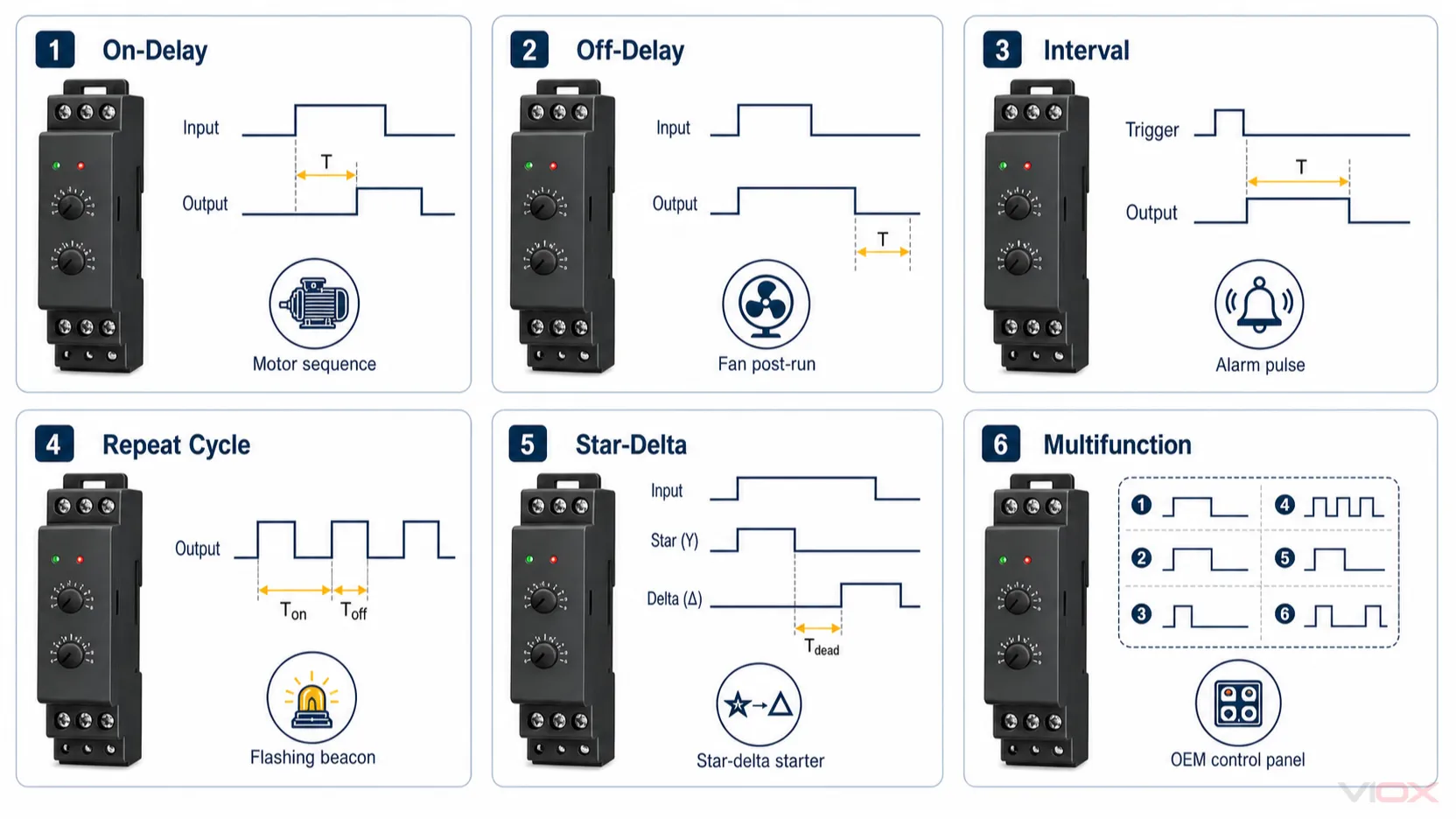
ใช้ภาพประกอบเพื่อเปรียบเทียบลำดับการทำงาน ไม่ใช่เพื่อระบุขั้วต่อที่เป็นมาตรฐานสากล ให้ปฏิบัติตามแผนภาพเวลาและแผนภาพการเดินสายของรีเลย์รุ่นนั้นๆ เสมอ.
ชื่อการประยุกต์ใช้งานเพียงอย่างเดียวไม่สามารถใช้เลือกไทม์รีเลย์ได้ คำถามที่มีประโยชน์คือ: เอาต์พุตต้องทำหน้าที่อย่างไรเมื่อเงื่อนไขการควบคุมเปลี่ยนแปลง?
| ข้อกำหนดในการใช้งาน | ฟังก์ชันที่น่าจะเป็นไปได้ | การตรวจสอบถัดไป |
|---|---|---|
| เริ่มการทำงานของมอเตอร์หรือสายพานลำเลียงหลายตัวตามลำดับ | หน่วงเวลาเปิด | ลำดับที่จำเป็น พฤติกรรมการรีเซ็ต และหน้าที่ของคอยล์คอนแทคเตอร์ |
| ป้องกันการรีสตาร์ทคอมเพรสเซอร์ในทันที | การหน่วงเวลาทำงาน (On-delay) หรือระบบควบคุมป้องกันการสตาร์ทถี่ (anti-short-cycle control) โดยเฉพาะ | เหตุการณ์ใดที่เริ่มการล็อกเอาต์และครอบคลุมทุกเส้นทางการรีสตาร์ทหรือไม่ |
| ให้พัดลมทำงานต่อไปหลังจากได้รับคำสั่งหยุด | หน่วงเวลาปิด | แหล่งจ่ายไฟควบคุมไทม์เมอร์ยังคงมีอยู่หรือไม่ |
| สั่งงานปั๊มหรือวาล์วเป็นระยะเวลาคงที่หนึ่งช่วง | ตัวเลือกการขอข้อมูล | แหล่งสัญญาณทริกเกอร์และพฤติกรรมการทริกเกอร์ซ้ำ |
| กะพริบสัญญาณไฟหรือหมุนเวียนระบบระบายอากาศ | รอบการทำงานซ้ำ | การทำงานแบบ ON-first/OFF-first และการปรับตั้งค่า T1/T2 แยกอิสระ |
| การสลับสตาร์ทเตอร์มอเตอร์ที่เหมาะสมจากแบบสตาร์เป็นแบบเดลต้า | สตาร์เดลต้า | ลำดับการสตาร์ทและระบบอินเตอร์ล็อกที่สมบูรณ์ |
| การสร้างมาตรฐานแพลตฟอร์มควบคุม OEM แบบยืดหยุ่น | มัลติฟังก์ชัน | การกำกับดูแลโหมด เอกสารประกอบ และการควบคุมการเปลี่ยนทดแทน |
สำหรับการออกแบบเฉพาะงาน ให้ใช้คู่มือเชิงลึกที่เกี่ยวข้องแทนการใช้ตารางนี้เป็นข้อกำหนดขั้นสุดท้าย ตัวอย่างเช่น การตั้งเวลาคอมเพรสเซอร์ HVAC แล้ว การป้องกันปั๊มทำงานสั้นเกินไป.
วิธีการเลือกฟังก์ชันไทม์รีเลย์ที่เหมาะสม
ใช้คำถามห้าข้อนี้เป็นขั้นตอนแรก:
- ต้องการลำดับเวลาของเอาต์พุตที่แน่นอนอย่างไร? วาดสถานะอินพุตและเอาต์พุตก่อนที่จะเลือกรุ่นผลิตภัณฑ์.
- สิ่งใดเป็นตัวเริ่มและรีเซ็ตการจับเวลา? แยกแยะระหว่างการจ่ายไฟ/การตัดไฟ กับสัญญาณทริกเกอร์แยกต่างหาก.
- จะเกิดอะไรขึ้นระหว่างที่ไฟฟ้าขัดข้อง? ระบุพฤติกรรมการรีเซ็ตทันที สถานะคงค้าง การรีสตาร์ท หรือการหน่วงเวลาปิดเครื่องที่ผ่านการตรวจสอบแล้ว.
- เอาต์พุตจะสลับการทำงานอะไร ระบุโหลดควบคุมและหน้าที่การทำงานของโหลดนั้น ค่ากระแสสำหรับโหลดความต้านทานเพียงอย่างเดียวไม่เพียงพอสำหรับคอยล์คอนแทคเตอร์หรือโซลินอยด์ที่เป็นโหลดเหนี่ยวนำ.
- มีข้อจำกัดทางกายภาพและเอกสารใดบ้างที่เกี่ยวข้อง ตรวจสอบแหล่งจ่าย ช่วงการทำงาน การติดตั้ง ขั้วต่อ สภาพแวดล้อม การรับรอง และแผนภาพเวลาที่แน่นอน.
คำถามเหล่านี้ช่วยระบุตระกูลอุปกรณ์ที่เหมาะสม ไม่ใช่หมายเลขชิ้นส่วนที่พร้อมสั่งซื้อ ให้ใช้ คู่มือการเลือกไทม์เมอร์รีเลย์ของ VIOX เพื่อแปลงความต้องการใช้งานให้เป็นข้อกำหนดที่สมบูรณ์ สำหรับการเปรียบเทียบรุ่น ให้ตรวจสอบ กลุ่มผลิตภัณฑ์รีเลย์ตั้งเวลา VIOX.
ขอบเขตการเดินสายพื้นฐาน
โดยปกติแล้วไทม์รีเลย์จะอยู่ในวงจรควบคุม:
แหล่งจ่ายไฟควบคุมหรือสัญญาณทริกเกอร์
            ↓
        ไทม์รีเลย์
            ↓
   อินเทอร์เฟซเอาต์พุตแบบตั้งเวลา
            ↓
คอยล์คอนแทคเตอร์, อินพุต PLC, สัญญาณเตือน หรือโหลดควบคุมอื่น ๆ ที่เข้ากันได้
ไทม์รีเลย์ทำหน้าที่ให้ตรรกะการตั้งเวลา ไม่ใช่อุปกรณ์ที่ทำหน้าที่ตัดต่อกำลังไฟฟ้าของมอเตอร์โดยอัตโนมัติ การกำหนดหมายเลขขั้วต่อจะแตกต่างกันไปตามผู้ผลิตและรุ่น แม้แต่เครื่องหมายที่คุ้นเคยก็อาจทำหน้าที่ต่างกันในโหมดการทำงานที่ต่างกัน.
สำหรับแผนภาพระดับขั้วต่อ ให้ใช้ คู่มือการเดินสายไทม์รีเลย์. สำหรับสตาร์ทเตอร์มอเตอร์ ให้ใช้ คู่มือการเดินสายไทม์รีเลย์สำหรับสตาร์ทเตอร์มอเตอร์. ให้ปฏิบัติงานกับอุปกรณ์ที่ไม่มีกระแสไฟฟ้าเท่านั้น เว้นแต่ขั้นตอนการทดสอบที่ได้รับอนุญาตจะกำหนดให้ต้องวัดค่าขณะมีกระแสไฟฟ้า และต้องปฏิบัติตามกฎระเบียบด้านความปลอดภัยทางไฟฟ้าและกฎระเบียบของสถานที่ปฏิบัติงานที่เกี่ยวข้อง.
จุดตรวจสอบการตั้งค่าและการทดสอบการทำงาน
ก่อนจ่ายไฟให้กับอุปกรณ์ที่ควบคุม:
- ตรวจสอบให้แน่ใจว่าฟังก์ชันที่เลือกตรงกับแผนภาพเวลาของอินพุต/เอาต์พุตที่ต้องการ.
- ยืนยันช่วงเวลาให้ถูกต้องก่อนทำการปรับละเอียด.
- ตรวจสอบขั้วต่อแหล่งจ่ายไฟและขั้วต่อทริกเกอร์จากแผนภาพของรุ่นนั้นๆ โดยเฉพาะ.
- ยืนยันเส้นทางเอาต์พุตแบบปกติเปิดหรือปกติปิดที่ต้องการ.
- ตรวจสอบภาระงานเอาต์พุตสำหรับโหลดควบคุมที่เชื่อมต่อ และใช้อุปกรณ์ลดสัญญาณรบกวนที่เหมาะสมตามที่ระบุไว้ในเอกสารข้อมูลของอุปกรณ์.
- ทดสอบลำดับการทำงานภายใต้สภาวะที่มีการควบคุม รวมถึงพฤติกรรมการรีเซ็ตและการขัดข้องของแหล่งจ่ายไฟ.
- บันทึกโหมด ช่วงการทำงาน การตั้งค่าสุดท้าย และรุ่นอ้างอิงไว้ในเอกสารประจำตู้ควบคุม.
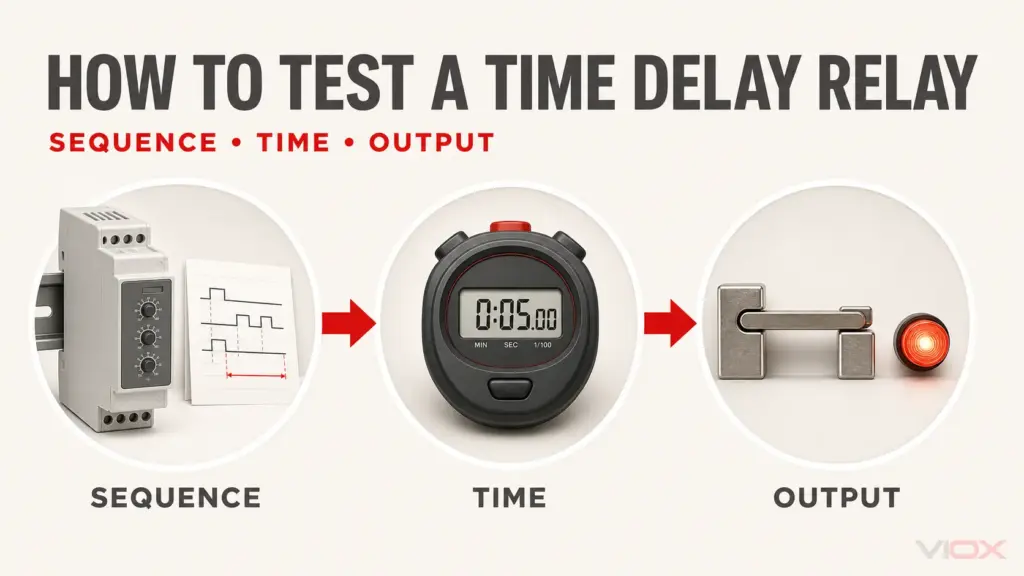
หากจำเป็นต้องทำการทดสอบบนโต๊ะปฏิบัติการ ให้ปฏิบัติตาม คู่มือการทดสอบไทม์รีเลย์แบบทีละขั้นตอน แทนที่จะใช้วิธีการดัดแปลงภายในตู้ควบคุมที่มีการจ่ายไฟอยู่.
การคัดกรองเพื่อแก้ไขปัญหาเบื้องต้น
| อาการ | การตรวจสอบเบื้องต้น | แหล่งข้อมูลเชิงลึก |
|---|---|---|
| ไม่มีสัญญาณบ่งชี้หรือการทำงานของเวลา | การจ่ายไฟ อุปกรณ์ป้องกัน และการระบุขั้วต่อที่ถูกต้อง | ไทม์รีเลย์ไม่ทำงาน |
| การนับเวลาเริ่มต้นขึ้นแต่เอาต์พุตไม่มีการเปลี่ยนแปลง | การเลือกฟังก์ชัน, ตัวกระตุ้นที่เหมาะสม, ขั้วต่อเอาต์พุต, เงื่อนไขการรีเซ็ต | วิธีการทดสอบไทม์รีเลย์ |
| การหน่วงเวลาหรือการรีเซ็ตไม่สม่ำเสมอ | ความเสถียรของแหล่งจ่าย, ช่วงเวลาที่เลือก, ระยะเวลาการกระตุ้น, เวลาในการรีเซ็ต | ไทม์รีเลย์ไม่ทำงาน |
| รีเลย์ทำงานแต่โหลดไม่ทำงาน | วงจรโหลด, ทางเดินกระแสไฟฟ้า, แรงดันคอยล์, ภาระงานของหน้าสัมผัส | รีเลย์มีเสียงดังคลิกแต่โหลดไม่ทำงาน |
| หน้าสัมผัสร้อนจัด เชื่อมติดกัน หรือชำรุดก่อนกำหนด | ภาระงานแบบอินดักทีฟ, ความถี่ในการสวิตช์, การลดทอนสัญญาณรบกวน, การเลือกอินเตอร์เฟซ | เหตุใดหน้าสัมผัสของไทม์รีเลย์จึงชำรุดเมื่อใช้กับโหลดแบบอินดักทีฟ |
โดยปกติแล้วแผนภาพเวลาจะมีประโยชน์มากกว่าชื่อผลิตภัณฑ์เมื่อต้องวินิจฉัยปัญหาลำดับการทำงาน เนื่องจากแผนภาพจะแสดงความสัมพันธ์ที่จำเป็นระหว่างอินพุต, เวลา, เอาต์พุต และการรีเซ็ต.
มาตรฐานและขอบเขตการกำหนดพิกัด
IEC 61812-1:2023 ครอบคลุมข้อกำหนดและการทดสอบสำหรับไทม์รีเลย์และคัปปลิ้งรีเลย์ภายในขอบเขตการใช้งานทางอุตสาหกรรมและที่อยู่อาศัยที่ระบุไว้ ขอบเขตของมาตรฐานไม่ได้เป็นเครื่องพิสูจน์ว่าไทม์รีเลย์ทุกตัวได้รับการรับรอง ตู้ควบคุมทั้งหมดเป็นไปตามมาตรฐาน หรือส่วนประกอบนั้นเหมาะสมสำหรับการติดตั้งเฉพาะงาน.
สำหรับความแตกต่างดังกล่าว โปรดดูที่ คู่มือการปฏิบัติตามมาตรฐานไทม์รีเลย์ IEC 61812-1. ควรขอเอกสารรับรอง พิกัด แผนภาพ และใบรับรองเฉพาะรุ่นเสมอเมื่อจำเป็นสำหรับโครงการหรือตลาดนั้นๆ.
คำถามที่ถูกถามบ่อย
ไทม์รีเลย์มีประเภทหลักอะไรบ้าง?
ประเภทที่ใช้งานจริงทั่วไป ได้แก่ on-delay, off-delay, interval หรือ one-shot, repeat-cycle, star-delta และมัลติฟังก์ชันไทม์รีเลย์ ส่วน Power-off delay เป็นอีกหนึ่งการทำงานที่สำคัญซึ่งต้องแยกความแตกต่างออกจากการทำงานแบบ signal off-delay ทั่วไป.
ความแตกต่างระหว่าง on-delay และ off-delay คืออะไร?
On-delay จะรอเวลาก่อนเริ่มทำงานที่เอาต์พุตหลังจากเงื่อนไขเริ่มต้นปรากฏขึ้น ส่วน Off-delay จะเริ่มทำงานที่เอาต์พุตก่อนและรอเวลาก่อนที่จะกลับสู่สถานะเดิมหลังจากเงื่อนไขการทริกเกอร์ถูกยกเลิก ทั้งนี้ การจัดวางแหล่งจ่ายไฟ การทริกเกอร์ และการรีเซ็ตที่แน่นอนจะขึ้นอยู่กับแต่ละรุ่น.
ไทม์รีเลย์แบบ off-delay สามารถทำงานต่อไปได้หรือไม่หลังจากตัดแหล่งจ่ายไฟทั้งหมดออกแล้ว?
ไม่โดยอัตโนมัติ โหมดหน่วงเวลาปิด (off-delay) หลายโหมดต้องการให้มีแหล่งจ่ายไฟเลี้ยงไทม์รีเลย์อยู่ตลอดในขณะที่สัญญาณทริกเกอร์แยกต่างหากเปลี่ยนสถานะ หากเอาต์พุตจำเป็นต้องทำงานต่อหลังจากไฟเลี้ยงหลักดับลงทั้งหมด ให้เลือกอุปกรณ์ที่มีการระบุพฤติกรรมการหน่วงเวลาเมื่อไฟดับไว้ในเอกสารข้อมูลอย่างชัดเจน.
ไทม์รีเลย์แบบมัลติฟังก์ชันดีกว่าไทม์รีเลย์แบบฟังก์ชันเดียวเสมอไปหรือไม่?
ไม่เสมอไป ไทม์รีเลย์แบบมัลติฟังก์ชันช่วยลดความหลากหลายของรหัสสินค้าและให้ความยืดหยุ่น ส่วนไทม์รีเลย์แบบฟังก์ชันเดียวสามารถช่วยให้การทดสอบการทำงานง่ายขึ้นและลดการเปลี่ยนโหมดโดยไม่ตั้งใจในอุปกรณ์ที่ติดตั้งถาวร การเลือกแบบใดดีกว่านั้นขึ้นอยู่กับการใช้งานและกระบวนการควบคุมการตั้งค่า.
รีเลย์ตั้งเวลาสามารถสับเปลี่ยนมอเตอร์โดยตรงได้หรือไม่?
โดยปกติแล้วไทม์รีเลย์จะถูกใช้ในวงจรควบคุมเพื่อสั่งการคอนแทคเตอร์หรือมอเตอร์สตาร์ทเตอร์ที่มีพิกัดเหมาะสม การที่เอาต์พุตใดจะสามารถสลับโหลดเฉพาะได้หรือไม่นั้น ขึ้นอยู่กับพิกัดเอาต์พุตที่แน่นอน หน้าที่การใช้งาน ลักษณะของโหลด และคำแนะนำของผู้ผลิต.
หมายเลขขั้วต่อของไทม์รีเลย์ทุกรุ่นเหมือนกันหรือไม่?
ไม่เหมือนกัน แม้ว่ารูปแบบการกำหนดหมายเลขบางอย่างจะเป็นที่นิยมใช้กันทั่วไป แต่ฟังก์ชันของขั้วต่อ อินพุตทริกเกอร์ ชุดหน้าสัมผัสที่สอง และโหมดการตั้งเวลาจะแตกต่างกันไป โปรดใช้แผนภาพการเดินสายและแผนภาพการตั้งเวลาสำหรับผู้ผลิตและรุ่นนั้นๆ โดยเฉพาะ.
แหล่งข้อมูล
- IEC 61812-1:2023 — ไทม์รีเลย์และคัปปลิ้งรีเลย์: ข้อกำหนดและการทดสอบ
- Schneider Electric — คำอธิบายฟังก์ชันไทม์รีเลย์รุ่น 9050JCK
- Schneider Electric — การทำงานของไทม์รีเลย์แบบหน่วงเวลาเมื่อเริ่มทำงาน (on-delay)
- Schneider Electric — การทำงานของไทม์รีเลย์แบบหน่วงเวลาเมื่อหยุดทำงาน (off-delay)
- ข้อมูลจำเพาะและโหมดการทำงานของไทม์รีเลย์แบบโซลิดสเตต Omron H3DS
ประเมินไทม์รีเลย์ VIOX สำหรับลำดับการควบคุมของคุณ
เมื่อกำหนดฟังก์ชันการตั้งเวลาที่ต้องการแล้ว ให้เปรียบเทียบกับข้อมูลที่เผยแพร่ของ ไทม์รีเลย์ซีรีส์ VIOX ตามโหมดการทำงาน, แหล่งจ่ายไฟ, ช่วงเวลา, รูปแบบการทริกเกอร์, หน้าที่ของเอาต์พุต และการติดตั้ง สำหรับการสนับสนุน OEM หรือการประกอบตู้ควบคุม ให้ส่งร่างการตั้งเวลาและข้อกำหนดการใช้งานไปที่ [email protected].