Sizing fuses and disconnects in PV combiner boxes requires applying the NEC 156% rule: multiply the string short-circuit current (Isc) by 1.56, then select the next standard fuse rating. This two-stage calculation accounts for continuous duty operation and irradiance spikes. Proper sizing prevents system failures, ensures code compliance, and protects against fire hazards in solar installations.
Understanding PV Fuses and Disconnects
What Are PV-Rated Fuses?
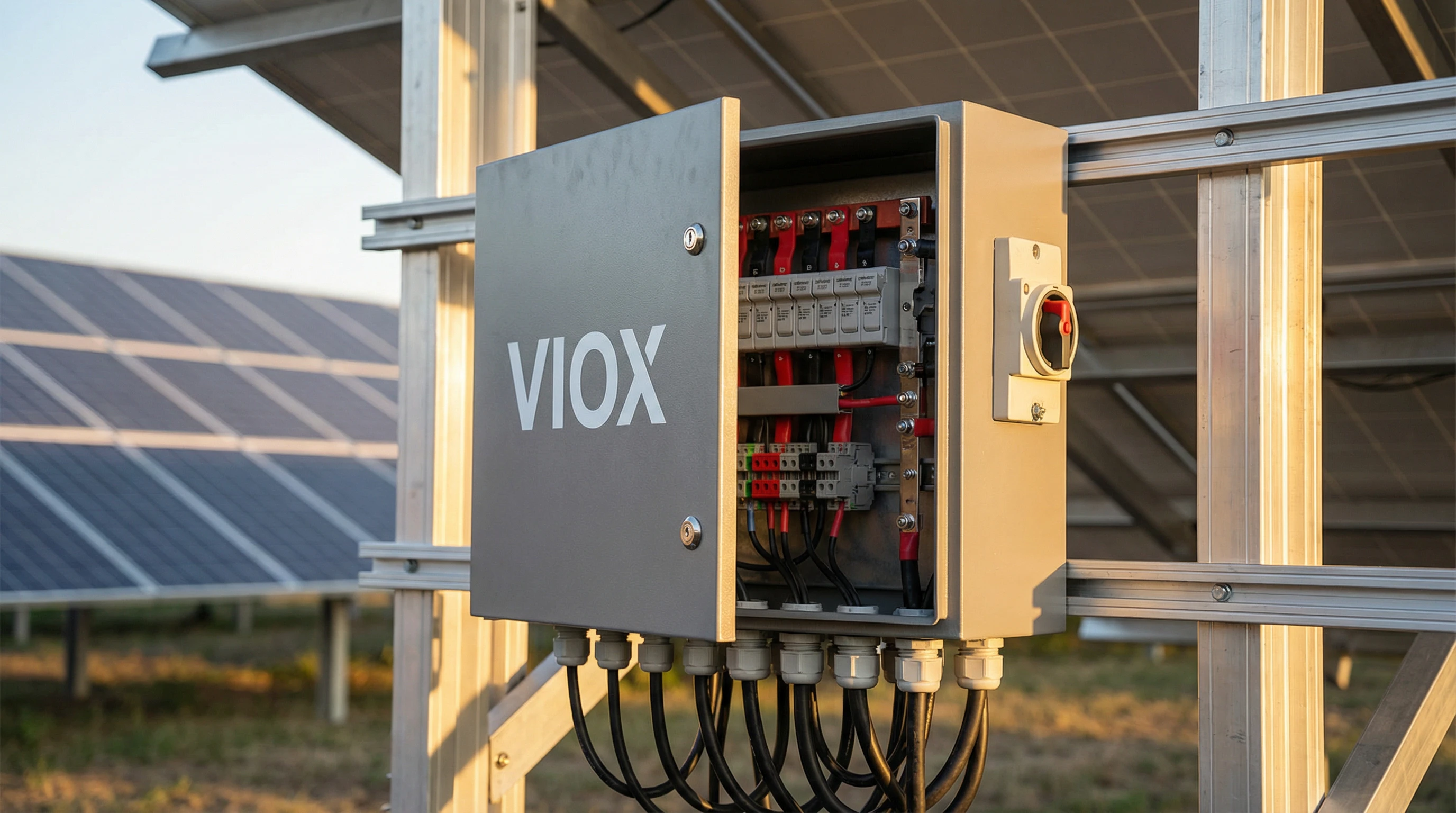
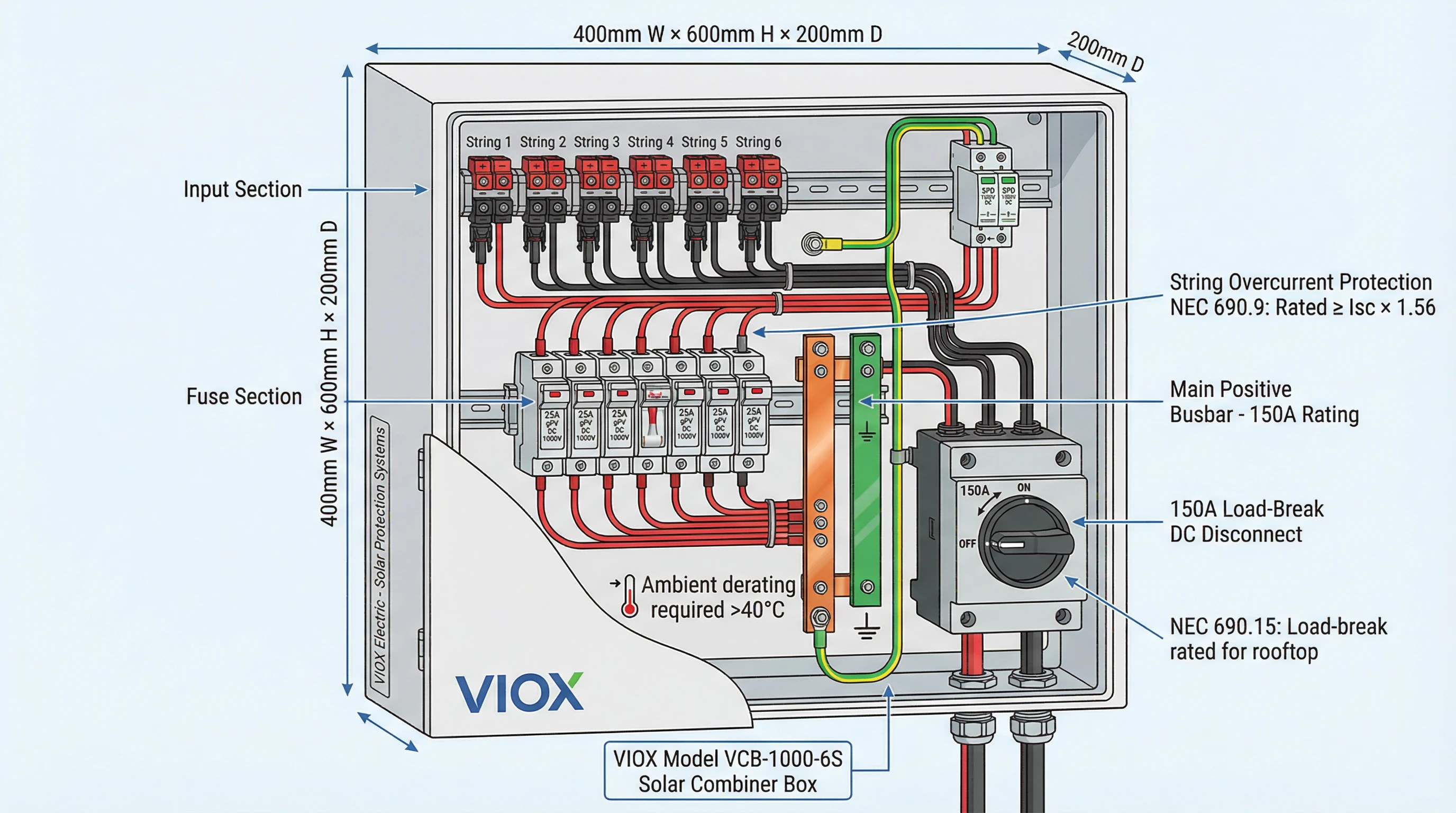
PV fuses—designated as gPV class under IEC 60269-6—are overcurrent protection devices specifically engineered for direct current applications in solar systems. Unlike standard AC fuses, gPV fuses can safely interrupt DC fault currents, which are notoriously difficult to extinguish due to the absence of a natural current zero-crossing. These fuses withstand the extreme thermal cycling from fluctuating solar irradiance without premature failure. They’re designed to interrupt at 1.35 to 1.45 times their rated current within one to two hours, protecting against reverse overcurrents when one string feeds into a faulted parallel string.
What Are DC Disconnects?
DC disconnects are switches that isolate the combiner box output from downstream equipment for maintenance and emergency de-energization. NEC 690.15 requires these disconnects to be load-break rated for rooftop applications, meaning they can safely open circuits under full load current without creating dangerous arc flash. Load-break switches include arc-extinguishing chambers and contacts rated for the high arc energy of DC circuits. Non-load-break disconnects—simple isolators—can only be operated after the circuit is de-energized and are unsuitable for combiner box outputs.
Step-by-Step Fuse Sizing Methodology
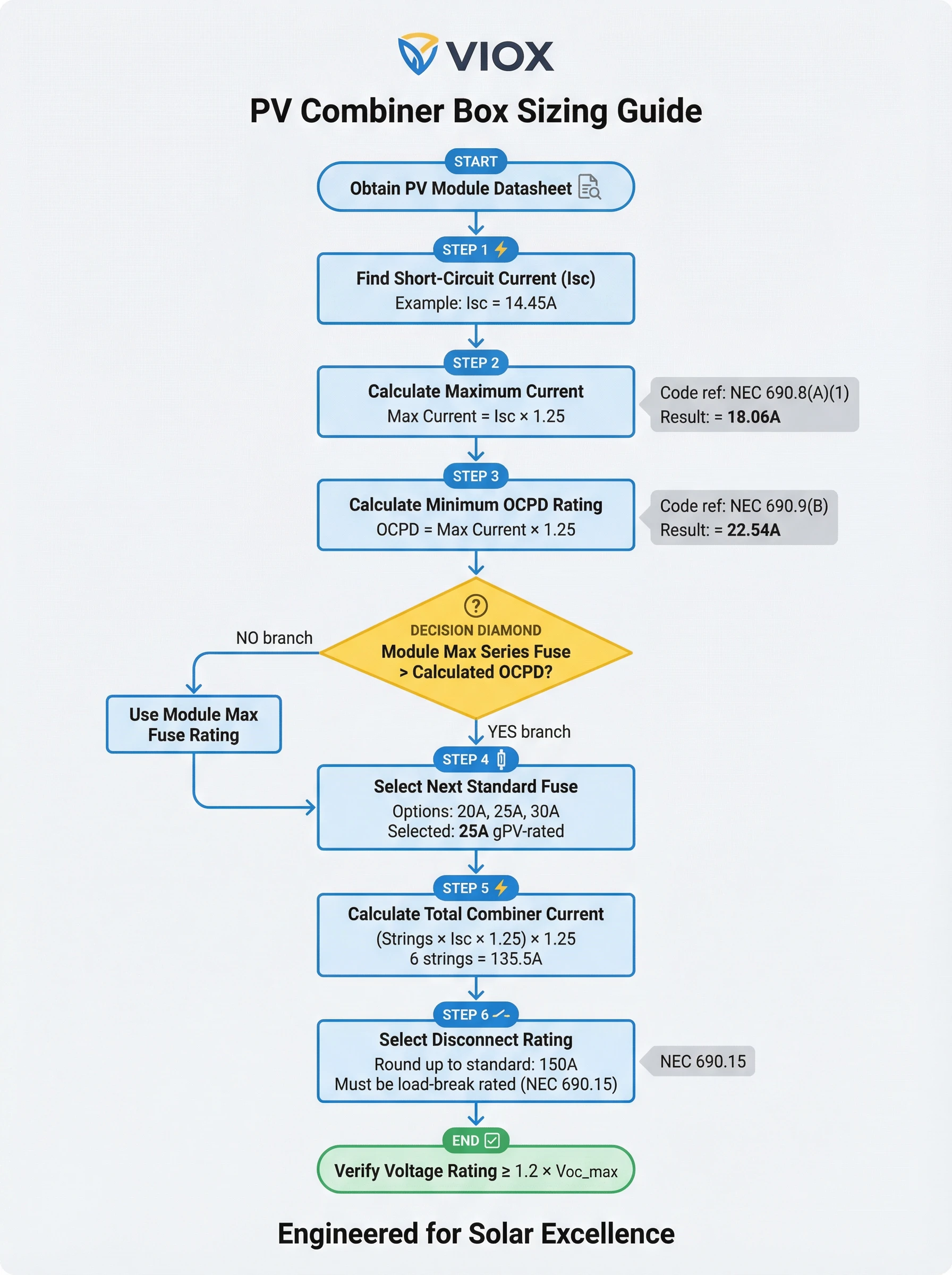
Step 1: Calculate String Short-Circuit Current
Begin with the module’s short-circuit current (Isc) from the datasheet. Modern high-efficiency panels range from 9A to 18.5A depending on power class. For strings with modules in series, the Isc remains constant (series connection doesn’t add current). For example, a 580W TOPCon module with Isc = 14.45A in a 10-module string still produces 14.45A at short-circuit.
Step 2: Apply the NEC 156% Rule
NEC Article 690 requires two consecutive 125% multipliers:
First multiplier (NEC 690.8(A)(1)): Calculate maximum circuit current
- Maximum Current = Isc × 1.25
- Accounts for the “cloud edge effect”—when sunlight reflects off cloud edges, irradiance can briefly exceed 1,000 W/m², pushing current above rated Isc.
Second multiplier (NEC 690.9(B)): Size overcurrent protection for continuous duty
- OCPD Rating = Maximum Current × 1.25
- PV circuits operate at maximum output for 3+ hours daily. Standard devices handle only 80% of rated current continuously, so the 125% factor (inverse of 80%) prevents nuisance tripping.
Combined calculation: Isc × 1.25 × 1.25 = Isc × 1.56
Step 3: Select Standard Fuse Rating
Round up to the next available standard fuse size: 10A, 15A, 20A, 25A, 30A. The selected fuse must not exceed the module’s maximum series fuse rating (specified on the datasheet, typically 20A to 30A for most panels).
Example: String Isc = 14.45A
- Minimum fuse rating: 14.45A × 1.56 = 22.54A
- Selected fuse: 25A gPV-rated
Step 4: Size the DC Disconnect
Sum the maximum currents from all parallel strings, then apply a 125% safety factor:
Disconnect Rating = (Number of Strings × Isc × 1.25) × 1.25
For 6 strings at 14.45A each:
- Total current: 6 × 14.45A × 1.25 = 108.4A
- Disconnect rating: 108.4A × 1.25 = 135.5A
- Selected disconnect: 150A load-break rated
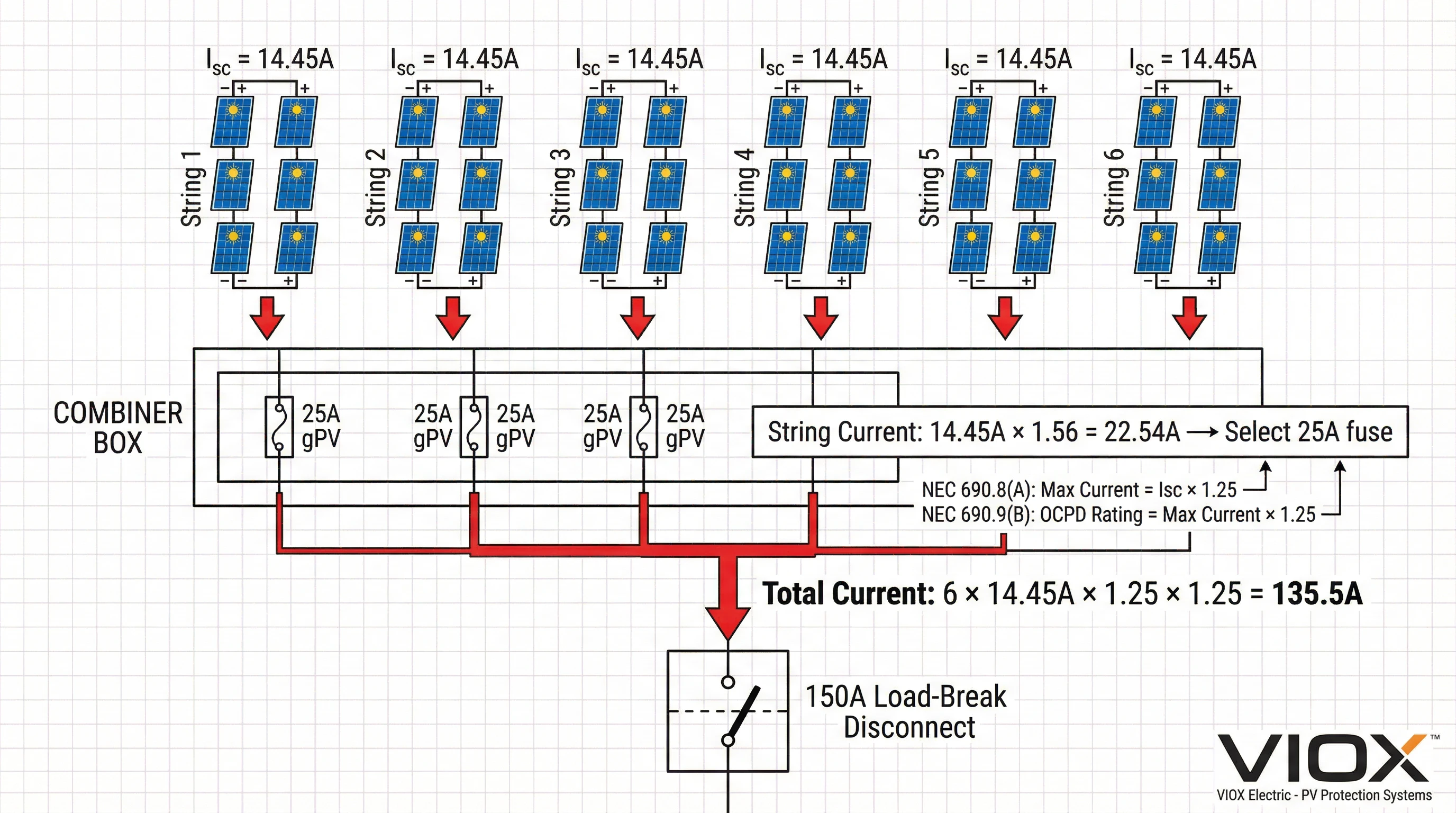
Table 1: Fuse Sizing Examples for Common PV Modules
| Module Power | Module Isc | Min Fuse Rating (×1.56) | Standard Fuse Selected | Max Strings per 30A Breaker |
|---|---|---|---|---|
| 400W | 10.5A | 16.38A | 20A | 8 |
| 500W | 13.0A | 20.28A | 25A | 6 |
| 580W | 14.45A | 22.54A | 25A | 6 |
| 600W (TOPCon) | 18.5A | 28.86A | 30A | 4 |
| 750W (HJT) | 15.8A | 24.65A | 25A | 5 |
Quick Reference Sizing Tables
Standard Configurations and Disconnect Ratings
Table 2: Disconnect Sizing by String Configuration
| Number of Strings | String Isc | Total Max Current (×1.25) | Min Disconnect Rating (×1.56) | Recommended Disconnect |
|---|---|---|---|---|
| 4 | 10A | 50A | 62.4A | 80A |
| 6 | 10A | 75A | 93.6A | 100A |
| 8 | 10A | 100A | 124.8A | 150A |
| 4 | 14A | 70A | 87.4A | 100A |
| 6 | 14A | 105A | 131.0A | 150A |
| 8 | 14A | 140A | 174.8A | 200A |
NEC vs IEC: Key Sizing Differences
While both codes prioritize safety, their sizing approaches differ:
NEC 690.8/690.9 (North America):
- Fuse sizing: Isc × 1.56 (156%)
- Rationale: Continuous duty + irradiance spikes
- Exception: 100% rated devices need only 1.25× multiplier
IEC 62548 (International):
- Fuse sizing range: 1.5 × Isc ≤ In ≤ 2.4 × Isc
- More flexible, allows optimization for specific conditions
- Temperature derating required above 45°C ambient
Table 3: Code Comparison for 12A String
| Standard | Minimum Fuse Rating | Typical Selection | Design Philosophy |
|---|---|---|---|
| NEC | 18.72A (12A × 1.56) | 20A | Conservative, single multiplier |
| IEC | 18.0A to 28.8A (12A × 1.5 to 2.4) | 20A to 25A | Flexible range based on conditions |
Critical Selection Criteria
Voltage Rating Requirements
Fuse and disconnect voltage ratings must exceed the system’s maximum open-circuit voltage (Voc) at the lowest expected ambient temperature.
Calculation: Voc_max = Module Voc × Number of Series Modules × Temperature Coefficient
- At -40°C: 49V × 10 × [1 + 0.0027 × (25 – (-40))] = 576V
- Required rating: 600V minimum (standard: 600V, 1000V, 1500V). IEC 60269-6 recommends fuse voltage rating ≥ 1.2 × Voc_max for additional safety margin.
Interrupting Capacity (Breaking Capacity)
The DC interrupting capacity (Icn or Icu) must exceed the maximum prospective fault current at the installation point. For combiner box inputs, this is typically the combined Isc of all other parallel strings. For 8 strings at 14A each:
- Prospective fault current: 7 × 14A = 98A (worst case: 7 healthy strings feed into 1 faulted string)
- Required Icu: ≥ 150A (standard gPV fuses: 200A to 1500A Icu)
Temperature Derating
Combiner boxes in direct sunlight can reach 65°C to 75°C internal temperature. Most gPV fuses are rated at 40°C ambient. Above this, current capacity decreases:
- At 50°C: Derate to 95% of nominal current
- At 60°C: Derate to 90% of nominal current
- At 70°C: Derate to 85% of nominal current
If your 20A fuse operates at 65°C ambient, effective rating = 20A × 0.87 = 17.4A. Verify this exceeds your calculated minimum.
Table 4: Component Selection Checklist
| Selection Factor | Specification Requirement | Code Reference | Verification Method |
|---|---|---|---|
| Fuse current rating | ≥ Isc × 1.56 (NEC) or 1.5-2.4 (IEC) | NEC 690.9(B), IEC 62548 | Datasheet Isc × multiplier |
| Fuse voltage rating | ≥ 1.2 × Voc_max at min temp | IEC 60269-6 | Module Voc × series count × temp factor |
| Fuse class | gPV rated (IEC 60269-6) | NEC 690.9(D) | Verify “gPV” marking |
| Max series fuse | ≤ Module max fuse rating | Module datasheet | Check nameplate |
| Disconnect current | ≥ Total Isc × 1.56 | NEC 690.13 | Sum all string currents |
| Disconnect type | Load-break rated (rooftop) | NEC 690.15 | Verify load-break certification |
| Interrupting capacity | ≥ Max fault current | NEC 690.9(C) | Calculate parallel string contribution |
| Temperature rating | Account for ambient derating | IEC 60269-6 | Measure combiner box internal temp |
Common Sizing Errors to Avoid
Error 1: Using AC-Rated Fuses in DC Applications
AC fuses cannot safely interrupt DC currents. DC arcs don’t self-extinguish at current zero-crossing (there is none in DC). Always specify gPV-rated fuses with DC voltage ratings matching your system.
Error 2: Undersizing for Continuous Duty
Applying only the first 125% multiplier (Isc × 1.25) without the second results in a fuse rated for only 80% continuous duty. The device will overheat and fail prematurely during peak sun hours. Always use the full 156% factor unless using 100% rated devices.
Error 3: Ignoring Module Maximum Series Fuse Rating
Even if calculations suggest a 30A fuse, if the module datasheet limits series fuses to 20A, you must use 20A. Exceeding this value voids warranties and creates fire risk. Solution: reduce strings per combiner or use modules with higher fuse ratings.
Error 4: Parallel String Miscalculation
When sizing the main combiner disconnect, sum the maximum currents (Isc × 1.25) of all strings, then apply the second 125% multiplier. Don’t apply 156% to each string separately—the first multiplier is per-string, the second is for the combined OCPD.
Incorrect: (String 1: 10A × 1.56) + (String 2: 10A × 1.56) = 31.2A
Correct: [(10A + 10A) × 1.25] × 1.25 = 31.25A
Error 5: Oversizing for “Future Expansion”
Installing a 60A fuse for a 10A string “just in case” eliminates overcurrent protection. The fuse won’t open during reverse fault conditions, allowing cable damage or fire. Size fuses for the actual string current; upgrade combiner boxes when adding capacity.
Frequently Asked Questions
Q: What size fuse do I need for a string with 10.5A Isc?
A: Minimum fuse rating = 10.5A × 1.56 = 16.38A. Select the next standard size: 20A gPV-rated fuse. Verify this doesn’t exceed the module’s maximum series fuse rating on the datasheet.
Q: Can I use standard AC fuses in a DC combiner box?
A: No. AC fuses lack the DC interrupting capacity to safely clear DC faults. DC arcs sustain indefinitely without current zero-crossing. Always use gPV-rated fuses (IEC 60269-6) with DC voltage ratings matching your system voltage.
Q: What’s the difference between NEC and IEC fuse sizing?
A: NEC requires a fixed 156% multiplier (Isc × 1.56) to account for continuous duty and irradiance spikes. IEC 62548 permits a range from 1.5× to 2.4× Isc, allowing designers to optimize for specific ambient temperatures and module characteristics. Both ensure safety but offer different flexibility.
Q: How do I size a combiner for future string expansion?
A: Size fuses for the actual current of installed strings. For the disconnect and busbars, you can oversize based on planned capacity. Example: Install 20A fuses for current 4-string system (14A Isc), but use a 150A disconnect and 6-position busbar to accommodate adding 2 more strings later without replacing the enclosure.
Q: Do I need load-break rated disconnects for all combiner boxes?
A: NEC 690.15 requires load-break rated disconnects for combiner boxes located on rooftops. Ground-level combiners may use non-load-break isolators if the system has a main load-break disconnect elsewhere. Always verify with your local Authority Having Jurisdiction (AHJ), as interpretations vary.
Ensure Long-Term System Safety
Proper fuse and disconnect sizing protects your PV investment and ensures years of safe, reliable operation. Apply the NEC 156% rule (Isc × 1.56) for fuses, select the next standard rating, verify against module maximum series fuse limits, and size disconnects for total combined current. When in doubt, consult the latest NEC Article 690 and IEC 62548 standards.
VIOX Electric manufactures a complete line of PV combiner boxes, gPV-rated fuses, and load-break DC disconnects engineered to meet both NEC and IEC requirements. Our technical team provides free sizing support for your specific projects. Contact us at VIOX.com for datasheets and application assistance.