ໃນໜ້ານີ້
ຄຳຕອບໂດຍຫຍໍ້: ຄວາມແຕກຕ່າງລະຫວ່າງມາດຕະຖານ NEMA ແລະ IP
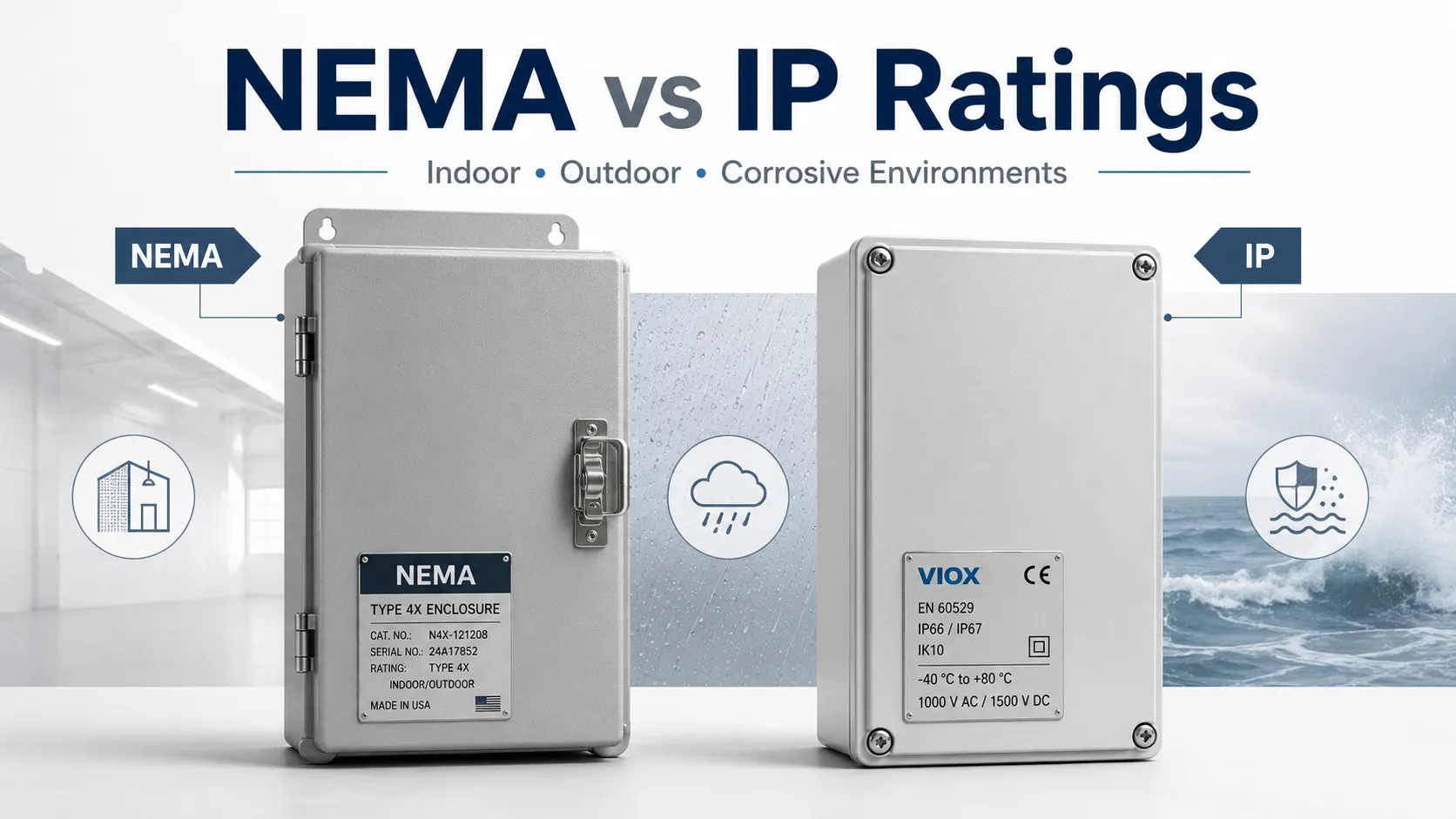
ທັງມາດຕະຖານ NEMA ແລະ IP ຕ່າງກໍໃຊ້ເພື່ອອະທິບາຍລະດັບການປ້ອງກັນຂອງຕູ້ໄຟຟ້າ ແຕ່ທັງສອງມາດຕະຖານບໍ່ໄດ້ວັດແທກສິ່ງດຽວກັນຢ່າງສົມບູນ. ມາດຕະຖານ IP ເຊິ່ງອີງຕາມ IEC 60529 ຈະເນັ້ນໃສ່ການປ້ອງກັນວັດຖຸແຂງ ແລະ ການປ້ອງກັນນ້ຳເຂົ້າ. ສ່ວນປະເພດຕູ້ NEMA ເຊິ່ງອີງຕາມ NEMA 250 ແລະ ມັກໃຊ້ໃນອາເມລິກາເໜືອ ຈະກວມເອົາການປ້ອງກັນສິ່ງແປກປອມເຂົ້າ ແລະ ເງື່ອນໄຂສະພາບແວດລ້ອມອື່ນໆ ເຊັ່ນ: ການກັດກ່ອນ, ການເກີດນ້ຳກ້ອນ, ນ້ຳມັນ, ນ້ຳຢາຫຼໍ່ເຢັນ ລວມເຖິງຄວາມເໝາະສົມໃນການໃຊ້ງານພາຍໃນ ຫຼື ພາຍນອກອາຄານ.
ກົດຂໍ້ທີ່ສຳຄັນທີ່ສຸດມີດັ່ງນີ້: ການປຽບທຽບຈາກ NEMA ໄປຫາ IP ສາມາດໃຊ້ເປັນການອ້າງອີງຂັ້ນຕໍ່າຂອງການປ້ອງກັນສິ່ງແປກປອມໄດ້ ແຕ່ການປຽບທຽບຈາກ IP ໄປຫາ NEMA ບໍ່ສາມາດຖືວ່າເປັນການປ່ຽນແທນກັນໄດ້ຢ່າງສົມບູນ. ຕົວຢ່າງເຊັ່ນ: ຕູ້ທີ່ລະບຸວ່າ NEMA 4X ມັກຈະຖືກອ້າງອີງທຽບເທົ່າກັບ IP66 ໃນດ້ານການປ້ອງກັນຝຸ່ນ ແລະ ນ້ຳ ແຕ່ຕູ້ IP66 ບໍ່ໄດ້ໝາຍຄວາມວ່າເປັນ NEMA 4X ໂດຍອັດຕະໂນມັດ ເນື່ອງຈາກ IP66 ບໍ່ໄດ້ຢັ້ງຢືນເຖິງຄວາມສາມາດໃນການຕ້ານທານການກັດກ່ອນ.
ສຳລັບລູກຄ້າ VIOX ໃນການເລືອກຕູ້ໄຟຟ້າ, ກ່ອງຕໍ່ສາຍ (Junction box), ຕູ້ກະຈາຍໄຟ (Distribution box) ຫຼື ຕູ້ລວມສາຍໄຟໂຊລາເຊວ (PV combiner box), ລະດັບມາດຕະຖານທີ່ເໝາະສົມຈະຂຶ້ນຢູ່ກັບສະພາບແວດລ້ອມຕົວຈິງ ເຊັ່ນ: ຝຸ່ນພາຍໃນ, ຝົນພາຍນອກ, ການລ້າງທຳຄວາມສະອາດ, ອາກາດທີ່ມີຄວາມເຄັມ, ໄອສານເຄມີ, ນ້ຳມັນເຄື່ອງ, ການສຳຜັດກັບແສງ UV, ການປ່ຽນແປງຂອງອຸນຫະພູມ ແລະ ວັດສະດຸທີ່ໃຊ້ຜະລິດຕູ້ເອງ.
ການປຽບທຽບລະຫວ່າງມາດຕະຖານ NEMA ແລະ IP
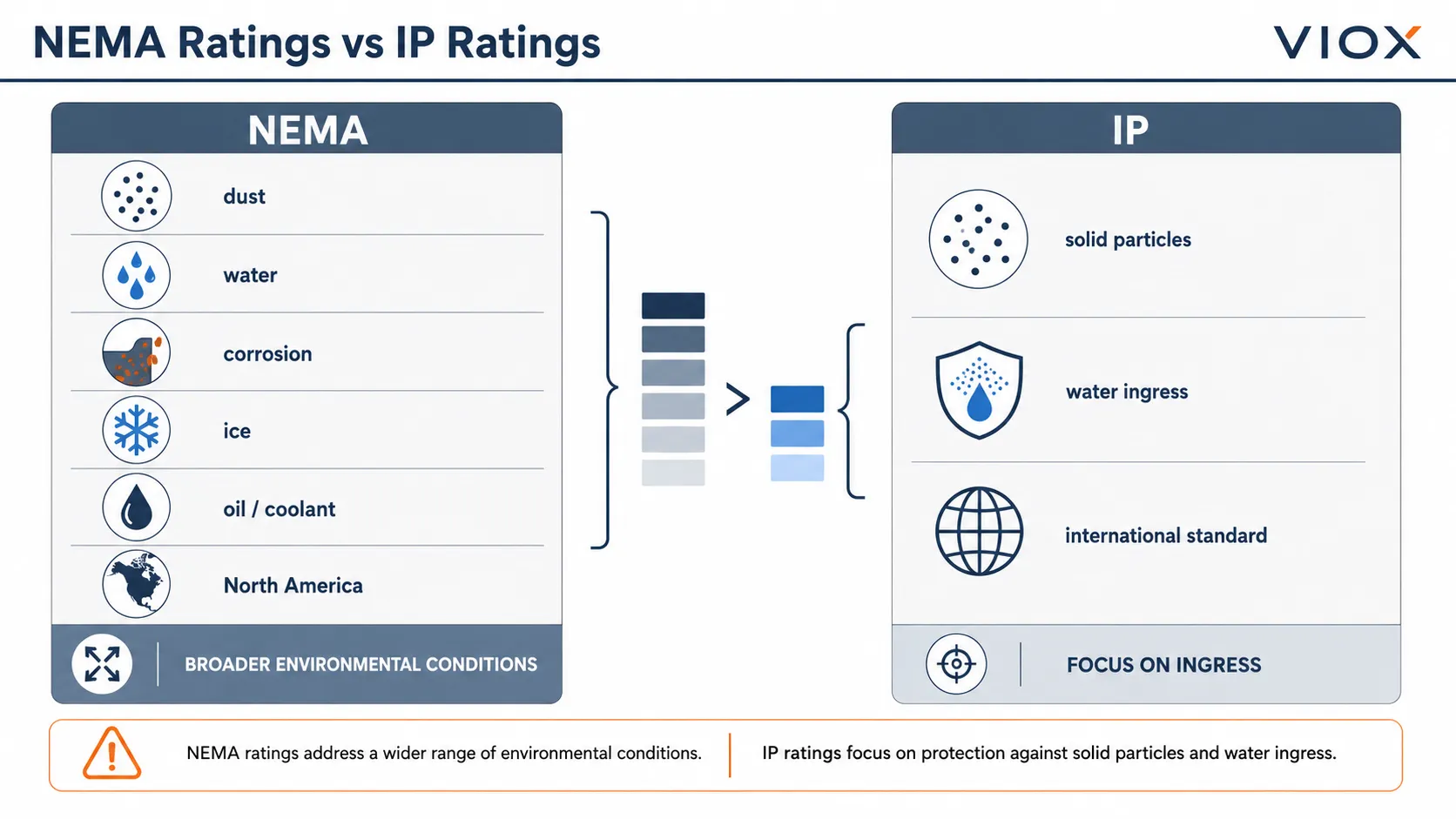
| ປັດໄຈ | ການຈັດອັນດັບ NEMA | ການຈັດອັນດັບ IP |
|---|---|---|
| ມາດຕະຖານຫຼັກ | NEMA 250 enclosure types | ລະຫັດ IP ຕາມມາດຕະຖານ IEC 60529 |
| ຕະຫຼາດຫຼັກ | ອາເມລິກາເຫນືອ | ຕະຫຼາດສາກົນ |
| ຈຸດເນັ້ນໃນການປ້ອງກັນ | ການປ້ອງກັນສິ່ງແປກປອມເຂົ້າສູ່ພາຍໃນ ແລະ ສະພາບແວດລ້ອມ | ການປ້ອງກັນວັດຖຸແຂງ ແລະ ນໍ້າເຂົ້າສູ່ພາຍໃນ |
| ປ້ອງກັນຝຸ່ນ | ກວມເອົາໂດຍຄໍານິຍາມປະເພດ | ຕົວເລກທໍາອິດ, 0 ເຖິງ 6 |
| ການປ້ອງກັນນ້ໍາ | ກວມເອົາໂດຍຄໍານິຍາມປະເພດ | ຕົວເລກທີສອງ, 0 ເຖິງ 9 ຫຼື 9K ຂຶ້ນກັບມາດຕະຖານທີ່ກ່ຽວຂ້ອງ |
| ຄວາມຕ້ານທານຕໍ່ການກັດກ່ອນ | ລວມຢູ່ໃນປະເພດສະເພາະເຊັ່ນ 4X | ບໍ່ໄດ້ກວມເອົາໂດຍລະຫັດ IP ພື້ນຖານ |
| ການກໍ່ຕົວຂອງນໍ້າກ້ອນ | ໄດ້ລະບຸໄວ້ໃນບາງປະເພດຂອງ NEMA | ບໍ່ໄດ້ກວມເອົາໂດຍລະຫັດ IP ພື້ນຖານ |
| ນໍ້າມັນ ຫຼື ນໍ້າຫຼໍ່ເຢັນ | ໄດ້ລະບຸໄວ້ໃນປະເພດເຊັ່ນ 12 ແລະ 13 | ບໍ່ໄດ້ກວມເອົາໂດຍລະຫັດ IP ພື້ນຖານ |
| ການປ່ຽນ | ສາມາດສະໜອງການອ້າງອີງລະດັບ IP ຂັ້ນຕໍ່າໄດ້ | ບໍ່ສາມາດຢັ້ງຢືນປະເພດ NEMA ດ້ວຍຕົວມັນເອງໄດ້ |
| ການນໍາໃຊ້ທີ່ດີທີ່ສຸດ | ໂຄງການໄຟຟ້າໃນອາເມລິກາເໜືອ, ສະພາບແວດລ້ອມອຸດສາຫະກຳ, ການນຳໃຊ້ໃນພື້ນທີ່ທີ່ມີການກັດກ່ອນ ຫຼື ພື້ນທີ່ທີ່ຕ້ອງມີການລ້າງທຳຄວາມສະອາດ | ອຸປະກອນລະດັບໂລກ, ໂຄງການທີ່ອີງຕາມມາດຕະຖານ IEC, ເອກະສານຂໍ້ມູນຜະລິດຕະພັນ, ອຸປະກອນສົ່ງອອກ |
ລະດັບການປ້ອງກັນຂອງຕູ້ NEMA ແມ່ນຫຍັງ?
NEMA ຫຍໍ້ມາຈາກ ສະມາຄົມຜູ້ຜະລິດໄຟຟ້າແຫ່ງຊາດ. ລະດັບການປ້ອງກັນຂອງຕູ້ NEMA ຈັດປະເພດວິທີທີ່ຕູ້ປ້ອງກັນບຸກຄະລາກອນ ແລະ ອຸປະກອນພາຍໃນຈາກສະພາບແວດລ້ອມ. ລະດັບເຫຼົ່ານີ້ຖືກກຳນົດໄວ້ໃນມາດຕະຖານ NEMA 250 ແລະ ຖືກນຳໃຊ້ຢ່າງກວ້າງຂວາງໃນສະຫະລັດອາເມລິກາ ແລະ ການາດາ.
ລະດັບ NEMA ບໍ່ແມ່ນພຽງແຕ່ປ້າຍກຳກັບການປ້ອງກັນຝຸ່ນ ແລະ ນ້ຳເທົ່ານັ້ນ. ຂຶ້ນຢູ່ກັບປະເພດ, ມັນສາມາດກວມເອົາ:
- ການນຳໃຊ້ພາຍໃນ ຫຼື ພາຍນອກອາຄານ
- ຂີ້ຝຸ່ນຕົກໃສ່
- ນ້ຳຢົດໃສ່
- ຝົນ, ໝາກເຫັບ ແລະ ຫິມະ
- ຂີ້ຝຸ່ນທີ່ຖືກລົມພັດມາ
- ນ້ຳທີ່ສີດຈາກສາຍຢາງ
- ຄວາມຕ້ານທານການກັດກ່ອນ
- ການເກີດນ້ຳກ້ອນຢູ່ພາຍນອກ
- ການສຳຜັດກັບນ້ຳມັນ ຫຼື ນ້ຳຢາຫຼໍ່ເຢັນ
- ການຈຸ່ມນ້ຳຊົ່ວຄາວ ຫຼື ເປັນເວລາດົນ
- ການນຳໃຊ້ໃນສະຖານທີ່ທີ່ມີຄວາມສ່ຽງໃນສະພາບແວດລ້ອມທີ່ຖືກຈັດປະເພດແຍກຕ່າງຫາກ
ນີ້ແມ່ນເຫດຜົນທີ່ລະດັບ NEMA ເປັນທີ່ນິຍົມໃຊ້ໃນຕູ້ຄວບຄຸມອຸດສາຫະກຳ, ຕູ້ໄຟຟ້າ, ອຸປະກອນກະຈາຍໄຟ, ກ່ອງຕໍ່ສາຍໄຟພາຍນອກ, ໂຮງງານບຳບັດນ້ຳເສຍ, ພື້ນທີ່ປຸງແຕ່ງອາຫານ, ໂຮງງານເຄື່ອງຈັກ ແລະ ເອກະສານກວດກາຂອງອາເມລິກາເໜືອ.
ສຳລັບລາຍລະອຽດສະເພາະຂອງປະເພດ NEMA, ກະລຸນາເບິ່ງ VIOX ຄູ່ມືລະດັບການປ້ອງກັນຂອງຕູ້ NEMA.
ລະດັບ IP ແມ່ນຫຍັງ?
IP ຫຍໍ້ມາຈາກ ການປົກປ້ອງຂາເຂົ້າ ຫຼື ການປ້ອງກັນສາກົນ (International Protection) ໃນບໍລິບົດຂອງມາດຕະຖານ IEC 60529. ລະຫັດ IP ອະທິບາຍເຖິງລະດັບການປ້ອງກັນທີ່ຕູ້ໄຟຟ້າມອບໃຫ້ ເພື່ອປ້ອງກັນການເຂົ້າເຖິງສ່ວນປະກອບທີ່ເປັນອັນຕະລາຍ, ວັດຖຸແຂງແປກປອມ ແລະ ນ້ຳ.
ລະດັບ IP ປົກກະຕິຈະມີສອງຕົວເລກ:
| ສ່ວນປະກອບຂອງລະຫັດ IP | ຄວາມຫມາຍ | ຕົວຢ່າງ |
|---|---|---|
| ຕົວເລກທີໜຶ່ງ | ການປ້ອງກັນວັດຖຸແຂງ ແລະ ຝຸ່ນລະອອງ | 6 ໃນ IP66 ໝາຍເຖິງການປ້ອງກັນຝຸ່ນລະອອງໄດ້ຢ່າງສົມບູນ |
| ຕົວເລກທີສອງ | ການປ້ອງກັນນ້ຳເຂົ້າ | 6 ໃນ IP66 ໝາຍເຖິງການປ້ອງກັນການສີດນ້ຳແຮງດັນສູງ |
ລະດັບການປ້ອງກັນ IP ທີ່ພົບເຫັນທົ່ວໄປສຳລັບຕູ້ໄຟຟ້າມີດັ່ງນີ້:
| ການຈັດອັນດັບ IP | 实际含义 |
|---|---|
| IP20 | ການປ້ອງກັນການສຳຜັດສຳລັບໃຊ້ພາຍໃນອາຄານ, ບໍ່ມີການປ້ອງກັນນ້ຳ |
| IP44 | ການປ້ອງກັນວັດຖຸແຂງຂະໜາດນ້ອຍ ແລະ ນ້ຳກະແຈກກະຈາຍ |
| IP54 | ການປ້ອງກັນຝຸ່ນ ແລະ ທົນທານຕໍ່ນ້ຳກະແຈກກະຈາຍ |
| IP55 | ການປ້ອງກັນຝຸ່ນ ແລະ ທົນທານຕໍ່ການສີດນ້ຳ |
| IP65 | ການປ້ອງກັນຝຸ່ນລະອອງເຂົ້າ ແລະ ທົນທານຕໍ່ການສີດນ້ຳ |
| IP66 | ການປ້ອງກັນຝຸ່ນລະອອງເຂົ້າ ແລະ ທົນທານຕໍ່ການສີດນ້ຳທີ່ມີແຮງດັນສູງ |
| IP67 | ການປ້ອງກັນຝຸ່ນລະອອງເຂົ້າ ແລະ ທົນທານຕໍ່ການຈຸ່ມນ້ຳຊົ່ວຄາວພາຍໃຕ້ເງື່ອນໄຂທີ່ກຳນົດໄວ້ |
| IP68 | ກັນຝຸ່ນໄດ້ຢ່າງສົມບູນ ແລະ ປ້ອງກັນການຈຸ່ມນ້ຳຢ່າງຕໍ່ເນື່ອງພາຍໃຕ້ເງື່ອນໄຂທີ່ຜູ້ຜະລິດກຳນົດ |
ຄ່າ IP ມີປະໂຫຍດເພາະມັນມີຄວາມກະທັດຮັດ, ເປັນມາດຕະຖານສາກົນ ແລະ ອ່ານງ່າຍ. ແຕ່ມັນບໍ່ໄດ້ບອກເລື່ອງລາວທັງໝົດກ່ຽວກັບຕູ້ຄວບຄຸມ. ຄ່າ IP66 ພຽງຢ່າງດຽວບໍ່ໄດ້ບອກຫຍັງກ່ຽວກັບການທົນຕໍ່ລະອອງເກືອ, ເກຣດຂອງສະແຕນເລດ, ສານເຄມີຂອງປະເກັນ, ການເສື່ອມສະພາບຈາກແສງ UV, ການທົນຕໍ່ນ້ຳມັນ, ຫຼື ຕູ້ດັ່ງກ່າວສາມາດໃຊ້ກັບມາດຕະຖານ NEMA 4X ຂອງອາເມລິກາເໜືອໄດ້ຫຼືບໍ່.
ການປຽບທຽບລະຫວ່າງ NEMA ກັບ IP: ມີປະໂຫຍດແຕ່ມີຂໍ້ຈຳກັດ
ວິສະວະກອນຫຼາຍຄົນໃຊ້ຕາຕະລາງອ້າງອີງ NEMA ຫາ IP. ມັນມີປະໂຫຍດ, ແຕ່ຕ້ອງໃຊ້ຢ່າງຖືກຕ້ອງເທົ່ານັ້ນ.
| ປະເພດ NEMA | ຄ່າອ້າງອີງ IP ຂັ້ນຕ່ຳທີ່ພົບເລື້ອຍ | ຂໍ້ຄວນລະວັງໃນທາງປະຕິບັດ |
|---|---|---|
| NEMA 1 | ການອ້າງອີງສຳລັບການໃຊ້ງານພາຍໃນອາຄານແບບ IP10 ຫຼື IP20 | ສຳລັບການໃຊ້ງານທົ່ວໄປພາຍໃນອາຄານເທົ່ານັ້ນ; ບໍ່ແມ່ນຕູ້ທີ່ກັນຝຸ່ນຫຼືກັນນ້ຳສຳລັບການໃຊ້ງານກາງແຈ້ງ |
| NEMA 3R | ການອ້າງອີງເຖິງການປ້ອງກັນຝົນແບບ IP14 | ການປ້ອງກັນຝົນສຳລັບການໃຊ້ງານກາງແຈ້ງ ແຕ່ບໍ່ທຽບເທົ່າກັບການປ້ອງກັນຝຸ່ນລະອອງ ຫຼື ການປ້ອງກັນການກັດກ່ອນຢ່າງສົມບູນ |
| NEMA 4 | ການອ້າງອີງເຖິງການປ້ອງກັນການເຂົ້າຂອງວັດຖຸແບບ IP66 | ການປ້ອງກັນນ້ຳທີ່ສີດດ້ວຍສາຍຢາງ ແລະ ການໃຊ້ງານກາງແຈ້ງ ແຕ່ບໍ່ລວມເຖິງ X ການກຳນົດຄຸນສົມບັດການຕ້ານທານການກັດກ່ອນ |
| NEMA 4X | ການອ້າງອີງເຖິງການປ້ອງກັນການເຂົ້າຂອງວັດຖຸແບບ IP66 | ລວມເຖິງການຕ້ານທານການກັດກ່ອນໃນບໍລິບົດຂອງ NEMA; ເຊິ່ງມາດຕະຖານ IP66 ຢ່າງດຽວບໍ່ໄດ້ກວມເອົາ |
| NEMA 6 | ການອ້າງອີງເຖິງການປ້ອງກັນການຈຸ່ມນ້ຳແບບ IP67 | ຕ້ອງມີການກວດສອບເງື່ອນໄຂໃນການຈຸ່ມນ້ຳ |
| NEMA 6P | ການອ້າງອີງເຖິງການຈຸ່ມນ້ຳແບບ IP68 | ຄວາມເລິກ ແລະ ໄລຍະເວລາຕ້ອງຖືກກຳນົດໂດຍຜູ້ຜະລິດ |
| NEMA 12 | ການອ້າງອີງເຖິງການໃຊ້ງານພາຍໃນອາຄານແບບ IP52/IP54 | ຕ້ອງກວດສອບສະພາບແວດລ້ອມທີ່ມີຝຸ່ນພາຍໃນອາຄານ, ການຢົດຂອງຂອງແຫຼວທີ່ບໍ່ມີລິດກັດກ່ອນ, ນ້ຳມັນ/ນ້ຳຫຼໍ່ເຢັນ |
| NEMA 13 | ການອ້າງອີງເຖິງການໃຊ້ງານພາຍໃນອາຄານແບບ IP54 | ການສຳຜັດກັບນ້ຳມັນ ແລະ ນ້ຳຫຼໍ່ເຢັນແມ່ນເຫດຜົນສຳຄັນໃນການນຳໃຊ້ປະເພດນີ້ |
ຕາຕະລາງນີ້ຄວນຖືກອ່ານເປັນ ການອ້າງອີງທາງວິສະວະກຳທົ່ວໄປ, ບໍ່ແມ່ນສິ່ງທົດແທນການຢັ້ງຢືນ. ວິທີການທົດສອບທີ່ແນ່ນອນ, ໂຄງສ້າງຂອງຕູ້, ປະເກັນ, ວັດສະດຸ ແລະ ເຄື່ອງໝາຍ ຕ້ອງມາຈາກຜູ້ຜະລິດຕູ້ໂດຍກົງ.
ເປັນຫຍັງ IP66 ຈຶ່ງບໍ່ເທົ່າກັບ NEMA 4X
ນີ້ແມ່ນຄວາມຜິດພາດໃນການເລືອກທີ່ສຳຄັນທີ່ສຸດ.
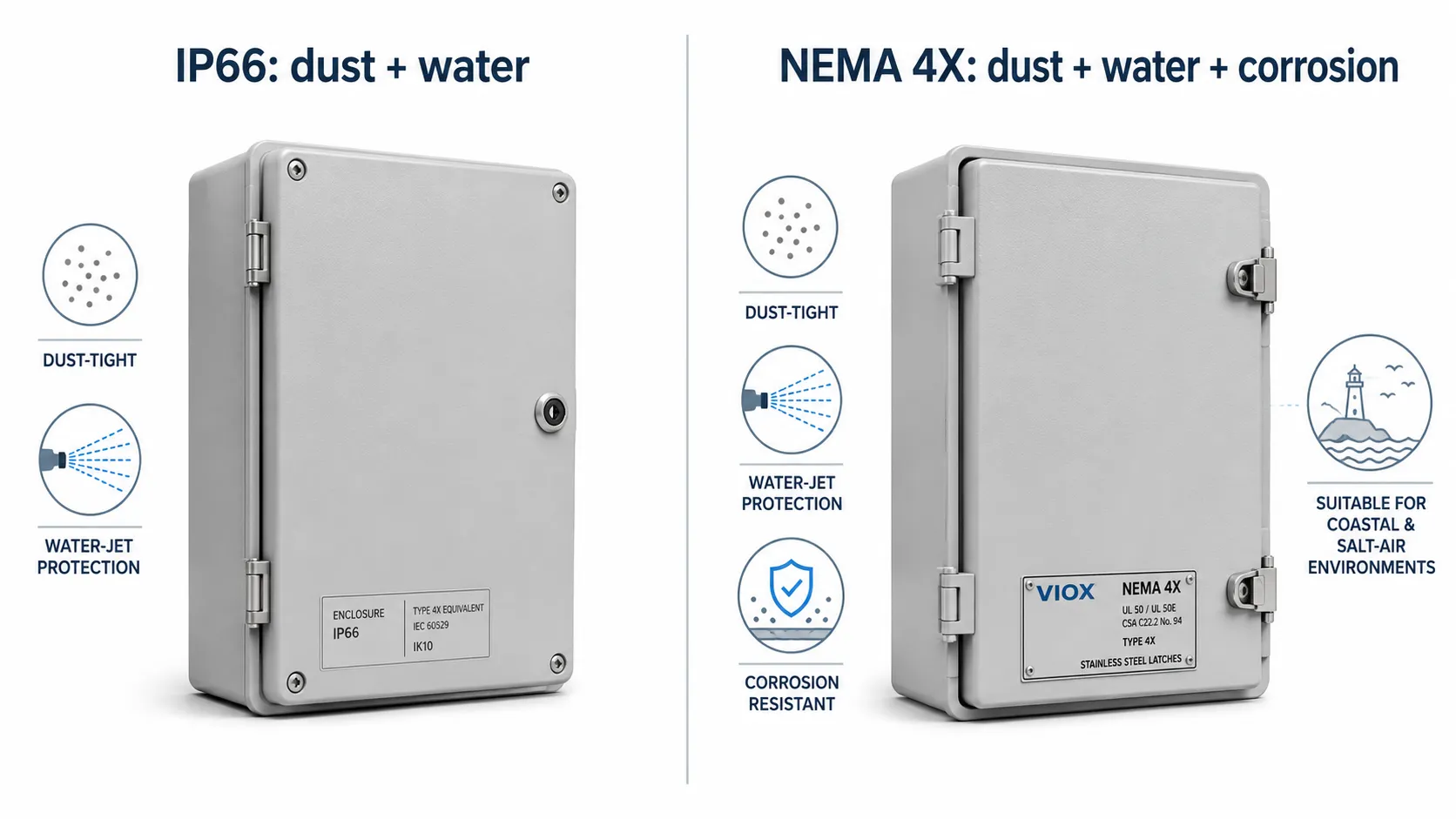
IP66 ໝາຍຄວາມວ່າຕູ້ມີຄວາມປ້ອງກັນຝຸ່ນ ແລະ ປ້ອງກັນນ້ຳສີດແຮງພາຍໃຕ້ການທົດສອບ IEC 60529. ນັ້ນເປັນສິ່ງທີ່ມີປະໂຫຍດ, ແຕ່ມັນບໍ່ໄດ້ພິສູດໂດຍອັດຕະໂນມັດວ່າຕູ້ນັ້ນສາມາດຕ້ານທານຕໍ່ການກັດກ່ອນໄດ້.
NEMA 4X ລວມເຖິງການປ້ອງກັນທີ່ກ່ຽວຂ້ອງກັບປະສິດທິພາບການໃຊ້ງານກາງແຈ້ງ ແລະ ການລ້າງທຳຄວາມສະອາດແບບ NEMA 4, ບວກກັບການຕ້ານທານຕໍ່ການກັດກ່ອນເພີ່ມເຕີມ. X ນີ້ແມ່ນສ່ວນທີ່ຜູ້ຊື້ຫຼາຍຄົນມັກພາດ. ຖ້າໂຄງການຢູ່ແຄມຝັ່ງທະເລ, ໂຮງງານເຄມີ, ສະຖານທີ່ບຳບັດນ້ຳເສຍ, ຫຼືພື້ນທີ່ລ້າງທຳຄວາມສະອາດໃນອຸດສາຫະກຳອາຫານລະບຸວ່າຕ້ອງໃຊ້ NEMA 4X, ຕູ້ IP66 ອາດຈະຍັງບໍ່ສາມາດຍອມຮັບໄດ້ ເວັ້ນເສຍແຕ່ວ່າຈະມີເອກະສານຢັ້ງຢືນການຕ້ານທານຕໍ່ການກັດກ່ອນແຍກຕ່າງຫາກ.
ກົດການນຳໃຊ້ຕົວຈິງ:
| ຄວາມຕ້ອງການ | ການຕີຄວາມໝາຍທີ່ປອດໄພກວ່າ |
|---|---|
| ຂໍ້ມູນຈຳເພາະລະບຸວ່າ IP66 | ເລືອກຕູ້ຄວບຄຸມທີ່ຜ່ານການທົດສອບການປ້ອງກັນຝຸ່ນລະອອງ ແລະ ການປ້ອງກັນນ້ຳສີດແຮງດັນສູງ |
| ຂໍ້ມູນຈຳເພາະລະບຸວ່າ NEMA 4 | ຫ້າມປ່ຽນແທນດ້ວຍ IP66 ເວັ້ນເສຍແຕ່ວ່າໂຄງການຈະຍອມຮັບເອກະສານຢັ້ງຢືນ IP ແລະ ສະພາບແວດລ້ອມທີ່ກ່ຽວຂ້ອງມີຄວາມສອດຄ່ອງກັນ |
| ຂໍ້ມູນຈຳເພາະລະບຸວ່າ NEMA 4X | ຫ້າມໃຊ້ IP66 ພຽງຢ່າງດຽວ; ຕ້ອງກວດສອບວັດສະດຸທີ່ທົນທານຕໍ່ການກັດກ່ອນ ແລະ ເອກະສານຢັ້ງຢືນຕາມມາດຕະຖານ NEMA/UL/ອາເມລິກາເໜືອ |
| ຂໍ້ມູນຈຳເພາະລະບຸວ່າ IP66 + ສະພາບແວດລ້ອມແຄມທະເລ | ໃຫ້ພິຈາລະນາເລື່ອງການກັດກ່ອນເປັນຂໍ້ກຳນົດແຍກຕ່າງຫາກສຳລັບວັດສະດຸ ແລະ ການເຄືອບຜິວ |
ສໍາລັບໂຄງການລະຫວ່າງປະເທດ, ຕູ້ຄວບຄຸມທີ່ມີເຄື່ອງໝາຍມາດຕະຖານຄູ່ເຊັ່ນ: NEMA 4X / IP66 ສາມາດເຮັດໃຫ້ເອກະສານງ່າຍຂຶ້ນ, ແຕ່ຕ້ອງມີເງື່ອນໄຂວ່າຜູ້ຜະລິດສາມາດສະໜອງຫຼັກຖານການຈັດອັນດັບຕົວຈິງສໍາລັບຮຸ່ນທີ່ສະໜອງໃຫ້ໄດ້ເທົ່ານັ້ນ.
ສະພາບແວດລ້ອມພາຍໃນອາຄານ: ຢ່າກໍານົດສະເປັກເກີນຄວາມຈໍາເປັນ
ບໍ່ແມ່ນທຸກຕູ້ຄວບຄຸມທີ່ຕ້ອງການມາດຕະຖານ NEMA 4X ຫຼື IP66. ໃນຫ້ອງໄຟຟ້າພາຍໃນອາຄານທີ່ສະອາດ, ຕູ້ຄວບຄຸມ, ພື້ນທີ່ເຄື່ອງຈັກທີ່ມີຝຸ່ນໜ້ອຍ, ຫຼືສະພາບແວດລ້ອມທີ່ບໍ່ມີການລ້າງດ້ວຍນໍ້າ, ການເລືອກມາດຕະຖານສໍາລັບນອກອາຄານທີ່ສູງເກີນໄປອາດຈະເພີ່ມຕົ້ນທຶນ, ຂະໜາດ, ການເກັບຄວາມຮ້ອນ, ແລະຄວາມຊັບຊ້ອນໃນການຕິດຕັ້ງ ໂດຍບໍ່ໄດ້ເຮັດໃຫ້ໂຄງການດີຂຶ້ນ.
ທາງເລືອກທົ່ວໄປສໍາລັບພາຍໃນອາຄານ:
| ສະພາບແວດລ້ອມ | ທິດທາງການເລືອກມາດຕະຖານທົ່ວໄປ | ບັນທຶກ |
|---|---|---|
| ຫ້ອງໄຟຟ້າທີ່ສະອາດ | ການປ້ອງກັນແບບ NEMA 1 ຫຼື IP20/IP30 | ເນັ້ນໃສ່ການປ້ອງກັນການສຳຜັດ, ການລະບາຍອາກາດ ແລະ ການຈັດການສາຍໄຟ |
| ໂຮງງານໃນຮົ່ມທີ່ມີຝຸ່ນລະອອງ | ການປ້ອງກັນລະດັບ NEMA 12 ຫຼື IP54/IP55 | ກວດສອບຝຸ່ນ, ຂອງແຫຼວຢົດໃສ່ ແລະ ຄວາມທົນທານຂອງປະເກັນ (Gasket) |
| ພື້ນທີ່ເຄື່ອງຈັກທີ່ມີນ້ຳມັນ ຫຼື ນ້ຳຢາຫຼໍ່ເຢັນ | NEMA 12 ຫຼື NEMA 13 | ລະດັບ IP ຢ່າງດຽວບໍ່ສາມາດກວມເອົາພຶດຕິກຳຂອງນ້ຳມັນ/ນ້ຳຢາຫຼໍ່ເຢັນໄດ້ |
| ການລ້າງທຳຄວາມສະອາດໃນຮົ່ມ | NEMA 4 ຫຼື 4X, ຫຼື ມາດຕະຖານ IP66/IP69 ທີ່ເໝາະສົມ | ກວດສອບແຮງດັນນ້ຳ, ປະເກັນ (gasket), ທໍ່ລະບາຍນ້ຳ ແລະ ວັດສະດຸ |
ສຳລັບຕູ້ຄວບຄຸມພາຍໃນອາຄານ, ການຈັດການຄວາມຮ້ອນມີຄວາມສຳຄັນບໍ່ໜ້ອຍໄປກວ່າການປ້ອງກັນສິ່ງແປກປອມ. ຕູ້ທີ່ປິດສະໜິດຈະກັກເກັບຄວາມຮ້ອນໄວ້ພາຍໃນ. ຖ້າອຸປະກອນພາຍໃນປະກອບມີ ຄອນແທັກເຕີ (contactors), ແຫຼ່ງຈ່າຍໄຟ (power supplies), ລີເລ (relays), ເທຣມິນອນ (terminals) ຫຼື ໄດຣຟ໌ (drives), ໃຫ້ຄຳນວນອຸນຫະພູມທີ່ເພີ່ມຂຶ້ນ ແລະ ພິຈາລະນາການລະບາຍອາກາດ, ພັດລົມ, ເຄື່ອງແລກປ່ຽນຄວາມຮ້ອນ ຫຼື ການຫຼຸດພິກັດການໃຊ້ງານ (derating).
ສະພາບແວດລ້ອມພາຍນອກ: ຝົນ, ລັງສີ UV, ຝຸ່ນ ແລະ ການປ່ຽນແປງຂອງອຸນຫະພູມ
ຕູ້ໄຟຟ້າພາຍນອກຕ້ອງປະເຊີນກັບຫຼາຍກວ່າພຽງແຕ່ນ້ຳ. ຝົນເປັນພຽງບັນຫາໜຶ່ງເທົ່ານັ້ນ. ຕູ້ໄຟຟ້າພາຍນອກທີ່ແທ້ຈິງອາດຕ້ອງປະເຊີນກັບ:
- ການສໍາຜັດກັບ UV
- ການເສື່ອມສະພາບຂອງປະເກັນ (gasket aging)
- ການເກີດຢາດນ້ຳ (condensation)
- ການແຂງຕົວ ແລະ ການລະລາຍ (freezing and thawing)
- ຂີ້ຝຸ່ນທີ່ຖືກລົມພັດມາ
- ແມງໄມ້
- ການຮົ່ວໄຫຼບໍລິເວນທາງເຂົ້າສາຍໄຟ
- ການກັດກ່ອນບໍລິເວນສະກູ ແລະ ບານພັບ
- ການຂະຫຍາຍຕົວ ແລະ ການຫົດຕົວຈາກຄວາມຮ້ອນ
ທາງເລືອກທົ່ວໄປສຳລັບການຕິດຕັ້ງນອກອາຄານ:
| ສະພາບແວດລ້ອມນອກອາຄານ | ທິດທາງການກຳນົດຄ່າພິກັດ (Rating) | ໝາຍເຫດກ່ຽວກັບວັດສະດຸ |
|---|---|---|
| ຝາຜະໜັງພາຍນອກທີ່ມີຫຼັງຄາປົກຄຸມ | ມາດຕະຖານ NEMA 3R ຫຼື ລະດັບ IP ທີ່ເໝາະສົມ | ການປ້ອງກັນຝົນອາດພຽງພໍຫາກບໍ່ມີຄວາມສ່ຽງຕໍ່ການຖືກສີດນ້ຳໃສ່ໂດຍກົງ ຫຼື ການກັດກ່ອນ |
| ອຸປະກອນທີ່ຕິດຕັ້ງກາງແຈ້ງແບບເປີດໂລ່ງ | ການປ້ອງກັນມາດຕະຖານ NEMA 4 ຫຼື IP65/IP66 | ກວດສອບປະເກັນ, ຕົວລັອກ, ຊ່ອງທາງເຂົ້າຂອງສາຍໄຟ ແລະ ຄວາມທົນທານຕໍ່ລັງສີ UV |
| ສະພາບແວດລ້ອມແຄມທະເລ ຫຼື ບັນຍາກາດທີ່ມີສານເຄມີ | ມາດຕະຖານ NEMA 4X ຫຼື ການປ້ອງກັນການກັດກ່ອນທີ່ໄດ້ຮັບການຢັ້ງຢືນແຍກຕ່າງຫາກ | ເຫຼັກກ້າສະແຕນເລດ 316 ຫຼື ວັດສະດຸ FRP ທີ່ເໝາະສົມມັກຈະຖືກພິຈາລະນາ |
| ການຕິດຕັ້ງພາກສະໜາມໂຊລາເຊວ (Solar PV) | IP65/IP66, NEMA 4/4X ຂຶ້ນຢູ່ກັບຕະຫຼາດ | ຄວນກວດສອບຄວາມຕ້ອງການດ້ານລັງສີ UV, ຄວາມຮ້ອນ, ໄລຍະຫ່າງຂອງອົງປະກອບໄຟຟ້າກະແສກົງ (DC) ແລະ ຊ່ອງລະບາຍອາກາດ |
ສຳລັບການນຳໃຊ້ VIOX PV, ລະດັບການປ້ອງກັນຂອງຕູ້ຄວນຖືກພິຈາລະນາຮ່ວມກັບອົງປະກອບໄຟຟ້າ DC ພາຍໃນ, ອຸປະກອນປ້ອງກັນໄຟກະຊາກ, ຟິວ, ສະວິດຕັດຕອນ, ເທຣມິນອນບລັອກ ແລະ ການລະບາຍຄວາມຮ້ອນ. ກ່ອງລວມສາຍໄຟ PV (PV combiner box) ບໍ່ແມ່ນພຽງແຕ່ກ່ອງກັນນ້ຳເທົ່ານັ້ນ. ເບິ່ງ VIOX ກ່ອງເຄື່ອງປະສົມ ບໍລິບົດຂອງຜະລິດຕະພັນ ແລະ ຄູ່ມືການເລືອກຕູ້ກ່ອງລວມສາຍໄຟ PV ສຳລັບປັດໄຈການອອກແບບທີ່ສະເພາະເຈາະຈົງກັບພະລັງງານແສງຕາເວັນເພີ່ມເຕີມ.
ສະພາບແວດລ້ອມທີ່ມີການກັດກ່ອນ: ການພິຈາລະນາພຽງແຕ່ລະດັບມາດຕະຖານ (Rating) ນັ້ນບໍ່ພຽງພໍ
ການກັດກ່ອນແມ່ນຈຸດທີ່ຄວາມຜິດພາດລະຫວ່າງ NEMA ແລະ IP ກາຍເປັນເລື່ອງທີ່ມີລາຄາແພງ.
ຕູ້ຄວບຄຸມໄຟຟ້າອາດຈະຜ່ານການທົດສອບການປ້ອງກັນສິ່ງແວດລ້ອມ (Ingress test) ແຕ່ກໍຍັງສາມາດເສຍຫາຍກ່ອນກຳນົດໄດ້ຫາກວັດສະດຸບໍ່ເໝາະສົມກັບສະພາບແວດລ້ອມ. ອາກາດທີ່ມີຄວາມເຄັມ, ໂຮງງານປຸ໋ຍ, ລະບົບບຳບັດນ້ຳເສຍ, ຂະບວນການທາງເຄມີ, ສານເຄມີທີ່ໃຊ້ໃນການລ້າງໃນອຸດສາຫະກຳອາຫານ, ຫ້ອງແບັດເຕີຣີ ແລະ ການນຳໃຊ້ທາງທະເລ ສາມາດກັດກ່ອນສະກູ, ບານພັບ, ຕົວລັອກ, ສານເຄືອບຜິວ ແລະ ຮອຍຕໍ່ຂອງປະເກັນໄດ້.
| ສະພາບແວດລ້ອມ | ຄວາມສ່ຽງຫຼັກ | ເຫດຜົນໃນການເລືອກທີ່ດີກວ່າ |
|---|---|---|
| ພື້ນທີ່ຊາຍຝັ່ງທະເລກາງແຈ້ງ | ການກັດກ່ອນຈາກສານຄລໍຣາຍ | ພິຈາລະນາໃຊ້ NEMA 4X, ສະແຕນເລດ 316, FRP, ຫຼື ໂຄງສ້າງທີ່ໄດ້ຮັບການຢັ້ງຢືນວ່າທົນທານຕໍ່ການກັດກ່ອນ |
| ການລ້າງທຳຄວາມສະອາດໃນອຸດສາຫະກຳອາຫານ ແລະ ເຄື່ອງດື່ມ | ນ້ຳ, ສານເຄມີທີ່ໃຊ້ໃນການທຳຄວາມສະອາດ, ຮອບວຽນການຂ້າເຊື້ອ | ກວດສອບຂໍ້ກຳນົດ NEMA 4X/IP66 ຫຼື ຂໍ້ກຳນົດການລ້າງທຳຄວາມສະອາດ ລວມເຖິງຄວາມເຂົ້າກັນໄດ້ຂອງປະເກັນ ແລະ ວັດສະດຸ |
| ໂຮງງານເຄມີ | ໄອລະເຫີຍ ແລະ ການກັດກ່ອນຈາກສານເຄມີ | ກວດສອບຄວາມເຂົ້າກັນໄດ້ຂອງວັດສະດຸ, ບໍ່ແມ່ນພຽງແຕ່ລະຫັດ IP ເທົ່ານັ້ນ |
| ການບຳບັດນ້ຳເສຍ | ຄວາມຊຸ່ມ, ອາຍແກັສ, ການກັດກ່ອນ | ກວດສອບວັດສະດຸຂອງຕູ້ຄອນໂທນ, ຕົວຢຶດ, ຫົວລັອກສາຍໄຟ (glands) ແລະ ການປ້ອງກັນອຸປະກອນພາຍໃນ |
| ພື້ນທີ່ເກັບຮັກສາແບັດເຕີຣີ ຫຼື ພະລັງງານ | ອາຍແກັສທີ່ກັດກ່ອນ ແລະ ຄວາມສ່ຽງທາງໄຟຟ້າ | ຢືນຢັນກ່ຽວກັບຕູ້ຄວບຄຸມ, ການລະບາຍອາກາດ, ຈຸດຕໍ່ສາຍໄຟ ແລະ ຂໍ້ກຳນົດດ້ານຄວາມປອດໄພ |
ສຳລັບສະຖານທີ່ທີ່ມີການກັດກ່ອນ, ຢ່າຖືວ່າ “IP66” ເປັນຄຳຕອບທີ່ສົມບູນ. ໃຫ້ຮຽກຮ້ອງເອກະສານກ່ຽວກັບວັດສະດຸ, ການເຄືອບ, ປະເກັນ, ຕົວຢຶດ ແລະ ເອກະສານກັນການກັດກ່ອນ.
ການເລືອກວັດສະດຸ: ເຫຼັກກ້າ, ສະແຕນເລດ, ອາລູມີນຽມ ແລະ ໄຟເບີກລາສ
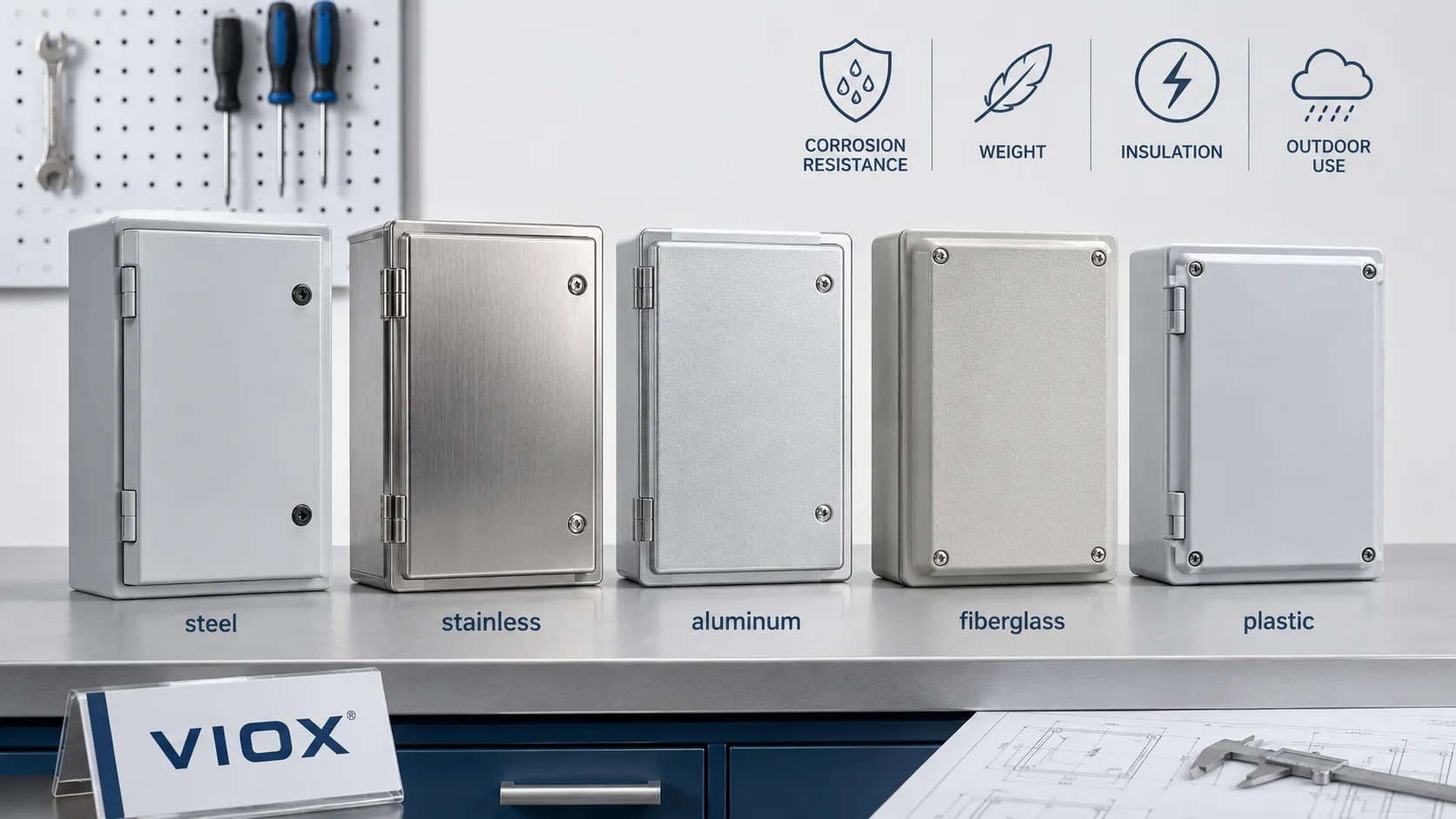
ລະດັບມາດຕະຖານ (Rating) ເປັນພຽງສ່ວນໜຶ່ງຂອງການຕັດສິນໃຈເລືອກຕູ້. ວັດສະດຸເປັນຕົວຄວບຄຸມຄວາມທົນທານ, ຄວາມຕ້ານທານການກັດກ່ອນ, ນ້ຳໜັກ, ຄວາມແຂງແຮງຕໍ່ແຮງກະທົບ, ການຕໍ່ສາຍດິນ ແລະ ຄ່າໃຊ້ຈ່າຍ.
| ວັດສະດຸ | ຄວາມເຂັ້ມແຂງ | ຈຸດທີ່ຄວນລະວັງ |
|---|---|---|
| ເຫຼັກກ້າອ່ອນເຄືອບສີຝຸ່ນ (Powder-coated mild steel) | ມີຄວາມຄຸ້ມຄ່າ, ແຂງແຮງ, ເປັນທີ່ນິຍົມໃຊ້ສຳລັບຕູ້ໄຟຟ້າພາຍໃນອາຄານ | ການເສຍຫາຍຂອງຊັ້ນເຄືອບອາດເຮັດໃຫ້ເກີດການກັດກ່ອນ; ບໍ່ເໝາະສົມກັບສະພາບແວດລ້ອມພາຍນອກທີ່ຮຸນແຮງ ຫຼື ບ່ອນທີ່ມີສານເຄມີ ເວັ້ນເສຍແຕ່ຈະມີການລະບຸຢ່າງລະອຽດ |
| ສະແຕນເລດ 304 | ມີຄວາມຕ້ານທານຕໍ່ການກັດກ່ອນໄດ້ດີສຳລັບສະພາບແວດລ້ອມອຸດສາຫະກຳຫຼາຍປະເພດ | ອາດຈະບໍ່ພຽງພໍສຳລັບສະພາບແວດລ້ອມແຄມທະເລທີ່ມີທາດຄລໍຣາຍສູງ ຫຼື ສະພາບແວດລ້ອມທີ່ມີສານເຄມີ |
| ເຫຼັກສະແຕນເລດ 316 | ມີຄວາມຕ້ານທານຕໍ່ທາດຄລໍຣາຍໄດ້ດີກວ່າເຫຼັກກ້າສະແຕນເລດເກຣດ 304 | ມີຕົ້ນທຶນສູງກວ່າ; ຍັງຄົງຕ້ອງການການເລືອກໃຊ້ປະເກັນ, ຕົວຢຶດ ແລະ ຄຸນນະພາບການຜະລິດທີ່ຖືກຕ້ອງ |
| ອາລູມີນຽມ | ມີນ້ຳໜັກເບົາ, ມີຊັ້ນອອກໄຊທີ່ຕ້ານທານການກັດກ່ອນໄດ້ໂດຍທຳມະຊາດ | ມີຄວາມສ່ຽງຕໍ່ການເກີດການກັດກ່ອນແບບກາວານິກ (Galvanic corrosion) ເມື່ອສຳຜັດກັບໂລຫະຕ່າງຊະນິດ; ຕ້ອງກວດສອບຄວາມແຂງແຮງທາງກົນຈັກ ແລະ ການສຳເລັດຜິວໃຫ້ລະອຽດ |
| ເສັ້ນໃຍແກ້ວ ຫຼື FRP | ບໍ່ແມ່ນໂລຫະ, ທົນທານຕໍ່ການກັດກ່ອນ, ເປັນສນວນໄຟຟ້າ | ຕ້ອງພິຈາລະນາສູດປ້ອງກັນລັງສີ UV, ຄວາມທົນທານຕໍ່ການກະທົບ, ແລະ ຍຸດທະສາດການຕໍ່ສາຍດິນ |
| ABS ຫຼື ໂພລີຄາບອນເນດ (Polycarbonate) | ມີປະໂຫຍດສຳລັບກ່ອງເຊື່ອມຕໍ່ຂະໜາດກະທັດຮັດ ແລະ ກ່ອງກະຈາຍໄຟຟ້າຫຼາຍປະເພດ | ກວດສອບຄ່າ UV, ການກະທົບ, ອຸນຫະພູມ, ລະດັບການຕ້ານໄຟ, ແລະ ຄວາມເໝາະສົມໃນການໃຊ້ງານກາງແຈ້ງ |
ສຳລັບການເລືອກວັດສະດຸທີ່ລະອຽດກວ່າ, ໃຫ້ເບິ່ງທີ່ VIOX ຄູ່ມືການເລືອກວັດສະດຸຕູ້ໄຟຟ້າຂອງພວກເຮົາ.
ຄູ່ມືການເລືອກໂດຍແອັບພລິເຄຊັນ
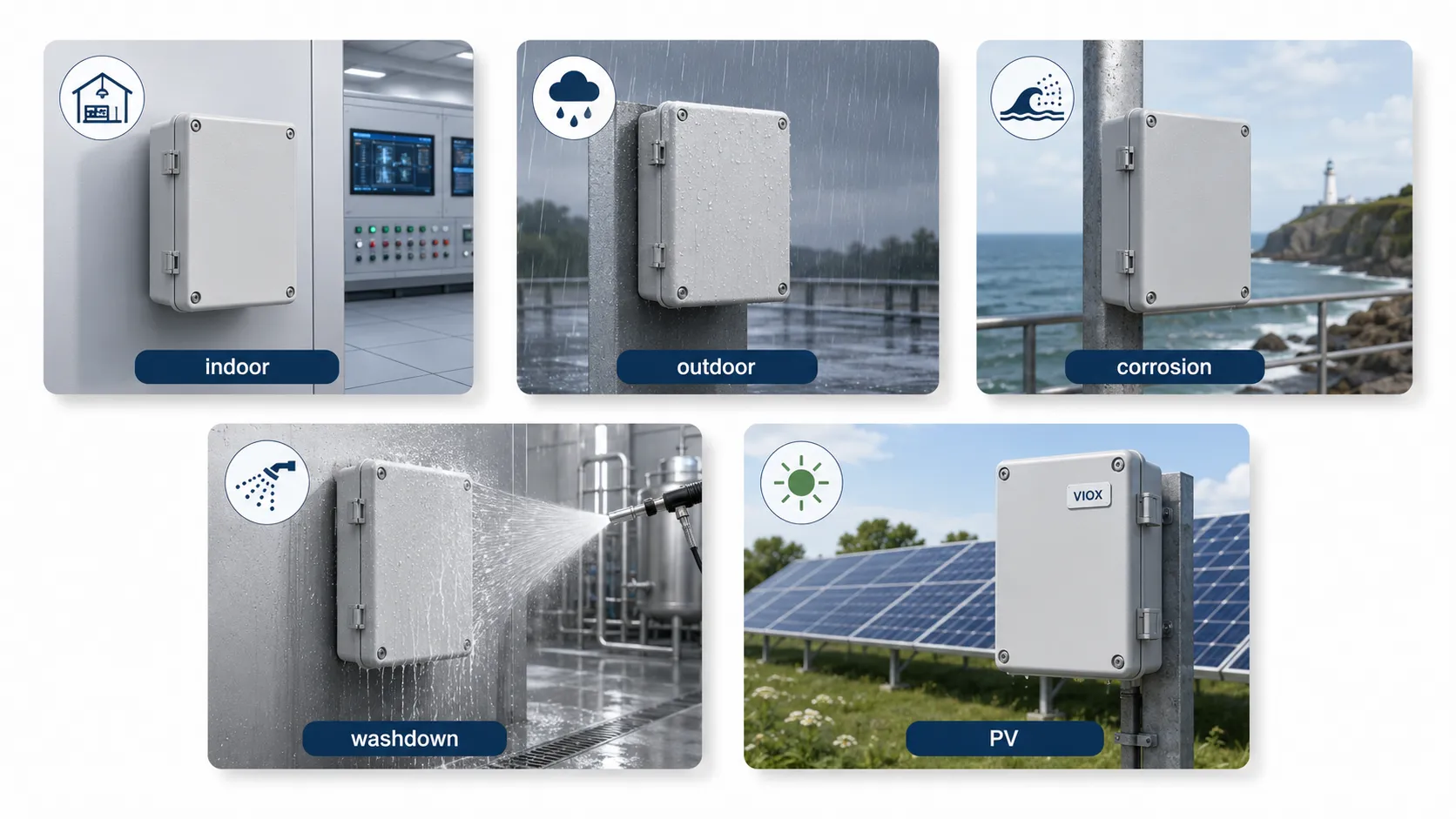
| ຄໍາຮ້ອງສະຫມັກ | ທິດທາງການເລືອກມາດຕະຖານທົ່ວໄປ | ສິ່ງທີ່ຄວນກວດສອບກ່ອນການຊື້ |
|---|---|---|
| ຕູ້ໄຟຟ້າພາຍໃນອາຄານ | ມາດຕະຖານ NEMA 1/12 ຫຼື ລະດັບການປ້ອງກັນ IP20/IP54 | ການປ້ອງກັນຝຸ່ນ, ການປ້ອງກັນການສຳຜັດ, ຄວາມຮ້ອນພາຍໃນ, ໄລຍະຫ່າງຂອງບັດບາ (Busbar) |
| ຕູ້ໄຟຟ້າພາຍນອກອາຄານ | ມາດຕະຖານ NEMA 3R/4 ຫຼື ລະດັບການປ້ອງກັນ IP65/IP66 | ການປ້ອງກັນລັງສີ UV, ຢາງກັນຊຶມ, ລະບົບລະບາຍນ້ຳ, ຫົວລັອກສາຍໄຟ (Cable glands), ຊີລຝາປິດ |
| ຕູ້ໄຟຟ້າກັນນ້ຳ | IP65/IP66/IP67/IP68 ຂຶ້ນຢູ່ກັບການສຳຜັດ | ບໍ່ວ່າຈະເປັນການສີດນ້ຳ, ການຈຸ່ມນ້ຳຊົ່ວຄາວ, ຫຼື ການຈຸ່ມນ້ຳຢ່າງຕໍ່ເນື່ອງ |
| ກ່ອງລວມສາຍ PV | IP65/IP66 ຫຼື NEMA 4/4X ຂຶ້ນຢູ່ກັບຕະຫຼາດ | ແຮງດັນໄຟຟ້າ DC, ຄວາມຮ້ອນ, ລັງສີ UV, ອຸນຫະພູມຂອງ SPD/ຟິວ, ການລະບາຍອາກາດ, ຊ່ອງສຽບສາຍໄຟ |
| ຕູ້ໄຟຟ້າສຳລັບເຂດແຄມຝັ່ງທະເລ | NEMA 4X ຫຼື ຕູ້ໄຟຟ້າທີ່ຜ່ານການກວດສອບການກັດກ່ອນ | ສະແຕນເລດ 316, FRP, ຕົວຢຶດ, ການສຳຜັດກັບເກືອ, ປະເກັນ |
| ຕູ້ຄວບຄຸມໄຟຟ້າສຳລັບການລ້າງທຳຄວາມສະອາດໃນໂຮງງານອາຫານ | ລະດັບ NEMA 4X ຫຼື ມາດຕະຖານ IP ສຳລັບການລ້າງດ້ວຍນ້ຳ | ສານເຄມີທີ່ໃຊ້ລ້າງ, ພື້ນຜິວລຽບ, ເກຣດສະແຕນເລດ, ປະເກັນ |
| ກ່ອງຄວບຄຸມເຄື່ອງຈັກ | ລະດັບ NEMA 12/13 ຫຼື ມາດຕະຖານ IP54/IP55 ທີ່ເໝາະສົມ | ນ້ຳມັນ, ນ້ຳຫຼໍ່ເຢັນ, ຝຸ່ນ, ຂົ້ວຕໍ່ພາຍໃນ, ການເຂົ້າເຖິງເພື່ອບຳລຸງຮັກສາ |
| ກ່ອງສຳລັບຝັງດິນ ຫຼື ແຊ່ນ້ຳ | ລະດັບ NEMA 6/6P ຫຼື ມາດຕະຖານ IP67/IP68 | ຄວາມເລິກ, ໄລຍະເວລາ, ຄວາມດັນ, ການຊີລສາຍໄຟ, ການເກີດໄອນ້ຳຂັງ |
ສໍາລັບການເລືອກຜະລິດຕະພັນກັນນໍ້າ, ໃຫ້ເບິ່ງ VIOX ກ່ອງຕໍ່ສາຍໄຟກັນນໍ້າ ທາງເລືອກຕ່າງໆ. ສໍາລັບບໍລິບົດຂອງລະດັບການປ້ອງກັນຂອງກ່ອງທີ່ກວ້າງຂຶ້ນ, ໃຫ້ເບິ່ງ ປະເພດຂອງລະດັບການປ້ອງກັນຂອງກ່ອງຕໍ່ສາຍໄຟ.
常见规范错误
ຂໍ້ຜິດພາດທີ 1: ການຖືວ່າ NEMA ແລະ IP ເປັນມາດຕະຖານດຽວກັນ
ມັນມີສ່ວນທີ່ຄ້າຍຄືກັນ ແຕ່ບໍ່ແມ່ນອັນດຽວກັນ. IP ສ່ວນໃຫຍ່ແມ່ນລະຫັດການປ້ອງກັນການເຂົ້າເຖິງຂອງວັດຖຸ. NEMA ລວມເອົາເງື່ອນໄຂສະພາບແວດລ້ອມເພີ່ມເຕີມໃນບາງປະເພດສະເພາະ.
ຂໍ້ຜິດພາດທີ 2: ການໃຊ້ IP66 ແທນ NEMA 4X
IP66 ບໍ່ໄດ້ຢັ້ງຢືນເຖິງການຕ້ານທານການກັດກ່ອນ. ຖ້າໂຄງການກໍານົດໃຫ້ໃຊ້ NEMA 4X, ໃຫ້ຮຽກຮ້ອງເອົາ NEMA 4X ຫຼືເອກະສານຢັ້ງຢືນການຕ້ານທານການກັດກ່ອນທີ່ທຽບເທົ່າ ເຊິ່ງໄດ້ຮັບການຍອມຮັບຈາກເຈົ້າຂອງໂຄງການ.
ຄວາມຜິດພາດທີ 3: ການລະເລີຍຈຸດເຂົ້າຂອງສາຍໄຟ
ລະດັບການປ້ອງກັນຂອງຕູ້ຄວບຄຸມອາດຈະເສຍຫາຍໄດ້ຫາກເລືອກໃຊ້ Cable gland, Conduit hub, Breather vent, Drain plug ຫຼື Knockout seal ທີ່ບໍ່ເໝາະສົມ. ອຸປະກອນທັງໝົດຕ້ອງຮັກສາລະດັບການປ້ອງກັນຕາມທີ່ໄດ້ກຳນົດໄວ້.
ຄວາມຜິດພາດທີ 4: ການເລືອກໂດຍພິຈາລະນາພຽງແຕ່ການຖືກຝົນ
ການຕິດຕັ້ງນອກອາຄານບໍ່ໄດ້ໝາຍເຖິງພຽງແຕ່ຝົນເທົ່ານັ້ນ. ລັງສີ UV, ການເກີດຢາດນ້ຳ (Condensation), ຄວາມຮ້ອນ, ນ້ຳກ້ອນ, ຝຸ່ນ, ແມງໄມ້, ເກືອ ແລະ ສານເຄມີ ອາດຈະມີຄວາມສຳຄັນຫຼາຍກວ່າການຖືກນ້ຳສີດ.
ຄວາມຜິດພາດທີ 5: ການລືມພິຈາລະນາຄວາມຮ້ອນພາຍໃນ
ການປິດຜະນຶກທີ່ແໜ້ນໜາເກີນໄປມັກຈະເຮັດໃຫ້ການລະບາຍອາກາດຕາມທຳມະຊາດຫຼຸດລົງ. ຕູ້ທີ່ມີລະດັບ IP66 ຫຼື NEMA 4X ທີ່ປິດແໜ້ນອາດຈະກັກເກັບຄວາມຮ້ອນຈາກ Power supply, Contactor, Relay ແລະ ອຸປະກອນປ້ອງກັນໄຟຟ້າກະແສກົງ (DC). ດັ່ງນັ້ນ, ຕ້ອງມີການກວດສອບການອອກແບບລະບົບລະບາຍຄວາມຮ້ອນ.
ຄວາມຜິດພາດທີ 6: ການຄິດວ່າວັດສະດຸບໍ່ມີຄວາມສຳຄັນ
ຕູ້ສອງໃບອາດມີລະດັບການປ້ອງກັນທີ່ຄືກັນ ແຕ່ມີປະສິດທິພາບການໃຊ້ງານທີ່ແຕກຕ່າງກັນ ເນື່ອງຈາກໃບໜຶ່ງອາດເປັນເຫຼັກເຄືອບສີຝຸ່ນ (Powder-coated steel) ໃນຂະນະທີ່ອີກໃບເປັນສະແຕນເລດ 316 ຫຼື FRP. ການເລືອກທີ່ຖືກຕ້ອງຕ້ອງພິຈາລະນາທັງລະດັບການປ້ອງກັນ ແລະ ວັດສະດຸທີ່ໃຊ້.
ລາຍການກວດສອບການຕັດສິນໃຈລະຫວ່າງ NEMA ແລະ IP
ກ່ອນທີ່ຈະລະບຸລະດັບການປ້ອງກັນຂອງຕູ້ໄຟຟ້າລົງໃນເອກະສານສະເປັກ, ໃຫ້ຕອບຄຳຖາມເຫຼົ່ານີ້:
| ຜິດ | ເປັນຫຍັງມັນຈຶ່ງສຳຄັນ |
|---|---|
| ໂຄງການດັ່ງກ່າວຕັ້ງຢູ່ໃນອາເມລິກາເໜືອ ຫຼື ຕະຫຼາດທີ່ເນັ້ນມາດຕະຖານ IEC? | ເປັນຕົວຊີ້ບອກວ່າຈະຕ້ອງໃຊ້ເອກະສານອ້າງອີງຕາມມາດຕະຖານ NEMA, UL ຫຼື IP |
| ຕູ້ໄຟຟ້າຈະຖືກຕິດຕັ້ງພາຍໃນ ຫຼື ພາຍນອກອາຄານ? | ການນຳໃຊ້ພາຍນອກອາຄານ ຈຳເປັນຕ້ອງມີການກວດສອບສະພາບອາກາດ, ລັງສີ UV, ປະເກັນ (gasket) ແລະ ການຕິດຕັ້ງ |
| ມີການສີດນ້ຳລ້າງ, ການລ້າງດ້ວຍນ້ຳ ຫຼື ການທຳຄວາມສະອາດດ້ວຍແຮງດັນສູງບໍ? | ລະດັບການທົດສອບນ້ຳ ແລະ ໂຄງສ້າງຂອງປະເກັນ (gasket) ຈະກາຍເປັນສິ່ງສຳຄັນທີ່ສຸດ |
| ມີການກັດກ່ອນເກີດຂຶ້ນຫຼືບໍ່? | ອາດຈະຈຳເປັນຕ້ອງໃຊ້ NEMA 4X ຫຼື ວັດສະດຸທີ່ທົນທານຕໍ່ການກັດກ່ອນ |
| ມີນ້ຳມັນ ຫຼື ນ້ຳຫຼໍ່ເຢັນຢູ່ບໍ່? | NEMA 12 ຫຼື 13 ອາດຈະມີຄວາມເໝາະສົມຫຼາຍກວ່າລະຫັດ IP ທົ່ວໄປ |
| ມີຄວາມສ່ຽງຕໍ່ການຈົມນ້ຳຫຼືບໍ່? | IP67/IP68 ຫຼື NEMA 6/6P ຕ້ອງຖືກກຳນົດຕາມສະພາບການນຳໃຊ້ຕົວຈິງ |
| ຕ້ອງການວັດສະດຸປະເພດໃດ? | ເຫຼັກກ້າ, ສະແຕນເລດ, ອາລູມີນຽມ, FRP, ABS ແລະ ໂພລີຄາບອນເນດ ມີຄຸນສົມບັດການນຳໃຊ້ທີ່ແຕກຕ່າງກັນ |
| ຮູສຳລັບສາຍໄຟໄດ້ຖືກເຈາະຢູ່ໜ້າວຽກແມ່ນຫຼືບໍ່? | ການໃຊ້ຫົວລັອກສາຍໄຟ (glands) ຫຼື ຮູເຈາະ (knockouts) ທີ່ບໍ່ເໝາະສົມ ອາດເຮັດໃຫ້ລະດັບການປ້ອງກັນເສຍຄຸນນະພາບໄດ້ |
| ຄວາມຮ້ອນທີ່ເກີດຂຶ້ນພາຍໃນມີເທົ່າໃດ? | ຕູ້ຄວບຄຸມແບບປິດສະໜິດອາດຈຳເປັນຕ້ອງມີການຫຼຸດຜ່ອນກຳລັງໄຟຟ້າ (thermal derating) ຫຼື ຕ້ອງການລະບົບລະບາຍອາກາດ |
| ຈຳເປັນຕ້ອງມີເອກະສານຄູ່ຂະໜານ (dual documentation) ຫຼືບໍ່? | ໂຄງການສົ່ງອອກຂອງ OEM ອາດຈຳເປັນຕ້ອງມີທັງເຄື່ອງໝາຍ NEMA ແລະ IP |
ຕູ້ຄວບຄຸມທີ່ມີມາດຕະຖານຄູ່ (Dual-Rated Enclosures) ສຳລັບອຸປະກອນລະດັບໂລກ
ສຳລັບຜູ້ຜະລິດອຸປະກອນຕົ້ນແບບ (OEMs) ແລະ ຜູ້ສົ່ງອອກ, ຕູ້ຄວບຄຸມທີ່ມີມາດຕະຖານຄູ່ສາມາດເຮັດໃຫ້ການຈັດການເອກະສານງ່າຍຂຶ້ນ. ເຄື່ອງຈັກທີ່ຂາຍໃນອາເມລິກາເໜືອອາດຕ້ອງການເອກະສານຕູ້ຄວບຄຸມຕາມມາດຕະຖານ NEMA ຫຼື UL, ໃນຂະນະທີ່ເຄື່ອງຈັກດຽວກັນນັ້ນຖ້າຂາຍໃນເອີຣົບ ຫຼື ອາຊີ ອາດຈະຖືກກຳນົດໂດຍລະດັບການປ້ອງກັນ IP.
ການໝາຍຄູ່ (Dual marking) ມີປະໂຫຍດໃນກໍລະນີດັ່ງນີ້:
- ອຸປະກອນຖືກຈຳໜ່າຍທົ່ວໂລກ
- ບັນຊີລາຍການວັດສະດຸ (BOM) ດຽວຕ້ອງໃຊ້ໄດ້ກັບຫຼາຍພາກພື້ນ
- ຂໍ້ກຳນົດຂອງໂຄງການລວມມີທັງມາດຕະຖານ NEMA ແລະ IP
- ຕົວແທນຈຳໜ່າຍຕ້ອງການຕູ້ຄວບຄຸມຊຸດດຽວສຳລັບຫຼາຍຕະຫຼາດ
- ຕູ້ຄວບຄຸມຖືກນຳໃຊ້ໃນລະບົບພະລັງງານແສງຕາເວັນ (PV), ລະບົບອັດຕະໂນມັດ, ການບຳບັດນ້ຳ, ຫຼື ການນຳໃຊ້ໃນການຄວບຄຸມກາງແຈ້ງ
ຢ່າງໃດກໍຕາມ, ການໝາຍຄູ່ຄວນໄດ້ຮັບການສະໜັບສະໜູນໂດຍເອກະສານຢັ້ງຢືນຈາກຜູ້ຜະລິດຕົວຈິງ. ຢ່າຄາດເດົາຄ່າລະດັບການປ້ອງກັນພຽງເພາະວ່າຕູ້ມີລັກສະນະຄ້າຍຄືກັນ ຫຼື ໃຊ້ປະເກັນປະເພດດຽວກັນ.
FAQ
ລະດັບການປ້ອງກັນ NEMA ແລະ IP ແມ່ນຄືກັນຫຼືບໍ່?
ບໍ່ແມ່ນ. ທັງສອງຢ່າງອະທິບາຍເຖິງການປ້ອງກັນຂອງຕູ້ໄຟຟ້າ, ແຕ່ລະດັບ NEMA ລວມເຖິງເງື່ອນໄຂສະພາບແວດລ້ອມເພີ່ມເຕີມໃນບາງປະເພດ, ໃນຂະນະທີ່ລະດັບ IP ເນັ້ນໃສ່ການປ້ອງກັນວັດຖຸແຂງ ແລະ ນໍ້າເຂົ້າ.
ລະດັບ NEMA ສາມາດປ່ຽນເປັນລະດັບ IP ໄດ້ບໍ?
ໄດ້ພຽງແຕ່ເປັນການອ້າງອີງເບື້ອງຕົ້ນແບບຫຍາບໆເທົ່ານັ້ນ. ຕາຕະລາງປຽບທຽບລະຫວ່າງ NEMA ແລະ IP ອາດມີປະໂຫຍດ, ແຕ່ບໍ່ສາມາດທົດແທນການທົດສອບຜະລິດຕະພັນ, ການຢັ້ງຢືນ ຫຼື ການຍອມຮັບຂອງໂຄງການໄດ້.
ລະດັບ IP ສາມາດປ່ຽນເປັນລະດັບ NEMA ໄດ້ບໍ?
ບໍ່ໄດ້, ບໍ່ສາມາດປ່ຽນໂດຍກົງ. ລະດັບ IP ພຽງຢ່າງດຽວບໍ່ສາມາດພິສູດເຖິງການຕ້ານທານການກັດກ່ອນ, ການຕ້ານທານນໍ້າມັນ, ພຶດຕິກໍາຕໍ່ນໍ້າກ້ອນພາຍນອກ ຫຼື ການປ້ອງກັນສະພາບແວດລ້ອມອື່ນໆທີ່ສະເພາະເຈາະຈົງຂອງ NEMA.
IP66 ຄືກັນກັບ NEMA 4X ບໍ?
ບໍ່ແມ່ນ. IP66 ກວມເອົາການປ້ອງກັນຝຸ່ນ ແລະ ການປ້ອງກັນນໍ້າສີດແຮງ. NEMA 4X ລວມເຖິງການຕ້ານທານການກັດກ່ອນເພີ່ມເຕີມຈາກການປ້ອງກັນການໃຊ້ງານກາງແຈ້ງ ແລະ ທີ່ກ່ຽວຂ້ອງກັບນໍ້າ. IP66 ພຽງຢ່າງດຽວບໍ່ສາມາດຢັ້ງຢືນມາດຕະຖານ NEMA 4X ໄດ້.
ອັນໃດດີກວ່າລະຫວ່າງ NEMA 4X ຫຼື IP66?
ບໍ່ມີອັນໃດດີກວ່າກັນຢ່າງເດັດຂາດ. NEMA 4X ມີຄວາມແຂງແຮງກວ່າເມື່ອຕ້ອງການຄວາມທົນທານຕໍ່ການກັດກ່ອນ ແລະ ເອກະສານອ້າງອີງຕາມມາດຕະຖານອາເມລິກາເໜືອ. IP66 ມີປະໂຫຍດສຳລັບຂໍ້ກຳນົດການປ້ອງກັນສິ່ງແປກປອມໃນລະດັບສາກົນ. ຫຼາຍໂຄງການທົ່ວໂລກນຳໃຊ້ທັງສອງມາດຕະຖານ.
ຕູ້ໄຟຟ້າທີ່ຕິດຕັ້ງນອກອາຄານຕ້ອງການລະດັບ IP ເທົ່າໃດ?
ຂຶ້ນຢູ່ກັບສະພາບການນຳໃຊ້. IP54 ອາດຈະເໝາະສົມສຳລັບອຸປະກອນນອກອາຄານທີ່ມີຫຼັງຄາປົກຄຸມ, ໃນຂະນະທີ່ IP65 ຫຼື IP66 ແມ່ນມາດຕະຖານທົ່ວໄປສຳລັບການປ້ອງກັນຝຸ່ນ ແລະ ການສີດນ້ຳໃສ່. ຢ່າງໃດກໍຕາມ, ຍັງຕ້ອງກວດສອບເລື່ອງການກັດກ່ອນ, ລັງສີ UV, ອຸນຫະພູມ ແລະ ຈຸດເຂົ້າສາຍໄຟ.
ຄວນໃຊ້ລະດັບໃດສຳລັບຕູ້ໄຟຟ້າໃນເຂດແຄມທະເລ?
ສະພາບແວດລ້ອມແຄມທະເລໂດຍປົກກະຕິຕ້ອງການການອອກແບບທີ່ທົນທານຕໍ່ການກັດກ່ອນ. ອາດຈະຕ້ອງໃຊ້ NEMA 4X, ສະແຕນເລດ 316, FRP ຫຼື ໂຄງສ້າງອື່ນໆທີ່ໄດ້ຮັບການຢັ້ງຢືນວ່າທົນທານຕໍ່ການກັດກ່ອນ. ພຽງແຕ່ IP66 ຢ່າງດຽວບໍ່ພຽງພໍທີ່ຈະພິສູດເຖິງຄວາມທົນທານຕໍ່ການກັດກ່ອນໄດ້.
NEMA 4和NEMA 4X有什么区别?
ທັງສອງມາດຕະຖານກ່ຽວຂ້ອງກັບການປ້ອງກັນນ້ຳສຳລັບການຕິດຕັ້ງນອກອາຄານ ແລະ ການສີດນ້ຳໃສ່, ແຕ່ NEMA 4X ເພີ່ມຄວາມສາມາດໃນການຕ້ານທານການກັດກ່ອນ. ສິ່ງນີ້ເຮັດໃຫ້ 4X ເໝາະສົມກວ່າສຳລັບສະພາບແວດລ້ອມແຄມທະເລ, ການລ້າງທຳຄວາມສະອາດ, ສານເຄມີ ແລະ ສະພາບແວດລ້ອມອຸດສາຫະກຳທີ່ມີການກັດກ່ອນ.
IP68 ດີກວ່າ IP66 ສະເໝີໄປບໍ?
ບໍ່ແມ່ນ. IP68 ກ່ຽວຂ້ອງກັບການຈຸ່ມນ້ຳພາຍໃຕ້ເງື່ອນໄຂທີ່ກຳນົດ, ໃນຂະນະທີ່ IP66 ກ່ຽວຂ້ອງກັບການສີດນ້ຳແຮງດັນສູງ. ຄວາມທົນທານຕໍ່ການສີດນ້ຳ ແລະ ຄວາມທົນທານຕໍ່ການຈຸ່ມນ້ຳແມ່ນເງື່ອນໄຂການທົດສອບທີ່ແຕກຕ່າງກັນ. ຄວນເລືອກໂດຍອີງໃສ່ສະພາບການນຳໃຊ້ຕົວຈິງ.
ວັດສະດຸຂອງຕູ້ຄວບຄຸມມີຜົນຕໍ່ປະສິດທິພາບຕາມມາດຕະຖານ NEMA ຫຼື IP ຫຼືບໍ່?
ມີຜົນ. ວັດສະດຸມີຜົນຕໍ່ຄວາມທົນທານຕໍ່ການກັດກ່ອນ, ການທົນຕໍ່ແຮງກະທົບ, ການຕໍ່ສາຍດິນ, ການເສື່ອມສະພາບຈາກແສງ UV ແລະຄວາມທົນທານໃນໄລຍະຍາວ. ລະຫັດມາດຕະຖານຄວນໄດ້ຮັບການພິຈາລະນາຄວບຄູ່ໄປກັບການເລືອກວັດສະດຸ ເຊັ່ນ: ເຫຼັກກ້າ, ເຫຼັກສະແຕນເລດ, ອາລູມີນຽມ, ໄຟເບີກລາສ ຫຼື ພລາສຕິກ.
ສະຫລຸບ
ມາດຕະຖານ NEMA ແລະ IP ລ້ວນແຕ່ມີປະໂຫຍດ ແຕ່ໃຫ້ຄຳຕອບໃນແງ່ມຸມທີ່ແຕກຕ່າງກັນ. ມາດຕະຖານ IP ບອກເຖິງຄວາມສາມາດໃນການປ້ອງກັນວັດຖຸແຂງແລະນ້ຳຂອງຕູ້. ສ່ວນມາດຕະຖານ NEMA ຈະກວມເອົາການປ້ອງກັນສະພາບແວດລ້ອມທີ່ກວ້າງຂວາງກວ່າ ເຊັ່ນ: ການກັດກ່ອນ, ນ້ຳກ້ອນ, ນ້ຳມັນ, ນ້ຳຢາຫຼໍ່ເຢັນ ແລະ ຄວາມເໝາະສົມໃນການໃຊ້ງານກາງແຈ້ງ.
ສຳລັບການປ້ອງກັນສິ່ງແປກປອມໃນລະດັບສາກົນ ລະຫັດ IP ມີຄວາມຊັດເຈນແລະກະທັດຮັດ. ສຳລັບສະພາບແວດລ້ອມອຸດສາຫະກຳໃນອາເມລິກາເໜືອ, ການໃຊ້ງານກາງແຈ້ງ, ການລ້າງທຳຄວາມສະອາດ ແລະ ສະພາບແວດລ້ອມທີ່ມີການກັດກ່ອນ ມາດຕະຖານ NEMA ມັກຈະໃຫ້ຂໍ້ກຳນົດທີ່ຄົບຖ້ວນກວ່າ. ສຳລັບອຸປະກອນທີ່ໃຊ້ທົ່ວໂລກ, ຕູ້ທີ່ມີມາດຕະຖານຄູ່ (Dual-rated) ສາມາດຫຼຸດຜ່ອນຄວາມສັບສົນໄດ້ ແຕ່ຕ້ອງມີເອກະສານຢັ້ງຢືນທັງສອງມາດຕະຖານ.
ວິທີການເລືອກທີ່ປອດໄພທີ່ສຸດແມ່ນບໍ່ຄວນເລີ່ມຕົ້ນຈາກຕົວເລກ. ໃຫ້ເລີ່ມຕົ້ນຈາກສະພາບແວດລ້ອມ: ໃນຮົ່ມຫຼືກາງແຈ້ງ, ແຫ້ງຫຼືປຽກ, ສະອາດຫຼືມີຝຸ່ນ, ບໍ່ມີການກັດກ່ອນຫຼືມີການກັດກ່ອນ, ຢູ່ກັບທີ່ຫຼືມີການລ້າງທຳຄວາມສະອາດ, ໃຊ້ພາຍໃນປະເທດຫຼືສົ່ງອອກ. ຈາກນັ້ນຈຶ່ງເລືອກລະດັບການປ້ອງກັນຂອງຕູ້, ວັດສະດຸ, ວິທີການເຂົ້າສາຍ, ການອອກແບບລະບົບຄວາມຮ້ອນ ແລະ ການຈັດວາງພາຍໃນຮ່ວມກັນ. VIOX ສະໜັບສະໜູນຕູ້ໄຟຟ້າ, ກ່ອງພັກສາຍ, ຕູ້ກະຈາຍໄຟ ແລະ ກ່ອງລວມໄຟ PV (PV Combiner Box) ທີ່ການປ້ອງກັນຂອງຕູ້ຕ້ອງສອດຄ່ອງກັບສະພາບການໃຊ້ງານຈິງ ບໍ່ແມ່ນພຽງແຕ່ປ້າຍກຳກັບເທົ່ານັ້ນ.