


Mechanical Timer Switches for Industrial and Commercial Control
Compare VIOX mechanical and analogue timer switches for repeating 24-hour control. Select the mounting format, minimum interval, supply, contact duty, manual override and clock reserve before requesting a model quote.
24-hour cycleRepeating daily schedules
15 or 30 minutesMinimum interval by model
Contact and loadResistive and inrush duty differ
장착 방식DIN rail, panel, surface or plug-in
What is a mechanical timer switch?
A mechanical timer switch uses a rotating dial, segments, pins or trippers to change an electrical contact at selected times in a repeating cycle. Most products in this range publish a 24-hour daily program with a model-specific minimum interval.
Choose a mechanical timer for a simple visible recurring schedule. Use a digital timer when the project requires weekly calendars, pulse or cycle programs, multiple channels or more complex timing logic.
Mechanical Timer Switch Selection Table
Published product-record values for preliminary selection. A superseded duplicate SUL180A record is excluded; confirm the final ordered SUL180A data against an approved datasheet.
| 모델 | 마운팅 | Cycle / interval | Published supply | Published contact duty | 수동 오버라이드 | Clock reserve | 보호 |
|---|---|---|---|---|---|---|---|
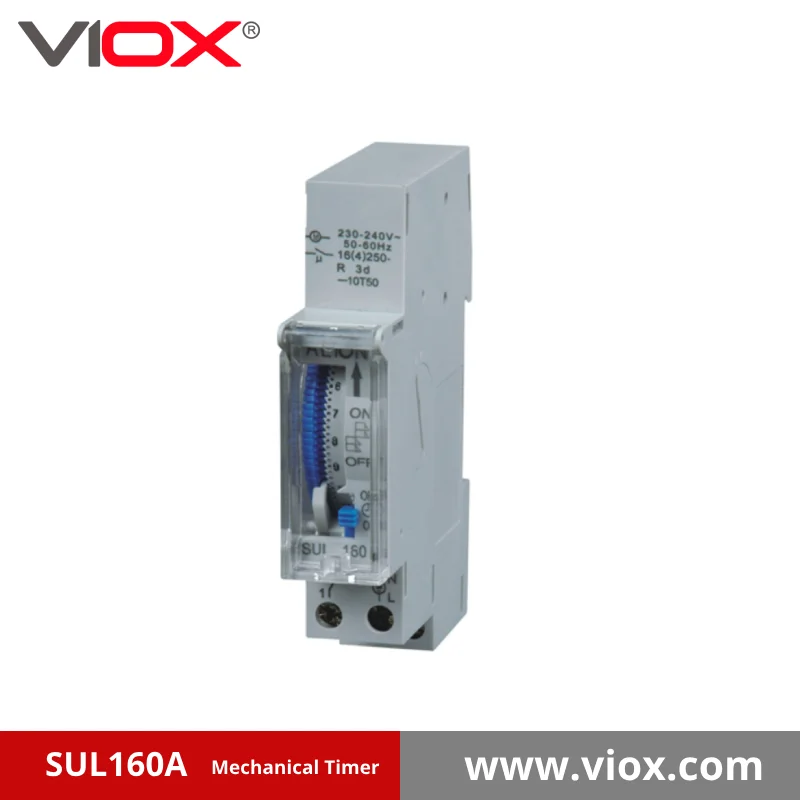
| SUL160A | 35mm DIN 레일 | 24h / 15 min | 220–240V AC, 50–60Hz | 16A resistive; 4A at cos φ 0.6 | Permanent ON / OFF | 3 days, NiMH | IP20 |
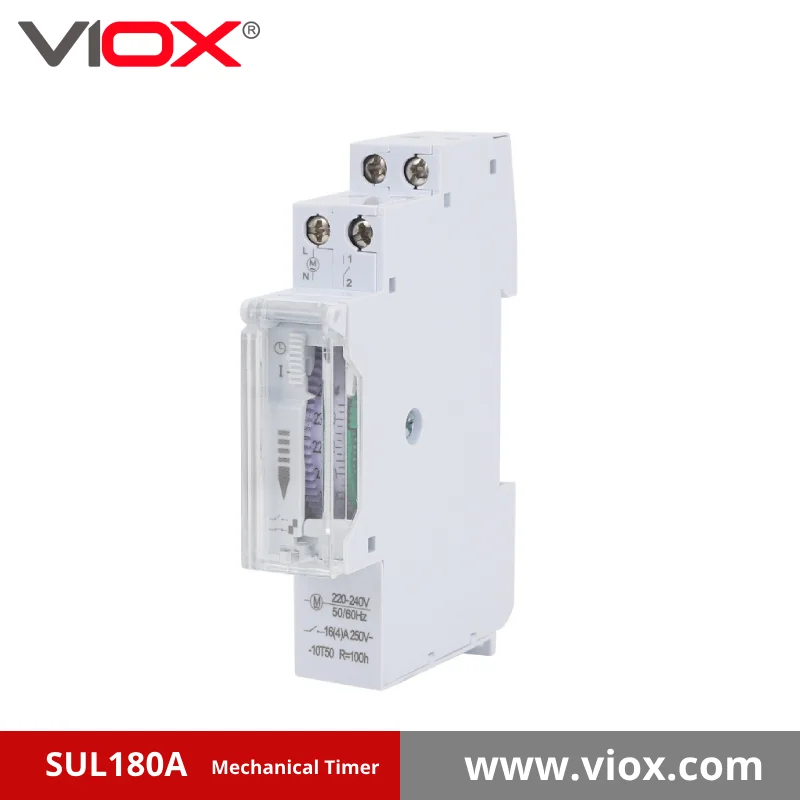
| SUL180A | DIN rail, 1 module | 24h / 15 min | 230–240V AC, 50–60Hz | 16A resistive; 4A at cos φ 0.6 | ON / AUTO / OFF | 3일 | IP20 |
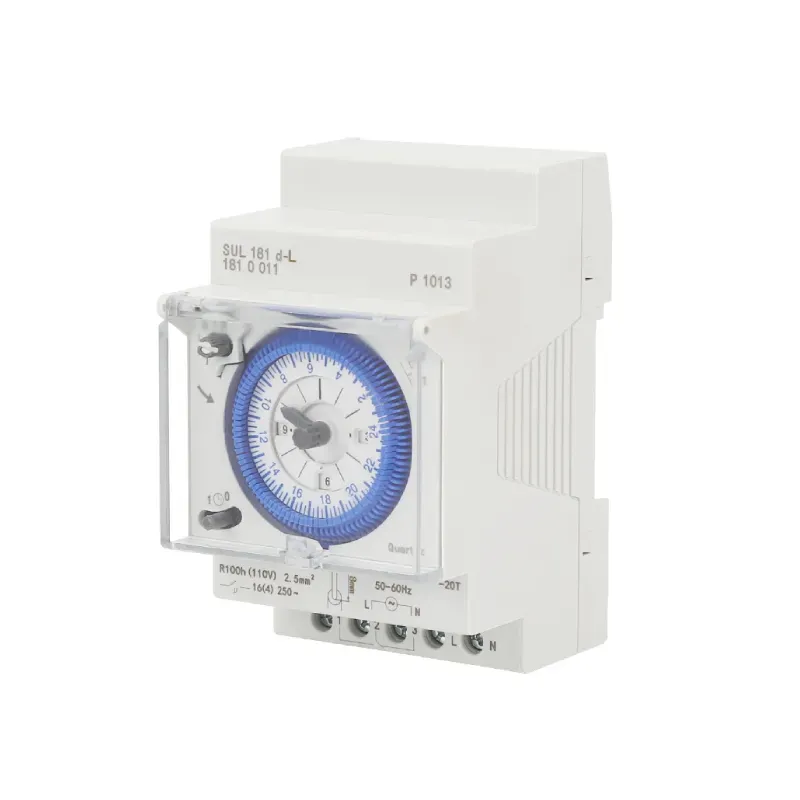
| SUL181D | DIN rail, 3 modules | 24h / 15 min | 230V AC | 16A resistive; 4A inductive | ON / AUTO / OFF | NiMH; duration not stated | 명시되지 않음 |
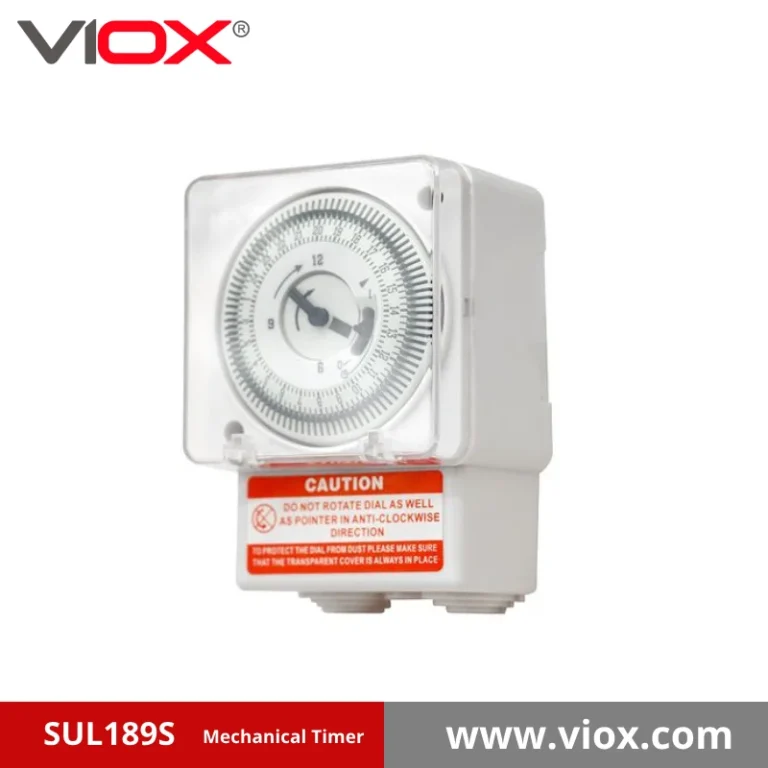
| SUL189S | Front panel / wall | 24h / 15 min | 110V AC, 50–60Hz | 10A resistive; 2A at cos φ 0.6 | Permanent ON / OFF | 3 days, NiMH | IP20 |
| TB118N | Confirm product drawing | 24h / 15 min unit | 100–240V AC, 50–60Hz | 15A resistive; 12A inductive | ON / OFF | 300 hours at 20°C | 명시되지 않음 |
| TB330 | Standard DIN-rail compatible | 24h / 15 min unit; 30 min interval | 100–240V AC, 50/60Hz | 30A resistive; 12A inductive | ON / OFF | 150시간 | 명시되지 않음 |
| TB388 | DIN rail / panel | 24h / 15 min | 100–240V AC, 50/60Hz | 15A resistive; 12A inductive | ON / AUTO / OFF | 100시간 | 명시되지 않음 |
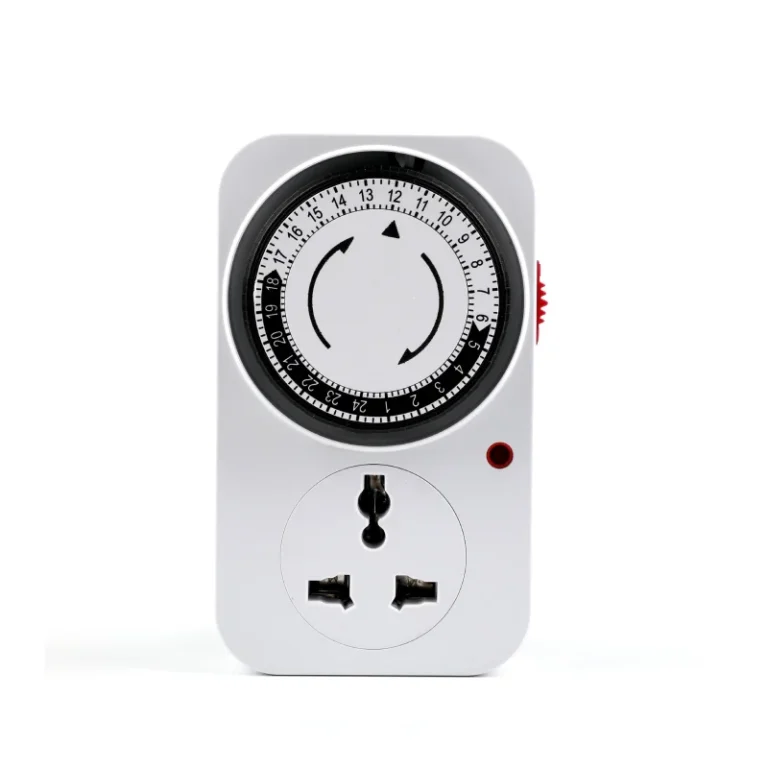
| Plug-In Timer | 플러그인 소켓 | 24h / 15 min | 220V AC, 50Hz | 10A published rated current | Timer dial / direct socket use | 명시되지 않음 | Indoor product data |
Mechanical Timer Switch Product Range
Browse 13 current published VIOX mechanical timer records. A superseded duplicate SUL180A record is excluded from the range.
DIN-Rail and Panel Time Switches
Analogue daily timers for distribution boards and control panels, organized by real product record rather than duplicate model naming.
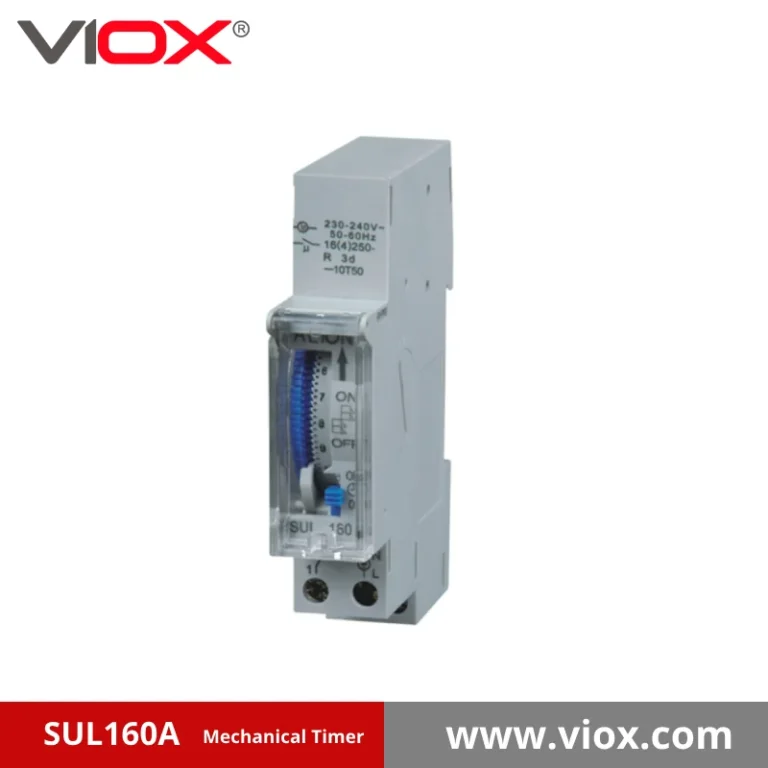
VIOX SUL160A
Panel mechanical time switch- 형식
- 35mm DIN 레일
- 프로그램
- 24h · 15 min
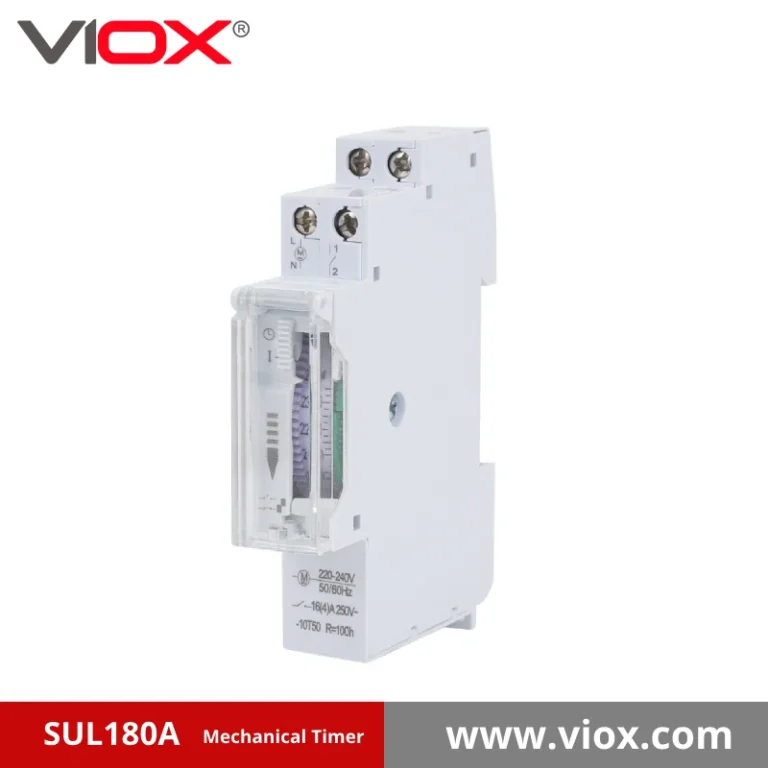
VIOX SUL180A
Panel mechanical time switch- 형식
- DIN rail · 1 module
- 프로그램
- 24h · 15 min
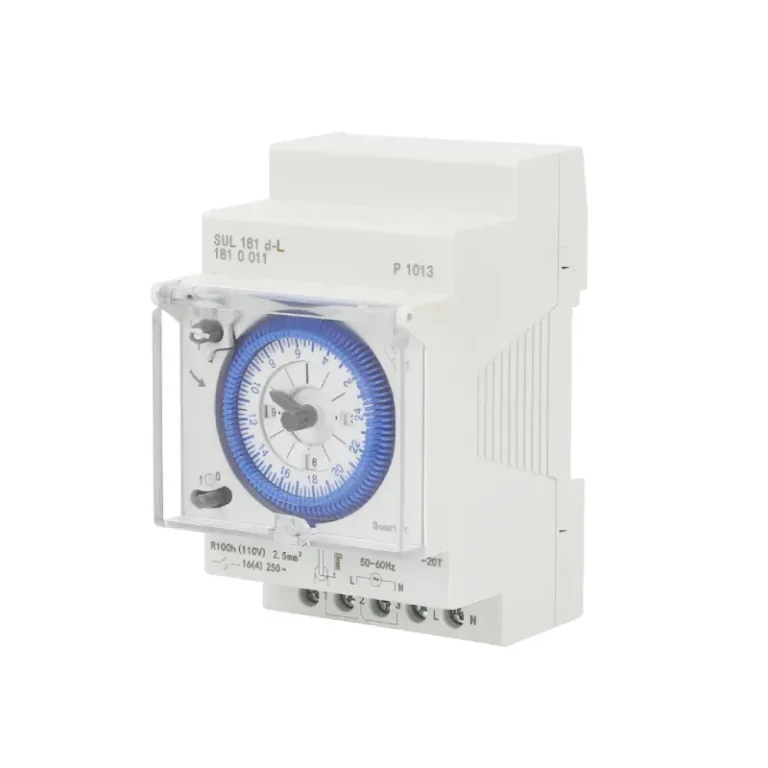
VIOX SUL181D
Panel mechanical time switch- 형식
- DIN rail · 3 modules
- 프로그램
- 24h · 15 min
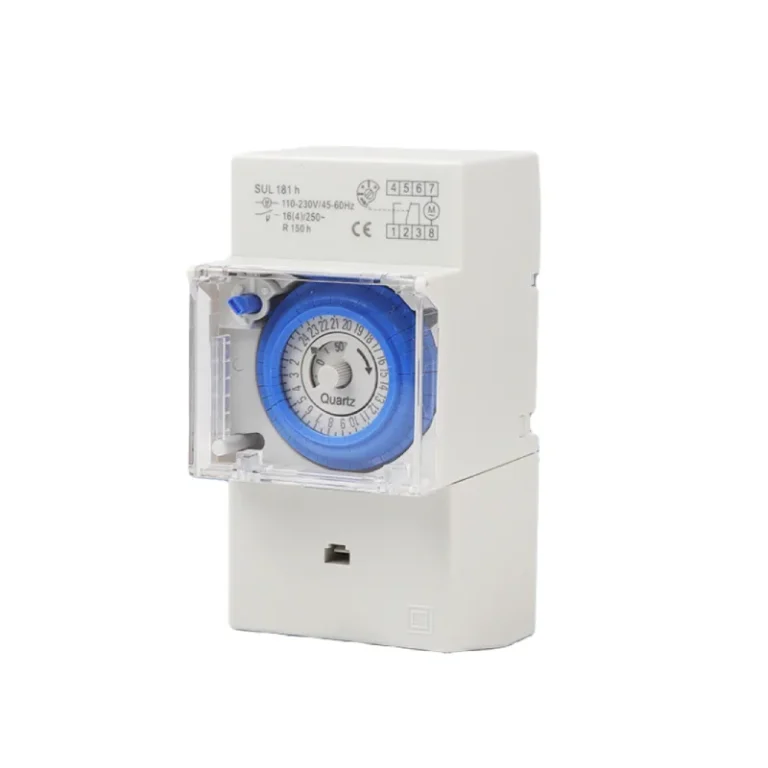
VIOX SUL181H
Panel mechanical time switch- 형식
- 35mm DIN 레일
- 프로그램
- 24h · 30 min
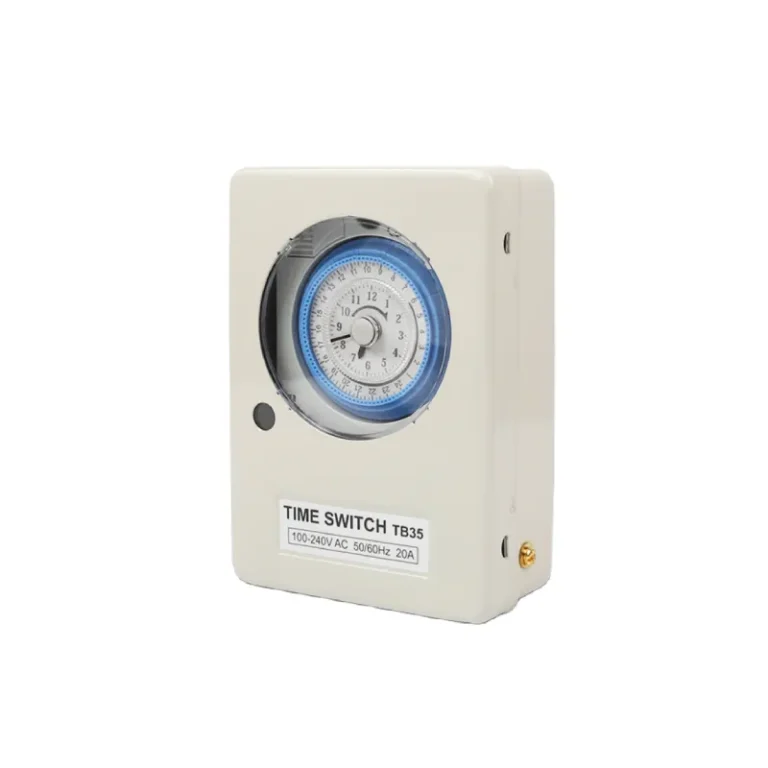
VIOX TB35
Panel mechanical time switch- 형식
- DIN 레일
- 프로그램
- 24h · 15 min
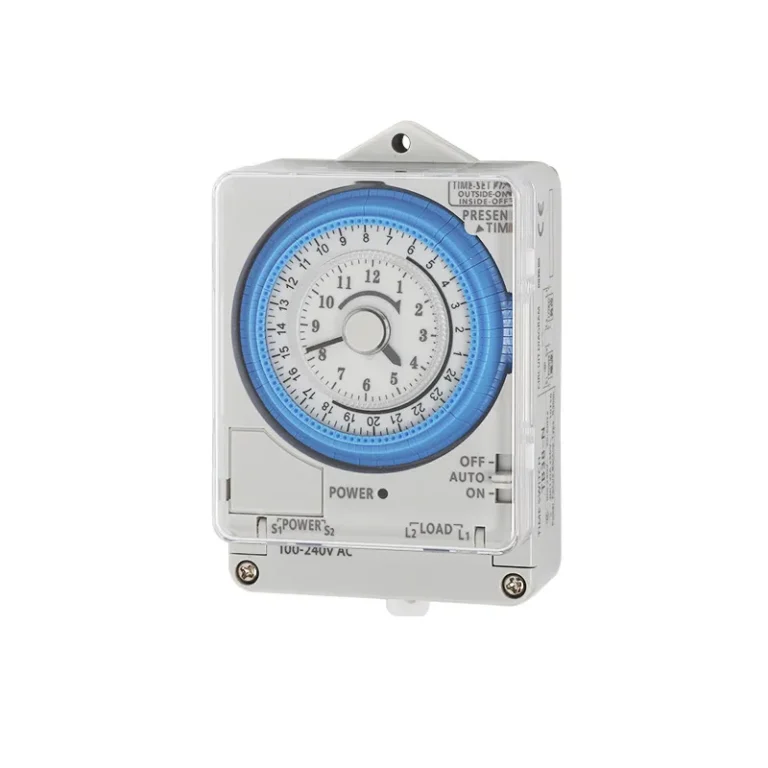
VIOX TB38N
Panel mechanical time switch- 형식
- DIN rail / panel
- 프로그램
- 24h · 15 min
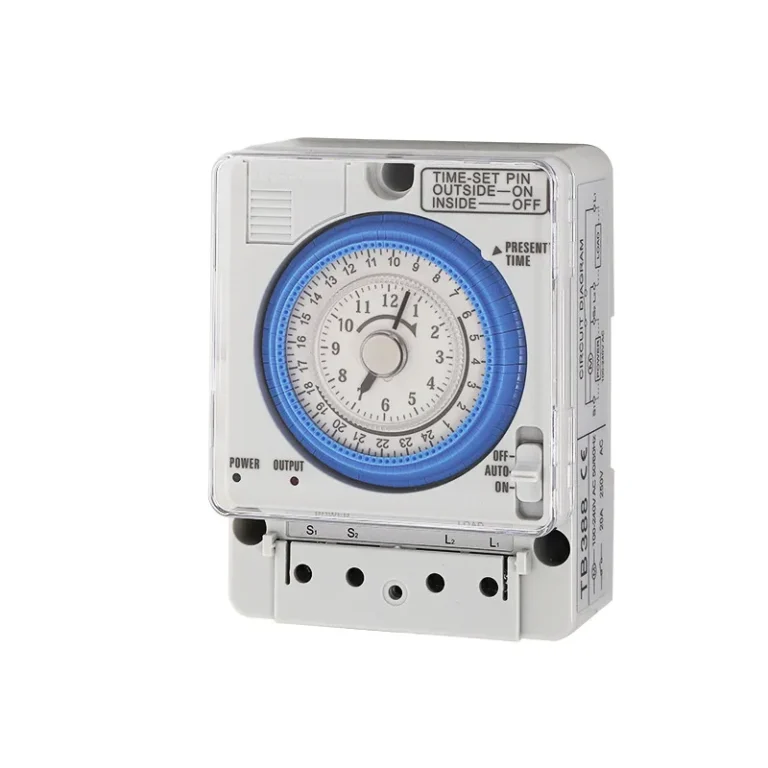
VIOX TB388
Panel mechanical time switch- 형식
- DIN rail / panel
- 프로그램
- 24h · 15 min
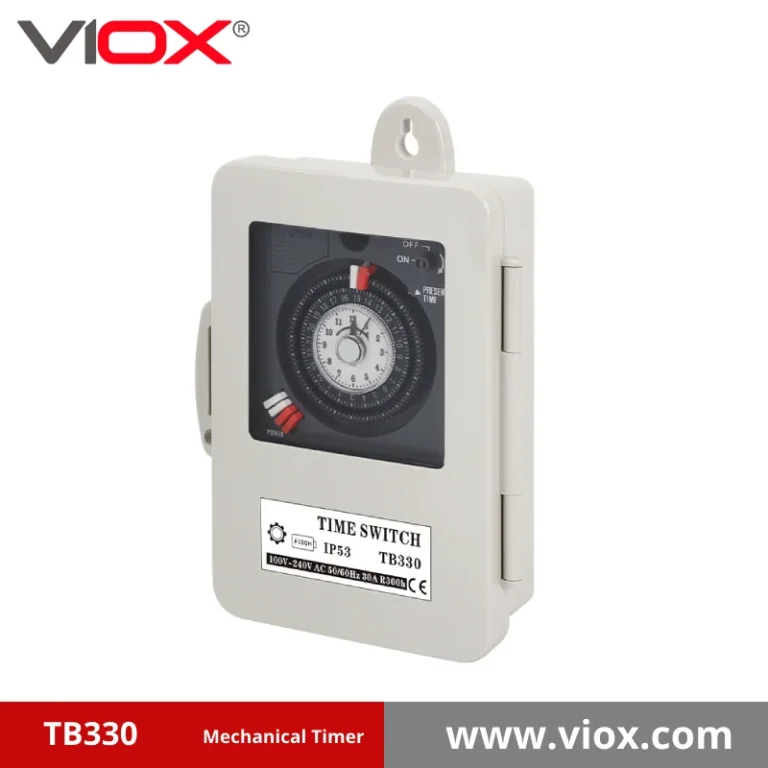
VIOX TB330
Panel mechanical time switch- 형식
- DIN-rail compatible
- 프로그램
- 24h · 30 min interval
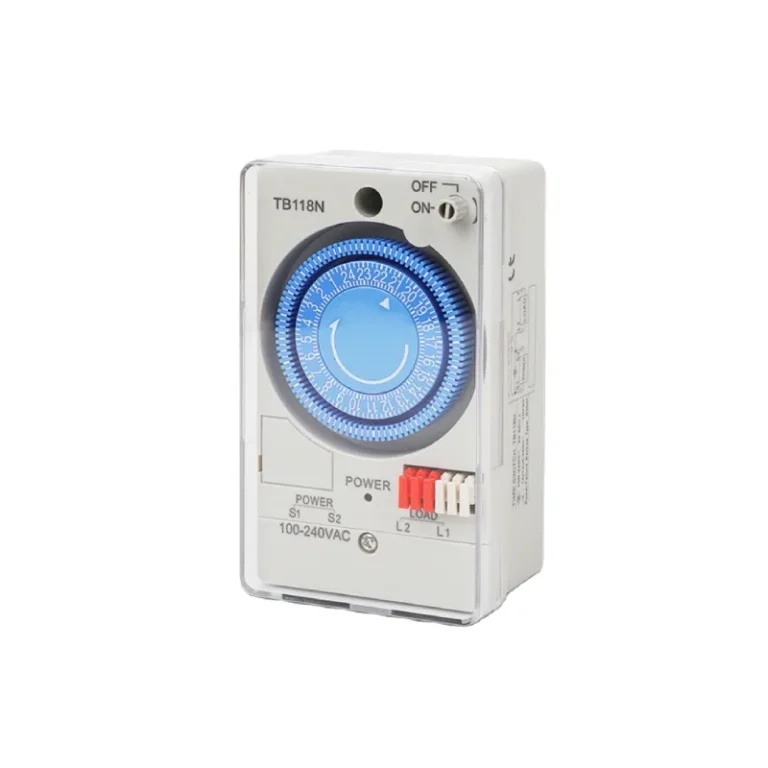
VIOX TB118N
Panel mechanical time switch- 형식
- Confirm drawing
- 프로그램
- 24h · 15 min unit
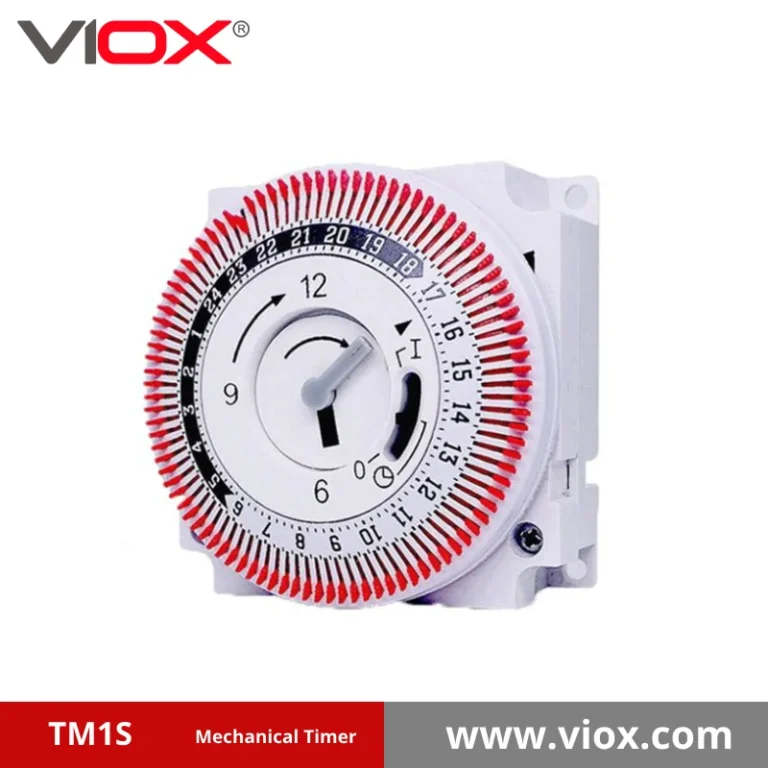
Surface and Wall-Mounted Timers
Mechanical timer formats intended for surface, front-panel or wall integration. Confirm the drawing and terminals for the selected model.
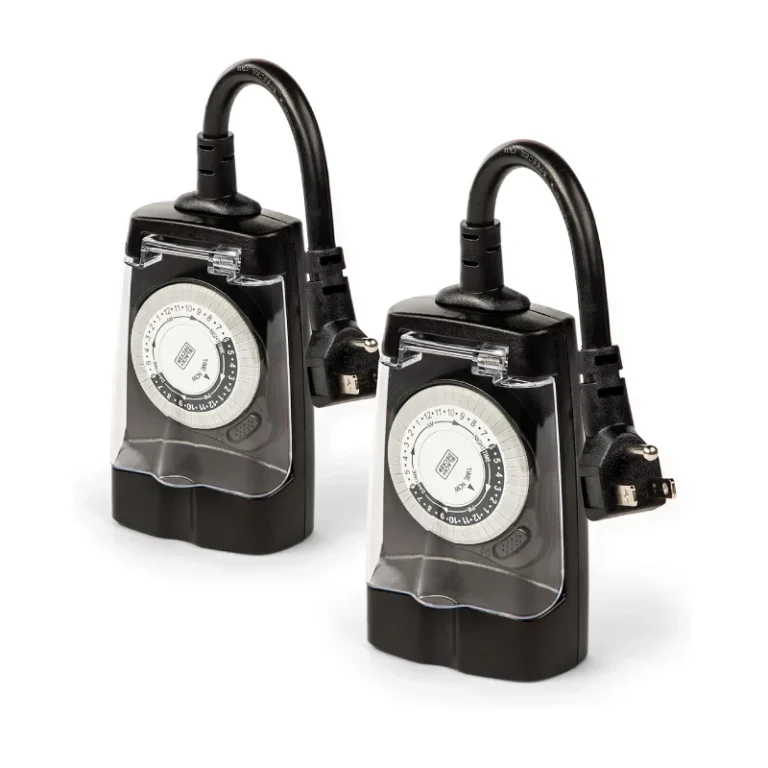
Plug-In and Outdoor Timer Sockets
Direct plug-in timer formats for suitable indoor or outdoor loads. Socket, plug and environmental details remain model-specific.
How to choose a mechanical timer switch
Define the recurring schedule and mounting first, then coordinate the exact supply, contact duty, reserve and enclosure conditions.
Cycle and minimum interval
Confirm the number of segments, 15- or 30-minute resolution and required daily repetition.
Supply and contact duty
Match the timer supply and distinguish resistive rating from inductive, motor and LED inrush duty.
Mounting and override
Choose DIN rail, panel, surface, plug-in or outdoor format and the required manual ON, AUTO and OFF positions.
Reserve and environment
Verify clock reserve, temperature, IP rating, plug format, terminals and enclosure protection for the exact model.
Separate clock duty from load duty
A timer may keep accurate time yet still be unsuitable for the connected load. Coordinate its contacts, inrush current, protection and any interposing contactor.
Mechanical Timer Switch Applications
정확한 제품 사양 확인이 필요한 일반적인 환경.


Mechanical Timer Switch Knowledge & Selection Guides
모든 게시물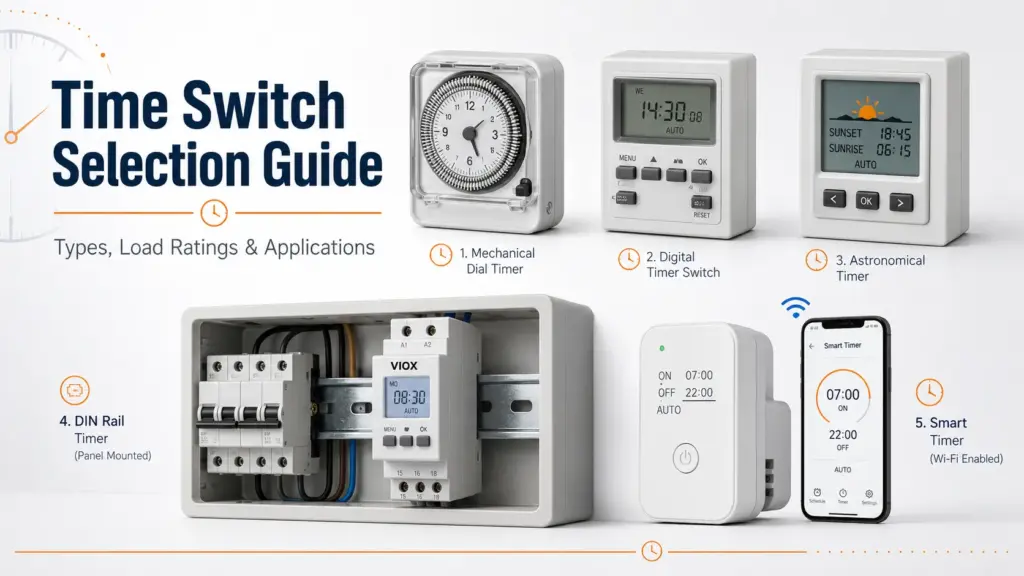
Mechanical Timer Switch Selection Questions
상세 회로 검증 전 제품군 비교를 위한 빠른 답변.
What is the difference between a mechanical and digital timer switch?
A mechanical timer commonly repeats a visible dial-based daily schedule. A digital timer can add weekly calendars, pulse or cycle functions, multiple channels and finer settings, depending on the model.
Can a mechanical timer switch a motor or LED load directly?
Only when the exact contact rating and inrush duty permit it. Motors, pumps, transformers and some LED drivers may require a correctly selected contactor or interposing relay.
What happens during a power failure?
Clock behavior varies by model. Some use a quartz drive and rechargeable reserve, while synchronous models may have no reserve. Confirm both the reserve duration and whether the output state changes during an outage.
How is the minimum switching interval selected?
The dial segmentation determines the shortest setting, commonly 15 or 30 minutes in this published range. Confirm whether the value means the setting unit, the minimum ON/OFF interval, or both.
Which information should be included in an RFQ?
Provide mounting format, supply voltage and frequency, 24-hour schedule, minimum interval, load type and current, manual override, reserve, environment, plug or terminal format, quantity and target market.
Need the Right Mechanical Timer?
Let’s Match the Dial to the Load.
Send the mounting, voltage, required schedule, minimum interval, load type and current, manual override, reserve, plug or terminal format, quantity, marking, packaging and destination market.
Request Mechanical Timer Switch Support