Friday, 4:45 PM. The rooftop unit serving your 15,000-square-foot retail space just went silent. The compressor seized—motor windings burned, bearings welded from overheating. Emergency replacement cost: $8,500 plus overtime. Root cause: 90-second cycling for a week with zero short-cycle protection.
A $45 time delay relay could have prevented this.
Short-cycling—rapid on-off operation without adequate rest between cycles—is the leading preventable cause of compressor failure. Every start draws 5–8× running current. Motor windings heat. Oil pumps into refrigerant lines. When cycles happen too fast, oil never returns, heat accumulates, and something breaks.
Time delay relays enforce minimum off-time by extending compressor run beyond thermostat satisfaction. No programming. No sensors. Just reliable protection that locks out rapid restarts from thermostat bounce, pressure flutter, or control failures.
Why Compressors Need the “Lockout Protection”
Compressors cost $1,200–$15,000 installed. Each start is violent: 5–8× running current, instant heat spike, oil ejection into lines.
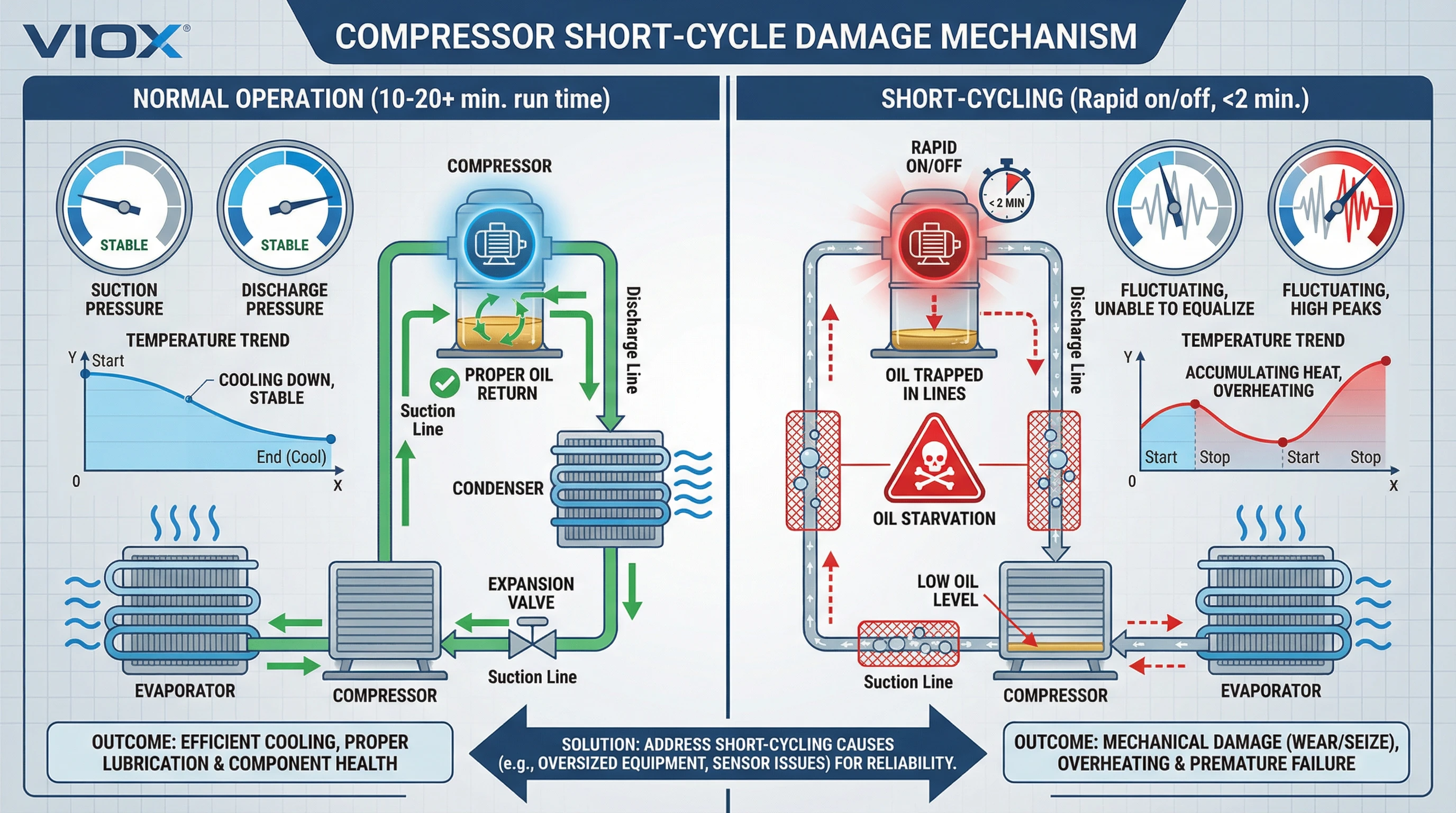
Normal cycle: Compressor runs 10–20 minutes. Oil completes its 2–5 minute circuit through discharge lines, condenser, evaporator, and back to the sump. Pressures equalize. Windings cool. The system stabilizes before the next start.
Short-cycle disaster: Restart within 1–3 minutes. Pressures haven’t equalized—the motor fights high head pressure and draws even higher inrush. Oil hasn’t returned—bearings run dry. Windings haven’t cooled—temperature ratchets higher with each cycle.
Common causes: Oversensitive thermostats cycling on minor swings. Undersized equipment running constantly under high load but cycling rapidly under low load. Refrigerant charge problems. Chattering pressure switches.
Manufacturer warranty hammer: Copeland requires 3-minute minimum run time for scroll compressors, longer for extended line sets. Carrier, Trane, Tecumseh publish similar guidance. Install without protection? Warranty denial when failure occurs.
The “Short-Cycle Death Spiral”: How Damage Happens
Oil starvation kills first. Compressor oil travels the entire refrigerant circuit—discharge lines to condenser, through liquid lines, into the evaporator where it must drain against gravity, finally back through suction lines to the sump. This takes 2–5 minutes for residential systems with 50-foot line sets, far longer for commercial equipment with 100+ foot runs.
Each short cycle traps more oil in the evaporator. After 10–20 cycles, sump level drops. After 50–100 cycles, bearings run metal-on-metal. Scroll sets seize. The compressor dies from oil starvation even though refrigerant charge was correct.
Thermal stress burns windings. Motor insulation is rated 130–155°C maximum. Normal operation: brief startup heat spike, then steady-state cooling keeps windings well below rating. Short-cycling: each start adds heat on top of residual temperature from the previous cycle. Temperature ratchets up. Insulation breaks down. Turn-to-turn shorts develop. The motor burns out—often catastrophically, contaminating the entire system with carbon and acid.
Electrical stress destroys contacts. A 3-ton compressor pulling 15 A running current draws 75–120 A inrush for 0.5–2 seconds. Contactors are rated for maybe 6–8 cycles per day—2,000–3,000 starts per year. Short-cycling multiplies this 10×: 60–80 starts per day. Contacts erode from arcing. Resistance increases. Eventually they weld closed or fail to close.
Mechanical shock and liquid slugging finish the job. Start-stop cycles slam components as the motor accelerates from zero to 3,500 RPM in under 2 seconds. Over thousands of cycles, fatigue cracks develop. And with short off-times under 3 minutes, liquid refrigerant condenses in the crankcase faster than heaters can evaporate it. On restart, liquids don’t compress—the hydraulic shock cracks valves and bends rods.
Off-Delay Operation: The “Run Extension” That Saves Compressors
Time delay relays come in multiple modes—on-delay, off-delay, interval, repeat—but for compressor protection you need off-delay (delay-on-break).
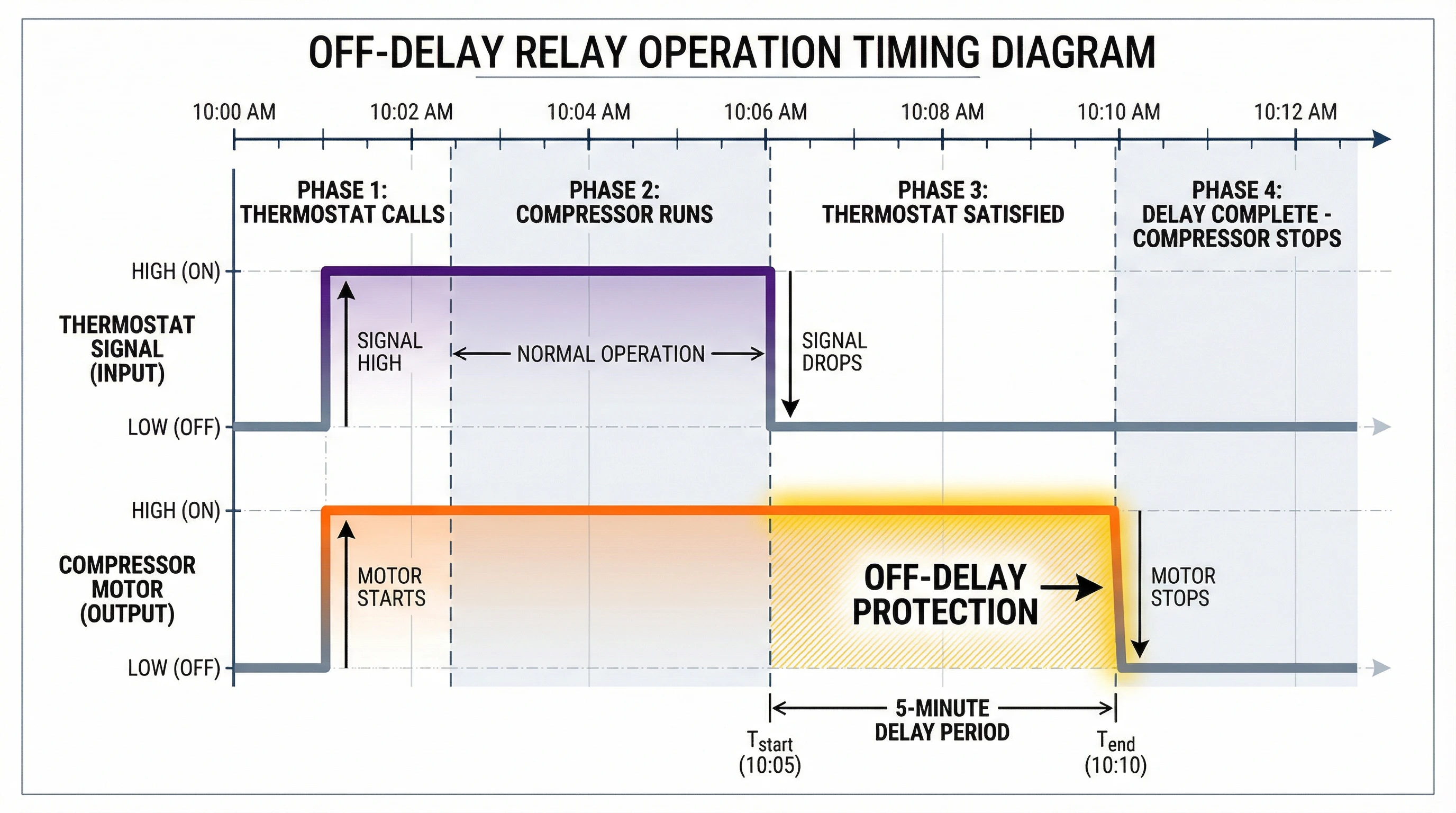
작동 방식 How it works: Thermostat calls for cooling → relay energizes immediately → compressor starts. Thermostat satisfied → relay begins timing but keeps output closed → compressor continues running for the delay period (typically 3–10 minutes) → delay elapses → compressor stops.
This seems backward. Why run after the thermostat is satisfied? The protection happens on the next cycle.
Scenario A – Rapid cycling: Thermostat calls again before delay completes. Relay sees continuous demand. Compressor simply keeps running—no damaging restart event occurs. Short-cycle attempts become continuous operation.
Scenario B – Normal cycling: Thermostat calls after delay completes. Compressor had adequate rest (forced extension plus natural off-time) before restart.
Concrete example with 5-minute off-delay:
- 2:00 PM: Thermostat calls. Compressor starts immediately.
- 2:08 PM: Thermostat satisfied. Relay begins 5-minute countdown, compressor keeps running.
- 2:13 PM: Delay completes. Compressor stops. Total run: 13 minutes.
- If thermostat cycles at 2:10 PM (during countdown): Compressor never stops. Protection works.
- If thermostat cycles at 2:15 PM (after countdown): Restart allowed with adequate rest.
Why not on-delay? On-delay relays delay startup when the input energizes. They stage multiple compressors but don’t prevent short-cycling. Rapid thermostat cycling still causes rapid off-on events with inadequate rest.
The “System Size Chart”: Selecting Delay Settings
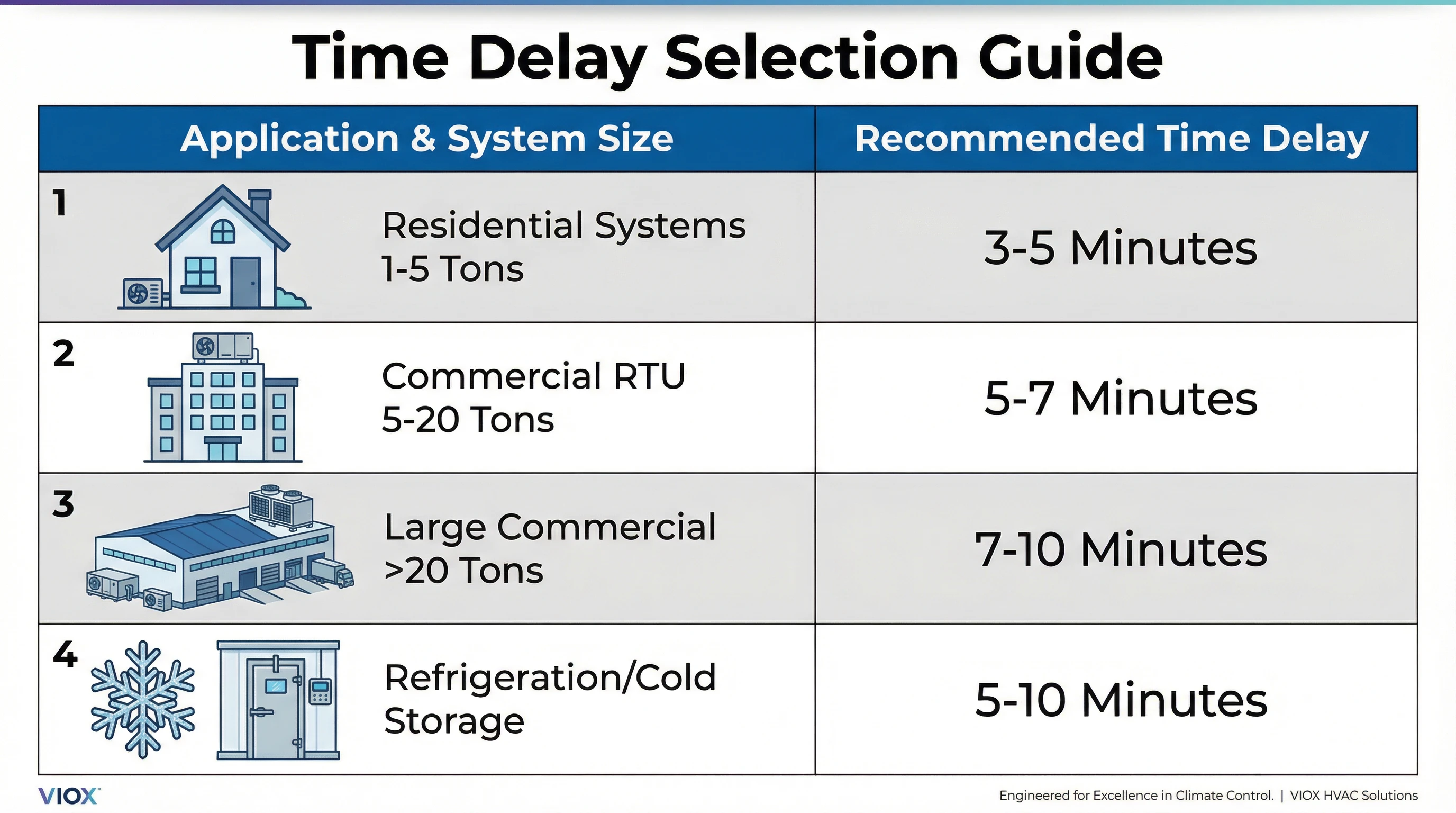
Manufacturer baselines:
- Residential (1–5 tons): 3–5 minutes. Short line sets (25–50 feet), smaller oil charges. Use 5 minutes if line sets exceed 50 feet or short-cycle history exists.
- Commercial RTU (5–20 tons): 5–7 minutes. Longer circuits need more oil return time. Higher thermal mass tolerates extended run.
- Large commercial (>20 tons): 7–10 minutes. Extended line sets, multiple evaporators, complex piping need longer run times for complete oil return.
- Refrigeration/cold storage: 5–10+ minutes. Cold evaporators increase oil viscosity, slowing drainage. Long suction risers need adequate gas velocity to carry oil upward.
Field adjustment protocol:
- Install with manufacturer-recommended setting.
- Monitor 5–7 days. Log cycles per day (target: 6–12 residential, 8–15 commercial).
- Confirm protection working: some cycles should show compressor running briefly after thermostat satisfaction.
- Adjust if needed: Occupant complaints about temperature overshoot? Reduce 1–2 minutes. Still seeing rapid cycling? Increase delay.
- Document final setting on equipment label.
이러한 실수를 저지르지 마세요: 3분 미만으로 설정하면 보호 기능이 작동하지 않습니다. 온-딜레이를 사용해도 단기 사이클링을 방지할 수 없습니다. 모든 크기에 동일한 타이밍을 적용합니다. 문제 해결 중에 비활성화하고 다시 활성화하는 것을 잊어버립니다.
접점 정격: “코일 전류 대 모터 전류” 구분
핵심 개념: 시간 지연 릴레이는 다음을 제어합니다. 접촉기 코일, 컴프레서 모터를 직접 제어하지 않습니다.
대부분의 HVAC 시스템은 저전압 제어(변압기에서 24VAC, 때로는 120/240VAC)를 사용하여 접촉기 코일에 전원을 공급합니다. 그런 다음 접촉기 주 접점이 고전류 컴프레서 모터(20–200+ 암페어)를 전환합니다. 시간 지연 릴레이는 코일 전류만 전환합니다.
접촉기 코일은 0.15–0.5A의 연속 전류를 소비하며, 50–100밀리초 동안 2–3배의 돌입 전류가 발생합니다. 전자기 부하(IEC 범주 AC-15)에 대해 1–5A로 정격된 시간 지연 릴레이는 이를 쉽게 처리합니다.
치명적인 실수: 코일 전류와 모터 전류를 혼동합니다. 5톤 컴프레서는 작동 시 25A, 고정 로터 시 150A를 소비합니다. 이러한 부하는 릴레이가 아닌 접촉기 주 접점에 있습니다. 릴레이는 0.3A 코일만 전환합니다. 컴프레서 전류를 직접 전환하려고 하면 즉시 접점이 용접됩니다.
주요 사양: 범용 전압 릴레이(18–240VAC/DC)는 주거용 24VAC, 상업용 120VAC, 산업용 240VAC에서 작동합니다. 작동 온도는 최소 50–60°C여야 합니다. 옥상 인클로저는 60°C+에 도달합니다. 타이밍 정확도 ±5–10%면 충분합니다. DIN 레일 장착은 표준입니다.
배선 통합: “안전 스트링” 배치
통합 패턴: 온도 조절기 → 안전 장치 → 시간 지연 릴레이 → 컴프레서 접촉기 코일.
주거용 분할 시스템 (24VAC):
- 제어 배선 식별: 온도 조절기 Y 단자가 접촉기 코일에 연결됩니다. C선이 리턴을 제공합니다.
- 접촉기 코일에서 Y선을 분리합니다.
- Y선을 릴레이 입력 단자(A1)에 연결합니다. 릴레이 입력 공통(A2)을 C선에 연결합니다.
- 릴레이 출력 접점(NO, 단자 15-16)을 접촉기 코일에 연결합니다.
- 24VAC 변압기에서 릴레이에 전원을 공급합니다.
작동: 온도 조절기 호출 → 릴레이 전원 공급 → 출력이 즉시 닫힘 → 컴프레서 시작. 온도 조절기 만족 → 릴레이가 출력이 닫힌 상태에서 오프-딜레이 타이밍 시작 → 컴프레서 계속 작동 → 지연 완료 → 출력 열림 → 컴프레서 중지.
상업용 옥상 장치 (안전 스트링이 있는 120/240VAC):
상업용 시스템에는 안전 스트링(고압 차단, 저압 차단, 동결 방지 장치, 과부하)이 포함되어 있으며, 컴프레서 작동을 위해서는 모두 닫혀 있어야 합니다.
- 제어 회로 찾기: 온도 조절기/컨트롤러 출력이 안전 스트링을 통해 접촉기 코일로 연결됩니다.
- 안전 스트링 출력과 접촉기 코일 사이의 회로를 차단합니다.
- 안전 스트링 출력을 릴레이 입력에 연결합니다. 릴레이 출력을 접촉기 코일에 연결합니다.
- 제어 전압(120 또는 240VAC)에서 릴레이에 전원을 공급합니다.
이 배치를 통해 안전 트립이 즉시 컴프레서를 중지하고, 시간 지연은 간헐적인 안전 트립(채터링 압력 스위치에서 흔히 발생) 후 즉시 재시작을 방지하여 급격한 사이클링으로부터 보호합니다.
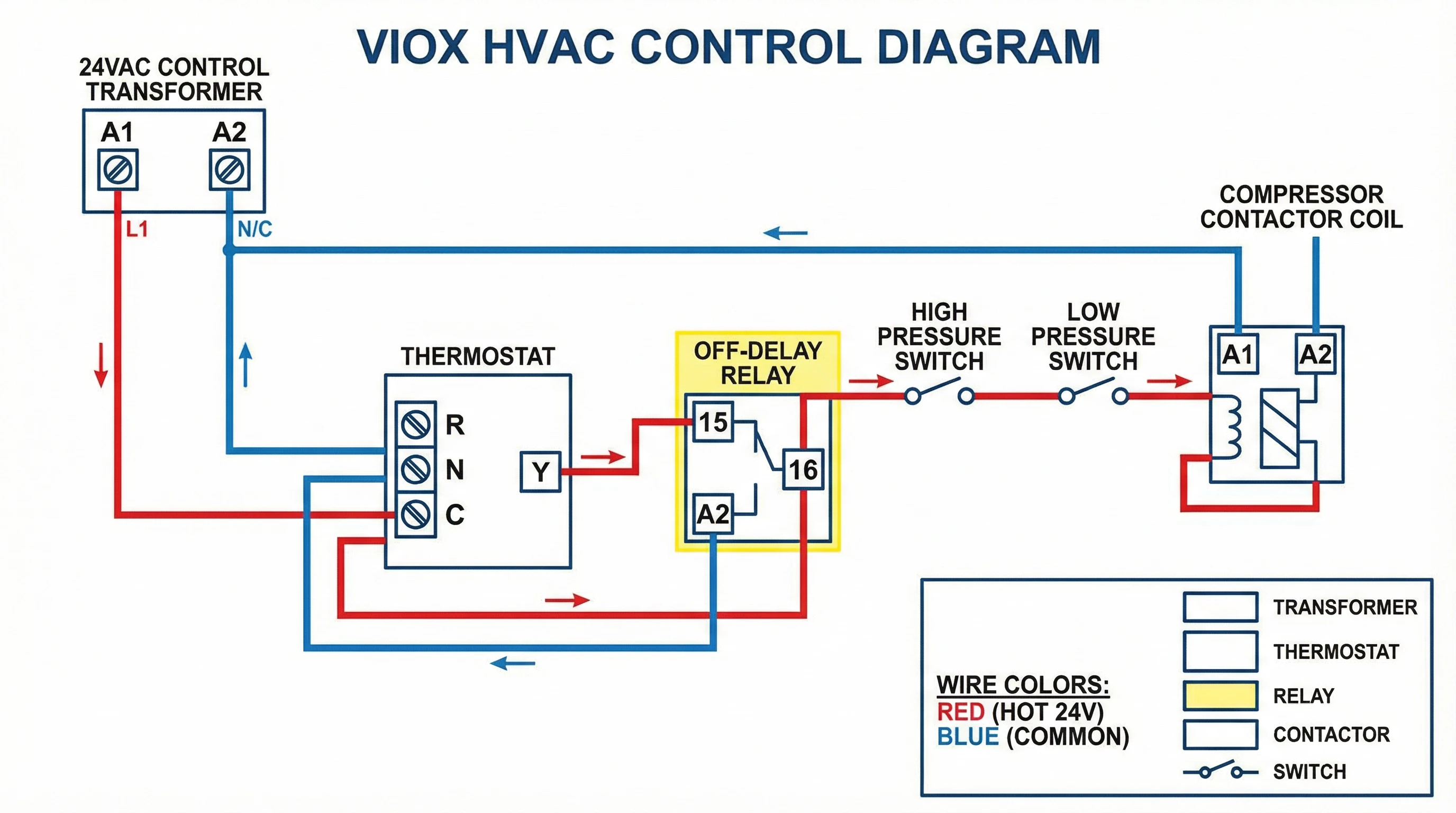
중요한 배선 규칙:
- 전압 일치24VAC 릴레이에서 120VAC로 = 즉시 파괴. 항상 확인하십시오.
- 접점 선택상시 열림(NO) 접점을 사용하십시오. NC를 사용하면 논리가 반전됩니다.
- 안전 무결성안전 장치를 절대 우회하지 마십시오. 모든 안전 장치 다운스트림에 릴레이를 배선하십시오.
- 다단계 시스템2단계 냉각에는 Y1 및 Y2에 대한 별도의 릴레이가 필요합니다.
문제 해결: “시작 안 됨 / 중지 안 됨” 진단
문제: 온도 조절기가 호출해도 컴프레서가 시작되지 않음
진단온도 조절기가 호출할 때 릴레이 입력 단자에서 전압을 측정합니다. 제어 전압(일반적으로 24VAC)을 읽어야 합니다. 입력에 전원이 공급될 때 릴레이 출력이 닫히는지 확인합니다.
수정타이밍 주기가 완료될 때까지 10분 동안 기다리거나 전원을 껐다 켜서 재설정합니다. 오프-딜레이 모델을 확인하고 NO 접점 배선을 확인하고 결함이 있는 경우 교체합니다.
문제: 온도 조절기가 만족한 후에도 컴프레서가 계속 작동함
진단오프-딜레이 타이밍 중에는 이것이 정상입니다. 릴레이가 보호 기능을 제공하고 있습니다. 컴프레서가 설정된 지연 시간을 훨씬 초과하여 작동하는 경우(5분 설정에서 15분 이상) 릴레이 타이밍을 확인합니다.
수정타이밍이 정확하지만 과도한 경우 릴레이가 고장났을 수 있습니다. 설정이 너무 길면 1–2분 줄입니다. 온도 조절기 차동이 계속 순환하지 않는지 확인합니다.
문제: 릴레이에도 불구하고 여전히 단기 사이클링이 발생함
진단릴레이가 바이패스되지 않고 제어 신호와 직렬로 연결되어 있는지 확인합니다. NC가 논리를 반전시키는 데 사용되는 NO 접점을 확인합니다. 스톱워치로 실제 타이밍을 측정합니다.
수정올바른 배선. 고장난 릴레이를 교체합니다. 사이클이 보호 창 바로 바깥쪽에 있는 경우 지연 시간을 1–2분 늘립니다.
문제: 릴레이 타이밍이 불규칙함
진단정격 이상의 주변 온도는 드리프트를 유발합니다. 제어 전압 강하는 타이밍 오류를 유발합니다. 부하 상태에서 릴레이 단자에서 측정합니다.
수정사양 내에서 주변 온도를 확인합니다. 더 시원한 곳으로 옮깁니다. 제어 변압기 용량을 확인합니다. 노후된 릴레이를 교체합니다.
VIOX 시간 지연 릴레이: “범용 보호” 솔루션
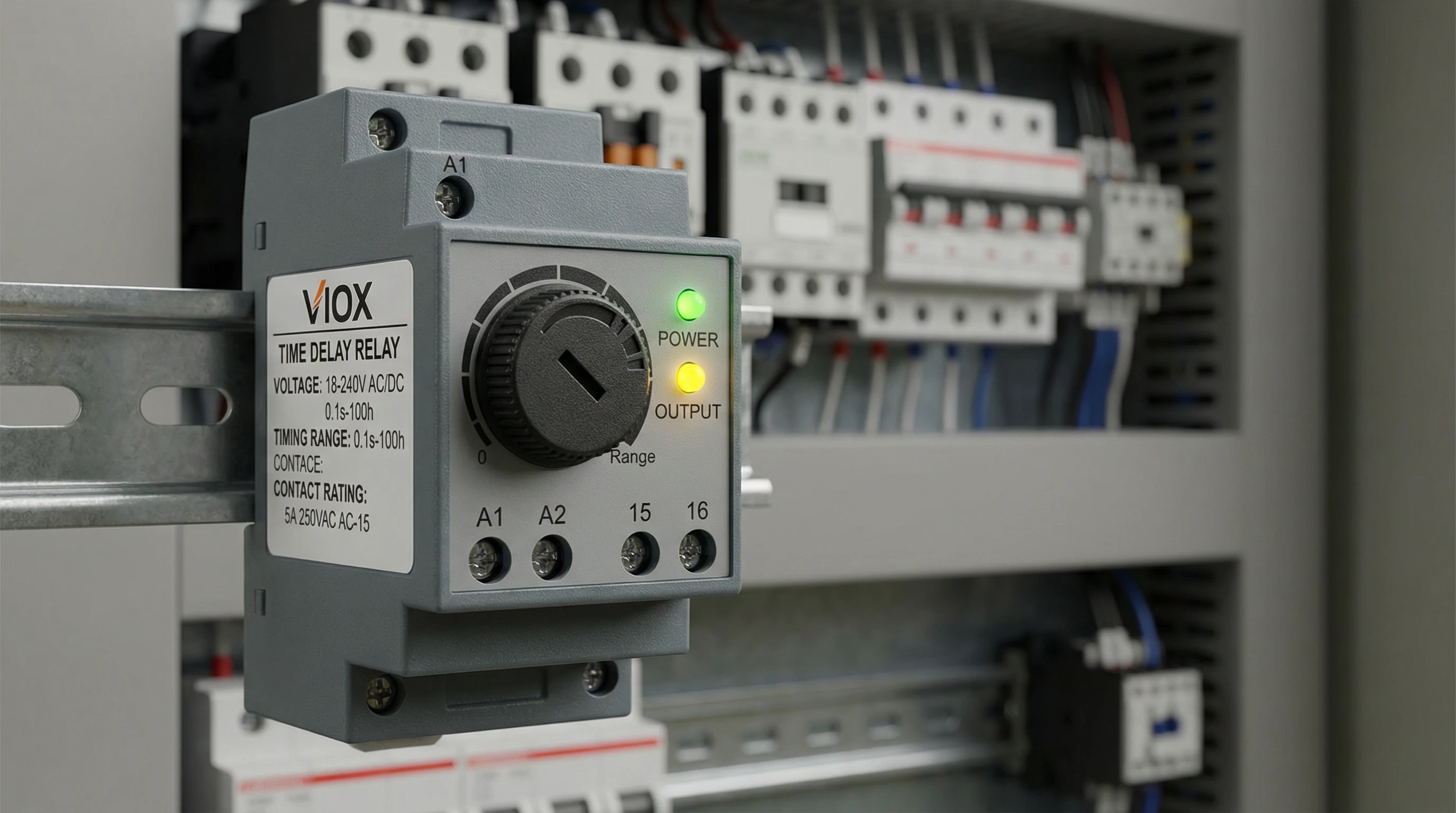
VIOX는 열악한 HVAC 환경을 위해 설계된 다기능 시간 지연 릴레이를 제조합니다. 단일 기능 릴레이와 달리 VIOX 모델에는 DIP 스위치를 통해 선택 가능한 오프-딜레이, 온-딜레이, 간격 및 반복 모드가 포함되어 있습니다. 하나의 부품 번호로 컴프레서 보호, 단계별 시퀀싱 및 제상 타이밍을 다룹니다.
HVAC의 주요 사양:
- 18–240VAC/DC 범용 입력주거용 24VAC, 상업용 120VAC, 산업용 240VAC에서 작동합니다.
- –20°C ~ +60°C 작동 범위직사광선에서 60°C+에 도달하는 옥상 패널을 처리합니다.
- 5 A at 250 VAC (AC-15 category): Comfortable margin for contactor coils (0.2–0.5 A), handles multiple contactors.
- 0.1 seconds to 100 hours timing: Covers full HVAC range (3–10 minutes) with precision adjustment.
- ±5% accuracy: 5-minute setting holds 4:45–5:15 across temperature range.
- DIN 레일 마운팅: Standard 35mm rail, 22.5mm width, professional integration.
- Dual LED indicators: Green power, yellow/red output for instant status visibility.
인증: IEC 61812-1 (time relay performance), UL 508 (industrial control), CE (EU Low Voltage + EMC). EMC compliance ensures reliable operation in noisy HVAC panels.
지원하다: Wiring diagrams for residential, commercial, multi-stage configurations. Application notes cover timing selection, field adjustment, integration. Technical support with HVAC experience.
Conclusion: The “$45 Insurance Policy”
Compressor failures are expensive ($1,200–$15,000), disruptive, and always happen at the worst time—peak cooling load, holiday weekend, critical operations. Short-cycling is the leading preventable cause.
For $40–$80 and an hour of installation, you eliminate the most common failure mode. ROI is immediate: one prevented failure pays for protection on 20–100 systems.
The mechanism is simple: off-delay timing enforces minimum run time by extending operation beyond thermostat satisfaction. Rapid thermostat cycling becomes continuous operation instead of damaging restarts. Field data confirms it: protected compressors achieve 15–20 year life. Unprotected compressors cycling every 1–2 minutes fail within 1–3 years.
Implementation: Select off-delay relay. Size delay for your compressor (3–5 min residential, 5–7 min commercial, 7–10 min large systems). Verify AC-15 contact rating 1–5 A. Wire in series between thermostat/safeties and contactor coil. Set timing, test, document. No programming. No calibration. No maintenance.
For contractors: Include it as standard practice on new installations. Add during compressor replacements. Recommend during maintenance when short-cycling observed. Fewer comebacks. Satisfied customers.
For facility engineers: Reduce total ownership cost. Add to existing equipment showing short-cycle patterns. Specify as standard for new procurement.
For OEMs: Reduce warranty claims. Demonstrate engineering quality. Cost adder under 1% of equipment price, but warranty impact is significant.
Don’t wait for failure. If you see rapid cycling—especially under 3 minutes—add protection immediately. The compressor is accumulating damage with each cycle. A relay installed today prevents the $5,000 replacement next month.
연락처 VIOX Electric or your HVAC distributor for selection assistance and technical support.