If you are comparing a combination starter vs non-combination starter, the main difference is this:
- មួយ combination starter includes the motor control function plus the branch-circuit protective and disconnecting means in one assembly.
- មួយ non-combination starter provides the motor-starting and overload function, but it depends on a separate upstream device for branch-circuit short-circuit and ground-fault protection.
That difference affects panel layout, installation scope, coordination, maintenance practice, and code strategy. In some projects, a combination starter simplifies field installation and documentation. In others, a non-combination starter fits better because the panel already has a coordinated upstream protective scheme.
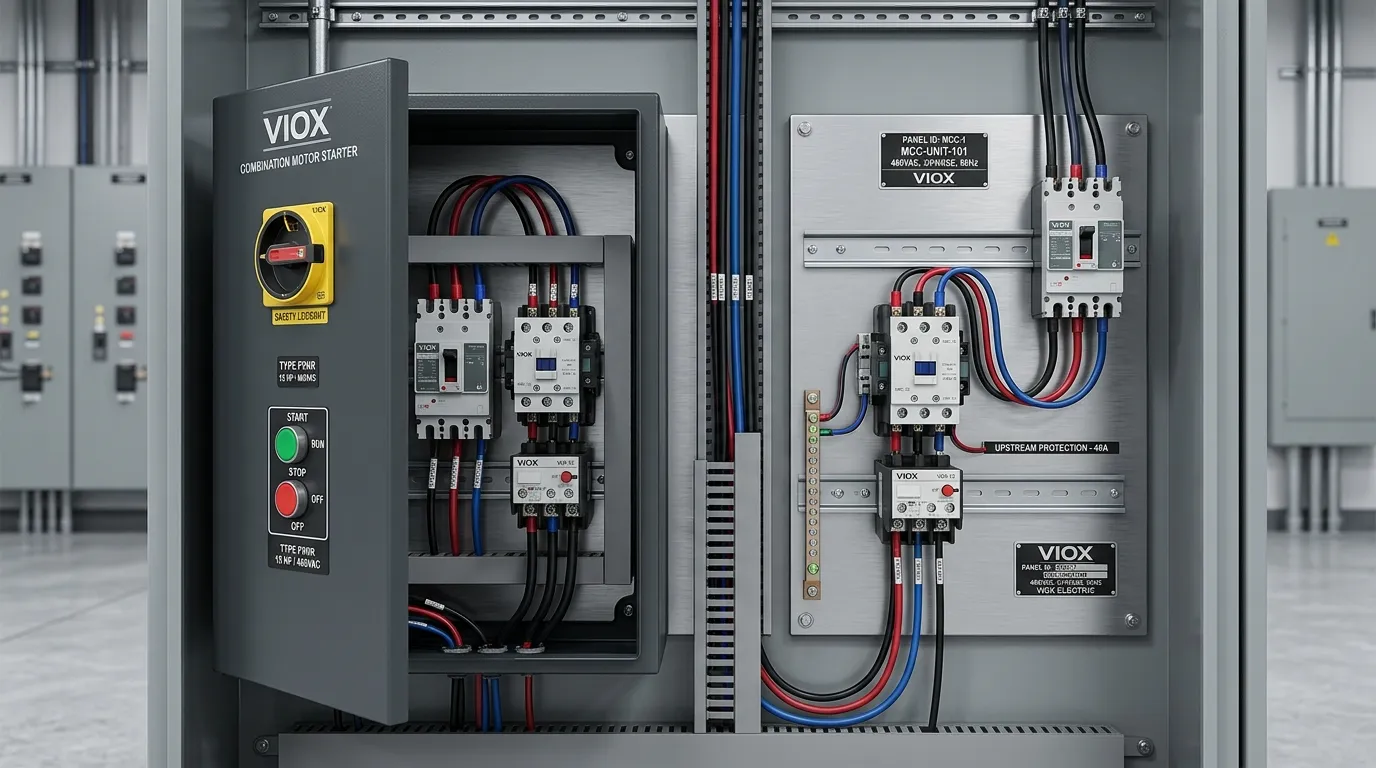
គន្លឹះយក
- A combination starter integrates more functions into one unit or one listed assembly.
- A non-combination starter is usually only part of the motor branch circuit, not the entire protective solution.
- The choice depends on the control architecture, protection strategy, available panel space, maintenance approach, and project standards.
- In North American MCC practice, combination starter buckets are the more typical pattern because each bucket usually includes its own disconnecting and branch protective means.
- Non-combination starters are more commonly seen in multi-motor custom control panels and OEM equipment where upstream branch protection is already provided elsewhere in the assembly.
Quick Comparison
| កត្តា | Combination Starter | Non-Combination Starter |
|---|---|---|
| Includes motor controller | បាទ | បាទ |
| Includes overload protection | Yes, typically as part of the starter assembly | Yes, typically as part of the starter assembly |
| Includes branch-circuit disconnect / protective means | បាទ | No, requires separate upstream device |
| Typical installation style | Standalone or local motor-control assembly | Part of a larger coordinated system |
| Field wiring simplicity | ជាធម្មតា សាមញ្ញជាង | Usually depends on panel architecture |
| សាកសមបំផុត | MCC buckets, local motor branch circuits, packaged industrial control, retrofit simplicity | Multi-motor custom panels, OEM systems, centralized protection architectures |
What Is a Motor Starter?
Before comparing the two, it helps to define what a motor starter is.
A motor starter is an assembly used to start and stop a motor while providing overload protection and control logic appropriate to the motor application. In its simplest form, that usually means:
- a switching device such as a contactor
- an overload protection element
- control wiring or control interface
If you want the broader starter family overview, Types of Motor Starters gives the full landscape. If you want the component-level distinction, ឧបករណ៍ទំនាក់ទំនងទល់នឹងឧបករណ៍ចាប់ផ្តើមម៉ូទ័រ is the most direct companion page.
What Is a Combination Starter?
មួយ combination starter is a motor starter assembly that includes the motor controller together with the disconnecting and branch-circuit protective means required for the motor branch circuit.
In practical terms, a combination starter usually includes:
- contactor or starter controller
- overload relay
- disconnect switch or circuit breaker / motor protective device
- enclosure or integrated assembly structure
This makes it a more self-contained motor branch solution. Instead of relying on a separate upstream protective device located elsewhere in the system, the assembly is designed to include that function in the same starter package.
In North American terminology, highly integrated starter arrangements are also often discussed in relation to ប្រភេទអ៊ី ឬ ប្រភេទ F motor controller concepts, especially when engineers are evaluating how much branch protection and controller functionality is packaged together in one listed solution.
Combination starters are often selected when the project wants:
- a local disconnect near the motor
- a compact branch-circuit control package
- simpler field installation responsibility
- clearer equipment-level documentation
What Is a Non-Combination Starter?
មួយ non-combination starter includes the motor-starting and overload functions, but it does not include the branch-circuit short-circuit and ground-fault protective device as part of the same starter assembly.
In practice, that means the non-combination starter typically contains:
- contactor
- overload relay
- សមាសធាតុត្រួតពិនិត្យ
But it relies on a separate upstream protective device such as:
- ហ្វុយហ្ស៊ីប
- សៀគ្វីល្មើស
- ឧបករណ៍ការពារសៀគ្វីម៉ូទ័រ
- coordinated feeder protection inside a larger panel or MCC
This is common in engineered control panels where the protective architecture is already handled at the system level rather than repeated at every starter location.
In North American practice, this often points toward UL 508A custom control panels or OEM machinery panels, where one feeder or branch protective scheme supports multiple motor-control sections. In that environment, the starter is not expected to be the complete branch assembly by itself.
The Real Difference: Scope of the Assembly
The most important distinction is not whether the starter can run the motor. Both can.
The real distinction is how much of the motor branch function is built into the starter assembly itself.
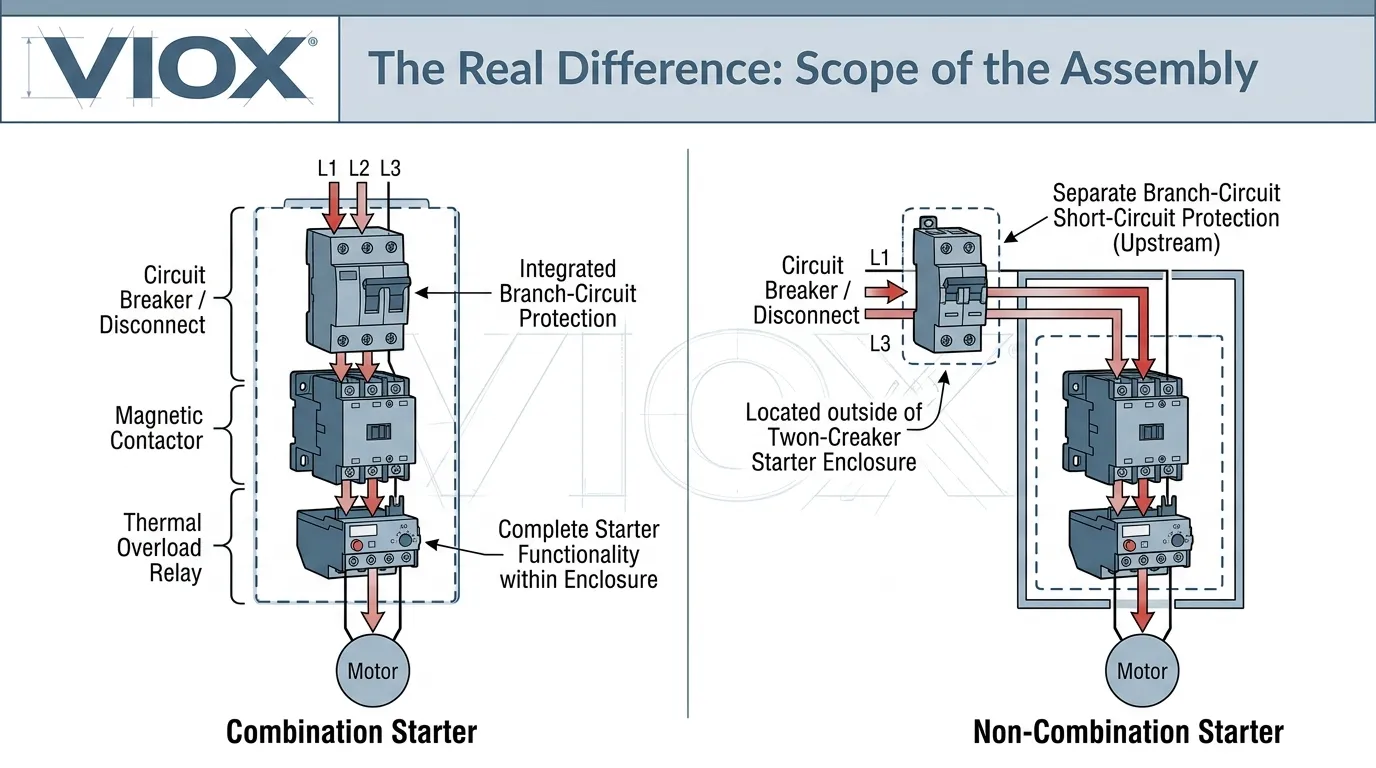
Combination starter scope
The combination starter is closer to a complete local motor branch package. It is often easier to assign, document, and install as a single field device.
Non-combination starter scope
The non-combination starter is one part of a larger protection and control chain. It assumes that branch-circuit protection and disconnecting means are handled elsewhere in the design.
That is why the same motor may be served by either type, depending on the control-system architecture.
Typical Components in Each Type
| សមាសភាគ | Combination Starter | Non-Combination Starter |
|---|---|---|
| អ្នកទំនាក់ទំនង | បាទ | បាទ |
| បញ្ជូនតផ្ទុកលើសទម្ងន់ | បាទ | បាទ |
| Branch short-circuit protection | Included in the assembly | Separate upstream device |
| Disconnecting means | Usually included | Usually separate |
| Enclosed local package | Common | Optional, depends on panel strategy |
If you need the underlying components explained in more detail:
Application Fit: Where Each Type Makes More Sense
The more useful question is not just “where are they used,” but what kind of control architecture makes each type the better fit.
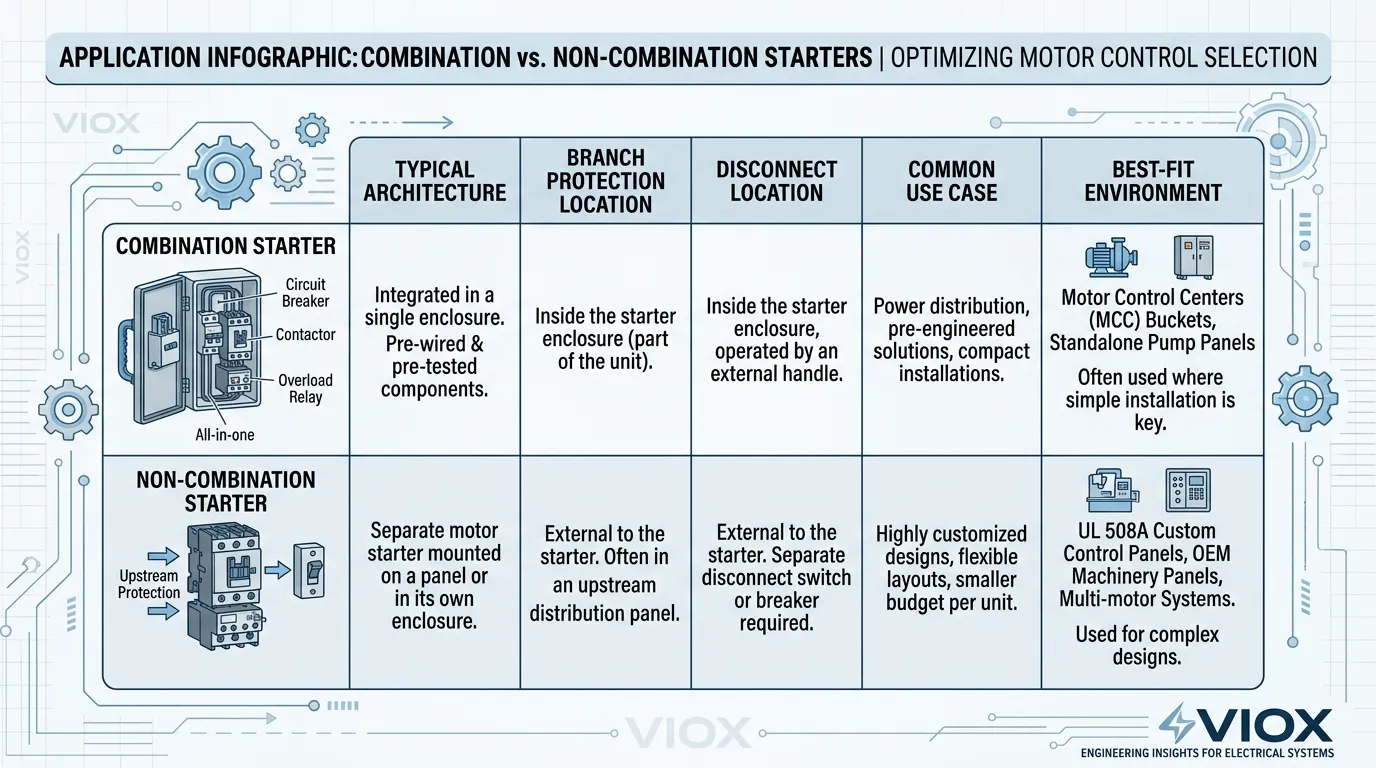
Combination starter fit
Combination starters are a strong fit where the project benefits from a self-contained motor branch assembly with local disconnecting and branch protection included.
ឧទាហរណ៍ធម្មតារួមមាន:
- standalone pumps
- fans and blowers
- conveyor sections
- ឧបករណ៍ HVAC
- packaged machinery
- retrofit work where a local disconnect is needed near the motor
- MCC buckets and enclosed motor-control units where the starter assembly is expected to include disconnecting and branch protective means
In these settings, the value is not just that the starter can run the motor. The value is that the assembly is easier to isolate, easier to document, and easier to understand at the branch level.
Non-combination starter fit
Non-combination starters are a stronger fit where the project already has a broader protective architecture and the starter is only one element inside it.
ឧទាហរណ៍ធម្មតារួមមាន:
- OEM control panels
- UL 508A custom control panels
- machine skids with centralized protection
- systems where branch protection is already handled in an upstream section
- multi-motor panels where repeating full combination assemblies would be inefficient
In those systems, the advantage is not that the starter is more complete. The advantage is that it fits a centralized protection strategy without duplicating functions the panel already provides.
Combination Starter vs Non-Combination Starter in MCC Panels
This is one of the places where confusion often appears.
In North American motor control center (MCC) practice, the more typical arrangement is the combination starter bucket, not the non-combination starter. Under the logic commonly seen in UL 845 MCC assemblies, each motor-control unit usually has its own operating handle and includes the disconnecting and branch protective means required for that bucket. That is one reason engineers often think of MCC buckets and combination starters together.
By contrast, the place where non-combination starters show up more naturally is the custom control panel or OEM machine panel. In that architecture, the assembly may already have an upstream circuit breaker, fused branch distribution, or other branch protective structure, while each motor section only needs the starter and overload portion.
That is why neither type is universally “better.” The right answer depends on whether the starter is being selected as:
- a complete motor branch assembly
- or one element inside a larger custom panel protection strategy
Selection Questions to Ask
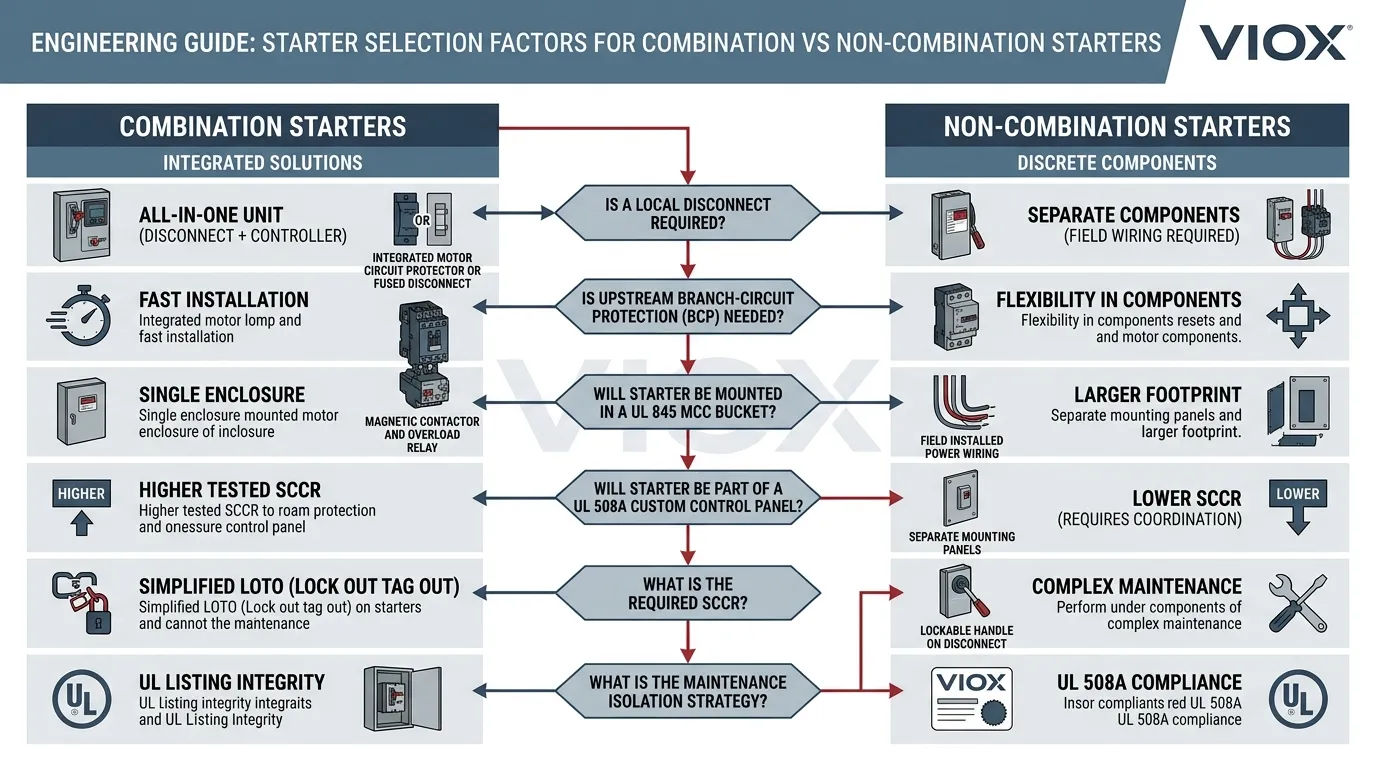
When deciding between the two, the most useful questions are:
1. Where is branch-circuit protection handled?
If the project expects that function to be local to the starter, a combination starter may be the better fit.
2. Is a local disconnect required near the motor?
If yes, a combination starter often becomes more attractive.
3. Is the motor part of a larger panel or MCC architecture?
If the motor is part of a UL 845 MCC bucket, a combination starter is often the more natural fit. If it is part of a UL 508A custom panel with upstream branch protection already defined, a non-combination starter may fit better.
4. How important is field simplicity?
For retrofit or distributed equipment, the combination starter can reduce installation ambiguity.
5. How important is centralized coordination?
For multi-motor systems, the non-combination starter may support a cleaner overall architecture.
6. What SCCR does the assembly need to achieve?
This is one of the most important real-world questions. In motor control, SCCR (Short-Circuit Current Rating) is not a side detail. It often determines whether the assembly can be legally and practically applied at the available fault current. In a ខ ៥០៨A panel, achieving the required SCCR can be simpler when the motor branch uses a clearly defined protective combination, while non-combination starter architectures may require more careful evaluation of upstream protective devices, branch components, and series coordination.
7. What code and listing framework governs the project?
For North American work, the practical logic usually sits in the overlap between NEC Article 430, the assembly standard, and the component listing path. NEC Article 430 separates motor overload protection from motor branch-circuit short-circuit and ground-fault protection, which is exactly why the distinction between combination and non-combination starters matters in the first place.
កំហុសទូទៅ
Treating every motor starter as if it includes branch protection
This is one of the most common misunderstandings. A non-combination starter does not automatically solve the entire branch-circuit protection problem.
Choosing a combination starter where upstream coordinated protection is already doing the job
That can add unnecessary duplication or complexity.
Assuming a non-combination starter is the normal MCC bucket arrangement
In North American practice, that is usually backward. Standard MCC motor buckets are more commonly combination starter assemblies.
Choosing a non-combination starter without confirming disconnect requirements
The missing function may only become obvious late in installation or inspection.
Confusing contactor-only assemblies with full motor starters
A contactor alone is not the same thing as a starter. If you need the product context, the main AC Contactor page is the relevant landing page.
ជាញឹកញាប់បានសួរសំណួរ
Is a combination starter the same as a motor starter?
Not exactly. A combination starter is a type of motor starter assembly, but it includes more of the branch-circuit protective and disconnecting functions within the same package.
Does a non-combination starter need a separate circuit breaker or fuse?
In most practical designs, yes. A non-combination starter typically relies on a separate upstream device for branch-circuit short-circuit and ground-fault protection.
Which type is better for a standalone motor?
A combination starter is often more convenient for a standalone motor where local disconnecting and integrated protection are desired, but the final decision still depends on the system design and local requirements.
Which type is better inside an MCC?
In most North American MCC applications, the combination starter is the more typical answer because each bucket usually includes its own disconnecting and branch protective means. Non-combination starters more often belong in custom control panels where those functions are handled elsewhere.
Does a combination starter always use a breaker instead of a fuse?
Not necessarily. The exact protective means depends on the assembly design and project standard.
អនុសាសន៍ចុងក្រោយ
ជ្រើសរើស combination starter when you want a more complete local motor branch assembly with motor control, overload protection, and disconnect / branch protection grouped together.
ជ្រើសរើស non-combination starter when the starter is only one part of a larger custom panel or OEM design and the upstream protection strategy is already defined elsewhere.
សរុបមក៖
- combination starter = more complete motor branch assembly, commonly aligned with MCC bucket practice
- non-combination starter = starter integrated into a broader custom-panel protection architecture
For adjacent topics, continue into: