

در این صفحه
پاسخ سریع: ترمینال سرامیکی چیست؟
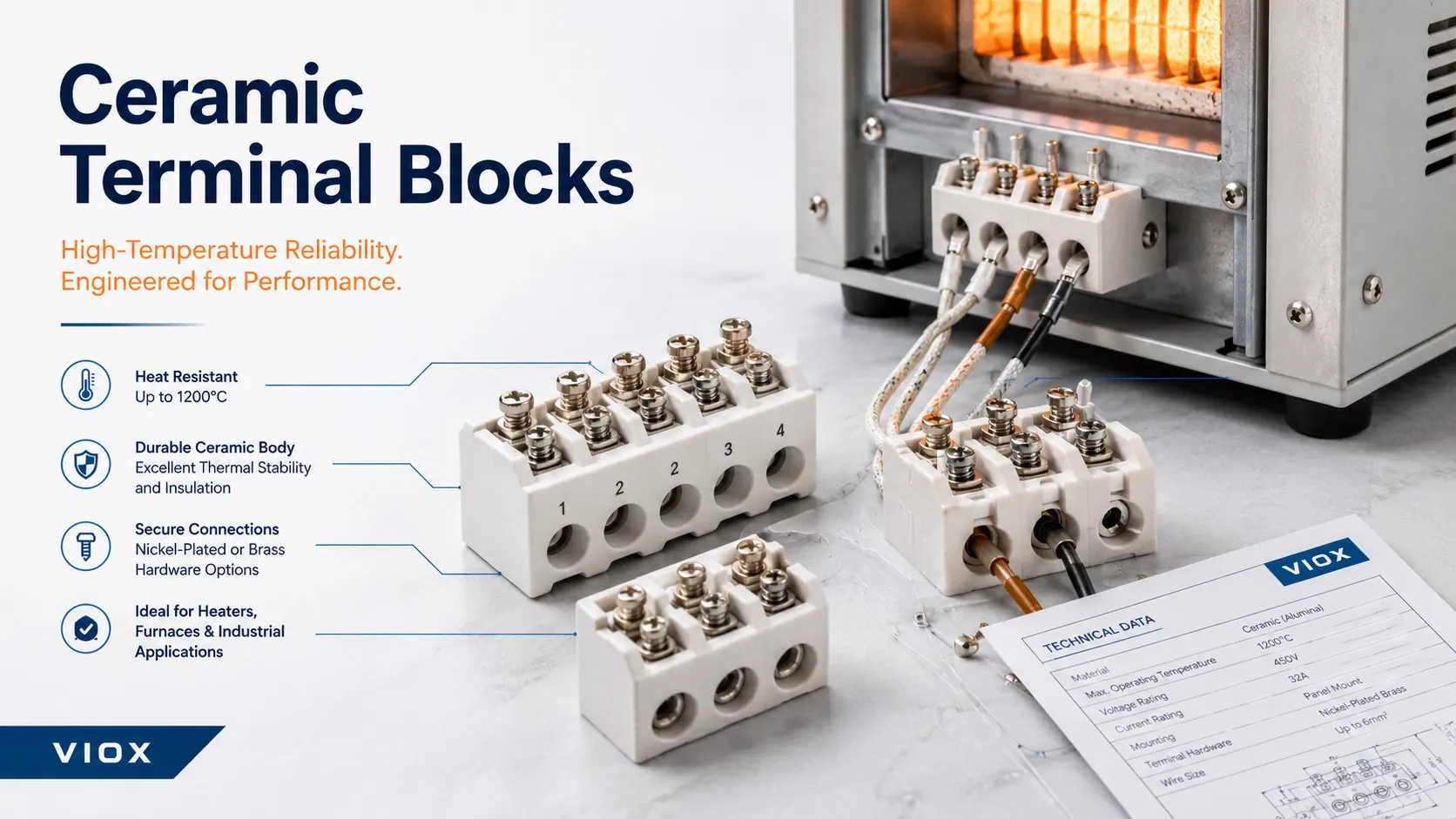
الف بلوک ترمینال سرامیکی یک اتصالدهنده الکتریکی است که از بدنه عایق سرامیکی یا چینی برای اتصال، پایاندهی یا توزیع سیمها در محیطهای با دمای بالا استفاده میکند. این قطعه همان عملکرد اتصال پایه ترمینالهای معمولی را انجام میدهد، اما بدنه سرامیکی مقاومت حرارتی بسیار بالاتری نسبت به محفظههای پلاستیکی رایج به آن میبخشد.
ترمینالهای سرامیکی معمولاً در موارد زیر استفاده میشوند: هیترها، اجاقها، کورهها، کوره های پخت، تجهیزات روشنایی، مدارهای ترموکوپل، تجهیزات گرمایشی HVAC، پنلهای گرمایشی صنعتی و اتصالات ترمینال موتور در جاهایی که گرما باعث نرم شدن، تغییر شکل، کربنیزه شدن یا تضعیف ترمینالهای پلاستیکی معمولی میشود.
نکته مهم این است: سرامیکی بودن، یک ترمینال را به قطعهای با کاربرد عمومی تبدیل نمیکند. سرامیکهای استاتیت و پرسلان میتوانند دماهای بسیار بالای بدنه را تحمل کنند، اما محدودیت عملی ترمینال بلاکها اغلب توسط قطعات فلزی، پیچها، هادی، آبکاری، عایق سیم و شرایط نصب تعیین میشود. شما همچنان باید جریان نامی، ولتاژ نامی، سایز سیم، تعداد پل، جنس پیچ، فاصله خزشی، نحوه نصب مکانیکی و دمای کاری واقعی را از دیتاشیت سازنده بررسی کنید.
برای ارزیابی محصول، به VIOX مراجعه کنید بلوک ترمینال سرامیکی صفحه محصول. برای انتخاب کلی ترمینال بلاکها در انواع ریلی (DIN rail)، پیچی، فنری، فشاری (push-in) و بردهای مدار چاپی (PCB)، از بخش جامعتر استفاده کنید. terminal block selection guide.
نکات کلیدی
- ترمینال بلاکهای سرامیکی عمدتاً به دلیل مقاومت حرارتی انتخاب میشوند. این محصولات در مواردی که ترمینال بلاکهای پلاستیکی استاندارد مناسب نیستند، استفاده میشوند.
- ترمینال بلاکهای سرامیکی، پرسلانی و استاتیتی اصطلاحات محصولی بسیار نزدیکی به یکدیگر هستند. در بسیاری از بازارها، این نامها توصیفکننده کانکتورهای سرامیکی مقاوم در برابر حرارت هستند، اما همچنان باید گرید واقعی مواد بررسی شود.
- این محصولات در تجهیزات گرمایشی رایج هستند. کاربردهای معمول شامل اجاقها، کورهها، هیترها، کوره های پخت، لامپهای مادون قرمز، هیترهای کارتریجی و سیمکشی ترموکوپل است.
- سرامیک در برابر حرارت مقاوم است اما شکننده است. این ماده دمای بالا را به خوبی تحمل میکند، اما ممکن است در اثر ضربه یا تنش مکانیکی ناهمگون دچار ترکخوردگی شود.
- مشخصات الکتریکی همچنان اهمیت دارند. مقاومت دمایی جایگزین جریان نامی، ولتاژ نامی، محدوده سایز سیم و کیفیت پیچهای اتصال نمیشود.
ترمینال بلاک سرامیکی در مقابل ترمینال بلاک پلاستیکی
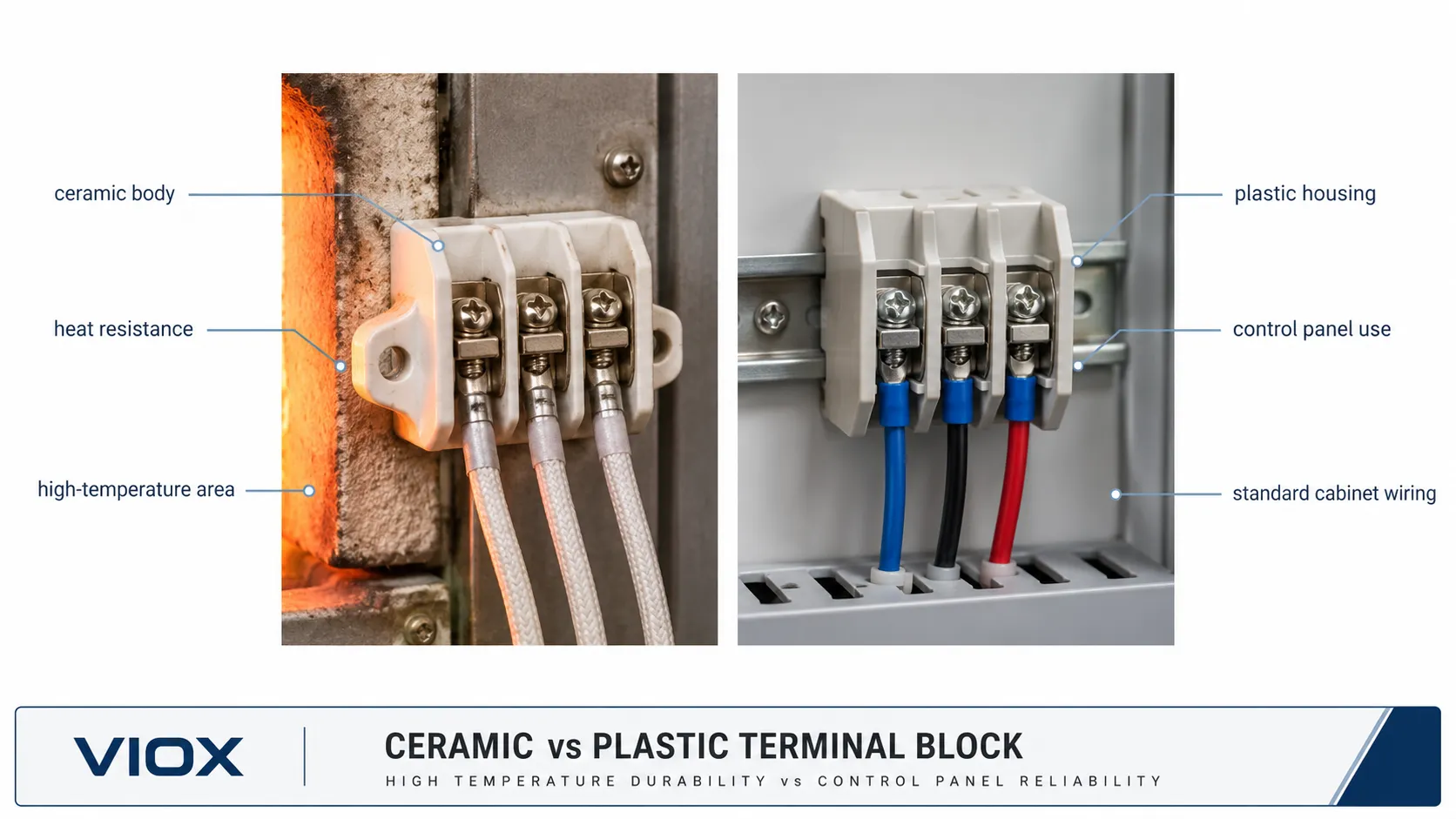
سادهترین راه برای درک این محصول، مقایسه آن با یک ترمینال بلاک پلاستیکی معمولی است.
| ویژگی | بلوک ترمینال سرامیکی | بلوک ترمینال پلاستیکی |
|---|---|---|
| مزیت اصلی | مقاومت در برابر دمای بالا | هزینه کمتر، فرم فاکتور منعطف، استفاده گسترده در تابلوهای کنترل |
| بدنه عایق | مواد سرامیکی، چینی یا استاتیت | PA66، PC، PBT یا سایر پلاستیکهای مهندسی |
| عملکرد حرارتی | مناسبتر برای تجهیزات داغ و محیطهای دارای گرمای تابشی | مناسب برای تابلوهای کنترل معمولی و دماهای متوسط |
| رفتار مکانیکی | سخت و مقاوم در برابر حرارت اما شکننده | معمولاً مقاومت ضربهای بهتری دارد |
| نصب متداول | نصب پیچی، نصب روی پنل، نصب روی تجهیزات، ترمینال ریلی | ریل DIN، برد مدار چاپی (PCB)، پنل، اتصال کشویی (Plug-in)، عبوری (Feed-through) |
| کاربردهای رایج | اجاقها، گرمکنها، کورهها، کوره های صنعتی، روشنایی، ترموکوپلها | تابلوهای کنترل، ماشینآلات، سیمکشی PLC، تابلوهای توزیع |
| Main risk | ترکخوردگی، گشتاور نامناسب پیچ، اندازه نامناسب سیم، جریان نامی کمتر از حد مجاز | تغییر شکل حرارتی، فرسودگی عایق، حاشیه دمایی ضعیف |
هنگامی که حرارت محدودیت اصلی طراحی است، از سرامیک استفاده کنید. هنگامی که کاربرد در محیط معمولی تابلو برق است و مشخصات فنی با شرایط نصب مطابقت دارد، از ترمینالهای پلاستیکی استاندارد استفاده کنید.
چرا از ترمینالهای سرامیکی برای سیمکشی در دمای بالا استفاده میشود
حرارت به سه روش اتصالات الکتریکی را تغییر میدهد:
- مواد عایق سریعتر فرسوده میشوند. بسیاری از پلاستیکها در اثر قرار گرفتن در معرض دمای بالای مداوم، استحکام مکانیکی خود را از دست داده یا تغییر شکل میدهند.
- قطعات فلزی منبسط و منقبض میشوند. چرخههای حرارتی میتوانند اتصالات پیچی ضعیف را در صورتی که طراحی کلمپ ضعیف باشد یا هادی به درستی آماده نشده باشد، شل کنند.
- مقاومت تماسی باعث ایجاد گرمای بیشتر میشود. یک اتصال شل یا با اندازه نامناسب میتواند به یک نقطه داغ موضعی تبدیل شود، بهویژه در مدارهای گرمایشی.
بلوک اتصال سرامیکی مشکل بدنه عایق را با استفاده از مادهای حل میکند که عایقبندی و شکل مکانیکی خود را در دماهایی که بسیاری از پلاستیکها در آن ناایمن هستند، حفظ میکند. به همین دلیل است که ترمینالهای سرامیکی در نزدیکی المنتهای گرمایشی، تجهیزات حرارتی و محلهای انتقال سیمکشی با دمای بالا رایج هستند.
با این حال، قابلیت اطمینان اتصال همچنان به کل طراحی بستگی دارد:
- اندازه صحیح هادی
- فشار مناسب پیچ اتصال
- جنس مناسب قطعه فلزی داخلی
- فاصله مناسب ترمینالها
- درجه دمایی مناسب عایق سیم
- سطح نصب پایدار
- مهار کشش مناسب
در یک بخاری یا کوره، ممکن است ترمینال بلاک در برابر حرارت مقاوم باشد، اما عایق سیم، سرسیم، پیچ یا محفظه اطراف همچنان ممکن است بخش محدودکننده باشند.
ترمینال بلاکهای سرامیکی، چینی و استاتیت: آیا آنها یکسان هستند؟
خریداران صنعتی و مهندسان طراح اغلب این اصطلاحات را به صورت همپوشانی مشاهده میکنند:
- بلوک ترمینال سرامیکی
- بلوک ترمینال چینی
- ترمینال بلاک استاتیت
- بلوک کانکتور سرامیکی
- بلوک کانکتور چینی
- ترمینال سرامیکی
آنها مرتبط هستند، اما همیشه یکسان نیستند.
| اصطلاح | معنی عملی | یادداشت خریدار |
|---|---|---|
| بلوک ترمینال سرامیکی | اصطلاحی کلی برای بلوکهای ترمینال با بدنه عایق سرامیکی | نامگذاری استاندارد صنعتی برای بلوکهای اتصال مقاوم در برابر حرارت |
| ترمینال چینی | اغلب برای بلوکهای اتصال الکتریکی سرامیکی سفید استفاده میشود | رایج در کاربردهای روشنایی، گرمایشی و لوازم خانگی |
| ترمینال بلاک استاتیت | اشاره به یک ماده سرامیکی سیلیکات منیزیم دارد که اغلب برای عایقبندی الکتریکی استفاده میشود | مشخصات فنی مواد و درجه حرارت را در دیتاشیت بررسی کنید |
| ترمینال بلاک سرامیکی | اصطلاح عمومی برای کانکتور که اغلب توسط خریداران خارج از حوزه تخصصی تابلوسازی استفاده میشود | تعداد پل، سایز سیم و درجهبندی (آمپراژ) را تایید کنید |
| ترمینال استریپ سرامیکی | ترمینال بلاک سرامیکی چند پل به صورت نواری | رایج برای سیمکشی بخاریها، اجاقها و لوازم خانگی |
ایمنترین روش خرید این است که تنها به نام محصول اکتفا نکنید. برگه اطلاعات (دیتاشیت) را درخواست کنید و مشخصات الکتریکی، دمای مجاز، جنس بدنه، جنس پیچها و ابعاد را بررسی نمایید.
محدودیتهای مواد: بدنه سرامیکی در مقابل قطعات فلزی
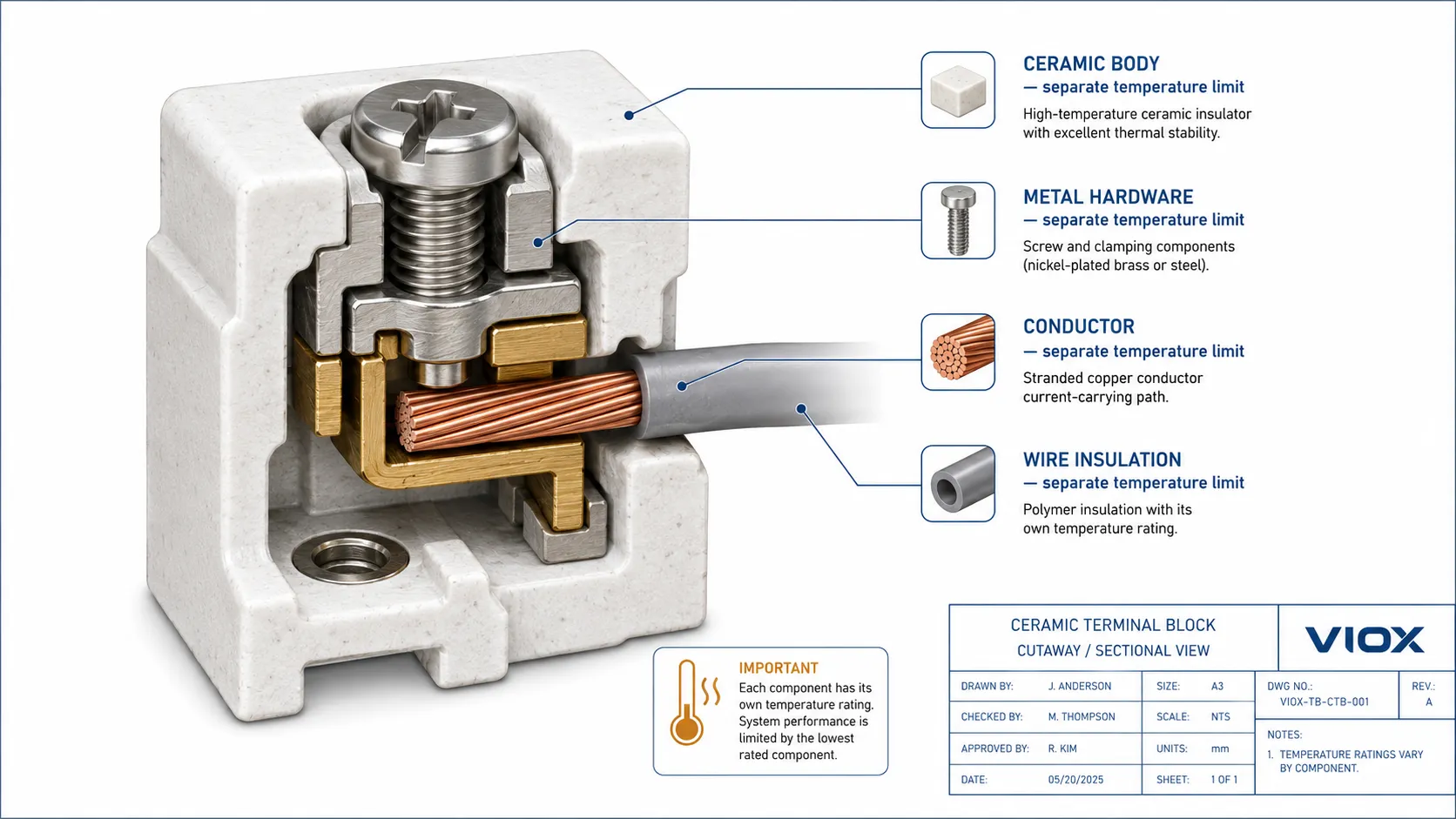
یکی از دلایل عدم درک صحیح ترمینال بلاکهای سرامیکی این است که بدنه سرامیکی و قطعات رسانای فلزی دارای محدودیت دمایی یکسانی نیستند.
مواد سرامیکی استاتیت میتوانند در کاربردهای عایقبندی دماهای بسیار بالا را تحمل کنند که اغلب بسیار فراتر از محدودیت دمایی محفظههای پلاستیکی رایج است. با این حال، در ترمینال بلاکهای کاربردی، دمای قابل استفاده معمولاً توسط موارد زیر محدود میشود:
- جنس پیچ
- جنس قطعه رسانا (اینسرت)
- سیستم آبکاری
- نوع هادی
- عایق سیم
- بار جریان
- محیط اکسیداسیون
- تنش مکانیکی در طول چرخههای حرارتی
به عنوان یک قاعده مهندسی کاربردی، قطعات برنجی معمولی ممکن است در شرایط دمای بالا به شدت اکسید شوند. برای کاربردهای گرمایشی و کورههای با دمای بالاتر، ممکن است به پیچهای فولاد ضد زنگ، قطعات با آبکاری نیکل یا سایر گزینههای فلزی مقاوم در برابر حرارت نیاز باشد. انتخاب صحیح به دمای واقعی محیط، دمای هادی، جریان و مدت زمان قرارگیری در معرض حرارت بستگی دارد.
برای پروژههای ترمینال بلاک سرامیکی VIOX، خریداران میتوانند محیط عملیاتی مورد نیاز خود را مشخص کنند تا جنس بدنه، جنس پیچ و پیکربندی قطعه رسانای داخلی به جای انتخاب به عنوان قطعات جداگانه، به صورت یکپارچه بررسی شوند.
انواع رایج ترمینال بلاکهای سرامیکی
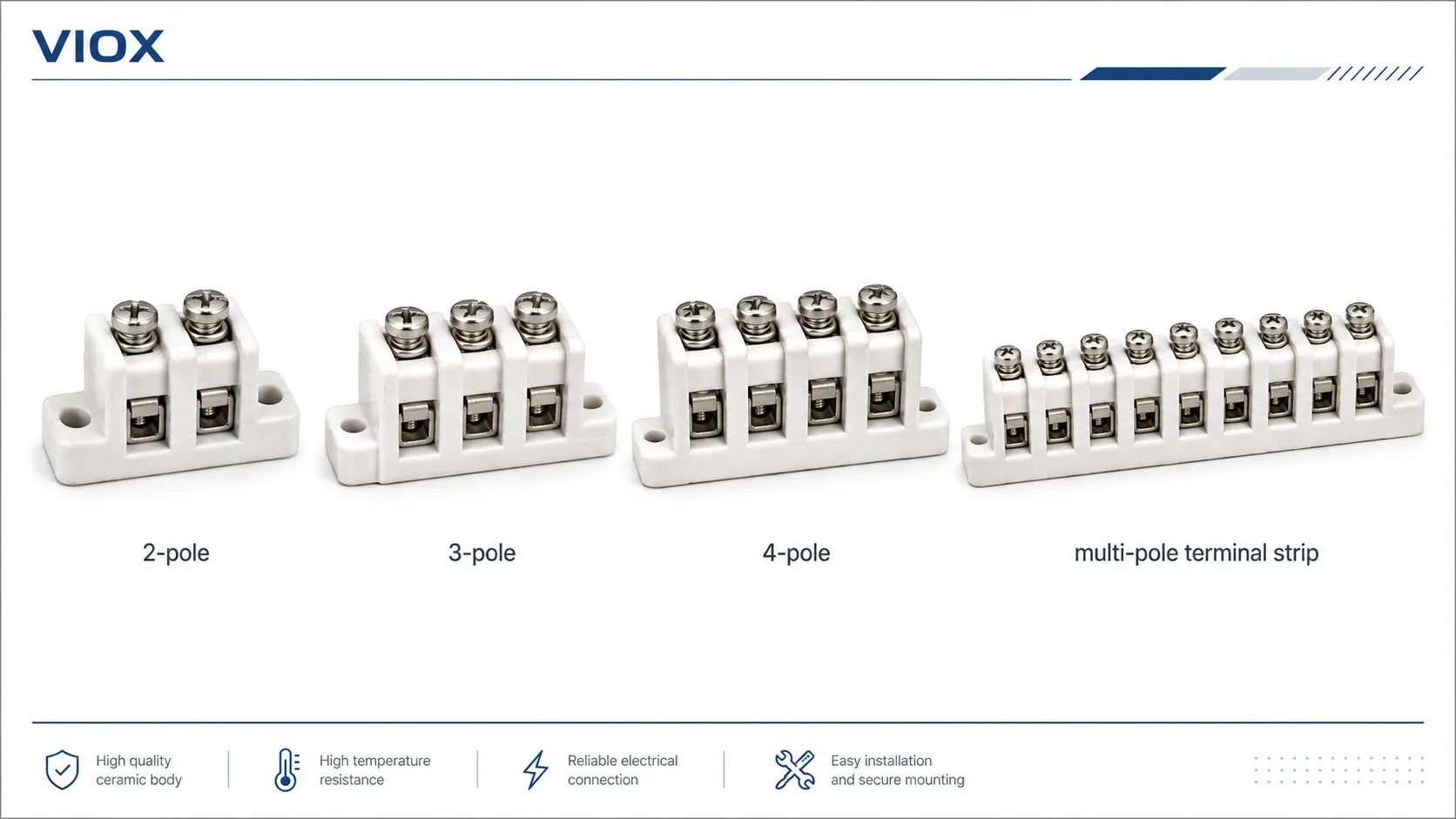
ترمینال سرامیکی ۲ پل
ترمینال سرامیکی ۲ پل برای اتصالات ساده فاز و نول، فاز و فاز، یا اتصالات دو سیمه هیترها استفاده میشود. این قطعه در هیترهای کوچک، تجهیزات روشنایی، فرها و لوازم خانگی کاربرد رایج دارد.
بررسی کنید:
- جریان نامی
- محدوده سایز سیم
- screw size
- فاصله مرکز به مرکز
- فاصله سوراخهای نصب
- فاصله عایقی بین پلها
ترمینال سرامیکی ۳ پل
یک ترمینال بلاک سرامیکی ۳ پل اغلب زمانی استفاده میشود که به اتصال ارت حفاظتی یا مدار سه سیمه نیاز باشد. این قطعه همچنین ممکن است در سیمکشی موتورهای کوچک یا لوازم خانگی که در آن سه هادی باید در یک بلوک مقاوم در برابر حرارت متصل شوند، به کار رود.
تصور نکنید که پل سوم بهطور خودکار یک ترمینال ارت حفاظتی است. چیدمان و علائم روی بلوک باید عملکرد مدار را بهوضوح مشخص کنند.
ترمینال بلاک سرامیکی ۴ پل
الف ترمینال بلاک سرامیکی ۴ پل اغلب توسط مهندسان طراح زمانی مشخص میشود که چندین نقطه اتصال مقاوم در برابر حرارت باید در یک فضای سیمکشی فشرده گروهبندی شوند.
زمانی که چندین هادی باید در یک ناحیه حرارتی یکسان متصل شوند، از یک ترمینال بلاک سرامیکی ۴ پل استفاده کنید. بررسی کنید که آیا هر پل ایزوله است یا اینکه پل یا عملکرد اتصال مشترکی وجود دارد.
نوار ترمینال سرامیکی چند پل
نوارهای ترمینال سرامیکی زمانی استفاده میشوند که چندین مدار باید با هم متصل شوند. این نوارها در اجاقها، بخاریها، کورهها، مجموعههای روشنایی و تجهیزاتی که در آن چندین المنت گرمایشی یا سیمهای حسگر در نزدیکی ناحیه داغ متصل میشوند، کاربرد دارند.
برای نوارهای چند قطبی، به موارد زیر توجه کنید:
- فواصل خزشی و هوایی
- فاصله بین قطبها
- استحکام نصب
- خوانایی برچسبها
- دسترسی برای سیمکشی و سرویس
- در دسترس بودن قطعات جایگزین
ترمینال بلاک سرامیکی برای سیمکشی ترموکوپل
الف ترمینال بلاک سرامیکی برای ترموکوپل این کاربرد زمانی استفاده میشود که سیمکشی سنسور دما باید از میان یا نزدیکی تجهیزات با دمای بالا عبور کند. نگرانی اصلی فقط مقاومت حرارتی نیست؛ بلکه یکپارچگی سیگنال نیز اهمیت دارد.
برای سیمکشی ترموکوپل، موارد زیر را بررسی کنید:
- سازگاری اندازه هادی
- سازگاری جنس سیم ترموکوپل
- مقاومت تماسی پایین
- فشار پایدار پیچ
- گرادیان دمایی در اطراف اتصال
- اینکه آیا روش اتصال بر دقت اندازهگیری تأثیر میگذارد یا خیر
برای اندازهگیری دقیق دما، توصیههای سیمکشی سازنده سنسور و ابزار دقیق را دنبال کنید. ترمینال بلاکی که برای سیمکشی برق هیتر مناسب است، لزوماً برای سیمکشی سیگنال ترموکوپل ایدهآل نیست.
ترمینال بلاک سرامیکی موتور
الف ترمینال بلاک سرامیکی موتور ممکن است در مواردی که نواحی ترمینال موتور در معرض حرارت بالاتر، شرایط سخت یا الزامات تجهیزات خاص قرار دارند، استفاده شود. در کاربردهای موتور، لرزش و تنش مکانیکی اغلب به اندازه دما اهمیت دارند.
بررسی کنید:
- نگهداری پیچ
- محیط دارای لرزش
- آمادهسازی هادی
- روش نصب
- فاصله تا بدنه یا درپوش موتور
- افزایش دما تحت بار
رتبهبندیها و استانداردهای کلیدی که باید پیش از خرید بررسی شوند
بدنه سرامیکی تنها بخشی از مشخصات فنی است. انتخاب مطمئن باید با بررسی رتبهبندیها آغاز شود.
| رتبهبندی یا ویژگی | چه چیزی را بررسی کنید | چرا مهم است؟ |
|---|---|---|
| رتبه دمایی | دمای کارکرد مداوم و هرگونه محدودیت دمایی کوتاهمدت | تایید میکند که بلوک سرامیکی برای منطقه حرارتی واقعی مناسب است |
| جریان نامی | جریان هر قطب تحت شرایط تعیینشده | جلوگیری از داغ شدن بیش از حد در بخش رسانا |
| ولتاژ نامی | ولتاژ کاری و درجه عایقی | جلوگیری از شکست عایقی |
| محدوده سایز سیم | محدوده سطح مقطع هادی بر حسب میلیمتر مربع یا AWG | اطمینان از اتصال صحیح سیم در ترمینال |
| نوارهای مانع | دو پل، سه پل، چهار پل یا چند پل | مطابق با چیدمان مدار |
| جنس پیچ و قطعه داخلی (اینسرت) | برنج، فولاد، آبکاری نیکل، استیل ضد زنگ یا سایر فلزات مشخصشده | بر حرارت، خوردگی و پایداری اتصال تأثیر میگذارد |
| روش نصب | نصب پیچی، نصب روی پنل، نصب روی شاسی، نصب روی ریل | تعیینکننده قابلیت اطمینان مکانیکی است |
| فاصله خزشی و فاصله هوایی | فاصله بین قطعات برقدار و سطوح | حیاتی برای ولتاژ و محیط آلودگی |
| استانداردها یا تأییدیهها | UL، IEC، CE، RoHS یا اسناد خاص بازار در صورت نیاز | مورد نیاز برای محصولات تحت نظارت و بازارهای صادراتی |
ترمینال بلاک سرامیکی را تنها بر اساس تعداد پل انتخاب نکنید. یک ترمینال ۴ پل که از نظر فیزیکی در جای خود قرار میگیرد، ممکن است به دلیل عدم تناسب در جریان نامی، محدوده سطح مقطع سیم یا فاصله عایقی، همچنان گزینه نامناسبی باشد.
برای خریدهای بینالمللی، بپرسید که آیا ترمینال بلاک یا خانواده محصول مورد نظر، بر اساس استانداردهای مورد نیاز بازار هدف ارزیابی شده است یا خیر. مراجع رایج عبارتند از:
| استاندارد یا علامتگذاری | دلیل درخواست خریداران |
|---|---|
| استاندارد UL 1059 | مرجع رایج آمریکای شمالی برای ترمینال بلاکها |
| کمیسیون مستقل انتخابات 60947-7-1 | مرجع IEC برای ترمینال بلاکهای مخصوص هادیهای مسی |
| زمینه CE / دستورالعمل ولتاژ پایین (LVD) | مهم برای مستندات بازار اروپا در موارد مقتضی |
| استاندارد RoHS | اغلب برای زنجیرههای تأمین تجهیزات الکتریکی و الکترونیکی مورد نیاز است |
| برگه اطلاعات سازنده | رتبهبندی واقعی، جنس، ابعاد و مبنای آزمون برای مدل خاص را تأیید میکند |
تصور نکنید که ظاهر سرامیکی به معنای انطباق با استانداردها است. استانداردها، علائم و رتبهبندیها باید توسط مستندات مدل واقعی تأیید شوند.
کاربردهای ترمینال بلاک سرامیکی
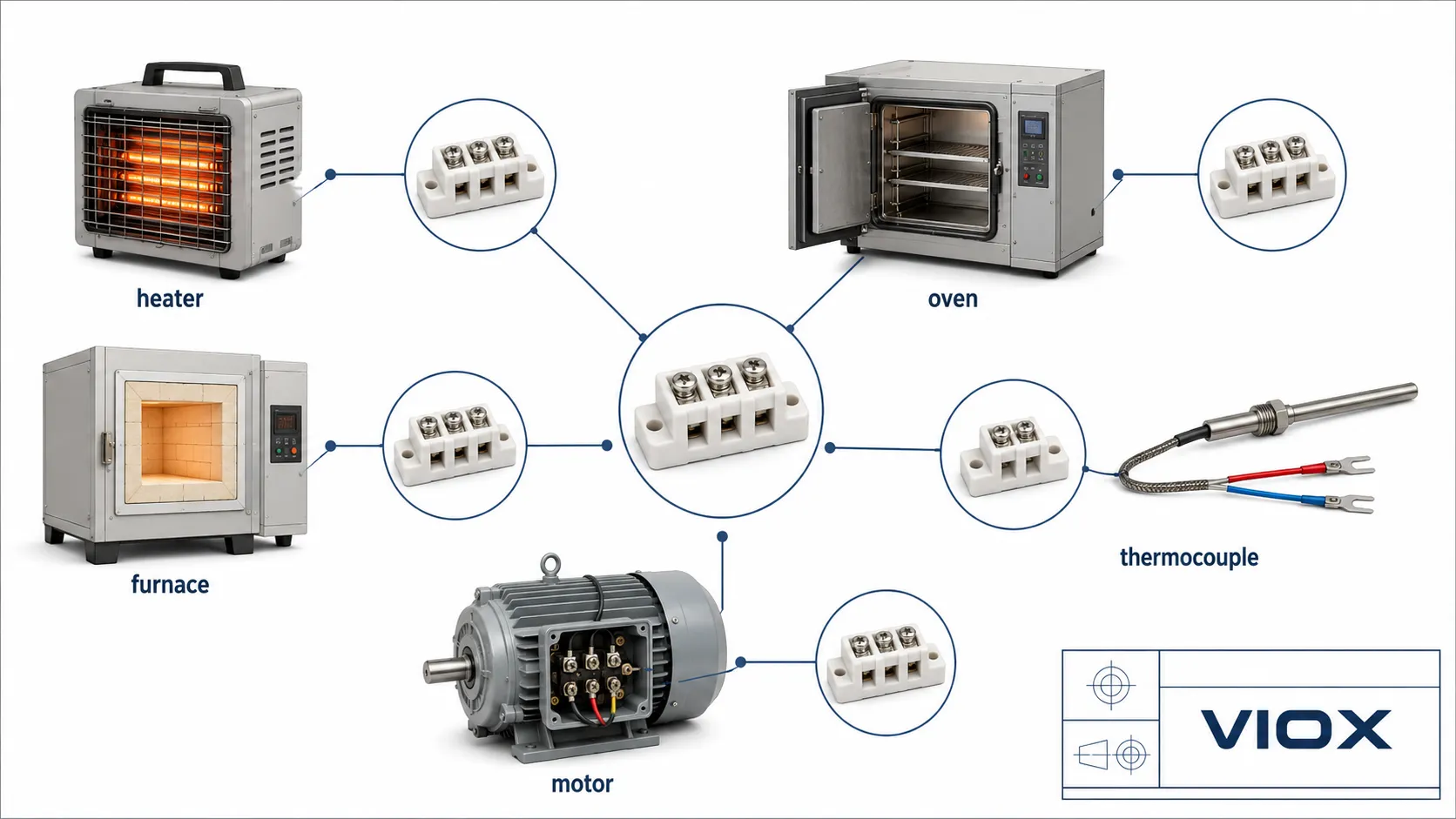
| کاربرد | چرا از سرامیک استفاده میشود | تمرکز در انتخاب |
|---|---|---|
| بخاریهای برقی | حرارت بالا در نزدیکی المنتهای گرمایشی | رتبهبندی جریان، رتبهبندی دما، پایداری پیچ |
| فرها | دمای محیط بالا و چرخههای حرارتی | بدنه سرامیکی، عایق سیم، دسترسی سرویس |
| کورهها | دمای بالا و محیط حرارتی خشن | حاشیه دمایی، پایداری نصب، فاصله عایقی |
| کورههای پخت (کوره صنعتی) | گرمای تابشی و چرخههای گرمایشی طولانی | جنس سرامیک، جنس پیچ، درجهبندی هادی |
| لامپهای مادون قرمز | حرارت در نزدیکی سرپیچ لامپ و ناحیه سیمکشی | اندازه فشرده، درجه حرارت، فاصله عایقبندی |
| ترموکوپلها | نقاط اندازهگیری داغ | سازگاری سیم سیگنال و اتصال پایدار |
| تجهیزات گرمایشی تهویه مطبوع (HVAC) | بانکهای گرمایشی و چرخههای حرارتی | جریان نامی و دسترسی جهت تعمیر و نگهداری |
| نواحی ترمینال موتور | حرارت به همراه تنش مکانیکی | نگهداری پیچ، مقاومت در برابر لرزش، فاصلهگذاری |
انتخاب بلوک ترمینال سرامیکی با دمای بالا
برای کاربردهای با دمای بالا، رایجترین اشتباه تمرکز صرف بر بدنه سرامیکی و نادیده گرفتن کل سیستم اتصال است.
Use this sequence:
- داغترین نقطه در اطراف بلوک ترمینال را شناسایی کنید.
- تایید کنید که آیا حرارت به صورت مداوم، متناوب، تابشی و یا هدایتشده از طریق قطعات فلزی است.
- دمای مجاز ترمینال بلاک را بررسی کنید.
- دمای مجاز عایق سیم را بررسی کنید.
- جریان نامی را با توجه به شرایط نصب تایید کنید.
- سایز هادی و طراحی پیچبست (screw-clamp) را تایید کنید.
- نحوه نصب و مهار کشش (strain relief) را بررسی کنید.
- بررسی کنید که آیا پس از نصب، دسترسی برای تعمیر و نگهداری امکانپذیر است یا خیر.
اگر ترمینال بلاک داخل هیتر یا کوره نصب میشود، فضای کافی برای خم کردن سیم و سرویسدهی در نظر بگیرید. بلوک سرامیکی که به دیواره فلزی داغ فشرده شده یا روی سطح ناهموار بیش از حد سفت شده باشد، ممکن است ترک بخورد.
اشتباهات رایج در انتخاب
اشتباه ۱: فرض بر اینکه تمام بلوکهای اتصال سفید، دمای بالا هستند.
برخی از ترمینالبلاکهای سفید سرامیکی هستند، اما ظاهر آنها برای تشخیص کافی نیست. جنس و دمای مجاز را از روی دیتاشیت بررسی کنید.
اشتباه ۲: انتخاب ترمینال سرامیکی اما استفاده از سیم با تحمل دمایی پایین
ممکن است ترمینالبلاک سالم بماند، اما عایق سیم زودتر از آن دچار خرابی شود. کل مجموعه اتصال باید برای محیط مورد نظر دارای استاندارد و رتبهبندی مناسب باشد.
اشتباه ۳: سفت کردن بیش از حد پیچ
سرامیک سخت اما شکننده است. نیروی بیش از حد پیچ، فشار نامتوازن در هنگام نصب یا ضربه میتواند باعث ترک خوردن بدنه شود.
برای تولید انبوه، به جای سفت کردن با حس دست، از یک فرآیند مونتاژ کنترلشده استفاده کنید. گشتاور صحیح باید از دیتاشیت مدل خاص یا دستورالعمل کارخانه استخراج شود، زیرا اندازه پیچ، هندسه سرامیک و طراحی قطعه فلزی داخلی همگی بر محدوده ایمن سفت کردن تأثیر میگذارند.
اشتباه ۴: استفاده از تعداد پل اشتباه
هادیهای اضافی را به زور وارد یک ترمینالبلاک کوچکتر نکنید. از پیکربندی صحیح ۲ پل، ۳ پل، ۴ پل یا چند پل استفاده کنید.
اشتباه ۵: نادیده گرفتن مقاومت کنتاکت
محیط با دمای بالا، اتصالات ضعیف را تشدید میکند. پیچهای شل، رشتههای آسیبدیده یا هادیهای با سطح مقطع نامناسب میتوانند باعث ایجاد گرمای موضعی شوند.
اشتباه ۶: رفتار با سیمکشی ترموکوپل مانند سیمکشی قدرت
مدارهای ترموکوپل ممکن است به سازگاری خاص هادی و مسیریابی دقیق نیاز داشته باشند. یک بلوک ترمینال سرامیکی سبک قدرت ممکن است بهترین انتخاب برای مدارهای اندازهگیری دقیق نباشد.
چکلیست تأمینکننده بلوک ترمینال سرامیکی
برای تولیدکنندگان تجهیزات اصلی (OEM)، تولیدکنندگان لوازم خانگی، سازندگان تجهیزات گرمایشی و توزیعکنندگان، ارزیابی تأمینکننده باید فراتر از قیمت باشد.
| بررسی تأمینکننده | چه مواردی را باید پرسید |
|---|---|
| تنوع محصولات | آیا آنها ترمینالهای سرامیکی ۲ پل، ۳ پل، ۴ پل و چند پل ارائه میدهند؟ |
| برگههای اطلاعات فنی (Datasheets) | آیا دما، جریان، ولتاژ، سایز سیم و ابعاد به وضوح ذکر شدهاند؟ |
| اطلاعات مواد سازنده | آیا نوع ماده سرامیکی یا استاتیت مشخص شده است؟ |
| پیچها و قطعات فلزی | آیا جنس پیچ و جنس قطعه رسانای داخلی مشخص شده است؟ |
| استانداردها | آیا گواهینامههای UL، IEC، CE، RoHS یا سایر مدارک مورد نیاز برای مدل خاص و بازار هدف موجود است؟ |
| سفارشیسازی | آیا تعداد قطبها، نوع پیچ یا چیدمان سوراخهای نصب قابل سفارشیسازی هستند؟ |
| کنترل کیفیت | آیا ابعاد، عایقبندی و مونتاژ پیچها بهطور مداوم بررسی میشوند؟ |
| پشتیبانی صادرات | آیا اسناد و مدارک لازم برای بازار هدف شما موجود است؟ |
| بسته بندی | آیا قطعات سرامیکی ترد برای جلوگیری از شکستگی در حین حملونقل بستهبندی میشوند؟ |
برای خریدارانی که به تأمین تولید نیاز دارند تا قطعات جایگزین تکموردی، ابعاد و بستهبندی یکنواخت اهمیت دارد. بلوکهای سرامیکی در مقایسه با قطعات پلاستیکی در حین حملونقل و نصب، حساستر هستند.
سوالات متداول
بلوک ترمینال سرامیکی برای چه مواردی استفاده میشود؟
بلوک ترمینال سرامیکی برای اتصال سیمها در محیطهای با دمای بالا مانند هیترها، اجاقها، کورهها، کوره های پخت، لامپهای مادون قرمز، ترموکوپلها و تجهیزات گرمایشی استفاده میشود.
آیا ترمینالهای چینی (Porcelain) با ترمینالهای سرامیکی یکسان هستند؟
در بسیاری از جستجوهای محصولات الکتریکی، ترمینال چینی و ترمینال سرامیکی به بلوکهای اتصال مقاوم در برابر حرارت مشابه اشاره دارند. جنس دقیق ممکن است متفاوت باشد، بنابراین به جای تکیه صرف بر نام محصول، دیتاشیت آن را بررسی کنید.
ترمینال استاتیت (Steatite) چیست؟
ترمینال استاتیت از یک ماده عایق سرامیکی استفاده میکند که معمولاً با عایقبندی الکتریکی در دماهای بالا مرتبط است. این نوع ترمینال اغلب به دلیل مقاومت حرارتی و پایداری ابعادی انتخاب میشود.
آیا میتوان از ترمینالهای سرامیکی در تابلوهای کنترل استفاده کرد؟
بله، اما این ترمینالها معمولاً برای مناطق با دمای بالا انتخاب میشوند تا سیمکشیهای معمولی روی ریل DIN. برای تابلوهای کنترل استاندارد، ترمینالهای ریلی DIN کاربردیتر هستند، مگر اینکه نیاز واقعی به تحمل دمای بالا وجود داشته باشد.
آیا ترمینالهای سرامیکی بهتر از ترمینالهای پلاستیکی هستند؟
آنها برای مناطق با دمای بالا بهتر هستند، اما لزوماً برای هر کاربردی برتری ندارند. ترمینالهای پلاستیکی اغلب برای تابلوهای کنترل معمولی مناسبترند، زیرا فشرده و اقتصادی هستند و در انواع سبکهای اتصال در دسترس میباشند.
ترمینال بلاک سرامیکی ۴ پل به چه معناست؟
یک ترمینال بلاک سرامیکی ۴ پل دارای چهار موقعیت اتصال یا پل مجزا است. این قطعه زمانی استفاده میشود که نیاز باشد چهار هادی یا مدار در یک بلوک مقاوم در برابر حرارت متصل شوند.
آیا ترمینال بلاکهای سرامیکی ممکن است ترک بخورند؟
بله. مواد سرامیکی در برابر حرارت مقاوم هستند اما شکننده میباشند. ضربه، سفت کردن بیش از حد پیچها، نصب غیرتراز یا جابجایی نامناسب میتواند باعث ترک خوردن بدنه عایق شود.
قبل از خرید ترمینال بلاک سرامیکی دما بالا باید چه مواردی را بررسی کنم؟
رتبه دمایی، رتبه جریان، رتبه ولتاژ، محدوده سایز سیم، تعداد پل، ابعاد نصب، جنس پیچ، فواصل خزشی و هوایی، و هرگونه تاییدیه یا مستندات مورد نیاز را بررسی کنید.
نتيجه گيری
ترمینال بلاکهای سرامیکی راهکاری کاربردی برای سیمکشی در دماهای بالا هستند که ترمینال بلاکهای پلاستیکی معمولی ممکن است در آن شرایط دوام نیاورند. این قطعات بهویژه در هیترها، اجاقها، کورهها، کوره های پخت، لامپها، ترموکوپلها و تجهیزات گرمایشی مفید هستند.
انتخاب صحیح صرفاً به این معنا نیست که “سرامیک برابر با دمای بالاست”. یک طراحی قابلاطمینان، کل سیستم اتصال را بررسی میکند: بدنه سرامیکی، مغزی فلزی، کلمپ پیچی، سایز هادی، عایق سیم، جریان، ولتاژ، نحوه نصب و محیط کاری.
اگر کاربرد شما شامل حرارت است، با ترمینالهای سرامیکی شروع کنید. اگر کاربرد شما مربوط به یک تابلو برق معمولی است، قبل از تصمیمگیری، ترمینالهای سرامیکی را با ترمینالهای پیچی، فنری و فشاری مقایسه کنید. برای مقایسه جامعتر فناوریهای اتصال، به راهنمای VIOX در مورد مقایسه ترمینالهای پیچی، فنری و فشاری مراجعه کنید.