

در این صفحه
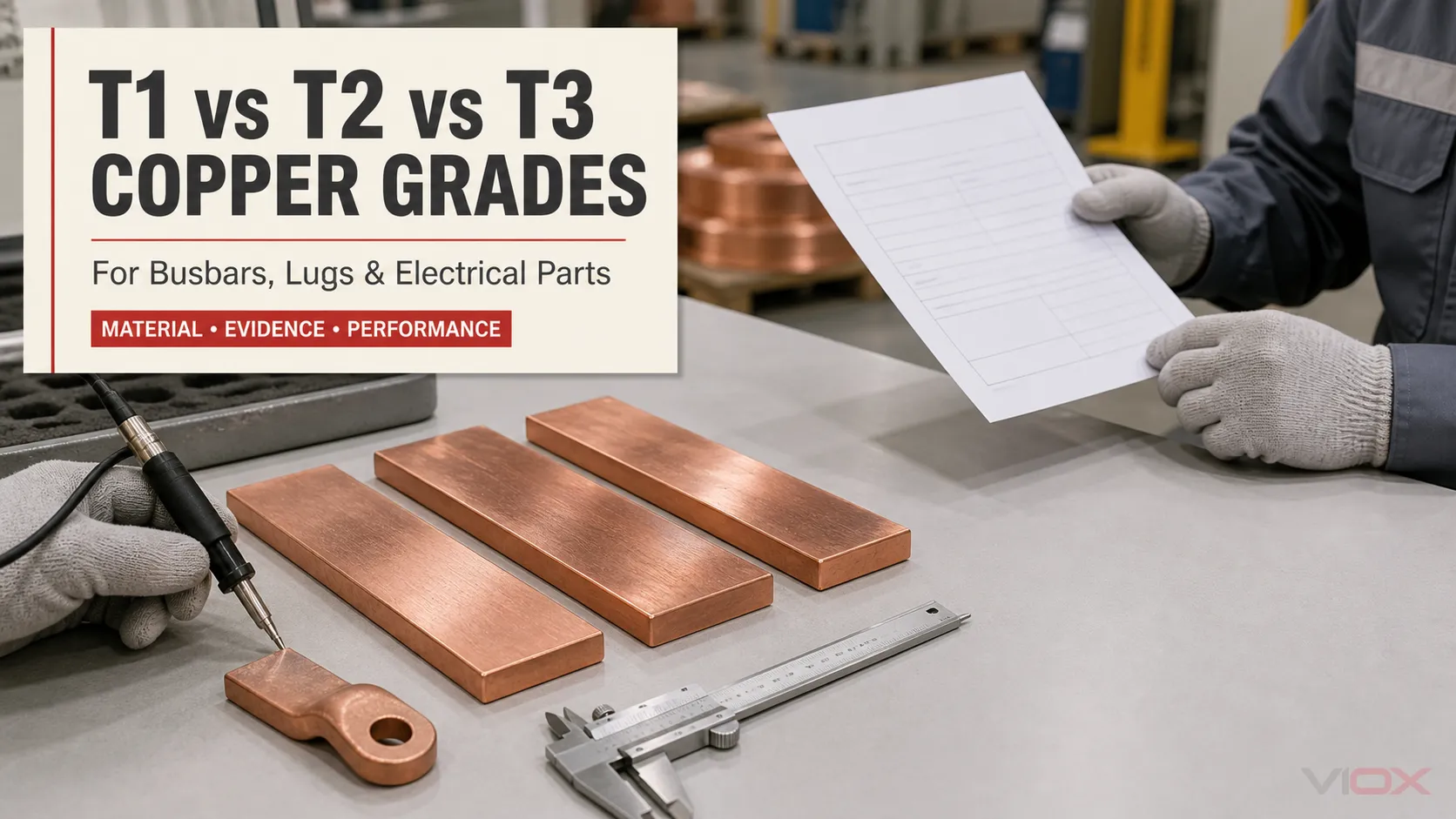
T1، T2 و T3 نامگذاریهای چینی برای گریدهای مس خالص کارشده هستند. طبق استاندارد GB/T 5231-2022، تفاوت اصلی در ترکیب شیمیایی آنهاست: T1 سختگیرانهترین الزامات خلوص را دارد، T2 گرید میانی است که بهطور گسترده مشخص میشود و T3 ناخالصیهای بیشتری را مجاز میداند. با این حال، نام گرید بهتنهایی لزوماً تعیینکننده رسانایی الکتریکی، سختی (تمپر)، ابعاد، کیفیت آبکاری یا جریان نامی یک قطعه الکتریکی نهایی نیست.
برای اکثر خریداران تجهیزات الکتریکی، قاعده عملی ساده است: از گریدی استفاده کنید که در نقشه یا مشخصات فنی محصول الزامی شده است، سپس گواهی مواد، رسانایی الکتریکی و عملکرد قطعه نهایی را بررسی کنید. T2 معمولاً برای قطعات با رسانایی بالا استفاده میشود، اما نوشتن عبارت “مس T2” بهتنهایی در سفارش خرید، یک مشخصات فنی کامل محسوب نمیشود.
نکات کلیدی
- T1، T2 و T3 متعلق به سیستم نامگذاری چینی GB هستند؛ آنها سطوح کیفی جهانی نیستند که در همه کشورها استفاده شوند.
- استاندارد GB/T 5231-2022 نامگذاریها و ترکیب شیمیایی مس کارشده و آلیاژهای مس را پوشش میدهد.
- T2 معمولاً برای شمشهای مسی (باسبار)، کابلشوها، هادیها و سایر قطعات حامل جریان، بسته به الزامات محصول مربوطه، انتخاب میشود.
- T1 با نامگذاری TU1 متفاوت است. این
TUاین خانواده گریدهای مس بدون اکسیژن را مشخص میکند. - گرید T2 اغلب با C11000 یا Cu-ETP مقایسه میشود، اما جایگزینی بین استانداردی نباید به صورت پیشفرض یکبهیک در نظر گرفته شود و حتماً باید بررسی گردد.
- گرید مس تنها یکی از پارامترهاست. سختی (Temper)، سطح مقطع، آبکاری، طراحی اتصال و تایید نهایی قطعه نیز به همان اندازه حائز اهمیت هستند.
نگاهی اجمالی به گریدهای مسی T1، T2 و T3
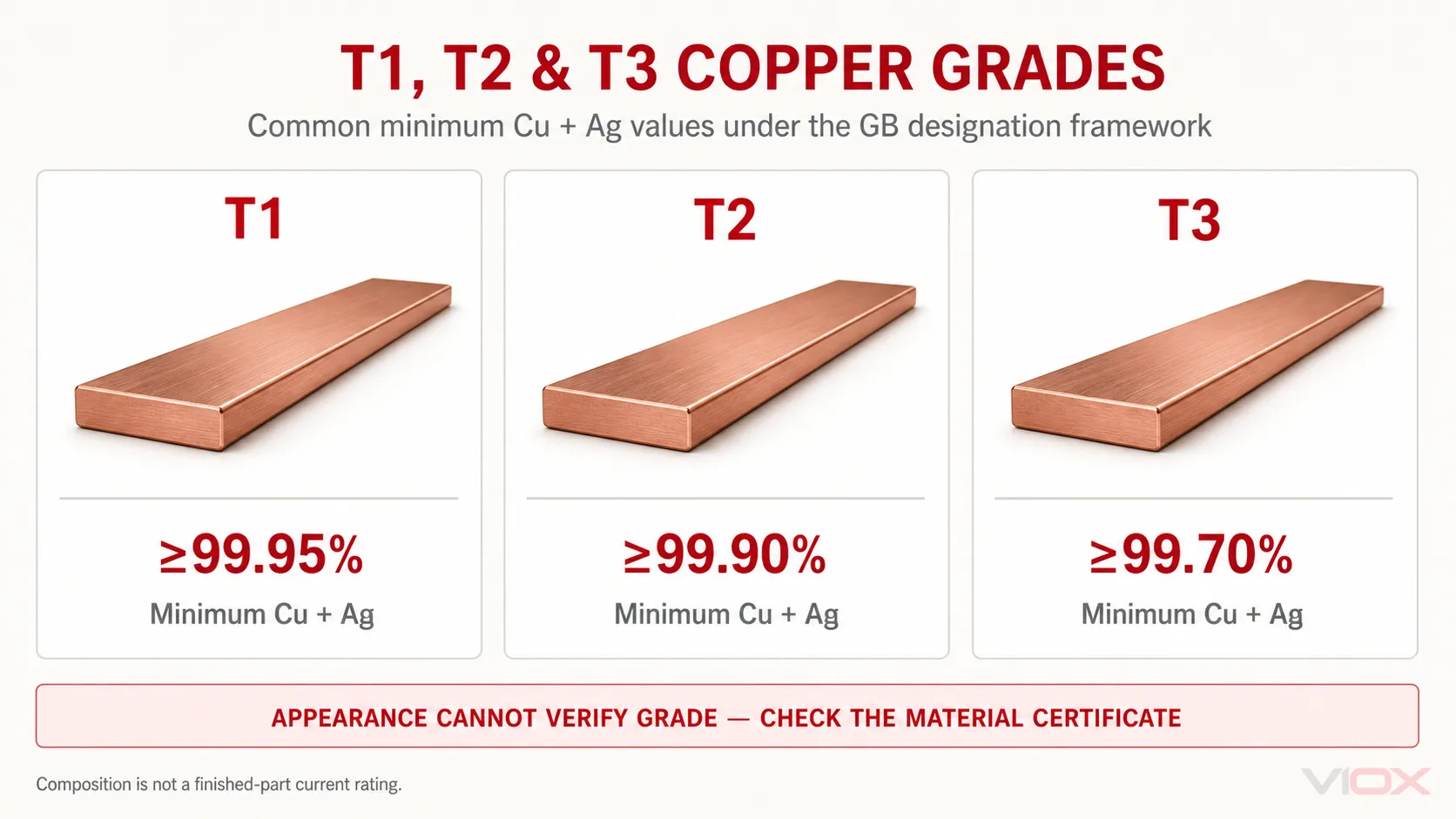
جدول زیر حداقل مقادیر رایج مس به علاوه نقره مرتبط با این نامگذاریها را خلاصه میکند. محدودیتهای کامل برای عناصر منفرد باید در ویرایش مربوطه از استاندارد مواد بررسی شود.
| گرید مس | حداقل مس + نقره | تفسیر کاربردی برای خرید | راهنمای استفاده در کاربردهای الکتریکی |
|---|---|---|---|
| T1 | 99.95% | محدودیت سختگیرانهتر برای خلوص شیمیایی | در صورت نیاز طبق طراحی یا مشخصات فنی مواد تعیین شود؛ بدون داشتن دادههای مربوط به رسانایی، فرض بهبود عملکرد را در نظر نگیرید |
| تی۲ | 99.90% | گرید مس خالص صنعتی رایج | در صورت تأیید رسانایی، شکل و سختی مورد نیاز، بهطور مکرر برای هادیها و قطعات الکتریکی استفاده میشود |
| T3 | 99.70% | محتوای ناخالصی مجاز بالاتر | بدون تأییدیه مهندسی و دادههای آزمایشی پشتیبان، در مسیرهای جریان حساس، جایگزین T1 یا T2 نکنید |
این درصدها بیانگر ترکیب شیمیایی هستند، نه رتبهبندی خودکار رسانایی یا ظرفیت جریان. دو قطعه T2 اگر از نظر وضعیت متریال، هندسه، پرداخت سطح یا کیفیت اتصال متفاوت باشند، میتوانند رفتار متفاوتی داشته باشند.
کدام استاندارد T1، T2 و T3 را تعریف میکند؟
GB/T 5231-2022, نامگذاری و ترکیب شیمیایی مس و آلیاژهای مس کارشده, ، استاندارد ملی فعلی چین است که چارچوب نامگذاری و ترکیب شیمیایی را تعریف میکند. این استاندارد از اول اکتبر ۲۰۲۲ اجرایی شد و جایگزین نسخه ۲۰۱۲ گردید.
GB/T 5231 نقطه شروع است، نه کل مشخصات محصول نهایی. بسته به شکل خریداری شده، ممکن است استاندارد دیگری ابعاد، تلورانسها، سختی (تمپر) و خواص مکانیکی را کنترل کند. نمونهها عبارتند از:
- GB/T 2059-2017 برای تسمه مسی و آلیاژ مس؛;
- GB/T 3114-2023 برای سیمهای مستطیلی مسی و آلیاژ مس؛;
- GB/T 3952-2016 برای مفتول مسی مورد استفاده در مصارف الکتریکی.
بنابراین، استاندارد صحیح بستگی به این دارد که تأمینکننده ورق، تسمه، شمش، سیم مستطیلی، مفتول یا قطعه نهایی را ارائه میدهد.
مس T1: زمانی که حد خلوص سختگیرانهتری تعیین شده باشد
مس T1 نسبت به T2 و T3 دارای حداقل نیاز بالاتری برای مجموع مس و نقره (Cu + Ag) است. این گرید ممکن است زمانی انتخاب شود که نقشه، مشخصات مشتری یا فرآیند تولید، نیازمند کنترل دقیقتر ناخالصیها باشد.
این بدان معنا نیست که T1 لزوماً بهترین انتخاب برای هر شینه یا ترمینالی است. اگر طراحی نهایی از قبل الزامات رسانایی، افزایش دما و مشخصات مکانیکی را با استفاده از متریال T2 تأییدشده برآورده میکند، تغییر گرید به T1 نیاز به اعتبارسنجی محصول را از بین نمیبرد. الزامات مهندسی باید تعیینکننده گرید باشند، نه این فرض که عدد گرید کوچکتر همیشه منجر به تولید قطعه بهتری میشود.
T1 نباید با TU1 اشتباه گرفته شود. در سیستم نامگذاری چینی، گریدهای TU متعلق به خانواده مس بدون اکسیژن هستند. اگر جوشکاری، لحیمکاری سخت، کاربردهای خلأ یا پردازش در اتمسفر احیاکننده اهمیت داشته باشد، باید محتوای اکسیژن و فرآیند تولید مربوطه مستقیماً مشخص شود.
مس T2: مرتبطترین گرید برای تدارکات الکتریکی
T2 ترکیبی از حداقل ۹۹.۹۰ درصد مس + نقره و در دسترس بودن گسترده تجاری است. در نتیجه، این گرید در کاربردهای تسمه مسی، شمش مسی (باسبار)، کابلشو و ترمینالها رایج است. برای خریداران VIOX، این گریدی است که به احتمال زیاد در بحثها پیرامون موارد زیر مطرح میشود: شینههای MCB و کابلشوهای مسی.
با این حال، “T2” هرگز نباید تنها معیار پذیرش باشد. یک مشخصات خرید مفید باید موارد زیر را نیز بیان کند:
- استانداردهای حاکم بر مواد و شکل محصول؛;
- رسانایی یا مقاومت الکتریکی مورد نیاز و روش آزمون؛;
- وضعیت یا سختی (تمپر) ماده؛;
- ابعاد و تلرانسها؛;
- الزامات سطح بدون پوشش، قلعاندود یا نقرهاندود؛;
- اسناد بازرسی و قابلیت ردیابی بچ (محموله)؛;
- تستهای محصول نهایی در موارد قابل اجرا.
این تمایز حائز اهمیت است زیرا استاندارد GB/T 5231 ترکیب شیمیایی را تعریف میکند، در حالی که عملکرد الکتریکی به فرآیند تولید و قطعه نهایی نیز بستگی دارد.
مس T3: نه به صورت خودکار معیوب است و نه به صورت خودکار قابل جایگزینی.
مس T3 حداقل مقدار مس + نقره (Cu + Ag) کمتری نسبت به T1 یا T2 دارد. این بدان معنا نیست که هر محصول T3 غیرقابل استفاده است؛ بلکه به این معناست که این ماده دارای مرز ترکیبی متفاوتی است و باید بر اساس کارکرد مورد نظر ارزیابی شود.
برای یک قطعه مکانیکی یا حرارتی غیرحساس، در صورتی که نقشه فنی و استاندارد محصول مربوطه اجازه دهد، T3 ممکن است قابل قبول باشد. برای شینهها (Busbar)، کابلشوها، مسیر جریان کلیدهای اتوماتیک یا سایر قطعاتی که مقاومت و افزایش دما در آنها اهمیت دارد، جایگزینی T3 به جای T2 باید مستلزم تأییدیه مهندسی صریح باشد. رنگ و ظاهر قطعه نمیتواند به طور قابل اعتمادی گرید (درجه) مس را تأیید کند.
مدرک صحیح، گواهی متریال است که در صورت نیاز، با آزمایش مستقل ترکیب شیمیایی یا رسانایی و تایید قطعه نهایی پشتیبانی میشود.
آیا مس T2 همان C11000 یا Cu-ETP است؟
مس T2 اغلب در جداول تامینکنندگان با C11000 یا Cu-ETP معادلسازی میشود، اما این نامها از سیستمهای استاندارد متفاوتی میآیند. آنها باید به عنوان گریدهای قابل مقایسه در نظر گرفته شوند، نه مشخصات فنی که لزوماً و به طور خودکار قابل جایگزینی با یکدیگر هستند.
برای مثال، یک دیتاشیت منتشر شده KME برای C11000/Cu-ETP مشخص میکند:
- مس حداقل ۹۹.۹۰ درصد؛;
- اکسیژن حداکثر ۰.۰۴۰ درصد؛;
- رسانایی الکتریکی آنیلشده معمول ۵۸ مگا زیمنس بر متر، یا ۱۰۰ درصد استاندارد بینالمللی مس آنیلشده (IACS)؛;
- کاربردها شامل شمشهای مسی (باسبار)، ترمینالها، کنتاکتها، هادیها و سیمپیچهای ترانسفورماتور.
این مقادیر توصیفکننده محصول Cu-ETP مرجع و چارچوب استاندارد آن هستند. این مقادیر نباید بهطور خودکار برای هر مادهای که با نام T2 فروخته میشود، کپی شوند. پیش از پذیرش جایگزینی، محدودیتهای کامل شیمیایی، شکل محصول، حالت سختی (تمپر)، الزامات رسانایی و مستندات آزمون را تحت هر دو استاندارد مقایسه کنید.
چرا گرید مس بهتنهایی تعیینکننده عملکرد الکتریکی نیست
یک قطعه حامل جریان یک سیستم است، نه فقط یک عدد مربوط به ترکیب شیمیایی.
| متغیر | چرا مهم است | آنچه خریدار باید بررسی کند |
|---|---|---|
| گرید مس | تعیینکننده محدوده ترکیب شیمیایی قابلاعمال | گرید، ویرایش استاندارد و گواهی متریال |
| رسانایی | مستقیماً بر مقاومت هادی تأثیر میگذارد | حداقل رسانایی یا حداکثر مقاومت ویژه به همراه روش آزمون |
| تمپر (سختیکاری) | تغییر در سختی، استحکام، ازدیاد طول و شکلپذیری | تمپر مورد نیاز طبق نقشه و استاندارد فرم محصول |
| سطح مقطع | تأثیر شدید بر مقاومت و تولید گرما | ضخامت واقعی، عرض، ضخامت دیواره و تلورانسها |
| پرداخت سطح | تأثیر بر خوردگی و رفتار سطح تماس | پرداخت نهایی لخت یا آبکاریشده، نوع ماده آبکاری و ضخامت مشخصشده |
| طراحی اتصال | تماس ضعیف میتواند بر مقاومت کلی اتصال غالب باشد | سطح تماس، سختافزار، دستورالعملهای آمادهسازی و مونتاژ |
| اعتبارسنجی محصول نهایی | تأییدکننده طراحی کامل به جای صرفاً مواد اولیه | آزمونهای مقاومت، افزایش دما، مکانیکی یا نوعی (Type Test) قابل اعمال |
برای انتخاب پوشش شینه (Busbar)، به مقایسه VIOX مراجعه کنید شینههای مسی بدون روکش، مسی با روکش قلع و مسی با روکش نقره. آبکاری مشکلی متفاوت از گرید فلز پایه را حل میکند و باید بهصورت جداگانه مشخص شود.
نحوه تعیین مشخصات مس برای شینهها، کابلشوها و قطعات رسانا
بهجای نوشتن تنها نام گرید، از ترتیب زیر استفاده کنید.
1. شکل دقیق محصول را مشخص کنید
ذکر کنید که خرید برای تسمه، شینه، سیم چهارگوش، لوله، مفتول یا قطعه نهایی است. شکل محصول تعیین میکند که کدام استاندارد ابعادی و مکانیکی اعمال میشود.
2. گرید مواد و ویرایش استاندارد را ذکر کنید
برای مثال بنویسید, T2 مطابق با استاندارد GB/T 5231-2022 به جای صرفاً مس خالص. اگر در نقشه از استانداردهای ASTM، UNS، EN یا JIS استفاده شده است، مستقیماً همان سیستم را مشخص کنید.
3. افزودن الزامات پذیرش الکتریکی
در مواردی که رسانایی بر طراحی تأثیر میگذارد، حداقل رسانایی یا حداکثر مقاومت الکتریکی مورد نیاز، دمای مرجع و روش آزمون را ذکر کنید. این الزام را صرفاً از روی خلوص استنباط نکنید.
4. تعیین حالت سختی (Temper) و ابعاد
وضعیت متریال، ضخامت، عرض، ضخامت دیواره، تلورانسهای ابعادی و هرگونه الزامات شکلدهی را مشخص کنید. گرید صحیح اگر با حالت سختی اشتباه تأمین شود، همچنان ممکن است در عملیات پرسکاری، خمکاری یا پرس سرسیم (Crimping) دچار شکست شود.
۵. سیستم سطح را به صورت جداگانه مشخص کنید
وضعیت قطعه را از نظر بدون روکش، قلعکاری شده یا نقرهکاری شده بیان کنید. در صورت نیاز به آبکاری، مشخصات فنی پوشش و معیارهای پذیرش مربوطه را ذکر کنید.
۶. درخواست مدارک قابل ردیابی
گواهی تست مواد، شناسنامه بچ (Batch) و نتایج بازرسی مربوطه را درخواست کنید. برای سفارشهای با ریسک بالاتر یا حجم زیاد، مشخص کنید که آیا تاییدیه ورودی شامل اندازهگیری رسانایی، بازرسی ابعادی، تست ضخامت پوشش یا آنالیز شیمیایی خواهد بود یا خیر.
۷. تایید قطعه الکتریکی تکمیلشده
انطباق مواد اولیه جایگزین تستهای مربوط به شینه، کابلشو، ترمینال یا مجموعه تابلو برق نهایی نمیشود. عملکرد الکتریکی، حرارتی و مکانیکی مورد نیاز را در سطح قطعه تایید کنید.
چکلیست خرید گرید مس
پیش از تایید سفارش، تمامی موارد زیر را تایید کنید:
- سیستم نامگذاری مشخص شده است: GB، UNS/ASTM، EN یا JIS.
- شماره استاندارد و ویرایش مواد ذکر شده است.
- فرم محصول خریداریشده و استاندارد قابل اعمال بر آن مشخص شده است.
- گرید مورد نیاز در نقشه و سفارش خرید درج شده است.
- رسانایی یا مقاومت الکتریکی در مواردی که از نظر الکتریکی حائز اهمیت است، تعیین شده است.
- الزامات مربوط به سختی (تمپر) و خواص مکانیکی تعریف شده است.
- ابعاد و تلورانسها قابل اندازهگیری هستند.
- الزامات آبکاری از گرید مس پایه مجزا هستند.
- تامینکننده باید گواهی متریال و قابلیت ردیابی بچ (سری ساخت) را ارائه دهد.
- جایگزینی قطعات نیازمند تاییدیه کتبی است.
- فرآیند تایید قطعات نهایی تعریف شده است.
اشتباهات رایج مشخصات
در نظر گرفتن T1، T2 و T3 به عنوان کلاسهای کیفی عمومی.
اینها نامگذاریهای متریال چینی هستند. خریداران خارجی نباید تصور کنند که تامینکنندهای که از C11000، CW004A، Cu-ETP یا C1100 استفاده میکند، لزوماً از همان مشخصات فنی بهره میبرد، صرفاً به این دلیل که یک جدول معادلسازی، این گریدها را در یک ردیف قرار داده است.
اشتباه گرفتن T1 با مس بدون اکسیژن (Oxygen-free copper).
T1 و TU1 نامگذاریهای متفاوتی هستند. اگر میزان اکسیژن اهمیت دارد، گرید دقیق بدون اکسیژن و استاندارد حاکم بر آن را مشخص کنید و به واژه “خلوص بالا” اکتفا نکنید.”
تایید مس صرفاً بر اساس ظاهر.
T1، T2 و T3 را نمیتوان به طور قابل اطمینان از طریق رنگ از هم تشخیص داد. مستندات و آزمایشهای مناسب مورد نیاز است.
فرض بر اینکه خلوص بالاتر، مشکل قطعهای با اندازه نامناسب را حل میکند.
تغییر گرید مس نمیتواند کمبود سطح مقطع، اتصال ضعیف، فشار تماس ناکافی یا طراحی نامناسب برای افزایش دما را جبران کند.
پذیرش “معادل بینالمللی” بدون تطبیق دقیق.
ادعای گرید معادل باید شامل ترکیب شیمیایی کامل، شکل محصول، حالت (تمپر) و الزامات ویژگیهای الکتریکی مورد مقایسه باشد.
سوالات متداول
کدام بهتر است: مس T1، T2 یا T3؟
هیچ گرید برتر جهانی وجود ندارد. T1 محدودیت خلوص سختگیرانهتری دارد، T2 معمولاً برای قطعات الکتریکی استفاده میشود و T3 ممکن است برای کاربردهای با حساسیت کمتر مناسب باشد. انتخاب صحیح، گریدی است که با نقشه فنی، الزامات رسانایی، فرآیند تولید و تستهای محصول نهایی مطابقت داشته باشد.
آیا مس T2 برای شینههای الکتریکی مناسب است؟
T2 معمولاً برای قطعات رسانا استفاده میشود، اما مناسب بودن آن برای یک شینه خاص به رسانایی تایید شده، سطح مقطع، سختی، آبکاری، طراحی اتصال، شرایط عملیاتی و تاییدیه محصول نهایی بستگی دارد.
آیا T1 مس بدون اکسیژن است؟
T1 را به عنوان یک گرید بدون اکسیژن در نظر نگیرید. گریدهای مس بدون اکسیژن چینی از پیشوند TU استفاده میکنند، مانند TU1 و TU2. گرید قابل اعمال و حد مجاز اکسیژن را در استاندارد مربوطه بررسی کنید.
آیا T2 دقیقاً معادل C11000 است؟
لزوماً خیر. این دو اغلب با هم مقایسه میشوند زیرا هر دو مواد با مس بالا هستند که در کاربردهای الکتریکی استفاده میشوند، اما به سیستمهای استاندارد متفاوتی تعلق دارند. قبل از تایید جایگزینی، مشخصات کامل را مقایسه کنید.
خریدار چگونه میتواند تایید کند که یک قطعه از مس T2 ساخته شده است؟
با گواهی تست مواد قابل ردیابی شروع کنید. بسته به ریسک خرید، تست ترکیب شیمیایی ورودی، اندازهگیری رسانایی، بازرسی ابعادی و تایید آبکاری را اضافه کنید. طرح تایید باید قبل از تولید توافق شود.
آیا خلوص بالاتر مس همیشه به معنای جریان نامی بالاتر است؟
خیر. جریان نامی به کل هادی و مجموعه، شامل سطح مقطع، دفع حرارت، مقاومت اتصال، شرایط محفظه و روش آزمون محصول مربوطه بستگی دارد.
توصیه نهایی
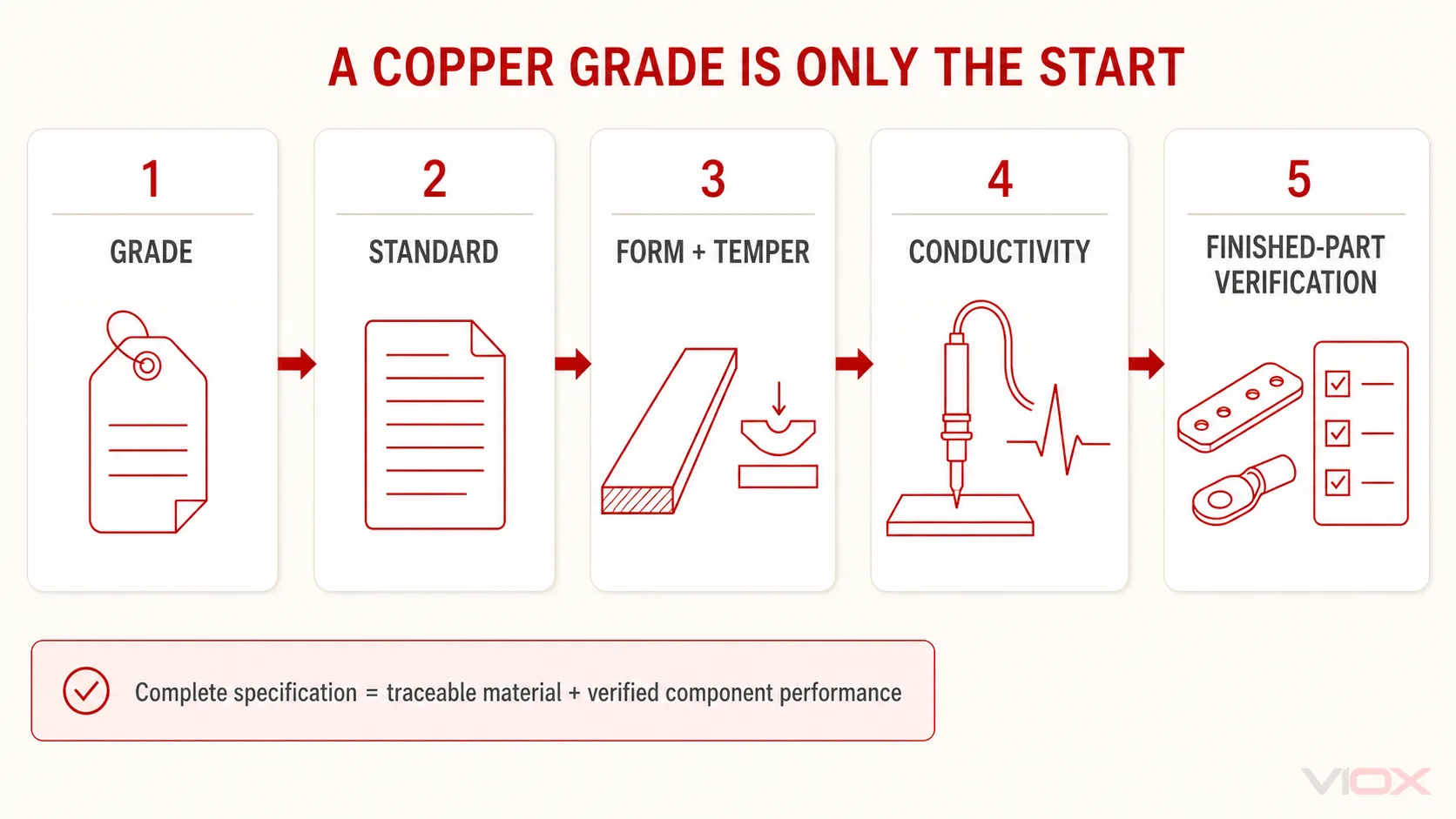
از T1، T2 و T3 به عنوان نامگذاریهای دقیق مواد استفاده کنید، نه به عنوان برچسبهای بازاریابی. برای اکثر پروژههای تأمین تجهیزات الکتریکی، یک مشخصات فنی قوی باید پنج مورد زیر را به هم مرتبط کند:
گرید → استاندارد حاکم → شکل و حالت (تمپر) محصول → رسانایی تأیید شده → عملکرد قطعه نهایی
اگر در حال تأمین شمشهای مسی (Busbars)، کابلشوهای مسی یا قطعات رسانای سفارشی هستید، استاندارد مواد مورد نیاز، رسانایی، ابعاد، حالت (تمپر)، پرداخت سطح و شرایط کاربردی را به VIOX ارائه دهید. این ورودیها به قطعه اجازه میدهند تا به جای تکیه صرف بر خلوص مس، بر اساس وظیفه الکتریکی واقعی ارزیابی شود.