

در این صفحه
پاسخ مستقیم: اصطلاحات ولتاژ بوبین رله به چه معنا هستند؟
ولتاژ بوبین رله تنها ولتاژ درجشده روی برچسب محصول نیست. یک رله همچنین دارای ولتاژ جذب، ولتاژ رهاسازی و ولتاژ نگهدارنده است. این مقادیر مشخص میکنند که رله چه زمانی عمل میکند، چه زمانی آزاد میشود و آیا میتواند در شرایط نوسان ولتاژ، وضعیت فعال خود را حفظ کند یا خیر.
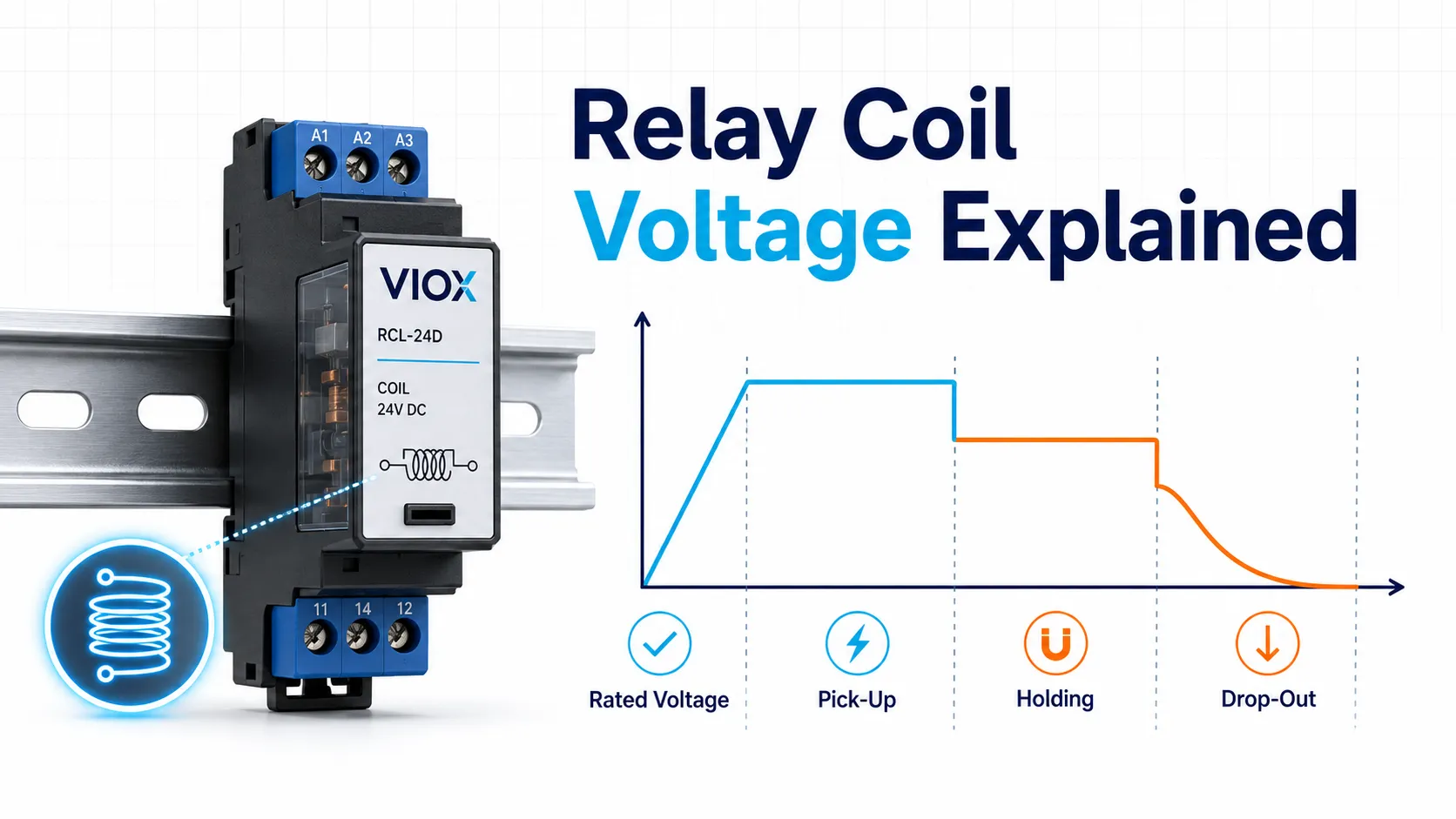
ولتاژ نامی بوبین، ولتاژ کنترلی است که رله برای آن طراحی شده است. ولتاژ جذب، حداقل ولتاژ مورد نیاز برای عملکرد رله است. ولتاژ رهاسازی، ولتاژی است که پایینتر از آن، رله آزاد میشود. ولتاژ نگهدارنده، حداقل ولتاژ مورد نیاز برای حفظ وضعیت فعال رله پس از جذب اولیه است.
نکات کلیدی
- یک رله ۲۴ ولت همیشه برای جذب به دقیقاً ۲۴ ولت نیاز ندارد، اما باید ولتاژی کافی دریافت کند تا از ولتاژ جذب آن فراتر رود.
- ولتاژ نگهدارنده معمولاً کمتر از ولتاژ جذب است، بنابراین ممکن است رله در ولتاژی که برای جذب از حالت سکون کافی نیست، همچنان فعال باقی بماند.
- ولتاژ رهاسازی زمانی اهمیت پیدا میکند که رله باید پس از قطع سیگنال کنترلی، بهطور کامل و دقیق آزاد شود.
- سیمهای کنترل طولانی، منابع تغذیه ضعیف، مدارهای ۲۴ ولت DC با بار بیش از حد، یا انتخاب اشتباه بوبین AC/DC میتواند باعث لرزش رله یا عدم عملکرد آن شود.
- مقادیر نهایی به برگه اطلاعات (دیتاشیت) رله بستگی دارد؛ ولتاژ وصل یا قطع یکسان را برای تمام برندهای رله فرض نکنید.
نگاهی اجمالی به اصطلاحات ولتاژ بوبین رله
| اصطلاح | معنی | چرا مهم است؟ |
|---|---|---|
| ولتاژ نامی بوبین | ولتاژ اسمی که بوبین برای آن طراحی شده است | مقدار اصلی مورد استفاده هنگام انتخاب رلههای ۱۲، ۲۴، ۱۱۰، ۱۲۰، ۲۳۰ یا ۲۴۰ ولت |
| ولتاژ وصل (Pick-up) / ولتاژ عملکرد | حداقل ولتاژی که رله در آن به طور مطمئن عمل میکند | مهم در مواقعی که افت ولتاژ یا ضعف منبع تغذیه مانع از جذب (Pull-in) میشود |
| ولتاژ قطع / ولتاژ رهاسازی | ولتاژی که پایینتر از آن، رله آزاد میشود | تأثیرگذار بر رفتار بازنشانی (Reset) و نگهداشت ناخواسته |
| ولتاژ نگهدارنده / ولتاژ الزامی برای حفظ وضعیت | حداقل ولتاژ مورد نیاز برای حفظ وضعیت فعال رله پس از جذب | توضیحدهنده علت روشن ماندن رله در ولتاژهای پایینتر |
| حداکثر ولتاژ مجاز | بالاترین ولتاژ بوبینی که رله میتواند در محدوده مجاز تحمل کند | جلوگیری از گرم شدن بیش از حد و آسیب به بوبین |
| تلورانس ولتاژ بوبین | محدوده عملکرد مجاز در اطراف ولتاژ نامی | مهم برای منابع تغذیه ناپایدار و ترانسفورماتورهای کنترل |
برای انتخاب ولتاژ رله تایمر بر اساس مقادیر رایج تغذیه، به راهنمای VIOX مراجعه کنید راهنمای انتخاب ولتاژ رله تایمر.
ولتاژ نامی بوبین: عددی که روی رله چاپ شده است
ولتاژ نامی بوبین، ولتاژ کنترلی اسمی برای بوبین رله است. نمونههای رایج عبارتند از:
- ۱۲ ولت جریان مستقیم
- ۲۴ ولت جریان مستقیم
- 24 ولت AC
- 110 ولت متناوب (AC)
- ۱۲۰ ولت متناوب
- 220 ولت متناوب (AC)
- ۲۳۰ ولت متناوب
- ۲۴۰ ولت متناوب
این اولین مقداری است که خریداران معمولاً بررسی میکنند، اما تمام ماجرا نیست. رلهای که با 24 ولت مستقیم (DC) مشخص شده، برای یک مدار کنترل 24 ولت مستقیم طراحی شده است، اما دیتاشیت ممکن است محدوده عملکرد مجاز را حول آن مقدار تعریف کند.
رله را فقط با تطبیق ولتاژ بار انتخاب نکنید. ولتاژ بوبین، ولتاژی است که به بوبین کنترل اعمال میشود. ظرفیت کنتاکت، ولتاژ و جریانی است که کنتاکتهای رله میتوانند قطع و وصل کنند. اینها بخشهای متفاوتی از رله هستند.
ولتاژ جذب (Pick-Up Voltage): چرا رله عمل نمیکند
ولتاژ جذب که ولتاژ عملکرد نیز نامیده میشود، حداقل ولتاژ مورد نیاز برای حرکت آرمیچر رله و بستن یا تغییر وضعیت کنتاکتها است.
اگر بوبین ولتاژی کمتر از ولتاژ جذب دریافت کند، رله ممکن است:
- عدم جذب (عمل نکردن کنتاکتور یا رله)
- جذب کند
- لرزش (چتر)
- وزوز کردن
- عملکرد فقط در حالت بدون بار
- کارکرد صحیح روی میز تست اما عدم عملکرد در تابلو برق اصلی
این مشکل در مدارات فرمان ۲۴ ولت DC با کابلکشی طولانی، سیمهای با سطح مقطع کم، منابع تغذیه تحت بار بیش از حد، یا وجود تعداد زیادی بوبین رله و سلنوئید روی یک منبع تغذیه مشترک رایج است.
مثال: رله ۲۴ ولت روی کابل فرمان طولانی
فرض کنید یک رله ۲۴ ولت DC در انتهای یک کابل طولانی نصب شده است. ولتاژ منبع تغذیه در تابلو برق ۲۴ ولت اندازهگیری میشود، اما هنگام فعال شدن سایر بارها، تنها ۱۹ ولت به بوبین رله میرسد.
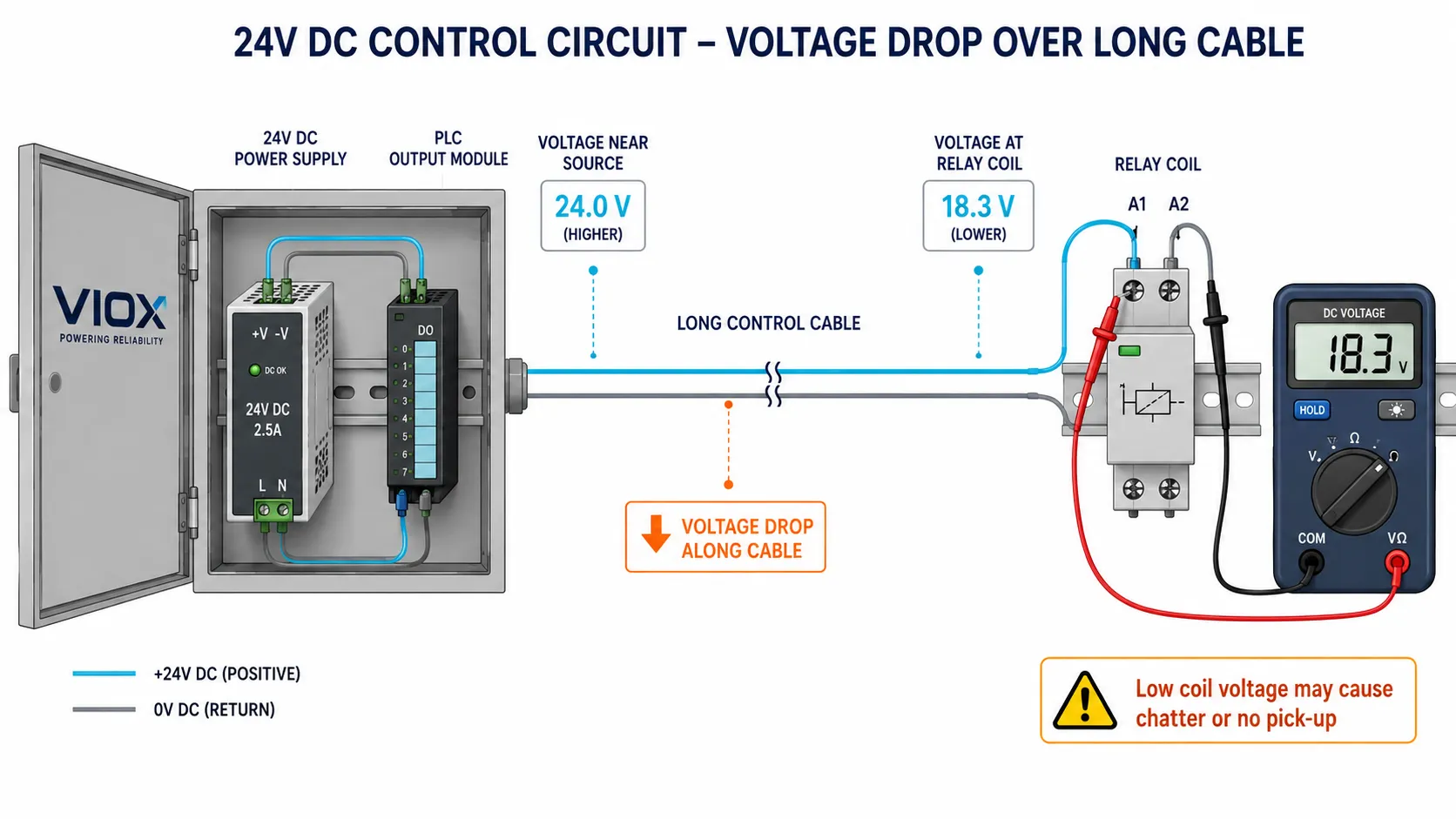
اگر ولتاژ جذب رله بالاتر از ولتاژ واقعی در پایانههای بوبین باشد، رله به طور مطمئن عمل نخواهد کرد. راه حل این نیست که ابتدا “یک رله دیگر را امتحان کنید”. ولتاژ را در حین کار در پایانههای بوبین رله اندازهگیری کنید، سپس سطح مقطع کابل، ظرفیت منبع تغذیه، اتصالات ترمینال و جریان بار را بررسی نمایید.
ولتاژ قطع (Drop-Out Voltage): زمانی که رله آزاد میشود
ولتاژ قطع که به آن ولتاژ رهاسازی نیز میگویند، ولتاژی است که پایینتر از آن، رله به وضعیت عادی خود باز میگردد.
این موضوع در موارد زیر اهمیت دارد:
- رله باید هنگام قطع برق به سرعت آزاد شود
- ولتاژ پسماند در مدار فرمان باقی میماند
- خروجی PLC جریان کمی نشت میکند
- یک مدار اسنابر RC یا سرج ارستر (surge suppressor) ولتاژ را روی بوبین نگه میدارد
- رله بیش از حد انتظار در حالت برقدار باقی میماند
اگر ولتاژ بوبین به زیر ولتاژ قطع (drop-out voltage) نرسد، ممکن است رله در حالت برقدار باقی بماند یا به کندی آزاد شود. این موضوع میتواند منجر به علائم خطای گیجکنندهای شود: سیگنال کنترل خاموش (OFF) به نظر میرسد، اما کنتاکتهای رله بسته باقی میمانند.
ولتاژ نگهدارنده: چرا یک رله میتواند در ولتاژ پایینتر روشن بماند
ولتاژ نگهدارنده حداقل ولتاژ مورد نیاز برای حفظ وضعیت برقدار رله پس از جذب اولیه است. این ولتاژ معمولاً کمتر از ولتاژ جذب (pick-up voltage) است، زیرا برای نگه داشتن آرمیچر در حالت بسته، به نیروی مغناطیسی کمتری نسبت به کشیدن آن از وضعیت استراحت نیاز است.
دلیل فیزیکی این امر، شکاف هوایی مغناطیسی است. قبل از عمل کردن رله، آرمیچر باز است، شکاف هوایی در مدار مغناطیسی بزرگ است و مقاومت مغناطیسی (reluctance) بالا است. بوبین برای جذب آرمیچر به میدان مغناطیسی قویتری نیاز دارد که به معنای جریان و ولتاژ بالاتر است. پس از عمل کردن رله، آرمیچر بسته میشود، شکاف هوایی بسیار کوچک شده، مقاومت مغناطیسی به شدت کاهش مییابد و انرژی بسیار کمتری برای نگه داشتن رله در حالت بسته مورد نیاز است.
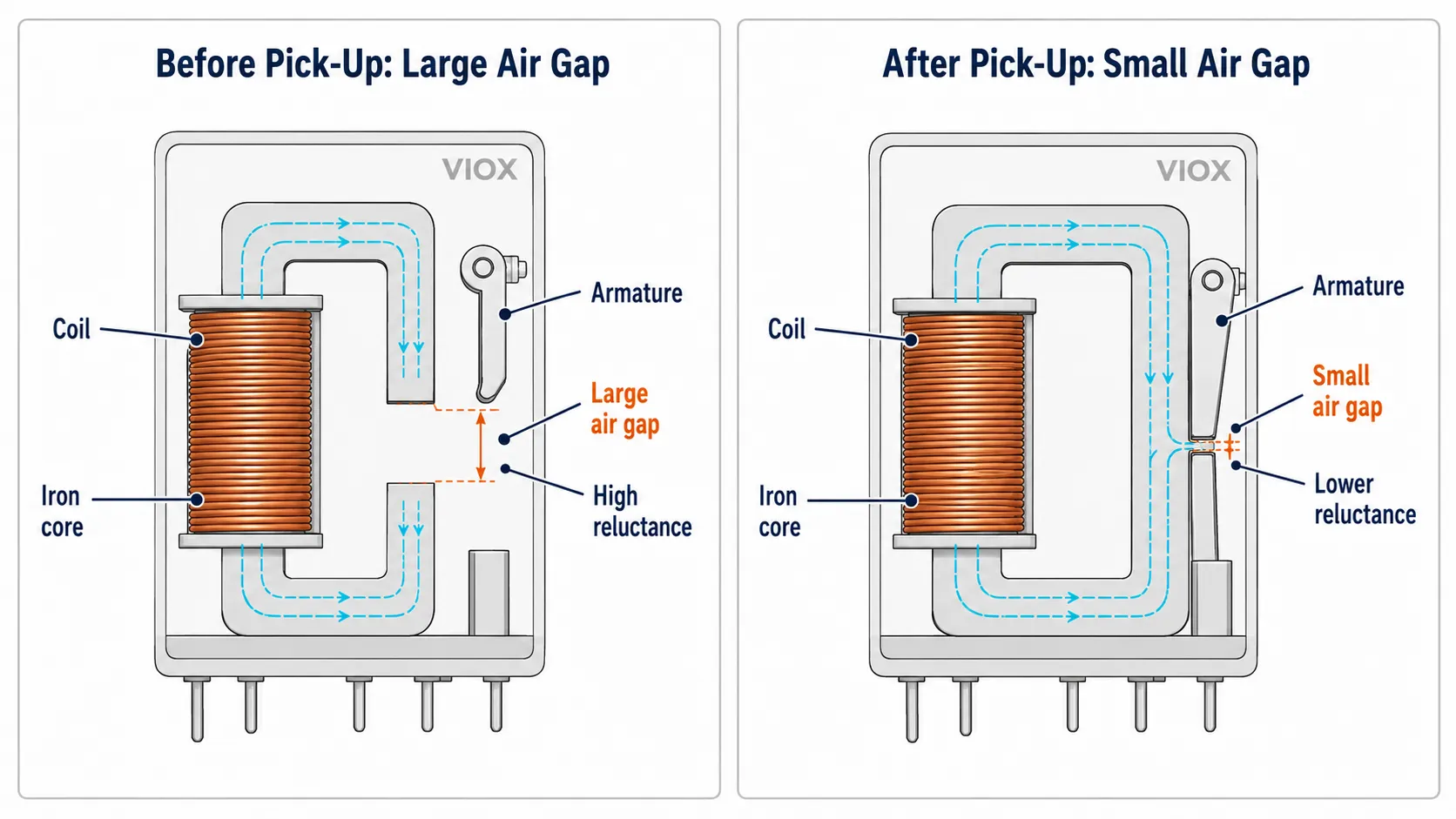
این موضوع یک مشاهده میدانی رایج را توضیح میدهد:
- رله در ولتاژ پایین جذب نمیشود
- اما پس از برقدار شدن، حتی اگر ولتاژ افت کند ممکن است در حالت جذب باقی بماند
ولتاژ نگهدارنده در منابع تغذیه ناپایدار، مدارهای کنترلی دارای پشتیبان باتری و سیستمهایی که هنگام روشن شدن موتورها، سلنوئیدها یا کنتاکتورها دچار افت ولتاژ میشوند، اهمیت دارد.
ولتاژ جذب در مقابل ولتاژ نگهدارنده
| وضعیت | ولتاژ جذب | ولتاژ نگهدارنده |
|---|---|---|
| وضعیت رله قبل از اعمال ولتاژ | بدون برق | برقدار شده |
| عملکرد مورد انتظار | جذب آرمیچر | نگه داشتن آرمیچر |
| رابطه معمول | بالاتر | پایینتر |
| نشانه خرابی | رله عمل نمیکند | رله در هنگام افت ولتاژ قطع میشود |
| علت رایج | افت ولتاژ، ضعیف بودن منبع تغذیه، ولتاژ نامناسب بوبین | افت ولتاژ منبع تغذیه، اضافه بار ترانسفورماتور کنترل، شل بودن ترمینال |
برای مدارهای فرمان دارای رلههای تایمردار، کنتاکتورها و سلنوئیدها، هر دو مقدار اهمیت دارند. رلهای که در هنگام تست به درستی عمل میکند، ممکن است در زمان کارکرد دستگاه و در صورت افت ولتاژ مدار فرمان تحت بار، قطع شود.
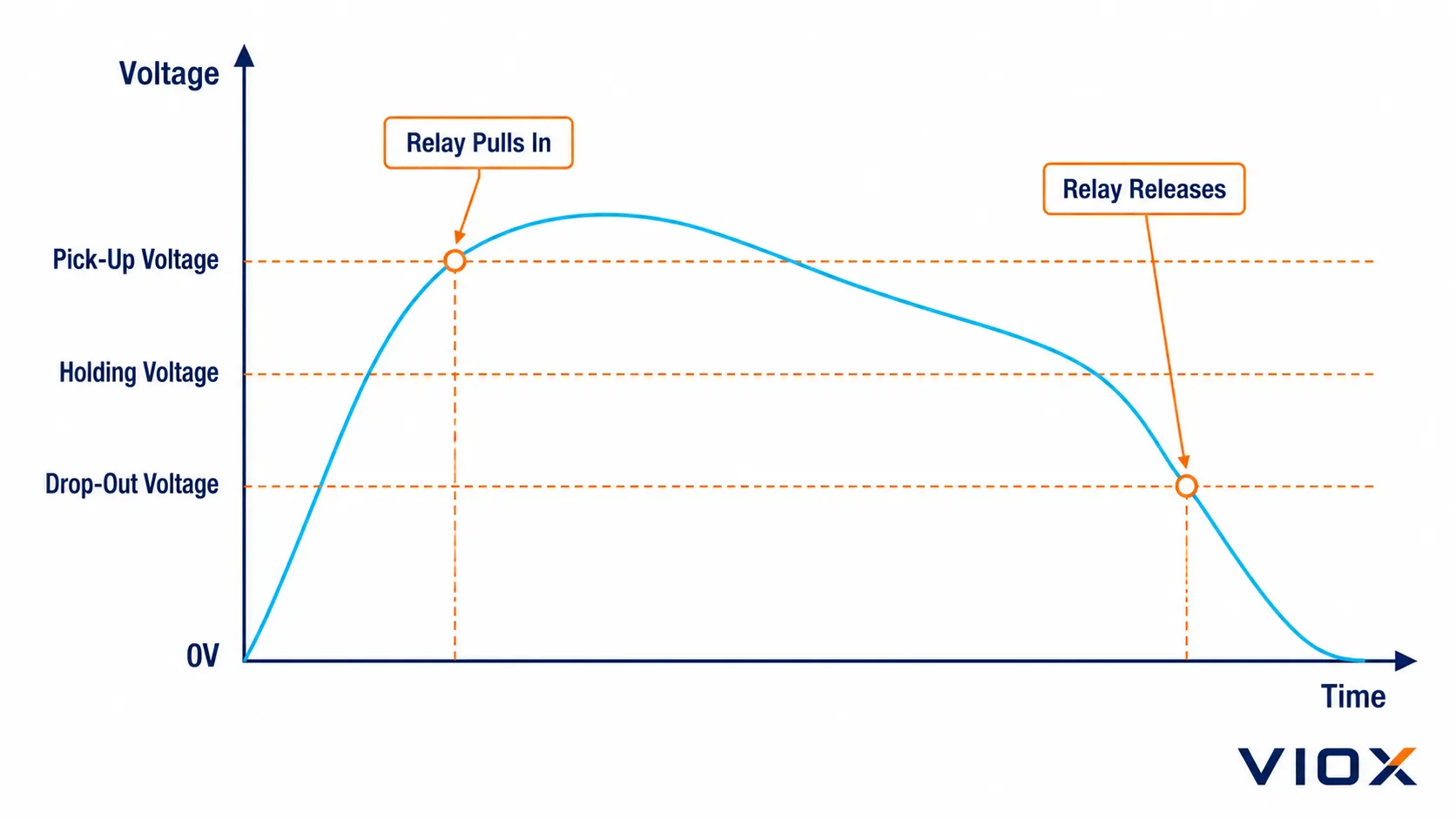
یک چرخه عملکرد رله را به عنوان یک خط زمانی ولتاژ در نظر بگیرید. بوبین از ۰ ولت شروع میشود. با افزایش ولتاژ از آستانه جذب (Pick-up)، آرمیچر جذب شده و کنتاکتها تغییر وضعیت میدهند. هنگامی که رله بسته شد، بوبین میتواند تا زمانی که ولتاژ بالای آستانه نگهدارنده (Holding) باقی بماند، مقداری کاهش ولتاژ را تحمل کند. وقتی سیگنال فرمان قطع شده و ولتاژ بوبین به زیر آستانه رهاسازی (Drop-out) میرسد، رله آزاد شده و به وضعیت عادی کنتاکتهای خود باز میگردد.
بوبین AC در مقابل بوبین DC: آنها را با یکدیگر جایگزین نکنید
بوبینهای رله AC و DC قابل تعویض نیستند، مگر اینکه رله بهطور خاص برای ورودی یونیورسال AC/DC طراحی شده باشد.
| نوع کویل | رفتار کلیدی | اشتباه رایج |
|---|---|---|
| بوبین DC | طراحیشده برای جریان مستقیم با در نظر گرفتن قطبیت در برخی از طراحیها | اعمال جریان AC به بوبین DC |
| بوبین AC | طراحیشده برای جریان متناوب و رفتار مغناطیسی در فرکانس AC | اعمال جریان DC به بوبین AC |
| بوبین AC/DC یونیورسال | طراحیشده با قطعات الکترونیکی داخلی برای استفاده در بازه ورودی گستردهتر | فرض بر اینکه تمام رلههای مدرن یونیورسال هستند |
استفاده از نوع بوبین اشتباه میتواند باعث ایجاد صدای وزوز، داغ شدن بیش از حد، عدم جذب کنتاکت یا آسیب به بوبین شود. همیشه علاوه بر مقدار ولتاژ، علامت دقیق روی بوبین را بررسی کنید.
افت ولتاژ در مدارهای فرمان
افت ولتاژ یکی از رایجترین دلایل عدم عملکرد مطمئن رله است.
دلایل احتمالی عبارتند از:
- مسیرهای طولانی سیمکشی
- کابل فرمان با سطح مقطع نامناسب (کمتر از حد مجاز)
- منبع تغذیه ۲۴ ولت DC ضعیف
- بار بیش از حد روی یک منبع تغذیه کنترلی
- پایانههای شل
- افت ولتاژ در خروجیهای ترانزیستوری PLC
- افت ولتاژ ترانسفورماتور کنترل AC تحت بار
برای مدارهای کنترل ولتاژ پایین، ولتاژ را در پایانههای بوبین رله در حین کارکرد مدار اندازهگیری کنید. اندازهگیری تنها در منبع تغذیه ممکن است باعث نادیده گرفتن مشکل شود.
نمونه میدانی: کابل کنترل ۵۰ متری در تابلوی نوار نقاله ۲۴ ولت DC
یک مورد رایج عیبیابی تابلو، رله ۲۴ ولت DC نصبشده در انتهای یک خط نوار نقاله طولانی است. منبع تغذیه کنترل در داخل تابلو ۲۴ ولت را نشان میدهد، بنابراین منبع تغذیه سالم به نظر میرسد. اما هنگامی که سلنوئید نوار نقاله و چراغهای نشانگر همزمان فعال میشوند، بوبین رله در انتهای خط به دلیل مقاومت کابل، سیمکشی مشترک برگشتی و افت ولتاژ پایانهها، ولتاژ کمتری دریافت میکند.
روی میز کار، رله به درستی کار میکند. اما در دستگاه، رله دچار لرزش شده یا عمل نمیکند. تفاوت در این است که تست روی میز، رله را با سیمکشی ایدهآل بررسی میکند، در حالی که تست روی دستگاه، حاشیه ولتاژ واقعی برای جذب رله را آشکار میسازد. راهکار عملی این است که ولتاژ را مستقیماً در دو سر A1/A2 یا پایانههای بوبین در بدترین لحظه کاری اندازهگیری کرده و سپس سیمکشی، ابعاد منبع تغذیه، اتصالات ترمینال یا انتخاب ولتاژ بوبین رله را اصلاح کنید.
لرزش رله: ولتاژ اغلب عامل اصلی است
لرزش رله به این معنی است که رله به سرعت قطع و وصل میشود. این حالت ممکن است به صورت صدای وزوز یا کلیک شنیده شود.
دلایل رایج مرتبط با ولتاژ:
| علامت | علت احتمالی ولتاژی |
|---|---|
| رله وزوز میکند اما جذب نمیشود (عمل نمیکند) | ولتاژ بوبین کمتر از ولتاژ جذب است |
| رله جذب میشود و سپس رها میکند | ولتاژ تغذیه به کمتر از ولتاژ نگهدارنده افت میکند |
| رله پس از قطع خروجی کنترل، همچنان روشن میماند | ولتاژ بوبین بالاتر از ولتاژ قطع (Drop-out) باقی میماند |
| رله بیش از حد داغ میشود | ولتاژ نامناسب بوبین یا اضافه ولتاژ |
| رله به تنهایی کار میکند اما در حضور بارهای دیگر دچار مشکل میشود | منبع تغذیه یا ترانسفورماتور توانایی تأمین بار کل را ندارد |
فرسودگی مکانیکی، آلودگی، ارتعاش و مشکلات کنتاکت نیز میتوانند باعث بروز مشکل در رله شوند، اما ولتاژ بوبین باید در مراحل اولیه بررسی شود زیرا اندازهگیری آن آسان است.
ولتاژ بوبین رله تایمر: چه تفاوتی دارد؟
یک رله تایمر ممکن است شامل یک بوبین/ورودی کنترل و مدار زمانبندی الکترونیکی باشد. این موضوع باعث میشود انتخاب ولتاژ در برخی کاربردها حساستر از یک رله الکترومکانیکی ساده باشد.
هنگام انتخاب رله تایمر، موارد زیر را بررسی کنید:
- ولتاژ کنترل نامی
- نوع ورودی AC یا DC
- محدوده ولتاژ مجاز
- ولتاژ ریست یا رفتار رهاسازی
- ولتاژ ورودی تریگر
- توان مصرفی
- ظرفیت جریاندهی کنتاکت خروجی
- دقت زمانبندی تحت نوسان ولتاژ
اگر یک رله زمانی بهطور غیرمنتظره ریست میشود، ممکن است مشکل از عملکرد زمانبندی نباشد. ولتاژ کنترل ممکن است به زیر محدوده عملکرد رله افت کرده باشد.
برای انتخاب محصول، به بخش زیر در VIOX مراجعه کنید: صفحه محصول رله زمانی و نحوه انتخاب رله زمانی مناسب.
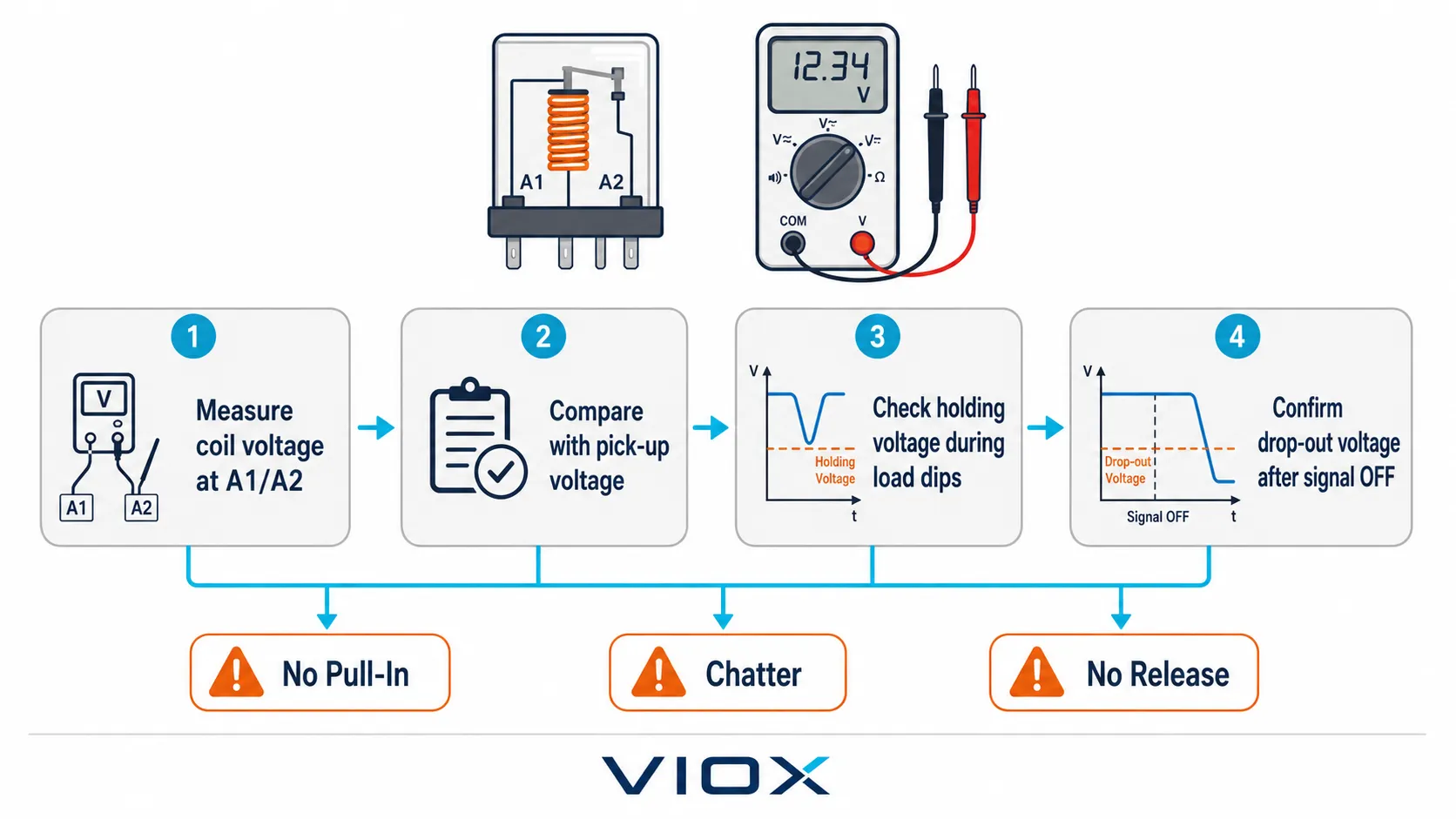
نحوه بررسی ولتاژ بوبین رله در محل
از روشهای ایمن تست الکتریکی استفاده کرده و از قوانین سایت پیروی کنید. اگر مدار داخل یک تابلوی کنترل برقدار است، اندازهگیری باید توسط پرسنل واجد شرایط انجام شود.
توالی بررسی در محل:
- علامتگذاری بوبین شامل نوع جریان (AC یا DC)، مقدار ولتاژ و برچسبهای ترمینال را بررسی کنید.
- ولتاژ تغذیه را در منبع تغذیه اندازهگیری کنید.
- ولتاژ را در حین کارکرد، مستقیماً در پایانههای بوبین رله اندازهگیری کنید.
- ولتاژ اندازهگیری شده را با محدوده کاری ذکر شده در دیتاشیت مقایسه کنید.
- ولتاژ را در لحظهای که سایر بارها برقدار میشوند، بررسی کنید.
- پایانهها، سایز سیم، ترانسفورماتور کنترل و بار منبع تغذیه را بازرسی کنید.
- بررسی کنید که آیا خروجیهای PLC، سنسورها یا سرکوبکنندهها (Suppressors) ولتاژ باقیمانده روی بوبین ایجاد میکنند یا خیر.
مفیدترین اندازهگیری معمولاً ولتاژ تغذیه در حالت بیباری نیست؛ بلکه ولتاژی است که در زمان عملکرد رله، در پایانههای بوبین آن وجود دارد.
اشتباهات رایج در انتخاب
| اشتباه | نتیجه |
|---|---|
| تطبیق ولتاژ بوبین رله با ولتاژ بار | انتخاب رله اشتباه |
| نادیده گرفتن ولتاژ پیکآپ (ولتاژ جذب) | رله به طور مطمئن جذب نمیشود |
| نادیده گرفتن ولتاژ دراپاوت (ولتاژ رهاسازی) | رله به درستی رها نمیشود |
| نادیده گرفتن ولتاژ نگهدارنده | قطع شدن رله در هنگام افت ولتاژ |
| استفاده از بوبین AC با جریان DC یا بوبین DC با جریان AC | ایجاد صدای وزوز، داغ شدن بیش از حد یا آسیب به بوبین |
| اندازهگیری ولتاژ فقط در منبع تغذیه | نادیده گرفتن افت ولتاژ در پایانههای رله |
| اضافه کردن سرکوبگر نوسان (Surge Suppressor) بدون بررسی رفتار رهاسازی | احتمال رهاسازی کند رله یا باقی ماندن در حالت تحریکشده |
| فرض بر اینکه تمام رلههای ۲۴ ولت رفتار یکسانی دارند | برگههای اطلاعات مختلف ممکن است محدودههای عملکرد متفاوتی داشته باشند |
سوالات متداول
ولتاژ نامی بوبین رله چقدر است؟
ولتاژ نامی بوبین، ولتاژ اسمی است که بوبین رله برای دریافت آن طراحی شده است، مانند 12V DC، 24V DC، 120V AC یا 230V AC.
ولتاژ پیکآپ (pick-up) در یک رله چیست؟
ولتاژ پیکآپ (Pick-up) حداقل ولتاژ مورد نیاز برای عملکرد رله و تغییر وضعیت کنتاکت از حالت غیرفعال آن است.
ولتاژ قطع (drop-out voltage) در یک رله چیست؟
ولتاژ قطع، ولتاژی است که پایینتر از آن، رله آزاد شده و به حالت عادی خود بازمیگردد.
ولتاژ نگهدارنده در یک رله چیست؟
ولتاژ نگهدارنده حداقل ولتاژی است که برای حفظ وضعیت فعال رله پس از جذب اولیه مورد نیاز است. این مقدار معمولاً کمتر از ولتاژ جذب (Pick-up) است.
چرا رله من جذب نمیشود؟
دلایل احتمالی شامل ولتاژ پایین بوبین، نوع اشتباه بوبین AC/DC، افت ولتاژ در سیم فرمان، ضعیف بودن منبع تغذیه، شل بودن ترمینالها یا آسیبدیدگی بوبین رله است.
چرا رله من دچار لرزش (Chatter) میشود؟
لرزش رله اغلب زمانی رخ میدهد که ولتاژ بوبین نزدیک به آستانه جذب یا نگهدارنده باشد. رله جذب میشود، ولتاژ افت میکند و سپس رله دوباره قطع میشود.
آیا میتوانم از رله 24 ولت DC در مدار 24 ولت AC استفاده کنم؟
خیر، مگر اینکه در دیتاشیت رله صراحتاً ذکر شده باشد که بوبین از ورودی AC/DC پشتیبانی میکند. بوبینهای AC و DC طراحی متفاوتی دارند.
چرا رله پس از قطع برق همچنان فعال باقی میماند؟
سیمپیچ ممکن است همچنان دارای ولتاژ باقیمانده ناشی از جریان نشتی، انرژی ذخیرهشده، مدار سرکوبکننده یا سیمکشی نادرست باشد. اگر ولتاژ بالاتر از ولتاژ قطع (drop-out) باقی بماند، ممکن است رله آزاد نشود.
آیا ولتاژ نگهدارنده (holding voltage) با ولتاژ تحریک (pick-up voltage) یکسان است؟
خیر. ولتاژ تحریک برای جذب رله از حالت استراحت مورد نیاز است. ولتاژ نگهدارنده برای حفظ وضعیت فعال رله پس از عملکرد آن لازم است.
چگونه ولتاژ صحیح سیمپیچ رله را انتخاب کنم؟
سیمپیچ رله را با ولتاژ مدار فرمان و نوع AC/DC مطابقت دهید، سپس ولتاژ تحریک، ولتاژ قطع، محدوده ولتاژ مجاز، توان مصرفی و افت ولتاژ در سیمکشی واقعی را بررسی کنید.
نتيجه گيری
ولتاژ سیمپیچ رله چیزی فراتر از یک مقدار درجشده روی برچسب است. ولتاژ نامی نشاندهنده منبع تغذیه کنترلی است که رله برای آن طراحی شده، اما ولتاژ تحریک، ولتاژ قطع و ولتاژ نگهدارنده، رفتار رله را در مدارهای واقعی مشخص میکنند.
اگر رله جذب نمیشود، دچار لرزش (چتر) میشود، بیش از حد داغ میشود، در حالت فعال باقی میماند یا بهطور غیرمنتظره ریست میشود، ولتاژ پایانههای سیمپیچ را در شرایط عملیاتی واقعی اندازهگیری کنید. در بسیاری از تابلوهای فرمان، مشکل از کنتاکت رله یا عملکرد تایمر نیست، بلکه ولتاژی است که در لحظه نیاز به عملکرد، توسط سیمپیچ رله دریافت میشود.