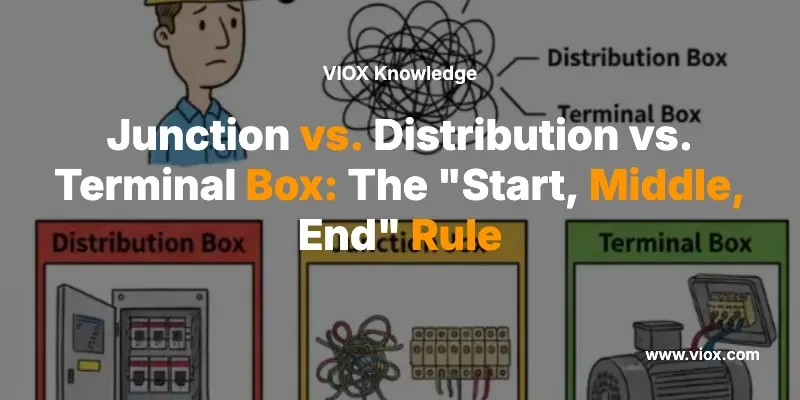
Φανταστείτε αυτό: Μπαίνετε σε ένα κατάστημα ηλεκτρολογικού υλικού. Περπατάτε στον διάδρομο και παίρνετε τρία πανομοιότυπα, γκρι, μεταλλικά κουτιά διαστάσεων 4×4 ιντσών.
Τα βάζετε στον πάγκο. Φαίνονται ακριβώς τα ίδια. Τα νιώθετε ίδια. Κοστίζουν το ίδιο.
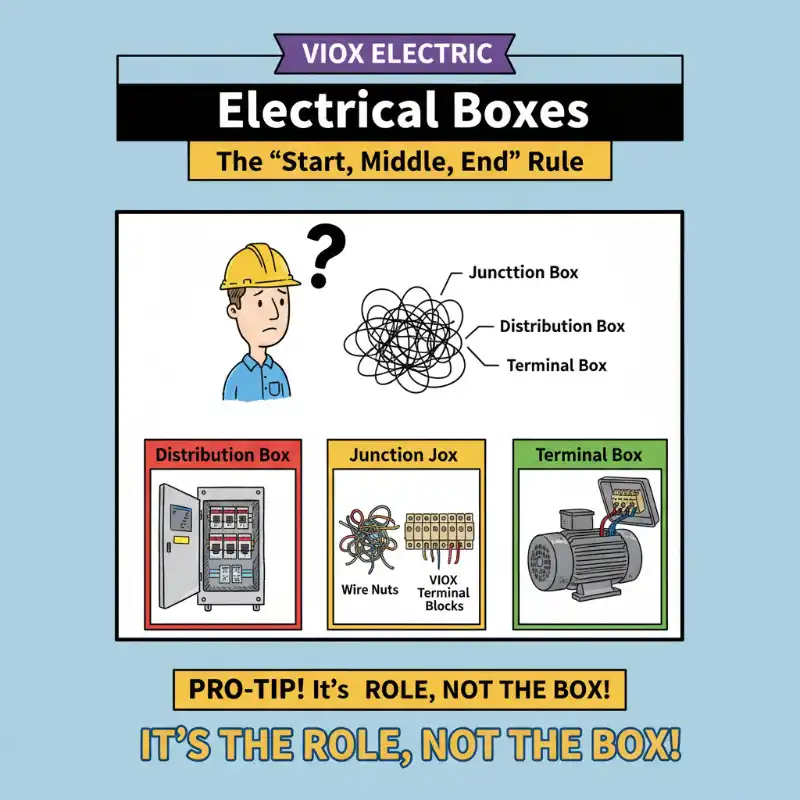
Αλλά ανάλογα με το πού θα τα εγκαταστήσετε αύριο, το ένα θα γίνει ένα Κουτί διανομής, το ένα θα γίνει ένα Κιβώτιο Συνδέσεων, και το ένα θα γίνει ένα Κιβώτιο ακροδεκτών.
Αυτή είναι μια από τις πιο κοινές πηγές σύγχυσης για τους μαθητευόμενους και ακόμη και για τους νεότερους μηχανικούς. Εάν το υλικό είναι πανομοιότυπο, γιατί έχουμε τρία διαφορετικά ονόματα;
Η απάντηση είναι απλή, αλλά βαθυστόχαστη: Ένα ηλεκτρικό κουτί ορίζεται από την αποστολή, όχι από το υλικό.
Μια πρόσφατη συζήτηση μεταξύ επαγγελματιών ηλεκτρολόγων κρυσταλλοποίησε τέλεια αυτόν τον ορισμό. Αφαίρεσε την ορολογία και μας έδωσε έναν “Χρυσό Κανόνα” για την άμεση αναγνώριση αυτών των κουτιών.
Ονομάζεται “Κανόνας ”Έναρξη, Μέση, Τέλος».
Ας αναλύσουμε την ταυτότητα αυτών των τριών κουτιών “χαμαιλέοντα”.
1. Η “Έναρξη” = Ο Πίνακας Διανομής (Το Αρχηγείο)

Ας ξεκινήσουμε από την πηγή.
- Ο Κανόνας: Διανομή = ΕΝΑΡΞΗ
- Το Ψευδώνυμο: Πίνακας, Πίνακας Διακοπτών, Κέντρο Φορτίου, Κουτί Ασφαλειών.
- Η Αποστολή: Προς Προστασία και Κατανομή.
Εάν πάρετε αυτό το μεταλλικό κουτί 4×4, το τοποθετήσετε στον τοίχο όπου η κύρια γραμμή παροχής εισέρχεται στο κτίριο και το γεμίσετε με διακόπτες κυκλώματος ή ασφάλειες, μόλις έγινε ένας Κουτί διανομής.
Είναι το “Αρχηγείο” του ηλεκτρικού σας συστήματος.
Τι το κάνει Πίνακα Διανομής;
- Εισαγωγή: Συνήθως δέχεται ένα μεγάλο, βαρέως τύπου καλώδιο τροφοδοσίας (την κύρια παροχή).
- Δράση: Χωρίζει (διανέμει) αυτή την τεράστια ισχύ σε μικρότερα, διαχειρίσιμα ρεύματα (κυκλώματα διακλάδωσης).
- Προστασία: Κρίσιμο είναι ότι εδώ βρίσκονται οι Συσκευές Προστασίας Υπέρεντασης (OCPDs) ζουν. Κάθε κύκλωμα διακλάδωσης που φεύγει από αυτό το κουτί προστατεύεται από έναν διακόπτη ή μια ασφάλεια.
Επαγγελματική συμβουλή: Εάν το κουτί περιέχει συσκευές που ενεργοποιούνται ή καίγονται για να σώσουν το σπίτι σας από μια πυρκαγιά, είναι ένας Πίνακας Διανομής. Είναι το έναρξη του κυκλώματος.
2. Το “Μέσο” = Το Κουτί Συνδέσεων (Το Σταυροδρόμι)
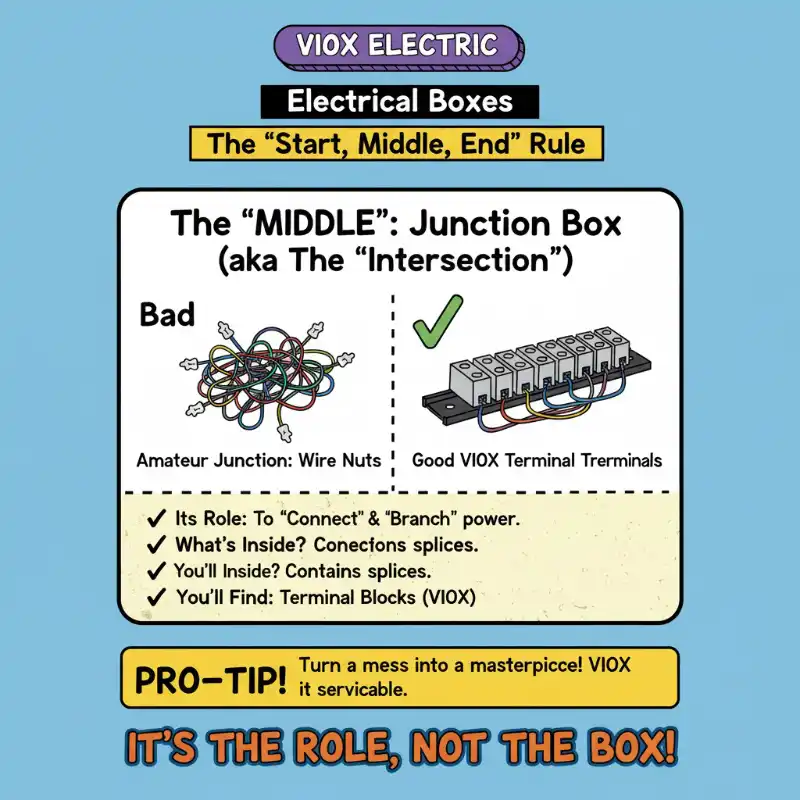
Τώρα, ακολουθήστε το καλώδιο που φεύγει από τον Πίνακα Διανομής. Τρέχει μέσα από την οροφή, κάτω από έναν διάδρομο και πρέπει να χωριστεί για να τροφοδοτήσει τρία διαφορετικά φώτα γραφείου.
Κόβετε τον σωλήνα. Τοποθετείτε αυτό το δεύτερο μεταλλικό κουτί 4×4 στην οροφή. Τραβάτε τα καλώδια μέσα, τα απογυμνώνετε, τα στρίβετε μεταξύ τους με καπάκια καλωδίων και βάζετε ένα κενό κάλυμμα πάνω του.
Συγχαρητήρια. Μόλις δημιουργήσατε ένα Κιβώτιο Συνδέσεων.
- Ο Κανόνας: Σύνδεση = ΜΕΣΟ
- Το Ψευδώνυμο: J-Box, Κουτί Σύνδεσης, Κουτί Έλξης.
- Η Αποστολή: Προς Σύνδεση και Διακλάδωση.
Ένα Κουτί Συνδέσεων είναι το “Σταυροδρόμι” της ηλεκτρικής λεωφόρου. Είναι όπου τα καλώδια συναντιούνται, αναμειγνύονται και ακολουθούν χωριστούς δρόμους.
Τι το κάνει ένα Κιβώτιο Συνδέσεων?
- Περιεχόμενο: Περιέχει συνδέσεις (καπάκια καλωδίων, συνδετήρες WAGO ή ακροδέκτες). Σπάνια περιέχει ενεργές συσκευές όπως διακόπτες ή διακόπτες κυκλώματος.
- Τοποθεσία: Βρίσκεται μεταξύ της πηγής (Πίνακας Διανομής) και του φορτίου (το μηχάνημα ή το φως).
- Σκοπός: Υπάρχει επειδή δεν μπορείτε να τρέξετε ένα ενιαίο συνεχές καλώδιο για πάντα. Τελικά, πρέπει να ενώσετε δύο καλώδια, να χωρίσετε ένα καλώδιο σε δύο ή απλώς να αλλάξετε κατεύθυνση.
Επαγγελματική συμβουλή: Εάν ανοίξετε ένα κουτί και δείτε ένα “μπολ σπαγγέτι” από καλώδια στριμμένα μεταξύ τους, αλλά καμία συσκευή να μην κάνει καμία “εργασία”, κοιτάτε ένα Κουτί Συνδέσεων. Είναι το μέσο του κυκλώματος.
3. Το “Τέλος” = Το Κουτί Τερματικών (Η Χειραψία)
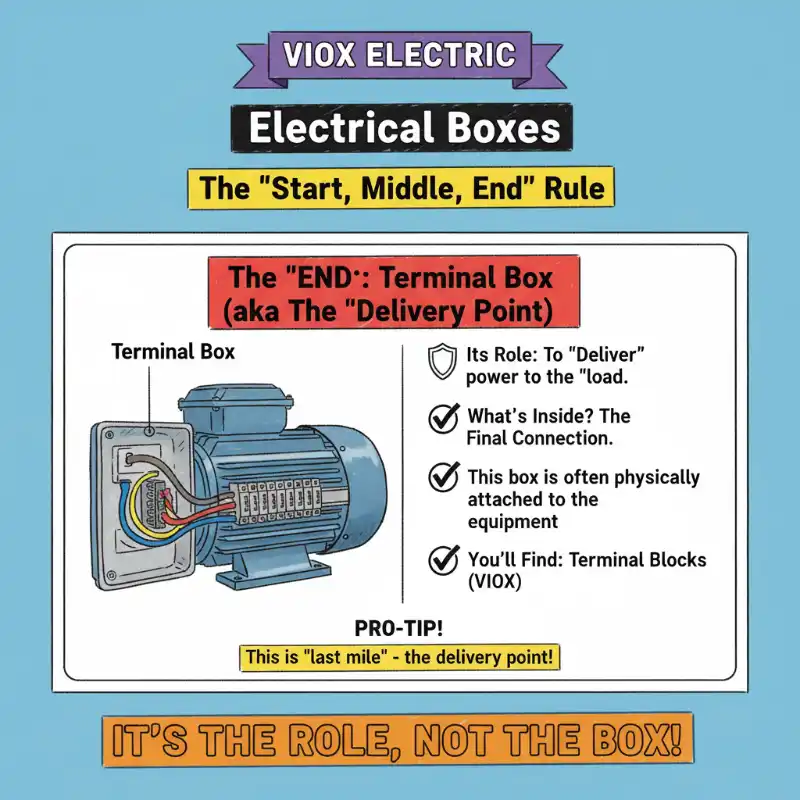
Τέλος, το καλώδιο φεύγει από το Κουτί Συνδέσεων και φτάνει στο μηχάνημα—ας πούμε, έναν μεγάλο βιομηχανικό κινητήρα ή έναν θερμαντήρα.
Βιδώνετε το τρίτο μεταλλικό κουτί 4×4 απευθείας στο πλάι του κινητήρα. Τραβάτε τα καλώδια τροφοδοσίας μέσα. Μέσα, βλέπετε μια τακτοποιημένη σειρά από μπουλόνια ή ένα μπλοκ. Βιδώνετε τους ακροδέκτες δακτυλίου του καλωδίου τροφοδοσίας σας στους ακροδέκτες του κινητήρα.
Αυτό είναι το Κιβώτιο ακροδεκτών.
- Ο Κανόνας: Τερματικό = ΤΕΛΟΣ
- Το Ψευδώνυμο: Motor Peckerhead (αργκό της βιομηχανίας), T-Box, Κουτί Σύνδεσης.
- Η Αποστολή: Προς Παράδοση.
Το Κουτί Τερματικών είναι η “Χειραψία”. Είναι το συγκεκριμένο σημείο όπου τελειώνει η καλωδίωση του κτιρίου και αρχίζει η εσωτερική καλωδίωση του μηχανήματος.
Τι το κάνει ένα Κουτί Τερματικών;
- Τοποθεσία: Σχεδόν πάντα είναι τοποθετημένο on ή μέσα ο εξοπλισμός φορτίου (κινητήρας, μετασχηματιστής, θερμαντήρας, όργανο).
- Περιεχόμενο: Συνήθως περιέχει ένα Τελικός Φραγμός—μια σταθερή, άκαμπτη λωρίδα για βίδωμα καλωδίων—αντί για πλωτά καλώδια.
- Σκοπός: Διευκολύνει την τελική μεταφορά ισχύος στη συσκευή που εκτελεί την εργασία.
Επαγγελματική συμβουλή: Εάν το κουτί δονείται επειδή είναι βιδωμένο σε έναν κινητήρα που λειτουργεί, είναι ένα Κουτί Τερματικών. Είναι το τέλος του κυκλώματος.
Σύνοψη: Το “Έναρξη, Μέση, Τέλος” Σημείωμα
Για να συνοψίσουμε, μην κοιτάτε το μέταλλο. Κοιτάξτε το αποστολή. Εδώ είναι το σημείωμα σας:
| Χαρακτηριστικό γνώρισμα | Κουτί διανομής | Κιβώτιο Συνδέσεων | Κιβώτιο ακροδεκτών |
|---|---|---|---|
| Ο Κανόνας | ΕΝΑΡΞΗ | ΜΕΣΟ | ΤΕΛΟΣ |
| Κύρια Εργασία | Προστασία & Διαχωρισμός Ισχύος | Σύνδεση & Διακλάδωση Καλωδίων | Παροχή Ισχύος στο Φορτίο |
| Βασικό Συστατικό | Διακόπτες / Ασφάλειες | Κλέμες / Συνδέσεις Καλωδίων | Μπλοκ ακροδεκτών |
| Τοποθεσία | Είσοδος Παροχής / Δωμάτιο Παροχής | Οροφή / Τοίχος / Σωλήνας | Τοποθετημένο ΕΠΑΝΩ στον Εξοπλισμό |
| Αναλογία | Η Έδρα | Η Διασταύρωση | Η Αποβάθρα Φόρτωσης |
Γιατί Αυτό Έχει Σημασία για τους Μηχανικούς
Μπορεί να σκεφτείτε, “Είναι απλώς σημασιολογία.” Αλλά η χρήση του λάθος όρου γίνεται γρήγορα δαπανηρή.
- Εάν παραγγείλετε ένα “Κουτί Διανομής” όταν χρειάζεστε ένα “Κουτί Συνδέσεων”, ενδέχεται να λάβετε ένα μεγάλο περίβλημα με ράγες DIN και ζυγούς που δεν χρειάζεστε (και πληρώσατε επιπλέον).
- Εάν καθορίσετε ένα “Κουτί Τερματικών” για μια σύνδεση τοίχου, ο εγκαταστάτης σας θα μπερδευτεί ψάχνοντας για τα μπουλόνια στερέωσης για έναν κινητήρα.
Η γλώσσα είναι το πρώτο εργαλείο στο κιτ ενός μηχανικού. Χρησιμοποιήστε το “Έναρξη, Μέση, Τέλος” κανόνα, και δεν θα πιάσετε ποτέ ξανά το λάθος κουτί.
Τεχνική Σημείωση Ακρίβεια
Πρότυπα & Πηγές Αναφέρεται: Οι ορισμοί ευθυγραμμίζονται με NEC (Εθνικός Ηλεκτρικός Κώδικας) Άρθρο 100 (Ορισμοί) και Άρθρο 314 (Κουτιά και Σώματα Σωλήνων).
Περιεχόμενο: “Τα ”Κουτί Συνδέσεων“ και ”Κουτί Έλξης" χρησιμοποιούνται συχνά εναλλακτικά στην καθημερινή ομιλία, αλλά αυστηρά μιλώντας, ένα Κουτί έλξης είναι κυρίως για να βοηθήσει στην έλξη καλωδίων, ενώ ένα Κιβώτιο Συνδέσεων είναι για την περικλεισμό συνδέσεων.
Επικαιρότητα: Η ορολογία είναι τρέχουσα και τυποποιημένη σε ολόκληρη την ηλεκτρική βιομηχανία από τον Νοέμβριο του 2025.