

Na této stránce
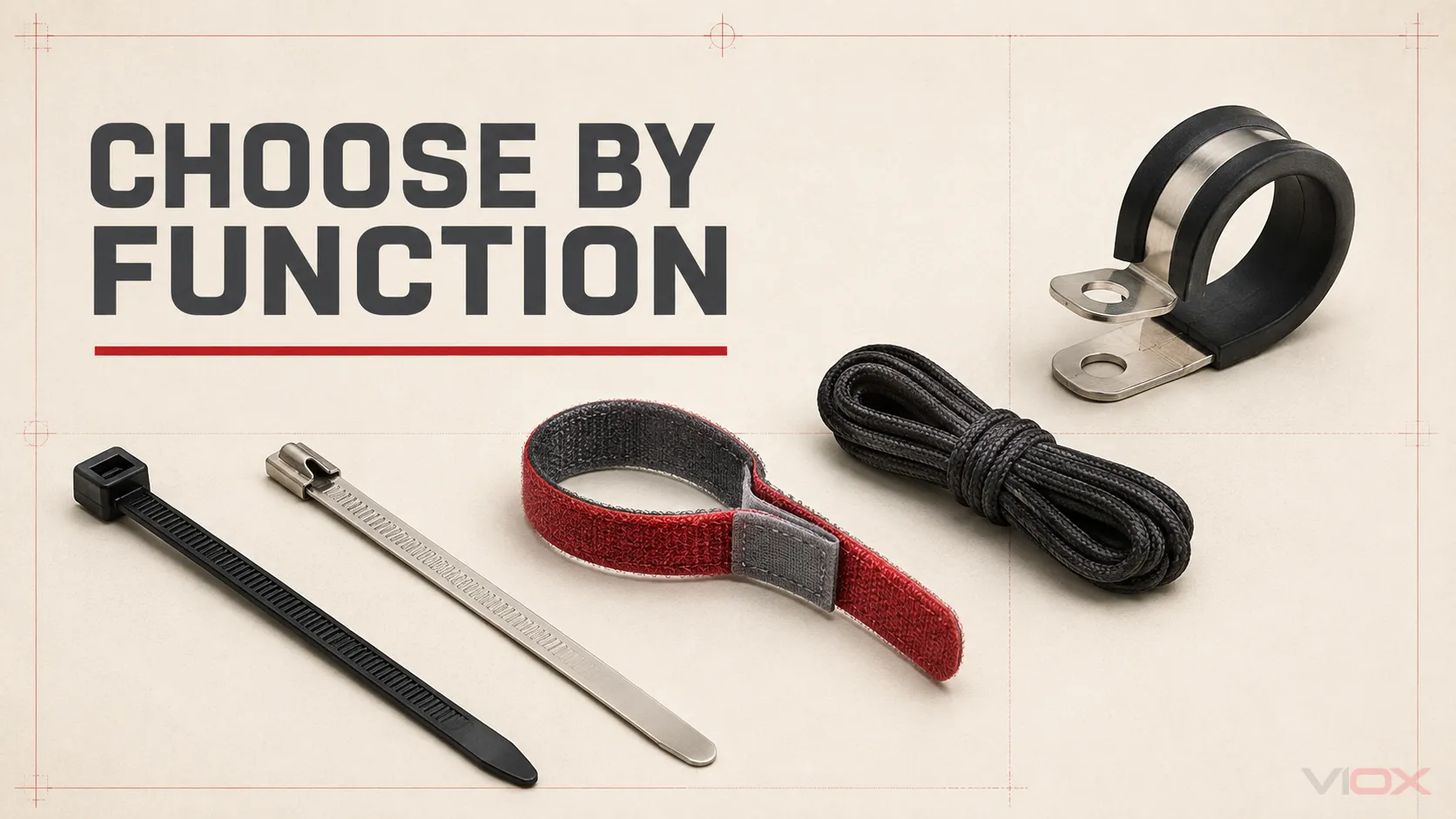
The best alternative to a zip tie depends on what silnější means in your application:
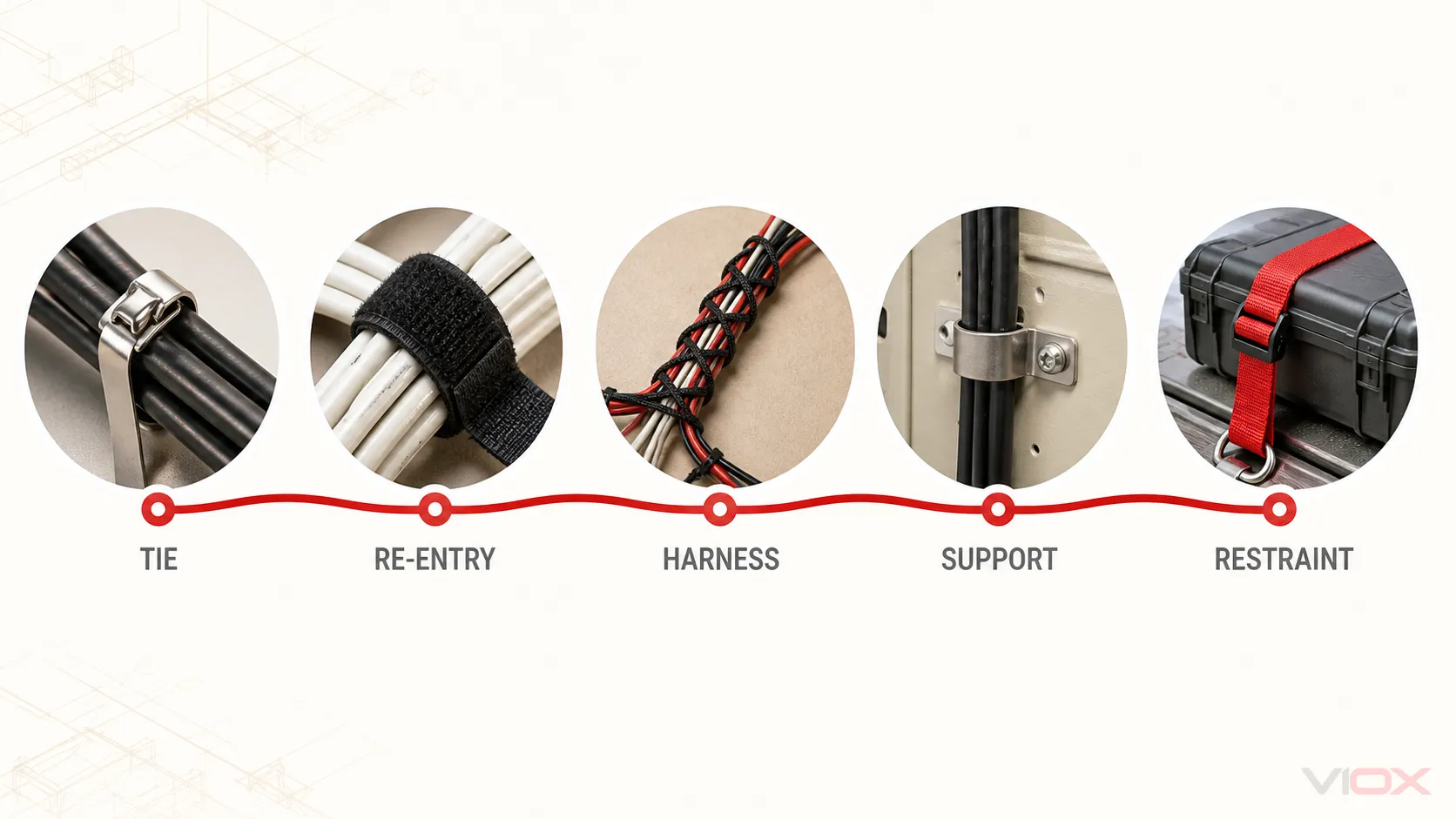
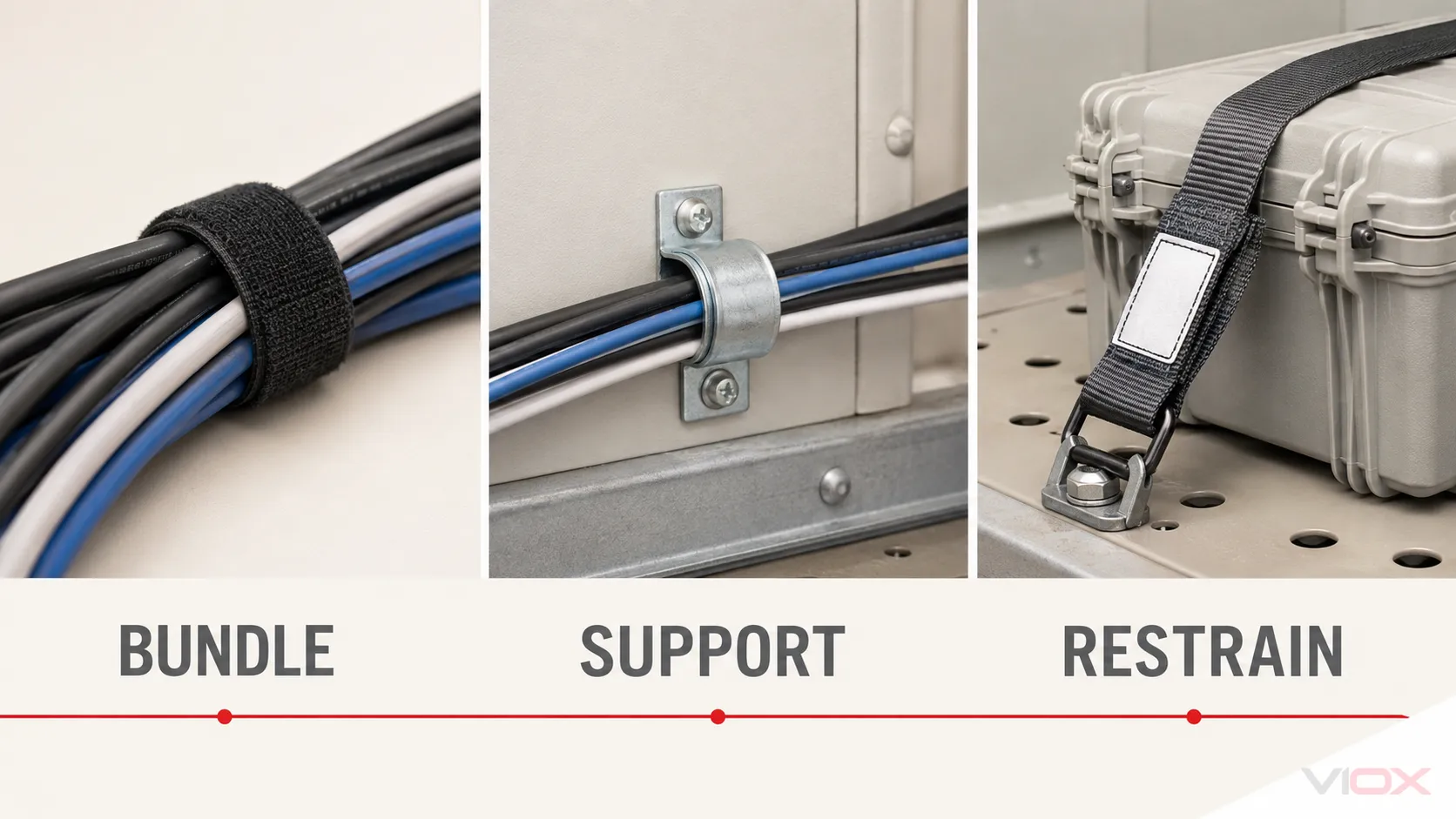
- Choose a stainless steel cable tie when you need a higher declared loop-tensile class or a material suited to a verified harsh environment.
- Choose hook-and-loop when you need frequent re-entry and lower localized pressure on a cable bundle.
- Choose lacing cord for controlled wire-harness work performed to an applicable workmanship standard.
- Choose a clamp, saddle, hanger, or tray when the job is fixed cable support rather than simple bundling.
- Choose purpose-rated restraint hardware when the job involves securing an actual load. A cable-management product is not a substitute for lifting or load-restraint equipment.
No option is universally stronger. Compare the complete function, evidence, installation, and failure consequence—not just one tensile number.
Quick decision matrix
| Požadavek | Best starting option | Proč | Důkaz k ověření |
|---|---|---|---|
| Higher declared tie strength in harsh conditions | Nerezová stahovací páska | Maintains the compact tie format while offering model-specific material and tensile options | Exact alloy, locking design, coating, loop tensile strength, temperature and corrosion declarations |
| Frequent moves, additions, or servicing | Hook-and-loop strap | Opens and closes without cutting and spreads contact over a wider area | Exact material, bundle range, environmental and fire declarations |
| Controlled aerospace/electronics harness workmanship | Lacing cord | Produces a low-profile continuous or spot-laced harness when installed to a defined process | Applicable workmanship standard, approved cord, knot/stitch method, spacing and inspection |
| Permanent support from a surface or structure | Clamp, saddle, hanger, or cable tray | Provides a defined mechanical support path instead of relying on a tie loop alone | Component rating, anchor, substrate, spacing, load direction and applicable installation rules |
| Repositionable attachment to ferrous surfaces | Magnetic cable tie mount | Moves the mounting point without drilling | Magnet holding data, direction, surface condition, vibration and attached tie data |
| Cargo, equipment, lifting, or safety restraint | Purpose-rated restraint hardware | Supplies a declared working load and application-specific hardware | Working load limit, complete assembly rating, inspection and governing requirements |
First decide what failure you are preventing
The phrase “stronger alternative” often combines different problems:
- The tie breaks or unlocks. You need a higher verified loop-tensile class or a different locking construction.
- The bundle must be reopened. You need reusability, not necessarily higher tensile strength.
- The cable jacket is being compressed. You need wider contact, controlled tension, or a different support geometry.
- The fixing point fails. You need a rated mount, anchor, and substrate—not merely a stronger tie.
- The environment degrades the material. You need declarations for temperature, UV, chemicals, corrosion, or fire behavior.
- The product is restraining a load. You need purpose-rated restraint or support hardware with an applicable working-load declaration.
Once the failure mode is clear, the alternative becomes easier to choose.
Nerezové stahovací pásky
Stainless cable ties are the closest functional replacement when you want to keep a self-locking tie but need a different strength or environmental envelope. They are commonly available with different alloys, locking systems, and coatings.
Use them when the exact model provides suitable evidence for:
- minimum loop tensile strength;
- alloy and corrosion environment;
- operating and installation temperature;
- edge finish or coating where cable-jacket protection matters;
- compatible installation tool and cut-off method;
- applicable cable-tie standard classification.
Do not select stainless steel from the material name alone. A bare metal edge, excessive tension, incompatible tool, or unsuitable mount can still damage the cable or create a weak installed system. See the VIOX stainless steel cable tie guide for the material and construction decision.
Hook-and-loop straps
Hook-and-loop straps are usually the better alternative when access and cable care matter more than maximum loop tensile strength. Their wider, softer contact can reduce localized pressure, and they can be opened for moves, additions, and changes.
Panduit’s Tak-Ty hook-and-loop literature, for example, describes adjustable, releasable products and provides part-specific dimensions and loop-tensile data. That is the right evidence pattern: verify the exact strap rather than treating every hook-and-loop product as equivalent.
Choose hook-and-loop for:
- data and communications bundles that change regularly;
- bench, rack, and cabinet organization requiring re-entry;
- delicate jackets where controlled, distributed contact is important;
- temporary routing and service loops.
Do not assume it is suitable for high temperature, outdoor exposure, plenum spaces, or load support. Those conditions require exact product declarations.
Cable lacing cord
Lacing cord can be a compact alternative for carefully built wire harnesses. It is not simply string wrapped around a bundle. The result depends on the specified cord, stitch or knot, spacing, tension, workmanship, and inspection.
NASA-STD-8739.4A is one example of an authority-controlled workmanship framework for interconnecting cables, harnesses, and wiring. Its existence shows why lacing should be treated as a process with acceptance criteria rather than an improvised substitute.
Consider lacing when:
- the equipment or customer specification permits it;
- trained personnel can apply the required stitch or knot;
- a low-profile harness is useful;
- inspection and process control are available.
Do not use lacing cord as generic load-restraint equipment or copy an aerospace method into an unrelated installation without the governing specification.
Clamps, saddles, hangers, and cable tray
If the cable must be supported from a panel, wall, ceiling, machine, or structure, the correct alternative may be a support system rather than another tie.
Mechanical supports can provide:
- a defined anchor and substrate interface;
- controlled spacing and cable position;
- resistance to movement in a declared direction;
- serviceable attachment;
- product ratings for a specific installation method.
The complete path still matters:
Cable or bundle → clamp/support → fastener → substrateVerify every element. An apparently strong clamp attached to an unsuitable adhesive, screw, or substrate does not create a rated support.
VIOX guide to mounting cable ties compares fixing methods when a tie remains part of the system.
Magnetic mounts
A magnetic cable tie mount solves a different problem: it creates a repositionable attachment point on a suitable ferrous surface. It does not automatically make the attached cable tie stronger.
Ověřte:
- holding force in the actual pull or shear direction;
- surface thickness, flatness, coating, contamination, and corrosion;
- vibration and shock;
- temperature and environment;
- the attached tie and bundle;
- consequences if the mount moves or detaches.
Použijte VIOX magnetic cable tie mount product page when removable surface attachment is the actual requirement.
Rated restraint hardware
When the task is to hold cargo, suspend equipment, lift an item, secure a person, or resist substantial dynamic force, stop comparing cable-management products. Use purpose-rated straps, slings, chains, brackets, anchors, or other hardware designed for that function.
The key difference is not appearance. It is the evidence set: a working load for the complete assembly, defined end fittings and anchors, inspection criteria, and requirements suited to the application.
For the narrower question of what a cable tie’s tensile number means, see How Much Weight Can a Zip Tie Hold?.
Scenario-based selection
| Scénář | Recommended direction | Reject when |
|---|---|---|
| Frequently changed network bundle | Part-specific hook-and-loop strap | Required environmental or fire declaration is absent |
| Compact permanent bundle in a harsh declared environment | Exact stainless cable-tie model | Alloy, coating, tensile, or tool evidence is missing |
| Controlled equipment harness | Approved lacing system | Workmanship process and inspection are not defined |
| Cable run supported from a structure | Rated clamp, hanger, saddle, or tray | Anchor, substrate, spacing, or direction is unverified |
| Temporary attachment to a steel cabinet | Verified magnetic mount plus compatible tie | Vibration, shear direction, or surface condition is uncontrolled |
| Equipment or load restraint | Purpose-rated restraint assembly | Only cable-management tensile data is available |
Evidence checklist before substitution
Ask for the exact part-number documentation rather than a generic product-class claim:
- primary function: bundle, mount, support, or restrain;
- declared tensile or working-load parameter and its test method;
- compatible bundle diameter and geometry;
- material, alloy, coating, and locking mechanism;
- installation tool, tension, cut-off, knot, or fastener method;
- temperature, UV, chemical, corrosion, and fire declarations;
- fixing device, anchor, substrate, and load direction;
- inspection, replacement, and traceability requirements;
- applicable standard, code, equipment instruction, or project specification.
If those fields cannot be completed, the substitution is not yet defensible.
A bounded selection rule
Use this order:
- Define whether the task is bundling, mounting, supporting, or restraining.
- Identify the dominant failure mode.
- Choose the product family that directly addresses that failure mode.
- Compare exact models on the same declared basis.
- Verify the complete installation path and environment.
- Reject the option if the evidence does not cover the actual service condition.
For ordinary cable-tie selection by bundle, material, and environment, return to the Cable Tie Selection Guide. For product evaluation, review VIOX cable tie options and request model-specific declarations for the intended application.
Často kladené otázky
What is the strongest alternative to a plastic zip tie?
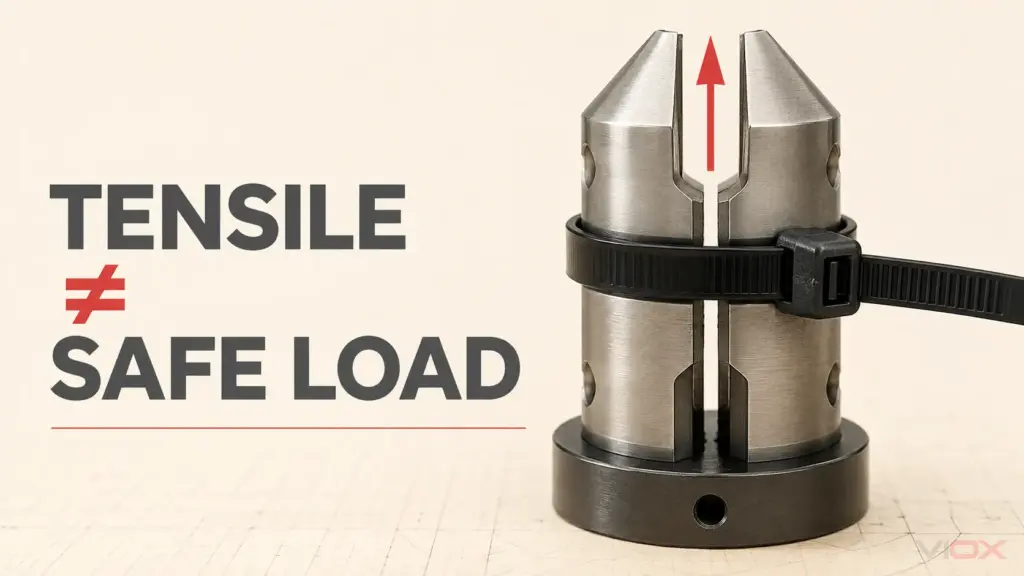
There is no universal answer. An exact stainless cable-tie model may offer a higher declared loop-tensile class, but a clamp or rated restraint system is the stronger engineering choice when the task is structural support or load restraint.
What reusable alternative can replace zip ties?
Hook-and-loop straps are a common starting point for frequently changed cable bundles. Releasable cable ties and some magnetic mounting systems can also help, but compare the exact product’s environment, bundle range, and holding evidence.
Are magnetic cable ties stronger than zip ties?
Not as a general rule. A magnetic mount changes how the bundle attaches to a ferrous surface. The magnet, surface, load direction, and attached tie each need separate verification.
Can I use two alternatives together?
Yes, when they perform different functions. A hook-and-loop strap can manage a service loop while a rated clamp supports the cable run. Combining products is useful only when the complete load path and each product’s role remain clear.