

Na této stránce
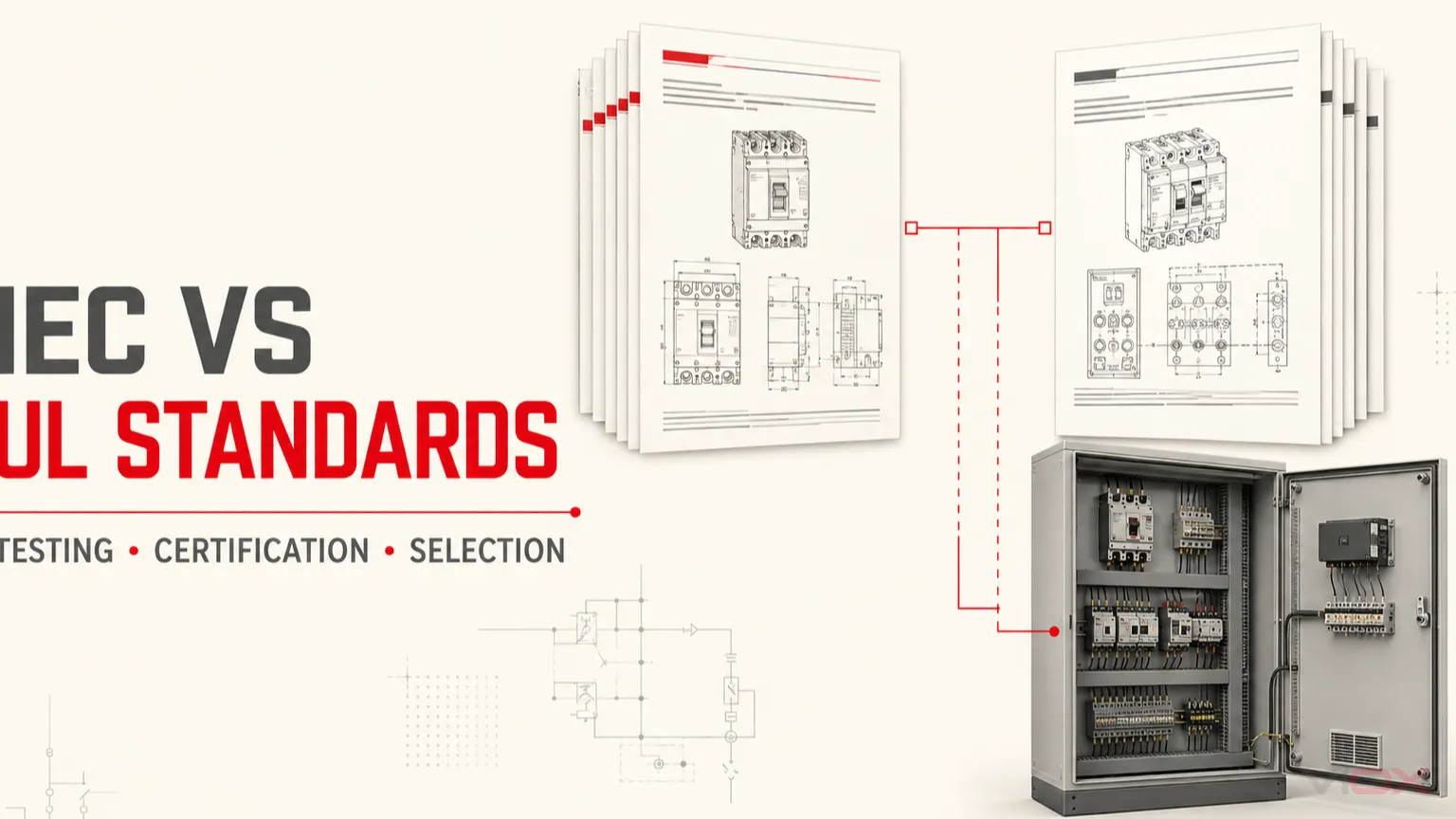
IEC a UL nejsou konkurenční schvalovací značky. Mezinárodní elektrotechnická komise (IEC) vydává mezinárodní normy a provozuje systémy posuzování shody prostřednictvím IEC CA, včetně schématu IECEE CB. Normy UL definují požadavky na výrobky, které se široce používají v Severní Americe, zatímco společnost UL Solutions poskytuje služby testování a certifikace. Výrobek testovaný podle normy IEC není automaticky UL Listed a certifikace UL sama o sobě nezajišťuje shodu s předpisy Evropské unie.
Praktické pravidlo je jednoduché: nejprve vyberte cílový trh a funkci výrobku, poté určete příslušné normy pro výrobek a sestavu a před nákupem ověřte důkazy specifické pro daný model. Nikdy nezaměňujte označení “IEC compliant”, “CE marked”, “UL Recognized” a “UL Listed” jako vzájemně zaměnitelné štítky.
IEC vs UL v kostce
| Otázka | Systém IEC | Systém UL |
|---|---|---|
| Co je to primárně? | Mezinárodní elektrotechnické normy a systémy posuzování shody IEC | Normy bezpečnosti výrobků a certifikační služby v ekosystému UL |
| Kdo vydává tuto normu? | IEC | Organizace UL Standards & Engagement vydává normy UL |
| Umísťuje samotný normalizační orgán jednu univerzální značku shody na každý vyhovující výrobek? | Ne. Důkaz může zahrnovat zkušební protokoly a certifikáty v rámci schémat, jako je IECEE | Z citování normy UL nevyplývá žádný univerzální výsledek. Je nutné ověřit stav certifikace a autorizovanou značku |
| Typické důkazy | Prohlášení, akreditovaný zkušební protokol, certifikát a protokol IECEE CB nebo národní certifikace v závislosti na trhu | Status UL Listed, UL Certified, UL Classified nebo UL Recognized Component pro specifikovaný model a kategorii |
| Typická role na trhu | Široce používáno jako technický základ pro národní a regionální normy | Široce používáno pro produkty hodnocené pro Spojené státy a Kanadu, v závislosti na rozsahu certifikace a značce |
| Přejímka instalace | Řídí se vnitrostátními právními předpisy, místními pravidly, příslušnou normou pro montáž a orgánem s příslušnou pravomocí | Řídí se příslušnými předpisy, jako je National Electrical Code (NEC), certifikací a označením výrobku a orgánem s příslušnou pravomocí (AHJ) |
| Může automaticky nahradit druhý systém? | Ne | Ne |
Tabulka popisuje systémy na vysoké úrovni. Neznamená to, že každý výrobek podle normy IEC vyžaduje certifikaci třetí stranou nebo že UL Solutions je jedinou národně uznávanou zkušební laboratoří (NRTL) ve Spojených státech.
Pět vrstev, které musí kupující rozlišovat
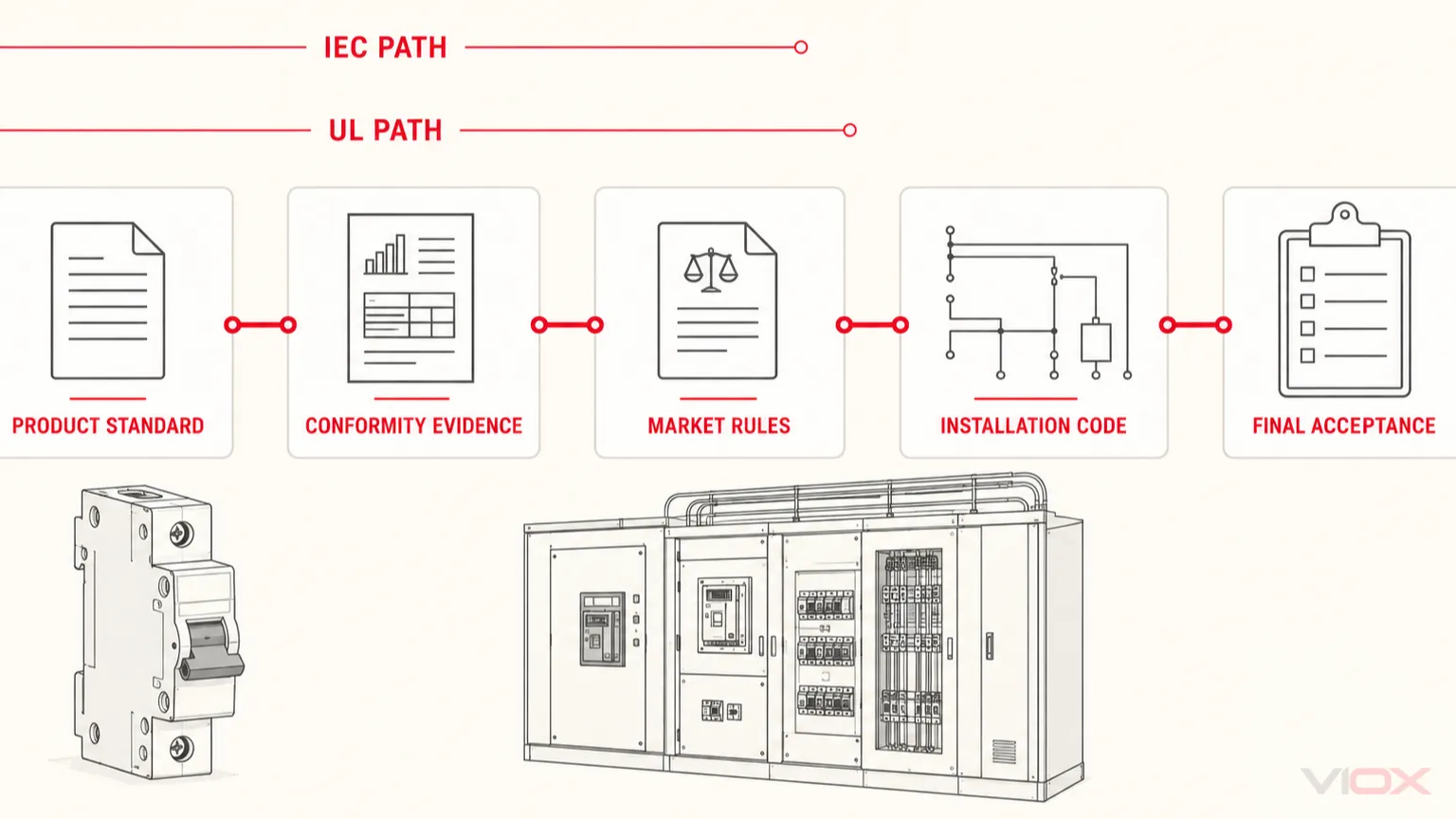
Mnoho chyb ve specifikacích vzniká proto, že číslo normy, laboratorní zpráva, právní označení, instalační předpis a schválení projektu jsou považovány za totéž. Jsou to oddělené vrstvy.
| Vrstva | Základní otázka | Příklady | Co samo o sobě nedokazuje |
|---|---|---|---|
| Výrobková norma | Jaké požadavky na konstrukci, výkon, zkoušky a označování se uplatňují? | IEC 60947-2, UL 489 | Že byl konkrétní produkt nezávisle certifikován |
| Posouzení shody | Jaký důkaz prokazuje, že byl produkt vyhodnocen? | Zkušební protokol, certifikát IECEE CB, záznam o certifikaci NRTL | Akceptace v každé zemi nebo instalaci |
| Nařízení nebo tržní pravidlo | Co musí výrobce nebo dovozce právně zajistit? | Směrnice/nařízení EU a povinnosti označování CE | Soulad s požadavky na schválení pracoviště v Severní Americe |
| Instalační předpis | Jak může být zařízení vybráno a instalováno v elektrické soustavě? | NEC, národní pravidla pro elektroinstalace | Že neověřená součást je vhodná pro certifikovanou sestavu |
| Přejímka projektu | Kdo schvaluje zařízení pro konkrétní instalaci? | AHJ, provozovatel distribuční soustavy, specifikace zákazníka, notifikovaná osoba, je-li vyžadováno | Automatické uznání v jiné jurisdikci |
Inženýr proto nemůže odpovědět na otázku “IEC nebo UL?” pouze na základě názvu zařízení. Odpověď závisí na místě určení, kategorii produktu, použití v rámci elektrické soustavy, certifikační cestě a orgánu provádějícím instalaci.
Co může a co nemůže znamenat “v souladu s IEC”
Publikace IEC je technická norma, nikoli certifikát produktu. Dodavatel může použít označení “navrženo podle IEC”, “testováno podle IEC” nebo “v souladu s IEC”, ale tyto fráze poskytují různé úrovně důkazů.
- Navrženo podle IEC je prohlášení o návrhu. Zeptejte se, které články a vydání byly použity a zda bylo testování dokončeno.
- Testováno podle IEC by mělo být podloženo zprávou identifikující model, vydání normy, zkušební laboratoř, vzorky, postup zkoušek a výsledky.
- Certifikováno IECEE CB obecně odkazuje na certifikát CB Test Certificate a související protokol CB Test Report vydaný v rámci schématu IECEE CB pro příslušnou kategorii produktů a normu. Ověřte certifikát, pokrytí modelů, národní odchylky a protokol.
- Národní certifikace založená na normě IEC může přidat požadavky specifické pro danou zemi a národní značku. Není automaticky totožná s certifikátem CB.
Schéma IECEE CB usnadňuje využívání uznaných výsledků zkoušek mezi zúčastněnými certifikačními orgány. Jde o mechanismus pro přístup na trh, nikoliv o univerzální licenci k prodeji nebo instalaci produktu v každé zúčastněné zemi. Stále mohou platit národní odchylky, legislativa, značení, dokumentace a místní akceptace.
Co znamenají označení UL Listed, UL Recognized a NRTL
“Schváleno UL” je pro technickou specifikaci příliš vágní. Použijte certifikační termín, který je uveden v záznamu o produktu a na štítku.
Koncový produkt UL Listed nebo UL Certified
Tento stav se vztahuje na konečný produkt posouzený pro definovanou kategorii produktu a použití. Ověřte přesný model, záznam o certifikaci, normu, jmenovité hodnoty a omezení instalace. Značka v reklamě nebo na nesouvisejícím modelu není důkazem o tom, že se jedná o kupovanou položku.
UL Recognized Component
Komponenta UL Recognized Component je určena k zabudování do většího konečného produktu. Její použití se řídí podmínkami, jmenovitými hodnotami a omezeními instalace, které jsou často popsány jako Podmínky přijatelnosti (Conditions of Acceptability). Uznání (Recognition) nedělá z komponenty certifikovaný konečný produkt (Listed) a rozvaděč sestavený výhradně z komponent s označením Recognized není automaticky rozvaděčem s certifikací UL Listed.
Certifikace NRTL
Ve Spojených státech uznává úřad Occupational Safety and Health Administration (OSHA) soukromé subjekty NRTL pro testování a certifikaci produktů v rámci definovaných rozsahů. OSHA vysvětluje, že řádná certifikace obecně vyžaduje registrovanou certifikační značku NRTL, produkt pokrytý uznávanou zkušební normou a certifikaci vydanou z uznaného pracoviště. UL Solutions je jednou z NRTL; technická specifikace by měla uvádět požadovanou normu a cestu shody, namísto nesprávného vyžadování názvu jedné laboratoře, pokud projekt nemá odůvodněný požadavek.
Označení CE není certifikát IEC ani UL
Označení CE patří do regulačního rámce Evropské unie. Výrobce identifikuje příslušné právní předpisy, provede požadované posouzení shody, připraví technickou dokumentaci, vydá EU prohlášení o shodě a připojí značku. Některé produkty nebo moduly shody vyžadují oznámený subjekt; jiné umožňují posouzení výrobcem.
Evropská komise výslovně uvádí, že označení CE není schválením bezpečnosti produktu ze strany EU nebo jiného orgánu. Rovněž nezakládá certifikaci UL ani nesplňuje požadavky amerických NRTL. Naopak, značka UL nenahrazuje povinnosti výrobce podle příslušných právních předpisů EU.
Toto rozlišení je důležité při pořizování. “CE + IEC” může být vhodnou součástí balíčku dokladů pro EU, ale kupující stále potřebuje příslušnou legislativu, použité harmonizované normy, prohlášení, dostupnost technické dokumentace, identifikaci modelu a odpovědnosti dovozce.
Produktové normy IEC a UL: Výchozí body pro srovnání
Následující tabulka je navigační mapa, nikoliv tabulka ekvivalence nebo záměnnosti. Normy se mohou lišit v rozsahu, terminologii, posloupnosti zkoušek, metodě dimenzování, předpokladech instalace a certifikační praxi.
| Produktová řada | Referenční řada IEC | Referenční řada Severní Amerika/UL | Kritická kontrola rozsahu |
|---|---|---|---|
| Domovní a podobné miniaturní jističe | IEC 60898-1 | UL 489 pro jističe odbočných obvodů | Cíloví uživatelé, napětí soustavy, vypínací schopnost, kategorie instalace a požadovaná certifikace |
| Průmyslové nízkonapěťové jističe | IEC 60947-2 | UL 489; UL 1066 pro nízkonapěťové AC výkonové jističe v rámci svého rozsahu | Konstrukce jističe, kategorie užití, vypínací schopnosti, skříň/sestava a aplikace dle předpisů |
| Rozváděče a řídicí zařízení / průmyslové ovládací panely | IEC 61439-1 s příslušnou částí pro sestavy, jako je IEC 61439-2 | UL 508A pro průmyslové ovládací panely; pro daný produkt mohou platit jiné normy pro sestavy | Funkci sestavy a certifikaci nelze odvozovat od schválení jednotlivých komponent. |
| Stykače a motorové spouštěče | IEC 60947-4-1 | UL 60947-4-1 a příslušné požadavky na instalaci | Kategorie užití, jmenovitý výkon v koňských silách, koordinace při zkratu, kryt a funkce řídicí jednotky |
| Nízkonapěťové svodiče přepětí | IEC 61643-11 | UL 1449 | Typ/klasifikace SPD, zkušební průběh vlny, konfigurace elektrické soustavy, jmenovité napětí a místo instalace |
| Nízkonapěťové pojistky | Řada IEC 60269 | Řada UL 248 | Třída pojistky/kategorie užití, kompatibilita držáku, napětí, vypínací schopnost a prvky pro zamezení záměny |
Pro podrobnosti o jističích použijte srovnání VIOX pro IEC 60898-1 a IEC 60947-2 a UL 489 a UL 1077. Pro sestavy viz příručku pro nízkonapěťové rozváděče IEC 61439. Pro SPD použijte specializované srovnání IEC 61643 a UL 1449.
Proč stejné číslo na dvou typových štítcích nemusí znamenat stejný výkon
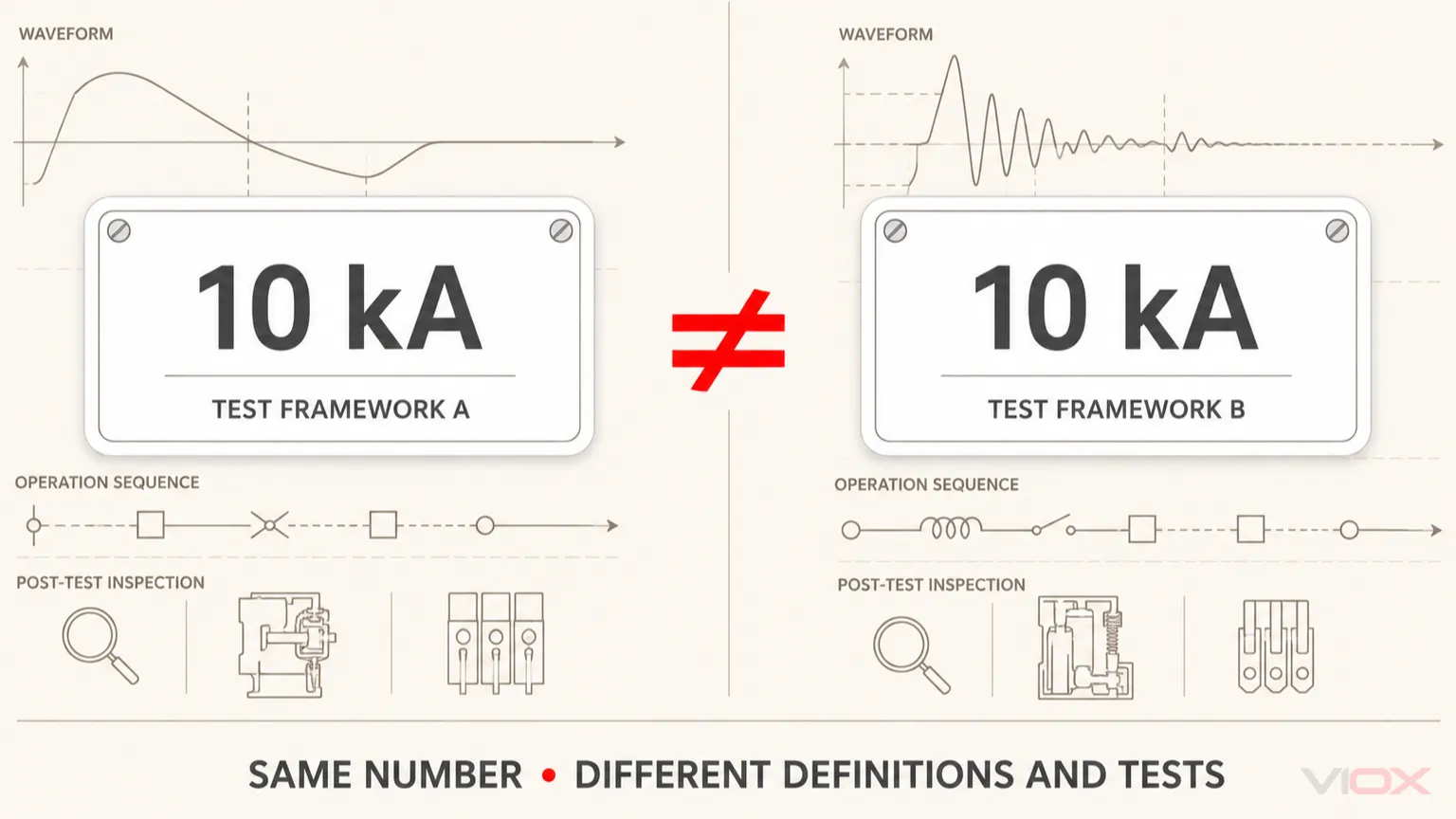
Dvě zařízení mohou vykazovat stejné napětí, proud nebo hodnotu poruchového proudu, přestože jsou hodnocena za odlišných předpokladů. Srovnání musí začínat přesnou definicí parametrů a zkušební normou.
Terminologie vypínací schopnosti
Norma IEC 60947-2 používá parametry, jako je mezní zkratová vypínací schopnost (Icu) a provozní zkratová vypínací schopnost (Ics). Jistič podle UL 489 používá vypínací schopnost v rámci svého certifikačního a aplikačního rámce. Kupující by neměl převádět Icu = 10 kA přímo na “UL 10 kAIC” bez ověření normy, napětí, zkušebních podmínek, konfigurace pólů a certifikačního záznamu.
Kategorie užití a aplikační jmenovité hodnoty
Výběr stykače podle IEC běžně využívá kategorie užití, jako jsou AC-1 a AC-3. Severoamerický výběr řízení motorů závisí také na jmenovitých výkonech v koňských silách, proudu při plném zatížení, chování při zablokovaném rotoru, typu krytu a požadavcích na instalaci. Stejné značení trvalého proudu nezaručuje stejnou vhodnost pro provoz motoru.
Rozteče a konstrukce
Vzdušné vzdálenosti, povrchové cesty, stupeň znečištění, kategorie přepětí, izolační systém, svorky pro polní zapojení, konstrukce krytu a podmínky komponentů mohou být hodnoceny odlišně. Komponent, který vyhoví své vlastní produktové normě, může být přesto nevhodný pro použití v sestavě, pokud nejsou dodrženy požadované rozteče, oteplení, jmenovitý zkratový proud nebo podmínky instalace.
Zkušební sekvence a stav po zkoušce
Normy se mohou lišit v počtu vzorků, úpravě, kalibraci, průběhu poruchového proudu, účiníku nebo časové konstantě, operační sekvenci, dielektrických zkouškách a požadovaném stavu po testování. Proto tvrzení “oba byly testovány při 10 kA” nestačí k prohlášení o rovnocennosti.
Šestikrokový proces ověření nákupu dle IEC/UL
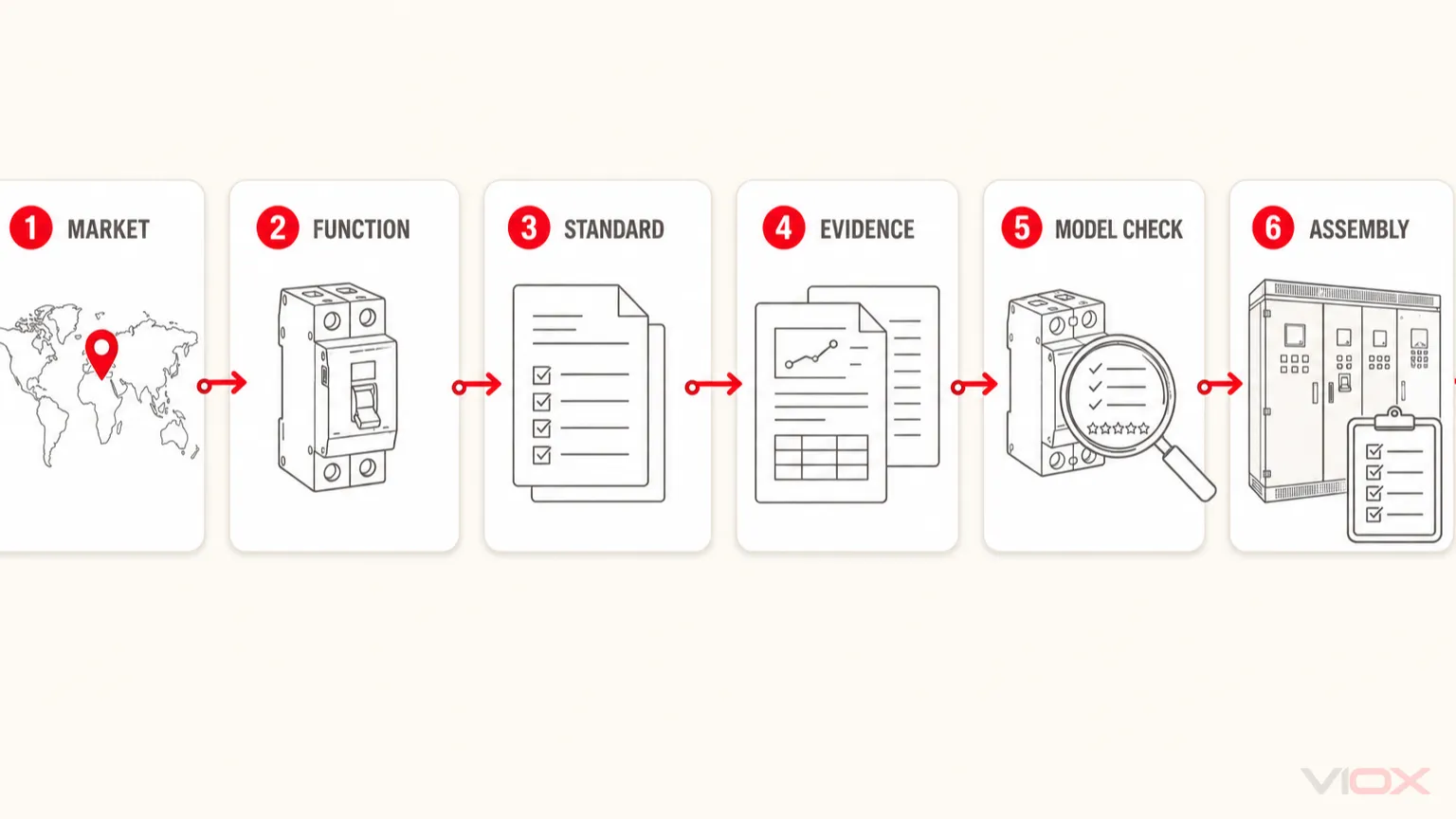
Před schválením elektrického komponentu nebo sestavy pro projekt použijte následující proces.
1. Stanovte cílový trh a orgán dohledu nad instalací
Zaznamenejte cílovou zemi, normu koncového uživatele, požadavky rozvodných závodů, instalační předpisy a očekávaný AHJ. Globální stroj může vyžadovat různé konfigurace nebo certifikace pro různé destinace.
2. Definujte skutečnou funkci produktu
Uveďte, zda se jedná o ochranu odbočného obvodu, doplňkovou ochranu, izolaci, řízení motoru, rozvod napájení, přepěťovou ochranu nebo sestavu. Vizuálně podobná zařízení mohou patřit do různých kategorií produktů.
3. Identifikujte příslušnou normu a její vydání
Neuvádějte pouze “certifikováno dle IEC” nebo “norma UL”. Zaznamenejte celé číslo normy, příslušnou část, vydání nebo revizi požadovanou projektem, národní adaptaci, je-li relevantní, a jmenovité hodnoty požadované elektrickou soustavou.
4. Specifikujte typ dokladu
Rozhodněte, zda projekt vyžaduje prohlášení, akreditovaný zkušební protokol, certifikát a zprávu IECEE CB, národní značku, certifikaci NRTL, koncový produkt UL Listed nebo status Recognized Component. Slaďte doklad s trhem a rolí produktu.
5. Ověřte přesný model a podmínky
Zkontrolujte, zda dokument pokrývá výrobce, případně výrobní závod, kategorii produktu, model nebo řadu, napětí, proud, počet pólů, frekvenci, stupeň ochrany krytem, příslušenství a zamýšlené použití. U komponent Recognized Components přezkoumejte podmínky přijatelnosti (Conditions of Acceptability). Pokud jsou k dispozici, používejte oficiální adresáře certifikátů namísto spoléhání se na logo v katalogu.
6. Ověřte dokončenou montáž a instalaci
Shoda komponent automaticky nezajišťuje shodu rozváděče, spínacího zařízení, stroje nebo systému. Potvrďte ověření návrhu na úrovni sestavy, jmenovitý zkratový proud, koordinaci ochran, kabeláž, skříň, označení a konečné schválení ze strany AHJ nebo zákazníka.
| Pole poptávky (RFQ) | Co by měl dodavatel poskytnout |
|---|---|
| Místo určení a závazné předpisy | Země, instalační předpis, specifikace zákazníka, omezení AHJ |
| Funkce produktu | Větvová ochrana, doplňková ochrana, řízení, odpojení, SPD nebo sestava |
| Standardní | Úplné číslo, část, vydání a národní adaptace, je-li relevantní |
| Stav certifikace | Přesné schéma a certifikační orgán, nikoliv “schváleno” |
| Rozsah modelů | Strana certifikátu/protokolu zobrazující přesný model nebo definovanou řadu |
| Hodnocení | Napětí, proud, póly, frekvence, vypínací schopnost/údaje SCCR, prostředí a provozní režim |
| Podmínky | Příslušenství, skříň, předřazená ochrana, rozteče, zapojení a omezení použití |
| Doklad o montáži | Příslušná norma pro rozváděče/sestavy, ověření, štítky a dokumentace |
Čtyři praktické scénáře
MCB testovaný podle IEC navržený pro odbočný obvod v USA
Zkušební protokol podle IEC 60898-1 nebo IEC 60947-2 sám o sobě neprokazuje, že je jistič certifikován pro ochranu odbočných obvodů podle požadavků v USA. Ověřte příslušný požadavek NEC, kategorii certifikace NRTL, status UL 489, vypínací schopnost, kompatibilitu s rozváděčem a akceptaci ze strany AHJ.
Stykač s certifikací UL Recognized instalovaný v průmyslovém ovládacím panelu
Certifikace Recognized může podpořit certifikaci panelu, ale stykač musí být používán v souladu se svými podmínkami přijatelnosti (Conditions of Acceptability). Kompletní panel stále vyžaduje odpovídající návrh, výběr komponent, jmenovitý zkratový proud, konstrukci, označení a cestu k certifikaci. Uznání komponenty není totéž co certifikace panelu.
Komponenta s certifikací UL Listed použitá v sestavě podle IEC 61439
Certifikace UL dané komponenty nedokazuje, že sestava odpovídá normě IEC 61439. Výrobce sestavy musí splnit příslušné požadavky na ověření podle IEC 61439 a zajistit výkon komponenty v rámci této sestavy.
Jeden produkt prodávaný v EU i v Severní Americe
Produkt pro duální trh může vyžadovat samostatné technické podklady a označení. Cesta v EU začíná příslušnou legislativou a povinnostmi výrobce ohledně shody; severoamerická cesta může vyžadovat certifikaci od NRTL podle příslušné produktové normy a instalaci v souladu s předpisy. Sdílená zkušební data mohou někdy snížit duplicitu práce, ale neodstraňují regionální požadavky.
Časté chyby ve specifikacích IEC vs. UL
- Uvádění “certifikováno dle IEC” bez uvedení certifikačního schématu, certifikačního orgánu, normy, protokolu a modelu.
- Považování označení CE za schválení produktu třetí stranou nebo za akceptaci na pracovišti v USA.
- Akceptování loga UL v brožuře bez ověření přesného certifikačního záznamu a kategorie produktu.
- Používání komponenty UL Recognized, jako by se jednalo o samostatný produkt UL Listed.
- Předpoklad, že normy s podobnými názvy produktů mají ekvivalentní zkoušky nebo jmenovité hodnoty.
- Schvalování komponent bez ověření kompletního rozvaděče nebo sestavy.
- Kopírování čísla normy bez kontroly příslušné části, vydání, národních odchylek nebo projektové specifikace.
Často Kladené Otázky
Je certifikace IEC ve Spojených státech uznávána?
Ne automaticky. Zkušební protokol IEC nebo certifikát IECEE CB mohou být cenným technickým důkazem, ale požadavky na pracoviště a instalaci v USA mohou vyžadovat certifikaci od NRTL uznané úřadem OSHA podle příslušné normy pro výrobky v USA. Důležité jsou také předpisy NEC, kategorie výrobku, zápis a označení a rozhodnutí AHJ.
Je UL přísnější než IEC?
Neexistuje žádná obhajitelná univerzální odpověď. Tyto systémy používají odlišné rozsahy, zkušební metody, konvence jmenovitých hodnot, předpoklady instalace a postupy shody. Jeden požadavek může být u konkrétní zkoušky náročnější, zatímco jiná norma může k aplikaci přistupovat odlišně. Porovnejte požadavky na úrovni článků pro konkrétní výrobek a použití.
Rovná se certifikát CB zápisu UL Listing?
Ne. Zkušební certifikát IECEE CB podporuje uznání výsledků zkoušek v rámci schématu CB a může usnadnit národní certifikaci. UL Listing nebo jiná certifikace NRTL je samostatný status s vlastní kategorií výrobku, normou, značkou a požadavky na následnou kontrolu.
Může mít výrobek certifikaci založenou na IEC i UL?
Ano, pokud byl samostatně posouzen a zdokumentován pro příslušné požadavky. Každý certifikát a značku ověřte nezávisle. Nevyvozujte duální certifikaci z typového štítku s dvojím jmenovitým údajem nebo z prohlášení dodavatele.
Zajišťují komponenty UL shodu rozváděče podle IEC nebo UL?
Ne. Vhodné certifikované komponenty pomáhají, ale kompletní sestava má své vlastní požadavky na konstrukci, jmenovité hodnoty, ověření a certifikaci. Výběr komponent je jedním ze vstupů pro shodu sestavy, nikoliv konečným výsledkem.
Pravidlo specifikace, které je třeba dodržet
Neptejte se pouze: “Je to IEC nebo UL?” Položte pět přesnějších otázek:
- Jaký trh a instalační předpis se uplatňují?
- Jakou přesnou funkci a produktovou kategorii zařízení plní?
- Jaká norma, část a vydání se na něj vztahují?
- Jaké důkazy specifické pro daný model a stav certifikace jsou vyžadovány?
- Jaké ověření na úrovni sestavy a konečné přejímky zbývá?
Pro mezinárodní nákup zašlete tyto podklady spolu s poptávkou (RFQ) a před schválením náhrad si vyžádejte certifikát, zprávu, harmonogram modelů a podmínky použití. VIOX může posoudit specifikaci komponenty, pokud je uvedeno místo určení, napětí elektrické soustavy, funkce produktu, požadovaná norma, certifikační cesta a kontext sestavy pro [email protected].
Primární zdroje
- Politika rady pro posuzování shody IEC a rozsah činnosti IEC
- Online certifikační systém IECEE
- Rozsah normy IEC 60947-2:2024
- Rozsah normy IEC 61439-2:2020
- Klasifikace UL Component Recognition
- Služby pro jističe a doplňkové ochrany dle UL
- Často kladené dotazy k programu OSHA NRTL
- Odpovědnost výrobce dle Evropské komise za označení CE
Technická poznámka: Normy, certifikační programy a regulatorní požadavky se mění. Před specifikací nebo instalací si ověřte aktuální vydání, národní přijetí, stav certifikátu a požadavky orgánů dozoru nad projektem.