

এই পৃষ্ঠায়
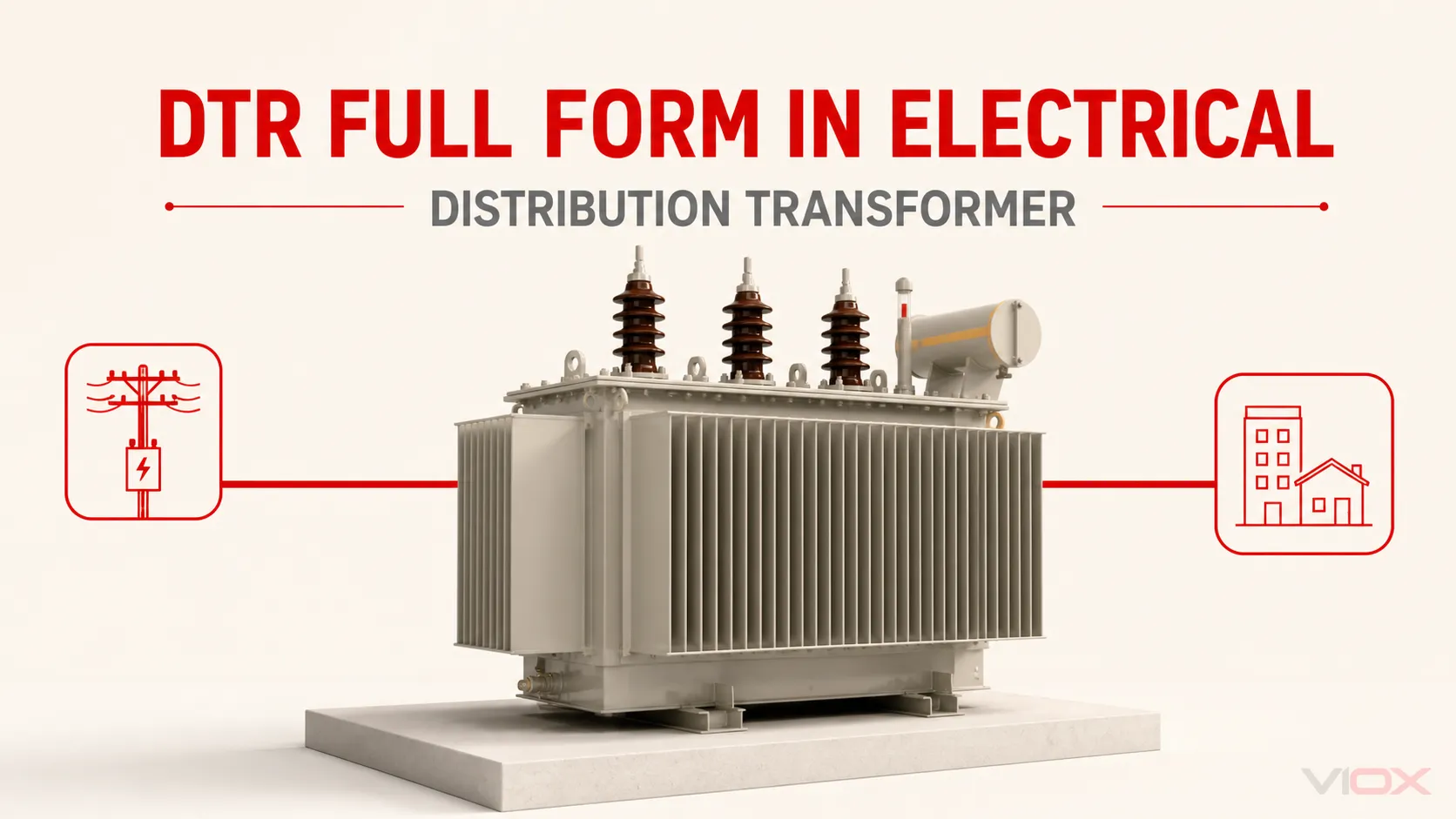
বৈদ্যুতিক শক্তি ব্যবস্থায় DTR সাধারণত ডিস্ট্রিবিউশন ট্রান্সফরমার বা বিতরণ ট্রান্সফরমারকে বোঝায়।. একটি ডিস্ট্রিবিউশন ট্রান্সফরমার ডিস্ট্রিবিউশন নেটওয়ার্ক এবং শেষ ব্যবহারকারী বা স্থানীয় লো-ভোল্টেজ সরঞ্জামের মধ্যে সরবরাহকৃত ভোল্টেজের মধ্যে চূড়ান্ত ভোল্টেজ রূপান্তর সম্পন্ন করে।.
In a typical Indian network, a DTR may step an 11 kV feeder down to a 415/240 V, 50 Hz utilization system. That is a common example, not a universal rating: distribution voltages, phase arrangements, transformer capacities, and applicable standards vary by utility and project.
পাওয়ার সিস্টেমে DTR-এর অর্থ কী?
DTR কোনো পৃথক ট্রান্সফরমার অপারেটিং নীতি না হয়ে বরং একটি শিল্প সংক্ষেপণ। সরঞ্জামটি এখনও ইলেক্ট্রোম্যাগনেটিক ইন্ডাকশনের মাধ্যমে কাজ করে, যা ফ্রিকোয়েন্সি পরিবর্তন না করে ভোল্টেজ এবং কারেন্টের মাত্রা পরিবর্তনের সময় ওয়াইন্ডিংগুলোর মধ্যে AC পাওয়ার স্থানান্তর করে।.
সিস্টেমে এর অবস্থানই হলো এর প্রধান বৈশিষ্ট্য:
জেনারেটিং এবং ট্রান্সমিশন সিস্টেম
             |
সাবস্টেশন / ডিস্ট্রিবিউশন ফিডার
             |
ডিস্ট্রিবিউশন ট্রান্সফরমার (DTR)
             |
লো-ভোল্টেজ ডিস্ট্রিবিউটার
             |
বাড়ি, ভবন, দোকান বা স্থানীয় শিল্প লোড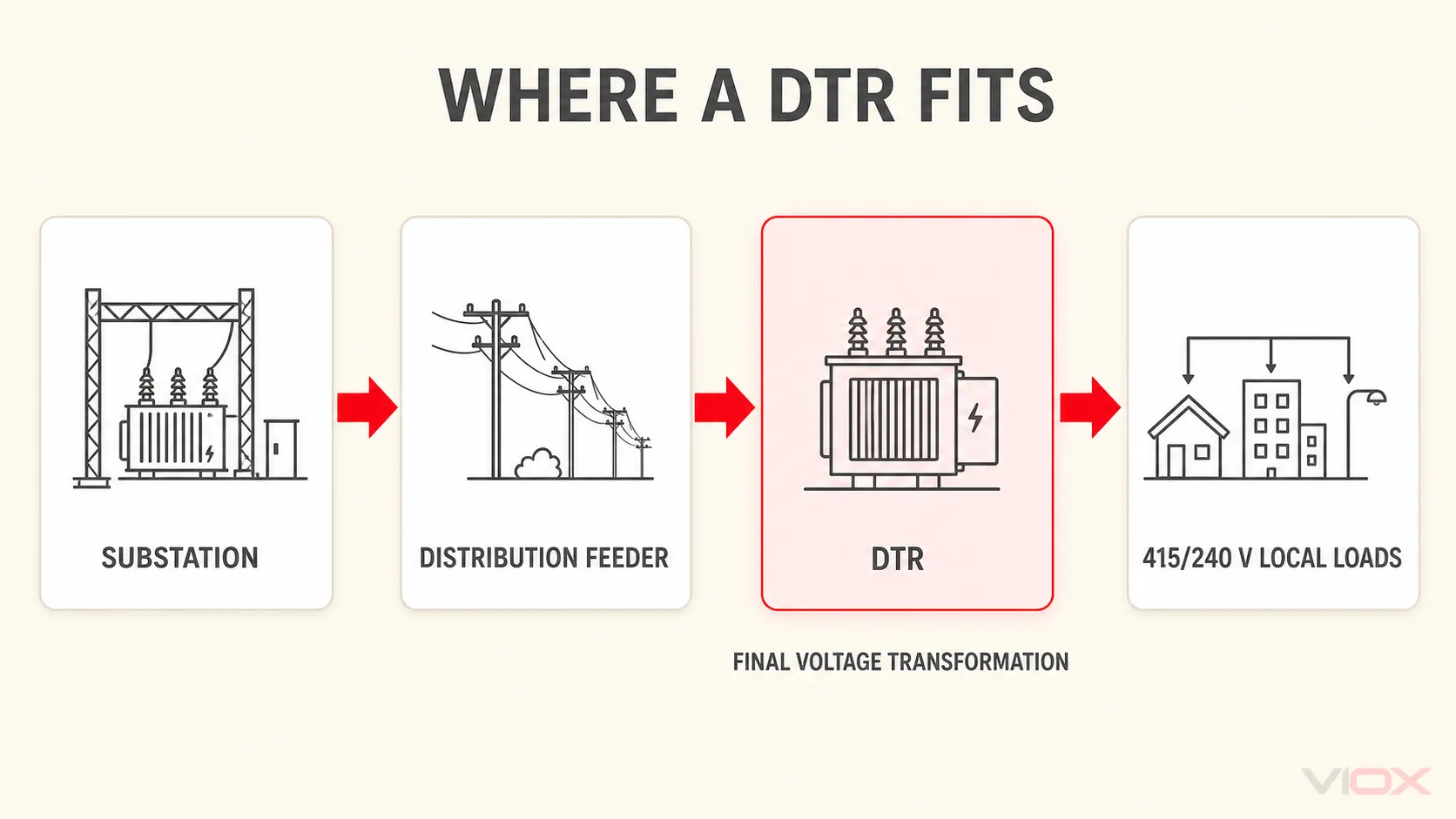
ব্যুরো অফ ইন্ডিয়ান স্ট্যান্ডার্ডস একটি ডিস্ট্রিবিউশন ট্রান্সফরমারকে এমন একটি ট্রান্সফরমার হিসেবে বর্ণনা করে, যা ডিস্ট্রিবিউশন সার্কিটের মধ্যে অথবা সেই সার্কিট থেকে কোনো প্রান্তিক ব্যবহারকারী বা অ্যাপ্লিকেশনের জন্য চূড়ান্ত ভোল্টেজ রূপান্তর প্রদান করে।.
এর অন্তর্নিহিত কার্যপদ্ধতি সম্পর্কে জানতে পড়ুন একটি ইলেকট্রিক্যাল ট্রান্সফরমার কীভাবে কাজ করে?.
একটি ডিস্ট্রিবিউশন ট্রান্সফরমার কী কাজ করে?
একটি DTR-কে একসাথে বেশ কয়েকটি সিস্টেম ফাংশন সম্পাদন করতে হয়:
- ফিডার ভোল্টেজকে প্রয়োজনীয় ব্যবহারের ভোল্টেজে রূপান্তর করা;
- প্রয়োজনীয় ফেজ এবং নিউট্রাল বিন্যাস প্রদান করা;
- সারাদিন ধরে পরিবর্তিত হয় এমন লোড বহন করা;
- এর ইমপিডেন্স এবং রেগুলেশন বৈশিষ্ট্যের মধ্যে ভোল্টেজ ড্রপ সীমাবদ্ধ রাখা;
- স্বাভাবিক তাপীয়, ডাই-ইলেকট্রিক এবং যান্ত্রিক চাপ সহ্য করা;
- আপস্ট্রিম ও ডাউনস্ট্রিম সুরক্ষা এবং আর্থিং সিস্টেমের সাথে ইন্টারফেস করা।.
একটি ট্রান্সফরমার নেমপ্লেট রেটিং এই নিশ্চয়তা দেয় না যে সম্পূর্ণ ইনস্টলেশনটি সঠিকভাবে সুরক্ষিত। ফিউজ বা সার্কিট ব্রেকার নির্বাচন, সার্জ প্রোটেকশন, আর্থিং, কন্ডাক্টরের আকার নির্ধারণ, ফল্ট লেভেল, ইনরাশ কারেন্ট এবং ইউটিলিটি সমন্বয় করা সিস্টেম ডিজাইনের কাজ হিসেবেই থেকে যায়।.
DTR বনাম পাওয়ার ট্রান্সফরমার
ডিস্ট্রিবিউশন ট্রান্সফরমার এবং পাওয়ার ট্রান্সফরমার একই তড়িৎচৌম্বকীয় মূলনীতি ব্যবহার করে। এদের মধ্যে সবচেয়ে কার্যকরী পার্থক্য হলো তাদের সিস্টেম ডিউটি, কোনো নির্বিচারে নির্ধারণ করা ক্যাপাসিটি কাটঅফ নয়।.
| তুলনার বিষয় | ডিস্ট্রিবিউশন ট্রান্সফরমার | পাওয়ার ট্রান্সফর্মার |
|---|---|---|
| মূল সিস্টেমের ভূমিকা | প্রান্তিক ব্যবহারকারী বা স্থানীয় লোডের কাছাকাছি চূড়ান্ত ভোল্টেজ রূপান্তর | উৎপাদন, সঞ্চালন এবং বড় সাবস্টেশনগুলোর মধ্যে বিপুল পরিমাণ বিদ্যুৎ স্থানান্তর |
| সাধারণ লোডিং প্যাটার্ন | প্রতিদিন উল্লেখযোগ্য লোডের তারতম্যসহ অবিরামভাবে এনার্জাইজড বা চালু থাকে | প্রায়শই বাল্ক-সিস্টেম লোডিং এবং নেটওয়ার্ক ডিসপ্যাচের ভিত্তিতে পরিকল্পিত |
| ডিজাইনের ওপর গুরুত্ব | সারাদিনের দক্ষতা, নো-লোড লস, ভোল্টেজ রেগুলেশন, স্থানীয় ইনস্টলেশন পরিস্থিতি | উচ্চ-ক্ষমতার স্থানান্তর, সিস্টেমের নির্ভরযোগ্যতা, নেটওয়ার্ক নিয়ন্ত্রণ এবং বড় সাবস্টেশনের দায়িত্ব |
| সাধারণ ইনস্টলেশন | পোল-মাউন্টেড, প্যাড-মাউন্টেড, গ্রাউন্ড-মাউন্টেড, ইনডোর বা আউটডোর সাবস্টেশন | গ্রিড, জেনারেটিং স্টেশন, ট্রান্সমিশন বা বৃহৎ শিল্প সাবস্টেশন |
| শুধুমাত্র রেটিং কি বিভাগ নির্ধারণ করে? | না | না |
সীমান্তে এই শব্দগুলোর অর্থ ওভারল্যাপ করতে পারে। প্রকল্পের স্পেসিফিকেশন, ইউটিলিটি প্র্যাকটিস এবং প্রযোজ্য মানগুলোই শ্রেণিবিন্যাস নির্ধারণ করে। শুধুমাত্র kVA বা MVA থেকে একটি ট্রান্সফরমারকে শ্রেণিবদ্ধ করবেন না।.
সাধারণ DTR প্রকারসমূহ
ফেজ বিন্যাস অনুযায়ী
- সিঙ্গেল-ফেজ DTR: ইউটিলিটি অনুশীলনের ওপর নির্ভর করে, প্রায়শই একটি ছোট স্থানীয় লোড সরবরাহ করে বা একটি ব্যাংকের অংশ গঠন করে।.
- থ্রি-ফেজ DTR: একটি থ্রি-ফেজ লো-ভোল্টেজ নেটওয়ার্ক এবং এর ফেজগুলোতে বিতরণকৃত সিঙ্গেল-ফেজ লোড সরবরাহ করে।.
ইনসুলেশন এবং কুলিং মাধ্যমের দ্বারা
- লিকুইড-ইমার্সড ট্রান্সফরমার: ইনসুলেশন এবং তাপ স্থানান্তরের জন্য খনিজ তেল বা অন্য কোনো নির্দিষ্ট ইনসুলেটিং তরল ব্যবহার করে।.
- ড্রাই-টাইপ ট্রান্সফরমার: সলিড ইনসুলেশন এবং বাতাস বা অন্য কোনো ঘোষিত কুলিং ব্যবস্থা ব্যবহার করে, যা প্রায়শই অভ্যন্তরীণ অগ্নি নিরাপত্তা, পরিবেশগত বা রক্ষণাবেক্ষণের বিবেচনার ভিত্তিতে নির্বাচন করা হয়।.
ইনস্টলেশন অনুযায়ী
- পোল-মাউন্টেড;
- প্যাড-মাউন্টেড বা গ্রাউন্ড-মাউন্টেড;
- কিওস্ক বা কম্প্যাক্ট-সাবস্টেশন ইনস্টলেশন;
- ইনডোর ট্রান্সফরমার-রুম ইনস্টলেশন।.
প্রতিটি কাঠামোর এনক্লোজার, অ্যাক্সেস, ভেন্টিলেশন, অগ্নি নির্বাপণ, পরিবেশগত, কেবল-টার্মিনেশন এবং সুরক্ষার প্রয়োজনীয়তা ভিন্ন। VIOX এর তুলনা ড্রাই-টাইপ এবং অয়েল-ফিল্ড ট্রান্সফরমারের সেই পৃথক নির্বাচনের সিদ্ধান্তটি ব্যাখ্যা করে।.
DTR রেটিং এবং কারেন্ট ফর্মুলা
ডিস্ট্রিবিউশন ট্রান্সফর্মারগুলো সাধারণত kVA-তে রেট করা হয় কারণ ওয়াইন্ডিং এবং কোরের কার্যক্ষমতা ভোল্টেজ ও কারেন্টের উপর নির্ভর করে, অন্যদিকে সংযুক্ত লোড পাওয়ার ফ্যাক্টর নির্ধারণ করে।.
একটি সুষম থ্রি-ফেজ ট্রান্সফর্মারের ক্ষেত্রে:
I = kVA × 1,000 / (sqrt(3) × V_L-L)একটি সিঙ্গেল-ফেজ ট্রান্সফর্মারের ক্ষেত্রে:
I = kVA × 1,000 / Vসমাধানকৃত উদাহরণ: 100 kVA, 11 kV/415 V থ্রি-ফেজ DTR
হাই-ভোল্টেজ ওয়াইন্ডিং কারেন্টের আনুমানিক মান:
I_HV = 100,000 / (sqrt(3) × 11,000)
I_HV ≈ 5.25 A
লো-ভোল্টেজ ওয়াইন্ডিং কারেন্টের আনুমানিক মান:
I_LV = 100,000 / (sqrt(3) × 415)
I_LV ≈ 139 A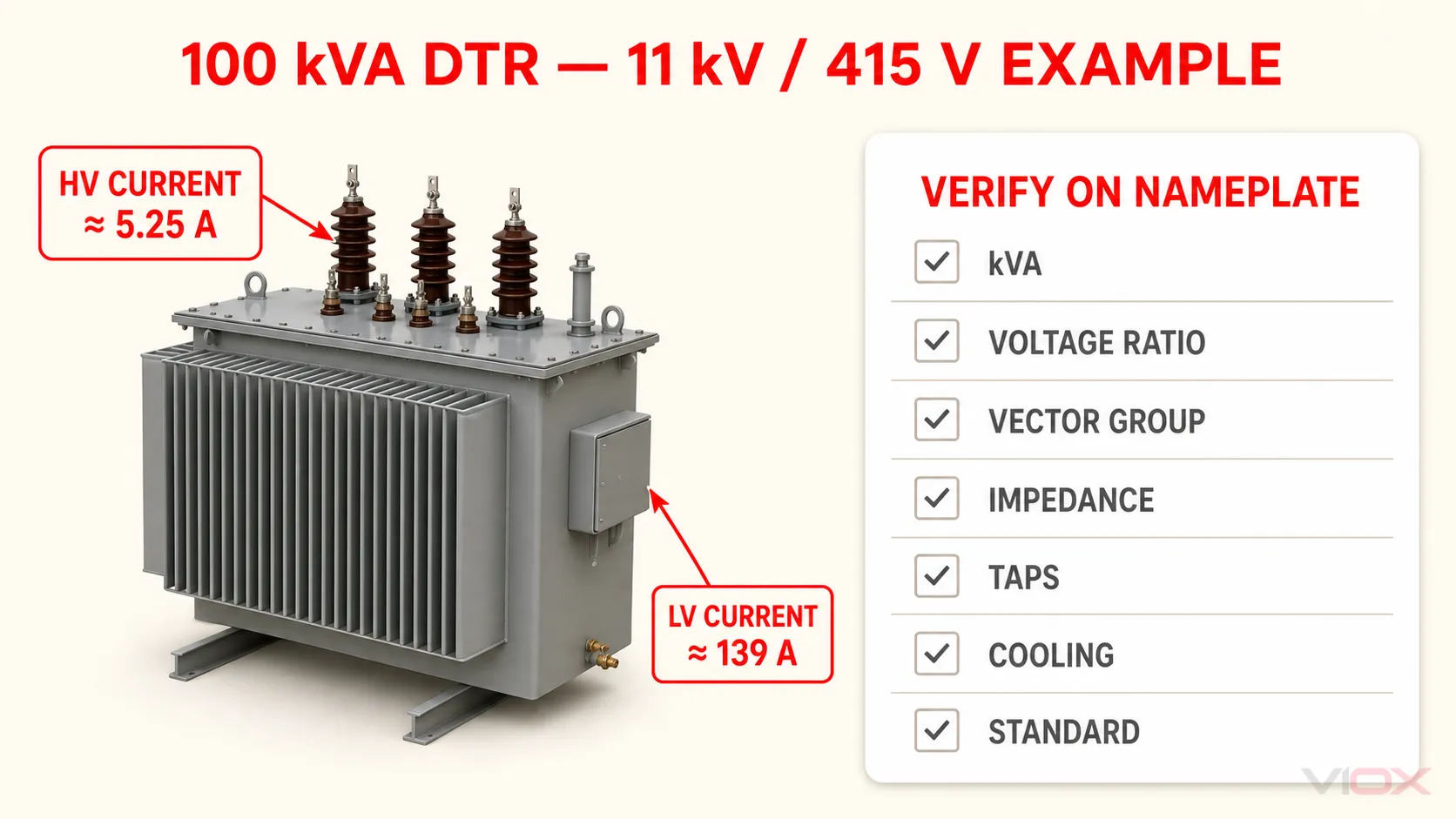
এগুলো নামমাত্র রেটিং থেকে প্রাপ্ত ফুল-লোড লাইন-কারেন্টের হিসাব। এগুলো কোনো প্রোটেকশন সেটিং নয়। ট্রান্সফরমারের ইনরাশ কারেন্ট, অনুমোদিত লোড, পরিবেষ্টিত অবস্থা, কুলিং, ইমপিডেন্স, হারমোনিকস, কন্ডাক্টর সংক্রান্ত নিয়ম এবং সমন্বয় সংক্রান্ত প্রয়োজনীয়তাগুলোও মূল্যায়ন করতে হবে।.
ট্রান্সফরমার কেন অ্যাপারেন্ট-পাওয়ার রেটিং ব্যবহার করে সে সম্পর্কে বিস্তারিত জানতে দেখুন Understanding kVA Rating for Transformers.
কিভাবে DTR নেমপ্লেট পড়তে হয়
কমপক্ষে নিচের ক্ষেত্রগুলো যাচাই করুন:
| নেমপ্লেট আইটেম | Why it matters |
|---|---|
| kVA-তে রেটেড পাওয়ার | ঘোষিত অবস্থায় ওয়াইন্ডিংয়ের আপাত-ক্ষমতা (apparent-power) নির্ধারণ করে |
| HV এবং LV রেটেড ভোল্টেজ | ব্যবস্থার সামঞ্জস্যতা এবং রেটেড কারেন্ট নির্ধারণ করে |
| ফেজ এবং ফ্রিকোয়েন্সি | অবশ্যই নেটওয়ার্কের সাথে মিল থাকতে হবে |
| ভেক্টর গ্রুপ | ওয়াইন্ডিং সংযোগ এবং ফেজ ডিসপ্লেসমেন্ট নির্ধারণ করে |
| শতাংশ ইম্পিডেন্স | ভোল্টেজ রেগুলেশন এবং সম্ভাব্য শর্ট সার্কিট কারেন্টকে প্রভাবিত করে |
| ট্যাপ রেঞ্জ | উপলব্ধ ভোল্টেজ-অনুপাত অ্যাডজাস্টমেন্ট প্রদর্শন করে |
| কুলিং ডেজিগনেশন | ঘোষিত তাপ অপসারণ পদ্ধতি শনাক্ত করে |
| ইনসুলেশন লেভেল | সিস্টেমের সাথে ডাই-ইলেক্ট্রিক কো-অর্ডিনেশন বজায় রাখতে সহায়তা করে |
| তাপমাত্রা বৃদ্ধির সীমা | থার্মাল ডিজাইন এবং সার্ভিস কন্ডিশনের সাথে লোডিংয়ের সম্পর্ক স্থাপন করুন |
| নো-লোড এবং লোড লস | সারাদিনের এনার্জি পারফরম্যান্স এবং প্রকিউরমেন্ট মূল্যায়নের ওপর প্রভাব ফেলে |
| প্রযোজ্য স্ট্যান্ডার্ড | ঘোষিত ডিজাইন এবং টেস্ট ফ্রেমওয়ার্ককে সংজ্ঞায়িত করে |
একই kVA রেটিং থাকা অন্য কোনো ট্রান্সফরমার থেকে অনুপস্থিত ডেটা অনুমান করবেন না। ভোল্টেজ, ইম্পিডেন্স, লস, ভেক্টর গ্রুপ, ইনসুলেশন লেভেল এবং সার্ভিস কন্ডিশন উল্লেখযোগ্যভাবে ভিন্ন হতে পারে।.
DTR-এর জন্য সাধারণত রেফারেন্সকৃত স্ট্যান্ডার্ডসমূহ
প্রযোজ্য স্ট্যান্ডার্ডটি বাজার, ট্রান্সফরমারের গঠন এবং প্রকিউরমেন্ট স্পেসিফিকেশনের ওপর নির্ভর করে।.
- দ্য IEC 60076 সিরিজ পাওয়ার ট্রান্সফরমার এবং সংশ্লিষ্ট প্রয়োজনীয়তার জন্য আন্তর্জাতিক কাঠামো প্রদান করে।.
- ভারতে, IS 1180 সিরিজ ডিস্ট্রিবিউশন ট্রান্সফরমারের ক্ষেত্রে প্রযোজ্য; বিআইএস (BIS) নির্দেশনা অনুযায়ী পার্ট ১ মিনারেল-অয়েল-ইমার্সড ডিস্ট্রিবিউশন ট্রান্সফরমারের জন্য এবং পার্ট ২ প্রাকৃতিক/সিন্থেটিক এস্টার-লিকুইড-ইমার্সড ডিজাইনের জন্য নির্দিষ্ট করা হয়েছে।.
- ইউটিলিটি স্পেসিফিকেশনে লস ক্যাপিটালাইজেশন, দক্ষতা, ফিটিংস, সুরক্ষা, মাত্রা, মিটারিং এবং পরিদর্শন সংক্রান্ত প্রয়োজনীয়তা যুক্ত হতে পারে।.
“IEC 60076” বা “IS 1180”-এর রেফারেন্সটি প্রযোজ্য অংশ, সংস্করণ, সংশোধনী, ট্রান্সফরমারের ধরন এবং ক্রেতার স্পেসিফিকেশন অনুযায়ী যাচাই করা উচিত। শুধুমাত্র ফ্যামিলি নম্বর থেকে কমপ্লায়েন্সের দাবি করবেন না।.
একটি DTR স্পেসিফিকেশনে কী অন্তর্ভুক্ত করতে হবে
কোটেশনের জন্য একটি ব্যবহারিক অনুরোধে অবশ্যই উল্লেখ থাকতে হবে:
- রেটেড kVA;
- প্রাইমারি ও সেকেন্ডারি ভোল্টেজ এবং সিস্টেমের সর্বোচ্চ ভোল্টেজ;
- ফেজ, ফ্রিকোয়েন্সি, ভেক্টর গ্রুপ এবং নিউট্রালের প্রয়োজনীয়তা;
- পার্সেন্টেজ ইম্পিডেন্স এবং ট্যাপ রেঞ্জ;
- লিকুইড-ইমার্সড বা ড্রাই-টাইপ কনস্ট্রাকশন এবং কুলিং মেথড;
- ইনডোর/আউটডোর, পোল/প্যাড/রুম ইনস্টলেশন, অ্যাম্বিয়েন্ট তাপমাত্রা এবং উচ্চতা;
- লস, দক্ষতা, শব্দ এবং তাপমাত্রা বৃদ্ধির প্রয়োজনীয়তা;
- ইনসুলেশন লেভেল, সার্জ এনভায়রনমেন্ট এবং আর্থিং ব্যবস্থা;
- অ্যাক্সেসরিজ, টার্মিনাল, কেবল বক্স, মনিটরিং এবং সুরক্ষা ইন্টারফেস;
- প্রযোজ্য মানদণ্ড, পরীক্ষা, ডকুমেন্টেশন এবং পরিদর্শন প্রয়োজনীয়তা।.
সাধারণ প্রশ্ন
DTR কি পাওয়ার ট্রান্সফরমারের মতোই?
DTR হলো এমন একটি ট্রান্সফরমার যা ডিস্ট্রিবিউশন বা বিতরণ কাজে ব্যবহৃত হয়, বিশেষ করে শেষ ব্যবহারকারীদের নিকটবর্তী স্থানে চূড়ান্ত ভোল্টেজ রূপান্তরের জন্য। “পাওয়ার ট্রান্সফরমার” শব্দটি আরও ব্যাপক এবং এটি সাধারণত বৃহৎ পরিসরে বিদ্যুৎ স্থানান্তরের সাথে সম্পর্কিত। এদের মধ্যকার পার্থক্য কেবল ক্ষমতার ওপর নয়, বরং প্রয়োগ এবং স্পেসিফিকেশনের ওপর ভিত্তি করে নির্ধারিত হয়।.
একটি DTR-এর আউটপুট কত?
আউটপুটটি নেটওয়ার্কের ওপর নির্ভর করে। ভারতে, 11 kV ডিস্ট্রিবিউশন ট্রান্সফর্মার থেকে 415/240 V একটি সাধারণ লো-ভোল্টেজ আউটপুট, তবে বিশ্বব্যাপী অন্যান্য অনুপাতও ব্যবহৃত হয়।.
একটি DTR কেন kVA-তে রেট করা হয়?
এর কোর এবং ওয়াইন্ডিংগুলোকে সংযুক্ত লোডের পাওয়ার ফ্যাক্টর নির্বিশেষে ভোল্টেজ এবং কারেন্ট সহ্য করতে হয়। তাই, kVA-তে প্রকাশিত অ্যাপারেন্ট পাওয়ারই হলো রেটিং নির্ধারণের উপযুক্ত ভিত্তি।.
চূড়ান্ত সংজ্ঞা
DTR মানে ডিস্ট্রিবিউশন ট্রান্সফর্মার বৈদ্যুতিক বিদ্যুৎ-বিতরণ পরিভাষায়। এটি ডিস্ট্রিবিউশন ফিডার থেকে স্থানীয় ব্যবহারিক নেটওয়ার্কে চূড়ান্ত ভোল্টেজ রূপান্তর সম্পাদন করে। সঠিক নির্বাচনের জন্য kVA-এর চেয়েও বেশি কিছু প্রয়োজন: ভোল্টেজ অনুপাত, ফেজ এবং ভেক্টর গ্রুপ, ইম্পিডেন্স, ট্যাপ, লস, কুলিং, ইনসুলেশন, ইনস্টলেশন পরিবেশ, প্রোটেকশন ইন্টারফেস এবং প্রযোজ্য স্ট্যান্ডার্ড যাচাই করুন।.