Circuit breakers are critical protective devices in electrical systems, designed to interrupt fault currents and prevent damage to equipment and infrastructure. While many assume that electric arcs are unwanted phenomena in circuit breaker operation, the reality is quite different. In AC systems, controlled electric arcs play an essential role in safe and effective current interruption. Understanding the four key processes of circuit breaker disconnection reveals why arc management, rather than arc elimination, is fundamental to modern electrical protection.
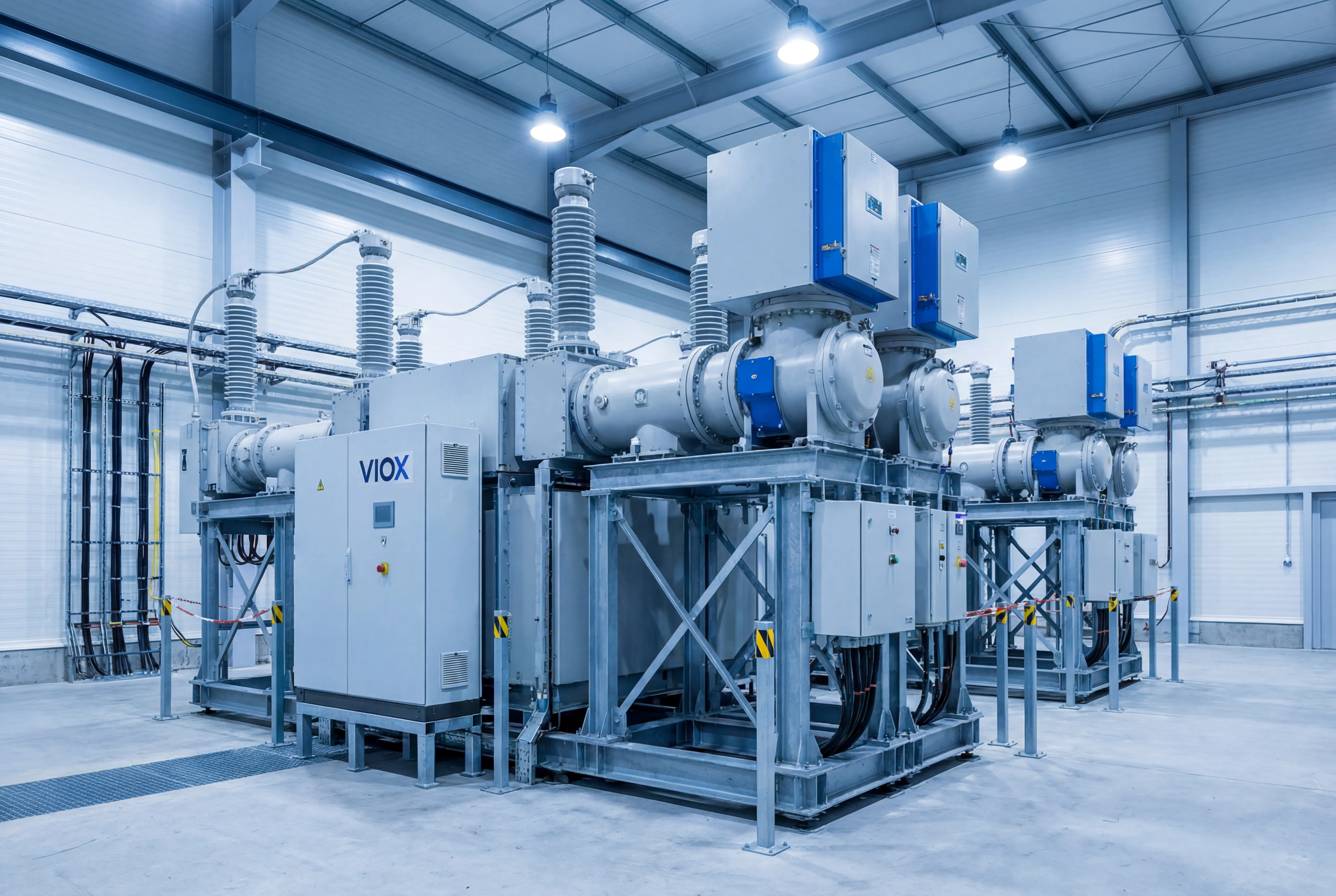
Why Electric Arcs Are Necessary in Circuit Breaker Operation
Many engineers intuitively believe that eliminating electric arcs would improve circuit breaker performance. However, in AC systems, attempting to “hard cut” current without an arc creates dangerous consequences. When contacts separate abruptly without arc formation, the magnetic energy stored in inductive loads has nowhere to dissipate. This energy instantaneously transfers to stray capacitance, creating hazardous overvoltages that can cause insulation failure and re-striking phenomena.
A controlled electric arc functions as a manageable switch, allowing load energy to return orderly to the power source. The arc provides a conductive path until the AC current naturally reaches zero, at which point extinction occurs under favorable conditions. The circuit breaker must then withstand the transient recovery voltage (TRV) to complete safe system reset.
The Four Key Processes of Circuit Breaker Disconnection
Process 1: Contact Separation and Arc Establishment
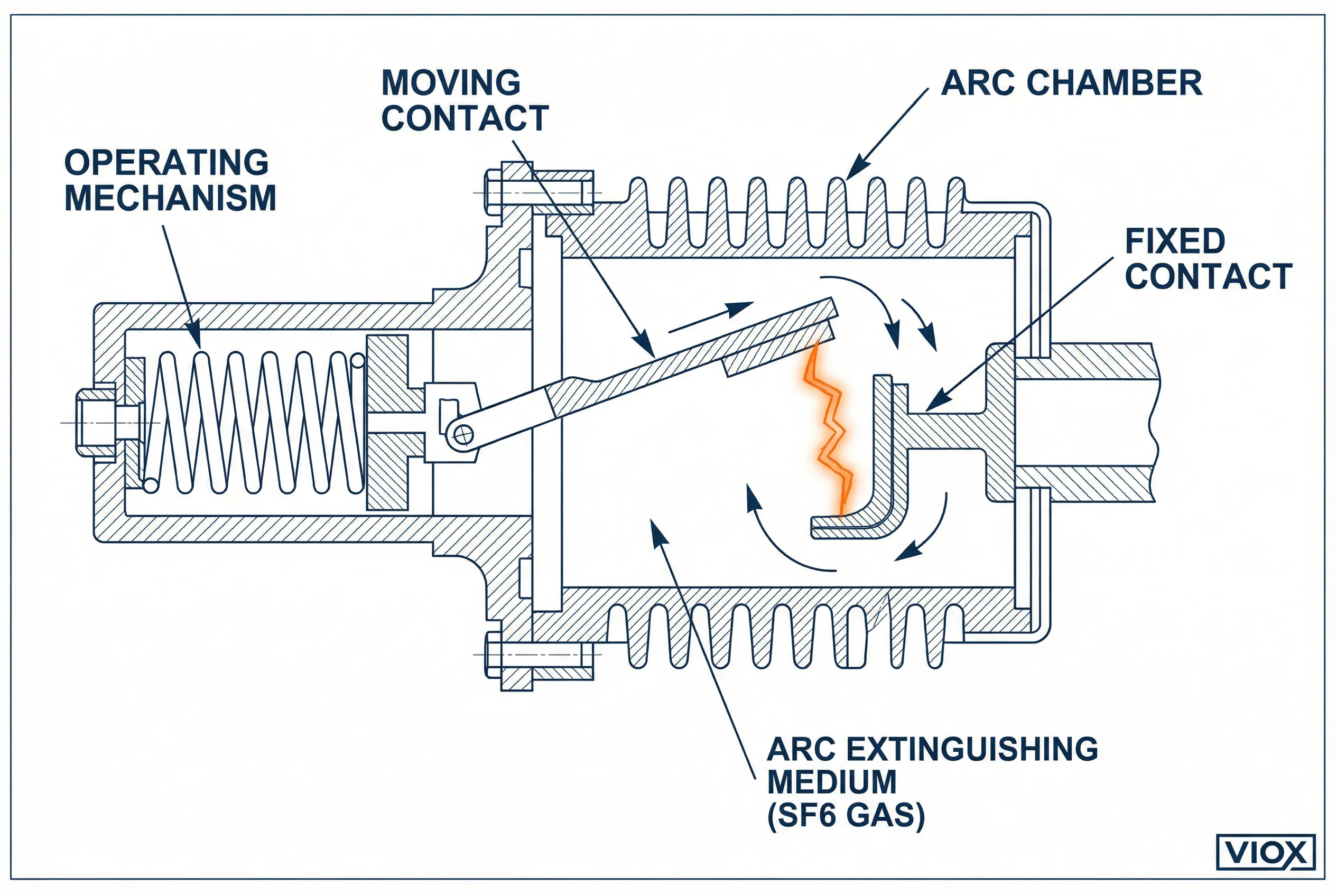
When circuit breaker contacts initially separate, a microscopic contact bridge remains between them. At this junction, current density becomes extremely high, causing contact material to undergo melting, vaporization, and ionization. This process creates a plasma channel—the electric arc—within the arc-extinguishing medium (air, oil, SF₆ gas, or metal vapor in vacuum).
The arc establishment phase doesn’t represent system failure; rather, it channels energy into a manageable conductive pathway, preventing immediate voltage spikes. During this stage, the circuit breaker creates sufficient contact gap distance and establishes cooling conditions necessary for subsequent arc extinction. The plasma channel temperature can reach 20,000°C (36,000°F), making proper arc chamber design critical for safe operation.
Process 2: Arc Maintenance and Energy Return
During the arc maintenance phase, current continues flowing through the arc plasma while magnetic energy from inductive loads gradually returns to the power source. Modern circuit breakers employ various techniques to manage this process:
- Gas or oil blast systems create high-velocity flows that cool and disperse ionized particles
- Magnetic blow mechanisms elongate and split the arc using electromagnetic forces
- Vacuum environments enable rapid metal vapor diffusion and cooling
- Arc chutes divide the arc into multiple smaller segments for enhanced cooling
The circuit breaker must maintain the arc for a minimum duration while achieving sufficient contact separation. This minimum arc time varies by system voltage and current magnitude, but typically ranges from 8-20 milliseconds at 50 Hz. Inadequate arc time or insufficient contact gap results in re-striking when voltage recovery occurs.
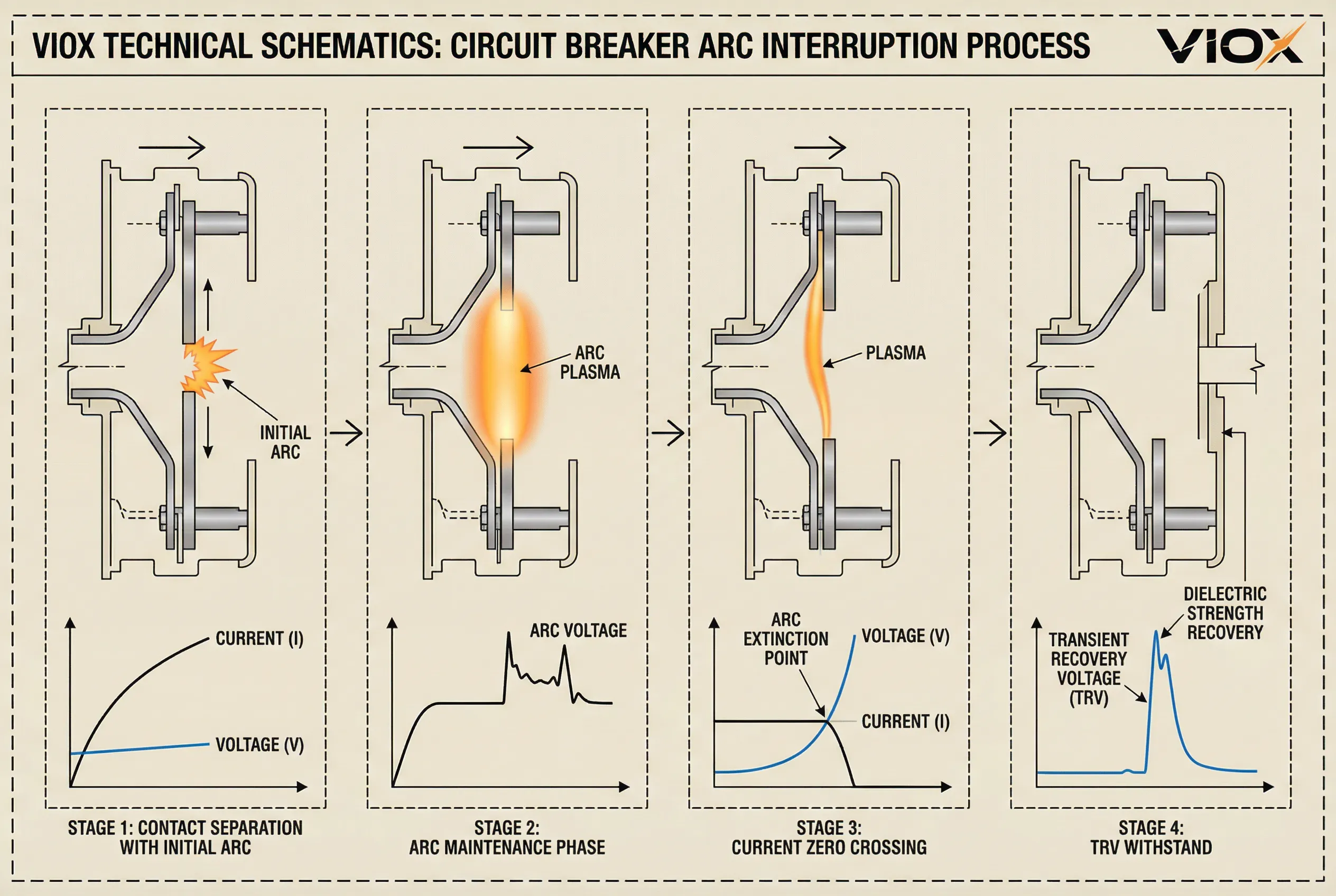
Process 3: Current Zero Crossing and Arc Extinction
As AC current approaches its natural zero crossing, properly cooled contacts with adequate separation enable rapid arc de-ionization. The dielectric strength between contacts recovers quickly—up to 20 kV/μs in vacuum circuit breakers—allowing arc extinction at the current zero point.
This critical moment determines interruption success. The arc doesn’t extinguish when contacts initially separate; true current interruption occurs only at current zero with successful de-ionization. Several factors influence first-crossing extinction success:
- Contact opening velocity and travel distance
- Arc-extinguishing medium properties and flow characteristics
- Contact material composition and thermal properties
- System voltage and current magnitudes
- Temperature and pressure conditions within arc chamber
Circuit breakers designed for high short-circuit currents incorporate advanced arc-splitting technologies and enhanced cooling mechanisms to ensure reliable extinction at the first current zero crossing.
Process 4: TRV Withstand and Voltage Recovery
Immediately after arc extinction, transient recovery voltage (TRV) appears across the open contacts. This voltage results from superposition of source-side and load-side components, typically exhibiting multi-frequency oscillatory behavior. The TRV waveform characteristics include:
- Rate of Rise of Recovery Voltage (RRRV): Initial voltage increase rate, measured in kV/μs
- Peak TRV amplitude: Maximum voltage stress on open contacts
- Frequency components: Multiple oscillation frequencies from system inductances and capacitances
Circuit breakers must withstand TRV within standardized limits (IEC 62271-100, IEEE C37.04) to prevent re-striking. If dielectric recovery is incomplete when TRV peaks, arc re-ignition occurs, potentially causing catastrophic failure. As transient oscillations decay, voltage stabilizes at power-frequency recovery voltage (RV), completing the interruption sequence and enabling immediate system re-energization.
Circuit Breaker Types and Arc Extinction Methods
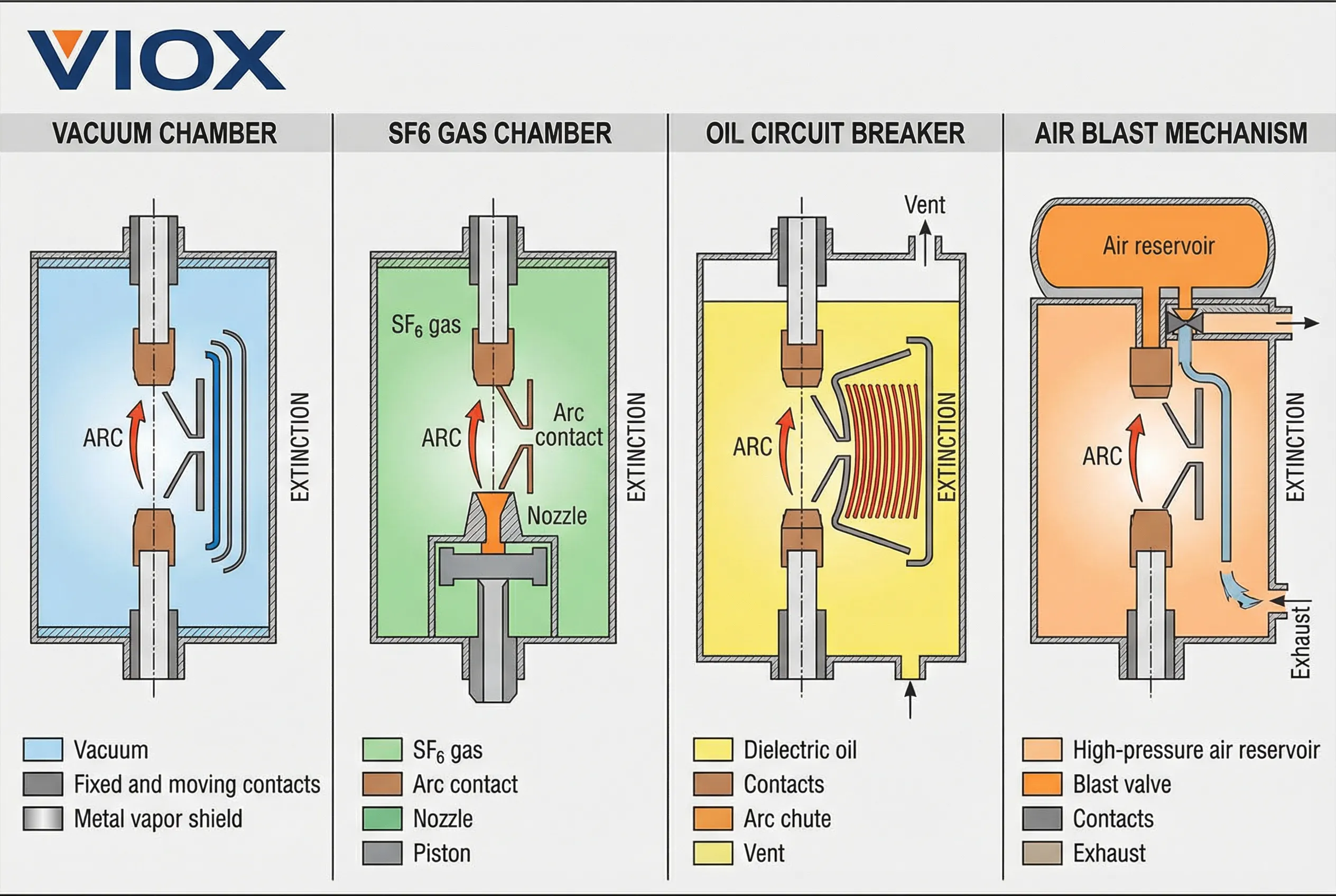
| Circuit Breaker Type | Arc-Extinguishing Medium | Primary Extinction Mechanism | Typical Voltage Range | Key Advantages | Limitations |
|---|---|---|---|---|---|
| Vacuum Circuit Breaker (VCB) | High vacuum (10⁻⁴ to 10⁻⁷ Pa) | Rapid metal vapor diffusion and condensation | 3.6 kV to 40.5 kV | Minimal maintenance, compact design, no environmental concerns | Limited to medium voltage applications |
| SF₆ Circuit Breaker | Sulfur hexafluoride gas | Superior dielectric strength and thermal conductivity | 72.5 kV to 800 kV | Excellent interrupting capacity, reliable performance | Environmental concerns (greenhouse gas), gas monitoring required |
| Air Blast Circuit Breaker | Compressed air (20-30 bar) | High-velocity air blast cools and disperses arc | 132 kV to 400 kV | Proven technology, no toxic gases | Requires compressor infrastructure, noise generation |
| Oil Circuit Breaker | Mineral insulating oil | Hydrogen gas generation from oil decomposition creates blast effect | 11 kV to 220 kV | Simple construction, economical | Fire hazard, regular oil maintenance required |
| Air Magnetic Circuit Breaker | Atmospheric air | Magnetic field deflects and elongates arc into arc chutes | Up to 15 kV | No special medium required, simple maintenance | Limited breaking capacity, bulky design |
Technical Specifications: Arc Parameters in Circuit Breakers
| Parameter | Typical Values | Significance |
|---|---|---|
| Arc Temperature | 15,000°C to 30,000°C | Determines material erosion rate and cooling requirements |
| Arc Voltage | 30V to 500V (varies by type) | Affects energy dissipation and TRV characteristics |
| Minimum Arc Time (50 Hz) | 8-20 milliseconds | Required for adequate contact separation and cooling |
| Dielectric Recovery Rate | 5-20 kV/μs | Speed of insulation strength restoration after extinction |
| TRV Peak Factor | 1.4 to 1.8 × system voltage | Maximum voltage stress during recovery period |
| RRRV (Rate of Rise) | 0.1-5 kV/μs | Determines re-strike probability |
| Contact Erosion Rate | 0.01-1 mm per 1000 operations | Affects maintenance intervals and contact life |
Frequently Asked Questions
Q: Why don’t circuit breakers eliminate arcs completely during disconnection?
A: In AC systems, controlled arcs are essential for safe current interruption. Eliminating arcs would cause inductive energy to create dangerous overvoltages. The arc provides a managed conductive path that allows energy to return safely to the source until current naturally reaches zero, preventing equipment damage and system instability.
Q: What is the difference between TRV and RRRV in circuit breaker operation?
A: TRV (Transient Recovery Voltage) is the total oscillatory voltage appearing across breaker contacts after arc extinction. RRRV (Rate of Rise of Recovery Voltage) specifically measures how quickly this voltage increases initially, expressed in kV/μs. RRRV is critical because if voltage rises faster than dielectric strength recovers, arc re-striking occurs.
Q: How do vacuum circuit breakers extinguish arcs without gas or oil?
A: Vacuum circuit breakers use metal vapor from contact erosion as the arc medium. In high vacuum (10⁻⁴ to 10⁻⁷ Pa), metal vapor diffuses and condenses rapidly on contact surfaces and shields. The vacuum environment provides excellent insulation recovery (up to 20 kV/μs), enabling arc extinction at the first current zero crossing.
Q: What factors determine minimum arc time in a circuit breaker?
A: Minimum arc time depends on contact opening velocity, required separation distance, arc-extinguishing medium properties, and system voltage level. Insufficient arc time results in inadequate contact gap or incomplete cooling, causing re-strike when recovery voltage appears. Three-phase systems require consideration of phase angle differences for simultaneous mechanical operation.
Q: Why do high-voltage circuit breakers require more sophisticated arc extinction methods?
A: Higher voltages create longer, more energetic arcs with greater ionization. The increased energy density requires enhanced cooling mechanisms, longer contact travel, and superior arc-extinguishing media. High-voltage systems also generate higher TRV amplitudes and RRRV rates, demanding faster dielectric recovery and greater withstand capability to prevent catastrophic re-strike failures.
Conclusion: The Science Behind Safe Circuit Protection
Understanding the four key processes of circuit breaker disconnection—contact separation and arc establishment, arc maintenance and energy return, current zero crossing and extinction, and TRV withstand—reveals why controlled electric arcs are fundamental to electrical system protection rather than design flaws to eliminate.
VIOX Electric’s advanced circuit breaker designs incorporate state-of-the-art arc management technologies, optimized contact materials, and precision-engineered arc chambers to ensure reliable protection across all operating conditions. By managing arc energy effectively and withstanding TRV within international standards, VIOX circuit breakers provide the safety, reliability, and longevity that modern electrical systems demand.
For technical specifications, application guidance, or custom circuit breaker solutions, contact VIOX Electric’s engineering team to discuss your specific protection requirements.