

Bu sayfada
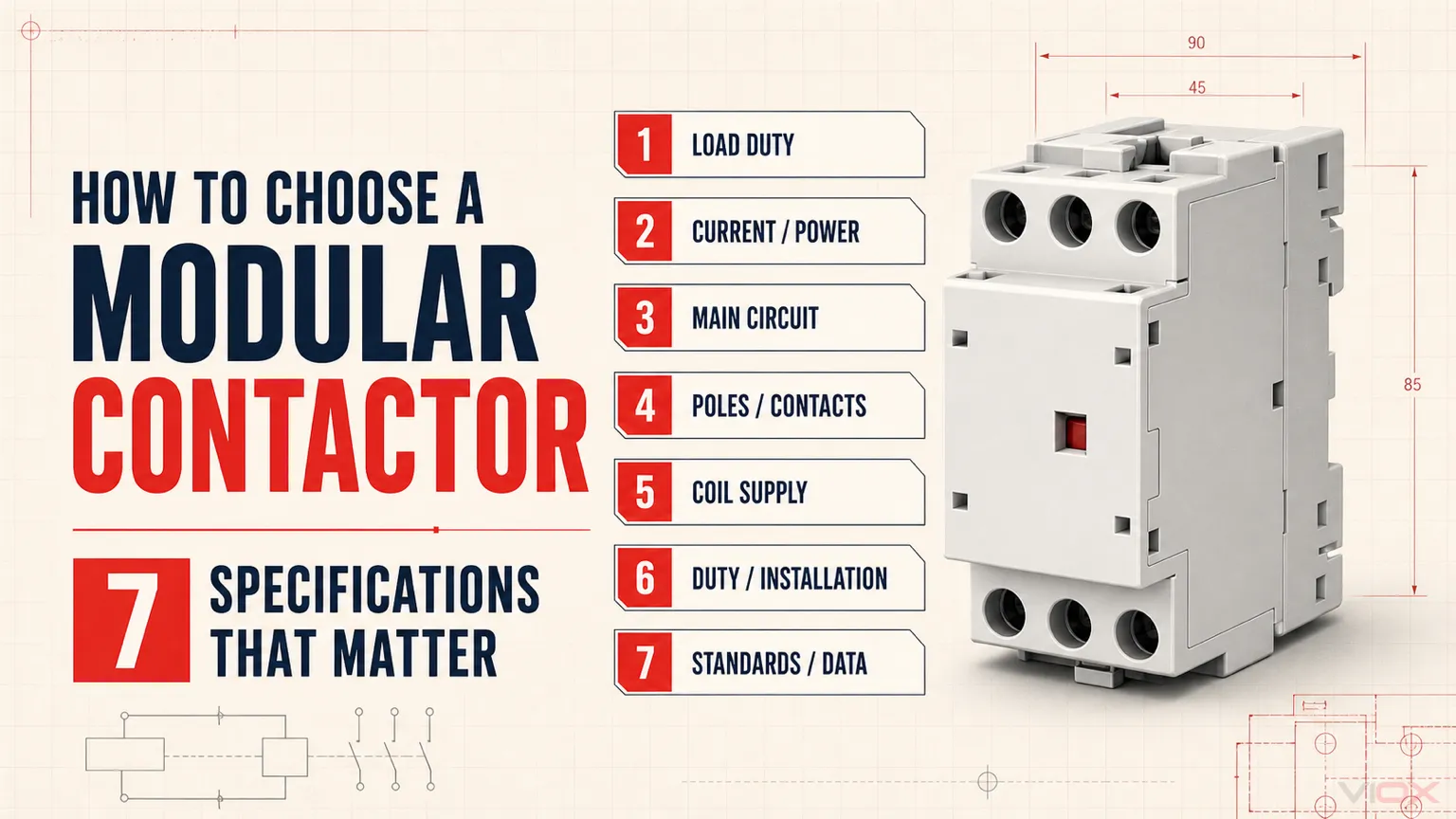
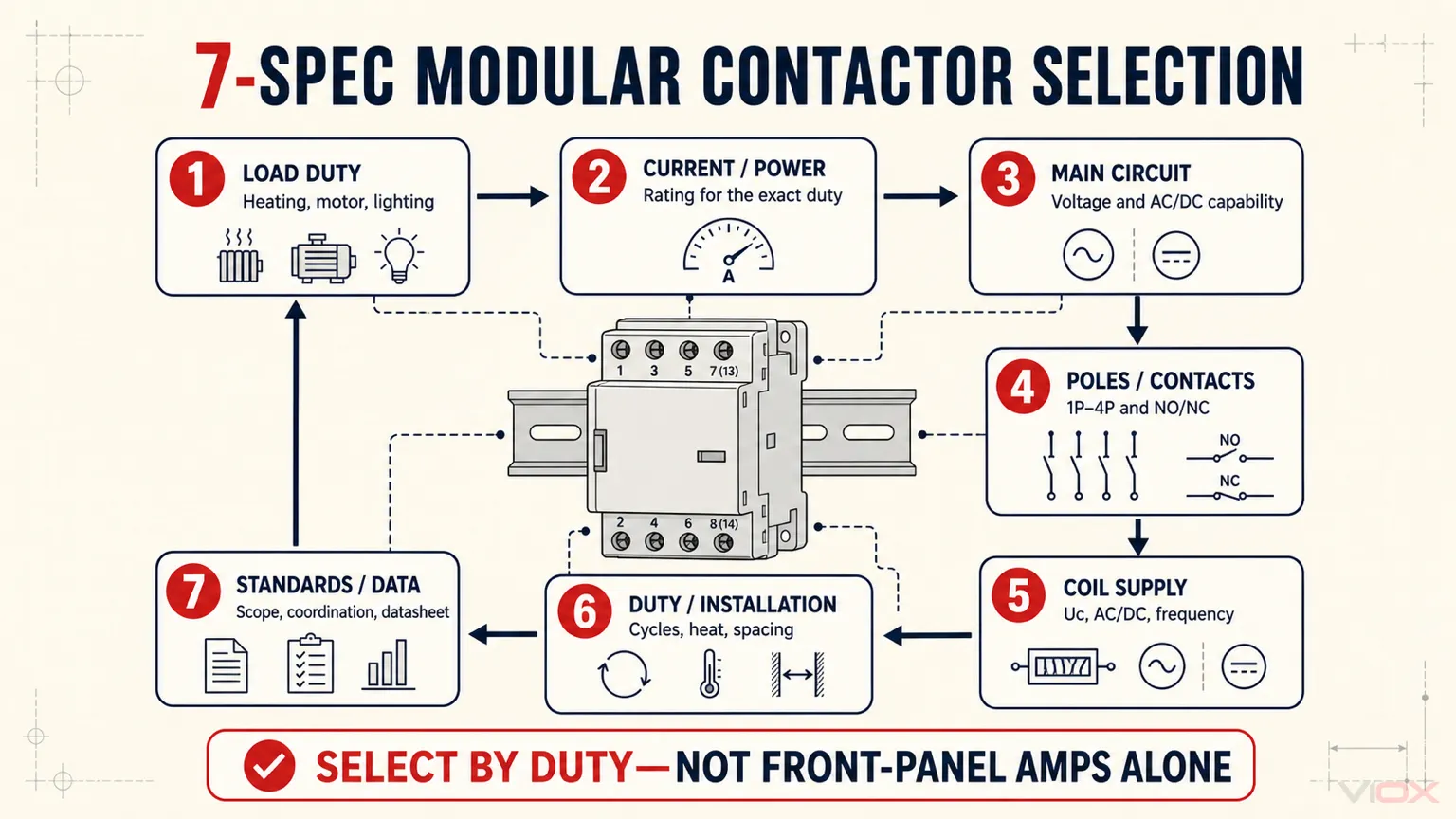
Yedi teknik özelliği eşleştirerek bir modüler kontaktör seçin: yük tipi; anma işletme akımı veya gücü; ana devre gerilimi ve AC/DC kapasitesi; kutup sayısı ve kontak düzeni; bobin/kontrol beslemesi; görev ve kurulum koşulları; ve standartlar, koordinasyon ve dokümantasyon. Sadece ön paneldeki amper değerine bakarak seçim yapmayın ve DC bobinli bir kontaktörün DC yükü anahtarlayabileceğini varsaymayın.
Amaç, aşağıdakine benzer eksiksiz bir teknik şartname oluşturmaktır:
2 kutuplu modüler kontaktör, 2NA, 230 V AC'de belirtilen yük tipi ve akım için derecelendirilmiş, 24 V DC bobin, gerekli anahtarlama frekansına uygun, hedef pazar için gerekli ürün dokümantasyonuna sahip.
Eğer önce temel yapı ve çalışma prensibine ihtiyacınız varsa, şuraya bakın Modüler Kontaktör Nedir?. Bu kılavuz yalnızca proje gereksinimlerinin satın almaya hazır bir teknik şartnameye dönüştürülmesine odaklanmaktadır.
Modüler Kontaktör Seçimine Genel Bakış
| Seçim öğesi | Yanıtlanacak soru | Ne doğrulanmalı |
|---|---|---|
| 1. Yük tipi | Yük ısıtma, aydınlatma, motor veya başka bir devre mi? | Uygulanabilir kullanım kategorisi veya üretici yük tablosu |
| 2. Nominal işletme akımı veya gücü | Hangi akım veya güç anahtarlanmalıdır? | Tam görev ve gerilim için yayınlanmış değerler |
| 3. Ana devre gerilimi ve AC/DC kapasitesi | Yük kontaklarında hangi gerilim ve akım türü mevcut? | Nominal işletme gerilimi ve belirgin AC veya DC anahtarlama kapasitesi |
| 4. Kutup sayısı ve kontak düzeni | Kaç iletken anahtarlanmalı ve normal durumları nedir? | 1P/2P/3P/4P ve NA/NK düzeni |
| 5. Bobin/kontrol beslemesi | A1 ve A2 terminallerini hangi kontrol sinyali enerjilendirir? | Nominal kontrol gerilimi, AC/DC tipi, frekans, aralık ve varsa polarite |
| 6. Görev ve kurulum koşulları | Ne sıklıkla anahtarlama yapacak ve nereye kurulacak? | Elektriksel dayanıklılık, anahtarlama frekansı, muhafaza sıcaklığı, boşluk mesafesi, aksesuarlar ve gürültü |
| 7. Standartlar, koordinasyon ve dokümantasyon | Hangi pazar ve sistem gereksinimleri geçerlidir? | Standart kapsamı, koruma koordinasyonu, kesin veri sayfası, sertifikalar ve kurulum verileri |
Bu sıralama önemlidir. Tercih edilen bir amper değeri veya bobin gerilimi ile başlamak, panoya uyan ancak yük için uygun değerde olmayan bir cihazın seçilmesine neden olabilir.
Yük Görevi
Aynı sabit akımı çeken iki devre, bir kontaktöre çok farklı talepler yükleyebilir. Bir ısıtıcı, küçük bir motor ve bir LED sürücü grubu normal çalışma sırasında 10 A akım çekebilir, ancak bunların devreye alma akımları, güç faktörleri ve kesme davranışları eşdeğer değildir.
Evsel ve benzeri uygulamalar için, IEC 61095:2023 dört AC-7 kullanım kategorisini tanımlar:
| Kategori | Genel görev | Seçim etkisi |
|---|---|---|
| AC-7a | Evsel ve benzeri uygulamalardaki hafif endüktif yükler | Uygulanabilir voltajdaki AC-7a akımını doğrulayın |
| AC-7b | Evsel ve benzeri uygulamalardaki motor yükleri | AC-7b motor değerini veya üretici motor tablosunu kullanın |
| AC-7c | Kompanze edilmiş elektrikli deşarj lambası kontrolü | Tam lamba ve kompanzasyon koşullarını kontrol edin |
| AC-7d | LED lamba anahtarlama | Bir AC-7d veya üretici tarafından yayınlanan LED yük değerini doğrulayın |
LED aydınlatma için, toplanan kararlı durum akımı yeterli değildir. Sürücü kalkış akımı, sürücü tasarımına ve birlikte anahtarlanan sürücü sayısına bağlıdır. Mümkünse kontaktör üreticisinin LED seçim tablosunu veya modele özel AC-7d değerini kullanın.
AC-7a, her ısıtıcı veya her saf dirençli yük için bir eşanlamlıya indirgenmemelidir. Bu, hafif endüktif yükler için evsel ve benzeri kategoridir. Bazı üretici uygulama tabloları, ısıtma görevi için kurulum kontaktörleri seçerken AC-7a değerini de kullanır, ancak yine de tam yük ve ürün tablosu kontrol edilmelidir. Endüstriyel ısıtıcılar veya sıra dışı anahtarlama koşulları farklı standartlar ve uygulama bağlamı kapsamına girebilir. ABB kurulum kontaktörü kılavuzu yük kategorisinin ve uygulama koşullarının neden birlikte değerlendirilmesi gerektiğini göstermektedir.
Bir motor için, motor etiket akımını veya gücünü, besleme koşullarını, yol verme yöntemini ve anahtarlama görevini kullanın. Ardından kontaktörün AC-7b değerine veya üretici tarafından yayınlanan motor tablosuna göre seçim yapın. Çalışma akımını evrensel bir güvenlik faktörü ile çarpmakla veya kontaktörün sürekli akım işaretlemesini motorun anlık kalkış akımına eşitlemekle yetinmeyin.
Kutuplar, kontak düzenleri, bobin beslemeleri ve AC-7 kategorilerinin daha derinlemesine bir karşılaştırması için modüler kontaktör tipleri kılavuzunu kullanın.
2. Nominal İşletme Akımı veya Gücü
İlgili değer, nominal çalışma akımını (Ie) amaçlanan kullanım kategorisi ve işletme gerilimi için geçerli olandır; cihazın üzerinde yazan en büyük akım değeri olması gerekmez.
Tek bir model, farklı yükler için farklı değerler taşıyabilir. Üretici verileri, aynı ürün kasasında genellikle motor yüküne kıyasla hafif endüktif veya rezistif yükler için daha yüksek bir değer gösterir. Bu nedenle, 25 A, 40 A veya 63 A gibi ön yüz işaretlemeleri, ilgili kategori ve gerilim bilgisi olmadan yorumlanamaz.
Şu sıralamayı kullanın:
- Yükün nominal akımını veya gücünü, üzerindeki etiketinden veya tasarım verilerinden kaydedin.
- Uygun kullanım kategorisini veya üretici uygulama tablosunu belirleyin.
- Gerçek çalışma voltajındaki nominal değeri kontrol edin.
- Anahtarlama sıklığının ve beklenen elektriksel ömrün kabul edilebilir olduğunu doğrulayın.
- Ortam sıcaklığı, gruplandırma, pano montajı veya iletken kesiti ile ilgili üretici talimatlarını uygulayın.
Üst akım devre kesicisi veya sigorta, bu seçimin yerini tutmaz. Kontaktör operasyonel anahtarlama yapar; koruyucu cihaz ise gerekli hata ve aşırı akım korumasını sağlar. Nominal değerleri ve koordinasyonları aynı devrenin parçaları olarak değerlendirilmelidir, ancak aynı işlevi görmezler.
3. Ana Devre Voltajı ve AC/DC Kapasitesi
Bir kontaktörün elektriksel olarak birbirinden ayrı iki voltaj kararı vardır, ancak bu adım yük tarafı ile ilgilidir:
- Nominal çalışma voltajı (Ue): ana kontaklar tarafından anahtarlanan voltaj.
- Akım tipi ve görev döngüsü: Bu kontakların amaçlanan AC veya DC yükünü açıp kapatmak için açıkça derecelendirilip derecelendirilmediği.
24 V DC bir bobin, 230 V AC bir yükü anahtarlayan kontakları çalıştırabilir; ancak ilgili kontaktörün o ana devre gerilimi ve görev döngüsü için derecelendirilmiş olması şarttır. Aksine, 24 V DC bir bobin değil ana kontakların 24 V, 48 V veya daha yüksek gerilimli bir DC yükü anahtarlamaya uygun olduğunu kanıtlamaz. Bobin seçimi, 5 numaralı teknik özelliklerde ayrı olarak ele alınmıştır.
DC anahtarlama, üreticiden açık bir DC çalışma derecesi gerektirir. DC arkları, AC devrelerinde meydana gelen doğal akım sıfır noktasından yararlanamaz; bu nedenle kontak düzeni, polarite, seri kutup gereksinimleri ve izin verilen gerilim farklı olabilir. DC yük kapasitesini asla bobin etiketinden yola çıkarak tahmin etmeyin.
4. Kutup Sayısı ve Kontak Düzeni
Kutup sayısı, kontaktör tarafından anahtarlanan bağımsız güç yollarının sayısıdır.
| Kutuplu sayısı | Yaygın devre rolü | Önemli sınır |
|---|---|---|
| 1P | Tek iletkenin anahtarlanması | Yalnızca devre tasarımı ve yerel kuralların izin verdiği durumlarda uygundur |
| 2P | Tek fazlı veya DC devrede iki iletkenin anahtarlanması | Her iki iletkenin de anahtarlanmasının amaçlanıp amaçlanmadığını doğrulayın |
| 3P | Üç faz iletkeninin anahtarlanması | Dengeli üç fazlı yükler için yaygındır |
| 4P | Üç faz artı nötr veya dört tasarlanmış iletkenin anahtarlanması | Nötr anahtarlaması, sistem tasarımına ve geçerli kurallara uygun olmalıdır |
Kutup sayısı, bir kablolama tasarımının yerini tutmaz. Nötr veya DC iletkenin anahtarlanıp anahtarlanmayacağı; topraklama düzenine, yalıtım gereksinimlerine, uygulamaya ve yerel yönetmeliklere bağlıdır.
Ardından normal kontak durumunu seçin:
- NA (normalde açık): bobin enerjisizken açık, enerjiliyken kapalı.
- NK (normalde kapalı): bobin enerjisizken kapalı, enerjiliyken açık.
Yaygın kombinasyonlar arasında 2NO, 2NC ve 1NO+1NC bulunur. Her modüler kontaktörün normalde açık olduğunu varsaymak yerine gerekli fonksiyonel durumu seçin. Gösterge veya kilitleme için kullanılan yardımcı kontaklar, ana yük kontaklarından ayrıdır ve kendi kontrol devresi görevleri için derecelendirilmelidir.
5. Bobin ve Kontrol Beslemesi
Bu anma kontrol devresi gerilimi (Uc) normalde A1 ve A2 olarak işaretlenen bobin terminallerine uygulanan gerilimdir. Bunu yük gerilimine değil, mevcut kontrol devresine uygun şekilde eşleştirin.
| Kontrol sistemi | Olası bobin seçimi | Seçim öncesi kontroller |
|---|---|---|
| Bina zamanlayıcısı veya tarife kontrolü | Genellikle şebeke frekanslı AC | Tam voltaj, frekans, kontrolör kontak değeri, yerel devre tasarımı |
| PLC veya 24 V kontrol sistemi | Genellikle 24 V DC | PLC çıkış tipi ve değeri, bobin giriş karakteristikleri, polarite, aşırı gerilim bastırma |
| Karma veya uluslararası kontrol platformu | Üretici tarafından belirtilen geniş aralıklı/elektronik bobin | İzin verilen AC/DC aralığı, çekme ve bırakma limitleri, aksesuar uyumluluğu |
Her ikisi de 24 V DC olarak işaretlendiği için bir bobini doğrudan programlanabilir mantıksal denetleyici (PLC) çıkışına bağlamayın. Bobinin çekme ve tutma gereksinimlerini çıkış değeri ile karşılaştırarak doğrulayın ve kontrol çıkışı bobini doğrudan süremediğinde uygun bir araya girici (interposing) cihaz kullanın. Bastırma bileşenleri bırakma davranışını etkileyebileceğinden, bobin bastırma için üreticinin talimatlarına uyun. Üretici bobin kodları ve mevcut voltajlar modele özeldir; örneğin, Schneider Electric, farklı AC, DC ve geniş aralıklı elektronik bobin kodlarını belgeler.
6. Görev ve Kurulum Koşulları
Bir su ısıtıcısını günde iki kez anahtarlayan bir kontaktör, doluluk mantığı, proses kontrolü veya hızlı termostat döngüsü tarafından sürekli kontrol edilen bir kontaktörden farklı bir görev yükü görür.
Aşağıdakiler için tam model dokümantasyonunu kontrol edin:
- saatteki maksimum çalışma döngüsü veya belirtilen anahtarlama frekansı;
- ilgili kullanım kategorisi için elektriksel dayanıklılık;
- mekanik dayanıklılık;
- sürekli bobin çalışma görevi;
- ortam sıcaklığı ve rakım koşulları;
- yan yana montaj veya boşluk gereksinimleri;
- terminal iletken aralığı ve sıkma talimatları;
- İskan edilen binalar için akustik gereksinimler.
Mekanik dayanıklılık, belirtilen elektriksel yük olmaksızın çalışmayı tanımlar. Elektriksel dayanıklılık, yük altındaki hizmet ömrü karşılaştırıldığında daha anlamlı bir değerdir. Yüksek bir mekanik operasyon sayısını, eşdeğer bir yük altında anahtarlama ömrünün kanıtı olarak kullanmayın.
Sessiz çalışma; daireler, oteller, ofisler ve hastanelerde önemli olabilir ancak “sessiz” ifadesi, ses basıncı spesifikasyonu için standartlaştırılmış bir alternatif değildir. Kesin ürün verilerini ve kurulum koşullarını karşılaştırın. Elektromekanik sessiz kontaktörler, yarı iletken kontaktörlerden farklıdır; birbirinin yerine kullanılabilir teknolojiler olarak değerlendirilmemelidirler.
Aksesuarlar ve pano entegrasyonu
Cihaz, kontrol sistemi veya mevcut DIN rayı alanı ile entegre edilemiyorsa seçim tamamlanmış sayılmaz. Ürün ailesine bağlı olarak faydalı seçenekler şunları içerebilir:
- yardımcı durum kontakları;
- manuel veya otomatik çalışma modları;
- mekanik konum göstergesi;
- ara parçalar veya ısı dağıtıcı aksesuarlar;
- bobin bastırma modülleri;
- uyumlu zaman röleleri, röleler veya kontrol yardımcı donanımları;
- terminal kapakları veya mühürleme aksesuarları.
Aksesuar uyumluluğunu tam ürün ailesi ve modele göre doğrulayın. Farklı serilere ait benzer görünümlü modüller otomatik olarak birbirinin yerine kullanılamaz.
Ayrıca cihaz genişliğini, terminal erişilebilirliğini, iletken yönlendirmesini ve pano içindeki açıklığı teyit edin. Dar bir kontaktör, boşluklar, yardımcı modüller veya kablo bükme alanı kurulu genişliği artırdığı takdirde kompakt bir montajı garanti etmez.
Standartlar, Koordinasyon ve Dokümantasyon
IEC 61095:2023 ev ve benzeri amaçlara yönelik elektromekanik hava kesicili kontaktörleri tanımlanmış bir kapsam dahilinde kapsar: fazlar arası 440 V AC'ye kadar ana devreler, AC-7a için 63 A'e kadar anma işletme akımı, AC-7b, AC-7c ve AC-7d için 32 A'e kadar veya karşılık gelen anma gücü değerleri ve 6 kA'e kadar anma şartlı kısa devre akımı.
Endüstriyel kontaktörler, endüstriyel motor yol verme ve diğer endüstriyel kontrol donanımı görevleri için, IEC 60947-4-1:2023 incelenmesi gereken ilgili standartlar çerçevesidir. Kapsamı, 1.000 V AC veya 1.500 V DC'ye kadar dağıtım, motor ve diğer yük devreleri için tasarlanmış elektromekanik kontaktörleri ve motor yol vericileri içerir. Bunlar kapsam sınırlarıdır, her ürün için otomatik değerler değildir.
Pratik terimlerle:
| Uygulama bağlamı | İlk olarak incelenmesi gereken standartlar çerçevesi | Sınır |
|---|---|---|
| Evsel ve benzeri tesisat kontaktör görevi | IEC 61095 | Ürünün ve uygulamanın standardın belirtilen kapsamı dahilinde kaldığını doğrulayın |
| Endüstriyel kontaktör veya endüstriyel motor yol verici görevi | IEC 60947-4-1 | Tam kullanım kategorisini, işletme değerini, yol verici fonksiyonunu ve koordinasyon verilerini doğrulayın |
IEC 61095, her DIN rayı kontaktörü veya her endüstriyel anahtarlama uygulaması için geçerliymiş gibi sunulmamalıdır. Aynı şekilde, bir IEC 60947-4-1 referansı, belirli bir modelin tam voltaj aralığını veya standart tarafından izin verilen her kullanım kategorisini kapsadığını kanıtlamaz. Kesin model beyanı ve test dokümantasyonu belirleyici olmaya devam eder.
Satın alma işleminden önce şunları talep edin veya doğrulayın:
- kesin model veri sayfası;
- beyan edilen kullanım kategorileri ve değerleri;
- bobin voltajı, frekansı ve izin verilen çalışma aralığı;
- bağlantı şeması ve terminal tanımlaması;
- kurulum ve güç düşümü (derating) talimatları;
- hedef pazar için geçerli sertifikalar veya beyanlar;
- Sistem tasarımı tarafından gerekli görüldüğü durumlarda kısa devre koordinasyon bilgisi.
Mevcut konfigürasyonlar için inceleyiniz: VIOX modüler kontaktör serisi, ardından projeye özel tüm değerleri seçilen model dokümantasyonu ile karşılaştırarak doğrulayınız.
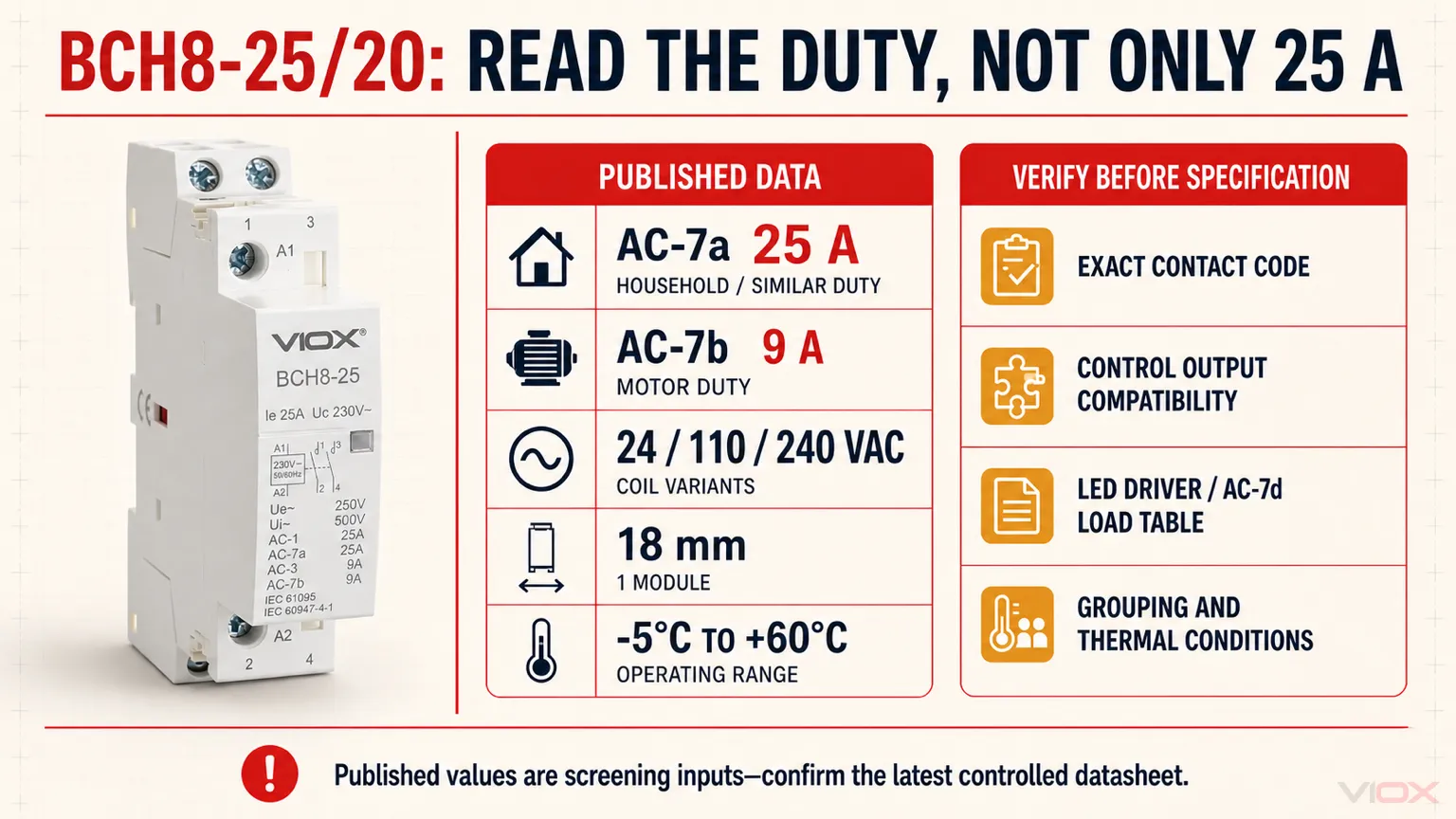
VIOX Yayınlanmış Veri Örneği: BCH8-25/20
Aşağıdaki örnek, şu anda yayınlanmakta olan verileri kullanmaktadır: VIOX BCH8-25 2P ürün sayfası. Bu örnek, yedi teknik spesifikasyonun satın alma kararını nasıl değiştirdiğini göstermektedir; en güncel kontrollü veri sayfasının veya projeye özel onayın yerine geçmez.
| Seçim alanı | BCH8-25/20 bilgileri yayınlandı | Mühendislik yorumu |
|---|---|---|
| Yük görevi | AC-7a ve AC-7b değerleri listelenmiştir | Aynı gövde, doğru görev döngüsüne göre okunmalıdır |
| Nominal işletme akımı | 25 A AC-7a; 9 A AC-7b | “Sadece ”25 A" ifadesi, yayınlanan ev tipi motor yükü değerini olduğundan yüksek gösterecektir |
| Ana devre kapasitesi | Ürün ailesi, belirtilen aile operasyonel sınırlarına kadar AC 50/60 Hz sistemler için sunulmuştur | Düşük voltajlı bobin seçeneğinden bir DC ana kontak değeri çıkarmayın |
| Kutup/kontak konfigürasyonu | BCH8-25/20, 2 kutuplu konfigürasyon | Sipariş kodundaki gerekli NA/NK sonekini ve devre fonksiyonunu doğrulayın |
| Bobin/kontrol beslemesi | Yayınlanan varyantlar: 24 V, 110 V veya 240 V AC; 230 V, 2P 16–25 A grubu 11,5 VA çekme ve 1,2 W tutma gücü listeler | “Bu yayınlanan tablodaki ”24 V” VAC'dir, 24 VDC değildir; kontrol çıkışı uyumluluğu kontrol edilmelidir |
| Görev ve kurulum | Yayınlanan ürün ailesi verileri: -5 °C ile +60 °C çalışma aralığı, 100.000 elektriksel işlem, 1.000.000 mekanik işlem, 25 A 2P gövde için 18 mm'lik tek modül | Bu rakamlar belirtilen modeli ve kullanım bağlamını gerektirir; sayfa, yan yana yapılan bazı düzenlemeler için ara parçalar kullanılmasını önermektedir |
| LED ve dokümantasyon | Ürün sayfası, 25 A'lik bir model için 75 W'lık 36 adede kadar LED lambayı belirtmektedir ancak modele özel bir AC-7d değeri, sürücü kalkış akımı profili veya termal değer kaybı eğrisi göstermemektedir | Lamba sayısını yalnızca yayınlanmış bir tarama değeri olarak kabul edin; şartname öncesinde kesin LED sürücüsünü, AC-7d/yük tablosunu, gruplandırmayı ve onaylı veri sayfasını doğrulayın |
Bu örnek, eksik girdileri ortaya koyarken aynı zamanda faydalı birinci taraf detayları da eklemektedir. Gerçek bir sipariş için hala kesin kontak kodu, bobin kodu, hedef pazar belgeleri, LED sürücüsü veya motor verileri ve kurulum koşulları gereklidir.
Üç Pratik Seçim Örneği
Örnek 1: Zamanlayıcı kontrollü elektrikli ısıtıcı
Bilinen gereksinimler:
- 230 V AC rezistif ısıtma devresi;
- 18 A tasarım yükü;
- proje tasarımına göre anahtarlanması amaçlanan iki iletken;
- 230 V AC zamanlayıcı çıkışı.
Seçilen üreticinin uygulama tablosu bu ev tipi ısıtma görevini AC-7a kategorisine dahil ediyorsa, şartname gerekli NO/NC düzenine sahip 2 kutuplu bir kontaktör, 230 V AC'de en az 18 A'lik bir AC-7a değeri ve zamanlayıcı çıkışıyla uyumlu 230 V AC bir bobin gerektirmelidir. Aksi takdirde, ilgili ürün için belirtilen kullanım kategorisini ve ısıtma yükü tablosunu kullanın. Koruma, iletken boyutlandırma, pano koşulları ve yerel anahtarlama gereksinimleri ayrı kontroller olarak kalmalıdır.
Örnek 2: PLC tarafından kontrol edilen fan
Bilinen gereksinimler:
- motor etiket ve besleme verileri mevcut;
- 24 V DC PLC kontrol sistemi;
- saatteki tanımlanmış kalkış sayısı;
- durum geri bildirimi gereklidir.
Üreticinin AC-7a ön değerinden değil, ilgili voltajdaki AC-7b motor değerlerinden seçim yapın. Gerekli kutup sayısını, 24 V DC bobini, geri bildirim için yardımcı kontağı ve bobin girişi ile PLC çıkışı arasındaki uyumluluğu belirtin. Model verilerindeki kalkış yöntemini ve anahtarlama frekansını doğrulayın.
Örnek 3: LED armatür grubu
Bilinen gereksinimler:
- toplam kararlı durum akımı hesaplanmış;
- LED sürücülerinin sayısı ve modeli biliniyor;
- kontrol voltajı ve anahtarlanan iletken sayısı tanımlanmış.
Belirli kontaktör ailesi için AC-7d değerini veya üretici tarafından yayınlanan aydınlatma tablosunu kullanın. İzin verilen sürücü sayısını veya gücünü ve belirtilen ani akım sınırlamalarını doğrulayın. Sadece toplam kararlı durum akımına veya AC-7a akım işaretine göre seçim yapmayın.
Satın Almaya Hazır Modüler Kontaktör Şartname Şablonu
Teklif istemeden önce bu tabloyu doldurun:
| Şartname alanı | Proje değeri |
|---|---|
| Uygulama ve yük tipi | |
| Yük beslemesi: AC/DC, gerilim, frekans | |
| Yük nominal akımı veya gücü | |
| Başlangıç/ani akım bilgisi | |
| Gerekli kullanım kategorisi veya üretici yük tablosu | |
| Kutup sayısı | |
| Ana kontak düzeni: NA/NK | |
| Bobin/kontrol beslemesi: AC/DC, gerilim, frekans | |
| Saatlik/günlük anahtarlama sayısı | |
| Gerekli yardımcı kontaklar veya manuel çalıştırma | |
| Muhafaza sıcaklığı, rakım ve gruplandırma koşulları | |
| Üst akım koruma ve koordinasyon gereksinimleri | |
| Hedef pazar ve gerekli dokümantasyon |
Bu şablon, makalenin temel karar aracıdır: eğer birkaç alan bilinmiyorsa, proje güvenilir bir model seçimi için hazır değildir.
Yaygın Seçim Hataları
- Sadece en büyük amper işaretini okumak. İlgili değer, görev ve gerilim ile eşleşmelidir.
- Bobin gerilimini yük gerilimi ile karıştırmak. Uc bobini kontrol eder; Ue ana devre için geçerlidir.
- Bir DC bobinini DC yük değeri olarak ele almak. Ana kontak DC kapasitesi ayrı olarak belirtilmelidir.
- Normal kontak durumunu göz ardı etmek. 2NO bir cihaz, 2NC veya 1NO+1NC ile aynı işlevi görmez.
- Kontaktörü devre koruması olarak kullanmak. Kısa devre ve aşırı yük koruması, uygun koruyucu cihazlar ve koordinasyon gerektirir.
- Her 24 V DC bobinin doğrudan bir PLC tarafından sürülebileceğini varsaymak. Çıkış ve bobin özelliklerini kontrol edin.
- Tam model dokümantasyonunu göz ardı etmek. Nominal değerler, aksesuarlar, aralıklar ve onaylar aynı ürün ailesi içinde farklılık gösterebilir.
Sıkça Sorulan Sorular
24 V DC bobinli bir kontaktör 230 V AC yükü anahtarlayabilir mi?
Evet, eğer ana kontaklar gerekli 230 V AC yük görevine ve akımına uygun değerlere sahipse. 24 V DC işareti, ana devre değerini değil, bobin beslemesini tanımlar.
Bir AC bobini DC ile beslenebilir mi?
Üretici bobini açıkça DC uyumlu veya belirtilen bir AC/DC geniş aralıklı bobin olarak tanımlamadığı sürece hayır. Voltaj tipi, değer, frekans, aralık ve polarite gereksinimlerini tam model ile eşleştirin.
Kontaktör amper değeri, devre kesici değeri ile aynı mı olmalıdır?
Otomatik olarak hayır. Kontaktörü yüke, kullanım kategorisine, voltaja ve anahtarlama görevine göre seçin. Koruyucu cihazı ise devre iletkenlerine, yüke, hata koşullarına, ürün dokümantasyonuna ve geçerli kurallara göre seçip koordine edin.
2P mi yoksa 4P mi seçmeliyim?
Devre tasarımının kontaktör tarafından anahtarlanmasını gerektirdiği iletken sayısını seçin. Tek fazlı bir devre genellikle bir veya iki anahtarlamalı iletken kullanır; üç fazlı bir devre genellikle üç veya nötrün kasten anahtarlandığı durumlarda dört iletken kullanır. Sistem tasarımını ve yerel gereksinimleri takip edin.
Modüler bir kontaktör DC yükü anahtarlayabilir mi?
Sadece tam model; voltaj, akım, yük tipi, kutup bağlantısı ve polarite için uygun bir DC işletim değerine sahipse. Yalnızca bir DC bobini, DC yük anahtarlama kapasitesi sağlamaz.
Nihai Seçim Kuralı
Doğru modüler kontaktör, sadece yükün bir üst amper değerindeki model değildir. kullanım sınıfı, çalışma gerilimi, kutup sayısı, kontak durumu, bobin beslemesi, anahtarlama görevi ve dokümantasyonu uygulamanın tüm gereksinimleriyle eşleşen modeldir.
Yük ile başlayın. Tam veri sayfası ile bitirin. Bu sıralama, genel bir ürün talebini savunulabilir bir mühendislik ve satın alma şartnamesine dönüştürür.
Kaynaklar
- IEC 61095:2023 — Ev ve benzeri yerler için elektromekanik kontaktörler
- IEC 60947-4-1:2023 — Elektromekanik kontaktörler ve motor yol vericiler
- ABB Kurulum Kontaktörleri: Modüler DIN Rayı Kılavuzu
- ABB Kurulum Kontaktörleri Kataloğu
- Schneider Electric Acti9 iCT Kontaktörler Kataloğu
- VIOX BCH8-25 2P Modüler Kontaktör: Yayınlanmış Ürün Verileri