In the high-stakes environment of industrial automation, a missed signal can mean lost production, damaged equipment, or safety hazards. Visual signaling devices are the primary language of the factory floor, communicating machine status instantly to operators and engineers. But with various options available, selecting the right device is critical.
Two of the most common visual signaling devices are the semaphore indicator and the stack light (also known as a signal tower). While both use light to convey information, they serve fundamentally different purposes, occupy different spaces, and communicate to different audiences.
This guide breaks down the technical differences, application scenarios, and selection criteria for semaphore indicators versus stack lights, helping you specify the correct component for your control panel or machine.
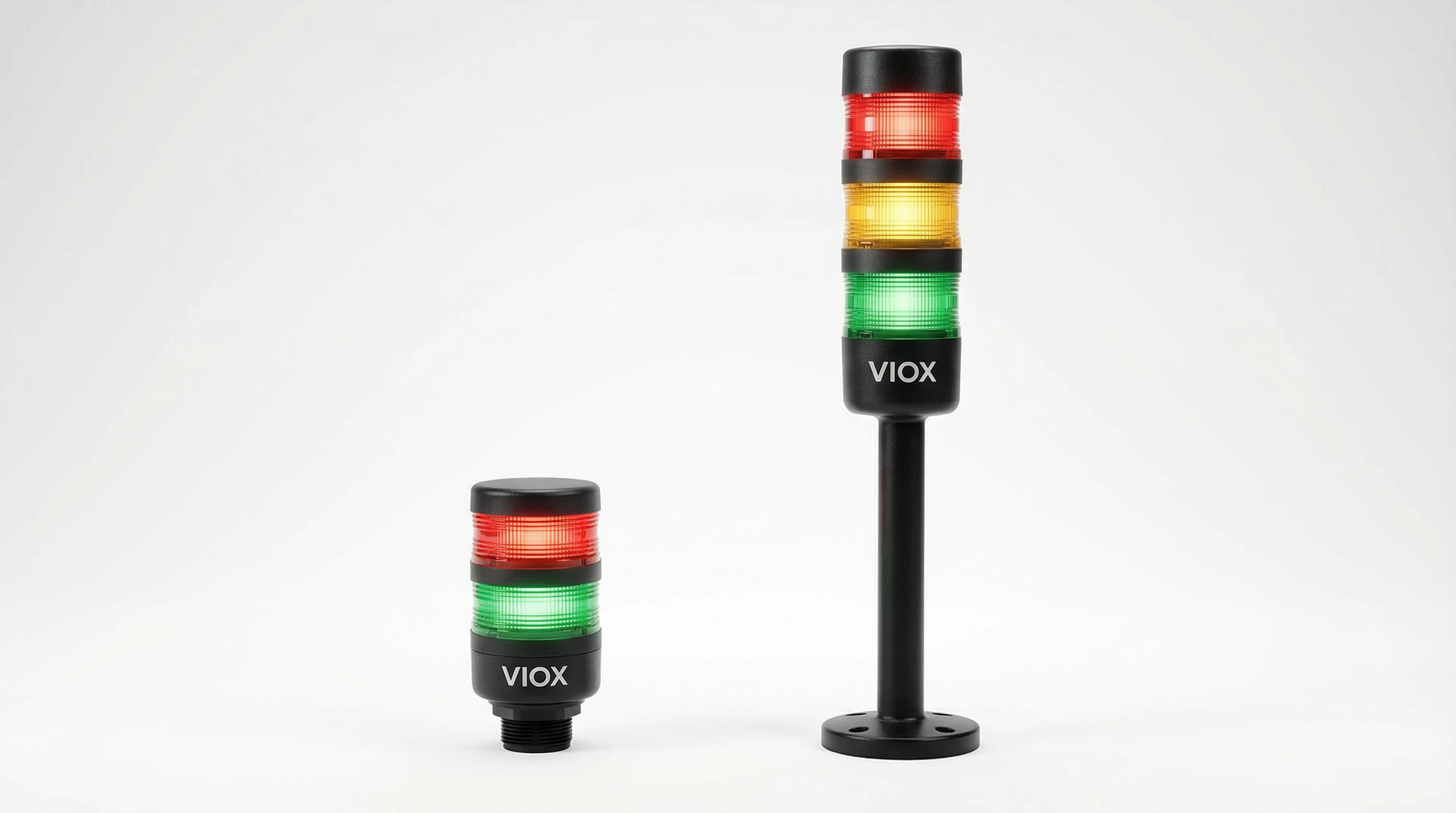
Definitions and Core Functions
What is a Semaphore Indicator?
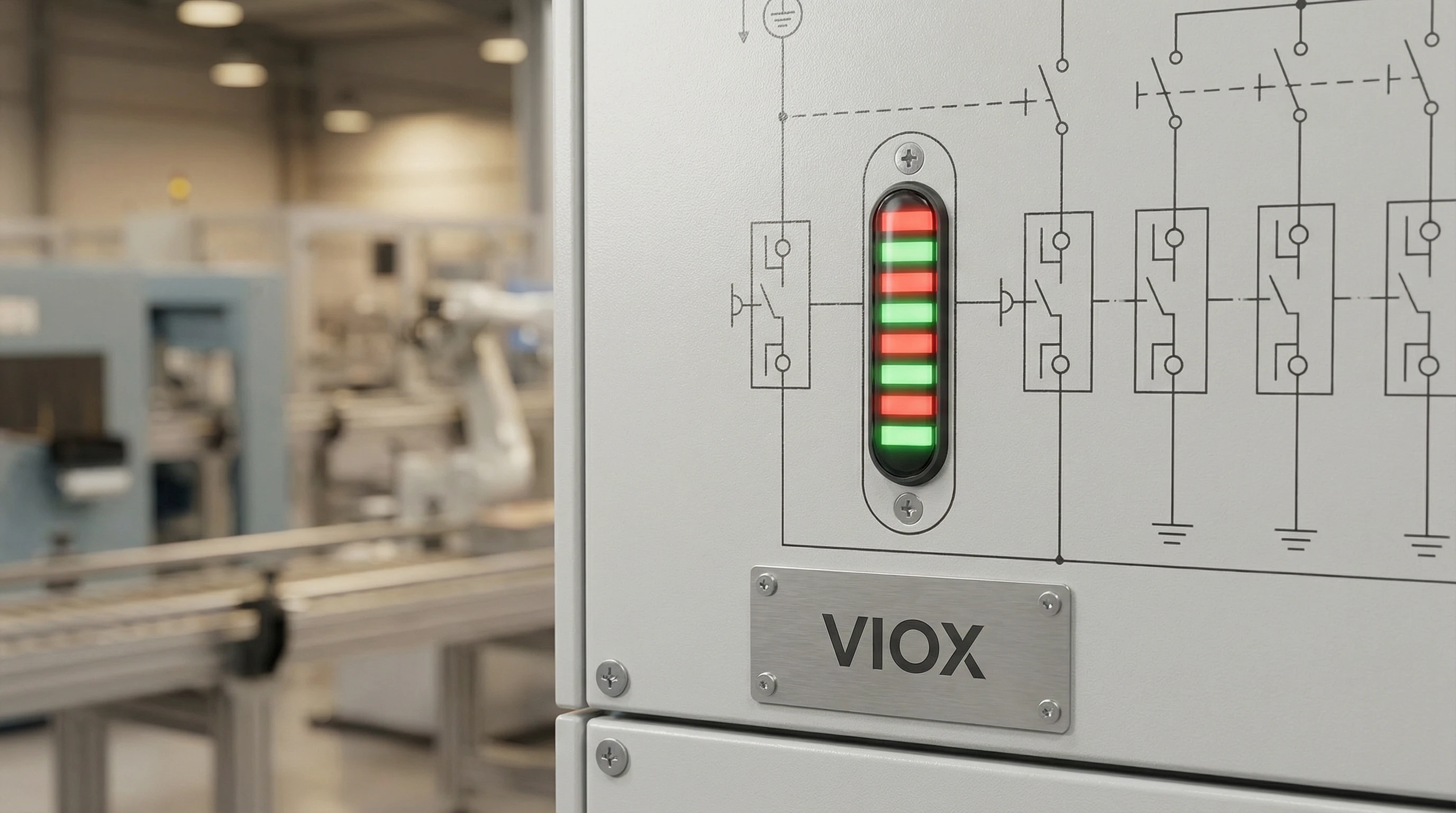
A semaphore indicator is a compact, panel-mounted device designed to show the specific status of a single component, typically a circuit breaker, disconnector, or valve. It is usually installed directly on the control panel door or within a mimic diagram.
- Primary Function: Position indication (Open/Closed, On/Off, Safe/Danger).
- Audience: The operator or engineer standing directly in front of the control panel.
- Form Factor: Single 22mm or 30mm round unit, often flush-mounted.
- Visual Output: Dual-color LED (Red/Green) or distinct symbols (Bar/Circle).
What is a Stack Light (Signal Tower)?
A stack light is a columnar, multi-segment signaling device mounted on top of machines or control cabinets. It uses color-coded tiers to broadcast the overall operational state of a machine or process line to the surrounding area.
- Primary Function: Machine status broadcasting (Running, Stopped, Material Low, Fault).
- Audience: Factory floor personnel, forklift drivers, and supervisors located away from the machine.
- Form Factor: Vertical column (40mm-100mm diameter), pole-mounted or direct-mounted.
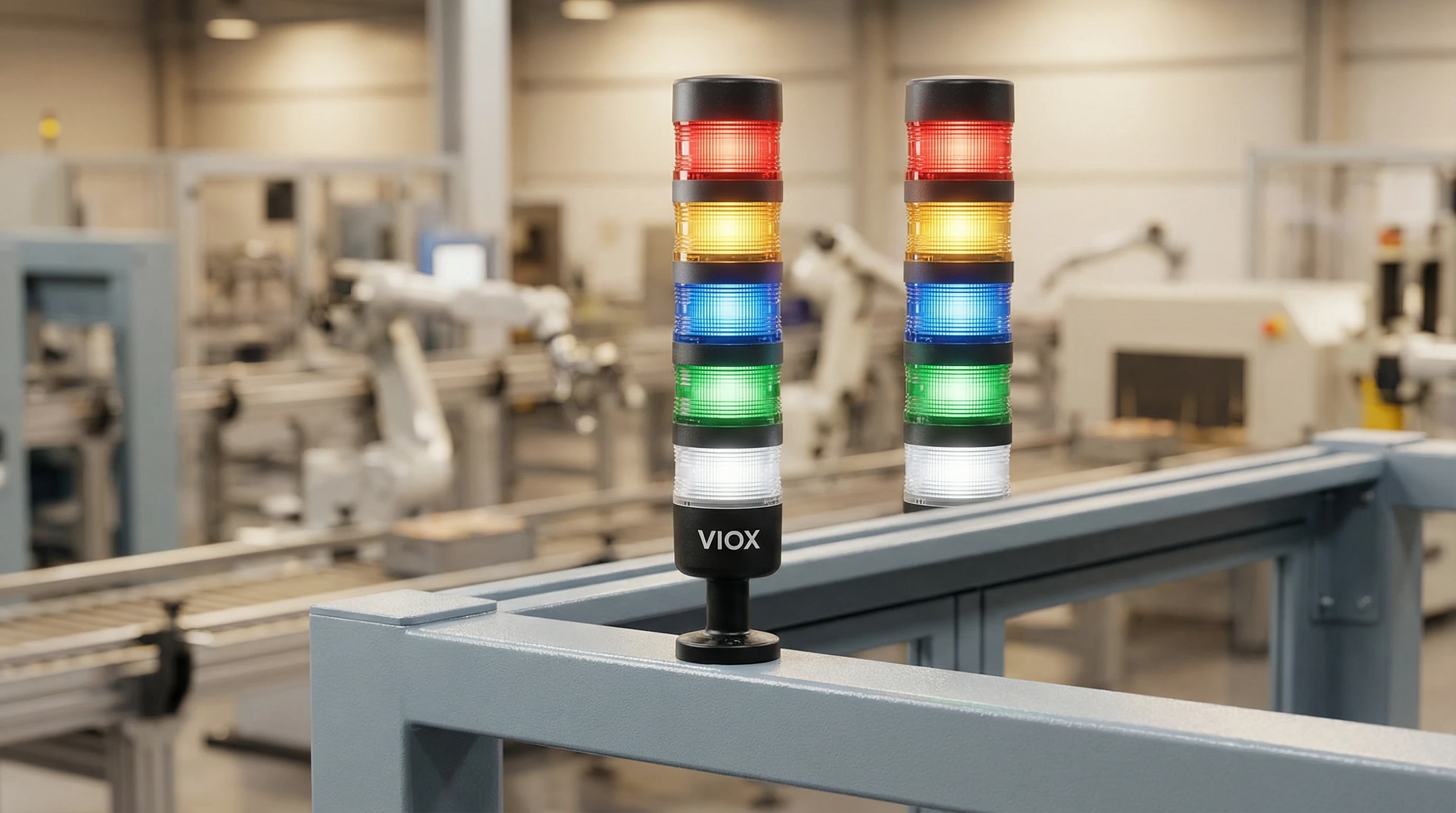
- Visual Output: 3-5 stacked colors (Red, Amber, Green, Blue, White), usually with 360° visibility.
Key Technical Differences
| Feature | Semaphore Indicator | Stack Light (Signal Tower) |
|---|---|---|
| Visibility Range | Short range (0.5 – 2 meters). Designed for “near-field” reading. | Long range (10 – 50+ meters). Designed for “far-field” broadcasting. |
| Information Density | Binary status (A vs. B) of a specific component. | Multi-state system status (3-5 distinct conditions). |
| Mounting Location | Control panel face, mimic diagram, console. | Top of machine, electrical cabinet roof, wall bracket. |
| Wiring Complexity | Direct wiring to auxiliary contacts (simple). | Multi-wire to PLC outputs or single cable IO-Link (complex). |
| Audible Alarm | Rarely integrated (separate buzzer used if needed). | Frequently integrated (85-100dB buzzer/siren). |
Application Scenarios: When to Use Which?
Scenario A: The Switchgear Room
Requirement: An engineer needs to verify if the Main Feeder Circuit Breaker 3 is open before performing maintenance.
Selection: Semaphore Indicator.
Why? The engineer is standing at the panel. They need precise confirmation of a specific component’s mechanical state. A stack light on top of the cabinet would only show general “Fault” or “Healthy” status for the whole board, which is insufficient for safe switching operations. The semaphore indicator provides unambiguous, direct feedback from the breaker’s auxiliary contacts.
Scenario B: The Automotive Assembly Line
Requirement: A CNC machine has run out of raw material and stopped. The area supervisor needs to know immediately to assign a technician.
Selection: Stack Light.
Why? The supervisor is likely walking the floor, 20 meters away. A small panel light is invisible from that distance. A tall stack light with an illuminated Blue or Amber tier (standard colors for material shortage/assistance) provides instant visibility over obstacles and other machines, reducing downtime.
Scenario C: The Andon Board System
Requirement: Operators at manual assembly stations need to signal for quality checks or parts resupply without leaving their station.
Selection: Stack Light (Andon Light).
Why? The signal is a “call for help” that must be seen by support staff (logistics, quality control) who are mobile. The 360-degree visibility of a stack light ensures the request is seen from any angle on the production floor.
Modern Innovations: Industry 4.0 Integration
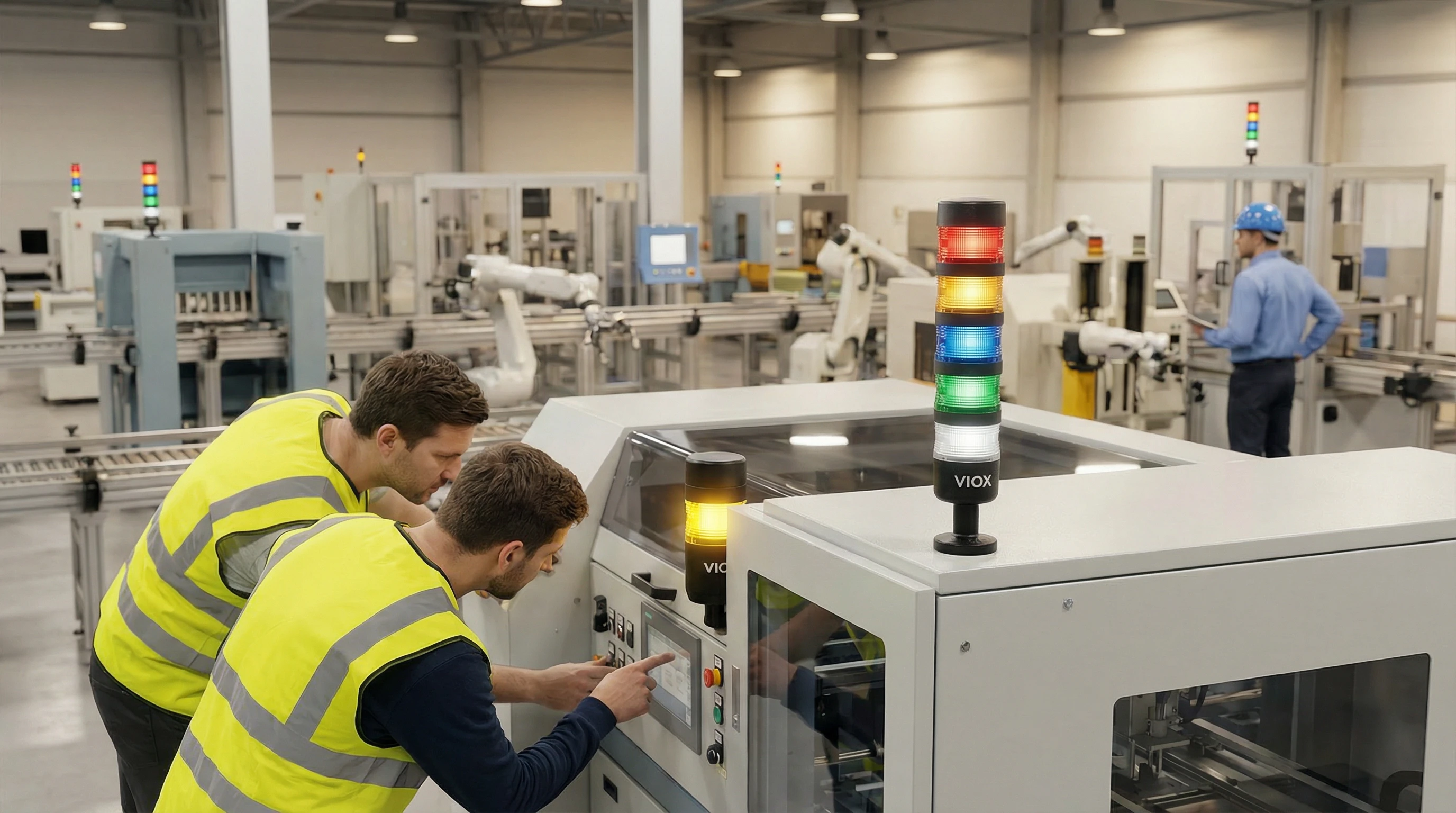
While semaphore indicators remain relatively simple, robust devices (focusing on reliability and LED longevity), stack lights have evolved significantly in the Industry 4.0 era.
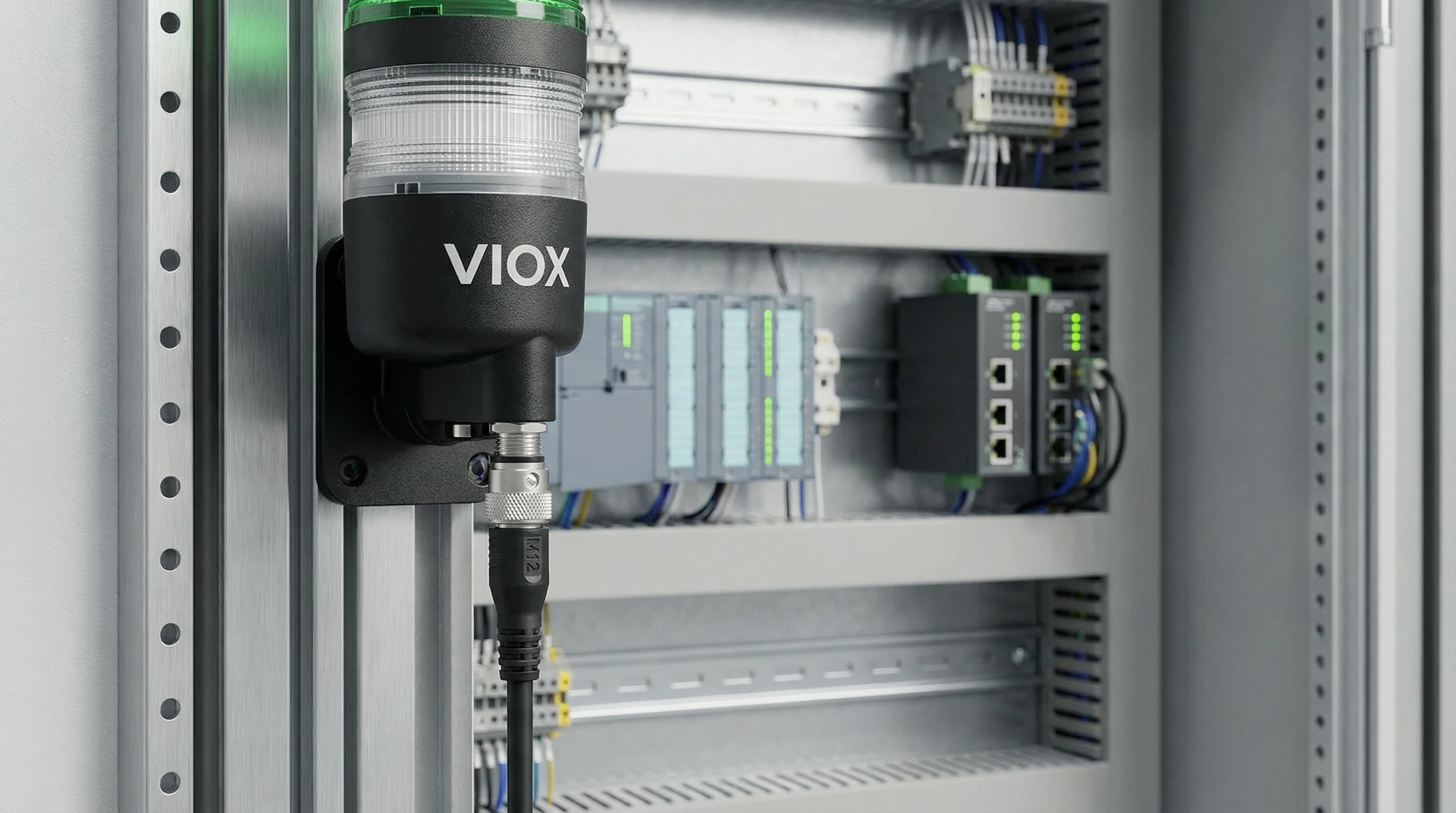
Smart Stack Lights: Modern VIOX stack lights often feature IO-Link connectivity. Instead of simple hard-wired On/Off control, these devices can:
- Display custom colors (RGB) for infinite status possibilities.
- Provide level indication (e.g., the light bar acts as a progress bar for tank level or cycle time).
- Report data back to the PLC (e.g., “Light module temperature high” or “Buzzer failure”).
Conclusion: Complementary, Not Competitive
The choice between a semaphore indicator and a stack light is rarely “either/or”—it is usually “both/and.”
In a well-designed industrial system:
- Stack Lights provide the “macroscopic” view: “This machine needs attention.”
- Semaphore Indicators provide the “microscopic” detail: “The main breaker is tripped” or “The intake valve is closed.”
By using both devices in their appropriate contexts, engineers create a layered information system that maximizes safety, efficiency, and response speed. For control panel design, ensure you specify high-quality VIOX semaphore indicators for component status and robust VIOX stack lights for system visibility.