

На этой странице
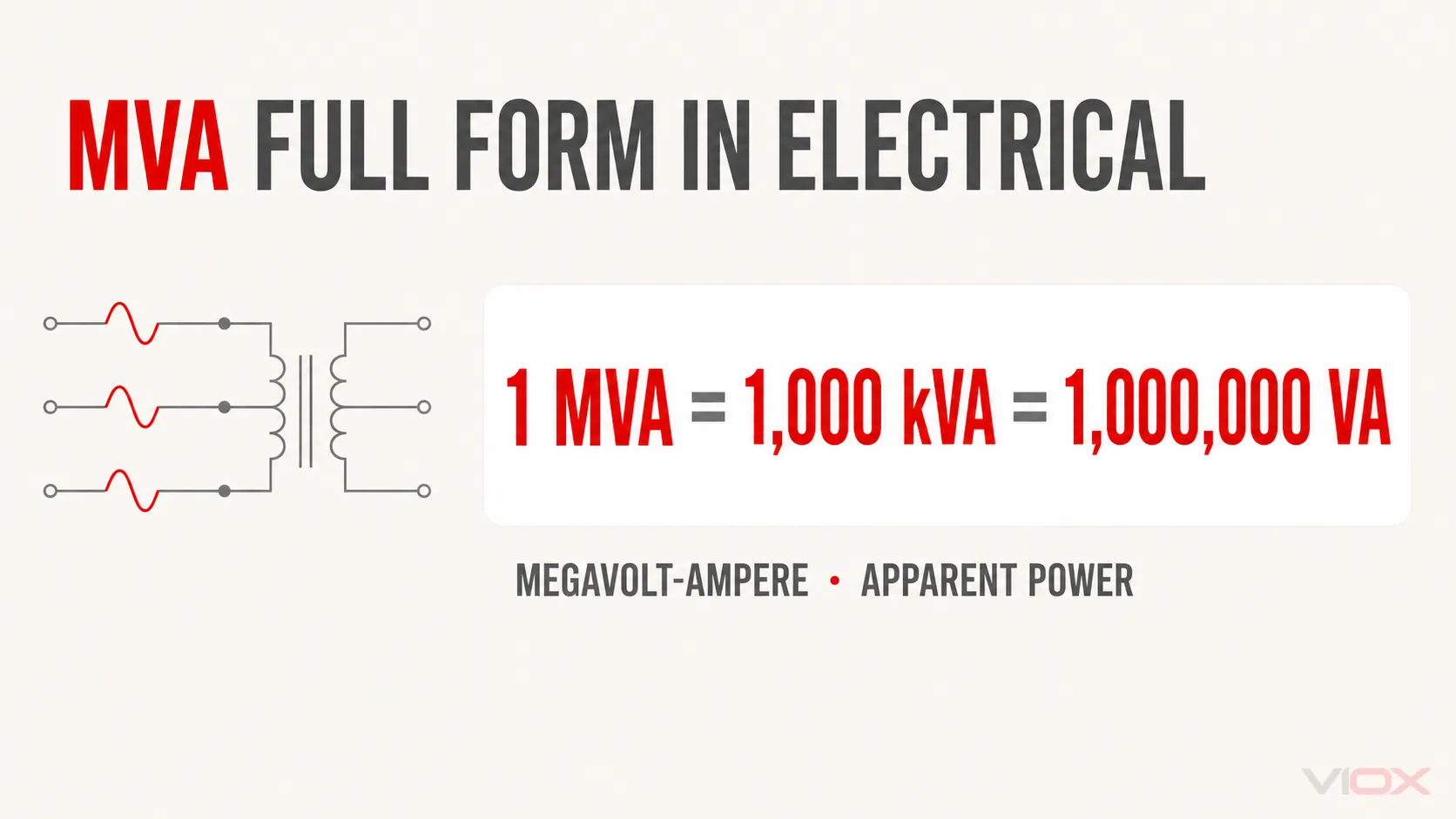
MVA расшифровывается как мегавольт-ампер. Это единица измерения полной мощности, используемая для трансформаторов, генераторов, подстанций и других крупных AC электрических систем.
Пересчет является точным:
1 MVA = 1,000 kVA = 1,000,000 VAMVA — это не то же самое, что MW. MVA описывает полное произведение среднеквадратичных значений напряжения и тока, тогда как MW описывает активную мощность, преобразуемую в полезную работу или тепло. Коэффициент мощности связывает эти два параметра.
Что означает MVA?
Буквы обозначают:
- M: мега, приставка СИ для 10^6;
- V: вольт;
- A: ампер.
Вольт-амперы измеряют полную мощность в электрической цепи AC. Та же величина может записываться как VA, kVA или MVA в зависимости от масштаба.
| Рейтинг | Эквивалентное значение |
|---|---|
| 1 kVA | 1,000 VA |
| 1 МВА | 1 000 кВА |
| 1 МВА | 1 000 000 ВА |
| 10 МВА | 10 000 кВА |
| 100 МВА | 100 000 кВА |
Заглавная буква M является важным. В системе СИ обозначение M означает мега, тогда как строчная m означает милли, или 10^-3.
МВА, МВт и Мвар: треугольник мощности
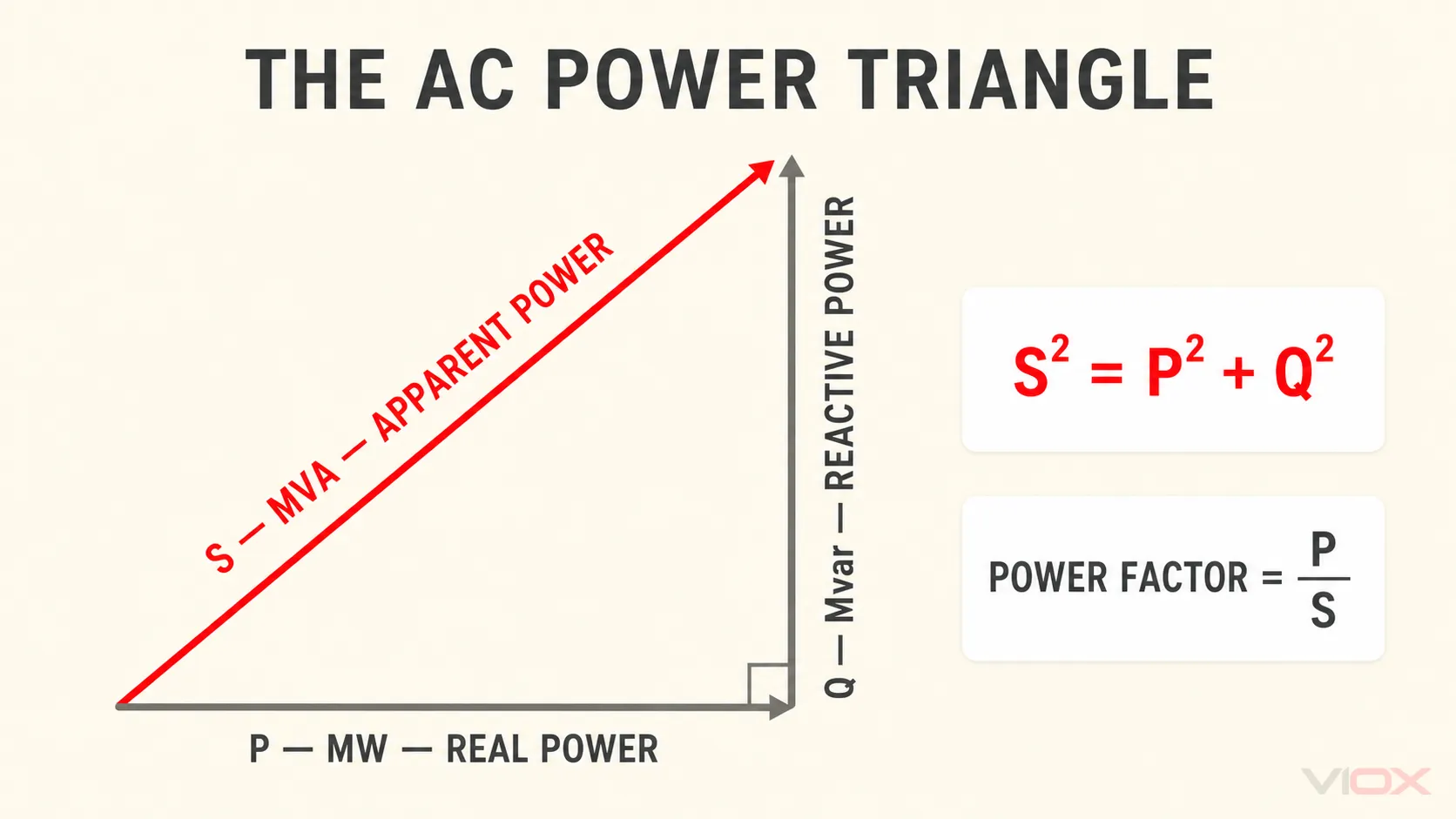
Мощность AC обычно описывается через три взаимосвязанные величины:
| Количество | Символ | Единица | Значение |
|---|---|---|---|
| Полная мощность | S | ВА, кВА, МВА | Суммарная потребность в среднеквадратичном значении напряжения и тока |
| Активная мощность | P | Вт, кВт, МВт | Мощность, преобразуемая в полезную работу, движение, тепло или свет |
| Реактивная мощность | Q | вар, квар, Мвар | Мощность, обмениваемая с магнитными и электрическими полями |
Для синусоидальной системы:
S^2 = P^2 + Q^2
Коэффициент мощности = P / S
MW = MVA × коэффициент мощности
Например, нагрузка, потребляющая 10 MVA при коэффициенте мощности 0.80, потребляет:
MW = 10 MVA × 0.80 = 8 MWОставшееся соотношение является реактивным, а не дополнительным потреблением активной энергии. Используя треугольник мощностей:
Mvar = sqrt(10^2 - 8^2) = 6 MvarЕсли коэффициент мощности изменяется при неизменном значении MW, требуемая мощность в MVA также меняется. Вот почему низкий коэффициент мощности увеличивает ток и расходует запас по мощности трансформаторов, кабелей и распределительных устройств, не обеспечивая при этом соответствующего увеличения активной мощности.
Процесс проектирования корректирующих мер см. в Компенсация реактивной мощности: выбор мощности конденсаторной установки, гармоники и защита.
Формула MVA для однофазных и трехфазных электрических систем
Полная мощность однофазной сети
MVA = V × I / 1 000 000где V — среднеквадратичное напряжение в вольтах, а I — среднеквадратичный ток в амперах.
Полная мощность трехфазной цепи
Для сбалансированной трехфазной электрической системы при использовании линейного напряжения и линейного тока:
MVA = sqrt(3) × V_L-L × I_L / 1 000 000Преобразование формулы для расчета тока:
I_L = MVA × 1 000 000 / (sqrt(3) × V_L-L)Данные уравнения позволяют рассчитать полную мощность на основе среднеквадратичных значений. Они не учитывают коэффициент мощности, если только требуемым результатом не является активная мощность.
Пример расчета: Ток трансформатора 10 MVA
Рассмотрим трехфазный трансформатор мощностью 10 MVA с номинальным напряжением 33/11 kV.
На стороне 33 kV:
I = 10,000,000 / (sqrt(3) × 33,000)
I ≈ 175 A
На стороне 11 kV:
I = 10,000,000 / (sqrt(3) × 11,000)
I ≈ 525 A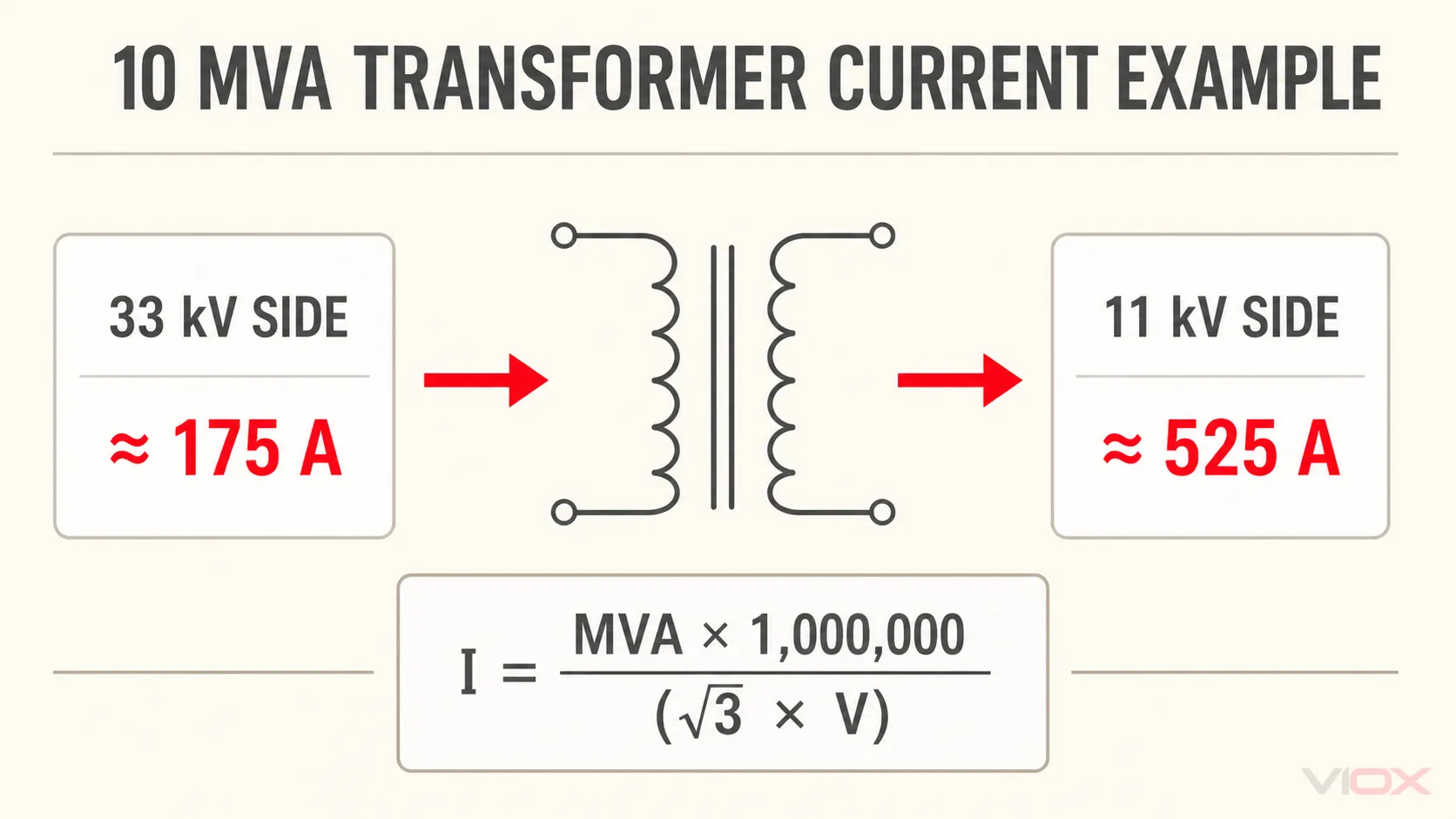
Номинальная полная мощность примерно одинакова с обеих сторон, но обмотка низкого напряжения несет большую токовую нагрузку. Фактическая нагрузка также должна учитывать класс охлаждения трансформатора, температурные пределы, положение переключателя ответвлений, гармоники, условия установки и инструкции производителя.
Почему номинальная мощность трансформаторов указывается в MVA, а не в MW?
Нагрев трансформатора в основном обусловлен потерями, зависящими от напряжения и тока. Трансформатор должен выдерживать среднеквадратичные значения напряжения и тока независимо от коэффициента мощности нагрузки. Поскольку коэффициент мощности относится преимущественно к подключенной нагрузке, мощность трансформатора выражается в VA, kVA или MVA, а не в W или MW.
Это не означает, что коэффициент мощности не имеет значения. При той же выходной мощности в МВт более низкий коэффициент мощности требует более высокого значения МВА и более высокого тока:
| Активная нагрузка | Коэффициент мощности | Требуемая полная мощность |
|---|---|---|
| 8 МВт | 1.00 | 8 МВА |
| 8 МВт | 0.90 | 8.89 МВА |
| 8 МВт | 0.80 | 10 МВА |
| 8 МВт | 0.70 | 11.43 МВА |
Более подробное объяснение номинальных параметров трансформаторов меньшей мощности см. в Понимание номинальной мощности трансформаторов в кВА.
Как читать номинальную мощность в МВА на заводской табличке
Значение в МВА никогда не следует рассматривать отдельно. Сверяйте его со следующими параметрами:
- номинальные первичные и вторичные напряжения;
- количество фаз и частота;
- номинальный ток для каждой обмотки;
- группа соединений и схема подключения;
- напряжение короткого замыкания в процентах;
- диапазон регулирования и положение ответвления обмотки;
- способ охлаждения;
- информация о превышении температуры и изоляции;
- применимый стандарт на трансформаторы.
Номинальная мощность в MVA сама по себе не определяет доступный ток короткого замыкания. Также необходимы значения полного сопротивления трансформатора и мощности вышестоящей электрической системы. Она также не указывает, сколько энергии трансформатор выдает за определенное время; энергия измеряется в таких единицах, как MWh, а не MVA.
Распространенные ошибки, связанные с MVA
Приравнивание MVA к MW
MVA равно MW только при коэффициенте мощности 1.00. Для других коэффициентов мощности используйте формулу MW = MVA × коэффициент мощности.
Путаница между мощностью и энергией
MVA — это номинальное значение мгновенной полной мощности. MWh — это энергия, накопленная за определенный период времени. Эти величины не являются взаимозаменяемыми.
Игнорирование множителя «корень из трех»
Формула для сбалансированной трехфазной системы с использованием линейного напряжения и линейного тока включает sqrt(3). Формула для однофазной системы его не содержит.
Использование номинального напряжения без проверки обмотки
Трансформатор имеет различные номинальные токи на сторонах высокого и низкого напряжения. Используйте напряжение той обмотки, которая подлежит оценке.
Общие вопросы
Сколько kVA в 1 MVA?
Один MVA равен 1 000 kVA.
Сколько MW в 1 MVA?
Это зависит от коэффициента мощности. При единичном коэффициенте мощности 1 MVA равен 1 MW. При коэффициенте мощности 0.8 1 MVA соответствует 0.8 MW.
Всегда ли более высокий номинал MVA лучше?
Нет. Номинал должен соответствовать системной нагрузке, напряжению, уровню токов короткого замыкания, условиям охлаждения, плану расширения, целям по эффективности и схеме защиты. Завышение номинала может привести к увеличению затрат и изменению характеристик электрической системы, не решая при этом проблем с низким коэффициентом мощности или гармониками.
Итоговое определение
MVA означает мегавольт-ампер, единица полной мощности, равная одному миллиону вольт-ампер. Используйте MVA вместе с напряжением для расчета тока AC, а также используйте коэффициент мощности для преобразования между MVA и MW. При чтении номинальных параметров трансформатора или генератора проверяйте всю заводскую табличку целиком, а не воспринимайте число MVA как активную мощность, энергию или отключающую способность.