

ในหน้านี้
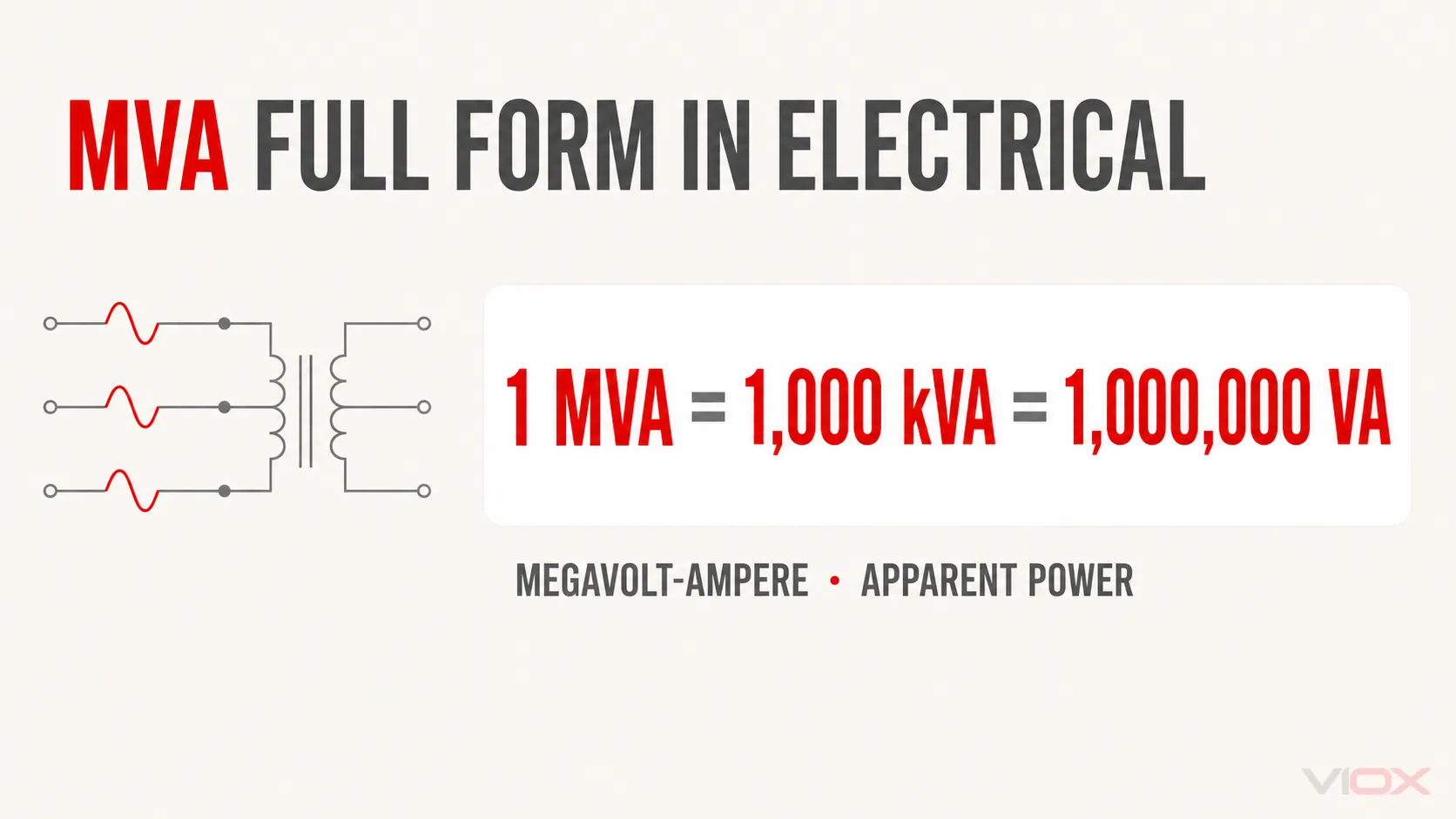
MVA ย่อมาจากเมกะโวลต์แอมแปร์. เป็นหน่วยของ กำลังไฟฟ้าปรากฏ ที่ใช้สำหรับหม้อแปลง เครื่องกำเนิดไฟฟ้า สถานีไฟฟ้า และระบบไฟฟ้า AC ขนาดใหญ่อื่นๆ.
การแปลงหน่วยมีความแน่นอนดังนี้:
1 MVA = 1,000 kVA = 1,000,000 VAMVA ไม่เหมือนกับ MW โดยที่ MVA อธิบายถึงผลคูณของแรงดันไฟฟ้าและกระแสไฟฟ้า RMS รวม ในขณะที่ MW อธิบายถึงกำลังไฟฟ้าจริงที่ถูกเปลี่ยนไปเป็นงานที่มีประโยชน์หรือความร้อน โดยมีตัวประกอบกำลังเป็นตัวเชื่อมโยงค่าทั้งสองเข้าด้วยกัน.
MVA หมายถึงอะไร?
ตัวอักษรเหล่านี้แทนค่า:
- ม.: mega ซึ่งเป็นคำอุปสรรค SI สำหรับ 10^6;
- วี: โวลต์;
- ก: แอมแปร์.
โวลต์-แอมแปร์ใช้วัดกำลังไฟฟ้าปรากฏในวงจร AC ปริมาณเดียวกันนี้อาจเขียนแทนด้วย VA, kVA หรือ MVA ขึ้นอยู่กับขนาด.
| การจัดอันดับ | ค่าที่เทียบเท่ากัน |
|---|---|
| 1 kVA | 1,000 VA |
| 1 MVA | 1,000 kVA |
| 1 MVA | 1,000,000 VA |
| 10 MVA | 10,000 kVA |
| 100 MVA | 100,000 kVA |
ตัวพิมพ์ใหญ่ M มีความสำคัญ ในสัญกรณ์ SI ตัวอักษร M หมายถึงเมกะ ในขณะที่ตัวอักษร m ตัวเล็กหมายถึงมิลลิ หรือ 10^-3.
MVA, MW และ Mvar: สามเหลี่ยมกำลังไฟฟ้า
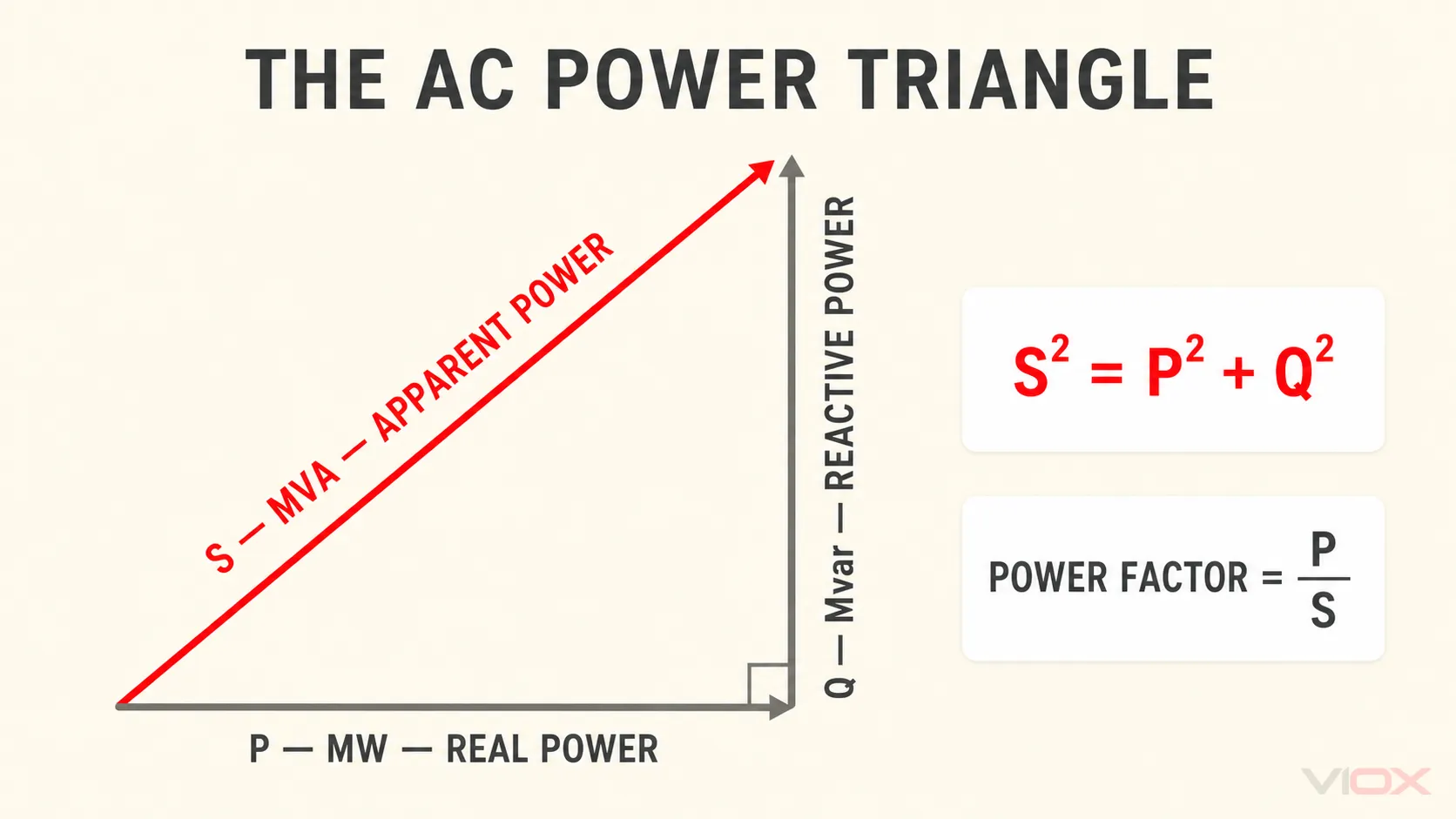
กำลังไฟฟ้า AC โดยทั่วไปจะอธิบายผ่านปริมาณที่สัมพันธ์กันสามประการ:
| ปริมาณ | เครื่องหมาย | หน่วย | ความหมาย |
|---|---|---|---|
| กำลังไฟฟ้าปรากฏ | S | VA, kVA, MVA | ความต้องการแรงดันและกระแสไฟฟ้า RMS รวม |
| กำลังไฟฟ้าจริง | พี | W, kW, MW | กำลังไฟฟ้าที่เปลี่ยนเป็นผลลัพธ์ที่มีประโยชน์ การเคลื่อนที่ ความร้อน หรือแสงสว่าง |
| กำลังไฟฟ้าแฝง | Q | var, kvar, Mvar | กำลังไฟฟ้าที่แลกเปลี่ยนกับสนามแม่เหล็กและสนามไฟฟ้า |
สำหรับระบบรูปคลื่นไซน์:
S^2 = P^2 + Q^2
ตัวประกอบกำลัง (Power factor) = P / S
MW = MVA × ตัวประกอบกำลัง
ตัวอย่างเช่น โหลดที่ดึงกำลังไฟฟ้า 10 MVA ที่ตัวประกอบกำลัง 0.80 จะใช้พลังงานดังนี้:
MW = 10 MVA × 0.80 = 8 MWความสัมพันธ์ที่เหลือเป็นแบบรีแอกทีฟมากกว่าการบริโภคพลังงานจริงเพิ่มเติม โดยใช้สามเหลี่ยมกำลัง:
Mvar = sqrt(10^2 - 8^2) = 6 Mvarหากตัวประกอบกำลังเปลี่ยนแปลงในขณะที่ MW ยังคงที่ ค่า MVA ที่ต้องการจะเปลี่ยนแปลงตาม นี่คือสาเหตุที่ตัวประกอบกำลังที่ไม่ดีส่งผลให้กระแสไฟฟ้าเพิ่มขึ้นและสิ้นเปลืองความสามารถในการรองรับของหม้อแปลง สายเคเบิล และสวิตช์เกียร์ โดยไม่ได้เพิ่มกำลังไฟฟ้าจริงในสัดส่วนที่เท่ากัน.
สำหรับกระบวนการออกแบบเพื่อแก้ไข ดูที่ การปรับปรุงค่าตัวประกอบกำลัง: การกำหนดขนาดคาปาซิเตอร์แบงก์, ฮาร์มอนิก, และการป้องกัน.
สูตร MVA สำหรับระบบไฟฟ้าเฟสเดียวและสามเฟส
กำลังไฟฟ้าปรากฏสำหรับระบบเฟสเดียว
MVA = V × I / 1,000,000โดยที่ V คือแรงดันไฟฟ้า RMS ในหน่วยโวลต์ และ I คือกระแสไฟฟ้า RMS ในหน่วยแอมแปร์.
กำลังไฟฟ้าปรากฏแบบสามเฟส
สำหรับระบบไฟฟ้าสามเฟสแบบสมดุลโดยใช้แรงดันไฟฟ้าระหว่างเฟสและกระแสไฟฟ้าในสาย:
MVA = sqrt(3) × V_L-L × I_L / 1,000,000การจัดรูปสมการใหม่เพื่อคำนวณหากระแสไฟฟ้า:
I_L = MVA × 1,000,000 / (sqrt(3) × V_L-L)สมการเหล่านี้ใช้คำนวณกำลังไฟฟ้าปรากฏจากค่า RMS โดยไม่รวมตัวประกอบกำลังไฟฟ้า เว้นแต่ผลลัพธ์ที่ต้องการคือค่ากำลังไฟฟ้าจริง.
ตัวอย่างการคำนวณ: กระแสไฟฟ้าของหม้อแปลงไฟฟ้าขนาด 10 MVA
พิจารณาหม้อแปลงไฟฟ้าสามเฟสขนาด 10 MVA ที่พิกัด 33/11 kV.
ที่ด้าน 33 kV:
I = 10,000,000 / (sqrt(3) × 33,000)
I ≈ 175 A
ที่ด้าน 11 kV:
I = 10,000,000 / (sqrt(3) × 11,000)
I ≈ 525 A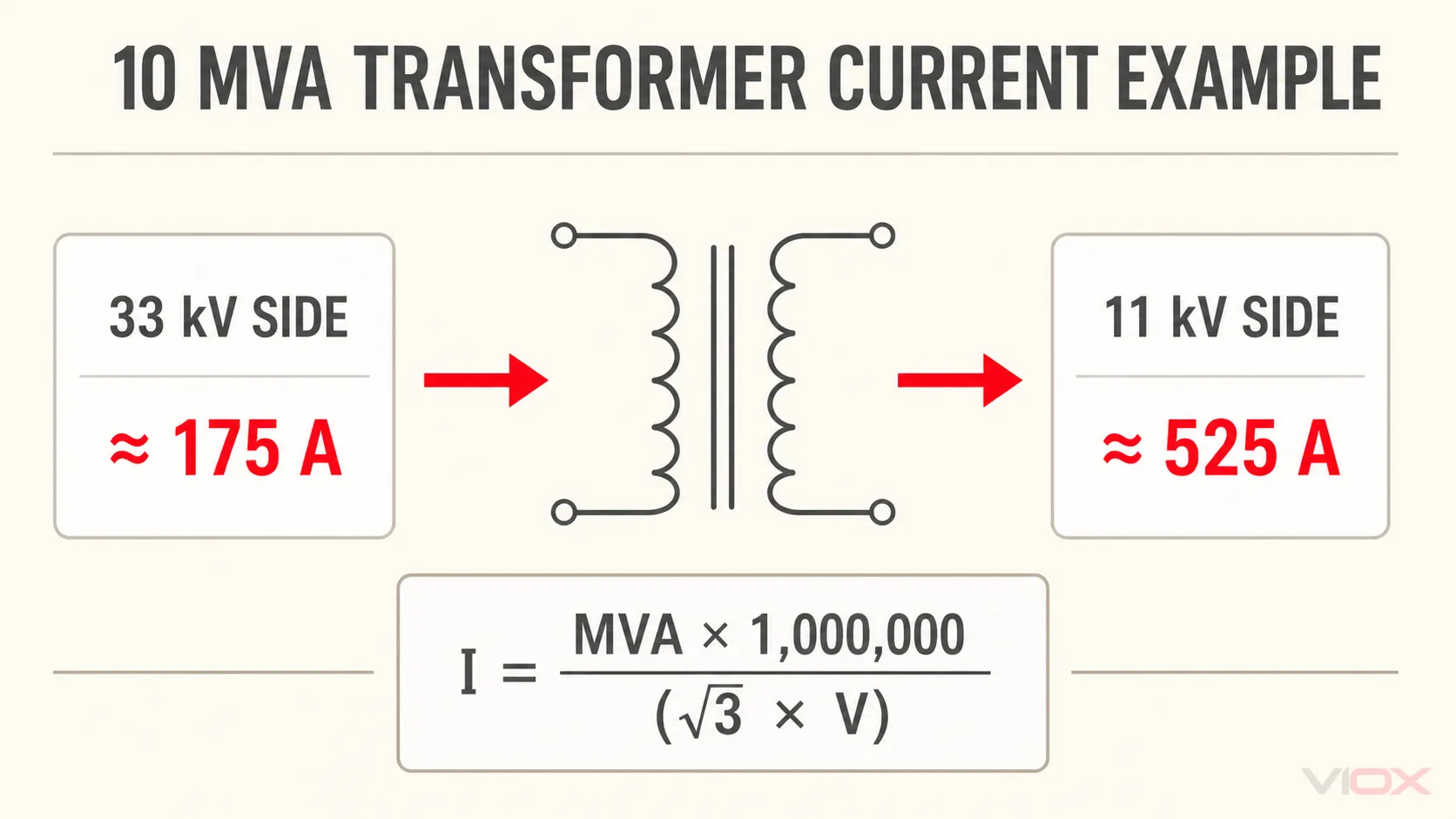
พิกัดกำลังไฟฟ้าปรากฏมีค่าประมาณเดียวกันทั้งสองด้าน แต่ขดลวดด้านแรงดันต่ำจะรับกระแสไฟฟ้าสูงกว่า การโหลดใช้งานจริงต้องคำนึงถึงระดับการระบายความร้อนของหม้อแปลง ขีดจำกัดอุณหภูมิ ตำแหน่งแทป ฮาร์มอนิก สภาพการติดตั้ง และคำแนะนำของผู้ผลิตด้วย.
ทำไมหม้อแปลงจึงระบุพิกัดเป็น MVA แทนที่จะเป็น MW?
การเกิดความร้อนในหม้อแปลงเกิดจากสูญเสียที่ขึ้นกับแรงดันไฟฟ้าและกระแสไฟฟ้าเป็นหลัก หม้อแปลงต้องรับแรงดันและกระแส RMS โดยไม่คำนึงถึงค่าตัวประกอบกำลังของโหลด เนื่องจากตัวประกอบกำลังเป็นคุณสมบัติของโหลดที่ต่ออยู่เป็นหลัก ความจุของหม้อแปลงจึงแสดงเป็น VA, kVA หรือ MVA แทนที่จะเป็น W หรือ MW.
สิ่งนี้ไม่ได้หมายความว่าค่าตัวประกอบกำลังไม่มีความสำคัญ ที่เอาต์พุต MW เดียวกัน ค่าตัวประกอบกำลังที่ต่ำกว่าจะต้องใช้ค่า MVA ที่สูงขึ้นและกระแสไฟฟ้าที่สูงขึ้น:
| โหลดจริง | ตัวประกอบกำลัง | กำลังไฟฟ้าปรากฏที่ต้องการ |
|---|---|---|
| 8 MW | 1.00 | 8 MVA |
| 8 MW | 0.90 | 8.89 MVA |
| 8 MW | 0.80 | 10 MVA |
| 8 MW | 0.70 | 11.43 MVA |
สำหรับคำอธิบายเชิงลึกเพิ่มเติมเกี่ยวกับพิกัดของหม้อแปลงขนาดเล็ก โปรดดู การทำความเข้าใจค่า kVA สำหรับหม้อแปลงไฟฟ้า.
วิธีอ่านค่าพิกัด MVA บนแผ่นป้ายชื่อ
ไม่ควรอ่านค่า MVA เพียงค่าเดียว ควรตรวจสอบร่วมกับข้อมูลต่อไปนี้:
- แรงดันไฟฟ้าด้านปฐมภูมิและทุติยภูมิที่กำหนด;
- จำนวนเฟสและความถี่;
- กระแสไฟฟ้าที่กำหนดสำหรับแต่ละขดลวด;
- เวกเตอร์กรุ๊ปและการต่อสาย;
- ค่าอิมพีแดนซ์เป็นเปอร์เซ็นต์;
- ช่วงของแทปและตำแหน่งของแทป;
- วิธีการระบายความร้อน;
- ข้อมูลอุณหภูมิที่เพิ่มขึ้นและฉนวน;
- มาตรฐานหม้อแปลงที่เกี่ยวข้อง.
พิกัด MVA เพียงอย่างเดียวไม่สามารถระบุค่ากระแสลัดวงจรที่เกิดขึ้นได้ จำเป็นต้องทราบค่าอิมพีแดนซ์ของหม้อแปลงและความแข็งแกร่งของระบบต้นทางด้วย นอกจากนี้ยังไม่ได้ระบุว่าหม้อแปลงจ่ายพลังงานได้มากเท่าใดเมื่อเวลาผ่านไป พลังงานจะถูกวัดในหน่วยเช่น MWh ไม่ใช่ MVA.
ความเข้าใจผิดทั่วไปเกี่ยวกับ MVA
การเข้าใจว่า MVA คือ MW
MVA จะเท่ากับ MW ก็ต่อเมื่อตัวประกอบกำลังเท่ากับ 1.00 สำหรับตัวประกอบกำลังค่าอื่น ให้ใช้สูตร MW = MVA × power factor.
การสับสนระหว่างกำลังไฟฟ้ากับพลังงาน
MVA เป็นพิกัดกำลังไฟฟ้าปรากฏขณะใดขณะหนึ่ง ส่วน MWh คือพลังงานที่สะสมตามระยะเวลา ซึ่งทั้งสองค่านี้ไม่สามารถใช้แทนกันได้.
การละค่ารากที่สองของสามไว้
สูตรสามเฟสสมดุลที่ใช้แรงดันระหว่างสายและกระแสในสายจะต้องรวมค่า sqrt(3) ด้วย แต่สูตรเฟสเดียวไม่มีค่านี้.
การใช้แรงดันระบุโดยไม่ตรวจสอบขดลวด
หม้อแปลงไฟฟ้ามีพิกัดกระแสไฟฟ้าที่แตกต่างกันในด้านแรงดันสูงและแรงดันต่ำ ให้ใช้แรงดันของขดลวดที่กำลังประเมิน.
คำถามที่พบบ่อย
1 MVA มีกี่ kVA?
1 MVA เท่ากับ 1,000 kVA.
1 MVA มีกี่ MW?
ขึ้นอยู่กับค่าตัวประกอบกำลัง ที่ตัวประกอบกำลังเท่ากับ 1 ค่า 1 MVA จะเท่ากับ 1 MW ที่ตัวประกอบกำลัง 0.8 ค่า 1 MVA จะสอดคล้องกับ 0.8 MW.
ค่าพิกัด MVA ที่สูงกว่าจะดีกว่าเสมอไปหรือไม่?
ไม่เสมอไป พิกัดต้องเหมาะสมกับโหลดของระบบไฟฟ้า, แรงดันไฟฟ้า, ระดับความผิดพร่อง, สภาวะการระบายความร้อน, แผนการขยายระบบ, วัตถุประสงค์ด้านประสิทธิภาพ และการออกแบบระบบป้องกัน การเลือกขนาดที่ใหญ่เกินไปอาจเพิ่มต้นทุนและส่งผลต่อประสิทธิภาพของระบบโดยไม่ได้แก้ปัญหาค่าตัวประกอบกำลังต่ำหรือปัญหาฮาร์มอนิก.
คำนิยามขั้นสุดท้าย
MVA หมายถึง เมกะโวลต์แอมแปร์, ซึ่งเป็นหน่วยของกำลังไฟฟ้าปรากฏที่เท่ากับหนึ่งล้านโวลต์แอมแปร์ ให้ใช้ MVA ร่วมกับแรงดันไฟฟ้าเพื่อคำนวณกระแส AC และใช้ตัวประกอบกำลังเพื่อแปลงค่าระหว่าง MVA และ MW เมื่ออ่านค่าพิกัดของหม้อแปลงหรือเครื่องกำเนิดไฟฟ้า ให้ตรวจสอบรายละเอียดบนแผ่นป้ายชื่อทั้งหมด แทนที่จะถือว่าตัวเลข MVA เป็นค่ากำลังไฟฟ้าจริง พลังงาน หรือความสามารถในการทนต่อกระแสลัดวงจร.