
При выборе контакторов для электрических систем крайне важно понимать разницу между IEC 61095 и IEC 60947-4-1 стандартами для обеспечения безопасности, производительности и соответствия требованиям. Эти два стандарта Международной электротехнической комиссии (МЭК) регулируют конструкцию и применение контакторов, но они обслуживают совершенно разные рынки. IEC 61095 относится к бытовым и аналогичным применениям, а IEC 60947-4-1 охватывает управление промышленными двигателями и коммутацию в тяжелых условиях. Неправильный выбор стандарта может привести к преждевременному выходу из строя, угрозе безопасности и дорогостоящим простоям системы.
В этом всеобъемлющем руководстве рассматриваются технические различия, требования к применению и критерии выбора для обоих стандартов, что помогает инженерам-электрикам, производителям панелей и специалистам по закупкам принимать обоснованные решения.
Понимание основ
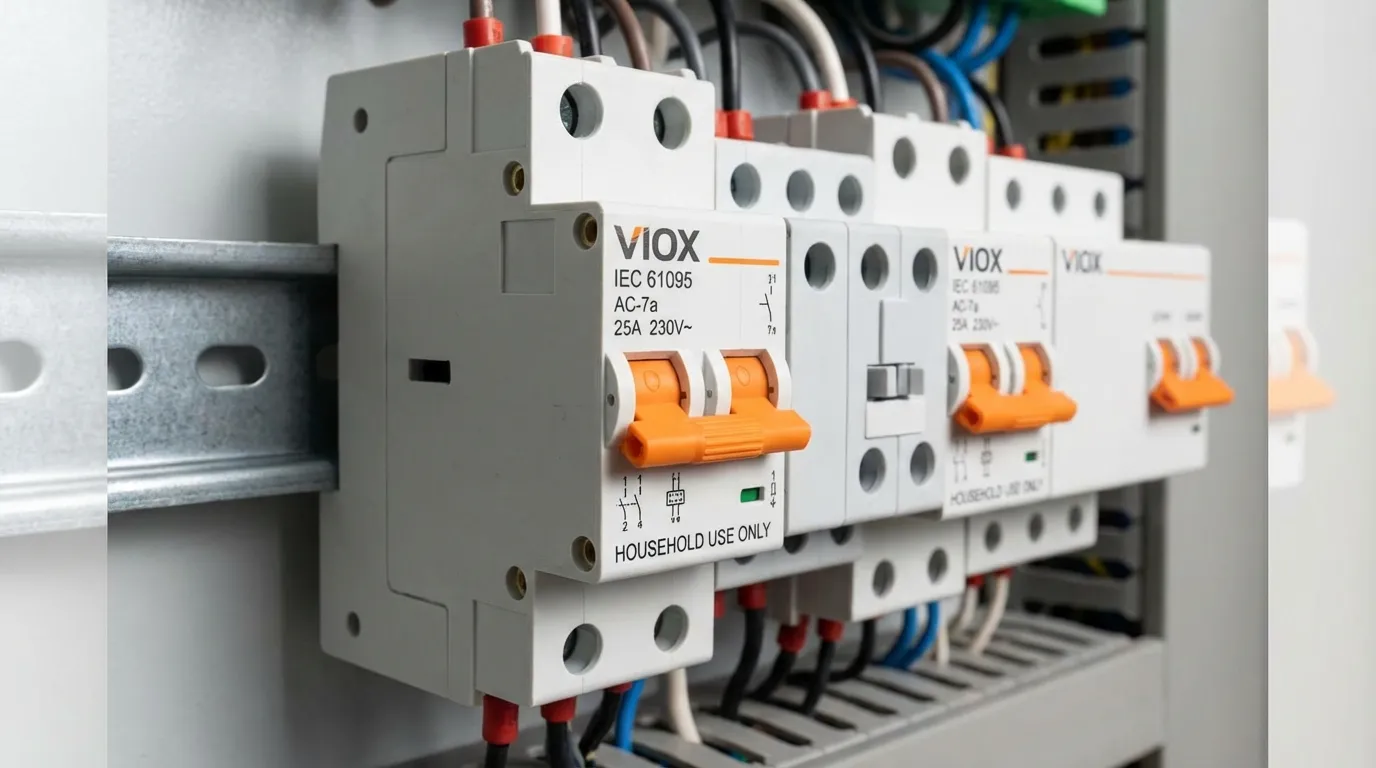
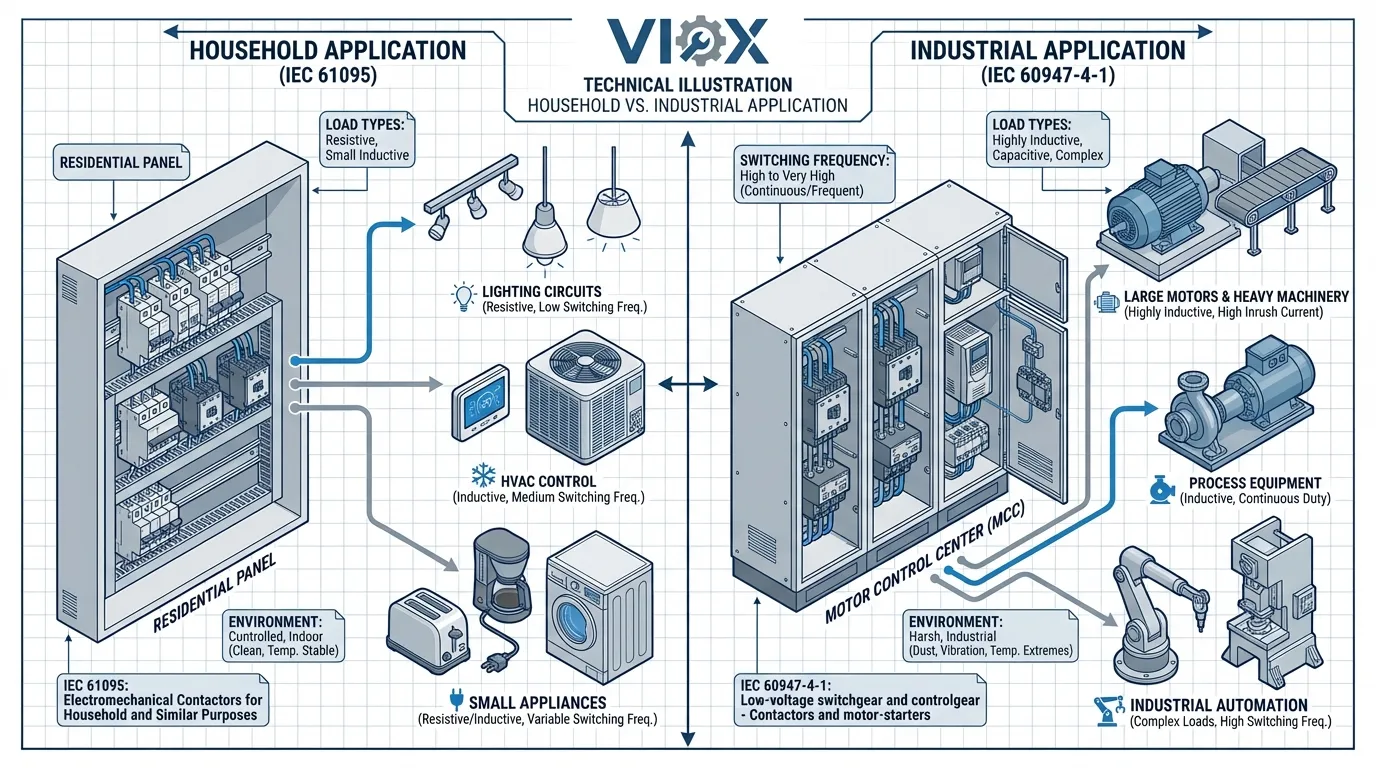
IEC 61095 применяется к электромеханическим контакторам с воздушным промежутком, предназначенным для бытовых и аналогичных целей. Эти контакторы рассчитаны на цепи до 440 В AC с рабочими токами, обычно не превышающими 63A для категории применения AC-7a и 32A для категорий AC-7b, AC-7c и AC-7d. Стандарт конкретно относится к приложениям, где частота переключений умеренная, а нагрузки относительно предсказуемы, таким как управление бытовым освещением, системы HVAC и небольшие двигатели.
IEC 60947-4-1 регулирует контакторы и пускатели двигателей для промышленного применения, охватывая оборудование с номинальным напряжением до 1000 В переменного тока или 1500 В постоянного тока. Этот стандарт учитывает жесткие требования промышленных сред, где контакторы должны выдерживать большие индуктивные нагрузки, частые циклы переключения (часто миллионы операций) и суровые условия эксплуатации, включая экстремальные температуры, вибрацию и загрязнение.
Основное различие заключается в их философии проектирования: IEC 61095 отдает приоритет экономической эффективности и простоте для бытового применения, а IEC 60947-4-1 подчеркивает надежность, долговечность и расширенные функции защиты для промышленного применения.
Всестороннее техническое сравнение
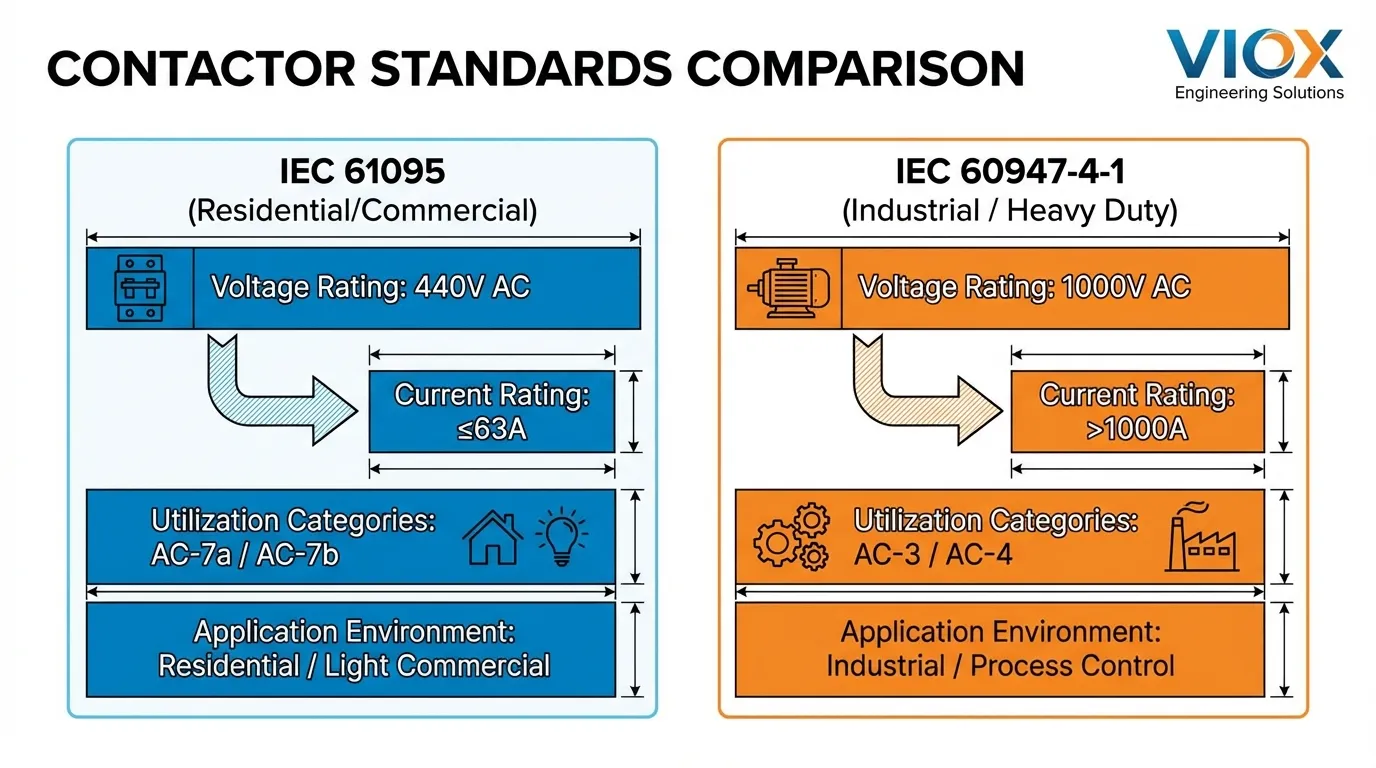
| Параметр | IEC 61095 (Бытовой) | IEC 60947-4-1 (Промышленный) |
|---|---|---|
| Номинальное напряжение | ≤ 440 В переменного тока (между фазами) | ≤ 1000 В переменного тока, ≤ 1500 В постоянного тока |
| Текущий рейтинг | ≤ 63 A (AC-7a), ≤ 32 A (AC-7b/c/d) | До нескольких тысяч ампер |
| Основное применение | Жилые, легкие коммерческие | Управление промышленными двигателями, тяжелое оборудование |
| Категории использования | AC-1, AC-7a, AC-7b, AC-7c, AC-7d | AC-1, AC-2, AC-3, AC-4, DC-1, DC-3, DC-5 |
| Номинальный ток отключения | ≤ 6 кА условный | До 100 кА+ (в зависимости от типа) |
| Частота переключения | Умеренная (периодическая работа) | Высокая (частые циклы, миллионы операций) |
| Испытания на выносливость | Базовый электрический/механический ресурс | Комплексная выносливость в номинальных условиях |
| Координация при коротком замыкании | Требуется координация типа 1 | Варианты координации типа 1 и типа 2 |
| Охрана окружающей среды | Степень загрязнения 2 (типичная) | Улучшенная защита для промышленных сред |
| Гашение дуги | Базовая конструкция с воздушным промежутком | Передовые системы дугогашения |
| Монтаж | DIN-рейка (модульная конструкция) | Монтаж на панель, DIN-рейку или вставной |
| Вспомогательные контакты | Ограниченное количество вспомогательных контактов | Множество вариантов вспомогательных контактов |
| Управление катушкой | Стандартное или электронное управление | Стандартное, электронное или с питанием от постоянного тока |
| Требования к тестированию | Упрощенные процедуры испытаний | Комплексное тестирование по категории применения |
| Типовая установка | Бытовые щитки, распределительные щиты | Центры управления двигателями (MCC), промышленные панели |
Объяснение ключевых технических различий
1. Номинальные значения напряжения и тока
Самое основное различие заключается в электрических параметрах. Контакторы IEC 61095 предназначены для бытового применения при низком напряжении до 440 В переменного тока с номинальным током, обычно ограниченным 63 А. Это делает их идеальными для управления бытовыми цепями освещения, небольшим оборудованием HVAC и бытовыми приборами.
В отличие от них, контакторы IEC 60947-4-1 выдерживают гораздо более высокие напряжения (до 1000 В переменного тока или 1500 В постоянного тока) и токи в диапазоне от нескольких ампер до нескольких тысяч ампер. Эти номинальные значения необходимы для управления большими промышленными двигателями, тяжелым оборудованием и мощными промышленными нагрузками. Например, типичный промышленный пускатель двигателя может управлять двигателем мощностью 200 л.с., потребляющим 250 А при 480 В, что намного превышает возможности бытового контактора.
2. Категории применения: бытовые и промышленные
Категории применения IEC 61095:
- АС-1: Неиндуктивные или слабоиндуктивные нагрузки (резистивный нагрев, лампы накаливания)
- AC-7a: Моторные нагрузки для бытовых приборов (стиральные машины, посудомоечные машины)
- AC-7b: Моторные нагрузки для оборудования кондиционирования и охлаждения воздуха
- AC-7c: Коммутация компенсированного управления газоразрядными лампами
- AC-7d: Коммутация светодиодных ламп и пускорегулирующей аппаратуры для светодиодов (добавлено в редакции 2023 г.)
Категории применения IEC 60947-4-1:
- АС-1: Неиндуктивные или слабоиндуктивные нагрузки
- AC-2: Пуск и выключение скользящего двигателя во время работы
- АС-3: Пуск короткозамкнутого двигателя, выключение во время работы (наиболее распространенная промышленная категория)
- AC-4: Пуск, противовключение, толчковый режим и операции прерывистого перемещения асинхронного двигателя с короткозамкнутым ротором
- DC-1, DC-3, DC-5: Различные применения управления двигателями постоянного тока
Категория AC-3 является наиболее широко используемой в промышленных условиях и предназначена для контакторов, которые запускают асинхронные двигатели с короткозамкнутым ротором и выключают их во время работы. Эти контакторы должны выдерживать пусковые токи, в 5-8 раз превышающие номинальный ток двигателя во время запуска. Узнайте больше о категориях применения контакторов.
3. Требования к износостойкости и надежности
Промышленные применения предъявляют значительно более высокие требования к износостойкости. Контакторы IEC 60947-4-1 проходят строгие испытания на износостойкость, включающие миллионы рабочих циклов в номинальных условиях. Типичный контактор с номиналом AC-3 может быть протестирован на 1-8 миллионов операций в зависимости от номинального тока и применения.
Контакторы IEC 61095, хотя и остаются надежными, предназначены для умеренных рабочих циклов, типичных для бытовых применений — возможно, от нескольких тысяч до десятков тысяч операций в течение срока службы. Это различие в требованиях к износостойкости напрямую влияет на выбор материала контактов, конструкцию пружин и механизмы гашения дуги.
4. Координация при коротком замыкании
Оба стандарта требуют координации с устройствами защиты от короткого замыкания (УЗКЗ), но IEC 60947-4-1 предлагает два различных типа координации:
- Тип 1 координации: В условиях короткого замыкания контактор или пускатель может получить повреждения, но не должен представлять опасности для людей или установки. Контактор должен быть заменен или отремонтирован перед возвратом в эксплуатацию. Это аналогично координации, требуемой IEC 61095.
- Тип 2 координации: В условиях короткого замыкания не допускаются опасные последствия, и контактор должен быть пригоден для дальнейшего использования после устранения неисправности. Допускается только незначительная сварка контактов, и оборудование не должно требовать значительного обслуживания. Этот более высокий уровень координации имеет решающее значение для промышленных применений, где простои обходятся дорого.
Понимание координации при коротком замыкании необходимо при выборе автоматических выключателей в литом корпусе (MCCB) для панельных применений.
5. Гашение дуги и конструкция контактов
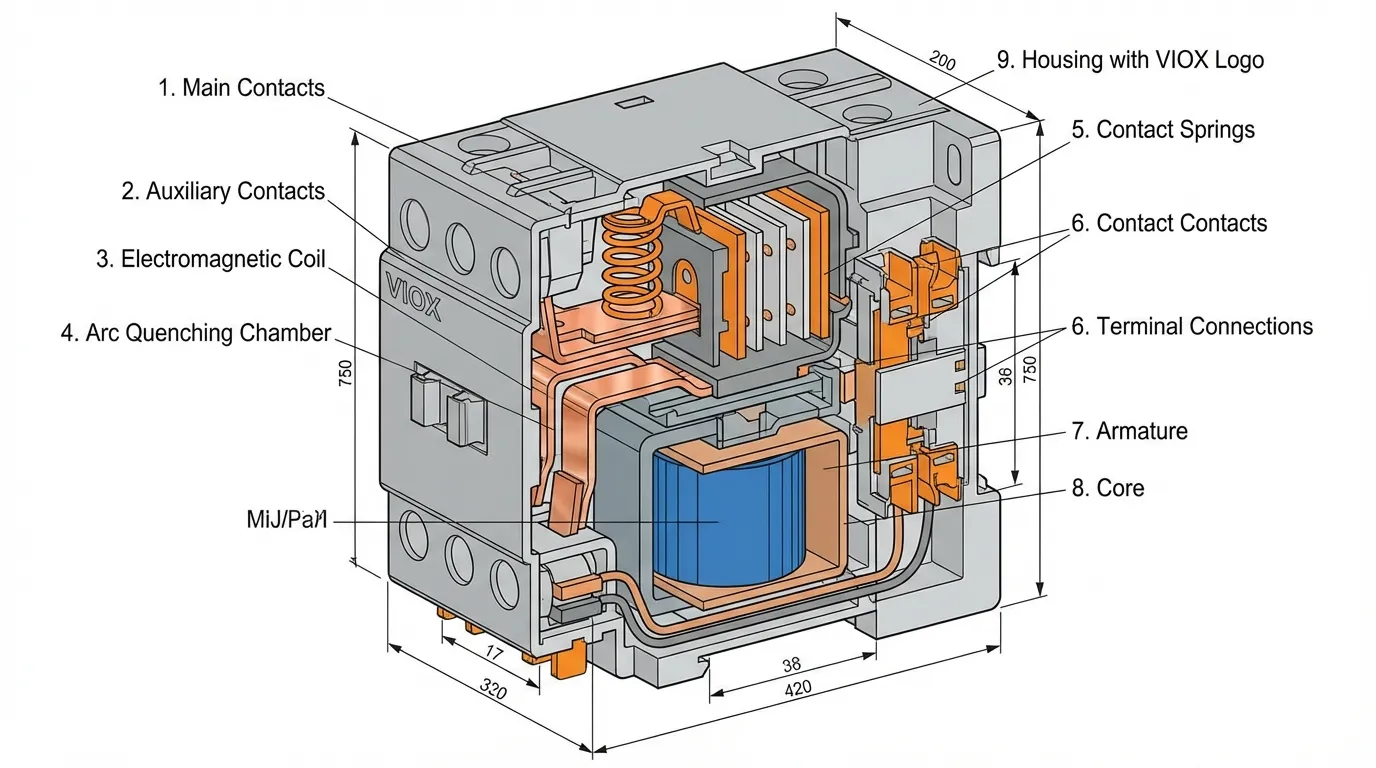
Промышленные контакторы используют сложные системы гашения дуги для безопасного прерывания высоких токов, особенно при индуктивных нагрузках. Они могут включать в себя:
- Магнитные дугогасительные катушки для направления дуг в дугогасительные камеры
- Множественные пластины-разделители дуги для разделения и охлаждения дуг
- Улучшенные контактные материалы (серебряные сплавы, серебро-вольфрам)
- Большие контактные зазоры и более высокое контактное давление
Бытовые контакторы используют более простые конструкции с воздушным разрывом, достаточные для их более низких номинальных токов и менее требовательных рабочих циклов. Понимание внутренних компонентов контактора помогает объяснить эти конструктивные различия.
Руководство по применению
Когда следует указывать контакторы IEC 61095
- Жилые электрические панели и потребительские блоки
- Системы автоматизации зданий (управление освещением, планирование HVAC)
- Легкие коммерческие применения (торговое освещение, HVAC небольших офисов)
- Применения модульных контакторов требующие монтажа на DIN-рейку
- Интеграция умного дома с электронными схемами управления
- Управление светодиодным освещением (категория применения AC-7d)
- Применения с током ≤ 63A и напряжением ≤ 440 В переменного тока
Контакторы IEC 61095 превосходны в тех случаях, когда приоритетами являются экономичность, компактный размер и монтаж на DIN-рейку. Модульные контакторы особенно популярны в современных системах управления зданиями.
Когда следует указывать контакторы IEC 60947-4-1
- Промышленные центры управления двигателями (MCC)
- Тяжелое оборудование и производственное оборудование
- Насосные и компрессорные станции
- Системы HVAC в крупных коммерческих зданиях
- Горнодобывающая, нефтехимическая и обрабатывающая промышленность предприятия
- Применения, требующие координации типа 2
- Высокочастотное переключение операции (толчковый режим, противовключение)
- Большие пускатели двигателей (>10 л.с. / 7,5 кВт)
- Суровые промышленные условия (экстремальные температуры, вибрация, загрязнение)
Для критически важных промышленных применений, могут потребоваться предохранительные контакторы с принудительно управляемыми контактами для соответствия стандартам безопасности машин.
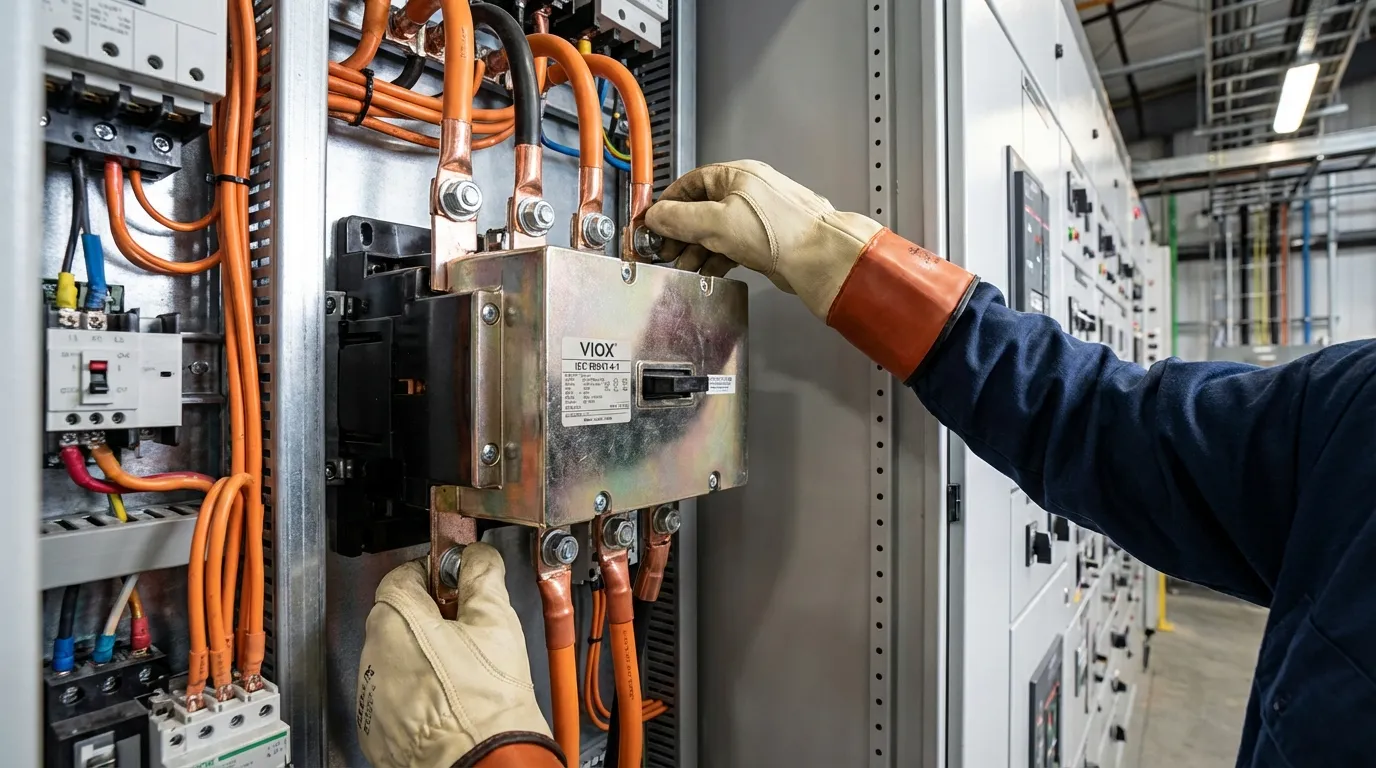 Рисунок 1: Промышленный электрик устанавливает контактор VIOX, соответствующий стандарту IEC 60947-4-1, в центре управления двигателями для тяжелых условий эксплуатации.
Критерии выбора и лучшие практики
Анализ нагрузки
Перед выбором контактора проведите тщательный анализ нагрузки:
- Установившийся ток: Непрерывный ток, который должен выдерживать контактор
- Пусковой ток: Пиковый ток во время запуска двигателя или переключения ламп
- Рабочий цикл: Частота и продолжительность операций переключения
- Коэффициент мощности нагрузки: Влияет на энергию дуги и износ контактов
- Условия окружающей среды: Температура, влажность, высота над уровнем моря, степень загрязнения
Учет напряжения
Убедитесь, что номинальное рабочее напряжение контактора (Ue) соответствует напряжению цепи или превышает его. Для трехфазных систем напряжение измеряется между фазами. Также проверьте:
- Номинальное напряжение изоляции (Ui): Должно превышать напряжение цепи
- Номинальное импульсное выдерживаемое напряжение (Uimp): Обычно 4 кВ для IEC 61095, выше для промышленных применений
- Напряжение цепи управления: Должно соответствовать доступному источнику питания цепи управления
Текущий выбор рейтинга
Для контакторов IEC 61095 выбирайте на основе соответствующей категории применения:
- Категория AC-7a для моторных нагрузок
- Категория AC-1 для резистивных нагрузок (обычно выше, чем AC-7a)
Для контакторов IEC 60947-4-1 наиболее распространена категория AC-3 для моторных применений. Всегда применяйте соответствующие понижающие коэффициенты для:
- Температуры окружающей среды выше 40°C
- Высоты над уровнем моря выше 2000 м
- Группировки нескольких контакторов в корпусах
Понимание электрических понижающих коэффициентов имеет важное значение для правильного выбора размера.
Координация защиты от короткого замыкания
Убедитесь, что контактор правильно скоординирован с выбранным SCPD (автоматическим выключателем или предохранителем). Производители предоставляют таблицы координации, указывающие:
- Максимальный номинальный ток короткого замыкания
- Рекомендуемый тип и номинал SCPD
- Достигнутый тип координации (Тип 1 или Тип 2)
Для промышленных применений предпочтительна координация Типа 2, чтобы минимизировать время простоя после аварийных ситуаций.
Различия в установке и обслуживании
Установка IEC 61095
- Стандарт Монтаж на DIN-рейку 35 мм (согласно IEC 60715)
- Типичная модульная ширина 2-4 модуля (1 модуль = 18 мм)
- Винтовые или пружинные клеммы для подключения проводов
- Требуется минимальная защита окружающей среды
- Установка в стандартных потребительских блоках или распределительных щитах
Установка IEC 60947-4-1
- Панельный монтаж с болтовыми соединениями для больших контакторов
- Монтаж на DIN-рейку для небольших промышленных контакторов
- Профессиональная заделка кабелей с кабельные наконечники
- Герметизацией в соответствии с требованиями (степени защиты IP)
- Установка в центрах управления двигателями с надлежащими зазорами
- Учет рассеивания тепла и вентиляции
Требования к обслуживанию
Контакторы IEC 61095: Требуется минимальное техническое обслуживание в типичных жилых помещениях. Периодический осмотр для:
- Состояния контактов (визуальный осмотр)
- Герметичность клемм
- Механической работы
Контакторы IEC 60947-4-1: Регулярные графики технического обслуживания на основе рабочих циклов:
- Осмотр и замена контактов
- Очистка дугогасительных камер
- Смазка механических компонентов
- Проверка вспомогательных контактов
- Испытание на сопротивление изоляции
Контрольные списки технического обслуживания промышленных контакторов предоставляют подробные указания для программ профилактического обслуживания.
Распространенные заблуждения
Миф 1: “Бытовые контакторы могут выдерживать промышленные нагрузки, если они увеличены по размеру”
Реальность: Даже увеличенным по размеру контакторам IEC 61095 не хватает дугогасящей способности, выносливости и координации защиты от короткого замыкания, необходимых для промышленных применений. Использование бытовых контакторов в промышленных условиях нарушает стандарты безопасности и создает риски ответственности.
Миф 2: “Промышленные контакторы всегда лучше по качеству”
Реальность: Контакторы IEC 60947-4-1 разработаны для различных требований — не обязательно “лучшего” качества. Для жилых помещений контакторы IEC 61095 предлагают оптимальное соотношение цены и качества с соответствующими функциями безопасности.
Миф 3: “Все контакторы с одинаковым номинальным током взаимозаменяемы”
Реальность: Номинальные токи специфичны для категорий применения. Контактор IEC 61095 с номинальным током 32A (AC-7b) не может заменить контактор IEC 60947-4-1 с номинальным током 32A (AC-3), поскольку характеристики нагрузки и рабочие циклы значительно различаются.
Миф 4: “Номинальный ток короткого замыкания не имеет значения, если есть автоматический выключатель”
Реальность: Контактор должен быть правильно скоординирован с SCPD. Контактор с недостаточной номинальной мощностью может взорваться или вызвать дуговую вспышку даже при надлежащей защите от перегрузки по току.
Последние обновления стандартов
IEC 61095:2023 Edition
Последняя редакция включает в себя значительные обновления:
- Категория AC-7d: Новая категория применения для светодиодных ламп и пускорегулирующей аппаратуры светодиодов, учитывающая растущий рынок светодиодного освещения
- Электронные схемы управления: Требования к контакторам с электромагнитами с электронным управлением
- Расширенные требования к маркировке: Улучшенная маркировка для более безопасной установки и обслуживания
- Экологические испытания: Обновленные процедуры испытаний на влажность и температуру
IEC 60947-4-1:2023 Edition
Недавние изменения включают:
- Принятие AC-7d: Включено из IEC 61095 для промышленных светодиодных применений
- Устройства мгновенного переключения защиты двигателя (IMPSD): Новые требования к быстродействующей защите двигателя
- Экологические аспекты: Ссылка на IEC TS 63058 для учета аспектов устойчивого развития
- Совместимость с подчиненным приводным модулем: Требования к контакторам, используемым с приводами с регулируемой частотой
Соображения по поводу стоимости
Первоначальная стоимость
Контакторы IEC 61095 обычно стоят $15-$150 в зависимости от номинального тока и функций. Контакторы IEC 60947-4-1 варьируются от $50-$5,000+ для крупных промышленных установок.
Общая стоимость владения
Учитывайте затраты на жизненный цикл:
- Затраты на техническое обслуживание: Промышленные контакторы требуют более частого обслуживания, но обеспечивают более длительный срок службы
- Затраты на простой: Координация типа 2 снижает время простоя в промышленных условиях
- Энергоэффективность: Современные контакторы с низким энергопотреблением катушки снижают эксплуатационные расходы
- Затраты на замену: Использование правильного стандарта предотвращает преждевременный выход из строя и дорогостоящую замену
Для экономичных бытовых применений, модульные контакторы против традиционных контакторов сравнение помогает оптимизировать выбор.
Поиск и устранение неисправностей
Проблемы с контактором IEC 61095
- Жужжащий шум: Часто вызван низким напряжением катушки или загрязнением
- Невозможность закрытия: Проверьте напряжение катушки и механические препятствия
- Сваривание контактов: Может указывать на перегрузку или короткое замыкание
Руководство по поиску и устранению неисправностей контактора предоставляет подробные диагностические процедуры.
Проблемы с контактором IEC 60947-4-1
- Чрезмерный износ контактов: Проверьте правильность выбора категории использования
- Повреждение дугогасительной камеры: Указывает на события короткого замыкания или неправильную координацию
- Перегрев катушки: Проверьте наличие перенапряжения или чрезмерной температуры окружающей среды
Раздел часто задаваемых вопросов (FAQ)
В1: Могу ли я использовать контактор IEC 61095 для управления промышленным двигателем мощностью 10 л.с.?
О: Нет. Контакторы IEC 61095 предназначены для бытового применения с номинальным током до 63 А и не обладают выносливостью, способностью гашения дуги и координацией короткого замыкания, необходимыми для управления промышленным двигателем. Всегда используйте контакторы IEC 60947-4-1 для промышленных двигателей.
В2: В чем основное преимущество координации типа 2 по IEC 60947-4-1?
О: Координация типа 2 гарантирует, что после короткого замыкания контактор остается пригодным для дальнейшего использования без замены. Это сводит к минимуму время простоя и затраты на техническое обслуживание в промышленных применениях, где доступность оборудования имеет решающее значение.
В3: Могут ли контакторы IEC 60947-4-1 использоваться в бытовых целях?
О: Да, технически они могут функционировать в бытовых целях, но они излишне дороги и имеют избыточные размеры. Контакторы IEC 61095 специально оптимизированы для бытового использования, предлагая лучшую экономичность для бытовых применений.
В4: Как определить, какому стандарту соответствует контактор?
О: Проверьте паспортную табличку или документацию изделия. Ссылка на стандарт (IEC 61095 или IEC 60947-4-1) должна быть четко указана вместе с категориями использования, номинальным напряжением и номинальным током.
В5: В чем значение категории использования AC-7d?
О: AC-7d — это новая категория (добавлена в 2023 г.) специально для переключения светодиодных ламп и пускорегулирующей аппаратуры светодиодов. Светодиодные нагрузки имеют уникальные характеристики пускового тока, которые отличаются от традиционных ламп накаливания или газоразрядных ламп, что требует особого учета конструкции контактора.
В6: Требуют ли оба стандарта одинаковых экологических испытаний?
О: Нет. Хотя оба стандарта включают экологические испытания, IEC 60947-4-1 обычно требует более всесторонних испытаний для промышленных сред, включая расширенные диапазоны температур, устойчивость к вибрации и учет степени загрязнения.
В7: Могу ли я заменить вышедший из строя контактор IEC 61095 на устройство IEC 60947-4-1?
О: Хотя это электрически возможно, если номинальные значения совпадают, это не рекомендуется из-за различий в монтаже, ограничений по размеру и стоимости. Замените на тот же стандарт, если не модернизируете всю установку.
В8: Какова типичная разница в сроке службы между бытовыми и промышленными контакторами?
О: Контакторы IEC 61095 обычно выдерживают 10 000–100 000 операций в бытовом режиме. Контакторы IEC 60947-4-1 рассчитаны на 1–8 миллионов операций в зависимости от номинального тока и категории использования.
Основные выводы
- Стандарты для конкретных применений: IEC 61095 и IEC 60947-4-1 обслуживают принципиально разные рынки — бытовые/легкие коммерческие и промышленные применения — с адаптированными характеристиками производительности для каждой среды.
- Иерархия напряжения и тока: Промышленные контакторы (IEC 60947-4-1) предлагают значительно более высокие номинальные значения напряжения (до 1000 В переменного тока против 440 В переменного тока) и токовую мощность (до тысяч ампер против 63 А максимум), что отражает их применение в тяжелых условиях.
- Категории использования имеют значение: Всегда выбирайте контакторы на основе соответствующей категории использования (AC-7a/b для бытовых, AC-3/AC-4 для промышленных двигателей), а не только на основе номинального тока, поскольку характеристики нагрузки значительно различаются.
- Износостойкость и надежность: Контакторы IEC 60947-4-1 рассчитаны на миллионы операций в тяжелых промышленных условиях, в то время как контакторы IEC 61095 оптимизированы для умеренных рабочих циклов в жилых помещениях.
- Координация при коротком замыкании: В промышленных применениях предпочтительна координация типа 2 (контактор остается работоспособным после аварий), в то время как в бытовых применениях обычно используется координация типа 1 (контактор может потребовать замены после аварий).
- Баланс стоимости и производительности: Использование правильного стандарта обеспечивает оптимальную экономическую эффективность — IEC 61095 для доступных решений для жилых помещений, IEC 60947-4-1 для надежной промышленной производительности, где затраты на простои оправдывают более высокие первоначальные инвестиции.
- Соблюдение требований безопасности: Оба стандарта уделяют первостепенное внимание безопасности, но IEC 60947-4-1 включает в себя расширенные функции безопасности (усовершенствованное гашение дуги, контакты с принудительным управлением, герметичная изоляция), которые имеют решающее значение для промышленных сред, где отказ оборудования может иметь серьезные последствия.
- Последние обновления: В изданиях обоих стандартов 2023 года была введена категория AC-7d для управления светодиодным освещением, что отражает переход отрасли к светодиодным технологиям как в жилых, так и в промышленных приложениях.
- Профессиональный выбор: При спецификации контакторов проведите тщательный анализ нагрузки, включая установившийся ток, пусковые характеристики, рабочий цикл и условия окружающей среды. Для критически важных применений проконсультируйтесь с инженерами-электриками или специалистами по контакторам.
- Соображения жизненного цикла: Общая стоимость владения включает в себя не только первоначальную цену покупки, но и требования к техническому обслуживанию, ожидаемый срок службы, энергоэффективность и потенциальные затраты на простои — факторы, которые значительно различаются между бытовыми и промышленными контакторами.
О компании VIOX Electric
VIOX Electric — ведущий B2B производитель электрооборудования, специализирующийся на высококачественных контакторах, автоматических выключателях и компонентах распределения электроэнергии. Наша продукция соответствует международным стандартам, включая IEC 61095 и IEC 60947-4-1, обеспечивая безопасность, надежность и производительность как для жилых, так и для промышленных применений. Свяжитесь с VIOX для получения экспертных рекомендаций по выбору контактора для вашего конкретного применения.
Выбранные внутренние ссылки для SEO
- Как выбрать модульный контактор переменного/постоянного тока
- Логика проектирования компонентов контактора переменного тока
- Руководство по сравнению контактора безопасности и стандартного контактора
- Руководство по устранению неполадок контактора
- Контактор против пускателя двигателя
- Электрические стандарты для контакторов – категории применения
- Контрольный список осмотра технического обслуживания промышленного контактора
- Модульный контактор в сравнении с традиционным контактором
- Контакторы против реле – понимание ключевых различий
- Руководство по коэффициентам снижения электрической мощности

