Pada halaman ini
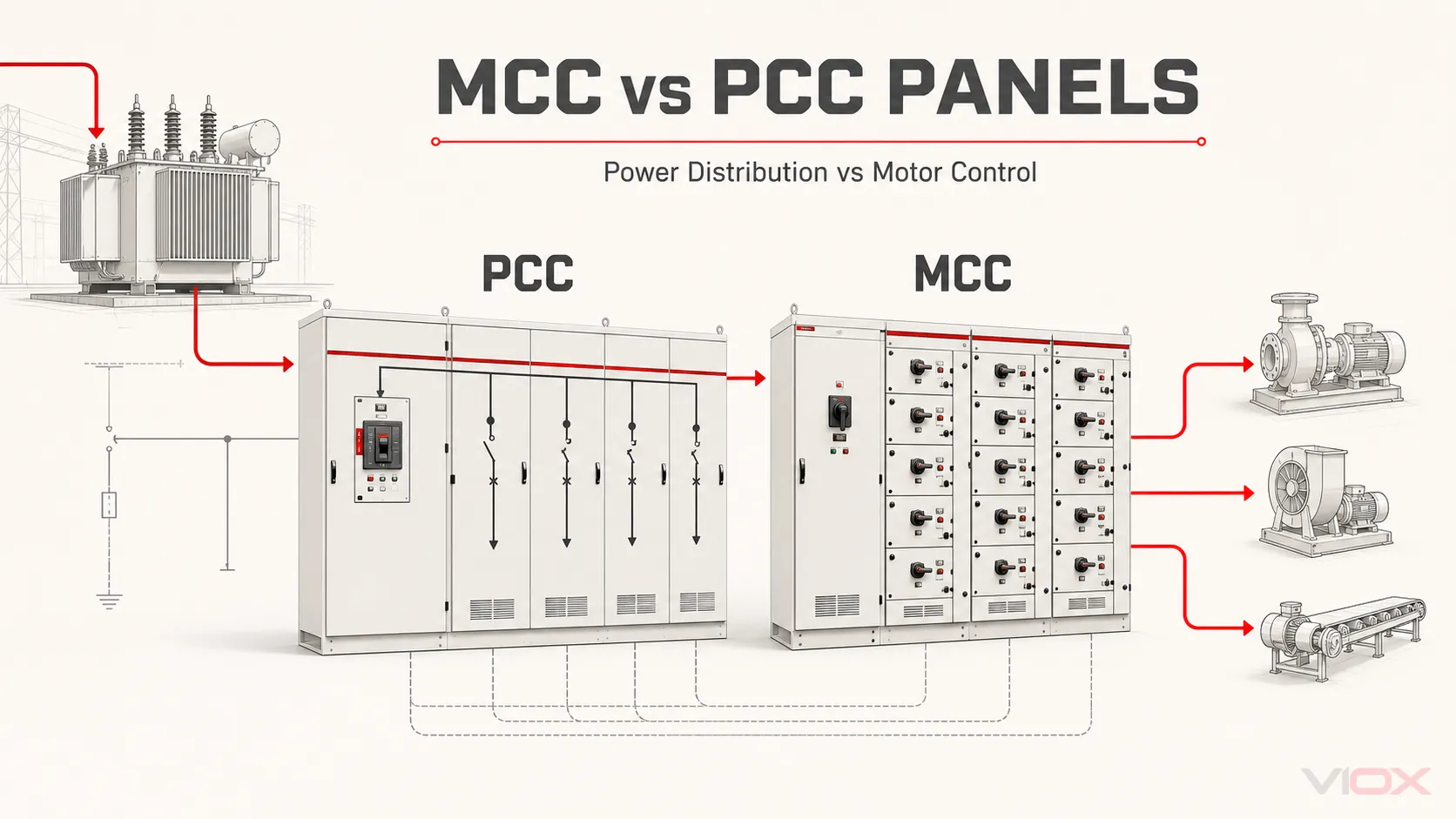
Perbezaan utama antara MCC dan PCC ialah tugas yang dilakukan oleh litar keluar. Sebuah PCC lwn MCC: Perbezaan Fungsi menerima dan mengagihkan kuasa elektrik pukal kepada penyuap hiliran, panel, dan beban besar. Sebuah Pusat Kawalan Motor (MCC) membekalkan penyuap motor dan menambah fungsi pensuisan, pemulaan, perlindungan beban lampau, pengasingan, dan kawalan yang diperlukan oleh motor individu.
Dalam sistem industri biasa, PCC atau papan suis voltan rendah utama berada di hulu dan MCC berada di hilir. Susunan itu adalah perkara biasa, tetapi ia bukanlah peraturan penamaan sejagat. PCC digunakan secara meluas sebagai istilah projek dan serantau, bukan sebagai satu kategori peralatan yang diseragamkan secara global. Bergantung kepada pasaran dan spesifikasi, peralatan hulu yang setara mungkin sebaliknya dipanggil papan suis LV utama, pemasangan suis kuasa, papan agihan utama, atau pusat agihan kuasa.
MCC berbanding PCC secara ringkas
| Titik perbandingan | PCC | MCC |
|---|---|---|
| Bentuk penuh | Pusat Kawalan Kuasa | Pusat Kawalan Motor |
| Fungsi utama | Menerima dan mengagihkan kuasa pukal | Mengagih, menukar, melindungi, dan mengawal penyuap motor |
| Kedudukan tipikal | Di hulu, berhampiran pengubah, penjana, atau bekalan utama | Di hilir PCC atau papan suis utama, lebih dekat dengan beban motor |
| Litar keluar biasa | MCC, papan agihan, peralatan besar, pengubah, atau penyuap utama | Motor, pam, kipas, pemampat, penghantar, dan pemacu proses individu |
| Peralatan ciri | Pemutus litar utama dan penyuap, busbar, pemeteran, geganti perlindungan, pensuisan sumber atau bahagian bus | Penyambung putus, pemutus litar atau fius, kontaktor, geganti beban lampau, pemula motor, pemula lembut, dan VFD |
| Fokus perlindungan utama | Perlindungan bus dan penyuap pemasangan, gangguan kerosakan, pemilihan pengagihan | Perlindungan litar pintas cawangan motor, perlindungan beban lampau motor, perlindungan kehilangan fasa, dan pemutusan terkawal |
| Kerumitan kawalan | Biasanya tertumpu pada pengurusan pengagihan dan sumber | Logik mula/henti, saling kunci, keizinan, maklum balas status, dan antara muka automasi |
| Tugas pensuisan | Pensuisan utama atau penyuap yang agak jarang berlaku | Pensuisan operasi berulang pada tahap penyuap motor |
| Terminologi standard | Sering kali khusus untuk projek atau wilayah | Kategori pemasangan kawalan motor yang diiktiraf dalam sistem standard utama |
Peraturan praktikalnya mudah: pilih fungsi sebelum memilih label. Jika pemasangan tersebut terutamanya mengagihkan kuasa masuk, ia melaksanakan fungsi PCC atau papan suis utama. Jika ia terutamanya mengendalikan dan melindungi berbilang motor, ia melaksanakan fungsi MCC. Sesebuah loji mungkin memerlukan kedua-duanya.
Kedudukan MCC dan PCC dalam sistem elektrik
Laluan kuasa industri yang biasa adalah:
Utiliti atau Penjana
        ↓
Transformer
        ↓
PCC / Papan Suis LV Utama
        ↓
Pusat Kawalan Motor
        ↓
Penyuap Motor
        ↓
Pam, Kipas, Pemampat, Penghantar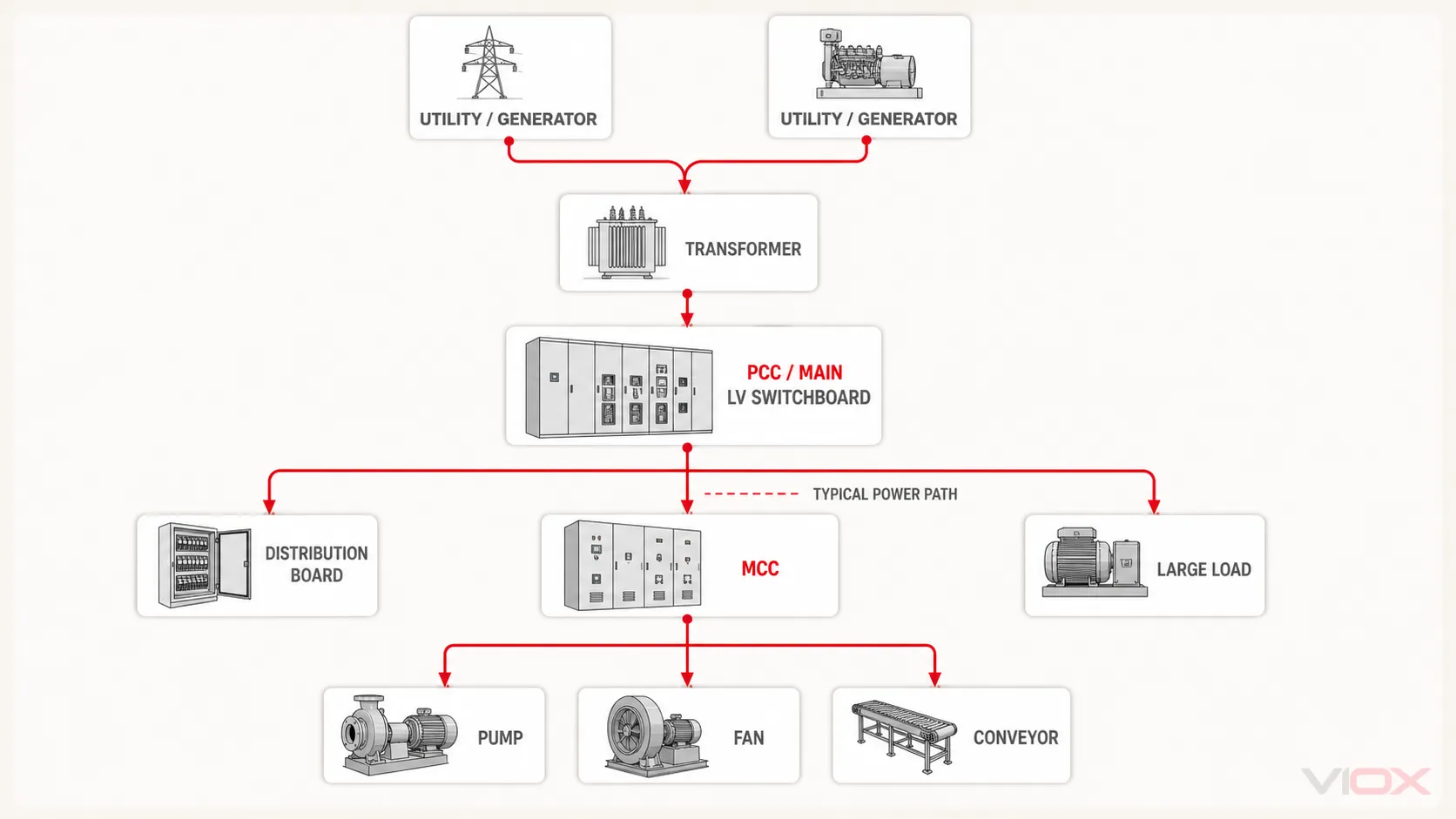
Gambar rajah ini menjelaskan hubungan biasa, namun pemasangan sebenar boleh mempunyai cawangan selari. Papan suis utama mungkin membekalkan kuasa kepada MCC, papan agihan lampu, pemanas proses, UPS, penyejuk, atau beban besar lain pada masa yang sama. MCC juga boleh menerima kuasa terus daripada transformer atau penjana di mana pemasangan tersebut direka dan disahkan untuk peranan itu.
Oleh itu, kedudukan sistem membantu mengenal pasti fungsi yang mungkin, tetapi ia tidak membuktikan kategori peralatan dengan sendirinya. Gambar rajah satu garisan yang diluluskan, spesifikasi pemasangan, plat nama, kajian perlindungan, dan piawaian yang terpakai menentukan sempadan sebenar.
Apakah yang Menentukan Fungsi PCC?
Fungsi PCC tertumpu pada kuasa masuk dan agihan penyuap. Reka bentuknya biasanya menjawab soalan seperti:
- Di manakah kuasa masuk ke kemudahan atau kawasan proses?
- Apakah peranti yang mengasingkan dan melindungi bas utama?
- Bagaimanakah kuasa dibahagikan antara penyalur hiliran utama?
- Apakah fungsi pemeteran, pemindahan sumber, gandingan bas, atau perlindungan yang diperlukan?
- Apakah tugas litar pintas dan pemilihan yang mesti disokong oleh pemasangan tersebut?
Peralatan tipikal termasuk pemutus litar udara (ACB) utama, MCCB, suis fius, bar bas, pengubah arus, meter, geganti perlindungan, dan terminal penyalur. Gabungan sebenar bergantung pada reka bentuk; kehadiran satu pemutus tertentu tidak dengan sendirinya menjadikan pemasangan tersebut sebagai PCC.
Dalam projek berorientasikan IEC, istilah piawaian yang lebih tepat selalunya ialah pemasangan suis kuasa dan gear kawalan (PSC-assembly). IEC 61439-2:2020 terpakai bagi pemasangan suis kuasa voltan rendah dan gear kawalan dengan voltan terkadar tidak melebihi 1,000 V AC atau 1,500 V DC. Ia meliputi pemasangan yang digunakan untuk pengagihan tenaga elektrik dan untuk mengawal peralatan yang menggunakan tenaga elektrik.
Skop piawaian ini adalah sebab mengapa PCC tidak seharusnya diterangkan secara automatik sebagai panel voltan tinggi. Peralatan masuk voltan sederhana tergolong dalam rangka kerja suis yang berbeza walaupun projek tersebut menggunakan istilah loji yang serupa secara tidak rasmi.
Apakah yang Menentukan Fungsi MCC?
Fungsi MCC tertumpu pada berbilang litar motor yang berkongsi pemasangan dan sistem bas yang sama. Setiap penyuap motor menggabungkan fungsi yang diperlukan untuk mengasingkan, menukar, melindungi, dan mengawal motor yang ditetapkan.
Penyuap tipikal mungkin mengandungi:
- alat pemutus;
- fius, pemutus litar perlindungan motor, atau peranti perlindungan litar pintas yang lain;
- sebuah Penyentuh AC untuk pensuisan operasi;
- a geganti beban lampau terma atau elektronik untuk keadaan beban lampau motor yang berterusan;
- susunan terus-dalam-talian (direct-on-line), berbalik, bintang-delta, pemula lembut, atau VFD;
- sentuhan tambahan, geganti kawalan, terminal, dan antara muka komunikasi.
Peranti-peranti ini tidak melaksanakan peranan perlindungan yang sama. Kontaktor menukar motor tetapi tidak memutuskan litar pintas tahap tinggi. Geganti beban lampau bertindak balas terhadap arus lampau yang berterusan mengikut kelakuan yang direka bentuk, tetapi biasanya bergantung pada peranti pelindung litar pintas di bahagian hulu yang diselaraskan. Pemasangan MCC mesti menyelaraskan fungsi-fungsi ini dan bukannya menganggap satu komponen sebagai perlindungan motor yang lengkap.
Pusat kawalan motor Amerika Utara ditangani oleh UL 845, manakala NEMA menerbitkan ICS 18 untuk pusat kawalan motor. UL menghuraikan MCC sebagai bahagian yang dipasang pada lantai dengan bas kuasa mendatar sepunya yang terutamanya mengandungi unit kawalan motor gabungan. Itu merupakan identiti pembinaan dan fungsi yang jauh lebih khusus berbanding istilah projek umum PCC.
MCC lwn PCC: Sempadan Fungsi Kejuruteraan
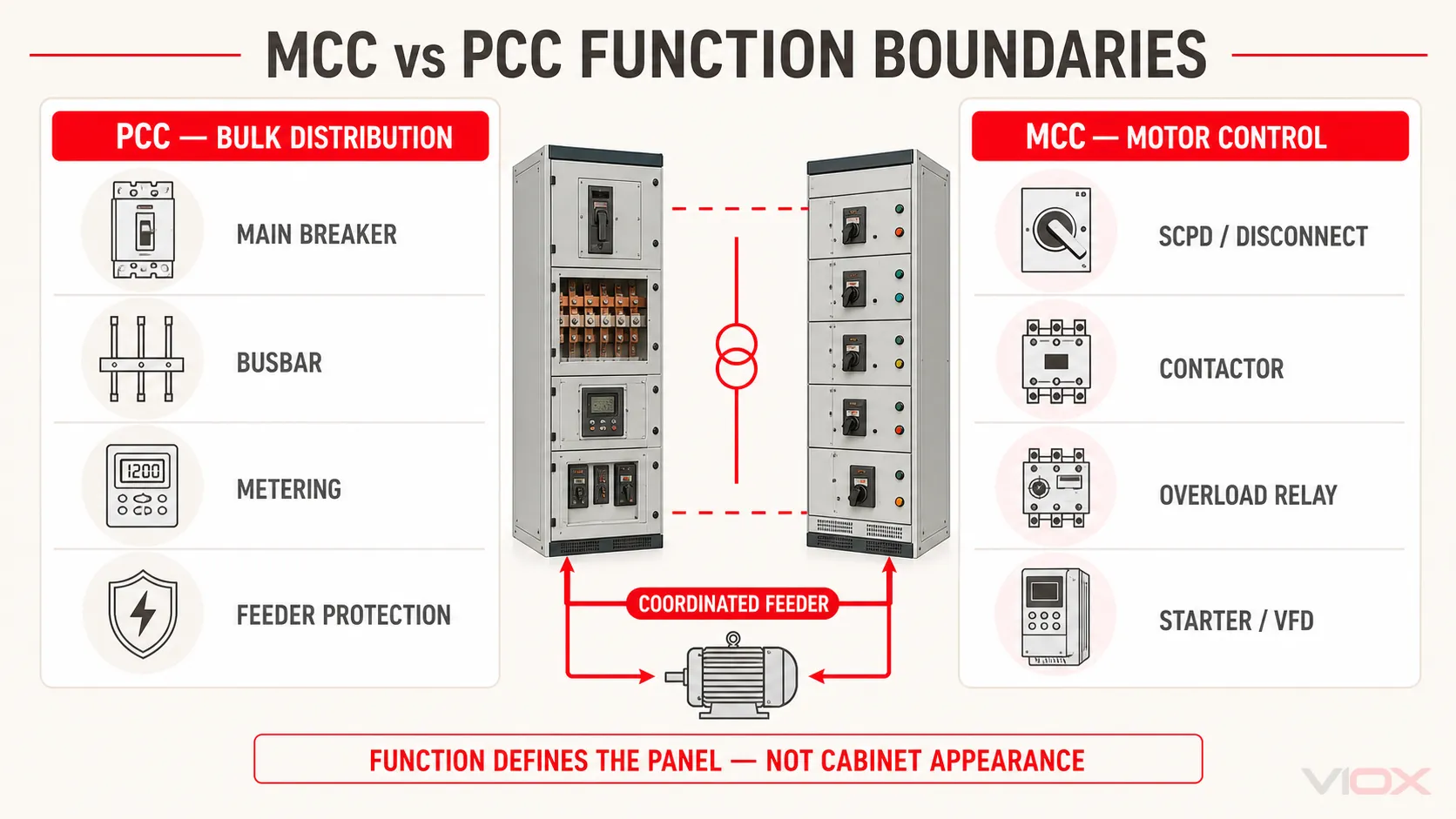
| Soalan kejuruteraan | Tanggungjawab PCC | Tanggungjawab MCC | Sempadan penting |
|---|---|---|---|
| Apakah beban yang dibekalkan? | Penyuap utama, panel, dan beban besar | Beban pacuan motor individu | MCC boleh mengandungi beban tambahan bukan motor, tetapi kawalan motor kekal sebagai tujuan utamanya |
| Apakah yang ditukar? | Sumber utama, bahagian bas, atau penyuap agihan | Penyuap motor individu | Kekerapan penukaran dan tugas penggunaan adalah berbeza |
| Apakah perlindungan yang menjadi tumpuan? | Perlindungan arus lebih/kerosakan bas utama dan penyuap | Penyelarasan litar pintas dan beban lampau cawangan motor | Perlindungan beban lampau motor tidak sama dengan perlindungan litar pintas penyuap |
| Apakah yang dipantau? | Bekalan masuk, bas, tenaga, permintaan, dan status penyuap | Arus motor, keadaan jalan/terpelantik, beban lampau, keizinan proses, dan data pemacu | Skop pemantauan mengikut tugas operasi |
| Apakah kawalan yang dijangkakan? | Pemindahan sumber, arahan penyuap, saling kunci, dan pengurusan beban | Mula/henti, berbalik, penjujukan, pemilihan setempat/jauh, dan arahan PLC/DCS | PCC mungkin mengandungi automasi, tetapi ia biasanya tidak disusun di sekitar pemula motor individu |
| Unit penyelenggaraan manakah yang diasingkan? | Ruang utama atau ruang penyuap | Pemula motor, baldi, atau unit berfungsi | Pembinaan boleh tarik keluar tidak membenarkan kerja dilakukan secara automatik semasa bahagian bersebelahan kekal bertenaga |
| Apakah yang menentukan kadaran? | Voltan sistem, arus berterusan, arus kerosakan tersedia, tugas bas, jadual penyuap | Tugas sistem yang sama ditambah kaedah pemula motor, kategori penggunaan, kelakuan beban lampau, dan seni bina kawalan | Nama sahaja tidak pernah menentukan kadaran yang selamat |
Perlindungan Mesti Diselaraskan Merentasi Kedua-dua Pemasangan
Penyuap PCC yang membekalkan MCC dan peranti perlindungan di dalam MCC membentuk satu rantaian perlindungan. Tetapan dan keupayaan pemutusan peranti tersebut mesti diperiksa berbanding arus kerosakan yang tersedia, kadaran konduktor, arus mula motor, pemilihan yang diperlukan, dan prestasi litar pintas pemasangan yang disahkan.
Menentukan kadaran pemutusan yang tinggi untuk satu pemutus litar tidak secara automatik menetapkan kadaran litar pintas bagi keseluruhan pemasangan. Bar bas, sambungan, kombinasi peranti perlindungan, kepungan, dan pengesahan pembinaan semuanya mempengaruhi kadaran akhir pemasangan.
Tanggungjawab Kawalan Berbeza daripada Tanggungjawab Kuasa
Sebuah MCC mungkin menerima arahan mula dan henti daripada PLC atau sistem kawalan teragih, tetapi panel PLC membekalkan logik dan bukannya kuasa motor. Begitu juga, sebuah PCC mungkin merangkumi skim pemindahan atau pengawal pengurusan kuasa tanpa menjadi sebuah MCC. Kelaskan setiap pemasangan mengikut unit fungsi utamanya dan litar yang dibekalkannya—bukan berdasarkan sama ada ia mengandungi elektronik.
Piawaian dan Terminologi Serantau
Bahasa spesifikasi yang paling selamat memisahkan fungsi yang diperlukan daripada nama peralatan tempatan.
| Pasaran atau rangka kerja | Terminologi berguna | Implikasi spesifikasi |
|---|---|---|
| Projek voltan rendah berorientasikan IEC | Pemasangan PSC di bawah IEC 61439-1/-2; MCC digunakan untuk fungsi kawalan motor | Nyatakan fungsi pemasangan, kadaran, keperluan pengesahan, pemisahan dalaman, dan seni bina penyuap motor |
| Projek Amerika Utara | MCC di bawah UL 845; papan suis di bawah UL 891; suis voltan rendah di bawah UL 1558; papan panel di bawah UL 67 | Jangan gantikan label PCC tidak rasmi bagi kategori peralatan tersenarai yang diperlukan oleh reka bentuk |
| Projek menggunakan terminologi PCC | PCC, PCC utama, panel LT utama, atau pusat kawalan kuasa | Tentukan dengan tepat maksud label tersebut pada gambar rajah satu talian dan jadual peralatan |
Gambaran keseluruhan pengagihan kuasa yang diterbitkan oleh UL menyenaraikan pusat kawalan motor, papan suis, papan panel, dan suis voltan rendah sebagai kategori produk yang berbeza. Ia tidak membentangkan PCC sebagai padanan piawai bagi MCC. Bagi projek antarabangsa, perbezaan kosa kata ini harus diselesaikan sebelum dokumen tender dikeluarkan.
Untuk perbandingan yang lebih mendalam mengenai kategori pengagihan rasmi Amerika Utara, lihat papan suis lwn suis.
Adakah Anda Memerlukan PCC, MCC, Kedua-duanya, atau Tiada Satu Pun?
| Keadaan projek | Seni bina yang mungkin | kenapa |
|---|---|---|
| Transformer atau penjana masuk mesti membekalkan beberapa litar hiliran yang besar | PCC atau pemasangan pengagihan utama yang dinyatakan secara rasmi | Tugas utama ialah penerimaan sumber dan pengagihan pukal |
| Banyak motor memerlukan permulaan, pengasingan, perlindungan, dan maklum balas status yang berpusat | MCC | Tugas utama ialah kawalan penyuap motor yang berulang |
| Sebuah loji mempunyai kedua-dua penyuap pengagihan utama dan banyak beban motor | Pemasangan PCC dan MCC yang berasingan | Pengasingan menjelaskan zon perlindungan, operasi, pengembangan, dan penyelenggaraan |
| Kawasan proses yang padat memerlukan bilangan penyuap pengagihan dan motor yang terhad | Pemasangan gabungan yang disahkan mungkin praktikal | Satu barisan boleh mengandungi kedua-dua fungsi apabila reka bentuk lengkap disahkan dan dibahagikan secara selamat |
| Sebuah mesin hanya mempunyai beberapa motor serta logik PLC dan I/O mesin | Panel kawalan industri mungkin lebih sesuai | Tugas pengguna adalah kawalan mesin dan bukannya pengagihan motor loji berpusat |
| Spesifikasi projek Amerika Utara memerlukan peralatan pengagihan yang tersenarai | MCC, papan suis, suisgear, atau papan panel mengikut kesesuaian | Gunakan kategori produk yang diiktiraf dan bukannya bergantung pada nama PCC yang tidak rasmi |
MCC tidak boleh dianggap sebagai pengganti terus bagi PCC hanya kerana kadaran basnya kelihatan mencukupi. Sebaliknya, papan agihan dengan beberapa pemutus litar tidak menjadi MCC melainkan ia menyediakan unit fungsi kawalan motor dan perlindungan motor terkoordinasi yang diperlukan oleh beban tersebut.
Bolehkah Fungsi MCC dan PCC Berkongsi Satu Pemasangan?
Ya. Satu barisan boleh mengandungi bekalan masuk utama, penyuap agihan, dan unit kawalan motor. Ini boleh mengurangkan ruang lantai dan kabel penyambung dalam projek yang sesuai. Walau bagaimanapun, menggabungkan fungsi mengubah tugas pengesahan; ia tidak menghilangkannya.
Pereka bentuk masih perlu menetapkan:
- voltan, arus, dan frekuensi terkadar;
- arus litar pintas prospektif dan koordinasi peranti perlindungan;
- keperluan busbar dan neutral;
- prestasi kenaikan suhu;
- pemisahan dalaman dan sempadan pengasingan;
- keperluan pemula motor dan beban lampau;
- sumber kuasa kawalan dan saling kunci;
- peraturan akses untuk unit fungsi tetap atau boleh tarik keluar;
- standard pemasangan yang terpakai dan bukti pengesahan.
Baldi motor boleh tarik keluar mungkin menambah baik akses penggantian dan pemeriksaan, tetapi ia tidak mewajarkan kerja bertenaga atau menjamin bahawa setiap bahagian berdekatan telah diasingkan. Prosedur penyelenggaraan mesti mengikut reka bentuk pemasangan sebenar, pelabelan, kedudukan ujian, pengatup, saling kunci, dan peraturan keselamatan elektrik tapak.
Senarai Semak Spesifikasi MCC dan PCC
Sebelum meminta sebut harga, berikan maklumat yang mencukupi untuk pengilang atau pembina panel menentukan pemasangan tersebut dan bukannya meneka daripada akronim.
- Sumber sistem: pengubah, penjana, utiliti, penyambung bas, atau sumber berbilang.
- Sistem elektrik: voltan terkadar, frekuensi, fasa, susunan pembumian, dan voltan kawalan.
- Tugas kerosakan: arus litar pintas yang tersedia pada setiap pemasangan dan prestasi pembersihan atau ketahanan yang diperlukan.
- Jadual beban: kuantiti penyuap, jenis beban, arus beban penuh, tugas, dan litar masa depan.
- Data motor: kuasa, arus plat nama, kaedah mula, kategori pengendalian, kekerapan mula, dan kelakuan beban lampau yang diperlukan.
- Kajian perlindungan: ciri-ciri pemutus litar atau fius, pemilihan, perlindungan sandaran, dan tanggungjawab tetapan.
- Pembinaan: unit tetap atau boleh tarik keluar, kemasukan kabel, susunan bas, pemisahan dalaman, penarafan kepungan, dan persekitaran pemasangan.
- Seni bina kawalan: kawalan setempat/jauh, I/O PLC atau DCS, komunikasi, saling kunci, keizinan, dan antara muka henti kecemasan.
- Pemeteraian: pengukuran masuk, bahagian bas, penyuap, tenaga, permintaan, dan kualiti kuasa.
- Piawaian dan bukti: IEC, UL, NEMA, keperluan kebangsaan, rekod pengesahan reka bentuk, rekod pengesahan rutin, dan label yang diperlukan yang terpakai.
VIOX membekalkan komponen voltan rendah yang digunakan di dalam pemasangan pengagihan dan kawalan motor yang diselaraskan, termasuk kontaktor, geganti beban lampau, pemutus litar, komponen busbar, dan blok terminal. Pembina panel juga boleh menyemak aplikasi pembinaan panel dan pengagihan kuasa VIOX apabila menyusun lapisan pengagihan dan sambungan dalaman. Pemilihan komponen mestilah kekal diselaraskan dengan kadaran yang disahkan dan piawaian yang terpakai bagi pemasangan siap.
Sering Bertanya Soalan-Soalan
Adakah PCC sentiasa berada di hulu MCC?
Biasanya ya, tetapi tidak semestinya. PCC atau papan suis utama biasanya membekalkan kuasa kepada MCC, namun MCC yang direka bentuk dengan sewajarnya boleh menerima kuasa terus daripada transformer atau penjana. Gambar rajah satu talian dan kadaran pemasangan menentukan susun atur tersebut.
Adakah PCC sama dengan papan suis?
Kadangkala projek menggunakan istilah tersebut untuk fungsi pengagihan hulu yang serupa, tetapi ia tidak semestinya boleh ditukar ganti. “Papan suis” mungkin mengenal pasti kategori produk rasmi di bawah piawaian pasaran yang terpakai, manakala PCC mungkin sekadar label projek. Sahkan spesifikasi tersebut dan bukannya menterjemah akronim secara literal.
Panel manakah yang biasanya mengandungi kontaktor dan geganti beban lampau?
MCC. Unit pemula motornya biasanya menggabungkan kontaktor dengan geganti beban lampau dan peranti pelindung litar pintas yang diselaraskan. PCC mungkin mengandungi kontaktor untuk tugas pensuisan khas, tetapi pemula motor biasanya bukan unit fungsi yang menentukan cirinya.
Adakah PCC sentiasa membawa arus yang lebih tinggi daripada MCC?
Tiada ambang arus universal yang memisahkan kedua-duanya. PCC sering membawa beban loji terkumpul dan oleh itu mungkin mempunyai bas utama yang lebih besar, tetapi kadaran sebenar bergantung pada pemasangan. Fungsi, jenis beban, perlindungan, dan reka bentuk pemasangan yang disahkan adalah perbezaan yang lebih boleh dipercayai.
Adakah panel MCC hanya untuk voltan rendah?
Tidak. MCC voltan rendah adalah perkara biasa, tetapi pusat kawalan motor voltan sederhana juga wujud. Peralatan dan piawaian yang terpakai berubah mengikut kelas voltan, jadi sesuatu artikel atau spesifikasi harus menyatakan sama ada ia merujuk kepada peralatan LV atau MV.
Bolehkah bahagian MCC dan PCC digabungkan dalam satu barisan?
Ya, apabila pemasangan gabungan direka bentuk, diselaraskan, dan disahkan untuk semua fungsi yang disertakan. Integrasi fizikal tidak menjadikan tugas kawalan motor dan pengagihan pukal adalah sama.