The 4:45 PM Failure
Friday afternoon. The server room HVAC trips. You reset the breaker, but ten minutes later the executive floor lights flicker out. The incomer is running hot. Neutral current readings make no sense. This isn’t bad luck—it’s an under-specified distribution system collapsing under modern loads.
For facility managers and electrical engineers, this cascading failure represents a fundamental misunderstanding of three-phase power distribution. The question isn’t just “why did it fail?” It’s “how do we design a power backbone that survives commercial reality?”
The answer: properly specified TP&N (Triple Pole and Neutral) metal distribution boards. Not the bargain-basement polymer boxes. Not over-engineered switchgear. The precise middle ground that IEC 61439-3 defines as Distribution Boards for Ordinary Persons (DBO).
This guide dissects the engineering, standards, and real-world application of TP&N boards, drawing from VIOX Electric’s twenty years manufacturing these systems for commercial and industrial installations worldwide.
- Rated Current Limits: Outgoing circuits are limited to 125A, and the total assembly cannot exceed 250A at a nominal voltage of up to 300V AC to earth. This sizing makes them ideal for sub-distribution in commercial and residential contexts.
1. What is TP&N: The Four-Wire Advantage
Start with fundamentals. A standard residential setup runs Single Phase and Neutral (SPN)—one live wire, one neutral, 230V. Simple, but limited.
A TP&N board harnesses all three phases of the supply (L1, L2, L3) plus Neutral. This “three-phase, four-wire” configuration delivers two voltage systems simultaneously:
Voltage relationships:
- Phase-to-Neutral: 230-240V (standard single-phase loads—lighting, computers, outlets)
- Phase-to-Phase: 400-415V (three-phase motors—pumps, compressors, HVAC)
- Phase-to-Neutral: 230-240V (Standard power for your laptop, lights, and coffee machine).
This is The Four-Wire Advantage. You’re not just getting more power; you’re getting architectural flexibility. A 3-phase chiller plant and a row of LED monitors can feed from the same board, provided you understand phase balancing.
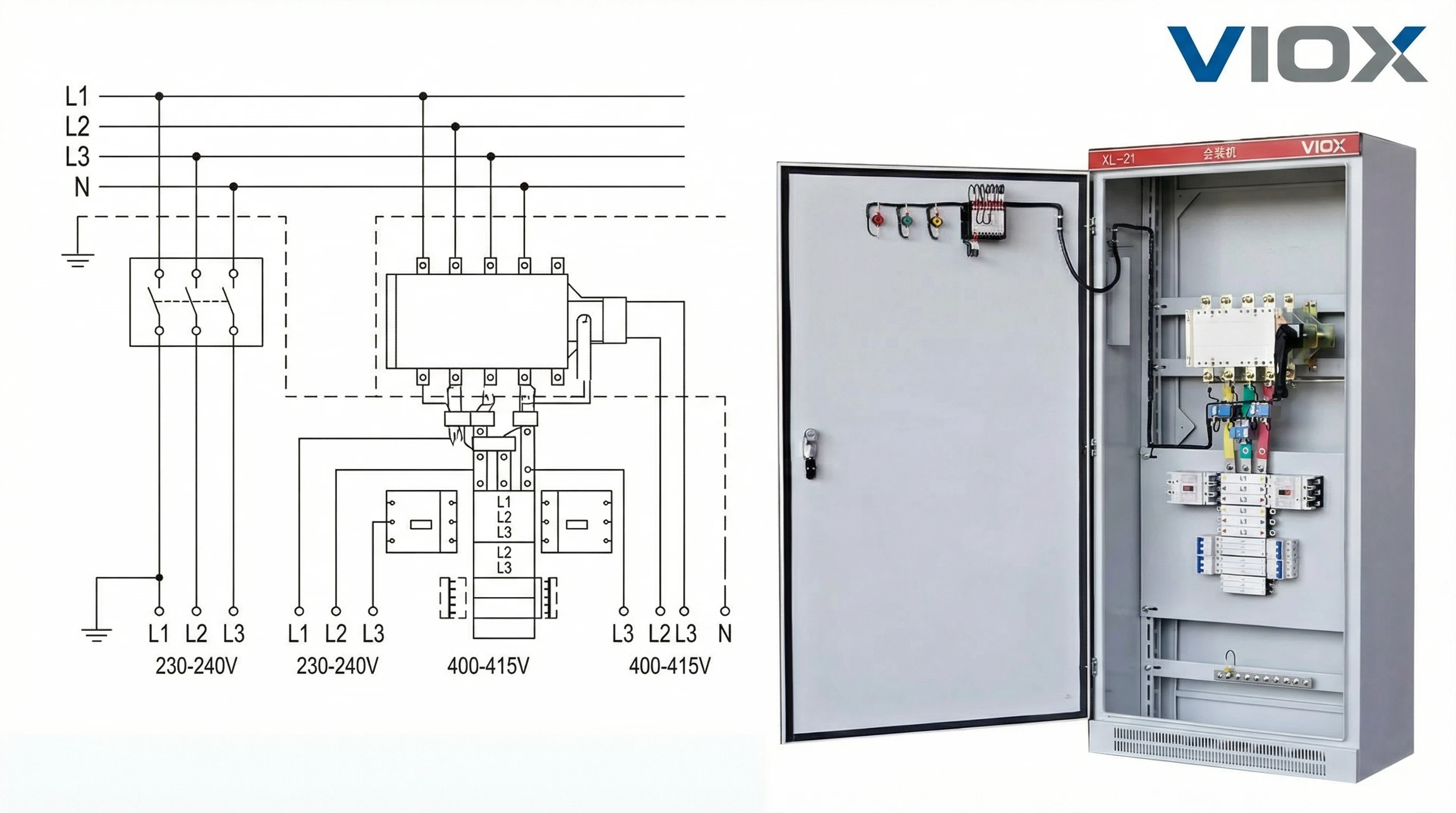
The 4-Pole Incomer: Why “Floating Neutral” Destroys Equipment
Older installations use 3-pole isolators that only cut phases, leaving neutral connected. This creates the “floating neutral” hazard.
Here’s what happens: If the neutral connection opens while phases remain live, your single-phase circuits lose their voltage reference. Instead of stable 230V, voltages float wildly—potentially hitting 400V. Every computer, monitor, and LED driver on that circuit dies instantly.
Modern standards (and VIOX specification) mandate 4-pole incomers. When you isolate, everything disconnects simultaneously. No floating neutral. No voltage excursions. No equipment destruction during maintenance.
2. The 250A Ceiling: Understanding IEC 61439-3:2024
Not every distribution board is created equal. The regulatory framework matters because it defines safe application boundaries.
IEC 61439-3 covers Distribution Boards for Ordinary Persons (DBO)—assemblies where non-electricians might reset breakers or add circuits. The 2024 revision introduced crucial updates, but one constraint remains absolute:
The hard limits:
- Total assembly current: 250A maximum
- Outgoing circuits: 125A maximum per circuit
- 전압 등급: Up to 300V AC to earth
We call this “The 250A Ceiling.” If your load calculation demands 400A, you cannot use a TP&N distribution board. You’ve crossed into Power Switchgear territory (IEC 61439-2)—different testing requirements, professional operation, higher cost.
This ceiling is why proper load analysis matters. Oversize your incomers and you’re paying for unnecessary capacity. Undersize them and you’re designing for failure.
What Changed in the 2024 Revision?
The standout addition is Annex BB addressing Prosumer Electrical Installations (PEI). Distribution boards are no longer passive consumers. They now manage:
- Bidirectional power flows from solar PV and battery storage
- Dual-source capability handling utility and local generation
- Anti-islanding protection preventing backfeed during grid failures
- Smart monitoring integration with energy management systems
The 2024 updates recognize that modern boards sit at the intersection of consumption and generation.
Regional Compliance: BIS and Global Standards
In India, Bureau of Indian Standards (BIS) compliance is mandatory. BIS adopts IEC standards with local modifications—IS/IEC 61439 series. Manufacturers must provide type-test reports and routine verification records.
The global trend is convergence. “Locally fabricated” boxes without proper testing are disappearing. Type-tested, certified systems are becoming the norm, driven by insurance requirements and liability concerns.
3. Key Components: Anatomy of a Metal-Clad System
A TP&N board isn’t a box of breakers. It’s an engineered assembly managing heat, electromagnetic forces, and fault currents. Understanding each component’s role prevents specification errors.
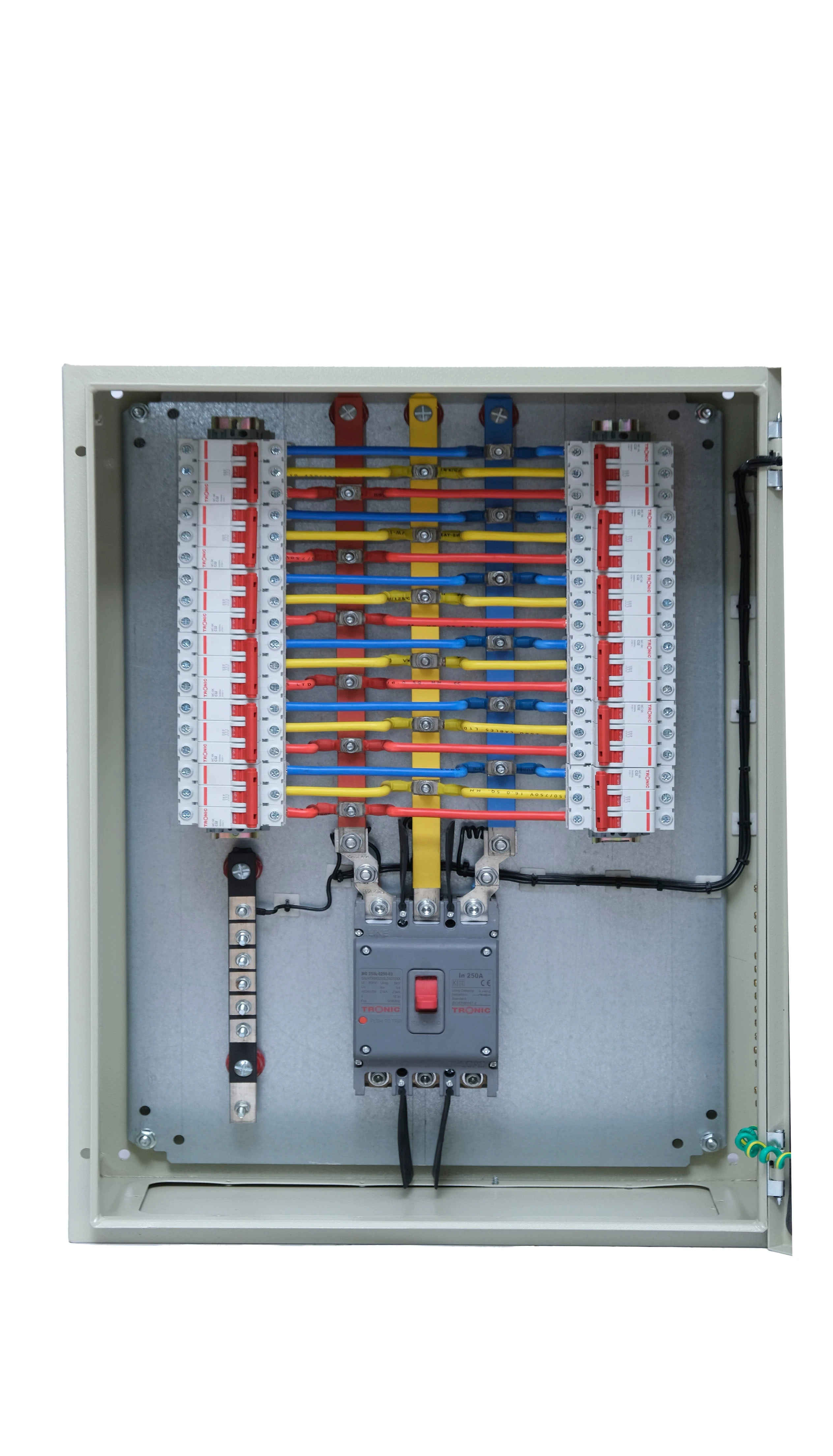
The Metal Enclosure: Containment and Protection
Why metal instead of polymer?
During a catastrophic short circuit, arc temperatures hit thousands of degrees in milliseconds. Thermoplastic enclosures can melt or breach, allowing fire to escape. Metal enclosures—galvanized steel with powder coating—act as containment vessels.
Secondary benefits:
- Impact protection: IK ratings handle forklift hits and tool drops that crack plastic
- EMC shielding: Metal acts as Faraday cage, reducing electromagnetic interference
- Thermal dissipation: Metal conducts heat away from breakers; plastic insulates it
IP ratings matter:
- IP30: Standard indoor installations (climate-controlled spaces)
- IP43/IP54: Semi-outdoor or dusty environments
- IP65: Coastal areas, chemical plants, outdoor installations
Match the enclosure to the environment. An IP30 board on a seaside dock becomes corroded scrap within months.
The Busbar System: High-Conductivity Backbone
Busbars are copper bars distributing power from incomer to outgoing devices. In TP&N configuration: four distinct bars (L1, L2, L3, N).
소재 선택:
VIOX uses tin-plated electrolytic copper. Why tin plating? Copper oxidizes. Oxidation creates resistance. Resistance generates heat. Heat accelerates oxidation. This positive feedback loop ends in thermal runaway. Tin plating breaks the cycle.
Short-circuit withstand:
During faults, electromagnetic forces try to rip busbars apart. Mounting supports must hold bars rigid against kilo-amps of force. Under-engineered supports mean deformed busbars and compromised clearances.
- 절연 저항 테스트: Use a megohmmeter to verify that insulation resistance between phases, and between phases and earth, meets minimum values (typically >1 MΩ for new installations).
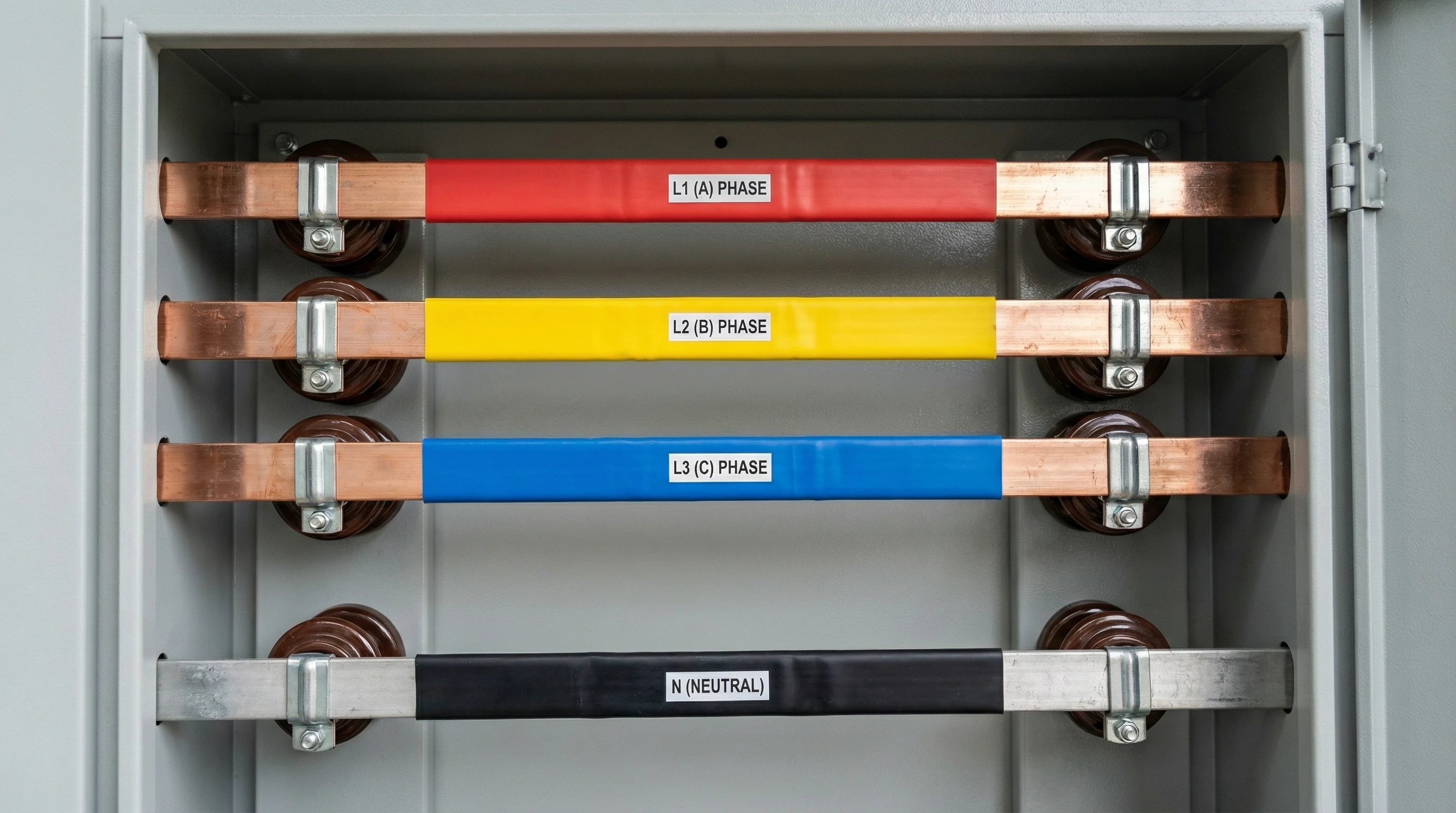
The Neutral Bar: The Silent Victim of Harmonics
Here’s a fact that surprises junior engineers: neutral current can exceed phase current.
In the era of resistive loads (incandescent bulbs, heaters), neutral current was low. Modern non-linear loads—LED drivers, switch-mode power supplies, VFDs—generate harmonics that accumulate in the neutral conductor.
The engineering response: TP&N boards must have neutral bars rated for at least 100% of phase current. Undersize this and you’ll hunt for the smell of burning plastic for weeks.
DIN-Rail Protective Devices: Coordination is Key
Outgoing ways accommodate modular devices per IEC standards:
- MCBs (IEC 60898-1): Protect circuits against overloads and short circuits
- RCDs (IEC 61008): Detect earth leakage, prevent electric shock
- RCBOs (IEC 61009): Combined overcurrent + residual current protection
- AFDDs (IEC 62606): Arc fault detection for fire prevention
Pro-tip: Device coordination matters. The upstream MCB must be selective with downstream protection. If a fault on Floor 3 trips the main incomer instead of the floor breaker, you’ve lost selectivity. Review time-current curves during specification.
Surge Protection Devices (SPDs): The Insurance Policy
Transient overvoltages from lightning or grid switching destroy sensitive electronics. Integrated SPDs clamp voltage spikes to safe levels.
SPD selection depends on exposure:
- 유형 1: Direct lightning exposure (building main incomer)
- 유형 2: Standard building distribution (TP&N board application)
- Type 3: Final circuit protection (sensitive equipment)
4. Applications: Where TP&N Boards Prove Essential
TP&N boards appear wherever load exceeds single-phase capacity or phase balancing becomes critical.
- 시나리오: A modern home has a 22kW EV charger, a heat pump, and an electric sauna.
Residential: The Prosumer Evolution
Ten years ago, TP&N in residential was rare. Today it’s standard for modern builds with:
- 22kW EV chargers (require three-phase supply)
- Multi-head heat pumps (10-15kW systems)
- Solar PV + battery storage (양방향 전력 흐름)
- 전기 사우나 및 순간 온수기
- 에너지 효율 의무: 정부 주도로 더욱 효율적인 배전 시스템 추진.
한 상에 40kW의 부하를 덤핑할 수 없습니다. TP&N 보드를 사용하면 부하 분산이 가능합니다. L1의 EV 충전기, L2의 히트 펌프, L3의 가정용 부하. 균형이 회복되었습니다.
- HVAC: 대형 공기 조화 장치는 건물 전체의 조명을 어둡게 하지 않고 압축기를 시작하려면 415V 3상 전력이 필요합니다.
- 모듈식 및 컴팩트한 디자인: 도시 건물에서 공간 제약으로 인해 더 작은 공간에서 모든 기능을 유지하는 컴팩트한 TP&N 보드에 대한 수요가 증가하고 있습니다.
오피스 타워, 소매 단지 및 호텔에서 TP&N 보드는 배전의 핵심입니다.
일반적인 부하:
- HVAC 시스템: 중앙 냉각기 및 공기 조화 장치에는 415V 3상이 필요합니다.
- 엘리베이터 및 에스컬레이터: 높은 시동 토크에는 3상이 필요합니다.
- 조명 회로: 변압기 불균형 및 스트로보스코프 효과를 방지하기 위해 상에 걸쳐 엇갈리게 배열(A열→L1, B열→L2, C열→L3)
상 균형 조정 게임: 적절한 분배는 중성선 전류를 줄이고 변압기 스트레스를 최소화하며 에너지 손실을 줄입니다. 불균형한 부하는 돈을 낭비합니다.
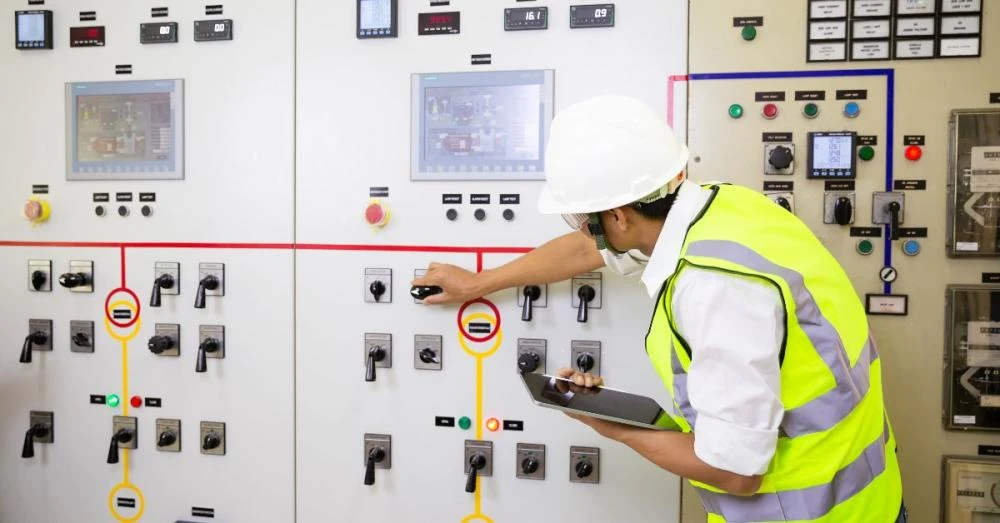
- 버스바 재료: 주석 도금된 고순도 전해 구리
5. 중요한 표준: “250A 천장”
제조 공장 및 작업장에서는 금속 인클로저가 필요합니다. 먼지, 기름, 충격—TP&N 보드는 열악한 조건에서 모터 제어 센터(MCC)에 전원을 공급합니다.
중요 고려 사항:
- 상 회전이 중요합니다. 상이 바뀌어 펌프 모터가 역방향으로 작동하면 치명적입니다.
- 명확한 라벨링은 시운전 및 유지 관리를 간소화합니다.
- IP54/IP65 인클로저는 산업 환경을 처리합니다.
포괄적인 제품 생태계
6. 대안 대비 금속 클래드 TP&N의 장점
플라스틱이 더 저렴한데 왜 금속에 더 많은 비용을 지불해야 할까요? 사양은 실험실 조건이 아닌 현실을 다루어야 하기 때문입니다.
탁월한 전력 용량 및 확장성
3상 공급은 동일한 도체 크기에 대해 단상 전력의 최대 3배를 제공합니다. 서버 랙, 기계 또는 임차인을 추가하는 시설 계획 확장의 경우 TP&N 보드는 비용이 많이 드는 서비스 업그레이드 없이 헤드룸을 제공합니다.
- 나가는 회로: 회로당 최대 125A.
- 전압: 접지에 대해 최대 300V AC.
균형 잡힌 부하 분산
불균형한 부하는 비효율성과 과열을 유발합니다. TP&N 보드는 지능형 회로 설계를 지원합니다. 단상 부하를 L1, L2, L3에 고르게 분산합니다. 이렇게 하면 중성선 전류가 줄어들고(LED 및 전자 부하로 인한 고조파 문제를 고려할 때 중요) 변압기 과부하를 방지할 수 있습니다.
향상된 운영 효율성
3상 모터는 단상 모터보다 성능이 뛰어납니다.
- 진동이 적은 부드러운 작동
- 유지 관리 요구 사항 감소
- 더 높은 효율성(펌프, 압축기, HVAC)
평생 에너지 절약은 초기 투자를 정당화합니다.
화재 진압 및 안전
결함 아크는 격렬하여 녹은 구리와 이온화된 가스를 분사합니다. 금속 인클로저는 이러한 혼란을 억제하여 내부 결함이 외부 건물 화재로 번지는 것을 방지합니다. 이것은 이론적인 것이 아닙니다. 성가신 트립과 보험 청구의 차이입니다.
VIOX 특정 보호 기능
당사 보드는 다음을 통합합니다.
- 완전히 차폐된 중성선 및 접지선 유지 관리 중 우발적인 접촉 위험 감소
- 견고한 버스바 장착 저렴한 어셈블리에서 흔히 발생하는 고장 모드인 열 순환 풀림 최소화
- 보정된 연결 지점 “토크 트랩” 방지”
7. 설치 요구 사항: 금요일 오후 고장 방지
최고의 보드를 구입할 수 있지만 잘못된 설치는 고장을 보장합니다. 보통 금요일 오후 4시 45분에 발생합니다.
토크 트랩: 넘버원 킬러
느슨한 연결은 번개보다 더 많은 배전반을 파괴합니다.
물리학: 느슨한 연결 → 저항 증가 → 열 발생 → 열팽창 → 더 느슨한 연결. 이 양의 피드백 루프는 단자가 녹는 것으로 끝납니다.
수정: 보정된 토크 드라이버. 손목이 아닙니다. “충분히 조여지지” 않았습니다. 제조업체는 토크 값(일반적으로 MCB 단자의 경우 10-12Nm)을 지정합니다. 사용하십시오.
상 균형 조정 전략
전원을 켜기 전에:
- 부하 매핑: 어떤 부하가 어떤 상에 연결되는지 문서화
- 분배 계산: 상 간에 ±10% 전류 균형을 목표로 합니다.
- 작동 중 측정: 피크 부하에서 클램프 미터를 사용합니다. L1이 80A를 당기는 동안 L3이 10A를 당기면 회로를 이동합니다.
- 문서: 회로 일정을 문에 부착하십시오. 표시되지 않은 차단기는 나중에 골칫거리가 됩니다.
시운전 전 테스트 체크리스트
전원을 공급하기 전에 다음 테스트를 완료하십시오.
✓ 육안 검사: 장치 정격, 케이블 종단, 이물질 없음 확인
✓ 절연 저항: 절연 저항계를 사용하십시오. 최소 1 MΩ 새 설치의 경우 상 간 및 접지 간
✓ 기능 테스트: 각 보호 장치를 수동으로 트립
✓ 상 회전 점검: 상 순서 표시기를 사용하여 L1-L2-L3 순서를 확인합니다(회전이 잘못되면 모터가 역방향으로 작동함).
✓ RCD 테스트: 정격 트립 전류로 테스트
✓ 조임 확인: 모든 연결부의 토크 점검
환경적 고려 사항
환경에 맞는 인클로저 등급:
- 온도 조절 식물실: IP30이면 충분함
- 반실외/창고: 최소 IP43 또는 IP54
- 해안/화학 공장: IP65, 내식성 코팅 처리된 스테인리스 스틸
자격을 갖춘 설치
3상 설치는 단상 작업 이상의 역량을 요구합니다. 다음에 익숙한 면허가 있는 전기 기술자를 고용하십시오.
- IEC 61439-3 요구 사항
- 현지 전기 규정(영국의 BS 7671, 호주/뉴질랜드의 AS/NZS 3000)
- 적절한 접지 시스템(TN-S, TN-C-S 구성)
일반적인 2025 사양 시트
규제 관점에서 볼 때 이러한 어셈블리는 다음의 적용을 받습니다. IEC 61439-3:2024. 이 표준은 특히 다음을 다룹니다. 일반인이 작동하도록 설계된 배전반 (DBO). 내부 엔지니어링은 정교하지만 차단기 재설정과 같은 기본 작업을 위해 비전문가가 액세스하기에 사용자 인터페이스가 안전해야 한다고 규정합니다. 이 표준은 나가는 회로를 125A로, 총 어셈블리를 공칭 전압이 접지에 대해 최대 300V AC인 250A로 제한하여 이러한 보드가 주 개폐 장치와 최종 하위 회로 사이의 중간 영역에 완벽하게 맞도록 합니다.
전기 배전은 탈탄소화, 디지털화 및 분산된 발전에 의해 진화하고 있습니다.
- 부스바: 주석 도금 구리(표준). 알루미늄은 산화 위험으로 인해 최종 배전에서 사라지고 있습니다.
프로슈머 혁명
IEC 61439-3:2024 부록 BB는 양방향 전원을 다룹니다. 최신 보드는 다음을 처리합니다.
- 그리드 공급 및 로컬 태양광/배터리 발전
- 소스 간 실시간 전환
- Anti-islanding protection
- 에너지 관리 시스템(EMS)과의 통합
VIOX 생태계
이것은 미래 기술이 아닙니다. 재생 가능 설치가 있는 상업용 건물의 현재 사양입니다.
신흥 시장의 수요 증가
인도의 저전압 개폐 장치 시장은 2030년까지 7-8% CAGR. 드라이버:
- 부동산 확장: 새로운 상업 및 주거 개발
- 에너지 효율성 의무: 효율적인 배전에 대한 정부 요구 사항
- 스마트 그리드 출시: 하드웨어 업그레이드를 추진하는 그리드 현대화
- 모듈식 설계: 도시 건물의 공간 제약
- 전자 상거래 조달: 온라인 소싱으로 배송 가속화
결론: 이론뿐만 아니라 현실을 위한 사양
일반적인 2025 사양
현재 시장 제품은 다음과 같습니다.
평가:
- 어셈블리 전류: 250A(IEC 61439-3 최대)
- 나가는 방법: 12-36 회로
- 부스바 재료: 주석 도금 전해 구리
- 인클로저: 아연 도금 강철, 분체 도장(RAL 색상)
보호:
- IP 등급: IP30(표준), IP43/IP54(내후성), IP65(혹독한 환경)
- IK 등급: 산업용 최소 IK08
인증:
- IEC 61439-1/-3 형식 시험 완료
- CE 마킹 (유럽)
- BIS 인증(인도)
- RoHS/REACH 준수
스마트 지원 기능:
- 에너지 미터 공간
- 통신 모듈 장착
- IoT 통합 조항
8. VIOX Electric: 배전 솔루션의 엔지니어링 우수성
VIOX Electric은 20년 제조 경험을 바탕으로 TP&N 금속 배전반을 제공합니다. 당사의 배전반은 단순한 상품이 아니라 엔지니어링 시스템입니다.
포괄적인 제품 생태계
VIOX 배전반은 당사의 제품과 완벽하게 통합됩니다. MCB 시리즈:
VOB3-63 MCB:
- 정격: 1-63A, 4.5/6kA 차단 용량
- 표준: IEC 60898-1 인증
- 적용 분야: 주거 및 경상업
VOB4-63 MCB:
- 정격: 1-63A, 6/10kA 차단 용량
- 표준: 이중 IEC 60898-1 및 60947-2 준수
- 적용 분야: 까다로운 상업 및 산업 회로
VOB4-125 & VOB5-125 MCB:
- 정격: 80-125A
- 적용 분야: 고용량 피더, 모터 회로, 주 인커머
품질 보증
모든 VIOX 배전반은 다음을 거칩니다.
- ISO 9001:2015 품질 관리(생산 일관성)
- IEC 61439-1/-3 형식 시험 및 일상 검증
- 온도 상승 시험 정격 전류에서(열 검증)
- 단락 테스트 정격 예상 고장 전류에 대한
- CE 및 UL 마킹 글로벌 배포용
공장 직판 장점
수직 통합 제조업체로서:
가격: 유통 채널 대비 15-30% 절감. 공장 직판은 품질 저하 없이 중간 마진을 제거합니다.
사용자 지정: OEM 파트너를 위한 맞춤형 부스바 정격, 인클로저 마감, 브랜딩. 프로젝트별 요구 사항에 맞는 유연한 MOQ.
기술 지원: 판매 전 상담, 부하 계산 지원, 시운전 지원, 설치 후 문제 해결. 당사 팀은 스크립트가 아닌 엔지니어로 구성됩니다.
리드 타임: 표준 제품은 2-3주 이내에 배송됩니다. 긴급 프로젝트에 대한 신속한 생산이 가능합니다.
TP&N 금속 배전반의 “무엇”은 간단합니다. 230V 및 415V 부하를 동시에 관리하는 3상 전원 허브입니다.
“왜”가 성공을 결정합니다. 다음과 같은 이유로 TP&N을 지정합니다.
- 현대식 건물은 이를 요구합니다. EV 충전기, 히트 펌프, HVAC—단상 용량으로는 부족합니다.
- 위상 균형이 중요합니다. 적절한 부하 분배는 손실을 줄이고 장비 스트레스를 방지합니다.
- 표준은 안전을 정의합니다. IEC 61439-3 준수는 선택 사항이 아닙니다.
- 금속 인클로저는 고장을 억제합니다. 화재 억제 및 충격 보호는 보험 정책입니다.
- 설치 품질은 수명을 결정합니다. 보정된 토크와 적절한 테스트는 금요일 오후의 고장을 방지합니다.
사양이 부족한 배전으로 인해 다음 프로젝트가 실패하지 않도록 하십시오. 올바르게 구축하십시오. 균형 있게 구축하십시오. 적절한 엔지니어링으로 구축하십시오.
TP&N 배전반을 지정할 때는 다음 사항을 우선적으로 고려하십시오.
- IEC 61439-3:2024 준수(형식 시험 보고서 확인)
- 적절한 부하 계산 및 위상 균형
- 환경에 적합한 IP 등급
- 자격을 갖춘 전기 기술자의 보정된 설치
- 적절한 문서가 있는 공장 인증 구성 요소
VIOX Electric은 모든 배전반 사양 뒤에는 시설 안전 및 운영 안정성에 대한 약속이 있다는 것을 이해합니다. 당사의 엔지니어링 팀은 부하 계산 지원, 규정 준수 문서 및 프로젝트 요구 사항에 맞는 맞춤형 구성을 제공합니다.
다음 TP&N 금속 배전반을 지정할 준비가 되셨습니까?
연락처 VIOX Electric 자세한 기술 데이터 시트, 규정 준수 인증 및 공장 직판 가격은 다음을 참조하십시오. 당사의 전기 엔지니어는 초기 설계부터 시운전까지 프로젝트를 지원합니다.