

នៅលើទំព័រនេះ
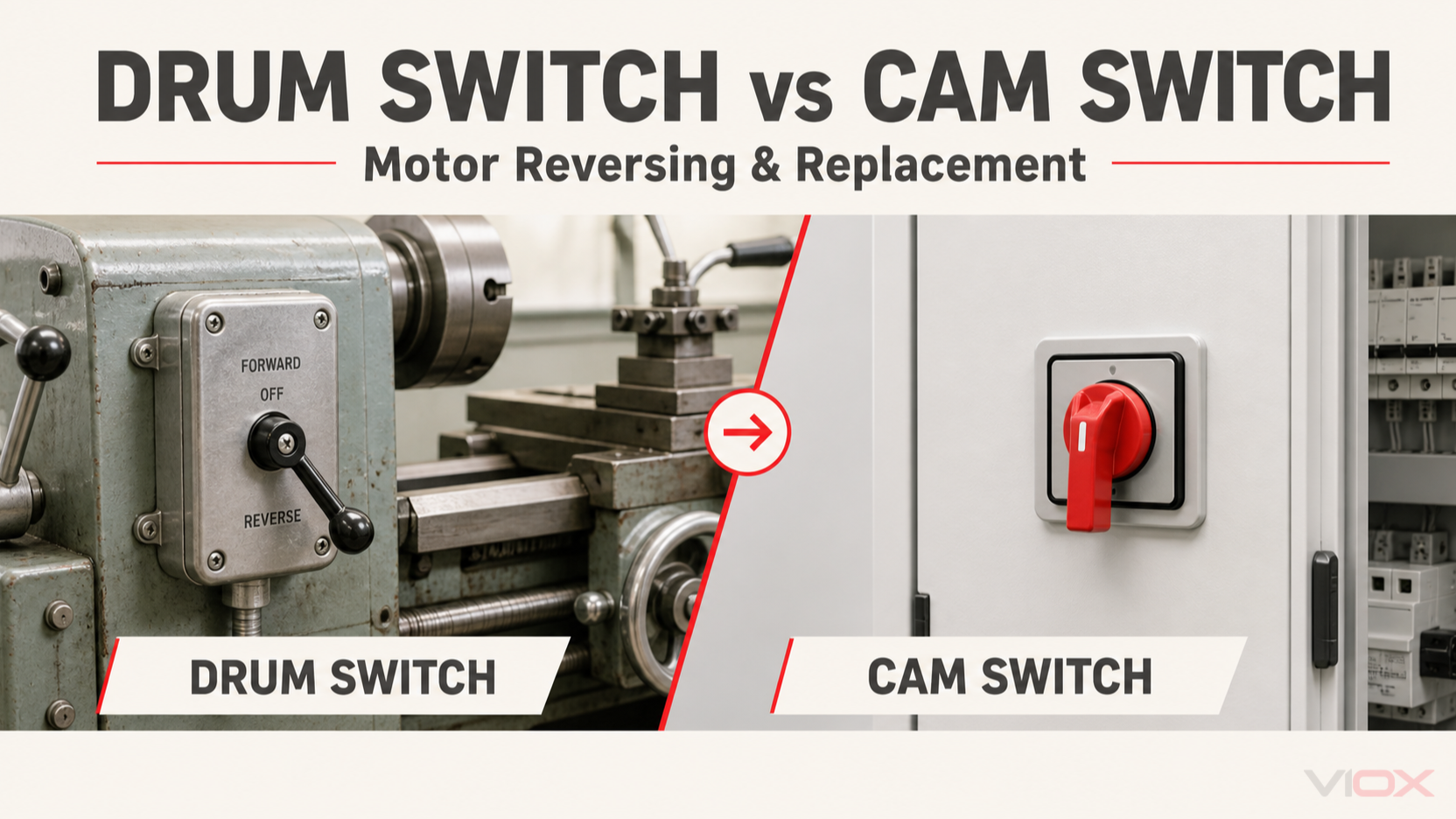
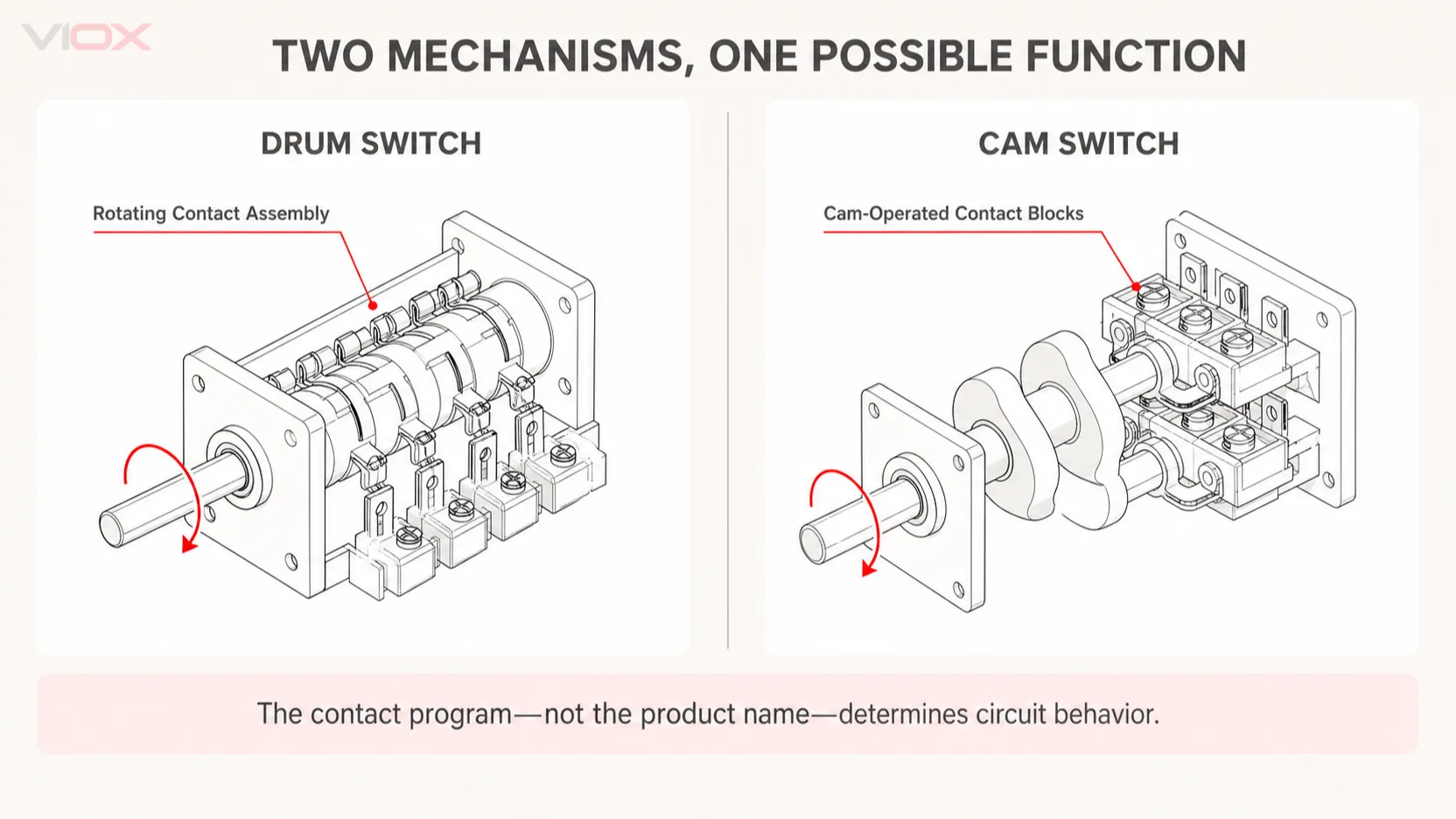
មួយ drum switch និងមួយ កុងតាក់កាំ ទាំងពីរអាចផ្តល់ការគ្រប់គ្រងដោយដៃបែប Forward-Off-Reverse ប៉ុន្តែឈ្មោះរបស់វាពិពណ៌នាអំពីការរៀបចំមេកានិចខុសៗគ្នា។ Drum switch បែបប្រពៃណីបញ្ជូនចរន្តតាមរយៈទំនាក់ទំនងដែលរៀបចំជុំវិញស្គរវិល ឬដុំអ័ក្ស។ Cam switch ប្រើប្រាស់ cam ដែលមានរាងជាក់លាក់ដើម្បីដំណើរការប្លុកទំនាក់ទំនងមួយ ឬច្រើនទៅតាមកម្មវិធីប្តូរដែលបានកំណត់។.
ពួកវាអាចបំពេញមុខងារសៀគ្វីដូចគ្នា ប៉ុន្តែវាមិនមានន័យថាវាអាចជំនួសគ្នាបានដោយស្វ័យប្រវត្តិនោះទេ។ ការជំនួសដោយសុវត្ថិភាពត្រូវតែផ្គូផ្គងនឹង លំដាប់ទំនាក់ទំនង កម្រិតថាមពលម៉ូទ័រ វ៉ុល ហ្វាស របៀបប្រតិបត្តិការ ការរៀបចំការដំឡើង ប្រអប់ការពារ និងគ្រោងការណ៍ការពារ. ។ ការផ្គូផ្គងតែតម្លៃអំពែរ ឬចំនួនទីតាំងដៃកាន់គឺមិនគ្រប់គ្រាន់នោះទេ។.
គន្លឹះយក
- ឧបករណ៍ទាំងពីរអាចផ្តល់ការចាប់ផ្តើម ការបញ្ឈប់ និងការបញ្ច្រាសទិសម៉ូទ័រ ប៉ុន្តែការសាងសង់របស់វាមានភាពខុសគ្នា។.
- ដ្យាក្រាមខ្សែភ្លើងគឺជាកត្តាសម្រេចចិត្ត៖ ស្លាកសញ្ញា Forward-Off-Reverse មិនមែនជាការបញ្ជាក់ថាឧបករណ៍ប្តូរពីរភ្ជាប់ទៅស្ថានីយដូចគ្នានៅក្នុងទីតាំងនីមួយៗនោះទេ។.
- កាតព្វកិច្ចរបស់ម៉ូទ័រមានសារៈសំខាន់ជាងកម្រិតចរន្តទូទៅ៖ សូមផ្ទៀងផ្ទាត់កម្រិតម៉ូទ័ររបស់អ្នកផលិតនៅវ៉ុល និងហ្វាសជាក់ស្តែង បូករួមទាំងកាតព្វកិច្ចនៃការប្តូរដែលពាក់ព័ន្ធ។.
- ឧបករណ៍ទាំងពីរមិនផ្តល់ការការពារម៉ូទ័រពេញលេញដោយស្វ័យប្រវត្តិទេ; កុងតាក់ប្រភេទ cam គឺជាបេក្ខភាពសម្រាប់ជំនួសបានលុះត្រាតែតារាងទំនាក់ទំនងរបស់វាត្រូវបានផ្គូផ្គងជាមួយនឹងសៀគ្វីដើម។.
ការប្រៀបធៀបរវាង Drum Switch និង Cam Switch
| ចំណុចប្រៀបធៀប | Drum switch | កុងតាក់កាំ |
|---|---|---|
| យន្តការមូលដ្ឋាន | ផ្នែកចម្លងចរន្តដែលបង្វិលបាន ឬការដំឡើងទំនាក់ទំនង ធ្វើការតភ្ជាប់ និងផ្តាច់ទំនាក់ទំនងថេរ | ដុំខេម (cams) ដែលមានរាងពិសេសដំណើរការប្លុកទំនាក់ទំនងដាច់ដោយឡែកពីគ្នាតាមលំដាប់លំដោយដែលបានកំណត់ |
| ភាសាទីផ្សារទូទៅ | ជារឿយៗត្រូវបានផ្សារភ្ជាប់ជាមួយនឹងឧបករណ៍ម៉ាស៊ីននៅអាមេរិកខាងជើង និងកម្មវិធីបញ្ច្រាសទិសម៉ូទ័រដោយដៃ | ពាក្យអន្តរជាតិទូទៅសម្រាប់កុងតាក់ជ្រើសរើសប្រភេទរង្វិល កុងតាក់ប្តូរប្រភព កុងតាក់វាស់វែង និងកុងតាក់បញ្ជាម៉ូទ័រ |
| មុខងារធម្មតា | ទៅមុខ-បិទ-ថយក្រោយ និងការបញ្ជាម៉ូទ័រដោយដៃ | ការបញ្ច្រាសទិស ការប្តូរប្រភព ការជ្រើសរើសការវាស់វែង និងតក្កវិជ្ជាបញ្ជាតាមតម្រូវការ |
| ការរៀបចំទំនាក់ទំនង | ជាធម្មតាត្រូវបានបង្កើតឡើងក្នុងគោលបំណងជាក់លាក់សម្រាប់សៀគ្វីម៉ូទ័រដែលបានកំណត់ | ជារឿយៗត្រូវបានផ្គុំឡើងពីដំណាក់កាលម៉ូឌុលសម្រាប់កម្មវិធីទំនាក់ទំនងជាក់លាក់មួយ |
| ការម៉ោន | ការដំឡើងក្នុងប្រអប់ ការដំឡើងលើផ្ទៃ ឬការដំឡើងលើម៉ាស៊ីន ការរចនាខ្លះផ្តល់នូវស្ថានីយដែលអាចចូលប្រើបាន | ជាទូទៅត្រូវបានដំឡើងនៅលើបន្ទះដោយមានឧបករណ៍បញ្ជានៅផ្នែកខាងមុខ និងដំណាក់កាលទំនាក់ទំនងនៅខាងក្រោយបន្ទះ |
| មូលដ្ឋាននៃការជំនួស | កម្រិតថាមពលម៉ូទ័រ វ៉ុល ហ្វាស ដ្យាក្រាម ប្រអប់ការពារ របៀបប្រតិបត្តិការ | ការប្រើប្រាស់/កម្រិតថាមពលម៉ូទ័រ វ៉ុល កម្មវិធីទំនាក់ទំនង ទីតាំង ការដំឡើង ប្រអប់ការពារ |
| សាកសមបំផុត | គ្រឿងម៉ាស៊ីនដែលមានស្រាប់ដែលត្រូវបានរចនាឡើងជុំវិញការរៀបចំកុងតាក់ស្គរដែលបានចុះបញ្ជី ឬមានឯកសារយោង | បន្ទះថ្មី ការកែលម្អទំហំតូច កម្មវិធីទំនាក់ទំនងដែលអាចធ្វើម្តងទៀតបាន និងមុខងារត្រួតពិនិត្យរ៉ូតារីកាន់តែទូលំទូលាយ |
អ្នកផ្គត់ផ្គង់ជួនកាលប្រើ drum switch, កុងតាក់បញ្ច្រាស, កុងតាក់បង្វិល, និង កុងតាក់កាំ ដោយមិនច្បាស់លាស់។ ការសាងសង់ផលិតផល និងឯកសារមានសារៈសំខាន់ជាងស្លាកសញ្ញាទៅទៀត។.
តើ Drum Switch ជាអ្វី?
Drum switch គឺជាកុងតាក់រ៉ូតារីដែលដំណើរការដោយដៃ ដែលតាមប្រវត្តិសាស្ត្រត្រូវបានផ្សារភ្ជាប់ជាមួយនឹងការគ្រប់គ្រងម៉ូទ័រដោយផ្ទាល់។ ផ្នែកទំនាក់ទំនងដែលផ្លាស់ទីនឹងបង្វិលទៅតាមចំណុចទាញ ហើយភ្ជាប់បន្សំស្ថានីយផ្សេងៗគ្នានៅក្នុងទីតាំង Forward, Off និង Reverse។.
នៅក្នុងកម្មវិធីបញ្ច្រាស កុងតាក់នឹងផ្លាស់ប្តូរទំនាក់ទំនងអគ្គិសនីដែលត្រូវការ។ ម៉ូទ័របីហ្វាសជាធម្មតាត្រូវបានបញ្ច្រាសដោយការផ្លាស់ប្តូរហ្វាសពីរ។ ម៉ូទ័រហ្វាសតែមួយដែលអាចបញ្ច្រាសបាន ទាមទារឱ្យមានការផ្លាស់ប្តូរទំនាក់ទំនងនៃរបុំចាប់ផ្តើម (starting-winding) ទៅតាមដ្យាក្រាមរបស់វា។ ម៉ូទ័រចរន្តផ្ទាល់ (DC) អាចទាមទារឱ្យមានការបញ្ច្រាសនៃការតភ្ជាប់ armature ឬ field។.
សៀគ្វីទាំងនេះមានភាពខុសប្លែកគ្នា ទោះបីជាសញ្ញាសម្គាល់នៅលើចំណុចទាញមើលទៅដូចគ្នាក៏ដោយ។ កុងតាក់សម្រាប់ម៉ូទ័របីហ្វាសមួយមិនមែនមានន័យថាវាសមស្របសម្រាប់ម៉ូទ័រហ្វាសតែមួយដោយស្វ័យប្រវត្តិនោះទេ។.
Schneider Electric ពិពណ៌នាអំពី Drum switch ប្រភេទ Class 2601 របស់ខ្លួនថាជាឧបករណ៍សម្រាប់ចាប់ផ្តើម និងបញ្ច្រាសម៉ូទ័រដែលសមស្របដោយផ្ទាល់ (across-the-line) ប៉ុន្តែបានបញ្ជាក់ថាការការពារការផ្ទុកលើស និងការការពារតង់ស្យុងទាបមិនត្រូវបានដាក់បញ្ចូលនោះទេ។ ដូច្នេះ Drum switch មិនមែនជាឧបករណ៍ចាប់ផ្តើមម៉ូទ័រពេញលេញដោយស្វ័យប្រវត្តិនោះទេ។.
តើអ្វីជាការកម្ពុប្តូរ?
Cam switch គឺជាកុងតាក់រង្វិលដែលកាម (cams) ត្រូវបានភ្ជាប់ទៅនឹងអ័ក្សដើម្បីដំណើរការប្លុកទំនាក់ទំនងនីមួយៗ។ ទីតាំងដៃកាន់នីមួយៗត្រូវគ្នាទៅនឹងលំនាំដែលបានកំណត់ទុកជាមុននៃទំនាក់ទំនងបើក និងបិទ។ ការបន្ថែមដំណាក់កាលអនុញ្ញាតឱ្យកុងតាក់អាចគ្រប់គ្រងប៉ូលច្រើន ឬសៀគ្វីជំនួយពីប្រតិបត្តិករតែមួយ។.
តក្កវិជ្ជាម៉ូឌុលនោះគាំទ្រដល់ការបញ្ច្រាស, ការគ្រប់គ្រង ON-OFF, ការប្តូរប្រភព, ការតម្រៀបលំដាប់ផ្កាយ-ត្រីកោណ (star-delta), ការជ្រើសរើសម៉ែត្រ, និងការគ្រប់គ្រងរបៀបម៉ាស៊ីន។ VIOX's មគ្គុទ្ទេសក៍បច្ចេកទេស cam switch ពន្យល់ពីការកំណត់រចនាសម្ព័ន្ធទាំងនេះ។.
ទោះជាយ៉ាងណាក៏ដោយ សម្រាប់ការជំនួស drum-switch ភាពបត់បែនតែមួយមុខគឺមិនគ្រប់គ្រាន់ទេ។ កម្មវិធី cam ត្រូវតែបង្កើតការតភ្ជាប់ស្ថានីយដែលត្រូវការឡើងវិញ ខណៈពេលដែលការពារការតភ្ជាប់ដែលផ្ទុយគ្នាក្នុងអំឡុងពេលផ្លាស់ទីរវាងទីតាំងនីមួយៗ។.
តើពួកវាបំពេញមុខងារអគ្គិសនីដូចគ្នាដែរឬទេ?
ជួនកាលគឺដូចគ្នា។ cam switch បញ្ច្រាសដែលត្រូវបានកំណត់ត្រឹមត្រូវអាចជំនួសមុខងារសៀគ្វីរបស់ drum switch បាន។ ទាំងពីរអាចភ្ជាប់ម៉ូទ័រសម្រាប់ការបង្វិលទៅមុខ, ផ្តាច់វានៅទីតាំងកណ្តាល, និងភ្ជាប់វាឡើងវិញសម្រាប់ការបង្វិលបញ្ច្រាស។.
ឃ្លាដ៏សំខាន់គឺ ត្រូវបានកំណត់លក្ខណៈបច្ចេកទេសត្រឹមត្រូវ. ឧបករណ៍ពីរដែលសម្គាល់ថា Forward-Off-Reverse អាចមានភាពខុសគ្នានៅក្នុង៖
- ស្ថានីយណាខ្លះដែលបិទនៅក្នុងទីតាំងនីមួយៗ;
- ចំនួនប៉ូលដែលត្រូវបានបើកនៅក្នុងទីតាំង Off;
- ថាតើទំនាក់ទំនងត្រួតស៊ីគ្នាក្នុងអំឡុងពេលប្តូរទីតាំងដែរឬទេ;
- ថាតើដងចាប់ត្រូវបានរក្សាទុកនៅទីតាំង ឬមានប្រព័ន្ធត្រឡប់ដោយស្ព្រីង;
- ថាតើឧបករណ៍នេះប្តូរថាមពលម៉ូទ័រដោយផ្ទាល់ ឬគ្រាន់តែជាសៀគ្វីបញ្ជា;
- ថាតើវាត្រូវបានកំណត់កម្រិតសម្រាប់វ៉ុល ថាមពល វិធីសាស្ត្រចាប់ផ្តើម និងកាតព្វកិច្ចរបស់ម៉ូទ័រដែរឬទេ។.
សញ្ញាសម្គាល់នៅផ្នែកខាងមុខបង្ហាញពីលទ្ធផលដែលចង់បាន ចំណែកតារាងទំនាក់ទំនងបង្ហាញពីអ្វីដែលកុងតាក់ពិតជាធ្វើ។.
តើកុងតាក់ Cam អាចជំនួសកុងតាក់ Drum បានដែរឬទេ?
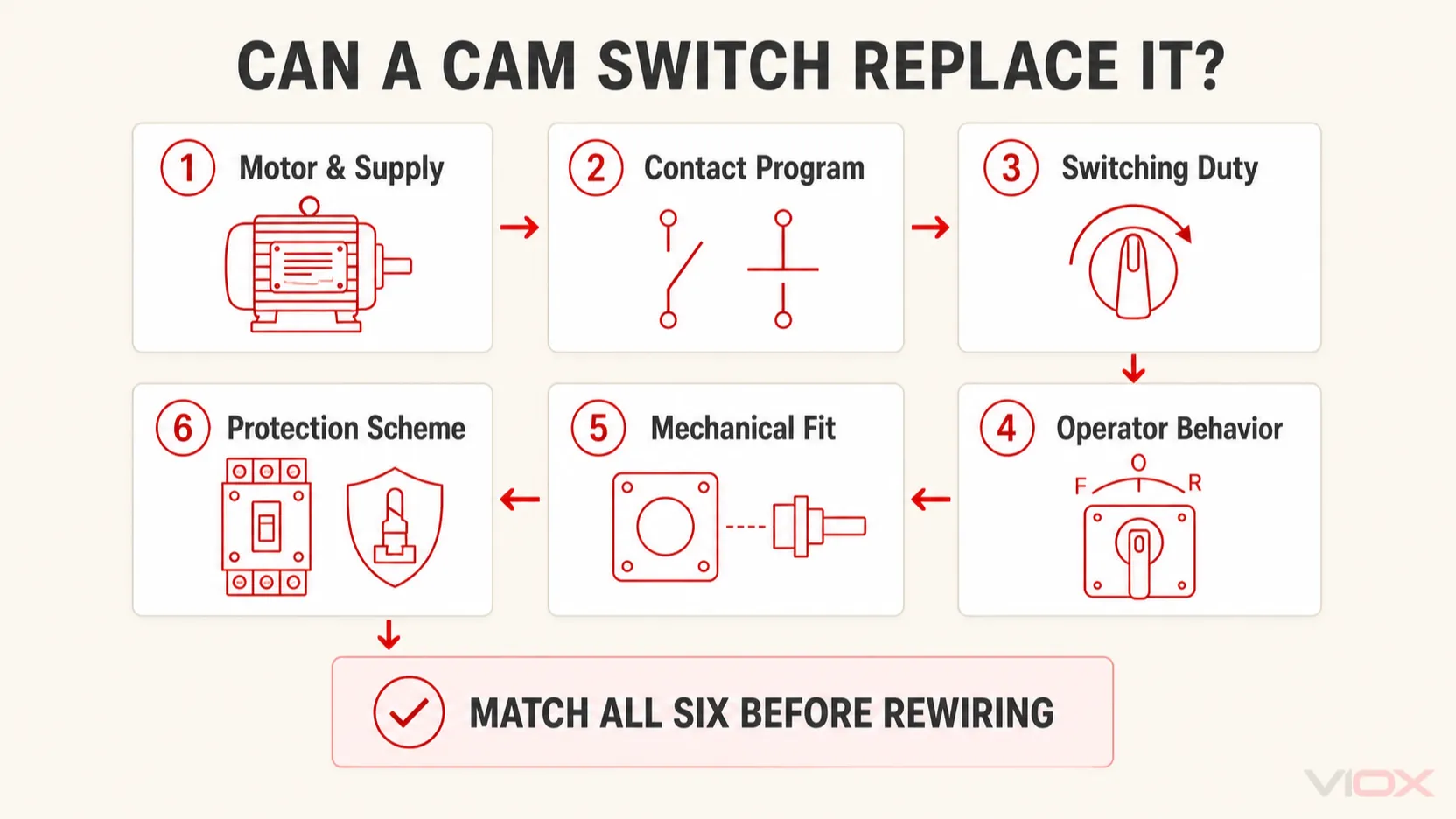
សូមប្រើការត្រួតពិនិត្យតាមលក្ខខណ្ឌទាំងប្រាំមួយដូចខាងក្រោម។ ប្រសិនបើលក្ខខណ្ឌណាមួយនៅតែមិនច្បាស់លាស់ ការជំនួសនោះមិនទាន់ត្រូវបានកំណត់នៅឡើយទេ។.
| លក្ខខណ្ឌនៃការជំនួស | អ្វីដែលត្រូវផ្ទៀងផ្ទាត់ | ហេតុអ្វីបានជាវាសំខាន់ |
|---|---|---|
| 1. ម៉ូទ័រ និងការផ្គត់ផ្គង់ | AC ឬ DC, ហ្វាសតែមួយ ឬបីហ្វាស, វ៉ុល, ប្រេកង់, កម្លាំងម៉ូទ័រ, ការរៀបចំខ្សែសម្រាប់បញ្ច្រាសទិស | កំណត់សៀគ្វីបញ្ច្រាសទិសដែលត្រូវការ និងភាពតានតឹងនៃការប្តូរ |
| 2. កម្មវិធីទំនាក់ទំនង | ការតភ្ជាប់ស្ថានីយដើមនៅក្នុងគ្រប់ទីតាំងចំណុចទាញ និងក្នុងអំឡុងពេលផ្លាស់ប្តូរ | ការពារសៀគ្វីខ្លី ការបង្វិលមិនត្រឹមត្រូវ និងឧបករណ៏ដែលមានថាមពលនៅពេលបិទ (Off) |
| 3. កាតព្វកិច្ចនៃការប្តូរ | កម្រិតថាមពលម៉ូទ័រ ឬការប្រើប្រាស់របស់អ្នកផលិតនៅវ៉ុលជាក់ស្តែង បូករួមទាំងការចាប់ផ្តើម និងការបញ្ច្រាសដែលរំពឹងទុក | កម្រិតចរន្តកម្ដៅទូទៅមិនបញ្ជាក់ពីសមត្ថភាពប្តូរម៉ូទ័រនោះទេ |
| 4. អាកប្បកិរិយារបស់ប្រតិបត្តិករ | លំដាប់ទៅមុខ-បិទ-បញ្ច្រាស (Forward-Off-Reverse) ទីតាំងរក្សាទុក ឬបណ្តោះអាសន្ន ការបិទនៅកណ្តាល (center OFF) ការបញ្ឈប់ដោយមេកានិច | រក្សាអាកប្បកិរិយាប្រតិបត្តិការដែលបានគ្រោងទុករបស់ម៉ាស៊ីន |
| 5. ការរួមបញ្ចូលផ្នែកមេកានិក | ការកាត់ផ្ទាំងបន្ទះ, ប្រវែងអ័ក្ស, ដងចាប់, ជម្រៅ, ការចូលទៅកាន់ស្ថានីយ, តម្រូវការប្រអប់ការពារ/IP ឬ NEMA | ធានាថាឧបករណ៍អាចត្រូវបានដំឡើង និងដំណើរការដោយសុវត្ថិភាព |
| 6. ស្ថាបត្យកម្មការពារ | ការការពារសៀគ្វីខ្លី, ការការពារផ្ទុកលើស, ការបញ្ចេញដោយតង់ស្យុងទាប, ការបញ្ឈប់បន្ទាន់, ការភ្ជាប់គ្នានិងគ្នា | កំណត់ថាតើកុងតាក់ដោយដៃផ្ទាល់អាចទទួលយកបាន ឬតម្រូវឱ្យមានឧបករណ៍ចាប់ផ្តើម (starter) |
1. កត់ត្រាសៀគ្វីដើមមុនពេលផ្តាច់វា
ទទួលបានដ្យាក្រាមម៉ាស៊ីន និងដ្យាក្រាមកុងតាក់។ ប្រសិនបើមិនមានទេ អ្នកដែលមានសមត្ថកិច្ចអាចធ្វើផែនទីស្ថានភាពទំនាក់ទំនងជាមួយនឹងឧបករណ៍ដែលត្រូវបានញែកចេញ, ចាក់សោរ, និងបញ្ជាក់ថាគ្មានថាមពល។ កត់ត្រាភាពបន្តរវាងគូស្ថានីយក្នុងស្ថានភាព Forward, Off, និង Reverse; កុំសន្មតថាលេខស្ថានីយចាស់ និងថ្មីត្រូវគ្នាឱ្យសោះ។.
២. ត្រូវផ្គូផ្គងកម្រិតថាមពលម៉ូទ័រ មិនមែនត្រឹមតែអំពែរនោះទេ
ការប្តូរម៉ូទ័រពាក់ព័ន្ធនឹងចរន្តពេលចាប់ផ្តើម និងការកាត់ផ្តាច់បន្ទុកអាំងឌុចទ័រ។ តម្លៃចរន្តទូទៅប្រហែលជាមិនស្មើនឹងកម្រិតថាមពលម៉ូទ័រនោះទេ ដោយ Schneider Electric បានកត់សម្គាល់ថា កុងតាក់ស្គរសម្រាប់បញ្ច្រាសទិសមួយចំនួនត្រូវបានកំណត់ដោយកម្លាំងសេះ (horsepower) ជំនួសឱ្យការកំណត់ត្រឹមតែតម្លៃអំពែរតែឯង។.
សម្រាប់កុងតាក់ប្រភេទ Cam ដែលផ្អែកលើស្តង់ដារ IEC សូមផ្ទៀងផ្ទាត់កម្រិតប្រតិបត្តិការរបស់អ្នកផលិតសម្រាប់កាតព្វកិច្ច និងវ៉ុលដែលបានគ្រោងទុក។ IEC 60947-3 គ្របដណ្តប់លើកុងតាក់ និងឧបករណ៍ផ្តាច់សៀគ្វីនៅក្នុងប្រព័ន្ធចែកចាយ និងសៀគ្វីម៉ូទ័រ ហើយរួមបញ្ចូលទាំងការពិចារណាលើការប្តូរម៉ូទ័រ ប៉ុន្តែវិសាលភាពរបស់វាមិនមែនមានន័យថាកុងតាក់ប្រភេទ Cam ទាំងអស់សុទ្ធតែសមស្របសម្រាប់ម៉ូទ័រគ្រប់ប្រភេទនោះទេ។.
ប្រើប្រាស់ មគ្គុទ្ទេសក៍កំណត់ទំហំកុងតាក់ប្រភេទ Cam សម្រាប់គ្រប់គ្រងម៉ូទ័ររបស់ VIOX ដើម្បីបែងចែកចរន្តបន្ត កាតព្វកិច្ចម៉ូទ័រ និងប្រេកង់នៃការប្តូរ។.
៣. ផ្ទៀងផ្ទាត់ប្រតិបត្តិការប្រភេទ Break-Before-Make
ផ្លូវបញ្ជូនទៅមុខ និងបញ្ច្រាសមិនត្រូវបិទភ្ជាប់គ្នាក្នុងពេលតែមួយឡើយ។ ទីតាំងបិទ (OFF) នៅកណ្តាល និងលំដាប់ប្រតិបត្តិការប្រភេទ break-before-make ជួយការពារការតភ្ជាប់ដែលផ្ទុយគ្នា។ លុះត្រាតែម៉ាស៊ីន និងកុងតាក់ត្រូវបានរចនាឡើងសម្រាប់ការបញ្ឈប់ភ្លាមៗ ឬការបញ្ច្រាសទិសយ៉ាងរហ័ស សូមទុកឱ្យម៉ូទ័រឈប់សិនមុននឹងជ្រើសរើសទិសដៅផ្ទុយ។.
4. ពិនិត្យទីតាំងរក្សាទុក (Maintained) និងទីតាំងបណ្តោះអាសន្ន (Momentary)
កុងតាក់ប្រភេទរក្សាទុកនឹងនៅជាប់ទីតាំងដដែល ចំណែកកុងតាក់ប្រភេទបណ្តោះអាសន្ននឹងត្រឡប់ទៅទីតាំង Off វិញ។ ម៉ាស៊ីនមួយចំនួនតម្រូវឱ្យមានមុខងារ Forward បែបរក្សាទុក និងមុខងារ Reverse បែបបណ្តោះអាសន្ន។ ការផ្លាស់ប្តូរលក្ខណៈនេះនឹងធ្វើឱ្យប្រតិបត្តិការរបស់ម៉ាស៊ីនផ្លាស់ប្តូរ ទោះបីជាលំនាំនៃទំនាក់ទំនង (contact pattern) មានភាពត្រឹមត្រូវក៏ដោយ។.
5. ផ្ទៀងផ្ទាត់ការដំឡើង និងការការពារបរិស្ថាន
កុងតាក់ប្រភេទ drum បែបប្រពៃណីច្រើនតែមានស្រោមការពារ ខណៈពេលដែលកុងតាក់ប្រភេទ cam ដែលដំឡើងលើបន្ទះ (panel-mounted) ដាក់ទំនាក់ទំនងរបស់វាទុកនៅខាងក្រោយបន្ទះ។ សូមធ្វើការប្រៀបធៀបទំហំរន្ធលើបន្ទះ, ប្រវែងអ័ក្ស, ជម្រៅផ្នែកខាងក្រោយ, ទំហំកន្លែងសម្រាប់ខ្សែភ្លើង, សមត្ថភាពស្ថានីយ, ការតភ្ជាប់ដី (grounding) និងកម្រិតការពារ IP ឬ NEMA ដែលតម្រូវ។.
6. ពិនិត្យមុខងារការពារដែលខ្វះខាត
កុងតាក់បញ្ច្រាសទិសដោយផ្ទាល់អាចទុកឱ្យម៉ូទ័រស្ថិតក្នុងស្ថានភាពត្រៀមចាប់ផ្តើមដំណើរការឡើងវិញនៅពេលភ្លើងត្រឡប់មកវិញ ហើយវាអាចខ្វះមុខងារការពារការផ្ទុកលើស (overload), ការកាត់ផ្តាច់ពីចម្ងាយ (remote-trip) និងមុខងារបញ្ឈប់បន្ទាន់ (emergency-stop)។ ប្រសិនបើត្រូវការមុខងារការពារការចាប់ផ្តើមឡើងវិញ, ការប្រើប្រាស់ស្ថានីយច្រើនកន្លែង, ការភ្ជាប់ទំនាក់ទំនងគ្នាទៅវិញទៅមក (interlocking), ការបញ្ជាពីចម្ងាយ ឬការការពារការផ្ទុកលើសដែលសម្របសម្រួលគ្នា នោះការប្រើប្រាស់កុងតាក់ទ័រសម្រាប់បញ្ច្រាសទិស (reversing contactor starter) គឺជាជម្រើសរចនាសម្ព័ន្ធដែលប្រសើរជាង។ ក្នុងករណីនេះ កុងតាក់រ៉ូតារីអាចប្រើសម្រាប់បញ្ជាសៀគ្វីបញ្ជាជំនួសឱ្យការបញ្ជាថាមពលម៉ូទ័រដោយផ្ទាល់។.
នៅពេលដែលប្រព័ន្ធកុងតាក់ទ័រប្រសើរជាងការប្រើកុងតាក់ធម្មតា
សូមជ្រើសរើសការរៀបចំកុងតាក់ទ័រសម្រាប់បញ្ច្រាសទិសជំនួសឱ្យការប្រើកុងតាក់ដោយដៃដោយផ្ទាល់ នៅពេលដែលកម្មវិធីរបស់អ្នកត្រូវការ៖
- សៀគ្វីបញ្ឈប់បន្ទាន់ដែលកាត់ផ្តាច់ថាមពលឧបករណ៏ (coil);
- ការដោះលែងនៅពេលតង់ស្យុងទាប ឬគ្មានតង់ស្យុង ដើម្បីការពារការចាប់ផ្តើមដំណើរការដោយស្វ័យប្រវត្តិ;
- ស្ថានីយបញ្ជាចាប់ផ្តើម និងបញ្ឈប់ពីចម្ងាយ;
- ការភ្ជាប់គ្នាបែបអគ្គិសនី និងមេកានិចសម្រាប់ការវិលទៅមុខ/ថយក្រោយ;
- ការរួមបញ្ចូលរ៉េលេផ្ទុកលើស;
- ប្រតិបត្តិការញឹកញាប់ ឬថាមពលម៉ូទ័រខ្ពស់ជាង;
- ពាក្យបញ្ជាពី PLC ឬការគ្រប់គ្រងដំណើរការ។.
កុងតាក់ដៃដែលមានកម្រិតត្រឹមត្រូវនៅតែមានប្រសិទ្ធភាពសម្រាប់ម៉ាស៊ីនតូចដែលមានការគ្រប់គ្រងនៅនឹងកន្លែង និងមានការការពារសមស្រប។ ស្ថាបត្យកម្មនេះគួរតែអនុវត្តតាមការវាយតម្លៃហានិភ័យរបស់ម៉ាស៊ីន និងតម្រូវការក្នុងមូលដ្ឋាន។.
កំហុសឆ្គងទូទៅក្នុងការជំនួស
ការជ្រើសរើសដោយផ្អែកលើសញ្ញាសម្គាល់នៅនឹងដៃកាន់
ស្លាកសញ្ញា Forward-Off-Reverse មិនកំណត់សៀគ្វីខាងក្នុងទេ។ តម្រូវឱ្យមានដ្យាក្រាមទំនាក់ទំនង ឬតារាងប្តូរ។.
ការប្រើប្រាស់កម្រិតអំពែរទូទៅជាកម្រិតសម្រាប់ម៉ូទ័រ
ផ្ទៀងផ្ទាត់ទិន្នន័យថាមពលម៉ូទ័រ ឬចរន្តប្រតិបត្តិការនៅវ៉ុលផ្គត់ផ្គង់ និងកាតព្វកិច្ចជាក់ស្តែង។ កុំសន្និដ្ឋានវាពីតម្លៃចរន្តដែលបានបង្ហាញនៅផ្នែកខាងលើ។.
ការសន្មតថាទីតាំង Off ផ្តាច់ចរន្តអគ្គិសនីគ្រប់ខ្សែ
ពិនិត្យតារាងទំនាក់ទំនង។ លើសពីនេះ សូមកំណត់ថាតើកម្មវិធីតម្រូវឱ្យមានមុខងារផ្តាច់ចរន្តដែរឬទេ។ ទីតាំង OFF តែមួយមុខមិនបញ្ជាក់ថាឧបករណ៍នោះជាឧបករណ៍ផ្តាច់ចរន្តដែលបានបញ្ជាក់នោះទេ។.
ការប្រើប្រាស់ទីតាំងខ្សែចាស់ឡើងវិញ
ប្លង់ស្ថានីយមានភាពខុសគ្នា។ សូមកំណត់មុខងារសៀគ្វី កុំកំណត់តាមទីតាំងជាក់ស្តែង។ មគ្គុទ្ទេសក៍ការតភ្ជាប់ខ្សែរបស់កុងតាក់ VIOX ផ្តល់នូវលំហូរការងារដែលផ្អែកលើដ្យាក្រាមជាចម្បង។.
ការមិនអើពើនឹងហានិភ័យនៃការចាប់ផ្តើមដំណើរការឡើងវិញ និងការផ្ទុកលើស
សូមបញ្ជាក់ពីរបៀបដែលម៉ូទ័រត្រូវបានការពារ និងអ្វីដែលនឹងកើតឡើងបន្ទាប់ពីការដាច់ចរន្តអគ្គិសនី។.
Drum Switch ឬ Cam Switch៖ តើអ្នកគួរជ្រើសរើសមួយណា?
សូមជ្រើសរើសឧបករណ៍ដែលមានឯកសារយោង drum switch នៅពេលរក្សាទុកស្ថាបត្យកម្មម៉ាស៊ីនដើម ហើយមានគ្រឿងបន្លាស់ជំនួសដែលត្រឹមត្រូវ និងមានកម្រិតវាយតម្លៃសមស្រប។.
ជ្រើសរើស កុងតាក់កាំ សម្រាប់ការដំឡើងលើផ្ទាំងបញ្ជា លំដាប់ទំនាក់ទំនងដែលបានកំណត់កម្មវិធី ដំណាក់កាលច្រើន ឬទម្រង់ជំនួសបែបទំនើប។.
ជ្រើសរើស កុងតាក់ទ័រចាប់ផ្ដើមបញ្ច្រាសទិស នៅពេលដែលការការពារការចាប់ផ្ដើមឡើងវិញ ការប្រតិបត្តិពីចម្ងាយ ការសម្របសម្រួលការផ្ទុកលើស ឬការបិទបើកញឹកញាប់គឺជាចំណុចសំខាន់។.
ឧបករណ៍ជំនួសដ៏ល្អបំផុតមិនមែនជាឧបករណ៍ដែលមានរូបរាងស្រដៀងគ្នានោះទេ។ វាគឺជាឧបករណ៍ដែលមានកម្មវិធីបិទបើក និងកម្រិតកំណត់ដែលបានចងក្រងជាឯកសារ ដែលអាចបង្កើតមុខងារដែលត្រូវការឡើងវិញនៅក្នុងរចនាសម្ព័ន្ធការពាររបស់ម៉ាស៊ីន។.
បញ្ជីត្រួតពិនិត្យព័ត៌មានជំនួស
មុនពេលស្នើសុំការជំនួស សូមប្រមូល៖
- ក្រុមហ៊ុនផលិត និងម៉ូដែលនៃកុងតាក់ដើម;
- រូបថតស្លាកឈ្មោះ និងស្ថានីយ;
- ដ្យាក្រាមខ្សែភ្លើង ឬតារាងភាពបន្តដែលបានផ្ទៀងផ្ទាត់;
- ប្រភេទម៉ូទ័រ វ៉ុល ហ្វាស ប្រេកង់ និងថាមពលដែលបានកំណត់;
- ចរន្តនៅលើផ្លាកម៉ូទ័រ និងដ្យាក្រាមខ្សែនាំ;
- ទីតាំងដៃកាន់ និងតម្រូវការរក្សាទុក ឬត្រឡប់ដោយស្ព្រីង;
- ការប្តូរម៉ូទ័រដោយផ្ទាល់ ឬការប្តូរសៀគ្វីបញ្ជា;
- តម្រូវការសម្រាប់ការកាត់ផ្ទាំងបញ្ជា អ័ក្ស ជម្រៅ និងប្រអប់ការពារ;
- ព័ត៌មានលម្អិតអំពីការការពារសៀគ្វីខ្លី និងការផ្ទុកលើសដែលផ្តល់ជូន។.
ព័ត៌មាននេះអនុញ្ញាតឱ្យអ្នកផ្គត់ផ្គង់ផ្គូផ្គងកម្មវិធីកុងតាក់ជំនួសឱ្យការស្មានពីលេខផ្នែកដែលលែងប្រើ។.
សំណួរគេសួរញឹកញាប់
តើដ្រាំស្វីត (drum switch) ដូចគ្នាទៅនឹងខេមស្វីត (cam switch) ឬទេ?
មិនដូចគ្នាទេ។ ឧបករណ៍ទាំងពីរនេះសុទ្ធតែជាឧបករណ៍បង្វិល ហើយអាចអនុវត្តមុខងារបញ្ច្រាសដូចគ្នា ប៉ុន្តែក្បួនយន្តការ និងអនុសញ្ញាផលិតផលរបស់វាមានភាពខុសគ្នា។ សូមផ្ទៀងផ្ទាត់កម្មវិធីទំនាក់ទំនង (contact program) និងកម្រិតកំណត់ (ratings)។.
តើខ្ញុំអាចជំនួសដ្រាំស្វីតដោយខេមស្វីតបានដែរឬទេ?
បាន ប្រសិនបើវាបង្កើតលំដាប់ទំនាក់ទំនងឡើងវិញ និងត្រូវគ្នានឹងកាតព្វកិច្ចម៉ូទ័រ វ៉ុល របៀបប្រតិបត្តិការ ការដំឡើង ប្រអប់ការពារ និងតម្រូវការការពារ។.
តើស្វីតណាមួយអាចបញ្ច្រាសម៉ូទ័រហ្វាសតែមួយ (single-phase motor) បានដែរឬទេ?
បានលុះត្រាតែម៉ូទ័រត្រូវបានរចនាឡើងសម្រាប់ការបញ្ច្រាស ហើយស្វីតអនុវត្តតាមដ្យាក្រាមខ្សែនាំរបស់វា។ ជាធម្មតា ការបញ្ច្រាសនឹងផ្លាស់ប្តូរទំនាក់ទំនងនៃរបុំចាប់ផ្តើម (start-winding) ទៅនឹងរបុំដំណើរការ (run winding)។.
តើស្វីតណាមួយអាចបញ្ច្រាសម៉ូទ័របីហ្វាស (three-phase motor) បានដែរឬទេ?
ស្វីតដែលសមស្របអាចបញ្ច្រាសម៉ូទ័របីហ្វាសដោយការផ្លាស់ប្តូរហ្វាសពីរ។ វាត្រូវតែការពារការតភ្ជាប់ត្រួតគ្នា និងមានកម្រិតកំណត់កាតព្វកិច្ចម៉ូទ័រត្រឹមត្រូវ។.
តើកុងតាក់ប្រភេទ drum ឬ cam ផ្តល់ការការពារការផ្ទុកលើសដែរឬទេ?
មិនមែនដោយស្វ័យប្រវត្តិទេ។ ផលិតផលខ្លះគ្រាន់តែជាឧបករណ៍បិទបើកប៉ុណ្ណោះ។ សូមពិនិត្យមើលផលិតផលជាក់លាក់ និងសៀគ្វីម៉ូទ័រទាំងមូល; ការការពារការផ្ទុកលើស និងសៀគ្វីខ្លីដាច់ដោយឡែកពីគ្នាអាចនឹងតម្រូវឱ្យមាន។.
តើកុងតាក់ cam ដែលមានអំពែរខ្ពស់ជាង តែងតែជាការជំនួសដែលមានសុវត្ថិភាពមែនទេ?
ទេ តម្លៃចរន្តកម្ដៅខ្ពស់ជាងនេះ មិនធានាបាននូវកម្រិតនៃការបិទបើកម៉ូទ័រ លំដាប់នៃទំនាក់ទំនង អាកប្បកិរិយានៃការផ្លាស់ប្តូរ ឬមុខងារការពារដែលត្រឹមត្រូវនោះទេ។.