

در این صفحه
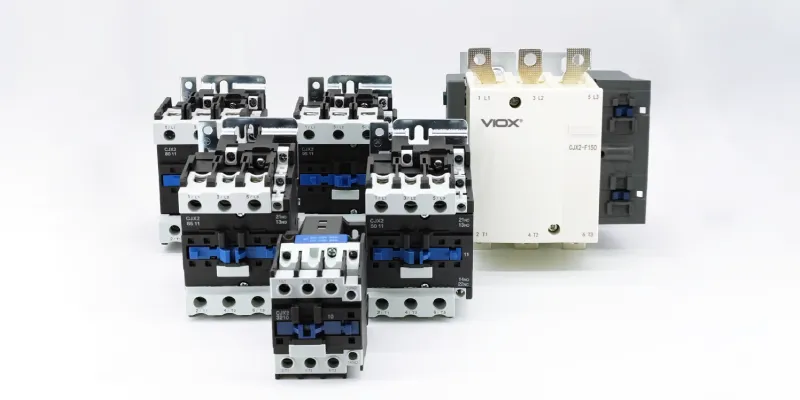
تفاوت اصلی بین یک کنتاکتور AC و یک کنتاکتور DC نحوه مدیریت جریان توسط هر دستگاه در هنگام سوئیچینگ است. کنتاکتور AC برای جریان متناوب طراحی شده است، جایی که جریان به طور طبیعی چندین بار در ثانیه از صفر عبور میکند. کنتاکتور DC برای جریان مستقیم طراحی شده است، جایی که جرقه هیچ نقطه عبور از صفری ندارد و خاموش کردن آن بسیار دشوارتر است.
این تفاوت تقریباً بر تمام اجزای مهم کنتاکتور تأثیر میگذارد: بوبین، هسته مغناطیسی، فاصله کنتاکتها، محفظه جرقه، جنس کنتاکتها، علامتگذاری قطبیت و دستهبندی بهرهبرداری. یک کنتاکتور هرگز نباید تنها بر اساس آمپراژ انتخاب شود. نوع بار، نوع ولتاژ، ولتاژ بوبین، وظیفه سوئیچینگ و دستهبندی بهرهبرداری IEC همگی باید با کاربرد مورد نظر مطابقت داشته باشند.
برای کنترل موتورهای AC استاندارد، سیستمهای تهویه مطبوع (HVAC)، روشنایی و بارهای مقاومتی AC، معمولاً کنتاکتور AC انتخاب درستی است. برای باتریها، سیستمهای خورشیدی PV، خودروهای برقی، موتورهای DC، درایوهای DC و سیستمهای ذخیرهسازی انرژی، معمولاً به یک کنتاکتور با درجهبندی DC نیاز است.
کنتاکتور AC در مقابل DC: مقایسه سریع
| ویژگی | پیمانکاران برق | DC پیمانکاران |
|---|---|---|
| نوع فعلی | جریان متناوب (AC) | جریان مستقیم (DC) |
| رفتار قوس الکتریکی | قوس الکتریکی در هر نقطه عبور از صفر به طور طبیعی تضعیف میشود | قوس الکتریکی پیوسته است و خاموش کردن آن دشوارتر است |
| هسته مغناطیسی | هسته ورقورق (لایهای) برای کاهش گرمای ناشی از جریانهای گردابی | هسته یکپارچه به دلیل ثابت بودن شار مغناطیسی رایج است |
| حلقه اتصال کوتاه (حلقه سایه) | معمولاً برای کاهش صدای وزوز و لرزش مورد نیاز است | در سیستم مغناطیسی DC معمولی مورد نیاز نیست |
| رفتار بوبین | جریان بوبین تحت تأثیر امپدانس و موقعیت آرمیچر قرار میگیرد | جریان بوبین عمدتاً توسط مقاومت سیمپیچ یا مدار اکونومایزر محدود میشود |
| سرکوب قوس | تا حدی متکی بر عبور از صفر جریان متناوب (AC) و محفظه جرقه است | نیازمند محفظه جرقه قویتر، فاصله کنتاکت بیشتر، دمنده مغناطیسی یا محفظه جرقه ایزوله است |
| حساسیت به پلاریته (قطبیت) | معمولاً در سمت بار به پلاریته حساس نیست | برخی از کنتاکتورهای DC به دلیل وجود دمنده مغناطیسی جرقه، نسبت به پلاریته حساس هستند |
| بارهای معمول | موتورهای AC، سیستمهای تهویه مطبوع (HVAC)، پمپها، فنها، روشنایی، هیترها | باتریها، خودروهای برقی (EVs)، سیستمهای خورشیدی فتوولتائیک، سیستمهای ذخیرهسازی انرژی باتری (BESS)، لیفتراکها، موتورهای DC، سیستمهای ریلی و دریایی DC |
| دستهبندیهای رایج IEC | AC-1, AC-3, AC-4 | DC-1, DC-3, DC-5 |
| قابلیت تعویض | برای جریان مستقیم (DC) استفاده نشود، مگر اینکه در برگه اطلاعات فنی مجاز شمرده شده باشد | ممکن است تنها در صورتی که مشخصات بوبین و کنتاکتها مطابقت داشته باشند برای برخی بارهای AC قابل استفاده باشد، اما اغلب از نظر اقتصادی مقرونبهصرفه نیست |
کنتاکتور AC چیست؟
یک کنتاکتور AC یک دستگاه کلیدزنی الکترومکانیکی است که برای کنترل از راه دور بارهای AC طراحی شده است. این دستگاه از یک بوبین برای ایجاد میدان مغناطیسی استفاده میکند که آرمیچر را به سمت داخل میکشد، کنتاکتهای اصلی را میبندد و اجازه میدهد جریان به سمت بار برقرار شود.
کنتاکتورهای AC بهطور گسترده در موارد زیر استفاده میشوند:
- کنترل موتور القایی سه فاز
- کمپرسورها و فنهای سیستمهای تهویه مطبوع (HVAC)
- پمپها و دمندهها
- مدارهای روشنایی
- بارهای گرمایشی مقاومتی
- بانکهای خازنی، در صورتی که کنتاکتور مخصوص خازنی مشخص شده باشد
- تابلوهای کنترل صنعتی عمومی
نکته کلیدی در طراحی این است که جریان متناوب (AC) در هر نیمسیکل از صفر عبور میکند. در یک سیستم ۵۰ هرتز، ۱۰۰ بار عبور از صفر در ثانیه و در یک سیستم ۶۰ هرتز، ۱۲۰ بار عبور از صفر در ثانیه رخ میدهد. این ویژگی به کنتاکتور کمک میکند تا هنگام باز شدن کنتاکتها، قوس الکتریکی را خاموش کند.
این بدان معنا نیست که قوسهای AC بیخطر هستند. کنتاکتورها همچنان به ردهبندیهای بهرهبرداری صحیح، مواد کنتاکت مناسب و محفظههای جرقه مناسب نیاز دارند. اما کلیدزنی AC معمولاً نسبت به کلیدزنی DC در ولتاژ و جریان مشابه، فشار کمتری وارد میکند، زیرا جریان بهطور طبیعی به خاموش شدن قوس کمک میکند.
برای محصولات کنترل موتور AC، به VIOX مراجعه کنید کنتاکتور AC محدوده محصولات.
کنتاکتور DC چیست؟
الف کنتاکتور DC کنتاکتوری است که برای قطع و وصل بارهای جریان مستقیم طراحی شده است. از آنجایی که جریان DC به طور طبیعی از صفر عبور نمیکند، در صورت عدم طراحی کنتاکتور برای وادار کردن قوس به کشیده شدن، خنک شدن، تقسیم شدن یا هدایت به محفظه جرقه، قوس الکتریکی DC میتواند پس از باز شدن کنتاکتها همچنان ادامه یابد.
کنتاکتورهای DC معمولاً در موارد زیر استفاده میشوند:
- سیستمهای ذخیرهسازی انرژی باتری (BESS)
- وسایل نقلیه الکتریکی و سیستمهای شارژ خودروهای برقی
- مدارهای DC فتوولتائیک خورشیدی
- موتورهای DC و درایوهای DC
- لیفتراکها و وسایل نقلیه هدایتشونده خودکار (AGVs)
- سیستمهای برق جریان مستقیم (DC) ریلی و دریایی
- توزیع برق جریان مستقیم (DC) مخابراتی
- سیستمهای کنترل و پشتیبان جریان مستقیم (DC) اضطراری
کنتاکتورهای DC با رشد سیستمهای خورشیدی، باتری، خودروهای برقی و سیستمهای توزیع DC اهمیت بیشتری پیدا میکنند. با این حال، یک کنتاکتور DC صرفاً یک کنتاکتور AC با برچسب متفاوت نیست. طراحی داخلی کنترل قوس الکتریکی در آنها متفاوت است.
بوبین AC در مقابل بوبین DC
بوبین یکی از بخشهایی است که انتخاب اشتباه در آن بسیار رایج است.
بوبین کنتاکتور AC
یک بوبین AC توسط جریان متناوب تغذیه میشود. جریان آن هم توسط مقاومت سیمپیچ و هم توسط راکتانس القایی محدود میشود. هنگامی که آرمیچر باز است، شکاف هوایی مغناطیسی بزرگ است و بوبین میتواند جریان هجومی بالاتری بکشد. پس از بسته شدن آرمیچر، مدار مغناطیسی بهبود یافته و جریان نگهدارنده کاهش مییابد.
اکثر کنتاکتورهای AC از یک هسته مغناطیسی لایهلایه استفاده میکنند و یک حلقه سایهانداز. هسته لایهلایه باعث کاهش گرمای ناشی از جریانهای گردابی (Eddy-current) میشود. حلقه اتصال کوتاه (Shading ring) به حفظ نیروی کشش مغناطیسی در لحظاتی که جریان AC از صفر عبور میکند کمک کرده و باعث کاهش صدا و لرزش (چتر) میشود.
بوبین کنتاکتور DC
بوبین DC توسط جریان مستقیم تغذیه میشود. از آنجایی که جریان DC ثابت، شار مغناطیسی متناوب مشابه AC ایجاد نمیکند، هسته مغناطیسی اغلب به جای لایهلایه بودن، به صورت یکپارچه (Solid) است. جریان بوبین عمدتاً توسط مقاومت سیمپیچ یا در کنتاکتورهای بزرگتر توسط یک مدار الکترونیکی اکونومایزر محدود میشود.
بسیاری از کنتاکتورهای DC بزرگتر از استراتژی جذب و نگهداری استفاده میکنند. کنتاکتور ممکن است برای جذب اولیه به توان بیشتری نیاز داشته باشد و سپس برای بسته ماندن به توان کمتری نیاز پیدا کند. یک اکونومایزر پس از بسته شدن کنتاکتور، گرمای بوبین و مصرف انرژی را کاهش میدهد.
سرکوب نوسان بوبین: نیروی ضد محرکه (Back-EMF) و پسزنی القایی
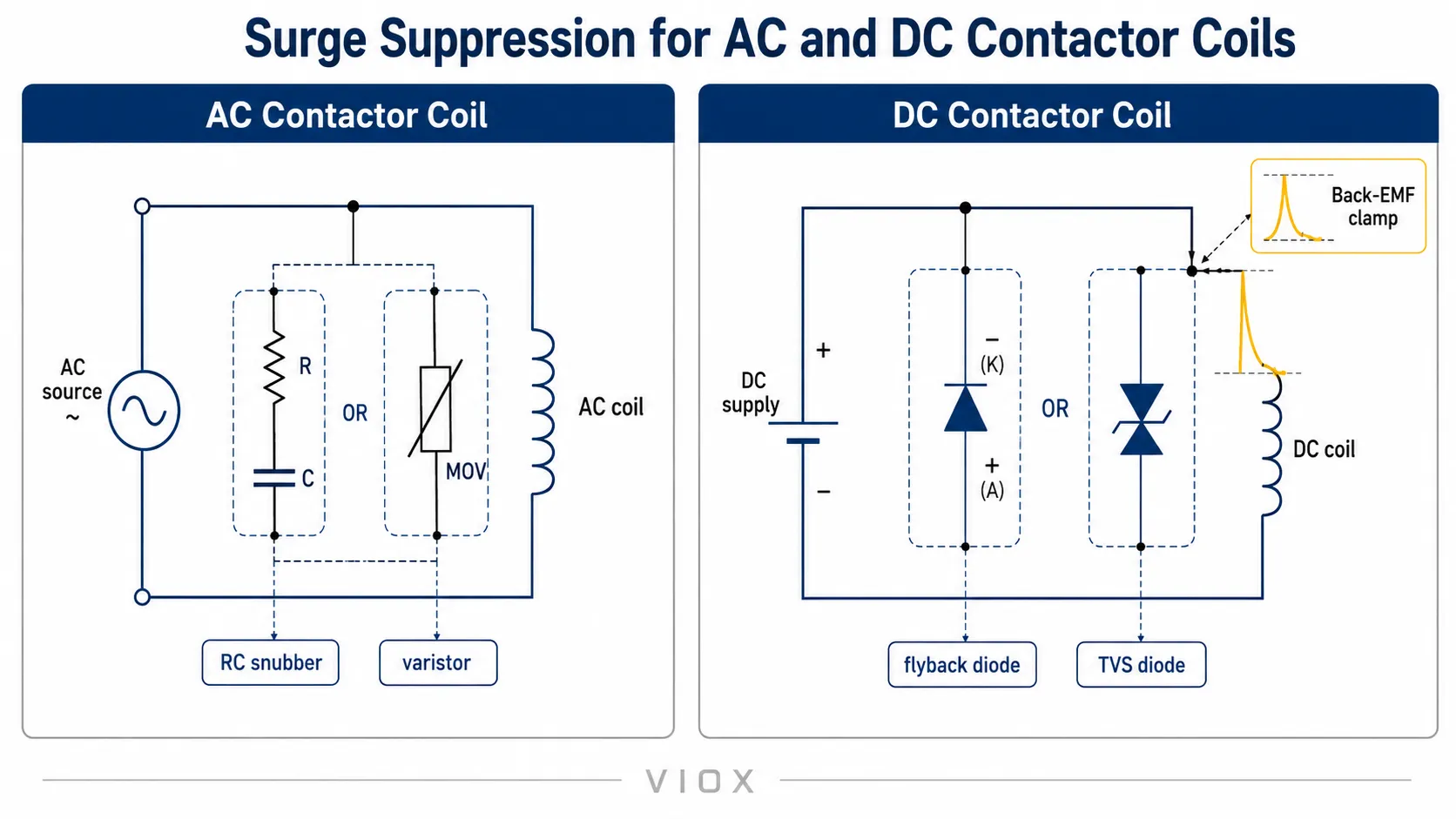
خود سیمپیچ یک بار القایی محسوب میشود. هنگامی که مدار فرمان، سیمپیچ را قطع میکند، فروپاشی میدان مغناطیسی میتواند باعث ایجاد یک جهش ولتاژ شود که به آن نیروی ضد محرکه الکتریکی (Back-EMF) گفته میشود. یا پس زنی القایی. اگر این جهش ولتاژ کنترل نشود، میتواند به خروجیهای PLC، کنتاکتهای رله، کنتاکتهای تایمر، سنسورها یا بردهای کنترل الکترونیکی آسیب برساند.
برای سیمپیچهای AC، سرکوب نوسانات معمولاً بسته به مدار فرمان و تجهیزات جانبی سازنده، با استفاده از مدار اسنابر RC یا ماژول وریستور انجام میشود. برای سیمپیچهای DC، استفاده از دیود هرزگرد (Flyback diode) در مدارهای ساده رایج است، در حالی که اگر به زمان قطع سریعتر نیاز باشد، دیود سرکوبگر ولتاژ گذرا (TVS) یا ماژولهای سرکوبگر اختصاصی ترجیح داده میشوند.
این جزئیات در تابلوهای اتوماسیون اهمیت دارد. دیود هرزگرد جهش ولتاژ را به طور موثری محدود میکند، اما میتواند باعث کند شدن زمان باز شدن کنتاکتور شود، زیرا جریان سیمپیچ با سرعت کمتری تخلیه میشود. در مدارهای توقف اضطراری، ایمنی یا توالیهای پرسرعت، همیشه زمان باز شدن کنتاکتور و تجهیزات جانبی سرکوبگر تایید شده در دیتاشیت را بررسی کنید.
اگر ولتاژ سیمپیچ اشتباه باشد چه اتفاقی میافتد؟
اعمال ولتاژ تغذیه اشتباه به سیمپیچ میتواند بلافاصله مشکلاتی ایجاد کند:
- سیمپیچ DC که به برق AC متصل شود، ممکن است دچار لرزش (Chatter)، داغ شدن بیش از حد یا عدم عملکرد صحیح در بستن کنتاکتها شود.
- یک بوبین AC که به جریان DC متصل شود ممکن است بیش از حد داغ شود، زیرا فاقد رفتار امپدانسی مورد نظر در جریان AC است.
- نمیتوان فرض کرد که یک بوبین ۲۴ ولت هم ولتاژ ۲۴ ولت AC و هم ۲۴ ولت DC را میپذیرد، مگر اینکه در دیتاشیت محصول صراحتاً ذکر شده باشد.
- بوبینهای یونیورسال AC/DC یک طراحی خاص هستند، نه یک ویژگی پیشفرض.
همیشه ولتاژ بوبین و نوع جریان را روی برچسب کنتاکتور یا دیتاشیت بررسی کنید.
هسته ورقورق (Laminated) در مقابل هسته یکپارچه (Solid)
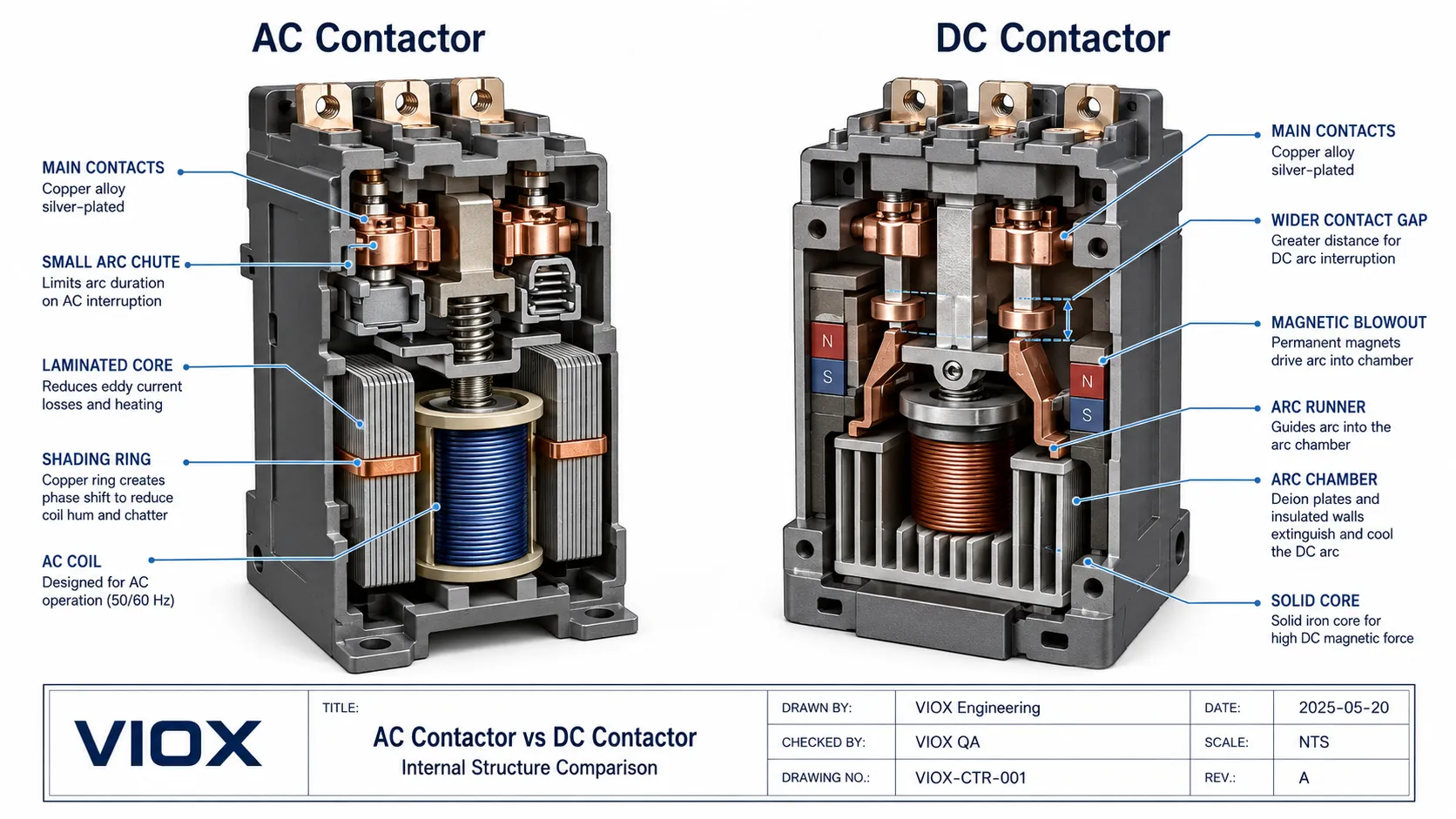
هسته مغناطیسی تفاوت عمده دیگر است.
| ویژگی هسته | پیمانکاران برق | DC پیمانکاران |
|---|---|---|
| شار مغناطیسی | متناوب | پایدار |
| خطر جریان گردابی | بالاتر | بسیار کمتر |
| ساختار هسته متداول | فولاد سیلیکونی ورقورق شده | آهن یا فولاد یکپارچه رایج است |
| حلقه اتصال کوتاه (حلقه سایه) | رایج | معمولاً مورد نیاز نیست |
| نشانه خرابی رایج | وزوز، لرزش و داغ شدن بیش از حد در صورت خرابی بوبین یا حلقه اتصال کوتاه (Shading ring) | داغ شدن بیش از حد بوبین در صورت نامناسب بودن ولتاژ یا مدار اکونومایزر |
در کنتاکتورهای AC، میدان مغناطیسی دائماً در حال تغییر است. هسته یکپارچه باعث ایجاد جریانهای گردابی و تولید گرما میشود. ورقهای لایهلایه، مسیر این جریانهای گردابی را قطع میکنند.
در کنتاکتورهای DC، میدان مغناطیسی پس از برقدار شدن ثابت است، بنابراین گرمای ناشی از جریانهای گردابی مشکل کمتری ایجاد میکند. هسته یکپارچه میتواند به طور موثری استفاده شود.
به همین دلیل است که در سوالات آموزشی مطرح میشود که “مجموعه کنتاکتورهای AC از هستههای لایهلایه و مجموعههای DC از هستههای یکپارچه ساخته شدهاند” که به تفاوت در هسته مغناطیسی اشاره دارد.
چرا کنتاکتورهای DC به سیستم خاموشکننده قوس الکتریکی قویتری نیاز دارند
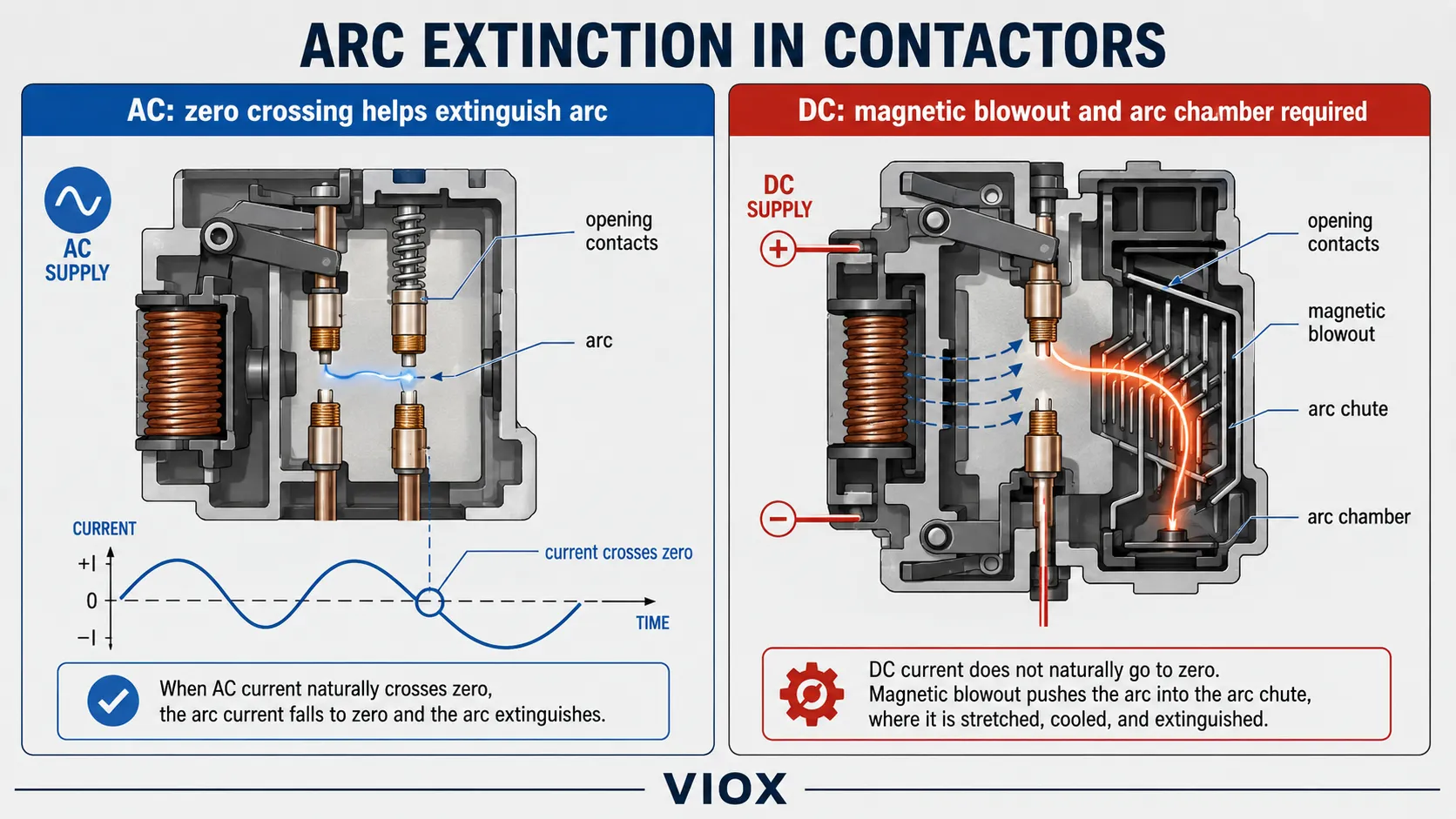
هنگامی که کنتاکتور تحت بار باز میشود، کنتاکتها از هم جدا میشوند اما جریان ممکن است از طریق یک قوس الکتریکی ادامه یابد. دشواری کار تنها در باز کردن کنتاکتها نیست، بلکه در خاموش کردن ایمن قوس است.
خاموشسازی قوس در جریان متناوب (AC)
در یک مدار AC، جریان به طور طبیعی از صفر عبور میکند. در آن لحظه، قوس انرژی خود را از دست میدهد. اگر فاصله کنتاکتها و محفظه قوس، استحکام دیالکتریک کافی را بازیابی کرده باشند، قوس دوباره برقرار نمیشود.
کنتاکتورهای AC همچنان از صفحات جرقه گیر (Arc Chutes) و هندسه مناسب کنتاکت استفاده میکنند، اما عبور از صفر جریان، مزیت بزرگی برای آنها محسوب میشود.
خاموشسازی قوس در جریان مستقیم (DC)
در یک مدار DC، عبور از صفر طبیعی وجود ندارد. هنگامی که قوس تشکیل میشود، اگر کنتاکتور نتواند آن را مجبور به خاموش شدن کند، قوس میتواند به سوختن ادامه دهد. این امر میتواند منجر به فرسایش کنتاکتها، جوش خوردن کنتاکتها، آسیب به عایق یا عدم قطع ایمن بار شود.
کنتاکتورهای DC ممکن است از موارد زیر استفاده کنند:
- فواصل تماس بازتر
- ساختارهای دمنده مغناطیسی
- شاخکهای جرقه (Arc Runners)
- محفظههای جرقه قویتر
- محفظههای جرقه مهر و موم شده
- طراحیهای پر شده با گاز یا خلأ در برخی کنتاکتورهای با کارایی بالا
- کنترل جرقه وابسته به قطبیت
برای توضیح عمیقتر در مورد قوسهای الکتریکی و محفظههای جرقه، به راهنمای VIOX در مورد زیر مراجعه کنید قوس الکتریکی در کلیدهای مینیاتوری (بریکرها) چیست.
آیا کنتاکتورهای DC به پلاریته حساس هستند؟
برخی از کنتاکتورهای DC به پلاریته حساس هستند، بهویژه آنهایی که از آهنرباهای دائم برای خاموش کردن قوس الکتریکی استفاده میکنند. میدان مغناطیسی بهگونهای طراحی شده است که قوس را در جهت خاصی به داخل محفظه جرقه (Arc Chute) هدایت کند. اگر جهت جریان معکوس شود، ممکن است قوس از مسیر تعیینشده منحرف شود.
به همین دلیل است که پایانههای کنتاکتور DC ممکن است با علامت پلاریته یا جهت خط/بار مشخص شده باشند. این علائم را نادیده نگیرید. در سیستمهای باتری و فتوولتائیک (PV)، جریان معکوس، جهت شارژ/دشارژ و عملکرد دوطرفه باید در هنگام انتخاب در نظر گرفته شوند.
اگر کاربرد مورد نظر نیاز به جریان دوطرفه دارد، اطمینان حاصل کنید که کنتاکتور برای این کار رتبهبندی شده است. تصور نکنید که هر کنتاکتور DC دوطرفه است.
مواد کنتاکت و فرسایش کنتاکت
سوئیچینگ AC و DC میتواند فشارهای متفاوتی به سطوح کنتاکت وارد کند.
کنتاکتورهای AC معمولاً از کنتاکتهای آلیاژ نقره استفاده میکنند که برای سوئیچینگ موتورهای AC و بارهای مقاومتی طراحی شدهاند. کنتاکتورهای DC ممکن است به مواد و ساختارهای کنتاکتی نیاز داشته باشند که در برابر فرسایش ناشی از قوس DC و انتقال مواد، مقاومت بیشتری داشته باشند.
بررسیهای مهم مربوط به کنتاکتها عبارتند از:
- ولتاژ عملیاتی نامی
- جریان عملیاتی نامی
- دسته بهره برداری
- منحنی عمر الکتریکی
- فاصله کنتاکت
- طراحی محفظه جرقه (Arc Chute)
- علامتگذاری قطبیت
- load inductance
- فرکانس کلیدزنی مورد انتظار
- هماهنگی حفاظت در برابر اتصال کوتاه
جوش خوردن کنتاکتها اغلب ناشی از جریان هجومی بیش از حد، دستهبندی بهرهبرداری نادرست، رویدادهای اتصال کوتاه، استفاده اشتباه در جریان مستقیم (DC) یا سرکوب ناکافی قوس الکتریکی برای بار مربوطه است.
دستهبندیهای بهرهبرداری IEC: AC-1, AC-3, DC-1, DC-3, DC-5
یک کنتاکتور با بدنه فیزیکی یکسان میتواند بسته به دستهبندی بار، جریانهای نامی متفاوتی داشته باشد. این یکی از مهمترین قوانین انتخاب است.
دستهبندیهای بهرهبرداری IEC برای توصیف نوع بار و وظیفه کلیدزنی استفاده میشوند. برای کنتاکتورها و راهاندازهای موتور، این دستهبندیها با چارچوب استاندارد IEC 60947-4-1 مرتبط هستند.
| دسته بندی | بار معمولی | معنی عملی |
|---|---|---|
| ایسی-۱ | بارهای غیرسلفی یا با سلف کم در جریان متناوب (AC)، مانند گرمایش مقاومتی | شرایط آسانتر برای قطع و وصل جریان متناوب (AC) |
| ایسی-۳ | موتورهای قفس سنجابی، راهاندازی و قطع جریان در حین کار | کاربرد متداول کنتاکتور موتور |
| ای سی-۴ | ترمز معکوس (Plugging)، حرکت لحظهای (Inching) و تغییر جهت چرخش موتور | شرایط بسیار سختتر برای قطع و وصل موتور |
| DC-1 | بارهای DC غیر القایی یا کمی القایی | شرایط آسانتر برای قطع و وصل جریان مستقیم (DC) |
| DC-3 | موتورهای DC شنت، راهاندازی، ترمز معکوس، حرکت لحظهای و ترمز دینامیکی | شرایط سختتر برای موتورهای DC |
| DC-5 | موتورهای DC سری، راهاندازی، ترمز معکوس (Plugging)، اینچینگ (Inching)، ترمز دینامیکی | شرایط کاری سنگین موتورهای DC |
به همین دلیل است که یک کنتاکتور با جریان نامی بالا در دستهبندی AC-1، ممکن است در دستهبندیهای AC-3 یا DC جریان نامی بسیار پایینتری داشته باشد. جریان درج شده روی برچسب به تنهایی کافی نیست.
آیا میتوان از کنتاکتور AC برای جریان DC استفاده کرد؟
به طور کلی،, از کنتاکتور AC برای بار DC استفاده نکنید، مگر اینکه برگه اطلاعات (دیتاشیت) سازنده صراحتاً آن را برای آن ولتاژ، جریان و دستهبندی بهرهبرداری DC مجاز دانسته باشد..
خطر اصلی این نیست که بوبین نتواند کنتاکتور را جذب کند. خطر بزرگتر این است که کنتاکتهای اصلی نتوانند قوس الکتریکی DC را به طور ایمن قطع کنند. در ولتاژ و جریان DC پایین، برخی سازندگان ممکن است سیمکشی خاص سری کردن قطبها یا کاهش ظرفیت (Derating) را مجاز بدانند. اما این موضوع باید حتماً از طریق دیتاشیت تأیید شود، نه حدس و گمان.
در مدارهای جریان بالای باتری، سیستمهای خورشیدی (PV)، خودروهای برقی (EV) و موتورهای DC، باید از کنتاکتورهایی استفاده شود که بهطور اختصاصی برای سوئیچینگ DC طراحی و رتبهبندی شدهاند.
آیا میتوان از کنتاکتور DC برای جریان AC استفاده کرد؟
گاهی اوقات یک کنتاکتور DC ممکن است از نظر فیزیکی قادر به قطع بار AC باشد، اما لزوماً انتخاب مناسبی نیست.
شما باید موارد زیر را بررسی کنید:
- اینکه آیا کنتاکتهای اصلی برای ولتاژ AC و دستهبندی بار مربوطه رتبهبندی شدهاند یا خیر.
- اینکه آیا تغذیه بوبین با مدار فرمان مطابقت دارد یا خیر.
- اینکه آیا کنتاکتور برای آن کار بیش از حد بزرگ (Over-sized) یا غیراقتصادی است یا خیر.
- اینکه آیا کاربرد مورد نظر به دستهبندی بهرهبرداری AC مانند AC-1 یا AC-3 نیاز دارد یا خیر.
در بسیاری از کاربردهای معمولی موتورهای AC، یک کنتاکتور استاندارد AC سادهتر، ارزانتر و مناسبتر است.
راهنمای کاربرد: چه زمانی از هر نوع استفاده کنیم
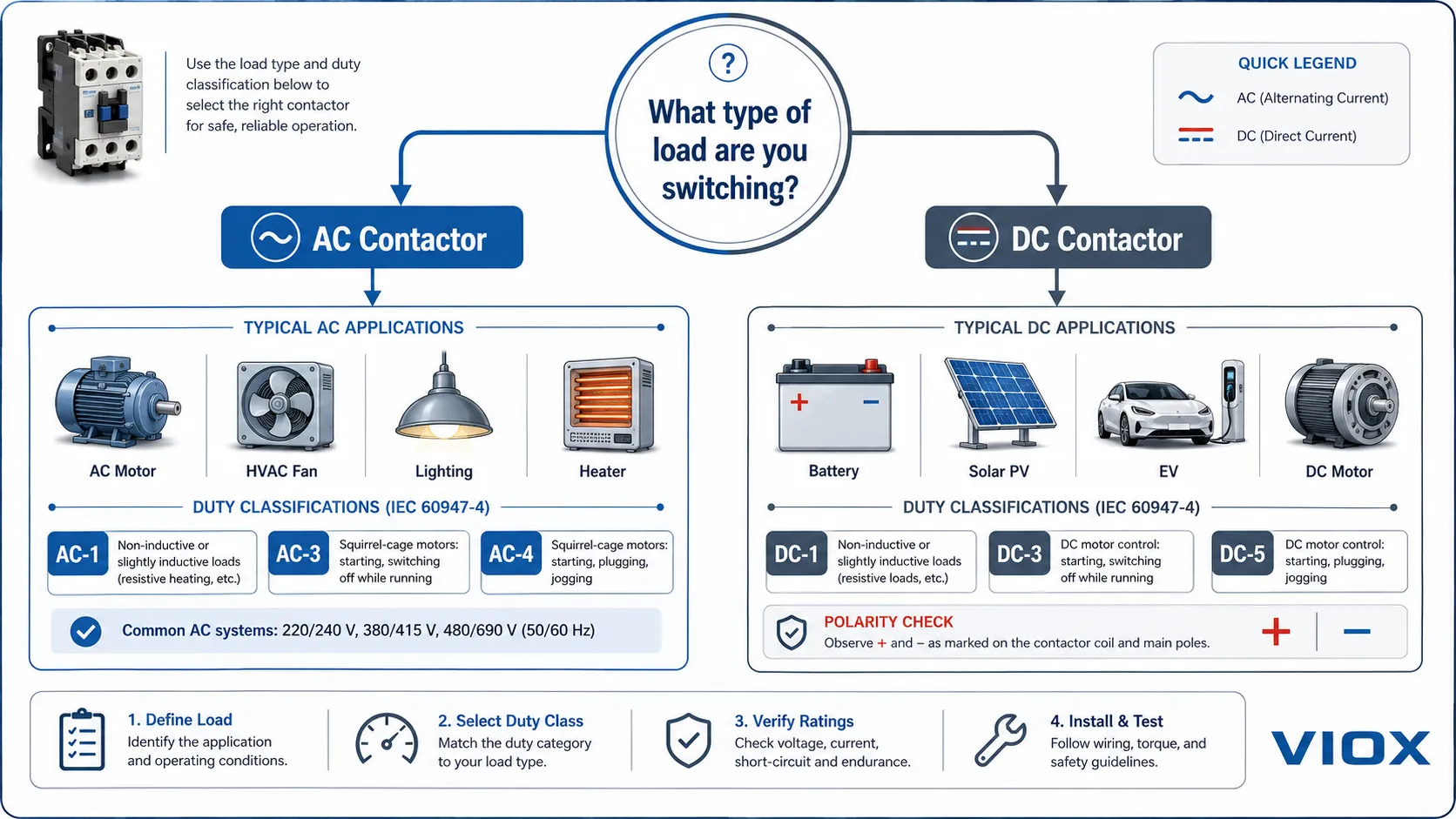
| کاربرد | نوع کنتاکتور پیشنهادی | دلیل |
|---|---|---|
| موتور القایی سه فاز | کنتاکتور AC | طراحیشده برای دستهبندیهای بهرهبرداری موتور AC مانند AC-3 |
| کمپرسور یا فن تهویه مطبوع (HVAC) | کنتاکتور AC | کاربرد رایج کنتاکتورهای با هدف معین یا کنتاکتور موتور |
| هیتر مقاومتی AC | کنتاکتور AC | بسته به طراحی، ممکن است شرایط کاری AC-1 اعمال شود |
| بانک روشنایی | کنتاکتور AC | استفاده از درجهبندی مناسب برای بارهای روشنایی |
| سوئیچینگ جریان مستقیم (DC) سیستمهای خورشیدی فتوولتائیک | کنتاکتور DC | نیازمند قابلیت قطع قوس الکتریکی DC |
| ذخیرهسازی انرژی باتری | کنتاکتور DC | جریان DC بالا و ملاحظات مربوط به قطبیت/دوجهته بودن |
| قطعکننده باتری خودروهای برقی (EV) | کنتاکتور DC | کاربرد سوئیچینگ DC حساس به ایمنی |
| موتور جریان مستقیم (DC) لیفتراک یا AGV | کنتاکتور DC | چرخه کاری موتور DC ممکن است نیازمند در نظر گرفتن استانداردهای DC-3 یا DC-5 باشد |
| سیستم درایو جریان مستقیم (DC) | کنتاکتور DC | باید با ولتاژ، جریان، اندوکتانس و چرخه کاری مطابقت داشته باشد |
انواع کنتاکتور: جایگاه کاربرد AC و DC
عبارت انواع کنتاکتور میتواند معانی متعددی داشته باشد. AC در مقابل DC تنها یکی از دستهبندیها است.
انواع رایج کنتاکتور عبارتند از:
- کنتاکتور AC
- کنتاکتور DC
- کنتاکتور مدولار
- کنتاکتور مخصوص خازن
- کنتاکتور با کاربرد خاص
- کنتاکتور معکوسکننده
- کنتاکتور ایمنی
- کنتاکتور خلأ
- رله کنتاکتوری
برای کاربردهای اتوماسیون ساختمان و توزیع روی ریل DIN، یک کنتاکتور مدولار ممکن است مناسبتر از یک کنتاکتور استاندارد موتور باشد. برای حفاظت از موتور، کنتاکتور اغلب همراه با رله اضافه بار یا راهانداز موتور استفاده میشود، نه به تنهایی.
چکلیست انتخاب کنتاکتورهای AC و DC
پیش از انتخاب کنتاکتور، موارد زیر را تایید کنید:
| مورد انتخاب | چه چیزی را بررسی کنید |
|---|---|
| نوع جریان بار | AC یا DC |
| ولتاژ کنتاکت اصلی | ولتاژ کاری نامی برای بار |
| جریان کنتاکت اصلی | جریان کاری نامی تحت دستهبندی بهرهبرداری صحیح |
| ولتاژ کویل | ولتاژ کنترل و نوع بوبین AC/DC |
| نوع بار | موتور، هیتر، باتری، سیستم فتوولتائیک (PV)، روشنایی، خازن، درایو DC |
| دسته بندی استفاده | دستهبندیهای AC-1، AC-3، AC-4، DC-1، DC-3، DC-5 یا سایر دستهبندیهای مرتبط |
| فرکانس سوئیچینگ | تعداد عملیات مورد انتظار در ساعت یا چرخه کاری، بررسیشده بر اساس دیتاشیت |
| سرکوب قوس | طراحی عبور از صفر برای AC یا طراحی مغناطیسی/محفظه جرقه برای DC |
| قطبیت | مورد نیاز برای بسیاری از کنتاکتورهای DC |
| محافظت در برابر اتصال کوتاه | فیوز، کلید مینیاتوری (MCB)، کلید اتوماتیک (MCCB) یا هماهنگی حفاظتی بالادست |
| محیط زیست | دما، ارتعاش، گرد و غبار، رطوبت، نوع محفظه (Enclosure) |
| لوازم جانبی | کنتاکتهای کمکی، اینترلاکها، سرکوبکنندهها، اکونومایزرها |
برای بررسی کلیتر کنتاکتورها، به راهنمای VIOX در مورد موارد زیر مراجعه کنید کنتاکتور چیست.
یادداشت میدانی مهندس: خرابی معمولاً نامحسوس نیست
در عیبیابی میدانی، یک کنتاکتور AC که به اشتباه در مدار DC استفاده شده باشد، معمولاً مانند یک رله سیگنال کوچک با کنتاکت کمی سیاه شده از کار نمیافتد. الگوی رایج بسیار آشکارتر است: کنتاکتها جوش خورده و بسته میمانند، محفظه جرقه میسوزد، بدنه پلاستیکی تغییر رنگ میدهد، یا پس از اینکه کنتاکتور دیگر قادر به قطع بار نیست، تجهیزات حفاظتی بالادست عمل میکنند.
یک قاعده کلی مفید این است: اگر بار شامل رشته باتری، موتور DC، رشته فتوولتائیک (PV)، شارژر یا مدار ذخیره انرژی است، از کاتالوگ کنتاکتورهای موتور AC شروع نکنید و به “حدس و گمان برای کاهش ظرفیت” متوسل نشوید. از ولتاژ DC، جهت جریان، اندوکتانس بار، دستهبندی بهرهبرداری و دادههای قطع جریان مستقیم (DC) سازنده شروع کنید. این مسیری است که از اکثر خرابیهای پرهزینه کنتاکتور جلوگیری میکند.
اشتباهات رایج
اشتباه ۱: انتخاب فقط بر اساس آمپر
درجهبندی ۱۰۰ آمپر به این معنی نیست که کنتاکتور میتواند در هر کاربردی ۱۰۰ آمپر را سوئیچ کند. درجهبندی قابل استفاده به ولتاژ، نوع AC/DC، دستهبندی بار، وظیفه سوئیچینگ و دادههای سازنده بستگی دارد.
اشتباه ۲: نادیده گرفتن نوع بوبین
یک بوبین ۲۴ ولت AC و یک بوبین ۲۴ ولت DC یکسان نیستند، مگر اینکه محصول دارای بوبین یونیورسال AC/DC باشد. تغذیه اشتباه بوبین میتواند باعث ایجاد لرزش (Chattering)، داغ شدن بیش از حد یا عدم بسته شدن کنتاکتها شود.
اشتباه ۳: فراموش کردن سرکوبگر نوسان بوبین (Coil Surge Suppression)
هنگامی که بوبین بیبرق میشود، نیروی ضد محرکه (Back-EMF) میتواند به خروجیهای PLC، کنتاکتهای تایمر یا کنتاکتهای رله آسیب برساند. از روش سرکوب توصیه شده توسط سازنده استفاده کنید و بررسی کنید که آیا سرکوبگر باعث تغییر زمان رهاسازی میشود یا خیر.
اشتباه ۴: استفاده از کنتاکتور AC در مدار باتری DC
سیستمهای باتری میتوانند جریان خطای بالایی ایجاد کرده و قوسهای DC را پایدار نگه دارند. از کنتاکتوری استفاده کنید که برای ولتاژ، جریان، قطبیت و سیکل کاری DC رتبهبندی شده باشد.
اشتباه ۵: نادیده گرفتن قطبیت DC
اگر کنتاکتور DC از سیستم دمنده مغناطیسی قوس (Magnetic Arc Blowout) استفاده میکند، قطبیت ممکن است تعیینکننده این باشد که آیا قوس به درستی به داخل محفظه جرقه (Arc Chute) هدایت میشود یا خیر. همیشه از علائم روی ترمینالها و نمودارهای دیتاشیت پیروی کنید.
اشتباه ۶: فراموش کردن اندوکتانس بار
موتورهای جریان مستقیم (DC)، سیمپیچها، سلنوئیدها و کابلکشیهای طولانی میتوانند تنش کلیدزنی را افزایش دهند. قطع بارهای القایی DC بسیار دشوارتر از بارهای مقاومتی ساده است.
سوالات متداول
کنتاکتور DC برای چه کاری استفاده میشود؟
کنتاکتور DC برای کلیدزنی بارهای جریان مستقیم مانند باتریها، مدارهای فتوولتائیک خورشیدی، سیستمهای خودروهای برقی (EV)، موتورهای DC، لیفتراکها، سیستمهای ذخیرهسازی انرژی و توزیع برق DC استفاده میشود.
آیا میتوانم از کنتاکتور AC برای جریان مستقیم (DC) استفاده کنم؟
تنها در صورتی که برگه اطلاعات فنی سازنده، صراحتاً استفاده از کنتاکتور را برای آن ولتاژ، جریان و دستهبندی بار DC مجاز دانسته باشد. در غیر این صورت، استفاده از کنتاکتور AC برای جریان DC میتواند باعث ایجاد قوس الکتریکی پایدار، جوش خوردن کنتاکتها یا عدم قطع مدار شود.
آیا سیمپیچهای کنتاکتور به سرکوبکننده نوسان (Surge Suppression) نیاز دارند؟
اغلب بله. سیمپیچهای AC معمولاً از اسنابرهای RC یا وریستورها استفاده میکنند، در حالی که سیمپیچهای DC اغلب از دیودهای هرزگرد (Flyback)، دیودهای TVS یا سرکوبکنندههای نوسان اختصاصی بهره میبرند. تجهیز جانبی مناسب به مدار فرمان و زمان آزادسازی مورد نیاز بستگی دارد.
آیا دیود هرزگرد (Flyback) باعث کند شدن عملکرد کنتاکتور DC میشود؟
بله، امکانپذیر است. دیود هرزگرد (Flyback diode) به طور موثری پیک ولتاژ القایی را محدود میکند، اما ممکن است باعث کند شدن نرخ کاهش جریان سیمپیچ و افزایش زمان رهاسازی کنتاکتور شود. برای رهاسازی سریعتر، استفاده از دیود TVS یا سرکوبکنندههای مورد تایید سازنده گزینه بهتری است.
چرا کنتاکتورهای AC وزوز میکنند؟
کنتاکتورهای AC به دلیل تغییر میدان مغناطیسی همگام با شکل موج جریان متناوب، ممکن است وزوز کنند. حلقه اتصال کوتاه (Shading ring) به کاهش لرزش کمک میکند، اما ورقههای هسته شل، ولتاژ پایین، آلودگی یا آسیبدیدگی حلقه اتصال کوتاه میتواند باعث افزایش صدا شود.
آیا کنتاکتورهای DC به پلاریته حساس هستند؟
برخی از کنتاکتورهای DC نسبت به پلاریته حساس هستند، بهویژه زمانی که از آهنرباهای دائم برای خاموش کردن جرقه استفاده میکنند. همیشه علائم روی ترمینالها و دیتاشیت محصول را بررسی کنید.
دستهبندی AC-3 در کنتاکتورها چیست؟
AC-3 یک دستهبندی بهرهبرداری طبق استاندارد IEC است که معمولاً برای راهاندازی موتورهای قفس سنجابی و قطع جریان در حین کار استفاده میشود. این یکی از رایجترین دستهبندیها برای کنتاکتورهای موتورهای AC است.
دستهبندی DC-1 در کنتاکتورها چیست؟
DC-1 یک دستهبندی بهرهبرداری برای بارهای DC غیرالقایی یا با القای کم است. این دستهبندی نسبت به دستهبندیهای موتور DC مانند DC-3 یا DC-5 شرایط کاری سبکتری دارد.
آیا رله همان کنتاکتور است؟
خیر. رله معمولاً برای مدارهای کنترل کمتوان یا سیگنال استفاده میشود، در حالی که کنتاکتور برای سوئیچینگ بارهای با توان بالاتر طراحی شده است. برای مقایسه دقیقتر، راهنمای VIOX را ببینید. راهنمای مقایسه کنتاکتور و رله.
نتيجه گيری
کنتاکتورهای AC و DC ممکن است از بیرون شبیه به هم به نظر برسند، اما از نظر فیزیک الکتریکی برای کاربردهای متفاوتی ساخته شدهاند. کنتاکتورهای AC تا حدی به عبور از صفر جریان متناوب متکی هستند و از هستههای ورقورق (Laminated)، حلقههای اتصال کوتاه (Shading rings) و ردهبندیهای بهرهبرداری AC استفاده میکنند. کنتاکتورهای DC باید با قوسهای الکتریکی مداوم، مسائل مربوط به قطبیت، فواصل کنتاکتی بیشتر، سیستمهای خاموشکننده قوس قویتر و دستهبندیهای بهرهبرداری DC مقابله کنند.
برای انتخاب ایمن، با نوع بار و نوع جریان شروع کنید، سپس ولتاژ بوبین، ولتاژ کنتاکت، دستهبندی بهرهبرداری، قطبیت، فرکانس سوئیچینگ و حفاظت در برابر اتصال کوتاه را بررسی کنید. اگر کاربرد مورد نظر شامل باتریها، سیستمهای خورشیدی (PV)، سیستمهای خودروهای برقی (EV)، موتورهای DC یا ذخیرهسازهای انرژی است، از کنتاکتوری استفاده کنید که بهطور خاص برای سوئیچینگ DC رتبهبندی شده باشد و تصور نکنید که میتوان یک کنتاکتور AC را برای این کار تطبیق داد.