Είναι Ασφαλές να Τροφοδοτηθεί Αντίστροφα ένας Αυτόματος Διακόπτης;
Ναι, οι περισσότεροι τυπικοί αυτόματοι διακόπτες μπορούν να τροφοδοτηθούν αντίστροφα—αλλά μόνο εάν δεν φέρουν σήμανση με καθορισμένους ακροδέκτες “Γραμμής” και “Φορτίου”. Σύμφωνα με τα πρωτόκολλα δοκιμών NEC 705.30(D) και UL 489, οι διακόπτες χωρίς κατευθυντικές σημάνσεις έχουν αξιολογηθεί για υπέρβαση ρεύματος και στις δύο κατευθύνσεις. Οι διακόπτες με ετικέτες “Γραμμής”/”Φορτίου”, συμπεριλαμβανομένων των περισσότερων τύπων AFCI και GFCI, δεν πρέπει ποτέ να τροφοδοτηθούν αντίστροφα, εκτός εάν αναφέρονται συγκεκριμένα για αυτήν την εφαρμογή.
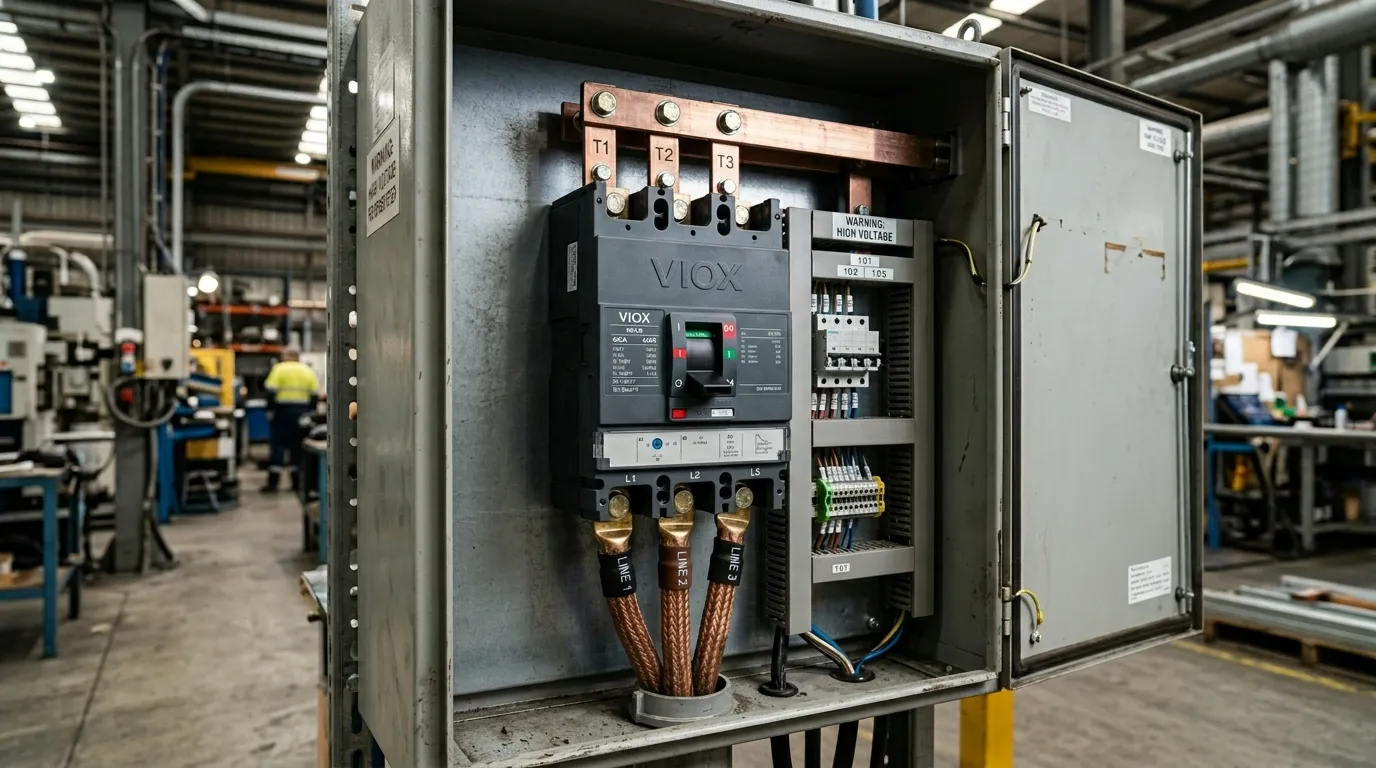
Βασικά συμπεράσματα
- Ένας αυτόματος διακόπτης χωρίς σημάνσεις “Γραμμής” και “Φορτίου” είναι γενικά κατάλληλος για αντίστροφη τροφοδοσία τόσο σύμφωνα με τα πλαίσια NEC όσο και IEC.
- Οι αυτόματοι διακόπτες με σήμανση “Γραμμής” και “Φορτίου” δεν πρέπει να τροφοδοτούνται αντίστροφα—αυτή είναι μια αυστηρή απαίτηση NEC (705.30(D), πρώην 690.10(E)).
- Το UL 489 απαιτεί οι MCCB με ονομαστική τιμή αντίστροφης τροφοδοσίας να δοκιμάζονται για υπέρβαση ρεύματος και από τις δύο κατευθύνσεις ρεύματος (παράγραφος 7.1.1.18).
- Όλοι οι αυτόματοι διακόπτες ισχύος χαμηλής τάσης που αναφέρονται στο UL 1066 έχουν εγγενώς ονομαστική τιμή για αντίστροφη τροφοδοσία.
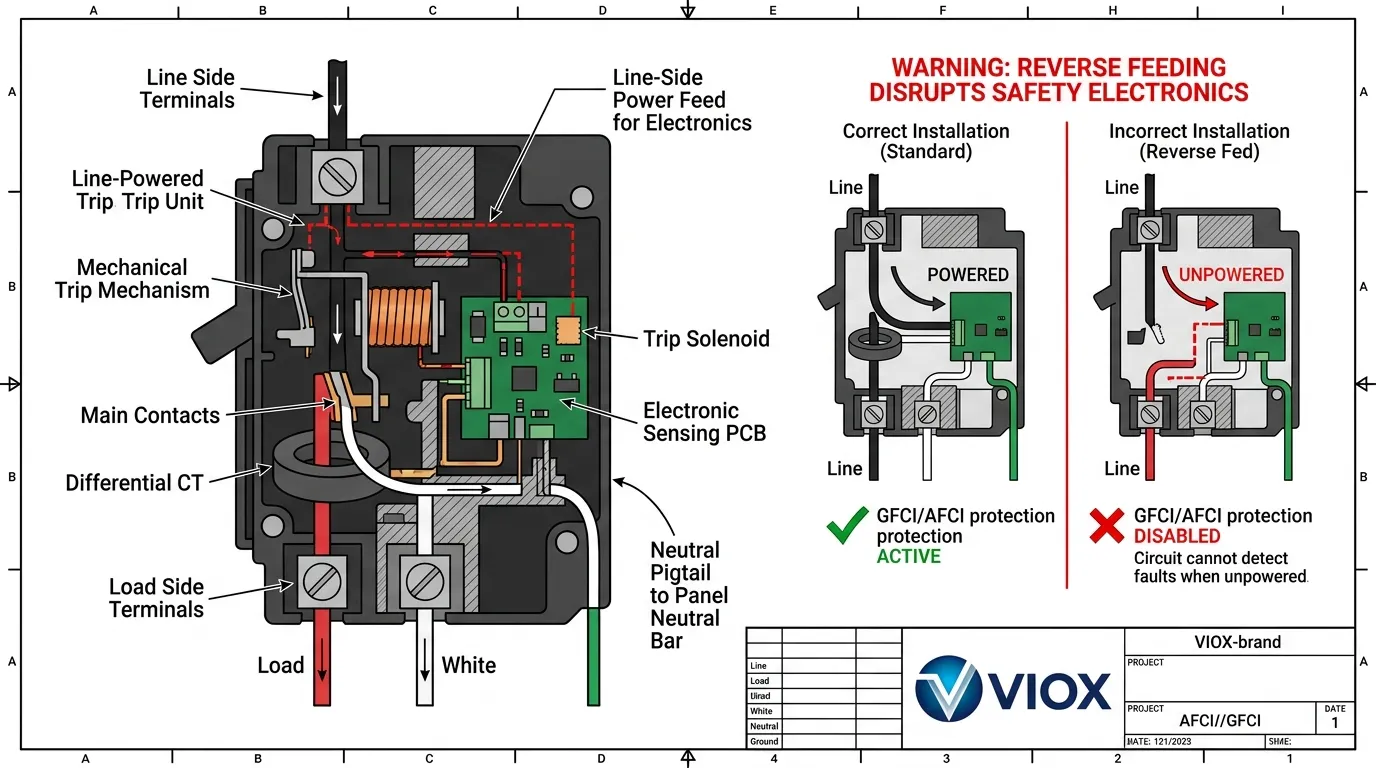
- Οι διακόπτες AFCI και GFCI χρησιμοποιούν ηλεκτρονικά εξαρτήματα που τροφοδοτούνται από τη γραμμή και είναι σχεδόν καθολικά ακατάλληλοι για αντίστροφη τροφοδοσία, εκτός εάν ο κατασκευαστής παρέχει μια συγκεκριμένη λίστα.
- Ένας διακόπτης με αντίστροφη τροφοδοσία στη θέση OFF ή TRIPPED εξακολουθεί να έχει ενεργοποιημένους ακροδέκτες—δημιουργώντας έναν σοβαρό κίνδυνο για την ασφάλεια του προσωπικού.
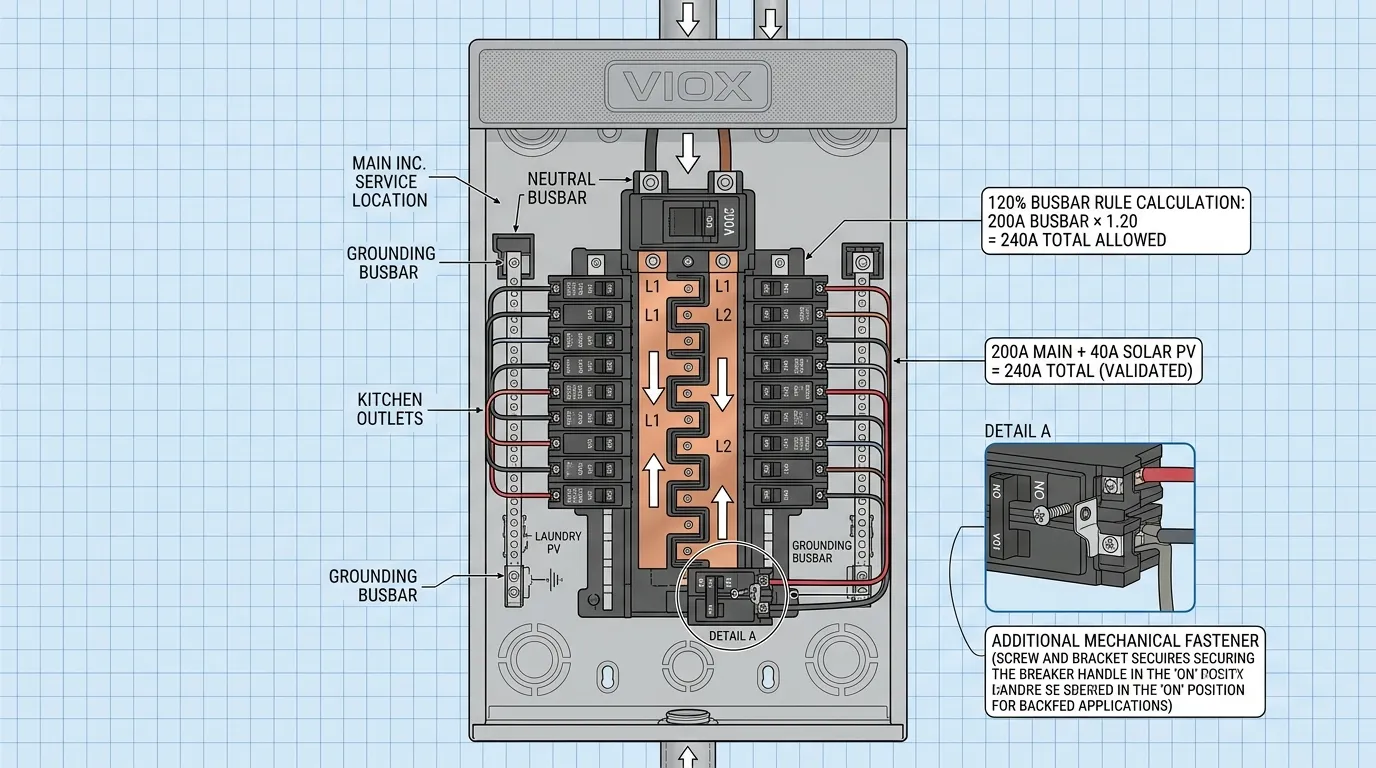
- Το NEC 408.36(D) απαιτεί οι βυσματωτοί διακόπτες με αντίστροφη τροφοδοσία να ασφαλίζονται με έναν πρόσθετο συνδετήρα που αποτρέπει την τυχαία αφαίρεση.
- Το IEC 60947-2 δεν απαγορεύει ρητά την αντίστροφη τροφοδοσία, αλλά το φύλλο δεδομένων του κατασκευαστή διέπει την επιτρεπτότητα.
Τι Σημαίνει Αντίστροφη Τροφοδοσία (Backfeeding) ενός Αυτόματου Διακόπτη;
Σε μια τυπική εγκατάσταση, το ρεύμα ρέει σε έναν αυτόματο διακόπτη μέσω των ακροδεκτών “γραμμής” (που συνδέονται με την παροχή) και εξέρχεται μέσω των ακροδεκτών “φορτίου” (που συνδέονται με το κύκλωμα κατάντη). Η αντίστροφη τροφοδοσία—που ονομάζεται επίσης backfeeding—αντιστρέφει αυτή τη διάταξη: το ρεύμα εισέρχεται μέσω αυτών που κανονικά θα ήταν οι ακροδέκτες φορτίου και εξέρχεται μέσω των ακροδεκτών γραμμής.
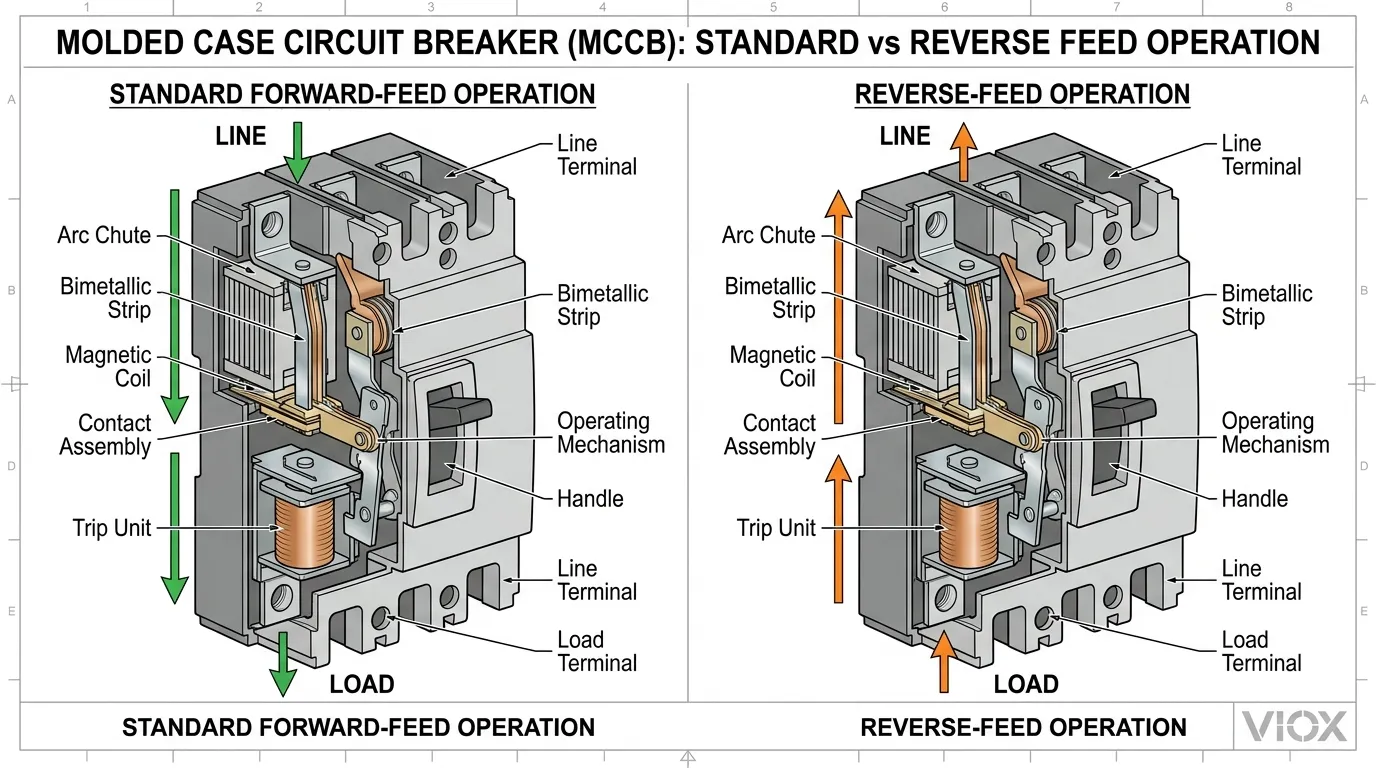
Αυτή η διαμόρφωση προκύπτει συχνότερα σε τρία σενάρια:
- Διασύνδεση ηλιακών φωτοβολταϊκών (PV)., όπου ένας συνδεδεμένος στο δίκτυο μετατροπέας τροφοδοτεί ρεύμα πίσω σε έναν πίνακα μέσω ενός αποκλειστικού διακόπτη.
- Αντίστροφη τροφοδοσία γεννήτριας μέσω ενός κιτ αλληλοασφάλισης ή ρύθμισης μεταφοράς.
- Βελτιστοποίηση σχεδιασμού πίνακα, όπου η φυσική δρομολόγηση των ράβδων ζυγών και των καλωδίων καθιστά τους κύριους διακόπτες με τροφοδοσία από κάτω πιο πρακτικούς από τις διαμορφώσεις με τροφοδοσία από πάνω.
Η κατανόηση της διάκρισης μεταξύ της κανονικής και της αντίστροφης τροφοδοσίας είναι απαραίτητη επειδή η εσωτερική γεωμετρία απόσβεσης τόξου, το τροφοδοτικό της μονάδας απενεργοποίησης και η συμπεριφορά απενεργοποίησης υπέρβασης ρεύματος ενός διακόπτη μπορεί να εξαρτάται από την κατεύθυνση. Δεν είναι όλα τύποι διακοπτών κυκλώματος έχουν σχεδιαστεί για να χειρίζονται ρεύμα και από τις δύο κατευθύνσεις.
Κανόνες NEC για Αυτόματους Διακόπτες με Αντίστροφη Τροφοδοσία
Ο Εθνικός Ηλεκτρολογικός Κώδικας ασχολείται με την αντίστροφη τροφοδοσία σε διάφορα άρθρα. Οι κανόνες έχουν εξελιχθεί μέσω διαδοχικών κύκλων κώδικα, με τις εκδόσεις 2020 και 2023 να ενοποιούν τις απαιτήσεις στο Άρθρο 705.
NEC 705.30(D) — Κατάλληλο για Αντίστροφη Τροφοδοσία
Αυτή είναι η κύρια ενότητα που διέπει. Καθιερώνει μια σαφή αρχή:
- Οι ασφαλειοδιακόπτες είναι γενικά κατάλληλοι για αντίστροφη τροφοδοσία, εκτός εάν επισημαίνονται διαφορετικά.
- Οι αυτόματοι διακόπτες χωρίς ετικέτες “Γραμμής” και “Φορτίου” είναι κατάλληλοι για αντίστροφη τροφοδοσία—αυτοί έχουν δοκιμαστεί και αξιολογηθεί για αμφίδρομη ροή ρεύματος.
- Οι αυτόματοι διακόπτες με σήμανση “Γραμμής” και “Φορτίου” μπορούν να τροφοδοτηθούν αντίστροφα μόνο εάν φέρουν μια συγκεκριμένη λίστα και ονομαστική τιμή για λειτουργία αντίστροφης τροφοδοσίας.
Η Σημείωση Καλής Εκτύπωσης (FPN) στον κώδικα διευκρινίζει τη λογική: οι διακόπτες που επισημαίνονται με κατευθυντικούς ακροδέκτες έχουν αξιολογηθεί μόνο στην επισημασμένη κατεύθυνση. Οι μη επισημασμένοι διακόπτες έχουν αξιολογηθεί και στις δύο κατευθύνσεις κατά τη διαδικασία καταχώρισης UL.
NEC 408.36(D) — Απαιτήσεις Στερέωσης
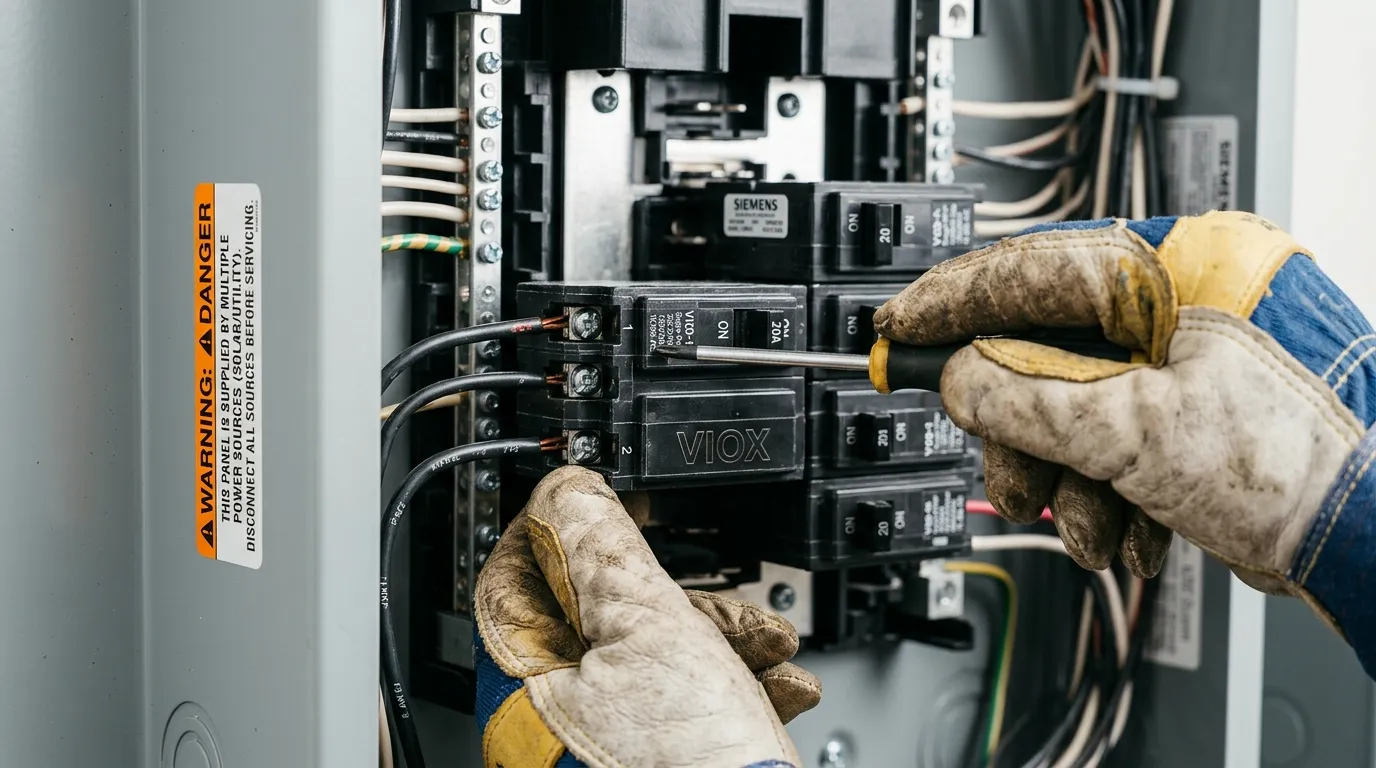
Οι βυσματωτοί διακόπτες που τροφοδοτούνται αντίστροφα και χρησιμοποιούνται για τον τερματισμό μη γειωμένων αγωγών τροφοδοσίας που έχουν εγκατασταθεί στο πεδίο πρέπει να ασφαλίζονται στη θέση τους με έναν πρόσθετο συνδετήρα. Αυτός ο συνδετήρας πρέπει να απαιτεί περισσότερα από ένα απλό τράβηγμα για να απελευθερωθεί η συσκευή από τη βάση της. Σκοπός είναι να αποτραπεί η τυχαία αποκόλληση ενός διακόπτη με αντίστροφη τροφοδοσία—ο οποίος έχει ενεργούς ζυγούς στις συνδέσεις του.
NEC 404.6 — Σήμανση για Πολλαπλές Πηγές
Όταν ο εξοπλισμός μπορεί να ενεργοποιηθεί από περισσότερες από μία πηγές (ένα κοινό σενάριο σε εφαρμογές αντίστροφης τροφοδοσίας), το NEC απαιτεί μόνιμη σήμανση. Αυτή η προειδοποίηση ειδοποιεί το προσωπικό συντήρησης ότι η απενεργοποίηση του κύριου διακόπτη δεν καθιστά απαραίτητα όλους τους αγωγούς ασφαλείς.
NEC 110.3(B) — Εξοπλισμός με Καταχώριση και Επισήμανση
Αυτός ο θεμελιώδης κανόνας απαιτεί όλος ο εξοπλισμός να εγκαθίσταται σύμφωνα με την καταχώριση και την επισήμανσή του. Για τους διακόπτες με αντίστροφη τροφοδοσία, αυτό σημαίνει ότι η τεκμηρίωση του κατασκευαστή είναι η απόλυτη αρχή. Εάν η καταχώριση UL ενός διακόπτη δεν περιλαμβάνει την καταλληλότητα αντίστροφης τροφοδοσίας, η αντίστροφη τροφοδοσία παραβιάζει αυτήν την ενότητα ανεξάρτητα από το εάν οι ακροδέκτες είναι επισημασμένοι.
Κανόνες IEC 60947-2 για Αντίστροφη Σύνδεση
Η προσέγγιση IEC για την αντίστροφη τροφοδοσία διαφέρει από το πλαίσιο NEC στη δομή, αλλά καταλήγει σε ένα λειτουργικά παρόμοιο συμπέρασμα.
Το IEC 60947-2, το διεθνές πρότυπο που διέπει αυτόματους διακόπτες χυτού περιβλήματος και άλλες συσκευές μεταγωγής χαμηλής τάσης, δεν περιέχει ρητή απαγόρευση κατά της αντίστροφης σύνδεσης. Ωστόσο, το πρότυπο επίσης δεν παρέχει γενική έγκριση. Οι καθοριστικοί παράγοντες στο σύστημα IEC είναι:
- Δήλωση κατασκευαστή: Το τεχνικό δελτίο δεδομένων του διακόπτη πρέπει να υποδεικνύει την καταλληλότητα για αντίστροφη σύνδεση. Εάν η τεκμηρίωση του κατασκευαστή καθορίζει καθορισμένους ακροδέκτες τροφοδοσίας και φορτίου, ο διακόπτης πρέπει να εγκατασταθεί ανάλογα.
- Breaking capacity verification: Η ονομαστική ικανότητα διακοπής (Icu και Ics) που δημοσιεύονται από τον κατασκευαστή ισχύουν μόνο για την ελεγμένη κατεύθυνση σύνδεσης, εκτός εάν το δελτίο δεδομένων αναφέρει ρητά το αντίθετο.
- Ευαισθησία μονάδας απενεργοποίησης: Ηλεκτρονικές μονάδες απενεργοποίησης που τροφοδοτείται από τους μετασχηματιστές ρεύματος στην πλευρά της γραμμής ενδέχεται να μην λειτουργεί σωστά όταν το ρεύμα εισέρχεται από την αντίθετη κατεύθυνση. Οι θερμομαγνητικές μονάδες απενεργοποίησης, αντίθετα, είναι γενικά αναίσθητες στην κατεύθυνση, επειδή βασίζονται στην εκτροπή διμεταλλικού στοιχείου και στην ηλεκτρομαγνητική δύναμη—και τα δύο ανταποκρίνονται στο μέγεθος του ρεύματος ανεξάρτητα από την κατεύθυνση ροής.
Στην πράξη, οι περισσότεροι τυπικοί MCCB με ονομαστική τιμή IEC και MCBαπό αξιόπιστους κατασκευαστές είναι αμφίδρομοι. Αλλά το βάρος της επαλήθευσης βαρύνει τον σχεδιαστή, όχι τον κώδικα.
Απαιτήσεις Καταχώρισης UL για Διακόπτες με Ονομαστική Τιμή Backfeed
UL 489 — Αυτόματοι Διακόπτες Χυτής Θήκης
Το UL 489 καθιερώνει το πρωτόκολλο δοκιμών για MCCBs που πωλούνται στη Βόρεια Αμερική. Για να αποκτήσετε μια καταχώριση αντίστροφης τροφοδοσίας:
- Παράγραφος 7.1.1.18: Ο διακόπτης πρέπει να ελεγχθεί για υπερcurrent trip και από τις δύο κατευθύνσεις. Αυτό διασφαλίζει ότι καμπύλη ταξιδιού τα χαρακτηριστικά διατηρούνται ανεξάρτητα από τον προσανατολισμό της ροής του ρεύματος.
- Παράγραφος 9.1.1.13: Οι απαιτήσεις σήμανσης υπαγορεύουν ότι οι διακόπτες που αξιολογούνται μόνο σε μία κατεύθυνση πρέπει να φέρουν ετικέτες “Line” και “Load”. Οι διακόπτες που περνούν τις αμφίδρομες δοκιμές μπορούν να παραλείψουν αυτές τις σημάνσεις.
- Παράγραφος 6.1.5.12: Η μονάδα trip πρέπει να συμμορφώνεται με τις απαιτήσεις απόδοσης και στις δύο κατευθύνσεις τροφοδοσίας.
UL 1066 — Διακόπτες κυκλώματος ισχύος χαμηλής τάσης
Όλοι οι διακόπτες κυκλώματος ισχύος χαμηλής τάσης (συνήθως διακόπτες κυκλώματος αέρα με ονομαστική τιμή 800 A και άνω) που αναφέρονται στο UL 1066 είναι υποχρεωτικά κατάλληλοι για αντίστροφη τροφοδοσία. Αυτή είναι μια βασική απαίτηση καταχώρισης, όχι ένα προαιρετικό χαρακτηριστικό. Αυτό καθιστά τους ACBs τον πιο καθολικά συμβατό τύπο διακόπτη backfeed στην αγορά της Βόρειας Αμερικής.
Ποιοι τύποι διακοπτών κυκλώματος δεν μπορούν να τροφοδοτηθούν αντίστροφα;
Δεν χειρίζονται όλοι οι διακόπτες το backfeed εξίσου. Η κρίσιμη μεταβλητή είναι ο τρόπος με τον οποίο τροφοδοτούνται τα ηλεκτρονικά του διακόπτη.
| Τύπος διακόπτη | Καταλληλότητα αντίστροφης τροφοδοσίας | Λόγος |
|---|---|---|
| Τυπικός θερμομαγνητικός MCB (ασημάδευτοι ακροδέκτες) | ✅ Γενικά κατάλληλο | Οι διμεταλλικοί και μαγνητικοί μηχανισμοί είναι αναίσθητοι στην κατεύθυνση |
| Τυπικός θερμομαγνητικός MCCB (ασημάδευτοι ακροδέκτες) | ✅ Γενικά κατάλληλο | Ίδιο με παραπάνω. επαληθεύστε την αμφίδρομη καταχώριση UL 489 |
| Διακόπτης AFCI | ❌ Μη κατάλληλο (εκτός εάν αναφέρεται συγκεκριμένα) | Τα ηλεκτρονικά ανίχνευσης σφάλματος τόξου τροφοδοτούνται από τη γραμμή μέσω pigtail |
| Διακόπτης σφάλματος γείωσης GFCI/Εξοπλισμού | ❌ Μη κατάλληλο (εκτός εάν αναφέρεται συγκεκριμένα) | Τα ηλεκτρονικά ανίχνευσης σφάλματος γείωσης τροφοδοτούνται από τη γραμμή |
| MCCB με ηλεκτρονική μονάδα trip (τροφοδοτείται από τη γραμμή) | ⚠️ Επαληθεύστε με τον κατασκευαστή | Οι μετασχηματιστές ρεύματος που τροφοδοτούν τη μονάδα trip ενδέχεται να μην ανιχνεύσουν σωστά σε αντίστροφη φορά |
| MCCB με ηλεκτρονική μονάδα trip (τροφοδοτείται από σφάλμα) | ✅ Συνήθως κατάλληλο | Οι μετασχηματιστές ρεύματος αντλούν ισχύ από το ρεύμα σφάλματος ανεξάρτητα από την κατεύθυνση |
| Διακόπτης κυκλώματος ισχύος χαμηλής τάσης (UL 1066) | ✅ Πάντα κατάλληλο | Η αντίστροφη τροφοδοσία είναι μια υποχρεωτική απαίτηση καταχώρισης UL 1066 |
| Αυτόματος διακόπτης DC | ❌ Ευαίσθητο στην πολικότητα | Ο σχεδιασμός απόσβεσης τόξου είναι κατευθυντικός. η αντιστροφή πολικότητας μπορεί να αποτρέψει την απόσβεση του τόξου |
Η διάκριση μεταξύ ηλεκτρονικών μονάδων trip που τροφοδοτούνται από τη γραμμή και από σφάλμα είναι ιδιαίτερα σημαντική για μεγαλύτερα MCCB με προστασία σφάλματος γείωσης. Οι μονάδες που τροφοδοτούνται από τη γραμμή αντλούν ρεύμα λειτουργίας από την πλευρά της τροφοδοσίας μέσω εσωτερικών μετασχηματιστών ρεύματος — η αντιστροφή της τροφοδοσίας μπορεί να στερήσει από τα ηλεκτρονικά και να καταστήσει την προστασία σφάλματος γείωσης μη λειτουργική. Οι μονάδες που τροφοδοτούνται από σφάλμα ενεργοποιούνται μόνο κατά τη διάρκεια ενός πραγματικού συμβάντος σφάλματος και είναι γενικά λιγότερο ευαίσθητες στην κατεύθυνση τροφοδοσίας.
Κίνδυνοι ασφάλειας των διακοπτών με αντίστροφη τροφοδοσία
Η αντίστροφη τροφοδοσία εισάγει έναν συγκεκριμένο κίνδυνο που δεν παρουσιάζουν οι τυπικές εγκαταστάσεις με τροφοδοσία προς τα εμπρός: όταν ένας διακόπτης με backfed βρίσκεται στη θέση OFF ή TRIPPED, οι ακροδέκτες που κανονικά θα ήταν απενεργοποιημένοι (η πλευρά “φορτίου” σε μια τυπική εγκατάσταση) παραμένουν υπό τάση.
Αυτό δημιουργεί μια επικίνδυνη κατάσταση για το προσωπικό συντήρησης που υποθέτει ότι η απενεργοποίηση ενός διακόπτη απομονώνει όλους τους προσβάσιμους ακροδέκτες. Σε έναν διακόπτη με τροφοδοσία προς τα εμπρός, οι ακροδέκτες φορτίου είναι πράγματι νεκροί όταν ανοίγει ο διακόπτης. Σε έναν διακόπτη με αντίστροφη τροφοδοσία, η τροφοδοσία συνδέεται με αυτό που φαίνεται να είναι η πλευρά φορτίου και αυτοί οι ακροδέκτες παραμένουν ενεργοποιημένοι στην πλήρη τάση του συστήματος ανεξάρτητα από τη θέση του διακόπτη.
Τα μέτρα μετριασμού που απαιτούνται από τον κώδικα και τη βέλτιστη πρακτική περιλαμβάνουν:
- Μόνιμη προειδοποιητική σήμανση σύμφωνα με το NEC 404.6, που υποδεικνύει την παρουσία πολλαπλών πηγών και την πιθανότητα ενεργοποιημένων ακροδεκτών ακόμη και με τον διακόπτη απενεργοποιημένο.
- Πρόσθετη μηχανική στερέωση σύμφωνα με το NEC 408.36(D) για διακόπτες backfed τύπου plug-in.
- Διαδικασίες κλειδώματος/επισήμανσης που λαμβάνουν υπόψη την αντίστροφη κατεύθυνση τροφοδοσίας.
- Σαφής επισήμανση στον πίνακα που προσδιορίζει ποιοι διακόπτες είναι backfed και από ποια πηγή.
Αντίστροφη τροφοδοσία σε ηλιακές φωτοβολταϊκές εγκαταστάσεις
Οι διακόπτες Backfed είναι η τυπική μέθοδος διασύνδεσης για ηλιακούς φωτοβολταϊκούς μετατροπείς συνδεδεμένους στην πλευρά του φορτίου. Το NEC Article 705 διέπει αυτές τις εγκαταστάσεις και πολλές διατάξεις αντιμετωπίζουν άμεσα σενάρια backfeed.
Ο κανόνας 120% — NEC 705.12(B)(2)(3)(b)
Όταν συνδέετε έναν φωτοβολταϊκό μετατροπέα σε έναν υπάρχοντα πίνακα μέσω ενός διακόπτη backfed, το άθροισμα της ονομαστικής τιμής του κύριου διακόπτη και της ονομαστικής τιμής του φωτοβολταϊκού διακόπτη δεν πρέπει να υπερβαίνει το 120% της ονομαστικής τιμής της busbar. Για παράδειγμα, ένας πίνακας με bus 200 A και κύριο διακόπτη 200 A μπορεί να δεχθεί έναν μέγιστο φωτοβολταϊκό διακόπτη backfed 40 A (200 × 1,20 = 240; 240 − 200 = 40). Αυτό Κανόνας 120% είναι μία από τις πιο συχνά εφαρμοζόμενες διατάξεις στον οικιακό ηλιακό σχεδιασμό.
Απαίτηση θέσης διακόπτη
Ο φωτοβολταϊκός διακόπτης backfed πρέπει συνήθως να βρίσκεται στο αντίθετο άκρο της busbar από τον κύριο διακόπτη. Αυτό διασφαλίζει ότι η μέγιστη καταπόνηση ρεύματος εμφανίζεται στους ακροδέκτες του διακόπτη και όχι σε ένα ενδιάμεσο σημείο στο bus, μειώνοντας τον κίνδυνο υπερθέρμανσης της busbar.
Ζητήματα διακόπτη DC
Στην πλευρά DC των φωτοβολταϊκών συστημάτων, η διαστασιολόγηση και η πολικότητα του διακόπτη κυκλώματος είναι κρίσιμες. Οι διακόπτες DC είναι εγγενώς ευαίσθητοι στην πολικότητα, επειδή οι μηχανισμοί απόσβεσης τόξου βασίζονται στην οδήγηση του τόξου σε μια συγκεκριμένη κατεύθυνση. Η αντιστροφή της πολικότητας ενός διακόπτη DC μπορεί να αποτρέψει την απόσβεση του τόξου και να προκαλέσει καταστροφική αστοχία. Αυτό είναι ένα ξεχωριστό ζήτημα από την αντίστροφη τροφοδοσία AC, αλλά συχνά συγχέεται με αυτό σε πλαίσια ηλιακής εγκατάστασης.
Σύγκριση αντίστροφης τροφοδοσίας NEC έναντι IEC
| Παράμετρος | NEC (Βόρεια Αμερική) | IEC 60947-2 (Διεθνής) |
|---|---|---|
| Ρητοί κανόνες αντίστροφης τροφοδοσίας | Ναι — NEC 705.30(D), 408.36(D) | Καμία ρητή απαγόρευση· διέπεται από τον κατασκευαστή |
| Απαίτηση σήμανσης ακροδεκτών | “Υποχρεωτική σήμανση ”Γραμμή”/”Φορτίο" εάν δεν είναι αμφίδρομη | Ο κατασκευαστής καθορίζει τους ακροδέκτες τροφοδοσίας/φορτίου |
| Απαίτηση στερέωσης για διακόπτες plug-in με αντίστροφη τροφοδοσία | Ναι — απαιτείται πρόσθετο στοιχείο στερέωσης (408.36(Δ)) | Δεν κωδικοποιείται· εξαρτάται από το πρότυπο εγκατάστασης |
| Σήμανση για πολλαπλές πηγές | Απαιτείται (NEC 404.6) | Συνιστώμενη πρακτική· ποικίλλει ανά τοπικό κώδικα |
| Δοκιμές UL/IEC για αμφίδρομη ενεργοποίηση | UL 489 παράγραφος 7.1.1.18 | Διέπεται από το πρωτόκολλο δοκιμών του κατασκευαστή |
| Αντίστροφη τροφοδοσία AFCI/GFCI | Απαγορεύεται εκτός εάν αναφέρεται συγκεκριμένα | Το AFCI δεν έχει υιοθετηθεί ευρέως στις αγορές IEC |
| Αντίστροφη τροφοδοσία διακόπτη DC | Απαγορεύεται — ευαίσθητο στην πολικότητα από το σχεδιασμό | Ίδιο — η αντιστροφή πολικότητας είναι ζήτημα ασφάλειας |
Συχνές Ερωτήσεις
Μπορώ να τροφοδοτήσω αντίστροφα οποιονδήποτε αυτόματο διακόπτη χωρίς να ελέγξω την ετικέτα;
Όχι. Να ελέγχετε πάντα τον διακόπτη για τις σημάνσεις “Γραμμή” και “Φορτίο”. Εάν υπάρχουν αυτές οι σημάνσεις, ο διακόπτης έχει δοκιμαστεί μόνο σε μία κατεύθυνση και δεν πρέπει να τροφοδοτείται αντίστροφα, εκτός εάν ο κατασκευαστής παρέχει μια συγκεκριμένη ονομαστική τιμή αντίστροφης τροφοδοσίας.
Είναι οι διακόπτες AFCI κατάλληλοι για ανάστροφη τροφοδοσία (backfeed);
Σχεδόν κανένας. Οι διακόπτες AFCI χρησιμοποιούν ηλεκτρονικά τροφοδοτούμενα από την γραμμή (συνδεδεμένα μέσω ουδέτερου καλωδίου) που απαιτούν σωστή κατευθυντική εγκατάσταση. Ένας μικρός αριθμός διακοπτών AFCI από συγκεκριμένους κατασκευαστές έχουν καταχωρηθεί για ανάστροφη τροφοδότηση σε ηλιακές εφαρμογές, αλλά αυτοί αποτελούν την εξαίρεση.
Επιτρέπεται η αντίστροφη τροφοδοσία σύμφωνα με το πρότυπο IEC 60947-2;
Το IEC 60947-2 δεν το απαγορεύει ρητά, αλλά επίσης δεν παρέχει αυτόματη έγκριση. Η τεχνική τεκμηρίωση του κατασκευαστή είναι η κυρίαρχη αρχή. Να επιβεβαιώνετε πάντα την αμφίδρομη καταλληλότητα στο φύλλο δεδομένων του διακόπτη πριν καθορίσετε την εγκατάσταση αντίστροφης τροφοδοσίας σε αγορές που διέπονται από το IEC.
Τι συμβαίνει αν τροφοδοτήσω αντίστροφα έναν διακόπτη που δεν έχει αξιολογηθεί για αυτό;
Ο πιο άμεσος κίνδυνος είναι ότι η προστασία από υπερένταση ενδέχεται να μην λειτουργήσει σωστά — ιδιαίτερα για διακόπτες με ηλεκτρονικές μονάδες ενεργοποίησης που τροφοδοτούνται από τη γραμμή. Η καμπύλη ενεργοποίησης μπορεί να μετατοπιστεί απρόβλεπτα, η προστασία από σφάλμα γείωσης μπορεί να αποτύχει εντελώς και ο διακόπτης ονομαστική ικανότητα διακοπής ενδέχεται να μην αντέξει υπό συνθήκες σφάλματος. Επιπλέον, οι ακροδέκτες “φορτίου” θα παραμείνουν ενεργοποιημένοι όταν ο διακόπτης είναι ανοιχτός, δημιουργώντας κίνδυνο ηλεκτροπληξίας.
Χρειάζομαι έναν ειδικό διακόπτη για την αντίστροφη τροφοδοσία από τα ηλιακά πάνελ;
Χρειάζεστε έναν διακόπτη που να αναφέρεται ως κατάλληλος για αντίστροφη τροφοδοσία (χωρίς σημάνσεις “Γραμμή”/”Φορτίο” ή να αναφέρεται συγκεκριμένα για αντίστροφη τροφοδοσία). Πρέπει επίσης να συμμορφώνεστε με τις απαιτήσεις στερέωσης NEC 408.36(D) και τον κανόνα ράβδου ζυγών 120% σύμφωνα με το NEC 705.12. Οι τυπικοί θερμομαγνητικοί διακόπτες χωρίς κατευθυντικές σημάνσεις συνήθως πληρούν αυτές τις απαιτήσεις.