Επιλογή του σωστού MCB ράβδος λεωφορείου δεν αφορά απλώς την εύρεση μιας λωρίδας χαλκού που να χωράει φυσικά μέσα σε έναν πίνακα. Η συμβατότητα της ράγας ζυγών εξαρτάται από το σχεδιασμό των ακροδεκτών, τη διαμόρφωση των πόλων, το βήμα, την ονομαστική τιμή ρεύματος, τη διάταξη του περιβλήματος και την οικογένεια των αυτόματων διακοπτών που χρησιμοποιείται.
Γι' αυτό δύο ράγες ζυγών που φαίνονται παρόμοιες μπορεί να αποδώσουν πολύ διαφορετικά σε πραγματικές εγκαταστάσεις.
Εάν προσπαθείτε να αντιστοιχίσετε ράγες ζυγών με διαφορετικούς αυτόματους διακόπτες, ο πρακτικός στόχος είναι απλός:
- βεβαιωθείτε ότι η ράγα ζυγών ταιριάζει σωστά στους ακροδέκτες του διακόπτη
- βεβαιωθείτε ότι η διαδρομή ρεύματος είναι μηχανικά σταθερή
- βεβαιωθείτε ότι το συγκρότημα μπορεί να μεταφέρει με ασφάλεια το αναμενόμενο φορτίο
- αποφύγετε θερμά σημεία, χαλαρή επαφή, τόξα ή επανεπεξεργασία εγκατάστασης
Αυτός ο οδηγός εξηγεί πώς να ελέγξετε αυτή τη συμβατότητα πριν αγοράσετε ή συναρμολογήσετε τον πίνακα.
Γιατί είναι σημαντική η συμβατότητα της ράγας ζυγών MCB
Μια ασύμβατη ράγα ζυγών MCB μπορεί να δημιουργήσει προβλήματα ακόμη και αν ο πίνακας φαίνεται να έχει συναρμολογηθεί σωστά με την πρώτη ματιά.
Οι τυπικοί κίνδυνοι περιλαμβάνουν:
- κακή επαφή ακροδεκτών
- άνιση δύναμη σύσφιξης
- τοπική υπερθέρμανση
- μηχανική καταπόνηση στους ακροδέκτες του διακόπτη
- δύσκολη εγκατάσταση ή επανεπεξεργασία
- μειωμένη αξιοπιστία με την πάροδο του χρόνου
Για τους κατασκευαστές και τους αγοραστές πινάκων, η συμβατότητα δεν είναι ένα αισθητικό ζήτημα. Επηρεάζει άμεσα την ασφάλεια, την αποδοτικότητα της συναρμολόγησης και τη μακροπρόθεσμη απόδοση.
Εάν χρειάζεστε πρώτα μια ευρύτερη εισαγωγή, η VIOX έχει ήδη ένα θεμελιώδες άρθρο σχετικά με τι είναι οι ράγες ζυγών αυτόματων διακοπτών.
Τι κάνει μια ράγα ζυγών MCB συμβατή;
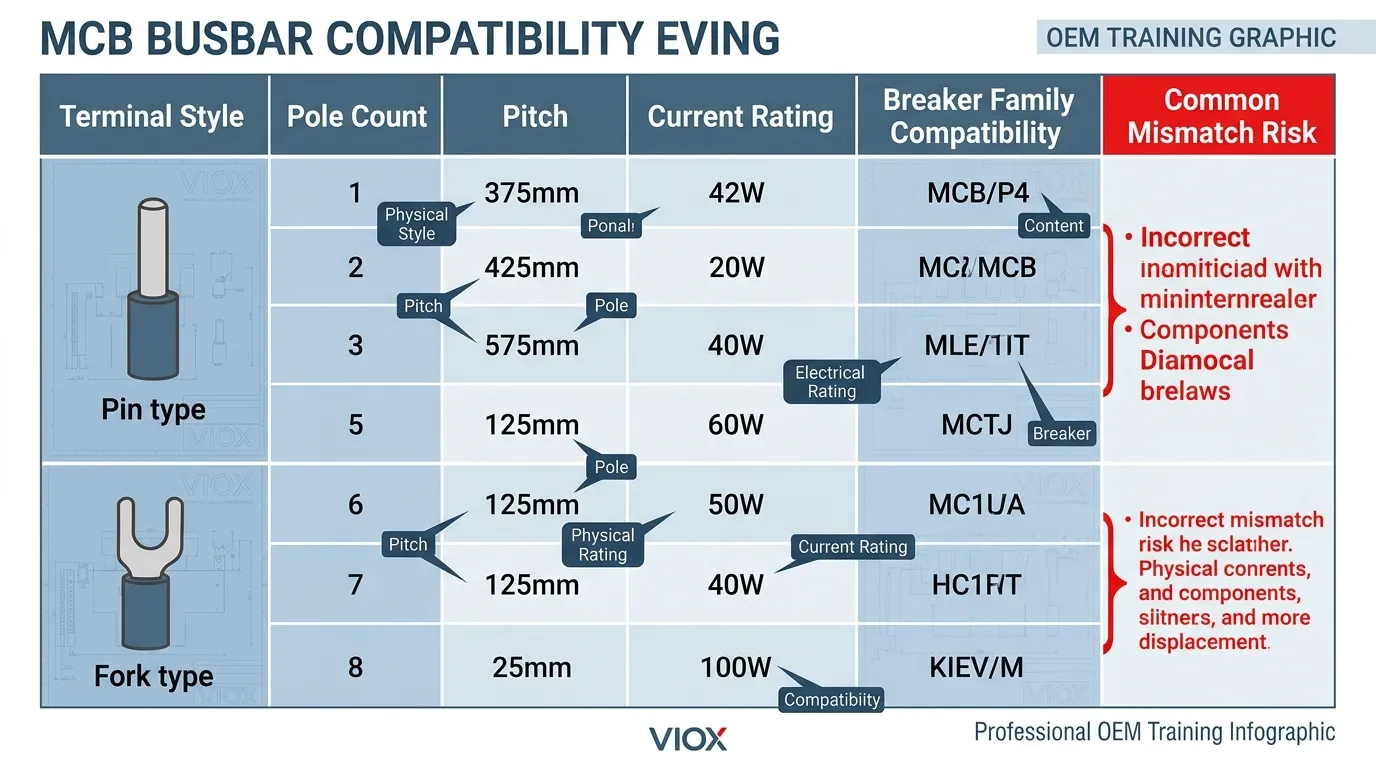
Μια ράγα ζυγών είναι συμβατή με έναν αυτόματο διακόπτη μόνο όταν οι βασικές ηλεκτρικές και μηχανικές συνθήκες ταιριάζουν.
Βασικοί παράγοντες συμβατότητας
| Παράγοντας | Τι να ελέγξετε | Γιατί έχει σημασία |
|---|---|---|
| Στυλ ακροδεκτών | Τύπος ακίδας, τύπος διχάλας ή άλλη μορφή εισόδου ακροδεκτών | Καθορίζει εάν η ράγα ζυγών μπορεί να τοποθετηθεί σωστά |
| Αριθμός πόλων | Διάταξη 1P, 2P, 3P, 4P | Πρέπει να ταιριάζει με τη διάταξη του διακόπτη |
| Βήμα ή διάστημα μονάδων | Απόσταση μεταξύ των σημείων σύνδεσης | Πρέπει να ευθυγραμμίζεται με τις θέσεις των ακροδεκτών του διακόπτη |
| Τρέχουσα βαθμολογία | Ικανότητα αμπέρ και συμπεριφορά θερμότητας της ράγας ζυγών | Αποτρέπει την υπερθέρμανση και την πρόωρη αστοχία |
| Συμβατότητα οικογένειας διακοπτών | Εάν η ράγα ζυγών προορίζεται για αυτή τη σειρά διακοπτών | Δεν δέχονται όλοι οι διακόπτες το ίδιο προφίλ ράγας ζυγών |
| Μηχανική εφαρμογή | Χώρος πίνακα, βάθος ακροδεκτών, διάταξη τροφοδοσίας άκρου | Επηρεάζει την ποιότητα εγκατάστασης και την πρόσβαση |
Ένας καλός έλεγχος συμβατότητας θα πρέπει να απαντά σε μία ερώτηση με σαφήνεια: Σχεδιάστηκε αυτή η ράγα ζυγών για αυτήν την ακριβή διάταξη και εφαρμογή διακόπτη;
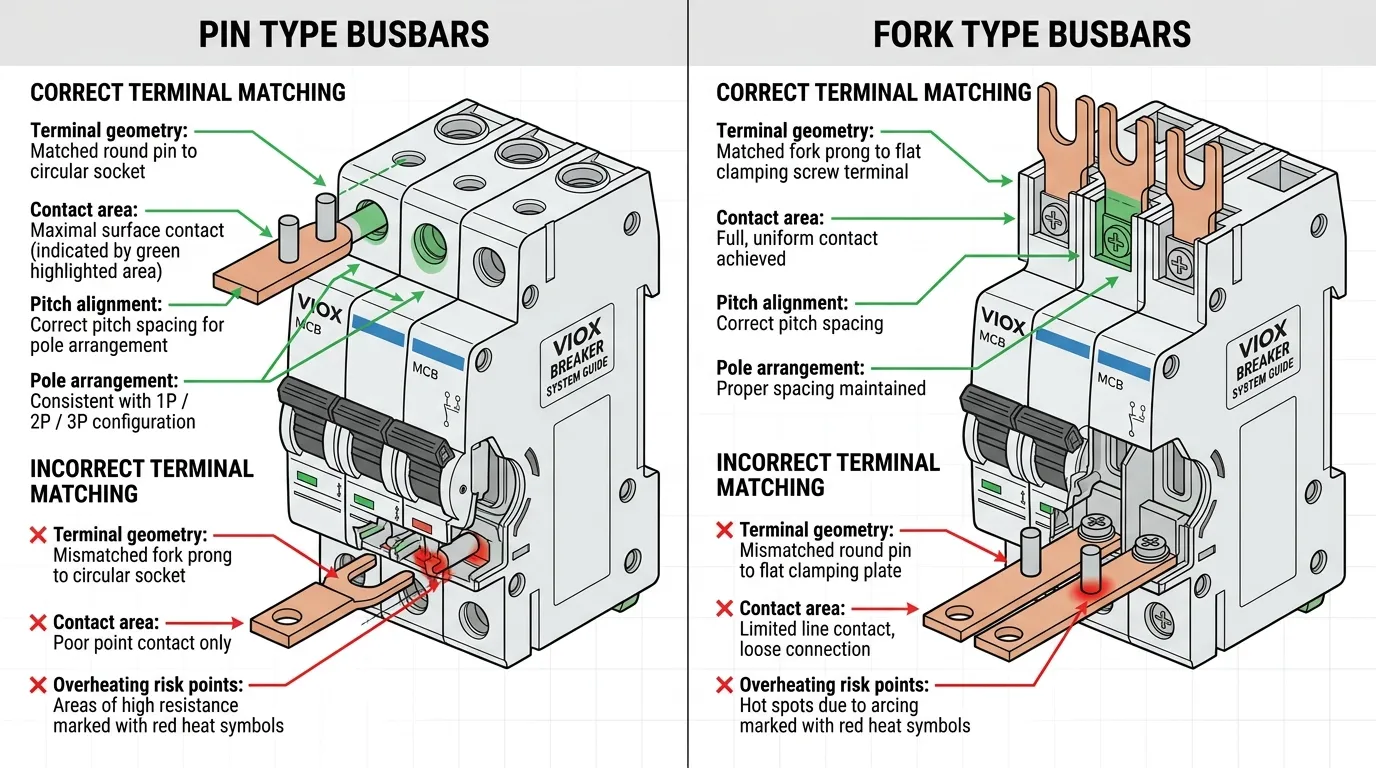
Συμβατότητα ράγας ζυγών τύπου ακίδας έναντι τύπου διχάλας
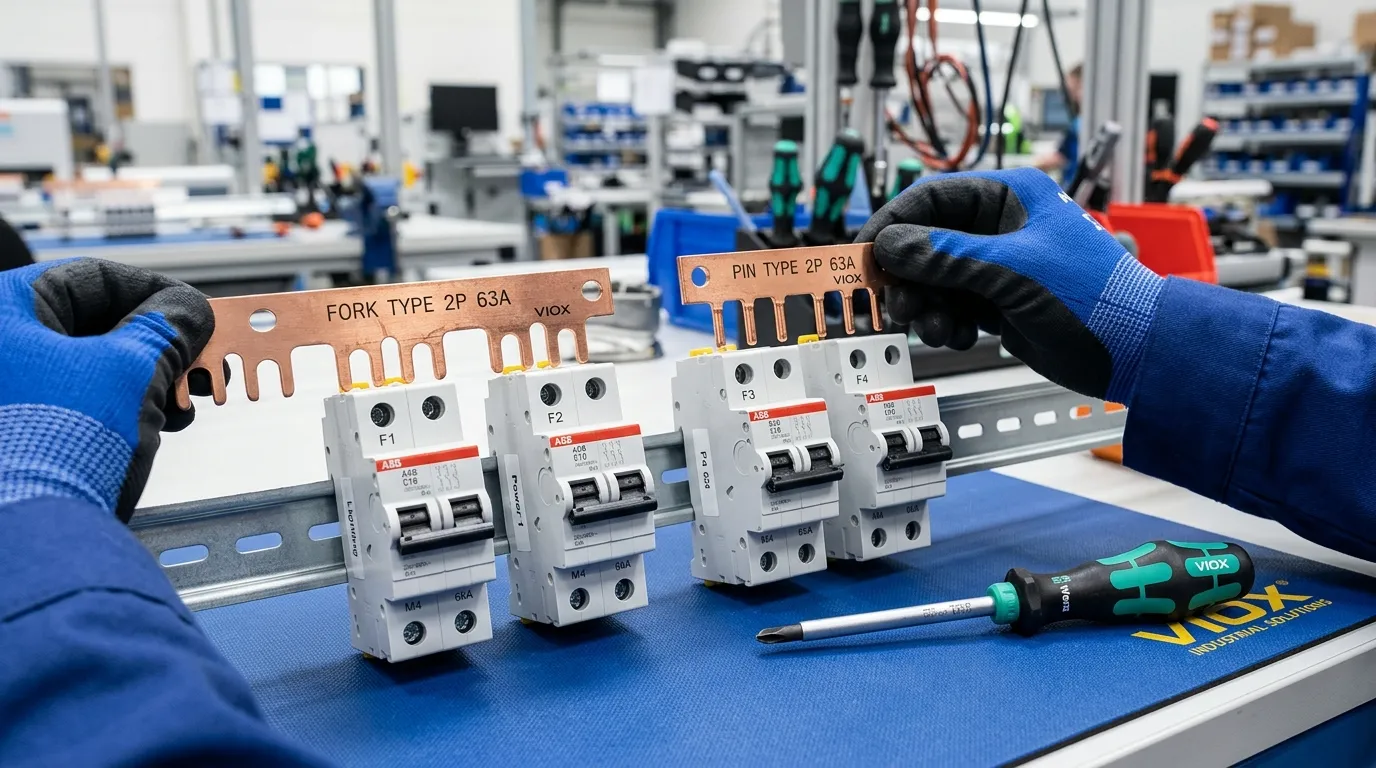
Αυτό είναι ένα από τα πιο κοινά ζητήματα συμβατότητας στην επιλογή ράγας ζυγών MCB.
Ράγα ζυγών τύπου ακίδας
A ράγα ζυγών τύπου ακίδας χρησιμοποιεί δάκτυλα σύνδεσης σε σχήμα ακίδας που εισάγονται σε συμβατούς ακροδέκτες διακόπτη.
Χρησιμοποιείται συνήθως όπου η δομή του ακροδέκτη του διακόπτη έχει σχεδιαστεί για να δέχεται απευθείας είσοδο ακίδας.
Ράγα ζυγών τύπου διχάλας
A ράγα ζυγών τύπου διχάλας χρησιμοποιεί άκρα σύνδεσης σε σχήμα διχάλας που σφίγγουν κάτω ή γύρω από το σημείο σύνδεσης της βίδας του ακροδέκτη, ανάλογα με το σχεδιασμό του διακόπτη.
Επιλέγεται συνήθως όταν η διάταξη των ακροδεκτών του διακόπτη είναι πιο κατάλληλη για επαφή τύπου διχάλας.
Συγκριτικός πίνακας
| Τύπος ράγας ζυγών | Καλύτερο σενάριο εφαρμογής | Κύριος κίνδυνος σε περίπτωση αναντιστοιχίας |
|---|---|---|
| Τύπος ακίδας | Διακόπτες σχεδιασμένοι για σύνδεση εισόδου ακίδας | Χαλαρή εφαρμογή, κακή έδραση, αναξιόπιστη επαφή |
| Τύπου πιρουνιού | Αυτόματοι διακόπτες σχεδιασμένοι για εμπλοκή ακροδεκτών τύπου πιρουνιού ή σφιγκτήρα | Ατελής σύσφιξη, ασταθής πίεση επαφής |
Γι“ αυτό το ”φαίνεται αρκετά κοντά" δεν είναι έγκυρη δοκιμή συμβατότητας.
Για ένα πιο εστιασμένο συγκριτικό άρθρο, η VIOX έχει ήδη Μπάρα ζυγών τύπου ακίδας έναντι μπάρας ζυγών τύπου πιρουνιού.
Αριθμός πόλων, βήμα και αντιστοίχιση διάταξης
Ακόμη και αν το στυλ του ακροδέκτη είναι σωστό, η μπάρα ζυγών μπορεί να είναι ακόμα ασύμβατη εάν η φυσική διάταξη είναι λανθασμένη.
Διαμόρφωση πόλου
Η μπάρα ζυγών πρέπει να ταιριάζει με τη διάταξη του διακόπτη, όπως:
- σειρές μονοπολικών
- συνδυασμοί διπολικών
- ομαδοποιήσεις τριφασικών
- διατάξεις τετραπολικών όπου χρησιμοποιούνται
Εάν η διάταξη των πόλων δεν ταιριάζει με το σχεδιασμό του πίνακα, η εγκατάσταση γίνεται αναγκαστική, άνιση ή αδύνατη.
Βήμα και αρθρωτή απόσταση
Το βήμα αναφέρεται στην απόσταση μεταξύ των γειτονικών σημείων σύνδεσης στη μπάρα ζυγών. Αυτή η απόσταση πρέπει να ευθυγραμμίζεται με το πλάτος της μονάδας του διακόπτη και τη γεωμετρία του ακροδέκτη.
Εάν το βήμα είναι λάθος, μπορεί να δείτε:
- εσφαλμένη ευθυγράμμιση κατά τη συναρμολόγηση
- λοξή ή καταπονημένη εισαγωγή
- κακή κατανομή ροπής
- ατελής επαφή σε ορισμένους ακροδέκτες
Λίστα ελέγχου διάταξης
| Στοιχείο διάταξης | Τι να επαληθεύσετε |
|---|---|
| Αριθμός πόλων ανά σειρά | Πρέπει να ταιριάζει με τη διάταξη του διακόπτη |
| Απόσταση μονάδων | Πρέπει να ταιριάζει με το πραγματικό πλάτος του διακόπτη |
| Κατεύθυνση τροφοδοσίας | Επιβεβαιώστε πώς θα τροφοδοτηθεί η μπάρα ζυγών |
| Τερματικός χώρος | Ελέγξτε τον διαθέσιμο χώρο για καλύμματα, τελικά καπάκια και όρια κάμψης |
| Μήκος κοπής | Πρέπει να ταιριάζει με τον πραγματικό αριθμό συσκευών χωρίς να πιέζεται η μπάρα |
Ονομαστική τιμή ρεύματος και θερμική συμβατότητα
Η φυσική εφαρμογή από μόνη της δεν είναι αρκετή. Μια μπάρα ζυγών μπορεί να ταιριάζει μηχανικά και να είναι ακόμα λανθασμένη ηλεκτρικά.
Τι να ελέγξετε
- ονομαστική τιμή ρεύματος
- διατομή αγωγού
- υλικό και επιμετάλλωση
- συνθήκες θερμοκρασίας περιβλήματος
- αριθμός συνδεδεμένων συσκευών
- αναμενόμενη ποικιλία φορτίου
Αυτό έχει σημασία επειδή η θέρμανση της μπάρας ζυγών επηρεάζεται από περισσότερα από το ονομαστικό ρεύμα. Οι πραγματικές συνθήκες του πίνακα, όπως ο εξαερισμός του περιβλήματος, η ποιότητα των ακροδεκτών και η συγκέντρωση φορτίου, μπορούν να αλλάξουν το θερμικό αποτέλεσμα.
Η VIOX έχει ήδη υποστηρικτικό περιεχόμενο σχετικά με Πώς να επιλέξετε τη σωστή μπάρα διανομής για MCB και Πώς να προσδιορίσετε την ποιότητα ενός Busbar για MCB.
Πίνακας θερμικής εφαρμογής
| Κατάσταση | Θέμα συμβατότητας | Γιατί έχει σημασία |
|---|---|---|
| Υψηλό συνεχές φορτίο | Υπομεγέθης μπάρα ζυγών | Αυξάνει τη θερμοκρασία και μειώνει την αξιοπιστία |
| Πυκνή διάταξη περιβλήματος | Κακή απαγωγή θερμότητας | Αυξάνει τη θερμική καταπόνηση |
| Επιφάνειες επαφής χαμηλής ποιότητας | Υψηλότερη αντίσταση επαφής | Δημιουργεί θερμά σημεία |
| Λανθασμένη ροπή | Άνιση πίεση σύσφιξης | Μπορεί να οδηγήσει σε τόξο ή θέρμανση |
| Μικτή γεωμετρία ακροδεκτών διακόπτη | Άνιση ηλεκτρική διεπαφή | Μειώνει τη συνέπεια σύνδεσης |
Μπορείτε να αναμίξετε διαφορετικές μάρκες διακοπτών στην ίδια μπάρα ζυγών;
Αυτή είναι μια από τις πιο σημαντικές πρακτικές ερωτήσεις και η ασφαλής απάντηση είναι:
Μην υποθέτετε διαλειτουργικότητα μεταξύ διαφορετικών εμπορικών σημάτων, εκτός εάν η ράγα ζυγών και η οικογένεια διακοπτών έχουν σχεδιαστεί ή επαληθευτεί ρητά για αυτό.
Γιατί; Επειδή διαφορετικά εμπορικά σήματα διακοπτών μπορεί να διαφέρουν σε:
- μέγεθος ανοίγματος ακροδεκτών
- γεωμετρία σφιγκτήρα
- βάθος εισόδου αγωγού
- ανοχή πλάτους μονάδας
- θέση βίδας και κατανομή πίεσης
Δύο διακόπτες μπορεί να φαίνονται πολύ παρόμοιοι από μπροστά και παρόλα αυτά να δημιουργούν κακή επαφή με τη ράγα ζυγών υπό πραγματικές συνθήκες συναρμολόγησης.
Γι“ αυτό οι κατασκευαστές πινάκων θα πρέπει να αποφεύγουν την ”οπτική αντιστοίχιση" ως μέθοδο συμβατότητας.
Συνηθισμένα Λάθη Συμβατότητας Ράγας Ζυγών MCB
Οι αστοχίες συμβατότητας συνήθως συμβαίνουν επειδή κάποιος ελέγχει μόνο μία μεταβλητή και αγνοεί τις υπόλοιπες.
Τα πιο συνηθισμένα λάθη
| Λάθος | Γιατί συμβαίνει | Αποτέλεσμα |
|---|---|---|
| Επιλογή μόνο με βάση την εμφάνιση | Οι ράγες ζυγών και οι διακόπτες φαίνονται παρόμοιοι | Κακή επαφή ή ασυμφωνία |
| Αντιστοίχιση τύπου ακροδέκτη αλλά αγνόηση του βήματος | Μερικός έλεγχος συμβατότητας | Καταπόνηση συναρμολόγησης και προβλήματα ευθυγράμμισης |
| Αγνοώντας την ονομαστική τιμή ρεύματος | Εστίαση μόνο στη μηχανική εφαρμογή | Υπερθέρμανση υπό φορτίο |
| Ανάμειξη εμπορικών σημάτων χωρίς επαλήθευση | Υπόθεση ότι οι αρθρωτοί διακόπτες είναι καθολικοί | Ασταθείς ή ασυνεπείς συνδέσεις |
| Κοπή ή τροποποίηση της ράγας ζυγών χωρίς έλεγχο των συνθηκών άκρων | Προσπάθεια προσαρμογής τυποποιημένων εξαρτημάτων επί τόπου | Μηχανική αδυναμία ή κακό φινίρισμα μόνωσης |
Για κινδύνους στο στάδιο της εγκατάστασης, η VIOX έχει επίσης Τα 5 κορυφαία λάθη που πρέπει να αποφύγετε κατά την εγκατάσταση MCB Busbars.
Λίστα Ελέγχου Συμβατότητας Ράγας Ζυγών MCB
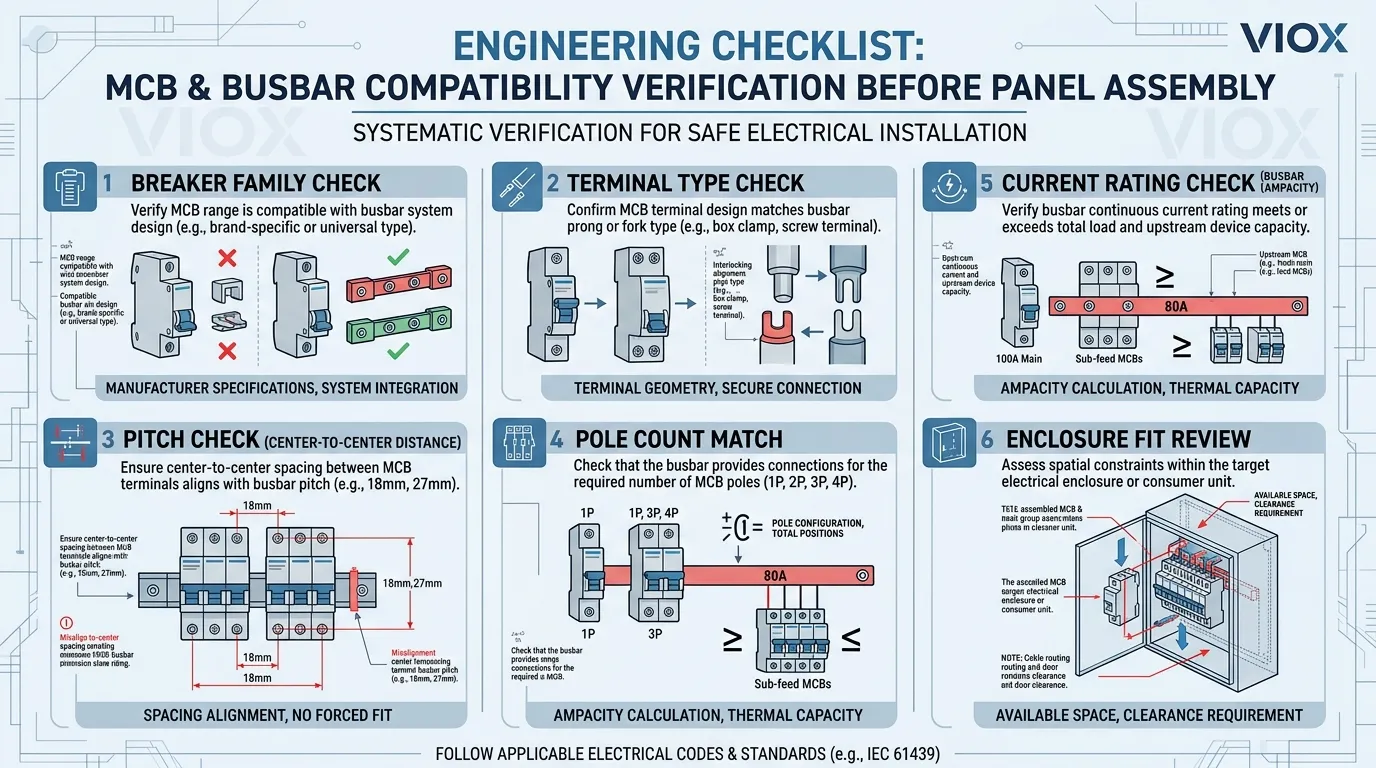
Χρησιμοποιήστε αυτήν τη γρήγορη λίστα ελέγχου πριν κάνετε μια παραγγελία ή συναρμολογήσετε τον πίνακα.
Λίστα ελέγχου πριν από την αγορά
| Σημείο ελέγχου | Ερώτηση Ναι/Όχι |
|---|---|
| Επιβεβαιωμένη οικογένεια διακοπτών | Η ράγα ζυγών προορίζεται για τη συγκεκριμένη σειρά διακοπτών ή έχει επαληθευτεί ως ισοδύναμη; |
| Επιβεβαιωμένος τύπος ακροδέκτη | Ο ακροδέκτης του διακόπτη είναι συμβατός με στυλ σύνδεσης ακίδας ή διχάλας; |
| Επιβεβαιωμένη διάταξη πόλων | Η διάταξη της ράγας ζυγών ταιριάζει με τη διαμόρφωση πόλων του πίνακα; |
| Επιβεβαιωμένο βήμα | Η απόσταση σύνδεσης ταιριάζει με την αρθρωτή απόσταση του διακόπτη; |
| Επιβεβαιωμένη ονομαστική τιμή ρεύματος | Η ράγα ζυγών έχει ονομαστική τιμή για το αναμενόμενο φορτίο και τις συνθήκες του πίνακα; |
| Επιβεβαιωμένη εφαρμογή περιβλήματος | Υπάρχει αρκετός χώρος για τοποθέτηση, καλύμματα και σύνδεση τροφοδοσίας; |
| Επιβεβαιωμένη μέθοδος εγκατάστασης | Η ράγα ζυγών θα εγκατασταθεί χωρίς εξαναγκασμό, στρίψιμο ή αυτοσχέδια προσαρμογή; |
Εάν πολλές απαντήσεις είναι αβέβαιες, η ασφαλέστερη κίνηση είναι να σταματήσετε και να επιβεβαιώσετε το ακριβές ζεύγος διακόπτη-ράγας ζυγών πριν από τη συναρμολόγηση.
Πότε δεν πρέπει να χρησιμοποιείται μια ράγα ζυγών
Μια ράγα ζυγών μπορεί να μην είναι η σωστή επιλογή όταν:
- η οικογένεια διακοπτών δεν υποστηρίζει αυτό το στυλ ράγας ζυγών
- η διάταξη του πίνακα είναι ακανόνιστη ή σε μεγάλο βαθμό προσαρμοσμένη
- διαφορετικές γεωμετρίες ακροδεκτών αναμιγνύονται σε μία σειρά
- η διάταξη φορτίου απαιτεί διαφορετική στρατηγική διανομής
- ο εγκαταστάτης δεν μπορεί να επαληθεύσει τις σωστές συνθήκες επαφής και ροπής
Σε αυτές τις περιπτώσεις, μια άλλη προσέγγιση διανομής μπορεί να είναι πιο αξιόπιστη από το να εξαναγκάσετε μια αμφίβολη αντιστοίχιση ράγας ζυγών.
ΣΥΧΝΈΣ ΕΡΩΤΉΣΕΙΣ
Πώς μπορώ να γνωρίζω εάν μια μπάρα ταιριάζει στον MCB μου;
Ελέγξτε τον τύπο του ακροδέκτη, την οικογένεια του διακόπτη, το βήμα, τη διάταξη των πόλων, την ονομαστική τιμή ρεύματος και τις προβλεπόμενες πληροφορίες συμβατότητας. Η απλή φυσική ομοιότητα δεν είναι αρκετή.
Μπορώ να χρησιμοποιήσω οποιαδήποτε χτένα διαύλου (comb busbar) με οποιονδήποτε MCB;
Όχι. Οι ακροδέκτες σύνδεσης δεν είναι καθολικά εναλλάξιμοι. Η γεωμετρία των ακροδεκτών, η απόσταση και ο σχεδιασμός του διακόπτη πρέπει να είναι συμβατά.
Ποια είναι η διαφορά μεταξύ μπάρας τύπου ακίδας και μπάρας τύπου δίκρανο;
Οι μπάρες τύπου ακίδας χρησιμοποιούν συνδετικά δάχτυλα σε σχήμα ακίδας, ενώ οι μπάρες τύπου διχάλας χρησιμοποιούν άκρα σύνδεσης σε σχήμα διχάλας. Η σωστή επιλογή εξαρτάται από το σχεδιασμό των ακροδεκτών του διακόπτη.
Μπορώ να συνδυάσω ασφάλειες διαφορετικών κατασκευαστών σε μία μπάρα;
Δεν είναι ασφαλές εξ ορισμού. Διαφορετικές μάρκες ενδέχεται να έχουν διαφορετική γεωμετρία ακροδεκτών και χαρακτηριστικά πίεσης, επομένως η συμβατότητα θα πρέπει να επιβεβαιώνεται ρητά πριν από τη χρήση.
Γιατί υπερθερμαίνεται μια μπάρα MCB;
Στις κοινές αιτίες περιλαμβάνονται η λανθασμένη ονομαστική τιμή ρεύματος, η κακή επαφή ακροδεκτών, η εσφαλμένη ροπή σύσφιξης, η ασύμβατη γεωμετρία ακροδεκτών και οι συνθήκες πυκνού περιβλήματος.